Computer repair and 
maintenance is divided into two 
sections: 
1. Hardware repair 
2. Software repair
The following are some common hardware 
problems: 
1. Ram Failure: beep sound, system won’t boot to 
screen. 
2. Power problem: check power cable or power 
unit. They are replaceable. 
3. Hard disk Failure: computer gives error 
message; primary master not found, check 
media cable. 
4. Processors Failure: computer will not boot to 
desktop not usual common. 
5. Mother Boards Failure: Computer will not power 
6. VGA failure: System will turn on but no display 
Buy new VGA card.
Cloning a 
To scloynes at seysmtem means, buying parts of 
computer and assembling them to make a 
complete computer. 
Major parts to be purchased: 
 Casing 
 Mother board SATA or IDE with 
microprocessor 
 Power unit 
 Power cable 
 Hard disk drive 
 CD Rom 
 RAM 
 Monitor
Software Repair and 
Maintenance 
Steps to formatting a disk and 
reloading a new windows 7:
 The basic steps for installing Windows 7 and 
is aimed at beginners and above. You should 
check the disk does not contain valuable data 
before formatting or installing. Recommend to 
backup any data if of importance. 
 Steps 
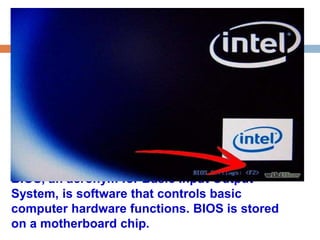
 Turn your computer on then press Del, F10 or 
F2 (depend on your computer’s mainboard) to 
enter the system BIOS 
 Some systems will give a message like (F10 
Setup or settings), this means press F10 on 
your keyboard to enter settings.
BIOS 
BIOS, an acronym for Basic 
Input Output System, is 
software that controls basic 
computer hardware functions. 
BIOS is stored on a 
motherboard chip.
BIOS, an acronym for Basic Input Output 
System, is software that controls basic 
computer hardware functions. BIOS is stored 
on a motherboard chip.
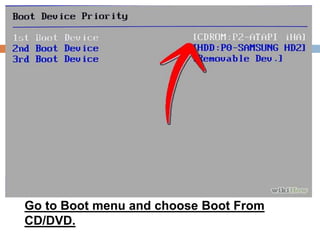
Go to Boot menu and choose Boot From 
CD/DVD.
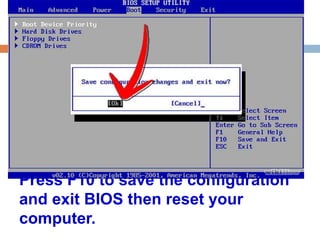
Press F10 to save the configuration 
and exit BIOS then reset your 
computer.
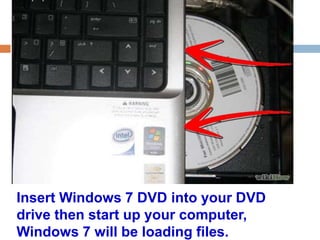
Insert Windows 7 DVD into your DVD 
drive then start up your computer, 
Windows 7 will be loading files.
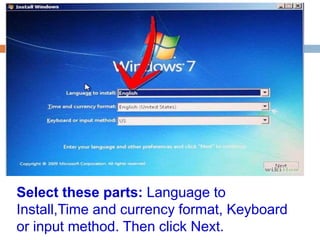
Select these parts: Language to 
Install,Time and currency format, Keyboard 
or input method. Then click Next.
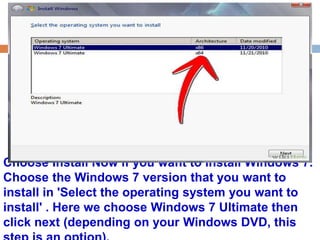
Choose Install Now if you want to install Windows 7. 
Choose the Windows 7 version that you want to 
install in 'Select the operating system you want to 
install' . Here we choose Windows 7 Ultimate then 
click next (depending on your Windows DVD, this 
step is an option).
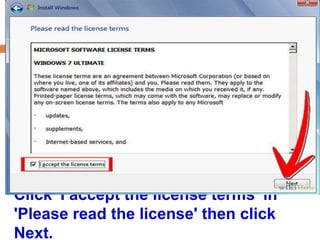
Click 'I accept the license terms' in 
'Please read the license' then click 
Next.
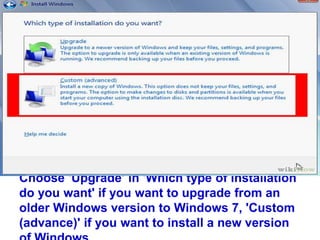
Choose 'Upgrade' in 'Which type of installation 
do you want' if you want to upgrade from an 
older Windows version to Windows 7, 'Custom 
(advance)' if you want to install a new version 
of Windows.
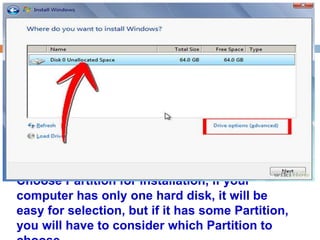
Choose Partition for installation, if your 
computer has only one hard disk, it will be 
easy for selection, but if it has some Partition, 
you will have to consider which Partition to 
choose.
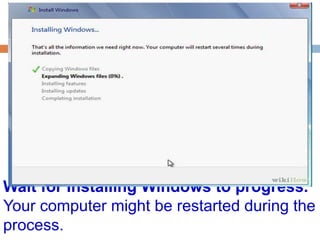
Wait for Installing Windows to progress. 
Your computer might be restarted during the 
process.
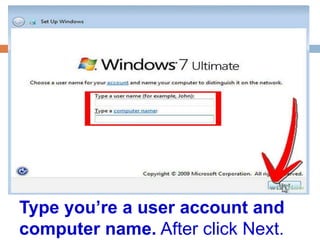
Type you’re a user account and 
computer name. After click Next.
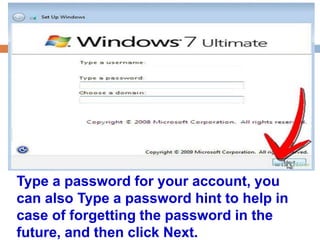
Type a password for your account, you 
can also Type a password hint to help in 
case of forgetting the password in the 
future, and then click Next.
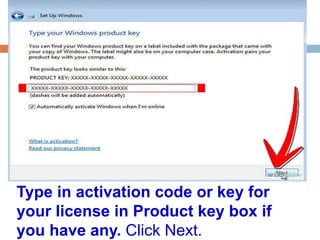
Type in activation code or key for 
your license in Product key box if 
you have any. Click Next.
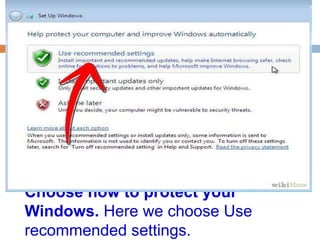
Choose how to protect your 
Windows. Here we choose Use 
recommended settings.
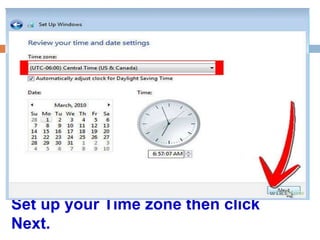
Set up your Time zone then click 
Next.
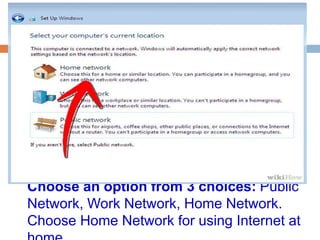
Choose an option from 3 choices: Public 
Network, Work Network, Home Network. 
Choose Home Network for using Internet at 
home.
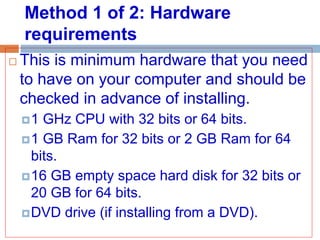
Method 1 of 2: Hardware 
requirements 
 This is minimum hardware that you need 
to have on your computer and should be 
checked in advance of installing. 
1 GHz CPU with 32 bits or 64 bits. 
1 GB Ram for 32 bits or 2 GB Ram for 64 
bits. 
16 GB empty space hard disk for 32 bits or 
20 GB for 64 bits. 
DVD drive (if installing from a DVD).
Method 2 of 2: Some errors 
during Windows 7 installation 
 After Windows 7 installation, if you cannot connect 
to Internet, please check these troubleshooting: 
 Make sure Internet cable and the modem are 
working properly, the connection points are not 
getting loose. 
 Check the network drive (normally Windows 7 
automatically detects drivers). 
 Set up Windows IP if the modem doesn’t analyze it 
automatically (searching on Internet for how to set 
it up) 
 Some devices might not work such as: USB 3.0, 
Webcam, Bluetooth etc. then you should check the 
driver ok to see if it has been installed properly.

Computer repair and maintenance

  • 1.
    Computer repair and maintenance is divided into two sections: 1. Hardware repair 2. Software repair
  • 2.
    The following aresome common hardware problems: 1. Ram Failure: beep sound, system won’t boot to screen. 2. Power problem: check power cable or power unit. They are replaceable. 3. Hard disk Failure: computer gives error message; primary master not found, check media cable. 4. Processors Failure: computer will not boot to desktop not usual common. 5. Mother Boards Failure: Computer will not power 6. VGA failure: System will turn on but no display Buy new VGA card.
  • 3.
    Cloning a Toscloynes at seysmtem means, buying parts of computer and assembling them to make a complete computer. Major parts to be purchased:  Casing  Mother board SATA or IDE with microprocessor  Power unit  Power cable  Hard disk drive  CD Rom  RAM  Monitor
  • 4.
    Software Repair and Maintenance Steps to formatting a disk and reloading a new windows 7:
  • 5.
     The basicsteps for installing Windows 7 and is aimed at beginners and above. You should check the disk does not contain valuable data before formatting or installing. Recommend to backup any data if of importance.  Steps  Turn your computer on then press Del, F10 or F2 (depend on your computer’s mainboard) to enter the system BIOS  Some systems will give a message like (F10 Setup or settings), this means press F10 on your keyboard to enter settings.
  • 6.
    BIOS BIOS, anacronym for Basic Input Output System, is software that controls basic computer hardware functions. BIOS is stored on a motherboard chip.
  • 7.
    BIOS, an acronymfor Basic Input Output System, is software that controls basic computer hardware functions. BIOS is stored on a motherboard chip.
  • 8.
    Go to Bootmenu and choose Boot From CD/DVD.
  • 9.
    Press F10 tosave the configuration and exit BIOS then reset your computer.
  • 10.
    Insert Windows 7DVD into your DVD drive then start up your computer, Windows 7 will be loading files.
  • 11.
    Select these parts:Language to Install,Time and currency format, Keyboard or input method. Then click Next.
  • 12.
    Choose Install Nowif you want to install Windows 7. Choose the Windows 7 version that you want to install in 'Select the operating system you want to install' . Here we choose Windows 7 Ultimate then click next (depending on your Windows DVD, this step is an option).
  • 13.
    Click 'I acceptthe license terms' in 'Please read the license' then click Next.
  • 14.
    Choose 'Upgrade' in'Which type of installation do you want' if you want to upgrade from an older Windows version to Windows 7, 'Custom (advance)' if you want to install a new version of Windows.
  • 15.
    Choose Partition forinstallation, if your computer has only one hard disk, it will be easy for selection, but if it has some Partition, you will have to consider which Partition to choose.
  • 16.
    Wait for InstallingWindows to progress. Your computer might be restarted during the process.
  • 17.
    Type you’re auser account and computer name. After click Next.
  • 18.
    Type a passwordfor your account, you can also Type a password hint to help in case of forgetting the password in the future, and then click Next.
  • 19.
    Type in activationcode or key for your license in Product key box if you have any. Click Next.
  • 20.
    Choose how toprotect your Windows. Here we choose Use recommended settings.
  • 21.
    Set up yourTime zone then click Next.
  • 22.
    Choose an optionfrom 3 choices: Public Network, Work Network, Home Network. Choose Home Network for using Internet at home.
  • 23.
    Method 1 of2: Hardware requirements  This is minimum hardware that you need to have on your computer and should be checked in advance of installing. 1 GHz CPU with 32 bits or 64 bits. 1 GB Ram for 32 bits or 2 GB Ram for 64 bits. 16 GB empty space hard disk for 32 bits or 20 GB for 64 bits. DVD drive (if installing from a DVD).
  • 24.
    Method 2 of2: Some errors during Windows 7 installation  After Windows 7 installation, if you cannot connect to Internet, please check these troubleshooting:  Make sure Internet cable and the modem are working properly, the connection points are not getting loose.  Check the network drive (normally Windows 7 automatically detects drivers).  Set up Windows IP if the modem doesn’t analyze it automatically (searching on Internet for how to set it up)  Some devices might not work such as: USB 3.0, Webcam, Bluetooth etc. then you should check the driver ok to see if it has been installed properly.