Navodaya Dental College
Department of Oral Medicine &
Radiology
Dr Shilpa R T
Professor
III Year
Intra-Oral
Radiography
Objectives of the presentation
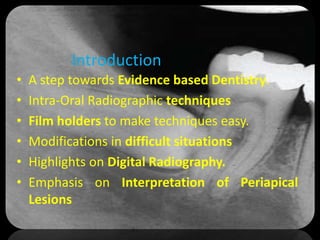
• A step towards Evidence based Dentistry.
• Intra-Oral Radiographic techniques
• Film holders to make techniques easy.
• Modifications in difficult situations
• Highlights on Digital Radiography.
• Emphasis on Interpretation of Periapical
Lesions
Introduction
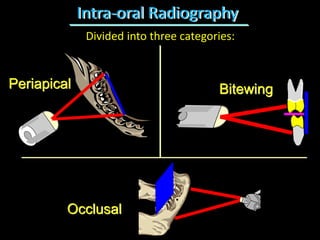
Intra-oral Radiography
Periapical Bitewing
Occlusal
Divided into three categories:
Indications of periapical Radiography
• Apical infection/inflammation
• Assessment of the periodontal status
• After trauma to the teeth and associated alveolar bone
• Presence and position of unerupted teeth
• Assessment of root morphology before extractions
• During endodontics
• Pre and post operative appraisal of apical surgery
• Evaluation of apical cysts and other lesions
• Evaluation of implants postoperatively.
Two fundamental rules of radiography:
1) The lowest level of distortion and the highest level of
image clarity will always be found in the region of the
central ray projection.
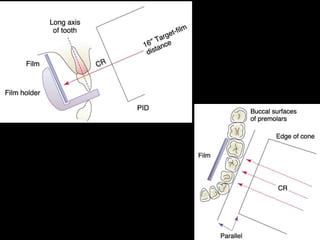
2) The image receptor should be as perpendicular as
possible to the central ray and as parallel as possible
to the tooth long axis in order to guarantee optimum
radiographic interpretability.
GENERAL STEPS FOR MAKING AN EXPOSURE
 Greet and seat the patient
 Adjust the x-ray unit setting
 Position the tube head
 Wash hands thoroughly
 Examine the oral cavity
 Position the film
 Position the x-ray tube
 Make the exposure
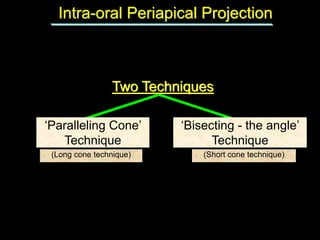
Intra-oral Periapical Projection
‘Bisecting - the angle’
Technique
(Short cone technique)
(Long cone technique)
‘Paralleling Cone’
Technique
Two Techniques
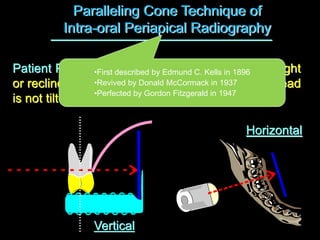
Paralleling Cone Technique of
Intra-oral Periapical Radiography
Patient Position: Patient can be either sitting upright
or reclined in the dental chair provided that the head
is not tilted to the side.
•First described by Edmund C. Kells in 1896
•Revived by Donald McCormack in 1937
•Perfected by Gordon Fitzgerald in 1947
Vertical
Horizontal
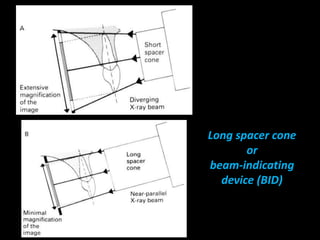
Long spacer cone
or
beam-indicating
device (BID)
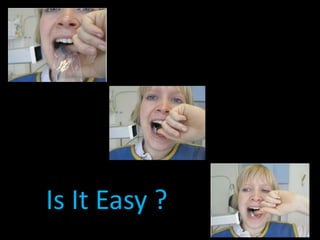
Is It Easy ?
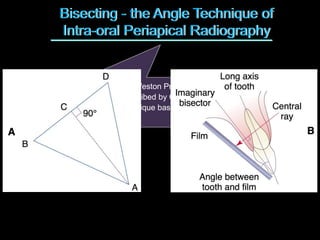
Bisecting - the Angle Technique of
Intra-oral Periapical Radiography
•First described by Weston Price in 1904
•Independently described by Cieszynski in 1907
•Also called as technique based on Principle of Isometric
Triangulation
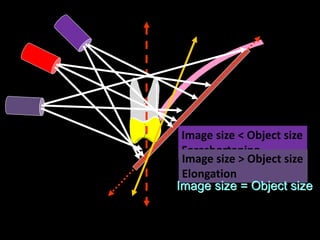
Image size < Object size
Foreshortening
Image size > Object size
Elongation
Image size = Object size
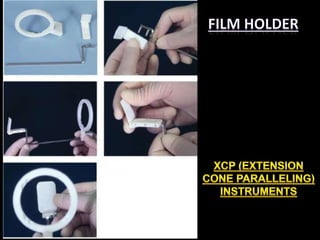
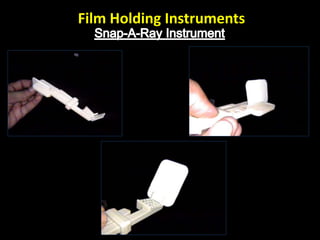
Film Holding Instruments
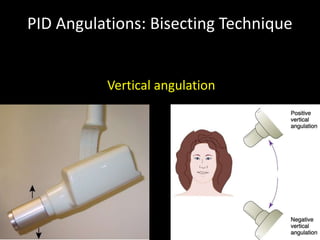
PID Angulations: Bisecting Technique
Vertical angulation
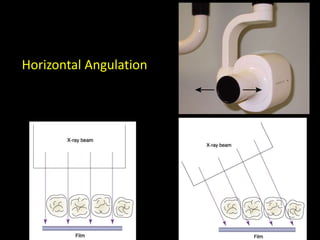
Horizontal Angulation
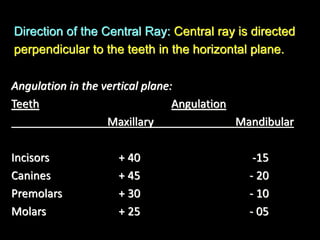
Angulation in the vertical plane:
Teeth Angulation
Maxillary Mandibular
Incisors + 40 -15
Canines + 45 - 20
Premolars + 30 - 10
Molars + 25 - 05
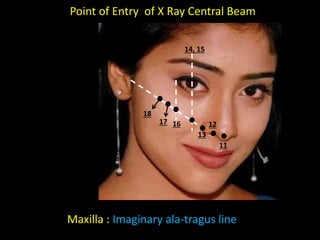
Direction of the Central Ray: Central ray is directed
perpendicular to the teeth in the horizontal plane.
11
12
13
16
17
18
14, 15
Maxilla : Imaginary ala-tragus line
Point of Entry of X Ray Central Beam
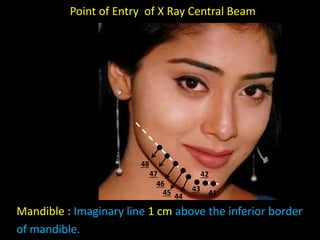
41
42
43
47
48
44
46
45
Point of Entry of X Ray Central Beam
Mandible : Imaginary line 1 cm above the inferior border
of mandible.
Comparison of Parallel cone and
Bisected angle Techniques
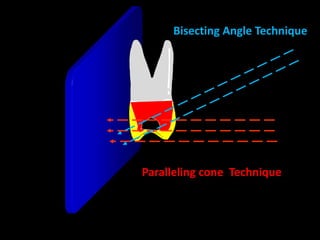
Bisecting Angle Technique
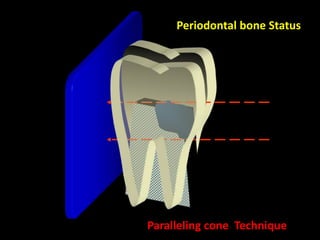
Paralleling cone Technique
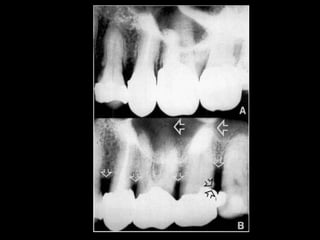
Periodontal bone Status
1. Accurate images with little magnification
2. No Superimposition
3. Well represented periodontal bone levels
4. Enable early detection of proximal caries
5. Angulations automatically determined by the film
holder
6. No cone cutting
7. Reproducible radiographs
8. positions of the film maintained irrespective of the
position of the patient's head
Advantages of the paralleling cone technique
1. Anatomy of the mouth makes uncomfortable for the
patient may cause gagging.
2. Difficult to practice in Endodontics.
3. Lower third molar regions difficult.
4. Needs Long Cone.
Disadvantages of the paralleling technique
Advantages of Bisecting Angled Technique
1. Easy to master
2. comfortable for the patient
3. Easy to practice in endodontics
4. If all angulations are correct, the image will be
adequate (but not ideal)
Disadvantages of the Bisected angle technique
1. image distortion - foreshortening or elongation
2. Incorrect horizontal angulation - overlapping
3. Poor detection of proximal caries and the periodontal
bone levels.
4. superimposition of the zygomatic buttress
5. Cone cutting
Special Considerations
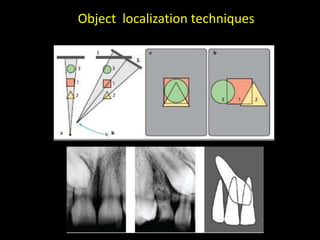
 Object localization techniques
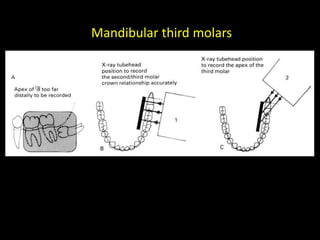
 Mandibular third molars
 Gagging
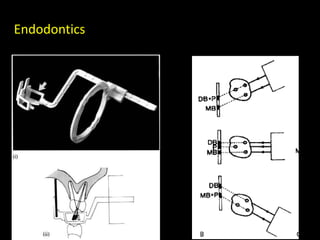
 Endodontics
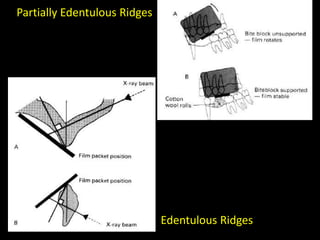
 Edentulous alveolar ridges
 Children
Object localization techniques
Mandibular third molars
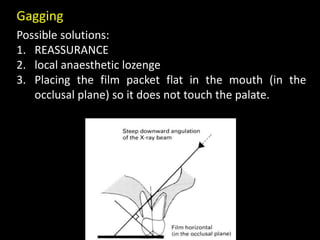
Possible solutions:
1. REASSURANCE
2. local anaesthetic lozenge
3. Placing the film packet flat in the mouth (in the
occlusal plane) so it does not touch the palate.
Gagging
Endodontics
Edentulous Ridges
Partially Edentulous Ridges
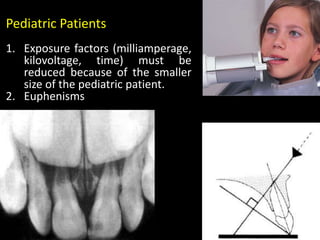
Pediatric Patients
1. Exposure factors (milliamperage,
kilovoltage, time) must be
reduced because of the smaller
size of the pediatric patient.
2. Euphenisms
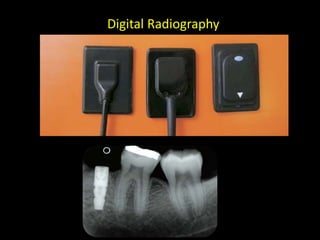
Digital Radiography
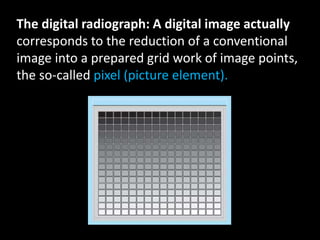
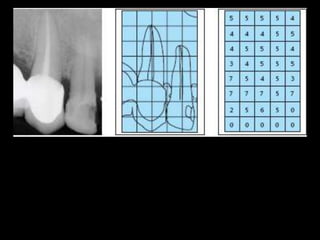
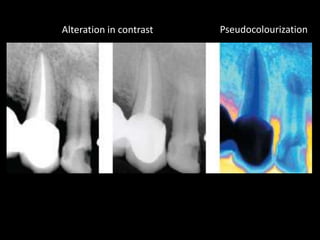
The digital radiograph: A digital image actually
corresponds to the reduction of a conventional
image into a prepared grid work of image points,
the so-called pixel (picture element).
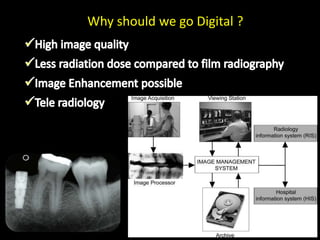
Why should we go Digital ?
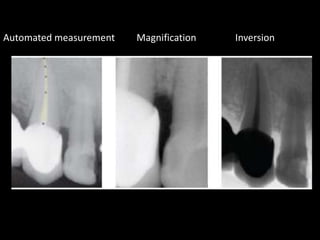
Automated measurement Inversion
Magnification
Alteration in contrast Pseudocolourization
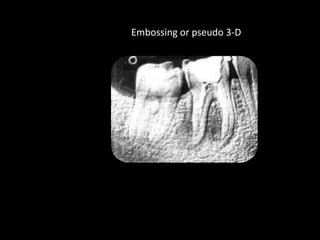
Embossing or pseudo 3-D
Limitations:
 Very high initial cost.
 Sensor is bulkier compared to an x-ray film
making it difficult to place in some parts
of the mouth and in children.
Thank You

Intra-Oral Radiography.pptx

  • 1.
    Navodaya Dental College Departmentof Oral Medicine & Radiology Dr Shilpa R T Professor III Year
  • 2.
  • 3.
    Objectives of thepresentation • A step towards Evidence based Dentistry. • Intra-Oral Radiographic techniques • Film holders to make techniques easy. • Modifications in difficult situations • Highlights on Digital Radiography. • Emphasis on Interpretation of Periapical Lesions Introduction
  • 4.
  • 5.
    Indications of periapicalRadiography • Apical infection/inflammation • Assessment of the periodontal status • After trauma to the teeth and associated alveolar bone • Presence and position of unerupted teeth • Assessment of root morphology before extractions • During endodontics • Pre and post operative appraisal of apical surgery • Evaluation of apical cysts and other lesions • Evaluation of implants postoperatively.
  • 7.
    Two fundamental rulesof radiography: 1) The lowest level of distortion and the highest level of image clarity will always be found in the region of the central ray projection. 2) The image receptor should be as perpendicular as possible to the central ray and as parallel as possible to the tooth long axis in order to guarantee optimum radiographic interpretability.
  • 8.
    GENERAL STEPS FORMAKING AN EXPOSURE  Greet and seat the patient  Adjust the x-ray unit setting  Position the tube head  Wash hands thoroughly  Examine the oral cavity  Position the film  Position the x-ray tube  Make the exposure
  • 9.
    Intra-oral Periapical Projection ‘Bisecting- the angle’ Technique (Short cone technique) (Long cone technique) ‘Paralleling Cone’ Technique Two Techniques
  • 10.
    Paralleling Cone Techniqueof Intra-oral Periapical Radiography Patient Position: Patient can be either sitting upright or reclined in the dental chair provided that the head is not tilted to the side. •First described by Edmund C. Kells in 1896 •Revived by Donald McCormack in 1937 •Perfected by Gordon Fitzgerald in 1947 Vertical Horizontal
  • 12.
  • 13.
  • 15.
    Bisecting - theAngle Technique of Intra-oral Periapical Radiography •First described by Weston Price in 1904 •Independently described by Cieszynski in 1907 •Also called as technique based on Principle of Isometric Triangulation
  • 16.
    Image size <Object size Foreshortening Image size > Object size Elongation Image size = Object size
  • 17.
  • 18.
    PID Angulations: BisectingTechnique Vertical angulation
  • 19.
  • 20.
    Angulation in thevertical plane: Teeth Angulation Maxillary Mandibular Incisors + 40 -15 Canines + 45 - 20 Premolars + 30 - 10 Molars + 25 - 05 Direction of the Central Ray: Central ray is directed perpendicular to the teeth in the horizontal plane.
  • 21.
    11 12 13 16 17 18 14, 15 Maxilla :Imaginary ala-tragus line Point of Entry of X Ray Central Beam
  • 22.
    41 42 43 47 48 44 46 45 Point of Entryof X Ray Central Beam Mandible : Imaginary line 1 cm above the inferior border of mandible.
  • 23.
    Comparison of Parallelcone and Bisected angle Techniques
  • 24.
  • 25.
  • 27.
    1. Accurate imageswith little magnification 2. No Superimposition 3. Well represented periodontal bone levels 4. Enable early detection of proximal caries 5. Angulations automatically determined by the film holder 6. No cone cutting 7. Reproducible radiographs 8. positions of the film maintained irrespective of the position of the patient's head Advantages of the paralleling cone technique
  • 28.
    1. Anatomy ofthe mouth makes uncomfortable for the patient may cause gagging. 2. Difficult to practice in Endodontics. 3. Lower third molar regions difficult. 4. Needs Long Cone. Disadvantages of the paralleling technique
  • 29.
    Advantages of BisectingAngled Technique 1. Easy to master 2. comfortable for the patient 3. Easy to practice in endodontics 4. If all angulations are correct, the image will be adequate (but not ideal)
  • 30.
    Disadvantages of theBisected angle technique 1. image distortion - foreshortening or elongation 2. Incorrect horizontal angulation - overlapping 3. Poor detection of proximal caries and the periodontal bone levels. 4. superimposition of the zygomatic buttress 5. Cone cutting
  • 31.
    Special Considerations  Objectlocalization techniques  Mandibular third molars  Gagging  Endodontics  Edentulous alveolar ridges  Children
  • 32.
  • 33.
  • 34.
    Possible solutions: 1. REASSURANCE 2.local anaesthetic lozenge 3. Placing the film packet flat in the mouth (in the occlusal plane) so it does not touch the palate. Gagging
  • 35.
  • 36.
  • 37.
    Pediatric Patients 1. Exposurefactors (milliamperage, kilovoltage, time) must be reduced because of the smaller size of the pediatric patient. 2. Euphenisms
  • 38.
  • 39.
    The digital radiograph:A digital image actually corresponds to the reduction of a conventional image into a prepared grid work of image points, the so-called pixel (picture element).
  • 41.
    Why should wego Digital ?
  • 42.
  • 43.
    Alteration in contrastPseudocolourization
  • 44.
  • 45.
    Limitations:  Very highinitial cost.  Sensor is bulkier compared to an x-ray film making it difficult to place in some parts of the mouth and in children.
  • 46.

Editor's Notes