
LEARN
How to develop a sales
forecasting toolbox.
How to measure the success of
your forecast.
The cost of missing your forecast.
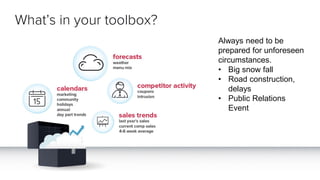
What’s in your toolbox?
Always need to be
prepared for unforeseen
circumstances.
• Big snow fall
• Road construction,
delays
• Public Relations
Event
Toolbox: Calendars
+ Community
> School schedules
> Community events
+ Marketing
> Follow LTO schedules
> Build a forecast based on the items that you’re going to
sell.
> Know what weeks will be most popular for LTO
+ Federal and religious holidays
> Understand how these holidays impact your business
> MLK Day, Veteran’s Day, Fourth of July, Easter, Labor Day,
Christmas, Thanksgiving, Memorial Day
How are your day
parts impacted by
these events?
Toolbox: Forecasts
+ Weather
> Know the impacts of big storms, sunny days
> Relationship of weather and holidays
+ Menu Mix
> Put your business in a position where you can order and and prep in sync with the menu mix
> Enter LTO product mix into BOH system
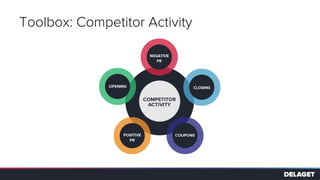
Toolbox: Competitor Activity
Toolbox: Sales
+ Last year’s sales
> Matching supply and demand of last year
+ Comparable sales v. previous year
> Looking at last year’s trend compared to what you’re
currently doing
> Adjust to accommodate differences
+ 4-6 week average
> Pair this average with your calendars.
What factors
influenced your sales
last year?
Setting goals and measuring success
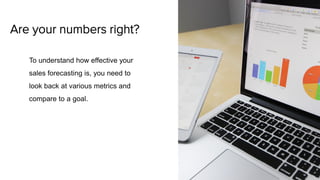
Are your numbers right?
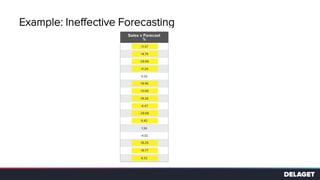
To understand how effective your
sales forecasting is, you need to
look back at various metrics and
compare to a goal.
Example: Ineffective Forecasting
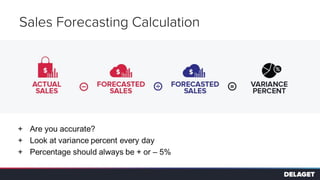
Sales Forecasting Calculation
+ Are you accurate?
+ Look at variance percent every day
+ Percentage should always be + or – 5%
Sales forecasting goals
+ How big is your window?
> +/- 3% of sales on a $5,000 day = $300 window
> +/- 5% of sales on a $5,000 day = $500 window
+ Understand what your window is and forecast in the middle of it.
Measuring Success
+ Review metrics daily to get better control of your business
> Data analytics tools make this easy
+ Pay attention to your order cycle
> 3,4,5 days for more accurate ordering, inventory control
> How long will a delivery cover you for?
> Make sure I have enough product but not too much.
+ Weekly effectiveness is best only if you’re in the 3-5% variance range
The cost of missing
your forecast
+ Cash
+ Compromised
customer experience
+ Poor brand image
+ Too much or too little
product
Ordering and Prepping
+ Over or under ordering = loss
> Using resources to get more product
> Wasting unused product
+ Over or under ordering = food safety issues
> Exceed hold times due to excess product
> Excess product causes temperature issues
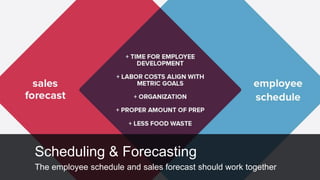
Scheduling & Forecasting
The employee schedule and sales forecast should work together
A great schedule includes:
+ training of new hires
+ cross training of existing staff
+ development of the management team
+ time for detailed cleaning
….all within the framework of running the business and
caring for the customers
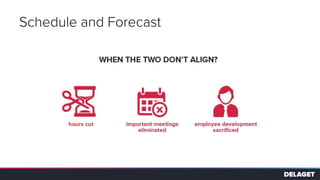
Schedule and Forecast
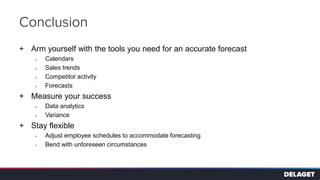
Conclusion
+ Arm yourself with the tools you need for an accurate forecast
> Calendars
> Sales trends
> Competitor activity
> Forecasts
+ Measure your success
> Data analytics
> Variance
+ Stay flexible
> Adjust employee schedules to accommodate forecasting
> Bend with unforeseen circumstances
Blog:
www.delaget.com/blog/
Twitter:
@Delaget
LinkedIn:
Search for ‘Delaget’
Get more restaurant resources!

Sales Forecasting Best Practices for Restaurants

  • 2.
    LEARN How to developa sales forecasting toolbox. How to measure the success of your forecast. The cost of missing your forecast.
  • 3.
    What’s in yourtoolbox? Always need to be prepared for unforeseen circumstances. • Big snow fall • Road construction, delays • Public Relations Event
  • 4.
    Toolbox: Calendars + Community >School schedules > Community events + Marketing > Follow LTO schedules > Build a forecast based on the items that you’re going to sell. > Know what weeks will be most popular for LTO + Federal and religious holidays > Understand how these holidays impact your business > MLK Day, Veteran’s Day, Fourth of July, Easter, Labor Day, Christmas, Thanksgiving, Memorial Day How are your day parts impacted by these events?
  • 5.
    Toolbox: Forecasts + Weather >Know the impacts of big storms, sunny days > Relationship of weather and holidays + Menu Mix > Put your business in a position where you can order and and prep in sync with the menu mix > Enter LTO product mix into BOH system
  • 6.
  • 7.
    Toolbox: Sales + Lastyear’s sales > Matching supply and demand of last year + Comparable sales v. previous year > Looking at last year’s trend compared to what you’re currently doing > Adjust to accommodate differences + 4-6 week average > Pair this average with your calendars. What factors influenced your sales last year?
  • 8.
    Setting goals andmeasuring success
  • 9.
    Are your numbersright? To understand how effective your sales forecasting is, you need to look back at various metrics and compare to a goal.
  • 10.
  • 11.
    Sales Forecasting Calculation +Are you accurate? + Look at variance percent every day + Percentage should always be + or – 5%
  • 12.
    Sales forecasting goals +How big is your window? > +/- 3% of sales on a $5,000 day = $300 window > +/- 5% of sales on a $5,000 day = $500 window + Understand what your window is and forecast in the middle of it.
  • 13.
    Measuring Success + Reviewmetrics daily to get better control of your business > Data analytics tools make this easy + Pay attention to your order cycle > 3,4,5 days for more accurate ordering, inventory control > How long will a delivery cover you for? > Make sure I have enough product but not too much. + Weekly effectiveness is best only if you’re in the 3-5% variance range
  • 14.
    The cost ofmissing your forecast + Cash + Compromised customer experience + Poor brand image + Too much or too little product
  • 15.
    Ordering and Prepping +Over or under ordering = loss > Using resources to get more product > Wasting unused product + Over or under ordering = food safety issues > Exceed hold times due to excess product > Excess product causes temperature issues
  • 16.
    Scheduling & Forecasting Theemployee schedule and sales forecast should work together
  • 17.
    A great scheduleincludes: + training of new hires + cross training of existing staff + development of the management team + time for detailed cleaning ….all within the framework of running the business and caring for the customers
  • 18.
  • 19.
    Conclusion + Arm yourselfwith the tools you need for an accurate forecast > Calendars > Sales trends > Competitor activity > Forecasts + Measure your success > Data analytics > Variance + Stay flexible > Adjust employee schedules to accommodate forecasting > Bend with unforeseen circumstances
  • 20.