The Receptionist The receptionist is the  first  person that the visitor to the company meets. Visitor’s impression  of the organization is affected by how he/she is received by the receptionist.  Therefore, the receptionist has a very  important  role to play!
Qualities of a Receptionist Good  grooming Pleasant  personality Courtesy Initiative Tactful Good communication skill Clear  knowledge  of the organization
Roles of a receptionist Handle  telephone calls Handle visitors and their queries (e.g. directing visitors correctly to the appropriate destinations within the organization Making  appointments Maintaining the  reception area Filing
Revision   (How should a receptionist communicate on the phone?) Communicate effectively Speaking  slowly  and  clearly . Listening attentively and actively. Do not  eat  or drink while speaking on the phone.
Be courteous Smile  with your voice. At the end of the call, replace the handset  gently . Do not speak rudely while a caller is on hold. Do not spend a long time talking to the caller about  personal  things. Do not spend a long time over the telephone talking to your  friends .
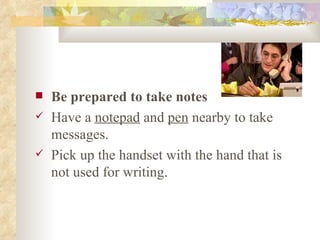
Be prepared to take notes Have a  notepad  and  pen  nearby to take messages. Pick up the handset with the hand that is not used for writing.
Respect confidentiality Do not  repeat  what you have heard over the phone to anyone else. Do not give  confidential information  over the telephone.
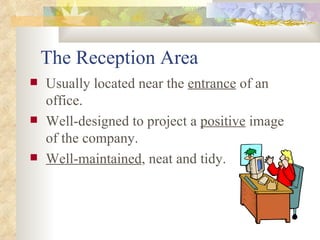
The Reception Area Usually located near the  entrance  of an office. Well-designed to project a  positive  image of the company. Well-maintained , neat and tidy.
What should a well-equipped reception area have? A  reception desk A waiting area with sofa
Reading materials for visitors,  e.g.  newspapers , magazines. Decorative plants
The company’s organization chart Telephone  directories Three-dimensional model or diagram showing the layout of the building.
The Appointment Book The Appointment Book contains  information  about appointments made by visitors for the day. It includes: Appointment  date and time Visitor’s  name Name of the visitor’s  company The person that the visitor wishes to see. Sometimes, the book even tells you the venue of the meeting place!
Now your task is to try to design a page of an appointment book!
Business Cards Business cards are often offered to the receptionists by the visitors who arrived. The receptionist then uses the information to inform the staff member who the visitor wants to see. The receptionist then record the  information  in the Reception Register.
A business card displays: Name Job Title Company’s name Company’s contact details  e.g. address, telephone number, facsimile number,  website , email address.
Reception Register Used to keep a record of the  visitors  to the company. Visitors are often asked to fill in and  sign  this reception register/ callers’ register.
It includes: Date Name of the visitor Name of the visitor’s company Time of  arrival Time of  departure The action taken
Design your own Reception Register
How does a receptionist handle  (a) visitors with appointments? Check the Appointment Book to confirm  time  of the appointment Ask for the visitor’s business card. Invite the visitor to take a seat while you inform the staff whom the visitor wishes to see. Record  the details of the business card in the Reception Register.
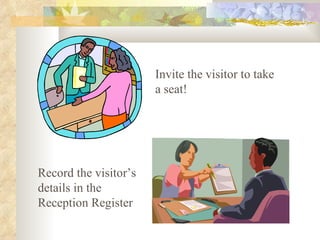
Invite the visitor to take a seat! Record the visitor’s details in the Reception Register
(b) Visitors without appointments? Politely ask about the  nature  of the visit. Ask for the visitor’s  business card. Invite the visitor to take a seat. Check with the staff member concerned. Record the details of the business card in the  Reception Register.
(c) Difficult visitors If a visitor who does not have an appointment insists on seeing an executive who is busy or not around, suggest that he sees another executive or arrange for an appointment.
Even if the visitor is angry and shouting, it is not good for you to lose your temper and shout back.  A good receptionist should remain  calm  and deal with the situation in a  professional  manner.
Explain to the visitor that the staff member is not available or is busy.  _________________________________________ _________________________________________ Politely ask whether the visitor would like to see another staff who may be able to help. _________________________________________ _________________________________________
Politely ask the visitor to leave his/her name card for the staff member to set up an appointment. Be sensitive, calm, polite and patient!! _________________________________________ _________________________________________

Chap 3 the receptionist

  • 1.
    The Receptionist Thereceptionist is the first person that the visitor to the company meets. Visitor’s impression of the organization is affected by how he/she is received by the receptionist. Therefore, the receptionist has a very important role to play!
  • 2.
    Qualities of aReceptionist Good grooming Pleasant personality Courtesy Initiative Tactful Good communication skill Clear knowledge of the organization
  • 3.
    Roles of areceptionist Handle telephone calls Handle visitors and their queries (e.g. directing visitors correctly to the appropriate destinations within the organization Making appointments Maintaining the reception area Filing
  • 4.
    Revision (How should a receptionist communicate on the phone?) Communicate effectively Speaking slowly and clearly . Listening attentively and actively. Do not eat or drink while speaking on the phone.
  • 5.
    Be courteous Smile with your voice. At the end of the call, replace the handset gently . Do not speak rudely while a caller is on hold. Do not spend a long time talking to the caller about personal things. Do not spend a long time over the telephone talking to your friends .
  • 6.
    Be prepared totake notes Have a notepad and pen nearby to take messages. Pick up the handset with the hand that is not used for writing.
  • 7.
    Respect confidentiality Donot repeat what you have heard over the phone to anyone else. Do not give confidential information over the telephone.
  • 8.
    The Reception AreaUsually located near the entrance of an office. Well-designed to project a positive image of the company. Well-maintained , neat and tidy.
  • 9.
    What should awell-equipped reception area have? A reception desk A waiting area with sofa
  • 10.
    Reading materials forvisitors, e.g. newspapers , magazines. Decorative plants
  • 11.
    The company’s organizationchart Telephone directories Three-dimensional model or diagram showing the layout of the building.
  • 12.
    The Appointment BookThe Appointment Book contains information about appointments made by visitors for the day. It includes: Appointment date and time Visitor’s name Name of the visitor’s company The person that the visitor wishes to see. Sometimes, the book even tells you the venue of the meeting place!
  • 13.
    Now your taskis to try to design a page of an appointment book!
  • 14.
    Business Cards Businesscards are often offered to the receptionists by the visitors who arrived. The receptionist then uses the information to inform the staff member who the visitor wants to see. The receptionist then record the information in the Reception Register.
  • 15.
    A business carddisplays: Name Job Title Company’s name Company’s contact details e.g. address, telephone number, facsimile number, website , email address.
  • 16.
    Reception Register Usedto keep a record of the visitors to the company. Visitors are often asked to fill in and sign this reception register/ callers’ register.
  • 17.
    It includes: DateName of the visitor Name of the visitor’s company Time of arrival Time of departure The action taken
  • 18.
    Design your ownReception Register
  • 19.
    How does areceptionist handle (a) visitors with appointments? Check the Appointment Book to confirm time of the appointment Ask for the visitor’s business card. Invite the visitor to take a seat while you inform the staff whom the visitor wishes to see. Record the details of the business card in the Reception Register.
  • 20.
    Invite the visitorto take a seat! Record the visitor’s details in the Reception Register
  • 21.
    (b) Visitors withoutappointments? Politely ask about the nature of the visit. Ask for the visitor’s business card. Invite the visitor to take a seat. Check with the staff member concerned. Record the details of the business card in the Reception Register.
  • 22.
    (c) Difficult visitorsIf a visitor who does not have an appointment insists on seeing an executive who is busy or not around, suggest that he sees another executive or arrange for an appointment.
  • 23.
    Even if thevisitor is angry and shouting, it is not good for you to lose your temper and shout back. A good receptionist should remain calm and deal with the situation in a professional manner.
  • 24.
    Explain to thevisitor that the staff member is not available or is busy. _________________________________________ _________________________________________ Politely ask whether the visitor would like to see another staff who may be able to help. _________________________________________ _________________________________________
  • 25.
    Politely ask thevisitor to leave his/her name card for the staff member to set up an appointment. Be sensitive, calm, polite and patient!! _________________________________________ _________________________________________