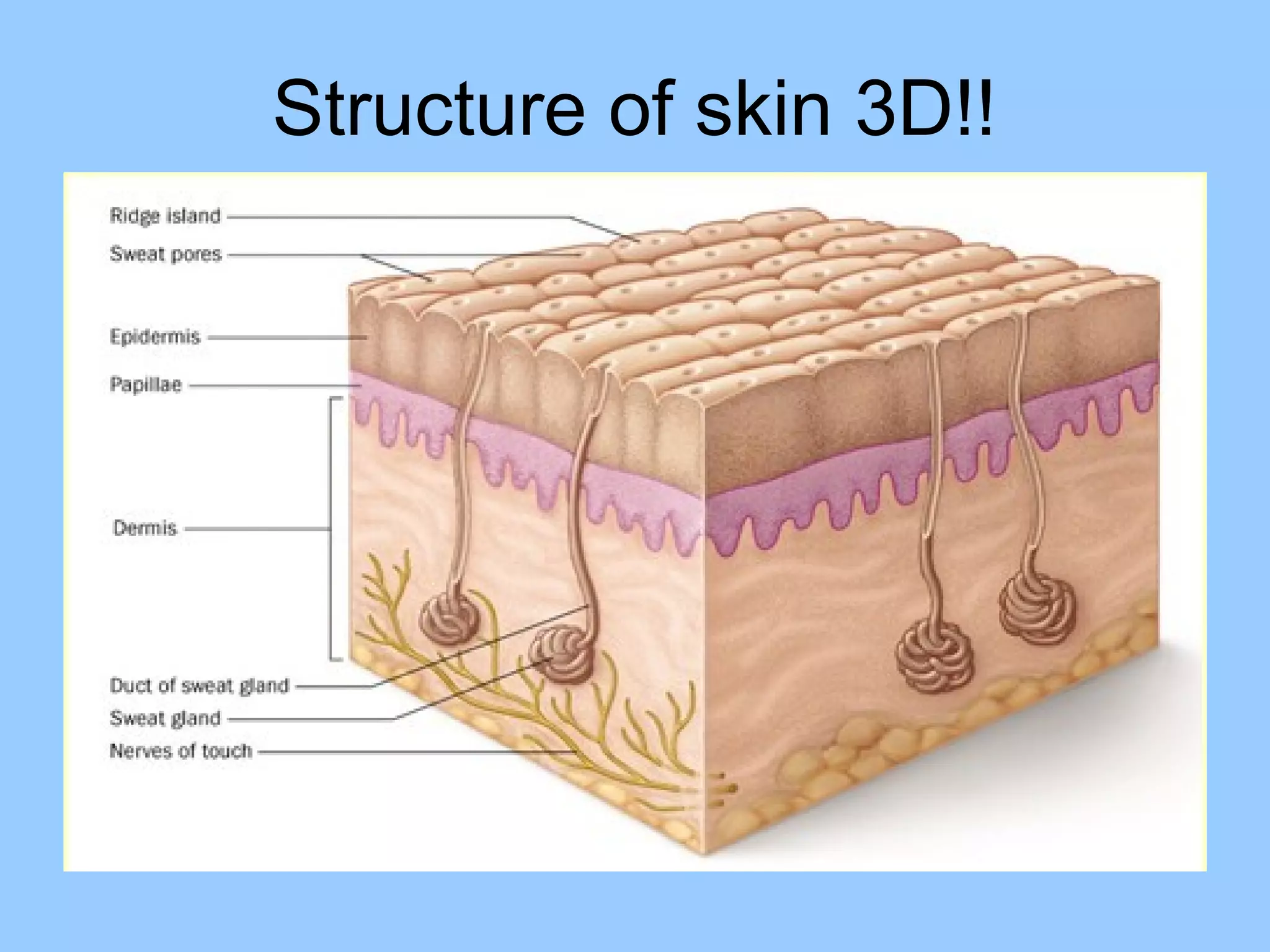
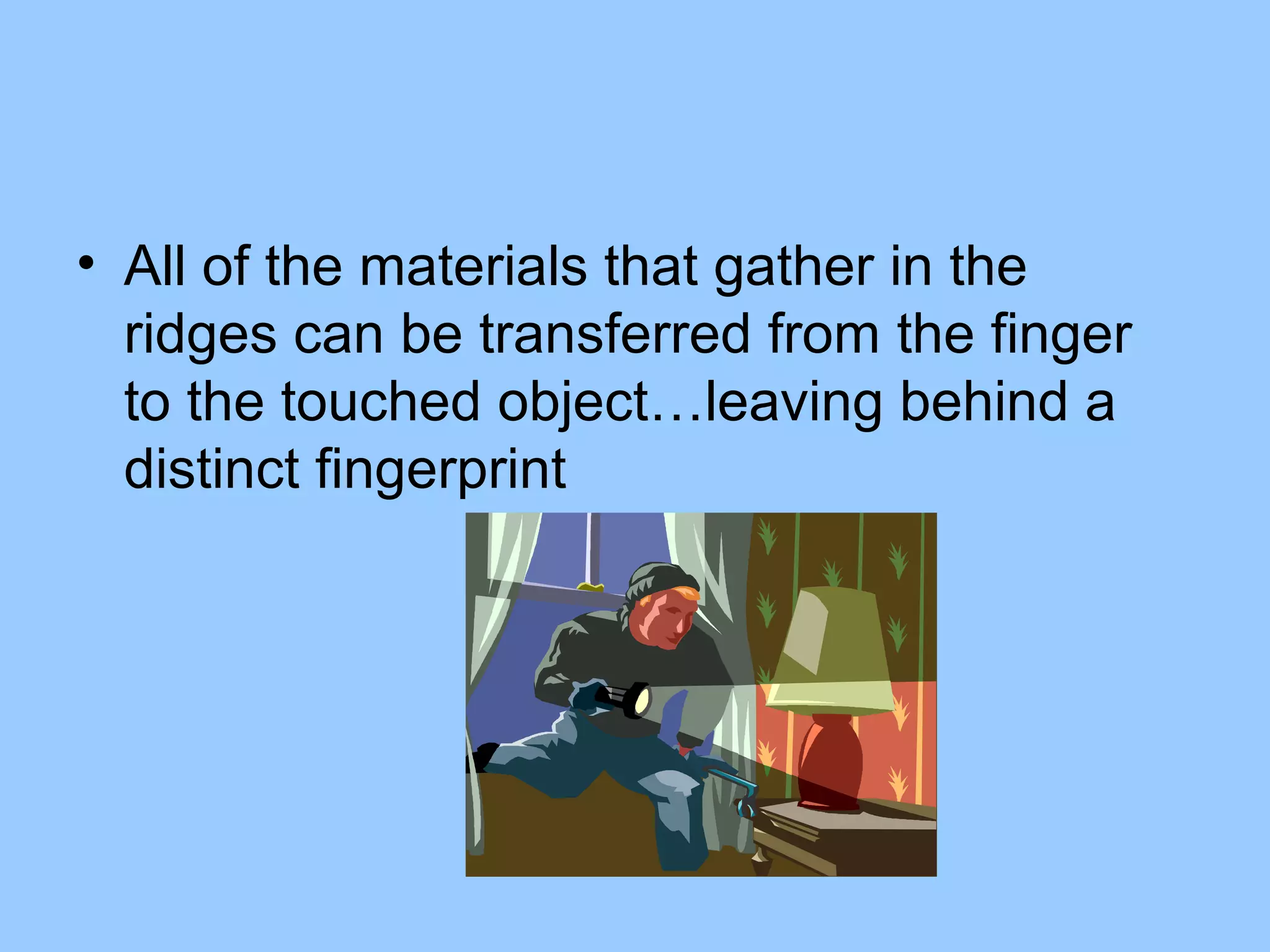
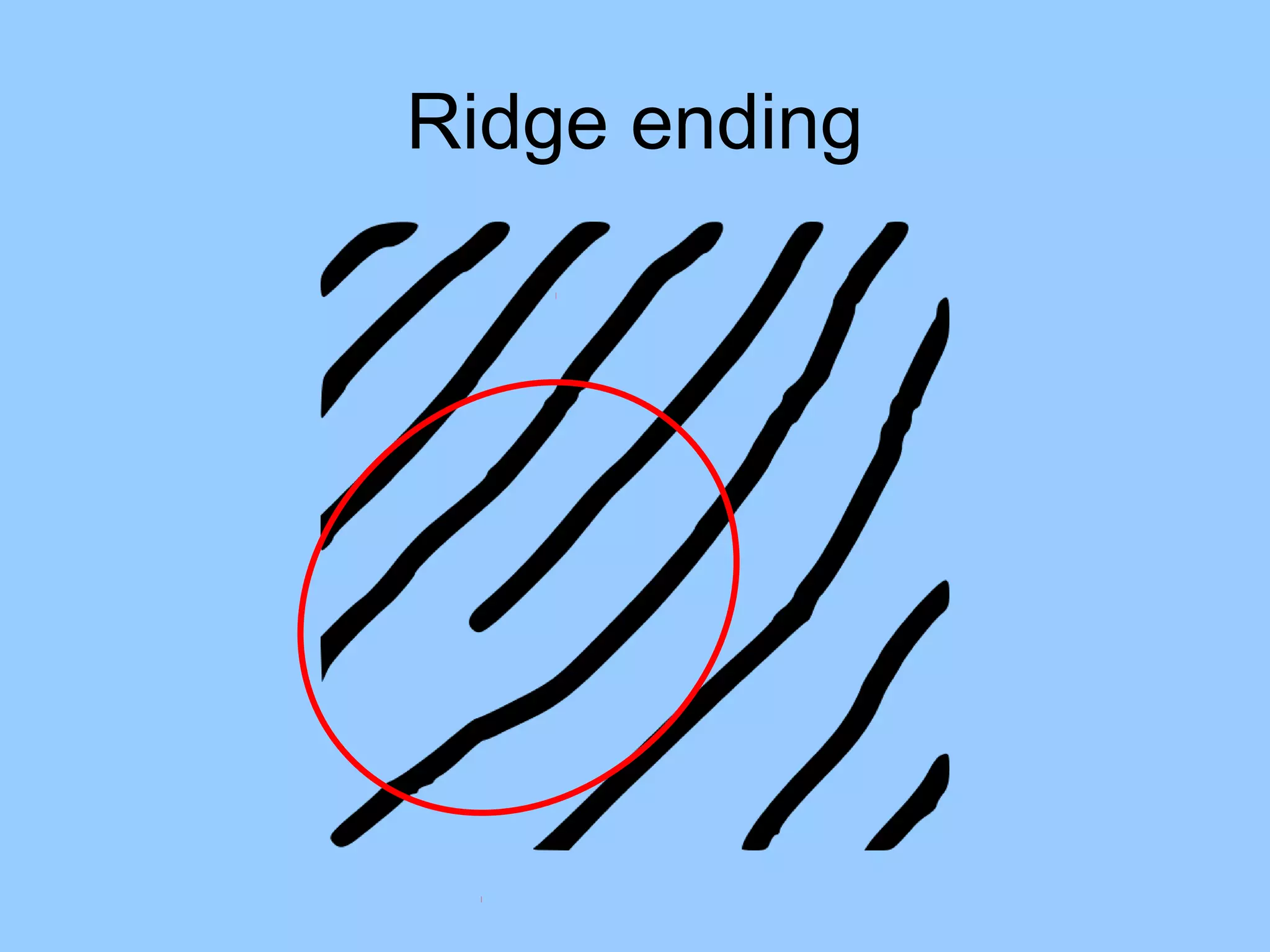
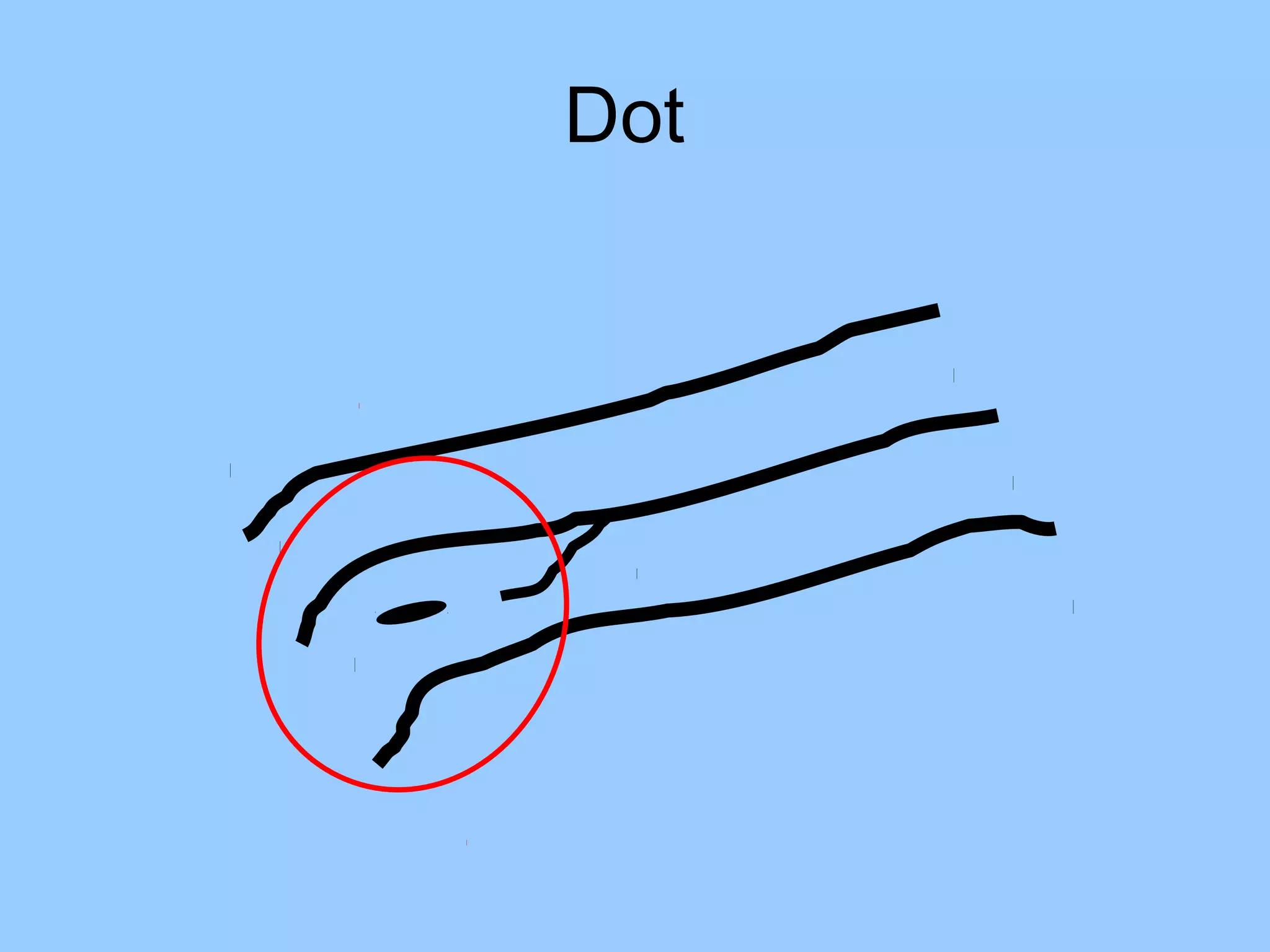
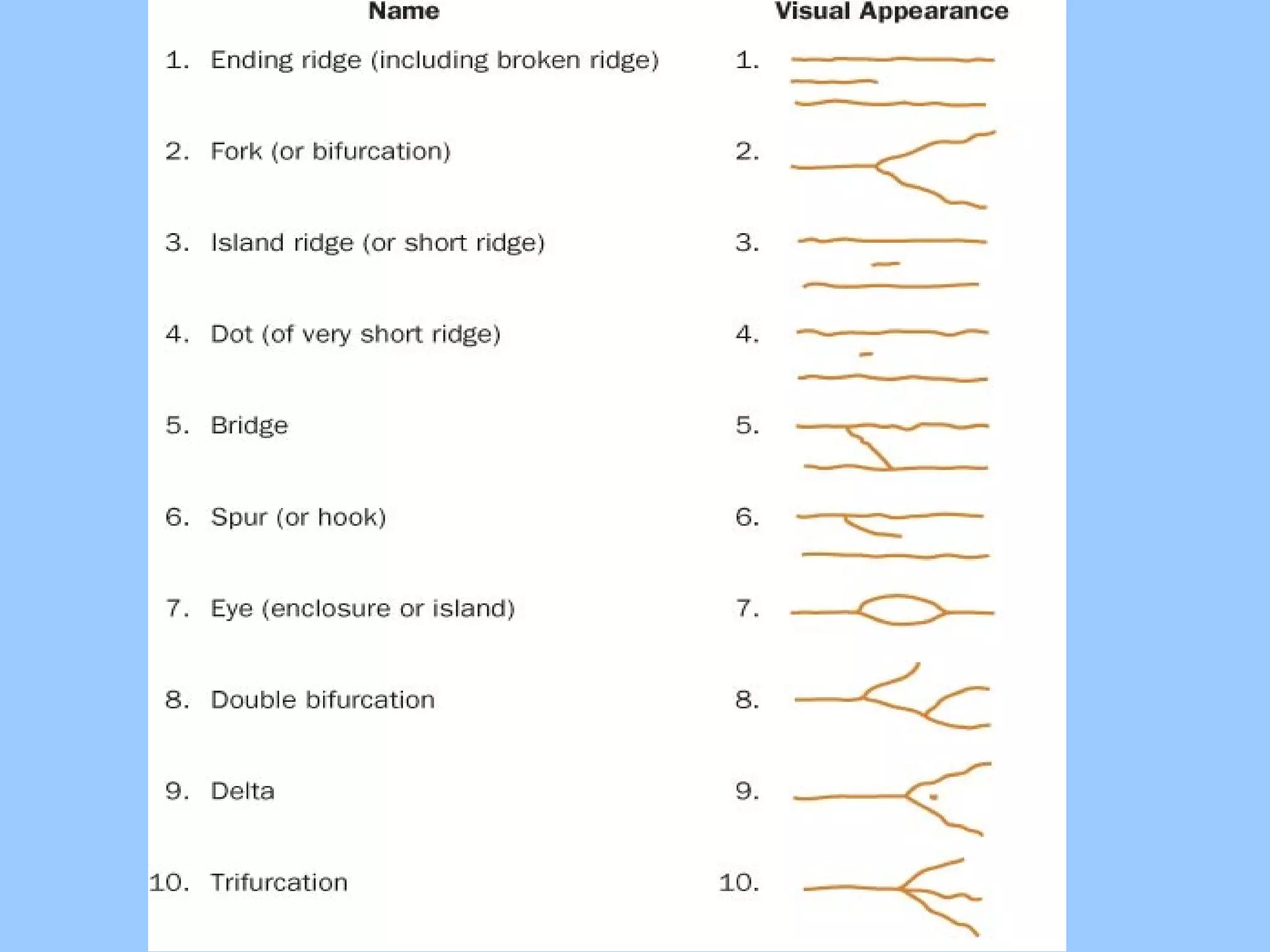
Fingerprints are formed between the third and fourth month of fetal development when sweat glands in the skin link together to form unique ridge patterns. The basal layer of skin grows at a different rate than the layers above and below it, causing it to fold into intricate ridge shapes. Materials secreted from sweat pores, like oils and water, are left behind on surfaces when fingerprints are transferred. There are three types of fingerprints found at crime scenes: latent prints that require processing to see, patent prints that are visible, and plastic prints that make three-dimensional impressions. Fingerprints are analyzed by their ridge characteristics like endings, forks, islands, dots and used by AFIS to identify matches on file.