BIOFILTRATION
IN
AIR POLLUTION
CONTROL
BY- AVANEESH DIXIT
ROLL NO 1404551017
3RD BTECH CHEMICAL ENGINEERING
Harcourt Butler technical university
1
INTRODUCTION
2
Biofiltration is a pollution control technique
using a bioreactor containing living material
to capture and biologically degrade pollutants.
Common uses include processing waste water,
capturing harmful chemicals or silt
from surface runoff, and microbiotic
oxidation of contaminants in air.
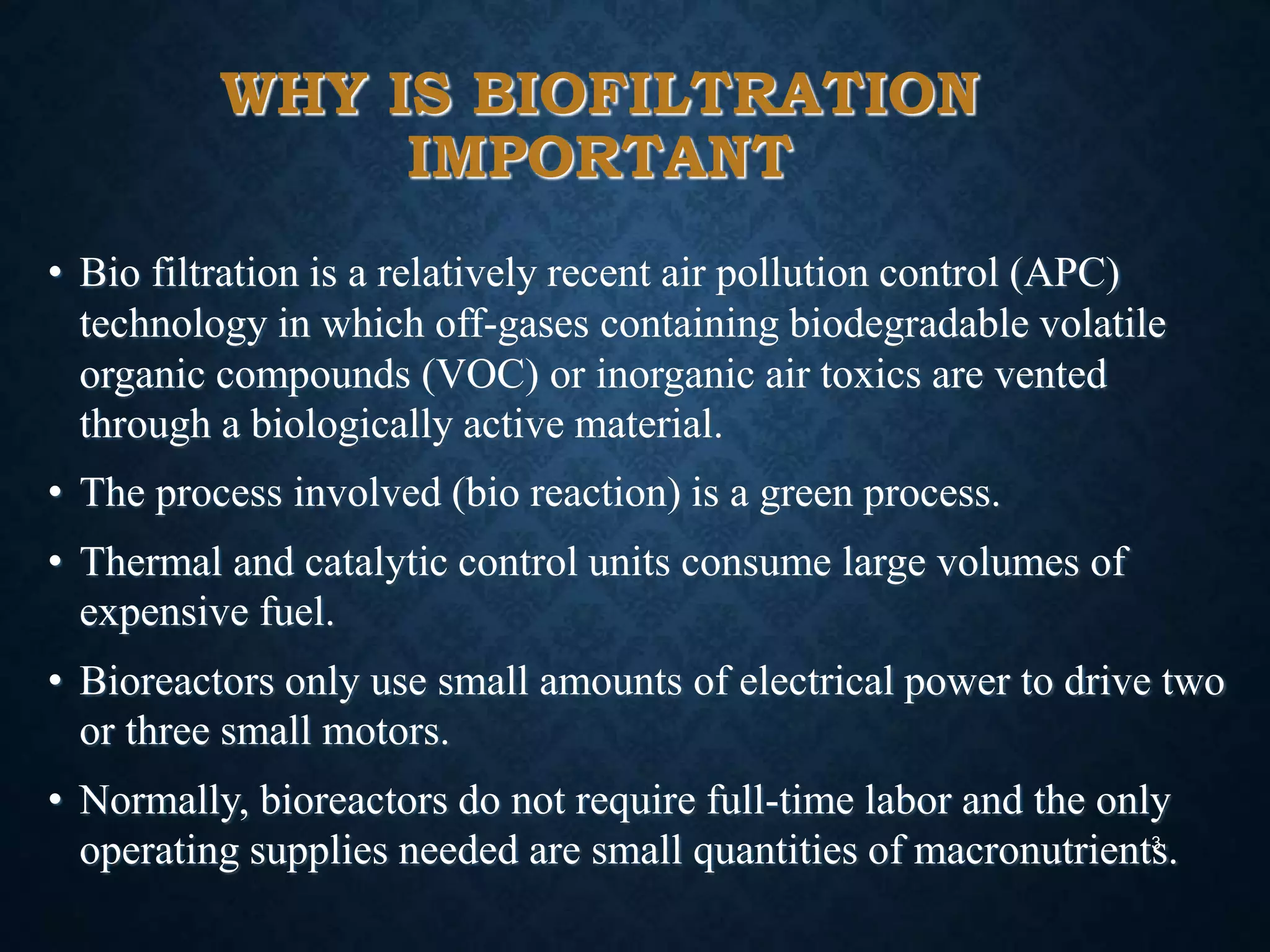
WHY IS BIOFILTRATION
IMPORTANT
• Bio filtration is a relatively recent air pollution control (APC)
technology in which off-gases containing biodegradable volatile
organic compounds (VOC) or inorganic air toxics are vented
through a biologically active material.
• The process involved (bio reaction) is a green process.
• Thermal and catalytic control units consume large volumes of
expensive fuel.
• Bioreactors only use small amounts of electrical power to drive two
or three small motors.
• Normally, bioreactors do not require full-time labor and the only
operating supplies needed are small quantities of macronutrients.3
TYPES OF BIOFILTERS
1. ON THE BASIS OF LAYOUT:
Open Bed : Uncovered and Exposed to all
Weather conditions.
Closed Bed: Enclosed with a small exhaust
port for venting of cleaned air.
2. ON THE BASIS OF SUPPORT MEDIA
Compost Bio Filter: Soil, Peat,
Compost material is used.
Synthetic Bio Filter: Ceramic, Plastic
(BTX)
4
5
3.ON THE BASIS OF SHAPE
Horizontal biofilters:
These are designed to have a larger footprints
These are relatively inexpensive and the cost of setting up is
easy.
Moreover these type of biofilters are easy maintain.
Vertical biofilters:
These are designed to reduce the footprint required.
This type of biofilters Use less surface area compared to
Horizontal.
Compared to others, this type of biofilters are expensive.
Also this filter is not easy to maintain.
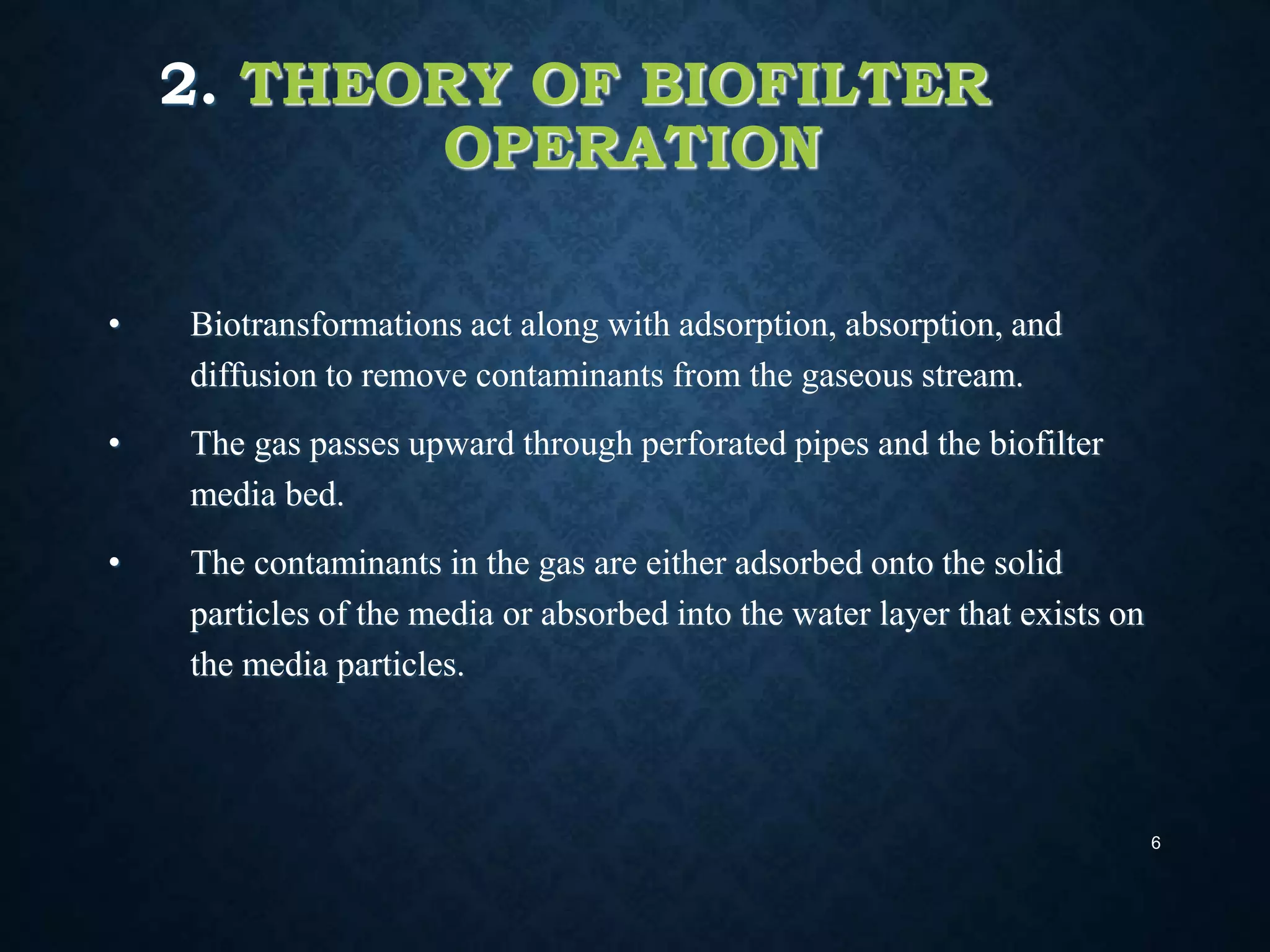
2. THEORY OF BIOFILTER
OPERATION
• Biotransformations act along with adsorption, absorption, and
diffusion to remove contaminants from the gaseous stream.
• The gas passes upward through perforated pipes and the biofilter
media bed.
• The contaminants in the gas are either adsorbed onto the solid
particles of the media or absorbed into the water layer that exists on
the media particles.
6
• The media of the filter functions both to supply inorganic nutrients and
as a supplement to the gas stream being treated for organic nutrients.
• The absorbed gases are oxidized by the microorganisms to CO2. The
volatile inorganics are also sorbed and oxidized to form calcium salts.
7
8
Process Description
Biofiltration utilizes a supported media for microbial growth to
remove odors and organic contaminants from air streams.
The filter consists of a closed chamber containing
contaminant degrading microbes and absorbed water
suspended in a filter medium. The filter medial is designed to
provide a high capacity for water uptake, have a long
working life, and provide a low pressure drop for the gases
passing through the media.
In the biofiltration process, contaminated air is moistened by
a humidifier and is pumped into the biofilter through a
chamber below the filter medium. passes out of the top of
the biofilter and into the atmosphere.
9
. Most biofilters that are in operation today can treat odor and VOCs
add efficiencies greater that 90%. However, the drawback to this
technology is that it can only handle low concentrations of pollutants
(<1000 ppm) and loading rates between 300-500 ft3/ft2-hr.
10
The moist filter medium provides physical and chemical
conditions appropriate for the transfer of contaminants from the air
to the liquid phase and the biodegradation of the contaminants in
the biofilm layer.
The mechanism of the biofiltration
process includes a combination of -
Adsorption
Absorption
Microbial degradation
11
Major considerations when determining
the appropriate filter material include:
Ability to retain moisture to sustain biofilm layer;
Large surface area, both for contaminant absorption and
microbial growth;
Ability to retain nutrients and supply them to microbes as
required;
Low resistance to air flow (minimizes pressure drop and
blower power requirements);
Physical characteristics, such as physical stability and ease
of handling
Components of a Bio-filter Unit
MATERIALS used for bed media –
peat, composted yard waste, bark, coarse soil, gravel or plastic
shapes
Oyster shells
for neutralizing acid build-up
fertilizer
for macronutrients(are mixed with bed media
FAN
used to collect contaminated air, as the emissions flow through
the bed media, the pollutants are absorbed by moisture on the
bed media. Microbes reduce pollutant concentrations by
consuming and metabolizing pollutants. During the digestion
process, enzymes in convert compounds into energy, CO2 and
water. Material that is indigestible is left over and becomes
residue.
13
DESIGN PARAMETERS
Space Constraints
Chemical Constituents and Concentrations
Residence Time
Humidity
Biofilter Media
Ph-Control
7 Pressure Drop
14
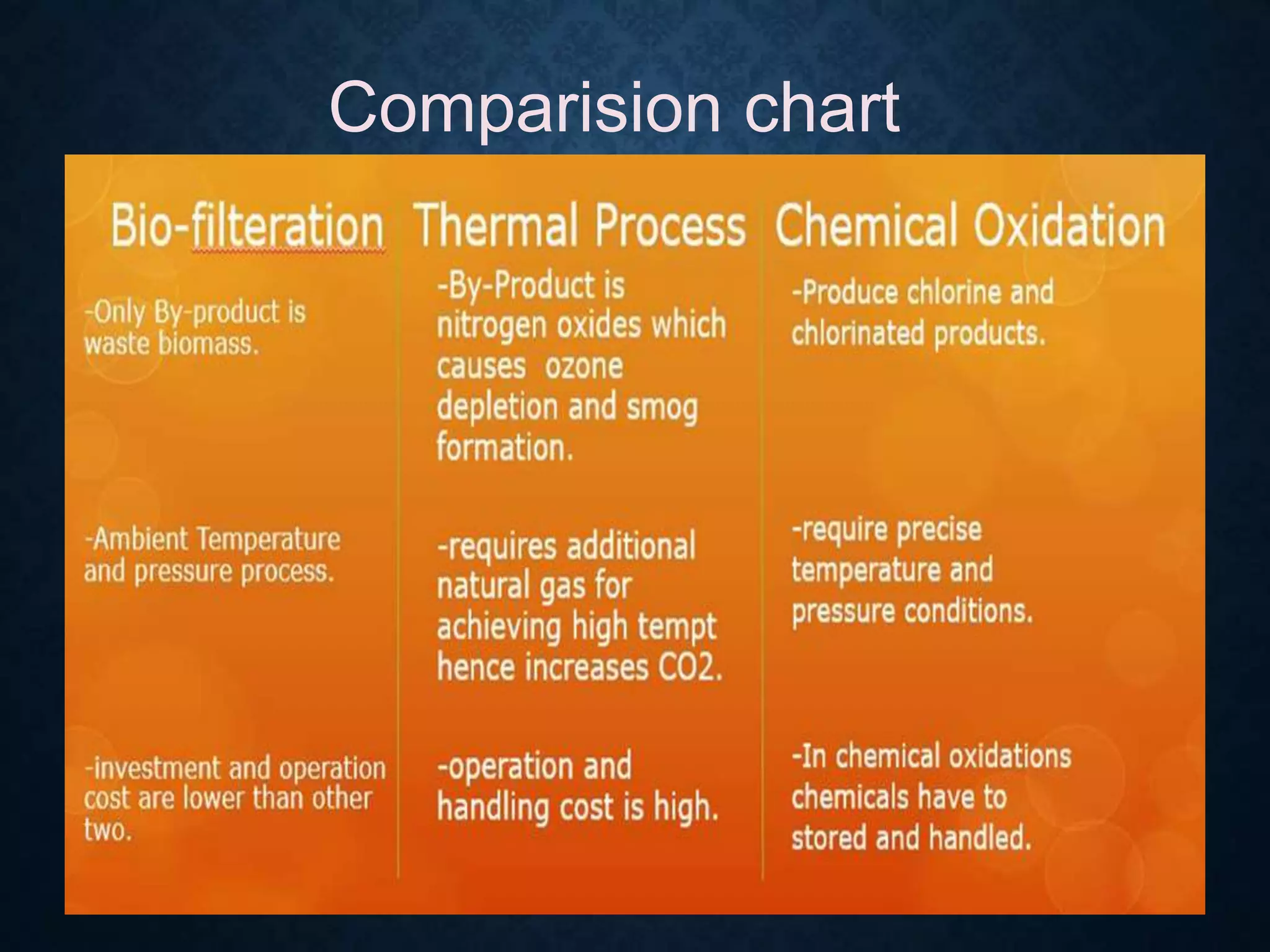
Comparision chart
15
ADVANTAGES AND DISADVANTAGES OF
BIOFILTRATION
• The main advantage of using biofiltration over other more
convention control methods are lower capita costs, lower
operating costs, low chemical usage, and no combustion
source.
• Biofiltration units can be designed to physically fit into any
industrial setting. A biofiltration unit can be designed as
any shape, size or as an open field with the piping and
delivery system underground. In addition, biofilters can be
designed with stacked beds to minimize space
requirements and multiple units can be run in parallel
16
Commercial Applications
Chemical and petrochemical industry
Oil and gas industry
Tobacco, cocoa and sugar industry
Flavor and fragrance
conclusion
Biofiltration plays very important role in control of air pollution.
Biofilter, like all systems follows laws of conservation & mass
balance.
Biofilter is successful only when microbial ecosystem is healthy &
vigorous.
The design of biofilter system requires a detailed understanding of
site, conditions, site limitations, system components & costs.
18
Thank
you

BIOFILTRATION

  • 1.
    BIOFILTRATION IN AIR POLLUTION CONTROL BY- AVANEESHDIXIT ROLL NO 1404551017 3RD BTECH CHEMICAL ENGINEERING Harcourt Butler technical university 1
  • 2.
    INTRODUCTION 2 Biofiltration is apollution control technique using a bioreactor containing living material to capture and biologically degrade pollutants. Common uses include processing waste water, capturing harmful chemicals or silt from surface runoff, and microbiotic oxidation of contaminants in air.
  • 3.
    WHY IS BIOFILTRATION IMPORTANT •Bio filtration is a relatively recent air pollution control (APC) technology in which off-gases containing biodegradable volatile organic compounds (VOC) or inorganic air toxics are vented through a biologically active material. • The process involved (bio reaction) is a green process. • Thermal and catalytic control units consume large volumes of expensive fuel. • Bioreactors only use small amounts of electrical power to drive two or three small motors. • Normally, bioreactors do not require full-time labor and the only operating supplies needed are small quantities of macronutrients.3
  • 4.
    TYPES OF BIOFILTERS 1.ON THE BASIS OF LAYOUT: Open Bed : Uncovered and Exposed to all Weather conditions. Closed Bed: Enclosed with a small exhaust port for venting of cleaned air. 2. ON THE BASIS OF SUPPORT MEDIA Compost Bio Filter: Soil, Peat, Compost material is used. Synthetic Bio Filter: Ceramic, Plastic (BTX) 4
  • 5.
    5 3.ON THE BASISOF SHAPE Horizontal biofilters: These are designed to have a larger footprints These are relatively inexpensive and the cost of setting up is easy. Moreover these type of biofilters are easy maintain. Vertical biofilters: These are designed to reduce the footprint required. This type of biofilters Use less surface area compared to Horizontal. Compared to others, this type of biofilters are expensive. Also this filter is not easy to maintain.
  • 6.
    2. THEORY OFBIOFILTER OPERATION • Biotransformations act along with adsorption, absorption, and diffusion to remove contaminants from the gaseous stream. • The gas passes upward through perforated pipes and the biofilter media bed. • The contaminants in the gas are either adsorbed onto the solid particles of the media or absorbed into the water layer that exists on the media particles. 6
  • 7.
    • The mediaof the filter functions both to supply inorganic nutrients and as a supplement to the gas stream being treated for organic nutrients. • The absorbed gases are oxidized by the microorganisms to CO2. The volatile inorganics are also sorbed and oxidized to form calcium salts. 7
  • 8.
    8 Process Description Biofiltration utilizesa supported media for microbial growth to remove odors and organic contaminants from air streams. The filter consists of a closed chamber containing contaminant degrading microbes and absorbed water suspended in a filter medium. The filter medial is designed to provide a high capacity for water uptake, have a long working life, and provide a low pressure drop for the gases passing through the media. In the biofiltration process, contaminated air is moistened by a humidifier and is pumped into the biofilter through a chamber below the filter medium. passes out of the top of the biofilter and into the atmosphere.
  • 9.
    9 . Most biofiltersthat are in operation today can treat odor and VOCs add efficiencies greater that 90%. However, the drawback to this technology is that it can only handle low concentrations of pollutants (<1000 ppm) and loading rates between 300-500 ft3/ft2-hr.
  • 10.
    10 The moist filtermedium provides physical and chemical conditions appropriate for the transfer of contaminants from the air to the liquid phase and the biodegradation of the contaminants in the biofilm layer. The mechanism of the biofiltration process includes a combination of - Adsorption Absorption Microbial degradation
  • 11.
    11 Major considerations whendetermining the appropriate filter material include: Ability to retain moisture to sustain biofilm layer; Large surface area, both for contaminant absorption and microbial growth; Ability to retain nutrients and supply them to microbes as required; Low resistance to air flow (minimizes pressure drop and blower power requirements); Physical characteristics, such as physical stability and ease of handling
  • 12.
    Components of aBio-filter Unit MATERIALS used for bed media – peat, composted yard waste, bark, coarse soil, gravel or plastic shapes Oyster shells for neutralizing acid build-up fertilizer for macronutrients(are mixed with bed media FAN used to collect contaminated air, as the emissions flow through the bed media, the pollutants are absorbed by moisture on the bed media. Microbes reduce pollutant concentrations by consuming and metabolizing pollutants. During the digestion process, enzymes in convert compounds into energy, CO2 and water. Material that is indigestible is left over and becomes residue.
  • 13.
    13 DESIGN PARAMETERS Space Constraints ChemicalConstituents and Concentrations Residence Time Humidity Biofilter Media Ph-Control 7 Pressure Drop
  • 14.
  • 15.
    15 ADVANTAGES AND DISADVANTAGESOF BIOFILTRATION • The main advantage of using biofiltration over other more convention control methods are lower capita costs, lower operating costs, low chemical usage, and no combustion source. • Biofiltration units can be designed to physically fit into any industrial setting. A biofiltration unit can be designed as any shape, size or as an open field with the piping and delivery system underground. In addition, biofilters can be designed with stacked beds to minimize space requirements and multiple units can be run in parallel
  • 16.
    16 Commercial Applications Chemical andpetrochemical industry Oil and gas industry Tobacco, cocoa and sugar industry Flavor and fragrance
  • 17.
    conclusion Biofiltration plays veryimportant role in control of air pollution. Biofilter, like all systems follows laws of conservation & mass balance. Biofilter is successful only when microbial ecosystem is healthy & vigorous. The design of biofilter system requires a detailed understanding of site, conditions, site limitations, system components & costs.
  • 18.