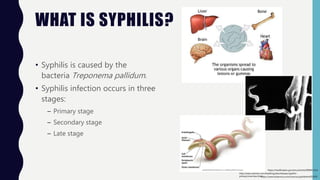
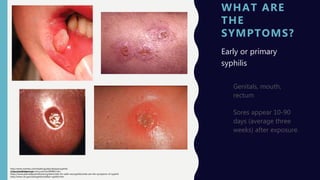
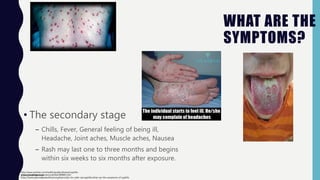
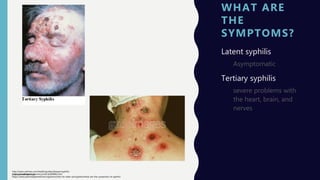
Syphilis is a bacterial infection caused by Treponema pallidum that is transmitted through direct contact with syphilis sores during sexual activity. It progresses through three stages - primary, secondary, and late stages. Primary symptoms include sores on the genitals or mouth that appear 10-90 days after exposure. Secondary symptoms that may occur months later include rash, fever, sore throat, and fatigue. Late syphilis can cause severe damage to the heart, brain, and nerves years after infection. Syphilis is treated with antibiotics but can be prevented through abstinence, monogamy, condom use, and regular STD testing.







![Polymer [ बहुलक ] Chemistry Notes PDF - Irfanullah Mehar - JJ Sir Chemistry.pdf](https://cdn.slidesharecdn.com/ss_thumbnails/polymerchemistrynotespdf-irfanullahmehar-jjsirchemistry-260210172118-3f9b37f7-thumbnail.jpg?width=640&height=640&fit=bounds)


