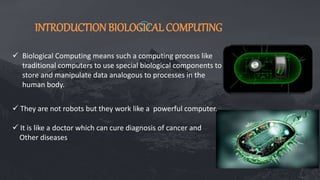
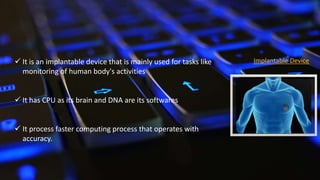
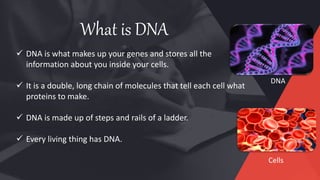
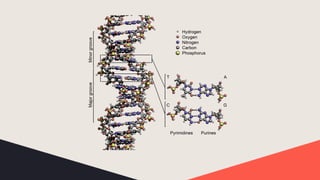
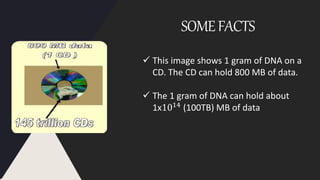
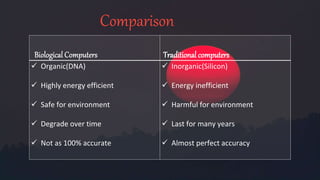
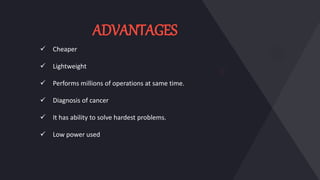
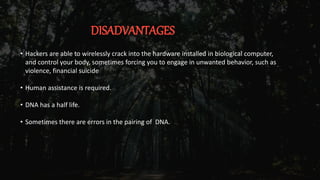
Biological computers use biological components like DNA to store and process data analogous to human body processes. They are implantable devices with a CPU and use DNA as software to monitor body activities and process data faster than traditional computers. DNA contains all genetic information in its molecular structure and biological computers use DNA computing, storing information in DNA molecules that can perform calculations much faster than regular computers using DNA's four basic components - adenine, cytosine, guanine and thymine. While biological computers are more efficient, accurate and environmentally friendly than traditional silicon-based computers, they also face challenges like potential hacking, need for human assistance, DNA degradation over time and rare pairing errors.