VESTIBULAR NEURITIS
BY ALEXANDRA PITILLI
WHAT IS VESTIBULAR NEURITIS?
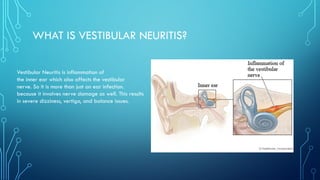
Vestibular Neuritis is inflammation of
the inner ear which also affects the vestibular
nerve. So it is more than just an ear infection.
because it involves nerve damage as well. This results
in severe dizziness, vertigo, and balance issues.
CAUSES
• Vestibular Neuritis is mainly
caused from a viral infection.
This can include: herpes, (cold
sores), influenza, or
autoimmune diseases (Hain,
2012).
SYMPTOMS
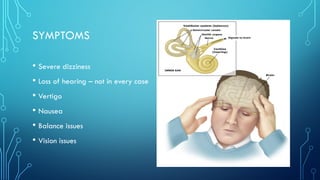
• Severe dizziness
• Loss of hearing – not in every case
• Vertigo
• Nausea
• Balance issues
• Vision issues
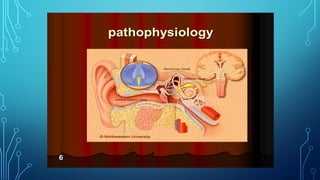
PATHOPHYSIOLOGY
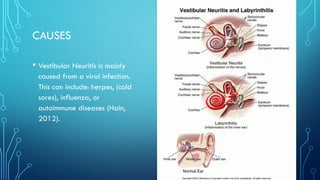
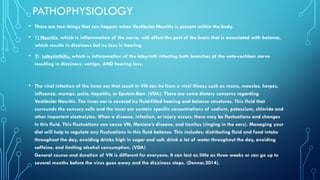
• There are two things that can happen when Vestibular Neuritis is present within the body.
• 1) Neuritis, which is inflammation of the nerve, will affect the part of the brain that is associated with balance,
which results in dizziness but no loss in hearing.
• 2) Labyrinthitis, which is inflammation of the labyrinth infecting both branches pf the veto-cochlear nerve
resulting in dizziness, vertigo, AND hearing loss.
• The viral infection of the inner ear that result in VN can be from a viral illness such as mono, measles, herpes,
influenza, mumps, polio, hepatitis, or Epstein-Barr. (VDA). There are some dietary concerns regarding
Vestibular Neuritis. The inner ear is covered by fluid-filled hearing and balance structures. This fluid that
surrounds the sensory cells and the inner ear contain specific concentrations of sodium, potassium, chloride and
other important electrolytes. When a disease, infection, or injury occurs, there may be fluctuations and changes
in this fluid. This fluctuations can cause VN, Meniere’s disease, and tinnitus (ringing in the ears). Managing your
diet will help to regulate any fluctuations in this fluid balance. This includes; distributing fluid and food intake
throughout the day, avoiding drinks high in sugar and salt, drink a lot of water throughout the day, avoiding
caffeine, and limiting alcohol consumption. (VDA)
General course and duration of VN is different for everyone. It can last as little as three weeks or can go up to
several months before the virus goes away and the dizziness stops. (Denner,2014).
PATHOPHYSIOLOGY
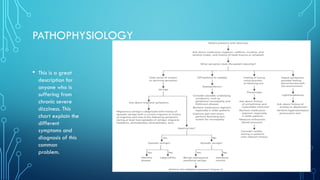
• This is a great
description for
anyone who is
suffering from
chronic severe
dizziness. This
chart explain the
different
symptoms and
diagnosis of this
common
problem.
TREATMENT
• There are many different ways to treat Vestibular Neuritis.
• 1) with frequent chiropractic treatments from a Neurological Chiropractor. In
these treatments, the doctor will perform certain maneuvers and adjustments
such as the Epley Maneuver.
• 2) Acupuncture to treat dizziness and nausea.
• 3) Certain medications such as Antivert, Ativan, or Valium.
REFERENCES
• Greco, A. (2013). Is vestibular Neuritis an immune related vestibular neuropathy inducing
vertigo. Journal of Immunology Research. 2014 (8).
• Hain, T.C (2012). Vestibular Neuritis and Labyrinthitis. Vestibular Disorders Associations.
Retrieved from:http://vestibular.org/labyrinthitis-and-vestibular-neuritis
• Pitilli, T. Personal Communication on July 17, 2017
• Strauch, I. (2017). What is vestibular neuritis. Everyday
Health. Retreived from: http://www.everydayhealth.com/vestibular-neuritis/guide/
• Vestibular, Balance, Vertigo, and Dizziness Rehabilitation. (2017). Shelborne Physiotherapy.
Retrieved from:http://www.physiotherapyvictoria.ca/vestibular/
• Watad, W. (Image). Retrieved from:http://slideplayer.com/slide/5698745/

Vestibular neuritis

  • 1.
  • 2.
    WHAT IS VESTIBULARNEURITIS? Vestibular Neuritis is inflammation of the inner ear which also affects the vestibular nerve. So it is more than just an ear infection. because it involves nerve damage as well. This results in severe dizziness, vertigo, and balance issues.
  • 3.
    CAUSES • Vestibular Neuritisis mainly caused from a viral infection. This can include: herpes, (cold sores), influenza, or autoimmune diseases (Hain, 2012).
  • 4.
    SYMPTOMS • Severe dizziness •Loss of hearing – not in every case • Vertigo • Nausea • Balance issues • Vision issues
  • 5.
    PATHOPHYSIOLOGY • There aretwo things that can happen when Vestibular Neuritis is present within the body. • 1) Neuritis, which is inflammation of the nerve, will affect the part of the brain that is associated with balance, which results in dizziness but no loss in hearing. • 2) Labyrinthitis, which is inflammation of the labyrinth infecting both branches pf the veto-cochlear nerve resulting in dizziness, vertigo, AND hearing loss. • The viral infection of the inner ear that result in VN can be from a viral illness such as mono, measles, herpes, influenza, mumps, polio, hepatitis, or Epstein-Barr. (VDA). There are some dietary concerns regarding Vestibular Neuritis. The inner ear is covered by fluid-filled hearing and balance structures. This fluid that surrounds the sensory cells and the inner ear contain specific concentrations of sodium, potassium, chloride and other important electrolytes. When a disease, infection, or injury occurs, there may be fluctuations and changes in this fluid. This fluctuations can cause VN, Meniere’s disease, and tinnitus (ringing in the ears). Managing your diet will help to regulate any fluctuations in this fluid balance. This includes; distributing fluid and food intake throughout the day, avoiding drinks high in sugar and salt, drink a lot of water throughout the day, avoiding caffeine, and limiting alcohol consumption. (VDA) General course and duration of VN is different for everyone. It can last as little as three weeks or can go up to several months before the virus goes away and the dizziness stops. (Denner,2014).
  • 6.
    PATHOPHYSIOLOGY • This isa great description for anyone who is suffering from chronic severe dizziness. This chart explain the different symptoms and diagnosis of this common problem.
  • 8.
    TREATMENT • There aremany different ways to treat Vestibular Neuritis. • 1) with frequent chiropractic treatments from a Neurological Chiropractor. In these treatments, the doctor will perform certain maneuvers and adjustments such as the Epley Maneuver. • 2) Acupuncture to treat dizziness and nausea. • 3) Certain medications such as Antivert, Ativan, or Valium.
  • 9.
    REFERENCES • Greco, A.(2013). Is vestibular Neuritis an immune related vestibular neuropathy inducing vertigo. Journal of Immunology Research. 2014 (8). • Hain, T.C (2012). Vestibular Neuritis and Labyrinthitis. Vestibular Disorders Associations. Retrieved from:http://vestibular.org/labyrinthitis-and-vestibular-neuritis • Pitilli, T. Personal Communication on July 17, 2017 • Strauch, I. (2017). What is vestibular neuritis. Everyday Health. Retreived from: http://www.everydayhealth.com/vestibular-neuritis/guide/ • Vestibular, Balance, Vertigo, and Dizziness Rehabilitation. (2017). Shelborne Physiotherapy. Retrieved from:http://www.physiotherapyvictoria.ca/vestibular/ • Watad, W. (Image). Retrieved from:http://slideplayer.com/slide/5698745/