LYMPH NODE
generally...
–oval, bean shaped structures scattered throughout body along lymph
vessels
–Usually 1-25 mm in length

–may be deep or superficial

–concentrated along the respiratory tree and GI tract, in the mammary
glands, axillae, and groin

–filter lymph fluid to trap foreign organisms, cell debris, and tumor cells
Anatomical picture
Usually 1-25
mm in length,
but they can
be larger.

Greatest
concentration
near groin,
axilla, neck,
thorax, and
along gut
tube in
abdomen.
Structure of a Lymph Node
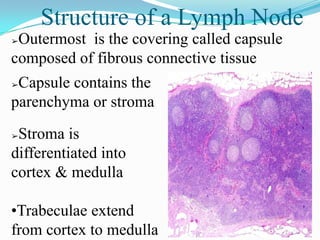
➢Outermost is the covering called capsule
composed of fibrous connective tissue
➢Capsule contains the
parenchyma or stroma

➢Stroma is
differentiated into
cortex & medulla

•Trabeculae extend
from cortex to medulla
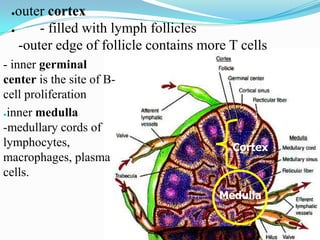
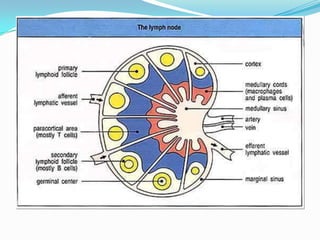
● outer cortex
 ●     - filled with lymph follicles
   -outer edge of follicle contains more T cells
- inner germinal
center is the site of B-
cell proliferation
●inner medulla

-medullary cords of
lymphocytes,                             Cortex
macrophages, plasma
cells.
                                       Medulla
Cytology of the lymph node
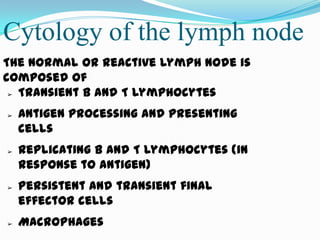
The normal or reactive lymph node is
composed of
 ➢ Transient B and T lymphocytes


➢   Antigen processing and presenting
    cells
➢   Replicating B and T lymphocytes (in
    response to antigen)
➢   Persistent and transient final
    effector cells
➢   Macrophages
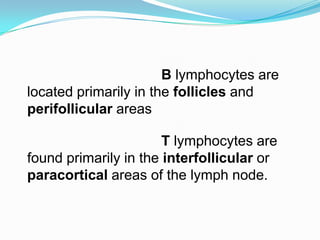
B lymphocytes are
located primarily in the follicles and
perifollicular areas

                       T lymphocytes are
found primarily in the interfollicular or
paracortical areas of the lymph node.
physiology
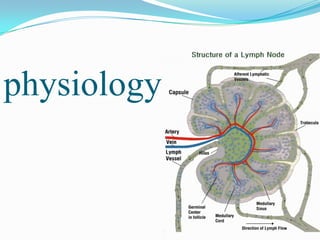
•Macrophages and lymphocytes reside in the
outer ("cortex") region of a node.

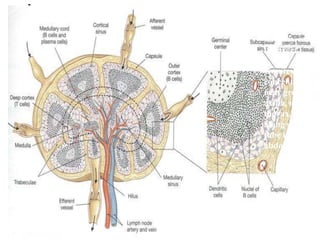
Afferent (entering) vessels bring lymph in.
●


●Lymph first enters into a large subcapsular
sinus & then into many small sinuses.

●Throughout the node are lymph sinuses
crisscrossed by reticular fibers
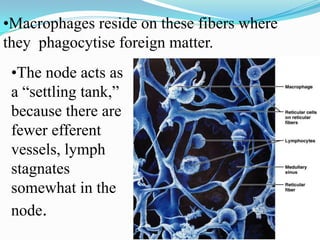
•Macrophages reside on these fibers where
they phagocytise foreign matter.
 •The node acts as
 a “settling tank,”
 because there are
 fewer efferent
 vessels, lymph
 stagnates
 somewhat in the
 node.
●This allows lymphocytes and macrophages time
to carry out their protective functions
●Reticular fibres filter and trap damaged

cells, microorganisms, foreign substances, tumor
cells.
●Macrophages phagocytize some, lymphocytes

destroy some by immune defenses.
 "Medulla" is the inner collecting area.
  Efferent (exiting) vessel leaves at the "hilus.
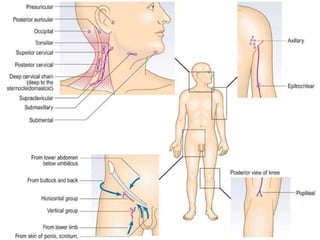
Distribution
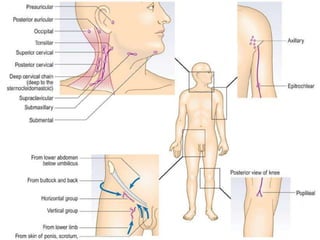
Lymph nodes of clinical importance have been
  put under 5 main groups:
➢     Cervical groups
➢     Axillary groups
➢     Inguinal groups
➢     Epitrochlear lymph nodes
➢     Popliteal lymph nodes
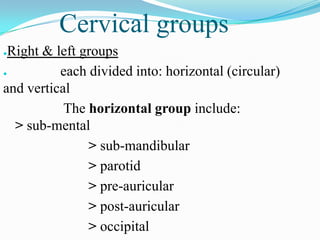
Cervical groups
● Right & left groups
●          each divided into: horizontal (circular)
and vertical
           The horizontal group include:
   > sub-mental
                > sub-mandibular
                > parotid
                > pre-auricular
                > post-auricular
                > occipital
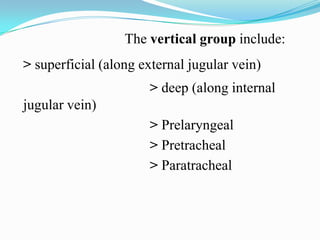
The vertical group include:
> superficial (along external jugular vein)
                      > deep (along internal
jugular vein)
                      > Prelaryngeal
                      > Pretracheal
                      > Paratracheal
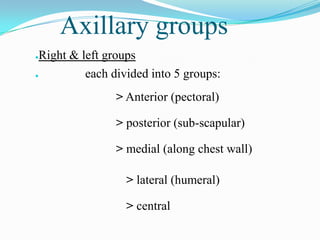
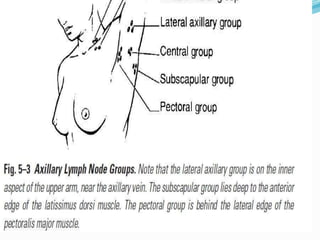
Axillary groups
● Right & left groups
●          each divided into 5 groups:
                > Anterior (pectoral)

                > posterior (sub-scapular)

                > medial (along chest wall)

                  > lateral (humeral)

                  > central
Inguinal groups
             Horizontal group lies along the
inguinal ligament (both above and over)
              Vertical group is beside the
great saphenous vein in the proximal thigh.
Iliac nodes:aboveand deep to inguinal
ligament
Epitrochlear nodes
               3 cm proximal to the medial
humeral epicondyle, in the groove between the
biceps and triceps brachii.
Thank you.....

Anatomy of lymph node

  • 1.
  • 2.
    generally... –oval, bean shapedstructures scattered throughout body along lymph vessels –Usually 1-25 mm in length –may be deep or superficial –concentrated along the respiratory tree and GI tract, in the mammary glands, axillae, and groin –filter lymph fluid to trap foreign organisms, cell debris, and tumor cells
  • 3.
  • 4.
    Usually 1-25 mm inlength, but they can be larger. Greatest concentration near groin, axilla, neck, thorax, and along gut tube in abdomen.
  • 5.
    Structure of aLymph Node ➢Outermost is the covering called capsule composed of fibrous connective tissue ➢Capsule contains the parenchyma or stroma ➢Stroma is differentiated into cortex & medulla •Trabeculae extend from cortex to medulla
  • 6.
    ● outer cortex ● - filled with lymph follicles -outer edge of follicle contains more T cells - inner germinal center is the site of B- cell proliferation ●inner medulla -medullary cords of lymphocytes, Cortex macrophages, plasma cells. Medulla
  • 8.
    Cytology of thelymph node The normal or reactive lymph node is composed of ➢ Transient B and T lymphocytes ➢ Antigen processing and presenting cells ➢ Replicating B and T lymphocytes (in response to antigen) ➢ Persistent and transient final effector cells ➢ Macrophages
  • 9.
    B lymphocytes are locatedprimarily in the follicles and perifollicular areas T lymphocytes are found primarily in the interfollicular or paracortical areas of the lymph node.
  • 10.
  • 11.
    •Macrophages and lymphocytesreside in the outer ("cortex") region of a node. Afferent (entering) vessels bring lymph in. ● ●Lymph first enters into a large subcapsular sinus & then into many small sinuses. ●Throughout the node are lymph sinuses crisscrossed by reticular fibers
  • 12.
    •Macrophages reside onthese fibers where they phagocytise foreign matter. •The node acts as a “settling tank,” because there are fewer efferent vessels, lymph stagnates somewhat in the node.
  • 13.
    ●This allows lymphocytesand macrophages time to carry out their protective functions ●Reticular fibres filter and trap damaged cells, microorganisms, foreign substances, tumor cells. ●Macrophages phagocytize some, lymphocytes destroy some by immune defenses. "Medulla" is the inner collecting area. Efferent (exiting) vessel leaves at the "hilus.
  • 14.
  • 15.
    Lymph nodes ofclinical importance have been put under 5 main groups: ➢ Cervical groups ➢ Axillary groups ➢ Inguinal groups ➢ Epitrochlear lymph nodes ➢ Popliteal lymph nodes
  • 17.
    Cervical groups ● Right& left groups ● each divided into: horizontal (circular) and vertical The horizontal group include: > sub-mental > sub-mandibular > parotid > pre-auricular > post-auricular > occipital
  • 18.
    The vertical groupinclude: > superficial (along external jugular vein) > deep (along internal jugular vein) > Prelaryngeal > Pretracheal > Paratracheal
  • 19.
    Axillary groups ● Right& left groups ● each divided into 5 groups: > Anterior (pectoral) > posterior (sub-scapular) > medial (along chest wall) > lateral (humeral) > central
  • 21.
    Inguinal groups Horizontal group lies along the inguinal ligament (both above and over) Vertical group is beside the great saphenous vein in the proximal thigh. Iliac nodes:aboveand deep to inguinal ligament
  • 23.
    Epitrochlear nodes 3 cm proximal to the medial humeral epicondyle, in the groove between the biceps and triceps brachii.
  • 24.