Service Logic – a new Dominant Logic for the Social Customer Relationship Marketerby WimRampenimage courtesy: http://www.flickr.com/photos/stuartslimp/3936066556/in/pool-crowded_multitude
Goods dominant logic:value is created at the moment of exchange, after that, the Customer is on his ownvalue exchange: when money and ownership or rights change handsimage courtesy: http://www.flickr.com/photos/mithril/2764675971/
The new dominant logic: Service Logicis not about selling servicesimage courtesy: http://www.flickr.com/photos/ptrktn/3801479228/
Service Logic: value co-creation happens AFTER value exchangeimage courtesy: http://www.flickr.com/photos/viriyincy/3594764008/
Value for customers means that, after they have been assisted by a self-service or full-service process, they are – or feel – better off than beforeimage courtesy: http://www.flickr.com/photos/yalcin_arsan/4055973255/in/pool-crowded_multitude
Whether a Customer is – or feels – better off is determined by the Customerimage courtesy:: http://www.flickr.com/photos/yalcin_arsan/4001627189/in/pool-crowded_multitude
Value is co-created when customer desired outcomes are metin other words: when the Customer’s job is done to his satisfactionimage courtesy: http://www.flickr.com/photos/cassandrasarmanho/4006047824/in/pool-crowded_multitude

Fact: most Customers can use some help in creating valueimage courtesy: http://www.flickr.com/photos/cleopatra69/4033747792/in/pool-crowded_multitude
If value for the Customer is dominantly created after value exchange, i.e. IN USE, both scope and content of marketing strategies should shift from dominantly focused on creating momentum for value exchange to a continuum of interactions in networks of relationships aimed to support customers’ value creation image courtesy: http://www.flickr.com/photos/beeteeoh/3298373727/
The “new” goal for marketing is to support (and improve) customers’ value creation “in use”image courtesy: http://www.flickr.com/photos/msdm/3491968596/
Value “in use” is determined by Customer outcomes of experiences during the lifetime of consumption of products & servicesimage courtesy: http://www.flickr.com/photos/seasonalplume/2607760460/
Touch-points and interactions (in networks) of relationships are the building blocks of personalized experiences in a socially networked eco-systemimage courtesy: http://www.flickr.com/photos/rakustow/3942156152/
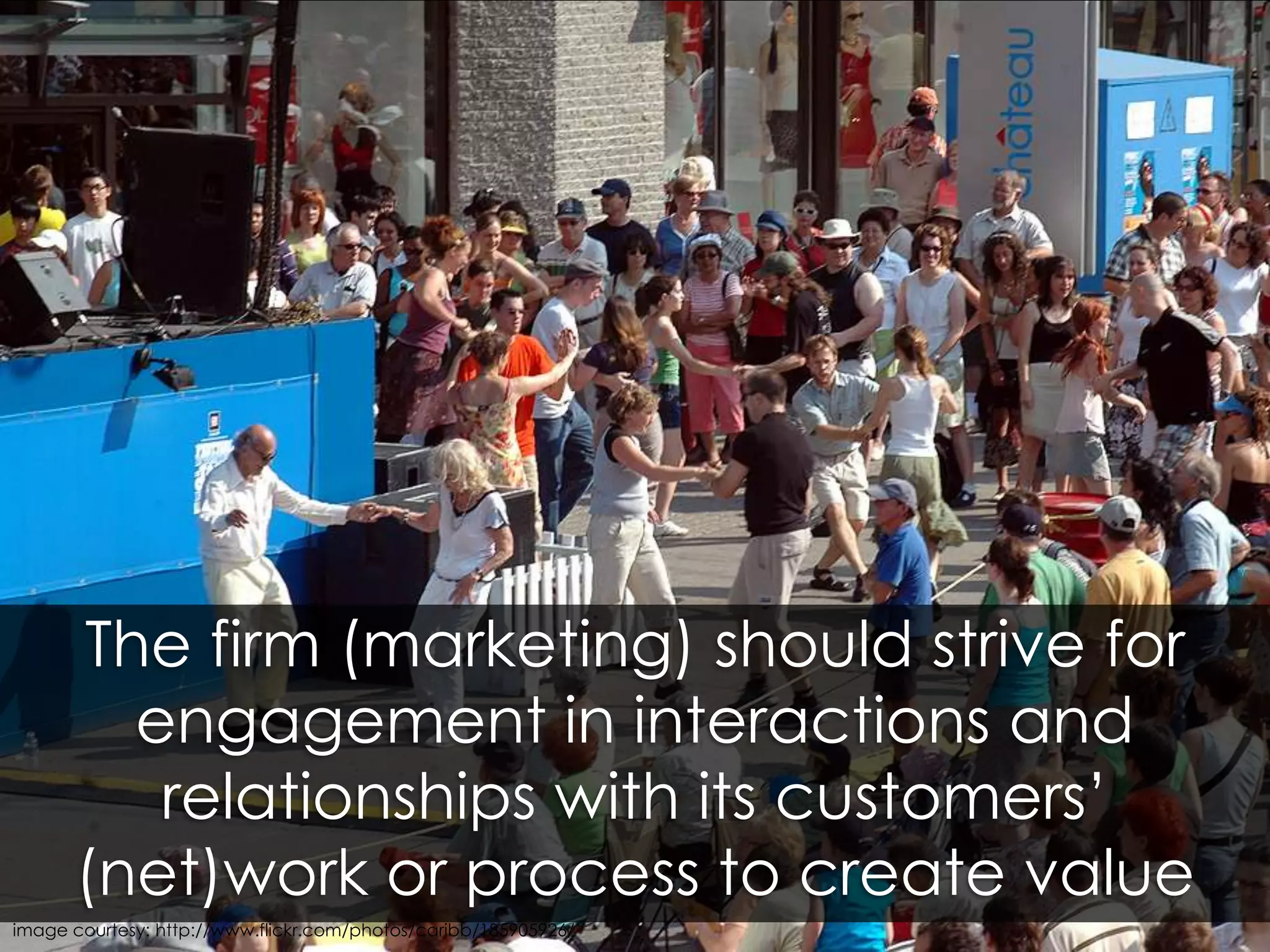
The firm (marketing) should strive for engagement in interactions and relationships with its customers’ (net)work or process to create valueimage courtesy: http://www.flickr.com/photos/caribb/185905926/
5 Questions for today’s marketersimage courtesy: http://www.flickr.com/photos/downingstreet/3386080464/
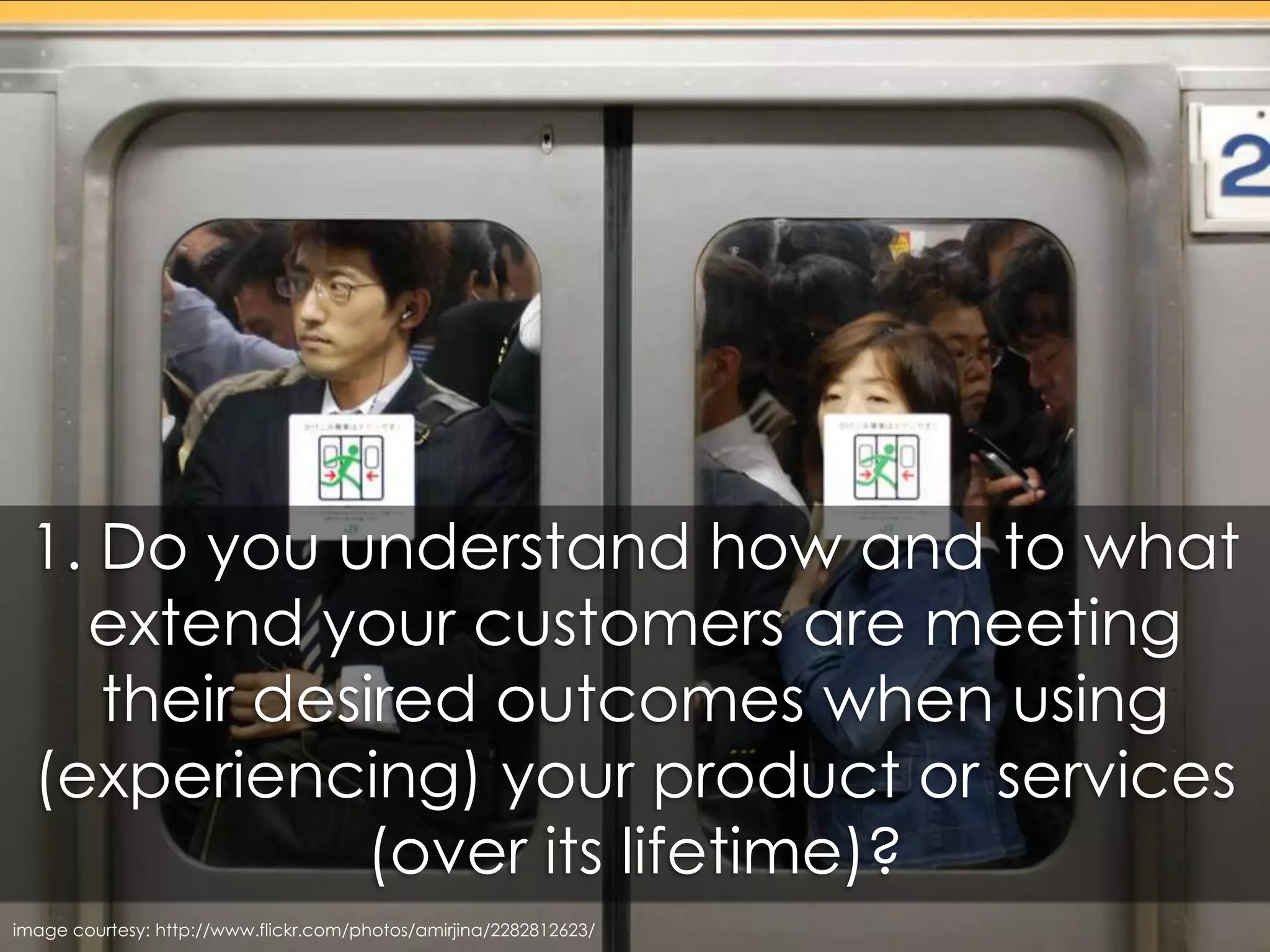
1. Do you understand how and to what extent your customers are meeting their desired outcomes when using (experiencing) your product or services (over its lifetime)?image courtesy: http://www.flickr.com/photos/amirjina/2282812623/
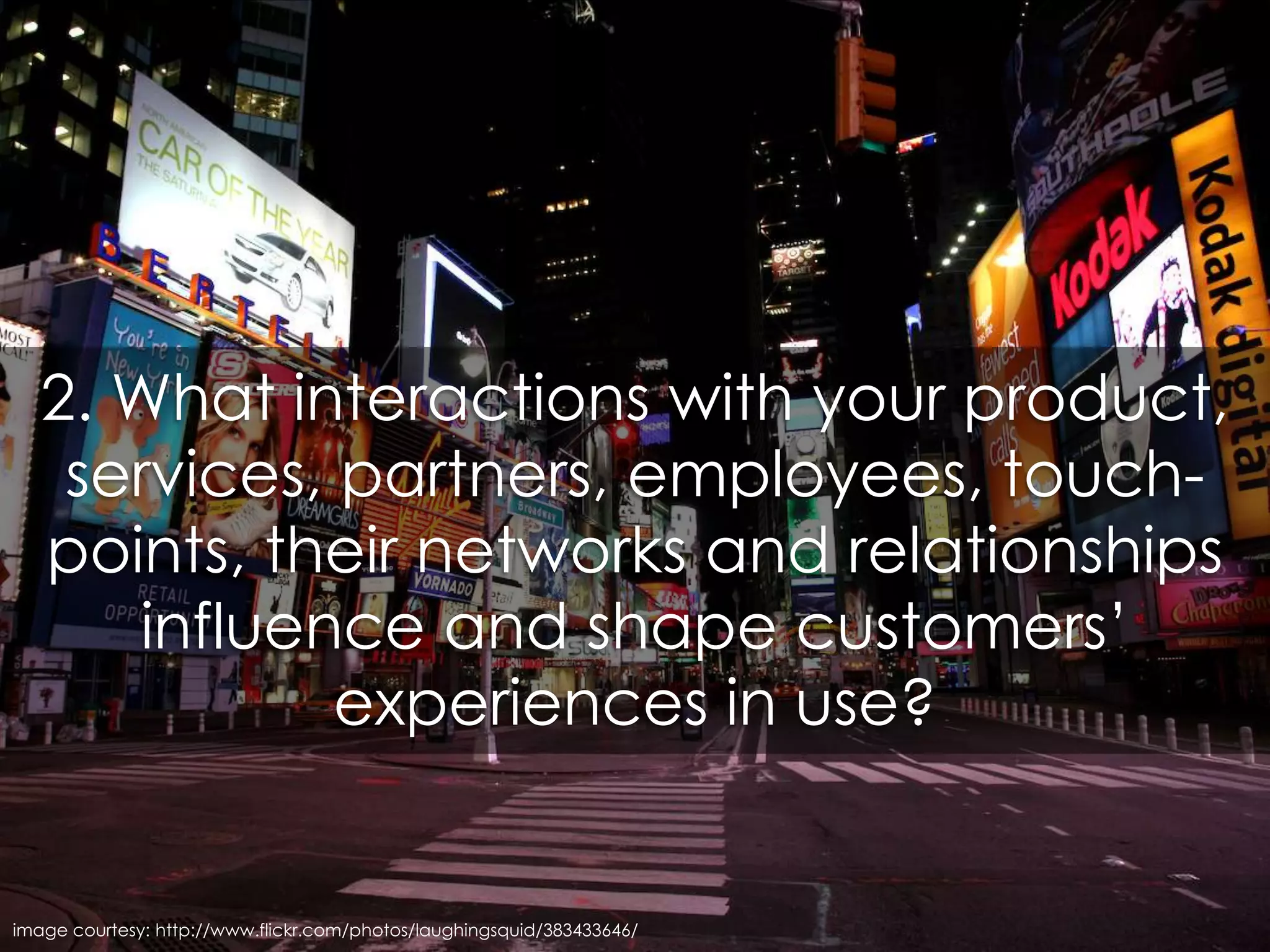
2. What interactions with your product, services, partners, employees, touch-points, their networks and relationships influence and shape customers’ experiences in use?image courtesy: http://www.flickr.com/photos/laughingsquid/383433646/
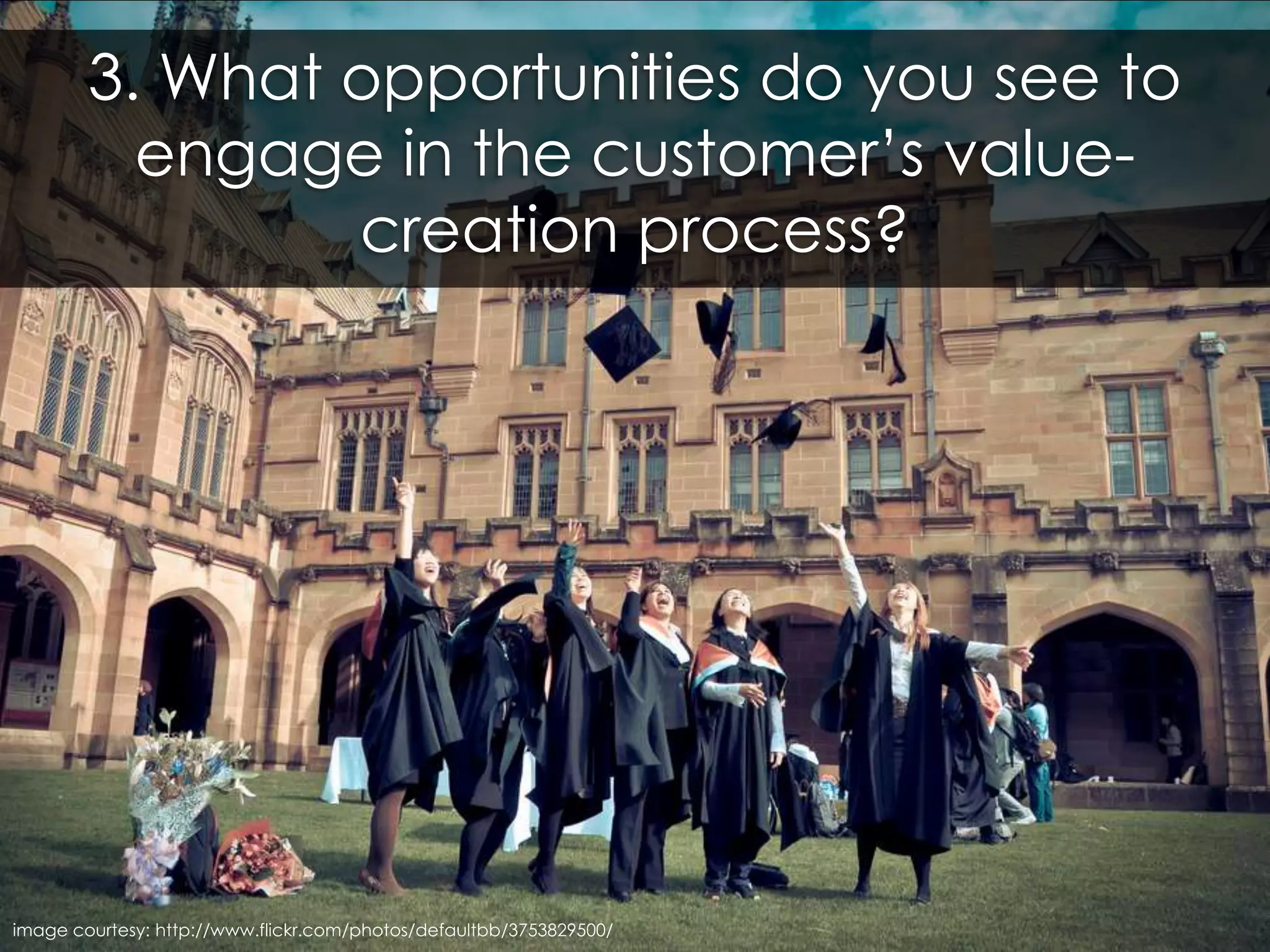
3. What opportunities do you see to engage in the customer’s value-creation process?image courtesy: http://www.flickr.com/photos/defaultbb/3753829500/
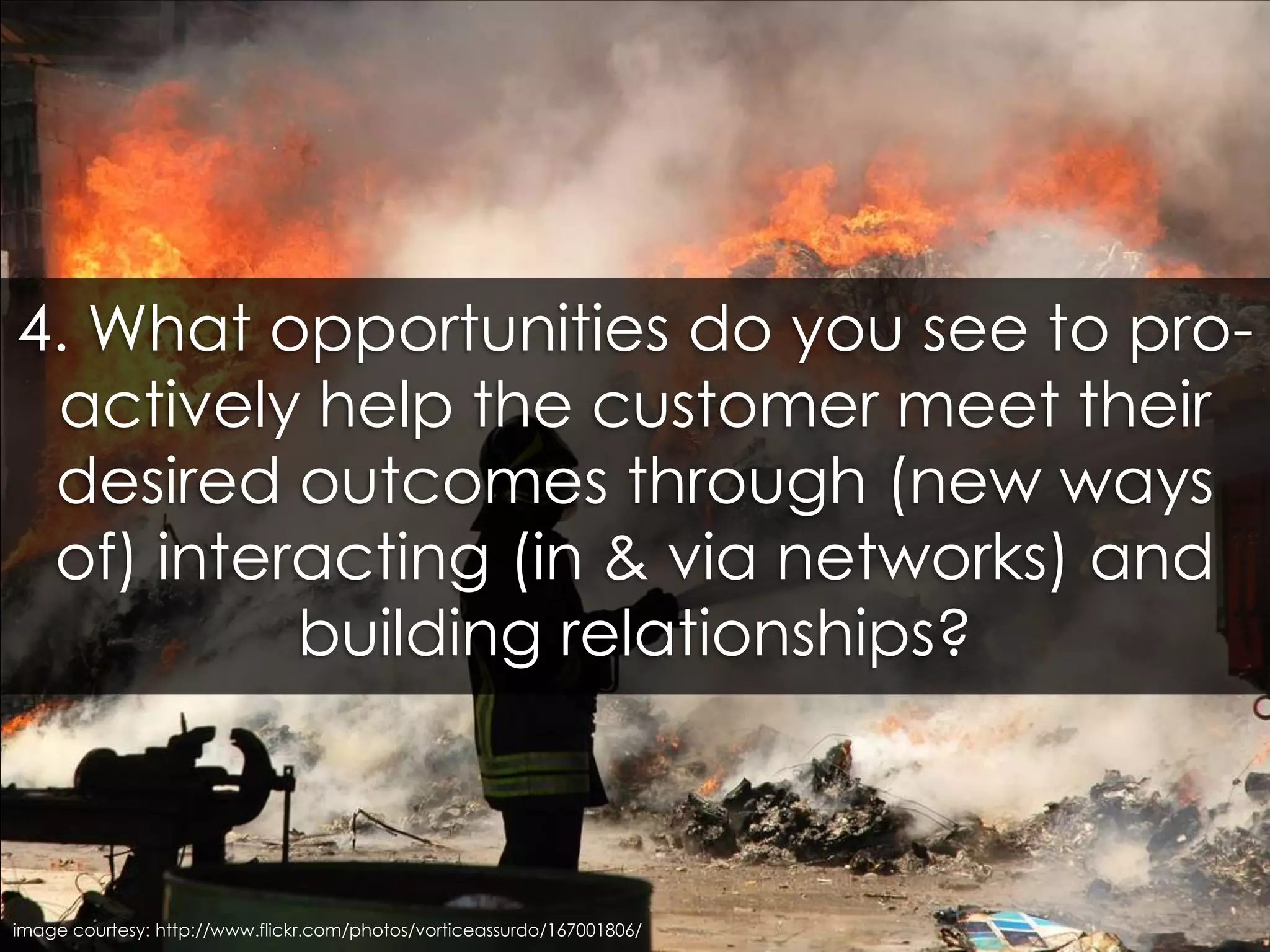
4. What opportunities do you see to pro-actively help the customer meet their desired outcomes through (new ways of) interacting (in & via networks) and building relationships?image courtesy: http://www.flickr.com/photos/vorticeassurdo/167001806/
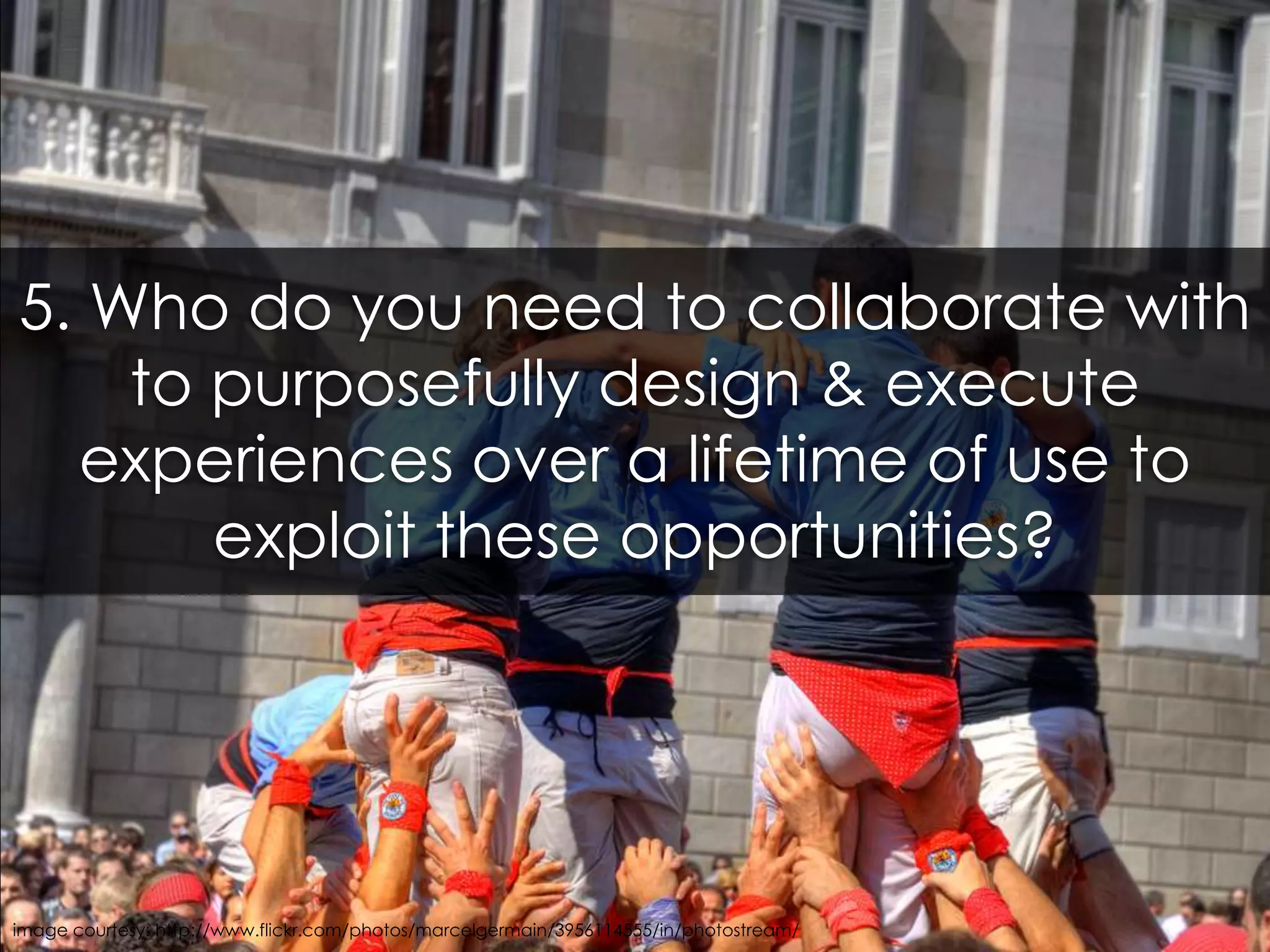
5. Who do you need to collaborate with to purposefully design & execute experiences over a lifetime of use to exploit these opportunities?image courtesy: http://www.flickr.com/photos/marcelgermain/3956114555/in/photostream/
How does “Social” tie into all this?image courtesy: http://www.flickr.com/photos/nycviarachel/507963159/
A. SOCIAL CRM STRATEGY FRAMEWORK STATEMENT (version 2)A socialcrmstrategy is aboutunderstandingwho the customer is throughlistening to, engagingwith and collaborationbetweencustomers, employees and partners. It is aimed at developinginnovations, interactions in networks of relationships and communitiesthat support customers in doing the jobs theyneed to do. The means are a personalized design of the service experiencethatempowerscustomers, employees and partners to influencehowwelltheycan meet theirdesiredoutcomes
B. 3 out of 15 new trends driving Social BusinessCourtesy: Graham Hillimage courtesy: http://www.flickr.com/photos/azarov/3279771862/
B#1. From Individual Customers to Networks of Customers
B#12. From Stand-alone Companies to an Ecosystem of Networked Partnersimage courtesy: http://www.flickr.com/photos/mattsabo17/143172563/
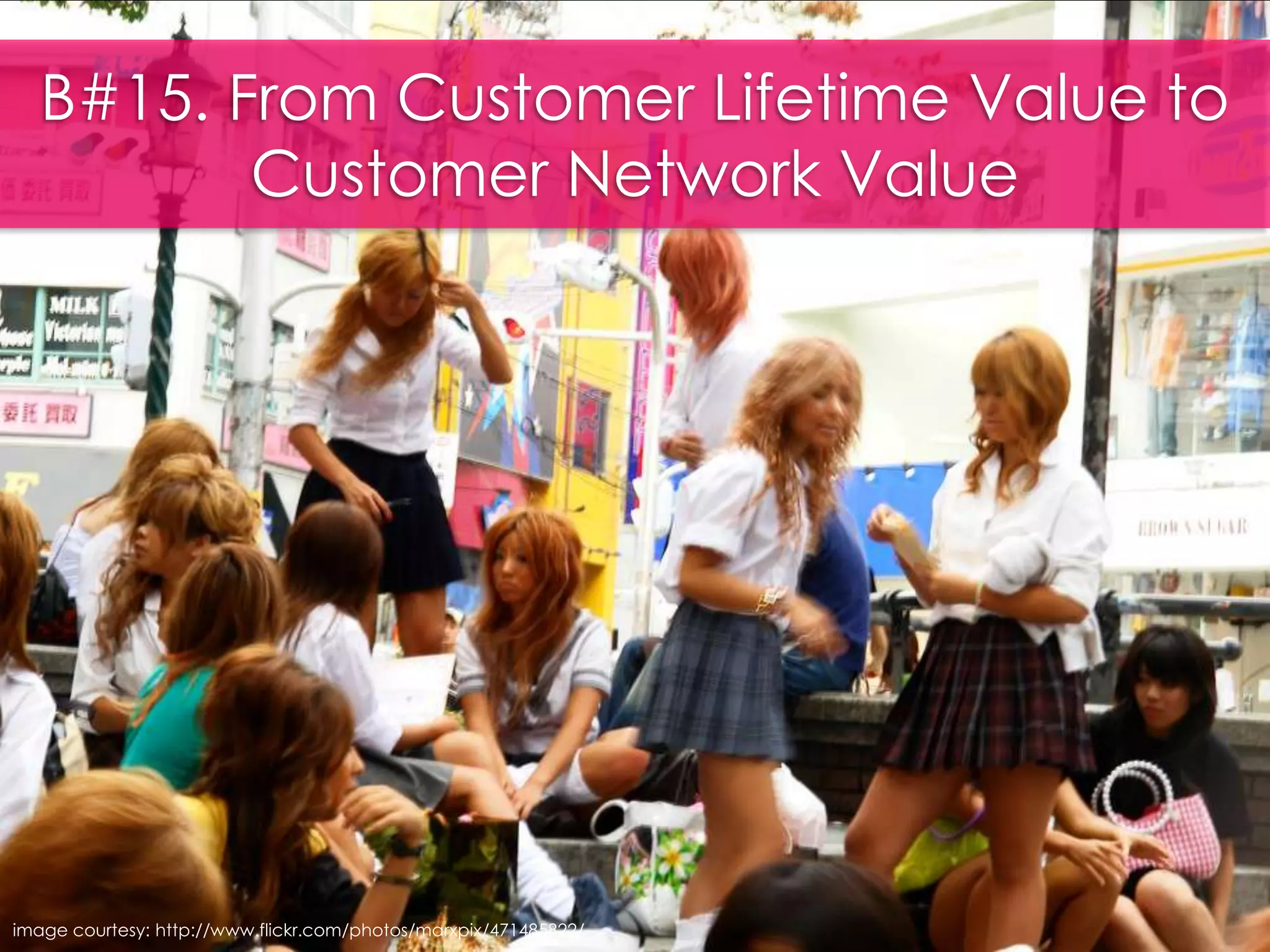
B#15. From Customer Lifetime Value to Customer Network Valueimage courtesy: http://www.flickr.com/photos/marxpix/471485822/
Implications for Marketingimage courtesy: http://www.flickr.com/photos/ahmadnawawi/3808452611/
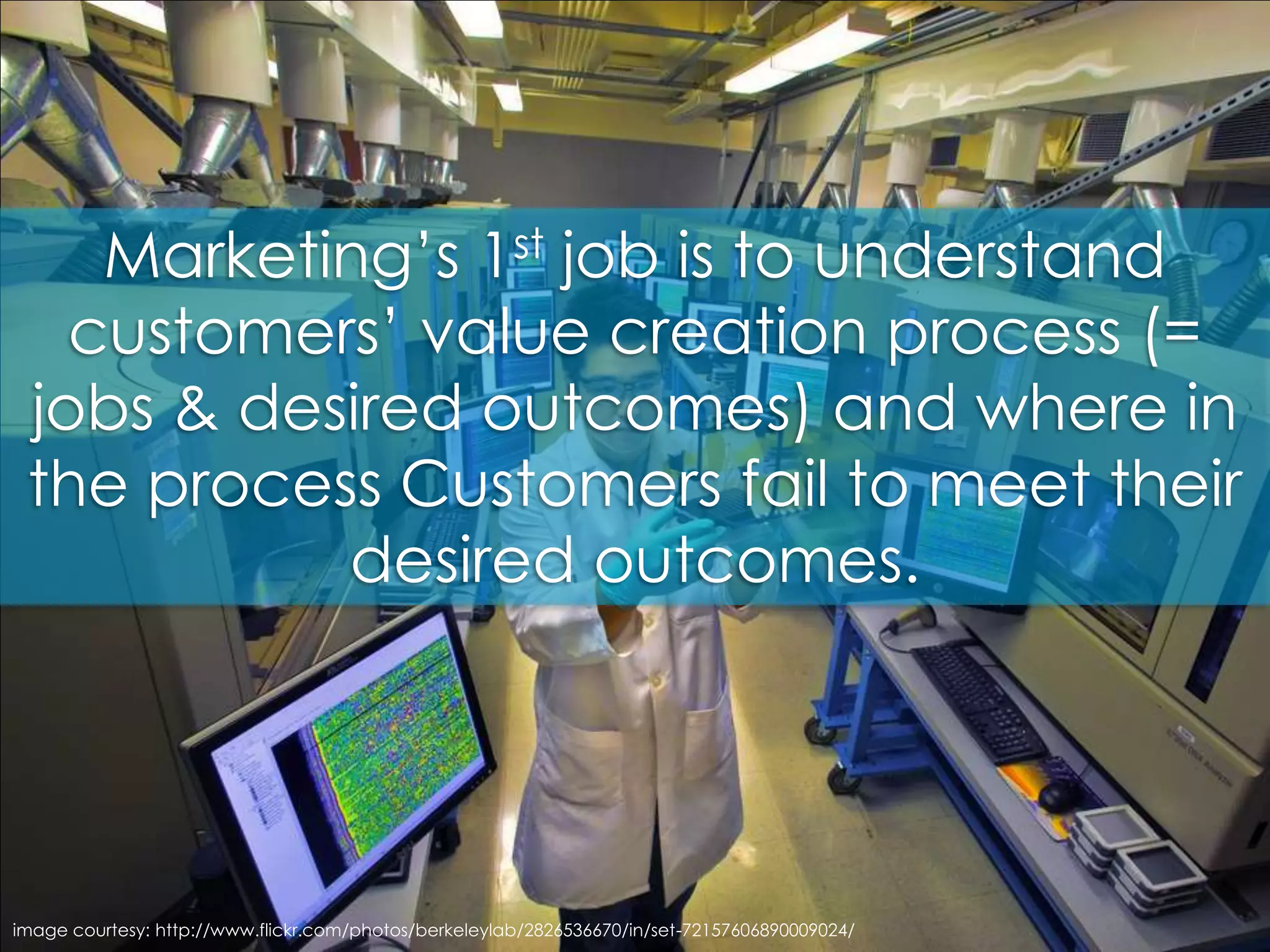
Marketing’s 1st job is to understand customers’ value creation process (= jobs & desired outcomes) and where in the process Customers fail to meet their desired outcomes. image courtesy: http://www.flickr.com/photos/berkeleylab/2826536670/in/set-72157606890009024/
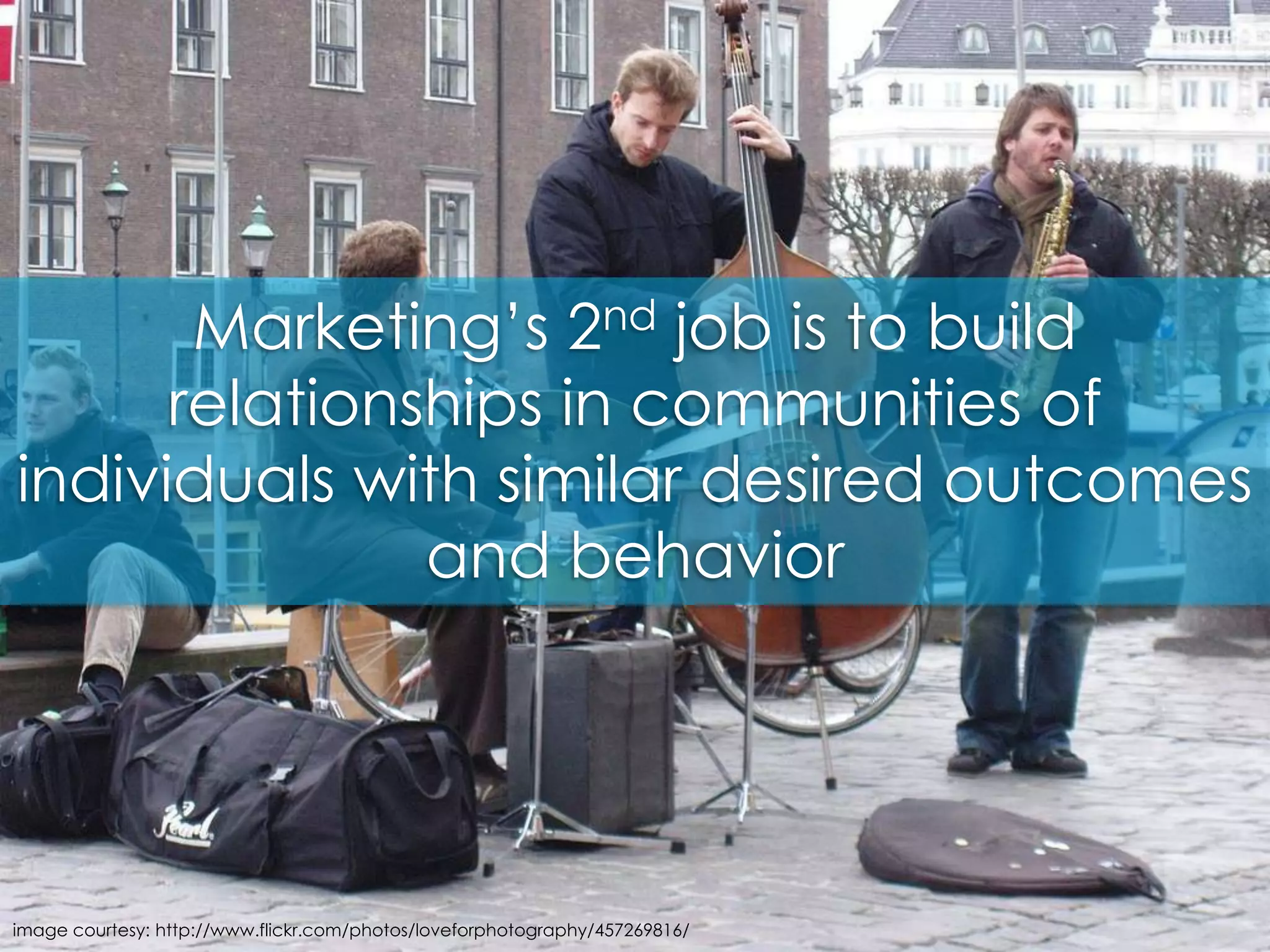
Marketing’s 2nd job is to build relationships in communities of individuals with similar desired outcomes and behaviorimage courtesy: http://www.flickr.com/photos/loveforphotography/457269816/
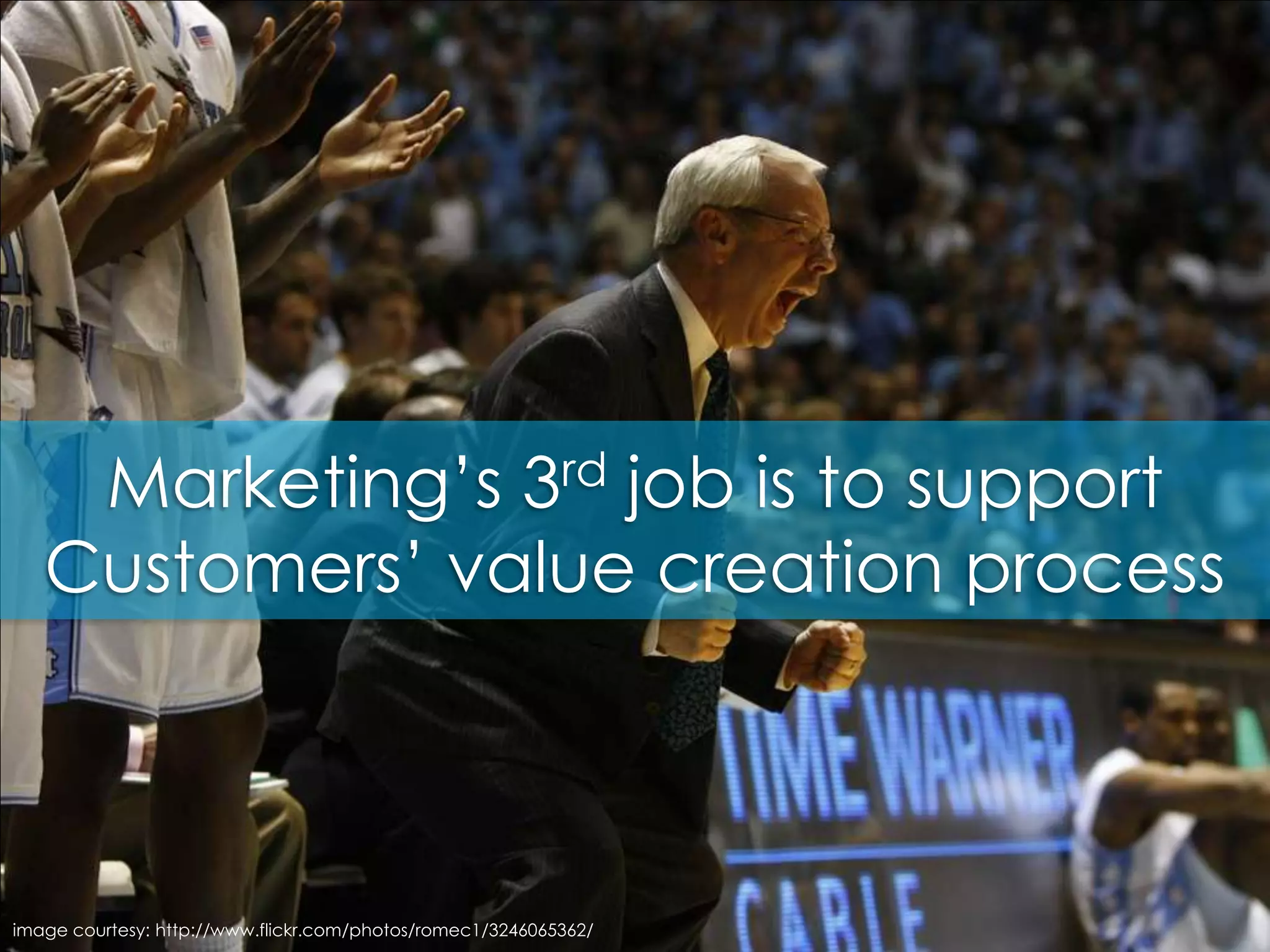
Marketing’s 3rd job is to support Customers’ value creation processimage courtesy: http://www.flickr.com/photos/romec1/3246065362/
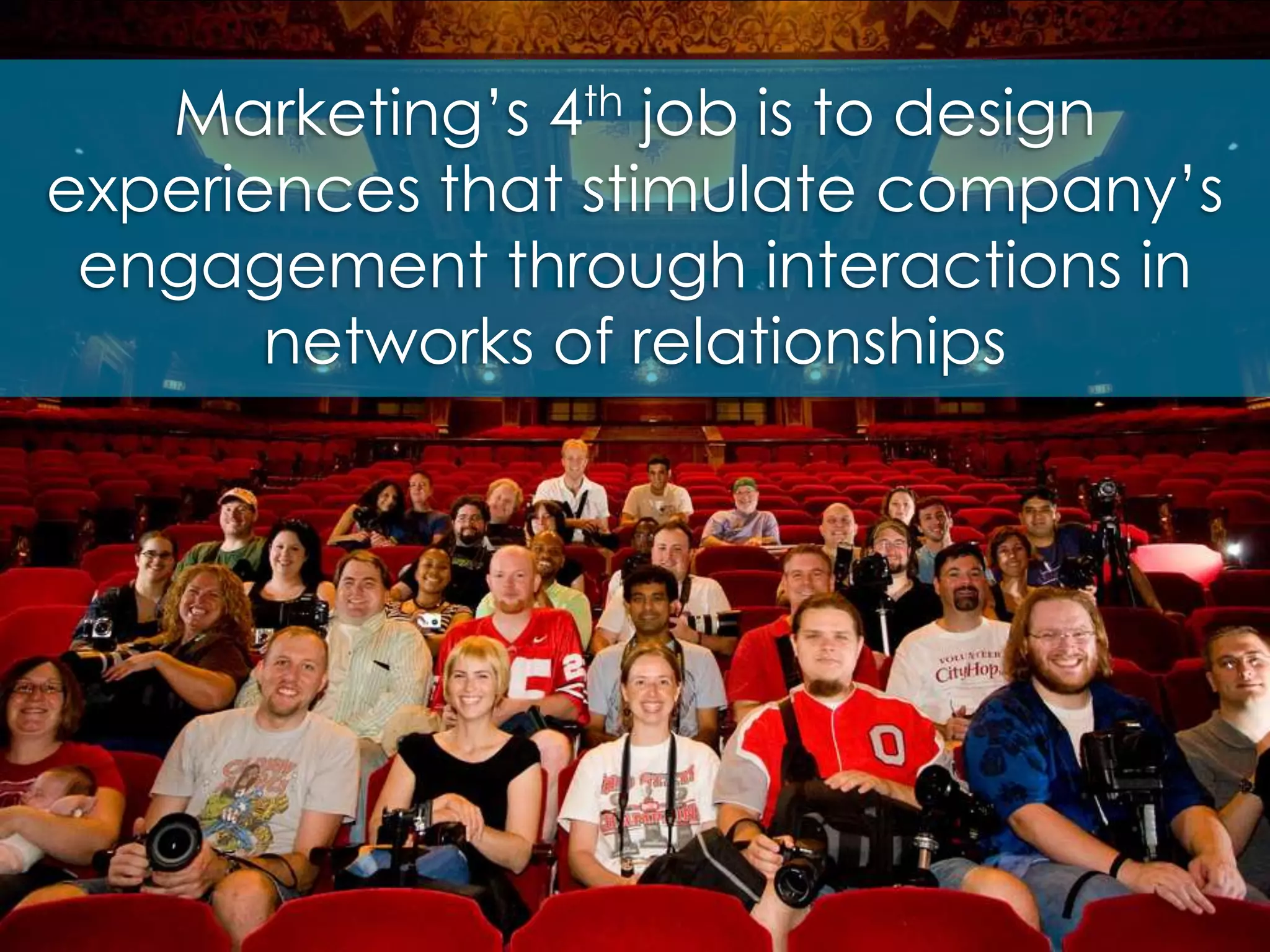
Marketing’s 4th job is to design experiences that stimulate company’s engagement through interactions in networks of relationships
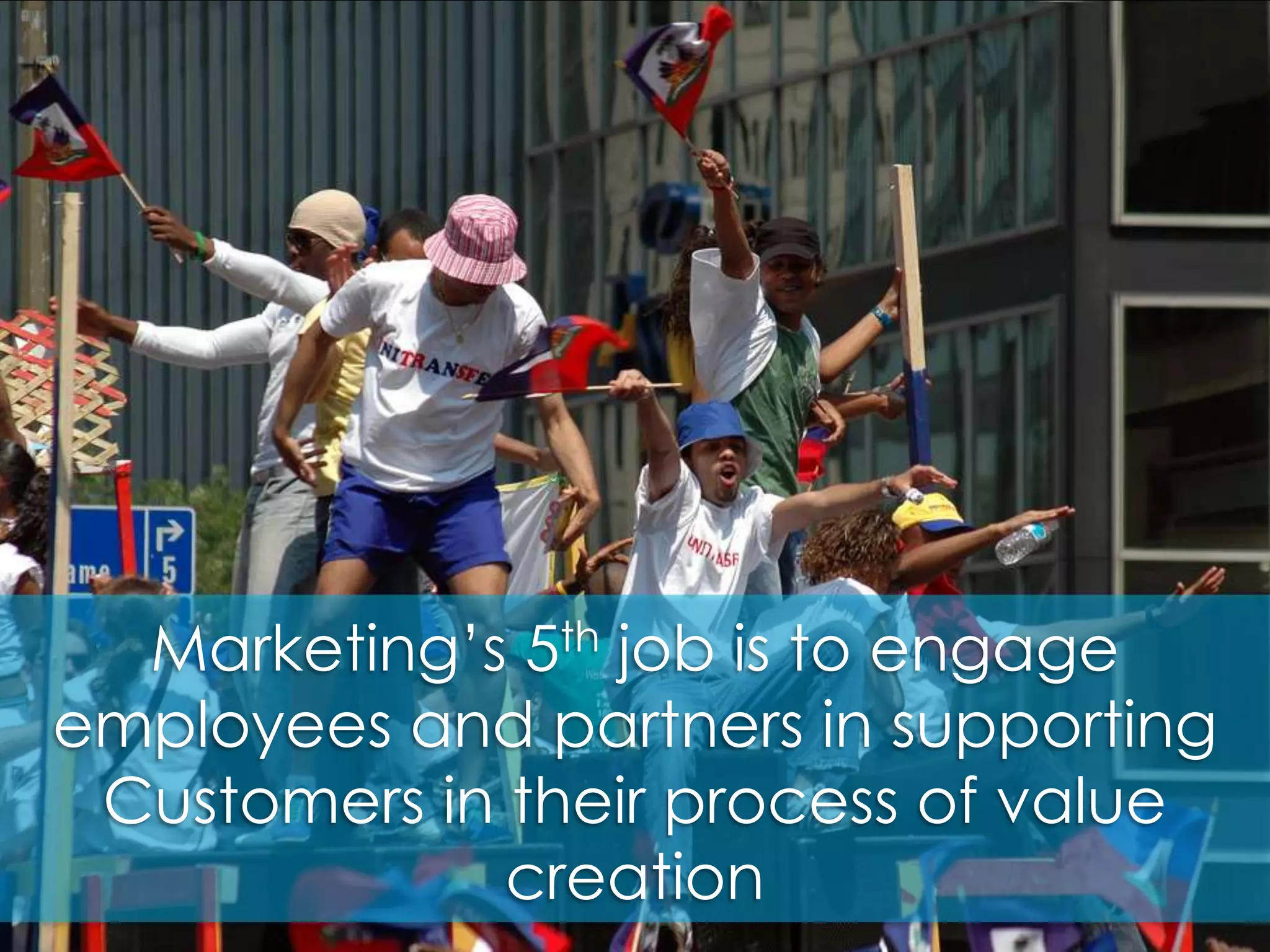
Marketing’s 5th job is to engage employees and partners in supporting Customers in their process of value creation
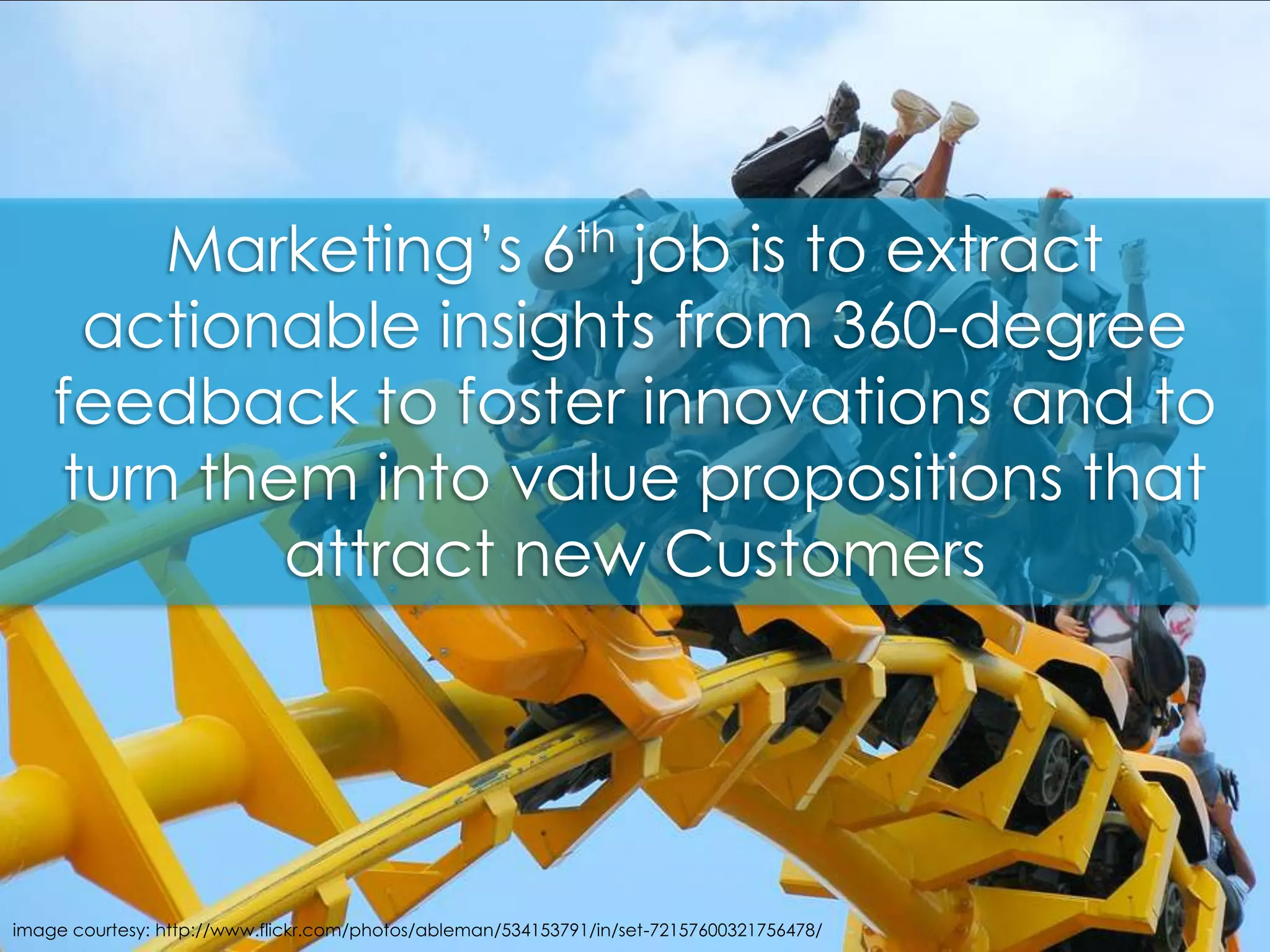
Marketing’s 6th job is to extract actionable insights from 360-degree feedback to foster innovations and to turn them into value propositions that attract new Customers image courtesy: http://www.flickr.com/photos/ableman/534153791/in/set-72157600321756478/
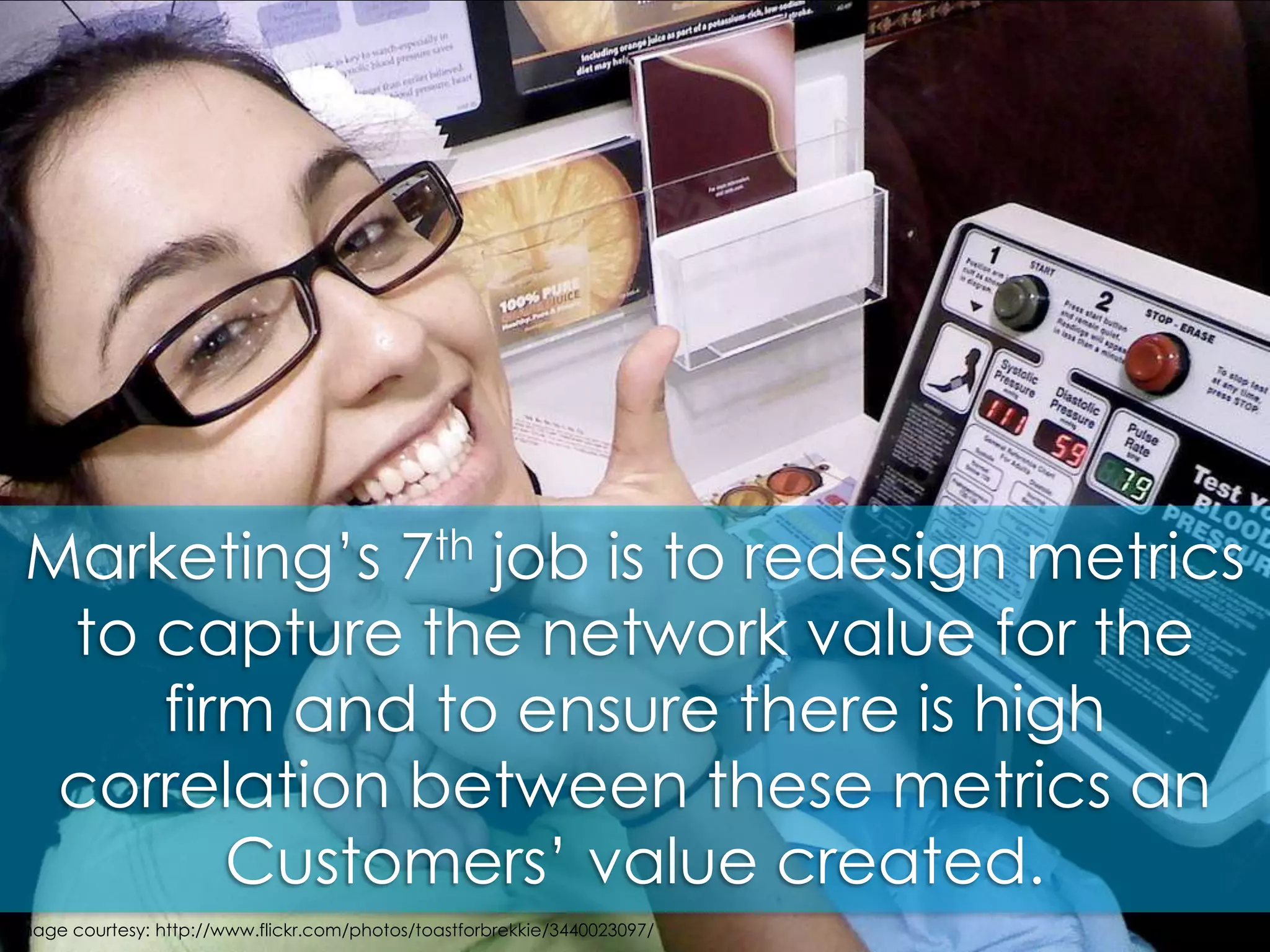
Marketing’s 7th job is to redesign metrics to capture the network value for the firm and to ensure there is high correlation between these metrics an Customers’ value created.image courtesy: http://www.flickr.com/photos/toastforbrekkie/3440023097/
What about Marketing Laws?
The P’s remain valid, but less dominant. Focus is no longer dominantly on product and value chain towards value exchange. image courtesy: http://www.flickr.com/photos/jasmic/1472319885/
Segmentation based on demo/sociographics come 2nd, after segmentation based on Customer jobs & (desired) outcomes. image courtesy: http://www.flickr.com/photos/un_photo/3815987498/
THANK YOU LET’S START THE DEBATELeave a comment or contact me on Twitter:twitter.com/wimrampen
RESOURCESGummeson, Evert (2007): Exit Services Marketing – Enter Service MarketingMichael A. Merz & Yi He & Stephen L. Vargo (2008): The evolving brand logic: a service-dominant logic perspectiveDavid Ballantyne & Richard J Varey (2008): The service-dominant logic and the future of marketingSara Sandstro¨m, Bo Edvardsson, Per Kristensson & Peter Magnusson (2008):Value in use through service experienceChristiaanGrönroos & AnikaRavald (2009)Marketing and the Logic of Service; Value Facilitation, Value Creation and Co-Creation and their marketing implicationsGraham Hill (2009)A Manifesto for Social Business

Service Logic – a new Dominant Logic for Social Customer Relationship Marketing

  • 1.
    Service Logic –a new Dominant Logic for the Social Customer Relationship Marketerby WimRampenimage courtesy: http://www.flickr.com/photos/stuartslimp/3936066556/in/pool-crowded_multitude
  • 2.
    Goods dominant logic:valueis created at the moment of exchange, after that, the Customer is on his ownvalue exchange: when money and ownership or rights change handsimage courtesy: http://www.flickr.com/photos/mithril/2764675971/
  • 3.
    The new dominantlogic: Service Logicis not about selling servicesimage courtesy: http://www.flickr.com/photos/ptrktn/3801479228/
  • 4.
    Service Logic: valueco-creation happens AFTER value exchangeimage courtesy: http://www.flickr.com/photos/viriyincy/3594764008/
  • 5.
    Value for customersmeans that, after they have been assisted by a self-service or full-service process, they are – or feel – better off than beforeimage courtesy: http://www.flickr.com/photos/yalcin_arsan/4055973255/in/pool-crowded_multitude
  • 6.
    Whether a Customeris – or feels – better off is determined by the Customerimage courtesy:: http://www.flickr.com/photos/yalcin_arsan/4001627189/in/pool-crowded_multitude
  • 7.
    Value is co-createdwhen customer desired outcomes are metin other words: when the Customer’s job is done to his satisfactionimage courtesy: http://www.flickr.com/photos/cassandrasarmanho/4006047824/in/pool-crowded_multitude
  • 8.
    Fact: most Customerscan use some help in creating valueimage courtesy: http://www.flickr.com/photos/cleopatra69/4033747792/in/pool-crowded_multitude
  • 9.
    If value forthe Customer is dominantly created after value exchange, i.e. IN USE, both scope and content of marketing strategies should shift from dominantly focused on creating momentum for value exchange to a continuum of interactions in networks of relationships aimed to support customers’ value creation image courtesy: http://www.flickr.com/photos/beeteeoh/3298373727/
  • 10.
    The “new” goalfor marketing is to support (and improve) customers’ value creation “in use”image courtesy: http://www.flickr.com/photos/msdm/3491968596/
  • 11.
    Value “in use”is determined by Customer outcomes of experiences during the lifetime of consumption of products & servicesimage courtesy: http://www.flickr.com/photos/seasonalplume/2607760460/
  • 12.
    Touch-points and interactions(in networks) of relationships are the building blocks of personalized experiences in a socially networked eco-systemimage courtesy: http://www.flickr.com/photos/rakustow/3942156152/
  • 13.
    The firm (marketing)should strive for engagement in interactions and relationships with its customers’ (net)work or process to create valueimage courtesy: http://www.flickr.com/photos/caribb/185905926/
  • 14.
    5 Questions fortoday’s marketersimage courtesy: http://www.flickr.com/photos/downingstreet/3386080464/
  • 15.
    1. Do youunderstand how and to what extent your customers are meeting their desired outcomes when using (experiencing) your product or services (over its lifetime)?image courtesy: http://www.flickr.com/photos/amirjina/2282812623/
  • 16.
    2. What interactionswith your product, services, partners, employees, touch-points, their networks and relationships influence and shape customers’ experiences in use?image courtesy: http://www.flickr.com/photos/laughingsquid/383433646/
  • 17.
    3. What opportunitiesdo you see to engage in the customer’s value-creation process?image courtesy: http://www.flickr.com/photos/defaultbb/3753829500/
  • 18.
    4. What opportunitiesdo you see to pro-actively help the customer meet their desired outcomes through (new ways of) interacting (in & via networks) and building relationships?image courtesy: http://www.flickr.com/photos/vorticeassurdo/167001806/
  • 19.
    5. Who doyou need to collaborate with to purposefully design & execute experiences over a lifetime of use to exploit these opportunities?image courtesy: http://www.flickr.com/photos/marcelgermain/3956114555/in/photostream/
  • 20.
    How does “Social”tie into all this?image courtesy: http://www.flickr.com/photos/nycviarachel/507963159/
  • 21.
    A. SOCIAL CRMSTRATEGY FRAMEWORK STATEMENT (version 2)A socialcrmstrategy is aboutunderstandingwho the customer is throughlistening to, engagingwith and collaborationbetweencustomers, employees and partners. It is aimed at developinginnovations, interactions in networks of relationships and communitiesthat support customers in doing the jobs theyneed to do. The means are a personalized design of the service experiencethatempowerscustomers, employees and partners to influencehowwelltheycan meet theirdesiredoutcomes
  • 22.
    B. 3 outof 15 new trends driving Social BusinessCourtesy: Graham Hillimage courtesy: http://www.flickr.com/photos/azarov/3279771862/
  • 23.
    B#1. From IndividualCustomers to Networks of Customers
  • 24.
    B#12. From Stand-aloneCompanies to an Ecosystem of Networked Partnersimage courtesy: http://www.flickr.com/photos/mattsabo17/143172563/
  • 25.
    B#15. From CustomerLifetime Value to Customer Network Valueimage courtesy: http://www.flickr.com/photos/marxpix/471485822/
  • 26.
    Implications for Marketingimagecourtesy: http://www.flickr.com/photos/ahmadnawawi/3808452611/
  • 27.
    Marketing’s 1st jobis to understand customers’ value creation process (= jobs & desired outcomes) and where in the process Customers fail to meet their desired outcomes. image courtesy: http://www.flickr.com/photos/berkeleylab/2826536670/in/set-72157606890009024/
  • 28.
    Marketing’s 2nd jobis to build relationships in communities of individuals with similar desired outcomes and behaviorimage courtesy: http://www.flickr.com/photos/loveforphotography/457269816/
  • 29.
    Marketing’s 3rd jobis to support Customers’ value creation processimage courtesy: http://www.flickr.com/photos/romec1/3246065362/
  • 30.
    Marketing’s 4th jobis to design experiences that stimulate company’s engagement through interactions in networks of relationships
  • 31.
    Marketing’s 5th jobis to engage employees and partners in supporting Customers in their process of value creation
  • 32.
    Marketing’s 6th jobis to extract actionable insights from 360-degree feedback to foster innovations and to turn them into value propositions that attract new Customers image courtesy: http://www.flickr.com/photos/ableman/534153791/in/set-72157600321756478/
  • 33.
    Marketing’s 7th jobis to redesign metrics to capture the network value for the firm and to ensure there is high correlation between these metrics an Customers’ value created.image courtesy: http://www.flickr.com/photos/toastforbrekkie/3440023097/
  • 34.
  • 35.
    The P’s remainvalid, but less dominant. Focus is no longer dominantly on product and value chain towards value exchange. image courtesy: http://www.flickr.com/photos/jasmic/1472319885/
  • 36.
    Segmentation based ondemo/sociographics come 2nd, after segmentation based on Customer jobs & (desired) outcomes. image courtesy: http://www.flickr.com/photos/un_photo/3815987498/
  • 37.
    THANK YOU LET’SSTART THE DEBATELeave a comment or contact me on Twitter:twitter.com/wimrampen
  • 38.
    RESOURCESGummeson, Evert (2007):Exit Services Marketing – Enter Service MarketingMichael A. Merz & Yi He & Stephen L. Vargo (2008): The evolving brand logic: a service-dominant logic perspectiveDavid Ballantyne & Richard J Varey (2008): The service-dominant logic and the future of marketingSara Sandstro¨m, Bo Edvardsson, Per Kristensson & Peter Magnusson (2008):Value in use through service experienceChristiaanGrönroos & AnikaRavald (2009)Marketing and the Logic of Service; Value Facilitation, Value Creation and Co-Creation and their marketing implicationsGraham Hill (2009)A Manifesto for Social Business