
Shared Services
Centre (SCCs)
June 26, 2013
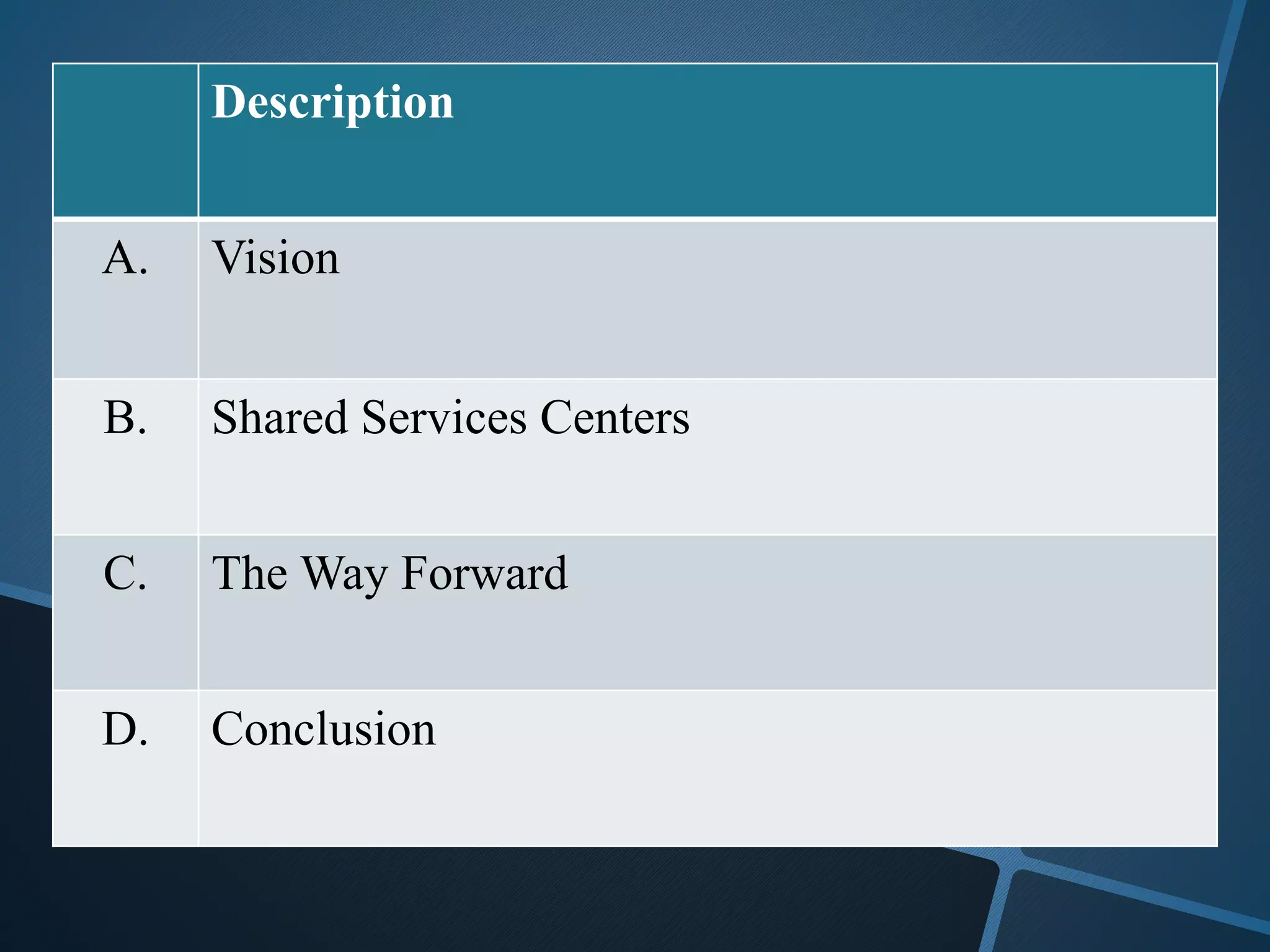
Description
A. Vision
B. Shared Services Centers
C. The Way Forward
D. Conclusion
Shared Services Centers
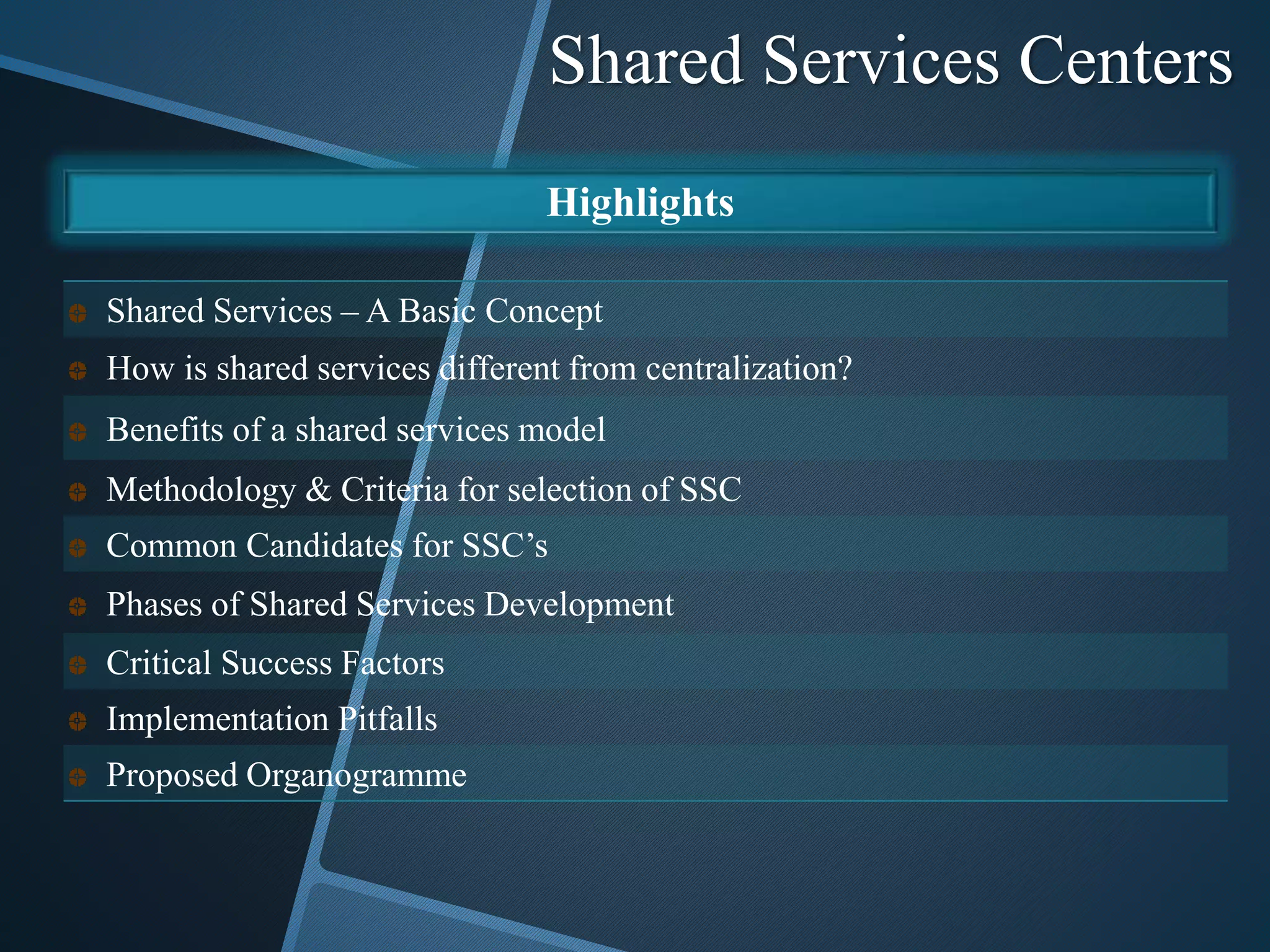
Shared Services – A Basic Concept
How is shared services different from centralization?
Benefits of a shared services model
Methodology & Criteria for selection of SSC
Common Candidates for SSC’s
Phases of Shared Services Development
Critical Success Factors
Implementation Pitfalls
Proposed Organogramme
Highlights
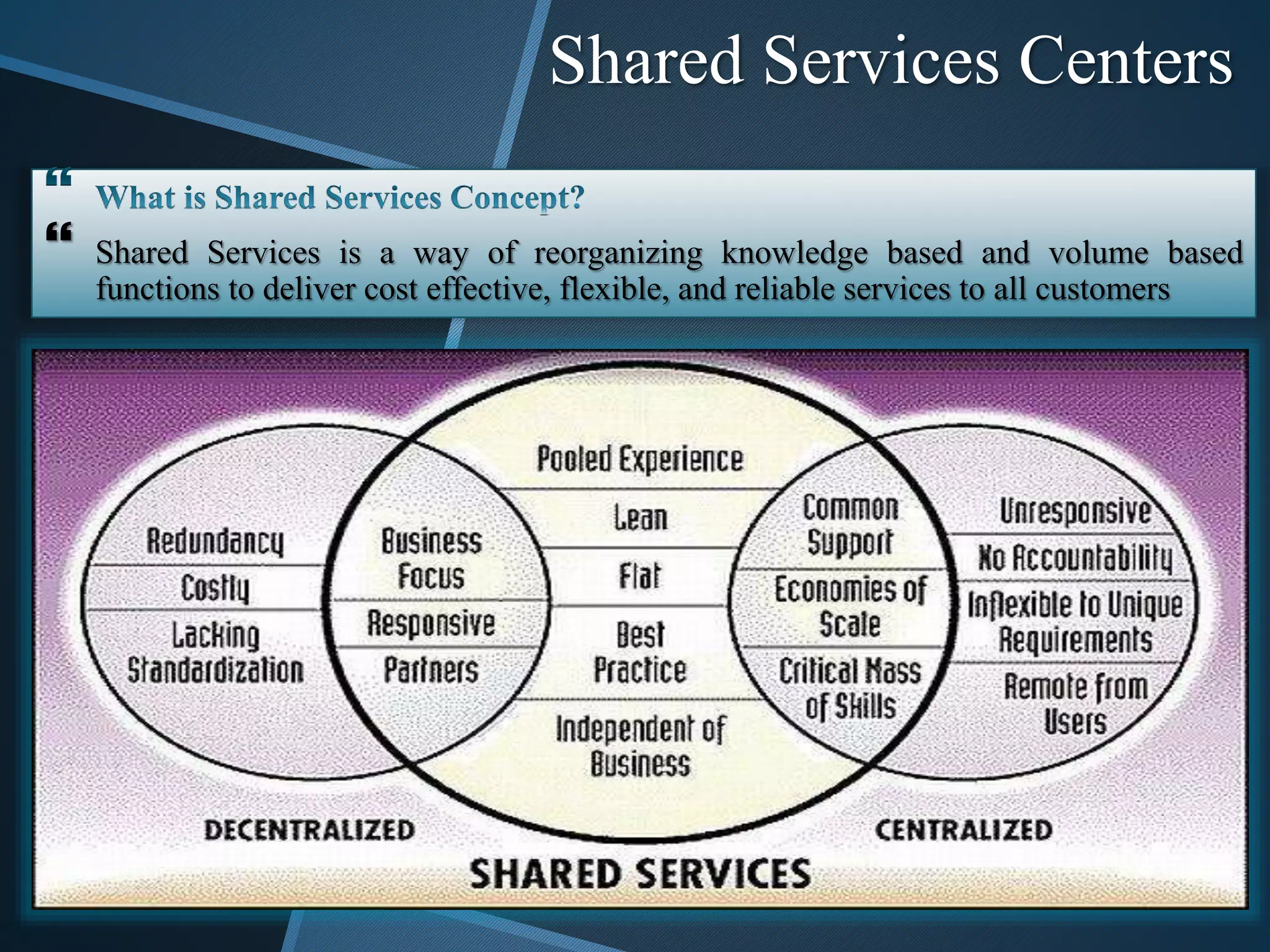
Shared Services Centers
 Shared Services is a way of reorganizing knowledge based and volume based
functions to deliver cost effective, flexible, and reliable services to all customers
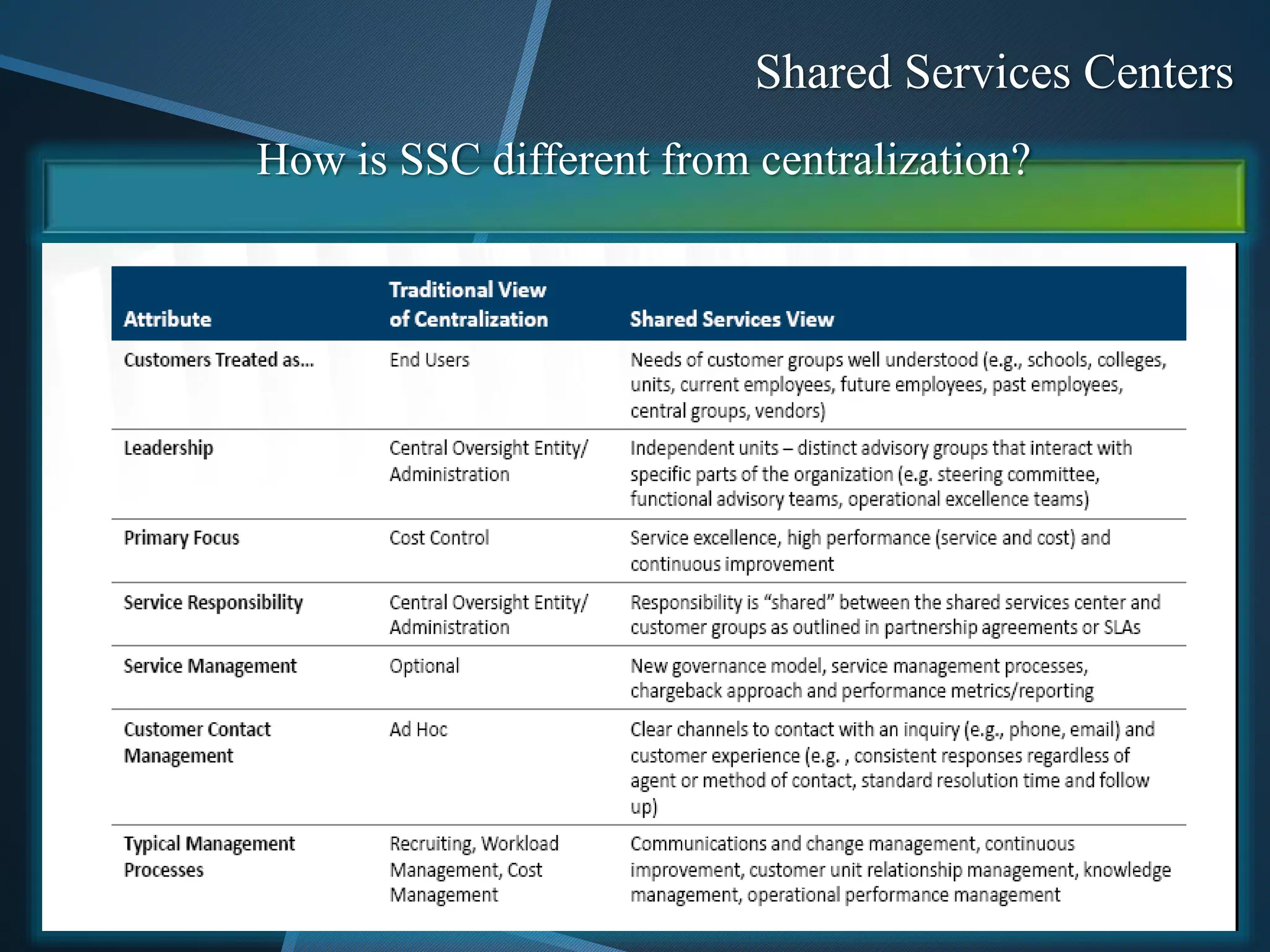
Shared Services Centers
How is SSC different from centralization?
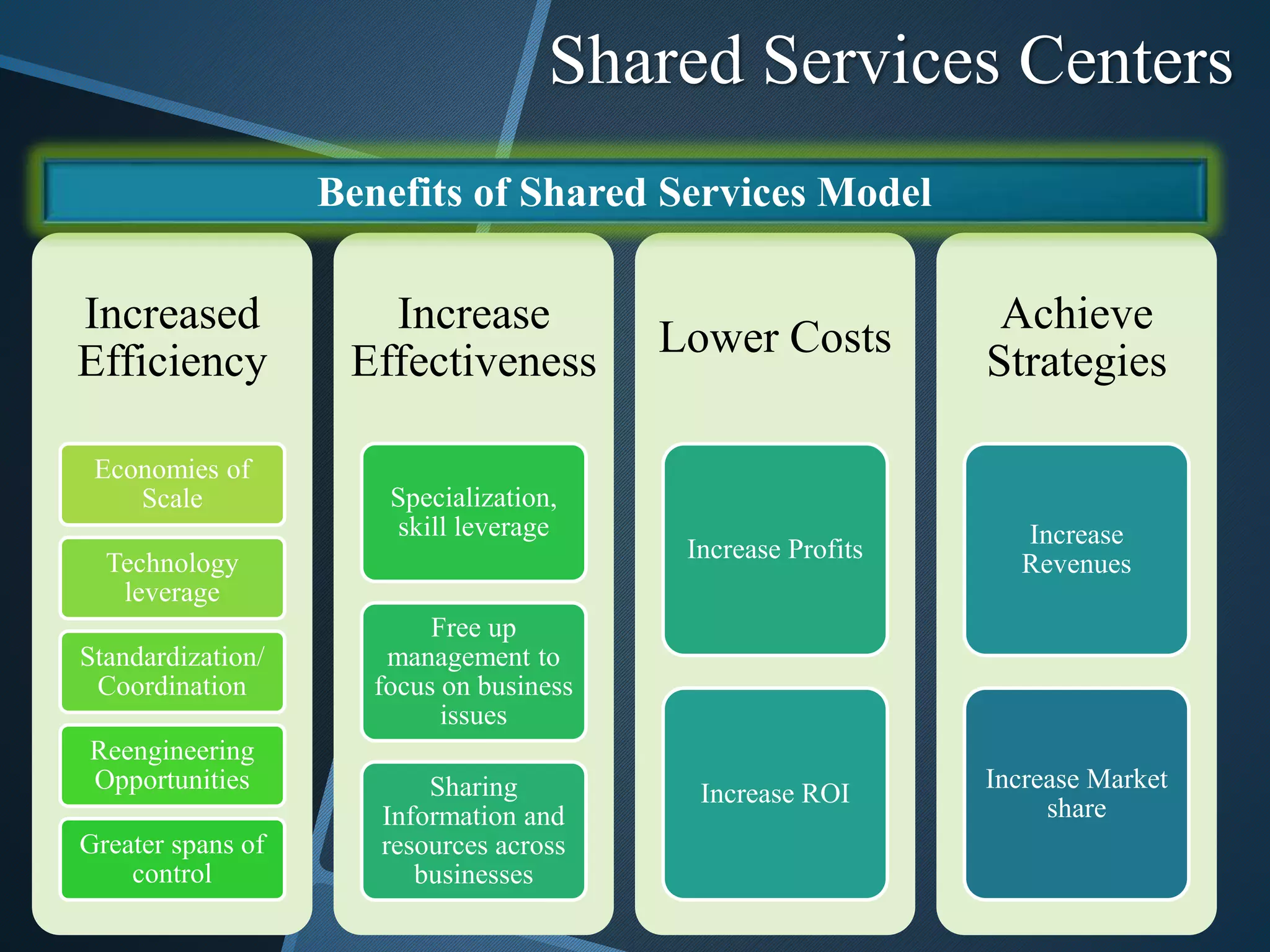
Shared Services Centers
Increased
Efficiency
Economies of
Scale
Technology
leverage
Standardization/
Coordination
Reengineering
Opportunities
Greater spans of
control
Increase
Effectiveness
Specialization,
skill leverage
Free up
management to
focus on business
issues
Sharing
Information and
resources across
businesses
Lower Costs
Increase Profits
Increase ROI
Achieve
Strategies
Increase
Revenues
Increase Market
share
Benefits of Shared Services Model
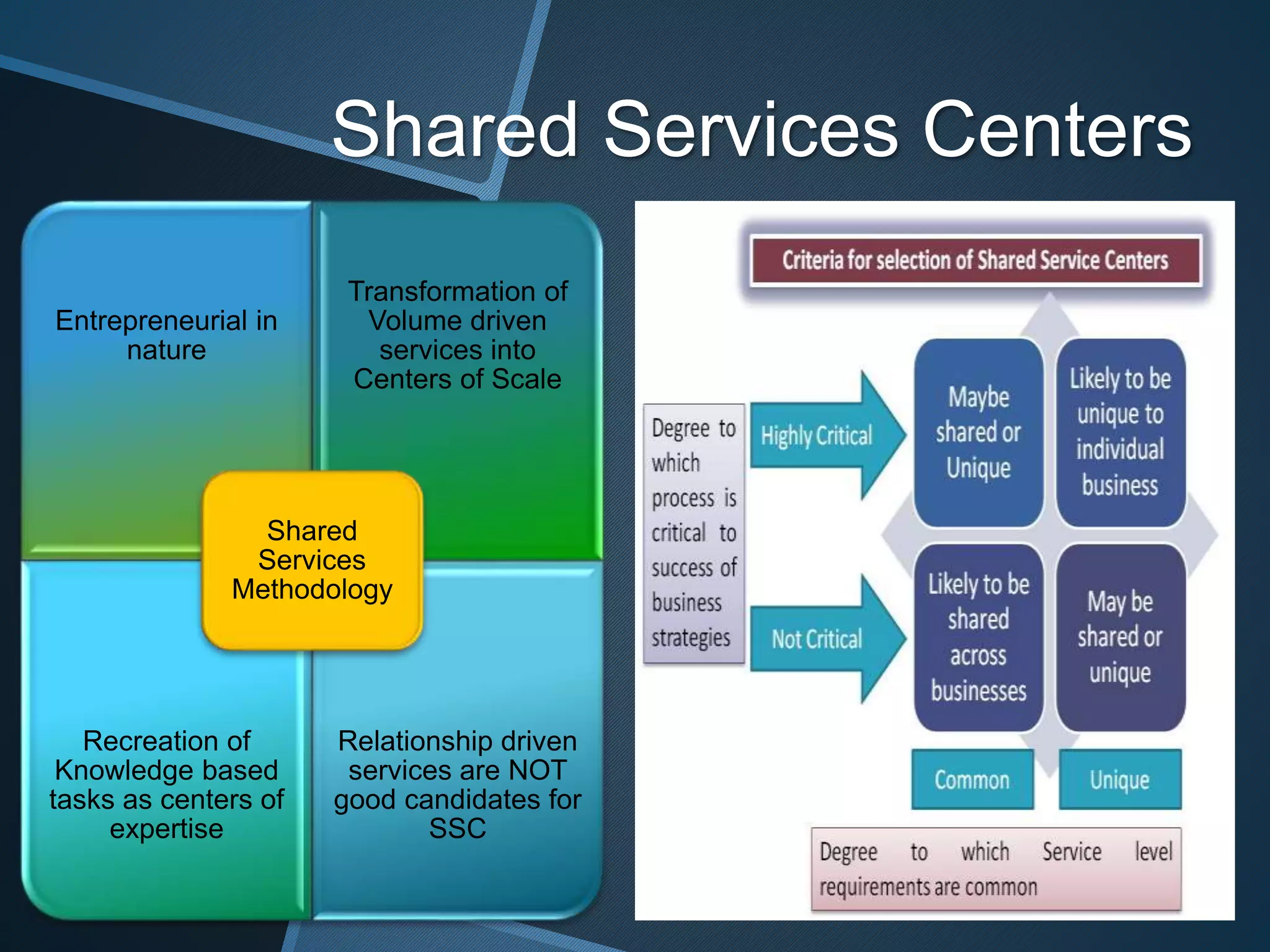
Shared Services Centers
Entrepreneurial in
nature
Transformation of
Volume driven
services into
Centers of Scale
Recreation of
Knowledge based
tasks as centers of
expertise
Relationship driven
services are NOT
good candidates for
SSC
Shared
Services
Methodology
Shared Services Centers
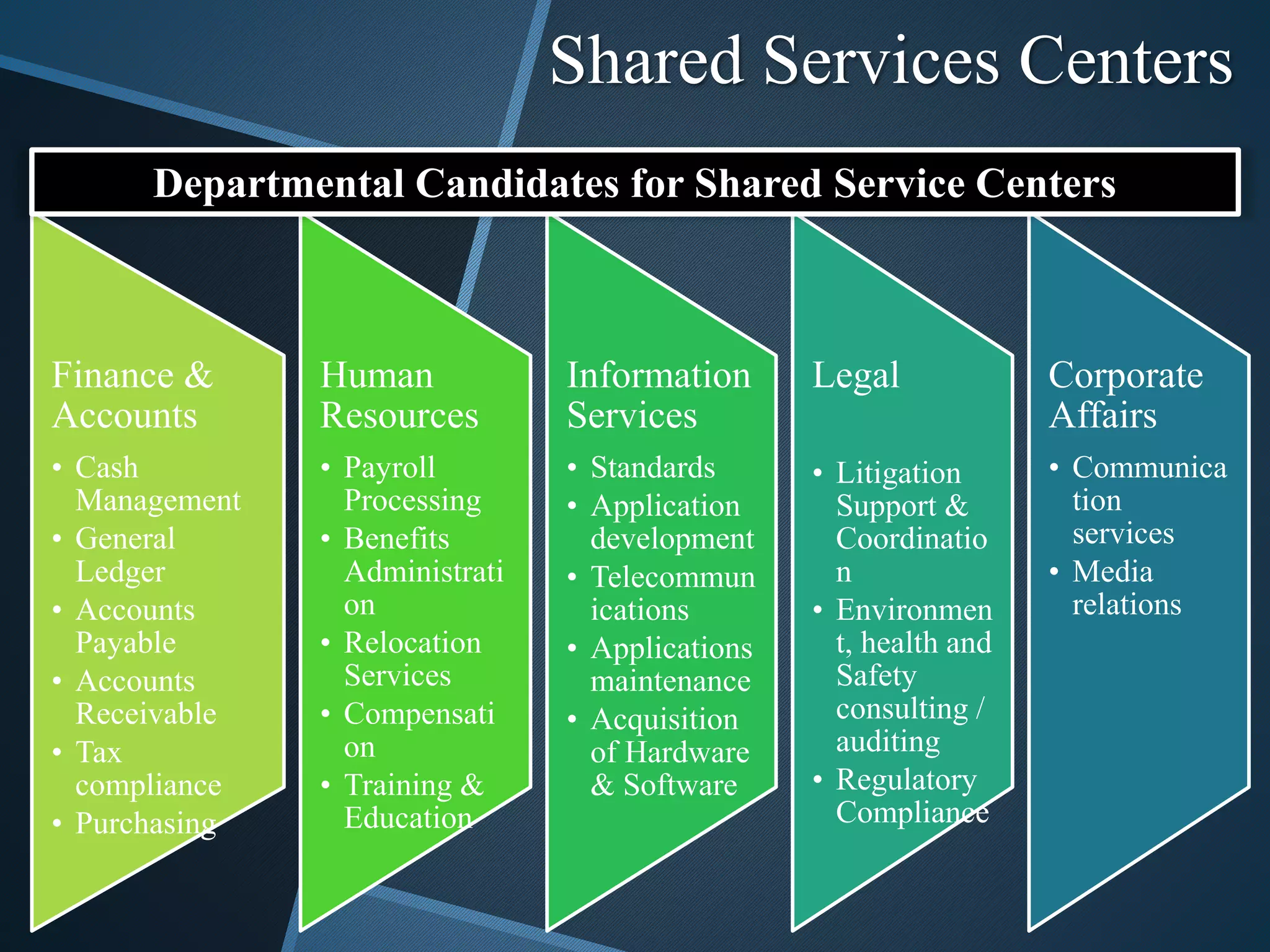
Finance &
Accounts
• Cash
Management
• General
Ledger
• Accounts
Payable
• Accounts
Receivable
• Tax
compliance
• Purchasing
Human
Resources
• Payroll
Processing
• Benefits
Administrati
on
• Relocation
Services
• Compensati
on
• Training &
Education
Information
Services
• Standards
• Application
development
• Telecommun
ications
• Applications
maintenance
• Acquisition
of Hardware
& Software
Legal
• Litigation
Support &
Coordinatio
n
• Environmen
t, health and
Safety
consulting /
auditing
• Regulatory
Compliance
Corporate
Affairs
• Communica
tion
services
• Media
relations
Departmental Candidates for Shared Service Centers
Shared Services Centers
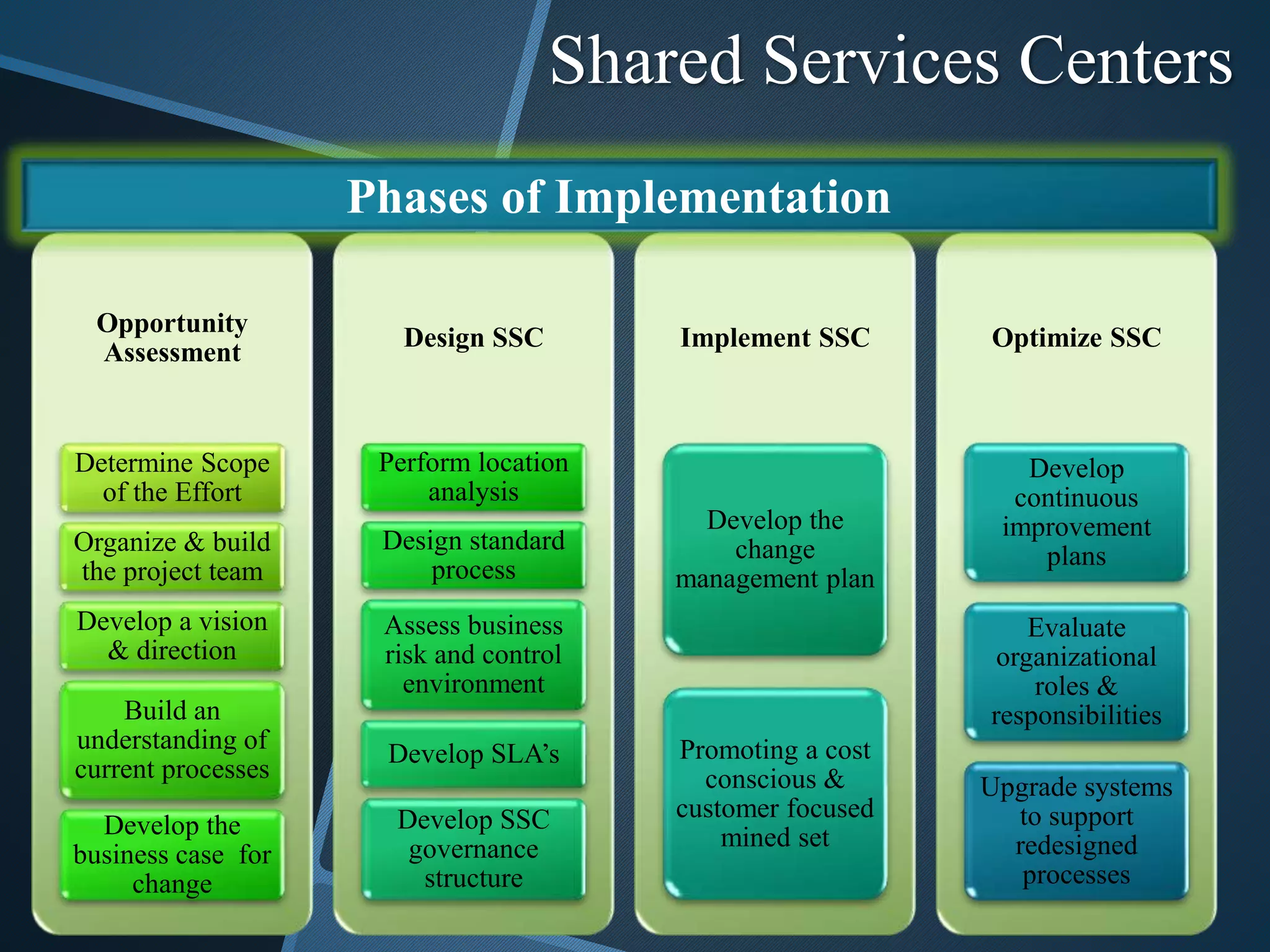
Opportunity
Assessment
Determine Scope
of the Effort
Organize & build
the project team
Develop a vision
& direction
Build an
understanding of
current processes
Develop the
business case for
change
Design SSC
Perform location
analysis
Design standard
process
Assess business
risk and control
environment
Develop SLA’s
Develop SSC
governance
structure
Implement SSC
Develop the
change
management plan
Promoting a cost
conscious &
customer focused
mined set
Optimize SSC
Develop
continuous
improvement
plans
Evaluate
organizational
roles &
responsibilities
Upgrade systems
to support
redesigned
processes
Phases of Implementation
Shared Services Centers
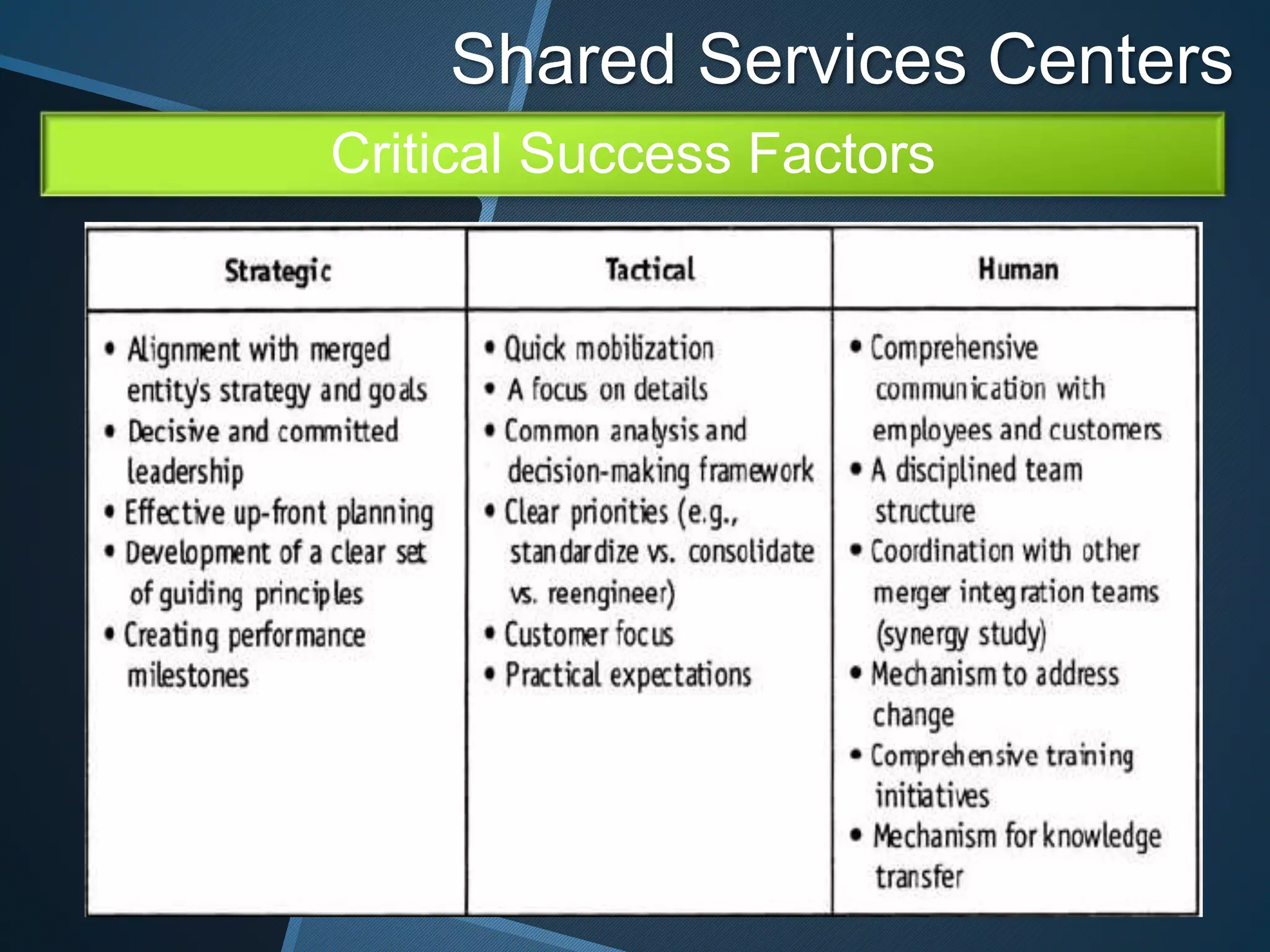
Critical Success Factors
Shared Services Centers
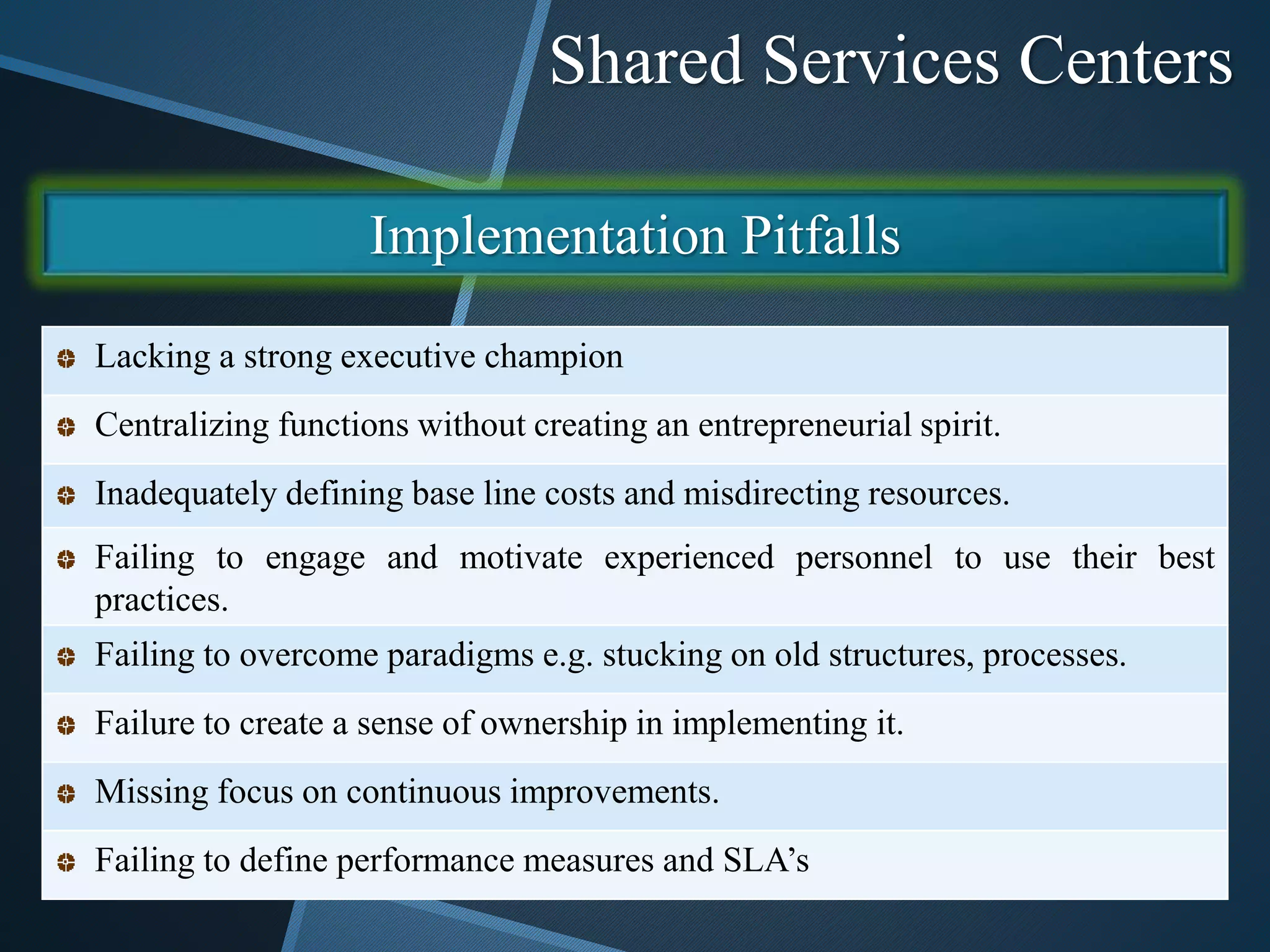
Implementation Pitfalls
Lacking a strong executive champion
Centralizing functions without creating an entrepreneurial spirit.
Inadequately defining base line costs and misdirecting resources.
Failing to engage and motivate experienced personnel to use their best
practices.
Failing to overcome paradigms e.g. stucking on old structures, processes.
Failure to create a sense of ownership in implementing it.
Missing focus on continuous improvements.
Failing to define performance measures and SLA’s
Shared Services Centers
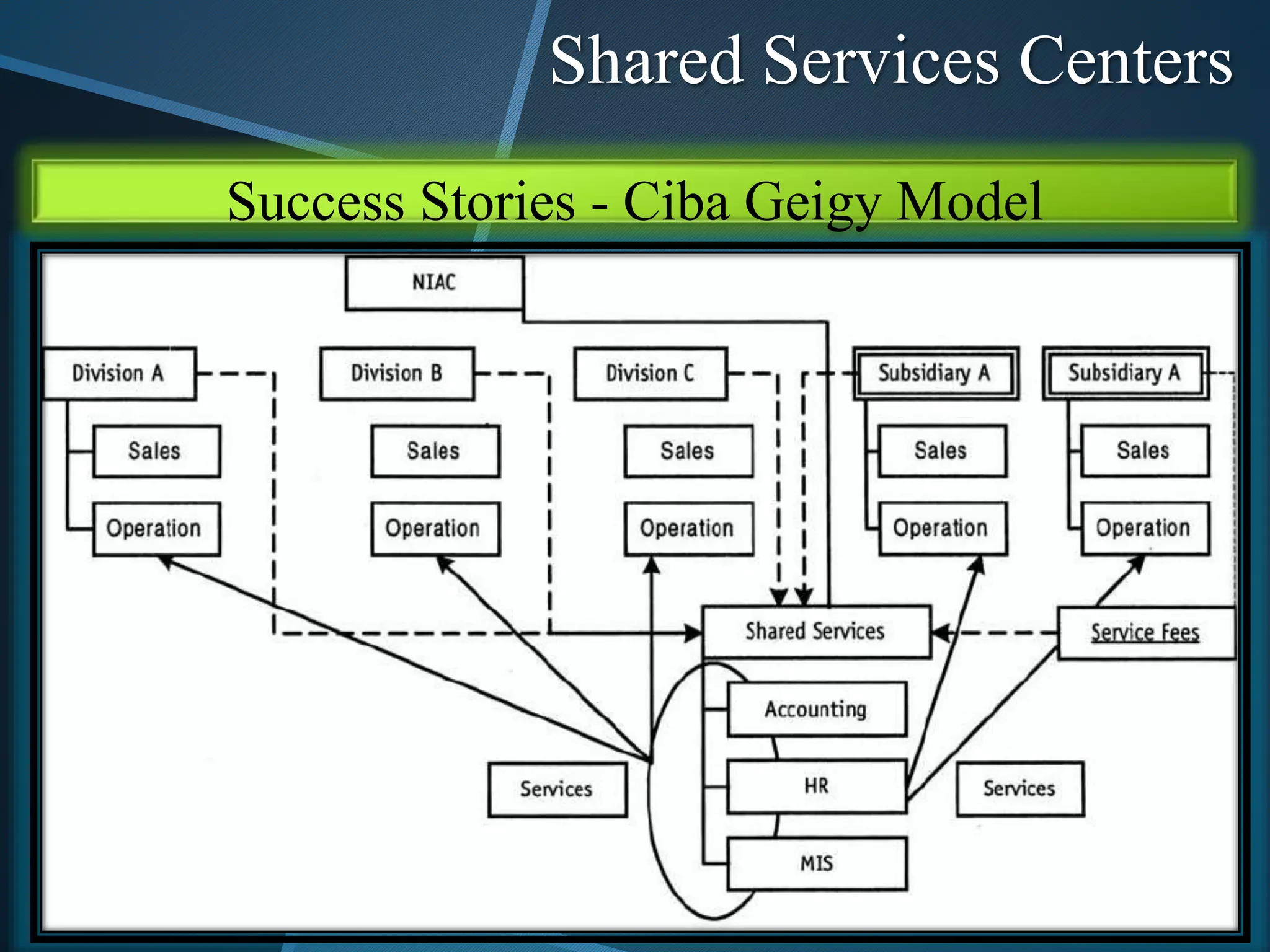
Success Stories - Ciba Geigy Model
Shared Services Centers
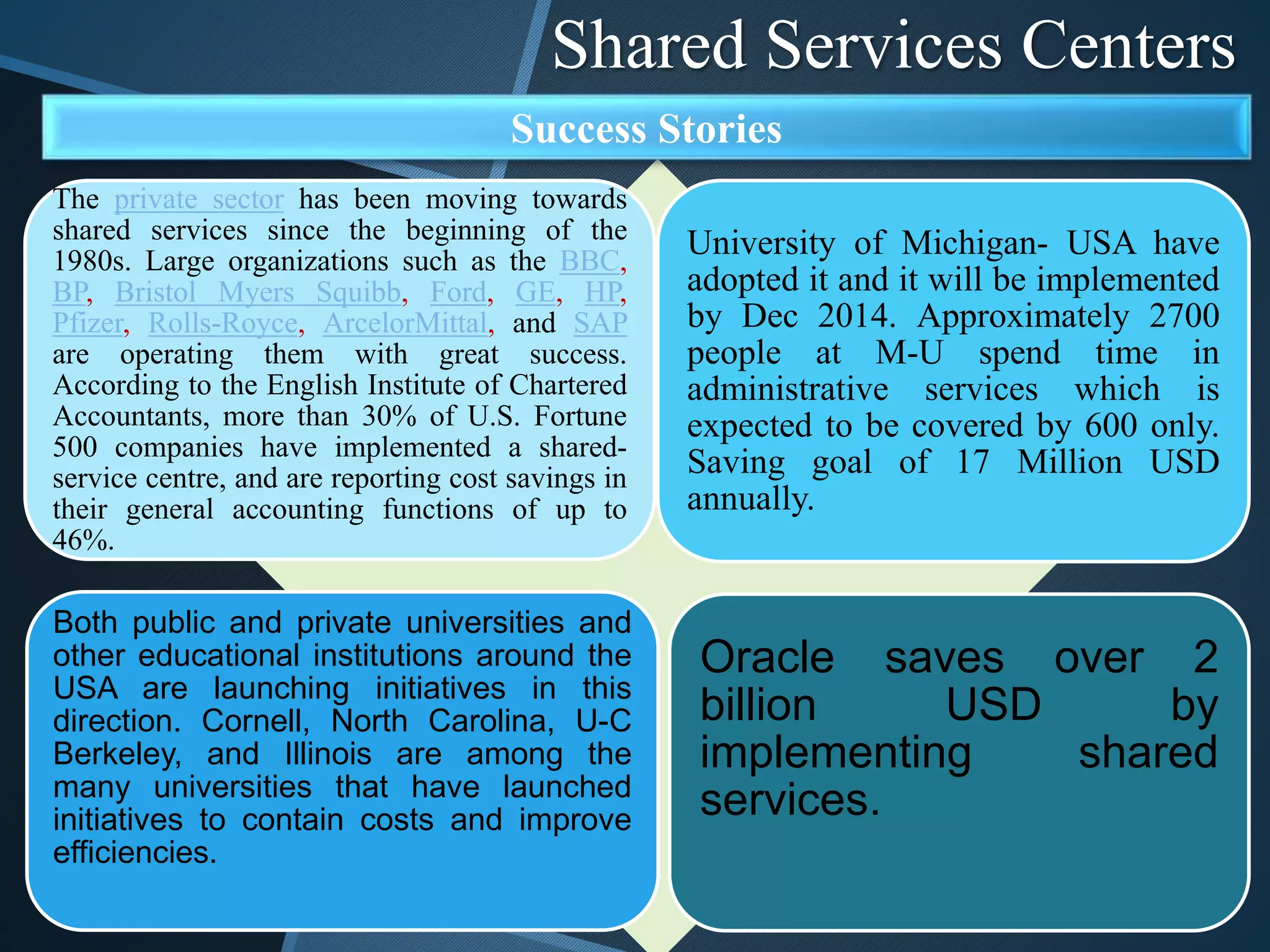
The private sector has been moving towards
shared services since the beginning of the
1980s. Large organizations such as the BBC,
BP, Bristol Myers Squibb, Ford, GE, HP,
Pfizer, Rolls-Royce, ArcelorMittal, and SAP
are operating them with great success.
According to the English Institute of Chartered
Accountants, more than 30% of U.S. Fortune
500 companies have implemented a shared-
service centre, and are reporting cost savings in
their general accounting functions of up to
46%.
University of Michigan- USA have
adopted it and it will be implemented
by Dec 2014. Approximately 2700
people at M-U spend time in
administrative services which is
expected to be covered by 600 only.
Saving goal of 17 Million USD
annually.
Both public and private universities and
other educational institutions around the
USA are launching initiatives in this
direction. Cornell, North Carolina, U-C
Berkeley, and Illinois are among the
many universities that have launched
initiatives to contain costs and improve
efficiencies.
Oracle saves over 2
billion USD by
implementing shared
services.
Success Stories
What’s Next
Controlling
Non-
essential
Costs
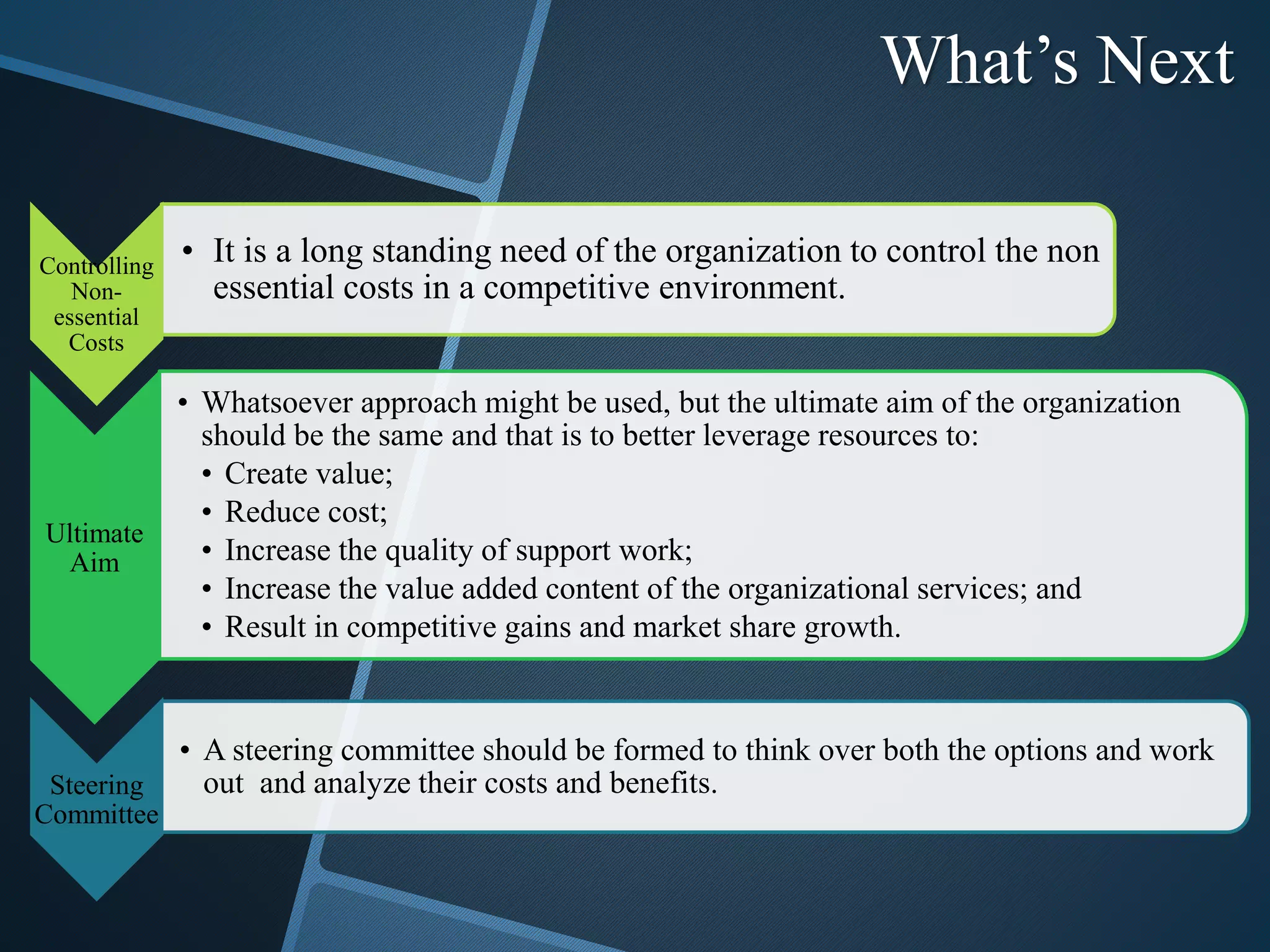
• It is a long standing need of the organization to control the non
essential costs in a competitive environment.
Ultimate
Aim
• Whatsoever approach might be used, but the ultimate aim of the organization
should be the same and that is to better leverage resources to:
• Create value;
• Reduce cost;
• Increase the quality of support work;
• Increase the value added content of the organizational services; and
• Result in competitive gains and market share growth.
Steering
Committee
• A steering committee should be formed to think over both the options and work
out and analyze their costs and benefits.
Conclusion
In the longer run Shared
Service Center ensures
delivery of cost effective
and efficient services to
Group Business divisions.
.
Thank You

Shared Service Centers - A way of internal outsourcing

  • 1.
  • 2.
    Description A. Vision B. SharedServices Centers C. The Way Forward D. Conclusion
  • 4.
    Shared Services Centers SharedServices – A Basic Concept How is shared services different from centralization? Benefits of a shared services model Methodology & Criteria for selection of SSC Common Candidates for SSC’s Phases of Shared Services Development Critical Success Factors Implementation Pitfalls Proposed Organogramme Highlights
  • 5.
    Shared Services Centers Shared Services is a way of reorganizing knowledge based and volume based functions to deliver cost effective, flexible, and reliable services to all customers
  • 6.
    Shared Services Centers Howis SSC different from centralization?
  • 7.
    Shared Services Centers Increased Efficiency Economiesof Scale Technology leverage Standardization/ Coordination Reengineering Opportunities Greater spans of control Increase Effectiveness Specialization, skill leverage Free up management to focus on business issues Sharing Information and resources across businesses Lower Costs Increase Profits Increase ROI Achieve Strategies Increase Revenues Increase Market share Benefits of Shared Services Model
  • 8.
    Shared Services Centers Entrepreneurialin nature Transformation of Volume driven services into Centers of Scale Recreation of Knowledge based tasks as centers of expertise Relationship driven services are NOT good candidates for SSC Shared Services Methodology
  • 9.
    Shared Services Centers Finance& Accounts • Cash Management • General Ledger • Accounts Payable • Accounts Receivable • Tax compliance • Purchasing Human Resources • Payroll Processing • Benefits Administrati on • Relocation Services • Compensati on • Training & Education Information Services • Standards • Application development • Telecommun ications • Applications maintenance • Acquisition of Hardware & Software Legal • Litigation Support & Coordinatio n • Environmen t, health and Safety consulting / auditing • Regulatory Compliance Corporate Affairs • Communica tion services • Media relations Departmental Candidates for Shared Service Centers
  • 10.
    Shared Services Centers Opportunity Assessment DetermineScope of the Effort Organize & build the project team Develop a vision & direction Build an understanding of current processes Develop the business case for change Design SSC Perform location analysis Design standard process Assess business risk and control environment Develop SLA’s Develop SSC governance structure Implement SSC Develop the change management plan Promoting a cost conscious & customer focused mined set Optimize SSC Develop continuous improvement plans Evaluate organizational roles & responsibilities Upgrade systems to support redesigned processes Phases of Implementation
  • 11.
  • 12.
    Shared Services Centers ImplementationPitfalls Lacking a strong executive champion Centralizing functions without creating an entrepreneurial spirit. Inadequately defining base line costs and misdirecting resources. Failing to engage and motivate experienced personnel to use their best practices. Failing to overcome paradigms e.g. stucking on old structures, processes. Failure to create a sense of ownership in implementing it. Missing focus on continuous improvements. Failing to define performance measures and SLA’s
  • 13.
    Shared Services Centers SuccessStories - Ciba Geigy Model
  • 14.
    Shared Services Centers Theprivate sector has been moving towards shared services since the beginning of the 1980s. Large organizations such as the BBC, BP, Bristol Myers Squibb, Ford, GE, HP, Pfizer, Rolls-Royce, ArcelorMittal, and SAP are operating them with great success. According to the English Institute of Chartered Accountants, more than 30% of U.S. Fortune 500 companies have implemented a shared- service centre, and are reporting cost savings in their general accounting functions of up to 46%. University of Michigan- USA have adopted it and it will be implemented by Dec 2014. Approximately 2700 people at M-U spend time in administrative services which is expected to be covered by 600 only. Saving goal of 17 Million USD annually. Both public and private universities and other educational institutions around the USA are launching initiatives in this direction. Cornell, North Carolina, U-C Berkeley, and Illinois are among the many universities that have launched initiatives to contain costs and improve efficiencies. Oracle saves over 2 billion USD by implementing shared services. Success Stories
  • 15.
    What’s Next Controlling Non- essential Costs • Itis a long standing need of the organization to control the non essential costs in a competitive environment. Ultimate Aim • Whatsoever approach might be used, but the ultimate aim of the organization should be the same and that is to better leverage resources to: • Create value; • Reduce cost; • Increase the quality of support work; • Increase the value added content of the organizational services; and • Result in competitive gains and market share growth. Steering Committee • A steering committee should be formed to think over both the options and work out and analyze their costs and benefits.
  • 16.
    Conclusion In the longerrun Shared Service Center ensures delivery of cost effective and efficient services to Group Business divisions.
  • 17.