By: Syed Irshad Murtaza
Technologist
Dept. of Clinical Neurophysiology.
AKUH Karachi
Date: 16-12-2013
*The term “Encephalopathy” is defined
as altered mental status as a result of a
diffuse disturbance of brain function.
*or
*Any clinical condition that causes
impairment in consciousness usually
accompanied
by
diffuse
EEG
abnormalities.
*

It represents a brain state in which normal
functioning of the brain is disturbed temporarily or
permanently. Encephalopathy encompasses a
number of conditions that lead to cognitive
dysfunction. Some of these conditions are
multifactorial and some have an established cause,
such as hepatic or uremic encephalopathy.

*Some

notable exceptions include cruetzfeldt
jackob disease(CJD) and subacute sclerosing
panencephalitis (SSPE).
*Encephalopathy results main from,
* Metabolic derangements (Na, K, Ca)
* Toxins (exposure to toxic substances, e.g lithium paints,

industrial

chemicals)

*infectious (bacteria (TB) viruses, parasites, or prions),
*Hepatic (liver failure or liver cancer)
* Inflammations (Systemic Lupus Erythropetosis, sarcoidosis (soft
tissues diseases)

* Drug Induced (Over dozage of the drug)
* Demyelinating (e.g MS)
* Degenerative processes (Alzheimer disease, Parkinson's disease)
* Anoxic encephalopathy (lack of oxygen to the brain, including traumatic
causes)

* Hereditary encephalopathies (leucodystrophy white matter)
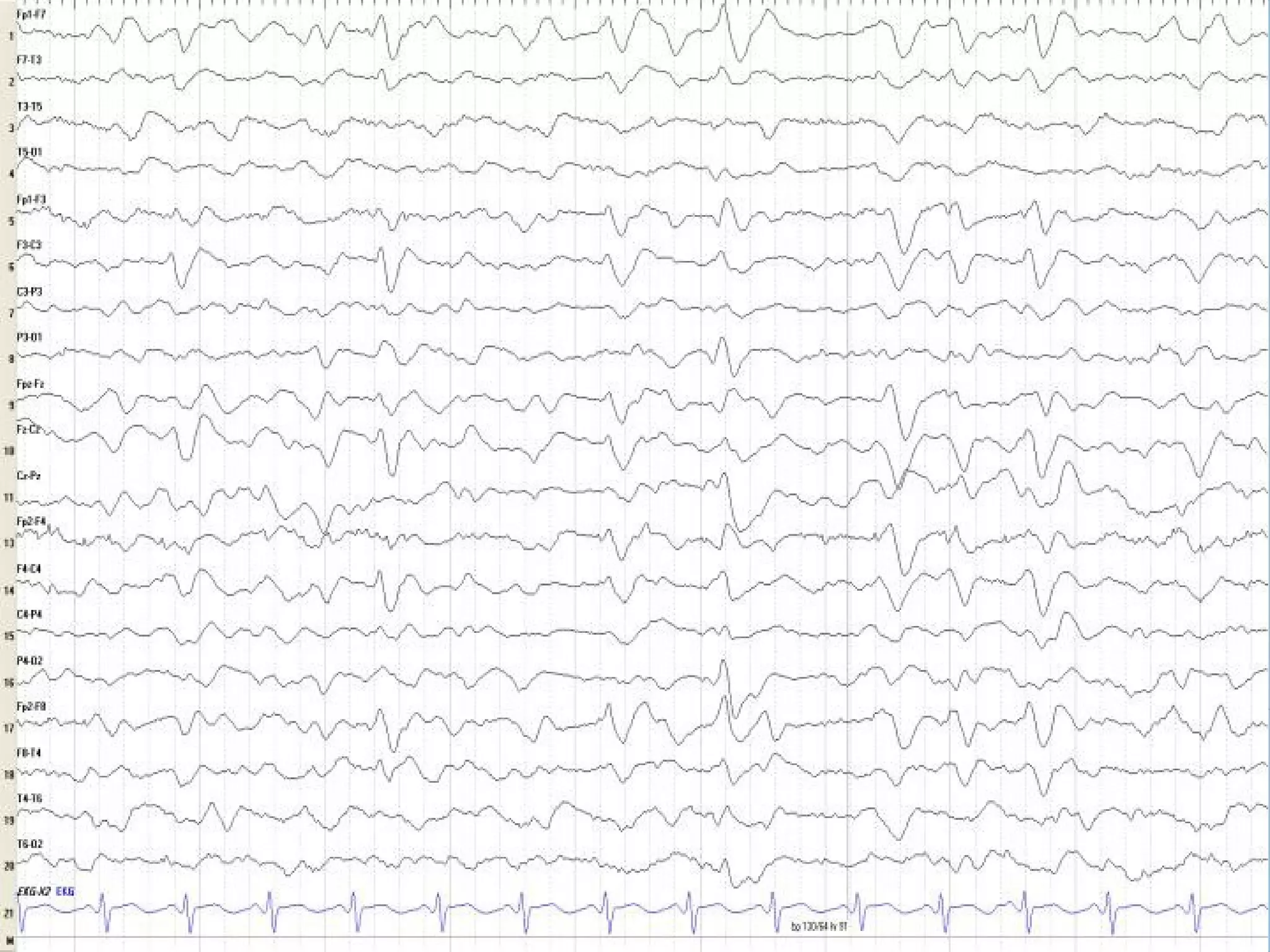
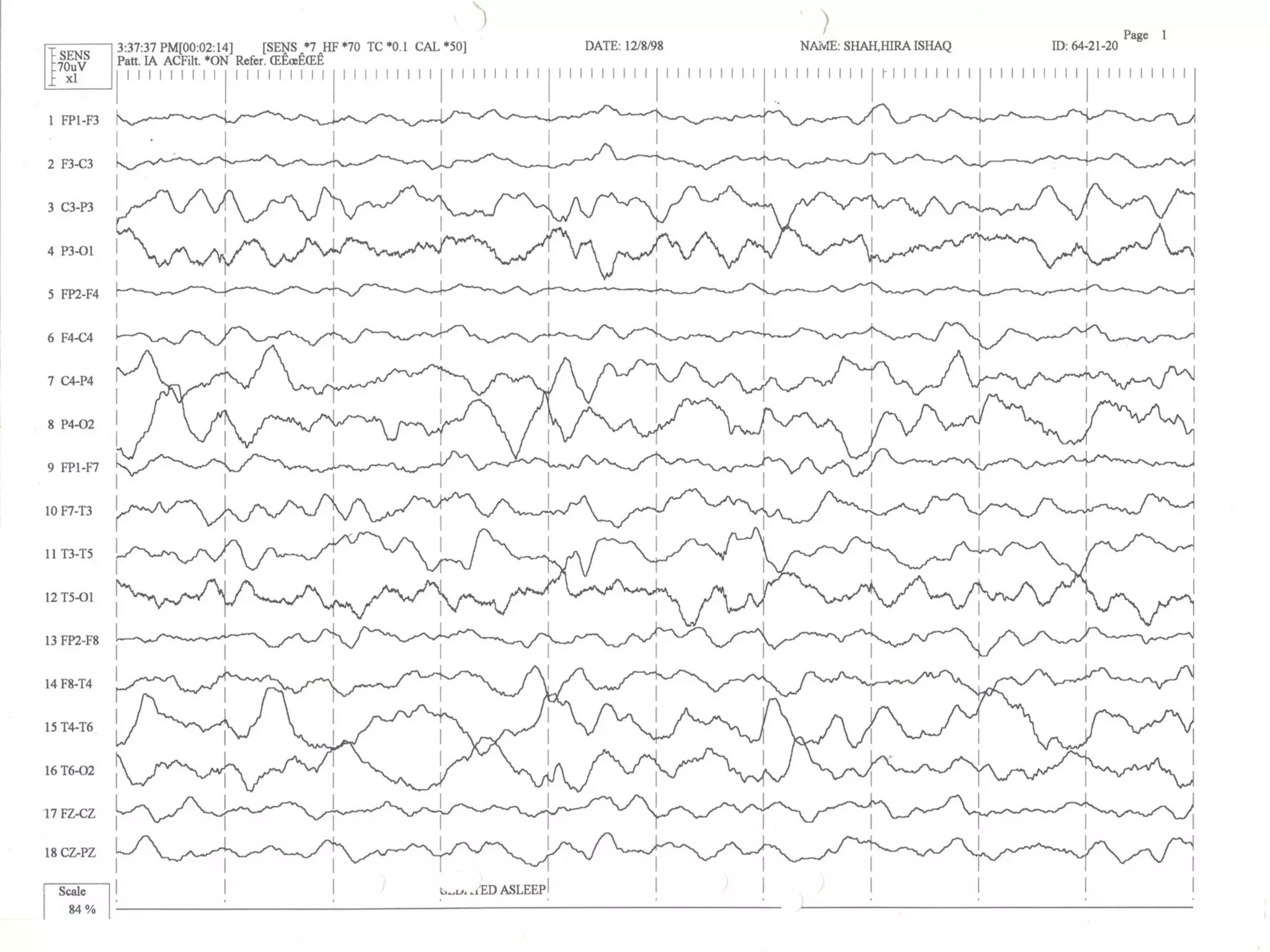
*In general, the most prominent feature of

the EEG record in encephalopathies is
slowing of the normal background
frequency.

*Reactivity

to photic or other type of
external stimulation may be altered.

*Some

conditions are associated with an
increase in seizure frequency, and in such
cases, epileptic activity may be recorded.
*A

patient with acute change in awareness
whose EEG shows triphasic waves and diffuse
slow activity will usually have a metabolic
encephalopathy.
*EEG can provide objective criteria for severity
of these pathological processes.

*The main contribution of the EEG is in providing
an objective measure of
* Severity of encephalopathy,
* Prognosis and
* Effectiveness of therapy
Toxic encephalopathy, also known as toxic-

metabolic encephalopathy, is a degenerative
neurologic disorder caused by exposure to
toxic substances.
It can be an acute or a chronic disorder.
Toxic encephalopathy can be caused by
various chemicals, some of which are
commonly used in everyday life (paints,
industrial chemicals, and certain metals).
 
 Hepatic encephalopathy is the occurrence of confusion,

altered level of consciousness and coma as a result of
liver failure.
 In the advanced stages it is called hepatic coma. It may
be ultimately lead to death.
CAUSES:

*It is caused by accumulation in the bloodstream of toxic
substances (NH3) that are normally removed by the
liver.

*The encephalopathy is caused directly by liver failure;
this is more likely in acute liver failure.

*Hepatic encephalopathy is reversible with treatment.
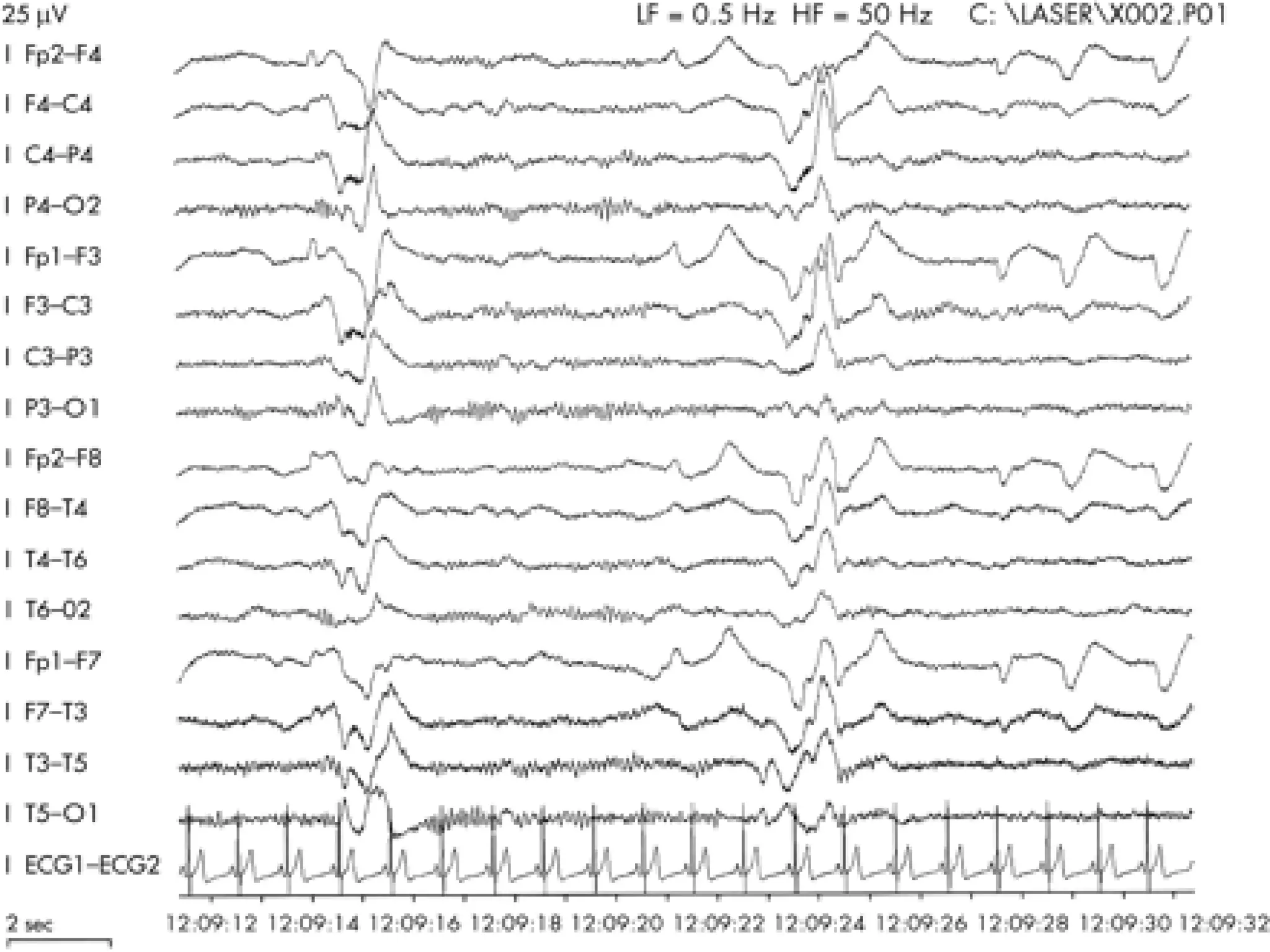
 Triphasic has been associated with a wide range of
toxic, metabolic, and structural abnormalities.
 Triphasic waves are associated with an altered level of
consciousness that may range from mild confusion to
deep coma.
 The background may be slower in hepatic failure
 A classic etiology of triphasic wave is hepatic/metabolic
encephalopathy.
*Triphasic’s are high-amplitude (>70 µV).

*Having three phase +ive, -ive and then +ive.
*Initial sharp component.
 This often the direct result of cardiac and respiratory

arrest, or the indirect result of metabolic encephalopathy,
intracerebral or subarachnoid hemorrhage, or of severe
cerebral injury which causes widespread structural cerebral
damage.
 EEG FINDINGS:
 *. Depending on the severity of underlying damage.
 Asynchronous slow waves and higher amplitude and low
frequencies.
 *. Burst of bisynchronous slow waves.
 *. Rhythmical un-reactive alpha or theta coma.
 *. Spike or sharp waves.
 *. Burst suppression patterns.
 *. ECS.
 Wernicke's encephalopathy is not related to

Wernicke's area, a region of the brain associated
with speech and language interpretation.

 Wernicke’s encephalopathy is a syndrome

characterized by ataxia, nystagmus, confusion,
and impairment of short-term-memory.

 EEG FINDINGS:
 *.

Prominent Generalized asynchronous slow
waves and often also causes bisynchronous slow
waves and decrease of alpha rhythm.
Neonatal encephalopathy
Often occurring due to lack of oxygen
in blood flow to brain-tissue of the
fetus during labor or delivery.
Cerebral hypoxia refers to a reduced
supply of oxygen to the brain.
Cerebral anoxia refers to a complete
lack of oxygen to the brain.
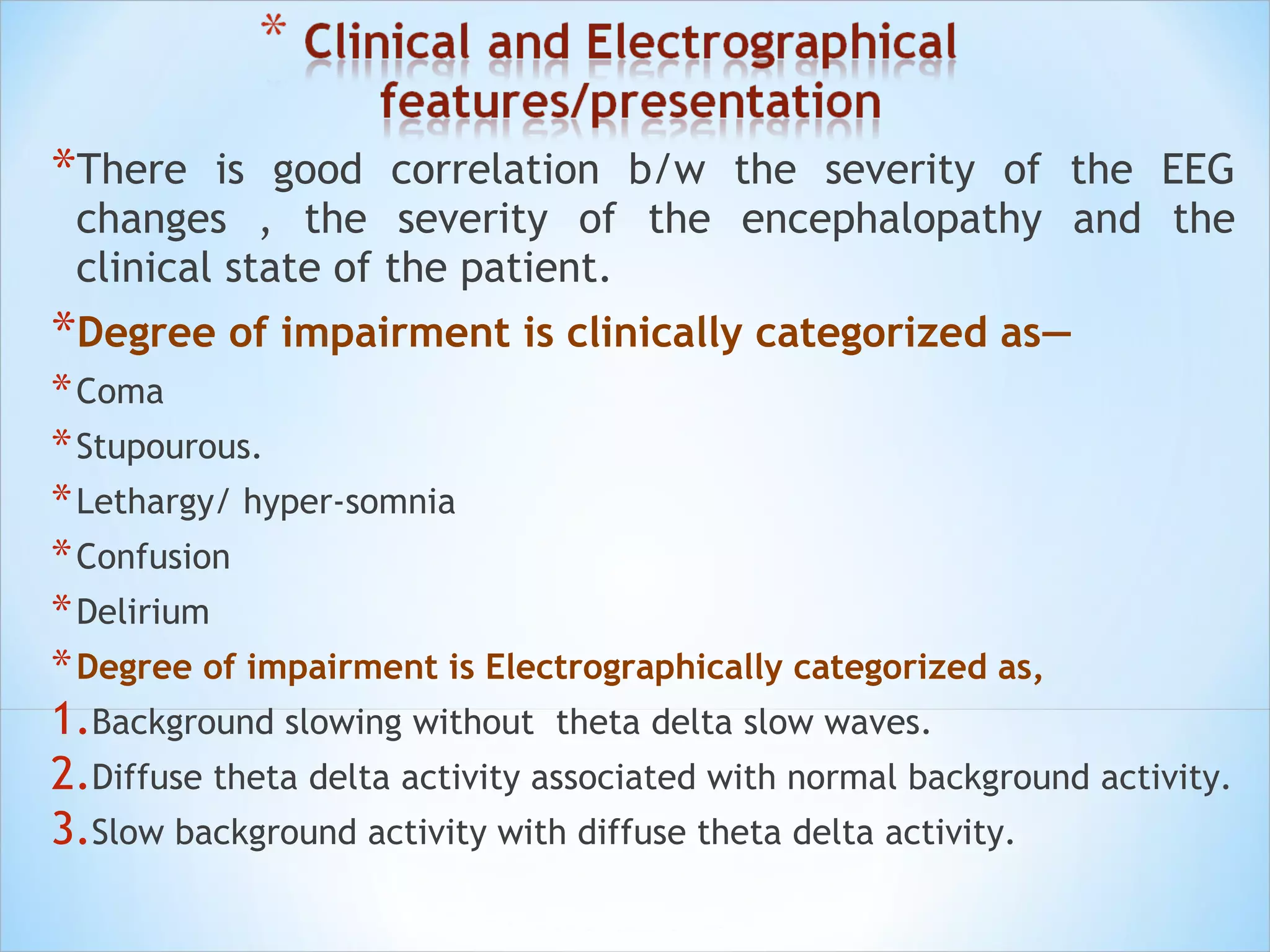
*There

is good correlation b/w the severity of the EEG
changes , the severity of the encephalopathy and the
clinical state of the patient.

*Degree of impairment is clinically categorized as—
* Coma
* Stupourous.
* Lethargy/ hyper-somnia
* Confusion
* Delirium
* Degree of impairment is Electrographically categorized as,
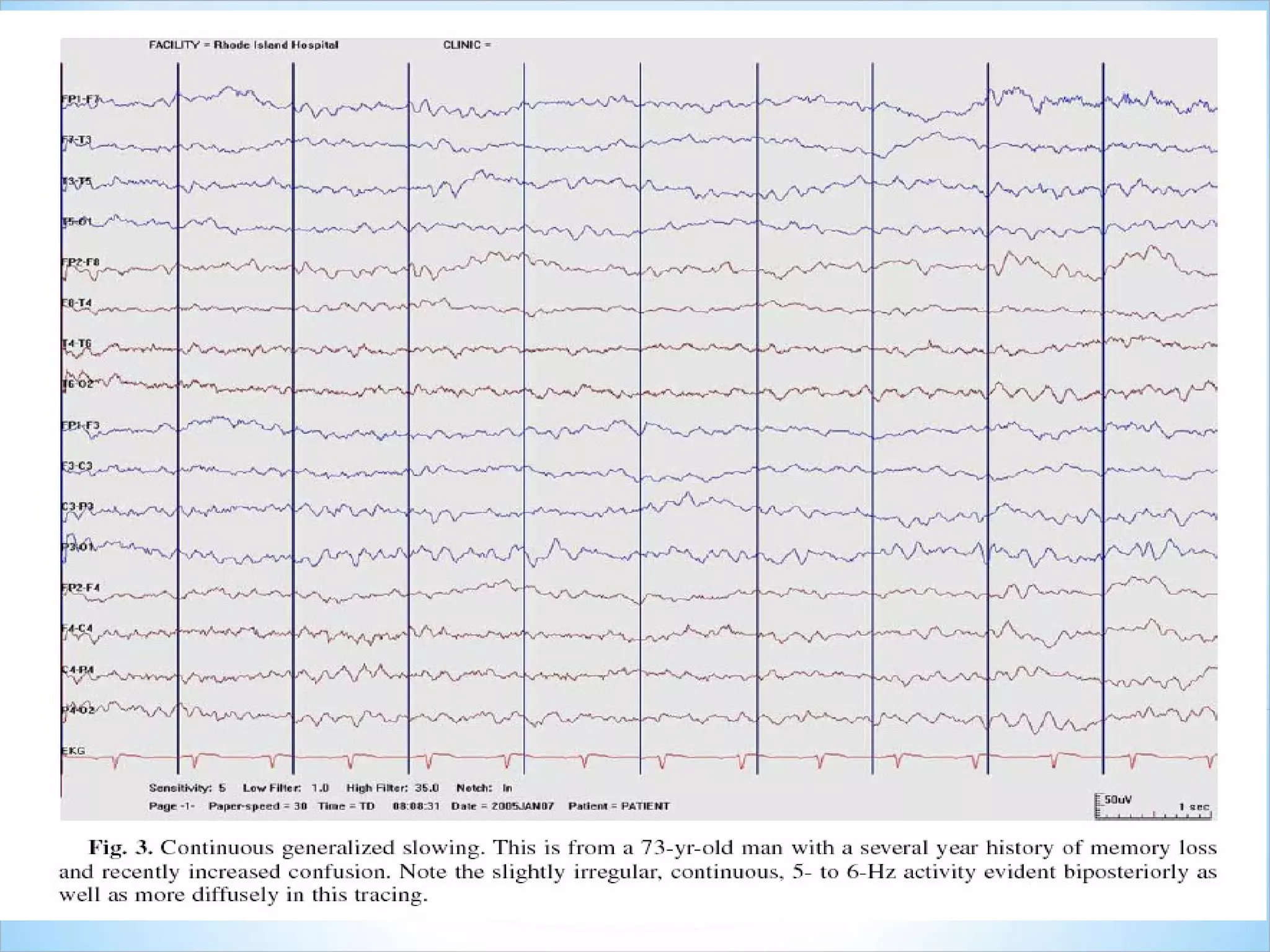
1.Background slowing without theta delta slow waves.
2.Diffuse theta delta activity associated with normal background activity.
3.Slow background activity with diffuse theta delta activity.
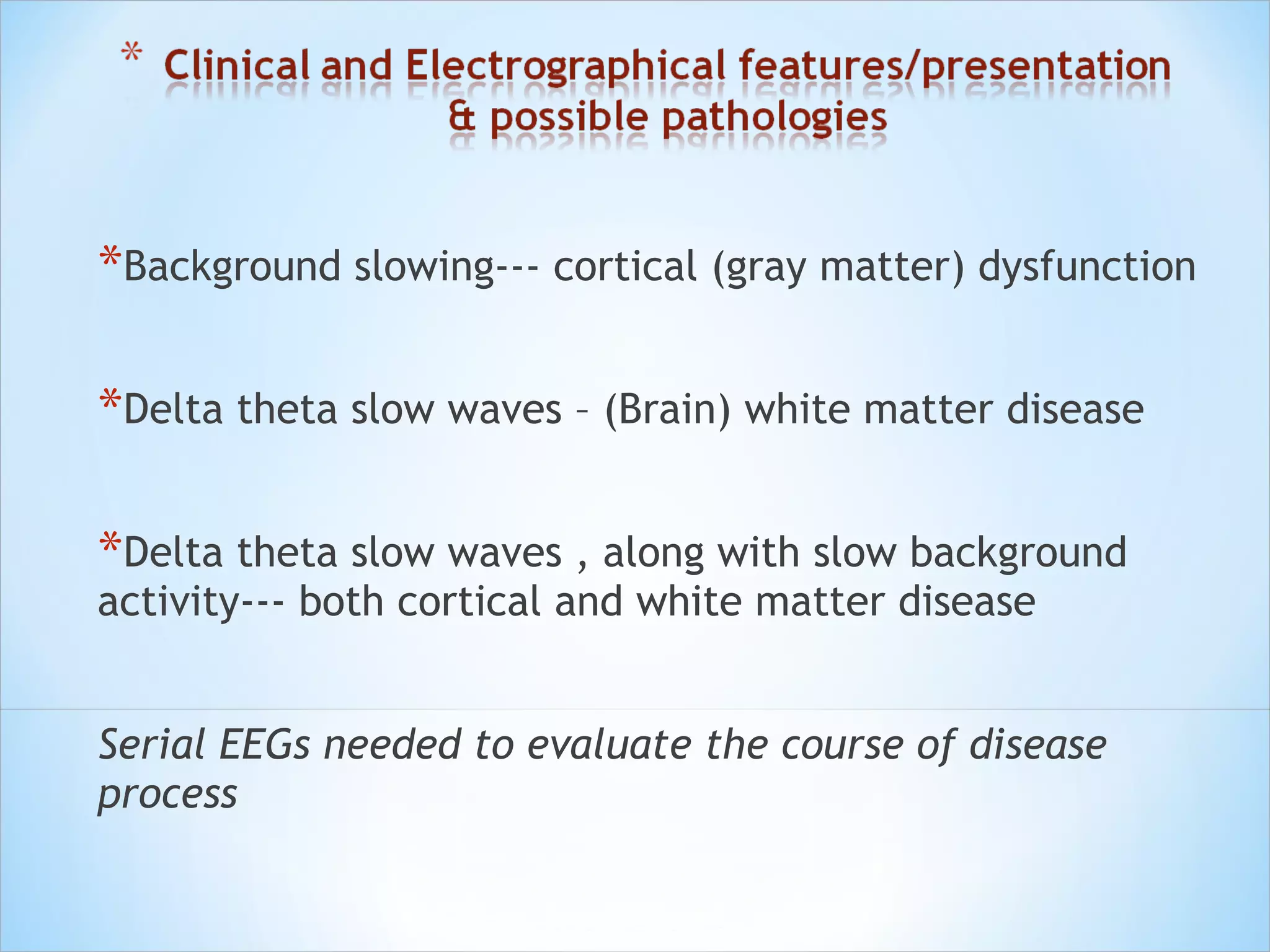
*Background slowing--- cortical (gray matter) dysfunction
*Delta theta slow waves – (Brain) white matter disease
*Delta theta slow waves , along with slow background
activity--- both cortical and white matter disease

Serial EEGs needed to evaluate the course of disease
process
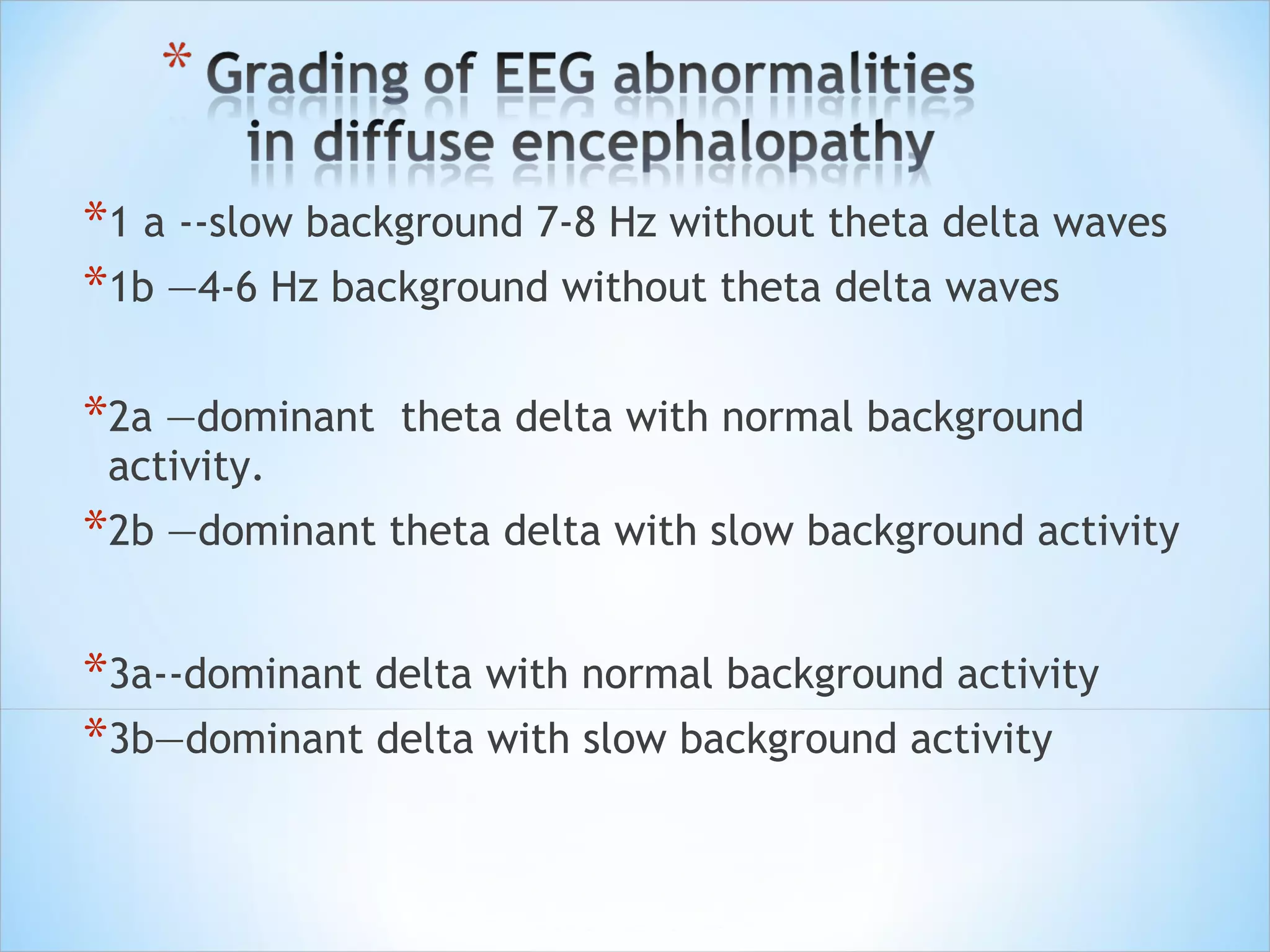
*1 a --slow background 7-8 Hz without theta delta waves
*1b —4-6 Hz background without theta delta waves
*2a —dominant

theta delta with normal background

activity.

*2b —dominant theta delta with slow background activity
*3a--dominant delta with normal background activity
*3b—dominant delta with slow background activity
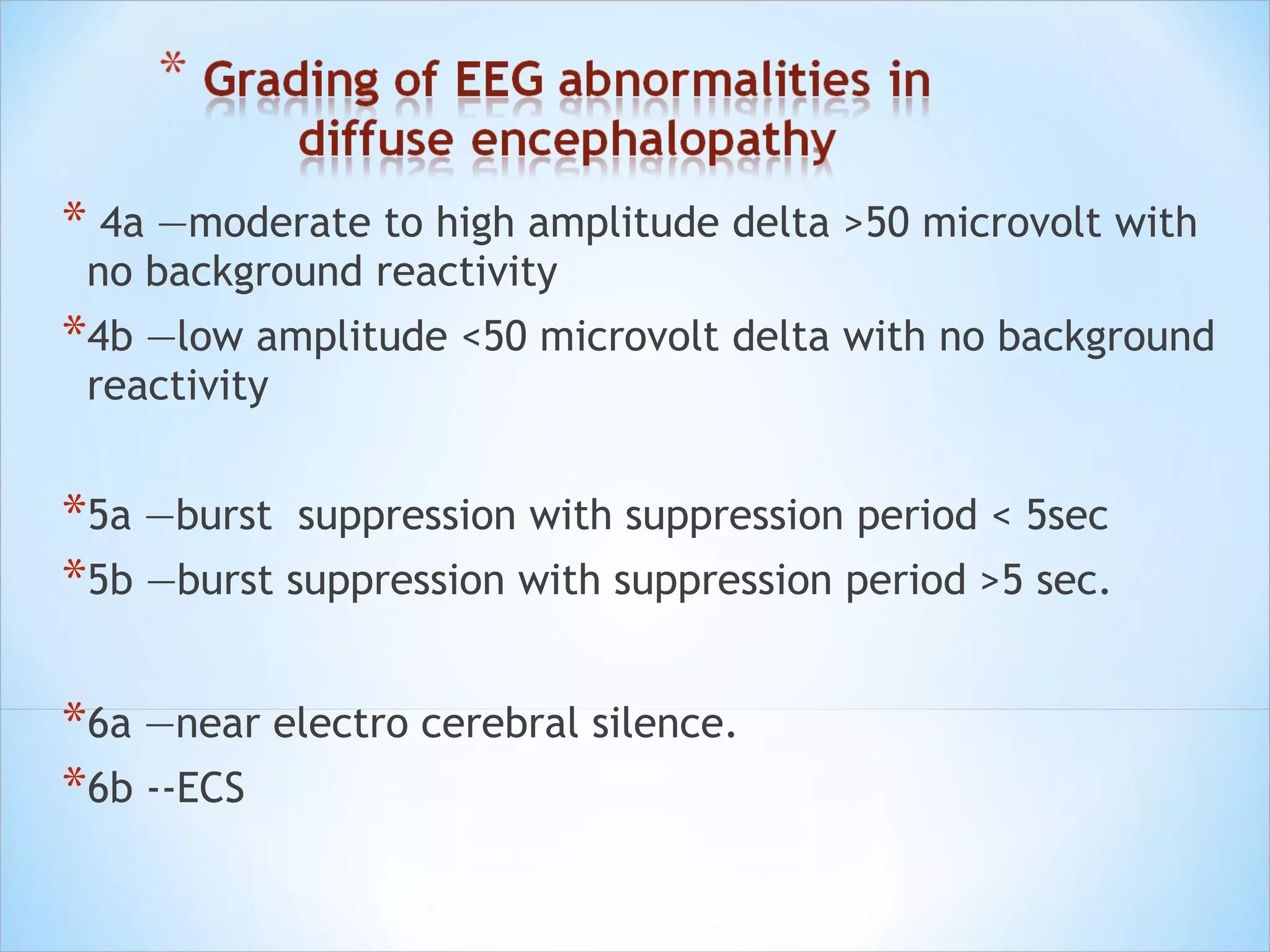
* 4a —moderate to high amplitude delta >50 microvolt with
no background reactivity

*4b —low amplitude <50 microvolt delta with no background
reactivity

*5a —burst suppression with suppression period < 5sec
*5b —burst suppression with suppression period >5 sec.
*6a —near electro cerebral silence.
*6b --ECS
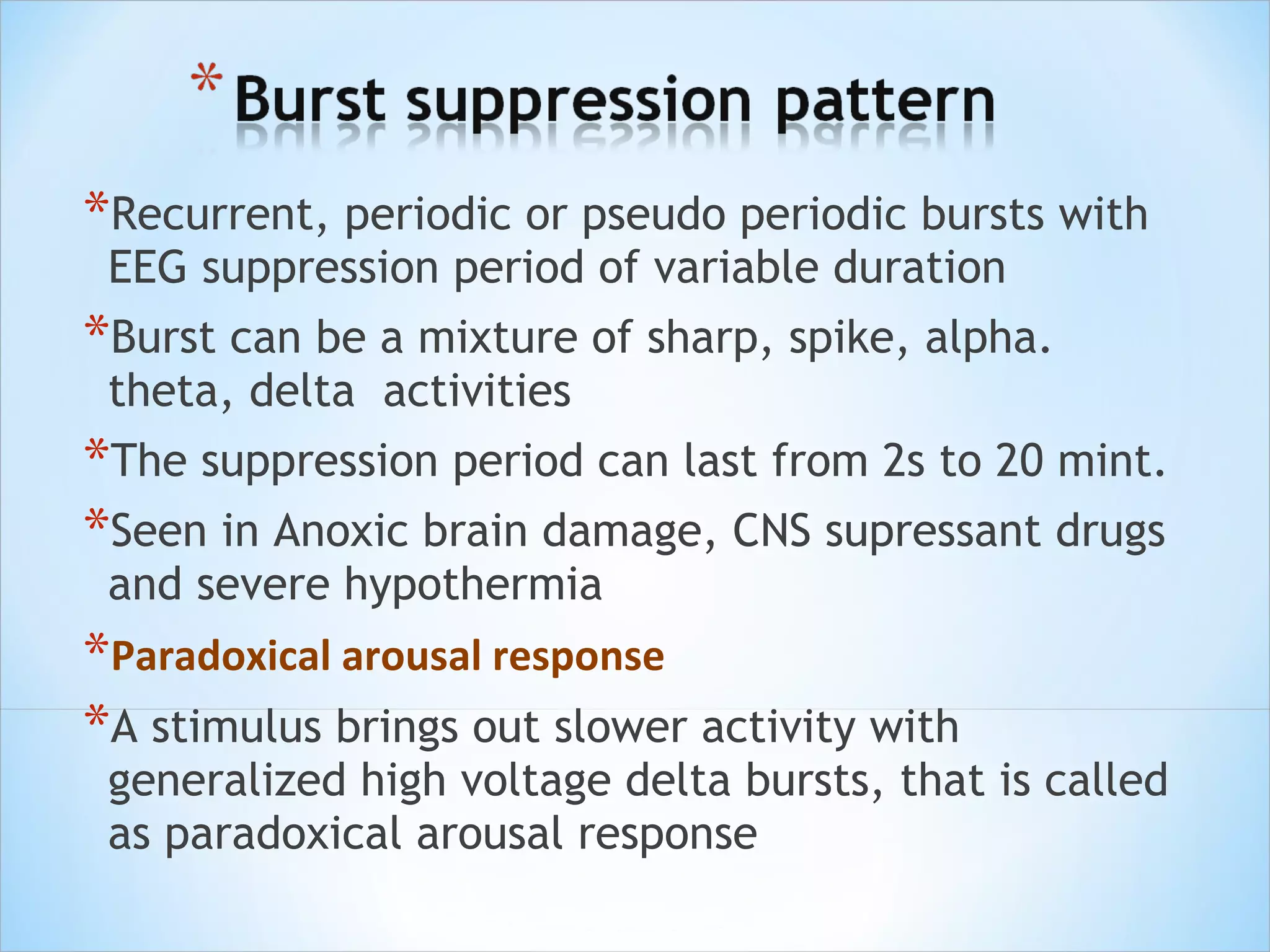
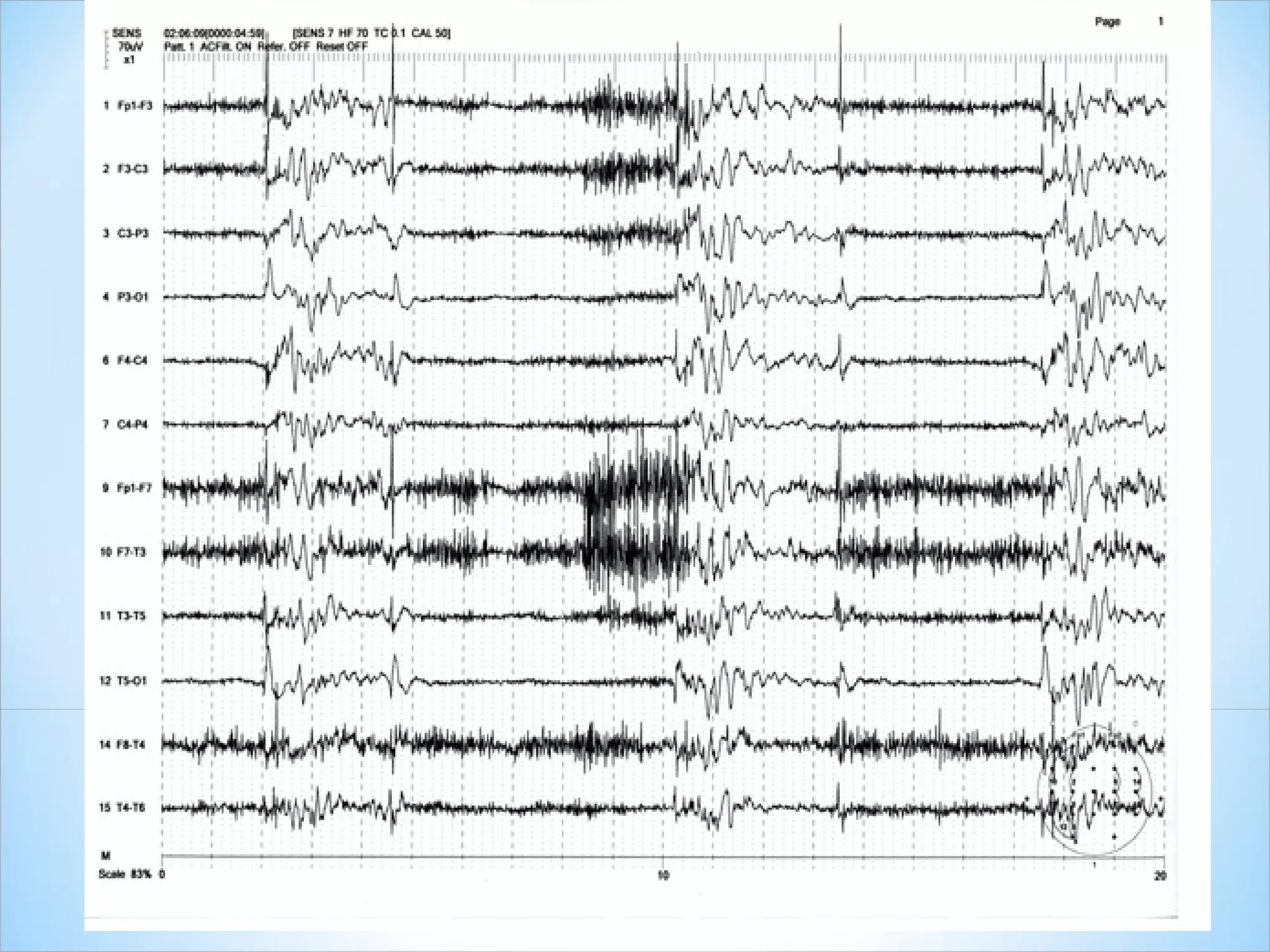
*Recurrent, periodic or pseudo periodic bursts with
EEG suppression period of variable duration

*Burst can be a mixture of sharp, spike, alpha.
theta, delta activities

*The suppression period can last from 2s to 20 mint.
*Seen in Anoxic brain damage, CNS supressant drugs
and severe hypothermia

*Paradoxical arousal response
*A stimulus brings out slower activity with

generalized high voltage delta bursts, that is called
as paradoxical arousal response
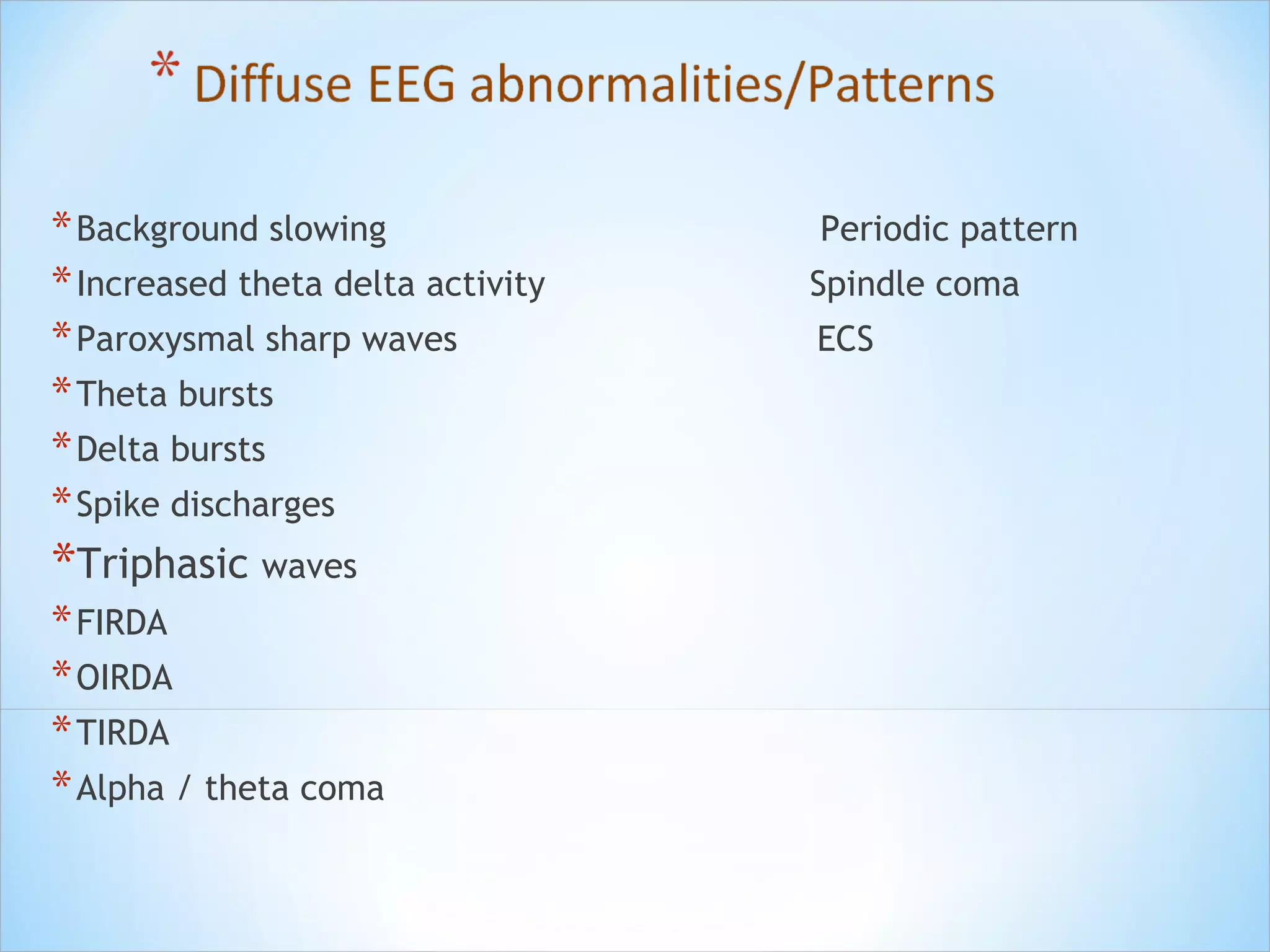
* Background slowing
* Increased theta delta activity
* Paroxysmal sharp waves
* Theta bursts
* Delta bursts
* Spike discharges

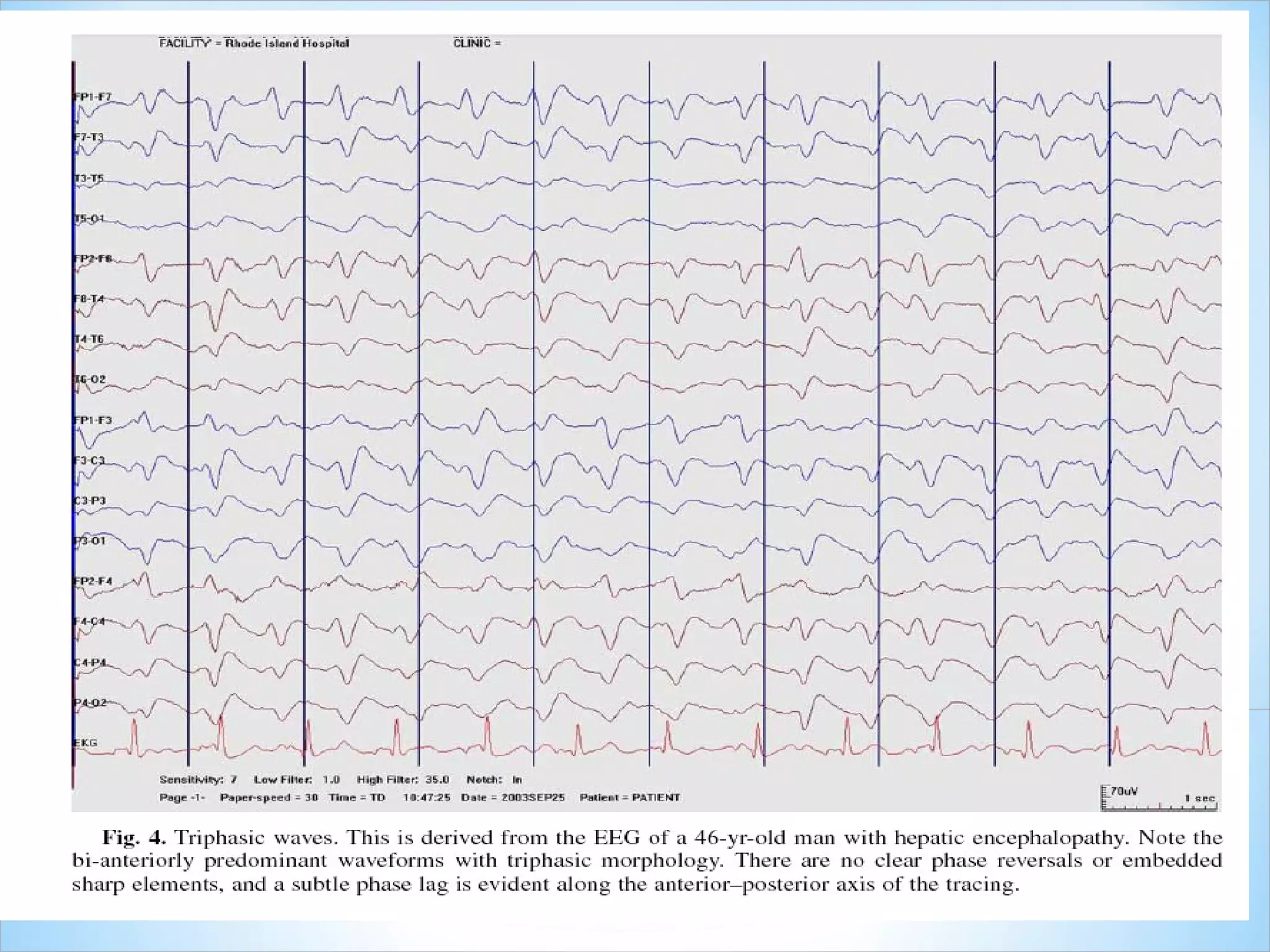
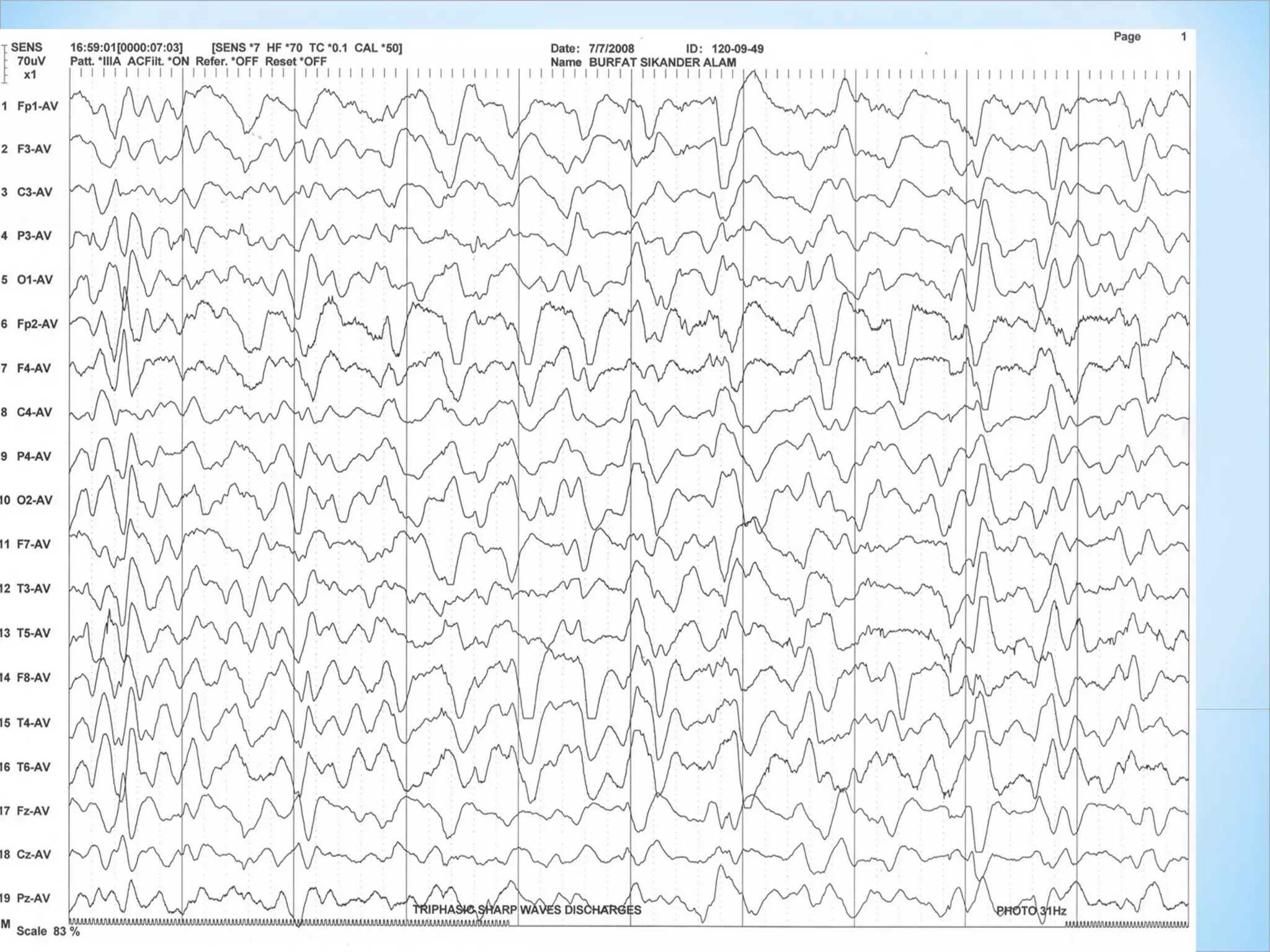
*Triphasic waves
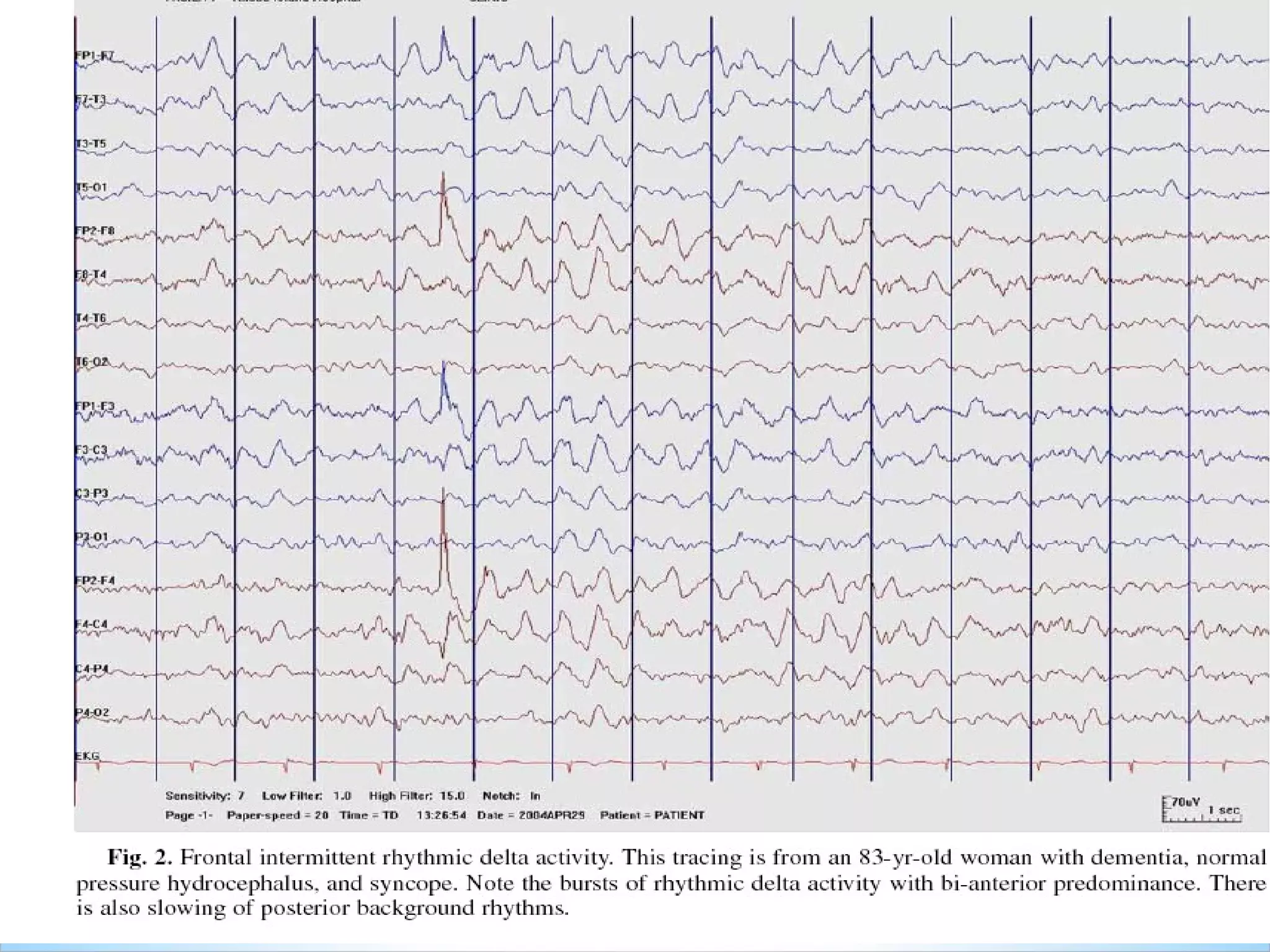
* FIRDA
* OIRDA
* TIRDA
* Alpha / theta coma

Periodic pattern
Spindle coma
ECS
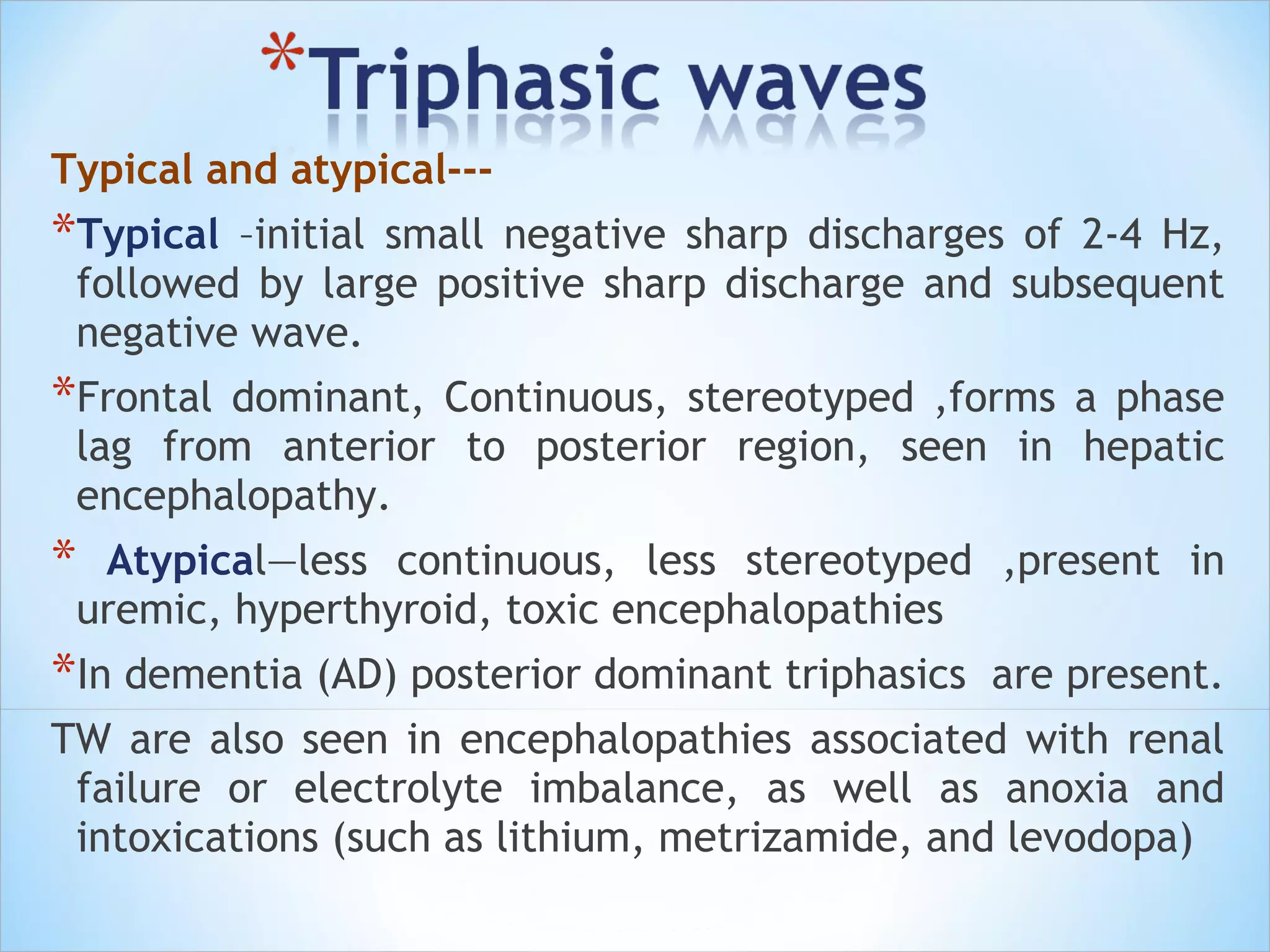
Typical and atypical---

*Typical

–initial small negative sharp discharges of 2-4 Hz,
followed by large positive sharp discharge and subsequent
negative wave.

*Frontal

dominant, Continuous, stereotyped ,forms a phase
lag from anterior to posterior region, seen in hepatic
encephalopathy.

*

Atypical—less continuous, less stereotyped ,present in
uremic, hyperthyroid, toxic encephalopathies

*In dementia (AD) posterior dominant triphasics

are present.

TW are also seen in encephalopathies associated with renal
failure or electrolyte imbalance, as well as anoxia and
intoxications (such as lithium, metrizamide, and levodopa)
*Rhythmic , stereotyped

with consistent waveforms and

frequency.

*Bilateral commonly but can be focal ( ictal) or
unilateral .

*Frontal dominance (FIRDA) --non specific ,diffuse
encephalopathy, if focal ? frontal lobe lesion

*OIRDA --occipital dominant ,seen in children as in
absence seizure

*TIRDA– temporal lobe epilepsy
*Repetitive

and fairly stereotyped waveforms
appearing
at regular intervals, sharps/spike
waves or complex discharges.

*Transient phenomenon
*May repeat as fast as 3/s or as slow as 10/sec
*If focal or lateralized—PLEDS
*If bilateral or independent – BIPLEDS as seen in in
herpes and anoxic encephalopathy.

*Seen

in infarct especially watershed ,tumor,
herpes encephalithies.
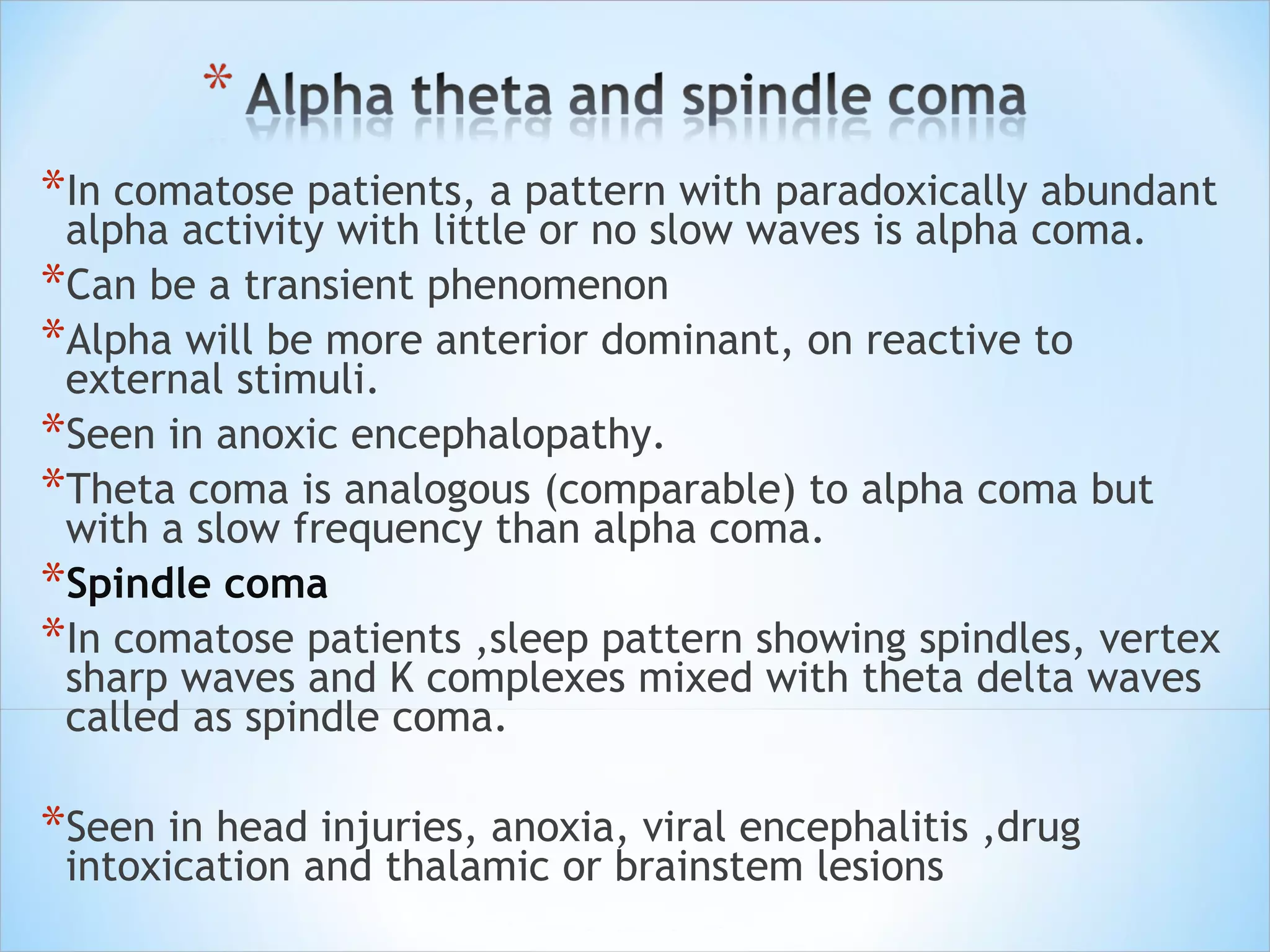
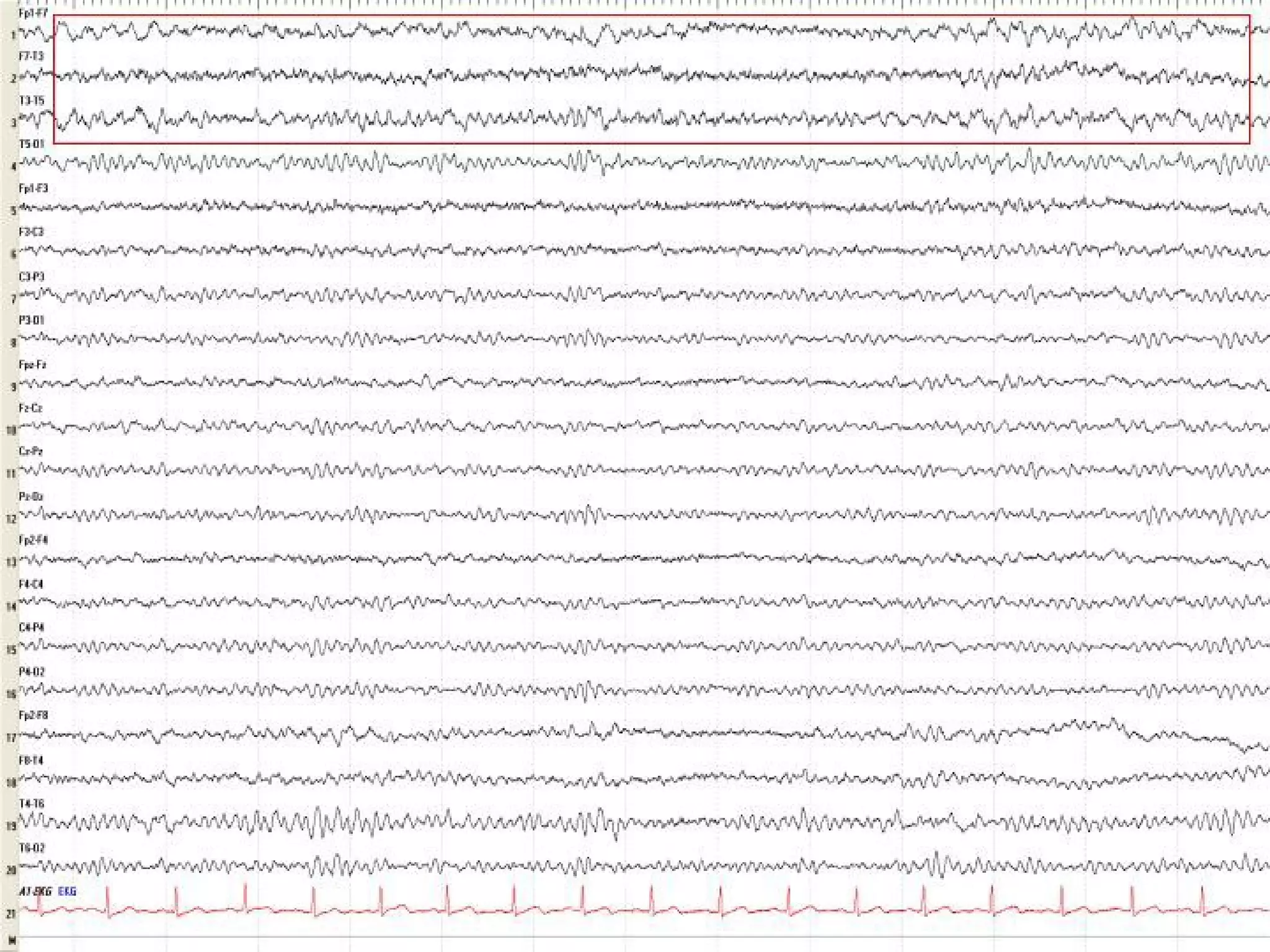
*In comatose patients, a pattern with paradoxically abundant

alpha activity with little or no slow waves is alpha coma.
*Can be a transient phenomenon
*Alpha will be more anterior dominant, on reactive to
external stimuli.
*Seen in anoxic encephalopathy.
*Theta coma is analogous (comparable) to alpha coma but
with a slow frequency than alpha coma.
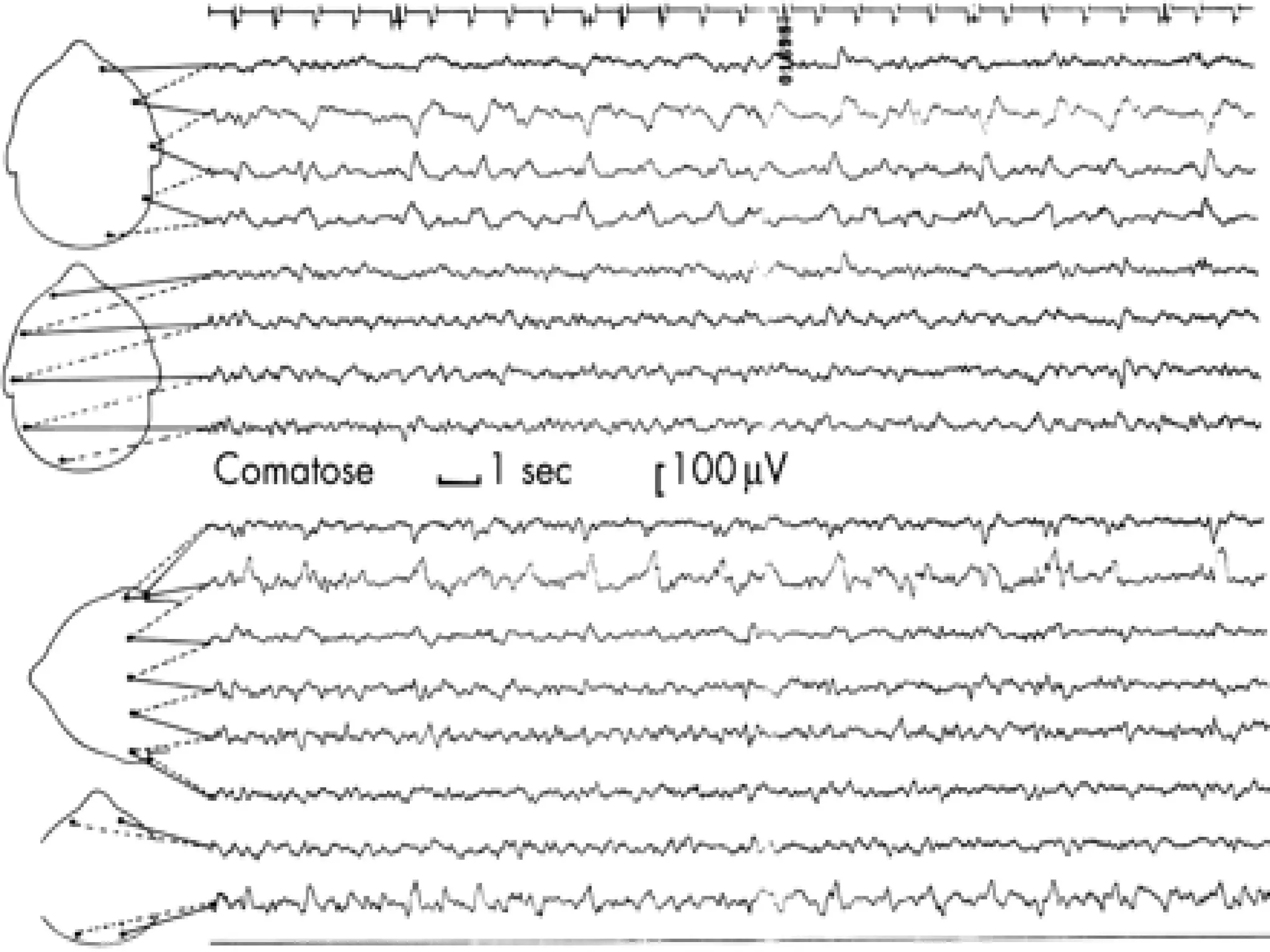
*Spindle coma
*In comatose patients ,sleep pattern showing spindles, vertex
sharp waves and K complexes mixed with theta delta waves
called as spindle coma.

*Seen in head injuries, anoxia, viral encephalitis ,drug
intoxication and thalamic or brainstem lesions
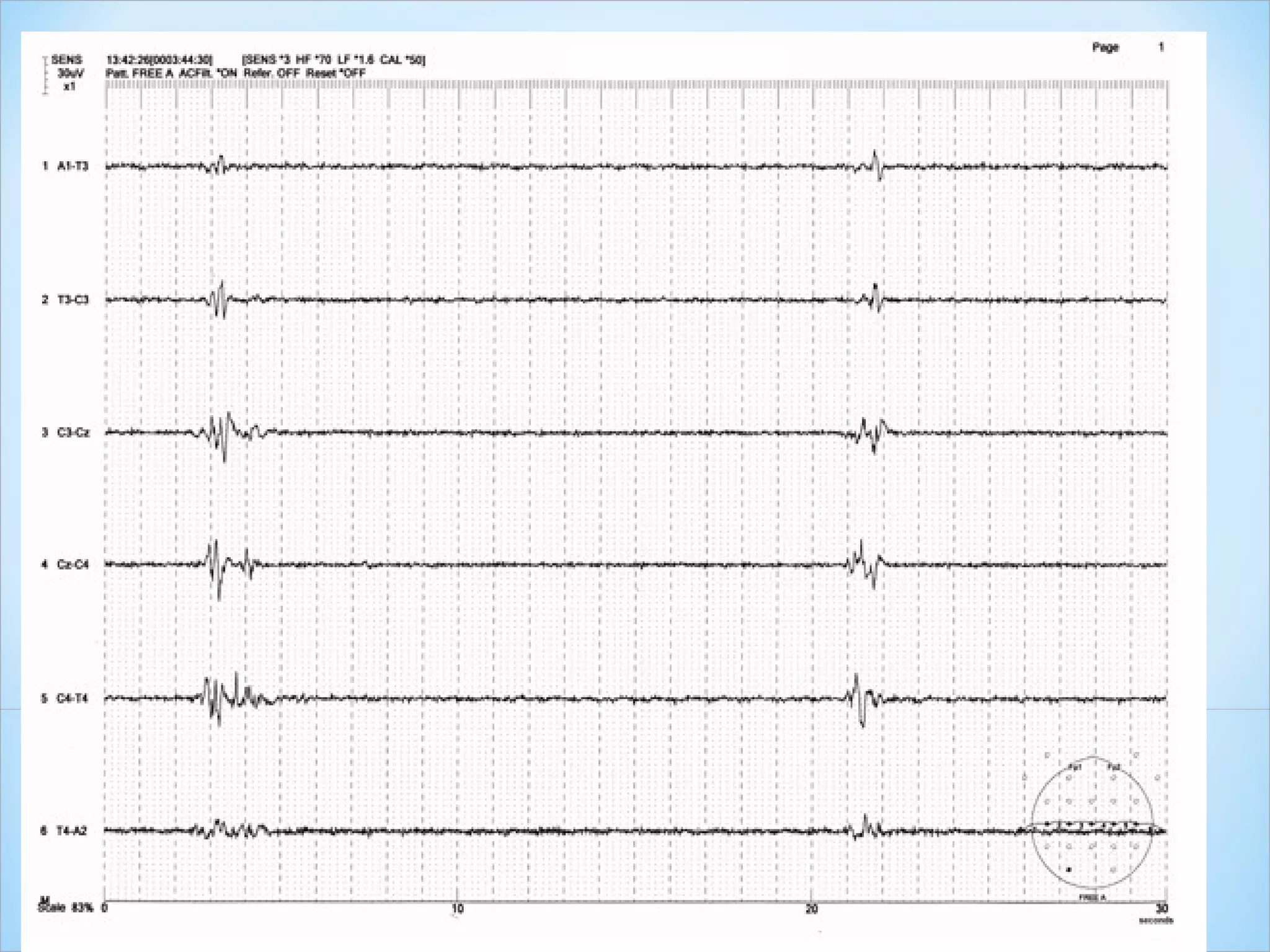
*No EEG activity over 2 micro volts when

recorded from scalp electrode pairs 10 cm
interelectrodes distance.

*Filter settings should not b below 30 Hz and
low filter should not be higher than 1 Hz.

*Recording should be at-least one hour, with
artifacts free 30 min recording on 2uv.

*Electrodes impedance should be 100ohm to
10Kohm.
• Effect depend on dose, and duration of exposure
* Narcoleptics—slowing of alpha, increase in theta and delta

activity and paroxysmal bursts of sharp and slow waves,
these drugs increase epileptiform activity in known epileptic
patients, clozapine increase bilateral spike waves discharges
and risperidone has no effect on EEG

* Antidepressents –slowing of alpha, increase of beta activity.
* Anxiolytic / hypnotic drugs—effects lasts for 2-3 weeks

,alpha became faster to beta frequency range, in sleep sleep
spindles increases, acute withdrawal of bz leads to clinical
seizures, photomyogenic and photoparoxysmal response may
occur in barbiturate withdrawal
* Practical Guide for Clinical Neurophysiologic
Testing: EEG: Thoru Yamada MD.

* Basic Principles, Clinical Applications, and
Related Fields

* By

Ernst Niedermeyer.

Encephalopathy with EEG based Grading

  • 1.
    By: Syed IrshadMurtaza Technologist Dept. of Clinical Neurophysiology. AKUH Karachi Date: 16-12-2013
  • 2.
    *The term “Encephalopathy”is defined as altered mental status as a result of a diffuse disturbance of brain function. *or *Any clinical condition that causes impairment in consciousness usually accompanied by diffuse EEG abnormalities.
  • 3.
    * It represents abrain state in which normal functioning of the brain is disturbed temporarily or permanently. Encephalopathy encompasses a number of conditions that lead to cognitive dysfunction. Some of these conditions are multifactorial and some have an established cause, such as hepatic or uremic encephalopathy. *Some notable exceptions include cruetzfeldt jackob disease(CJD) and subacute sclerosing panencephalitis (SSPE).
  • 4.
    *Encephalopathy results mainfrom, * Metabolic derangements (Na, K, Ca) * Toxins (exposure to toxic substances, e.g lithium paints, industrial chemicals) *infectious (bacteria (TB) viruses, parasites, or prions), *Hepatic (liver failure or liver cancer) * Inflammations (Systemic Lupus Erythropetosis, sarcoidosis (soft tissues diseases) * Drug Induced (Over dozage of the drug) * Demyelinating (e.g MS) * Degenerative processes (Alzheimer disease, Parkinson's disease) * Anoxic encephalopathy (lack of oxygen to the brain, including traumatic causes) * Hereditary encephalopathies (leucodystrophy white matter)
  • 5.
    *In general, themost prominent feature of the EEG record in encephalopathies is slowing of the normal background frequency. *Reactivity to photic or other type of external stimulation may be altered. *Some conditions are associated with an increase in seizure frequency, and in such cases, epileptic activity may be recorded.
  • 7.
    *A patient with acutechange in awareness whose EEG shows triphasic waves and diffuse slow activity will usually have a metabolic encephalopathy. *EEG can provide objective criteria for severity of these pathological processes. *The main contribution of the EEG is in providing an objective measure of * Severity of encephalopathy, * Prognosis and * Effectiveness of therapy
  • 8.
    Toxic encephalopathy, alsoknown as toxic- metabolic encephalopathy, is a degenerative neurologic disorder caused by exposure to toxic substances. It can be an acute or a chronic disorder. Toxic encephalopathy can be caused by various chemicals, some of which are commonly used in everyday life (paints, industrial chemicals, and certain metals).  
  • 9.
     Hepatic encephalopathyis the occurrence of confusion, altered level of consciousness and coma as a result of liver failure.  In the advanced stages it is called hepatic coma. It may be ultimately lead to death. CAUSES: *It is caused by accumulation in the bloodstream of toxic substances (NH3) that are normally removed by the liver. *The encephalopathy is caused directly by liver failure; this is more likely in acute liver failure. *Hepatic encephalopathy is reversible with treatment.
  • 10.
     Triphasic hasbeen associated with a wide range of toxic, metabolic, and structural abnormalities.  Triphasic waves are associated with an altered level of consciousness that may range from mild confusion to deep coma.  The background may be slower in hepatic failure  A classic etiology of triphasic wave is hepatic/metabolic encephalopathy. *Triphasic’s are high-amplitude (>70 µV). *Having three phase +ive, -ive and then +ive. *Initial sharp component.
  • 11.
     This oftenthe direct result of cardiac and respiratory arrest, or the indirect result of metabolic encephalopathy, intracerebral or subarachnoid hemorrhage, or of severe cerebral injury which causes widespread structural cerebral damage.  EEG FINDINGS:  *. Depending on the severity of underlying damage.  Asynchronous slow waves and higher amplitude and low frequencies.  *. Burst of bisynchronous slow waves.  *. Rhythmical un-reactive alpha or theta coma.  *. Spike or sharp waves.  *. Burst suppression patterns.  *. ECS.
  • 12.
     Wernicke's encephalopathyis not related to Wernicke's area, a region of the brain associated with speech and language interpretation.  Wernicke’s encephalopathy is a syndrome characterized by ataxia, nystagmus, confusion, and impairment of short-term-memory.  EEG FINDINGS:  *. Prominent Generalized asynchronous slow waves and often also causes bisynchronous slow waves and decrease of alpha rhythm.
  • 14.
    Neonatal encephalopathy Often occurringdue to lack of oxygen in blood flow to brain-tissue of the fetus during labor or delivery. Cerebral hypoxia refers to a reduced supply of oxygen to the brain. Cerebral anoxia refers to a complete lack of oxygen to the brain.
  • 15.
    *There is good correlationb/w the severity of the EEG changes , the severity of the encephalopathy and the clinical state of the patient. *Degree of impairment is clinically categorized as— * Coma * Stupourous. * Lethargy/ hyper-somnia * Confusion * Delirium * Degree of impairment is Electrographically categorized as, 1.Background slowing without theta delta slow waves. 2.Diffuse theta delta activity associated with normal background activity. 3.Slow background activity with diffuse theta delta activity.
  • 16.
    *Background slowing--- cortical(gray matter) dysfunction *Delta theta slow waves – (Brain) white matter disease *Delta theta slow waves , along with slow background activity--- both cortical and white matter disease Serial EEGs needed to evaluate the course of disease process
  • 17.
    *1 a --slowbackground 7-8 Hz without theta delta waves *1b —4-6 Hz background without theta delta waves *2a —dominant theta delta with normal background activity. *2b —dominant theta delta with slow background activity *3a--dominant delta with normal background activity *3b—dominant delta with slow background activity
  • 18.
    * 4a —moderateto high amplitude delta >50 microvolt with no background reactivity *4b —low amplitude <50 microvolt delta with no background reactivity *5a —burst suppression with suppression period < 5sec *5b —burst suppression with suppression period >5 sec. *6a —near electro cerebral silence. *6b --ECS
  • 20.
    *Recurrent, periodic orpseudo periodic bursts with EEG suppression period of variable duration *Burst can be a mixture of sharp, spike, alpha. theta, delta activities *The suppression period can last from 2s to 20 mint. *Seen in Anoxic brain damage, CNS supressant drugs and severe hypothermia *Paradoxical arousal response *A stimulus brings out slower activity with generalized high voltage delta bursts, that is called as paradoxical arousal response
  • 23.
    * Background slowing *Increased theta delta activity * Paroxysmal sharp waves * Theta bursts * Delta bursts * Spike discharges *Triphasic waves * FIRDA * OIRDA * TIRDA * Alpha / theta coma Periodic pattern Spindle coma ECS
  • 24.
    Typical and atypical--- *Typical –initialsmall negative sharp discharges of 2-4 Hz, followed by large positive sharp discharge and subsequent negative wave. *Frontal dominant, Continuous, stereotyped ,forms a phase lag from anterior to posterior region, seen in hepatic encephalopathy. * Atypical—less continuous, less stereotyped ,present in uremic, hyperthyroid, toxic encephalopathies *In dementia (AD) posterior dominant triphasics are present. TW are also seen in encephalopathies associated with renal failure or electrolyte imbalance, as well as anoxia and intoxications (such as lithium, metrizamide, and levodopa)
  • 27.
    *Rhythmic , stereotyped withconsistent waveforms and frequency. *Bilateral commonly but can be focal ( ictal) or unilateral . *Frontal dominance (FIRDA) --non specific ,diffuse encephalopathy, if focal ? frontal lobe lesion *OIRDA --occipital dominant ,seen in children as in absence seizure *TIRDA– temporal lobe epilepsy
  • 29.
    *Repetitive and fairly stereotypedwaveforms appearing at regular intervals, sharps/spike waves or complex discharges. *Transient phenomenon *May repeat as fast as 3/s or as slow as 10/sec *If focal or lateralized—PLEDS *If bilateral or independent – BIPLEDS as seen in in herpes and anoxic encephalopathy. *Seen in infarct especially watershed ,tumor, herpes encephalithies.
  • 30.
    *In comatose patients,a pattern with paradoxically abundant alpha activity with little or no slow waves is alpha coma. *Can be a transient phenomenon *Alpha will be more anterior dominant, on reactive to external stimuli. *Seen in anoxic encephalopathy. *Theta coma is analogous (comparable) to alpha coma but with a slow frequency than alpha coma. *Spindle coma *In comatose patients ,sleep pattern showing spindles, vertex sharp waves and K complexes mixed with theta delta waves called as spindle coma. *Seen in head injuries, anoxia, viral encephalitis ,drug intoxication and thalamic or brainstem lesions
  • 33.
    *No EEG activityover 2 micro volts when recorded from scalp electrode pairs 10 cm interelectrodes distance. *Filter settings should not b below 30 Hz and low filter should not be higher than 1 Hz. *Recording should be at-least one hour, with artifacts free 30 min recording on 2uv. *Electrodes impedance should be 100ohm to 10Kohm.
  • 35.
    • Effect dependon dose, and duration of exposure * Narcoleptics—slowing of alpha, increase in theta and delta activity and paroxysmal bursts of sharp and slow waves, these drugs increase epileptiform activity in known epileptic patients, clozapine increase bilateral spike waves discharges and risperidone has no effect on EEG * Antidepressents –slowing of alpha, increase of beta activity. * Anxiolytic / hypnotic drugs—effects lasts for 2-3 weeks ,alpha became faster to beta frequency range, in sleep sleep spindles increases, acute withdrawal of bz leads to clinical seizures, photomyogenic and photoparoxysmal response may occur in barbiturate withdrawal
  • 36.
    * Practical Guidefor Clinical Neurophysiologic Testing: EEG: Thoru Yamada MD. * Basic Principles, Clinical Applications, and Related Fields * By Ernst Niedermeyer.