Downloaded 1,555 times


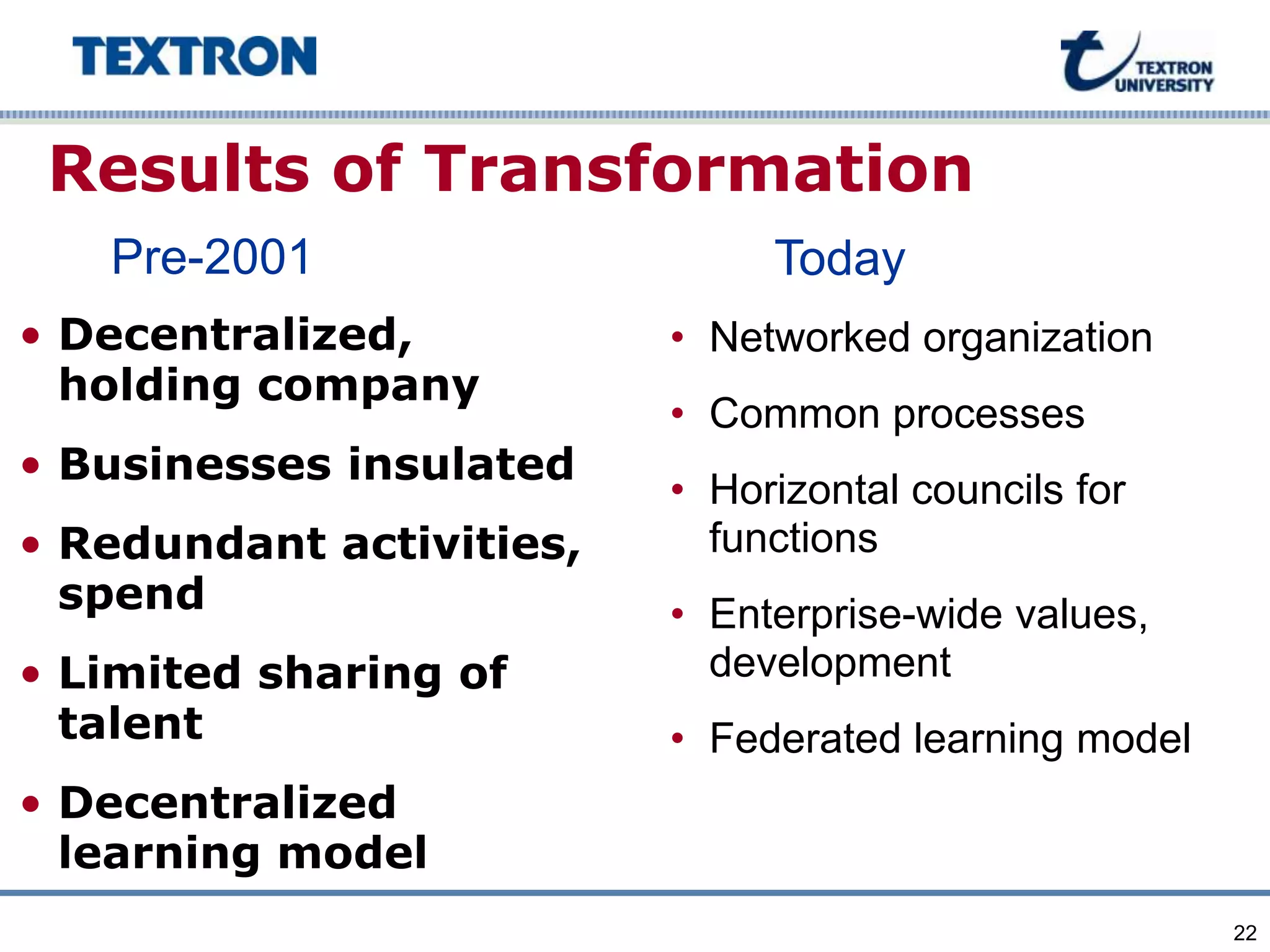
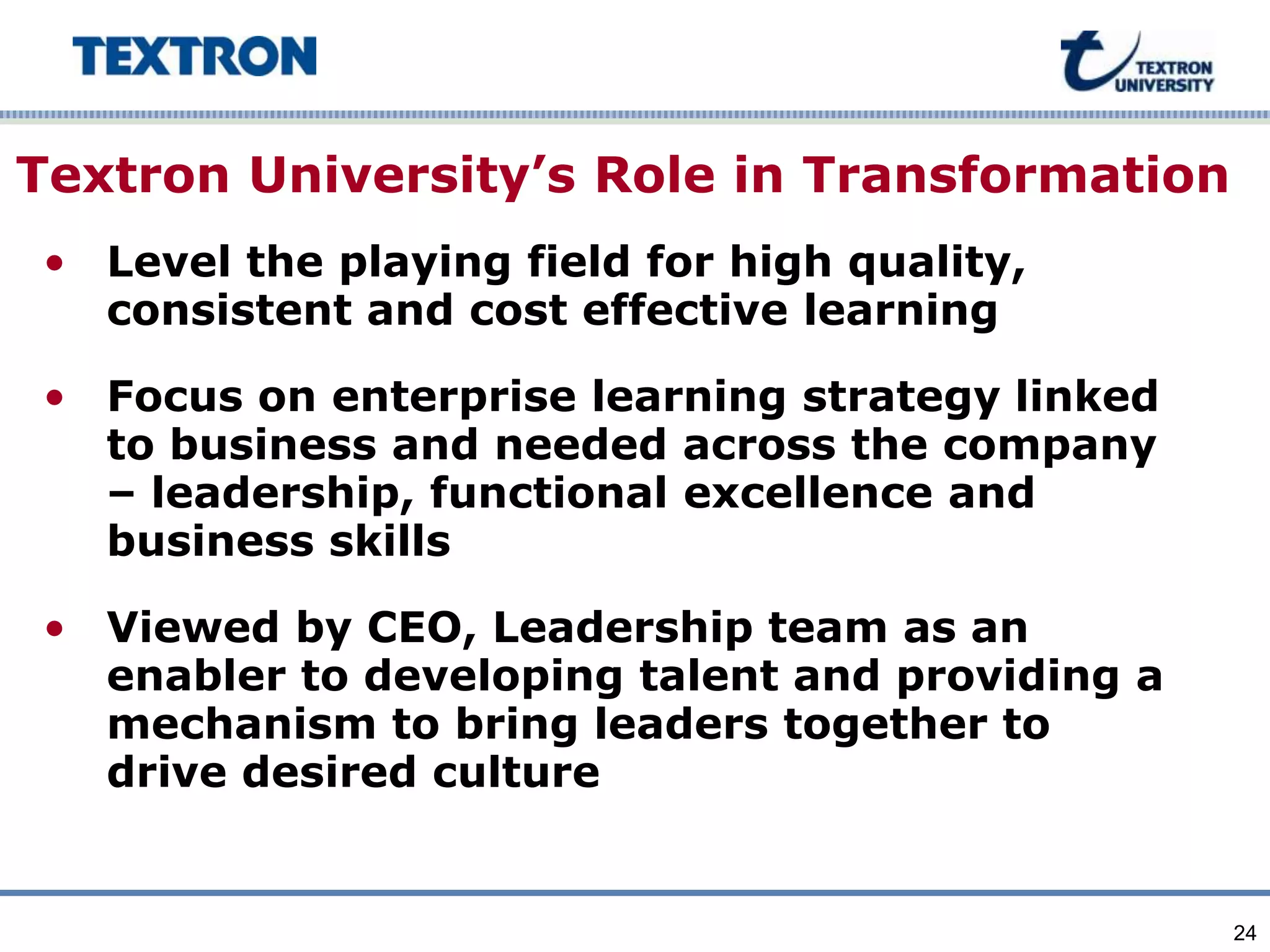


The document discusses governance models for learning and development (L&D) organizations, including centralized, decentralized, and federated models. It uses Textron, a Fortune 500 manufacturing company, as a case study. Textron transformed from a decentralized to a networked model with common processes and a centralized L&D department called Textron University. Textron University uses a federated model with a central team and business unit involvement through a governance board to ensure strategic alignment and share best practices across businesses. The board provides oversight, accountability and helps measure the impact of L&D investments.
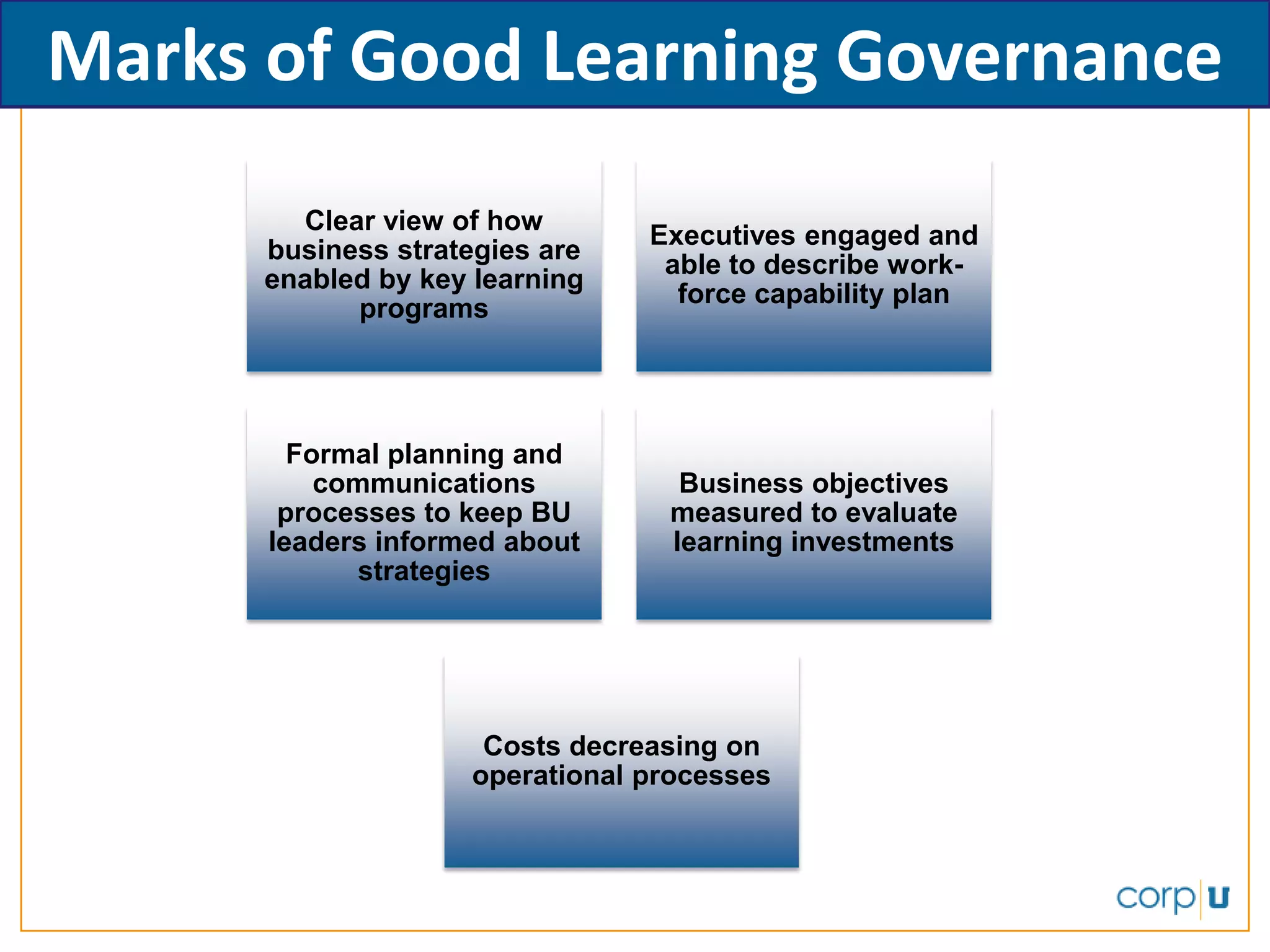
Discusses the design of organization structure with a focus on learning governance, leadership benchmarks, aligning learning with business priorities.
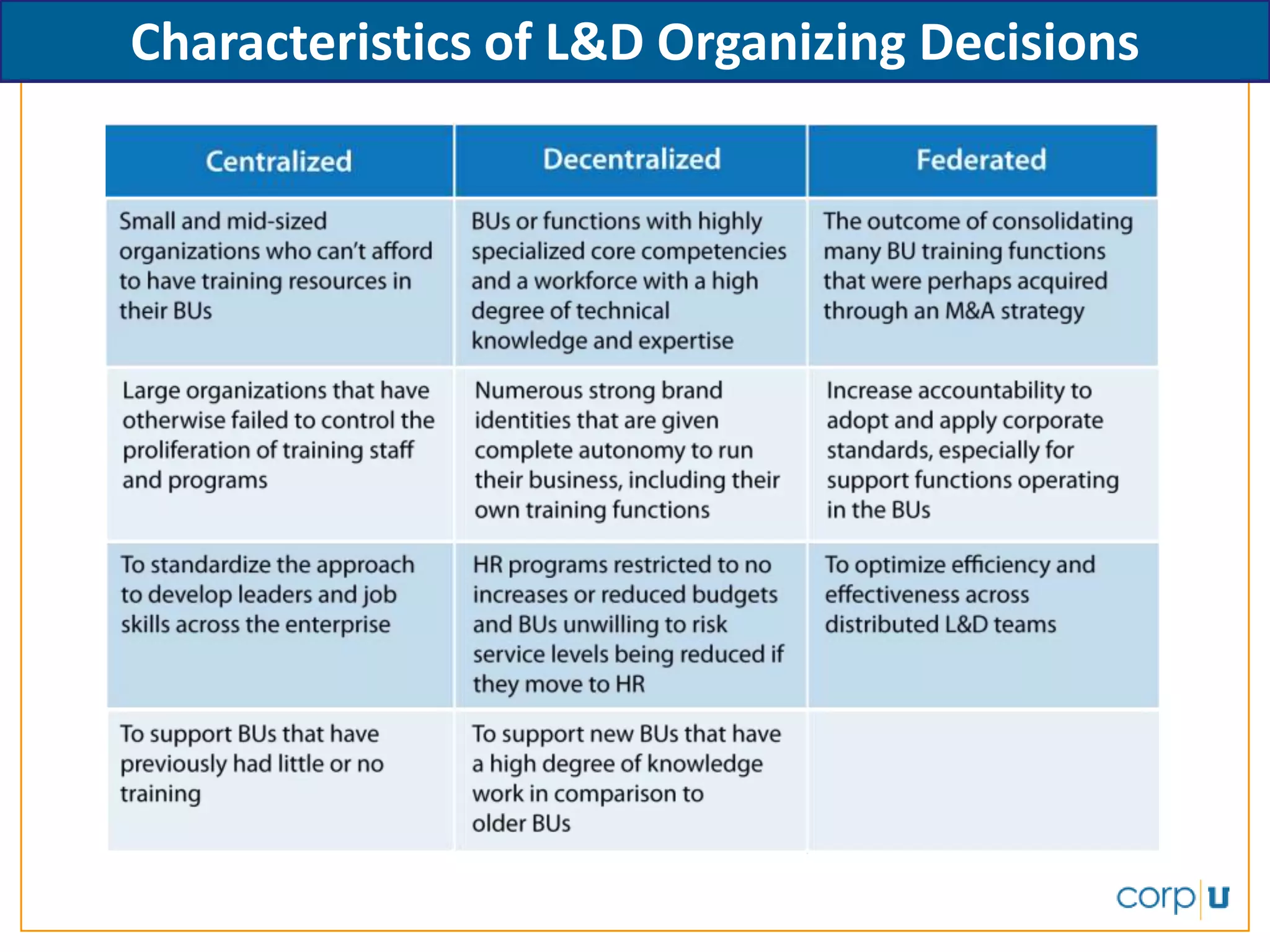
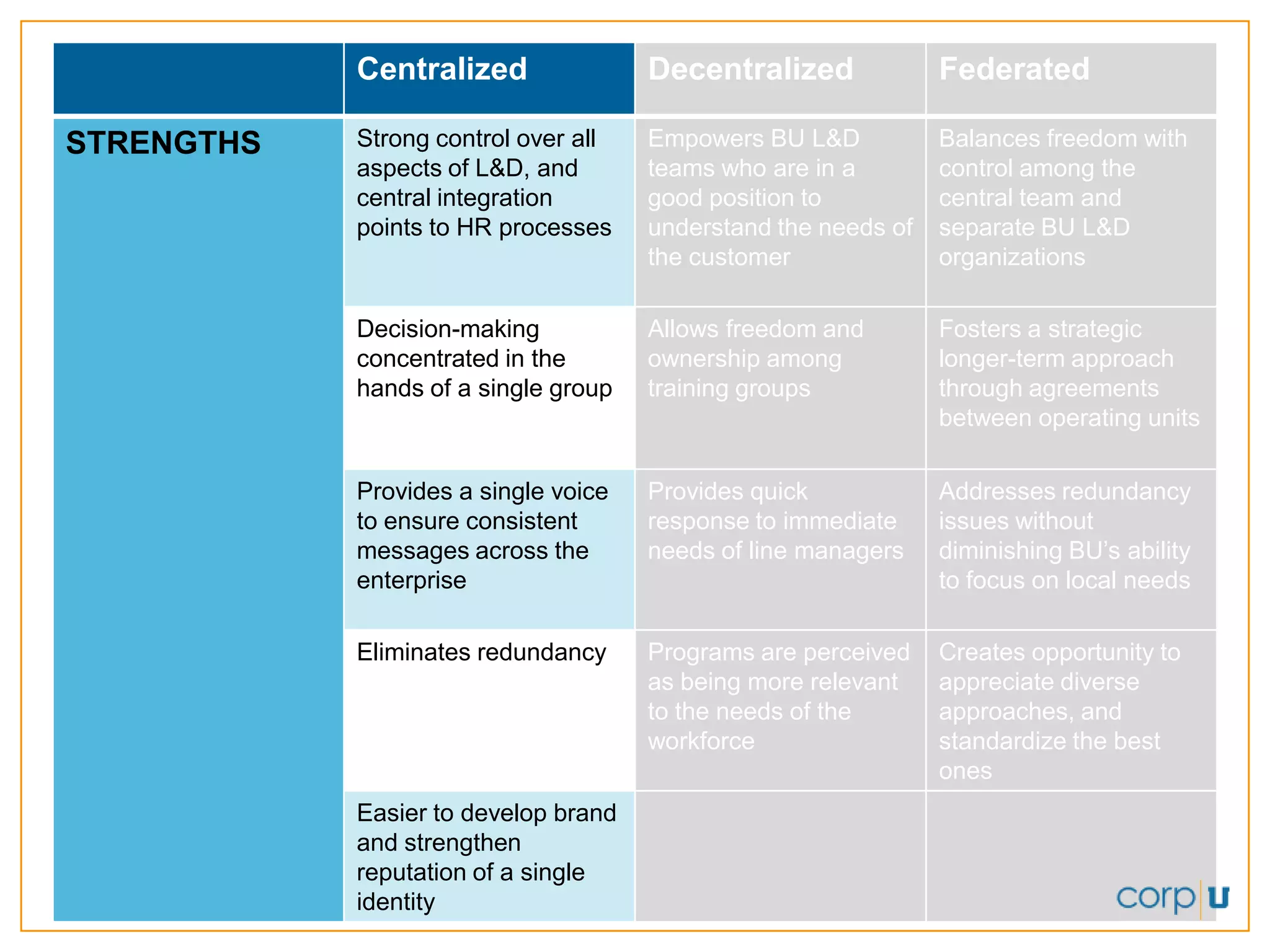
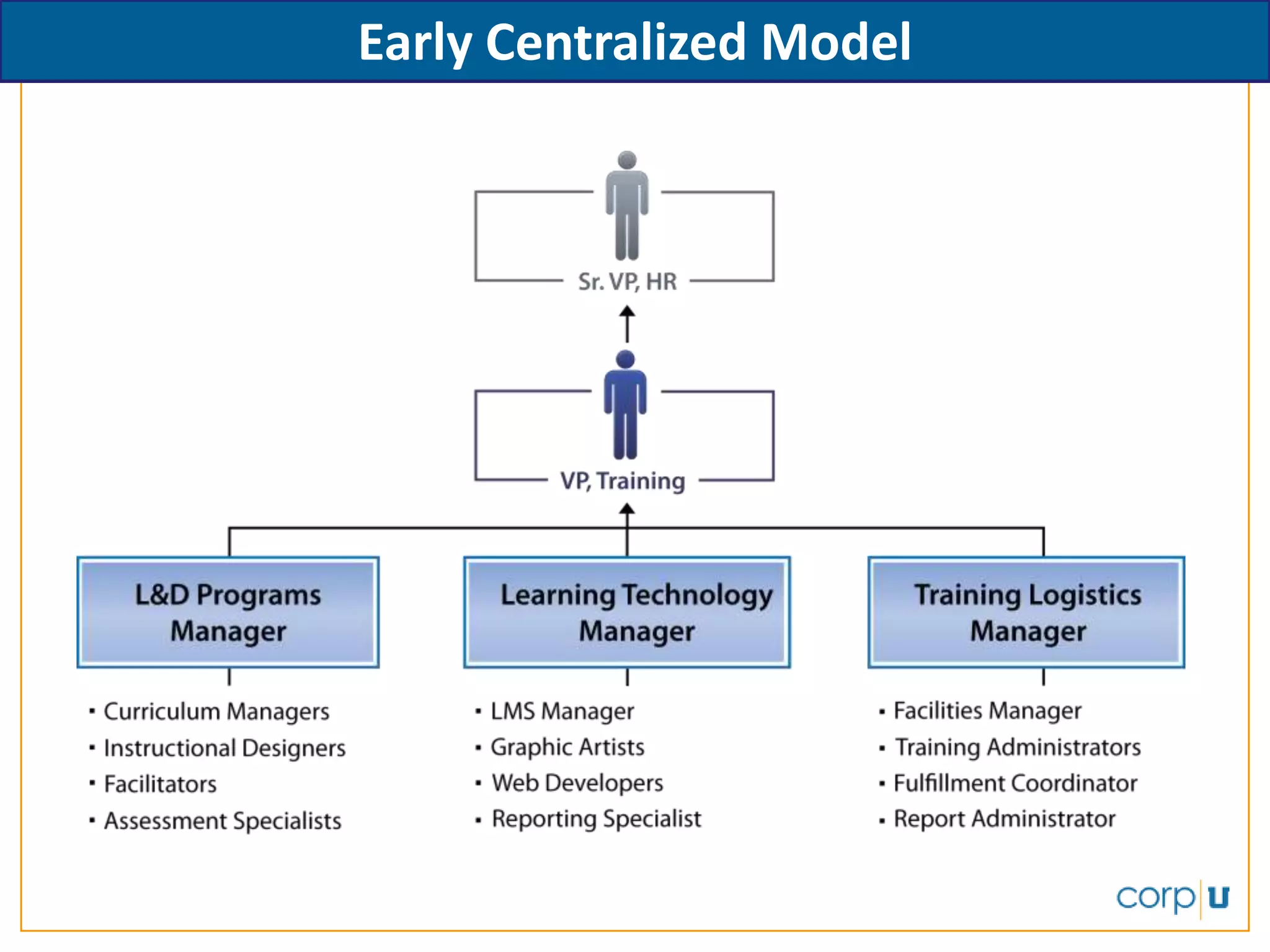
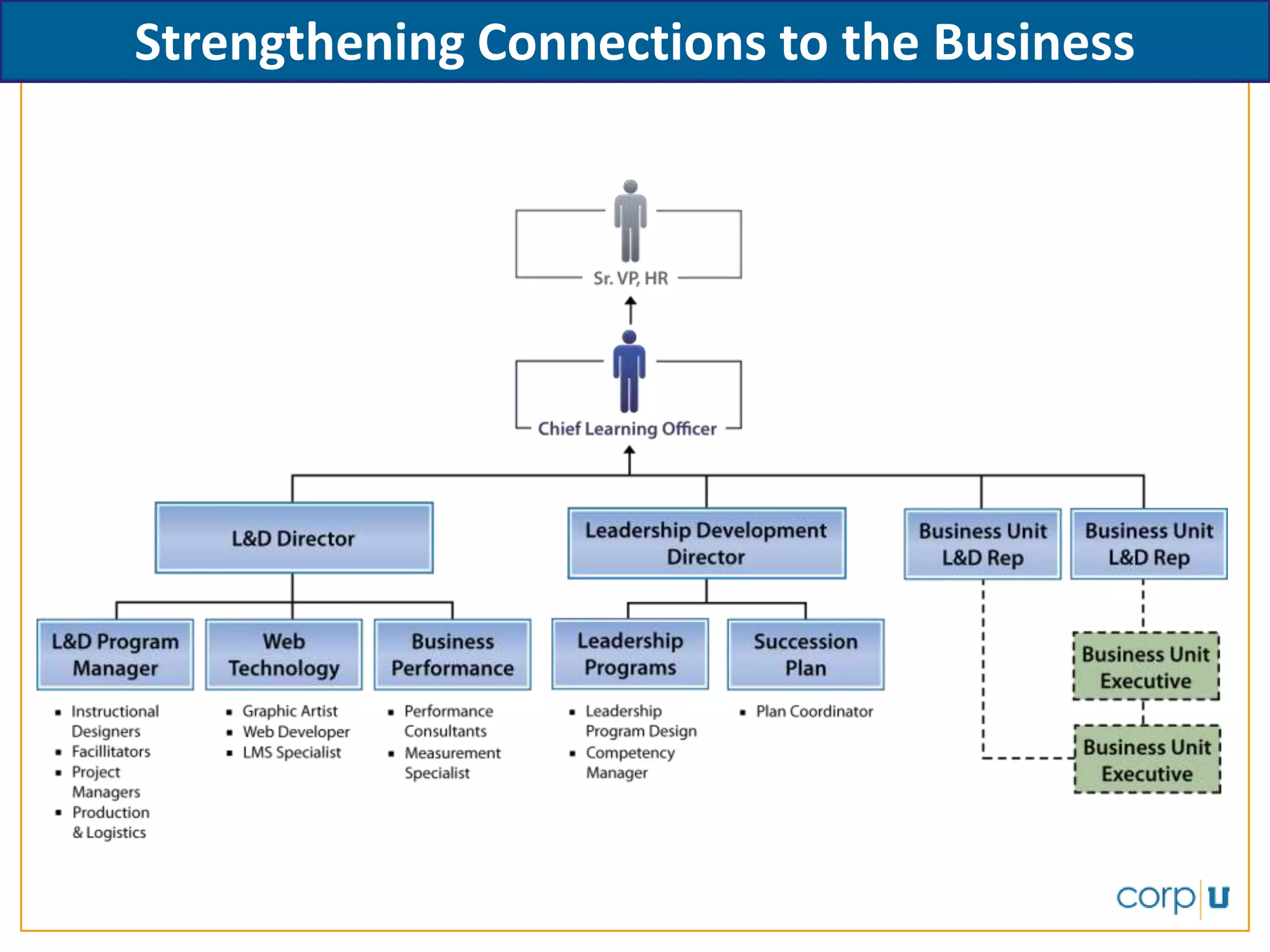
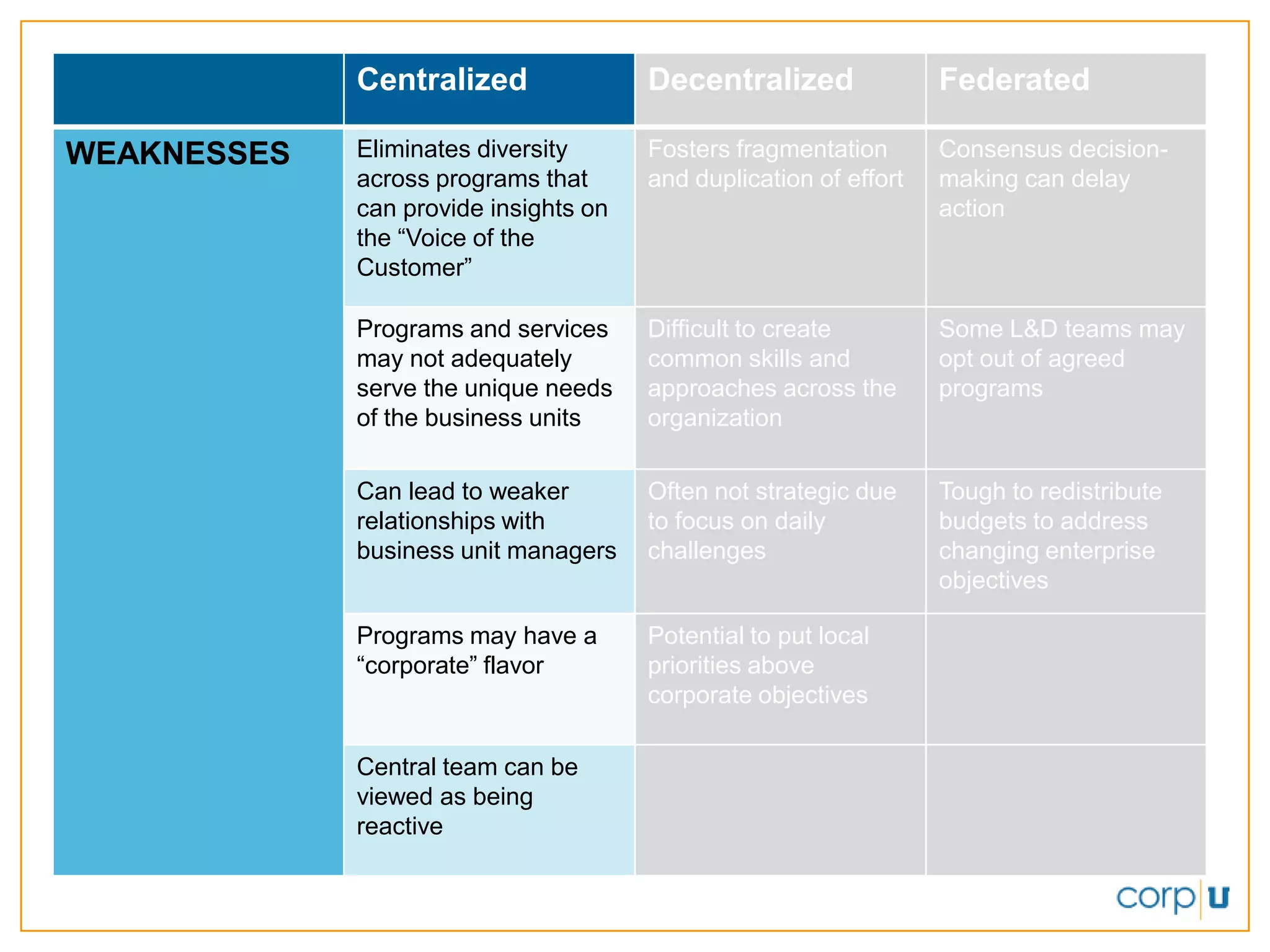
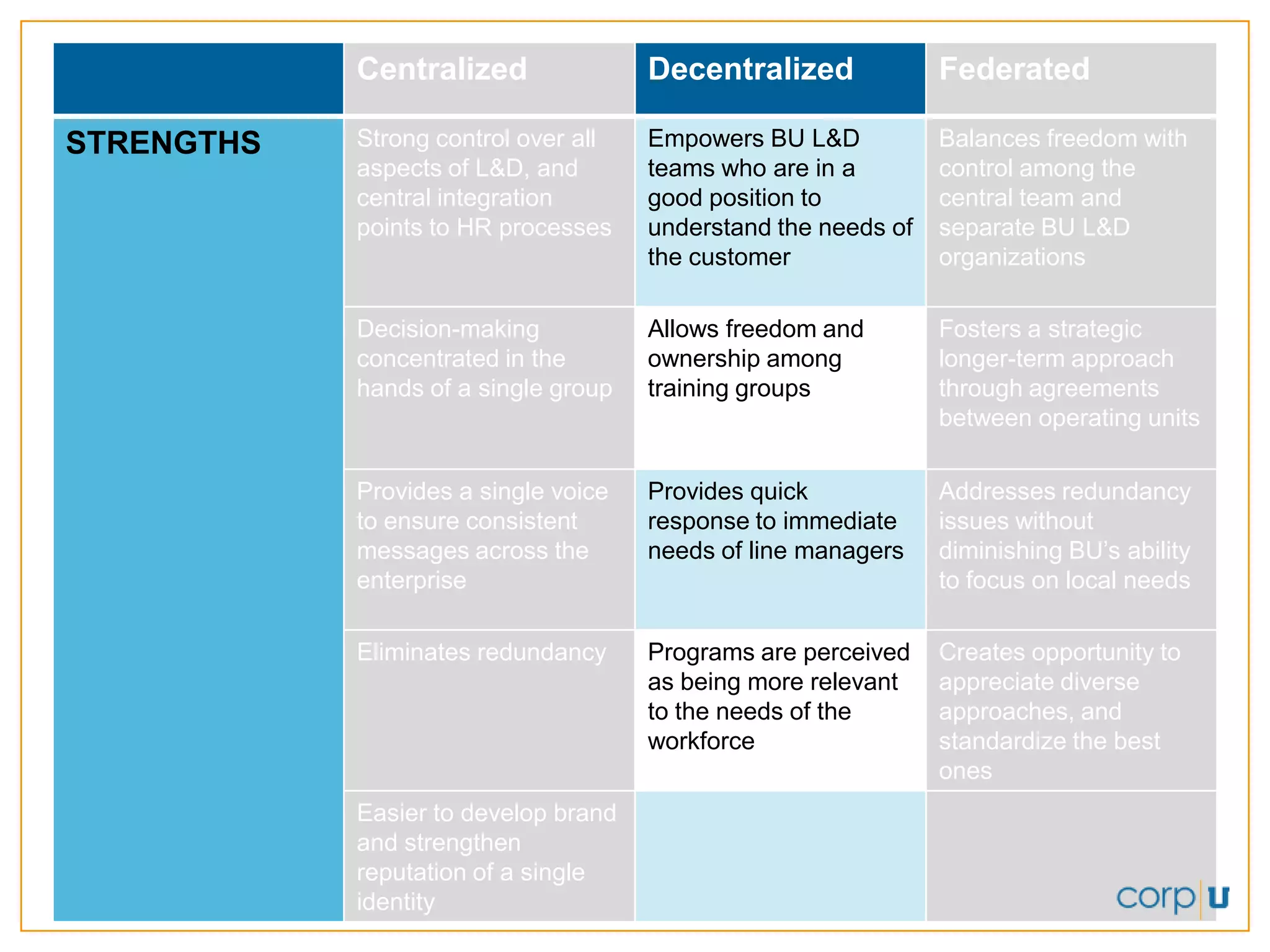
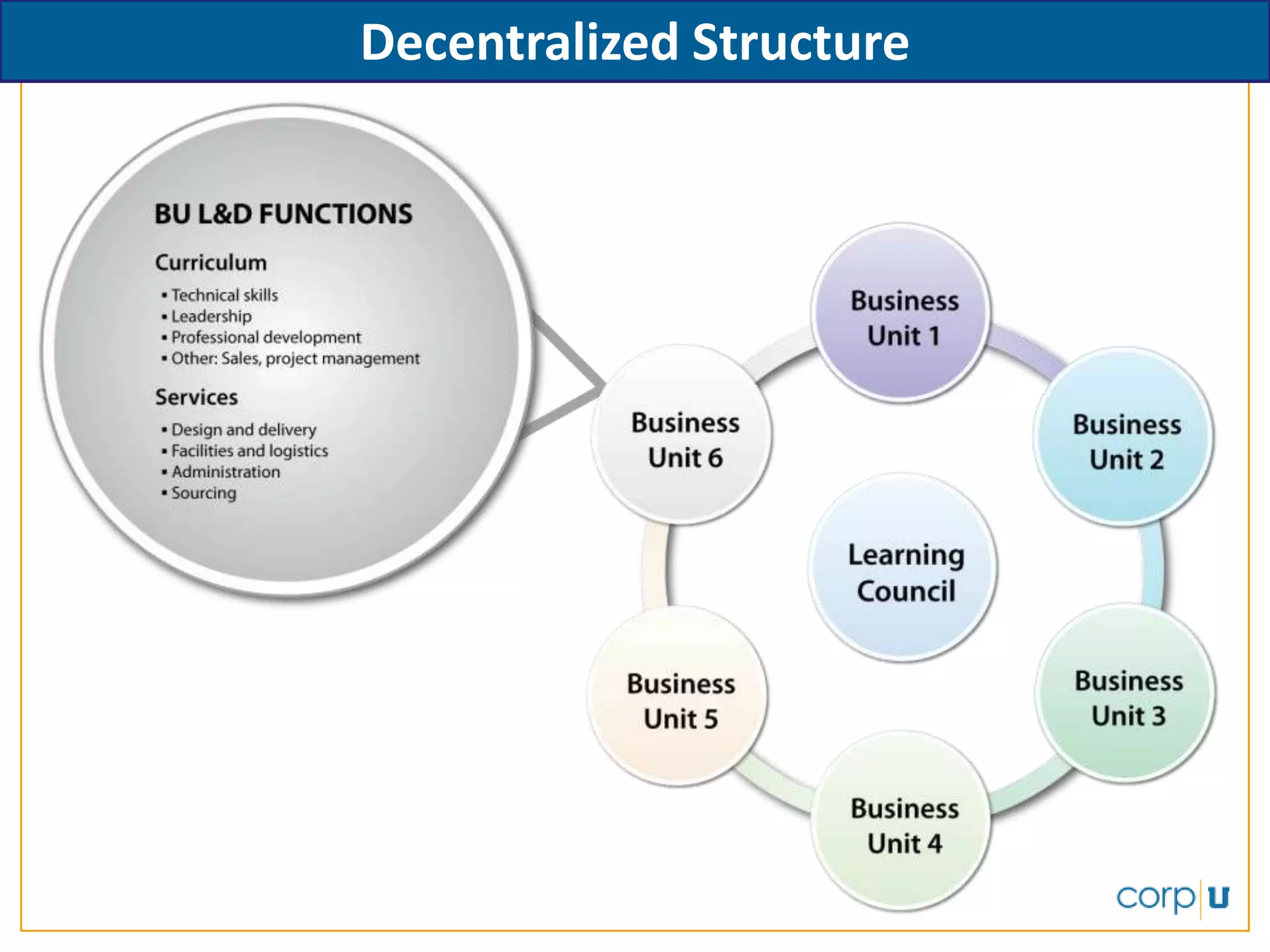
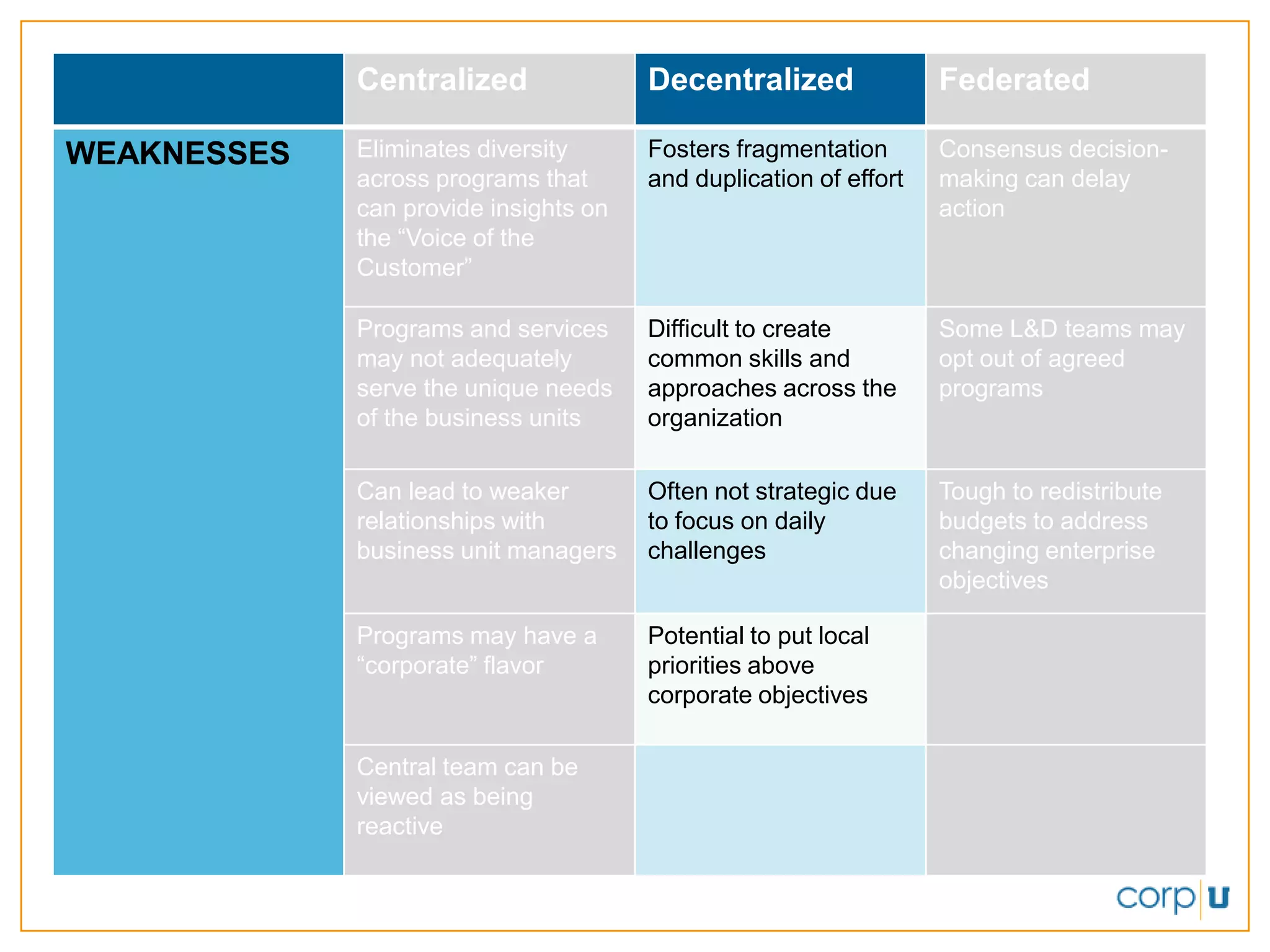
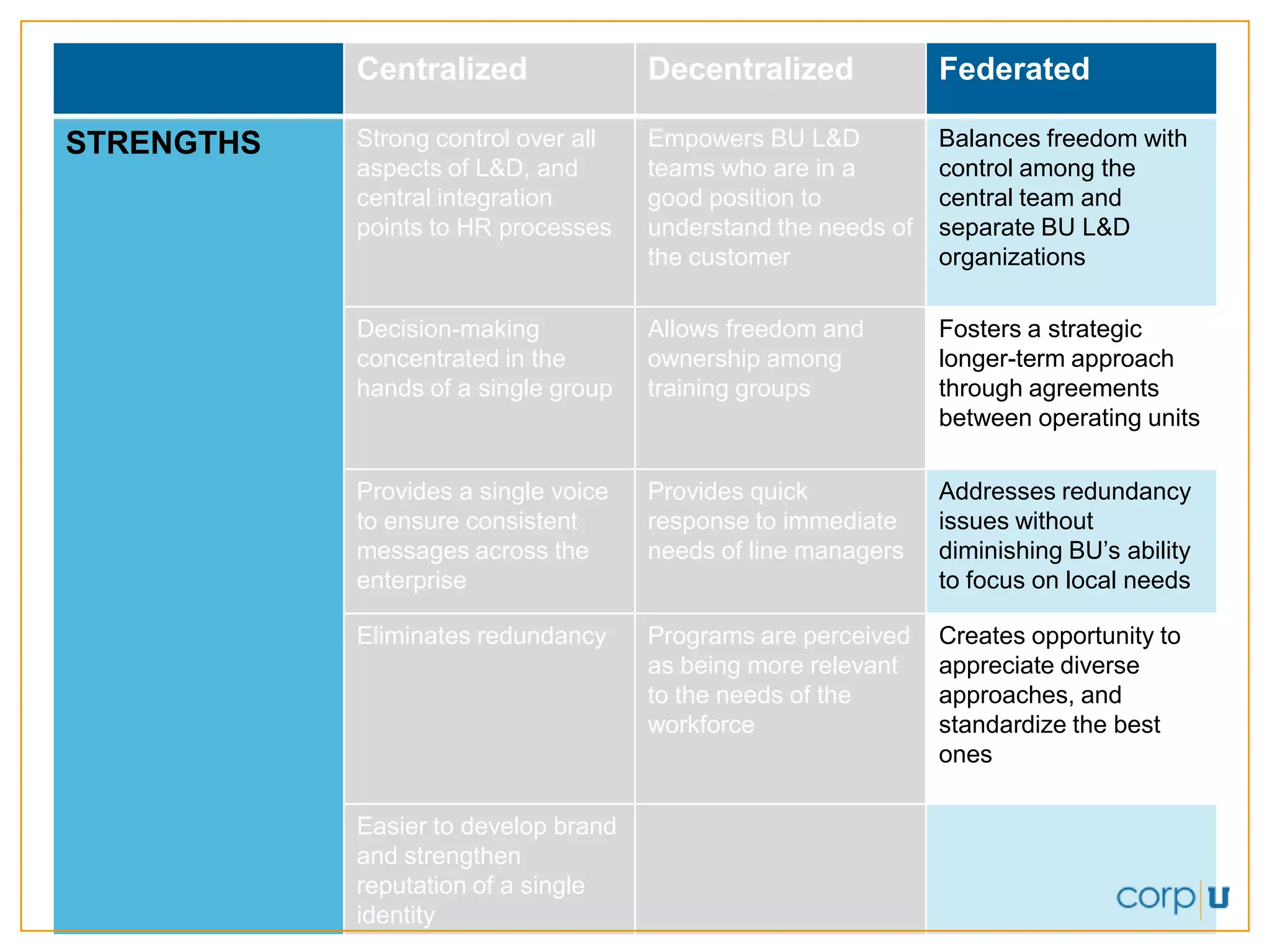
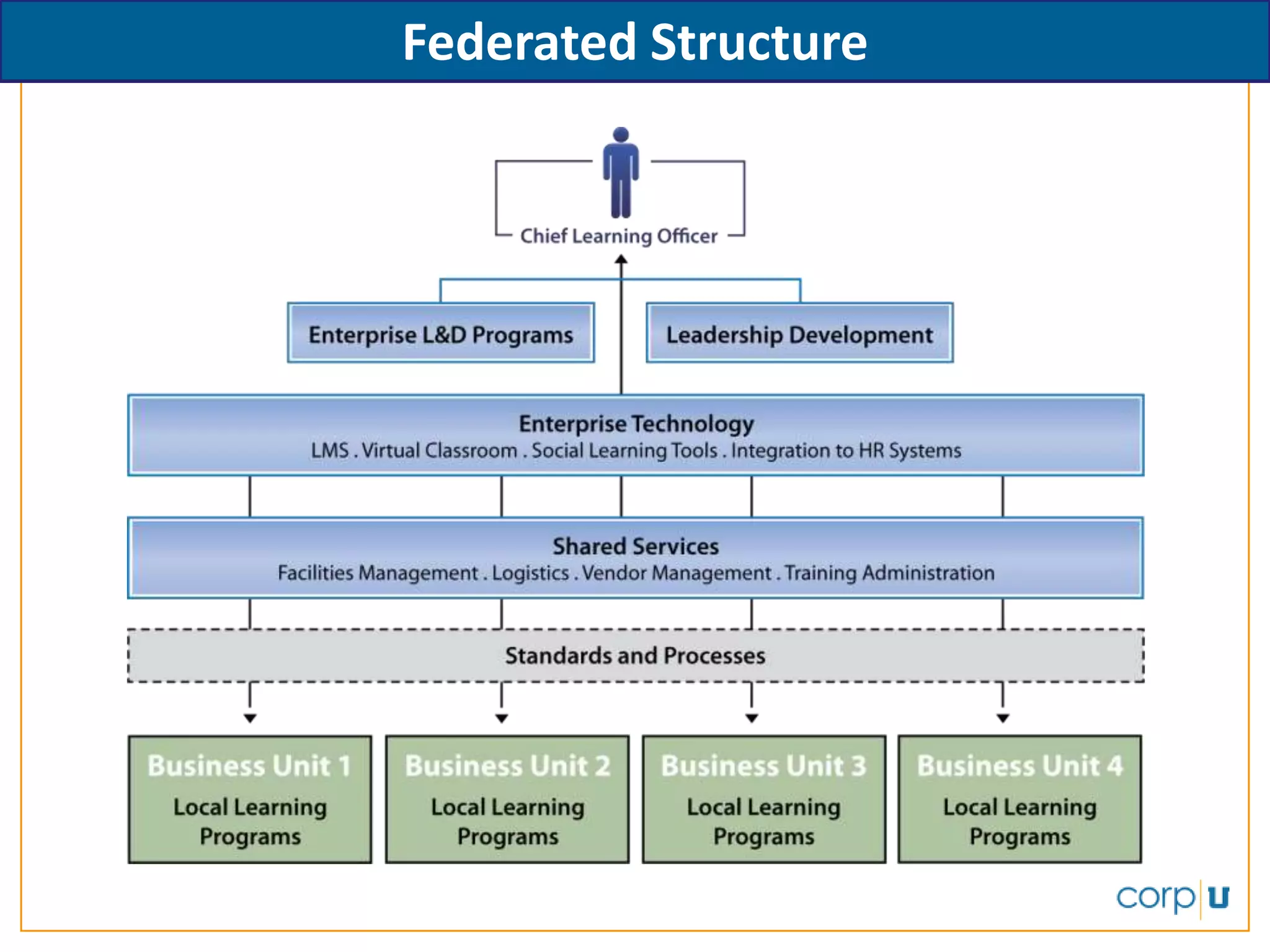
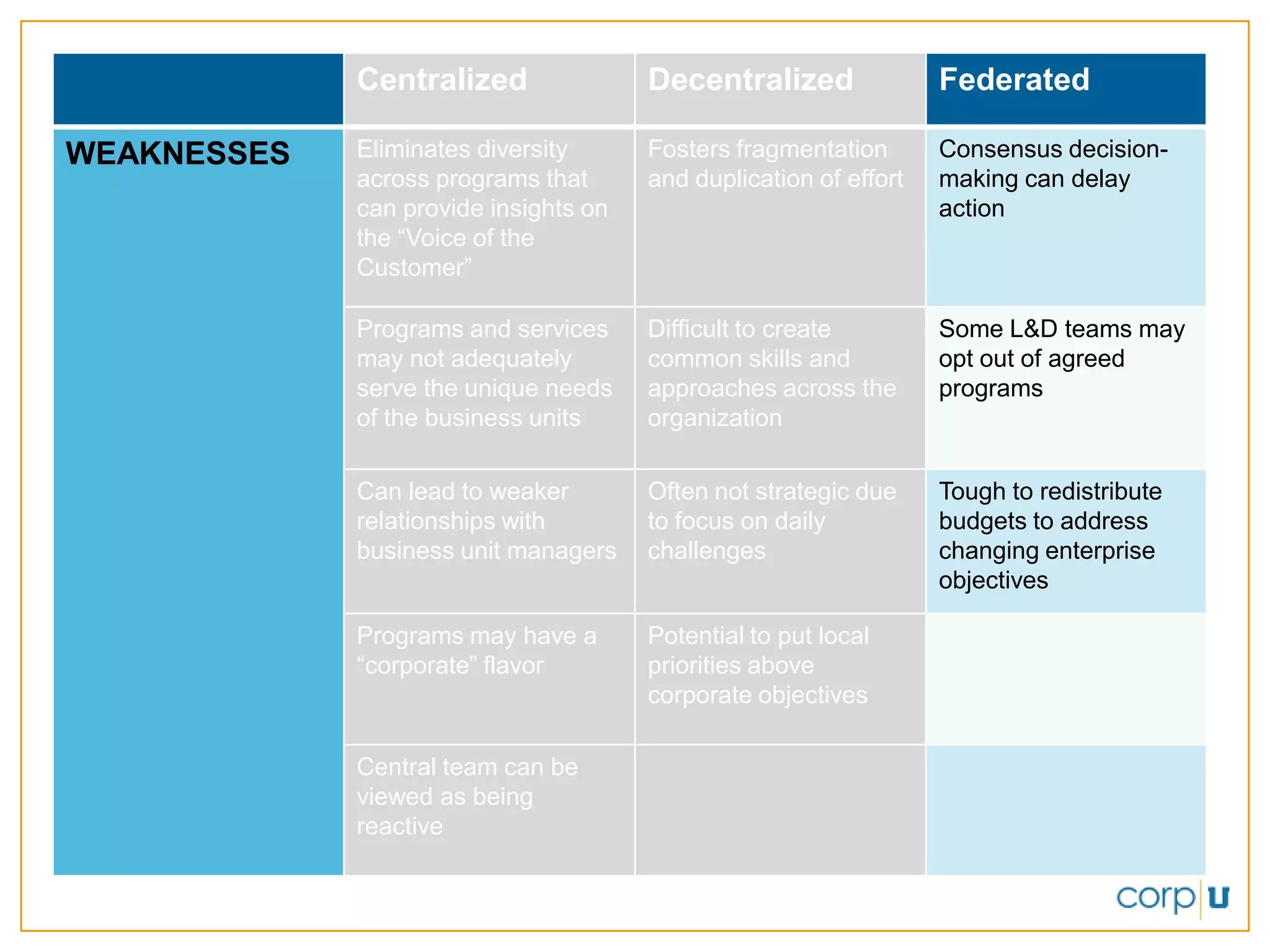
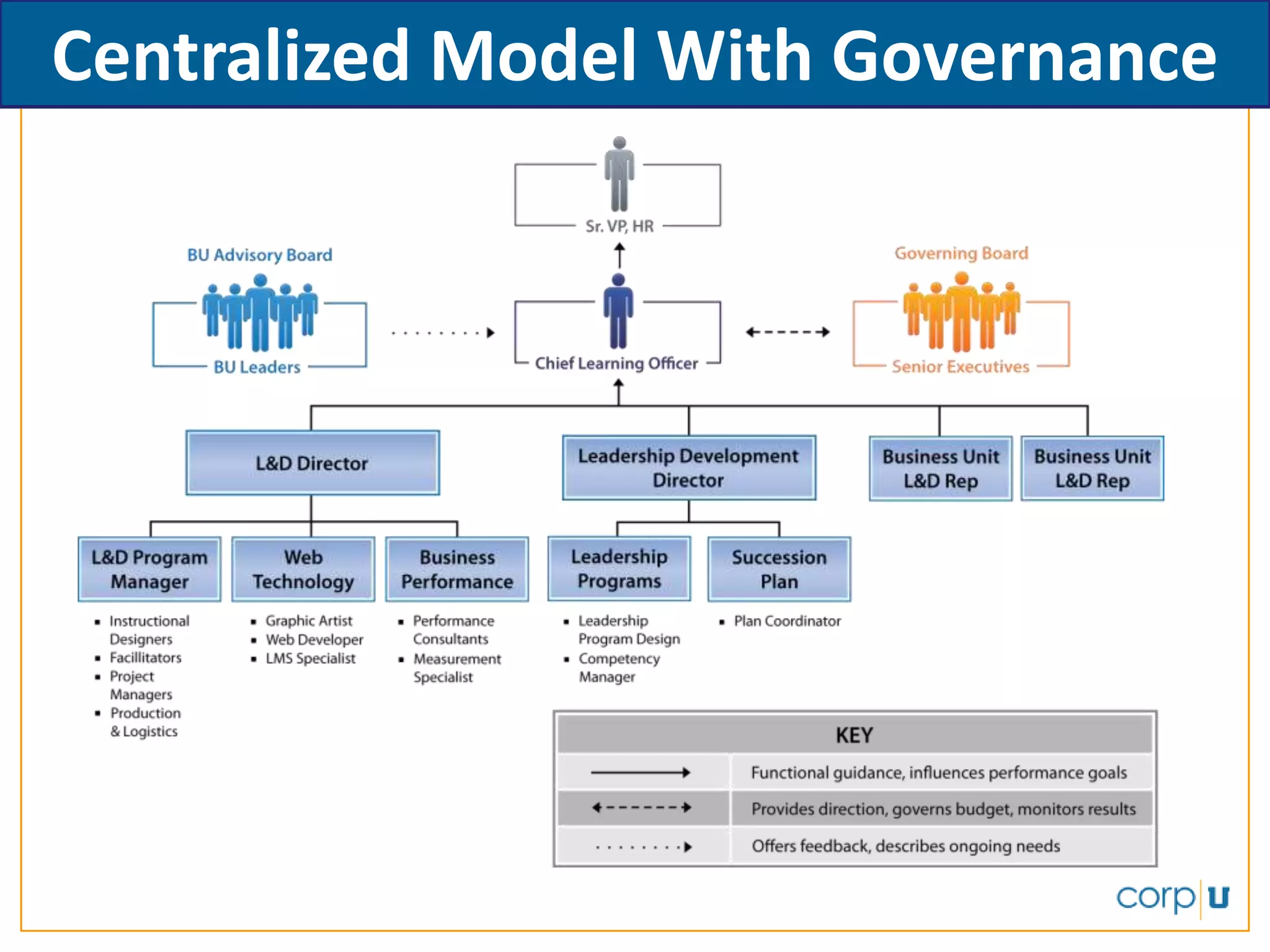
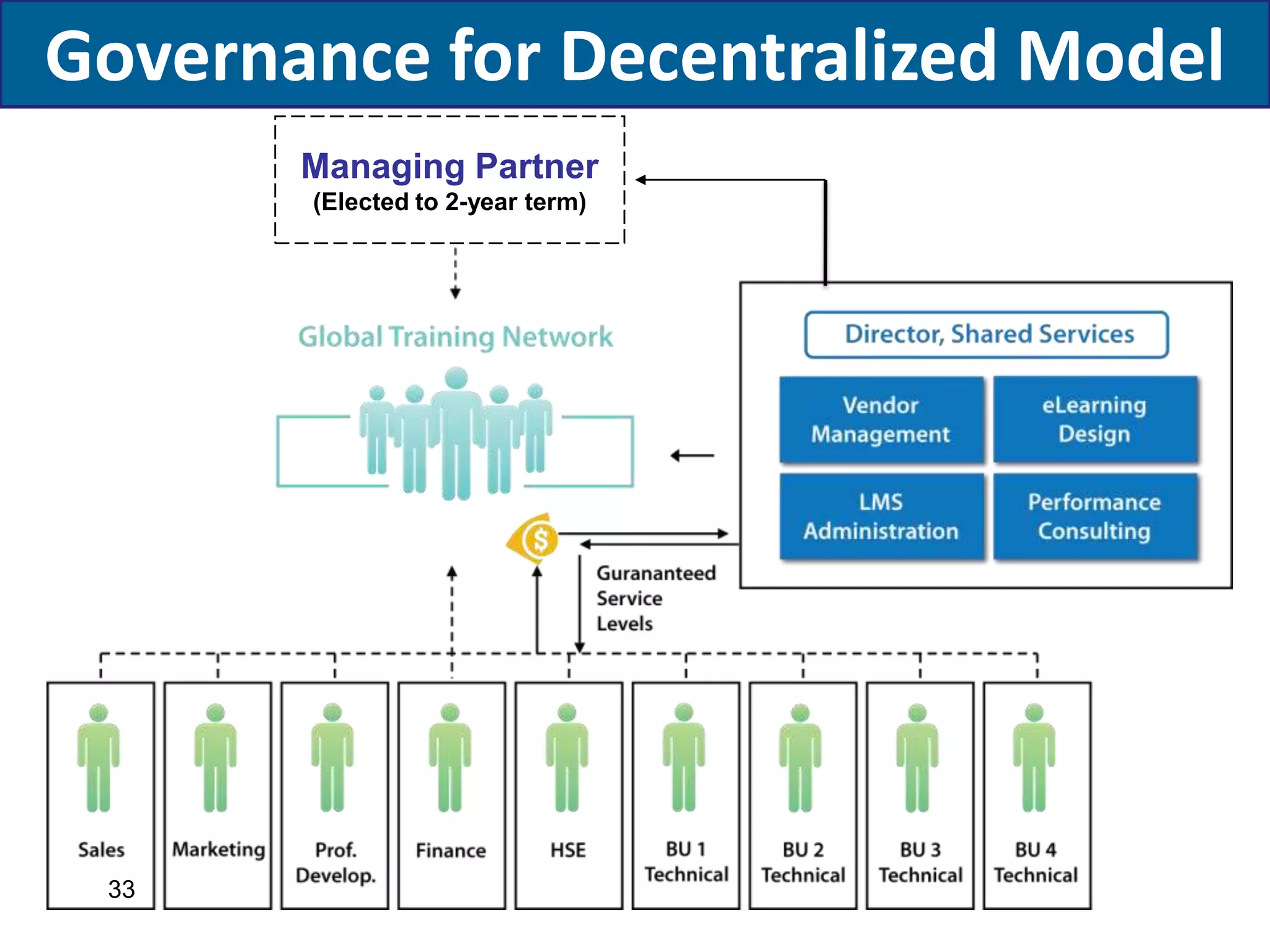
Covers three organizing models: centralized, decentralized, and federated; advantages and disadvantages of each approach.
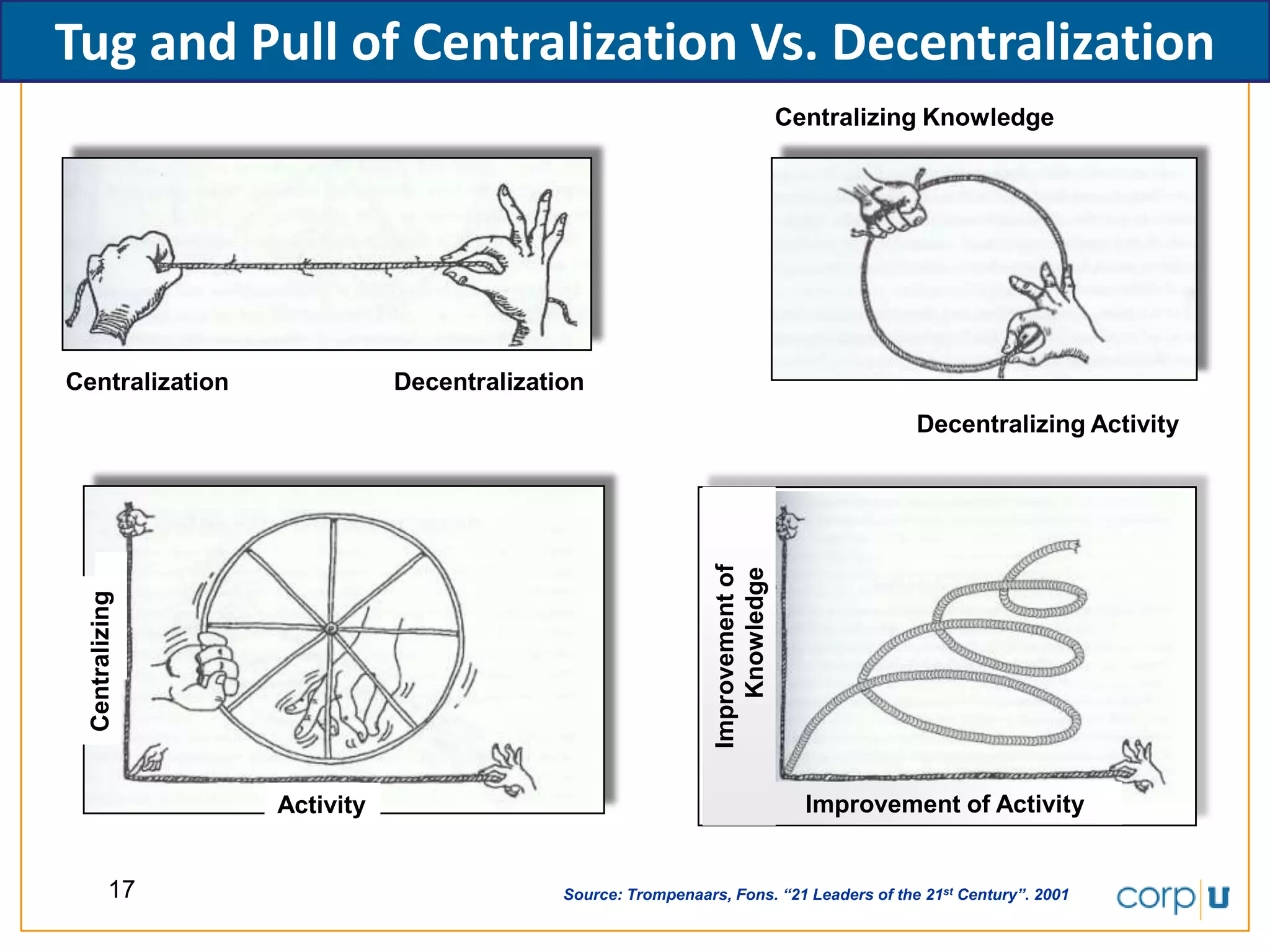
Explores characteristics and challenges of centralized vs. decentralized L&D models in terms of strengths and weaknesses.
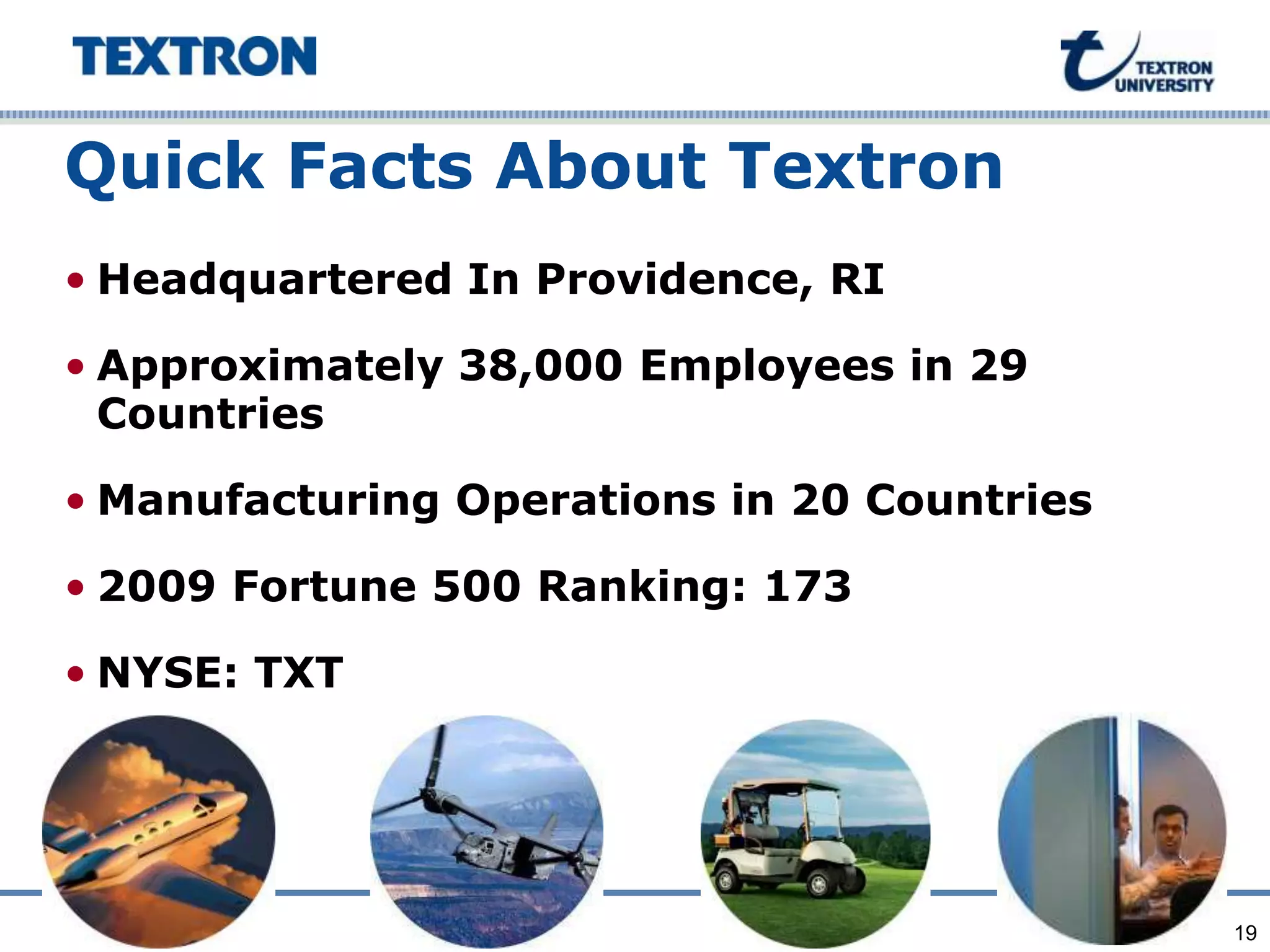
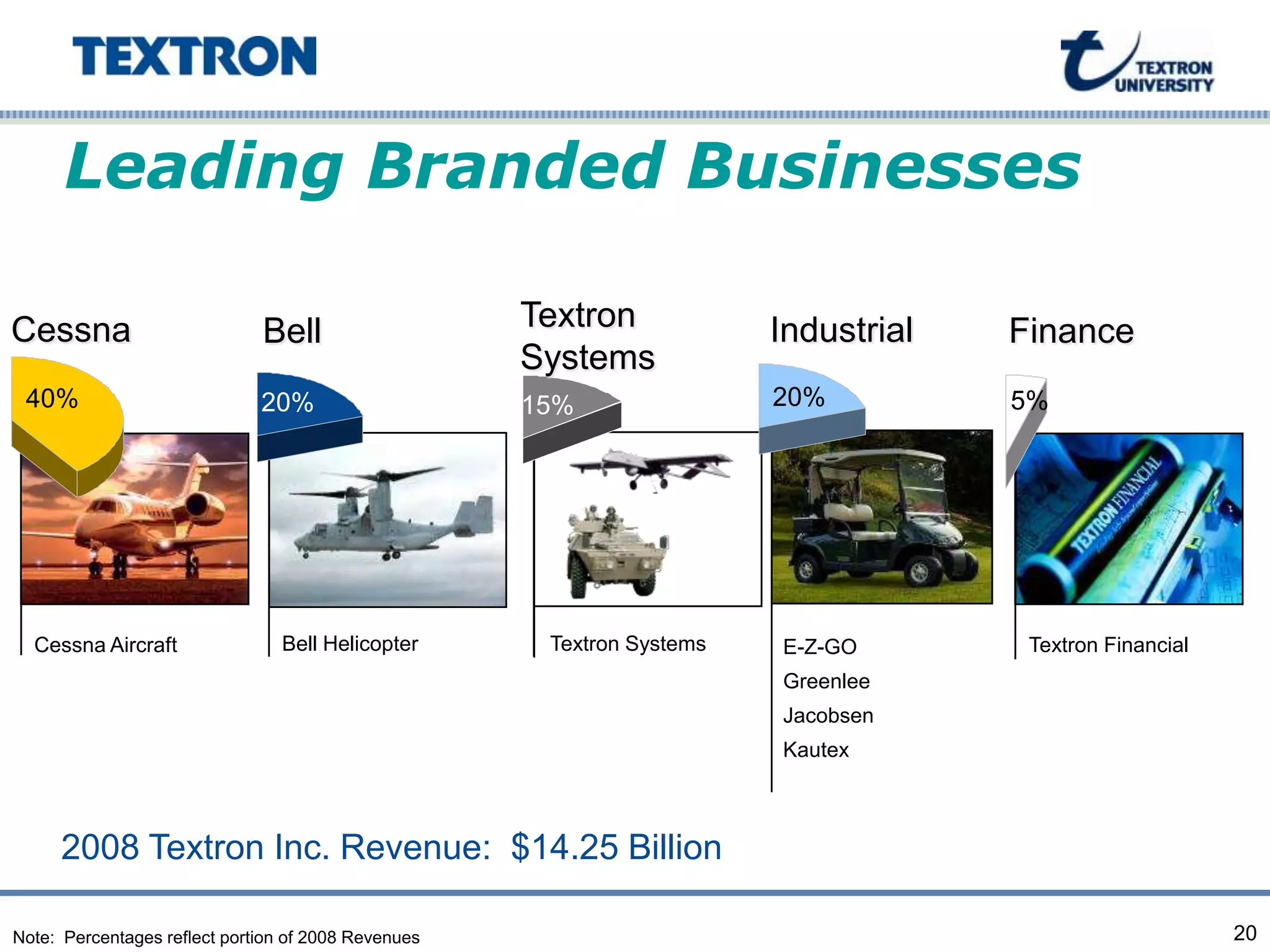
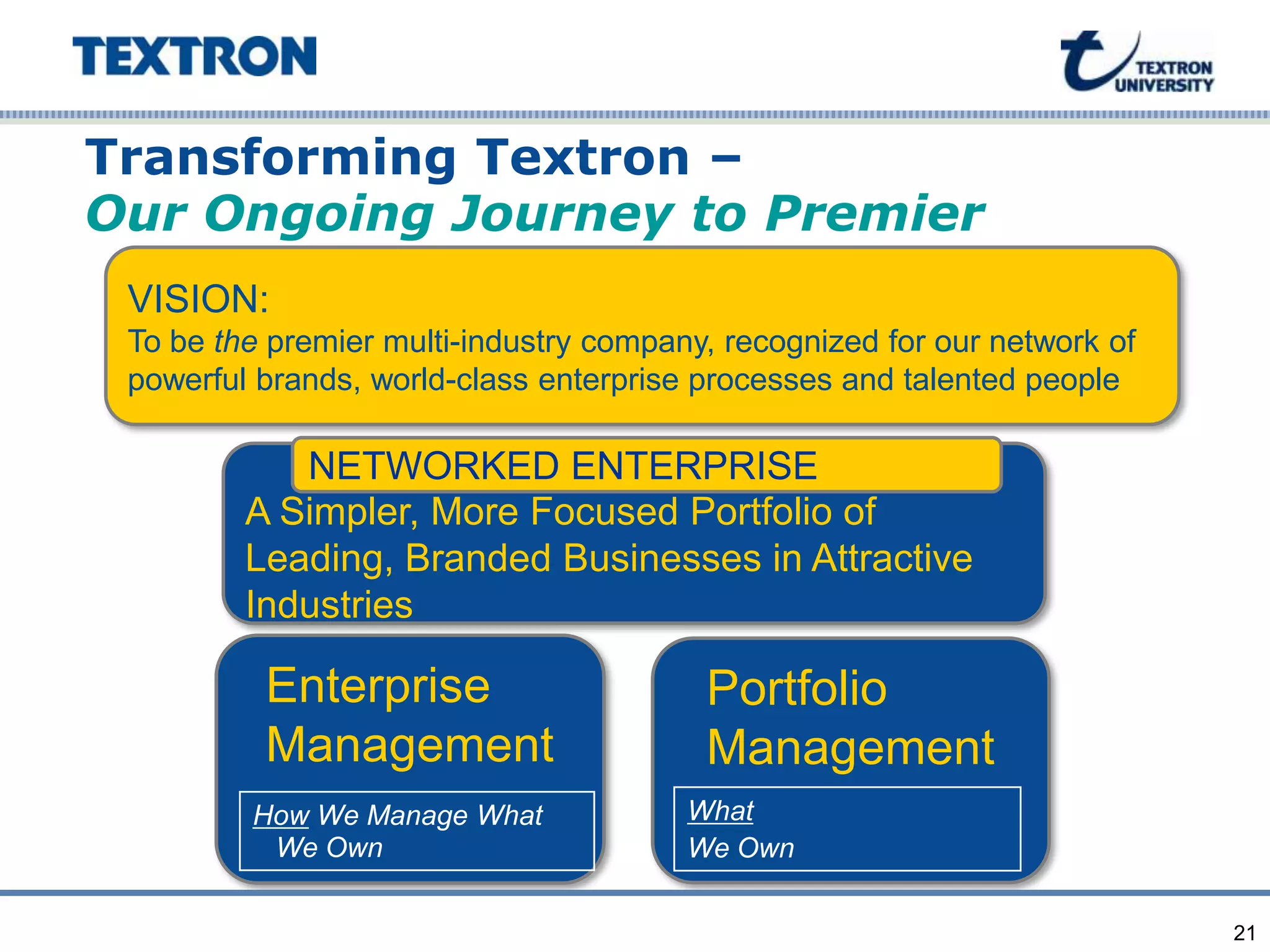
Provides company details (38,000 employees, $14.25B revenue) and transformation strategy to a networked organization with governance.
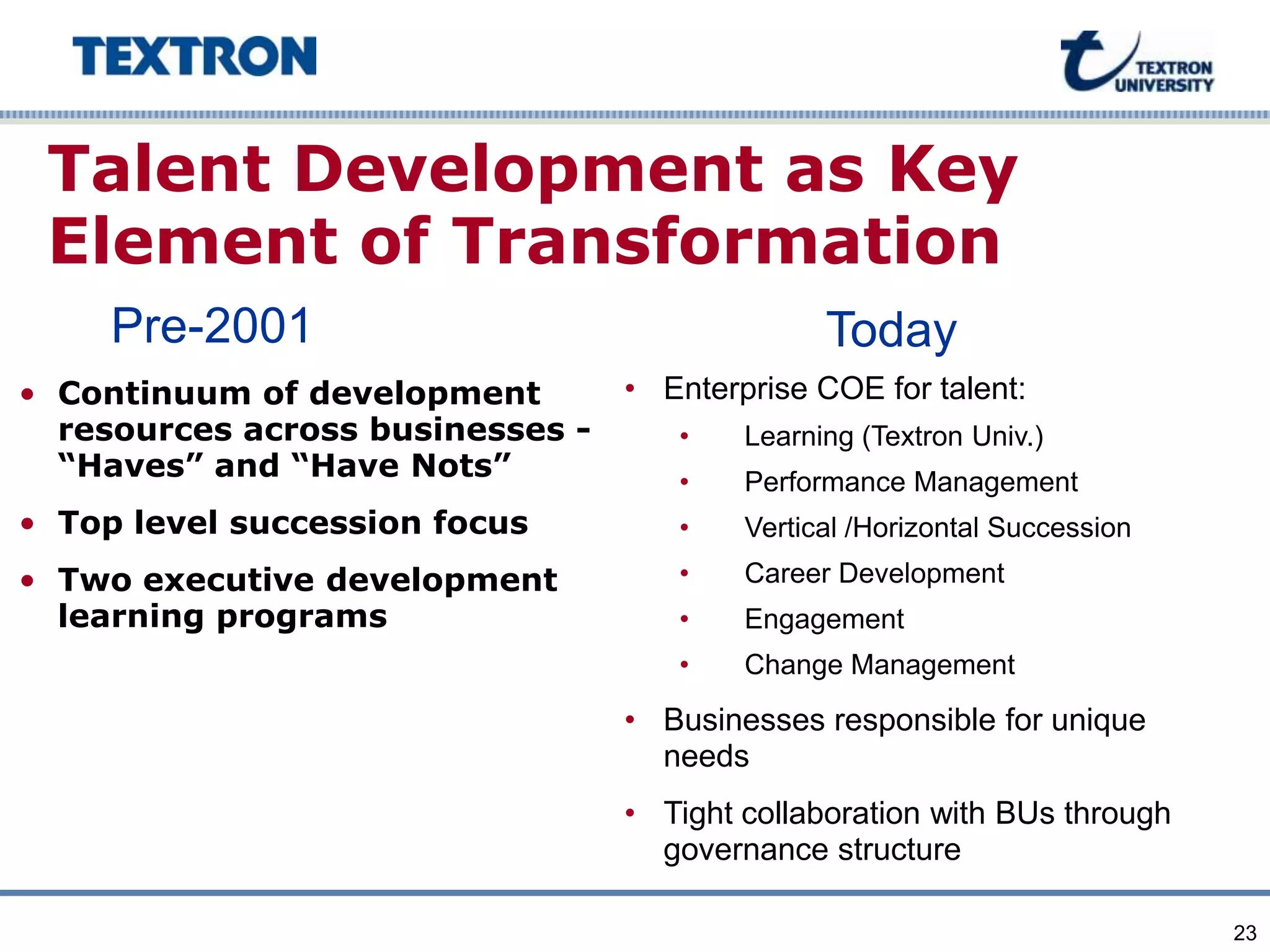
Outlines talent development as a key element in organizational transformation, emphasizing collaboration and governance.
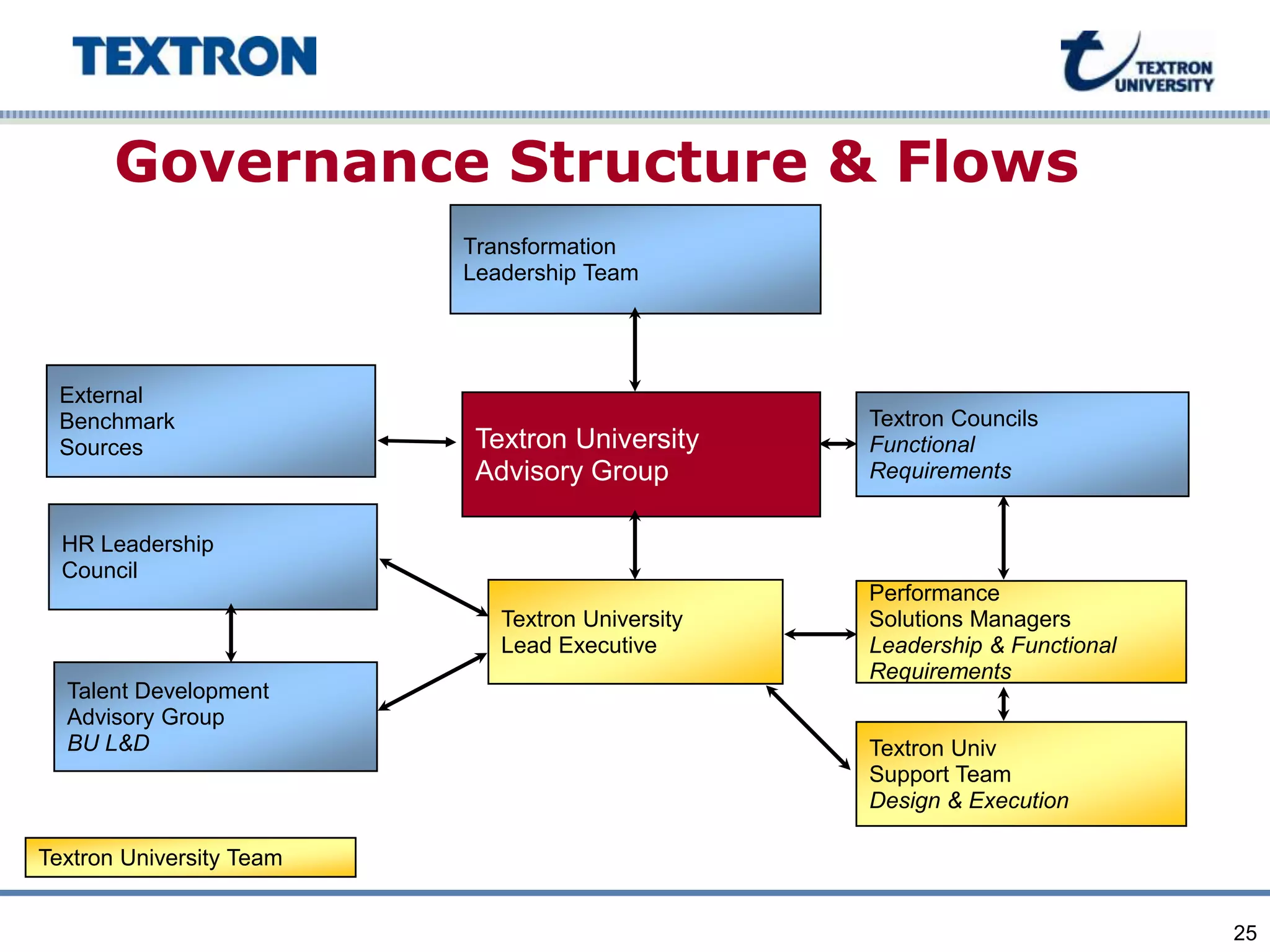
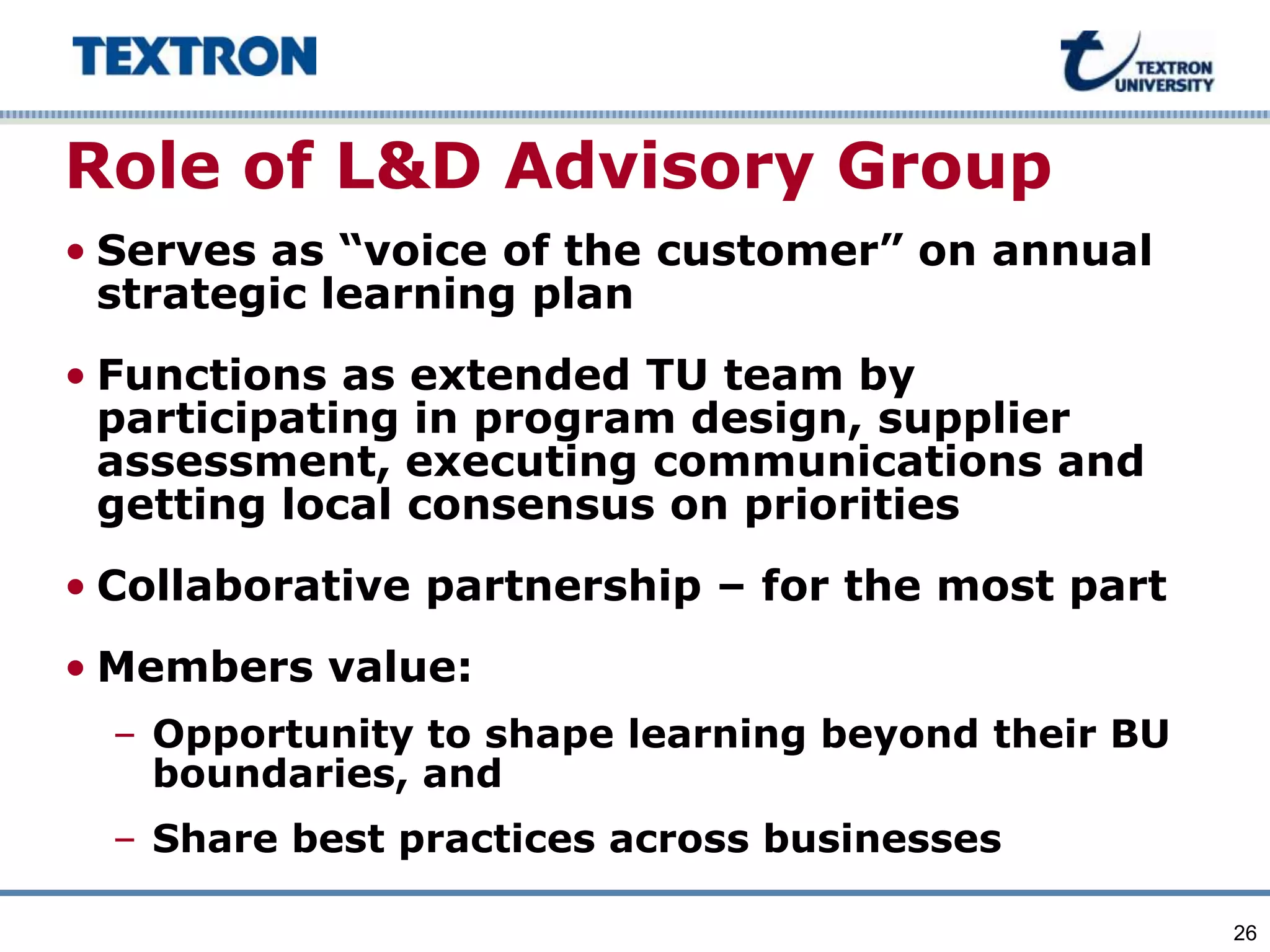
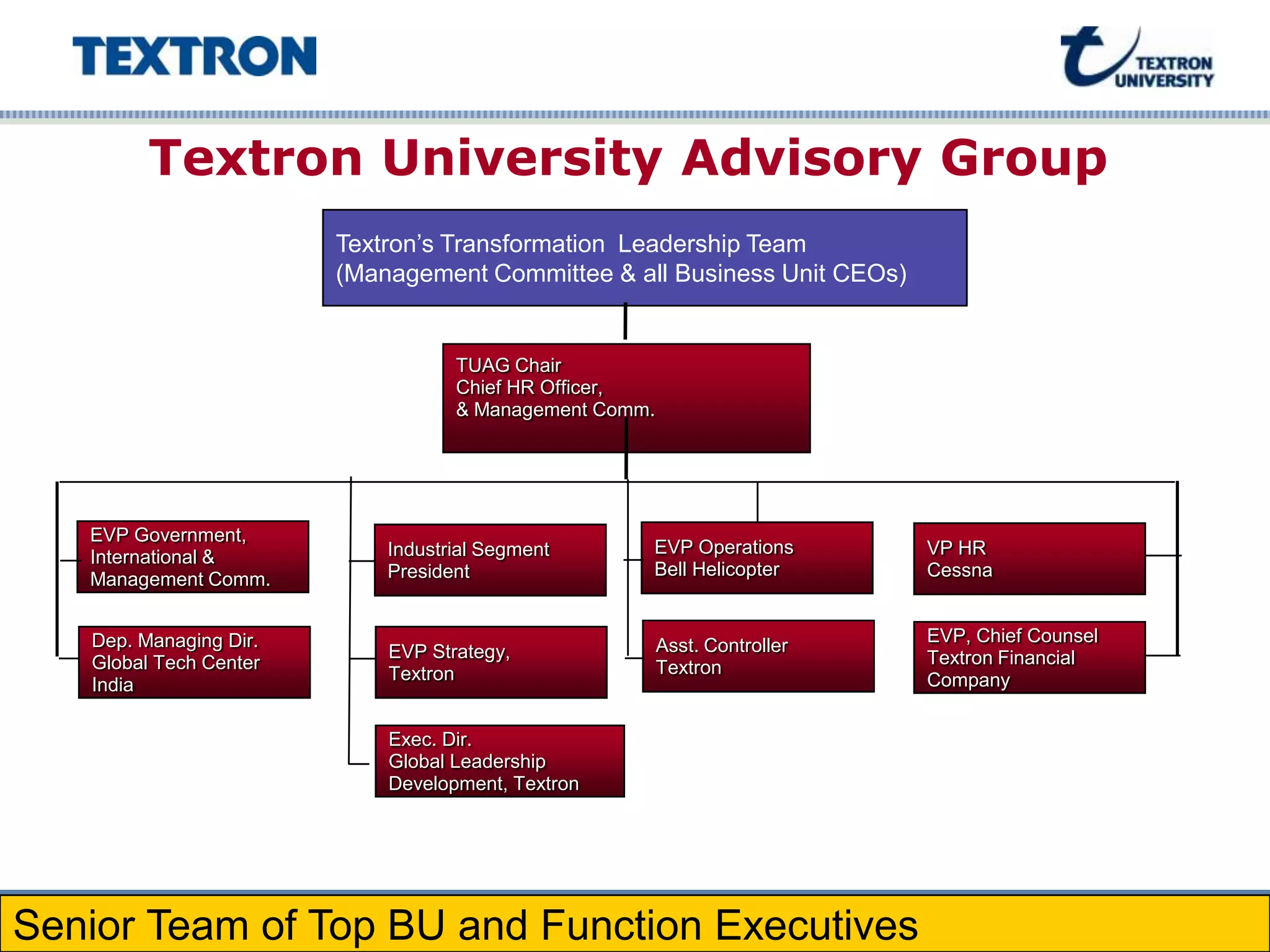
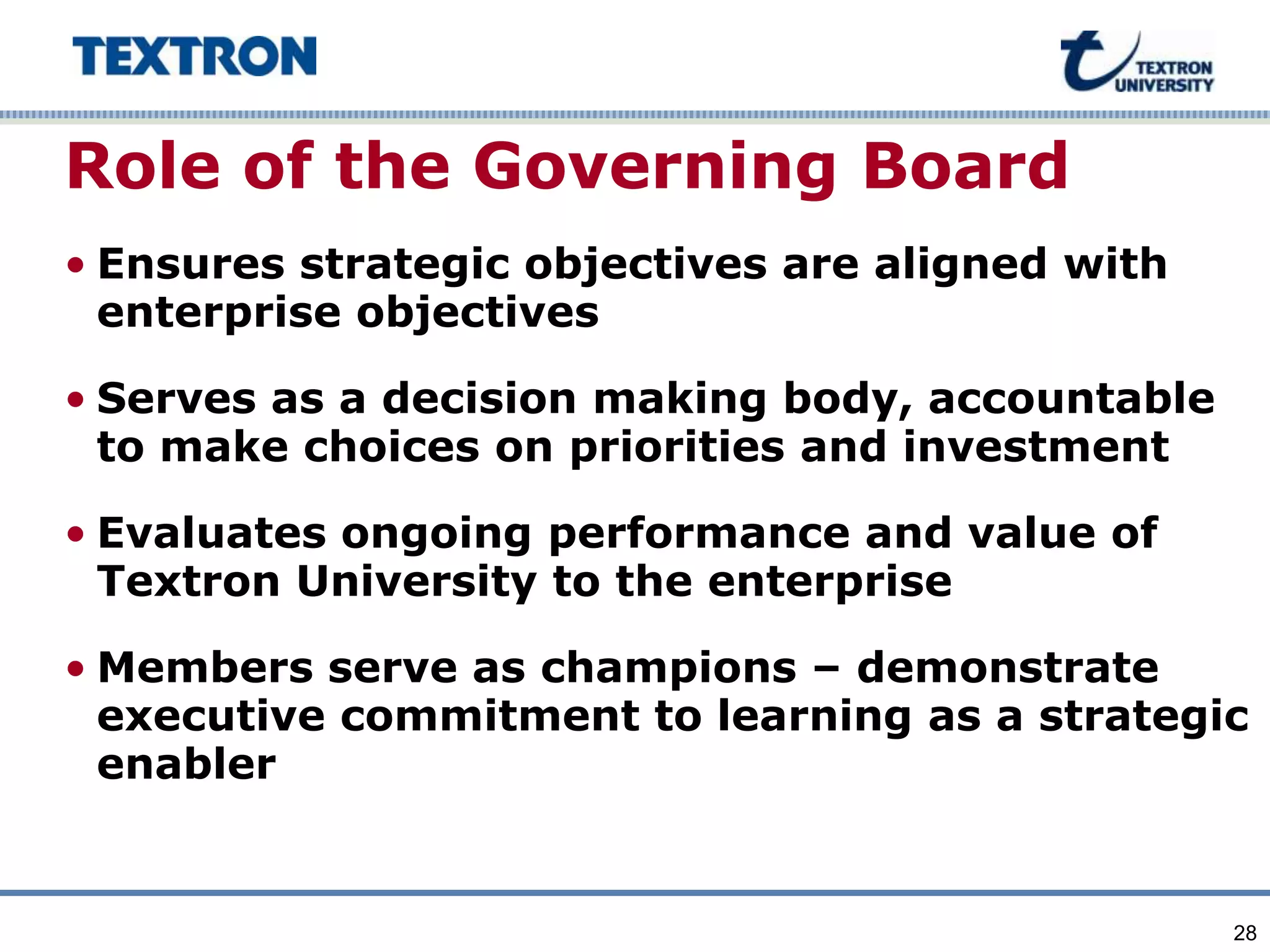
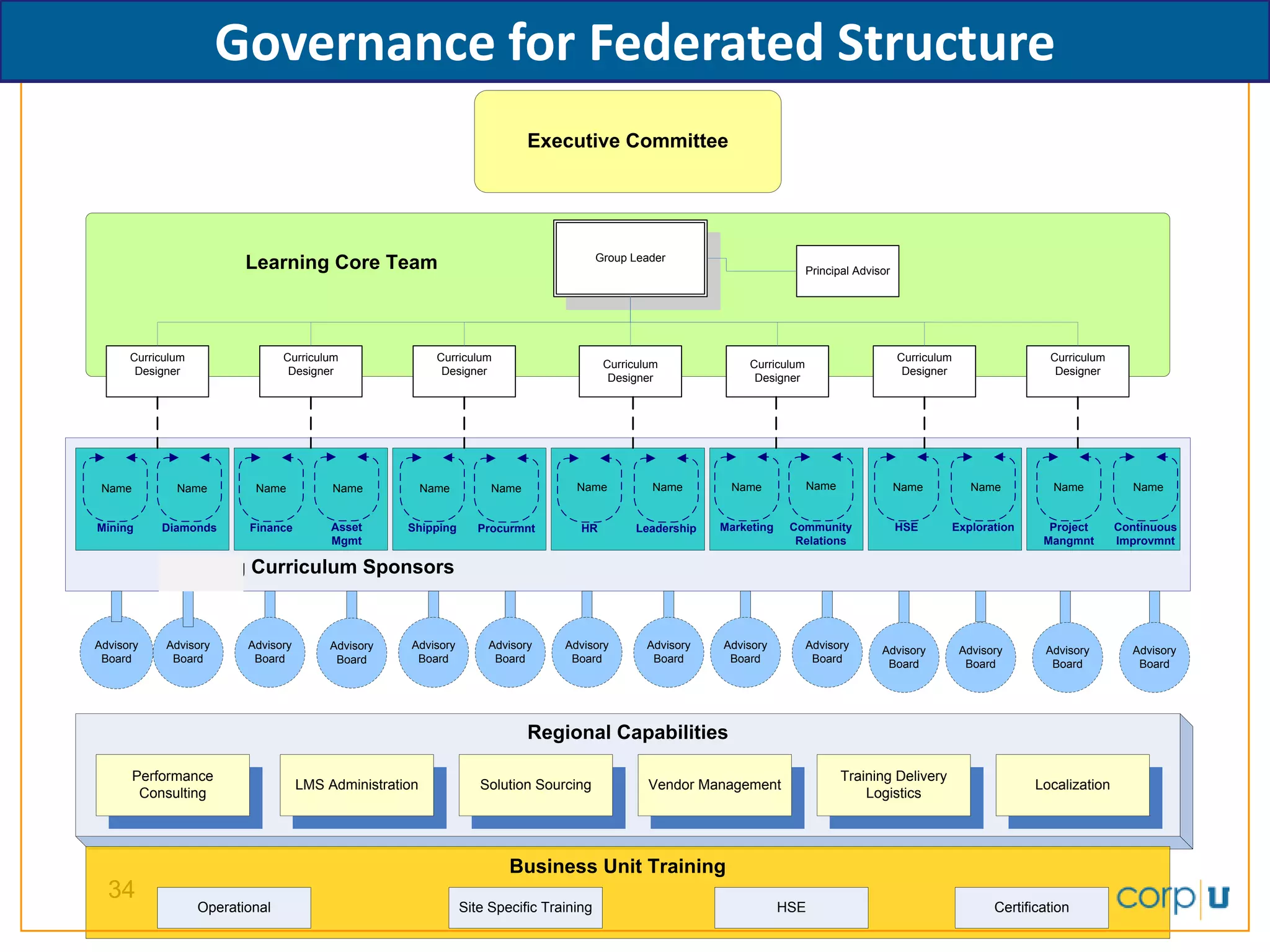
Describes the governance structure for L&D, highlighting roles of advisory groups and governance in aligning education with business goals.
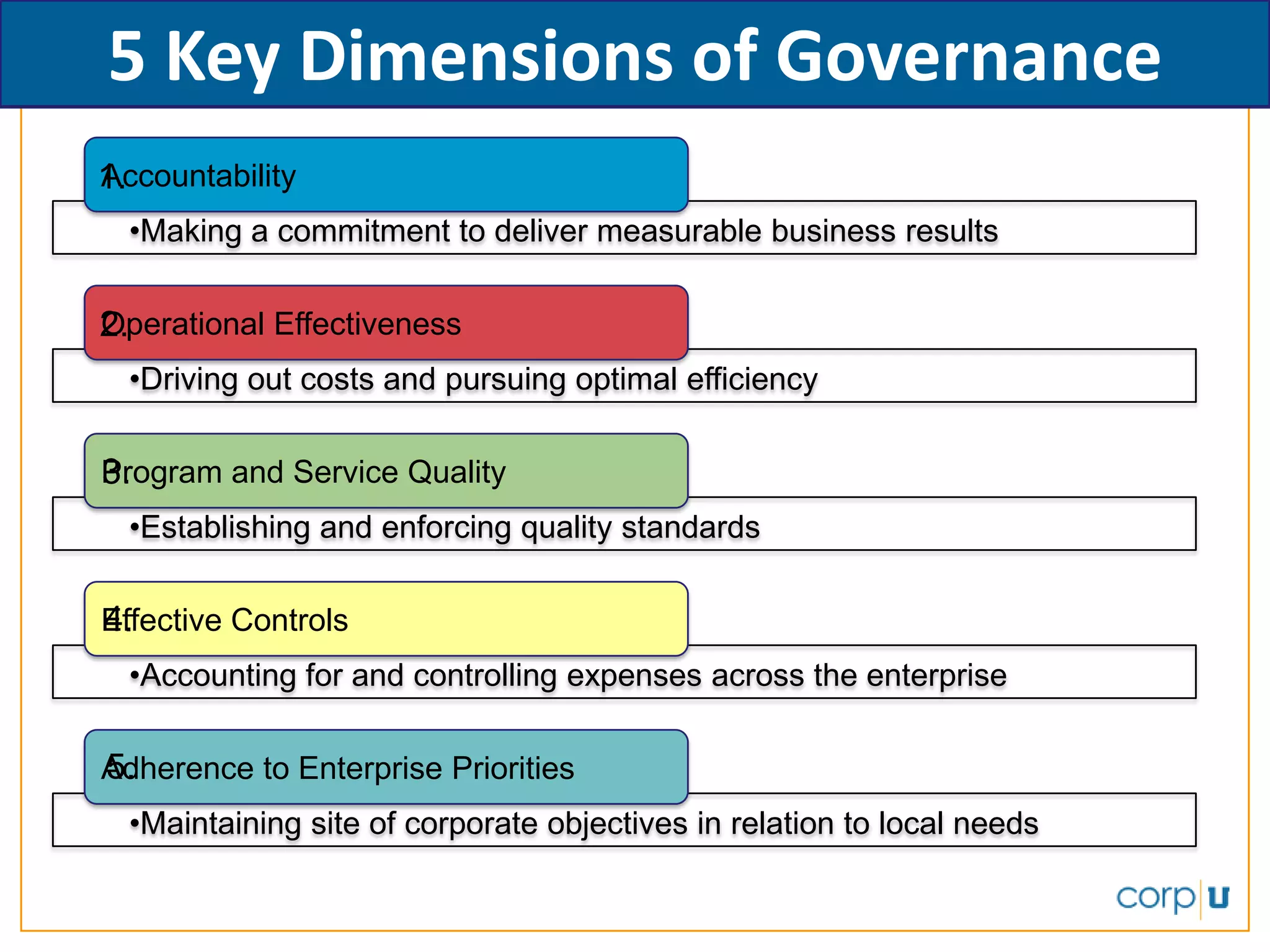
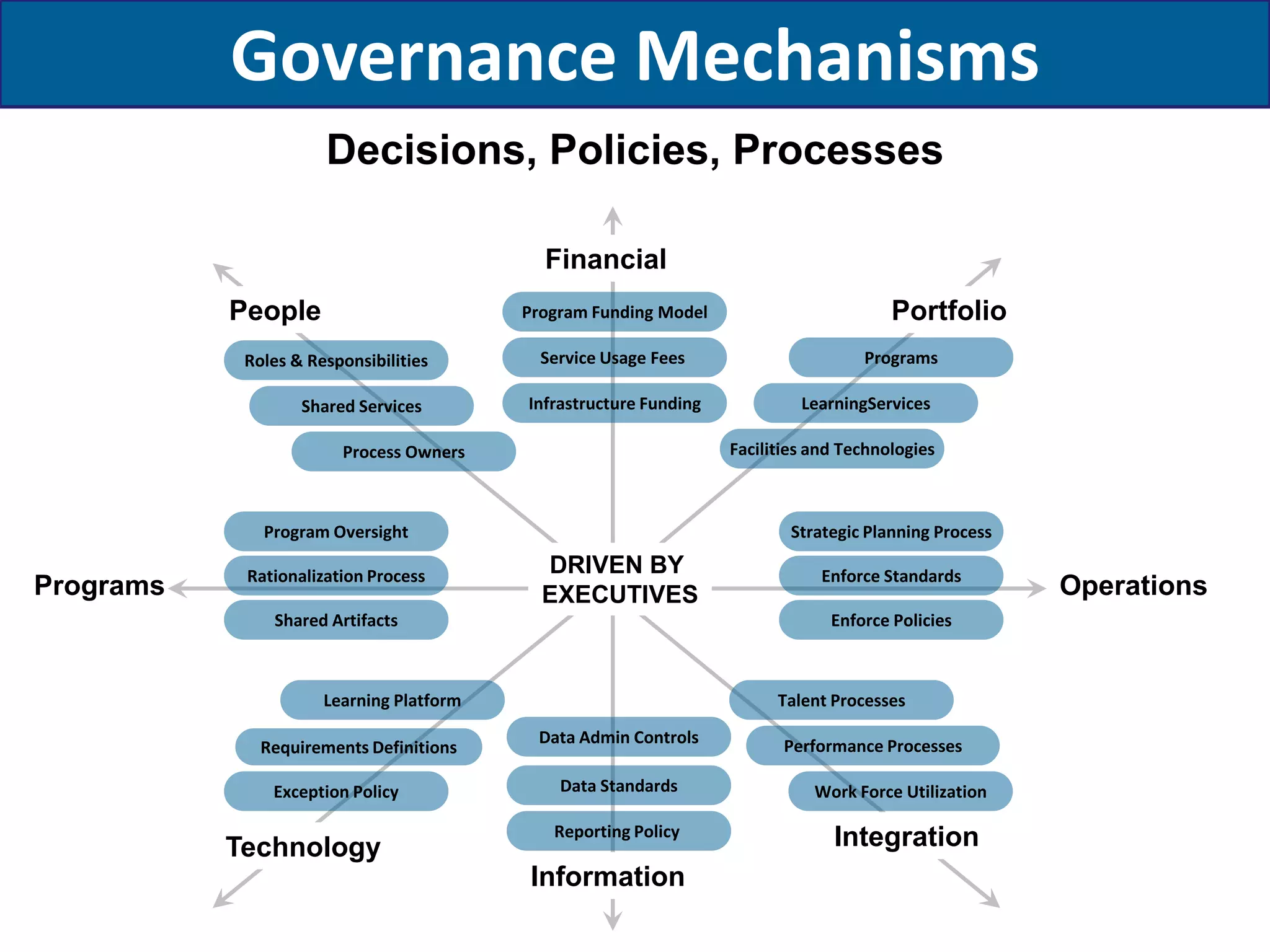
Highlights five key dimensions of governance in L&D for ensuring accountability, quality, and alignment with enterprise priorities.
Session concludes with a Q&A, followed by information on upcoming webinars focused on driving innovation in enterprise learning.


