Common Poisonings
www.freelivedoctor.com
General Points about Poisoning
Per annum in the UK there are:
• some 300,000 cases of poisoning
• 100,000 hospital admissions for poisoning (in-patient mortality <1 %)
• 3,500-4000 deaths from poisoning (1000 of these are due to CO)
Remember:
• drug history may be unreliable
• 65% of drugs used are prescribed to the patient, a relative or friend
• 30% of self-poisonings involve multiple drugs
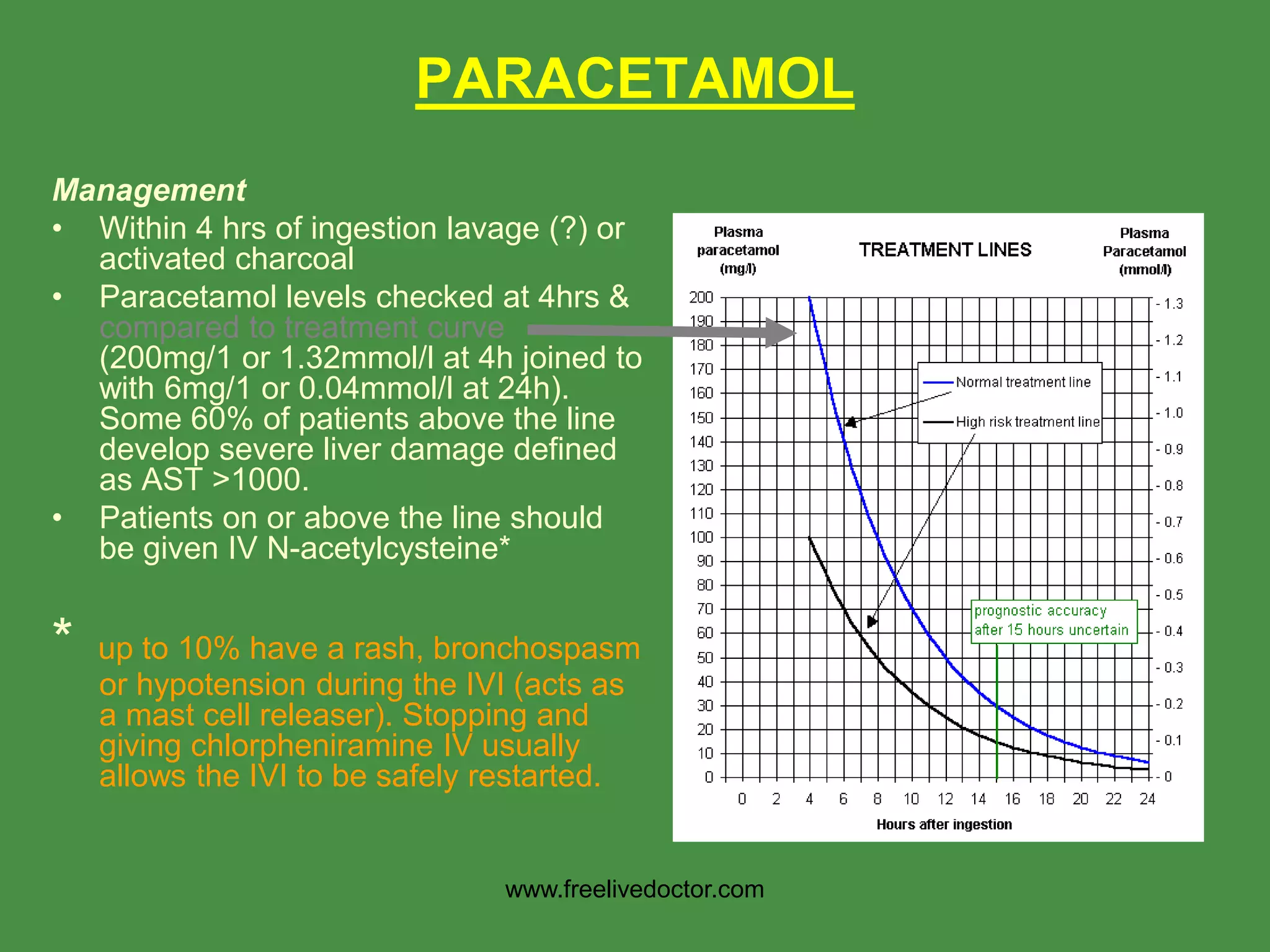
• 50% of drug-overdose also involve alcohol
…. Question witnesses or family about ANY access to drugs or ANY
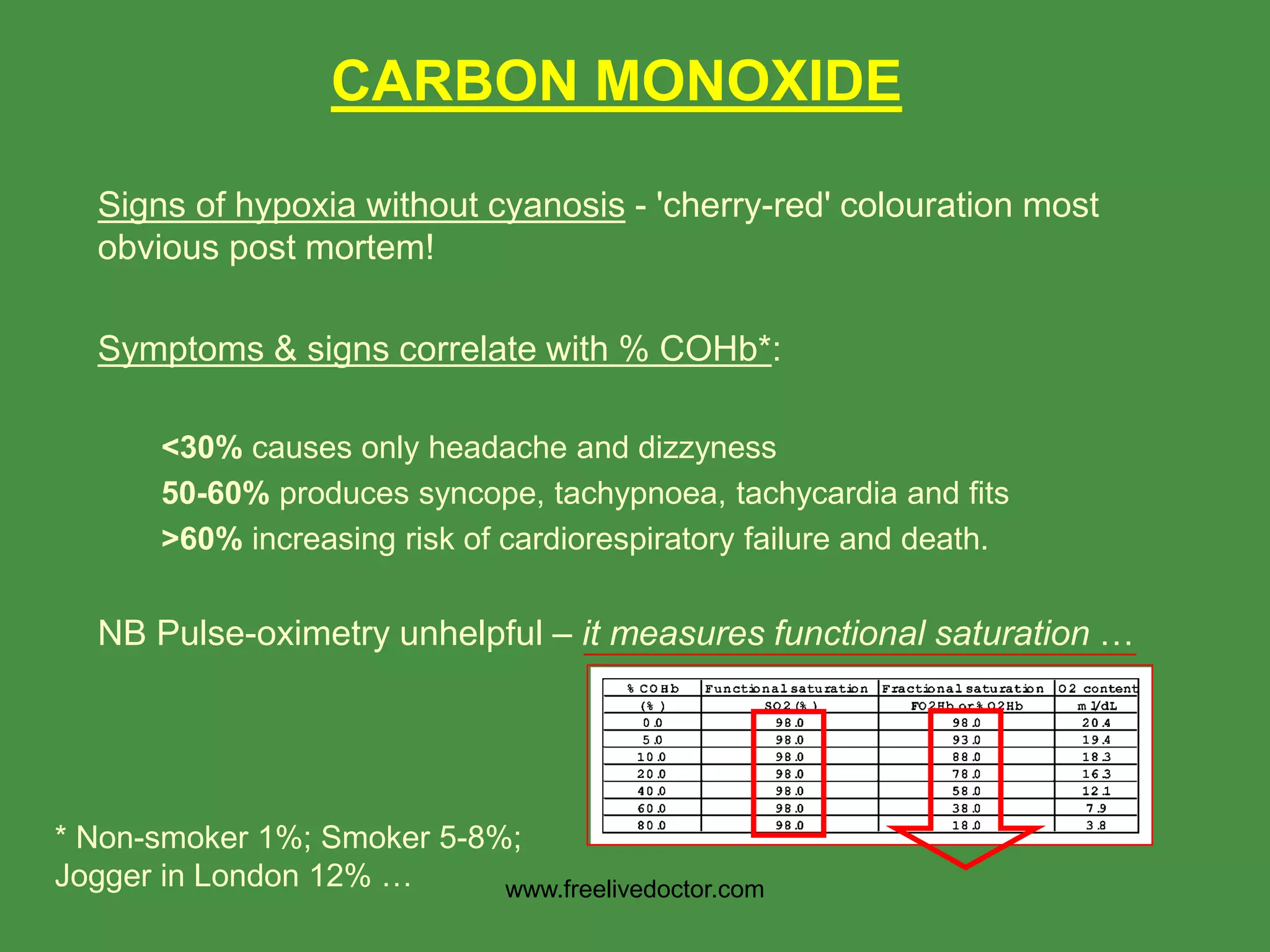
bottles found.
…. There may be clues from the clinical signs (eg pin-point pupils with
opiates), signs of solvent/ethanol abuse or signs of IV drug use
(venepuncture sites).
www.freelivedoctor.com
… and their Management
The role of antidotes is restricted to a minority of drugs.
In most cases of overdose, survival is crucially dependent on
supportive care ….
 Monitor the airway (recovery position +/- intubation)
 Maintain normoxia (+/- IPPV)
 Maintain body temperature
 Correct any hypotension (+/- volume expansion) or hypertension
 Correct acid-base or electrolyte disturbance
 Treat any fits (DZP +/- IPPV)
 Monitor for dysrrhythmias (2ary role of antiarrhythmics)
 Beware of skin blistering and rhabdomyolysis.
Remember to take account of concurrent medical problems eg
an IV drug user may be septicaemic or have hepatitis, SBE or
HIV-related disease.
www.freelivedoctor.com
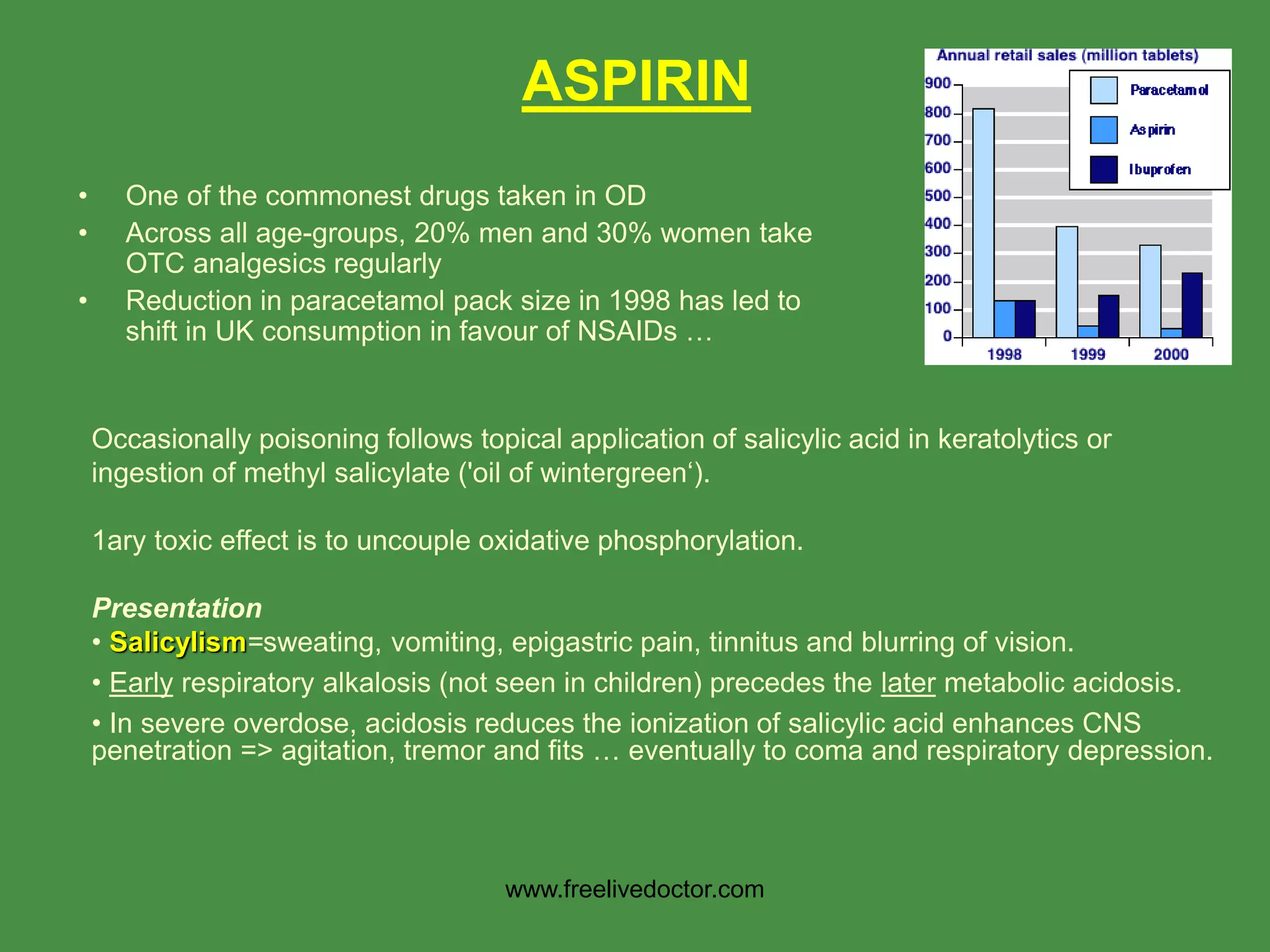
• One of the commonest drugs taken in OD
• Across all age-groups, 20% men and 30% women take
OTC analgesics regularly
• Reduction in paracetamol pack size in 1998 has led to
shift in UK consumption in favour of NSAIDs …
ASPIRIN
Occasionally poisoning follows topical application of salicylic acid in keratolytics or
ingestion of methyl salicylate ('oil of wintergreen‘).
1ary toxic effect is to uncouple oxidative phosphorylation.
Presentation
• Salicylism=sweating, vomiting, epigastric pain, tinnitus and blurring of vision.
• Early respiratory alkalosis (not seen in children) precedes the later metabolic acidosis.
• In severe overdose, acidosis reduces the ionization of salicylic acid enhances CNS
penetration => agitation, tremor and fits … eventually to coma and respiratory depression.
www.freelivedoctor.com
ASPIRIN
Complications
• Electrolyte Disturbance universal
hypokalaemia and deranged Na+ (high > low)
glucose (hyper > hypo)
• Pulmonary oedema (often non-cardiogenic) & acute renal failure.
• Hypoprothrombinaemia is very rare.
• Significant GI bleeds are surprisingly infrequent.
Management - therapeutic [salicylate] is <300mg/l (2.2 mmol/l)
 Mild/moderate salicylism requires only rehydration + KCl supplements.
 Marked salicylism or levels > 750mg/l need specific elimination therapy:
(1) Oral activated charcoal (50g 4 hourly)
(2) Forced alkaline diuresis NO LONGER RECOMMENDED - it is no more effective
than simple alkalinisation (eg 1 L 1.26% NaHCO3 over 2 hrs and repeated to keep the
urinary pH > 7.5).
(3) Haemodialysis is required for any of the following: level >1000mg/1 (7.25 mmol/l);
persistent/progressive acidosis; deteriorating level of consciousness.
www.freelivedoctor.com
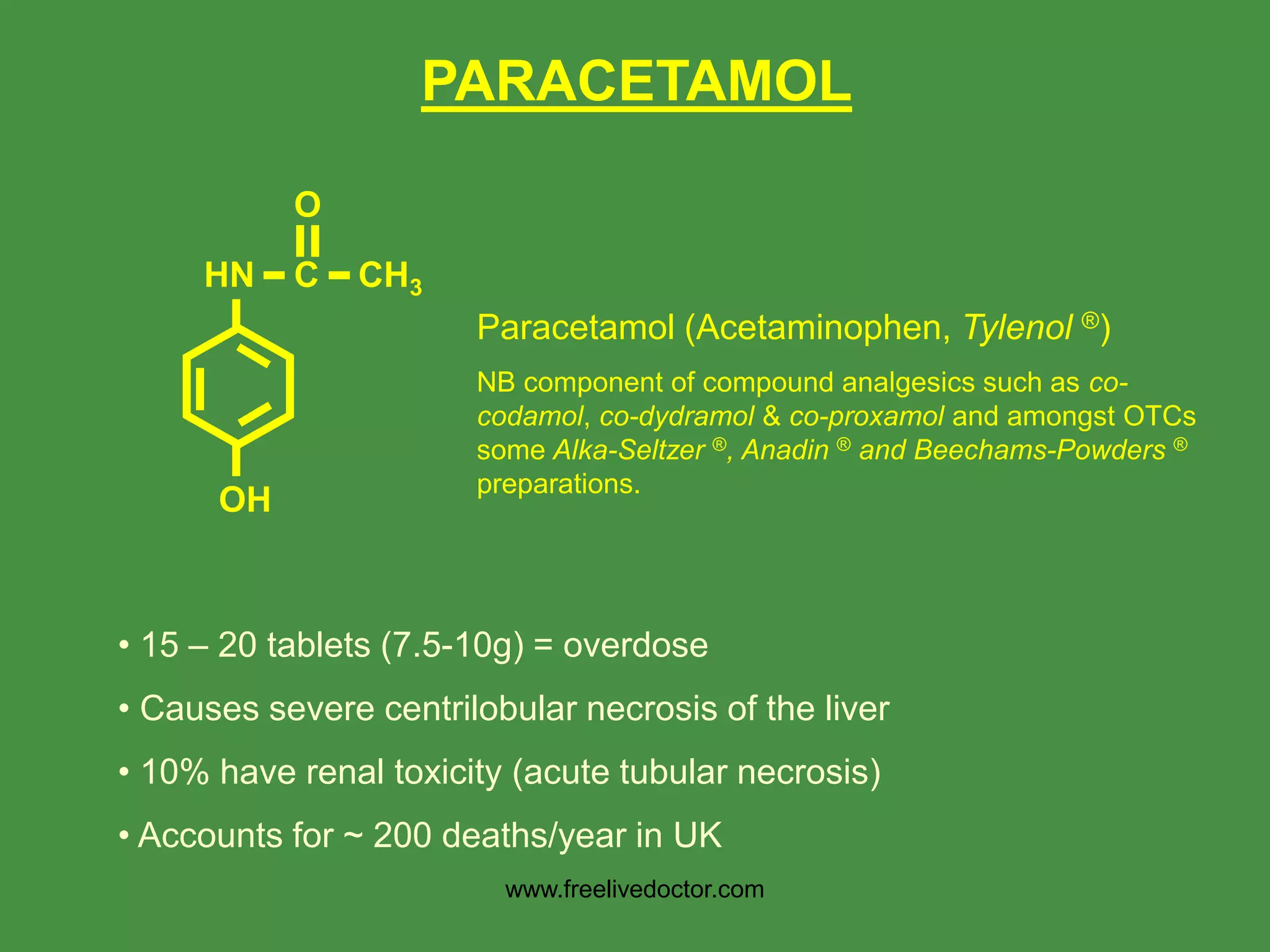
HN C CH3
OH
O
Paracetamol (Acetaminophen, Tylenol ®)
NB component of compound analgesics such as co-
codamol, co-dydramol & co-proxamol and amongst OTCs
some Alka-Seltzer ®, Anadin ® and Beechams-Powders ®
preparations.
• 15 – 20 tablets (7.5-10g) = overdose
• Causes severe centrilobular necrosis of the liver
• 10% have renal toxicity (acute tubular necrosis)
• Accounts for ~ 200 deaths/year in UK
PARACETAMOL
www.freelivedoctor.com
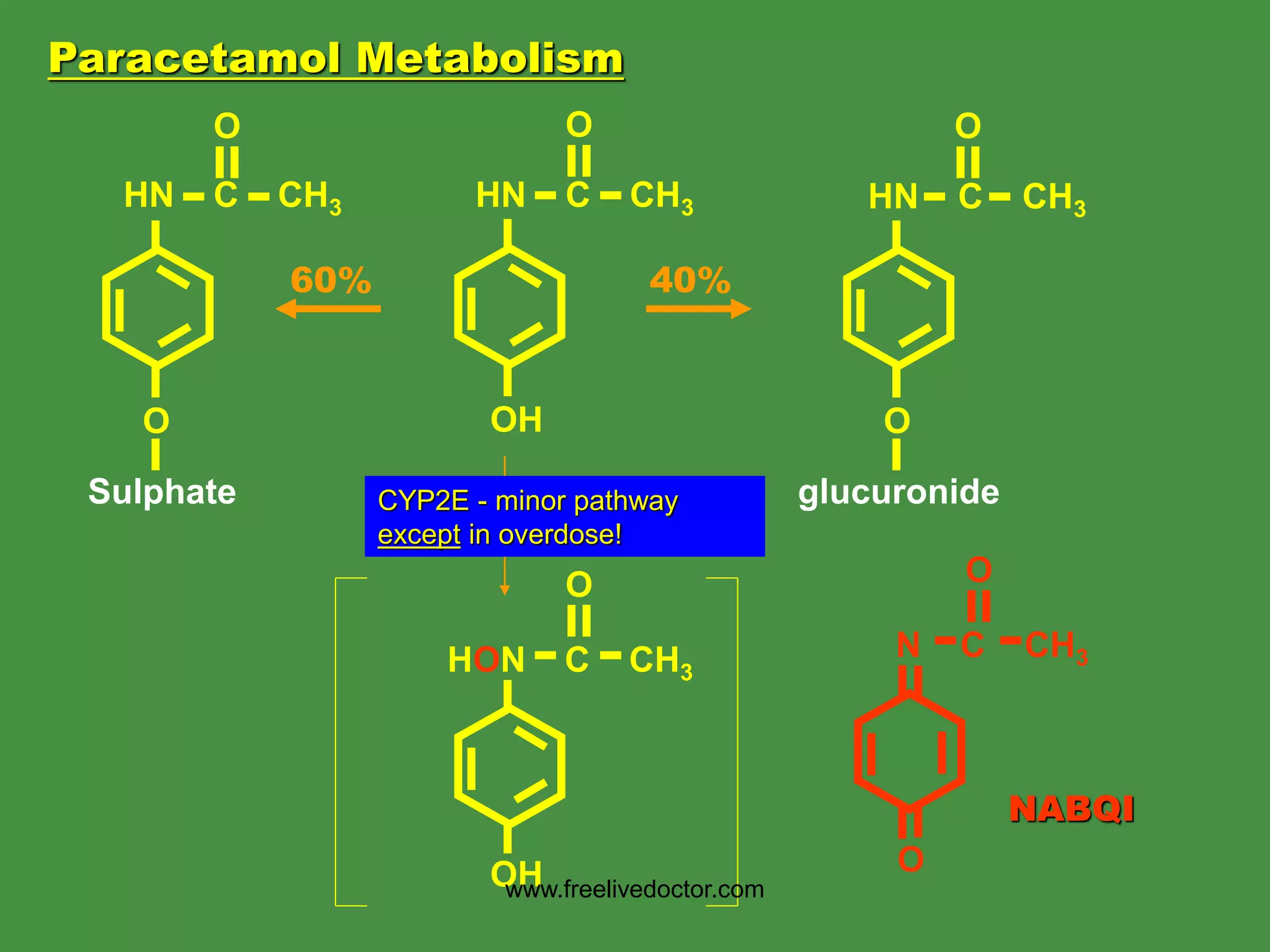
OH
HN C CH3
O
O
HN C CH3
O
Sulphate
O
HN C CH3
O
glucuronide
OH
HON C CH3
O
60% 40%
CYP2E - minor pathway
except in overdose!
Paracetamol Metabolism
O
N C CH3
O
NABQI
www.freelivedoctor.com
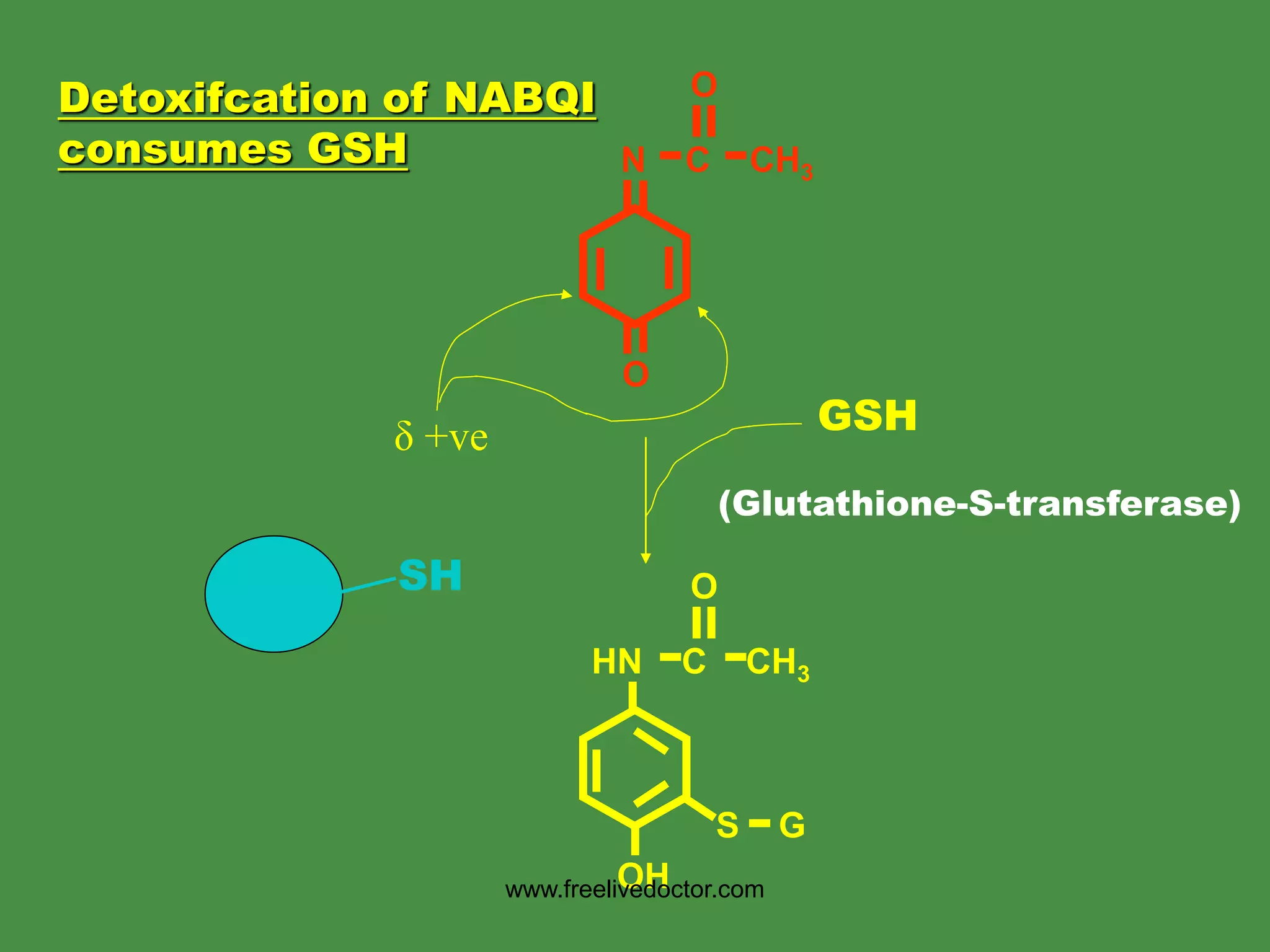
(Glutathione-S-transferase)
O
N C CH3
O
δ +ve
OH
HN C CH3
O
S G
GSH
SH
Detoxifcation of NABQI
consumes GSH
www.freelivedoctor.com
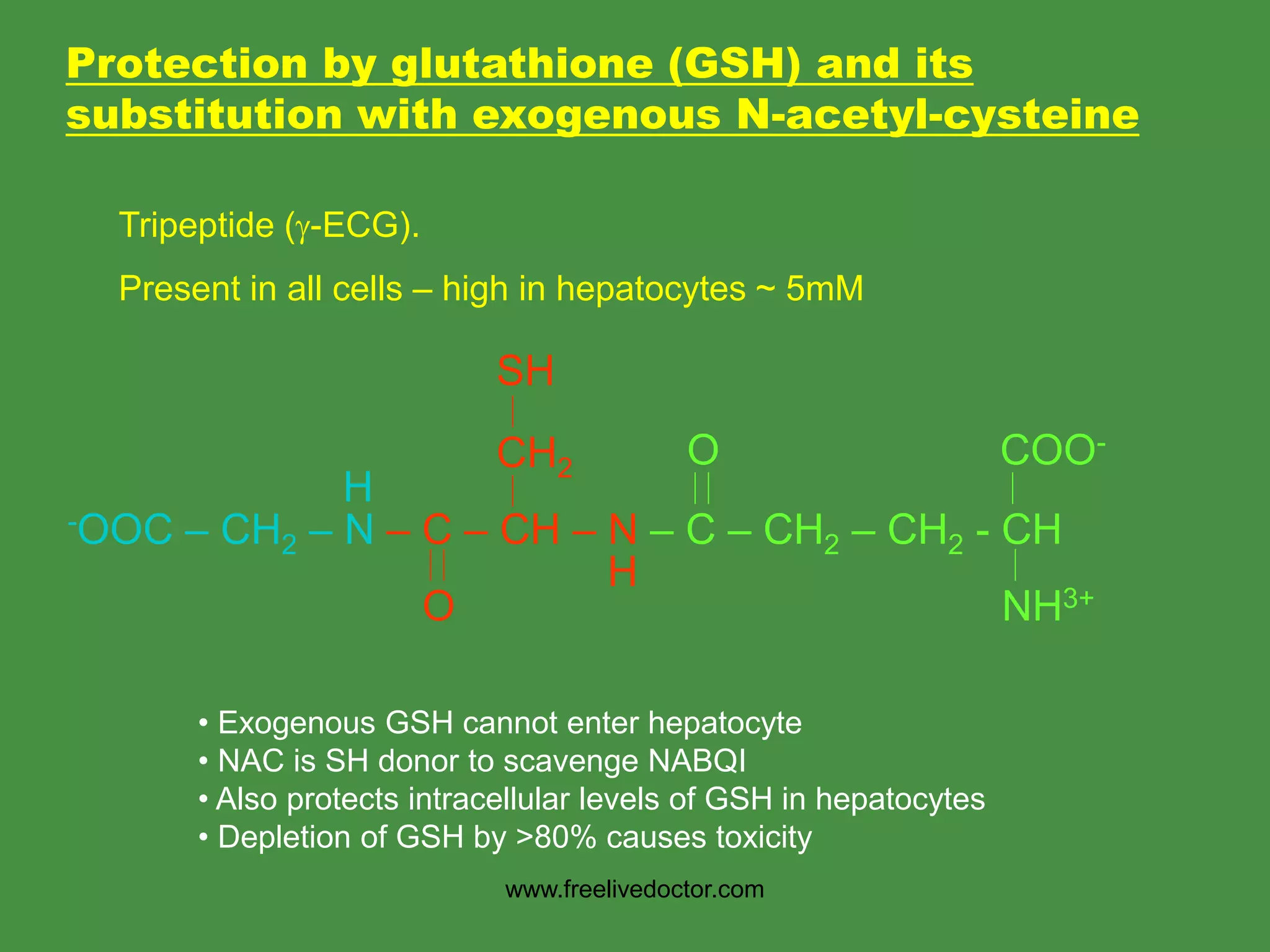
Protection by glutathione (GSH) and its
substitution with exogenous N-acetyl-cysteine
-OOC – CH2 – N – C – CH – N – C – CH2 – CH2 - CH
O
CH2
SH
H
H
O COO-
NH3+
Tripeptide (-ECG).
Present in all cells – high in hepatocytes ~ 5mM
• Exogenous GSH cannot enter hepatocyte
• NAC is SH donor to scavenge NABQI
• Also protects intracellular levels of GSH in hepatocytes
• Depletion of GSH by >80% causes toxicity
www.freelivedoctor.com
PARACETAMOL
Presentation
• Apart from mild nausea, vomiting and anorexia, patients presenting within 24 hrs of
ingestion are generally asymptomatic.
• Hepatic necrosis becomes apparent at 24-36 hrs with:
– right subchondral pain/tenderness
– reappearance of vomiting and neuroglycopenia
– Deepening Encephalopathy over the next 72 hrs.
Complications
• The predictable consequences of liver failure i.e. metabolic acidosis, hypoglycaemia,
cerebral oedema, cardiac arrhythmias and GI bleeding.
• 10% of patients develop renal impairment from acute tubular necrosis - occasionally in
the absence of hepatic failure.
• Very rarely patients with G6PD deficiency develop methaemoglobinaemia and
haemolysis.
Prognostic features
• Untreated, the fatal dose in adults is usually >10g - lower in chronic alcoholics or
subjects with underlying liver disease or treated epileptics.
• A PT of 20s at 24 hrs indicates significant hepatocellular damage; the more rapid the
rise in PT thereafter the poorer the prognosis.
• In patients developing hepatic failure, a poor prognosis is suggested by: (1) arterial pH
<7.3; (2) prothrombin time >100s; (3) creatinine of >300 mol/l. They should be
considered for early liver transplantation.
www.freelivedoctor.com
PARACETAMOL
Management
• Within 4 hrs of ingestion lavage (?) or
activated charcoal
• Paracetamol levels checked at 4hrs &
compared to treatment curve
(200mg/1 or 1.32mmol/l at 4h joined to
with 6mg/1 or 0.04mmol/l at 24h).
Some 60% of patients above the line
develop severe liver damage defined
as AST >1000.
• Patients on or above the line should
be given IV N-acetylcysteine*
* up to 10% have a rash, bronchospasm
or hypotension during the IVI (acts as
a mast cell releaser). Stopping and
giving chlorpheniramine IV usually
allows the IVI to be safely restarted.
www.freelivedoctor.com
CARBON MONOXIDE
HSE limit 200ppm (0.02%) causes headaches in 2-3 hours cf
>10,000ppm (1%) that can cause death in a few minutes.
The commonest sources are:
– smoke inhalation
– poorly maintained domestic gas/oil appliances
– deliberate inhalation of car exhaust fumes
Causes intense tissue hypoxia by two mechanisms:
– interrupts electron transport in mitochondria
– blocks tissue O2 delivery
• competes with O2 for binding to Hb (Ka CO 220-fold > 02)
• alters shape of the HbO2 dissociation curve (less sigmoidal)
www.freelivedoctor.com
CARBON MONOXIDE
Signs of hypoxia without cyanosis - 'cherry-red' colouration most
obvious post mortem!
Symptoms & signs correlate with % COHb*:
<30% causes only headache and dizzyness
50-60% produces syncope, tachypnoea, tachycardia and fits
>60% increasing risk of cardiorespiratory failure and death.
NB Pulse-oximetry unhelpful – it measures functional saturation …
* Non-smoker 1%; Smoker 5-8%;
Jogger in London 12% … www.freelivedoctor.com
CARBON MONOXIDE
Management
• Check ABG - PaO2 may be normal but metabolic acidosis indicates
severe poisoning.
• Give O2 by mask unless comatose then IPPV with FiO2 =1 (t1/2
COHb 320 mins on room air vs 80 mins at 100%)*. [Also consider if
severely acidotic or evidence of myocardial ischaemia.]
• Control fits with IV diazepam.
Hyperbaric 02 will shorten the washout of
COHb further (half-life of 25 mins at 2
atmospheres), but access and transfer
times to a hyperbaric chamber may make
this impractical. Recent trial suggest may be
worthwhile (cognitive sequelae at 6/52 were
reduced from 35/76 to 19/76 by this Rx ….
NEJM 2002;347:1057
www.freelivedoctor.com
Complications
Sites at particular risk are:
• CNS - cerebral, cerebellar or midbrain (Parkinsonism and akinetic-
mutism)
• Myocardium - ischaemia/infarction
• Skeletal muscle - rhabdomyolysis/myoglobinuria
• Skin - erythyema to severe blistering.
NB (1) Anaemia, increased metabolic rate (e.g. children) and underlying
ischaemic heart disease all increase susceptibility to CO.
(2) Neurological recovery depends on the duration of hypoxic coma:
complete recovery has been reported in young subjects (under 50)
after up to 21 hrs versus 11 hrs in older ones.
CARBON MONOXIDE
www.freelivedoctor.com
COCAINE
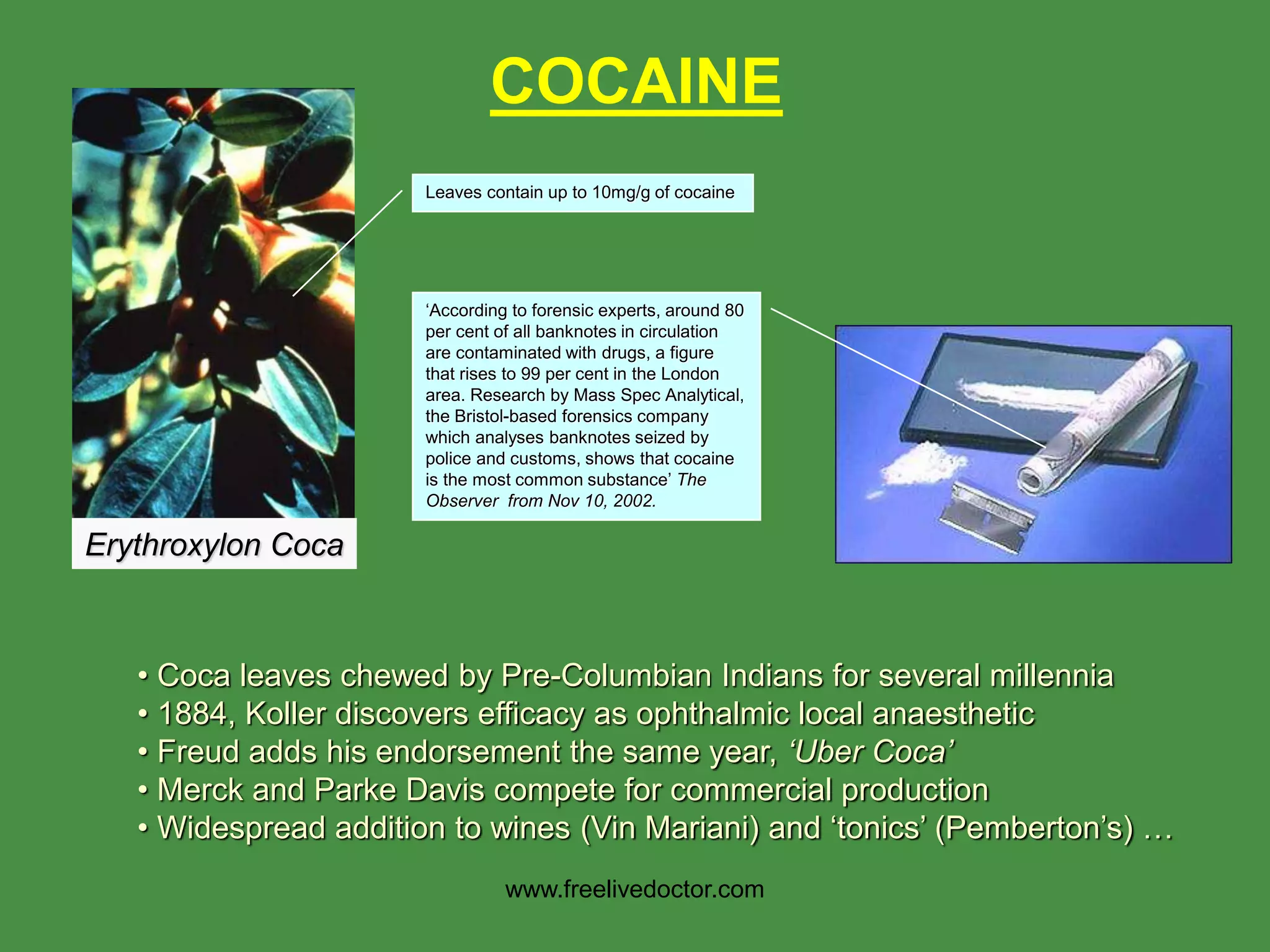
• Coca leaves chewed by Pre-Columbian Indians for several millennia
• 1884, Koller discovers efficacy as ophthalmic local anaesthetic
• Freud adds his endorsement the same year, ‘Uber Coca’
• Merck and Parke Davis compete for commercial production
• Widespread addition to wines (Vin Mariani) and ‘tonics’ (Pemberton’s) …
Erythroxylon Coca
Leaves contain up to 10mg/g of cocaine
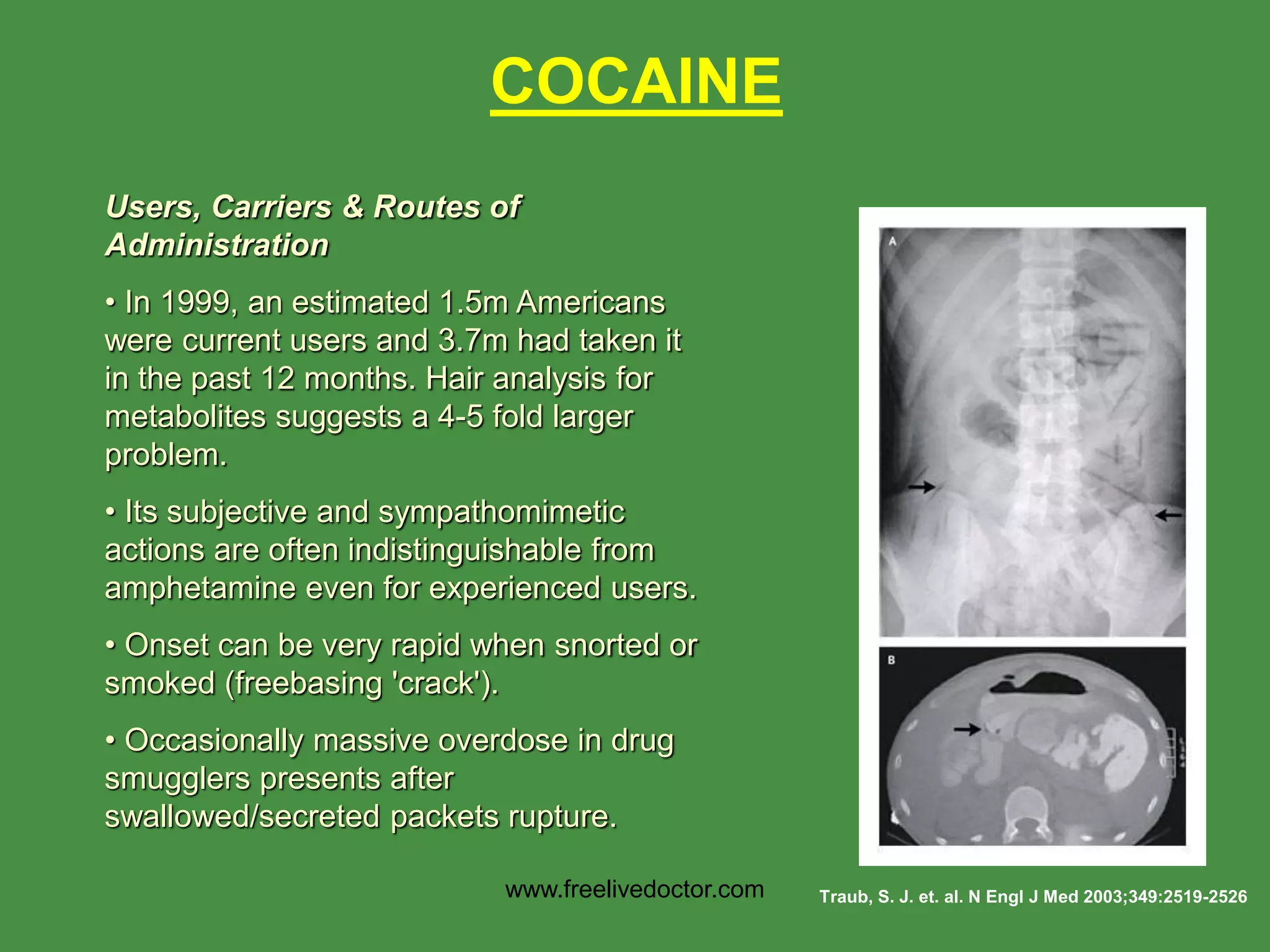
‘According to forensic experts, around 80
per cent of all banknotes in circulation
are contaminated with drugs, a figure
that rises to 99 per cent in the London
area. Research by Mass Spec Analytical,
the Bristol-based forensics company
which analyses banknotes seized by
police and customs, shows that cocaine
is the most common substance’ The
Observer from Nov 10, 2002.
www.freelivedoctor.com
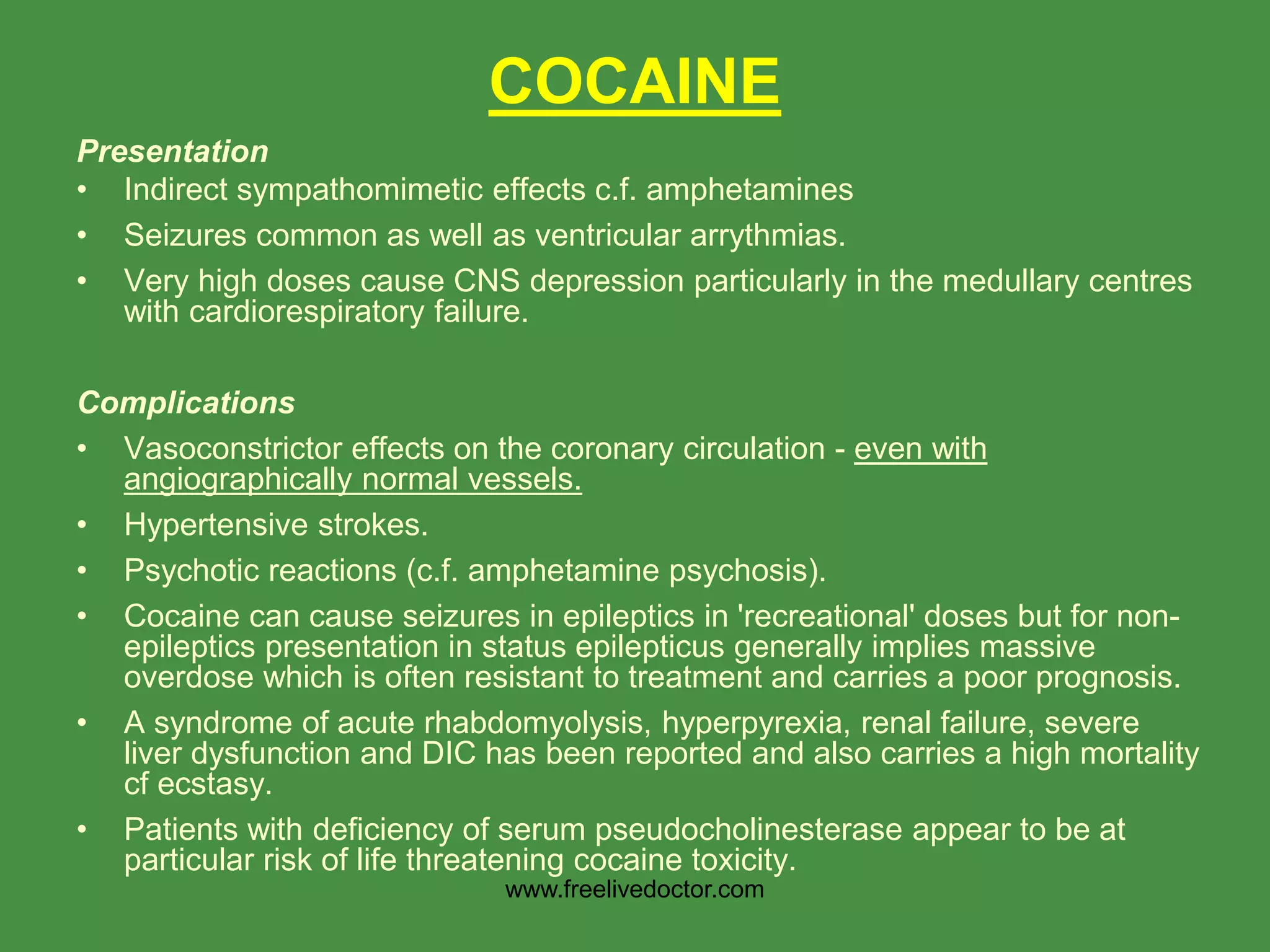
Traub, S. J. et. al. N Engl J Med 2003;349:2519-2526
COCAINE
Users, Carriers & Routes of
Administration
• In 1999, an estimated 1.5m Americans
were current users and 3.7m had taken it
in the past 12 months. Hair analysis for
metabolites suggests a 4-5 fold larger
problem.
• Its subjective and sympathomimetic
actions are often indistinguishable from
amphetamine even for experienced users.
• Onset can be very rapid when snorted or
smoked (freebasing 'crack').
• Occasionally massive overdose in drug
smugglers presents after
swallowed/secreted packets rupture.
www.freelivedoctor.com
Presentation
• Indirect sympathomimetic effects c.f. amphetamines
• Seizures common as well as ventricular arrythmias.
• Very high doses cause CNS depression particularly in the medullary centres
with cardiorespiratory failure.
Complications
• Vasoconstrictor effects on the coronary circulation - even with
angiographically normal vessels.
• Hypertensive strokes.
• Psychotic reactions (c.f. amphetamine psychosis).
• Cocaine can cause seizures in epileptics in 'recreational' doses but for non-
epileptics presentation in status epilepticus generally implies massive
overdose which is often resistant to treatment and carries a poor prognosis.
• A syndrome of acute rhabdomyolysis, hyperpyrexia, renal failure, severe
liver dysfunction and DIC has been reported and also carries a high mortality
cf ecstasy.
• Patients with deficiency of serum pseudocholinesterase appear to be at
particular risk of life threatening cocaine toxicity.
COCAINE
www.freelivedoctor.com
Management
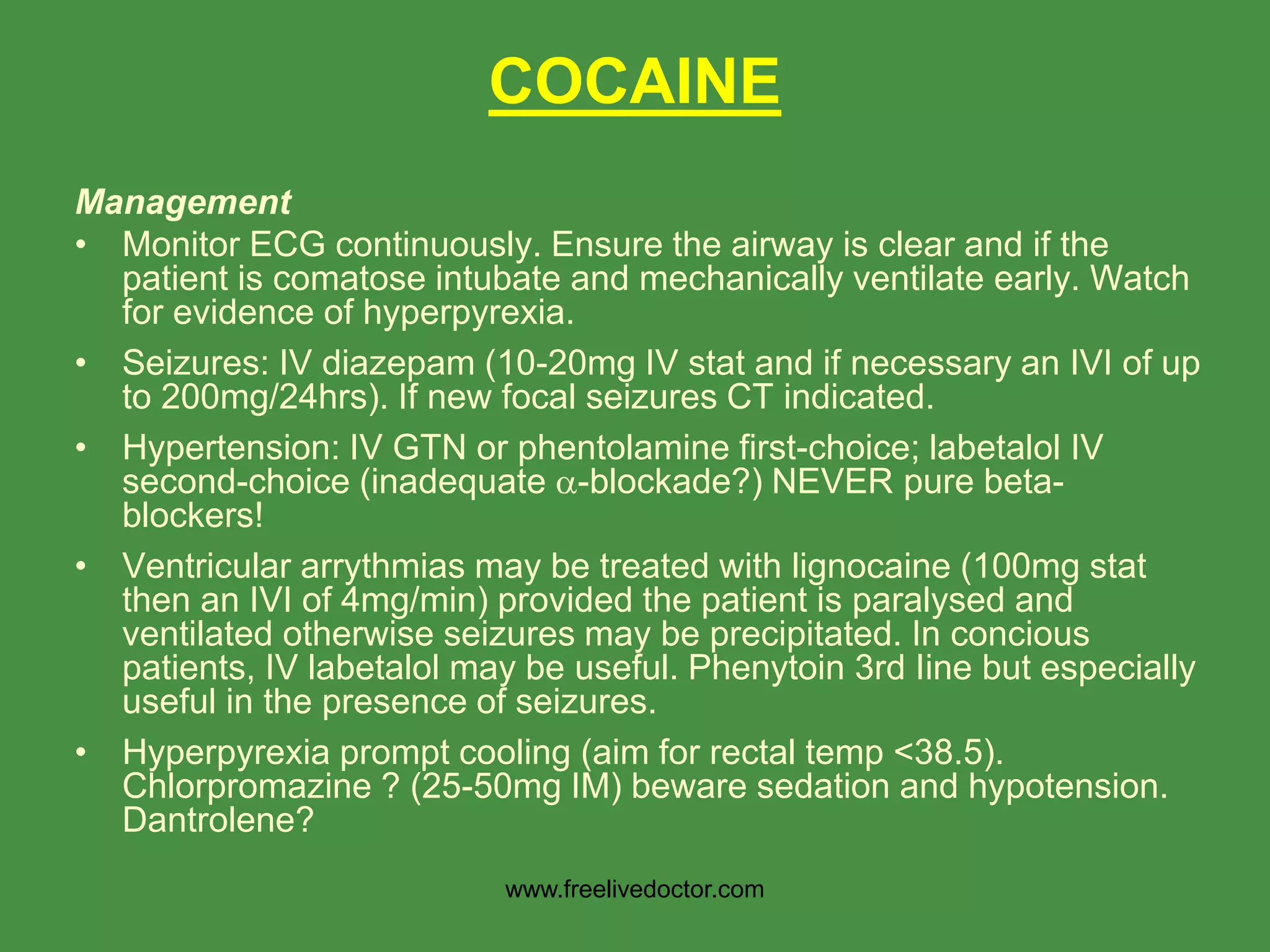
• Monitor ECG continuously. Ensure the airway is clear and if the
patient is comatose intubate and mechanically ventilate early. Watch
for evidence of hyperpyrexia.
• Seizures: IV diazepam (10-20mg IV stat and if necessary an IVI of up
to 200mg/24hrs). If new focal seizures CT indicated.
• Hypertension: IV GTN or phentolamine first-choice; labetalol IV
second-choice (inadequate -blockade?) NEVER pure beta-
blockers!
• Ventricular arrythmias may be treated with lignocaine (100mg stat
then an IVI of 4mg/min) provided the patient is paralysed and
ventilated otherwise seizures may be precipitated. In concious
patients, IV labetalol may be useful. Phenytoin 3rd Iine but especially
useful in the presence of seizures.
• Hyperpyrexia prompt cooling (aim for rectal temp <38.5).
Chlorpromazine ? (25-50mg IM) beware sedation and hypotension.
Dantrolene?
COCAINE
www.freelivedoctor.com
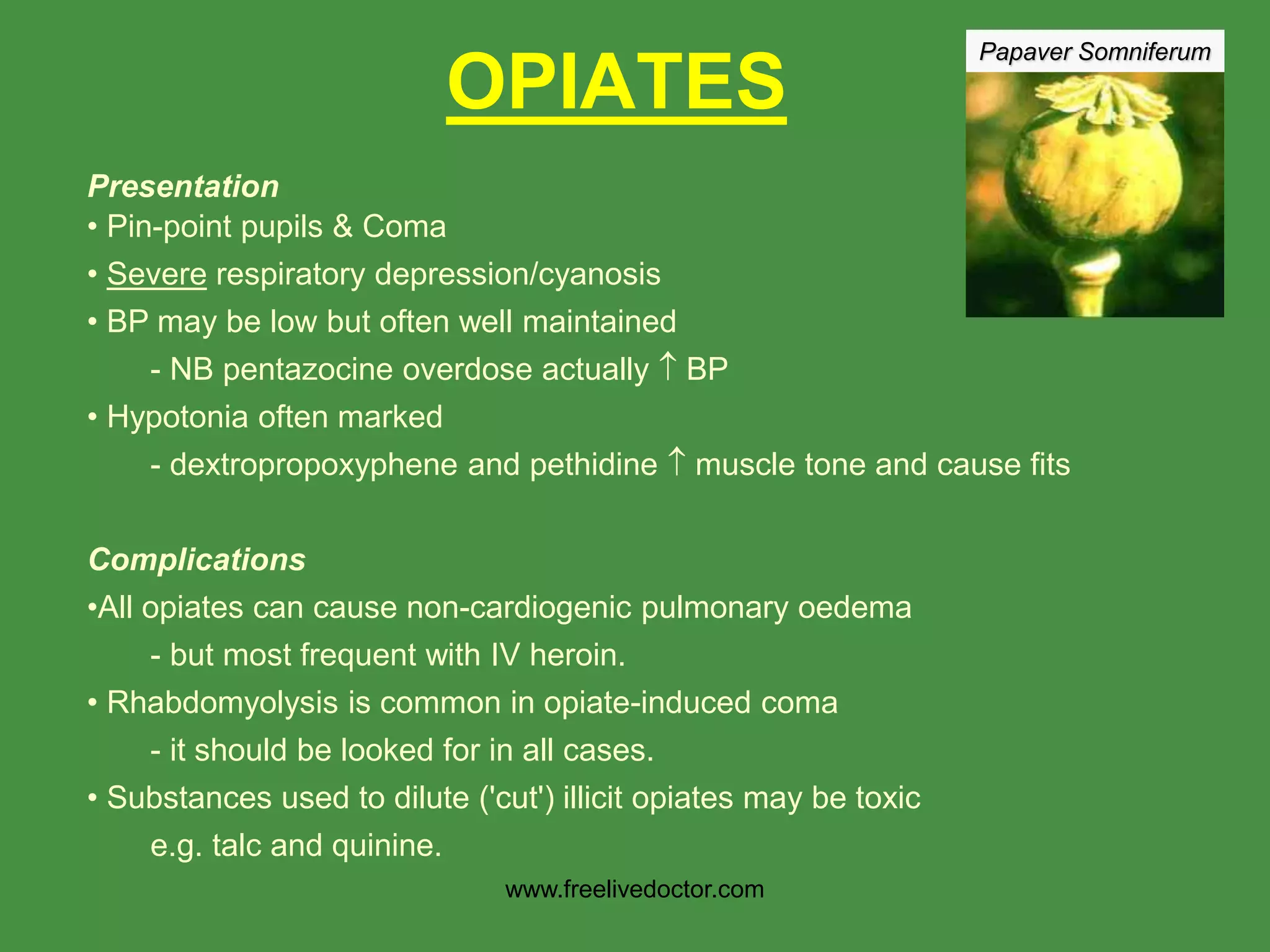
Papaver Somniferum
OPIATES
Presentation
• Pin-point pupils & Coma
• Severe respiratory depression/cyanosis
• BP may be low but often well maintained
- NB pentazocine overdose actually  BP
• Hypotonia often marked
- dextropropoxyphene and pethidine  muscle tone and cause fits
Complications
•All opiates can cause non-cardiogenic pulmonary oedema
- but most frequent with IV heroin.
• Rhabdomyolysis is common in opiate-induced coma
- it should be looked for in all cases.
• Substances used to dilute ('cut') illicit opiates may be toxic
e.g. talc and quinine.
www.freelivedoctor.com
OPIATES
Prognostic features
• Non-cardiogenic pulmonary oedema carries a poor prognosis (it is not
naloxone reversible)
• Patients ingesting paracetamol+opiate combinations (i.e. co-proxamol and
co-dydramol) obviously run the additional risk of paracetamol toxicity
• Patients with underlying ischaemic heart disease seem more susceptible
to haemodynamic disturbance after naloxone is given to reverse opiate
intoxication (see below)
NB Renal impairment reduces the elimination of many opiates (or their
glucuronidated metabolites), so prolonging their duration of action.
www.freelivedoctor.com
OPIATES
Management
• If paracetamol+opiate combinations ingested measure a paracetamol level
and treat accordingly.
• Specific antidote is naloxone given as IV in boluses of 0.4mg at 2-3 minute
intervals until rousable and respiratory depression corrected.
•Convulsions (usually pethidine or dextropropoxyphene) usually respond to IV
naloxone without additional anti-convulsant therapy.
• Pulmonary oedema present on admission generally requires IPPV.
Important points re use of Naloxone ….
If >2mg given with no response, revisit the diagnosis of opiate overdose!
Naloxone has a short half-life compared to most opiates. With long-acting
opiates such as methadone a naloxone IVI may be necessary for 48- 72hrs.
www.freelivedoctor.com
OPIATES
Beware Cold Turkey!
…. Giving sufficient naloxone to completely reverse the effect of opiates in an
opiate-dependent subject is likely to precipitate an acute withdrawal
reaction.
…. Marked hypertension, acute pulmonary oedema and VT/VF have been
observed in non-adducts given naloxone to reverse the effects of high
therapeutic doses of opiates for pain.
Further points
1. Dextropropoxyphene + alcohol can cause marked CNS depression. Respiratory arrest
can evolve within <30 mins of ingestion. Give naloxone even if the patient is only
mildly drowsy. It also causes an acute cardiotoxicity with arrhythmias due to a
membrane-stabilising effect (naloxone ineffective).
2. The respiratory depressant effects of buprenorphine are not fully reversed by
naloxone. Doxapram has been used in milder cases of buprenorphine overdose as a
respiratory depressant (1-4mg/min) although severe cases may require IPPV.
www.freelivedoctor.com
• MDMA synthesized by chemists
at Merck in 1912 and patent
granted in 1914 – later
resurfaced in Gottlieb’s CIA
campaign, MKULTRA
• Used legally by
psychotherapists until 1985
when it was first made a
schedule I drug in USA
• Recreational use now exceeds
750,000 tabs/week in NY –
probably similar number in UK.
• Single tablet doses typically 50-
100mg. Occasionally
unexpected adulterants e.g.
strychnine.
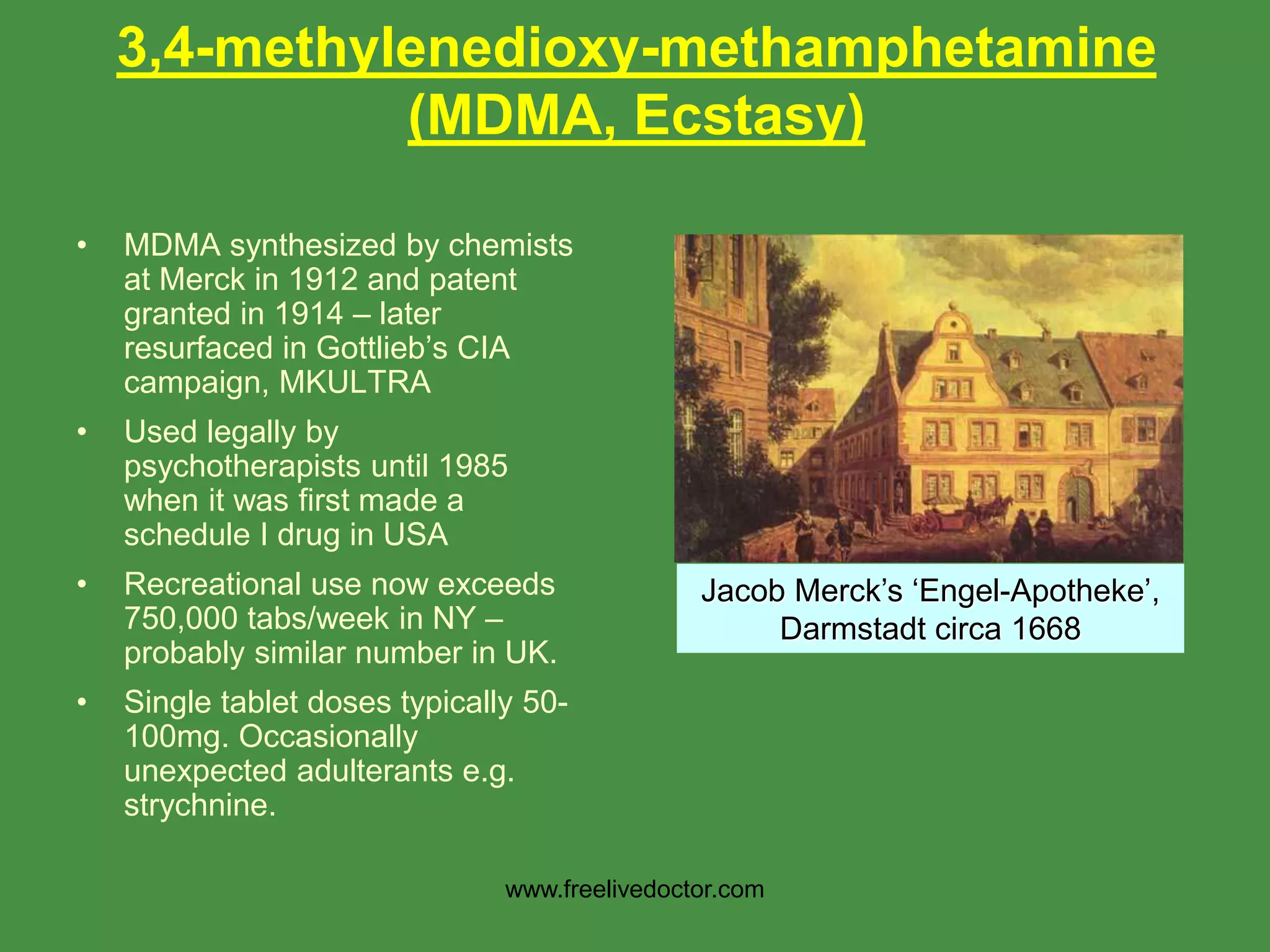
Jacob Merck’s ‘Engel-Apotheke’,
Darmstadt circa 1668
3,4-methylenedioxy-methamphetamine
(MDMA, Ecstasy)
www.freelivedoctor.com
Presentation – following typical of amphetamines but not
features of usual recreational doses of E
• Sympathomimetic effects - mydriasis, BP, HR, skin pallor.
• Central effects - hyperexcitability, talkativeness and agitation.
• [Paranoid features may be obvious especially in chronic users
– not applicable to E].
Complications
• A 'heat-stroke' like syndrome: rhabdomyolysis, hyperpyrexia
(>42 C), DIC and acute renal failure. It carries a poor
prognosis (see cocaine). ? PK problem ?? CYP2D6
metaboliser status important
• [Intracranial (and subarachnoid) haemorrhage (? 2ary to
hypertensive effect but can occur after single therapeutic
doses and vasospasm reported at angiography 'string-of-
beads' sign) – not applicable to E].
3,4-methylenedioxy-methamphetamine
(MDMA, Ecstasy)
www.freelivedoctor.com
Management
• Agitation - diazepam IV or lorazepam IM. Haloperidol if psychotic.
• Seizures - diazepam IV (if new focal signs urgent CT).
• Hypertension – First choice, GTN IV or -blockade (phentolamine IV);
Second choice, labetalol IV NEVER pure -blockers.
• Hyperpyrexia - prompt cooling (aim for rectal temp <38.5). Chlorpromazine?
(25-50mg IM) beware sedation and hypotension. Dantrolene?
• Acidification of the urine? - can substantially increase elimination but must
be weighed against the electrolyte and pH disturbance caused.
3,4-methylenedioxy-methamphetamine
(MDMA, Ecstasy)
www.freelivedoctor.com

Common poisonings

  • 1.
  • 2.
    General Points aboutPoisoning Per annum in the UK there are: • some 300,000 cases of poisoning • 100,000 hospital admissions for poisoning (in-patient mortality <1 %) • 3,500-4000 deaths from poisoning (1000 of these are due to CO) Remember: • drug history may be unreliable • 65% of drugs used are prescribed to the patient, a relative or friend • 30% of self-poisonings involve multiple drugs • 50% of drug-overdose also involve alcohol …. Question witnesses or family about ANY access to drugs or ANY bottles found. …. There may be clues from the clinical signs (eg pin-point pupils with opiates), signs of solvent/ethanol abuse or signs of IV drug use (venepuncture sites). www.freelivedoctor.com
  • 3.
    … and theirManagement The role of antidotes is restricted to a minority of drugs. In most cases of overdose, survival is crucially dependent on supportive care ….  Monitor the airway (recovery position +/- intubation)  Maintain normoxia (+/- IPPV)  Maintain body temperature  Correct any hypotension (+/- volume expansion) or hypertension  Correct acid-base or electrolyte disturbance  Treat any fits (DZP +/- IPPV)  Monitor for dysrrhythmias (2ary role of antiarrhythmics)  Beware of skin blistering and rhabdomyolysis. Remember to take account of concurrent medical problems eg an IV drug user may be septicaemic or have hepatitis, SBE or HIV-related disease. www.freelivedoctor.com
  • 4.
    • One ofthe commonest drugs taken in OD • Across all age-groups, 20% men and 30% women take OTC analgesics regularly • Reduction in paracetamol pack size in 1998 has led to shift in UK consumption in favour of NSAIDs … ASPIRIN Occasionally poisoning follows topical application of salicylic acid in keratolytics or ingestion of methyl salicylate ('oil of wintergreen‘). 1ary toxic effect is to uncouple oxidative phosphorylation. Presentation • Salicylism=sweating, vomiting, epigastric pain, tinnitus and blurring of vision. • Early respiratory alkalosis (not seen in children) precedes the later metabolic acidosis. • In severe overdose, acidosis reduces the ionization of salicylic acid enhances CNS penetration => agitation, tremor and fits … eventually to coma and respiratory depression. www.freelivedoctor.com
  • 5.
    ASPIRIN Complications • Electrolyte Disturbanceuniversal hypokalaemia and deranged Na+ (high > low) glucose (hyper > hypo) • Pulmonary oedema (often non-cardiogenic) & acute renal failure. • Hypoprothrombinaemia is very rare. • Significant GI bleeds are surprisingly infrequent. Management - therapeutic [salicylate] is <300mg/l (2.2 mmol/l)  Mild/moderate salicylism requires only rehydration + KCl supplements.  Marked salicylism or levels > 750mg/l need specific elimination therapy: (1) Oral activated charcoal (50g 4 hourly) (2) Forced alkaline diuresis NO LONGER RECOMMENDED - it is no more effective than simple alkalinisation (eg 1 L 1.26% NaHCO3 over 2 hrs and repeated to keep the urinary pH > 7.5). (3) Haemodialysis is required for any of the following: level >1000mg/1 (7.25 mmol/l); persistent/progressive acidosis; deteriorating level of consciousness. www.freelivedoctor.com
  • 6.
    HN C CH3 OH O Paracetamol(Acetaminophen, Tylenol ®) NB component of compound analgesics such as co- codamol, co-dydramol & co-proxamol and amongst OTCs some Alka-Seltzer ®, Anadin ® and Beechams-Powders ® preparations. • 15 – 20 tablets (7.5-10g) = overdose • Causes severe centrilobular necrosis of the liver • 10% have renal toxicity (acute tubular necrosis) • Accounts for ~ 200 deaths/year in UK PARACETAMOL www.freelivedoctor.com
  • 7.
    OH HN C CH3 O O HNC CH3 O Sulphate O HN C CH3 O glucuronide OH HON C CH3 O 60% 40% CYP2E - minor pathway except in overdose! Paracetamol Metabolism O N C CH3 O NABQI www.freelivedoctor.com
  • 8.
    (Glutathione-S-transferase) O N C CH3 O δ+ve OH HN C CH3 O S G GSH SH Detoxifcation of NABQI consumes GSH www.freelivedoctor.com
  • 9.
    Protection by glutathione(GSH) and its substitution with exogenous N-acetyl-cysteine -OOC – CH2 – N – C – CH – N – C – CH2 – CH2 - CH O CH2 SH H H O COO- NH3+ Tripeptide (-ECG). Present in all cells – high in hepatocytes ~ 5mM • Exogenous GSH cannot enter hepatocyte • NAC is SH donor to scavenge NABQI • Also protects intracellular levels of GSH in hepatocytes • Depletion of GSH by >80% causes toxicity www.freelivedoctor.com
  • 10.
    PARACETAMOL Presentation • Apart frommild nausea, vomiting and anorexia, patients presenting within 24 hrs of ingestion are generally asymptomatic. • Hepatic necrosis becomes apparent at 24-36 hrs with: – right subchondral pain/tenderness – reappearance of vomiting and neuroglycopenia – Deepening Encephalopathy over the next 72 hrs. Complications • The predictable consequences of liver failure i.e. metabolic acidosis, hypoglycaemia, cerebral oedema, cardiac arrhythmias and GI bleeding. • 10% of patients develop renal impairment from acute tubular necrosis - occasionally in the absence of hepatic failure. • Very rarely patients with G6PD deficiency develop methaemoglobinaemia and haemolysis. Prognostic features • Untreated, the fatal dose in adults is usually >10g - lower in chronic alcoholics or subjects with underlying liver disease or treated epileptics. • A PT of 20s at 24 hrs indicates significant hepatocellular damage; the more rapid the rise in PT thereafter the poorer the prognosis. • In patients developing hepatic failure, a poor prognosis is suggested by: (1) arterial pH <7.3; (2) prothrombin time >100s; (3) creatinine of >300 mol/l. They should be considered for early liver transplantation. www.freelivedoctor.com
  • 11.
    PARACETAMOL Management • Within 4hrs of ingestion lavage (?) or activated charcoal • Paracetamol levels checked at 4hrs & compared to treatment curve (200mg/1 or 1.32mmol/l at 4h joined to with 6mg/1 or 0.04mmol/l at 24h). Some 60% of patients above the line develop severe liver damage defined as AST >1000. • Patients on or above the line should be given IV N-acetylcysteine* * up to 10% have a rash, bronchospasm or hypotension during the IVI (acts as a mast cell releaser). Stopping and giving chlorpheniramine IV usually allows the IVI to be safely restarted. www.freelivedoctor.com
  • 12.
    CARBON MONOXIDE HSE limit200ppm (0.02%) causes headaches in 2-3 hours cf >10,000ppm (1%) that can cause death in a few minutes. The commonest sources are: – smoke inhalation – poorly maintained domestic gas/oil appliances – deliberate inhalation of car exhaust fumes Causes intense tissue hypoxia by two mechanisms: – interrupts electron transport in mitochondria – blocks tissue O2 delivery • competes with O2 for binding to Hb (Ka CO 220-fold > 02) • alters shape of the HbO2 dissociation curve (less sigmoidal) www.freelivedoctor.com
  • 13.
    CARBON MONOXIDE Signs ofhypoxia without cyanosis - 'cherry-red' colouration most obvious post mortem! Symptoms & signs correlate with % COHb*: <30% causes only headache and dizzyness 50-60% produces syncope, tachypnoea, tachycardia and fits >60% increasing risk of cardiorespiratory failure and death. NB Pulse-oximetry unhelpful – it measures functional saturation … * Non-smoker 1%; Smoker 5-8%; Jogger in London 12% … www.freelivedoctor.com
  • 14.
    CARBON MONOXIDE Management • CheckABG - PaO2 may be normal but metabolic acidosis indicates severe poisoning. • Give O2 by mask unless comatose then IPPV with FiO2 =1 (t1/2 COHb 320 mins on room air vs 80 mins at 100%)*. [Also consider if severely acidotic or evidence of myocardial ischaemia.] • Control fits with IV diazepam. Hyperbaric 02 will shorten the washout of COHb further (half-life of 25 mins at 2 atmospheres), but access and transfer times to a hyperbaric chamber may make this impractical. Recent trial suggest may be worthwhile (cognitive sequelae at 6/52 were reduced from 35/76 to 19/76 by this Rx …. NEJM 2002;347:1057 www.freelivedoctor.com
  • 15.
    Complications Sites at particularrisk are: • CNS - cerebral, cerebellar or midbrain (Parkinsonism and akinetic- mutism) • Myocardium - ischaemia/infarction • Skeletal muscle - rhabdomyolysis/myoglobinuria • Skin - erythyema to severe blistering. NB (1) Anaemia, increased metabolic rate (e.g. children) and underlying ischaemic heart disease all increase susceptibility to CO. (2) Neurological recovery depends on the duration of hypoxic coma: complete recovery has been reported in young subjects (under 50) after up to 21 hrs versus 11 hrs in older ones. CARBON MONOXIDE www.freelivedoctor.com
  • 16.
    COCAINE • Coca leaveschewed by Pre-Columbian Indians for several millennia • 1884, Koller discovers efficacy as ophthalmic local anaesthetic • Freud adds his endorsement the same year, ‘Uber Coca’ • Merck and Parke Davis compete for commercial production • Widespread addition to wines (Vin Mariani) and ‘tonics’ (Pemberton’s) … Erythroxylon Coca Leaves contain up to 10mg/g of cocaine ‘According to forensic experts, around 80 per cent of all banknotes in circulation are contaminated with drugs, a figure that rises to 99 per cent in the London area. Research by Mass Spec Analytical, the Bristol-based forensics company which analyses banknotes seized by police and customs, shows that cocaine is the most common substance’ The Observer from Nov 10, 2002. www.freelivedoctor.com
  • 17.
    Traub, S. J.et. al. N Engl J Med 2003;349:2519-2526 COCAINE Users, Carriers & Routes of Administration • In 1999, an estimated 1.5m Americans were current users and 3.7m had taken it in the past 12 months. Hair analysis for metabolites suggests a 4-5 fold larger problem. • Its subjective and sympathomimetic actions are often indistinguishable from amphetamine even for experienced users. • Onset can be very rapid when snorted or smoked (freebasing 'crack'). • Occasionally massive overdose in drug smugglers presents after swallowed/secreted packets rupture. www.freelivedoctor.com
  • 18.
    Presentation • Indirect sympathomimeticeffects c.f. amphetamines • Seizures common as well as ventricular arrythmias. • Very high doses cause CNS depression particularly in the medullary centres with cardiorespiratory failure. Complications • Vasoconstrictor effects on the coronary circulation - even with angiographically normal vessels. • Hypertensive strokes. • Psychotic reactions (c.f. amphetamine psychosis). • Cocaine can cause seizures in epileptics in 'recreational' doses but for non- epileptics presentation in status epilepticus generally implies massive overdose which is often resistant to treatment and carries a poor prognosis. • A syndrome of acute rhabdomyolysis, hyperpyrexia, renal failure, severe liver dysfunction and DIC has been reported and also carries a high mortality cf ecstasy. • Patients with deficiency of serum pseudocholinesterase appear to be at particular risk of life threatening cocaine toxicity. COCAINE www.freelivedoctor.com
  • 19.
    Management • Monitor ECGcontinuously. Ensure the airway is clear and if the patient is comatose intubate and mechanically ventilate early. Watch for evidence of hyperpyrexia. • Seizures: IV diazepam (10-20mg IV stat and if necessary an IVI of up to 200mg/24hrs). If new focal seizures CT indicated. • Hypertension: IV GTN or phentolamine first-choice; labetalol IV second-choice (inadequate -blockade?) NEVER pure beta- blockers! • Ventricular arrythmias may be treated with lignocaine (100mg stat then an IVI of 4mg/min) provided the patient is paralysed and ventilated otherwise seizures may be precipitated. In concious patients, IV labetalol may be useful. Phenytoin 3rd Iine but especially useful in the presence of seizures. • Hyperpyrexia prompt cooling (aim for rectal temp <38.5). Chlorpromazine ? (25-50mg IM) beware sedation and hypotension. Dantrolene? COCAINE www.freelivedoctor.com
  • 20.
    Papaver Somniferum OPIATES Presentation • Pin-pointpupils & Coma • Severe respiratory depression/cyanosis • BP may be low but often well maintained - NB pentazocine overdose actually  BP • Hypotonia often marked - dextropropoxyphene and pethidine  muscle tone and cause fits Complications •All opiates can cause non-cardiogenic pulmonary oedema - but most frequent with IV heroin. • Rhabdomyolysis is common in opiate-induced coma - it should be looked for in all cases. • Substances used to dilute ('cut') illicit opiates may be toxic e.g. talc and quinine. www.freelivedoctor.com
  • 21.
    OPIATES Prognostic features • Non-cardiogenicpulmonary oedema carries a poor prognosis (it is not naloxone reversible) • Patients ingesting paracetamol+opiate combinations (i.e. co-proxamol and co-dydramol) obviously run the additional risk of paracetamol toxicity • Patients with underlying ischaemic heart disease seem more susceptible to haemodynamic disturbance after naloxone is given to reverse opiate intoxication (see below) NB Renal impairment reduces the elimination of many opiates (or their glucuronidated metabolites), so prolonging their duration of action. www.freelivedoctor.com
  • 22.
    OPIATES Management • If paracetamol+opiatecombinations ingested measure a paracetamol level and treat accordingly. • Specific antidote is naloxone given as IV in boluses of 0.4mg at 2-3 minute intervals until rousable and respiratory depression corrected. •Convulsions (usually pethidine or dextropropoxyphene) usually respond to IV naloxone without additional anti-convulsant therapy. • Pulmonary oedema present on admission generally requires IPPV. Important points re use of Naloxone …. If >2mg given with no response, revisit the diagnosis of opiate overdose! Naloxone has a short half-life compared to most opiates. With long-acting opiates such as methadone a naloxone IVI may be necessary for 48- 72hrs. www.freelivedoctor.com
  • 23.
    OPIATES Beware Cold Turkey! ….Giving sufficient naloxone to completely reverse the effect of opiates in an opiate-dependent subject is likely to precipitate an acute withdrawal reaction. …. Marked hypertension, acute pulmonary oedema and VT/VF have been observed in non-adducts given naloxone to reverse the effects of high therapeutic doses of opiates for pain. Further points 1. Dextropropoxyphene + alcohol can cause marked CNS depression. Respiratory arrest can evolve within <30 mins of ingestion. Give naloxone even if the patient is only mildly drowsy. It also causes an acute cardiotoxicity with arrhythmias due to a membrane-stabilising effect (naloxone ineffective). 2. The respiratory depressant effects of buprenorphine are not fully reversed by naloxone. Doxapram has been used in milder cases of buprenorphine overdose as a respiratory depressant (1-4mg/min) although severe cases may require IPPV. www.freelivedoctor.com
  • 24.
    • MDMA synthesizedby chemists at Merck in 1912 and patent granted in 1914 – later resurfaced in Gottlieb’s CIA campaign, MKULTRA • Used legally by psychotherapists until 1985 when it was first made a schedule I drug in USA • Recreational use now exceeds 750,000 tabs/week in NY – probably similar number in UK. • Single tablet doses typically 50- 100mg. Occasionally unexpected adulterants e.g. strychnine. Jacob Merck’s ‘Engel-Apotheke’, Darmstadt circa 1668 3,4-methylenedioxy-methamphetamine (MDMA, Ecstasy) www.freelivedoctor.com
  • 25.
    Presentation – followingtypical of amphetamines but not features of usual recreational doses of E • Sympathomimetic effects - mydriasis, BP, HR, skin pallor. • Central effects - hyperexcitability, talkativeness and agitation. • [Paranoid features may be obvious especially in chronic users – not applicable to E]. Complications • A 'heat-stroke' like syndrome: rhabdomyolysis, hyperpyrexia (>42 C), DIC and acute renal failure. It carries a poor prognosis (see cocaine). ? PK problem ?? CYP2D6 metaboliser status important • [Intracranial (and subarachnoid) haemorrhage (? 2ary to hypertensive effect but can occur after single therapeutic doses and vasospasm reported at angiography 'string-of- beads' sign) – not applicable to E]. 3,4-methylenedioxy-methamphetamine (MDMA, Ecstasy) www.freelivedoctor.com
  • 26.
    Management • Agitation -diazepam IV or lorazepam IM. Haloperidol if psychotic. • Seizures - diazepam IV (if new focal signs urgent CT). • Hypertension – First choice, GTN IV or -blockade (phentolamine IV); Second choice, labetalol IV NEVER pure -blockers. • Hyperpyrexia - prompt cooling (aim for rectal temp <38.5). Chlorpromazine? (25-50mg IM) beware sedation and hypotension. Dantrolene? • Acidification of the urine? - can substantially increase elimination but must be weighed against the electrolyte and pH disturbance caused. 3,4-methylenedioxy-methamphetamine (MDMA, Ecstasy) www.freelivedoctor.com