Downloaded 41 times


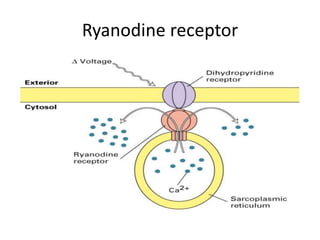
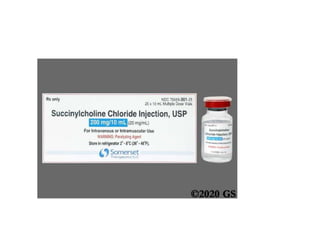

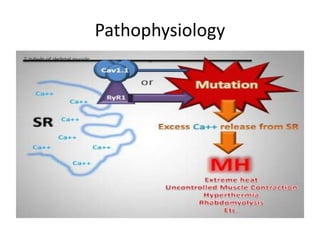
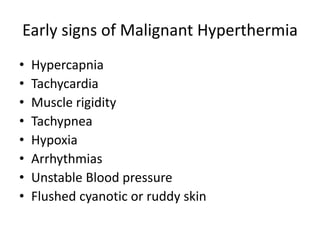
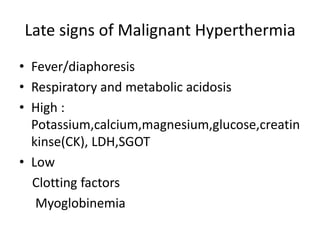
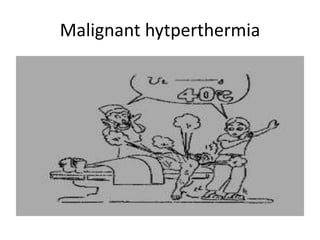
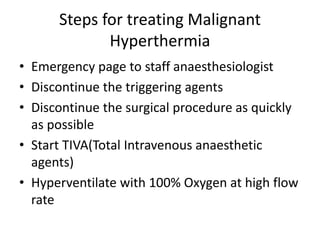
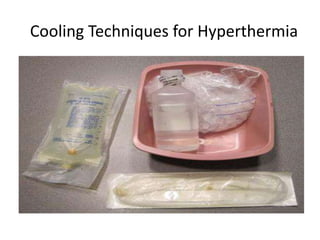



Malignant hyperthermia is a serious, life-threatening condition caused by a genetic defect in the ryanodine receptor or calcium channel that makes individuals susceptible to triggering agents like volatile anesthetics and succinylcholine. When exposed to these agents, calcium is released from the sarcoplasmic reticulum in muscle cells, increasing metabolism and causing symptoms like fever, muscle rigidity, and acidosis. Diagnosis involves testing for genetic mutations or abnormal responses to caffeine and halothane. Treatment requires discontinuing triggers, dantrolene administration, supportive care, and cooling to reduce fever and its complications.


![Malignant hyperthermia [final]](https://cdn.slidesharecdn.com/ss_thumbnails/malignanthyperthermiafinal-160608094814-thumbnail.jpg?width=640&height=640&fit=bounds)


