Electrical
Introduction An average of one worker is electrocuted on the job every day  There are four main types of electrical injuries: Electrocution (death due to electrical shock) Electrical shock Burns Falls
How is an electrical shock received? (cont’d) If you are in contact with an energized wire or any energized electrical component, and also with any grounded object, YOU WILL RECEIVE A SHOCK You can even receive a shock when you are not in contact with a ground If you contact both wires of a 240-volt cable, YOU WILL RECEIVE A SHOCK and possibly be electrocuted
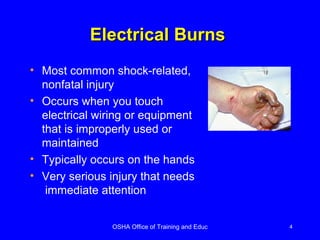
Electrical Burns  Most common shock-related, nonfatal injury Occurs when you touch electrical wiring or equipment that is improperly used or maintained Typically occurs on the hands Very serious injury that needs  immediate attention
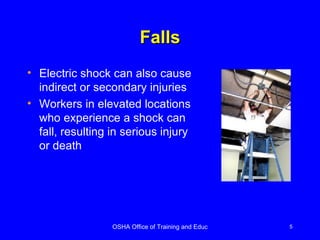
Falls Electric shock can also cause indirect or secondary injuries  Workers in elevated locations who experience a shock can fall, resulting in serious injury or death
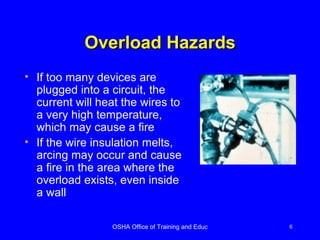
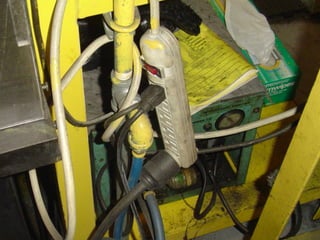
Overload Hazards If too many devices are plugged into a circuit, the current will heat the wires to a very high temperature, which may cause a fire If the wire insulation melts, arcing may occur and cause a fire in the area where the overload exists, even inside a wall
Electrical Protective Devices These devices shut off electricity flow in the event of an overload or ground-fault in the circuit Include fuses, circuit breakers, and ground-fault circuit-interrupters (GFCI’s) Fuses and circuit breakers are  overcurrent  devices  When there is too much current: Fuses melt Circuit breakers trip open
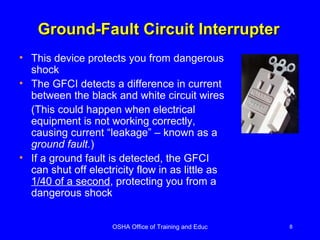
Ground-Fault Circuit Interrupter This device protects you from dangerous shock The GFCI detects a difference in current between the black and white circuit wires  (This could happen when electrical equipment is not working correctly, causing current “leakage” – known as a  ground fault. ) If a ground fault is detected, the GFCI can shut off electricity flow in as little as  1/40 of a second , protecting you from a dangerous shock
Grounding Hazards Some of the most frequently violated OSHA standards Metal parts of an electrical wiring system that we touch (switch plates, ceiling light fixtures, conduit, etc.) should be at zero volts relative to ground Housings of motors, appliances or tools that are plugged into improperly grounded circuits may become energized If you come into contact with an improperly grounded electrical device, YOU WILL BE SHOCKED
Some Examples of OSHA Electrical Requirements . . . .
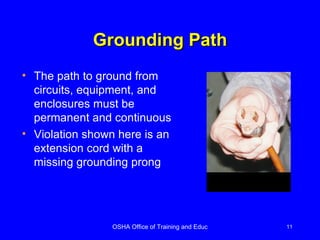
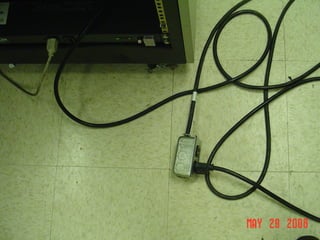
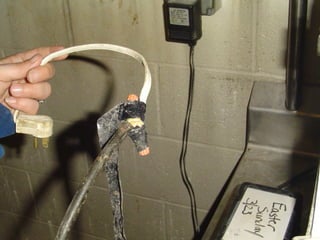
Grounding Path The path to ground from circuits, equipment, and enclosures must be permanent and continuous Violation shown here is an extension cord with a missing grounding prong
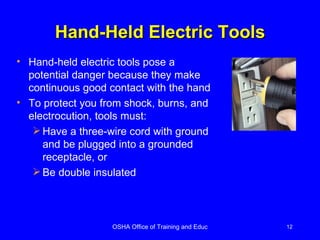
Hand-Held Electric Tools Hand-held electric tools pose a potential danger because they make continuous good contact with the hand To protect you from shock, burns, and electrocution, tools must: Have a three-wire cord with ground and be plugged into a grounded receptacle, or Be double insulated
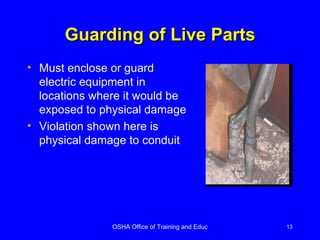
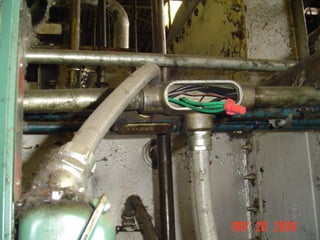
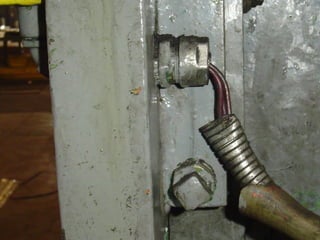
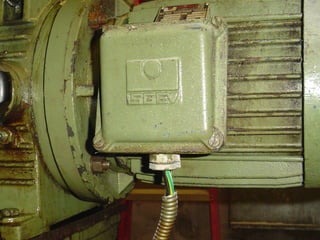
Guarding of Live Parts Must enclose or guard electric equipment in locations where it would be exposed to physical damage Violation shown here is physical damage to conduit
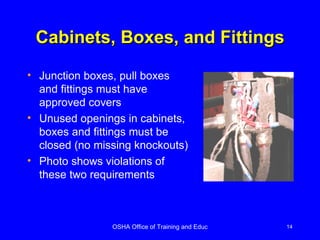
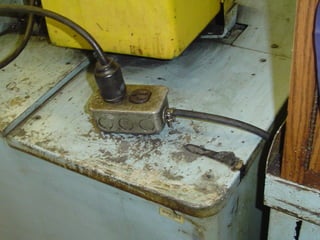
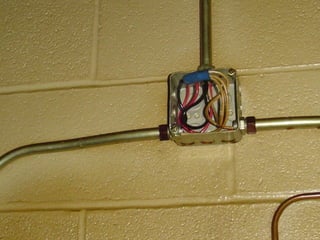
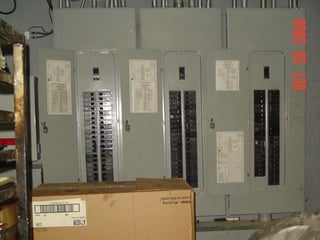
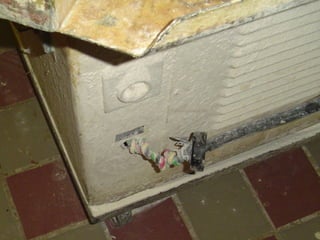
Cabinets, Boxes, and Fittings Junction boxes, pull boxes and fittings must have approved covers Unused openings in cabinets, boxes and fittings must be closed (no missing knockouts) Photo shows violations of these two requirements
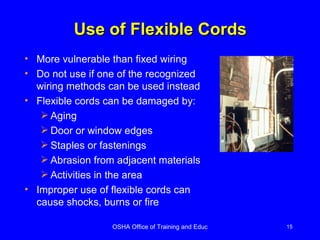
More vulnerable than fixed wiring Do not use if one of the recognized wiring methods can be used instead Flexible cords can be damaged by: Aging Door or window edges Staples or fastenings Abrasion from adjacent materials Activities in the area Improper use of flexible cords can cause shocks, burns or fire Use of Flexible Cords
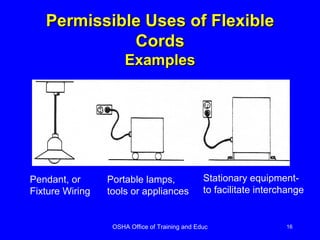
Permissible Uses of Flexible Cords Examples Pendant, or Fixture Wiring Portable lamps, tools or appliances Stationary equipment-to facilitate interchange
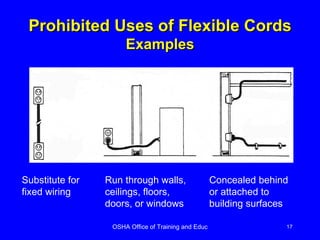
Prohibited Uses of Flexible Cords Examples Substitute for fixed wiring Run through walls, ceilings, floors, doors, or windows Concealed behind or attached to building surfaces
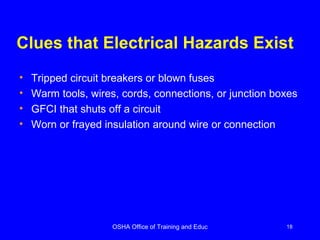
Clues that Electrical Hazards Exist   Tripped circuit breakers or blown fuses Warm tools, wires, cords, connections, or junction boxes GFCI that shuts off a circuit Worn or frayed insulation around wire or connection


Electrical Osha

  • 1.
  • 2.
    Introduction An averageof one worker is electrocuted on the job every day There are four main types of electrical injuries: Electrocution (death due to electrical shock) Electrical shock Burns Falls
  • 3.
    How is anelectrical shock received? (cont’d) If you are in contact with an energized wire or any energized electrical component, and also with any grounded object, YOU WILL RECEIVE A SHOCK You can even receive a shock when you are not in contact with a ground If you contact both wires of a 240-volt cable, YOU WILL RECEIVE A SHOCK and possibly be electrocuted
  • 4.
    Electrical Burns Most common shock-related, nonfatal injury Occurs when you touch electrical wiring or equipment that is improperly used or maintained Typically occurs on the hands Very serious injury that needs immediate attention
  • 5.
    Falls Electric shockcan also cause indirect or secondary injuries Workers in elevated locations who experience a shock can fall, resulting in serious injury or death
  • 6.
    Overload Hazards Iftoo many devices are plugged into a circuit, the current will heat the wires to a very high temperature, which may cause a fire If the wire insulation melts, arcing may occur and cause a fire in the area where the overload exists, even inside a wall
  • 7.
    Electrical Protective DevicesThese devices shut off electricity flow in the event of an overload or ground-fault in the circuit Include fuses, circuit breakers, and ground-fault circuit-interrupters (GFCI’s) Fuses and circuit breakers are overcurrent devices When there is too much current: Fuses melt Circuit breakers trip open
  • 8.
    Ground-Fault Circuit InterrupterThis device protects you from dangerous shock The GFCI detects a difference in current between the black and white circuit wires (This could happen when electrical equipment is not working correctly, causing current “leakage” – known as a ground fault. ) If a ground fault is detected, the GFCI can shut off electricity flow in as little as 1/40 of a second , protecting you from a dangerous shock
  • 9.
    Grounding Hazards Someof the most frequently violated OSHA standards Metal parts of an electrical wiring system that we touch (switch plates, ceiling light fixtures, conduit, etc.) should be at zero volts relative to ground Housings of motors, appliances or tools that are plugged into improperly grounded circuits may become energized If you come into contact with an improperly grounded electrical device, YOU WILL BE SHOCKED
  • 10.
    Some Examples ofOSHA Electrical Requirements . . . .
  • 11.
    Grounding Path Thepath to ground from circuits, equipment, and enclosures must be permanent and continuous Violation shown here is an extension cord with a missing grounding prong
  • 12.
    Hand-Held Electric ToolsHand-held electric tools pose a potential danger because they make continuous good contact with the hand To protect you from shock, burns, and electrocution, tools must: Have a three-wire cord with ground and be plugged into a grounded receptacle, or Be double insulated
  • 13.
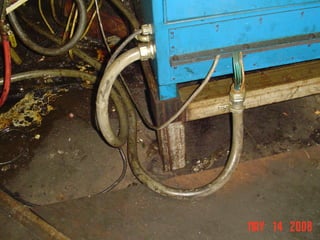
    Guarding of LiveParts Must enclose or guard electric equipment in locations where it would be exposed to physical damage Violation shown here is physical damage to conduit
  • 14.
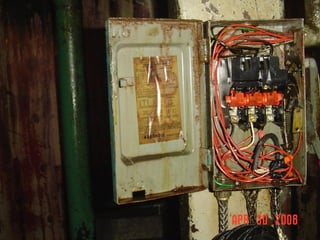
    Cabinets, Boxes, andFittings Junction boxes, pull boxes and fittings must have approved covers Unused openings in cabinets, boxes and fittings must be closed (no missing knockouts) Photo shows violations of these two requirements
  • 15.
    More vulnerable thanfixed wiring Do not use if one of the recognized wiring methods can be used instead Flexible cords can be damaged by: Aging Door or window edges Staples or fastenings Abrasion from adjacent materials Activities in the area Improper use of flexible cords can cause shocks, burns or fire Use of Flexible Cords
  • 16.
    Permissible Uses ofFlexible Cords Examples Pendant, or Fixture Wiring Portable lamps, tools or appliances Stationary equipment-to facilitate interchange
  • 17.
    Prohibited Uses ofFlexible Cords Examples Substitute for fixed wiring Run through walls, ceilings, floors, doors, or windows Concealed behind or attached to building surfaces
  • 18.
    Clues that ElectricalHazards Exist Tripped circuit breakers or blown fuses Warm tools, wires, cords, connections, or junction boxes GFCI that shuts off a circuit Worn or frayed insulation around wire or connection
  • 19.
  • 20.
  • 21.
  • 22.
  • 23.
  • 24.
  • 25.
  • 26.
  • 27.
  • 28.
  • 29.
  • 30.
  • 31.
  • 32.
  • 33.
  • 34.
  • 35.
  • 36.
  • 37.
  • 38.
  • 39.
  • 40.
  • 41.
  • 42.
  • 43.
  • 44.
  • 45.
  • 46.
  • 47.

Editor's Notes

  • #2 This presentation is designed to assist trainers conducting OSHA 10-hour General Industry outreach training for workers. Since workers are the target audience, this presentation emphasizes hazard identification, avoidance, and control – not standards. No attempt has been made to treat the topic exhaustively. It is essential that trainers tailor their presentations to the needs and understanding of their audience. This presentation is not a substitute for any of the provisions of the Occupational Safety and Health Act of 1970 or for any standards issued by the U.S. Department of Labor. Mention of trade names, commercial products, or organizations does not imply endorsement by the U.S. Department of Labor.