Securing the Internet of Things
Paul Fremantle
CTO, WSO2 (paul@wso2.com)
PhD researcher, Portsmouth University
(paul.fremantle@port.ac.uk)
@pzfreo
Paul Madsen*
Technical Architect, PingIdentity
(pmadsen@pingidentity.com)
@paulmadsen
*Paul M helped me with the initial content, but I take responsibility for anything you don’t like in this slide deck.
About me
• CTO and Co-Founder
WSO2
– Open Source Middleware
platform
• Part-time PhD looking at
security
• Working in Apache for
14 years
• Working with Cloud,
SOA, APIs, MQTT, IoT
3
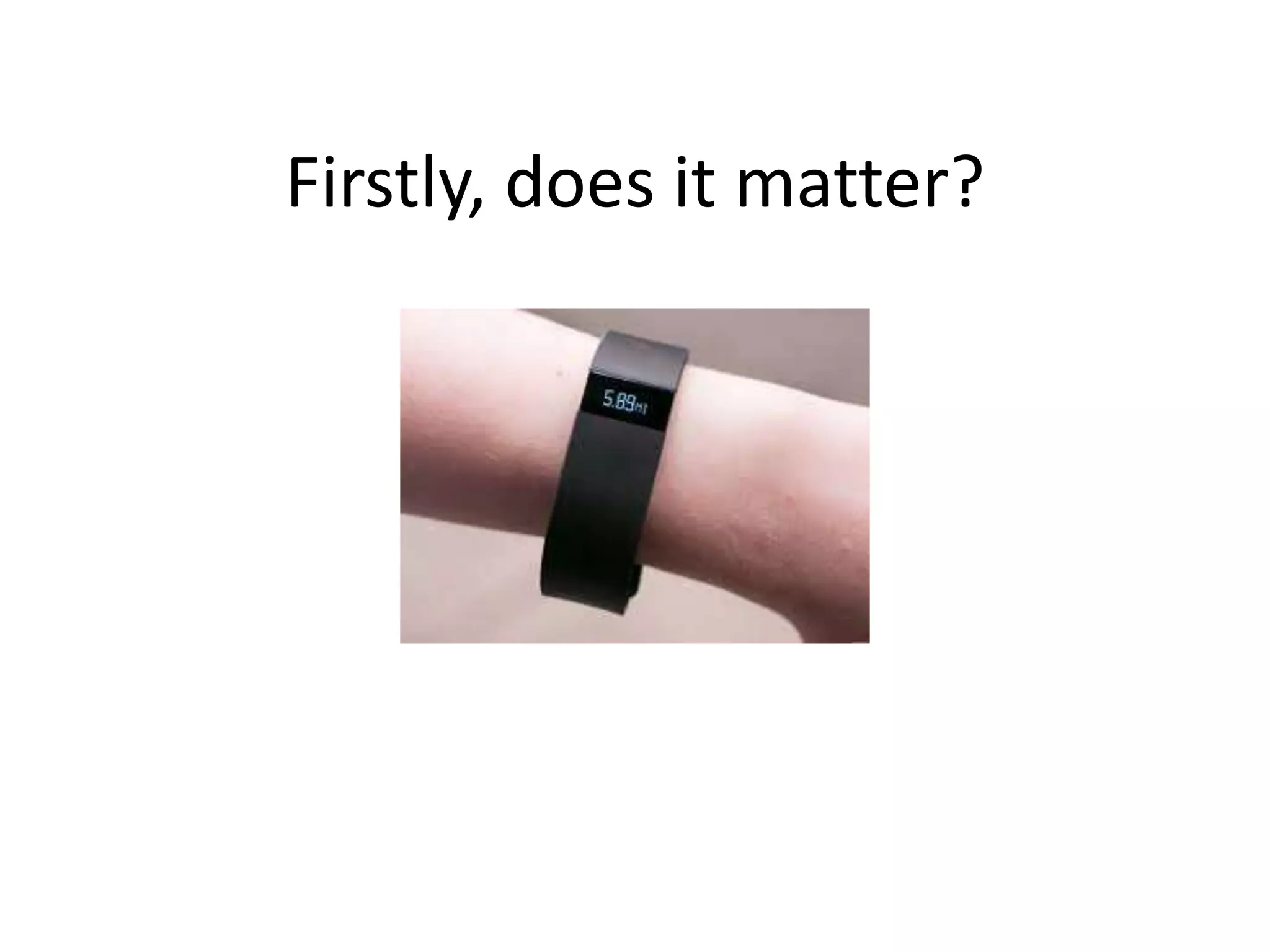
Firstly, does it matter?
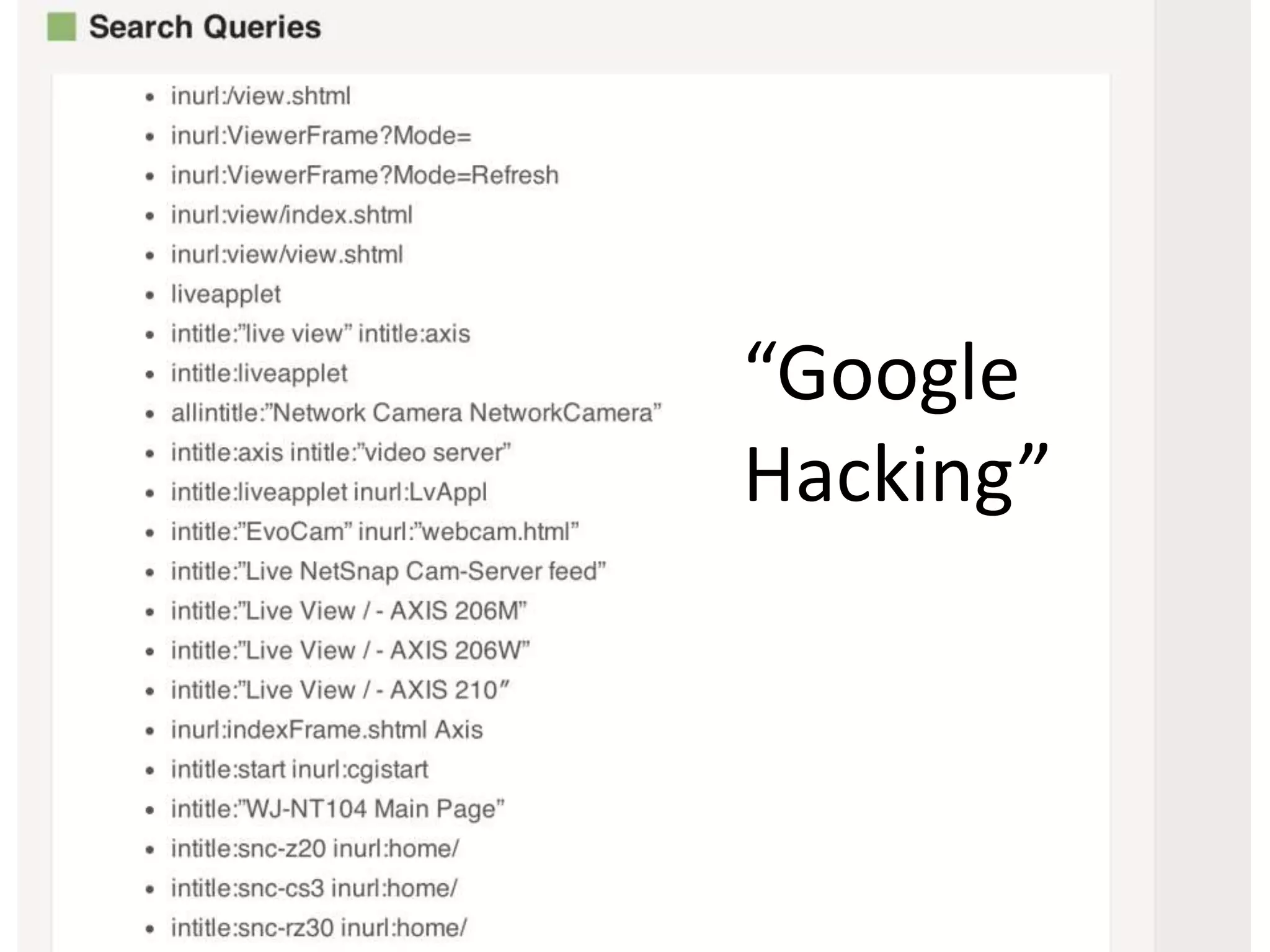
“Google
Hacking”
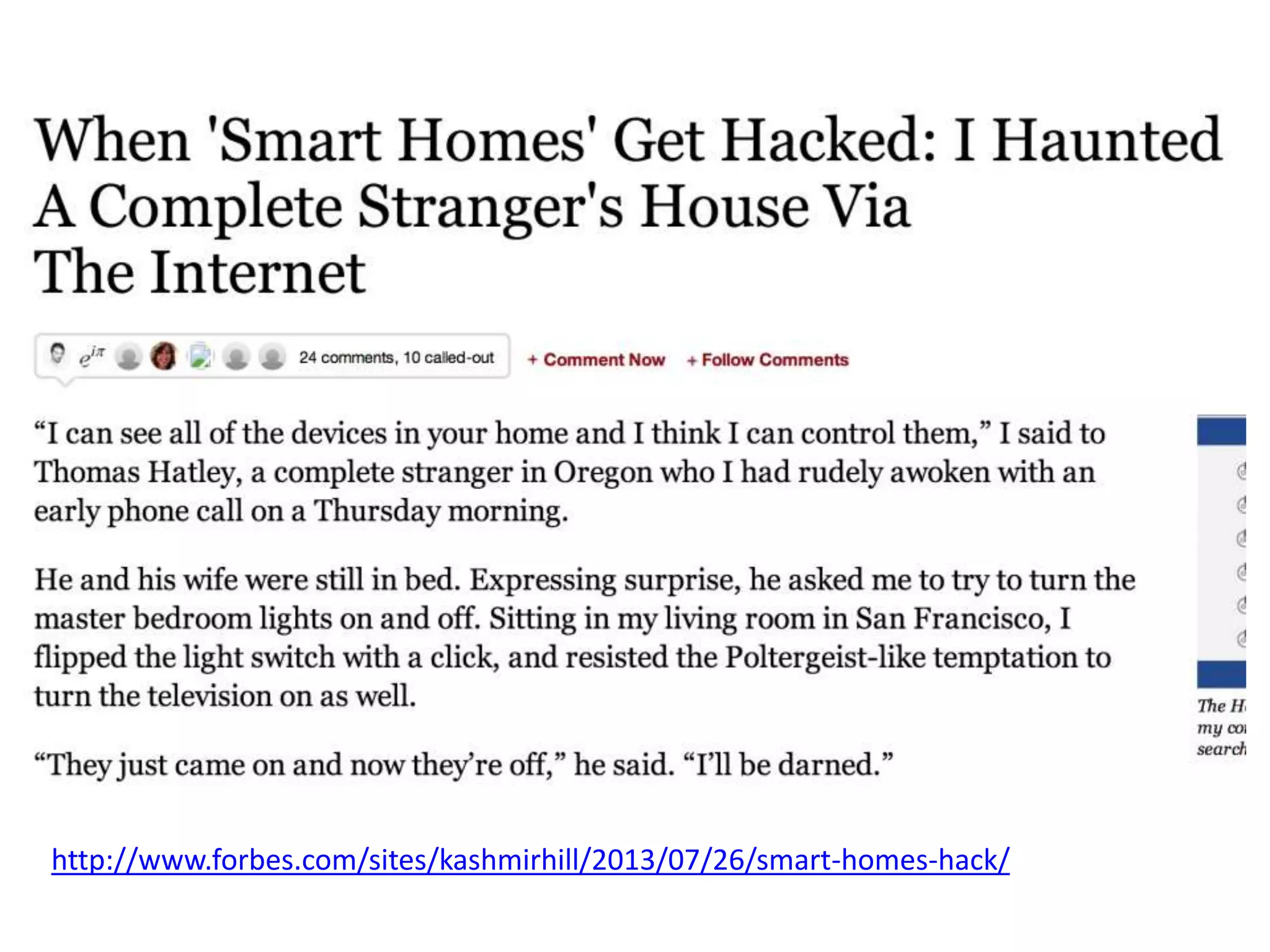
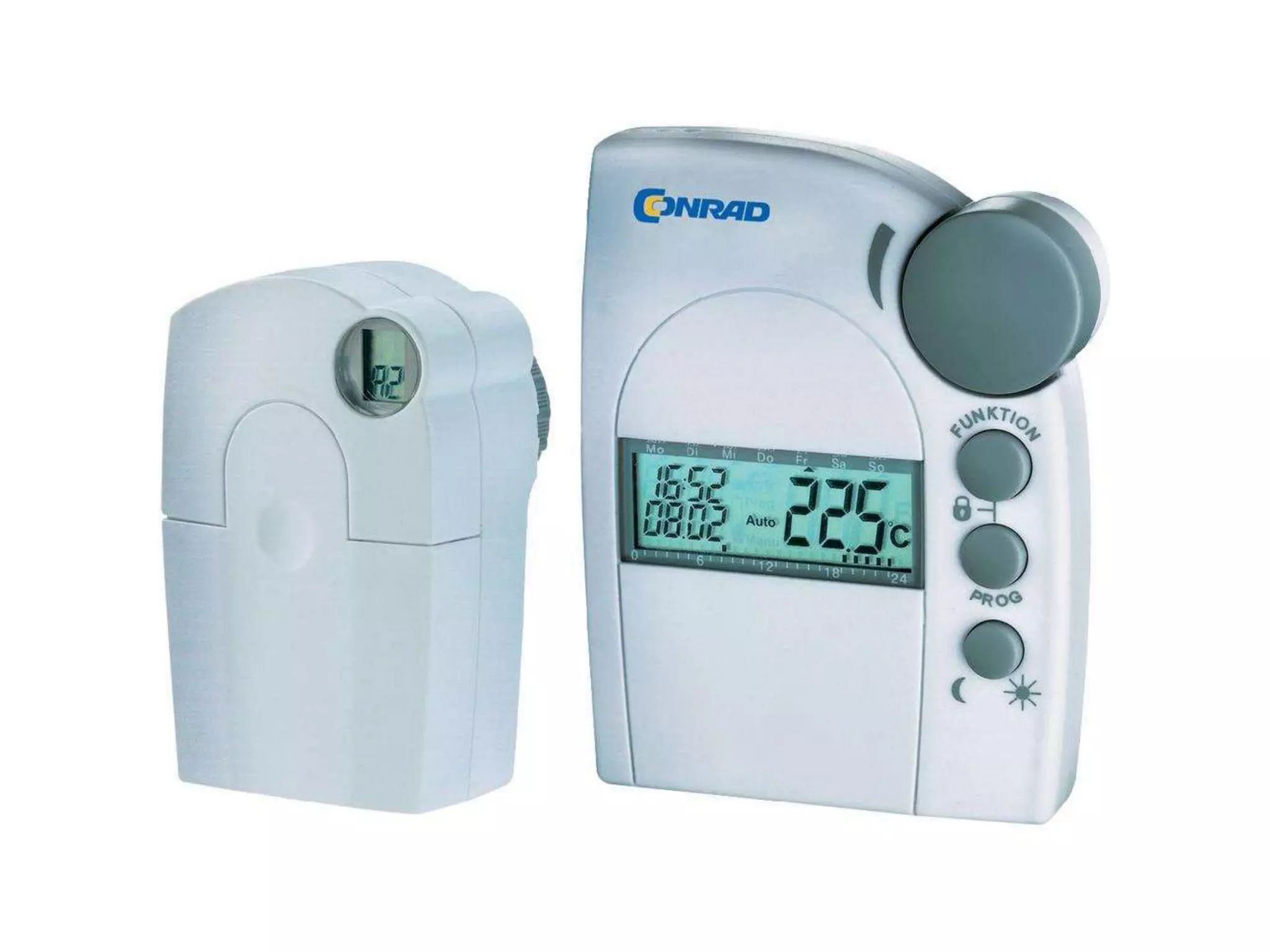
http://www.forbes.com/sites/kashmirhill/2013/07/26/smart-homes-hack/
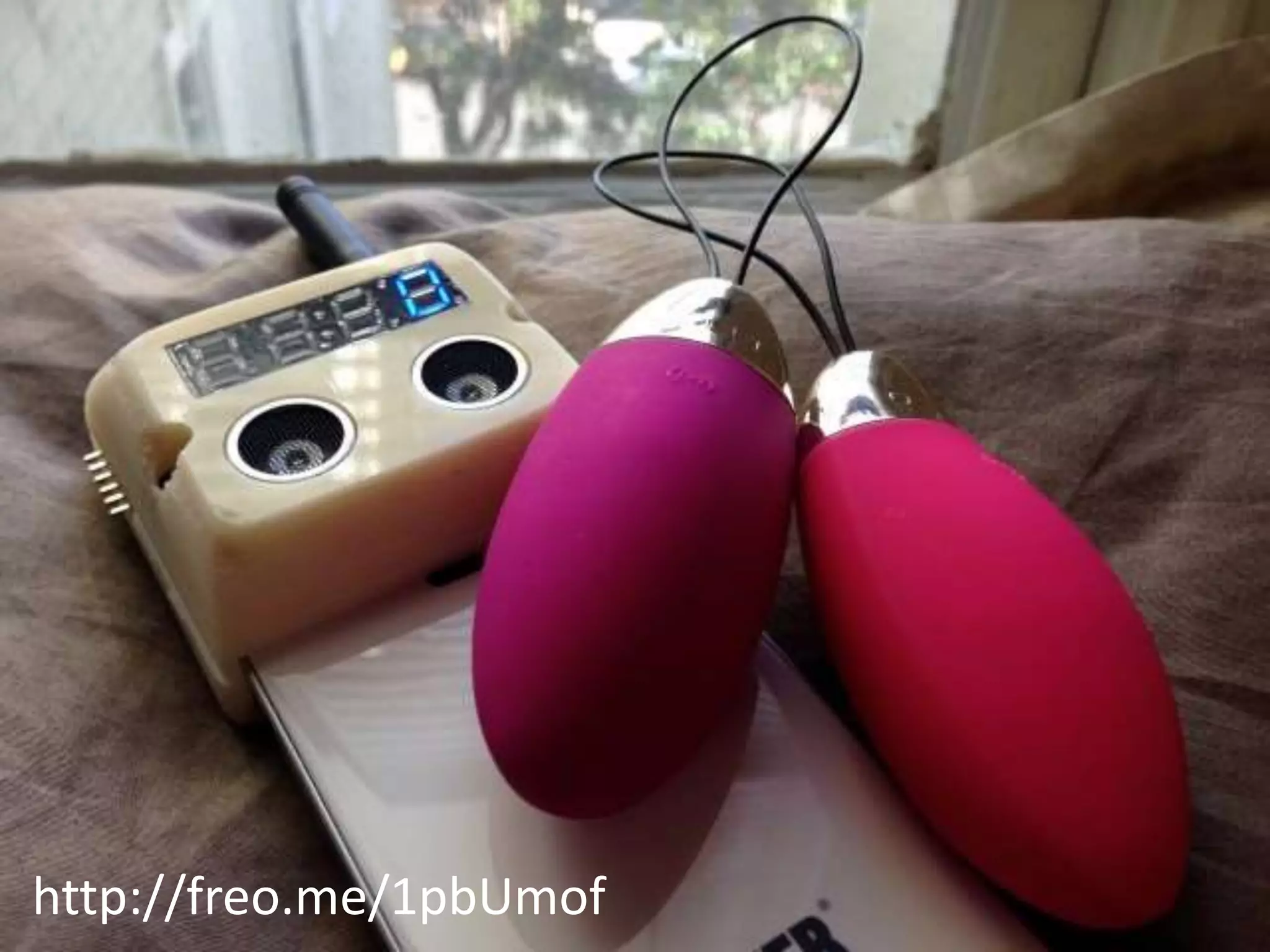
http://freo.me/1pbUmof
So what is different about IoT?
• The longevity of the device
– Updates are harder (or impossible)
• The size of the device
– Capabilities are limited – especially around crypto
• The fact there is a device
– Usually no UI for entering userids and passwords
• The data
– Often highly personal
• The mindset
– Appliance manufacturers don’t think like security experts
– Embedded systems are often developed by grabbing existing
chips, designs, etc
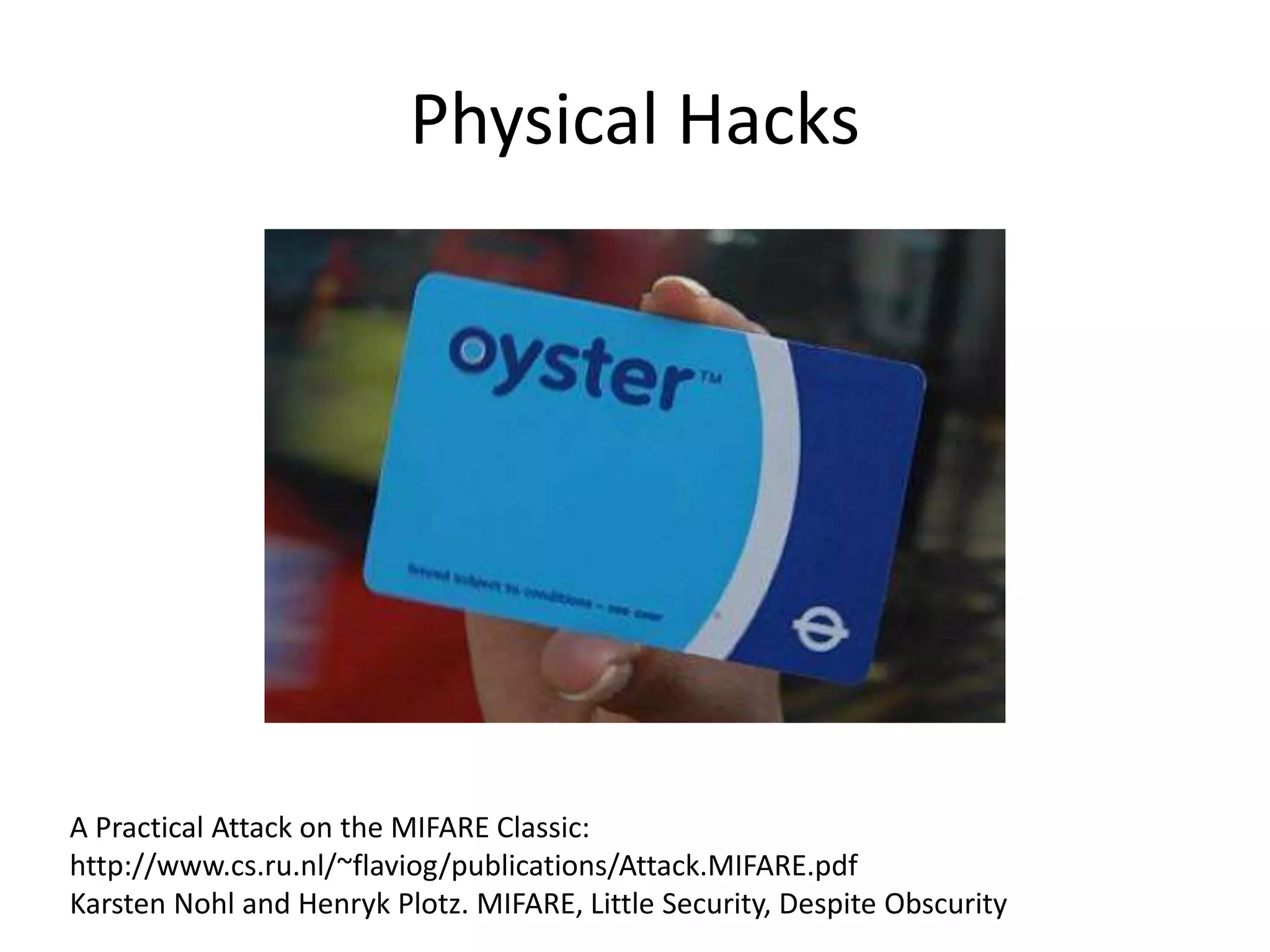
Physical Hacks
A Practical Attack on the MIFARE Classic:
http://www.cs.ru.nl/~flaviog/publications/Attack.MIFARE.pdf
Karsten Nohl and Henryk Plotz. MIFARE, Little Security, Despite Obscurity
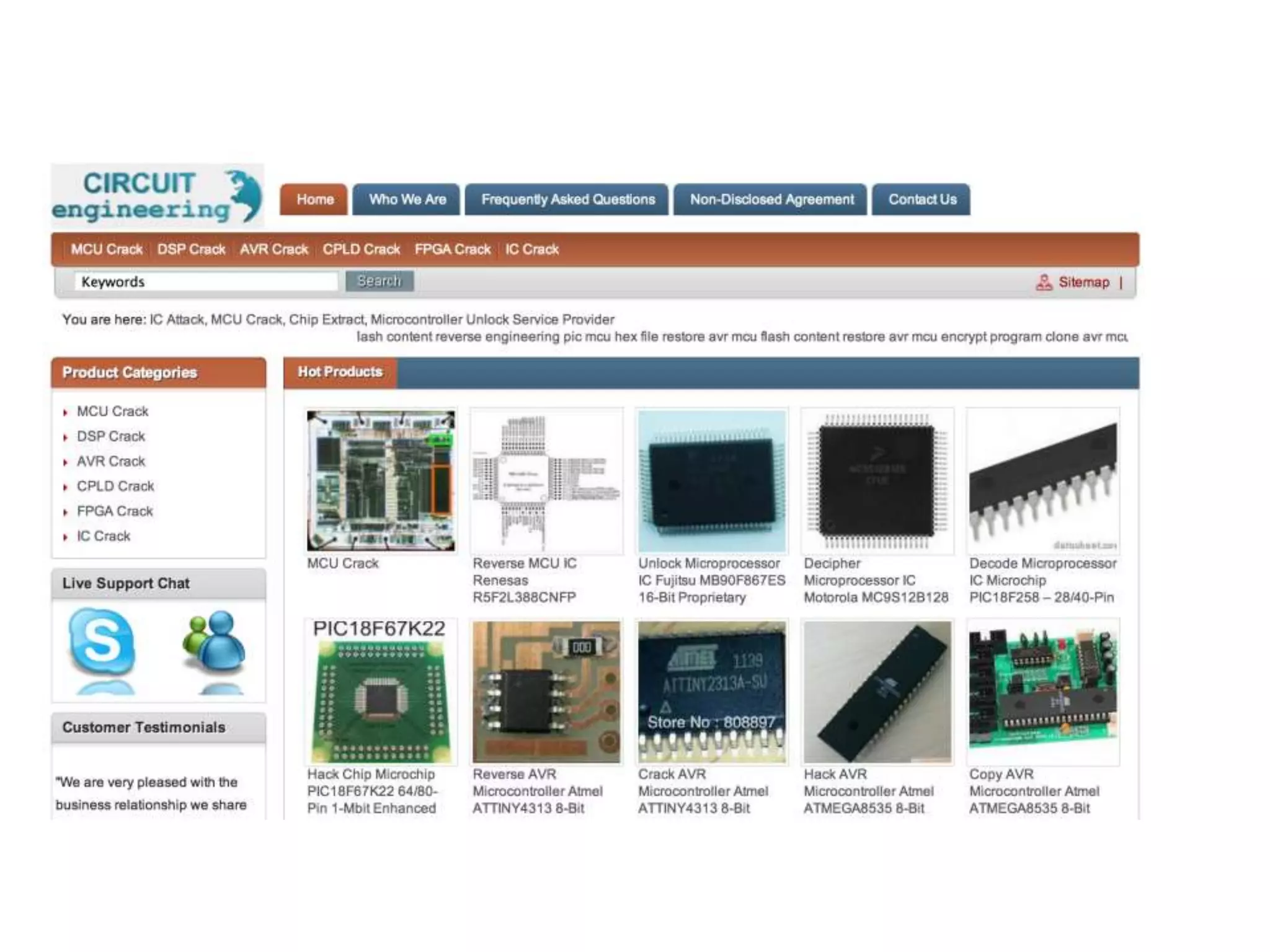
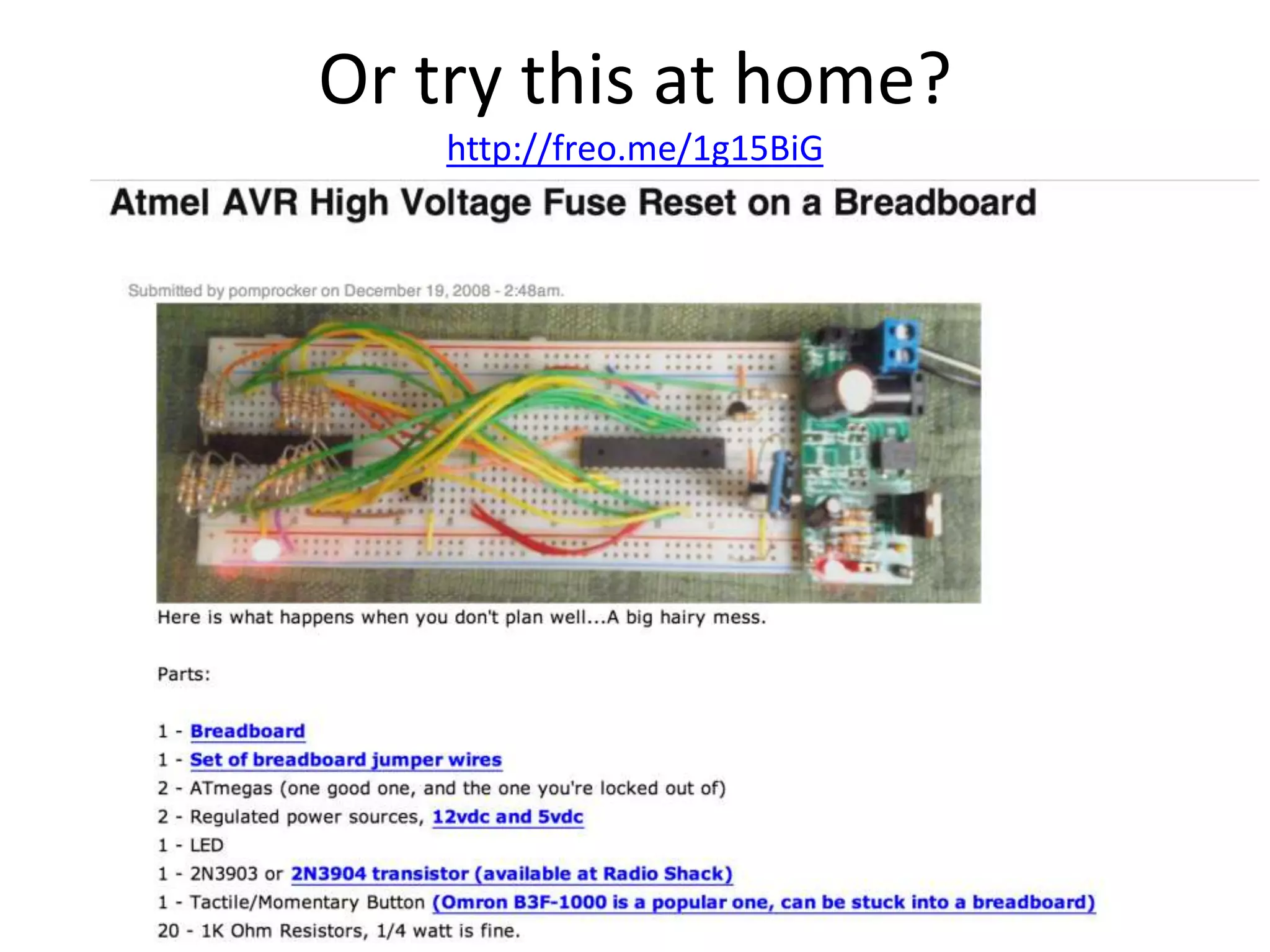
Or try this at home?
http://freo.me/1g15BiG
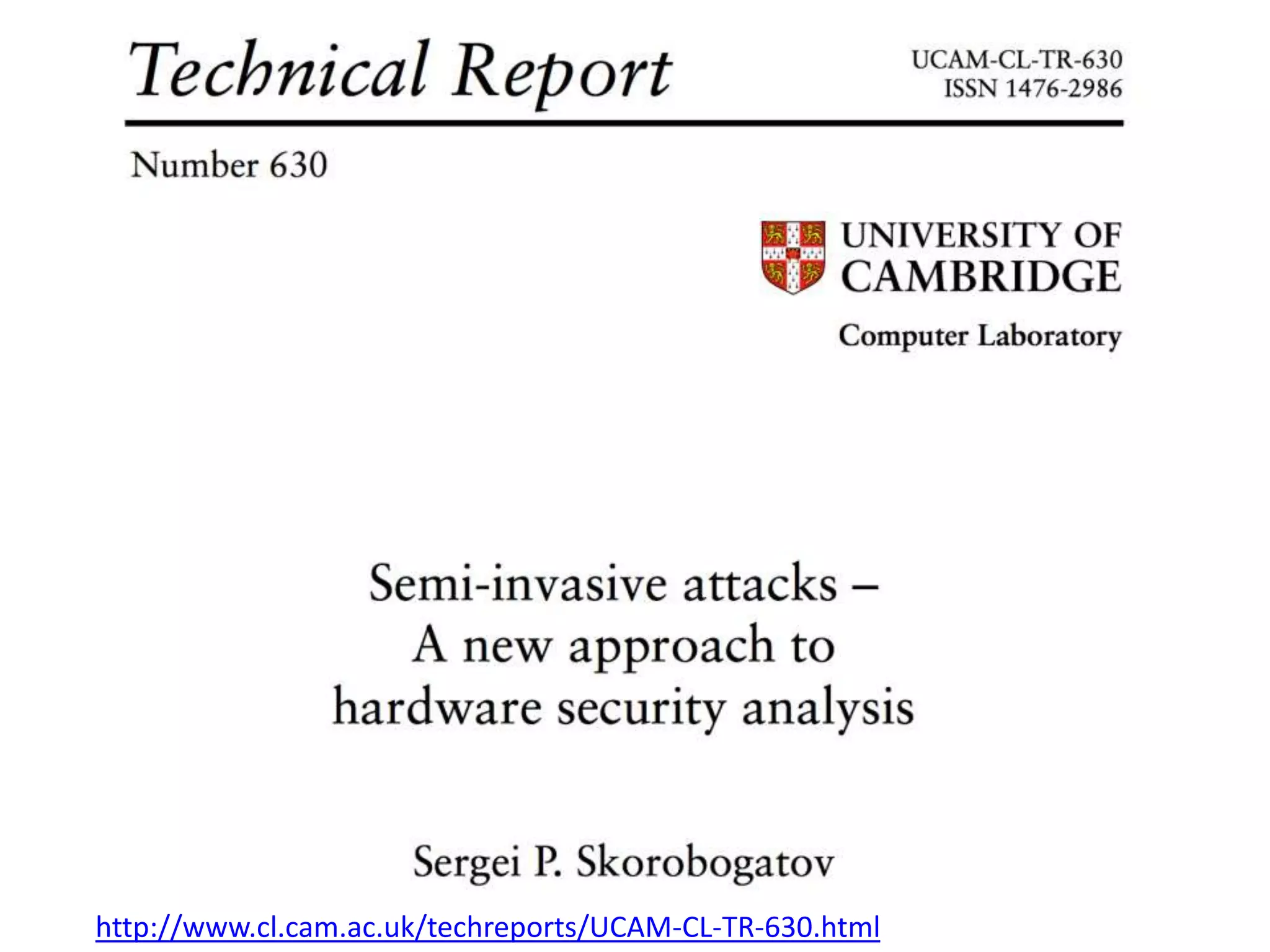
http://www.cl.cam.ac.uk/techreports/UCAM-CL-TR-630.html
Hardware recommendations
• Don’t rely on obscurity
Hardware recommendations
• Don’t rely on obscurity
Hardware Recommendation #2
• Unlocking a single device should risk only that
device’s data
The Network
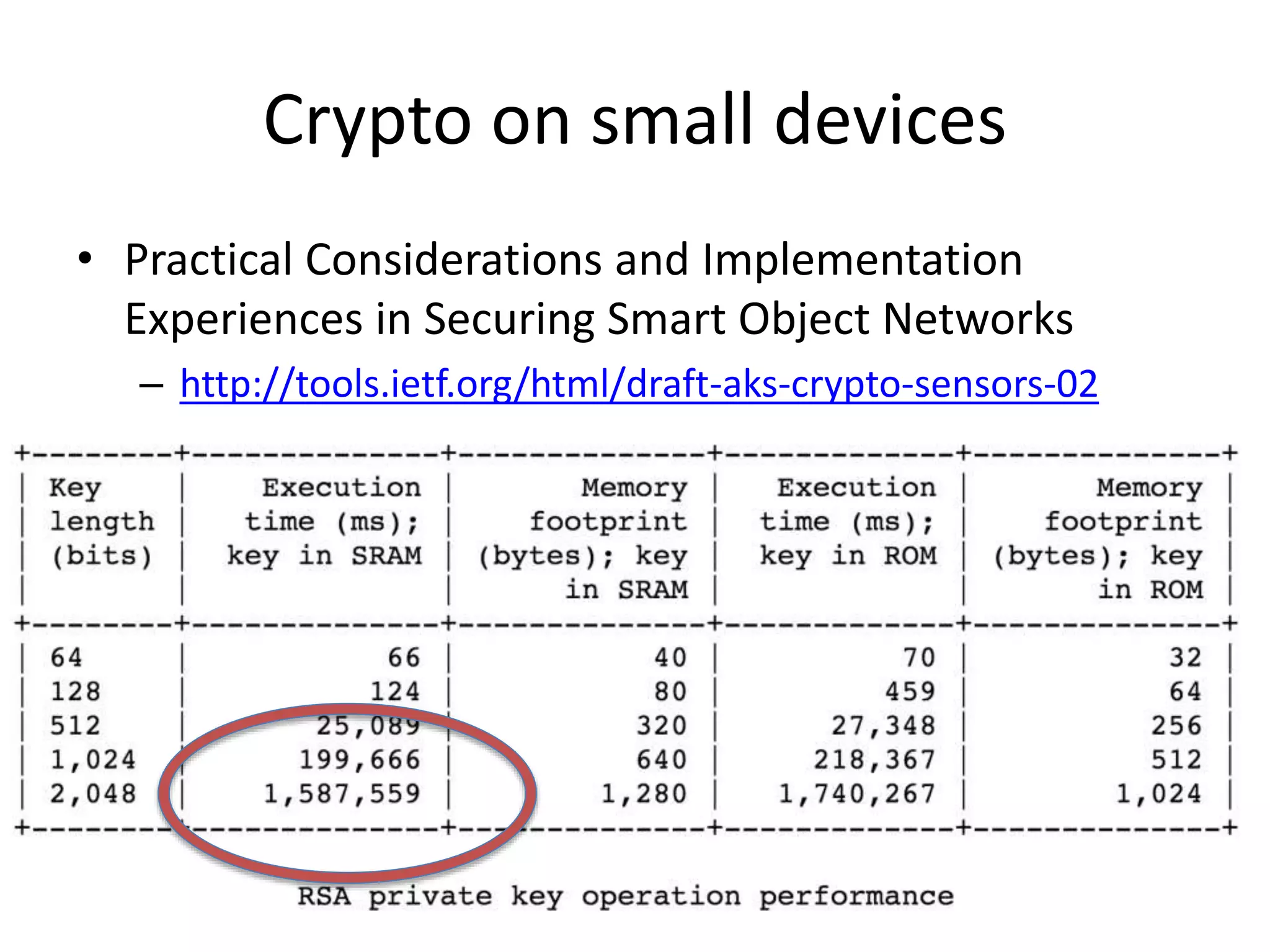
Crypto on small devices
• Practical Considerations and Implementation
Experiences in Securing Smart Object Networks
– http://tools.ietf.org/html/draft-aks-crypto-sensors-02
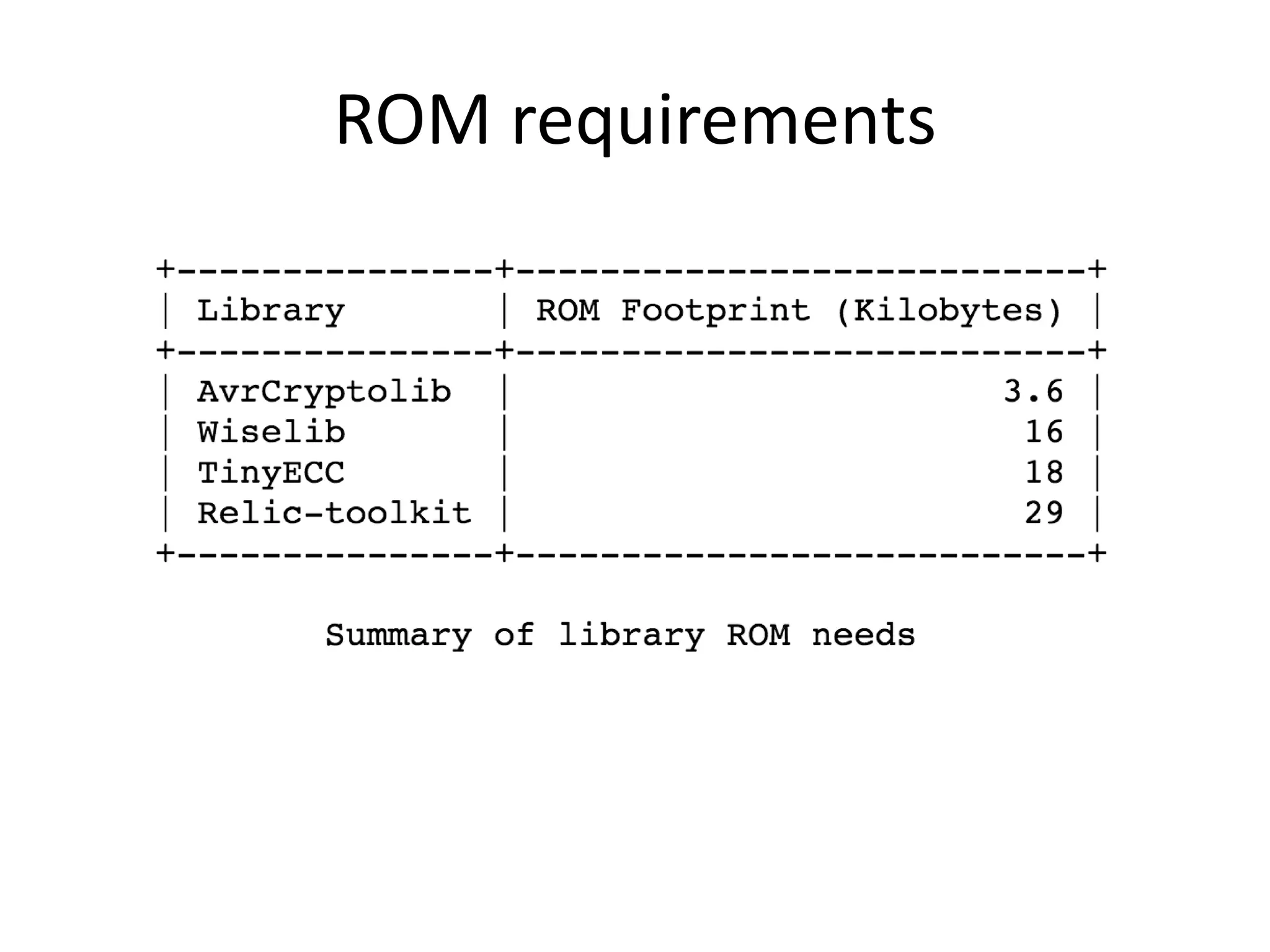
ROM requirements
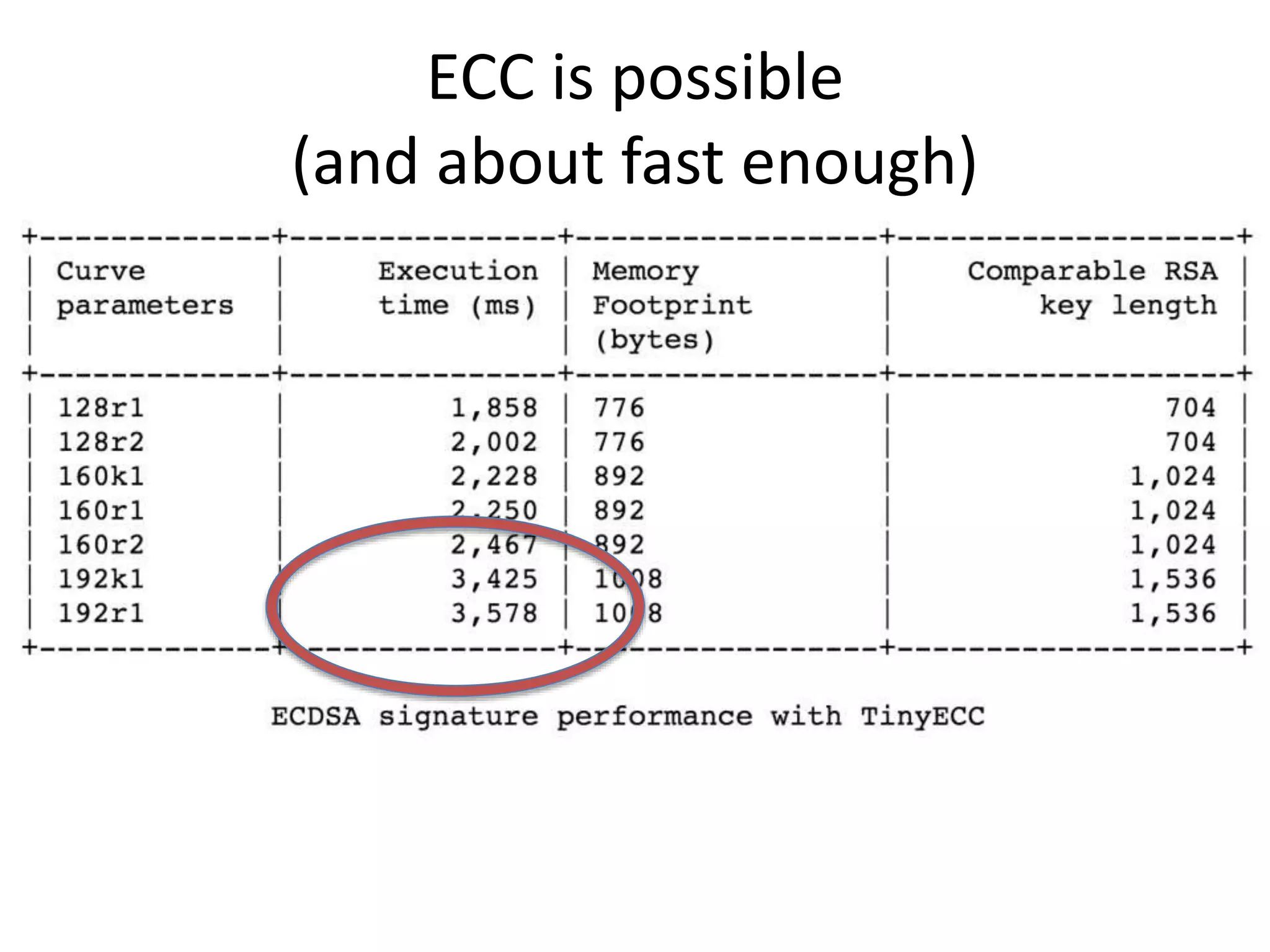
ECC is possible
(and about fast enough)
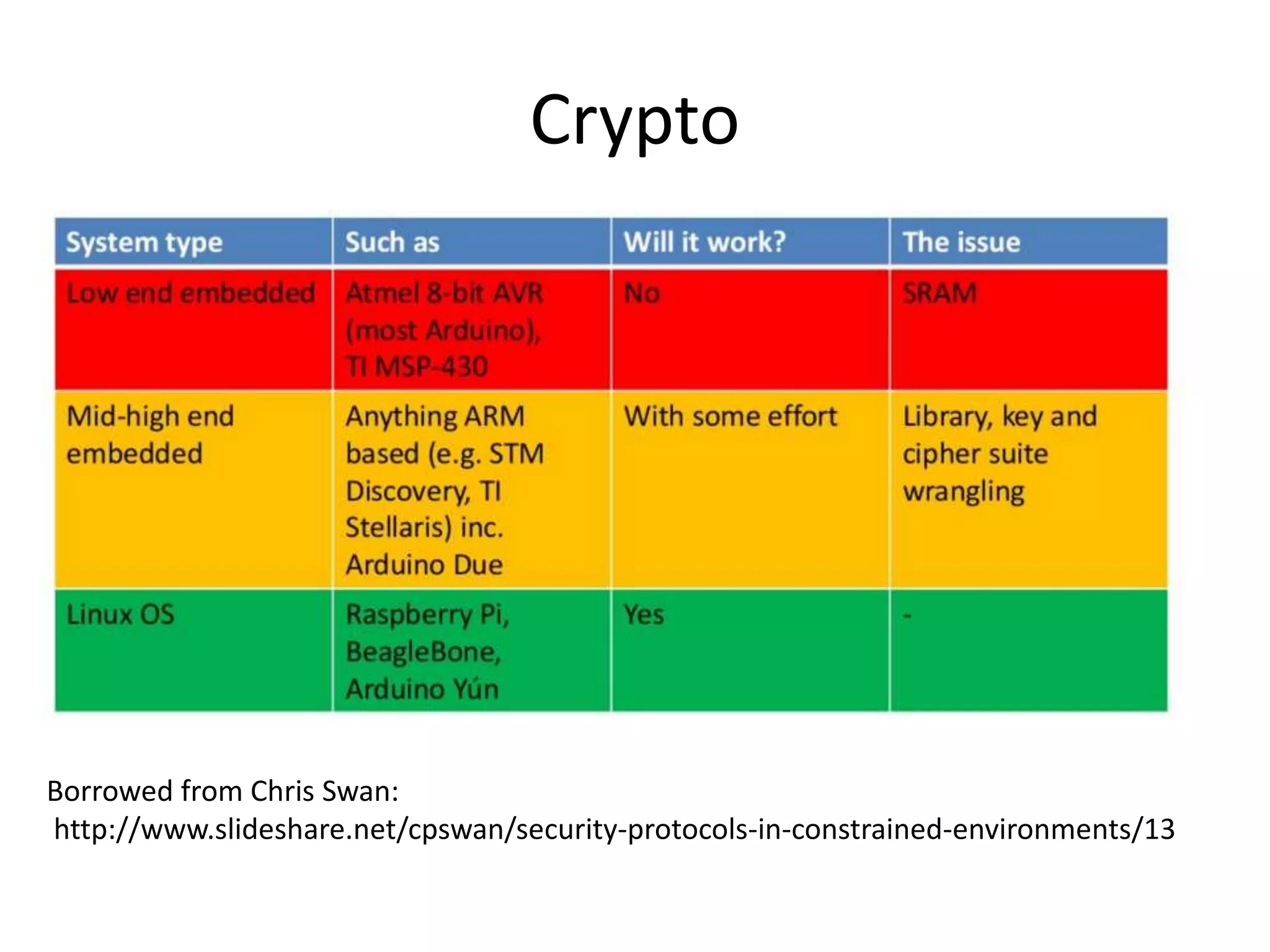
Crypto
Borrowed from Chris Swan:
http://www.slideshare.net/cpswan/security-protocols-in-constrained-environments/13
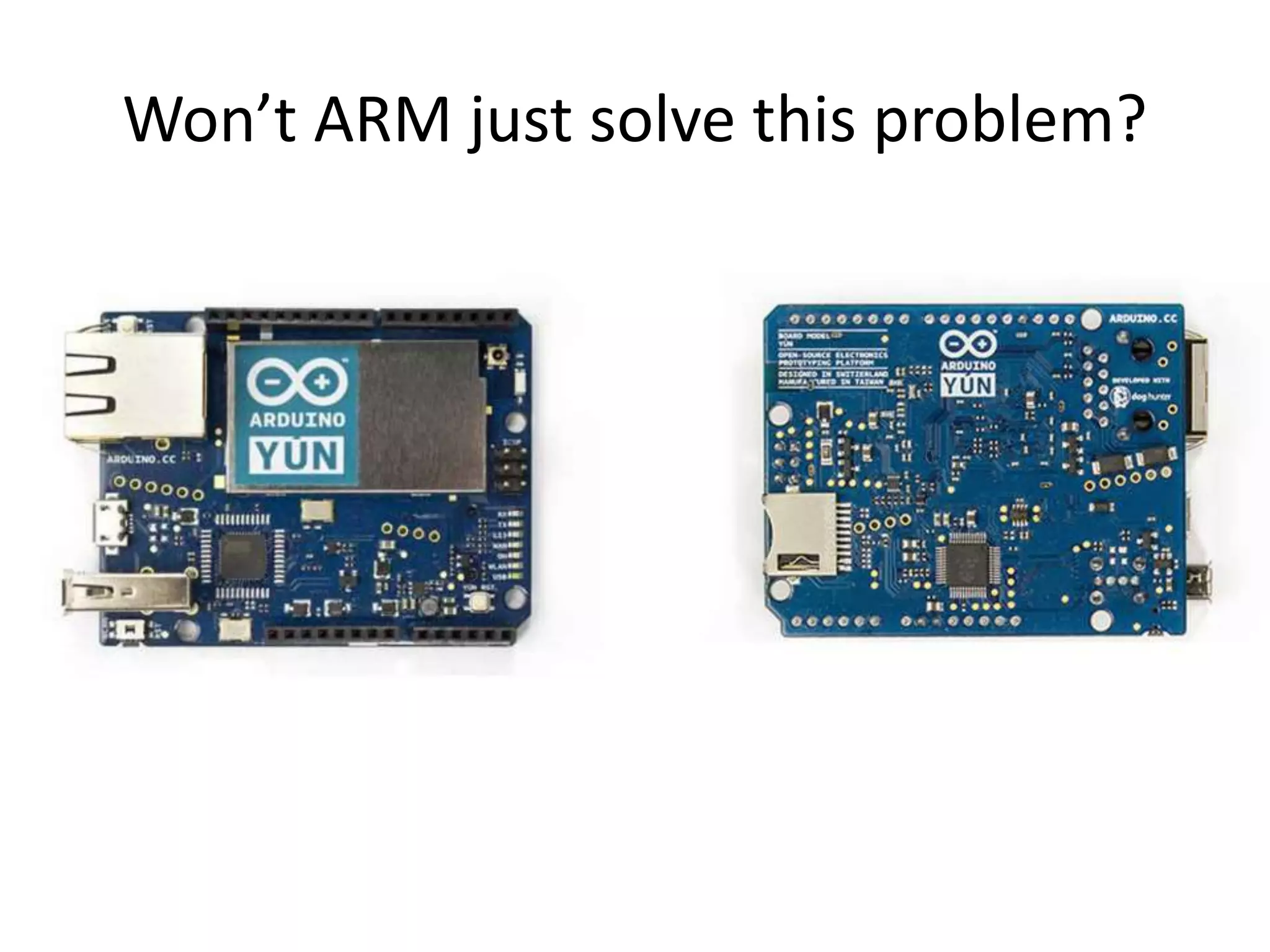
Won’t ARM just solve this problem?
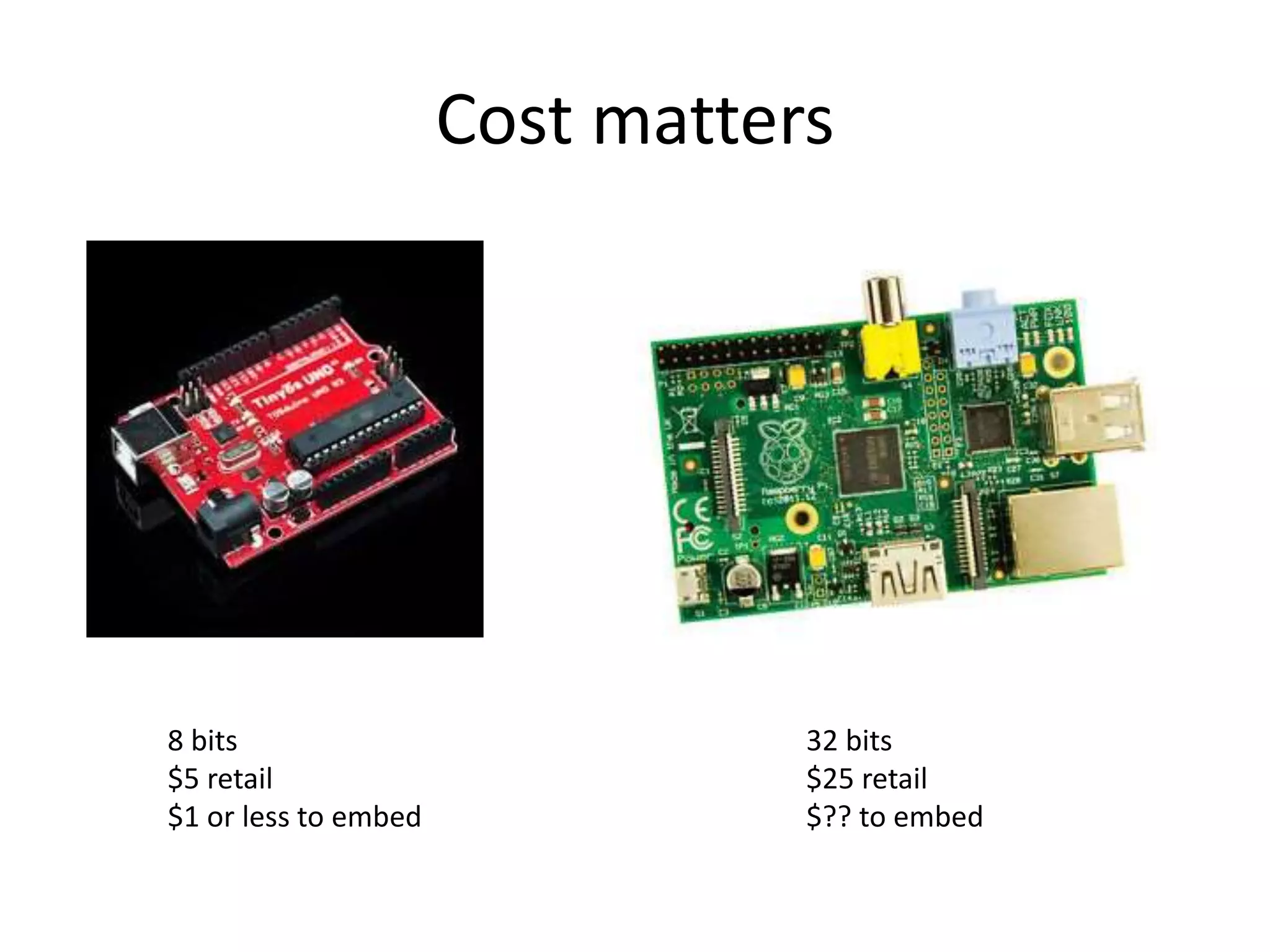
Cost matters
8 bits
$5 retail
$1 or less to embed
32 bits
$25 retail
$?? to embed
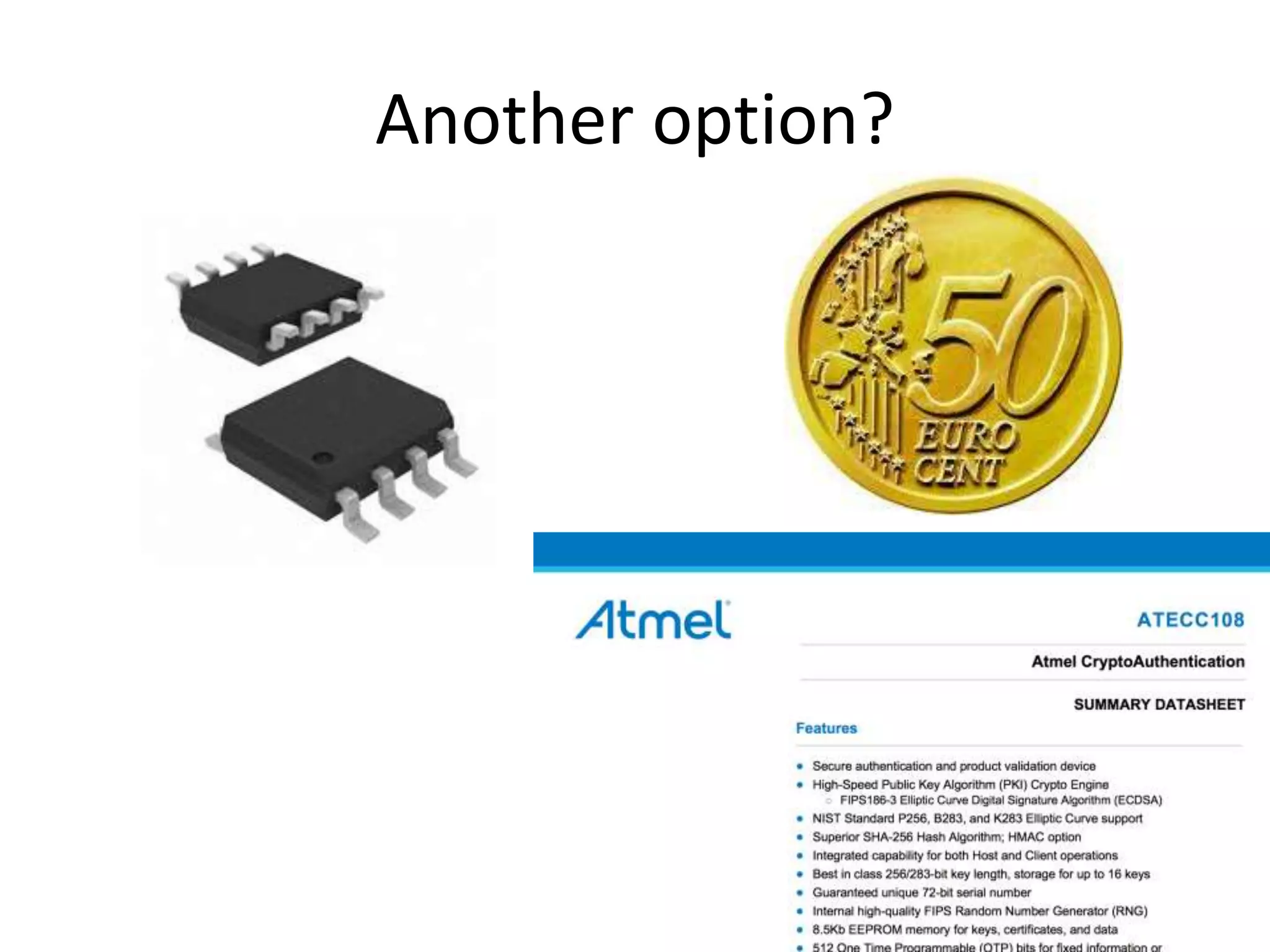
Another option?
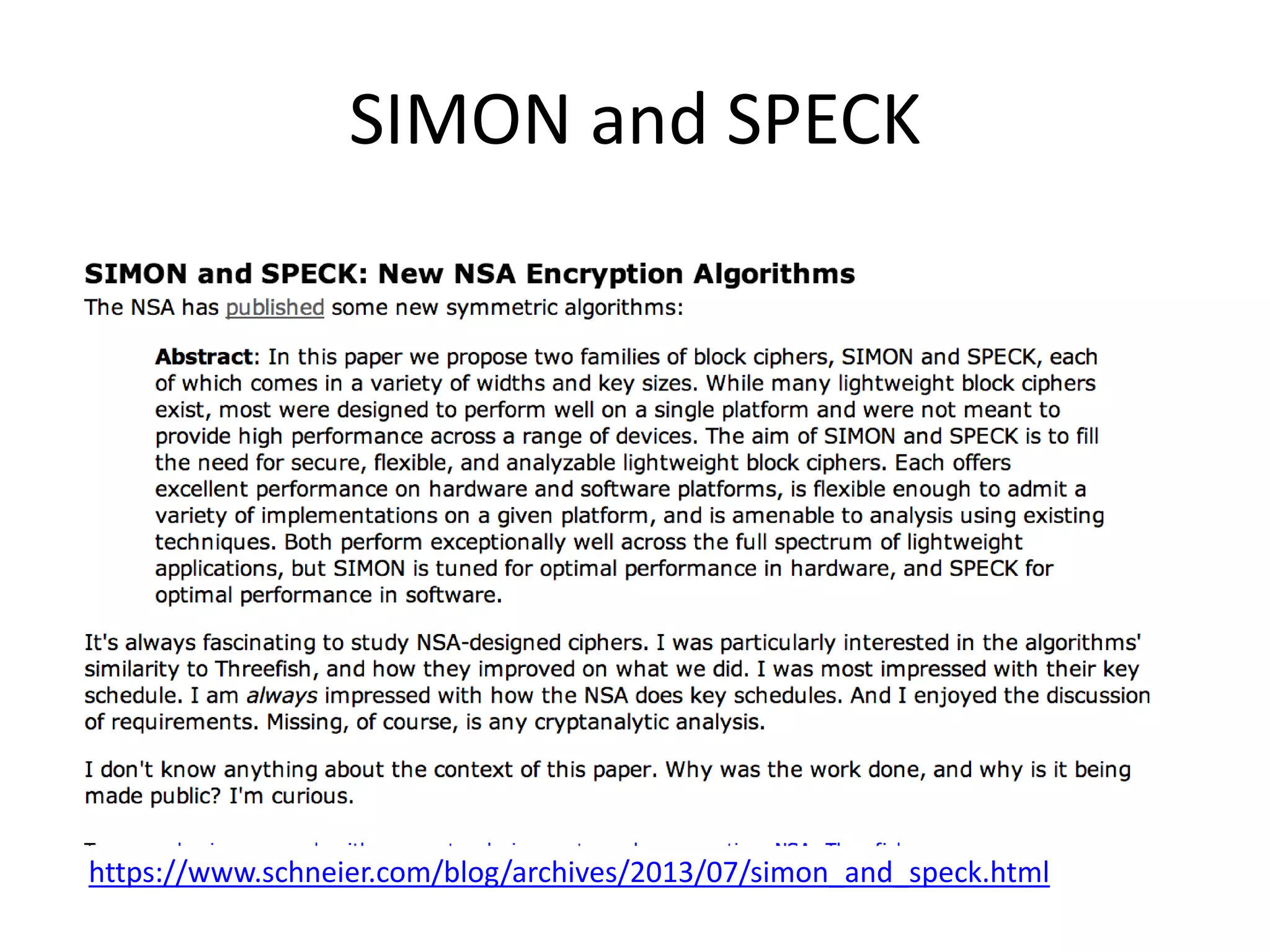
SIMON and SPECK
https://www.schneier.com/blog/archives/2013/07/simon_and_speck.html
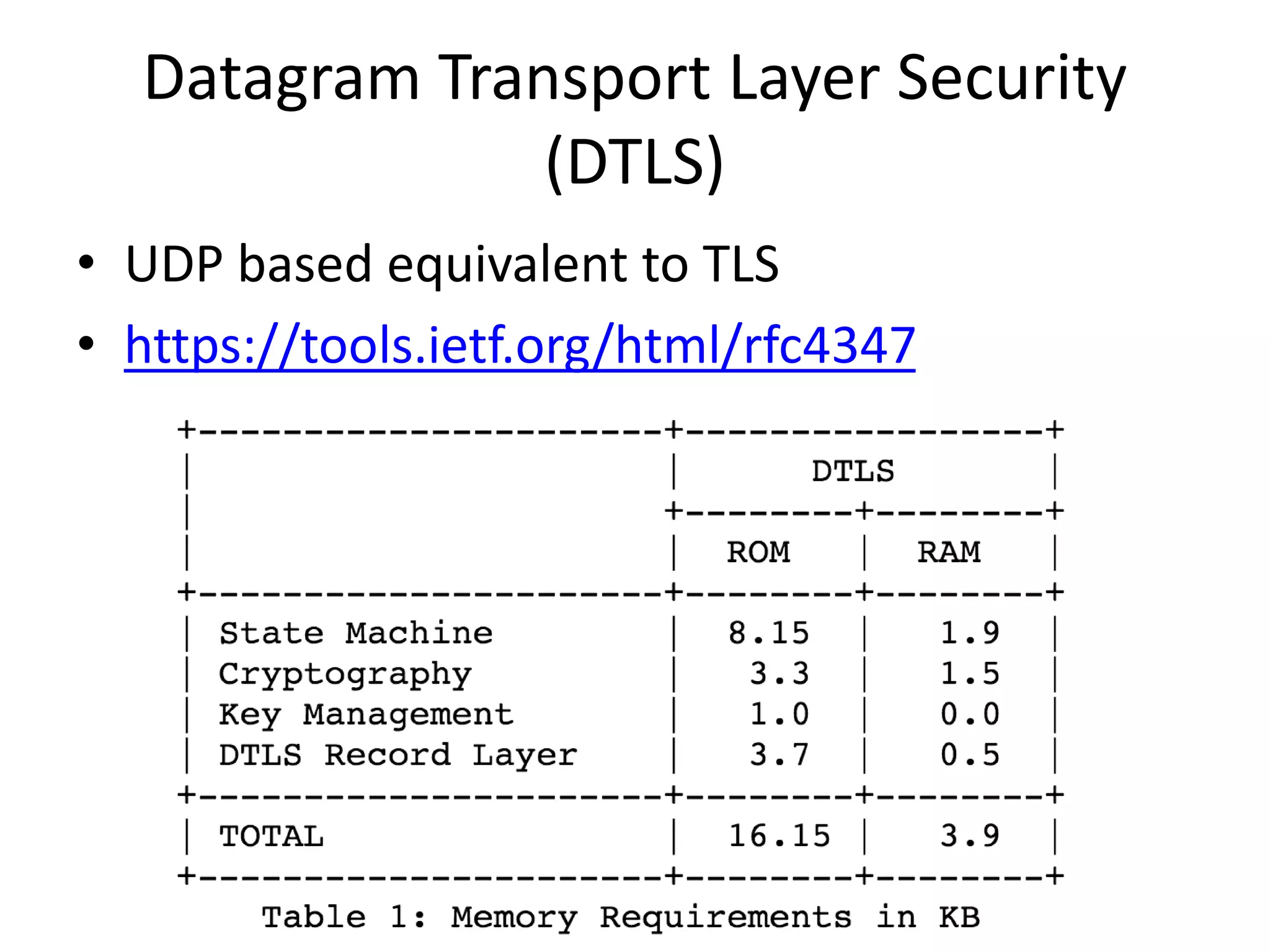
Datagram Transport Layer Security
(DTLS)
• UDP based equivalent to TLS
• https://tools.ietf.org/html/rfc4347
Key distribution
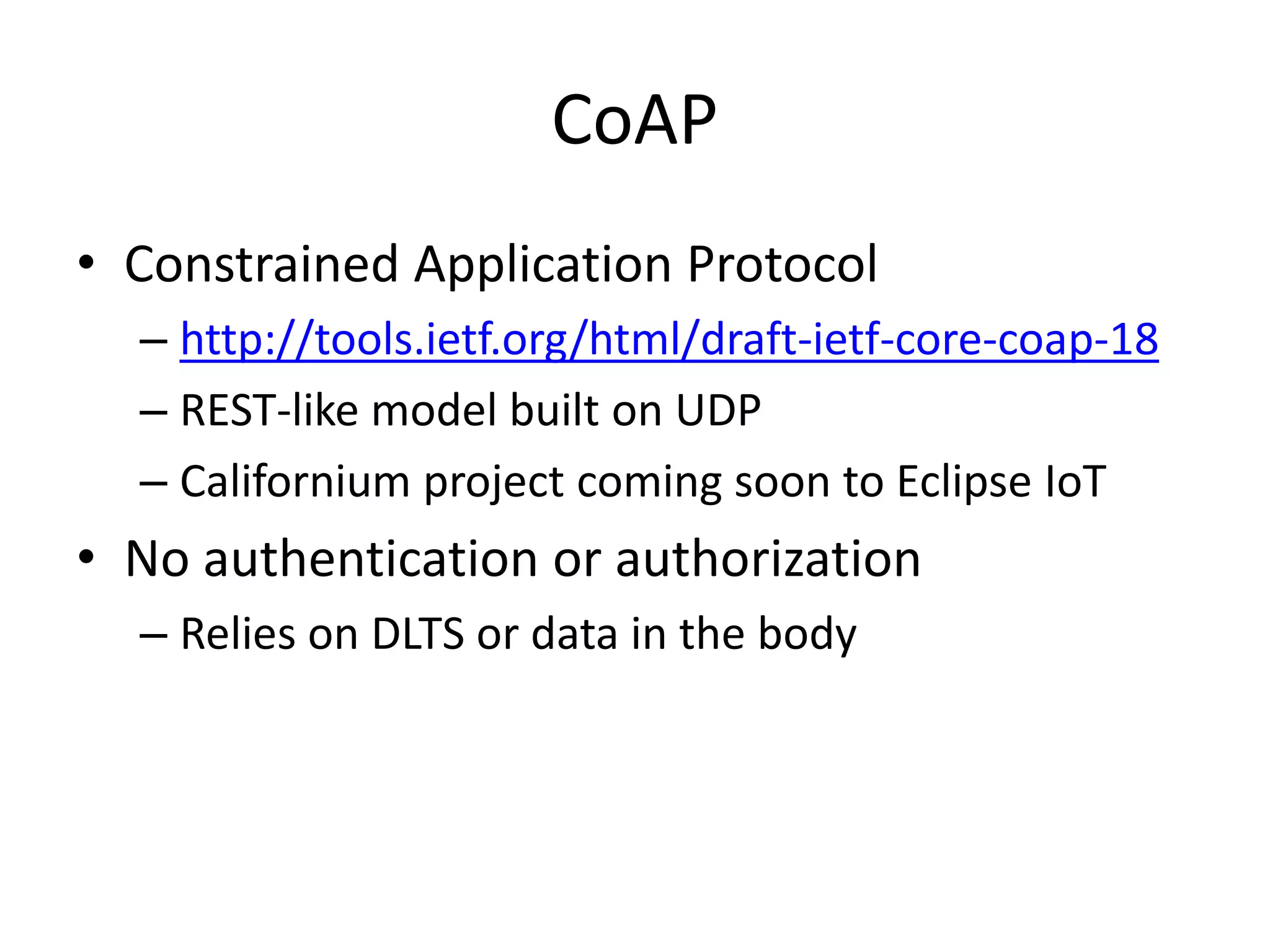
CoAP
• Constrained Application Protocol
– http://tools.ietf.org/html/draft-ietf-core-coap-18
– REST-like model built on UDP
– Californium project coming soon to Eclipse IoT
• No authentication or authorization
– Relies on DLTS or data in the body
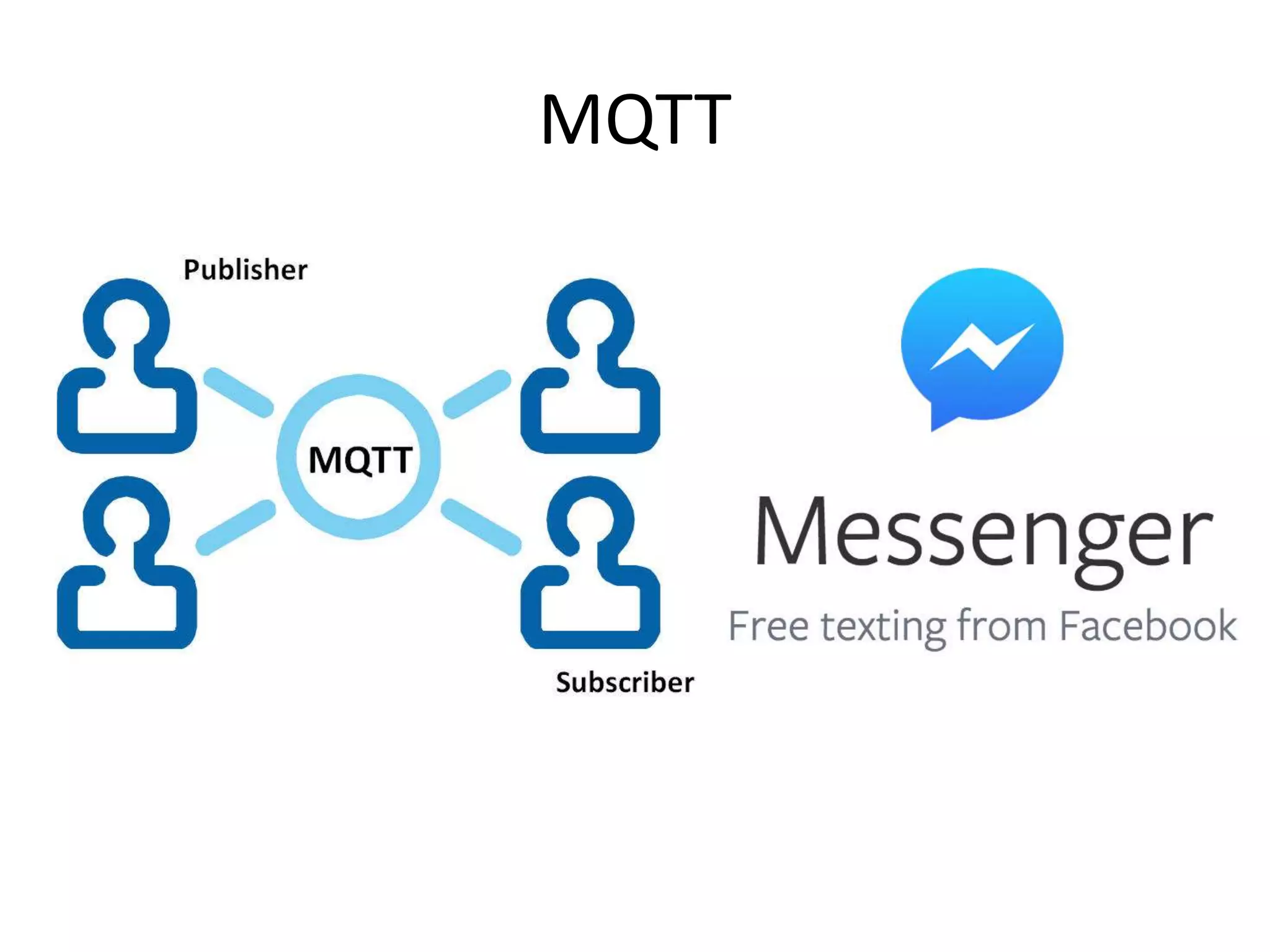
MQTT
MQTT
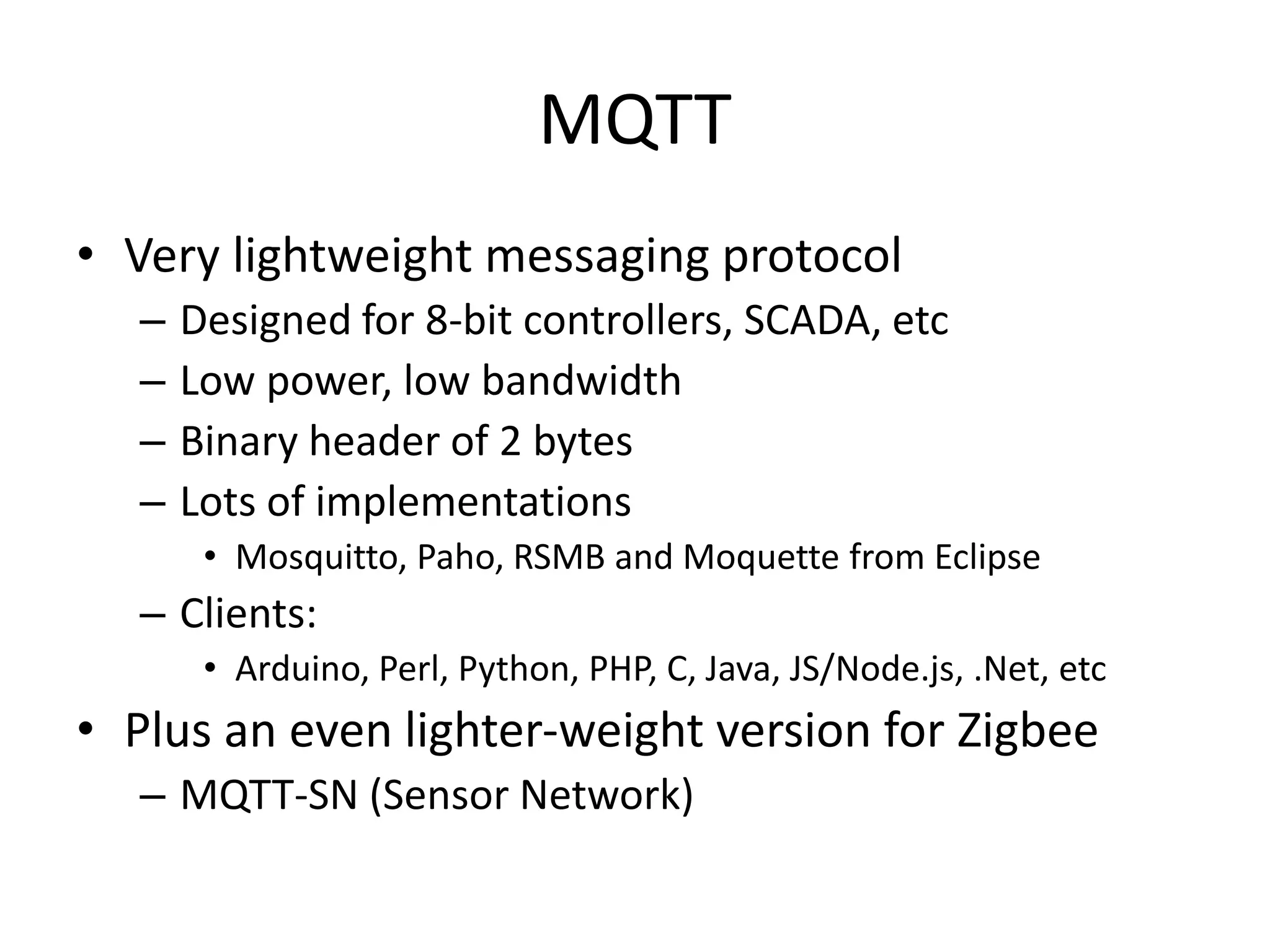
• Very lightweight messaging protocol
– Designed for 8-bit controllers, SCADA, etc
– Low power, low bandwidth
– Binary header of 2 bytes
– Lots of implementations
• Mosquitto, Paho, RSMB and Moquette from Eclipse
– Clients:
• Arduino, Perl, Python, PHP, C, Java, JS/Node.js, .Net, etc
• Plus an even lighter-weight version for Zigbee
– MQTT-SN (Sensor Network)
MQTT
• Relies on TLS for confidentiality
• Username/Password field
Passwords
• Passwords suck for humans
• They suck even more for devices
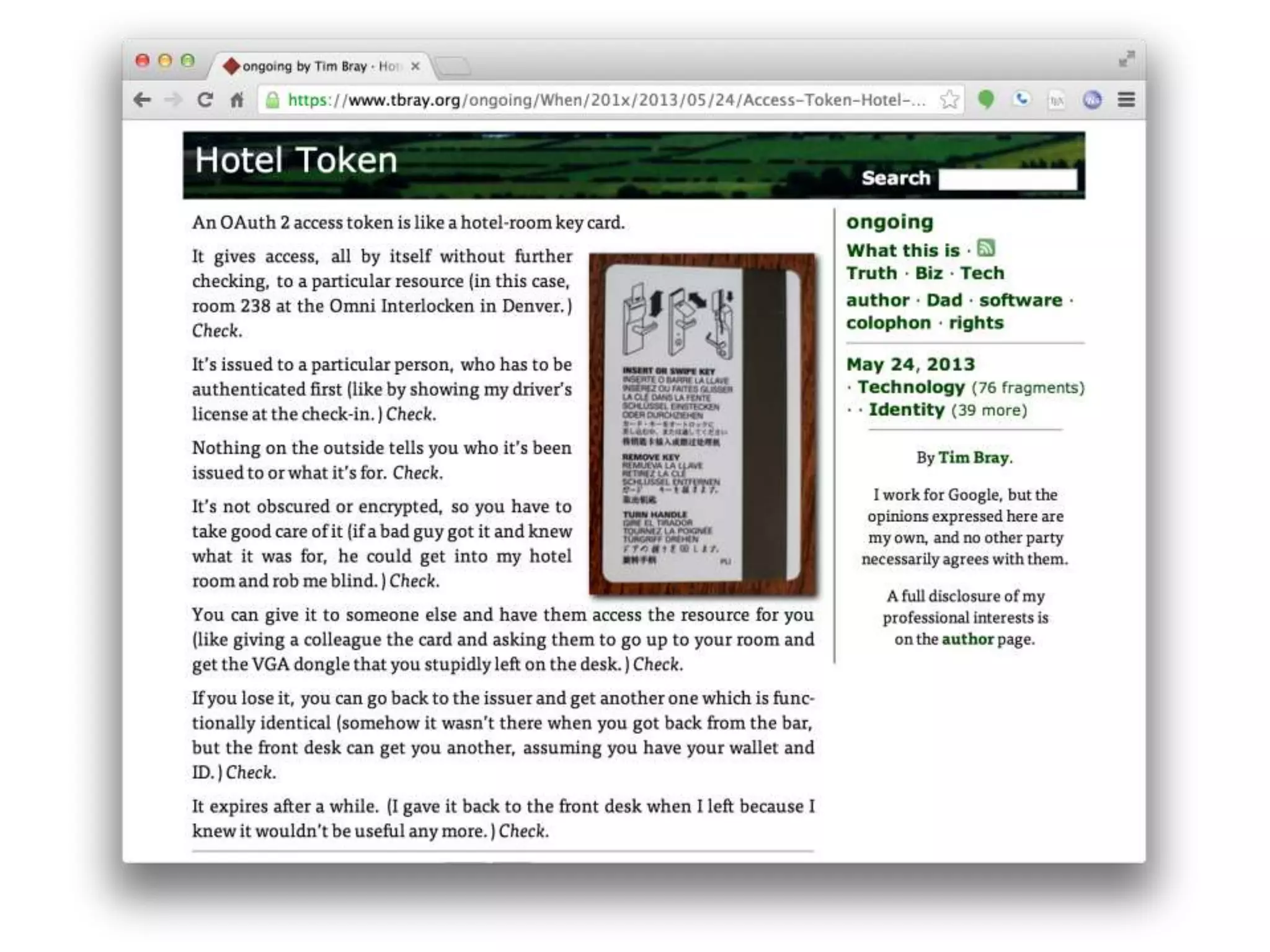
Tokens
Why OAuth2?
• Widely implemented
• Pretty good
– Of course there is never 100% agreement
– Or certainty with security protocols
• Not just HTTP:
– http://tools.ietf.org/html/draft-ietf-kitten-sasl-
oauth-12
– OAuth2 used with SSL
Why FIAM for IoT?
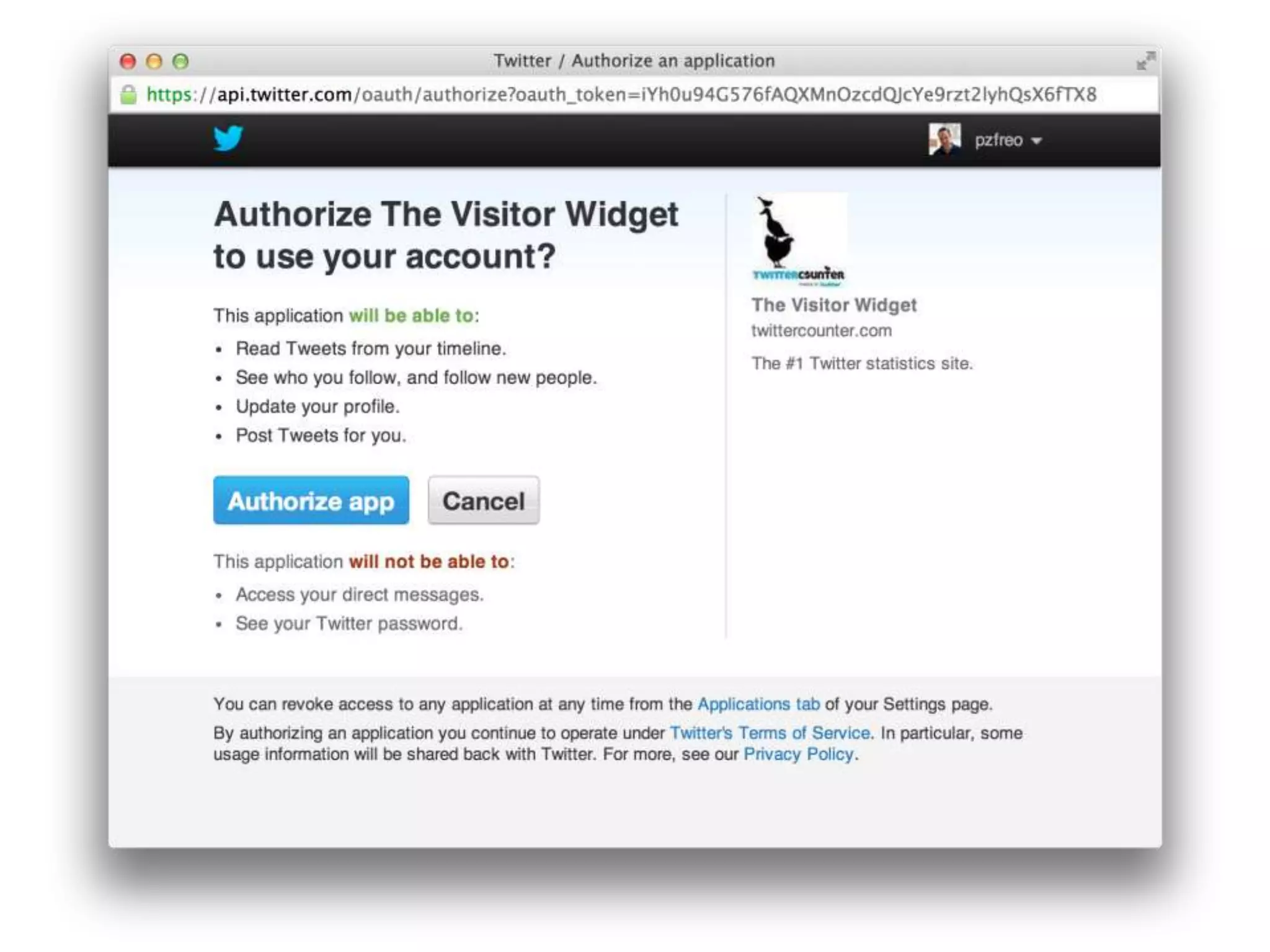
• Can enable a meaningful consent mechanism
for sharing of device data
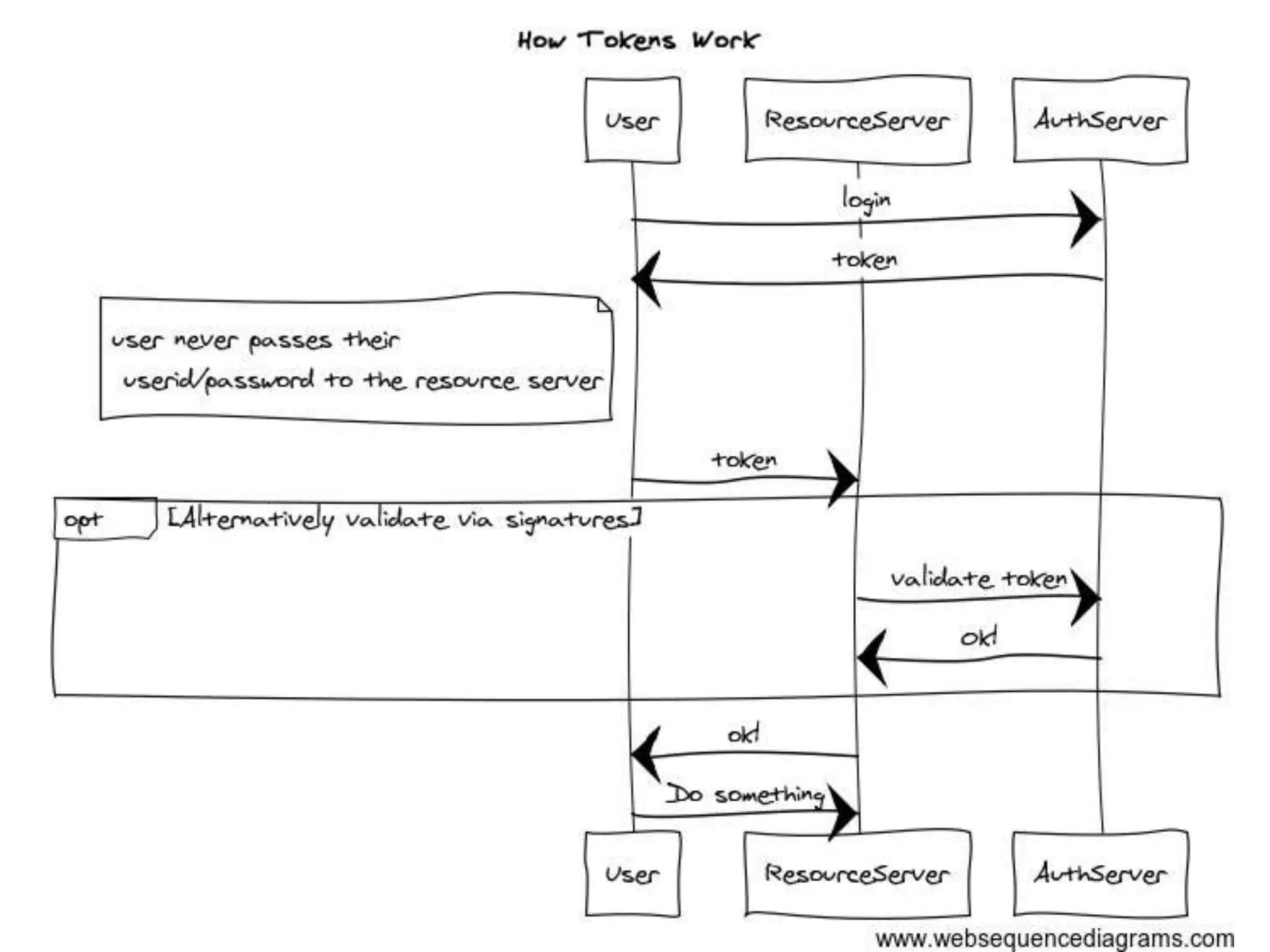
• Giving a device a token to use on API calls
better than giving it a password
– Revokable
– Granular
• May be relevant for both
– Device to cloud
– Cloud to app
Two aspects using OAuth with IoT
• On the device
– Tokens are good
– Limiting the access of the device
• On the cloud
– Putting users in control of their data
– Just good current practice
• Demo with MQTT
– But not just for MQTT
– Also for the cloud, CoAP, and other protocols too
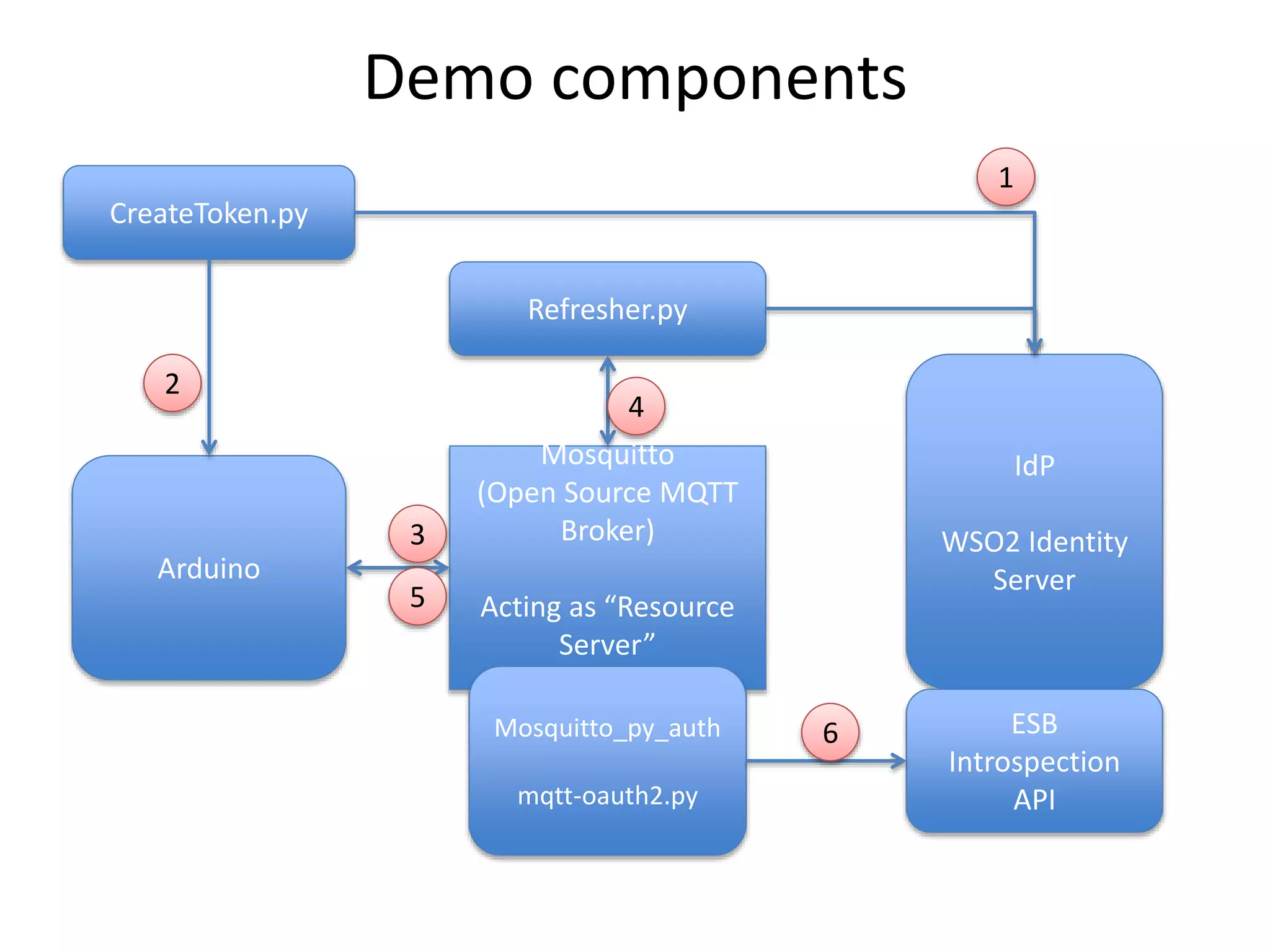
Demo components
Mosquitto
(Open Source MQTT
Broker)
Acting as “Resource
Server”
Mosquitto_py_auth
mqtt-oauth2.py
IdP
WSO2 Identity
Server
ESB
Introspection
API
Refresher.py
Arduino
CreateToken.py
1
2
3
4
5
6
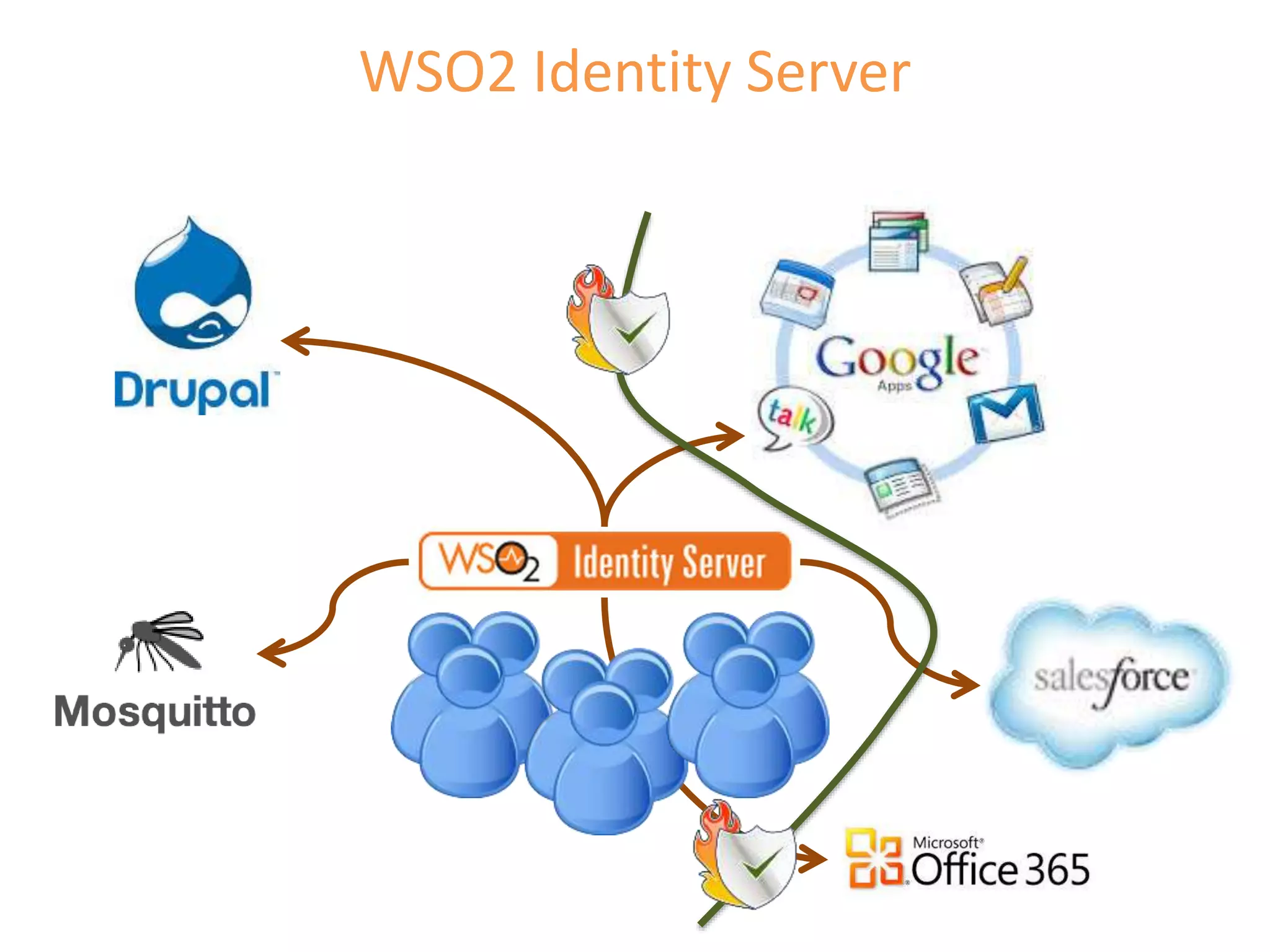
WSO2 Identity Server
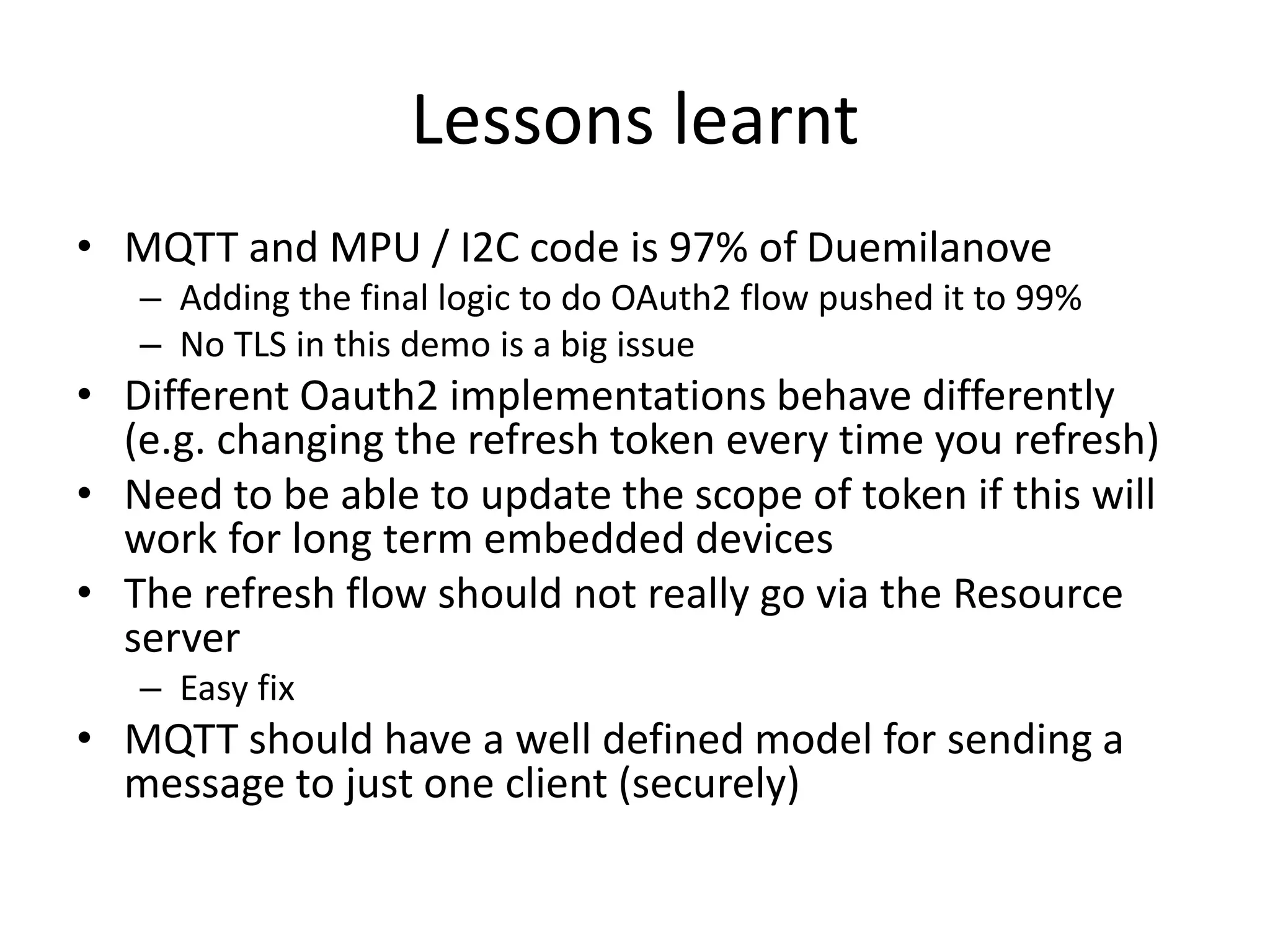
Lessons learnt
• MQTT and MPU / I2C code is 97% of Duemilanove
– Adding the final logic to do OAuth2 flow pushed it to 99%
– No TLS in this demo is a big issue
• Different Oauth2 implementations behave differently
(e.g. changing the refresh token every time you refresh)
• Need to be able to update the scope of token if this will
work for long term embedded devices
• The refresh flow should not really go via the Resource
server
– Easy fix
• MQTT should have a well defined model for sending a
message to just one client (securely)
What I haven’t covered enough of
Summary
• Think about security with your next device
• We as a community need to make sure that
the next generation of IoT devices are secure
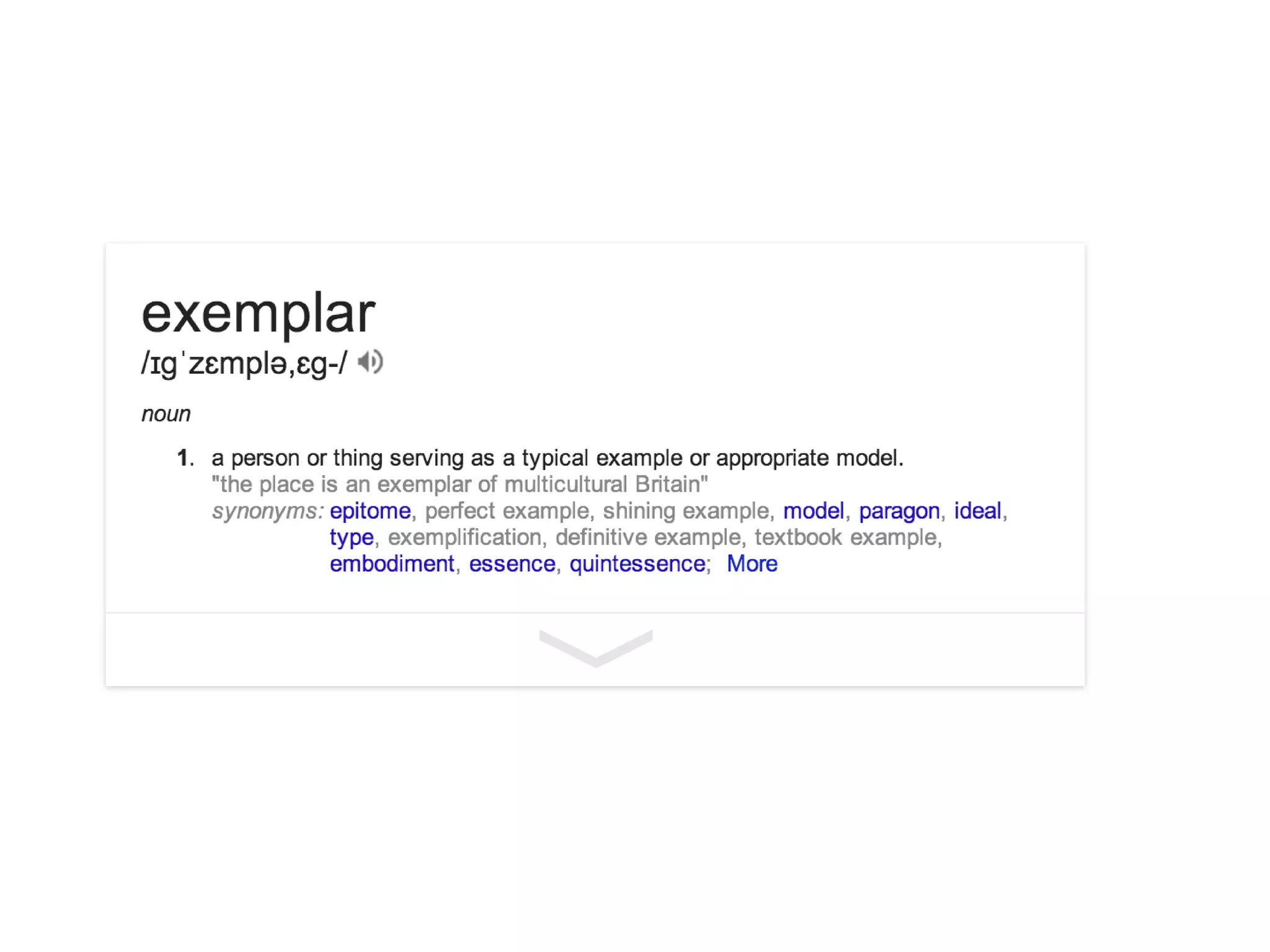
• We need to create exemplars
– Shields
– Libraries
– Server software
– Standards
Questions?

Securing the Internet of Things

  • 1.
    Securing the Internetof Things Paul Fremantle CTO, WSO2 (paul@wso2.com) PhD researcher, Portsmouth University (paul.fremantle@port.ac.uk) @pzfreo Paul Madsen* Technical Architect, PingIdentity (pmadsen@pingidentity.com) @paulmadsen *Paul M helped me with the initial content, but I take responsibility for anything you don’t like in this slide deck.
  • 3.
    About me • CTOand Co-Founder WSO2 – Open Source Middleware platform • Part-time PhD looking at security • Working in Apache for 14 years • Working with Cloud, SOA, APIs, MQTT, IoT 3
  • 4.
  • 7.
  • 8.
  • 10.
  • 11.
    So what isdifferent about IoT? • The longevity of the device – Updates are harder (or impossible) • The size of the device – Capabilities are limited – especially around crypto • The fact there is a device – Usually no UI for entering userids and passwords • The data – Often highly personal • The mindset – Appliance manufacturers don’t think like security experts – Embedded systems are often developed by grabbing existing chips, designs, etc
  • 12.
    Physical Hacks A PracticalAttack on the MIFARE Classic: http://www.cs.ru.nl/~flaviog/publications/Attack.MIFARE.pdf Karsten Nohl and Henryk Plotz. MIFARE, Little Security, Despite Obscurity
  • 14.
    Or try thisat home? http://freo.me/1g15BiG
  • 15.
  • 16.
  • 17.
    Hardware recommendations • Don’trely on obscurity • Don’t rely on obscurity • Don’t rely on obscurity • Don’t rely on obscurity • Don’t rely on obscurity • Don’t rely on obscurity • Don’t rely on obscurity
  • 18.
    Hardware Recommendation #2 •Unlocking a single device should risk only that device’s data
  • 19.
  • 20.
    Crypto on smalldevices • Practical Considerations and Implementation Experiences in Securing Smart Object Networks – http://tools.ietf.org/html/draft-aks-crypto-sensors-02
  • 21.
  • 22.
    ECC is possible (andabout fast enough)
  • 24.
    Crypto Borrowed from ChrisSwan: http://www.slideshare.net/cpswan/security-protocols-in-constrained-environments/13
  • 25.
    Won’t ARM justsolve this problem?
  • 26.
    Cost matters 8 bits $5retail $1 or less to embed 32 bits $25 retail $?? to embed
  • 27.
  • 28.
  • 29.
    Datagram Transport LayerSecurity (DTLS) • UDP based equivalent to TLS • https://tools.ietf.org/html/rfc4347
  • 30.
  • 32.
    CoAP • Constrained ApplicationProtocol – http://tools.ietf.org/html/draft-ietf-core-coap-18 – REST-like model built on UDP – Californium project coming soon to Eclipse IoT • No authentication or authorization – Relies on DLTS or data in the body
  • 33.
  • 34.
    MQTT • Very lightweightmessaging protocol – Designed for 8-bit controllers, SCADA, etc – Low power, low bandwidth – Binary header of 2 bytes – Lots of implementations • Mosquitto, Paho, RSMB and Moquette from Eclipse – Clients: • Arduino, Perl, Python, PHP, C, Java, JS/Node.js, .Net, etc • Plus an even lighter-weight version for Zigbee – MQTT-SN (Sensor Network)
  • 35.
    MQTT • Relies onTLS for confidentiality • Username/Password field
  • 36.
    Passwords • Passwords suckfor humans • They suck even more for devices
  • 37.
  • 39.
    Why OAuth2? • Widelyimplemented • Pretty good – Of course there is never 100% agreement – Or certainty with security protocols • Not just HTTP: – http://tools.ietf.org/html/draft-ietf-kitten-sasl- oauth-12 – OAuth2 used with SSL
  • 42.
    Why FIAM forIoT? • Can enable a meaningful consent mechanism for sharing of device data • Giving a device a token to use on API calls better than giving it a password – Revokable – Granular • May be relevant for both – Device to cloud – Cloud to app
  • 43.
    Two aspects usingOAuth with IoT • On the device – Tokens are good – Limiting the access of the device • On the cloud – Putting users in control of their data – Just good current practice • Demo with MQTT – But not just for MQTT – Also for the cloud, CoAP, and other protocols too
  • 44.
    Demo components Mosquitto (Open SourceMQTT Broker) Acting as “Resource Server” Mosquitto_py_auth mqtt-oauth2.py IdP WSO2 Identity Server ESB Introspection API Refresher.py Arduino CreateToken.py 1 2 3 4 5 6
  • 45.
  • 46.
    Lessons learnt • MQTTand MPU / I2C code is 97% of Duemilanove – Adding the final logic to do OAuth2 flow pushed it to 99% – No TLS in this demo is a big issue • Different Oauth2 implementations behave differently (e.g. changing the refresh token every time you refresh) • Need to be able to update the scope of token if this will work for long term embedded devices • The refresh flow should not really go via the Resource server – Easy fix • MQTT should have a well defined model for sending a message to just one client (securely)
  • 47.
    What I haven’tcovered enough of
  • 48.
    Summary • Think aboutsecurity with your next device • We as a community need to make sure that the next generation of IoT devices are secure • We need to create exemplars – Shields – Libraries – Server software – Standards
  • 49.