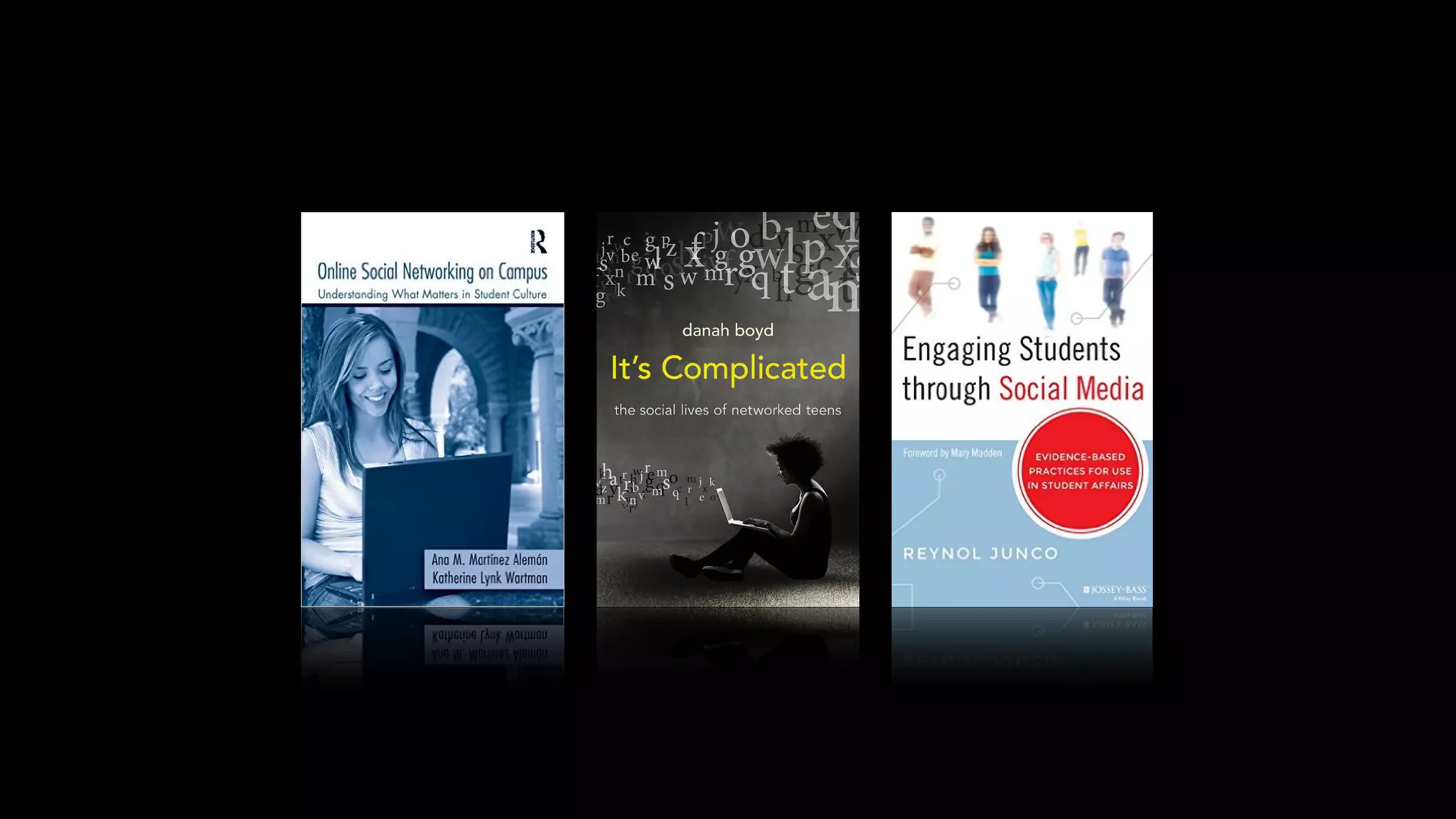
Online Development
and the College Student
with@PaulGordonBrown,PhD
technology is a
TOOL
technology
is also a
CONTEXT
(Turkle, 2004, para 6)
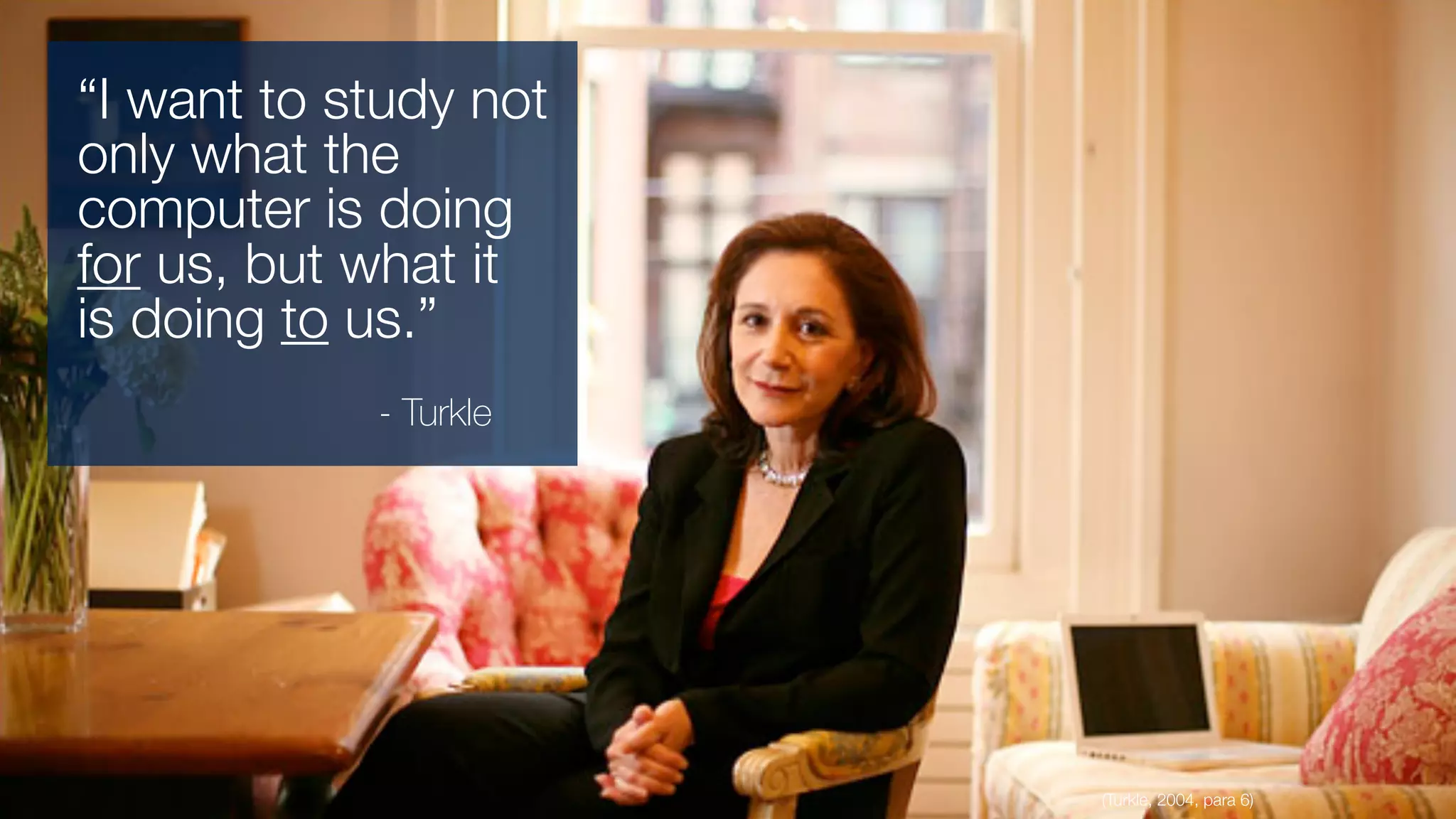
“I want to study not
only what the
computer is doing
for us, but what it
is doing to us.”
- Turkle
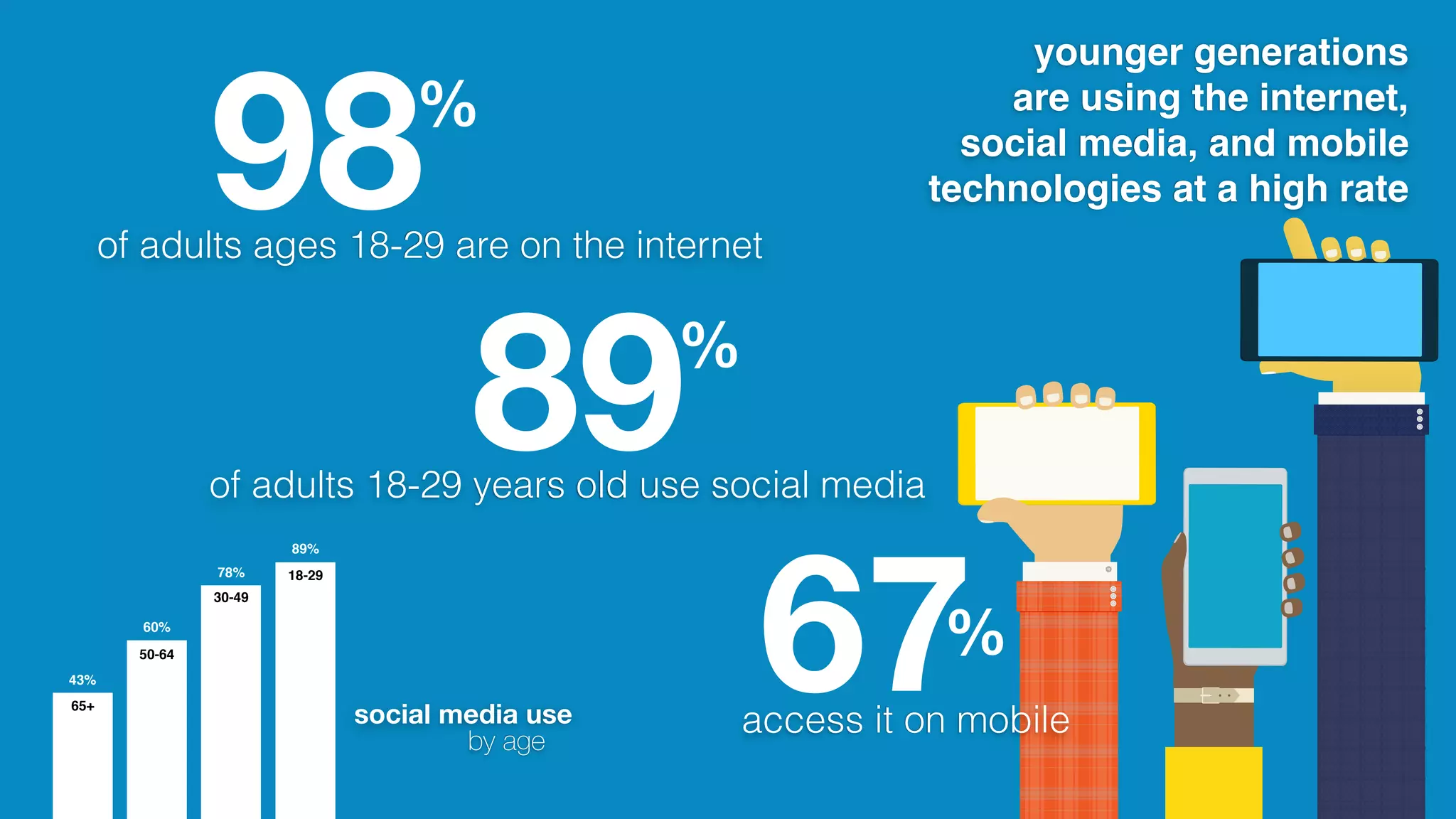
89%
of adults 18-29 years old use social media
67%
access it on mobile
98%
of adults ages 18-29 are on the internet
70
70
70
43%
60%
89%
65+
50-64
30-49
70
78% 18-29
social media use
by age
younger generations
are using the internet,
social media, and mobile
technologies at a high rate
1 2
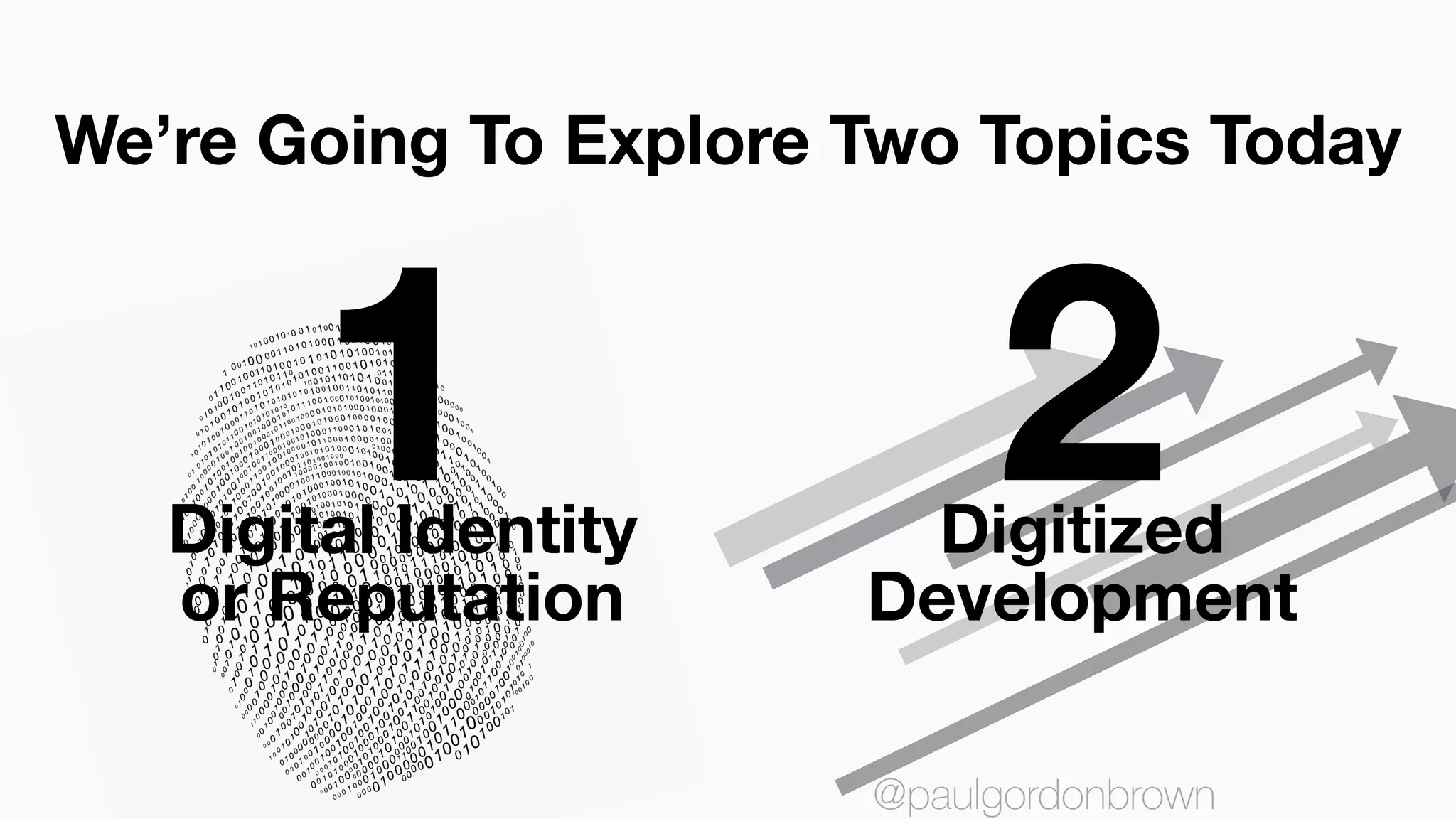
We’re Going To Explore Two Topics Today
Digital Identity
or Reputation
Digitized
Development
@paulgordonbrown
Digital Identity
@paulgordonbrown@paulgordonbrown
Digital Identity
@paulgordonbrown
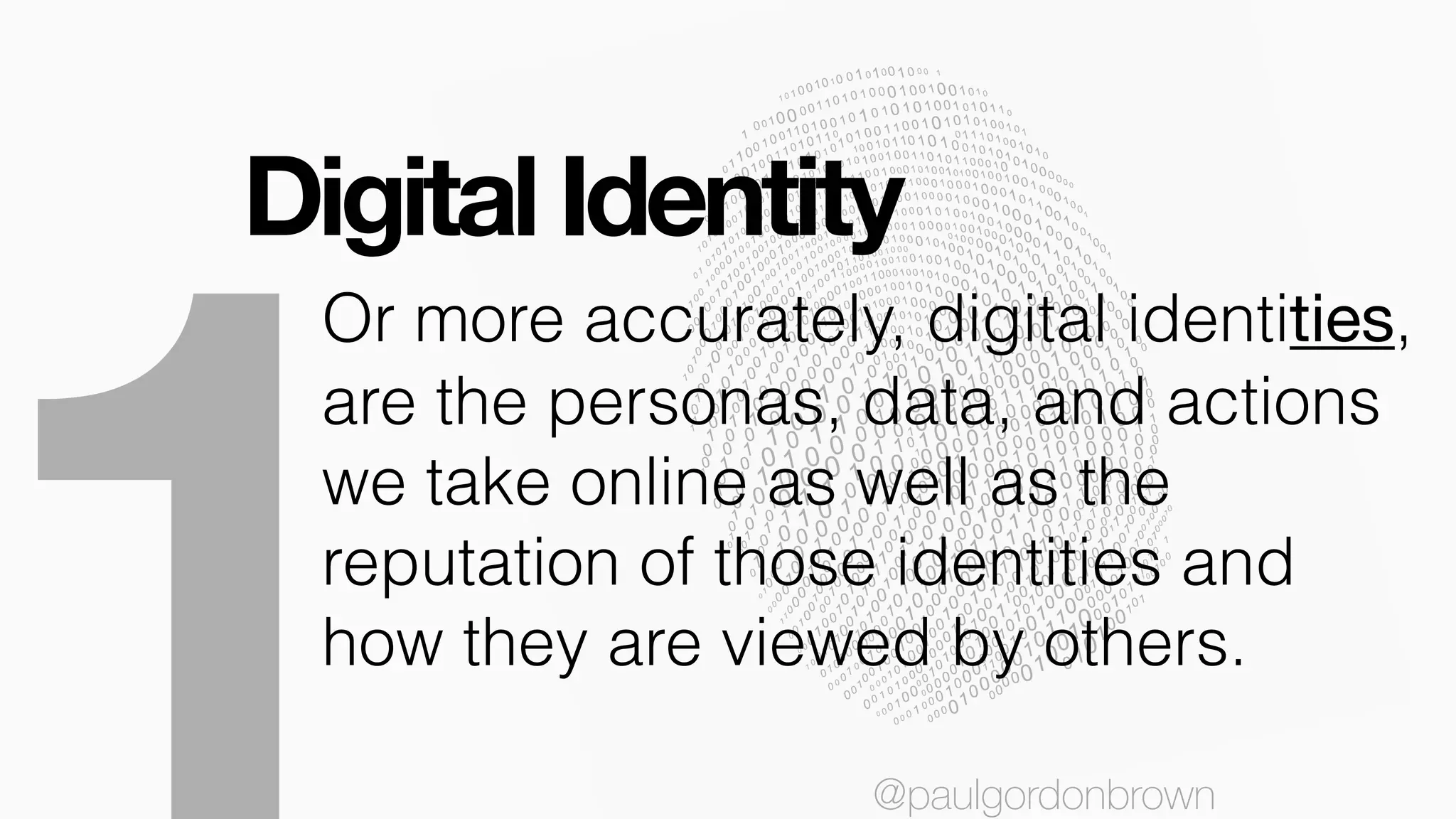
Or more accurately, digital identities,
are the personas, data, and actions
we take online as well as the
reputation of those identities and
how they are viewed by others.
@paulgordonbrown
Just because you use social media…
doesn’t mean
well.
you know how to use it
@paulgordonbrown
@paulgordonbrown
digital stamp
@paulgordonbrown
FROM THE WOMB!
We even have digital stamps
@paulgordonbrown
Your Name
@paulgordonbrown
@paulgordonbrown
@paulgordonbrown
@paulgordonbrown
Your Name
What is the first thing that comes up?
Is it you?
Is it someone else?
What do you want to come up?
BE
AWARE!
@paulgordonbrown
We need to educate students on
digital reputation.
TheInternetIs
Forever
@paulgordonbrown
Yourparents
willprobably
postan
embarrassing
pictureasa
#TBT.
@paulgordonbrown
Mistakesand
embarrassing
photoscan
followus
forever.
THINK
POST
beforeyou
@paulgordonbrown
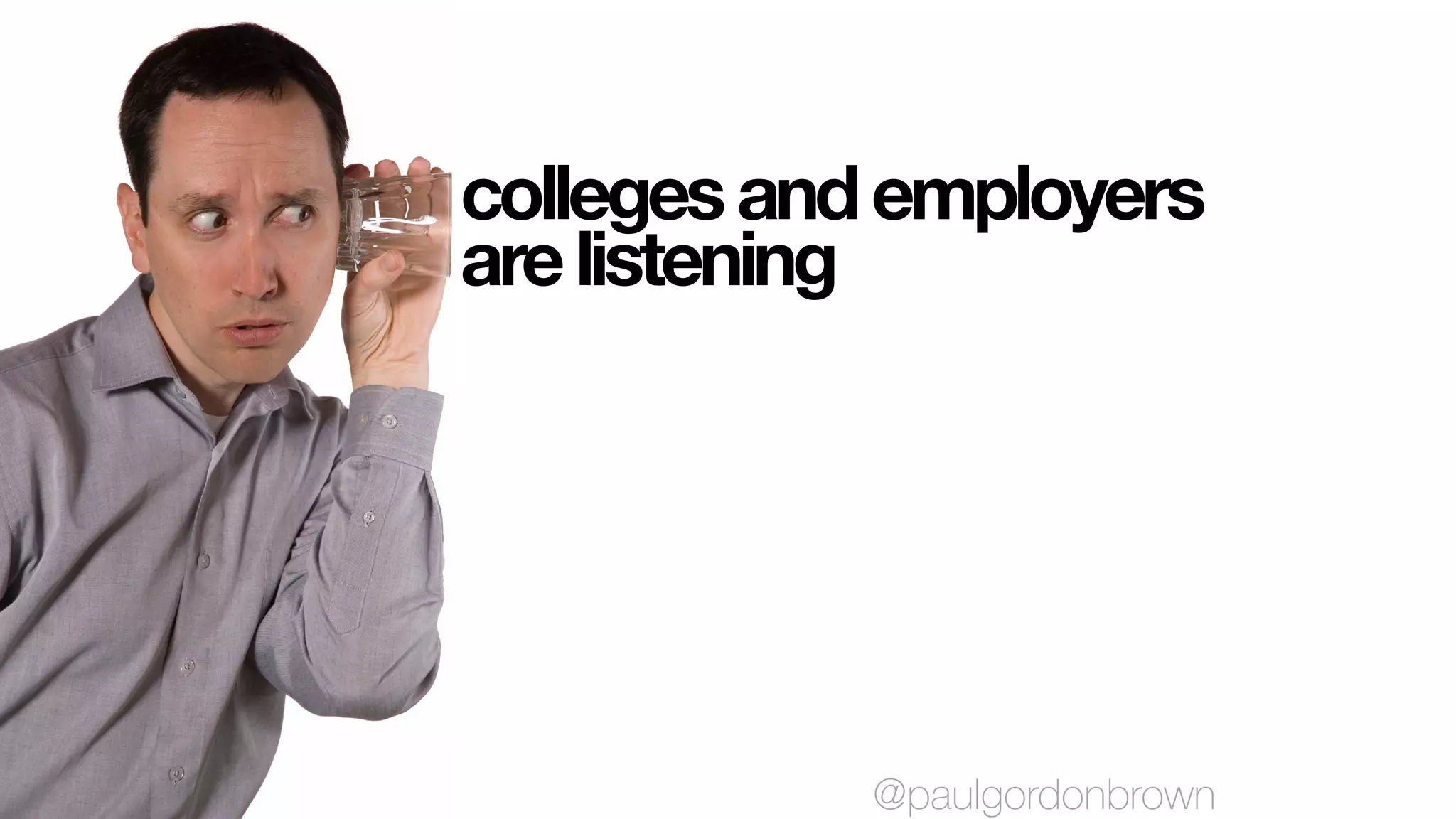
collegesandemployers
arelistening
@paulgordonbrown
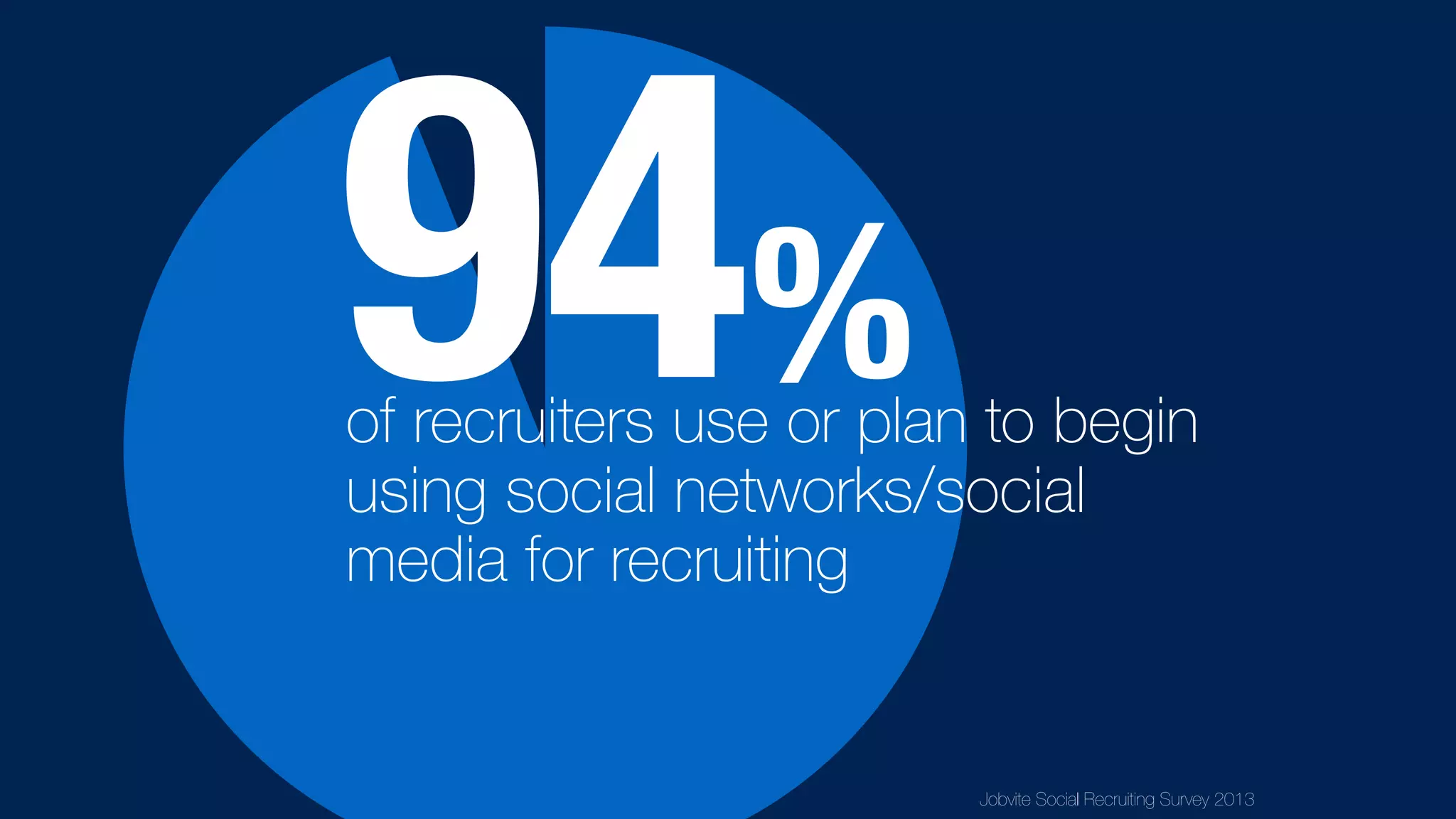
of recruiters use or plan to begin
using social networks/social
media for recruiting
94%
Jobvite Social Recruiting Survey 2013
@paulgordonbrown
WeWillMake
HowWeHandle
Mistakes
ThemDefinesUs
@paulgordonbrown
@paulgordonbrown
youcan’t
@paulgordonbrown
PrivacyIs
YourProblem
@paulgordonbrown
You assume

RESPONSIBILITY!
When it comes to privacy…
@paulgordonbrown
raiseyour
privacy
settings
@paulgordonbrown
BUT
@paulgordonbrown
itlowers
yourpotential
impact
@paulgordonbrown
PUBLIC
PRIVATE
@paulgordonbrown
@paulgordonbrown
BeA
Digital
Change
Agent
@paulgordonbrown
follow
what’s
#trending
@paulgordonbrown
slacktivism
go beyond
@paulgordonbrown
Be a digital
change agent.
@paulgordonbrown
Digital Identity
@paulgordonbrown@paulgordonbrown
Digitized Development
@paulgordonbrown@paulgordonbrown
Digitized Development
@paulgordonbrown
is the underlying developmental
processes that inform how we
understand ourselves and our
behavior in digital spaces.
Digitized development can carry
unique properties from offline
development.
@paulgordonbrown
It’s A Psychological Process!
@paulgordonbrown
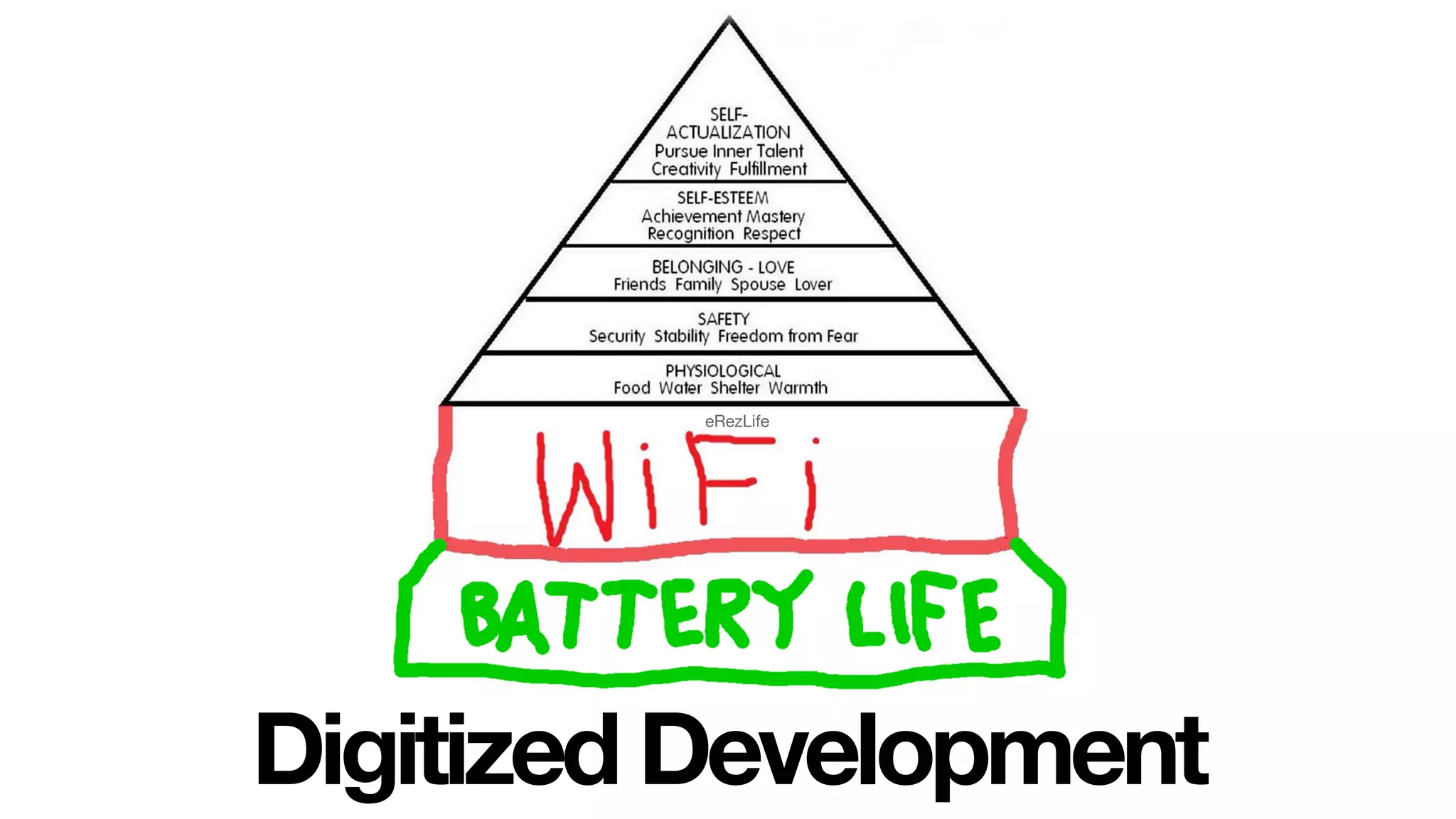
eRezLife
Digitized Development
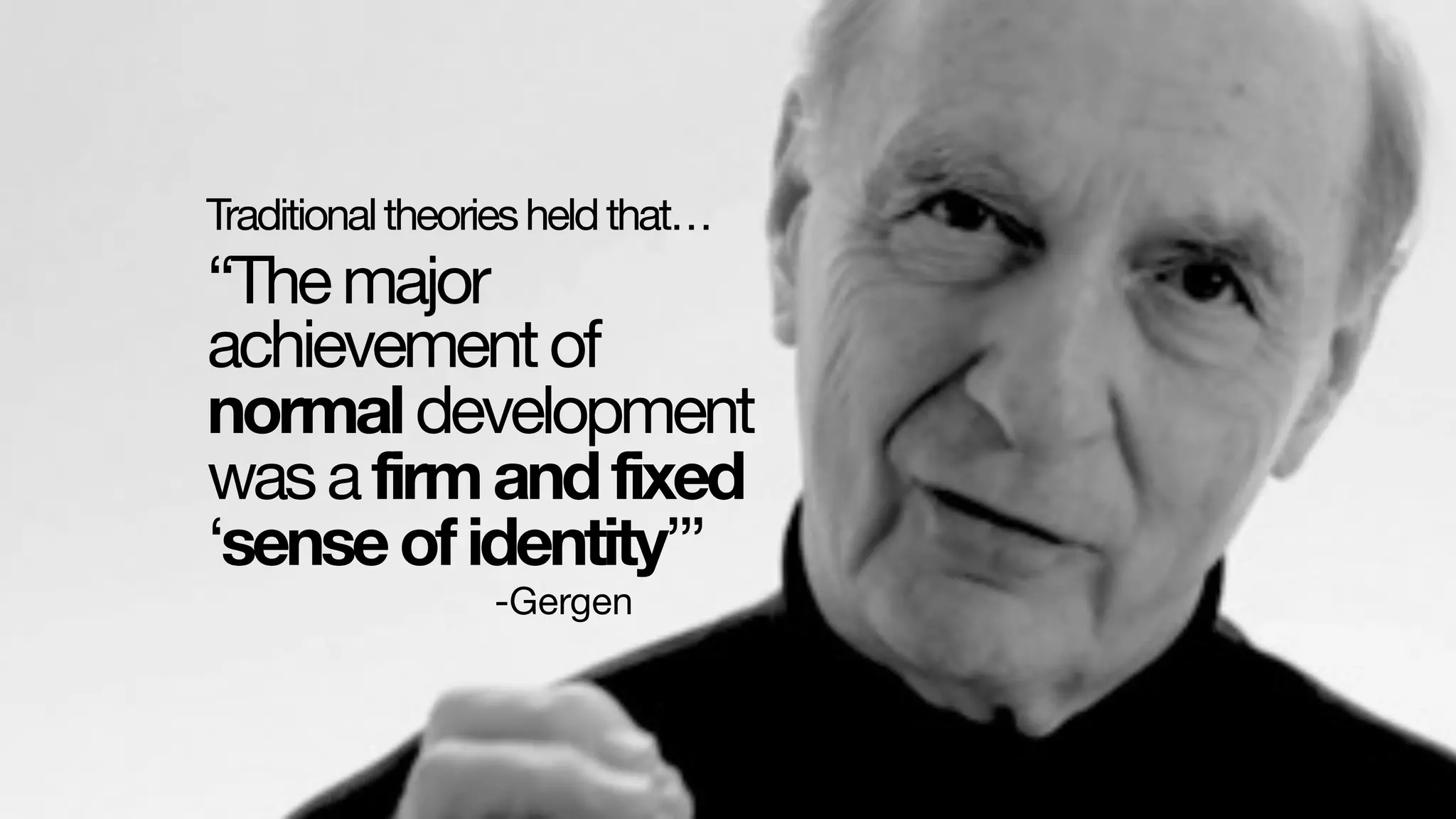
“Themajor
achievementof
normaldevelopment
wasafirmandfixed
‘senseofidentity’”
-Gergen
Traditionaltheoriesheldthat…
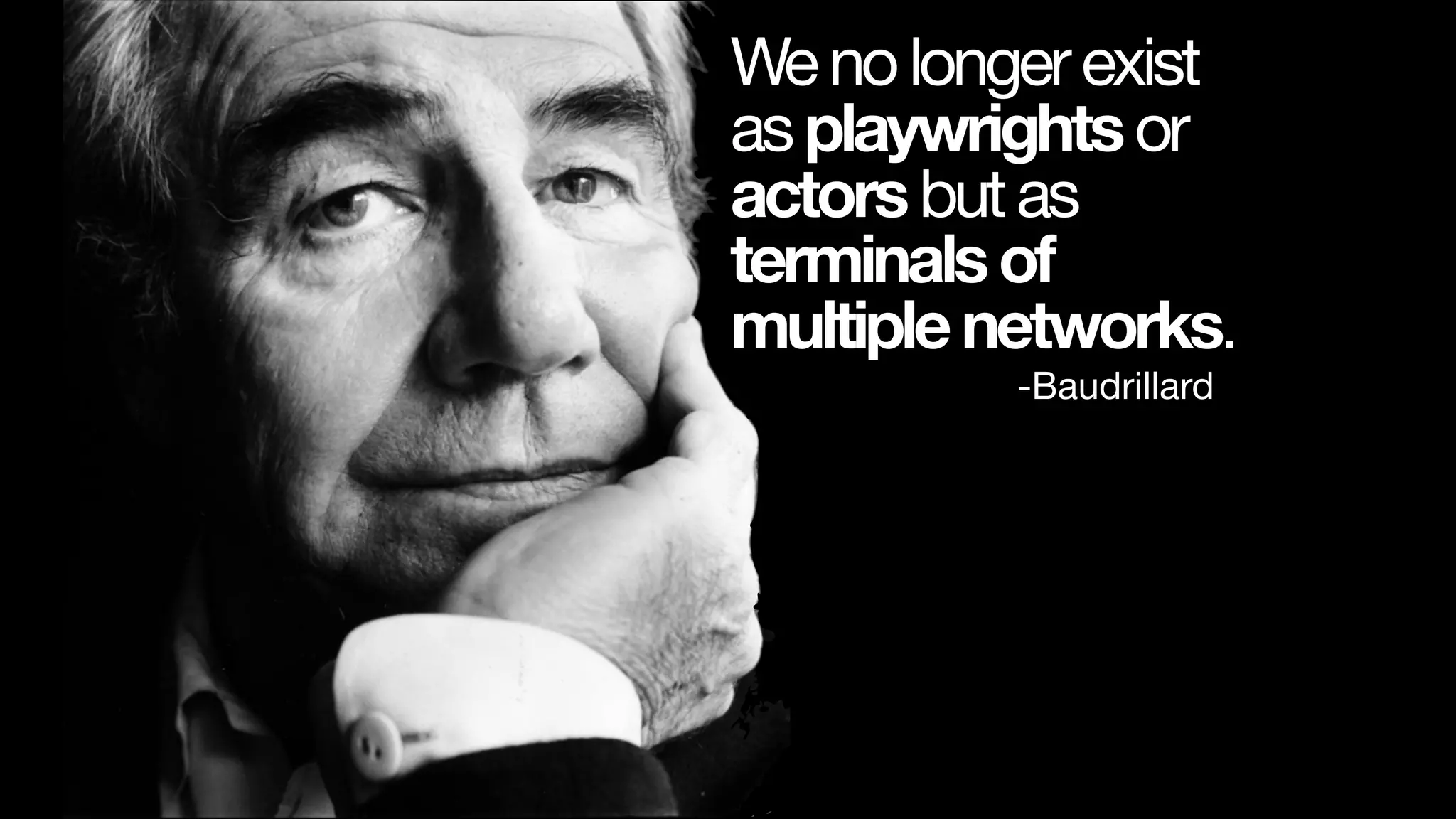
Wenolongerexist
asplaywrightsor
actorsbutas
terminalsof
multiplenetworks.
-Baudrillard
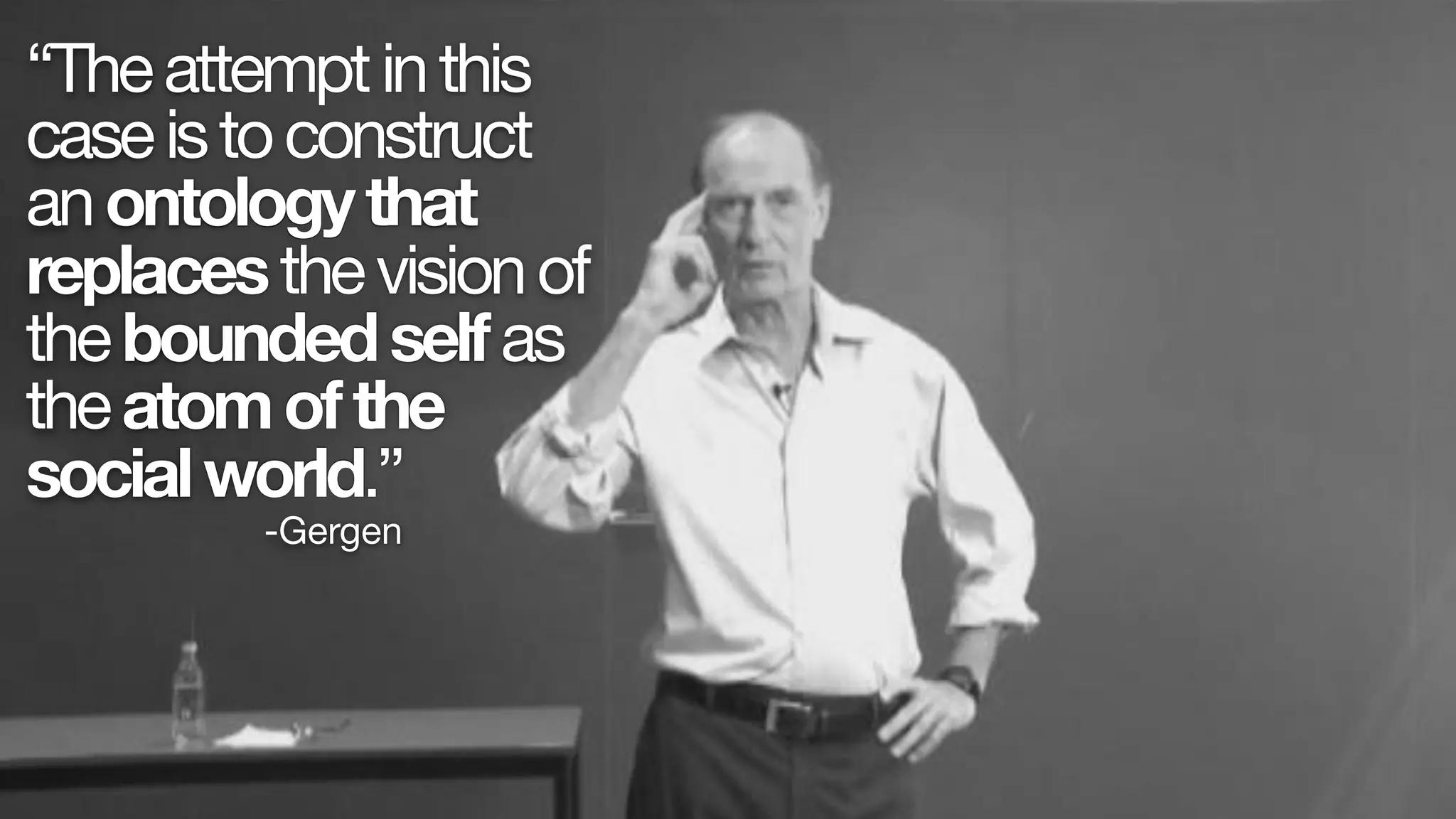
“Theattemptinthis
caseistoconstruct
anontologythat
replacesthevisionof
theboundedselfas
theatomofthe
socialworld.”
-Gergen
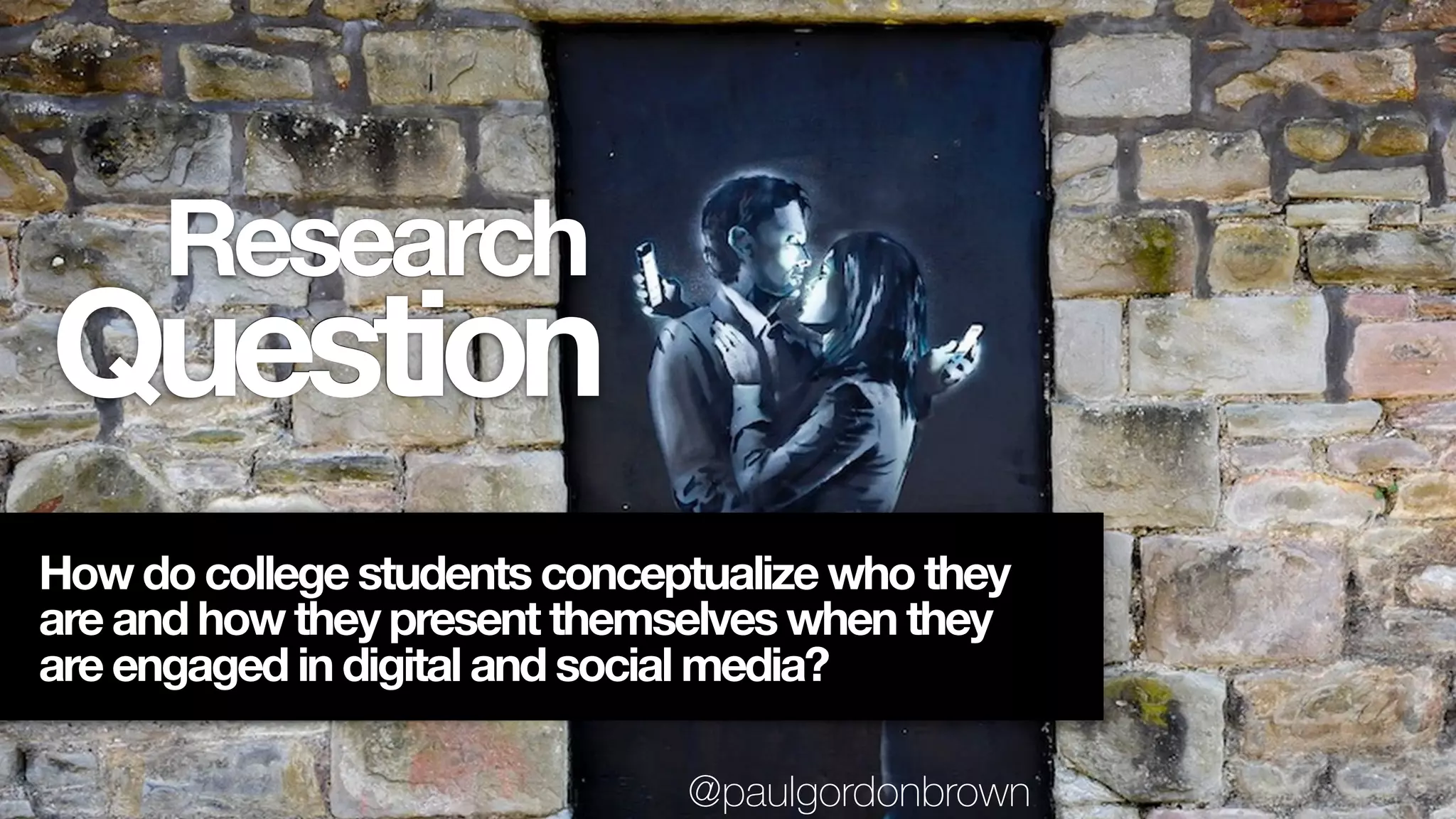
Question
Research
How do college students conceptualize who they
are and how they present themselves when they
are engaged in digital and social media?
@paulgordonbrown
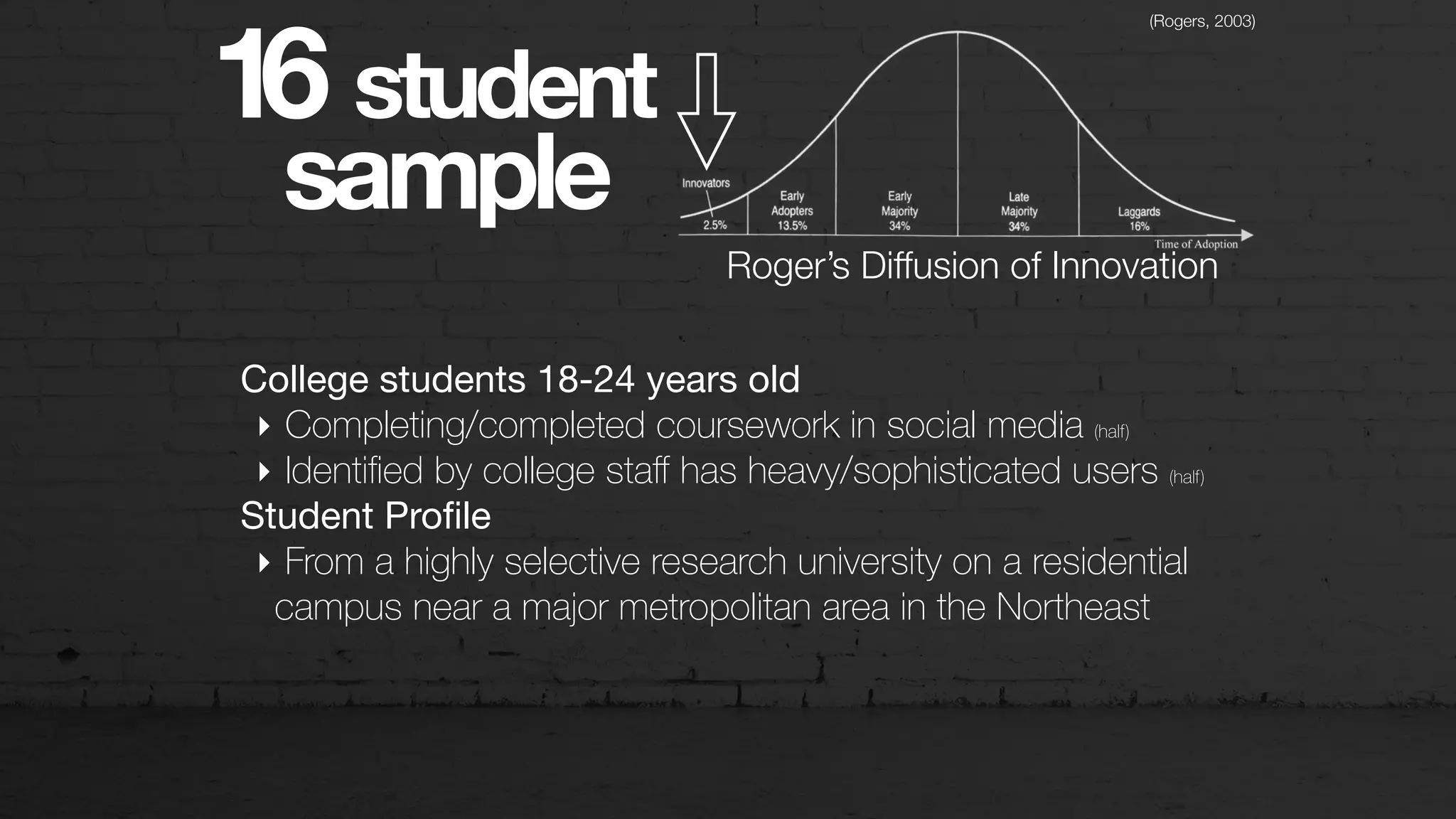
Roger’s Diffusion of Innovation
(Rogers, 2003)
sample
16 student
College students 18-24 years old

‣ Completing/completed coursework in social media (half)
‣ Identified by college staff has heavy/sophisticated users (half)
Student Profile

‣ From a highly selective research university on a residential
campus near a major metropolitan area in the Northeast
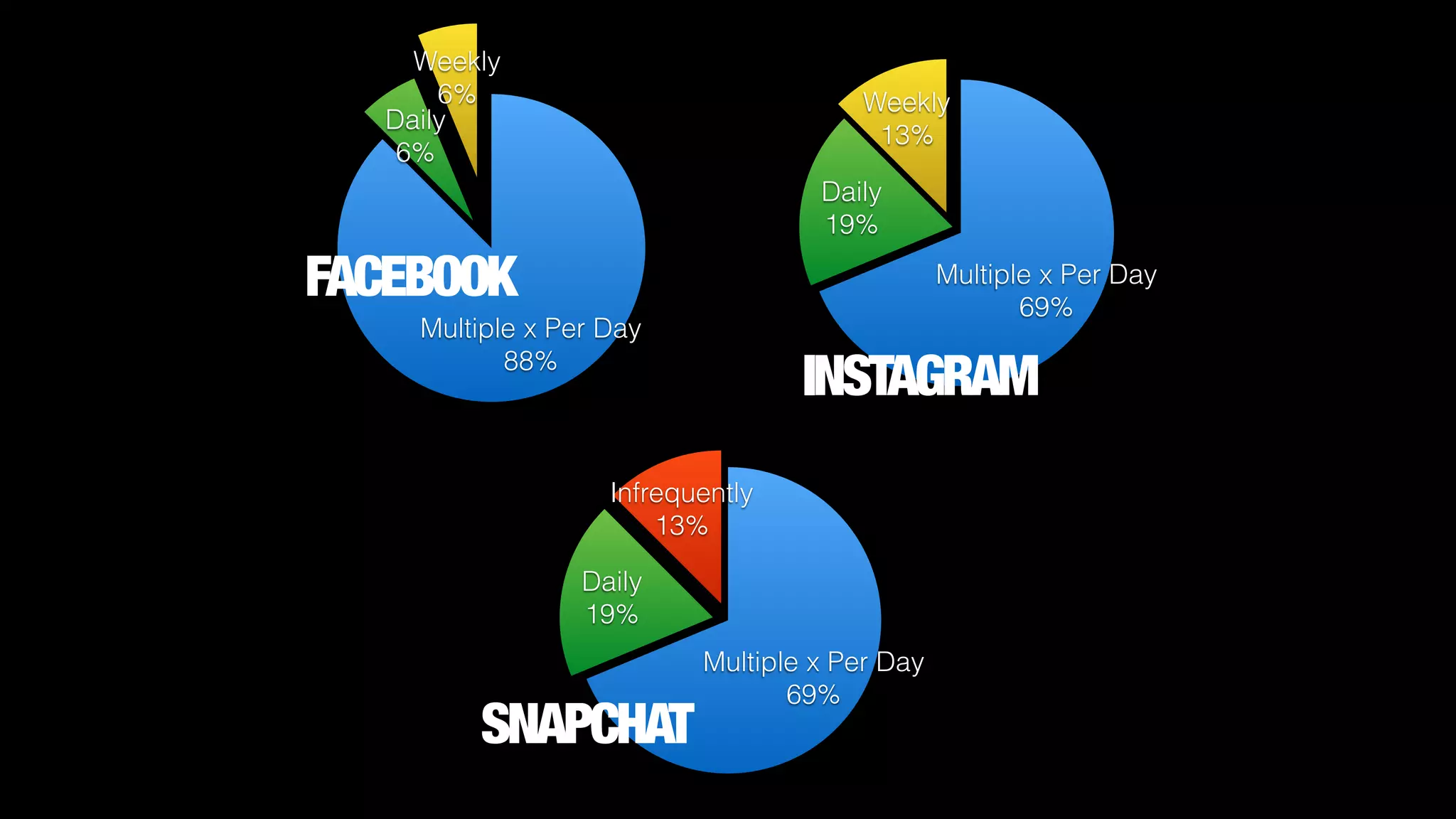
Weekly
6%
Daily
6%
Multiple x Per Day
88%
FACEBOOK
Weekly
13%
Daily
19%
Multiple x Per Day
69%
INSTAGRAM
Infrequently
13%
Daily
19%
Multiple x Per Day
69%
SNAPCHAT
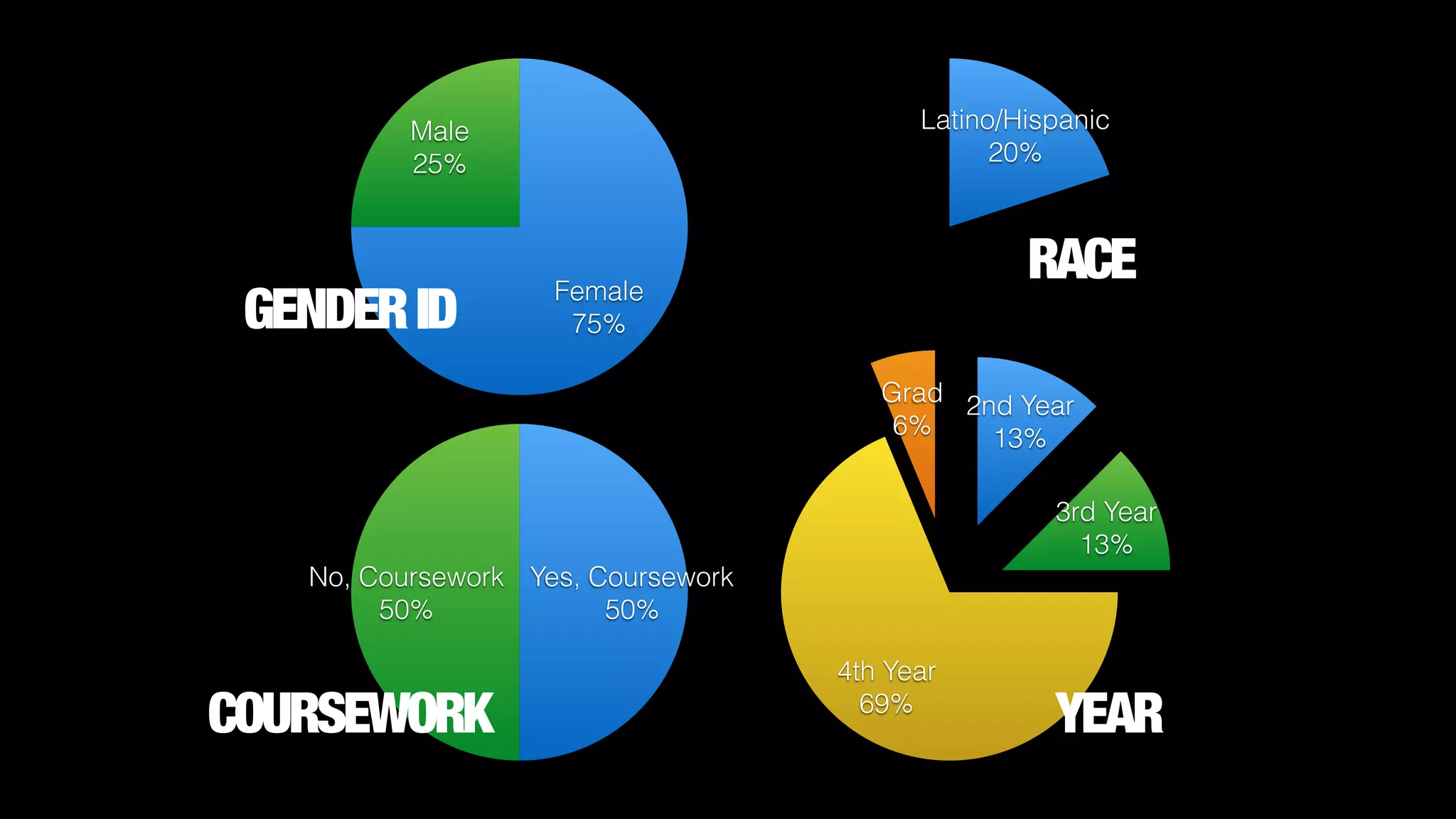
Male
25%
Female
75%
Female
80%
Latino/Hispanic
20%
Grad
6%
4th Year
69%
3rd Year
13%
2nd Year
13%
No, Coursework
50%
Yes, Coursework
50%
COURSEWORK YEAR
GENDERID
RACE
qualitative inquiry
grounded theory
(Charmaz, 2006; Glaser & Strauss, 1967; Strauss & Corbin, 1990)
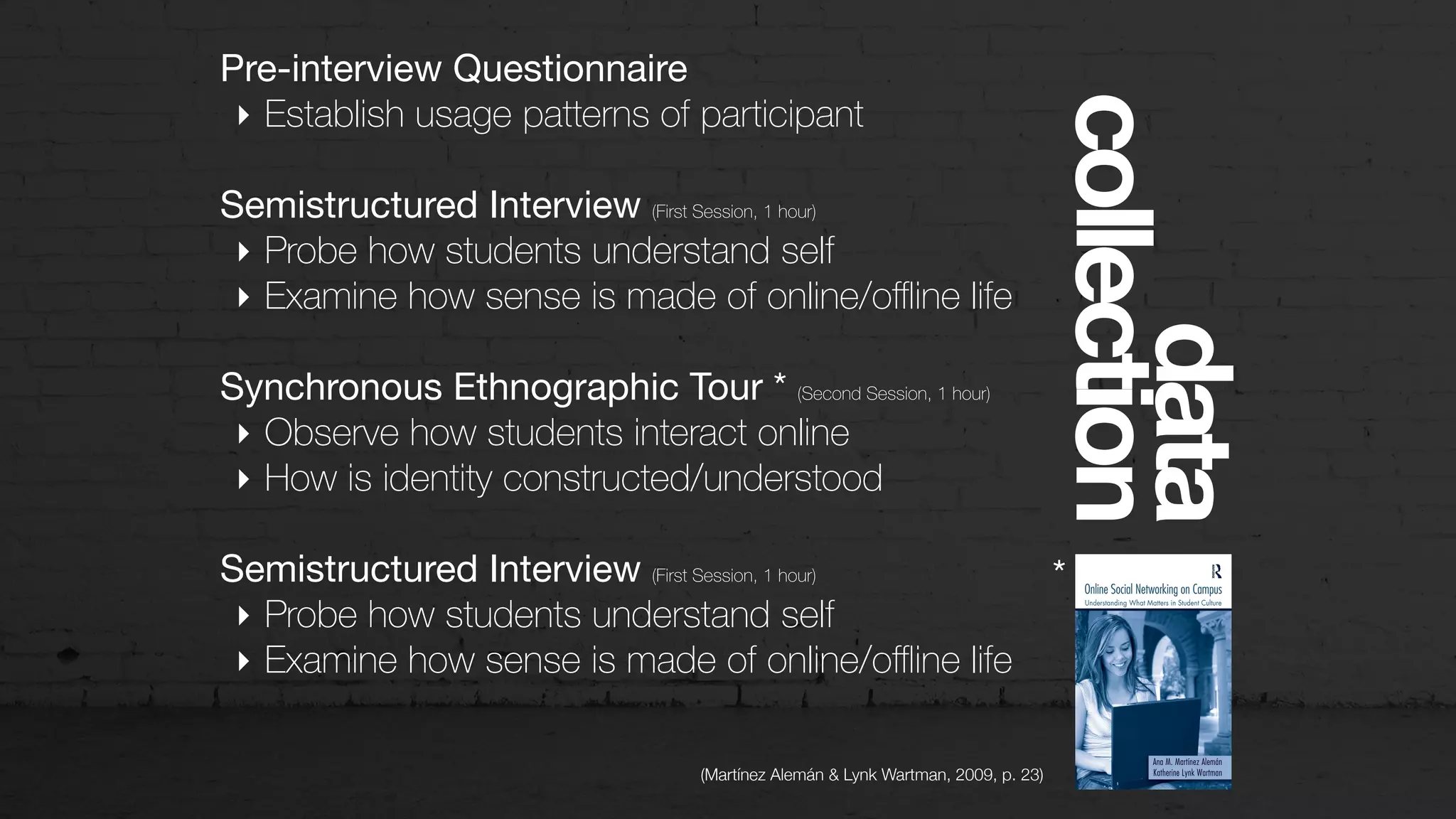
Pre-interview Questionnaire

‣ Establish usage patterns of participant
Semistructured Interview (First Session, 1 hour)
‣ Probe how students understand self
‣ Examine how sense is made of online/offline life
Synchronous Ethnographic Tour * (Second Session, 1 hour)

‣ Observe how students interact online
‣ How is identity constructed/understood
Semistructured Interview (First Session, 1 hour)
‣ Probe how students understand self
‣ Examine how sense is made of online/offline life
data
collection
*
(Martínez Alemán & Lynk Wartman, 2009, p. 23)
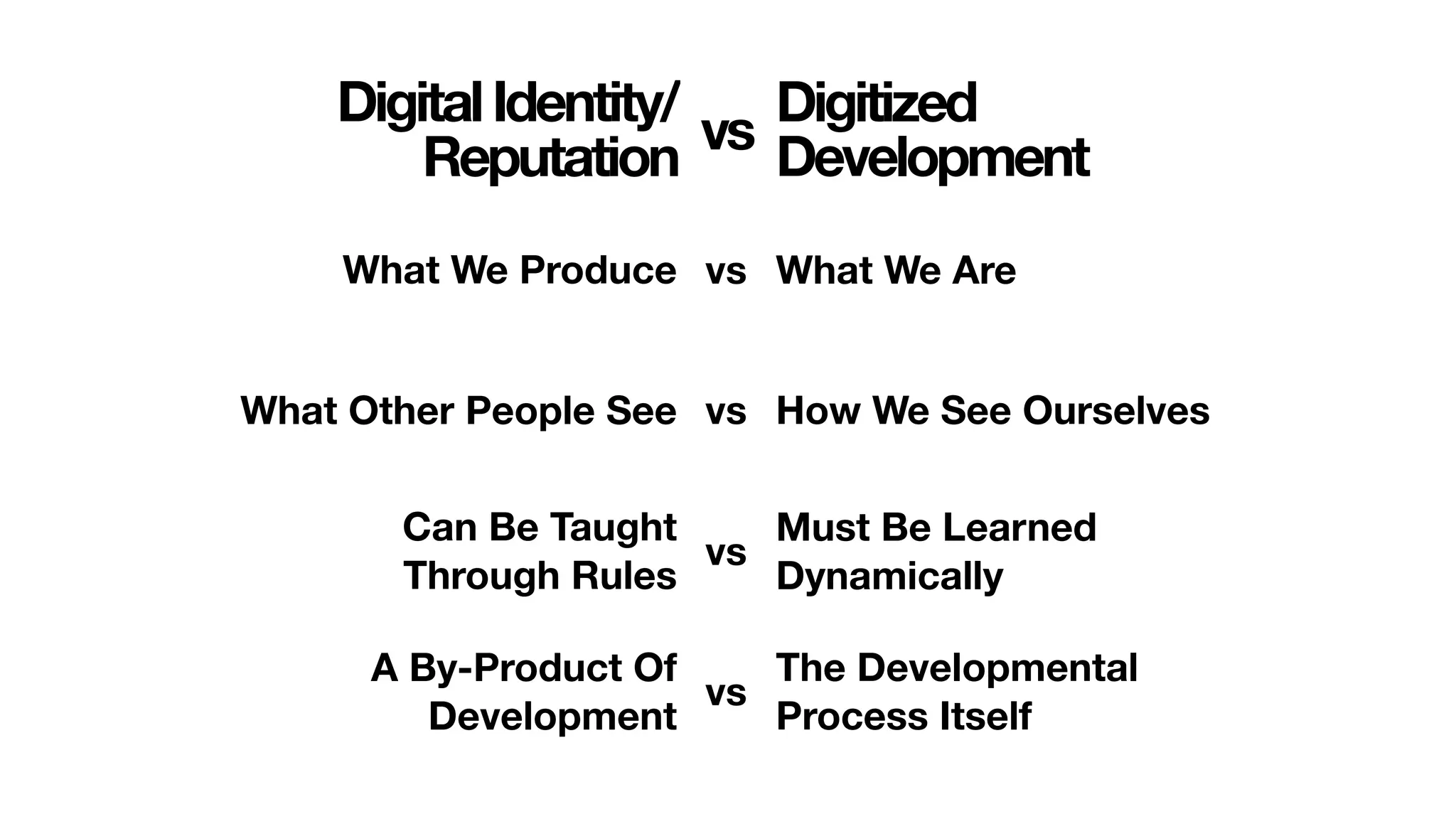
DigitalIdentity/
Reputation vs
Digitized
Development
What We Produce vs What We Are
What Other People See vs How We See Ourselves
Can Be Taught
Through Rules
vs
Must Be Learned
Dynamically
A By-Product Of
Development
vs
The Developmental
Process Itself
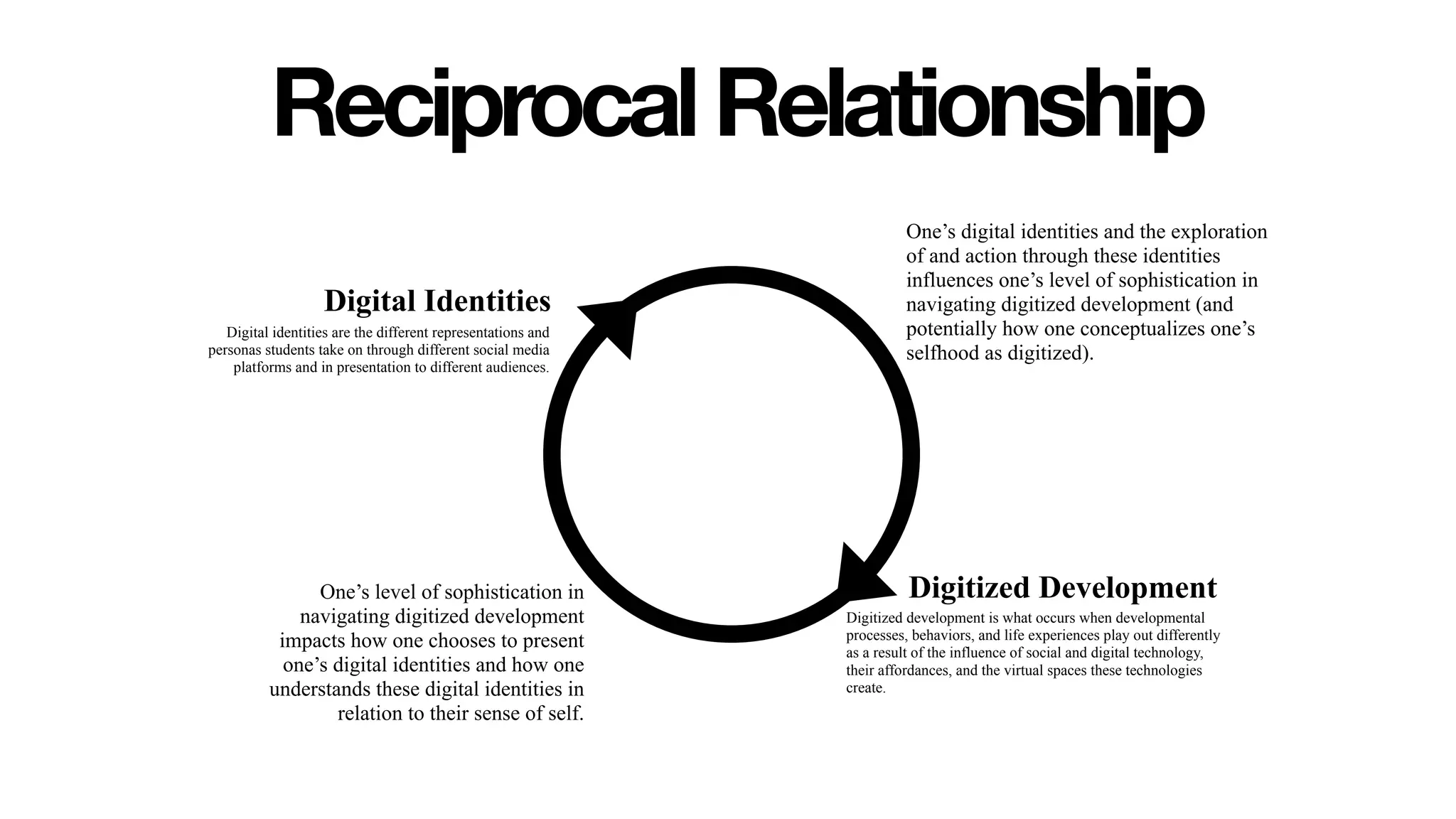
Digital Identities
Digitized DevelopmentOne’s level of sophistication in
navigating digitized development
impacts how one chooses to present
one’s digital identities and how one
understands these digital identities in
relation to their sense of self.
One’s digital identities and the exploration
of and action through these identities
influences one’s level of sophistication in
navigating digitized development (and
potentially how one conceptualizes one’s
selfhood as digitized).
Digital identities are the different representations and
personas students take on through different social media
platforms and in presentation to different audiences.
Digitized development is what occurs when developmental
processes, behaviors, and life experiences play out differently
as a result of the influence of social and digital technology,
their affordances, and the virtual spaces these technologies
create.
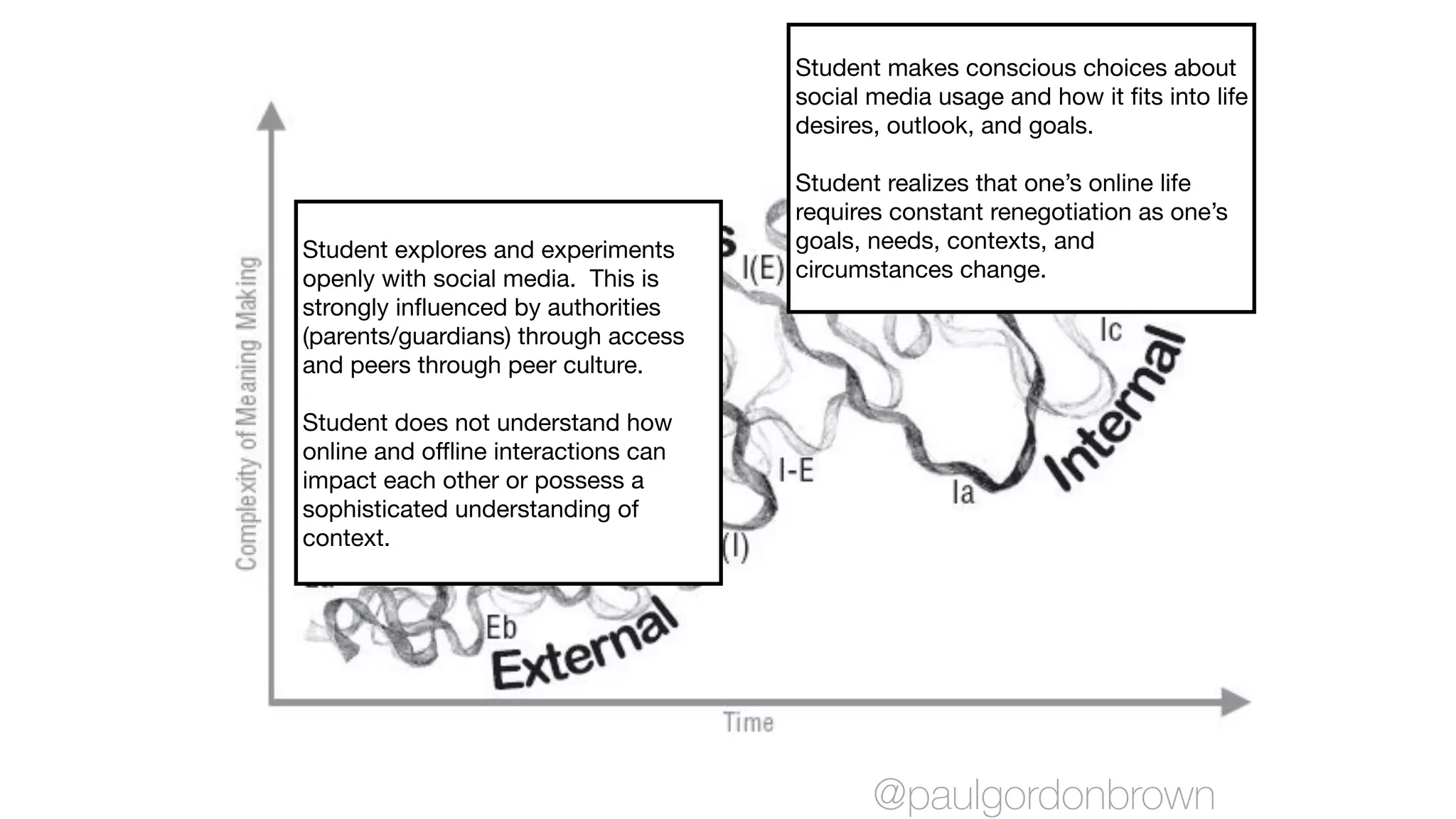
ReciprocalRelationship
MarciaBaxterMagolda’s
TheoryofSelf-Authorship
Student explores and experiments
openly with social media. This is
strongly influenced by authorities
(parents/guardians) through access
and peers through peer culture.

Student does not understand how
online and offline interactions can
impact each other or possess a
sophisticated understanding of
context.
Student makes conscious choices about
social media usage and how it fits into life
desires, outlook, and goals.

Student realizes that one’s online life
requires constant renegotiation as one’s
goals, needs, contexts, and
circumstances change.
@paulgordonbrown
Pursuitof
Likes
@paulgordonbrown
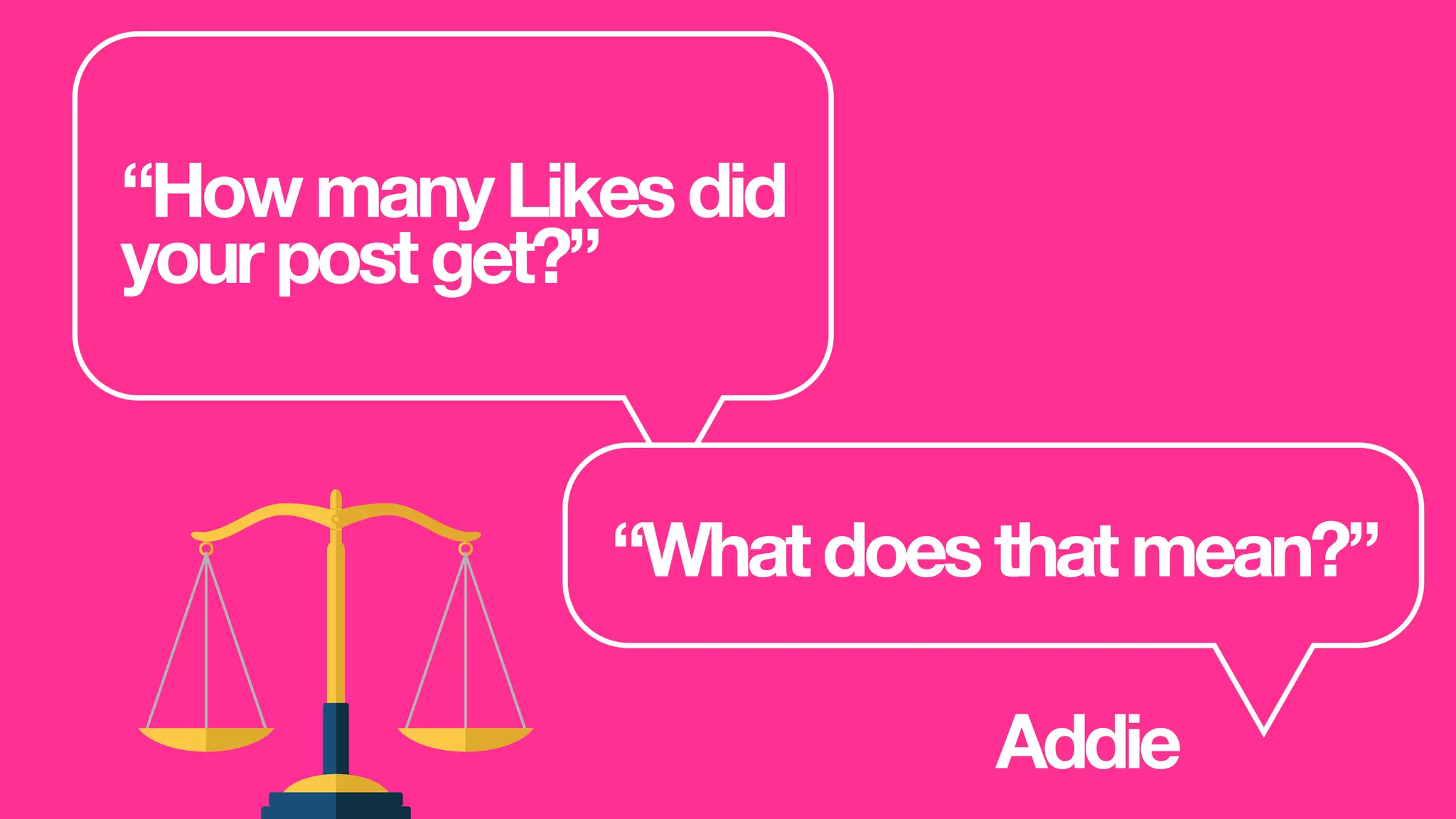
“HowmanyLikesdid
yourpostget?”
“Whatdoesthatmean?”
Addie
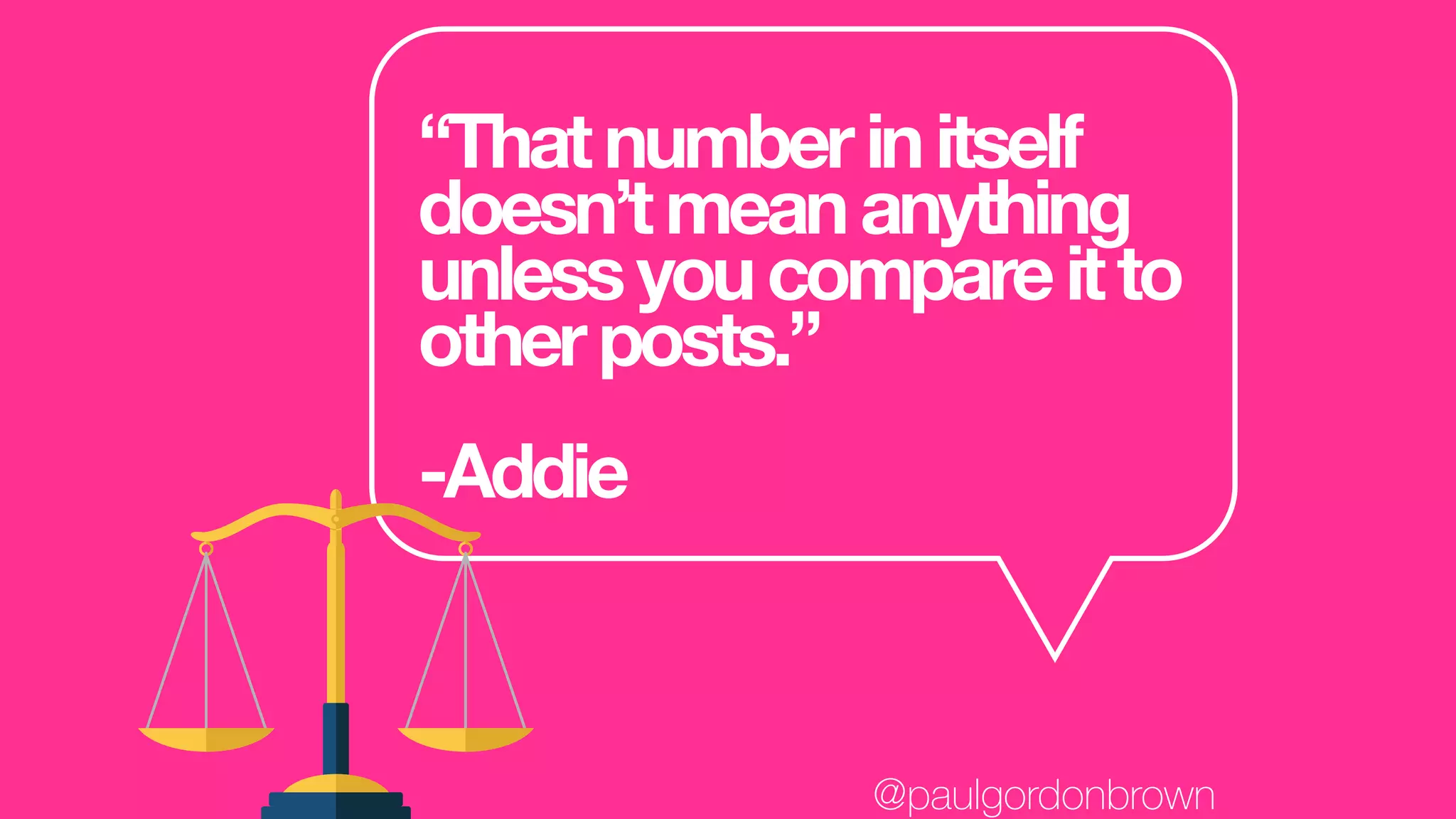
“Thatnumberinitself
doesn’tmeananything
unlessyoucompareitto
otherposts.”
-Addie
@paulgordonbrown
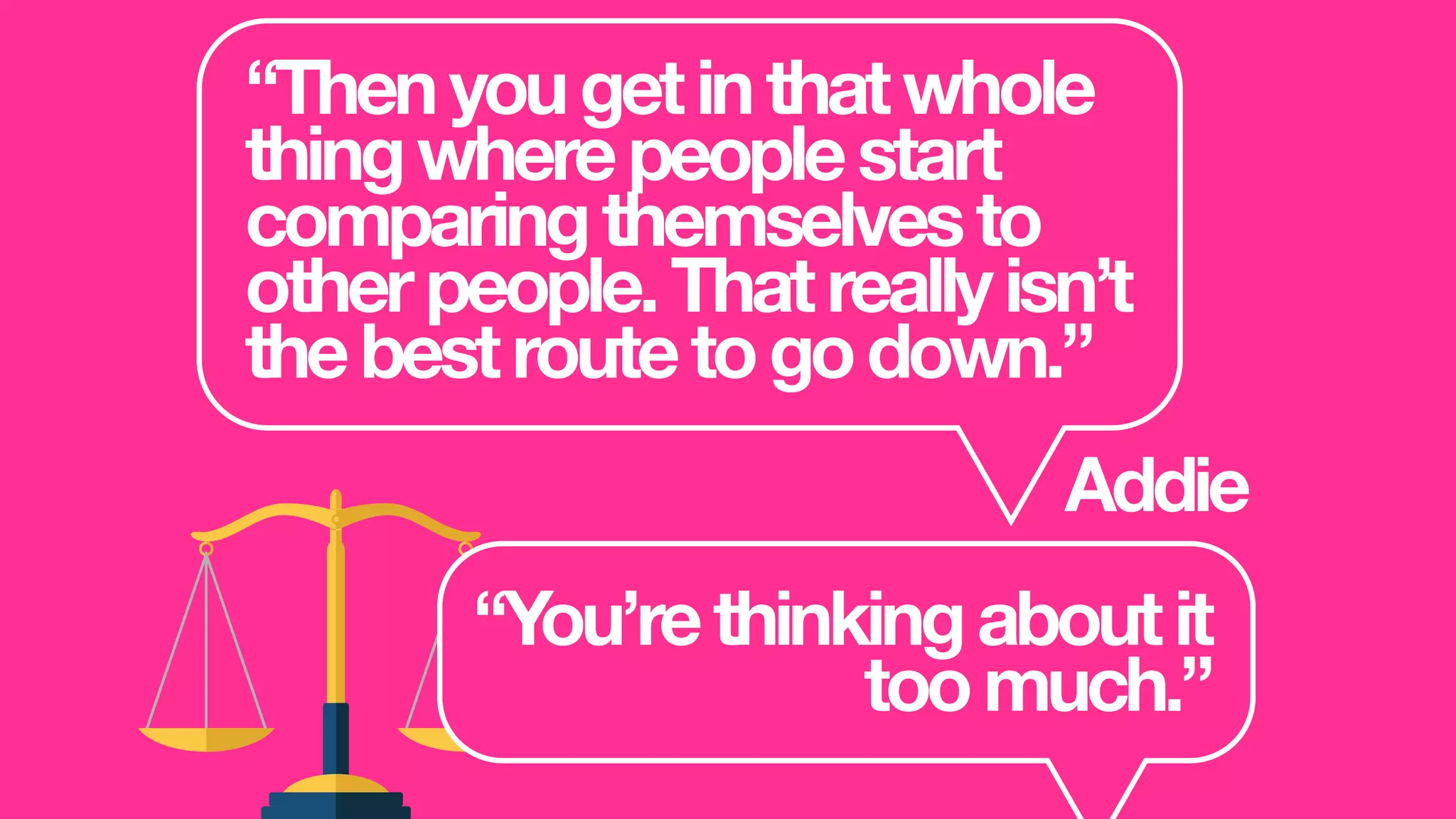
“Thenyougetinthatwhole
thingwherepeoplestart
comparingthemselvesto
otherpeople.Thatreallyisn’t
thebestroutetogodown.”
Addie
“You’rethinkingaboutit
toomuch.”
IMAGE: CHOMPOO BARITONE
Curating
Perfected
Images
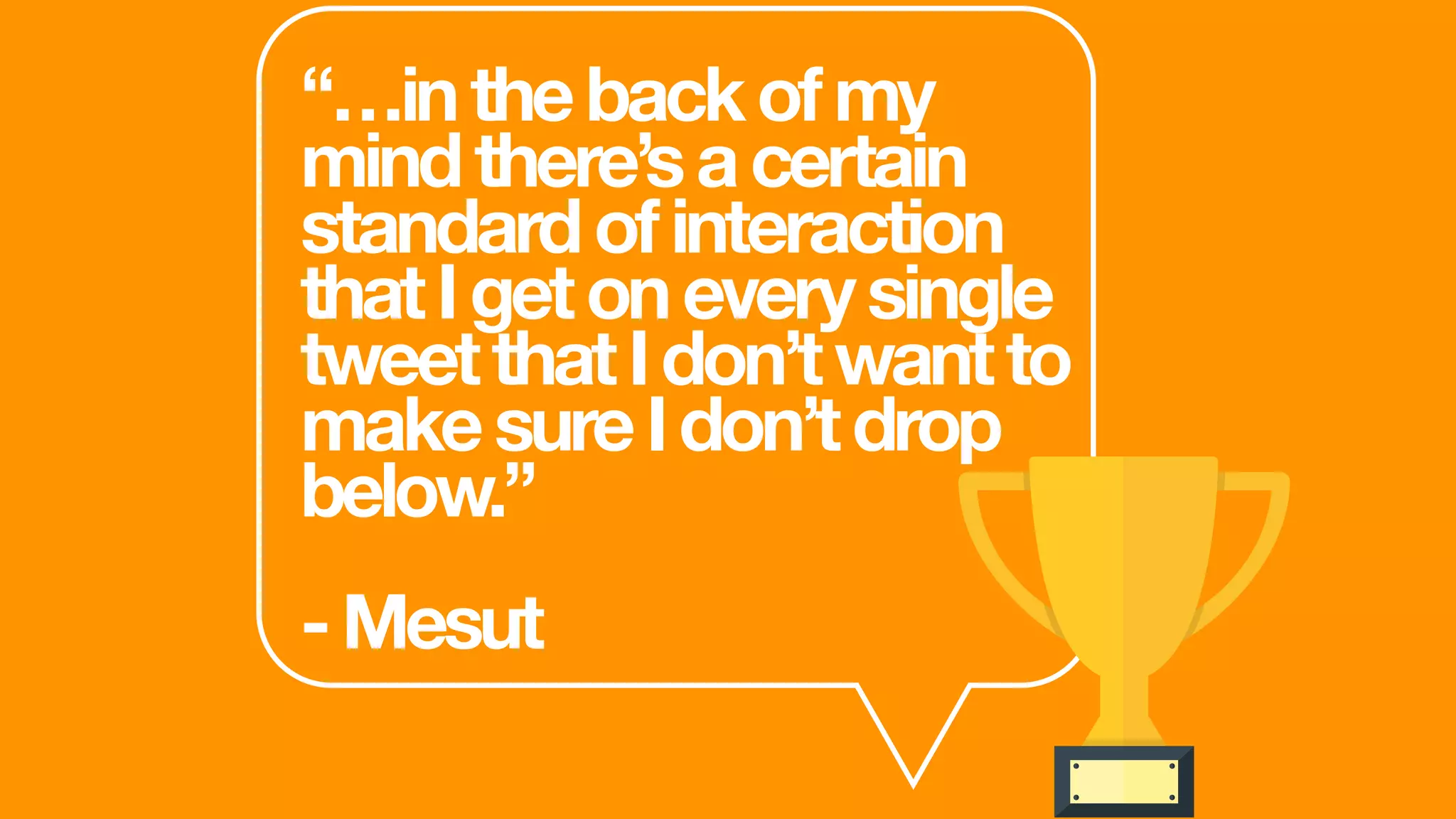
“…inthebackofmy
mindthere’sacertain
standardofinteraction
thatIgetoneverysingle
tweetthatIdon’twantto
makesureIdon’tdrop
below.”
-Mesut
IMAGE: CHOMPOO BARITONE
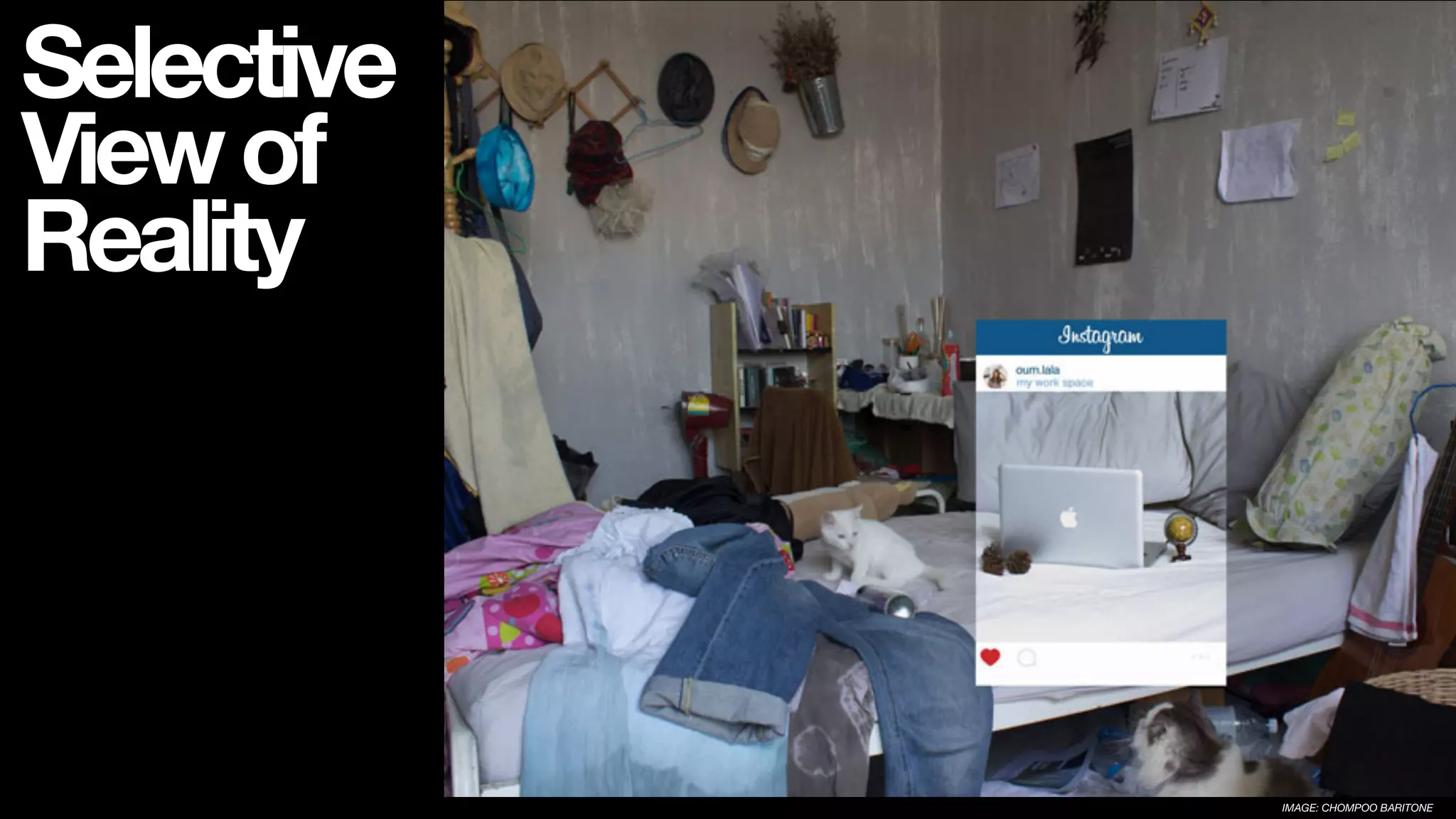
Selective
Viewof
Reality
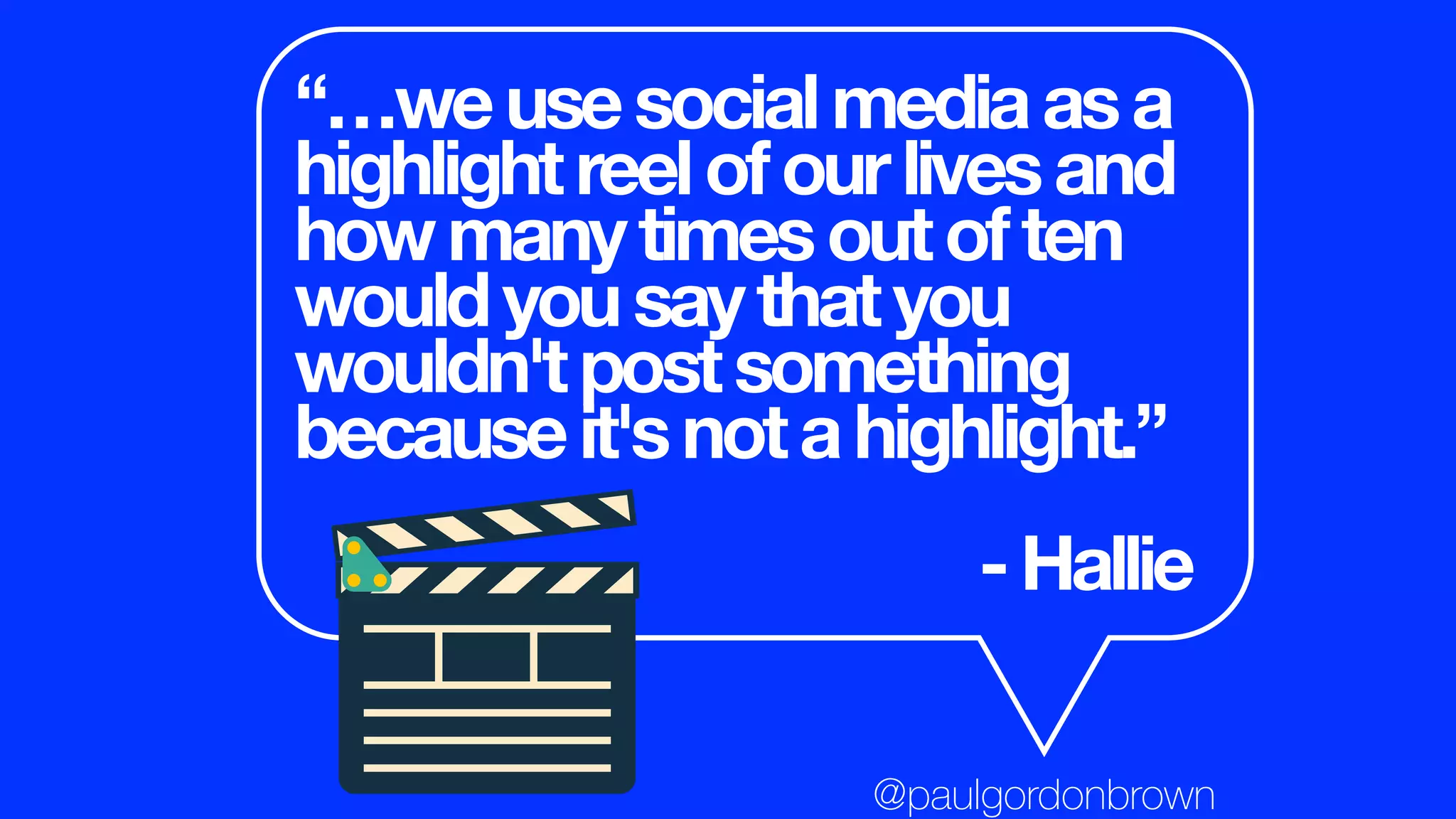
“…weusesocialmediaasa
highlightreelofourlivesand
howmanytimesoutoften
wouldyousaythatyou
wouldn'tpostsomething
becauseit'snotahighlight.”
-Hallie
@paulgordonbrown
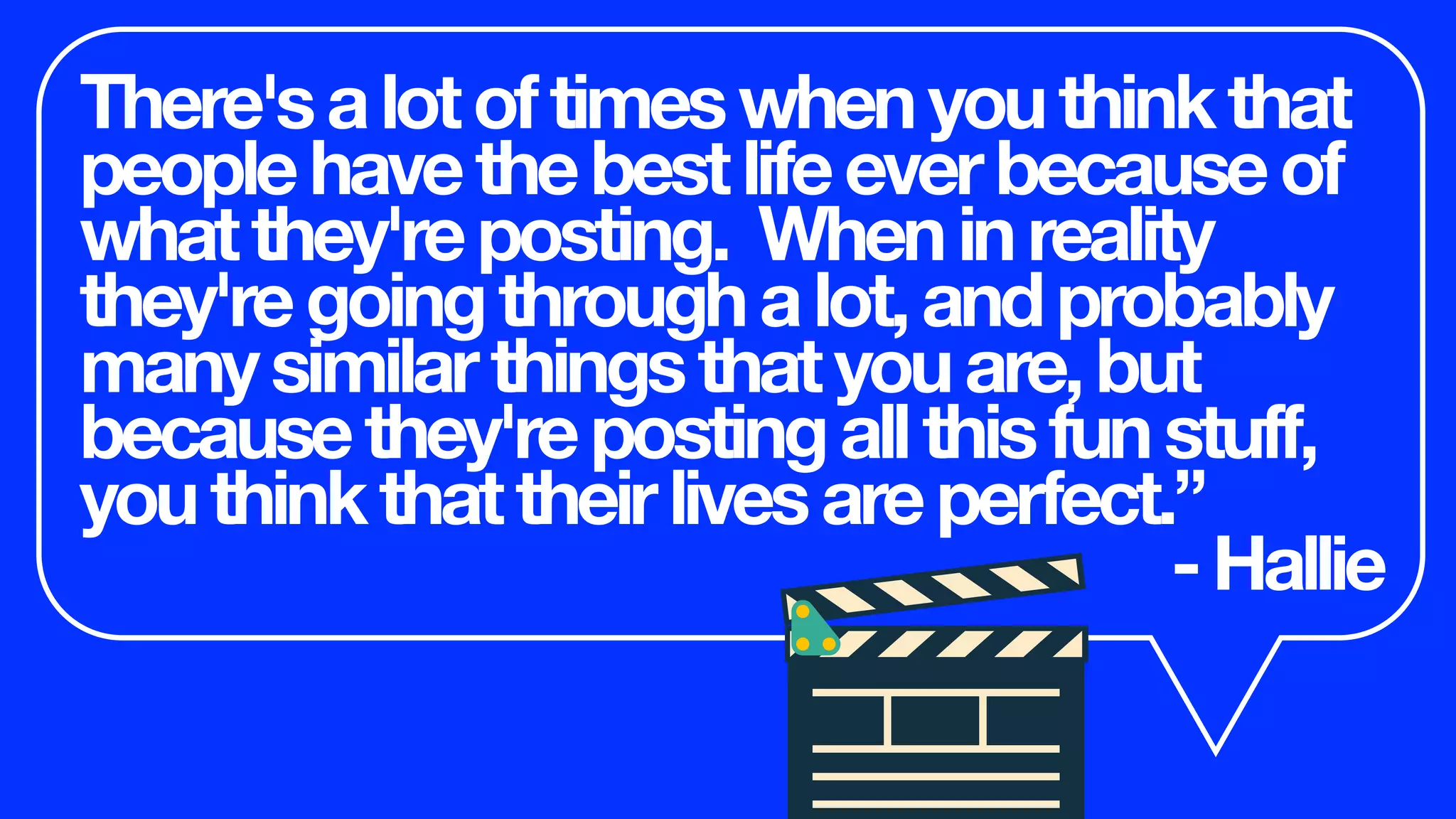
There'salotoftimeswhenyouthinkthat
peoplehavethebestlifeeverbecauseof
whatthey'reposting. Wheninreality
they'regoingthroughalot,andprobably
manysimilarthingsthatyouare,but
becausethey'repostingallthisfunstuff,
youthinkthattheirlivesareperfect.”
-Hallie
masks
adance
outfits
“…it’salmostlikedoinga
dancethatyoucan’tbe
toomuchofsomething.”
-Liam
@paulgordonbrown
games
playing
“I'vegottokeepup.”
-Annie
@paulgordonbrown
“Yeahit’sexhausting…
it’swhatcausesmy
unhappiness…
thecomparisonsget
sointense…
IfeellikeI’mjusta
constantfailure”
-Logan
IMAGE: CHOMPOO BARITONE
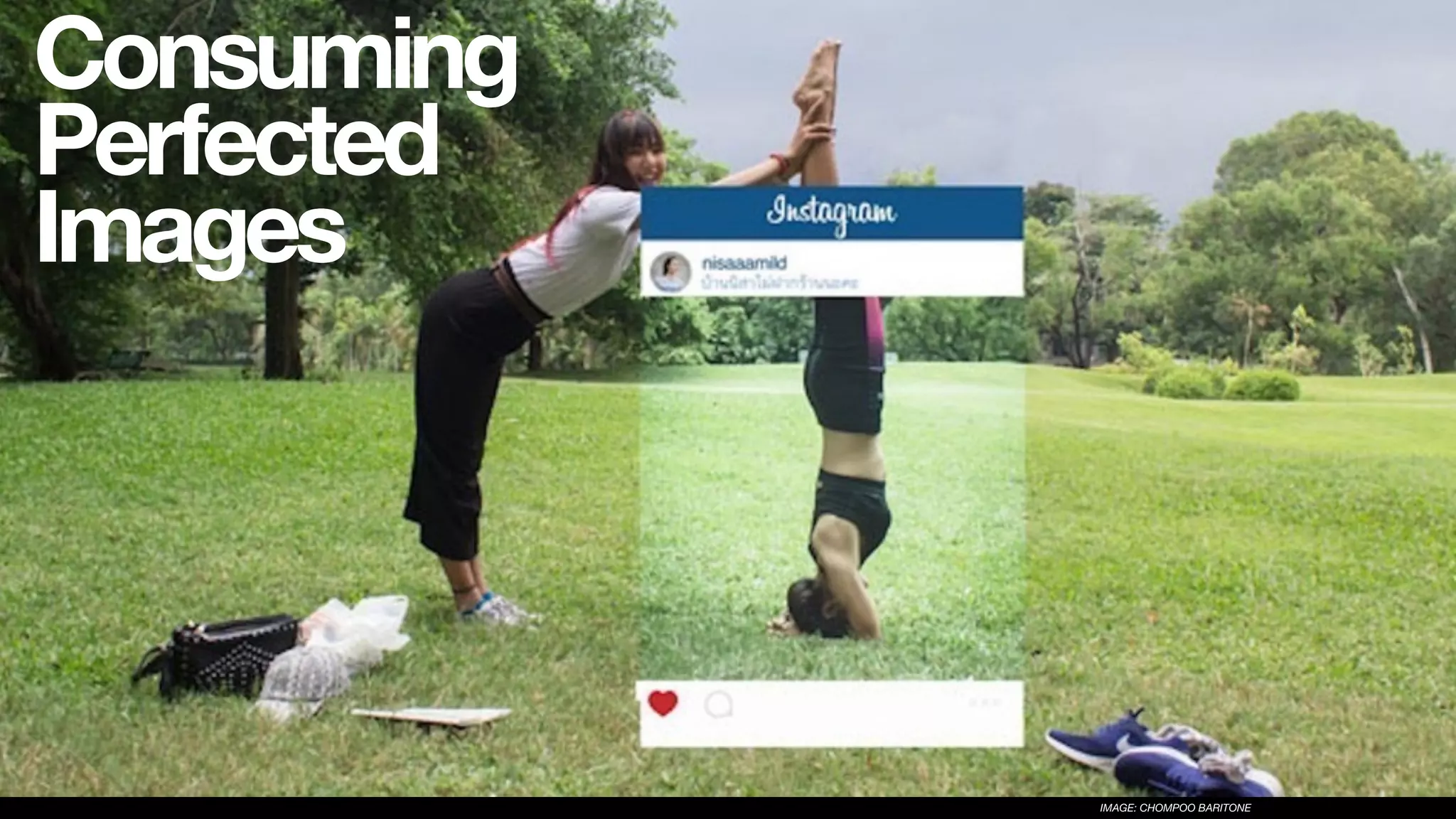
Consuming
Perfected
Images
“That’swhat,Iassume,[is]
causingmygreatest
dissatisfactionat[college].
Seeingmylifeincomparison
toothers.”
-Logan
@paulgordonbrown
“Idefinitelythinkaboutit
morethanIshould.”
-Ashley
@paulgordonbrown
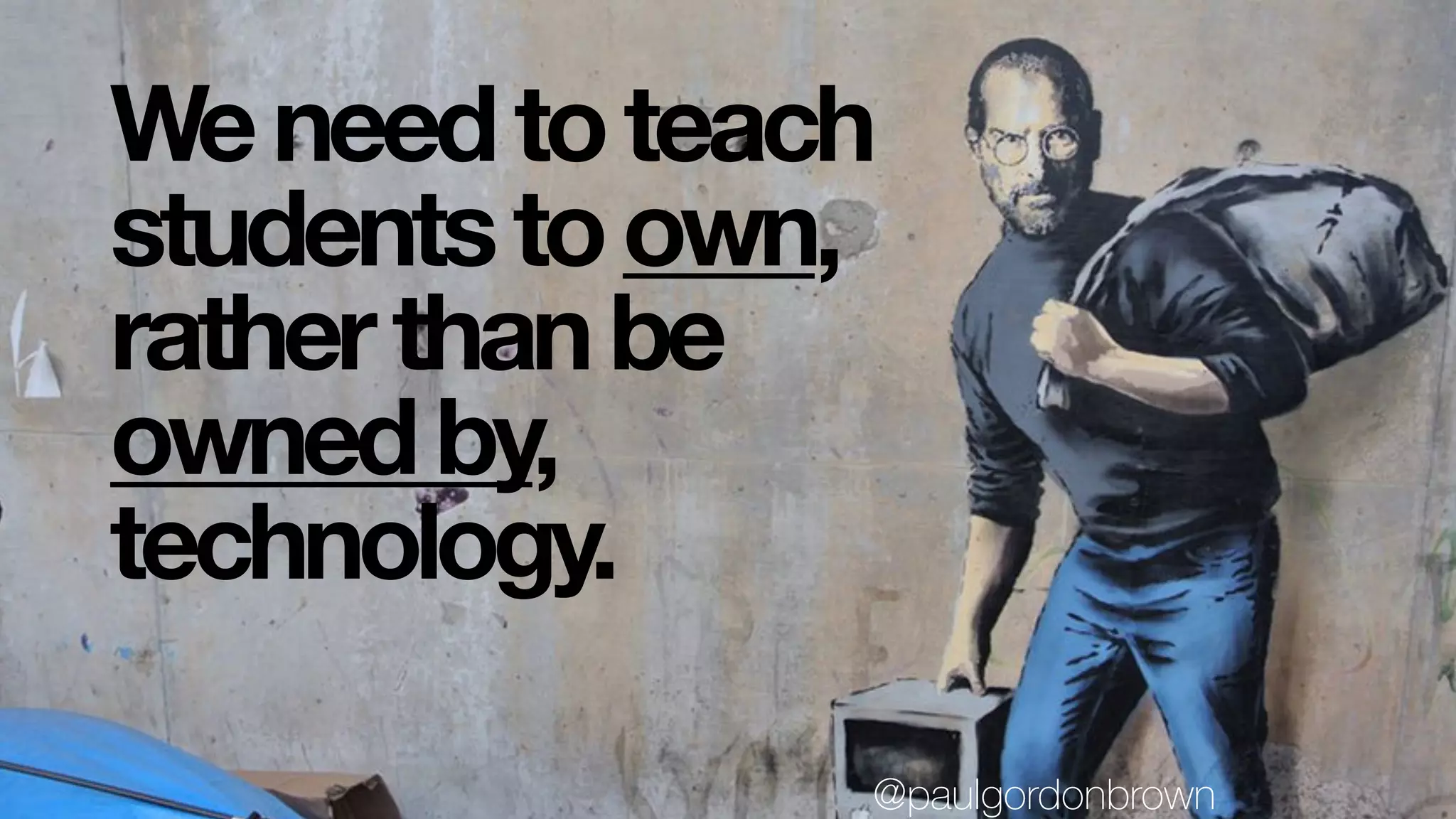
Weneedtoteach
studentstoown,
ratherthanbe
ownedby,
technology.
@paulgordonbrown
don’t teach
fearwith
@paulgordonbrown
don’t teach with
shame
@paulgordonbrown
Stay
current
ontech
trends.
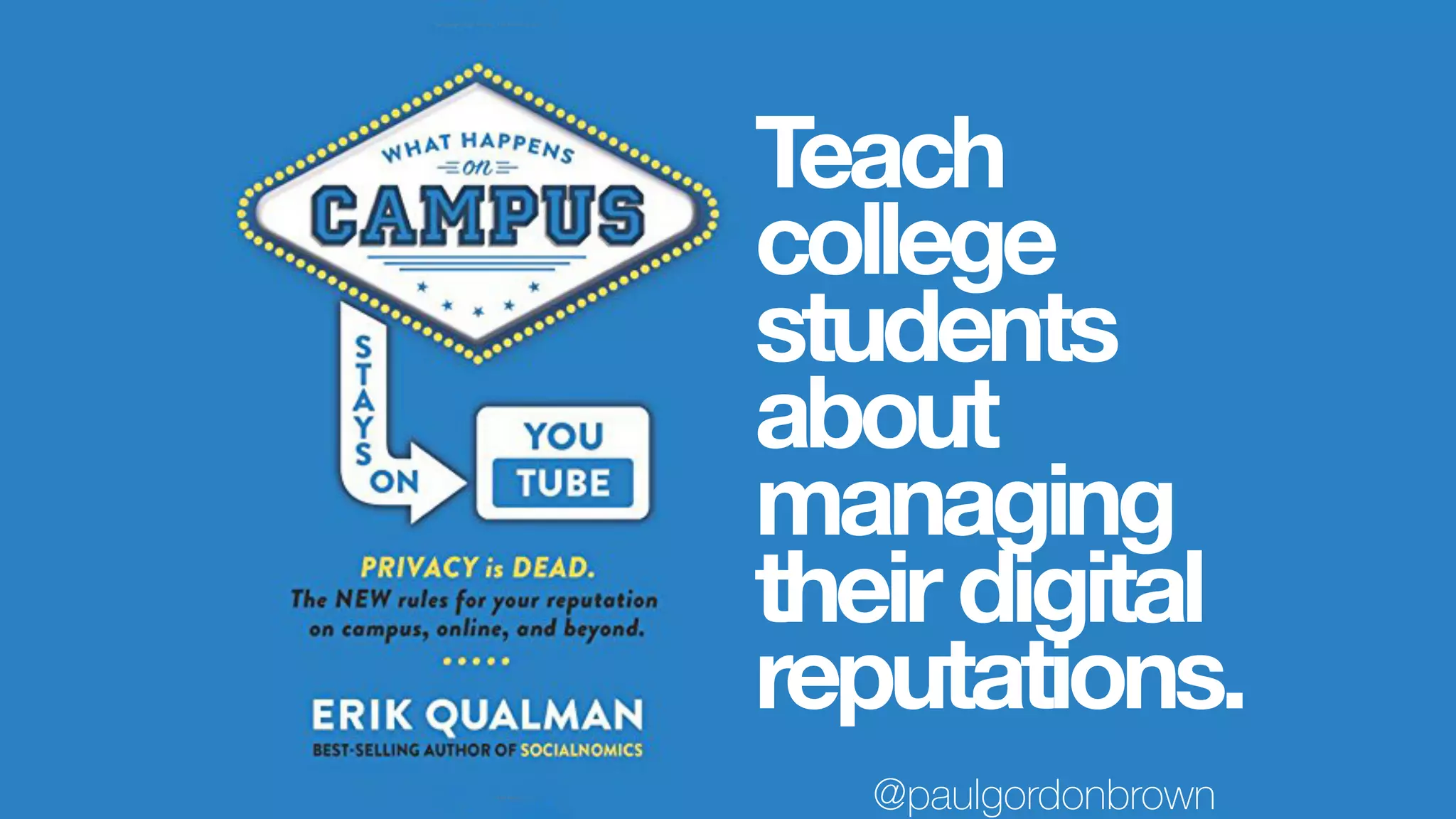
Teach
college
students
about
managing
theirdigital
reputations.
@paulgordonbrown
Engage with students on
digital and social media
because we need to
understand them in all of their
contexts. Be open to a
different (not necessarily
better or worse) way.
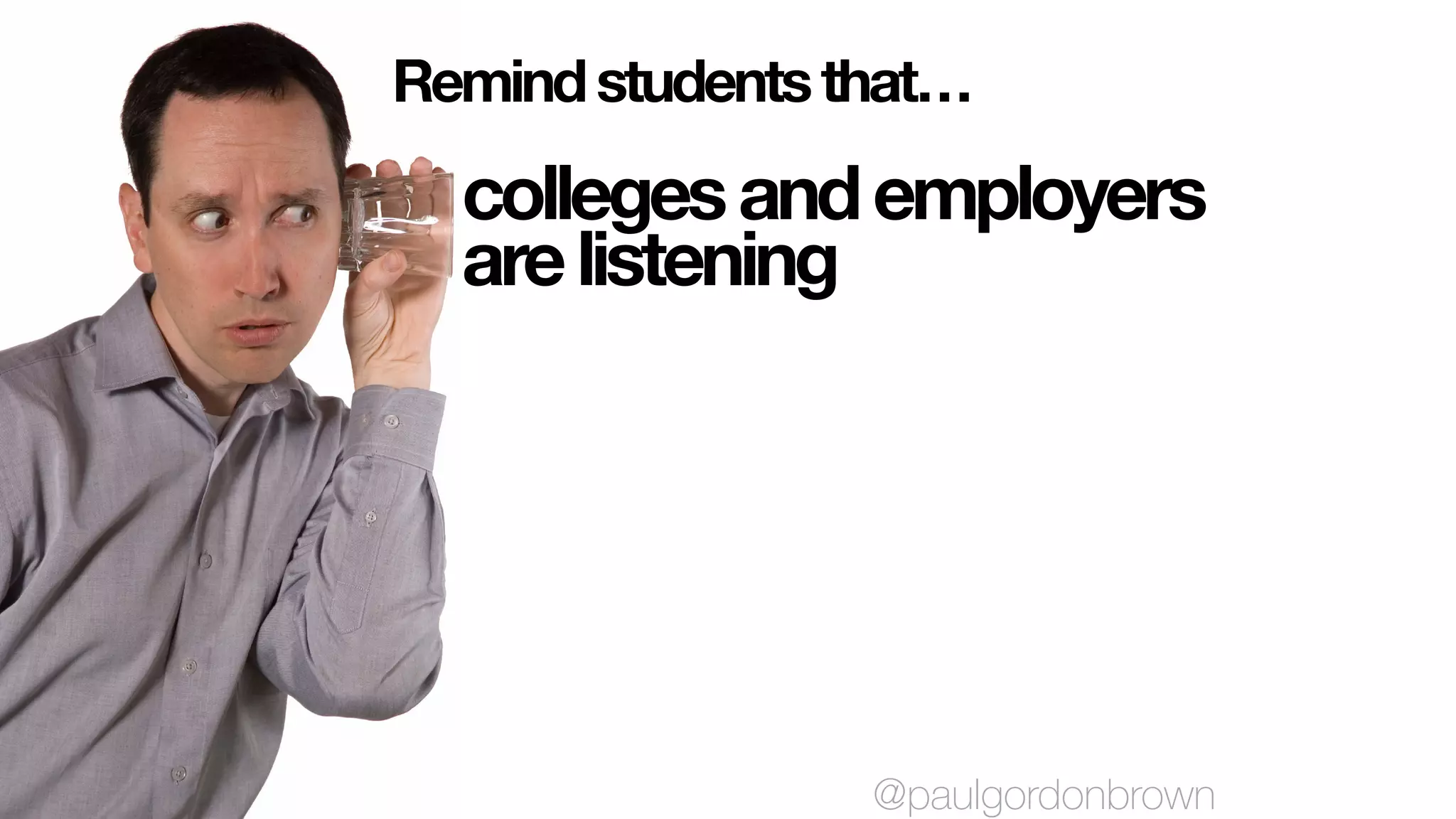
collegesandemployers
arelistening
Remindstudentsthat…
@paulgordonbrown
Learn from and with students
how to navigate the online
environment. Help them
avoid mistakes. Help them
understand their self-
presentation and reputation
online. Be a role model.
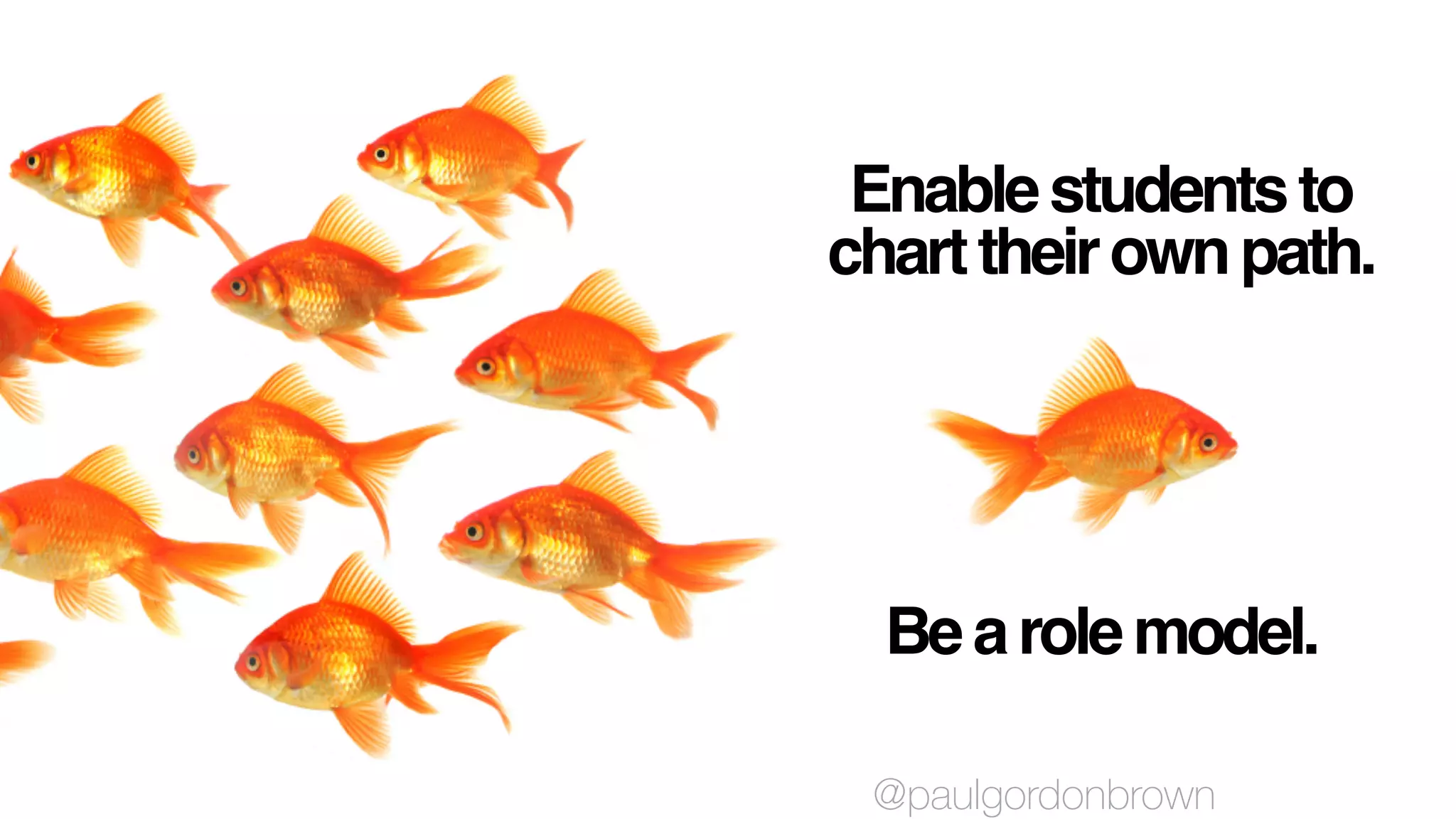
Enablestudentsto
charttheirownpath.
Bearolemodel.
@paulgordonbrown
It’sokay…andevenadvised…
totakeabreakfrom
technologyonoccasion.
making
mistakes
isbetter
than
faking
perfections
vulnerable
be
@paulgordonbrown
Understand how social media
may impact the
developmental process-both
in light of current theory and
in ways we do not yet
understand. Be able to help
students understand,
navigate and leverage it.
be a good partner
to our students
@paulgordonbrown
www.paulgordonbrown.com
paulgordonbrown@gmail.com
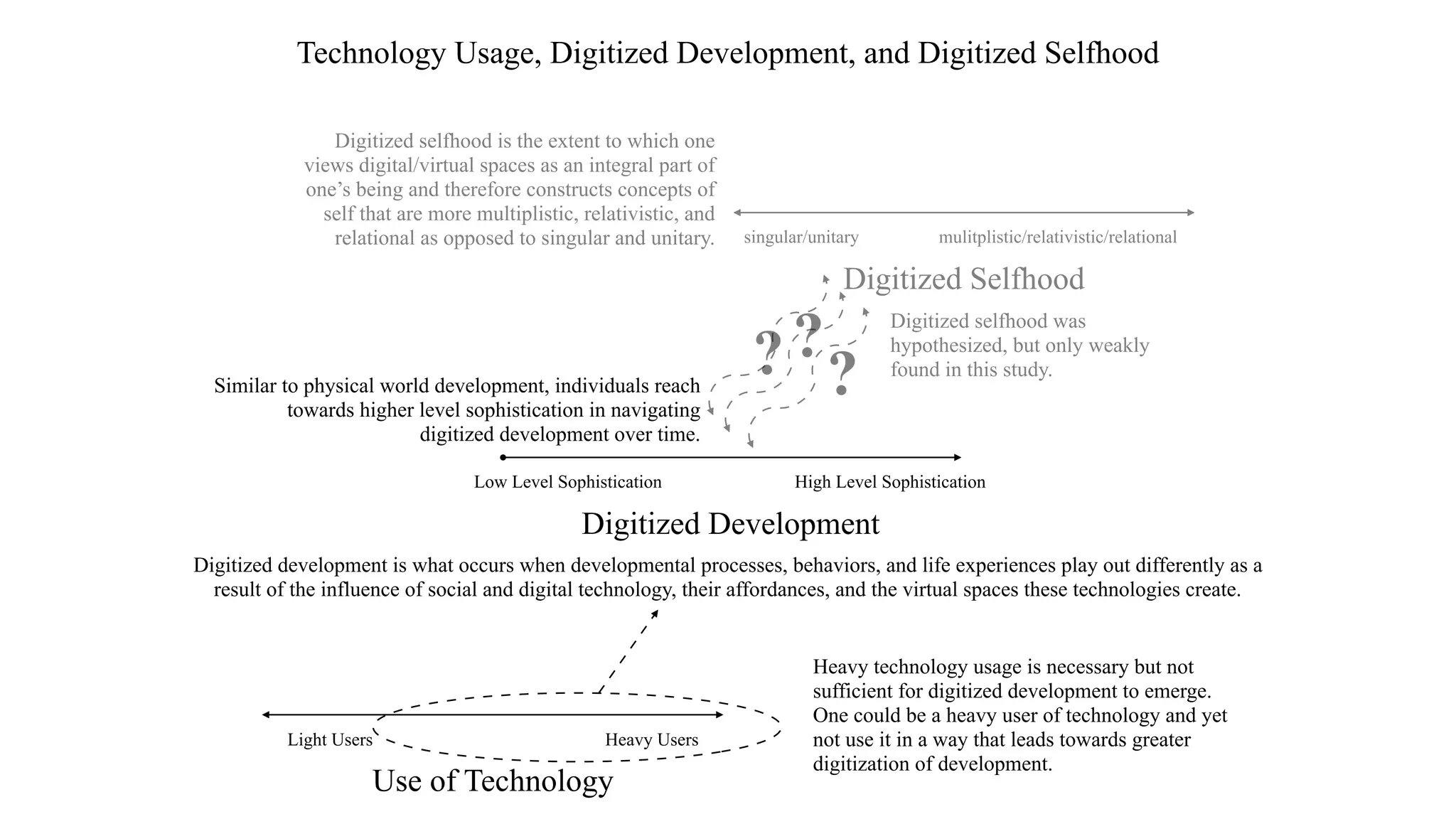
Use of Technology
Heavy UsersLight Users
Digitized Development
High Level SophisticationLow Level Sophistication
Digitized Selfhood
mulitplistic/relativistic/relationalsingular/unitary
Heavy technology usage is necessary but not
sufficient for digitized development to emerge.
One could be a heavy user of technology and yet
not use it in a way that leads towards greater
digitization of development.
Similar to physical world development, individuals reach
towards higher level sophistication in navigating
digitized development over time.
Digitized selfhood is the extent to which one
views digital/virtual spaces as an integral part of
one’s being and therefore constructs concepts of
self that are more multiplistic, relativistic, and
relational as opposed to singular and unitary.
Technology Usage, Digitized Development, and Digitized Selfhood
?
??
Digitized selfhood was
hypothesized, but only weakly
found in this study.
Digitized development is what occurs when developmental processes, behaviors, and life experiences play out differently as a
result of the influence of social and digital technology, their affordances, and the virtual spaces these technologies create.

Online Development and the College Student