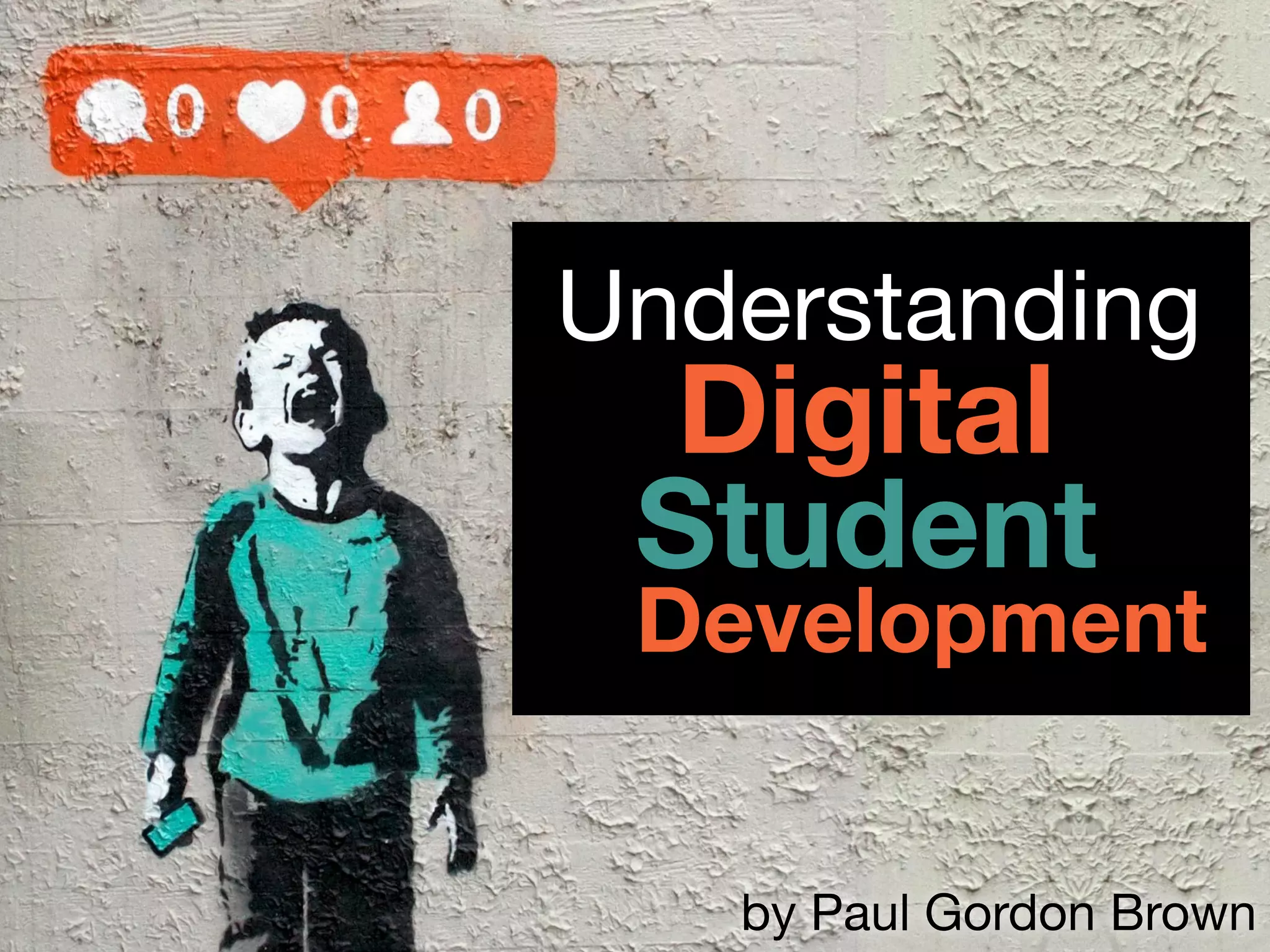

Understanding
Digital
Student
Development
by Paul Gordon Brown
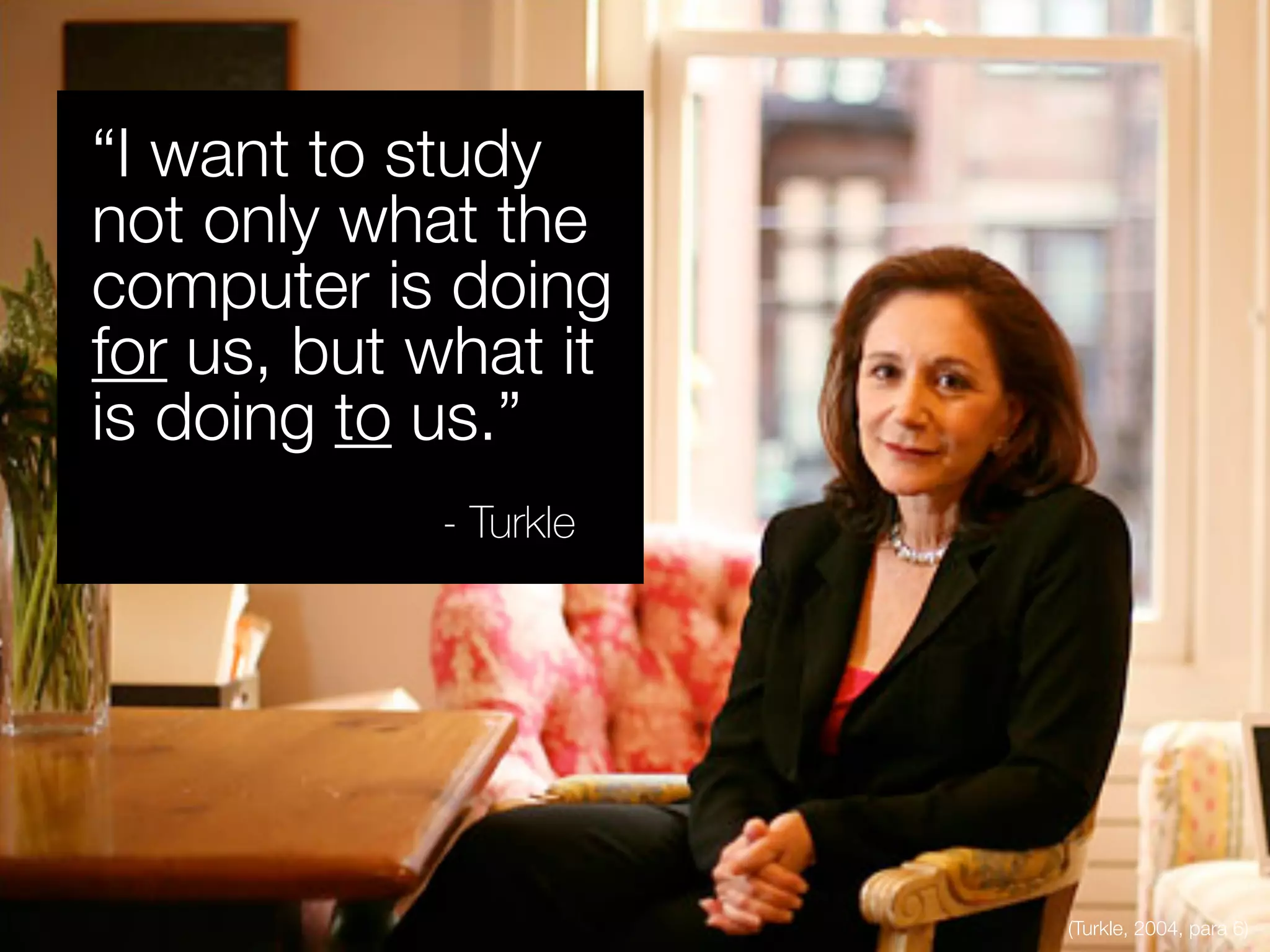
(Turkle, 2004, para 6)
“I want to study
not only what the
computer is doing
for us, but what it
is doing to us.”
- Turkle
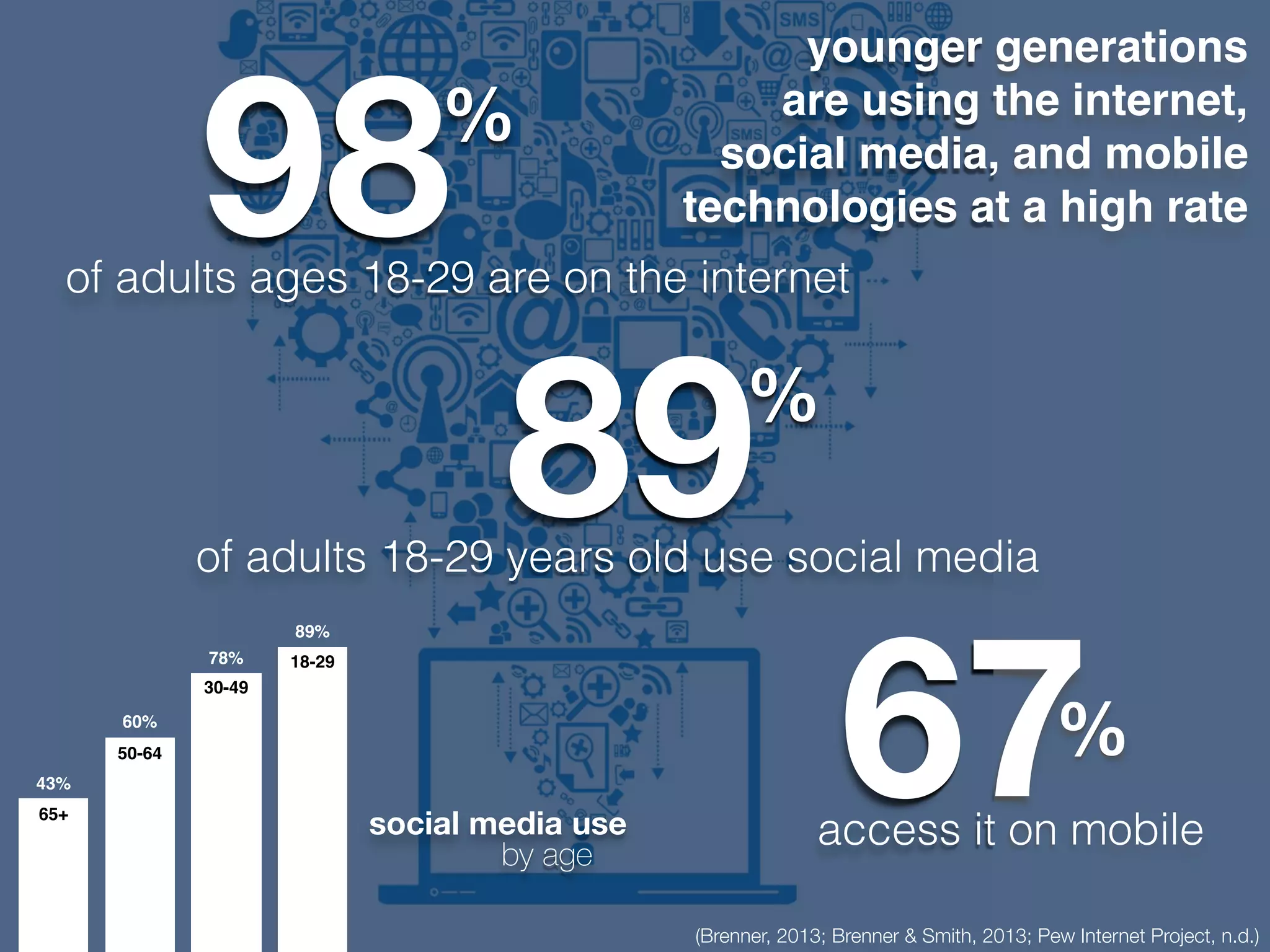
89%
of adults 18-29 years old use social media
67%
access it on mobile
98%
of adults ages 18-29 are on the internet
70
70
70
43%
60%
89%
65+
50-64
30-49
70
78% 18-29
social media use
by age
(Brenner, 2013; Brenner & Smith, 2013; Pew Internet Project, n.d.)
younger generations
are using the internet,
social media, and mobile
technologies at a high rate
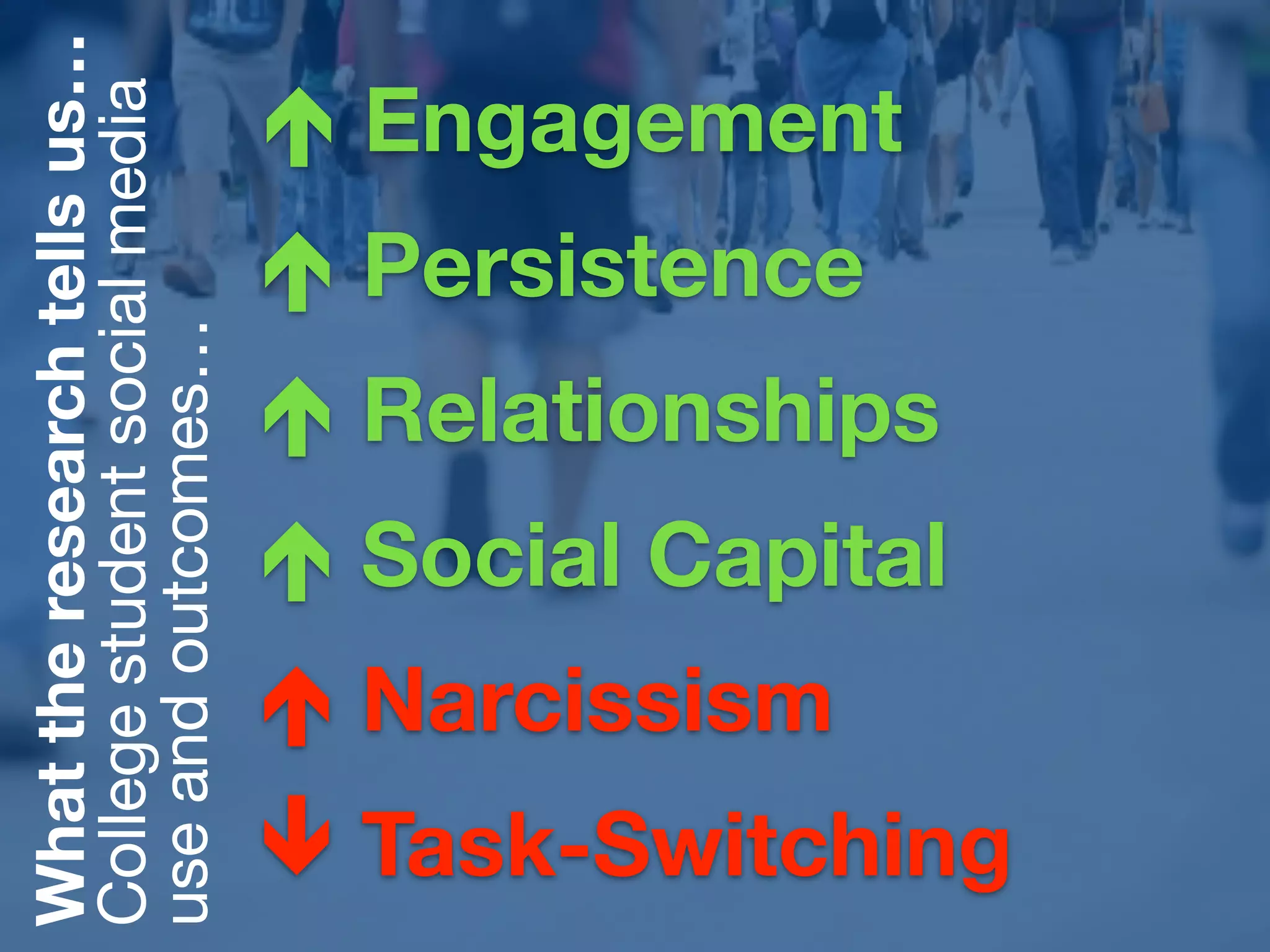
é Engagement
é Persistence
é Social Capital
é Relationships
é Narcissism
ê Task-Switching
Whattheresearchtellsus…
Collegestudentsocialmedia
useandoutcomes…
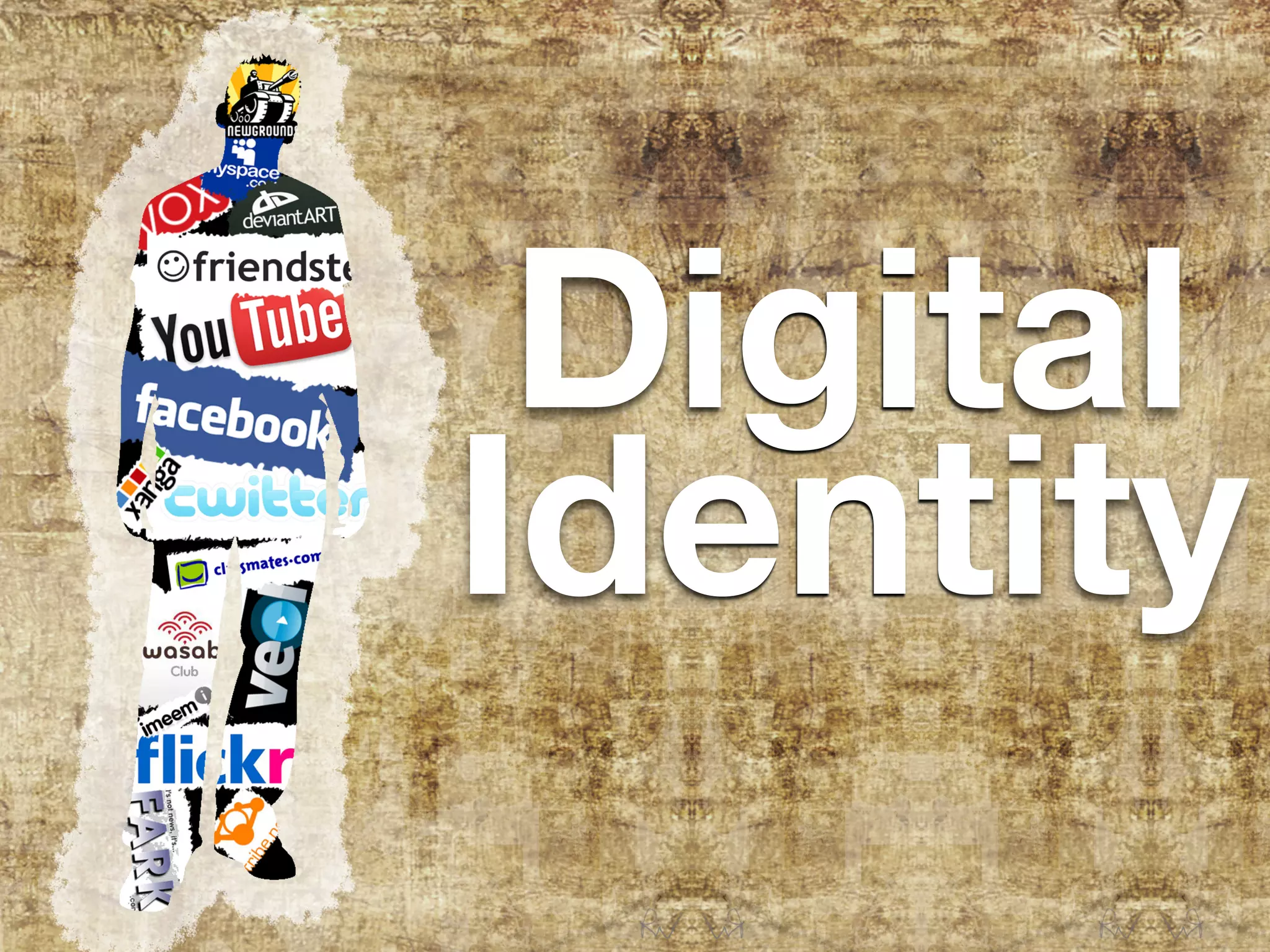
Digital
Identity
confusion
there’s a lot of
with this word…
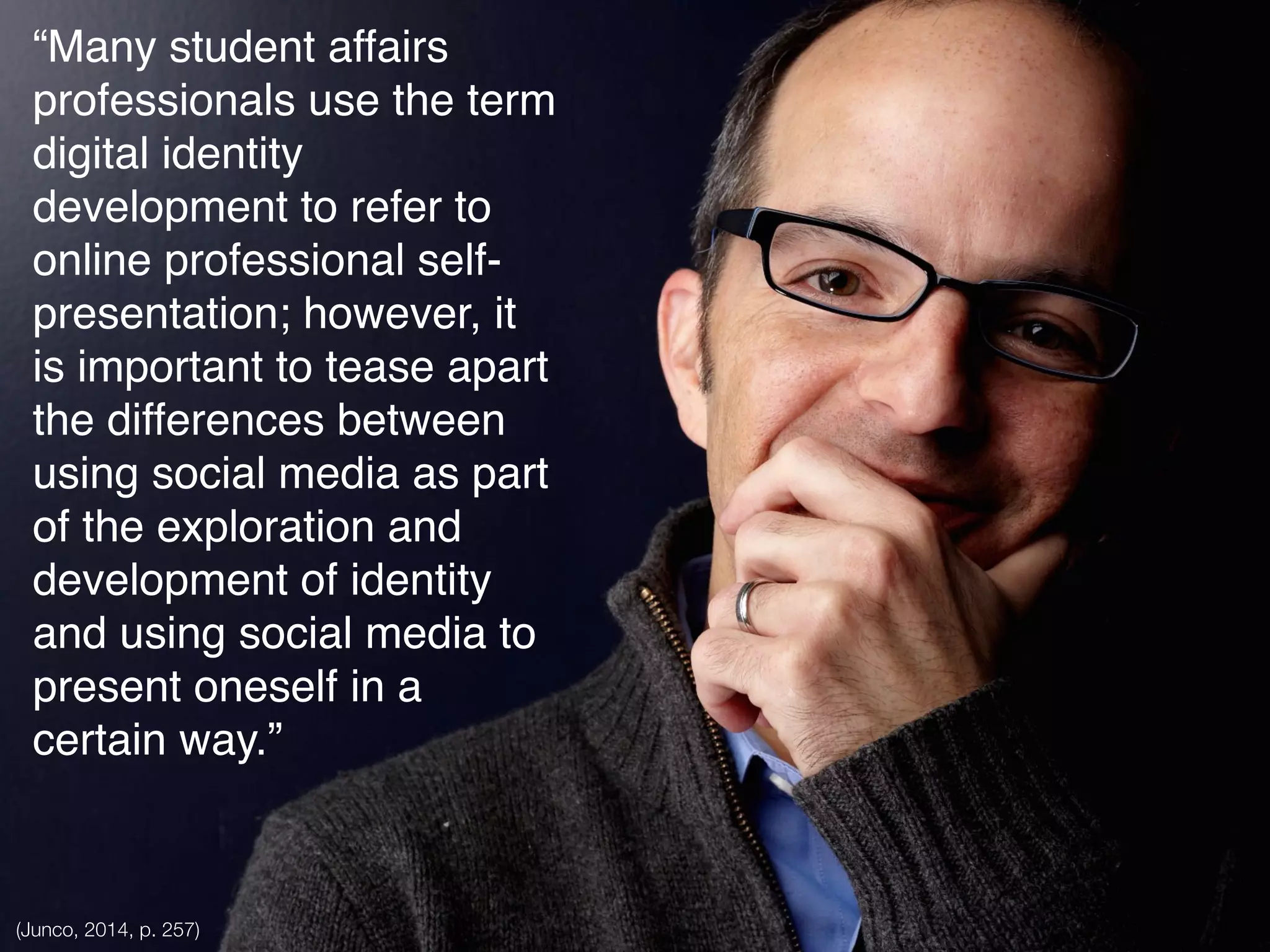
“Many student affairs
professionals use the term
digital identity
development to refer to
online professional self-
presentation; however, it
is important to tease apart
the differences between
using social media as part
of the exploration and
development of identity
and using social media to
present oneself in a
certain way.”
(Junco, 2014, p. 257)
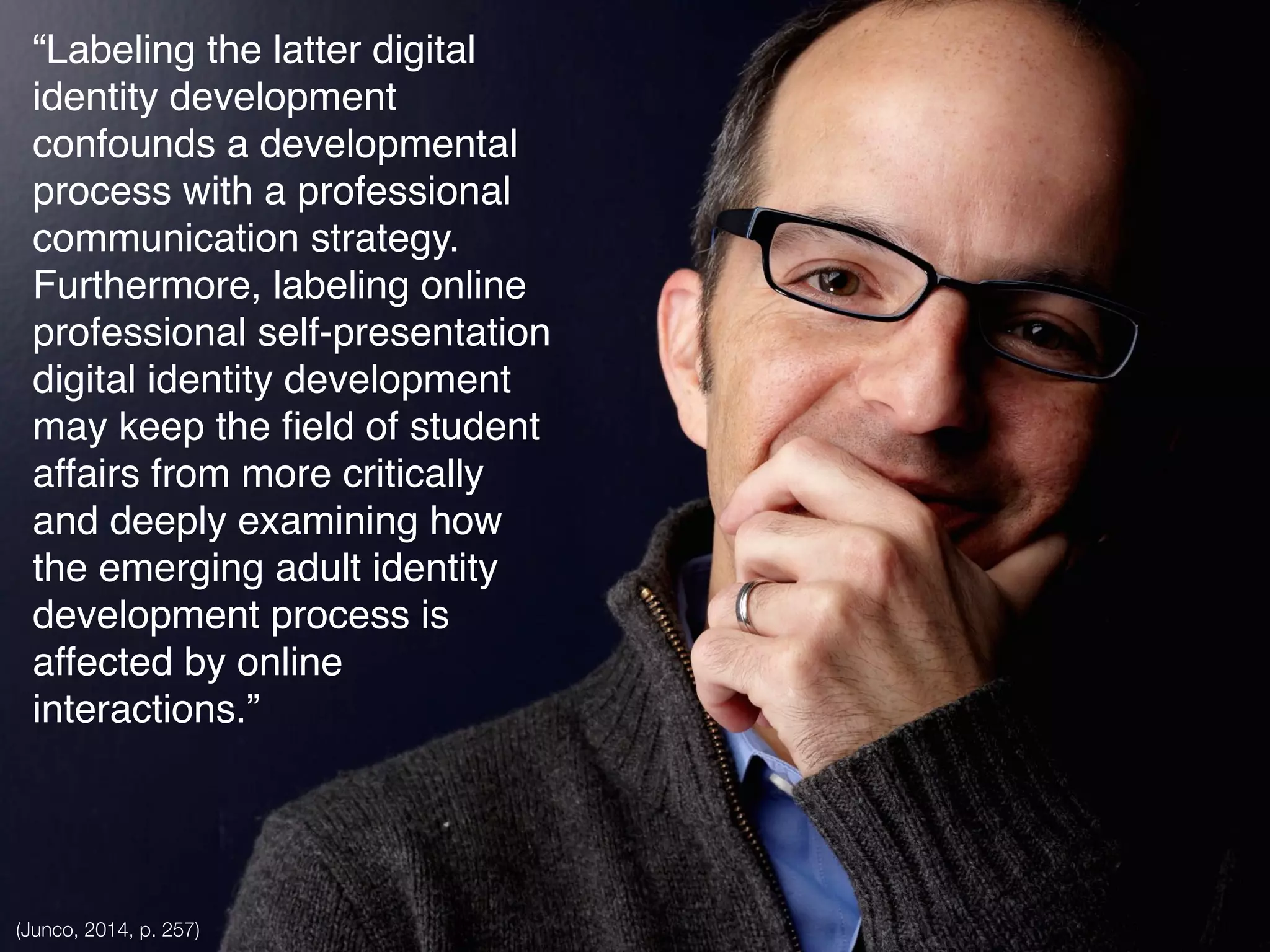
“Labeling the latter digital
identity development
confounds a developmental
process with a professional
communication strategy.
Furthermore, labeling online
professional self-presentation
digital identity development
may keep the field of student
affairs from more critically
and deeply examining how
the emerging adult identity
development process is
affected by online
interactions.”
(Junco, 2014, p. 257)
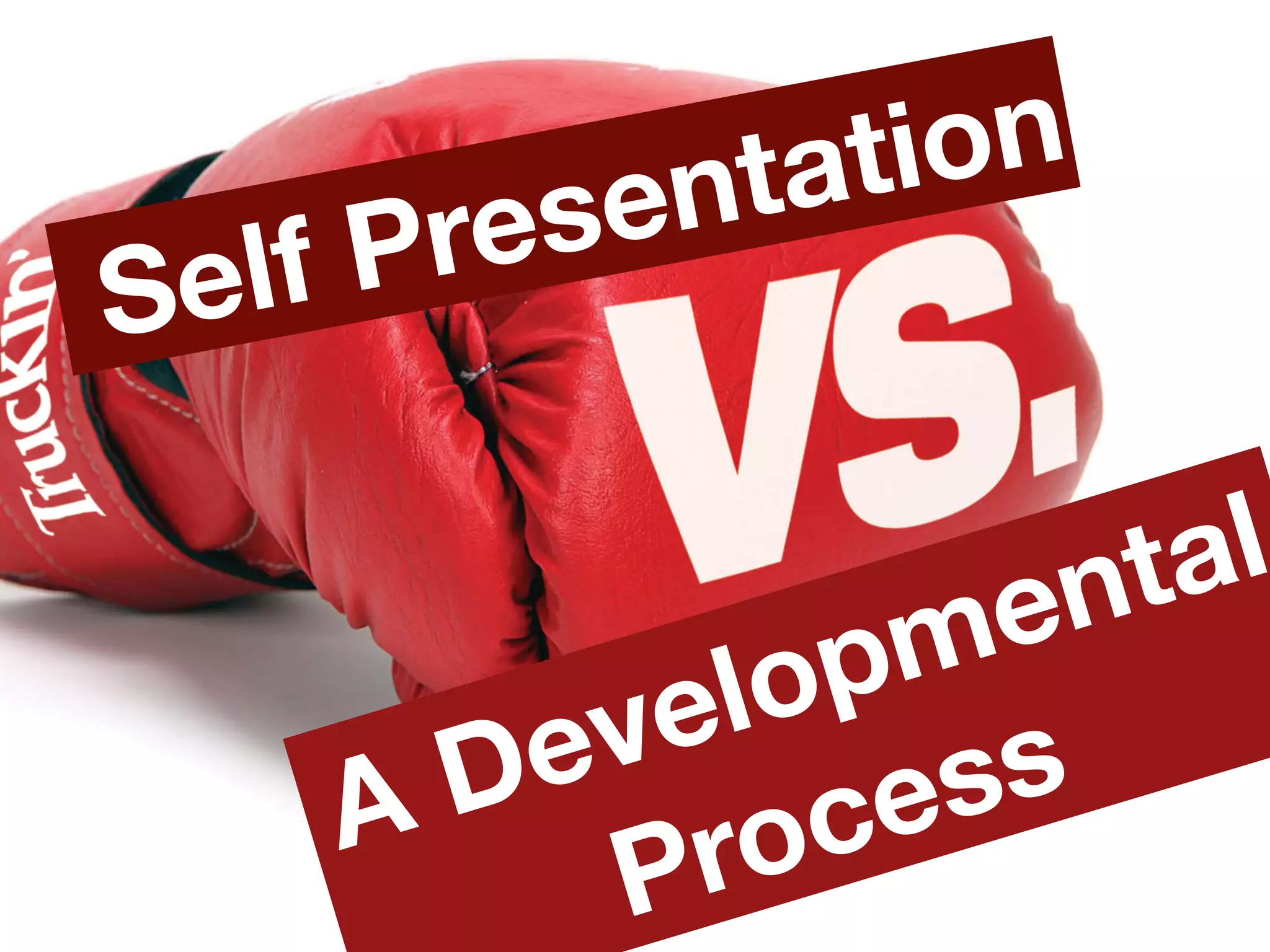
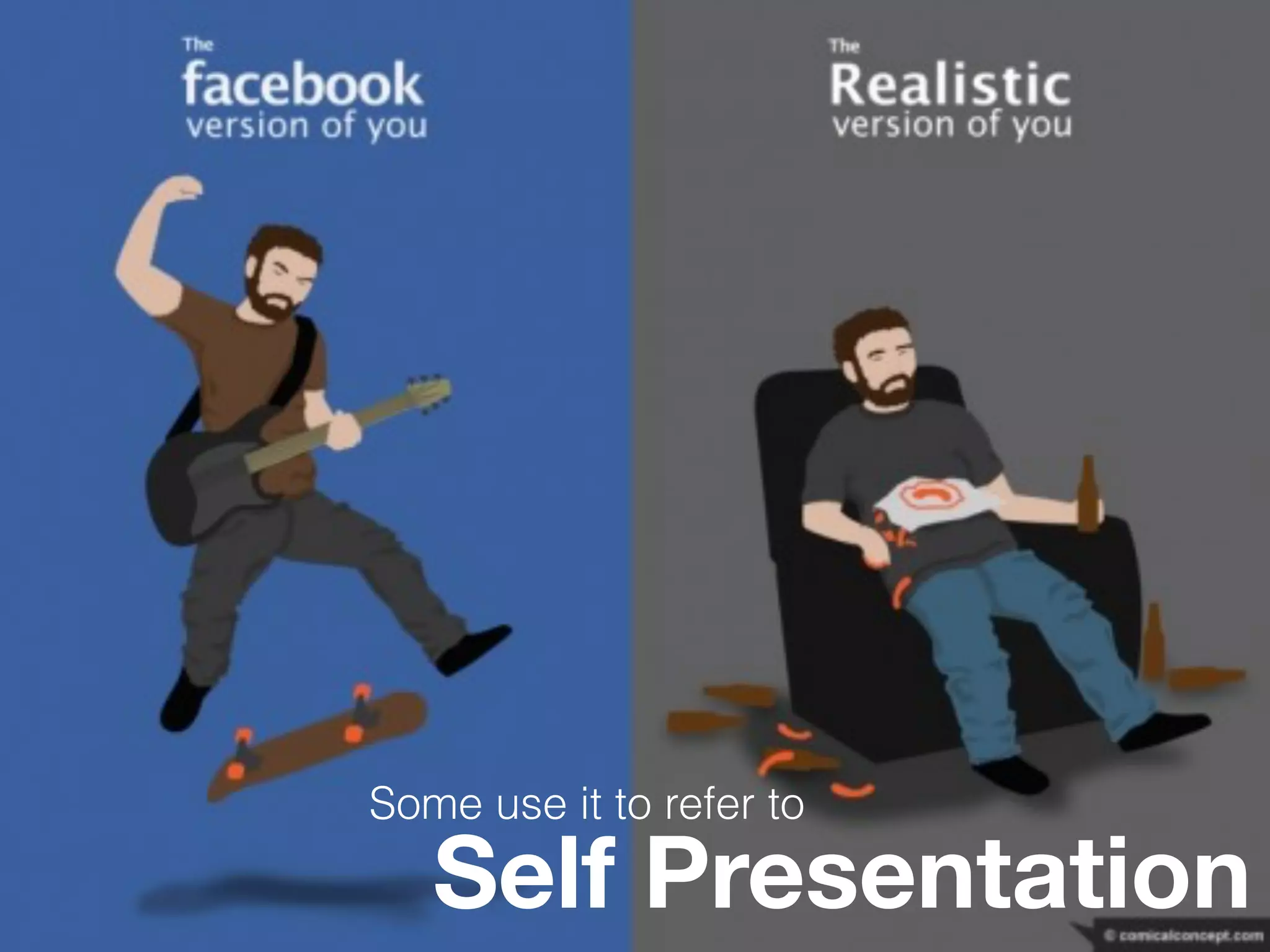
Self Presentation
A Developmental
Process
Self Presentation
Some use it to refer to
Psychological
Process
And conflate it with a
in here
today we’ll be talking about what’s going on
research
What does the
say?
NOTHING
There has been little to no qualitative research focusing on the
influence of digital and social media on student development.
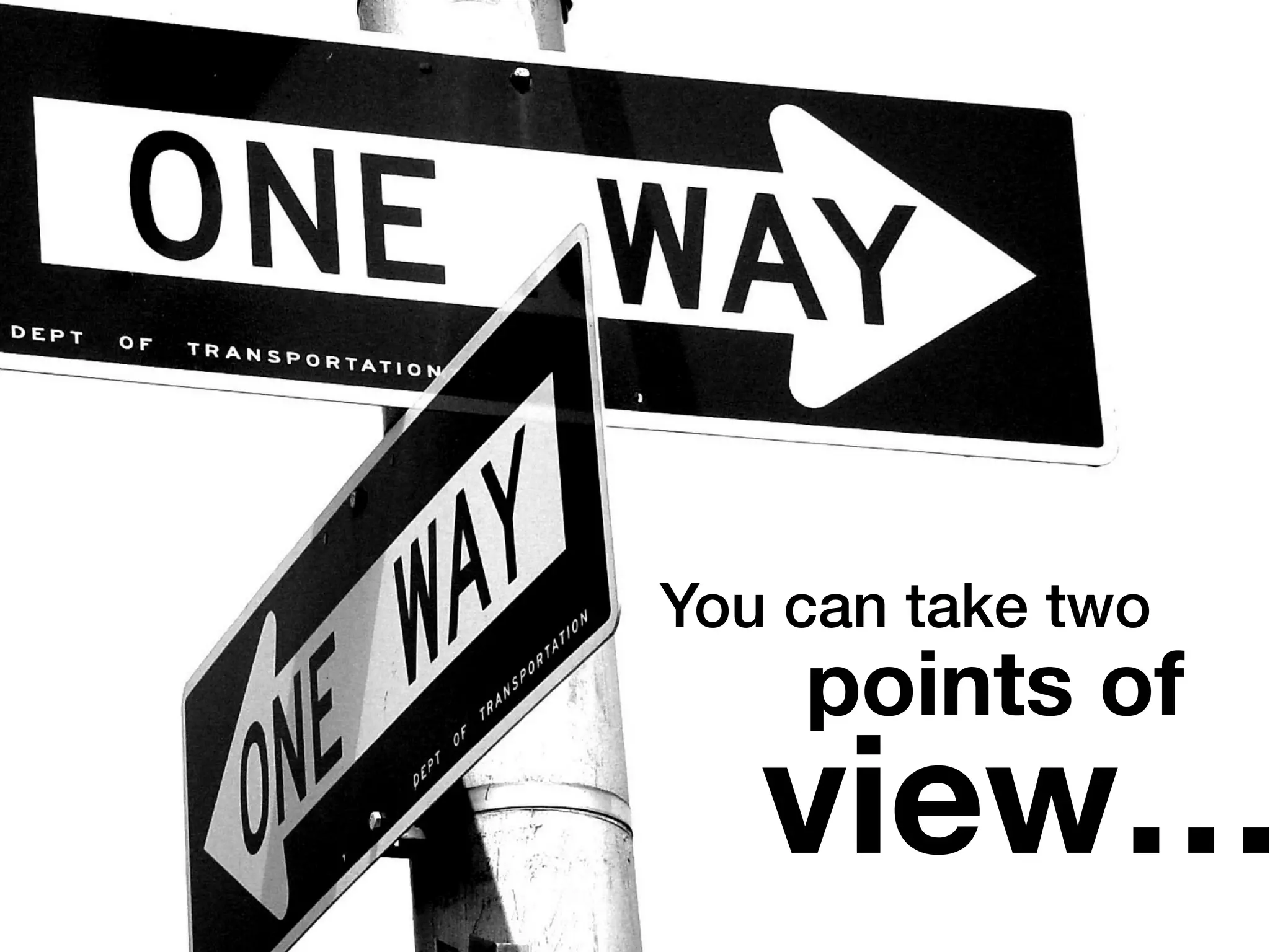
You can take two
points of
view…
(Evans, Forney, Guido, Patton, & Renn, 2010, p. 5;
Woodard, Love, & Komives, 2000)
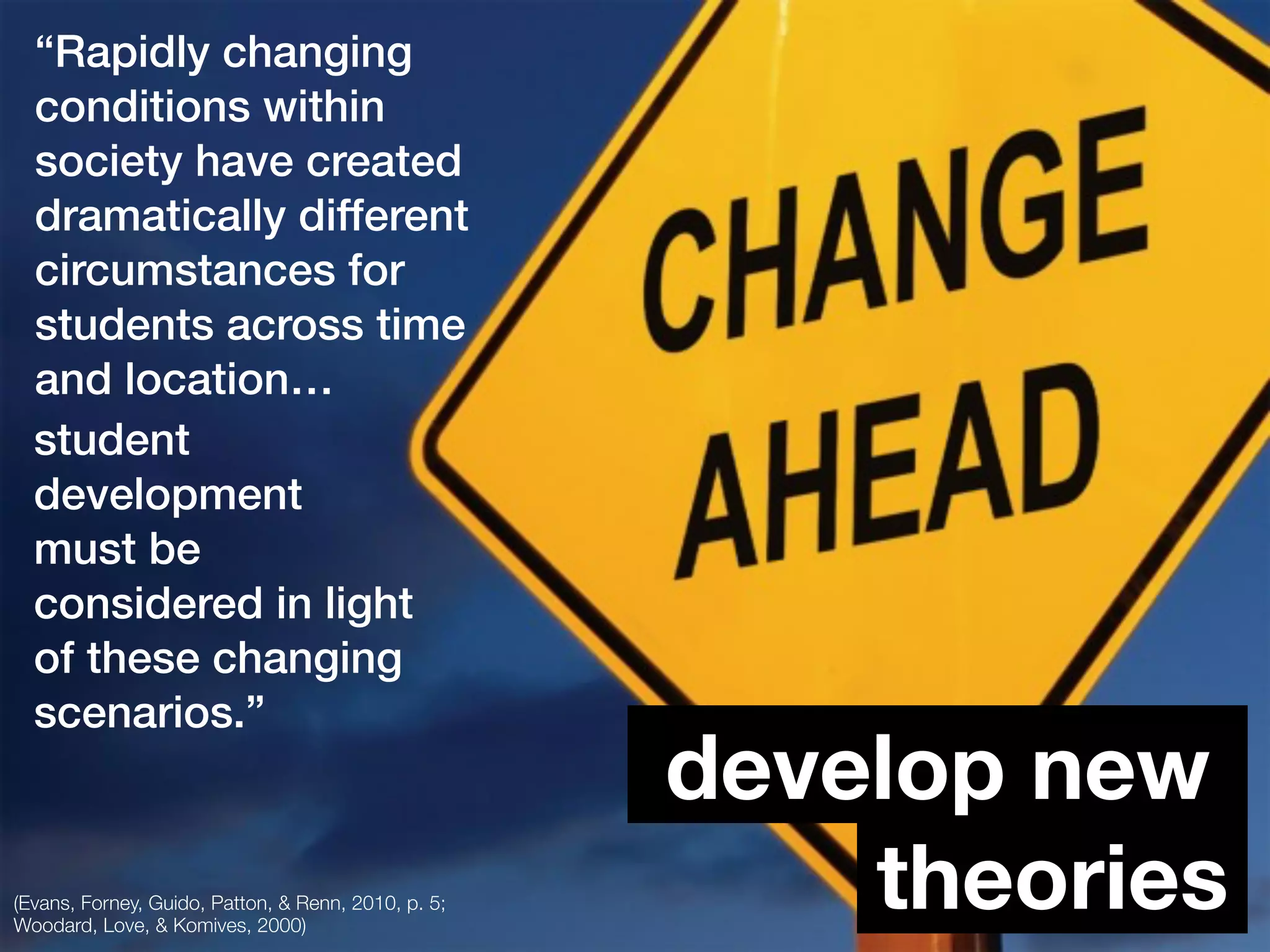
“Rapidly changing
conditions within
society have created
dramatically different
circumstances for
students across time
and location…
student
development
must be
considered in light
of these changing
scenarios.”
develop new
theories
“human development
‘remain[s] much the same
from age to age and must
so remain as long as
human nature and
physical environment
existing theories
modify/apply
(Evans, Forney, Guido, Patton, & Renn, 2010, p. 93;
Haskins, 1957)
continue what they
have been. In his
relations to life and
learning the medieval
student resembled his
modern successor far
more than is often
supposed’ (p. 93).”
Applying current
theories to online/
social media contexts.
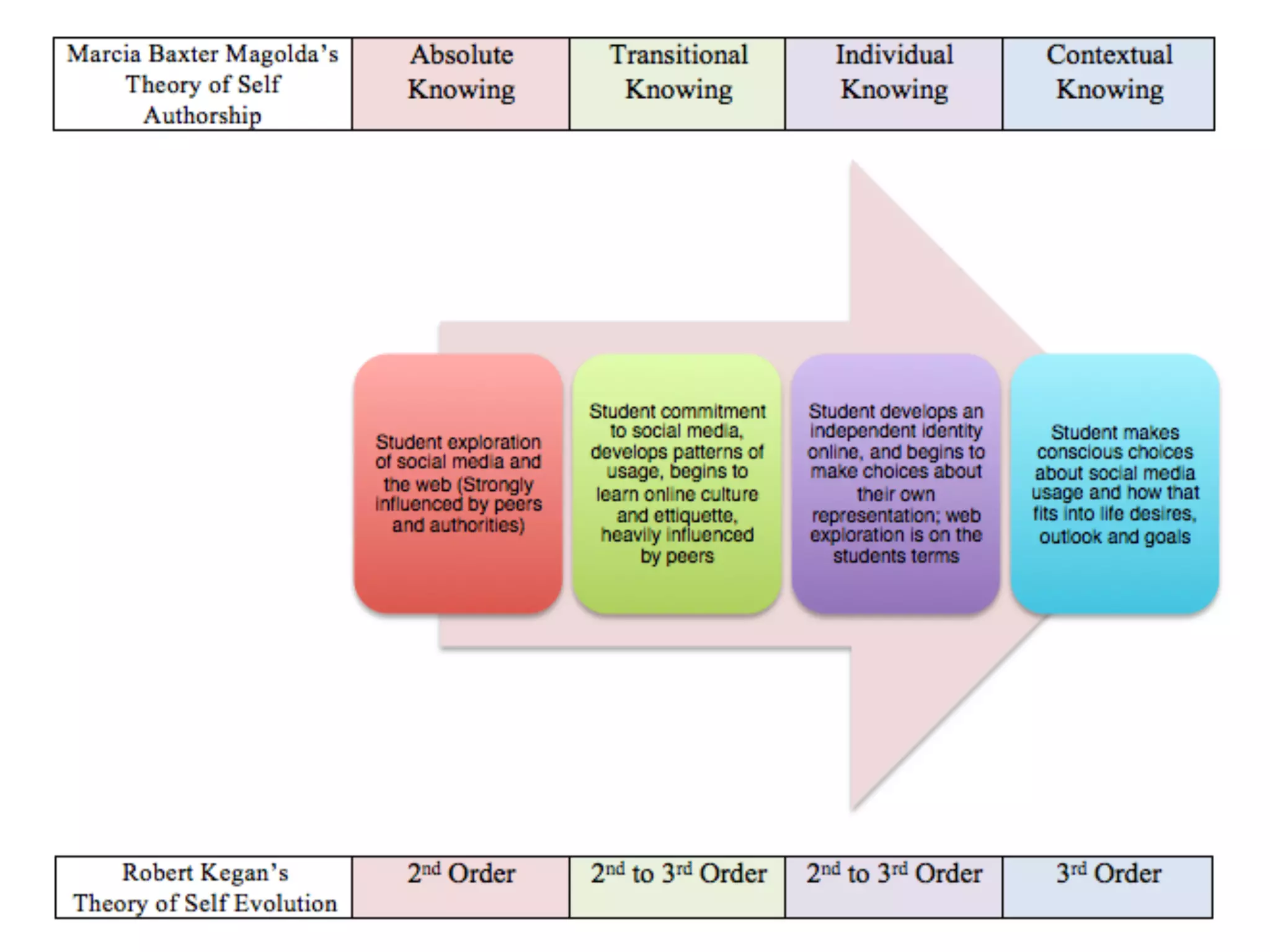
• Chickering
• Baxter Magolda/Kegan
• Bronfenbrenner
Vectorsof Identity Development
Chickering’s
DIGITAL
• Developing competence
• Managing emotions
• Moving through autonomy to interdependence
• Developing mature interpersonal relationships
• Establishing identity
• Developing Purpose
• Establishing Integrity
Vectors
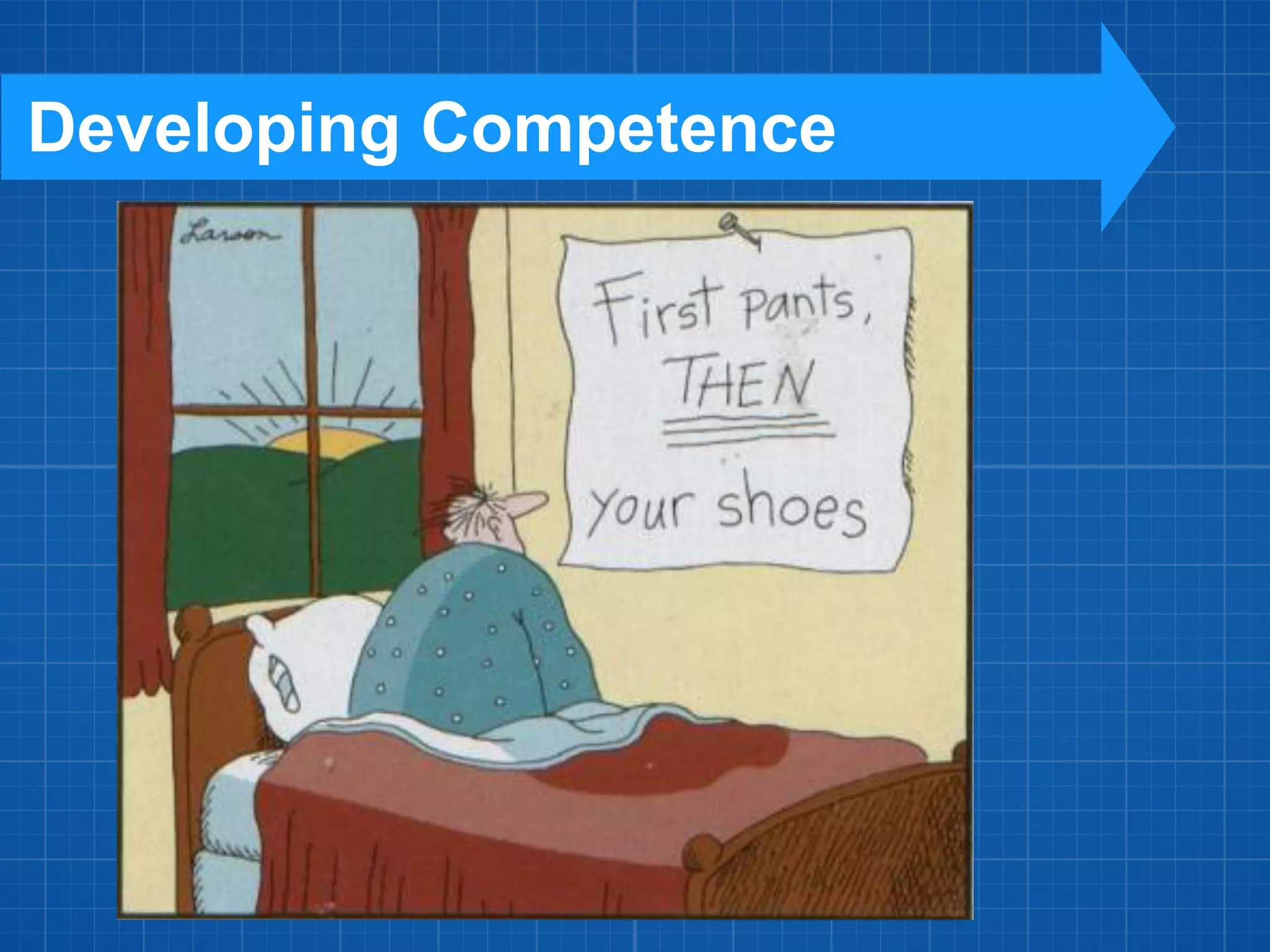
Developing Competence
• Time management
• Facility in using online tools to complete
tasks
• Communication and interaction skills
• Relationship skills
• Not exhibiting humblebrag behavior
Developing Competence
DIGITAL
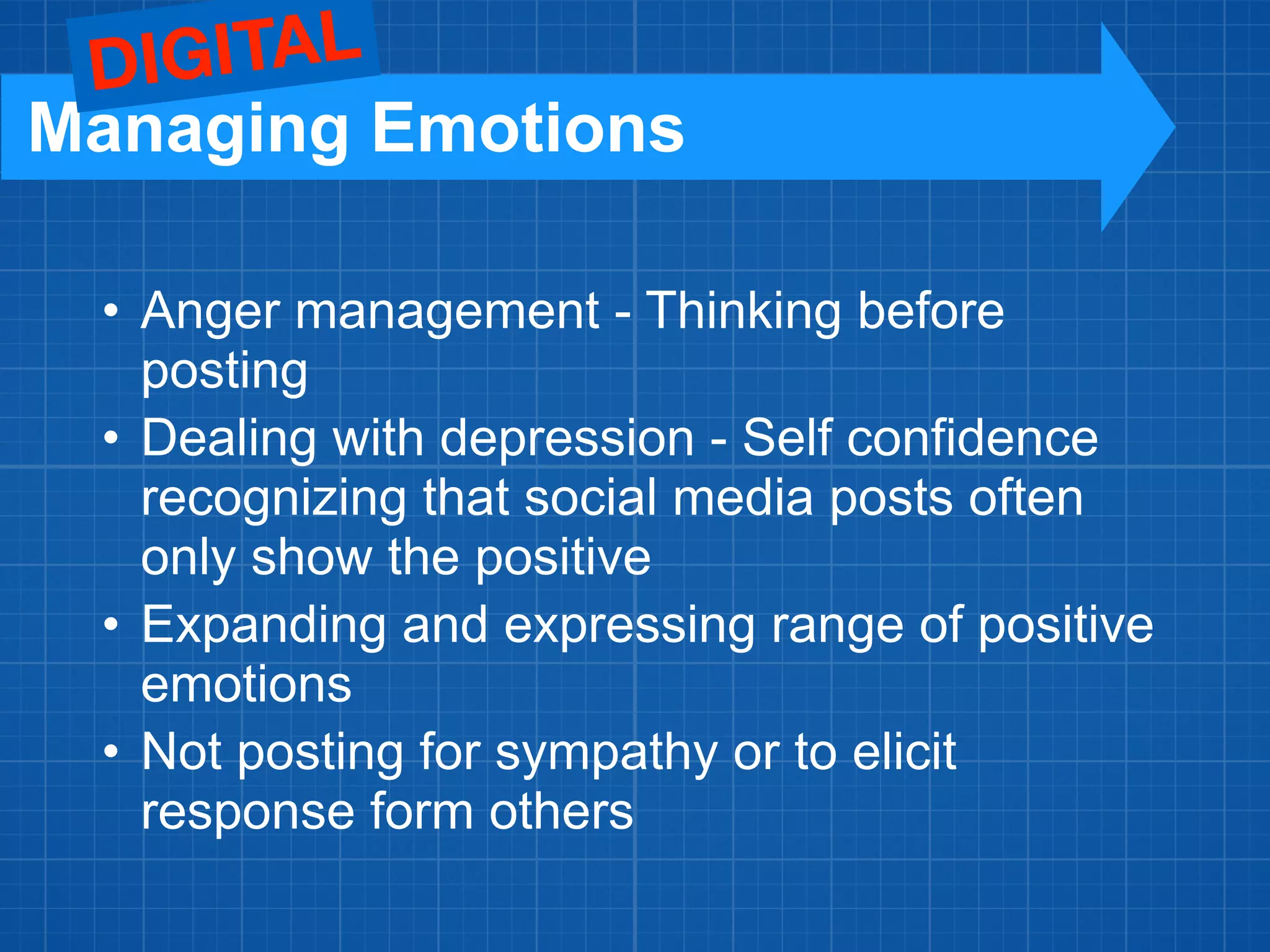
Managing Emotions
• Anger management - Thinking before
posting
• Dealing with depression - Self confidence
recognizing that social media posts often
only show the positive
• Expanding and expressing range of positive
emotions
• Not posting for sympathy or to elicit
response form others
Managing Emotions
DIGITAL
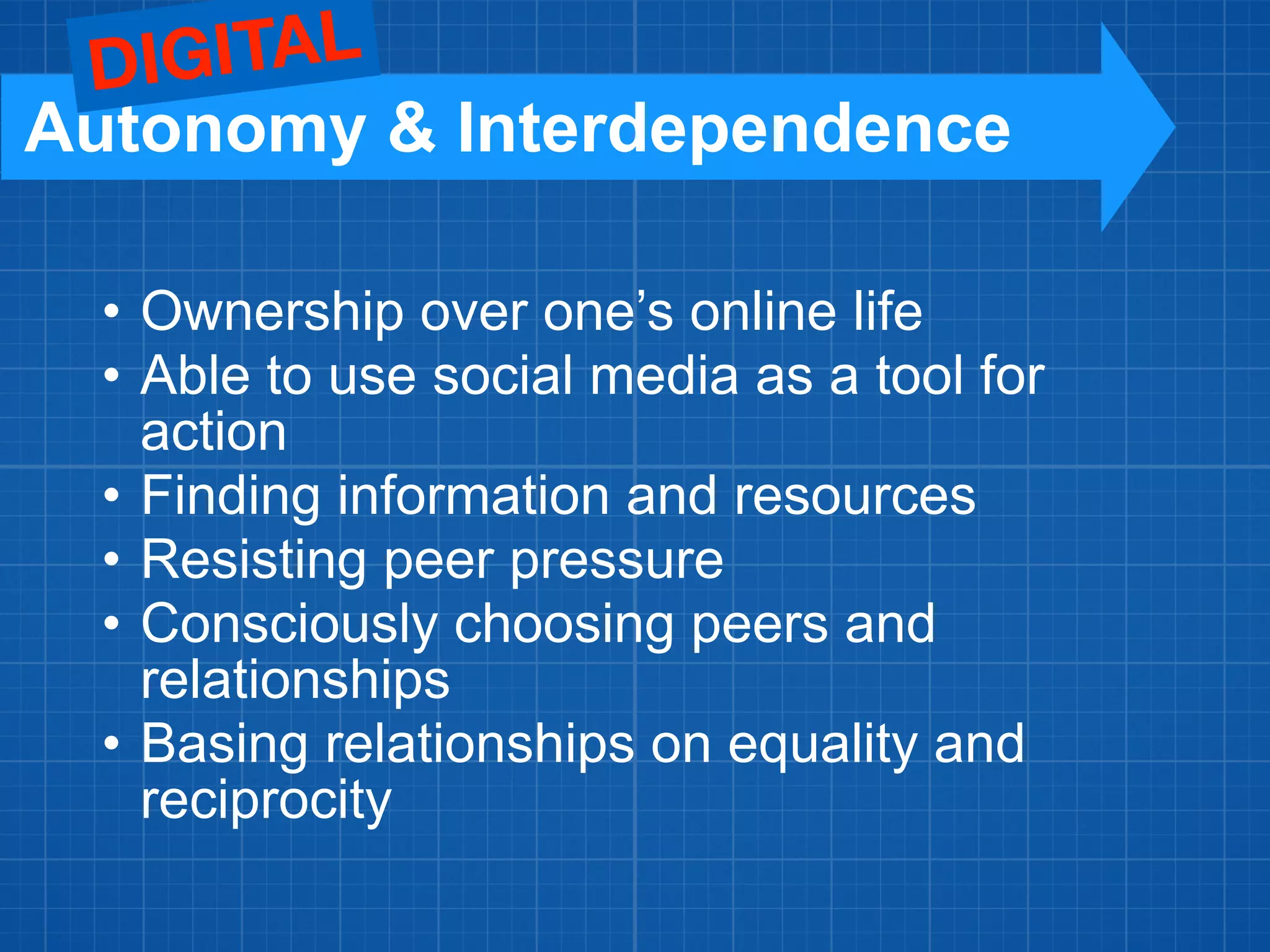
Autonomy & Interdependence
• Ownership over one’s online life
• Able to use social media as a tool for
action
• Finding information and resources
• Resisting peer pressure
• Consciously choosing peers and
relationships
• Basing relationships on equality and
reciprocity
Autonomy & Interdependence
DIGITAL
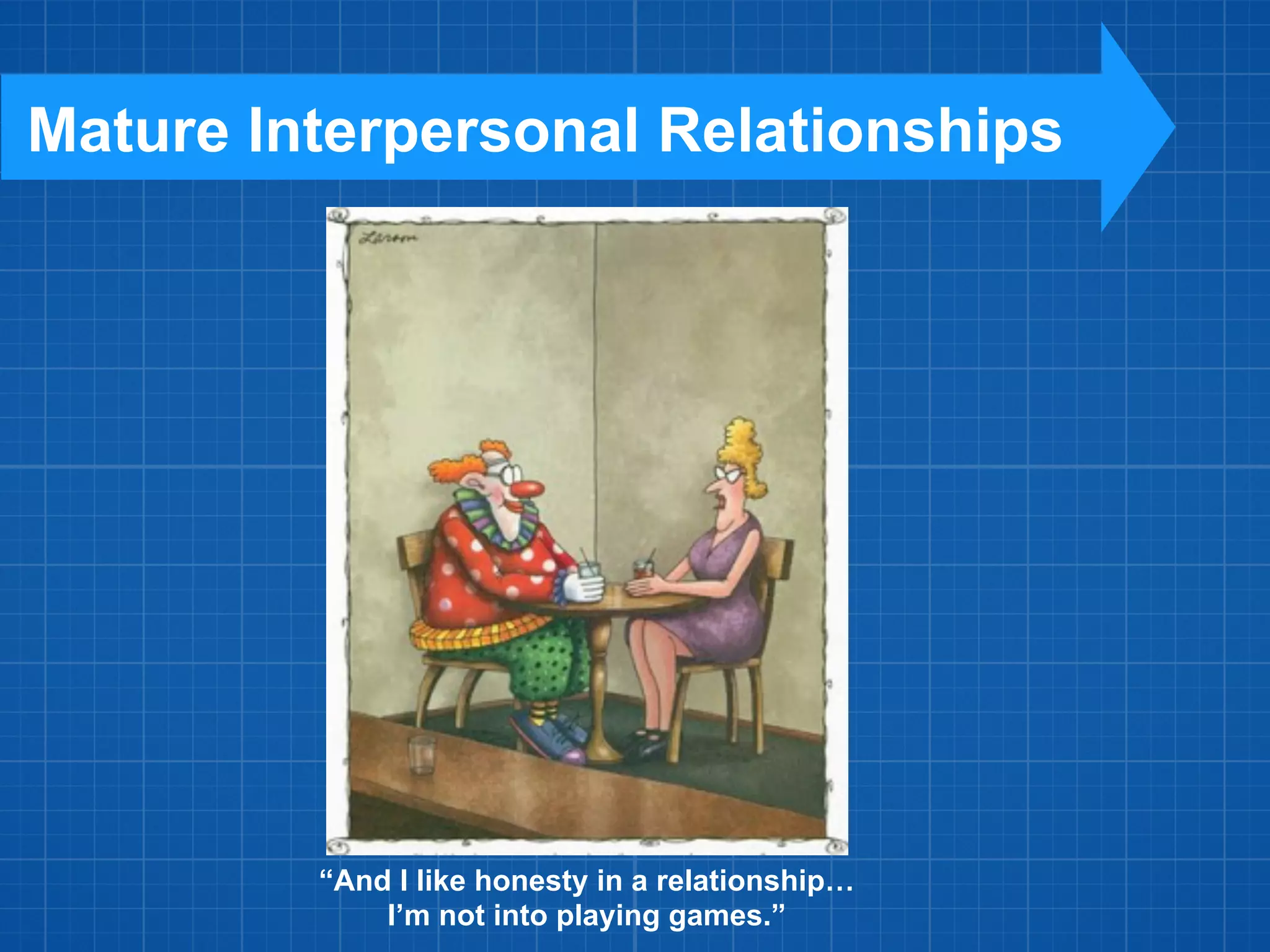
“And I like honesty in a relationship…
I’m not into playing games.”
Mature Interpersonal Relationships
• Able to engage in civil discourse through
comments and chats
• Understanding what online versus offline
relationship maintenance should look like
- acts appropriately
• Thinks about one’s posts and its impact
on others
Mature Interpersonal Relationships
DIGITAL
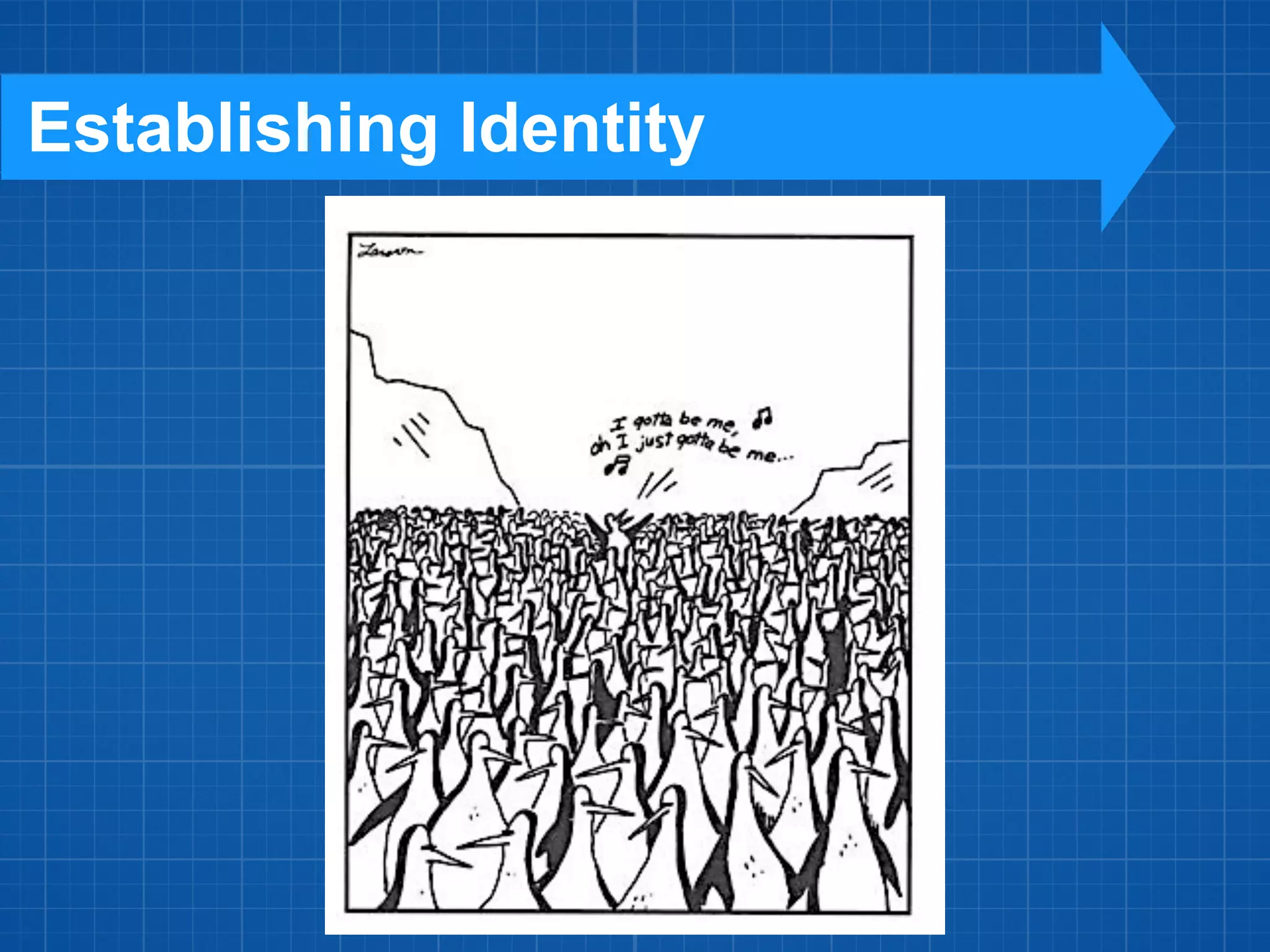
Establishing Identity
• Identity exploration online — taking on
personas, finding like communities
• Acting consistently across contexts (?)
Online/Offline, Across different sites
• Developing comfort with body and
appearance - Selfies? Narcissim?
• Establishing and taking an active role in
curating self-presentation with purpose
Establishing Identity
DIGITAL
Developing Purpose
• Utilizing online tools to network
• Engaging in career interests and
groups online
• Able to articulate how/why they use
social media
Developing Purpose
DIGITAL
Developing Integrity
• Clarify values through online interaction
• Able to understand and contextualize
others’ post/beleifs
• Are you a authentic self online and off
(does it matter?)
• Ability to use social media for social
good
Developing Integrity
DIGITAL
Robert Kegan’s
Orders of Consciousness
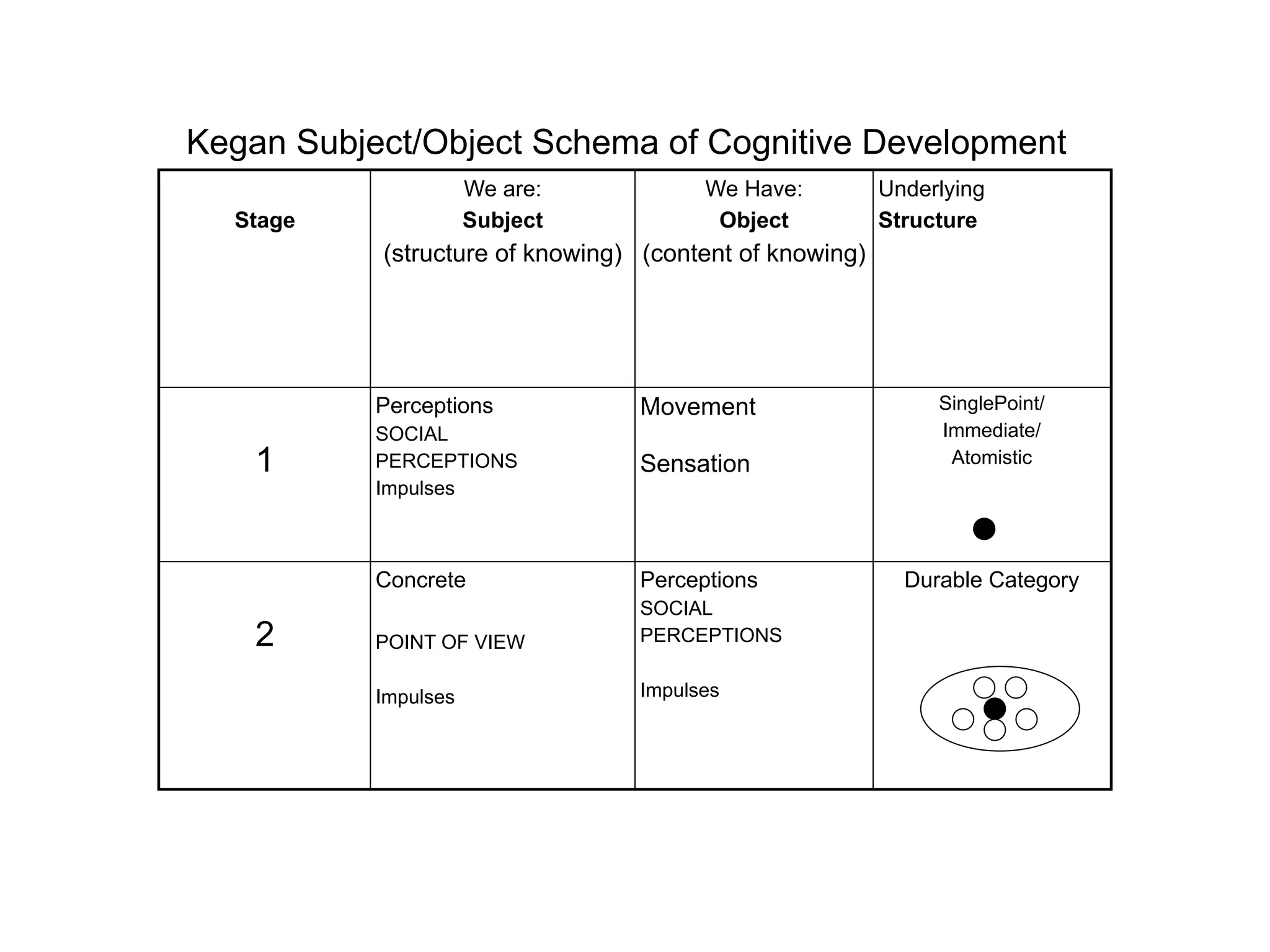
Stage
We are:
Subject
(structure of knowing)
We Have:
Object
(content of knowing)

Underlying
Structure
1
Perceptions
SOCIAL
PERCEPTIONS
Impulses
Movement
Sensation
SinglePoint/
Immediate/
Atomistic
2
Concrete
POINT OF VIEW
Impulses
Perceptions
SOCIAL
PERCEPTIONS
Impulses
Durable Category
Kegan Subject/Object Schema of Cognitive Development
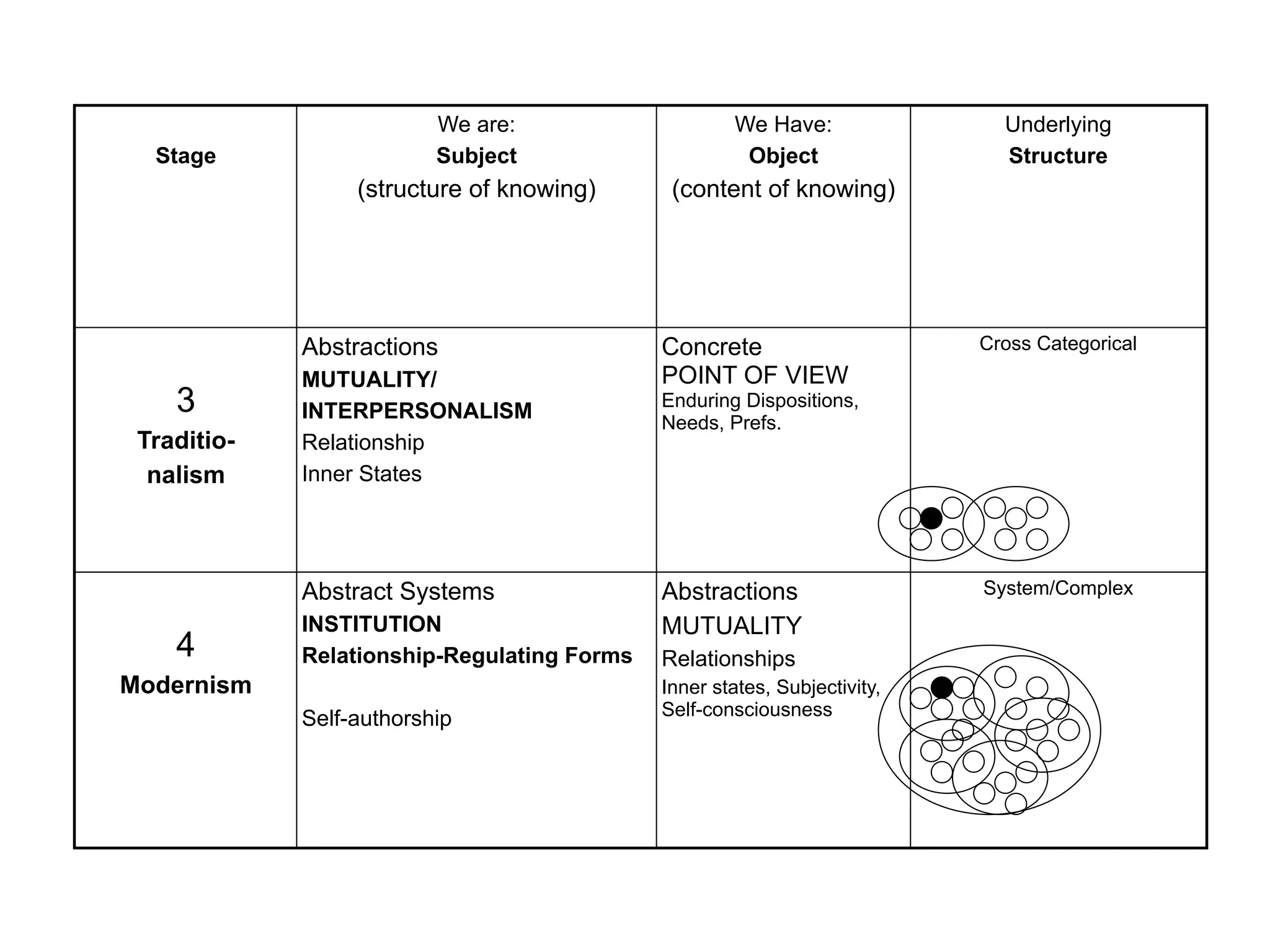
Stage
We are:
Subject
(structure of knowing)
We Have:
Object
(content of knowing)
Underlying
Structure
3
Traditio-
nalism
Abstractions
MUTUALITY/
INTERPERSONALISM
Relationship
Inner States
Concrete
POINT OF VIEW
Enduring Dispositions,
Needs, Prefs.
Cross Categorical
4
Modernism
Abstract Systems
INSTITUTION
Relationship-Regulating Forms
Self-authorship
Abstractions
MUTUALITY
Relationships
Inner states, Subjectivity,
Self-consciousness
System/Complex
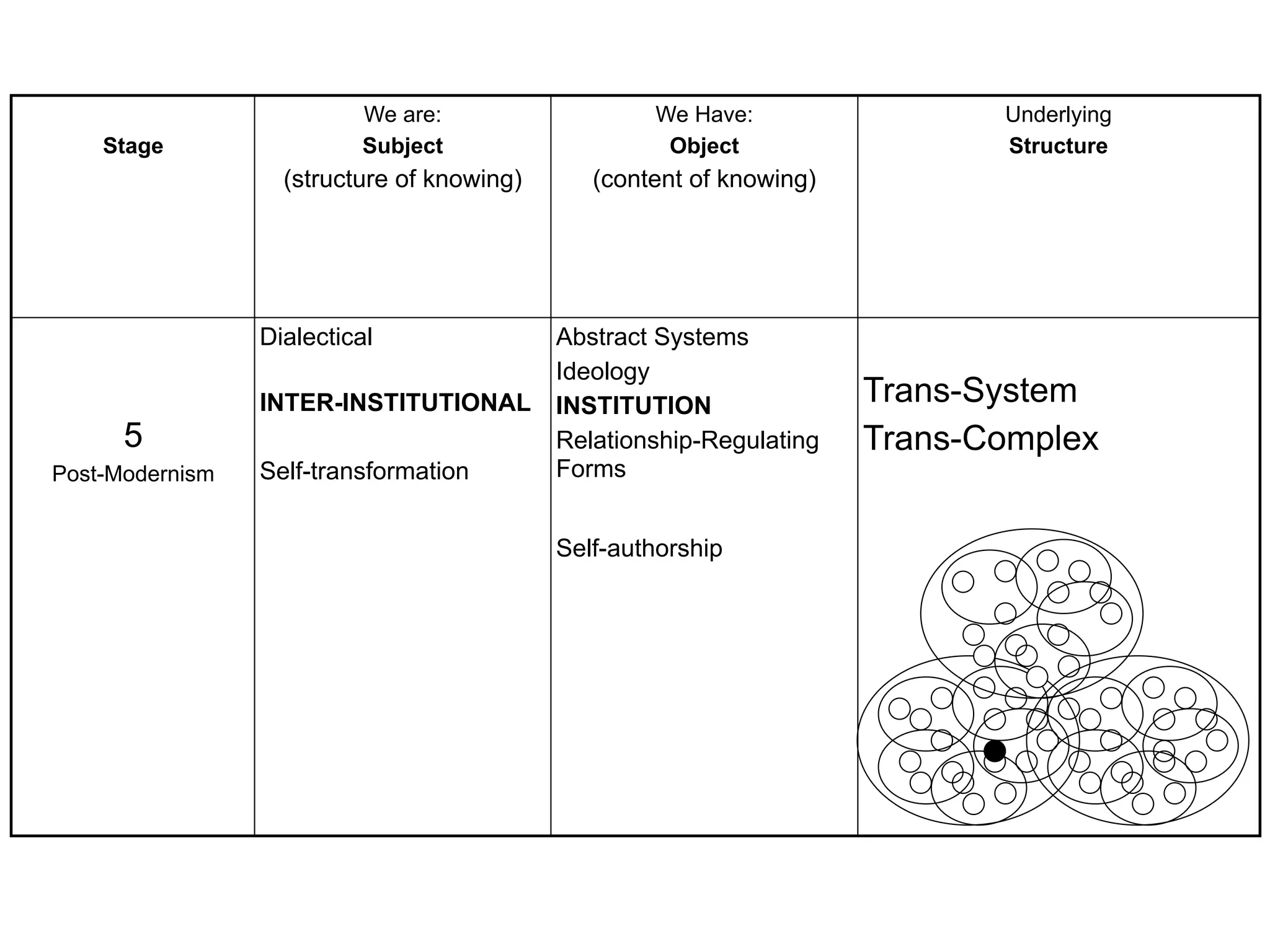
Stage
We are:
Subject
(structure of knowing)
We Have:
Object
(content of knowing)
Underlying
Structure
5
Post-Modernism
Dialectical
INTER-INSTITUTIONAL
Self-transformation
Abstract Systems
Ideology
INSTITUTION
Relationship-Regulating
Forms
Self-authorship
Trans-System
Trans-Complex
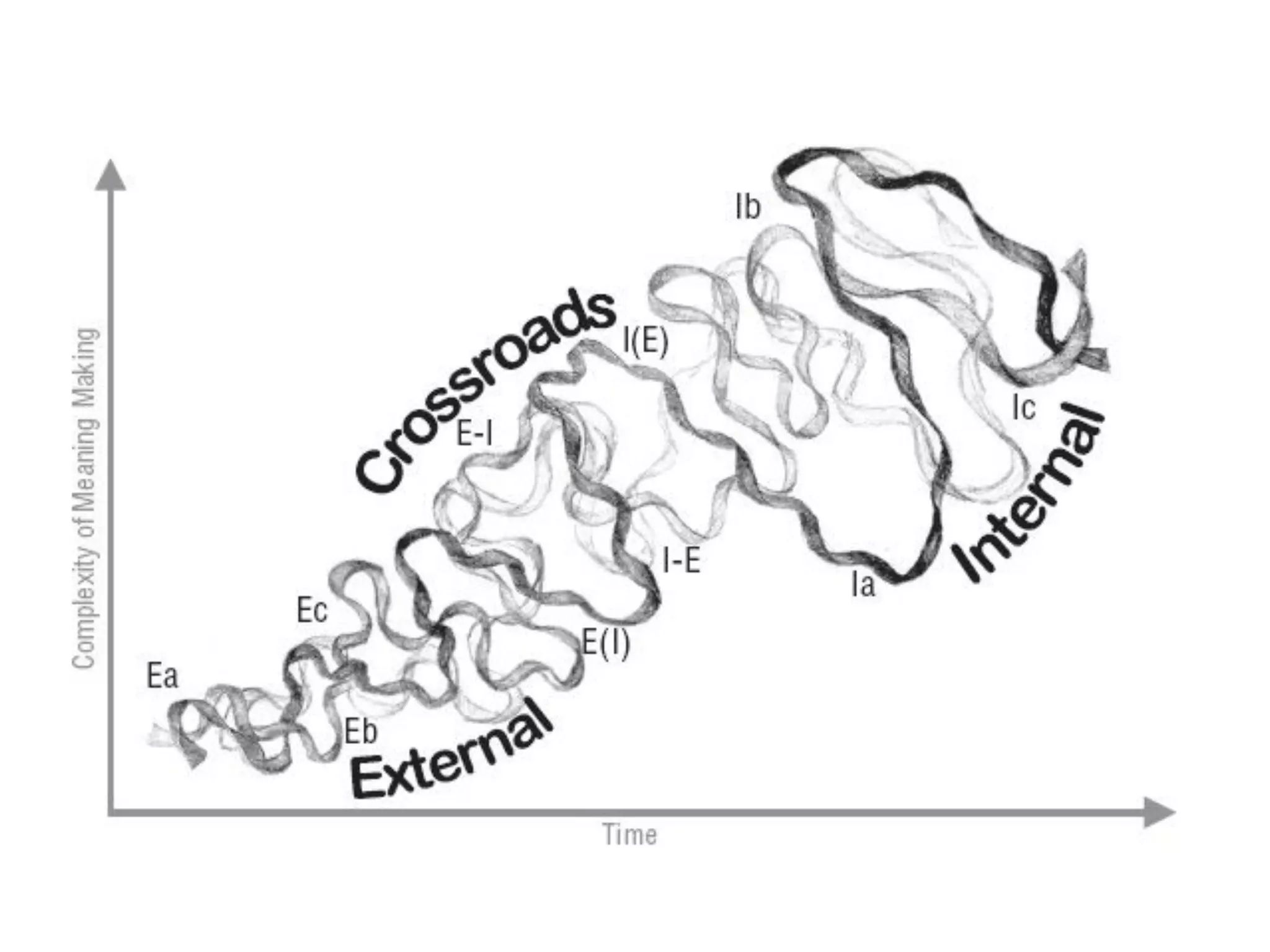
Marcia
Baxter
Magolda’s
Theory of
Self-Authorship
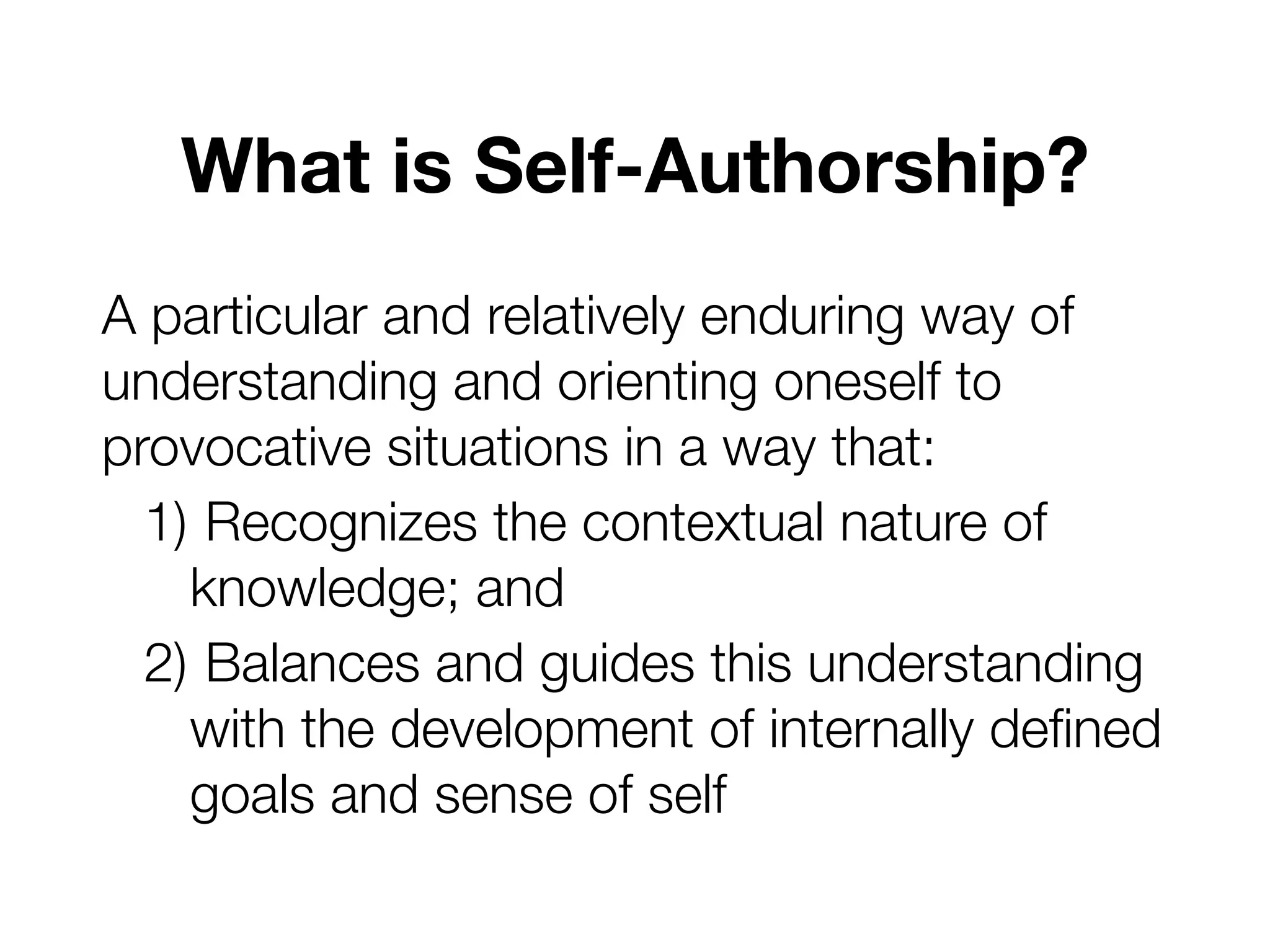
What is Self-Authorship?
A particular and relatively enduring way of
understanding and orienting oneself to
provocative situations in a way that:
1) Recognizes the contextual nature of
knowledge; and
2) Balances and guides this understanding
with the development of internally defined
goals and sense of self
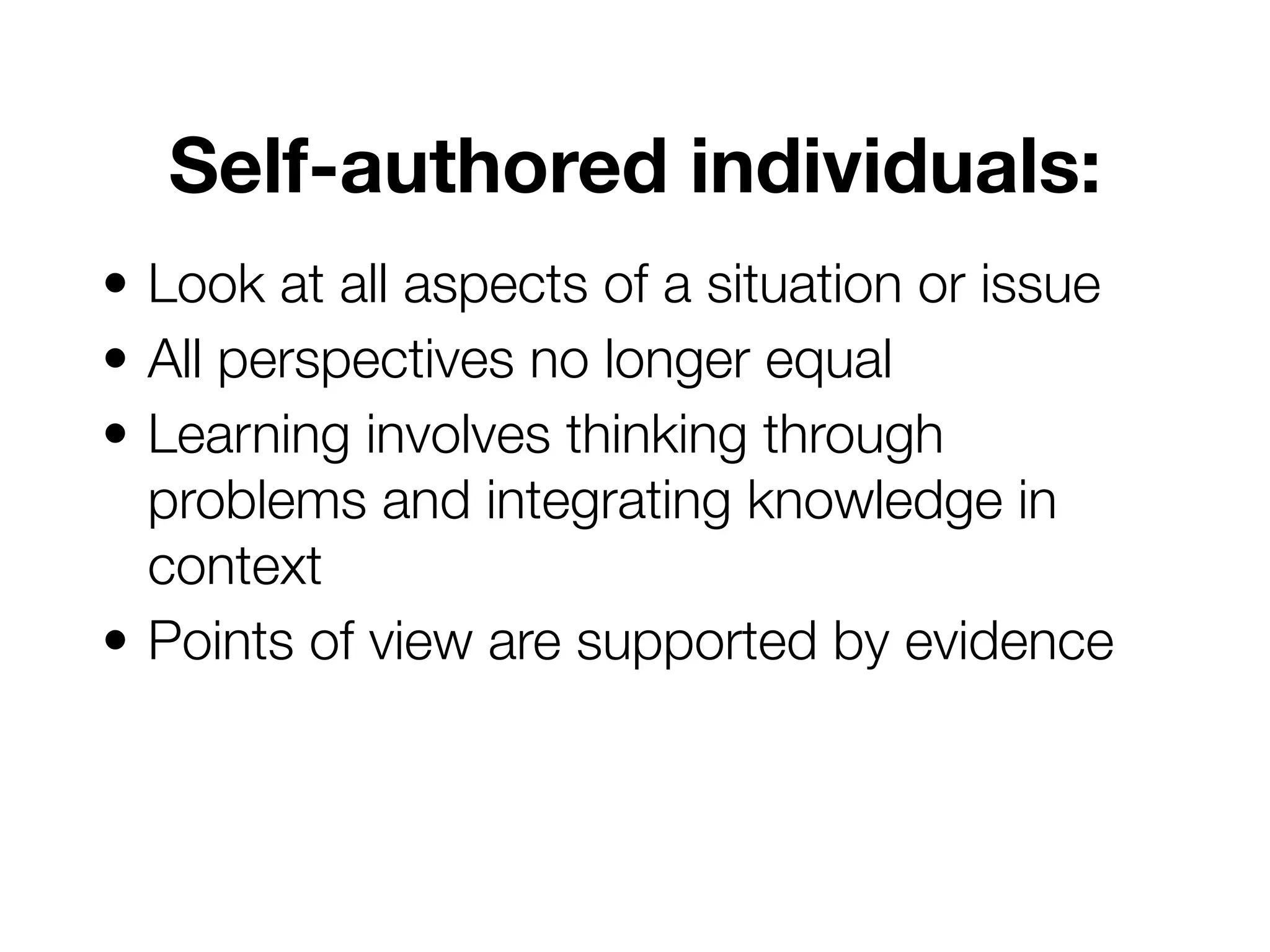
Self-authored individuals:
• Look at all aspects of a situation or issue
• All perspectives no longer equal
• Learning involves thinking through
problems and integrating knowledge in
context
• Points of view are supported by evidence
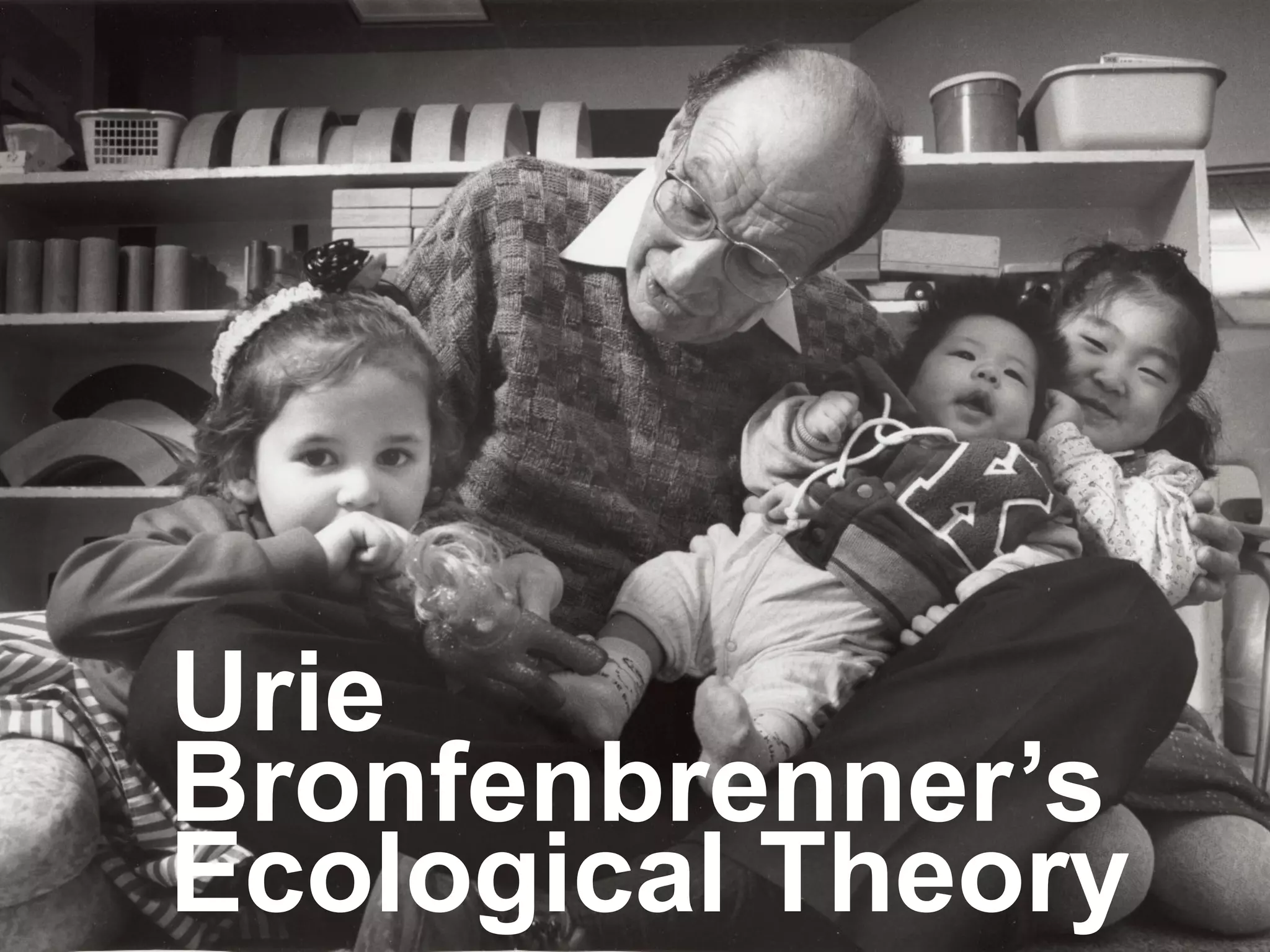
Urie
Bronfenbrenner’s
Ecological Theory
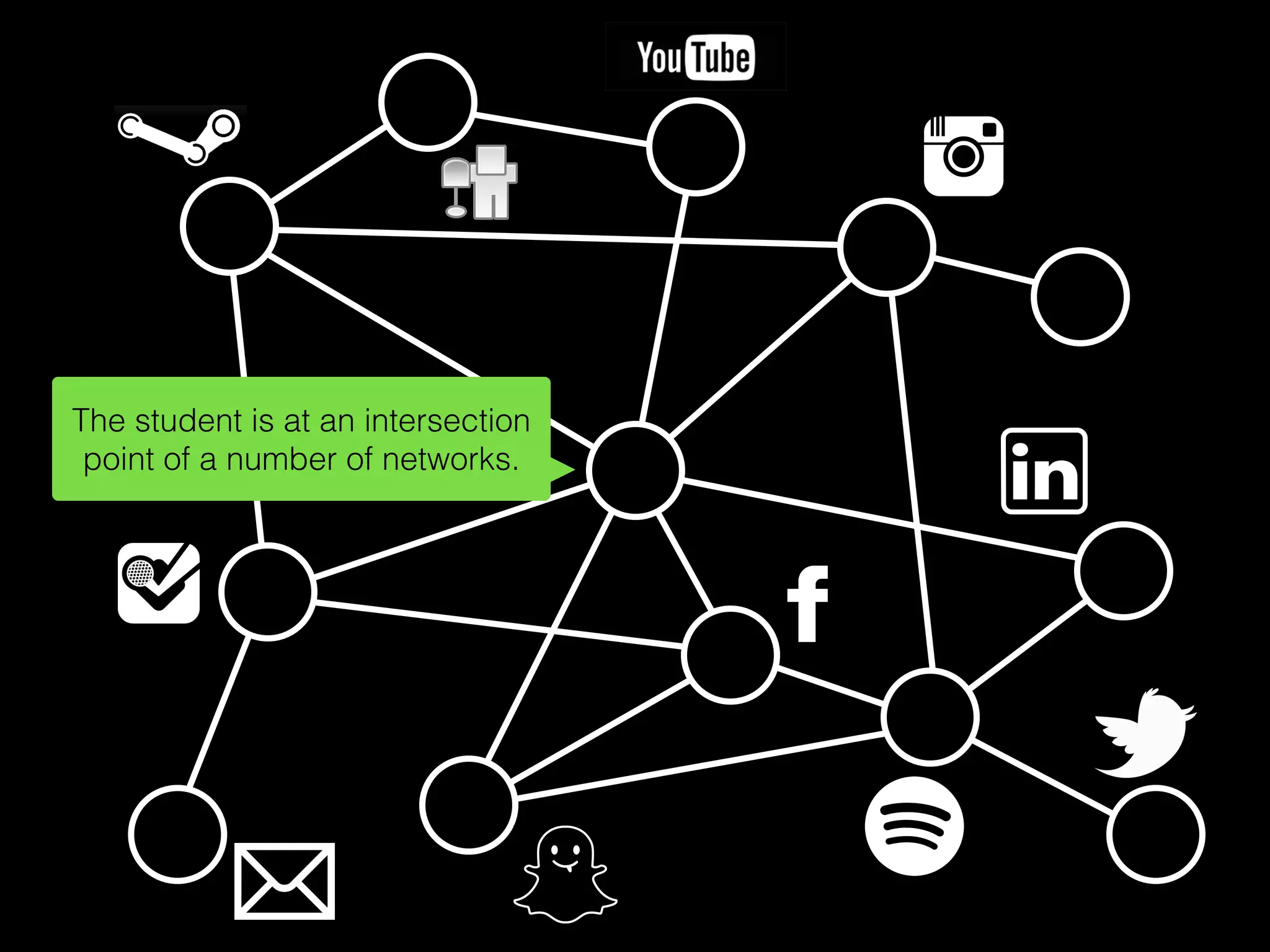
The student.
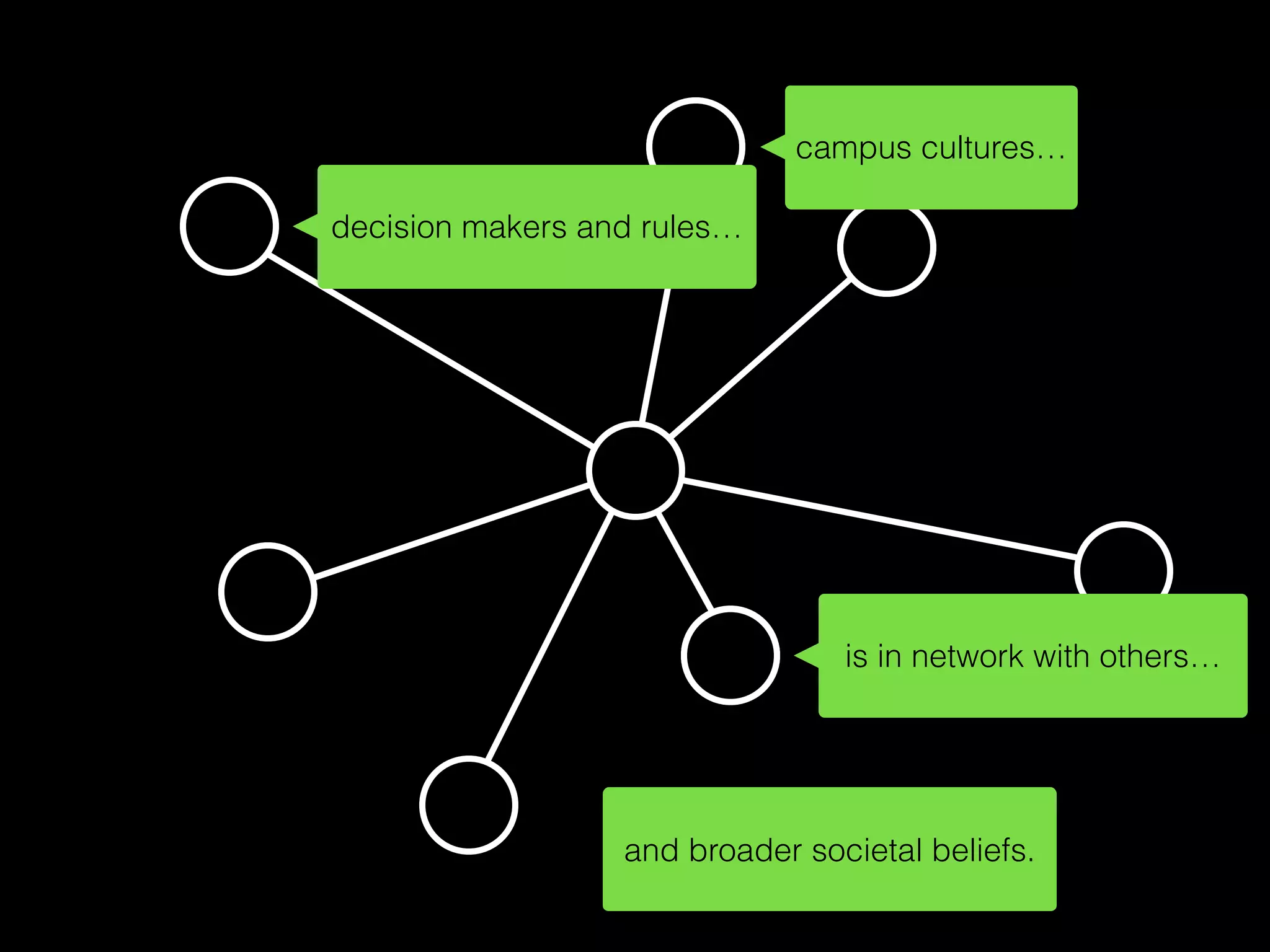
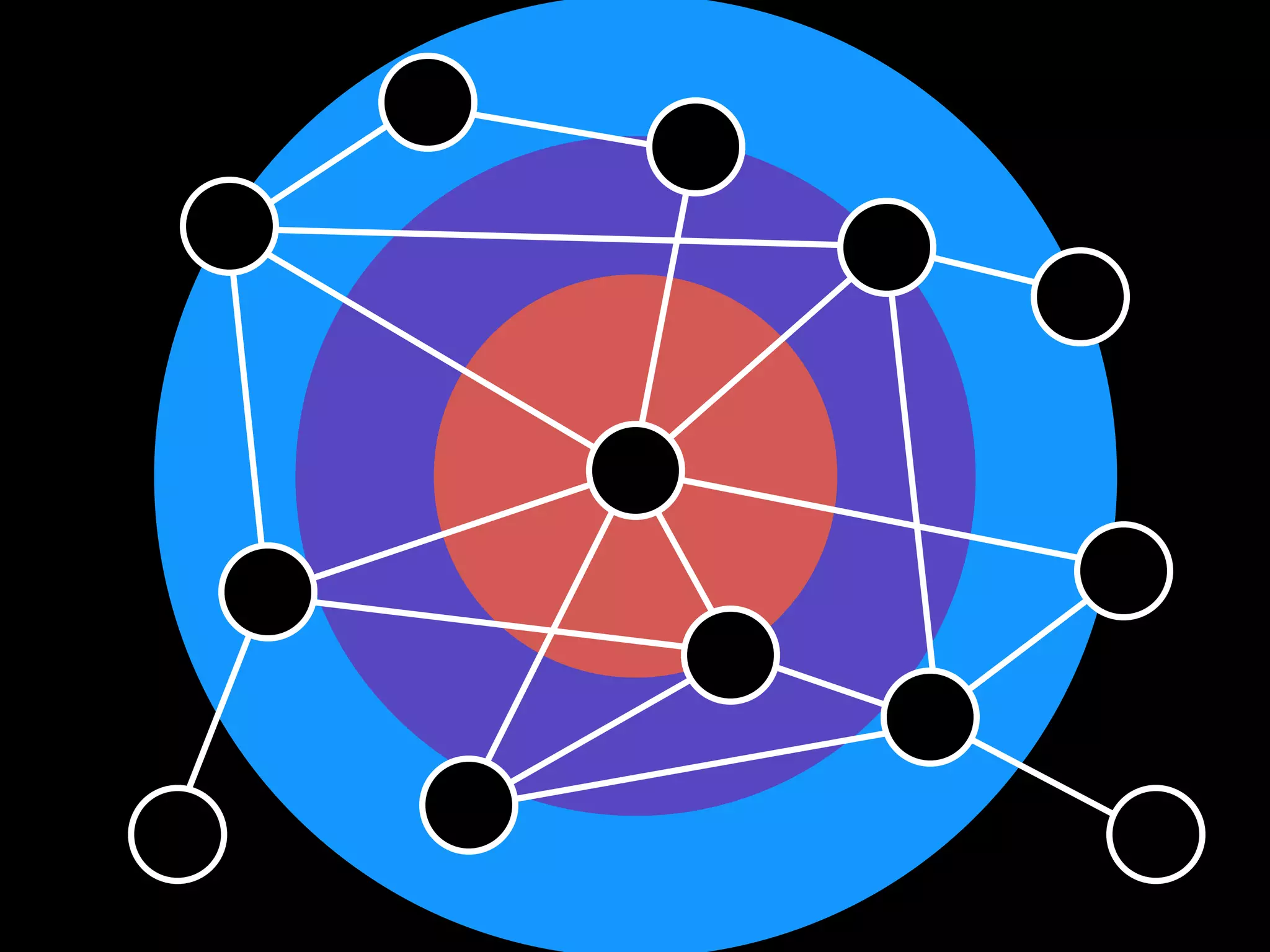
is in network with others…
campus cultures…
decision makers and rules…
and broader societal beliefs.
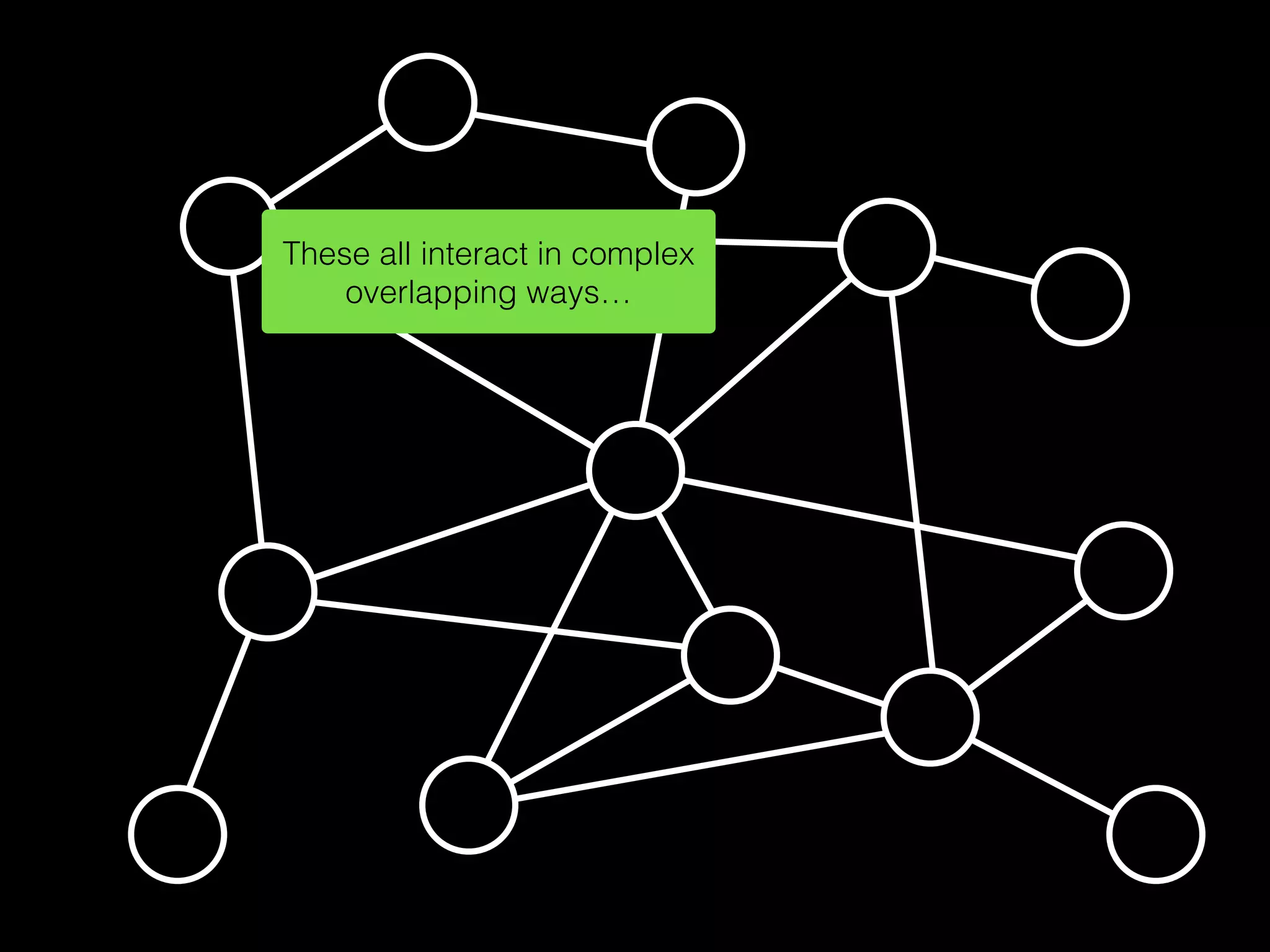
These all interact in complex
overlapping ways…
Microsystem
Mesosystem
Exosystem Macrosystem
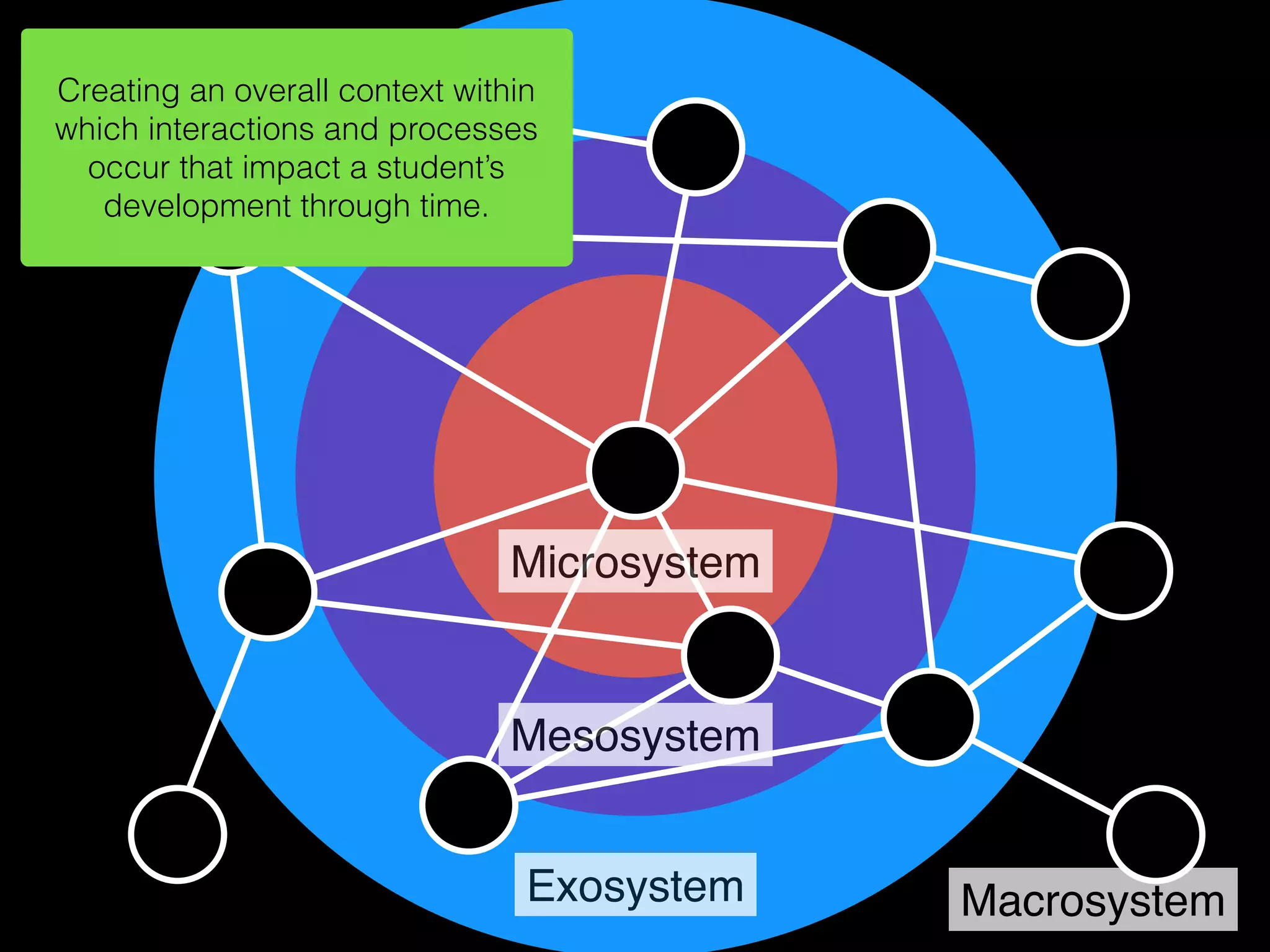
Creating an overall context within
which interactions and processes
occur that impact a student’s
development through time.
Microsystem
Mesosystem
Exosystem Macrosystem
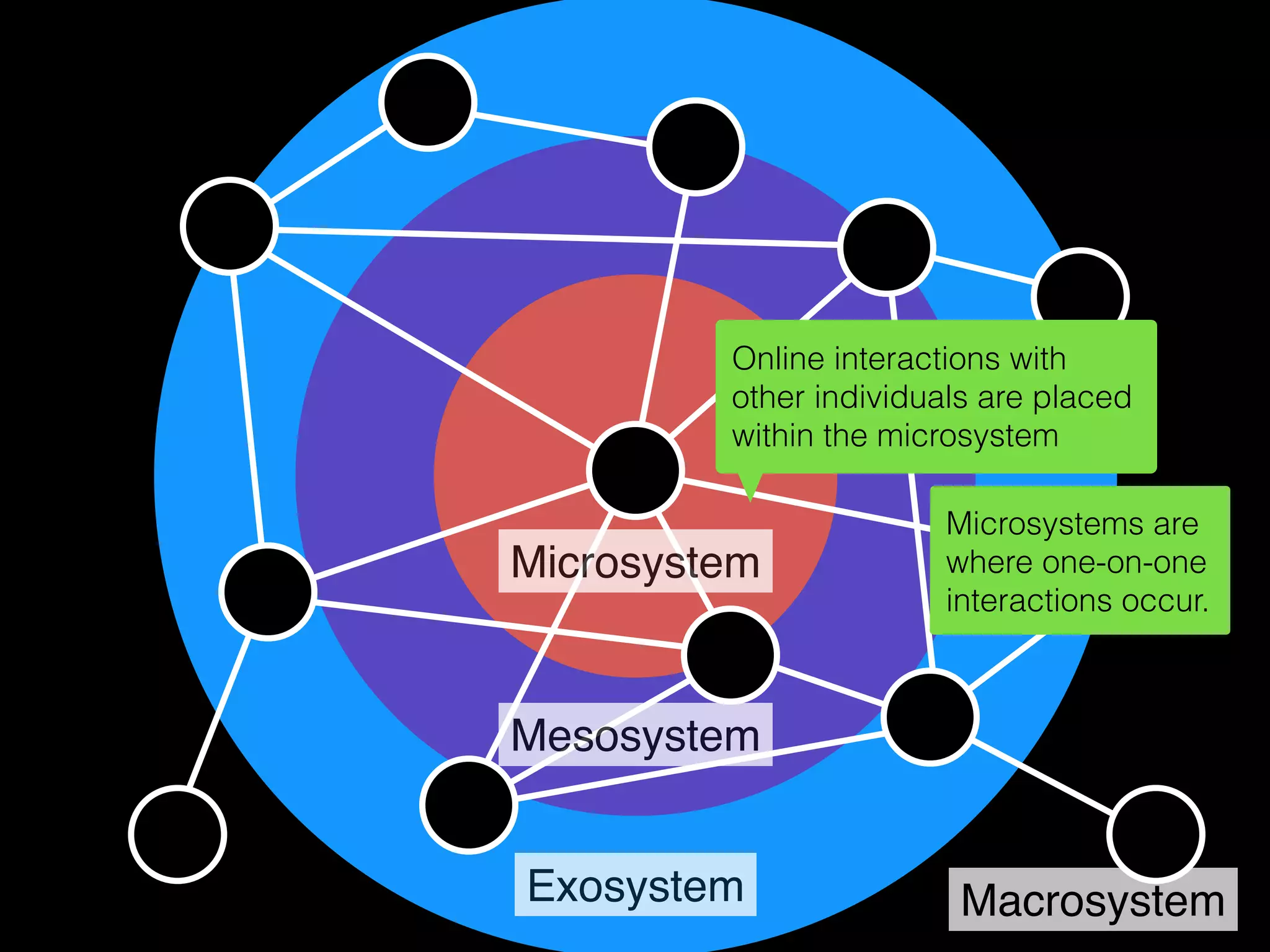
Online interactions with
other individuals are placed
within the microsystem
Microsystems are
where one-on-one
interactions occur.
Microsystem
Mesosystem
Exosystem Macrosystem
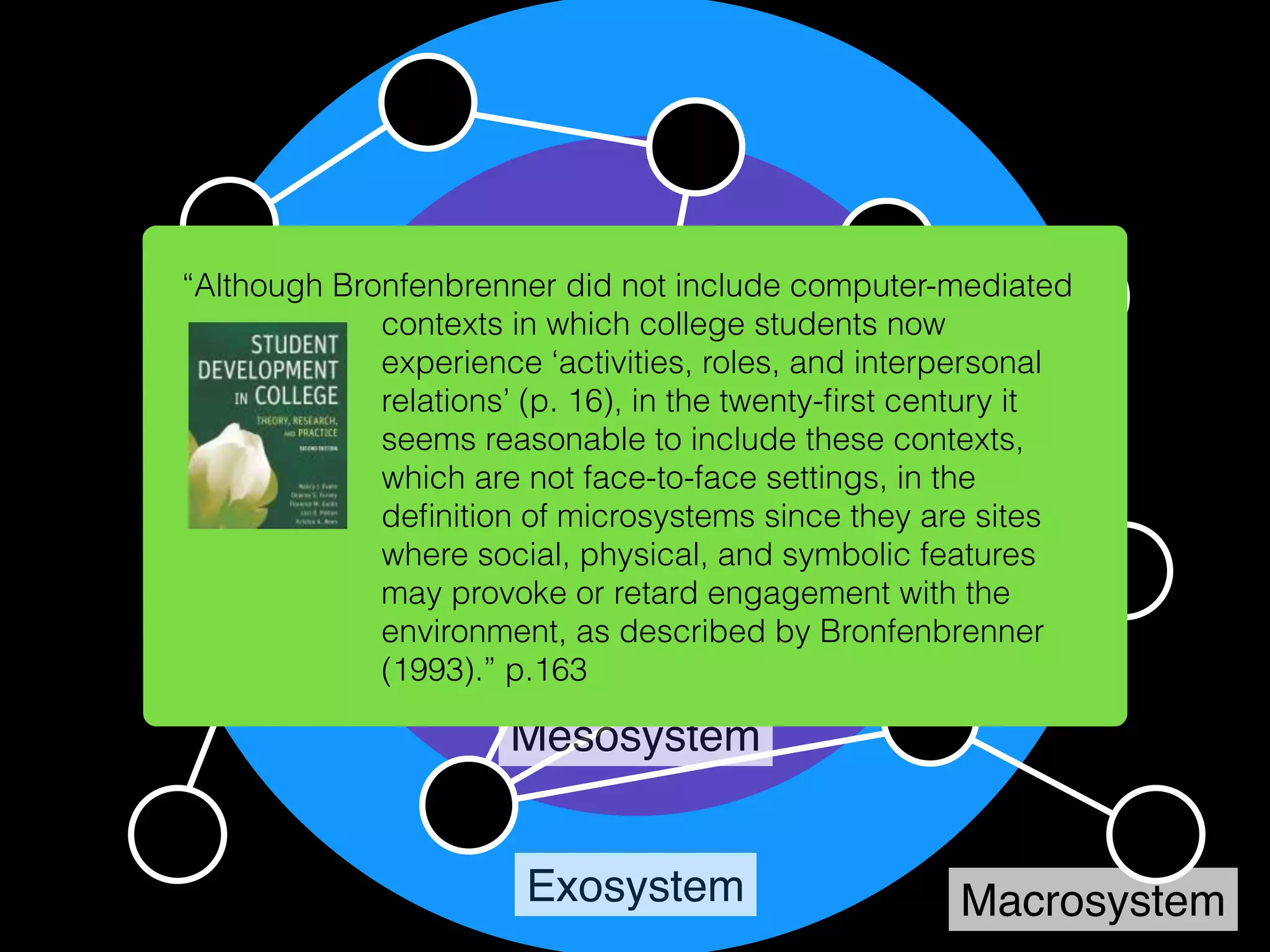
“Although Bronfenbrenner did not include computer-mediated
contexts in which college students now
experience ‘activities, roles, and interpersonal
relations’ (p. 16), in the twenty-first century it
seems reasonable to include these contexts,
which are not face-to-face settings, in the
definition of microsystems since they are sites
where social, physical, and symbolic features
may provoke or retard engagement with the
environment, as described by Bronfenbrenner
(1993).” p.163
The student is at an intersection
point of a number of networks.
Microsystem
Mesosystem
Exosystem Macrosystem
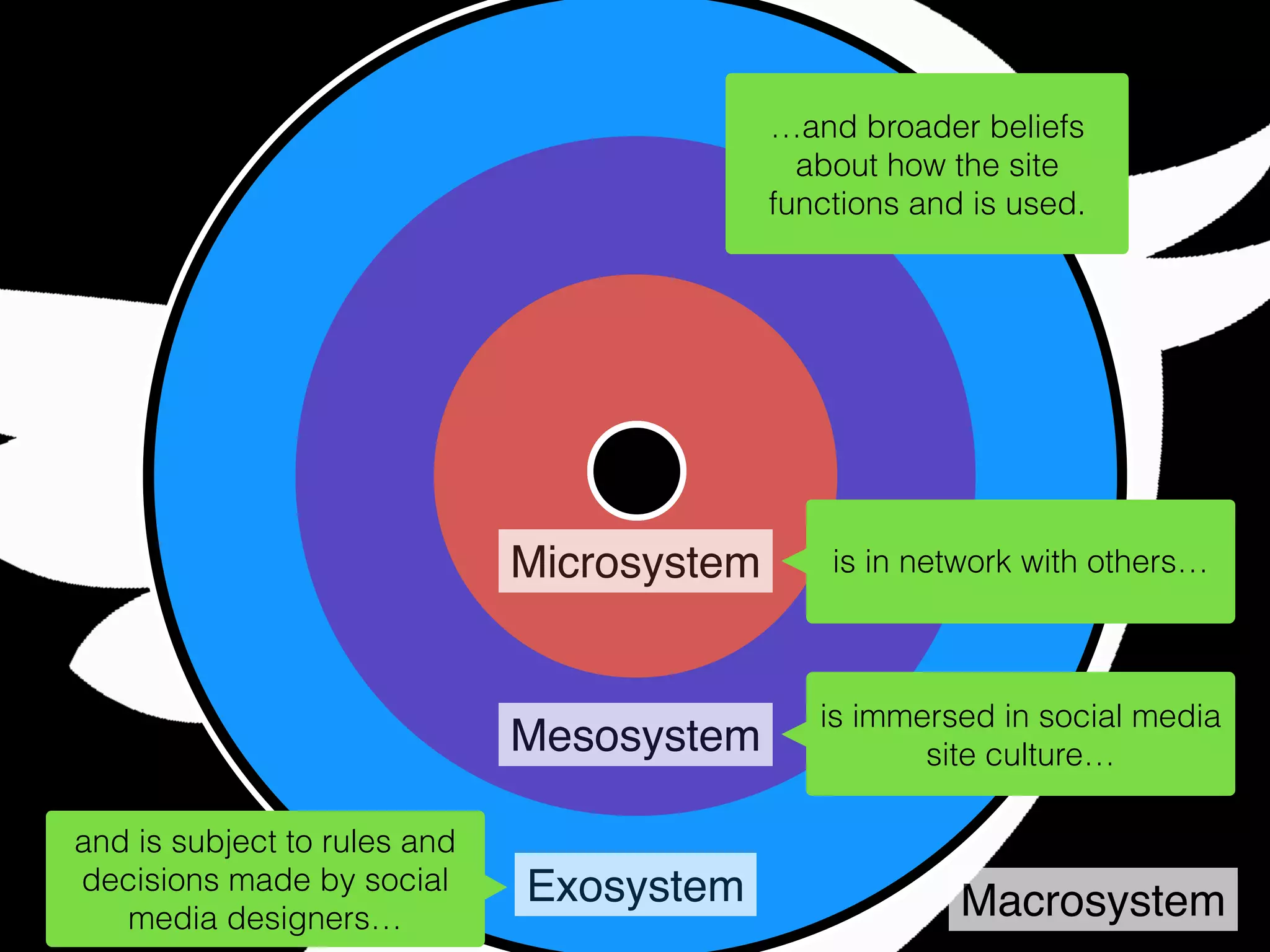
is in network with others…
is immersed in social media
site culture…
and is subject to rules and
decisions made by social
media designers…
…and broader beliefs
about how the site
functions and is used.
Engage with students on social media because
we need to understand them in all of their
contexts.
Understand how each social media site and
tool may impact the developmental process
differently by the way they are structured and
used.
Realize development may happen differently
and at different paces in different contexts.
Understand that development may be more like
a theory of relativity than concrete.
Understanding
Digital
Student
Development
by Paul Gordon Brown
@paulgordonbrown
www.paulgordonbrown.com
paulgordonbrown@gmail.com
Paul Gordon Brown

Understanding Digital Student Development

  • 1.
  • 2.
    (Turkle, 2004, para6) “I want to study not only what the computer is doing for us, but what it is doing to us.” - Turkle
  • 3.
    89% of adults 18-29years old use social media 67% access it on mobile 98% of adults ages 18-29 are on the internet 70 70 70 43% 60% 89% 65+ 50-64 30-49 70 78% 18-29 social media use by age (Brenner, 2013; Brenner & Smith, 2013; Pew Internet Project, n.d.) younger generations are using the internet, social media, and mobile technologies at a high rate
  • 4.
    é Engagement é Persistence éSocial Capital é Relationships é Narcissism ê Task-Switching Whattheresearchtellsus… Collegestudentsocialmedia useandoutcomes…
  • 5.
  • 6.
    confusion there’s a lotof with this word…
  • 7.
    “Many student affairs professionalsuse the term digital identity development to refer to online professional self- presentation; however, it is important to tease apart the differences between using social media as part of the exploration and development of identity and using social media to present oneself in a certain way.” (Junco, 2014, p. 257)
  • 8.
    “Labeling the latterdigital identity development confounds a developmental process with a professional communication strategy. Furthermore, labeling online professional self-presentation digital identity development may keep the field of student affairs from more critically and deeply examining how the emerging adult identity development process is affected by online interactions.” (Junco, 2014, p. 257)
  • 9.
  • 10.
  • 11.
  • 12.
    in here today we’llbe talking about what’s going on
  • 13.
  • 14.
    NOTHING There has beenlittle to no qualitative research focusing on the influence of digital and social media on student development.
  • 15.
    You can taketwo points of view…
  • 16.
    (Evans, Forney, Guido,Patton, & Renn, 2010, p. 5; Woodard, Love, & Komives, 2000) “Rapidly changing conditions within society have created dramatically different circumstances for students across time and location… student development must be considered in light of these changing scenarios.” develop new theories
  • 17.
    “human development ‘remain[s] muchthe same from age to age and must so remain as long as human nature and physical environment existing theories modify/apply (Evans, Forney, Guido, Patton, & Renn, 2010, p. 93; Haskins, 1957) continue what they have been. In his relations to life and learning the medieval student resembled his modern successor far more than is often supposed’ (p. 93).”
  • 18.
    Applying current theories toonline/ social media contexts. • Chickering • Baxter Magolda/Kegan • Bronfenbrenner
  • 19.
  • 20.
    • Developing competence •Managing emotions • Moving through autonomy to interdependence • Developing mature interpersonal relationships • Establishing identity • Developing Purpose • Establishing Integrity Vectors
  • 21.
  • 22.
    • Time management •Facility in using online tools to complete tasks • Communication and interaction skills • Relationship skills • Not exhibiting humblebrag behavior Developing Competence DIGITAL
  • 23.
  • 24.
    • Anger management- Thinking before posting • Dealing with depression - Self confidence recognizing that social media posts often only show the positive • Expanding and expressing range of positive emotions • Not posting for sympathy or to elicit response form others Managing Emotions DIGITAL
  • 25.
  • 26.
    • Ownership overone’s online life • Able to use social media as a tool for action • Finding information and resources • Resisting peer pressure • Consciously choosing peers and relationships • Basing relationships on equality and reciprocity Autonomy & Interdependence DIGITAL
  • 27.
    “And I likehonesty in a relationship… I’m not into playing games.” Mature Interpersonal Relationships
  • 28.
    • Able toengage in civil discourse through comments and chats • Understanding what online versus offline relationship maintenance should look like - acts appropriately • Thinks about one’s posts and its impact on others Mature Interpersonal Relationships DIGITAL
  • 29.
  • 30.
    • Identity explorationonline — taking on personas, finding like communities • Acting consistently across contexts (?) Online/Offline, Across different sites • Developing comfort with body and appearance - Selfies? Narcissim? • Establishing and taking an active role in curating self-presentation with purpose Establishing Identity DIGITAL
  • 31.
  • 32.
    • Utilizing onlinetools to network • Engaging in career interests and groups online • Able to articulate how/why they use social media Developing Purpose DIGITAL
  • 33.
  • 34.
    • Clarify valuesthrough online interaction • Able to understand and contextualize others’ post/beleifs • Are you a authentic self online and off (does it matter?) • Ability to use social media for social good Developing Integrity DIGITAL
  • 35.
  • 36.
    Stage We are: Subject (structure ofknowing) We Have: Object (content of knowing) Underlying Structure 1 Perceptions SOCIAL PERCEPTIONS Impulses Movement Sensation SinglePoint/ Immediate/ Atomistic 2 Concrete POINT OF VIEW Impulses Perceptions SOCIAL PERCEPTIONS Impulses Durable Category Kegan Subject/Object Schema of Cognitive Development
  • 37.
    Stage We are: Subject (structure ofknowing) We Have: Object (content of knowing) Underlying Structure 3 Traditio- nalism Abstractions MUTUALITY/ INTERPERSONALISM Relationship Inner States Concrete POINT OF VIEW Enduring Dispositions, Needs, Prefs. Cross Categorical 4 Modernism Abstract Systems INSTITUTION Relationship-Regulating Forms Self-authorship Abstractions MUTUALITY Relationships Inner states, Subjectivity, Self-consciousness System/Complex
  • 38.
    Stage We are: Subject (structure ofknowing) We Have: Object (content of knowing) Underlying Structure 5 Post-Modernism Dialectical INTER-INSTITUTIONAL Self-transformation Abstract Systems Ideology INSTITUTION Relationship-Regulating Forms Self-authorship Trans-System Trans-Complex
  • 39.
  • 40.
    What is Self-Authorship? Aparticular and relatively enduring way of understanding and orienting oneself to provocative situations in a way that: 1) Recognizes the contextual nature of knowledge; and 2) Balances and guides this understanding with the development of internally defined goals and sense of self
  • 42.
    Self-authored individuals: • Lookat all aspects of a situation or issue • All perspectives no longer equal • Learning involves thinking through problems and integrating knowledge in context • Points of view are supported by evidence
  • 44.
  • 45.
  • 46.
    is in networkwith others… campus cultures… decision makers and rules… and broader societal beliefs.
  • 47.
    These all interactin complex overlapping ways…
  • 49.
    Microsystem Mesosystem Exosystem Macrosystem Creating anoverall context within which interactions and processes occur that impact a student’s development through time.
  • 50.
    Microsystem Mesosystem Exosystem Macrosystem Online interactionswith other individuals are placed within the microsystem Microsystems are where one-on-one interactions occur.
  • 51.
    Microsystem Mesosystem Exosystem Macrosystem “Although Bronfenbrennerdid not include computer-mediated contexts in which college students now experience ‘activities, roles, and interpersonal relations’ (p. 16), in the twenty-first century it seems reasonable to include these contexts, which are not face-to-face settings, in the definition of microsystems since they are sites where social, physical, and symbolic features may provoke or retard engagement with the environment, as described by Bronfenbrenner (1993).” p.163
  • 52.
    The student isat an intersection point of a number of networks.
  • 53.
    Microsystem Mesosystem Exosystem Macrosystem is innetwork with others… is immersed in social media site culture… and is subject to rules and decisions made by social media designers… …and broader beliefs about how the site functions and is used.
  • 54.
    Engage with studentson social media because we need to understand them in all of their contexts. Understand how each social media site and tool may impact the developmental process differently by the way they are structured and used. Realize development may happen differently and at different paces in different contexts. Understand that development may be more like a theory of relativity than concrete.
  • 55.
  • 56.