



The Digital Life of College Students
by Paul Gordon Brown
paulgordonbrown@gmail.com
www.paulgordonbrown.com
@paulgordonbrown
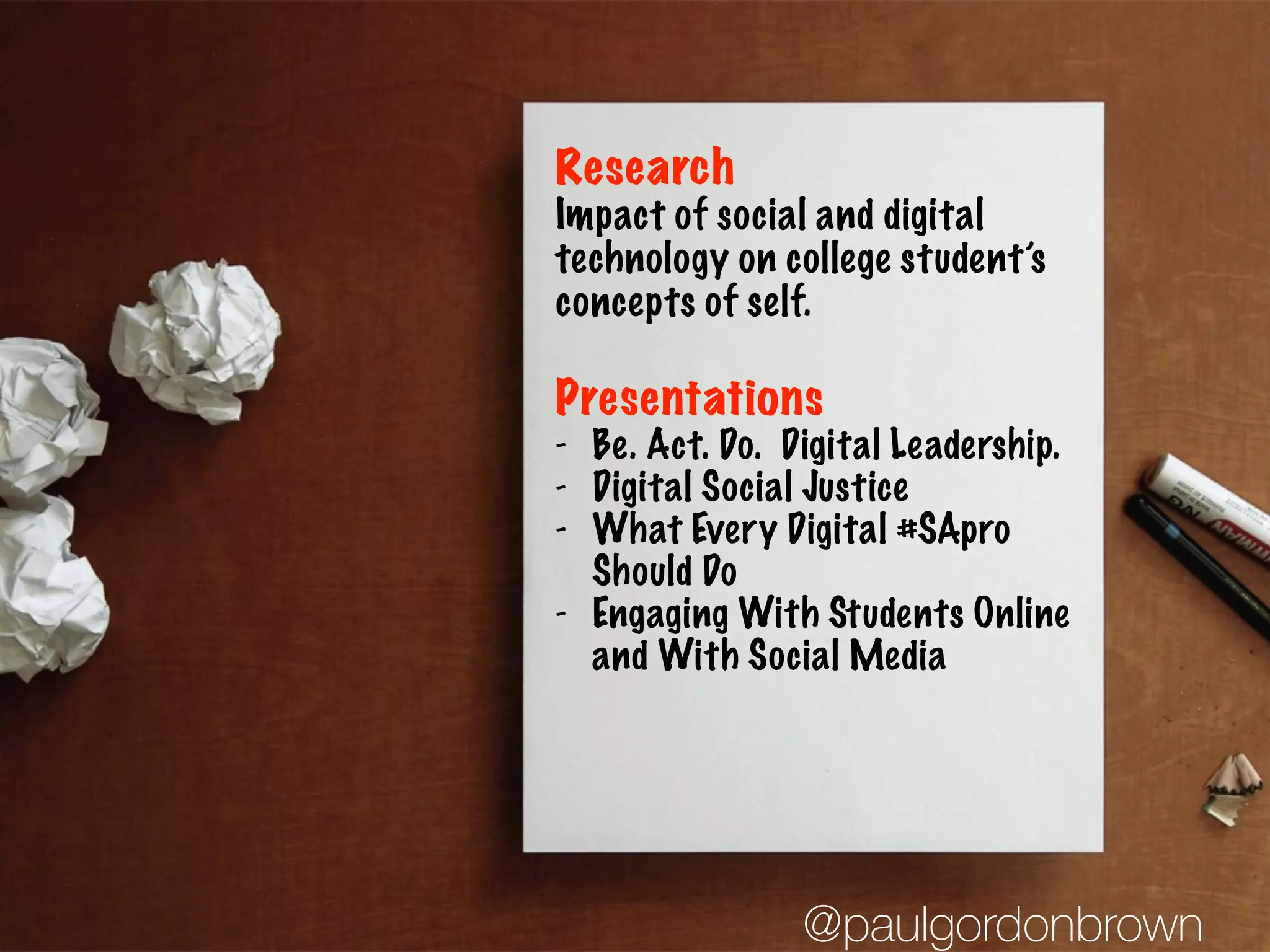
Research
Impact of social and digital
technology on college student’s
concepts of self.
Presentations
- Be. Act. Do. Digital Leadership.
- Digital Social Justice
- What Every Digital #SApro
Should Do
- Engaging With Students Online
and With Social Media
@paulgordonbrown
@paulgordonbrown
www.paulgordonbrown.com
paulgordonbrown@gmail.com
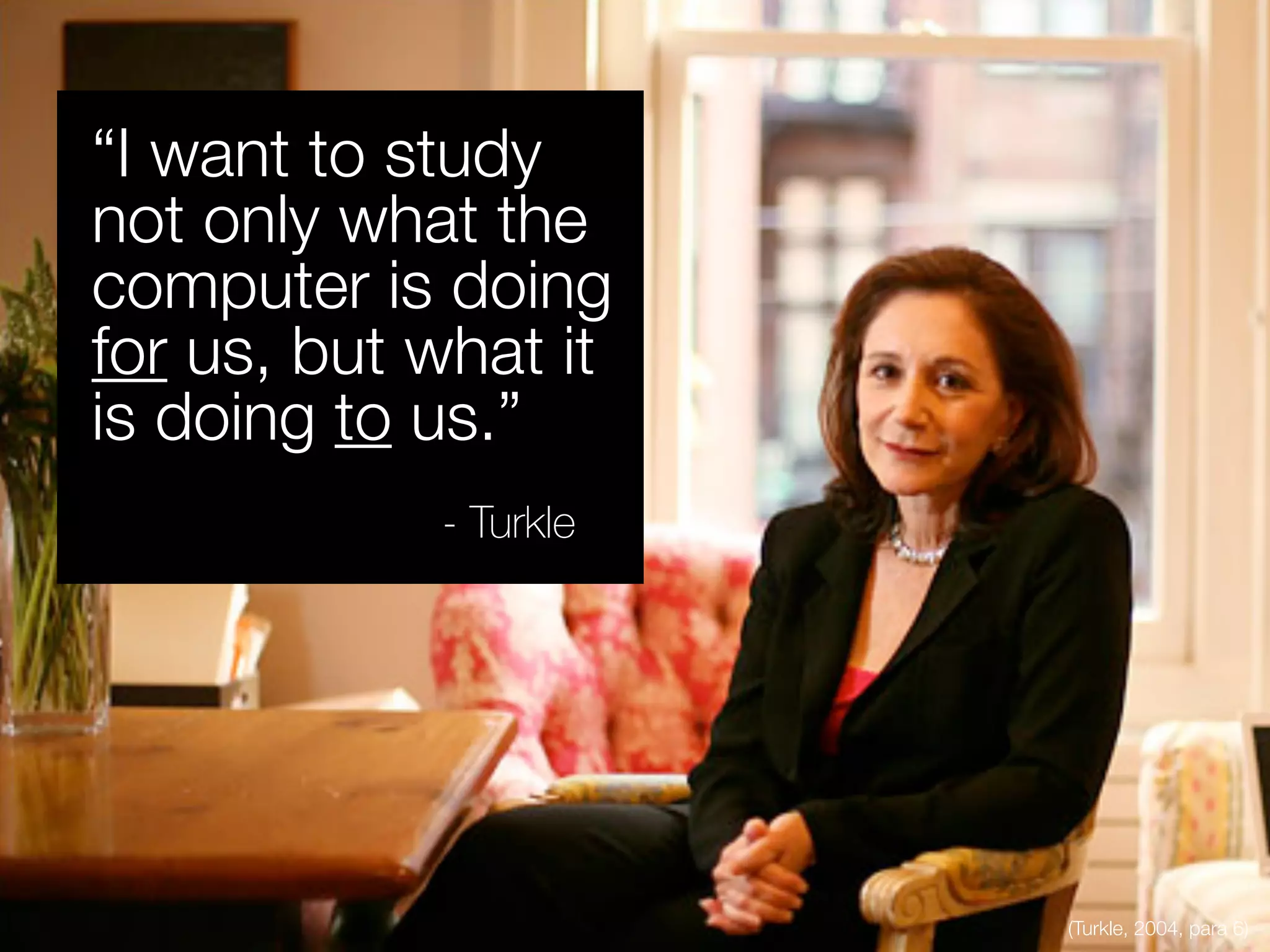
(Turkle, 2004, para 6)
“I want to study
not only what the
computer is doing
for us, but what it
is doing to us.”
- Turkle
89%
of adults 18-29 years old use social media
67%
access it on mobile
98%
of adults ages 18-29 are on the internet
(Brenner, 2013; Brenner & Smith, 2013; Pew Internet Project, n.d.)
younger generations
are using the internet,
social media, and mobile
technologies at a high rate
0
25
50
75
100
Facebook Instragram Twitter Pintrest LinkedIn
23
3437
53
87
Social Media Platform Adoption (2014)
18-29 year olds
Source: Pew Research Center Social Media Update 2104 @paulgordonbrown
1st Year 2nd Year 3rd Year 4th Year
Quick to “friend” people
Want to appear popular
Self esteem is in part measured by likes
More likely to use Facebook
Communicates primarily with close friends
Understands need to get on LinkedIn and make connections
Facebook is for lurking and events, but not engagement
@paulgordonbrown
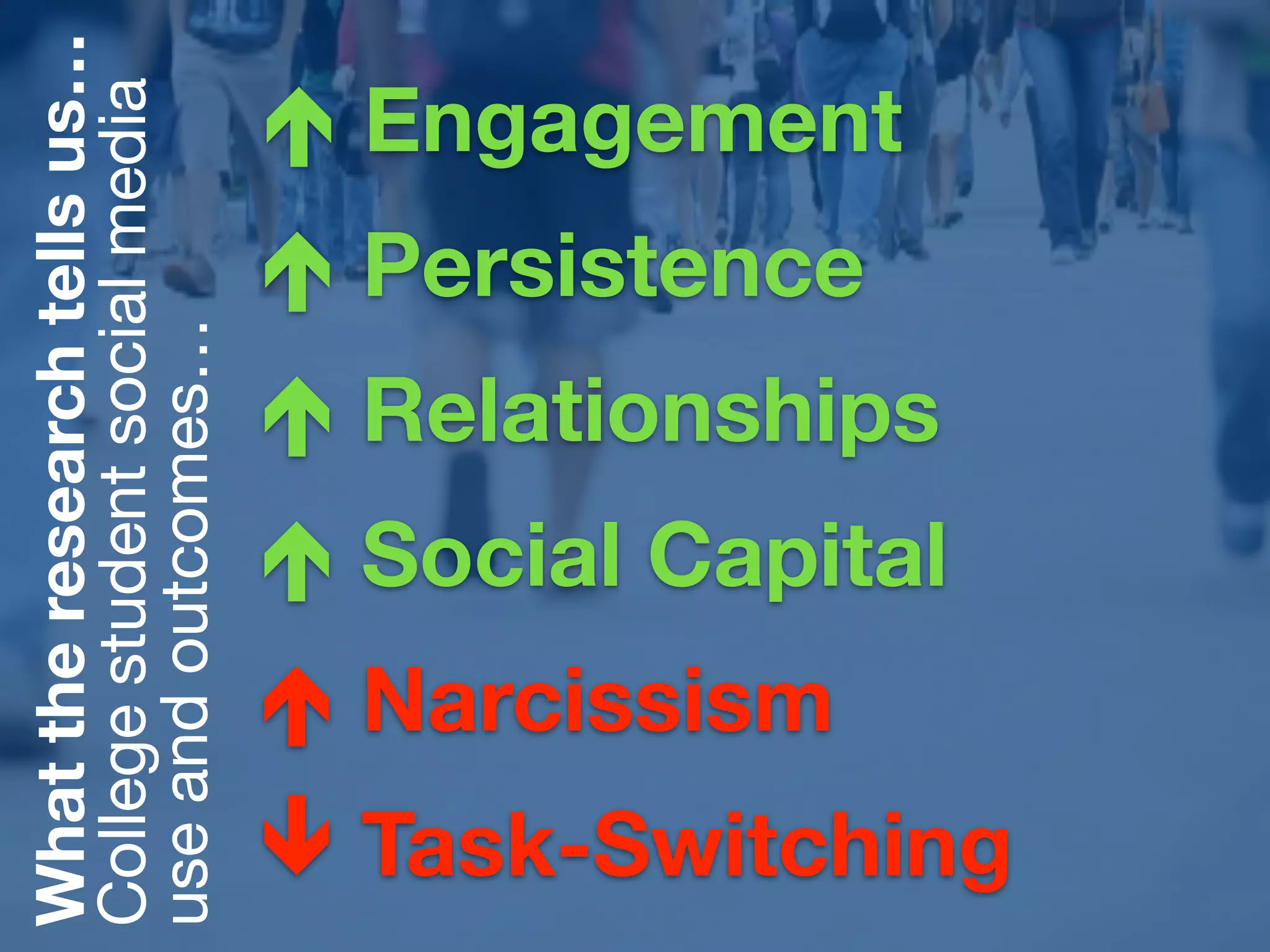
é Engagement
é Persistence
é Social Capital
é Relationships
é Narcissism
ê Task-Switching
Whattheresearchtellsus…
Collegestudentsocialmedia
useandoutcomes…
Digital
Identity
confusion
there’s a lot of
with this word…
“Many student affairs
professionals use the term
digital identity
development to refer to
online professional self-
presentation; however, it
is important to tease apart
the differences between
using social media as part
of the exploration and
development of identity
and using social media to
present oneself in a
certain way.”
(Junco, 2014, p. 257)
“Labeling the latter digital
identity development
confounds a developmental
process with a professional
communication strategy.
Furthermore, labeling online
professional self-presentation
digital identity development
may keep the field of student
affairs from more critically
and deeply examining how
the emerging adult identity
development process is
affected by online
interactions.”
(Junco, 2014, p. 257)
Self Presentation
A Developmental
Process
Self Presentation
Some use it to refer to
Psychological
Process
And conflate it with a
digital stamp.
digital footprints
follow us.
FROM THE WOMB!
We even have digital stamps
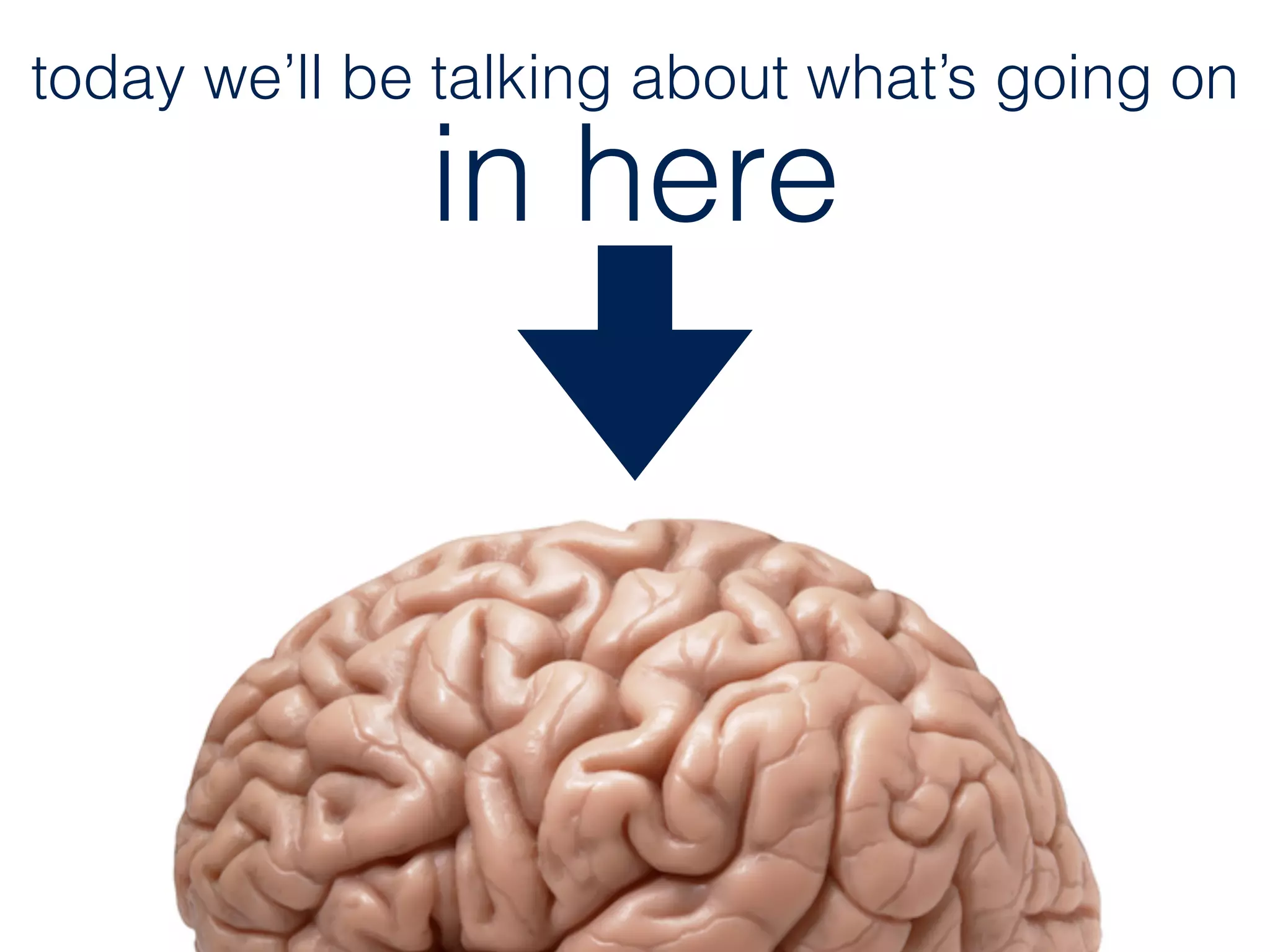
in here
today we’ll be talking about what’s going on
research
What does the
say?
NOTHING
There has been little to no qualitative research focusing on the
influence of digital and social media on student development.
You can take two
points of
view…
“human development
‘remain[s] much the same
from age to age and must
so remain as long as
human nature and
physical environment
existing theories
modify/apply
(Evans, Forney, Guido, Patton, & Renn, 2010, p. 93;
Haskins, 1957)
continue what they
have been. In his
relations to life and
learning the medieval
student resembled his
modern successor far
more than is often
supposed’ (p. 93).”
(Evans, Forney, Guido, Patton, & Renn, 2010, p. 5;
Woodard, Love, & Komives, 2000)
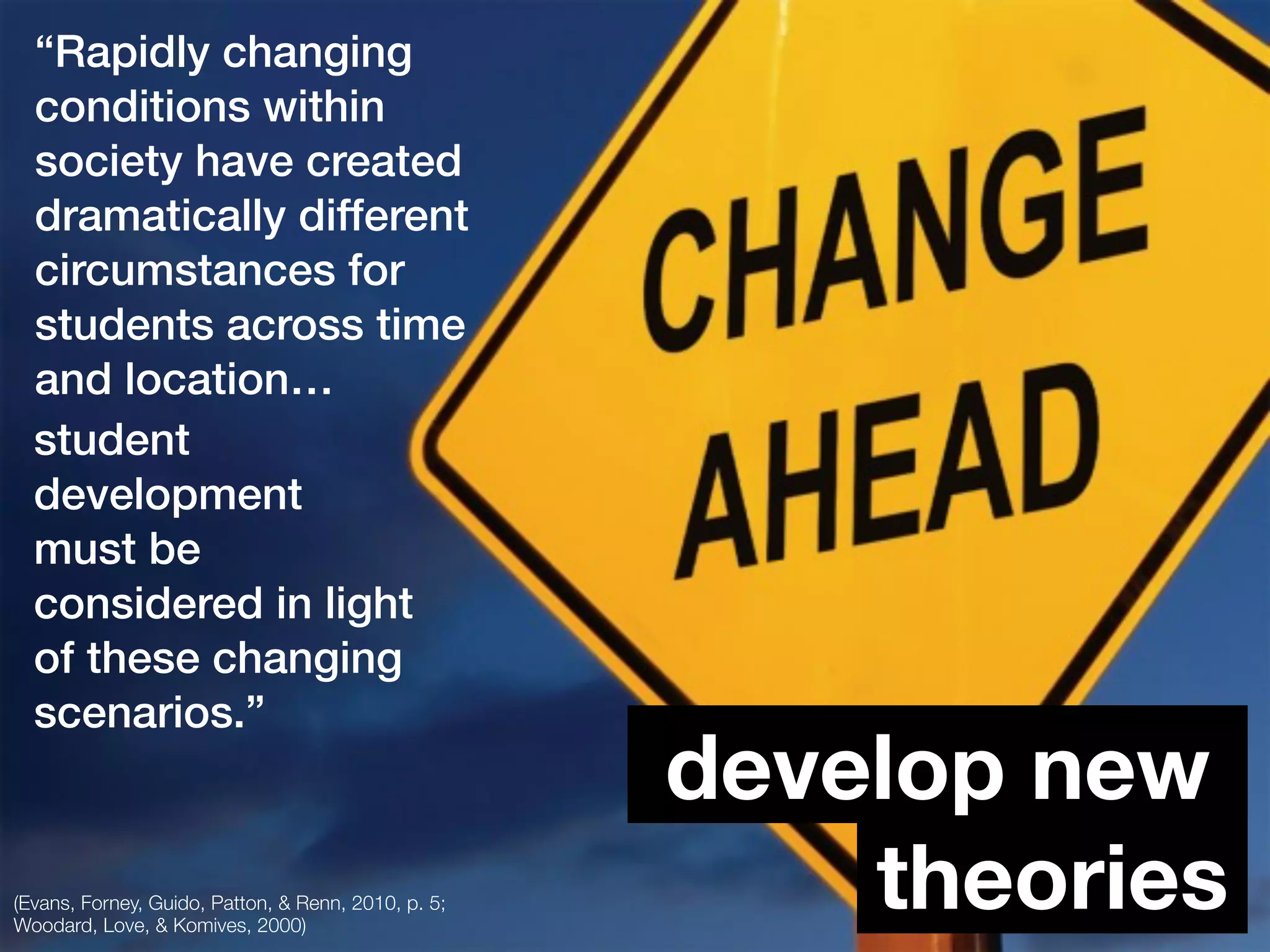
“Rapidly changing
conditions within
society have created
dramatically different
circumstances for
students across time
and location…
student
development
must be
considered in light
of these changing
scenarios.”
develop new
theories
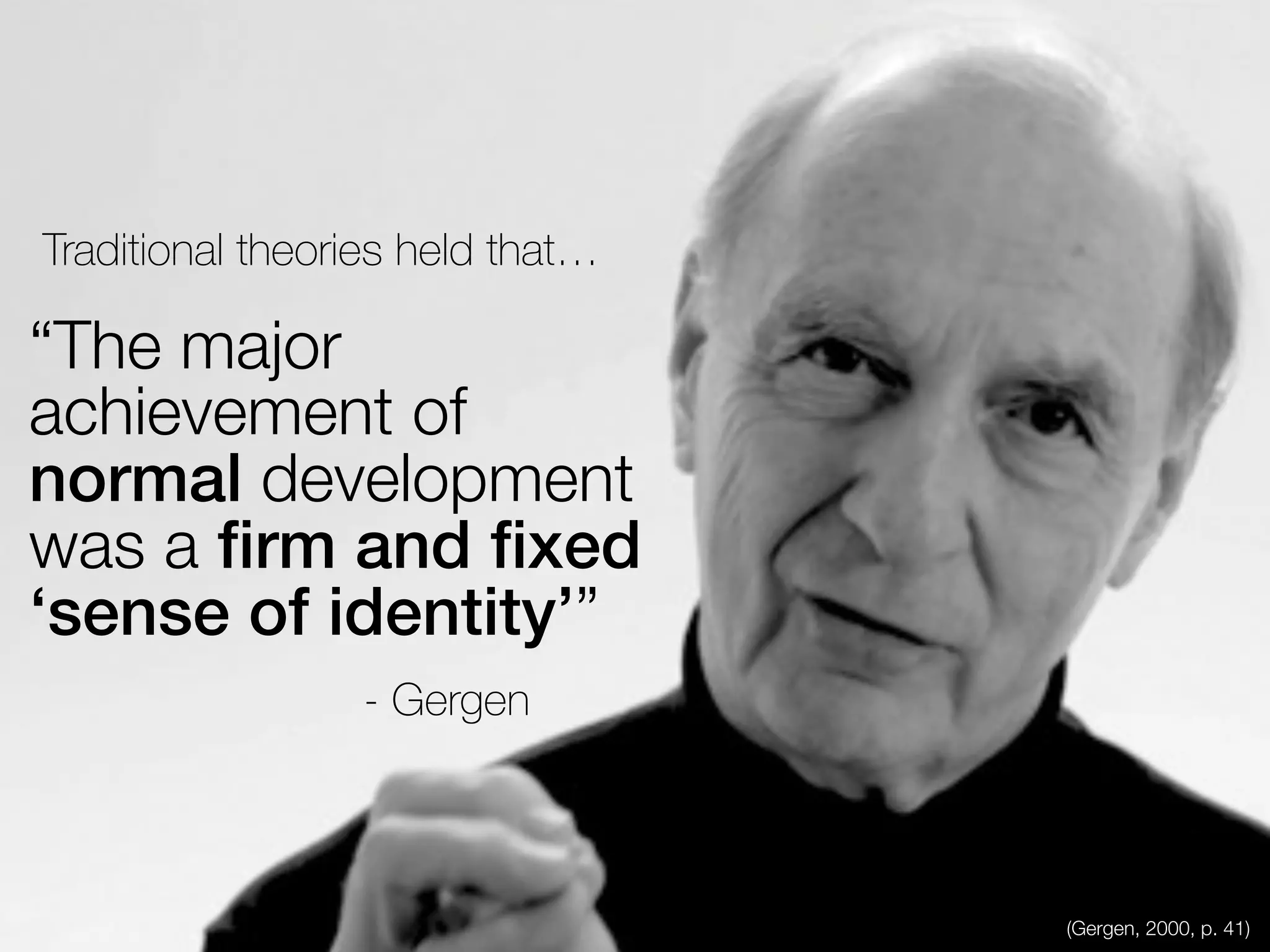
“The major
achievement of
normal development
was a firm and fixed
‘sense of identity’”
- Gergen
Traditional theories held that…
(Gergen, 2000, p. 41)
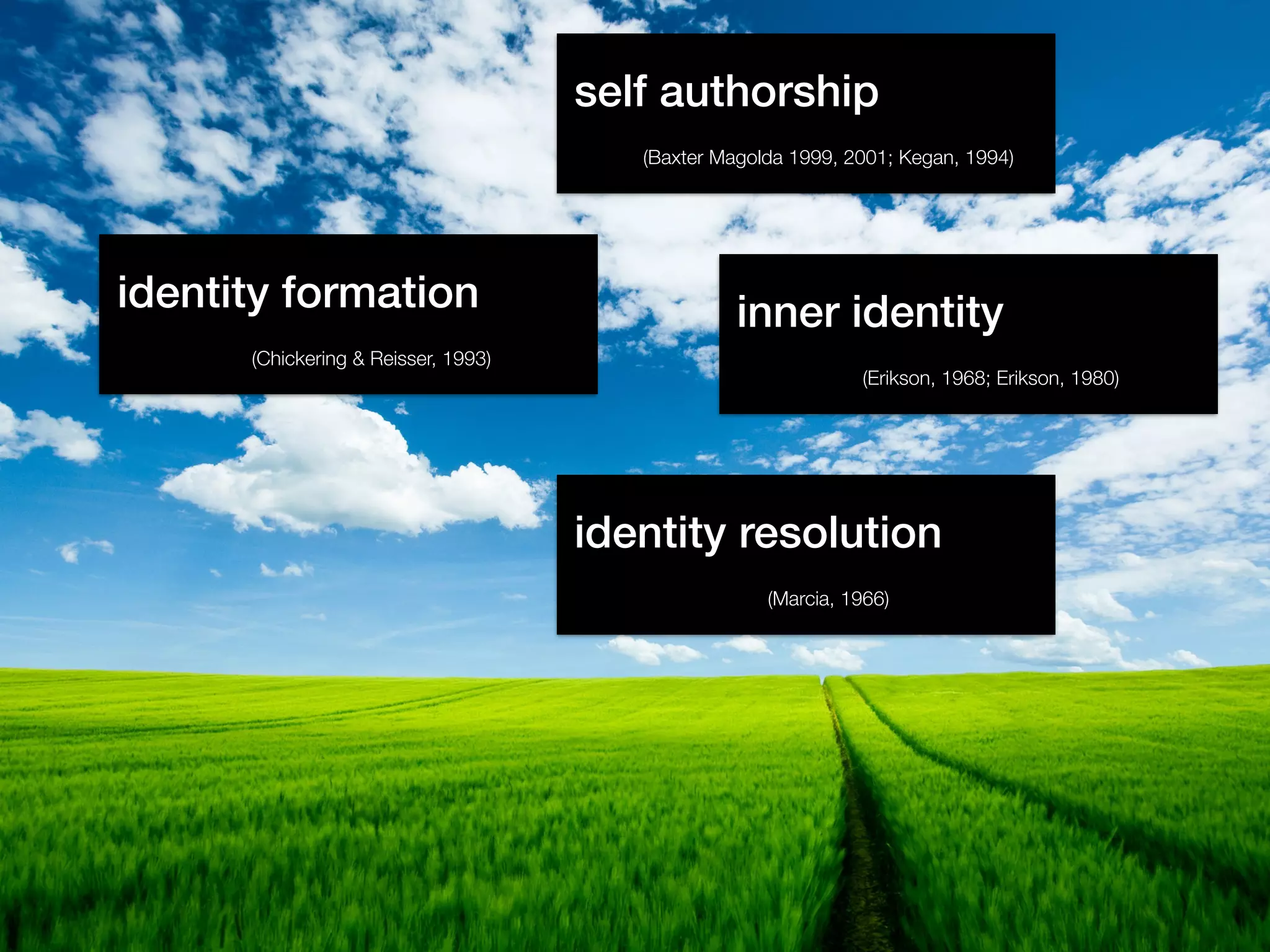
self authorship
(Baxter Magolda 1999, 2001; Kegan, 1994)
inner identity
(Erikson, 1968; Erikson, 1980)
identity resolution
(Marcia, 1966)
identity formation
(Chickering & Reisser, 1993)
We no longer exist
as playwrights or
actors but as
terminals of
multiple networks.
-Baudrillard
(Baudrillard, 1987/2012, p. 23)
BLURRYHYBRIDIZED
SATURATED
The online profile

“is and is not the user.”
(Martínez Alemán & Lynk Wartman, 2009, p. 23)
a “rupture” or “a series of
decisive far-reaching
breaks from the past”
(Bloland, 2005, p. 125)
an “implosion”
or a collapse of
boundaries
(Baudrillard, 1981/1995)
“singularity… a future period during
which the pace of technological
change will be so rapid, its impact so
deep, that human life will be
irreversibly transformed” (Kurzweil, 2005)
“At one time it seemed to refer to
a conscious sense of individual
uniqueness, at another to an
unconscious striving for a
continuity of experience, and at
a third, as a solidarity with a
group’s ideals.”
- Erikson
(Erikson, 1968, p. 208)
On identity…
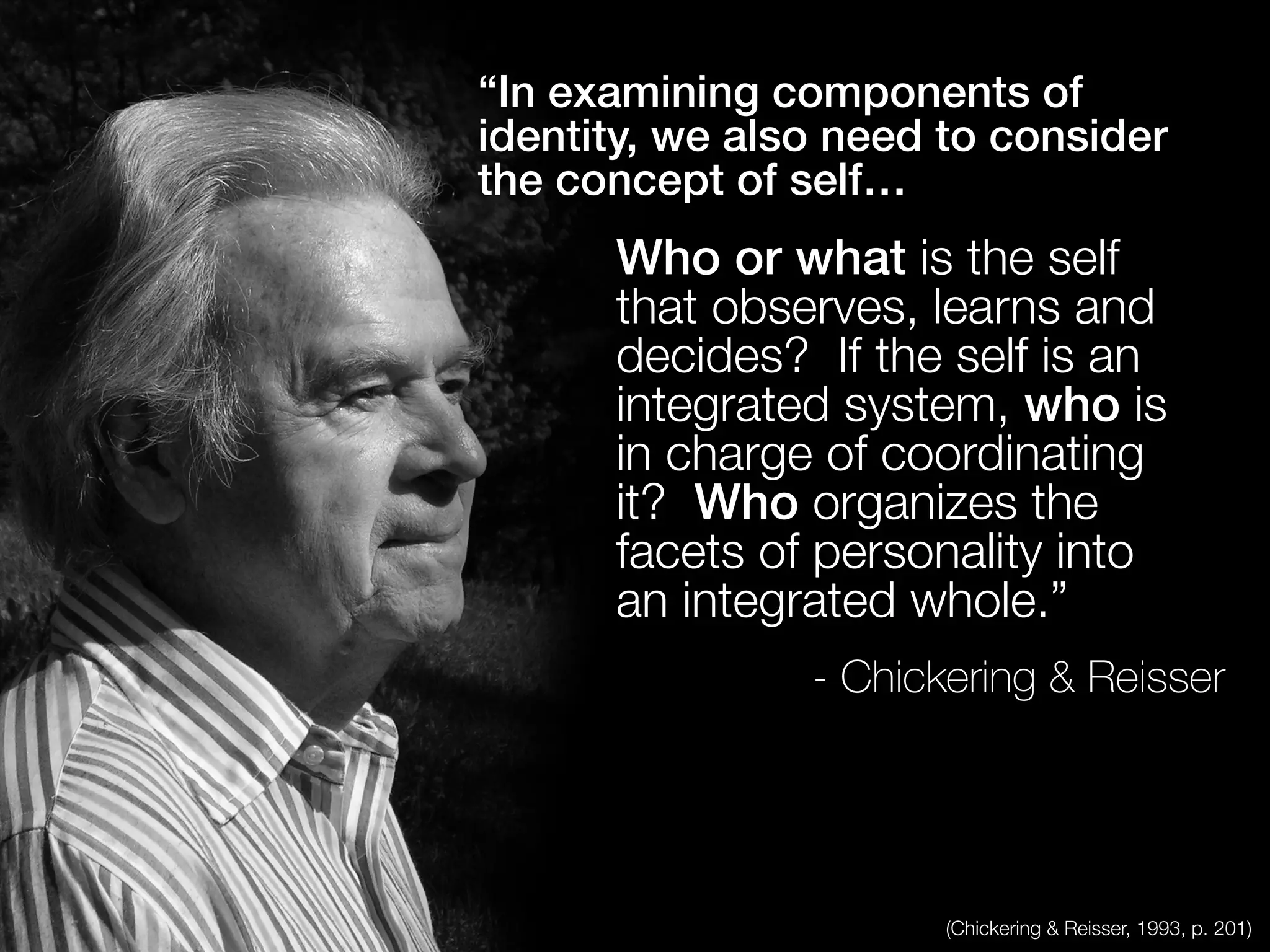
“In examining components of
identity, we also need to consider
the concept of self…
Who or what is the self
that observes, learns and
decides? If the self is an
integrated system, who is
in charge of coordinating
it? Who organizes the
facets of personality into
an integrated whole.”
- Chickering & Reisser
(Chickering & Reisser, 1993, p. 201)
“The attempt in this
case is to construct
an ontology that
replaces the vision of
the bounded self as
the atom of the
social world.”
-Gergen
(Gergen, 2011, p. 112)
Engage with students on social media because
we need to understand them in all of their
contexts.
Understand how each social media site and
tool may impact the developmental process
differently by the way they are structured and
used.
Realize development may happen differently
and at different paces in different contexts.
Understand that development may be more like
a theory of relativity than concrete.
The Digital Life of College Students
by Paul Gordon Brown
paulgordonbrown@gmail.com
www.paulgordonbrown.com
@paulgordonbrown

The Digital Life of College Students

  • 1.
    The Digital Lifeof College Students by Paul Gordon Brown paulgordonbrown@gmail.com www.paulgordonbrown.com @paulgordonbrown
  • 2.
    Research Impact of socialand digital technology on college student’s concepts of self. Presentations - Be. Act. Do. Digital Leadership. - Digital Social Justice - What Every Digital #SApro Should Do - Engaging With Students Online and With Social Media @paulgordonbrown
  • 3.
  • 4.
    (Turkle, 2004, para6) “I want to study not only what the computer is doing for us, but what it is doing to us.” - Turkle
  • 5.
    89% of adults 18-29years old use social media 67% access it on mobile 98% of adults ages 18-29 are on the internet (Brenner, 2013; Brenner & Smith, 2013; Pew Internet Project, n.d.) younger generations are using the internet, social media, and mobile technologies at a high rate
  • 6.
    0 25 50 75 100 Facebook Instragram TwitterPintrest LinkedIn 23 3437 53 87 Social Media Platform Adoption (2014) 18-29 year olds Source: Pew Research Center Social Media Update 2104 @paulgordonbrown
  • 8.
    1st Year 2ndYear 3rd Year 4th Year Quick to “friend” people Want to appear popular Self esteem is in part measured by likes More likely to use Facebook Communicates primarily with close friends Understands need to get on LinkedIn and make connections Facebook is for lurking and events, but not engagement @paulgordonbrown
  • 10.
    é Engagement é Persistence éSocial Capital é Relationships é Narcissism ê Task-Switching Whattheresearchtellsus… Collegestudentsocialmedia useandoutcomes…
  • 12.
  • 13.
    confusion there’s a lotof with this word…
  • 14.
    “Many student affairs professionalsuse the term digital identity development to refer to online professional self- presentation; however, it is important to tease apart the differences between using social media as part of the exploration and development of identity and using social media to present oneself in a certain way.” (Junco, 2014, p. 257)
  • 15.
    “Labeling the latterdigital identity development confounds a developmental process with a professional communication strategy. Furthermore, labeling online professional self-presentation digital identity development may keep the field of student affairs from more critically and deeply examining how the emerging adult identity development process is affected by online interactions.” (Junco, 2014, p. 257)
  • 16.
  • 17.
  • 18.
  • 20.
  • 21.
  • 22.
    FROM THE WOMB! Weeven have digital stamps
  • 23.
    in here today we’llbe talking about what’s going on
  • 24.
  • 25.
    NOTHING There has beenlittle to no qualitative research focusing on the influence of digital and social media on student development.
  • 26.
    You can taketwo points of view…
  • 27.
    “human development ‘remain[s] muchthe same from age to age and must so remain as long as human nature and physical environment existing theories modify/apply (Evans, Forney, Guido, Patton, & Renn, 2010, p. 93; Haskins, 1957) continue what they have been. In his relations to life and learning the medieval student resembled his modern successor far more than is often supposed’ (p. 93).”
  • 28.
    (Evans, Forney, Guido,Patton, & Renn, 2010, p. 5; Woodard, Love, & Komives, 2000) “Rapidly changing conditions within society have created dramatically different circumstances for students across time and location… student development must be considered in light of these changing scenarios.” develop new theories
  • 29.
    “The major achievement of normaldevelopment was a firm and fixed ‘sense of identity’” - Gergen Traditional theories held that… (Gergen, 2000, p. 41)
  • 30.
    self authorship (Baxter Magolda1999, 2001; Kegan, 1994) inner identity (Erikson, 1968; Erikson, 1980) identity resolution (Marcia, 1966) identity formation (Chickering & Reisser, 1993)
  • 31.
    We no longerexist as playwrights or actors but as terminals of multiple networks. -Baudrillard (Baudrillard, 1987/2012, p. 23)
  • 32.
    BLURRYHYBRIDIZED SATURATED The online profile “isand is not the user.” (Martínez Alemán & Lynk Wartman, 2009, p. 23) a “rupture” or “a series of decisive far-reaching breaks from the past” (Bloland, 2005, p. 125) an “implosion” or a collapse of boundaries (Baudrillard, 1981/1995) “singularity… a future period during which the pace of technological change will be so rapid, its impact so deep, that human life will be irreversibly transformed” (Kurzweil, 2005)
  • 34.
    “At one timeit seemed to refer to a conscious sense of individual uniqueness, at another to an unconscious striving for a continuity of experience, and at a third, as a solidarity with a group’s ideals.” - Erikson (Erikson, 1968, p. 208) On identity…
  • 35.
    “In examining componentsof identity, we also need to consider the concept of self… Who or what is the self that observes, learns and decides? If the self is an integrated system, who is in charge of coordinating it? Who organizes the facets of personality into an integrated whole.” - Chickering & Reisser (Chickering & Reisser, 1993, p. 201)
  • 36.
    “The attempt inthis case is to construct an ontology that replaces the vision of the bounded self as the atom of the social world.” -Gergen (Gergen, 2011, p. 112)
  • 37.
    Engage with studentson social media because we need to understand them in all of their contexts. Understand how each social media site and tool may impact the developmental process differently by the way they are structured and used. Realize development may happen differently and at different paces in different contexts. Understand that development may be more like a theory of relativity than concrete.
  • 38.
    The Digital Lifeof College Students by Paul Gordon Brown paulgordonbrown@gmail.com www.paulgordonbrown.com @paulgordonbrown