Anti Money Laundering
Framework
Nikat Malik
April 2014
All Rights Reserved
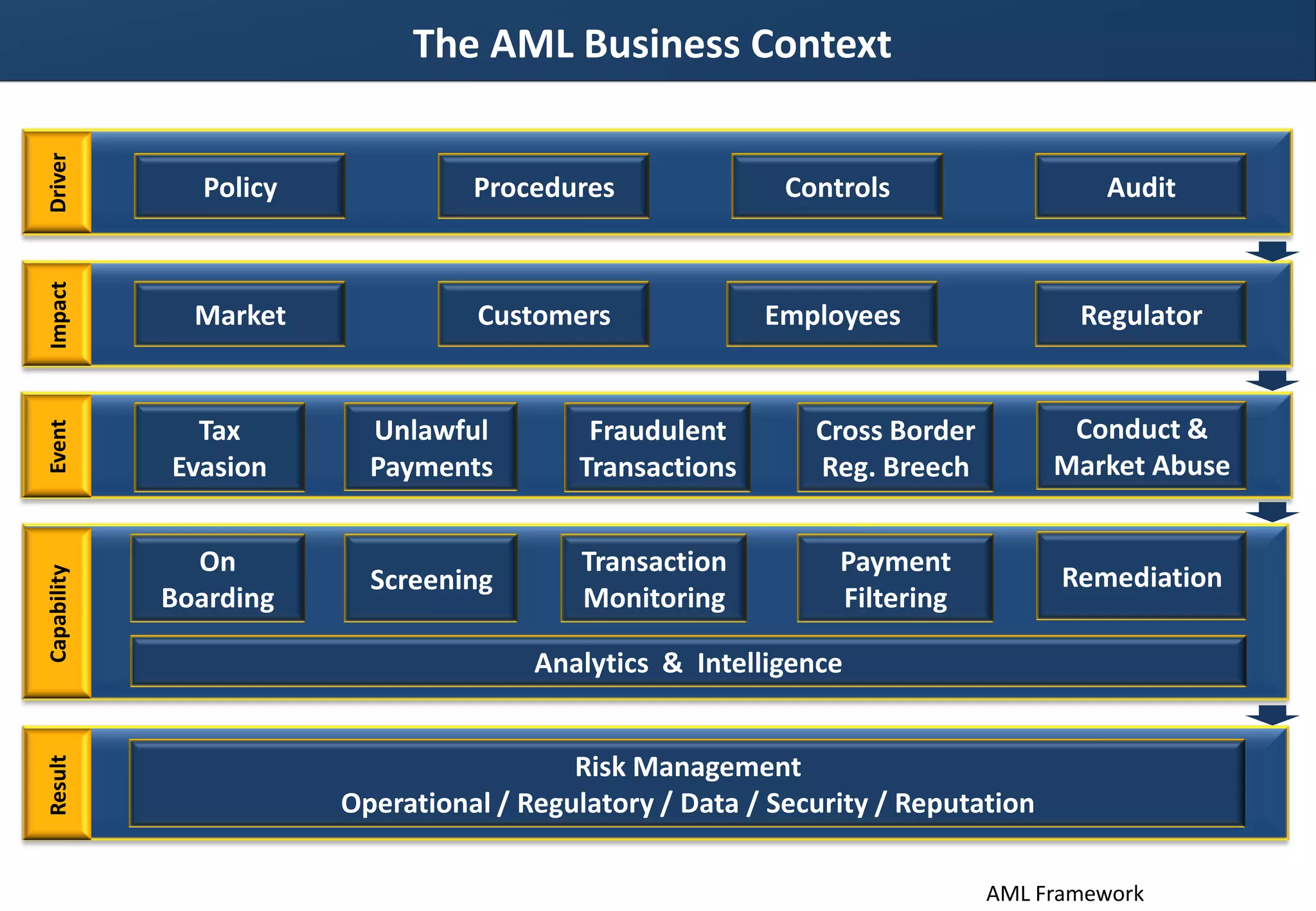
The AML Business Context
AML Framework
Policy
Driver
Procedures Controls Audit
Customers
Impact
Employees RegulatorMarket
Unlawful
Payments
Event
Fraudulent
Transactions
Cross Border
Reg. Breech
Tax
Evasion
Conduct &
Market Abuse
Screening
Capability
Transaction
Monitoring
Payment
Filtering
On
Boarding
Remediation
Analytics & Intelligence
Result
Risk Management
Operational / Regulatory / Data / Security / Reputation
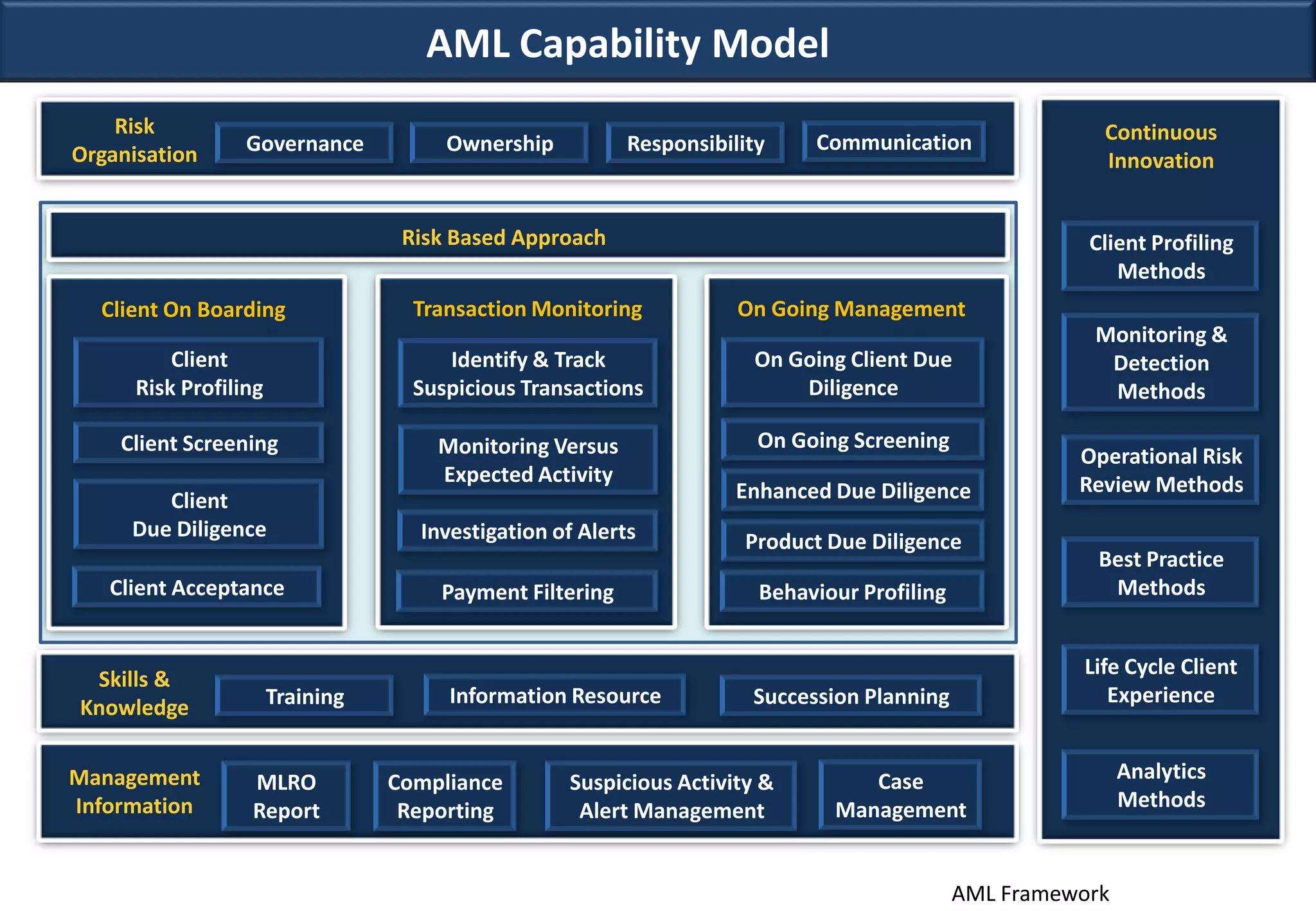
AML Capability Model
AML Framework
Governance Ownership Responsibility Communication
Risk
Organisation
Risk Based Approach
Client On Boarding Transaction Monitoring On Going Management
Client
Risk Profiling
Client Screening
Client
Due Diligence
Client Acceptance
Identify & Track
Suspicious Transactions
On Going Client Due
Diligence
Investigation of Alerts Product Due Diligence
Monitoring Versus
Expected Activity
On Going Screening
Enhanced Due Diligence
Training Succession PlanningInformation Resource
Skills &
Knowledge
MLRO
Report
Suspicious Activity &
Alert Management
Compliance
Reporting
Management
Information
Case
Management
Payment Filtering Behaviour Profiling
Continuous
Innovation
Client Profiling
Methods
Monitoring &
Detection
Methods
Operational Risk
Review Methods
Best Practice
Methods
Life Cycle Client
Experience
Analytics
Methods
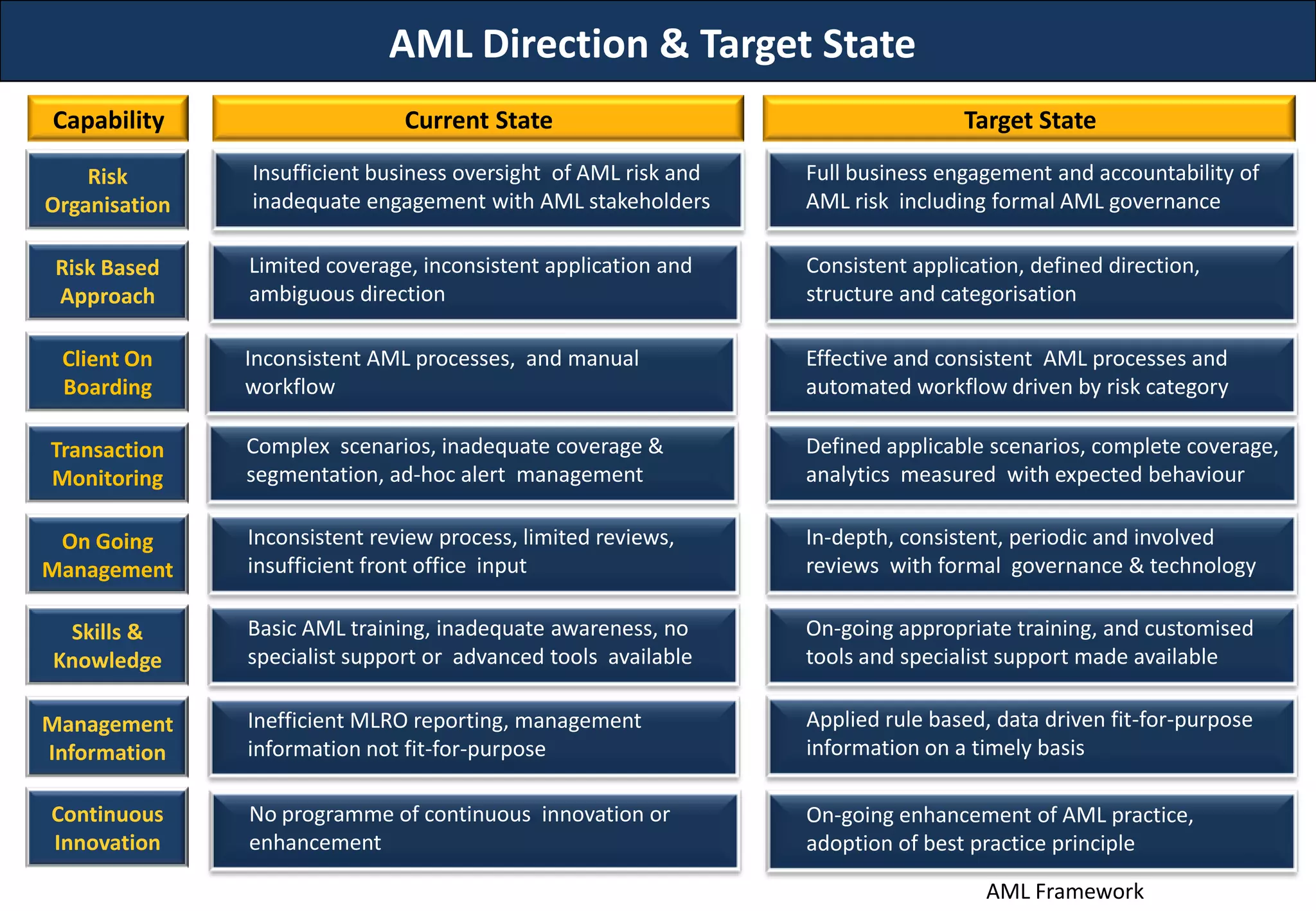
AML Direction & Target State
AML Framework
Risk
Organisation
Risk Based
Approach
Client On
Boarding
Transaction
Monitoring
On Going
Management
Skills &
Knowledge
Management
Information
Continuous
Innovation
Capability Current State Target State
Insufficient business oversight of AML risk and
inadequate engagement with AML stakeholders
Effective and consistent AML processes and
automated workflow driven by risk category
Defined applicable scenarios, complete coverage,
analytics measured with expected behaviour
In-depth, consistent, periodic and involved
reviews with formal governance & technology
On-going appropriate training, and customised
tools and specialist support made available
Applied rule based, data driven fit-for-purpose
information on a timely basis
Inconsistent AML processes, and manual
workflow
Inconsistent review process, limited reviews,
insufficient front office input
Basic AML training, inadequate awareness, no
specialist support or advanced tools available
Inefficient MLRO reporting, management
information not fit-for-purpose
No programme of continuous innovation or
enhancement
Limited coverage, inconsistent application and
ambiguous direction
Full business engagement and accountability of
AML risk including formal AML governance
Consistent application, defined direction,
structure and categorisation
On-going enhancement of AML practice,
adoption of best practice principle
Complex scenarios, inadequate coverage &
segmentation, ad-hoc alert management
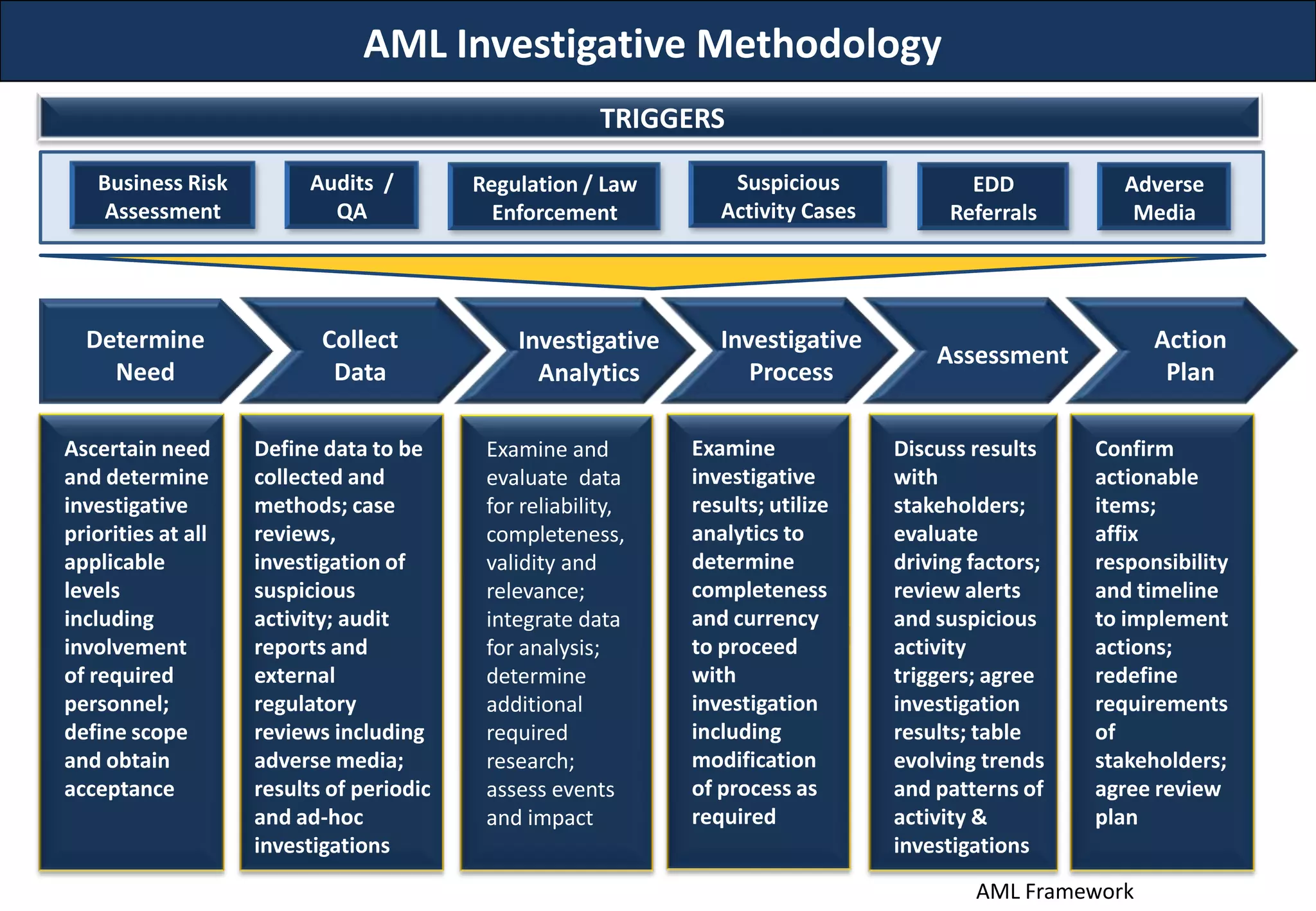
AML Investigative Methodology
AML Framework
Determine
Need
Investigative
Analytics
Collect
Data
Investigative
Process
Assessment
Action
Plan
Examine and
evaluate data
for reliability,
completeness,
validity and
relevance;
integrate data
for analysis;
determine
additional
required
research;
assess events
and impact
Examine
investigative
results; utilize
analytics to
determine
completeness
and currency
to proceed
with
investigation
including
modification
of process as
required
Define data to be
collected and
methods; case
reviews,
investigation of
suspicious
activity; audit
reports and
external
regulatory
reviews including
adverse media;
results of periodic
and ad-hoc
investigations
Ascertain need
and determine
investigative
priorities at all
applicable
levels
including
involvement
of required
personnel;
define scope
and obtain
acceptance
Discuss results
with
stakeholders;
evaluate
driving factors;
review alerts
and suspicious
activity
triggers; agree
investigation
results; table
evolving trends
and patterns of
activity &
investigations
Confirm
actionable
items;
affix
responsibility
and timeline
to implement
actions;
redefine
requirements
of
stakeholders;
agree review
plan
TRIGGERS
Business Risk
Assessment
EDD
Referrals
Audits /
QA
Regulation / Law
Enforcement
Suspicious
Activity Cases
Adverse
Media
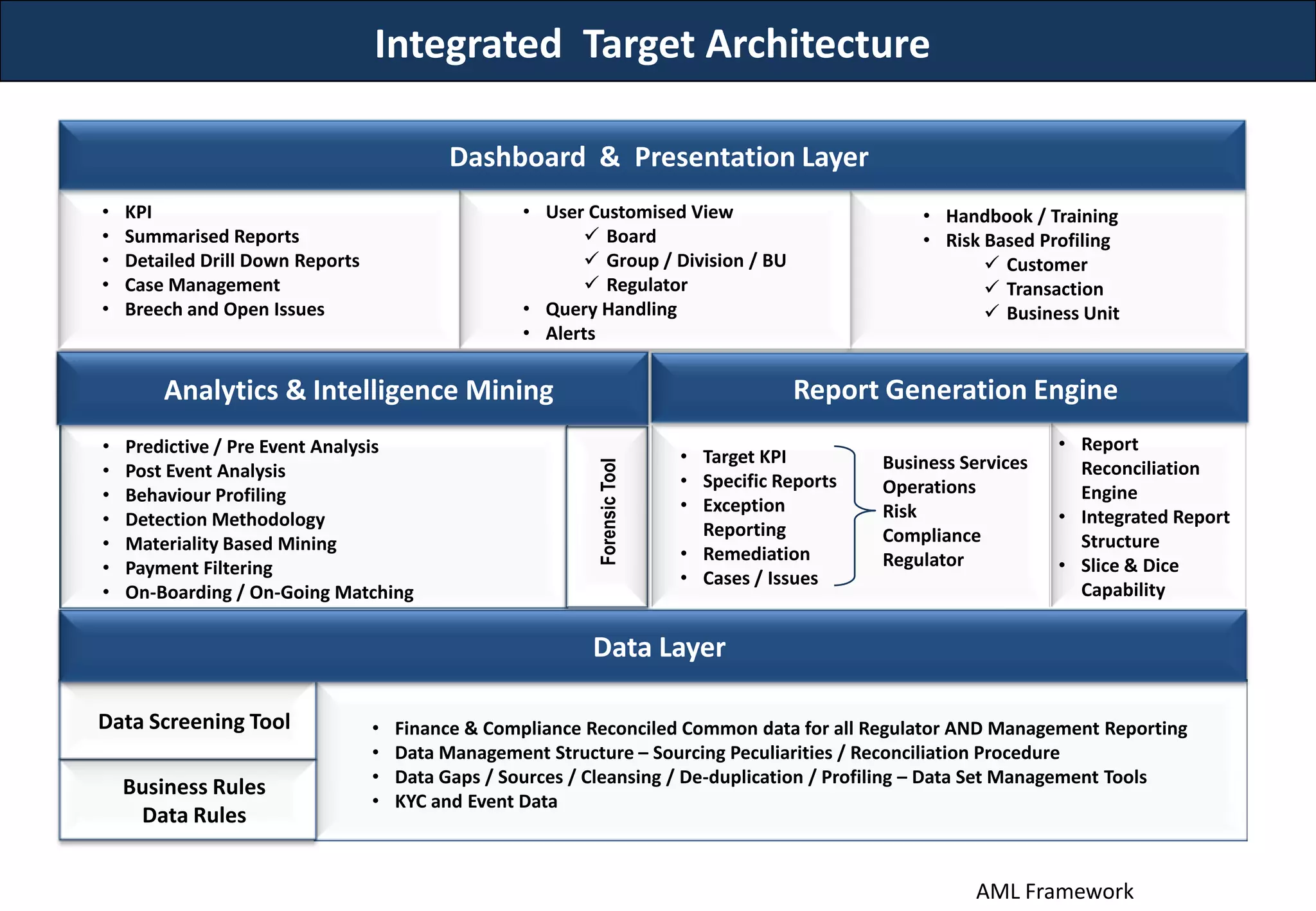
Integrated Target Architecture
AML Framework
• KPI
• Summarised Reports
• Detailed Drill Down Reports
• Case Management
• Breech and Open Issues
• User Customised View
 Board
 Group / Division / BU
 Regulator
• Query Handling
• Alerts
• Handbook / Training
• Risk Based Profiling
 Customer
 Transaction
 Business Unit
Dashboard & Presentation Layer
Generates
• Predictive / Pre Event Analysis
• Post Event Analysis
• Behaviour Profiling
• Detection Methodology
• Materiality Based Mining
• Payment Filtering
• On-Boarding / On-Going Matching
ForensicTool
Analytics & Intelligence Mining
• Target KPI
• Specific Reports
• Exception
Reporting
• Remediation
• Cases / Issues
Business Services
Operations
Risk
Compliance
Regulator
• Report
Reconciliation
Engine
• Integrated Report
Structure
• Slice & Dice
Capability
Report Generation Engine
Data Screening Tool
Business Rules
Data Rules
• Finance & Compliance Reconciled Common data for all Regulator AND Management Reporting
• Data Management Structure – Sourcing Peculiarities / Reconciliation Procedure
• Data Gaps / Sources / Cleansing / De-duplication / Profiling – Data Set Management Tools
• KYC and Event Data
Data Layer

Anti Money Laundering Framework

  • 1.
    Anti Money Laundering Framework NikatMalik April 2014 All Rights Reserved
  • 2.
    The AML BusinessContext AML Framework Policy Driver Procedures Controls Audit Customers Impact Employees RegulatorMarket Unlawful Payments Event Fraudulent Transactions Cross Border Reg. Breech Tax Evasion Conduct & Market Abuse Screening Capability Transaction Monitoring Payment Filtering On Boarding Remediation Analytics & Intelligence Result Risk Management Operational / Regulatory / Data / Security / Reputation
  • 3.
    AML Capability Model AMLFramework Governance Ownership Responsibility Communication Risk Organisation Risk Based Approach Client On Boarding Transaction Monitoring On Going Management Client Risk Profiling Client Screening Client Due Diligence Client Acceptance Identify & Track Suspicious Transactions On Going Client Due Diligence Investigation of Alerts Product Due Diligence Monitoring Versus Expected Activity On Going Screening Enhanced Due Diligence Training Succession PlanningInformation Resource Skills & Knowledge MLRO Report Suspicious Activity & Alert Management Compliance Reporting Management Information Case Management Payment Filtering Behaviour Profiling Continuous Innovation Client Profiling Methods Monitoring & Detection Methods Operational Risk Review Methods Best Practice Methods Life Cycle Client Experience Analytics Methods
  • 4.
    AML Direction &Target State AML Framework Risk Organisation Risk Based Approach Client On Boarding Transaction Monitoring On Going Management Skills & Knowledge Management Information Continuous Innovation Capability Current State Target State Insufficient business oversight of AML risk and inadequate engagement with AML stakeholders Effective and consistent AML processes and automated workflow driven by risk category Defined applicable scenarios, complete coverage, analytics measured with expected behaviour In-depth, consistent, periodic and involved reviews with formal governance & technology On-going appropriate training, and customised tools and specialist support made available Applied rule based, data driven fit-for-purpose information on a timely basis Inconsistent AML processes, and manual workflow Inconsistent review process, limited reviews, insufficient front office input Basic AML training, inadequate awareness, no specialist support or advanced tools available Inefficient MLRO reporting, management information not fit-for-purpose No programme of continuous innovation or enhancement Limited coverage, inconsistent application and ambiguous direction Full business engagement and accountability of AML risk including formal AML governance Consistent application, defined direction, structure and categorisation On-going enhancement of AML practice, adoption of best practice principle Complex scenarios, inadequate coverage & segmentation, ad-hoc alert management
  • 5.
    AML Investigative Methodology AMLFramework Determine Need Investigative Analytics Collect Data Investigative Process Assessment Action Plan Examine and evaluate data for reliability, completeness, validity and relevance; integrate data for analysis; determine additional required research; assess events and impact Examine investigative results; utilize analytics to determine completeness and currency to proceed with investigation including modification of process as required Define data to be collected and methods; case reviews, investigation of suspicious activity; audit reports and external regulatory reviews including adverse media; results of periodic and ad-hoc investigations Ascertain need and determine investigative priorities at all applicable levels including involvement of required personnel; define scope and obtain acceptance Discuss results with stakeholders; evaluate driving factors; review alerts and suspicious activity triggers; agree investigation results; table evolving trends and patterns of activity & investigations Confirm actionable items; affix responsibility and timeline to implement actions; redefine requirements of stakeholders; agree review plan TRIGGERS Business Risk Assessment EDD Referrals Audits / QA Regulation / Law Enforcement Suspicious Activity Cases Adverse Media
  • 6.
    Integrated Target Architecture AMLFramework • KPI • Summarised Reports • Detailed Drill Down Reports • Case Management • Breech and Open Issues • User Customised View  Board  Group / Division / BU  Regulator • Query Handling • Alerts • Handbook / Training • Risk Based Profiling  Customer  Transaction  Business Unit Dashboard & Presentation Layer Generates • Predictive / Pre Event Analysis • Post Event Analysis • Behaviour Profiling • Detection Methodology • Materiality Based Mining • Payment Filtering • On-Boarding / On-Going Matching ForensicTool Analytics & Intelligence Mining • Target KPI • Specific Reports • Exception Reporting • Remediation • Cases / Issues Business Services Operations Risk Compliance Regulator • Report Reconciliation Engine • Integrated Report Structure • Slice & Dice Capability Report Generation Engine Data Screening Tool Business Rules Data Rules • Finance & Compliance Reconciled Common data for all Regulator AND Management Reporting • Data Management Structure – Sourcing Peculiarities / Reconciliation Procedure • Data Gaps / Sources / Cleansing / De-duplication / Profiling – Data Set Management Tools • KYC and Event Data Data Layer