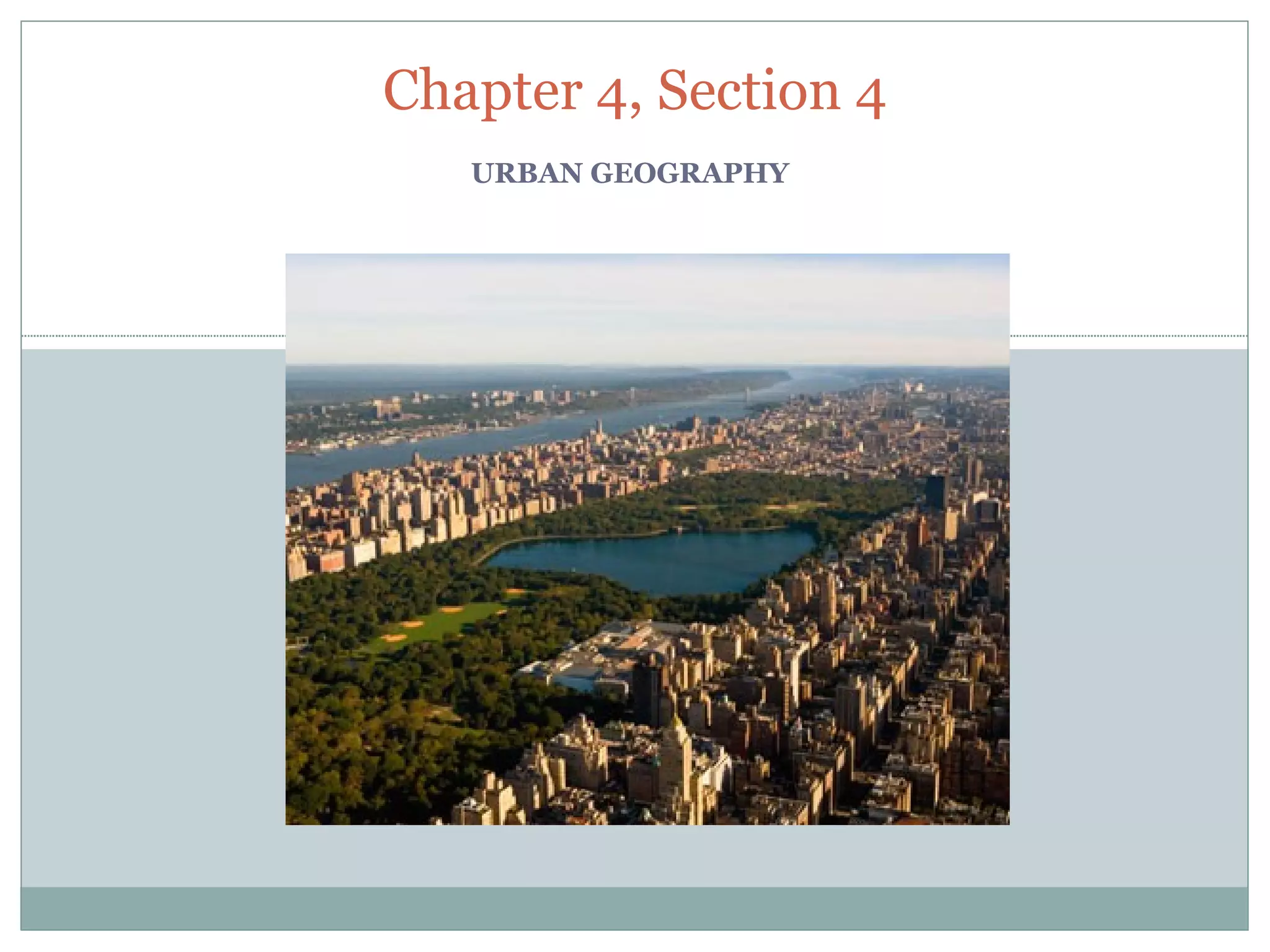
URBAN GEOGRAPHY Chapter 4, Section 4
Growth of Urban Areas -An  urban geographer  studies how people use space in cities. - cities  - areas with large populations and are centers of business and culture - suburbs  - built-up area around the central city; mostly residential - metropolitan area  - the city and its suburbs; examples: NYC, D.C., Baltimore(B-more)
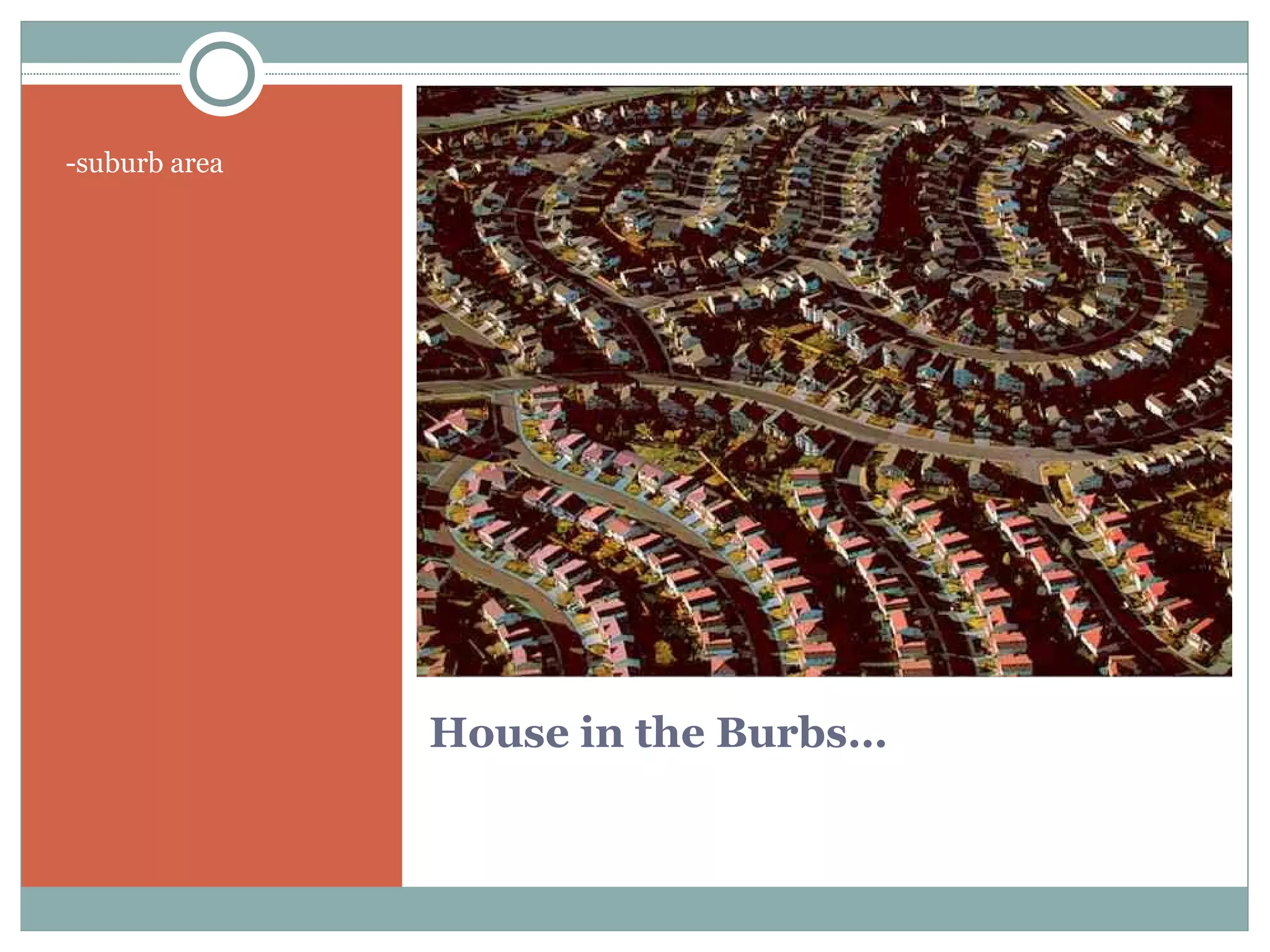
House in the Burbs… -suburb area
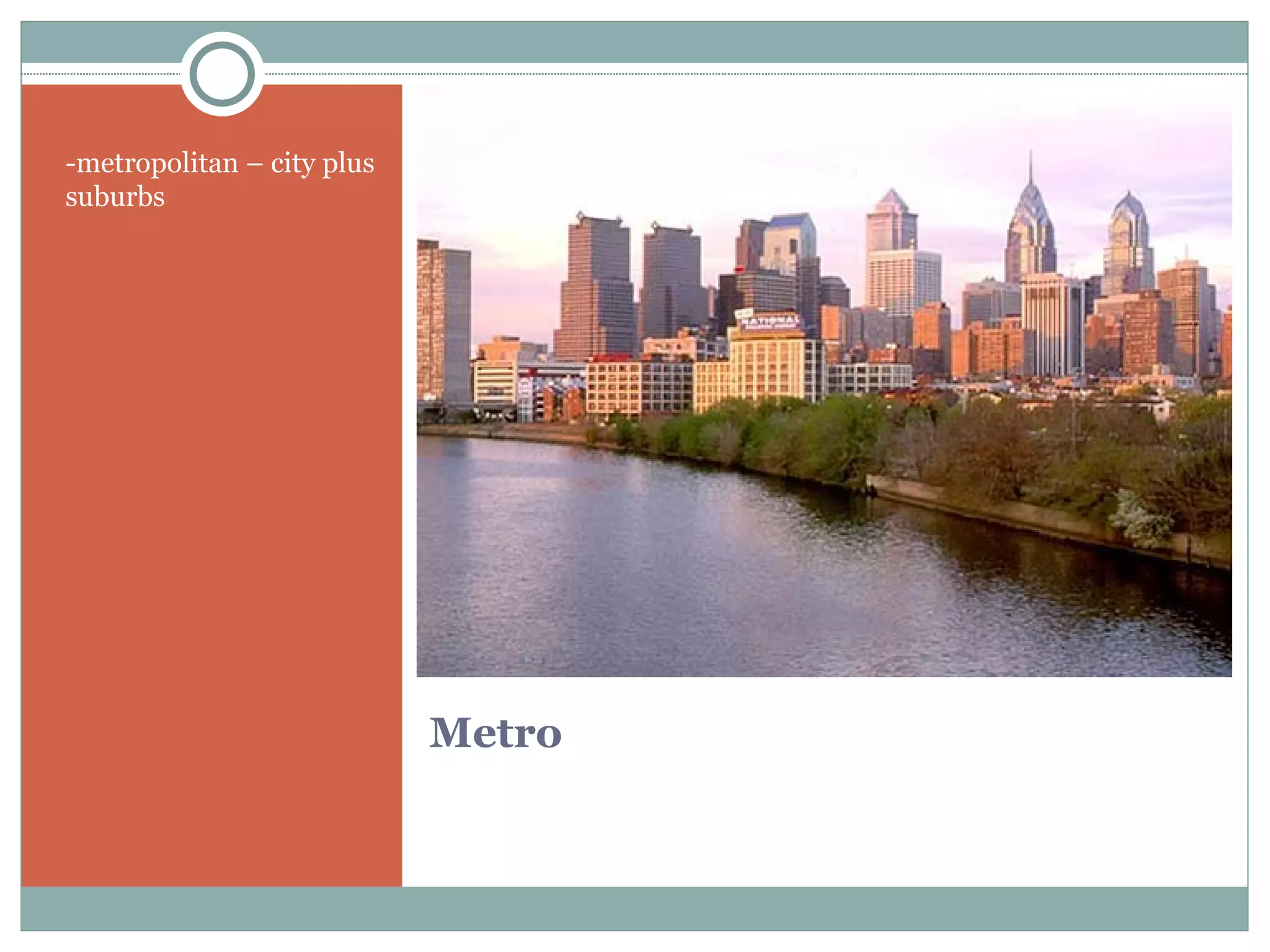
Metro -metropolitan – city plus suburbs
Metamorphosis of a City Urbanization  is the dramatic rise in the number of cities and the changes in lifestyle.  How might urbanization affect an area, a society, a culture, a way of life?  What factors change?  Is urbanization a good or bad thing?  Why?  Or, does it have advantages and disadvantages?
Gentrification… Movement of more affluent individuals into a lower-class area.  What is the motivation for this? How does it affect the people living there? Check out this video about Harlem, NY:  http://fr.youtube.com/watch?v=4yuWVwX9WV0   http://current.com/items/76306502_evicted_in_harlem   Check out this video about gentrification in NY:  http://fr.youtube.com/watch?v=m2onQY0m0ig
City Locations allow good transportation (river, lake, coast) Natural resources = Sacremento and gold Waterways = Chicago and Great Lakes Economic activity = Pittsburgh and iron Military, cultural, educational reasons
Land Use in a City Residential: single-family housing, apartment buildings, etc… Industrial: areas reserved for manufacturing goods Commercial: areas used for private business and buying and selling of retail CBD--central business district- core of a city; business offices and stores Typically, as you move away from CBD, lower land value and less expensive housing
Concentric Zone Model Core: CBD Circular model --bull’s-eye Lower income housing closer to CBD What city follows this model?
Sector Model CBD in core Activities in wedges or sectors (usually follow transportation lines) Residences in one area, some inter-mixture, but not much
Multiple Nuclei Model Nuclei or districts found throughout entire urban area CBD may not be circular Districts and sectors differ in size according to demand
Understanding the three models How are these models different?  The same? What general concepts of an “urban” area change or stay the same?  What happens to business activity in each?  Residences? Which model does Dakar most closely follow?
Functions of Cities Retail, entertainment, transportation, business, education, government, manufacturing, wholesaling, residential, recreation, religious Manhattan = over 70 museums, subway system Essential=water supply, mass transportation Why are these elements essential? Use real-life cities to explain why…

Chapter 4, Section 4

  • 1.
  • 2.
    Growth of UrbanAreas -An urban geographer studies how people use space in cities. - cities - areas with large populations and are centers of business and culture - suburbs - built-up area around the central city; mostly residential - metropolitan area - the city and its suburbs; examples: NYC, D.C., Baltimore(B-more)
  • 3.
    House in theBurbs… -suburb area
  • 4.
    Metro -metropolitan –city plus suburbs
  • 5.
    Metamorphosis of aCity Urbanization is the dramatic rise in the number of cities and the changes in lifestyle. How might urbanization affect an area, a society, a culture, a way of life? What factors change? Is urbanization a good or bad thing? Why? Or, does it have advantages and disadvantages?
  • 6.
    Gentrification… Movement ofmore affluent individuals into a lower-class area. What is the motivation for this? How does it affect the people living there? Check out this video about Harlem, NY: http://fr.youtube.com/watch?v=4yuWVwX9WV0 http://current.com/items/76306502_evicted_in_harlem Check out this video about gentrification in NY: http://fr.youtube.com/watch?v=m2onQY0m0ig
  • 7.
    City Locations allowgood transportation (river, lake, coast) Natural resources = Sacremento and gold Waterways = Chicago and Great Lakes Economic activity = Pittsburgh and iron Military, cultural, educational reasons
  • 8.
    Land Use ina City Residential: single-family housing, apartment buildings, etc… Industrial: areas reserved for manufacturing goods Commercial: areas used for private business and buying and selling of retail CBD--central business district- core of a city; business offices and stores Typically, as you move away from CBD, lower land value and less expensive housing
  • 9.
    Concentric Zone ModelCore: CBD Circular model --bull’s-eye Lower income housing closer to CBD What city follows this model?
  • 10.
    Sector Model CBDin core Activities in wedges or sectors (usually follow transportation lines) Residences in one area, some inter-mixture, but not much
  • 11.
    Multiple Nuclei ModelNuclei or districts found throughout entire urban area CBD may not be circular Districts and sectors differ in size according to demand
  • 12.
    Understanding the threemodels How are these models different? The same? What general concepts of an “urban” area change or stay the same? What happens to business activity in each? Residences? Which model does Dakar most closely follow?
  • 13.
    Functions of CitiesRetail, entertainment, transportation, business, education, government, manufacturing, wholesaling, residential, recreation, religious Manhattan = over 70 museums, subway system Essential=water supply, mass transportation Why are these elements essential? Use real-life cities to explain why…