Key pointsFormulaePhysics IGCSE Revision(Part 1)SimpleEasyBy: Momina
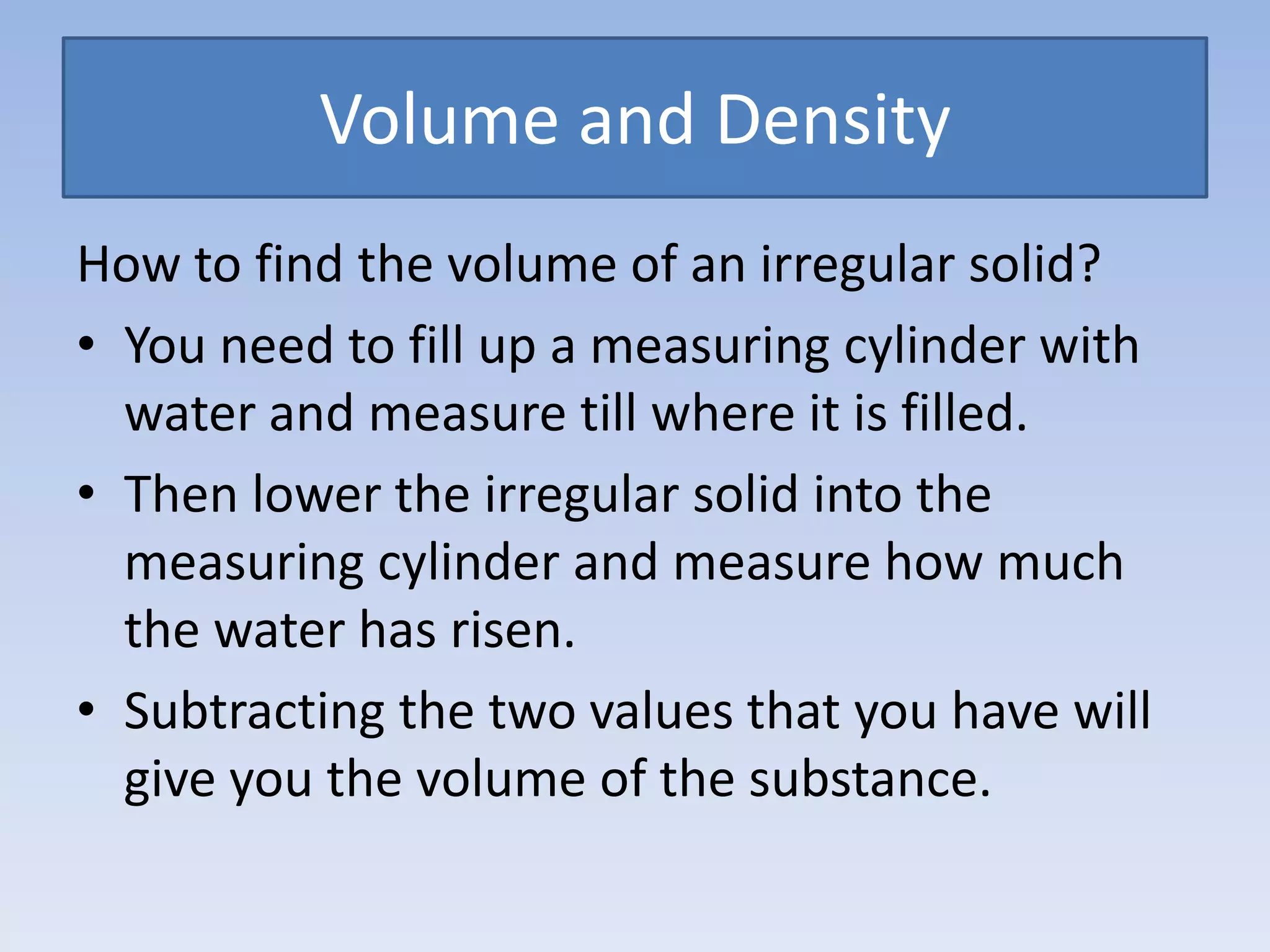
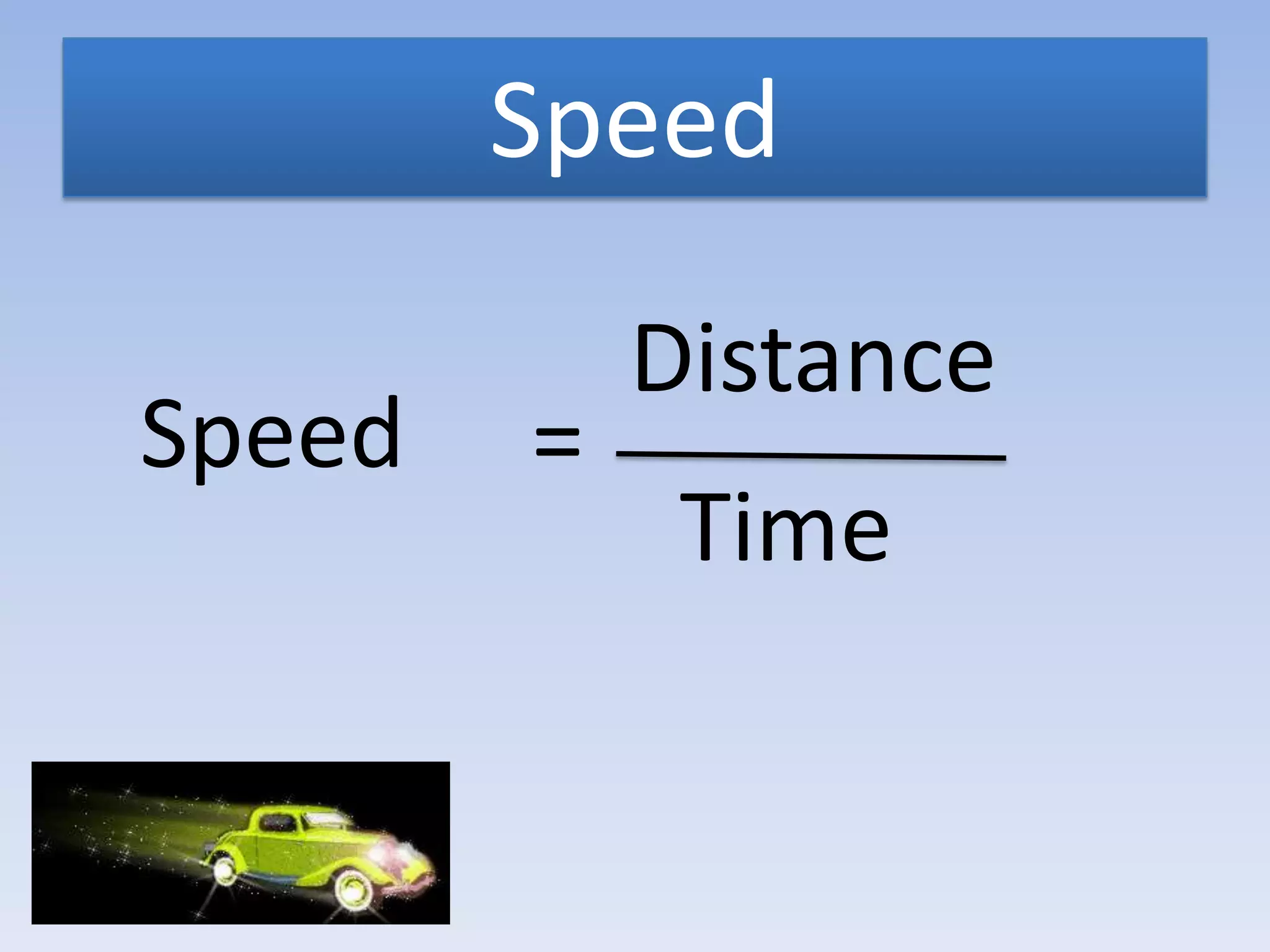
Volume and DensityMassDensity=Volumem=Þ(rho)V
Volume and DensityHow to find the volume of an irregular solid?You need to fill up a measuring cylinder with water and measure till where it is filled.Then lower the irregular solid into the measuring cylinder and measure how much the water has risen.Subtracting the two values that you have will give you the volume of the substance.
Speed DistanceSpeed =Time
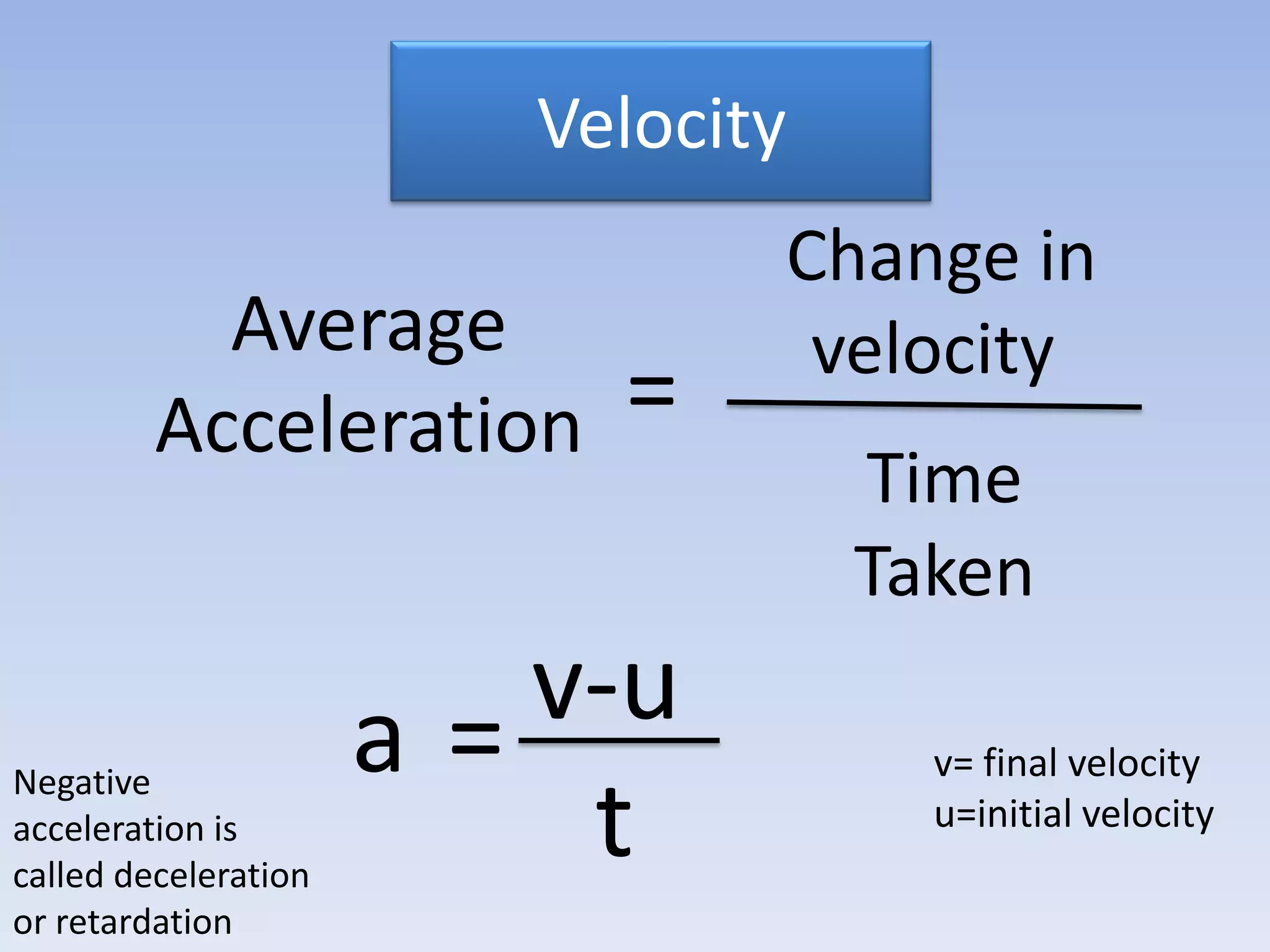
Velocity Change in velocityAverage Acceleration =Time Takenv-u=av= final velocityu=initial velocityNegative acceleration is called deceleration or retardationt
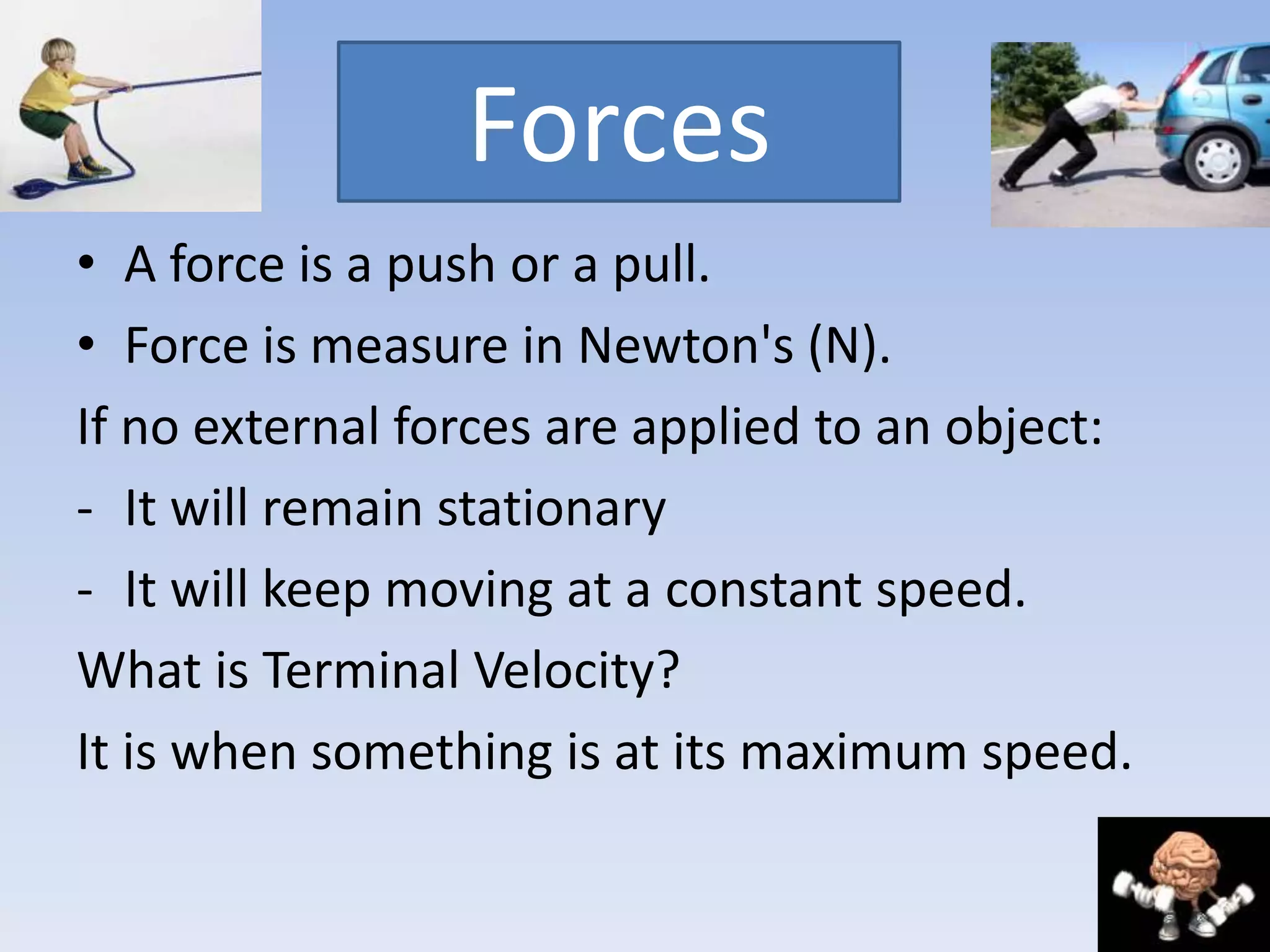
ForcesA force is a push or a pull.Force is measure in Newton's (N).If no external forces are applied to an object:It will remain stationary
It will keep moving at a constant speed.What is Terminal Velocity?It is when something is at its maximum speed.
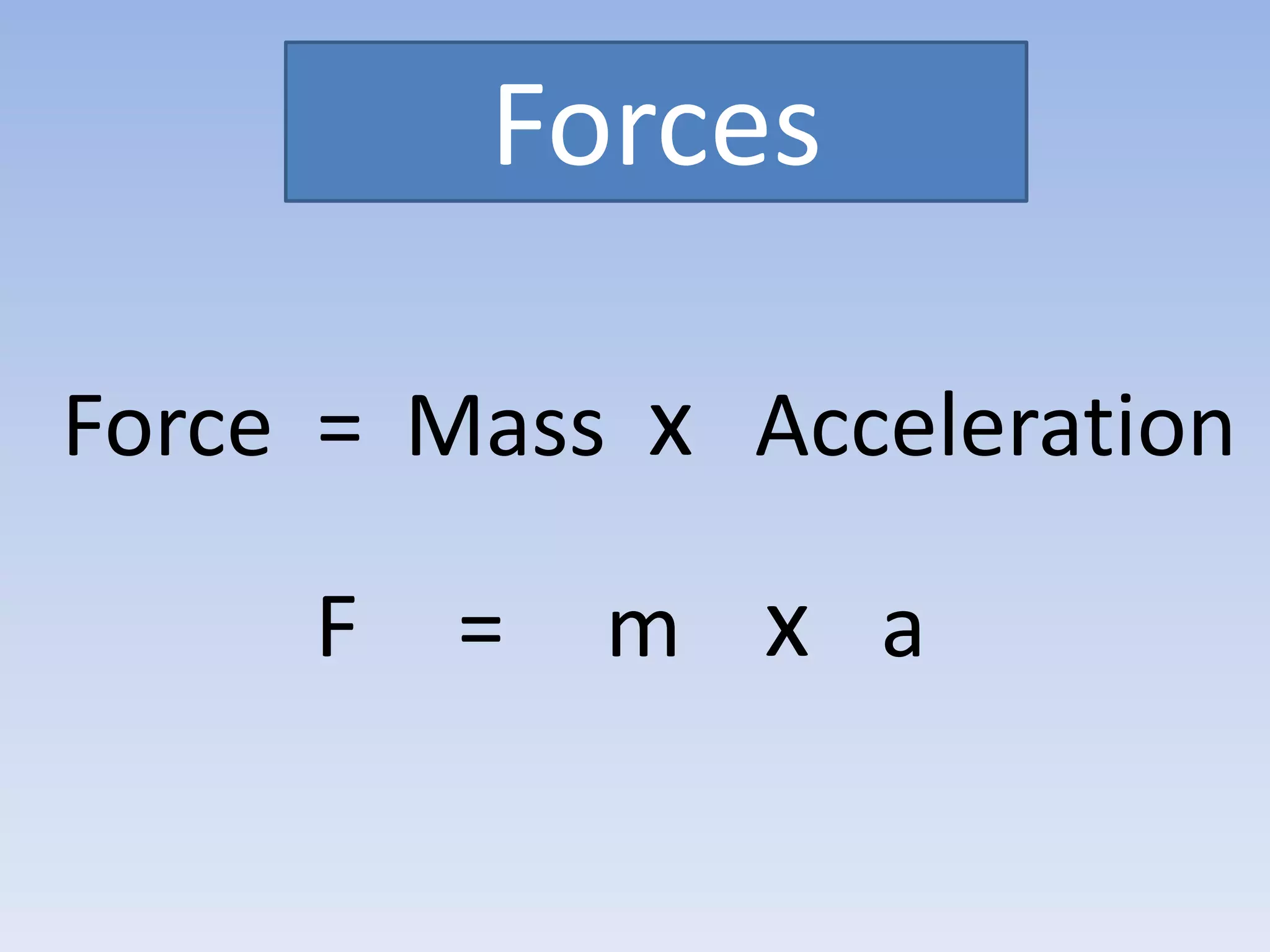
ForcesxxMassF am=AccelerationForce =
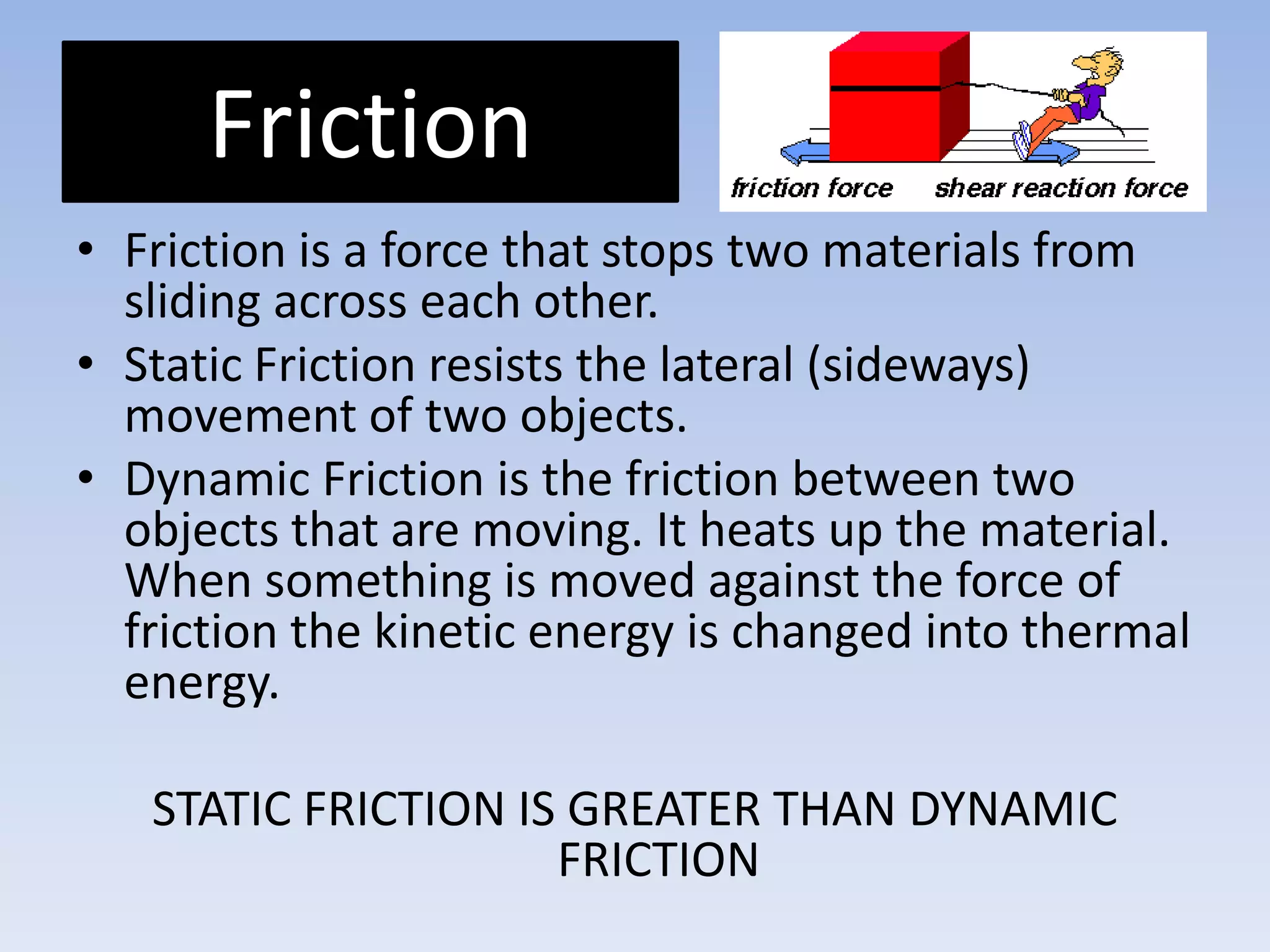
FrictionFriction is a force that stops two materials from sliding across each other.Static Friction resists the lateral (sideways) movement of two objects.Dynamic Friction is the friction between two objects that are moving. It heats up the material. When something is moved against the force of friction the kinetic energy is changed into thermal energy.STATIC FRICTION IS GREATER THAN DYNAMIC FRICTION
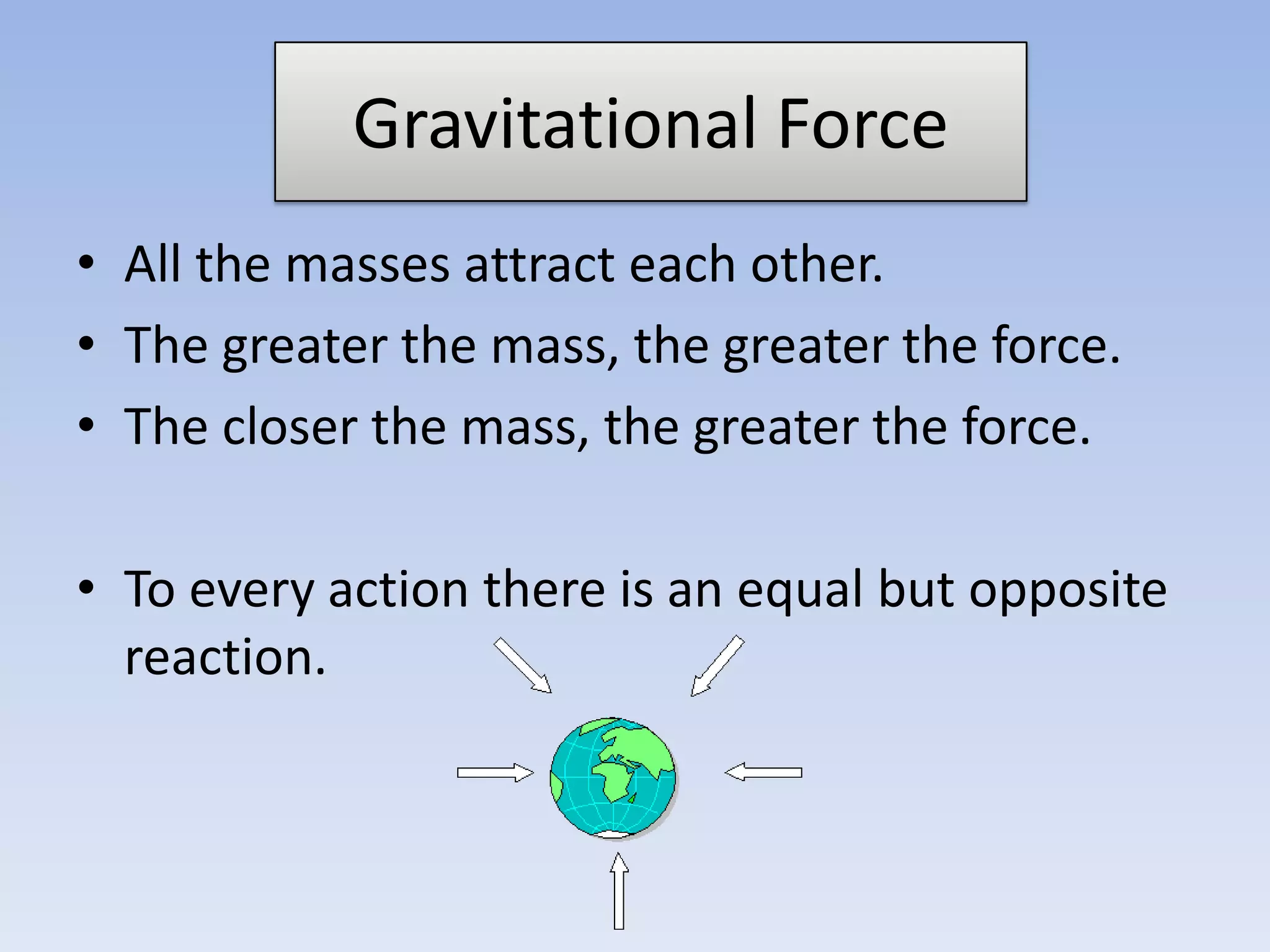
Gravitational ForceAll the masses attract each other.The greater the mass, the greater the force.The closer the mass, the greater the force.To every action there is an equal but opposite reaction.
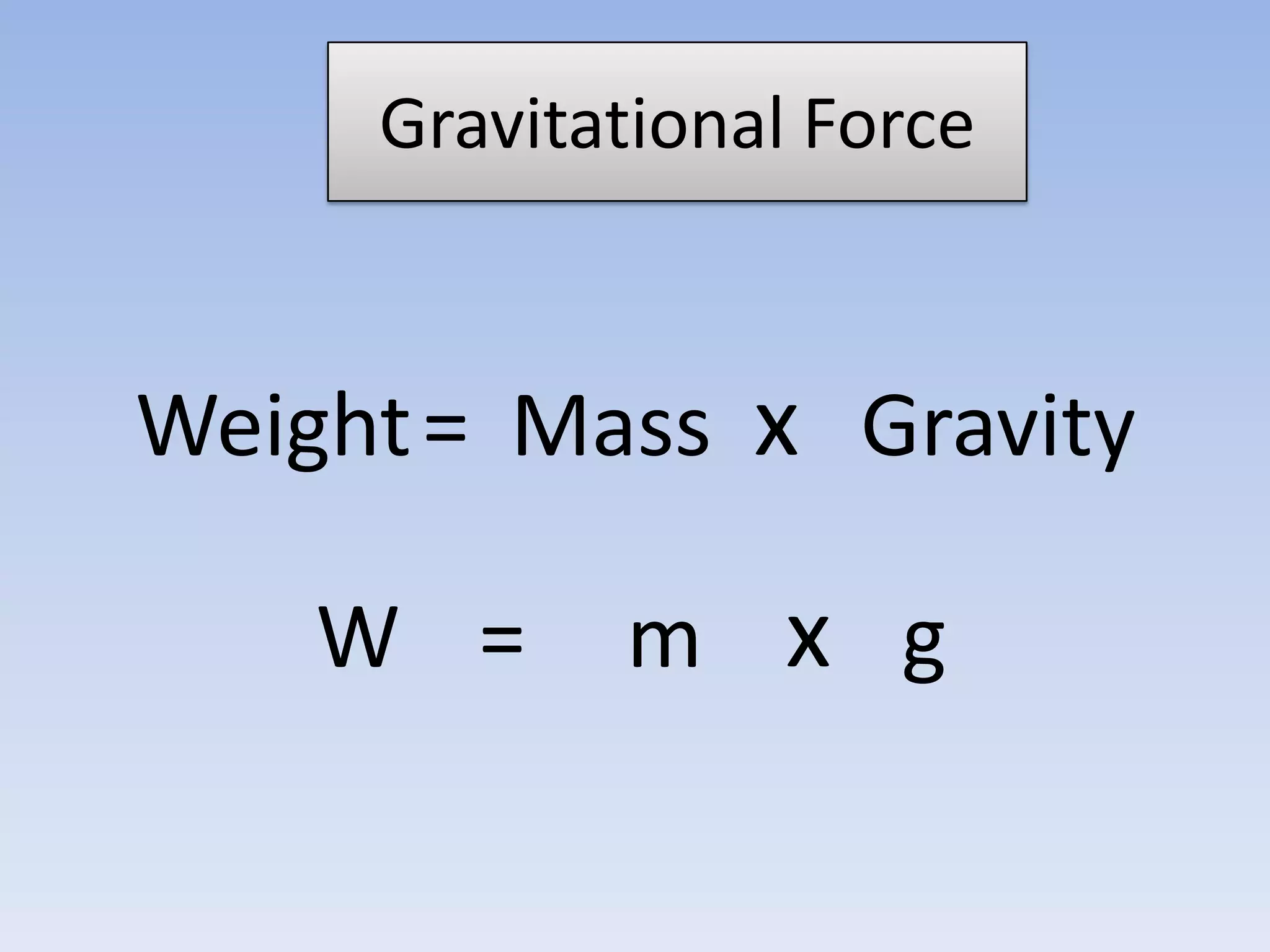
Gravitational ForcexxMassW gm=GravityWeight =
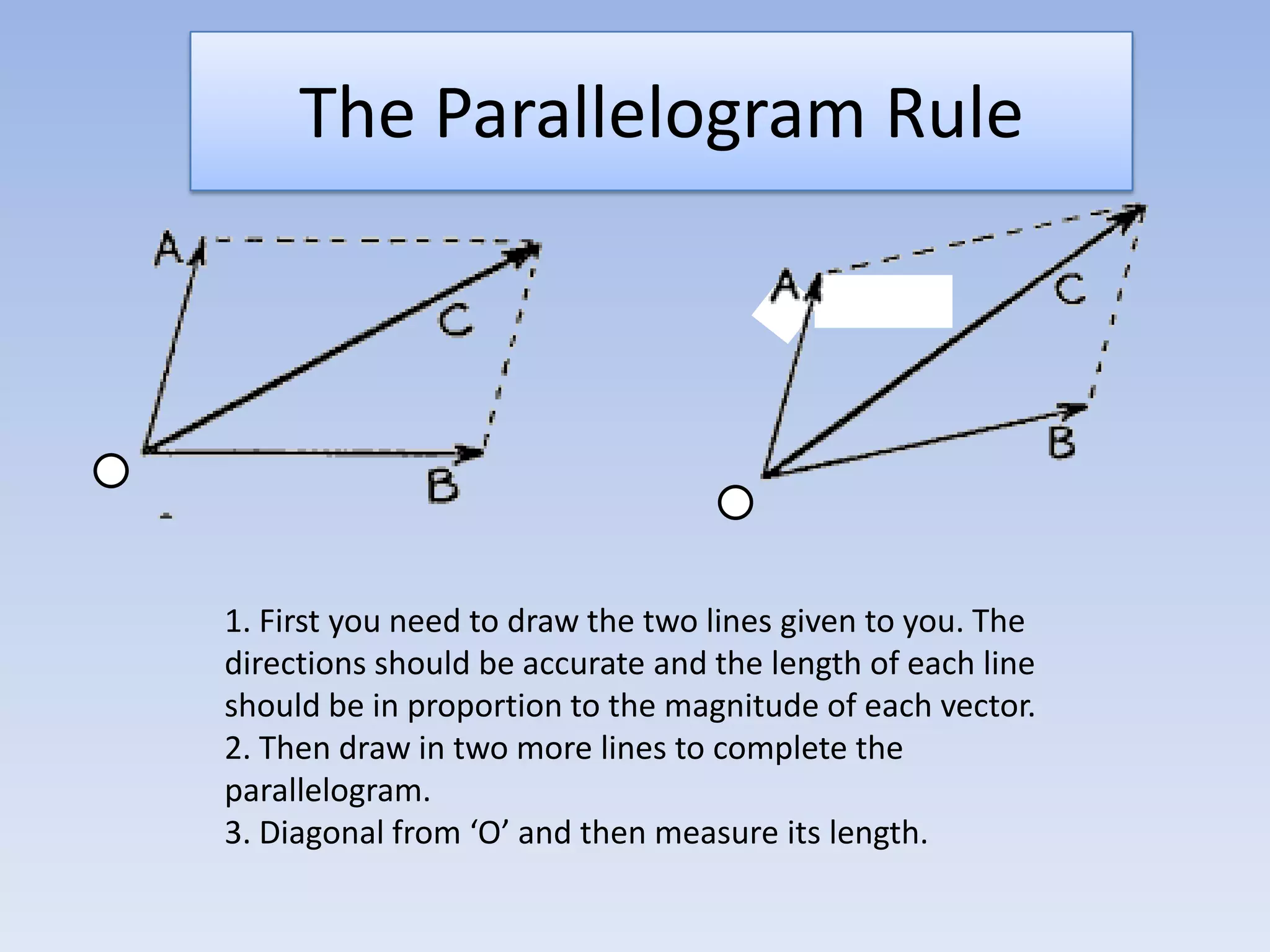
The Parallelogram Rule1. First you need to draw the two lines given to you. The directions should be accurate and the length of each line should be in proportion to the magnitude of each vector.2. Then draw in two more lines to complete the parallelogram.3. Diagonal from ‘O’ and then measure its length.
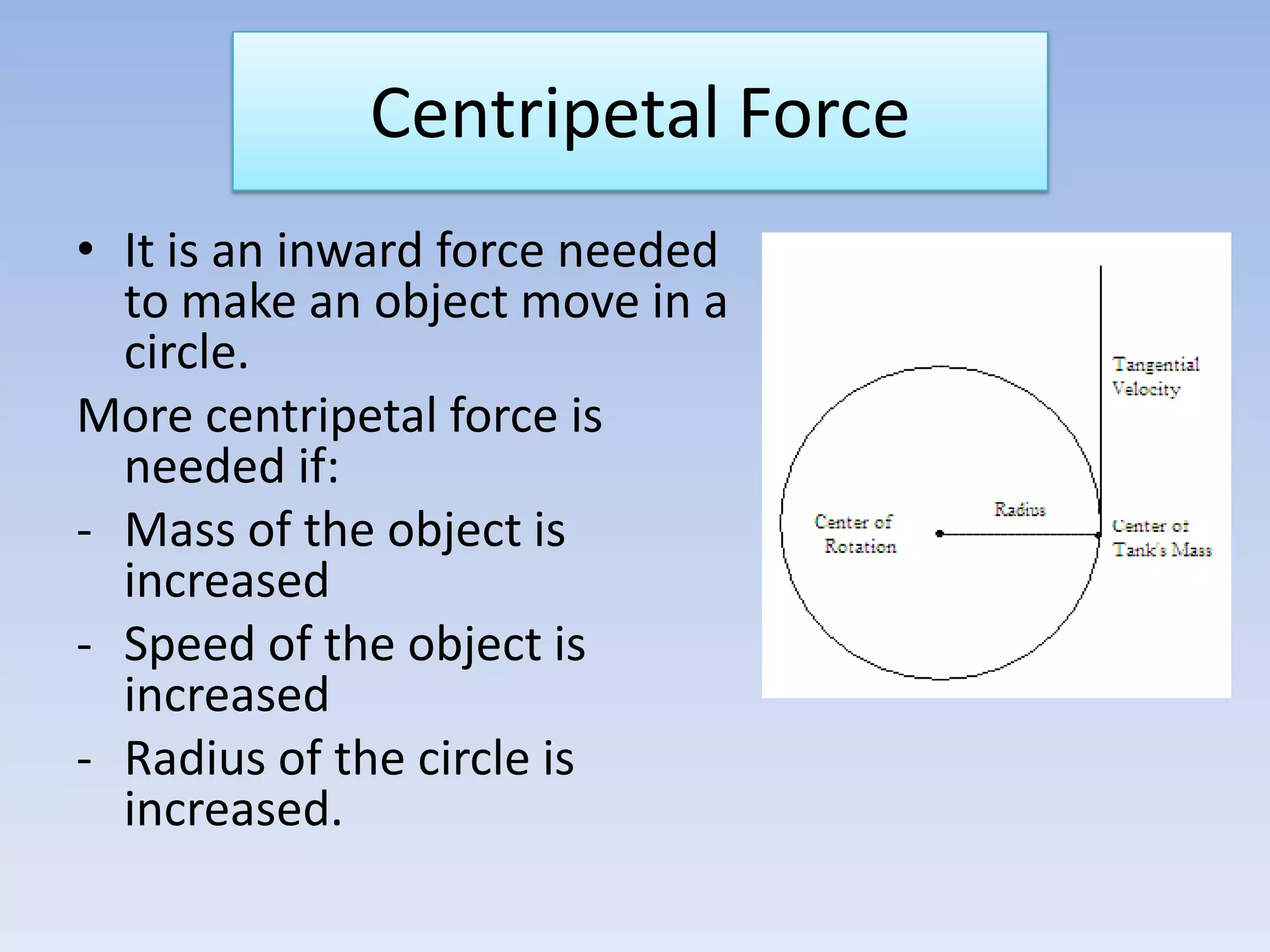
Centripetal ForceIt is an inward force needed to make an object move in a circle.More centripetal force is needed if:Mass of the object is increased
Speed of the object is increased
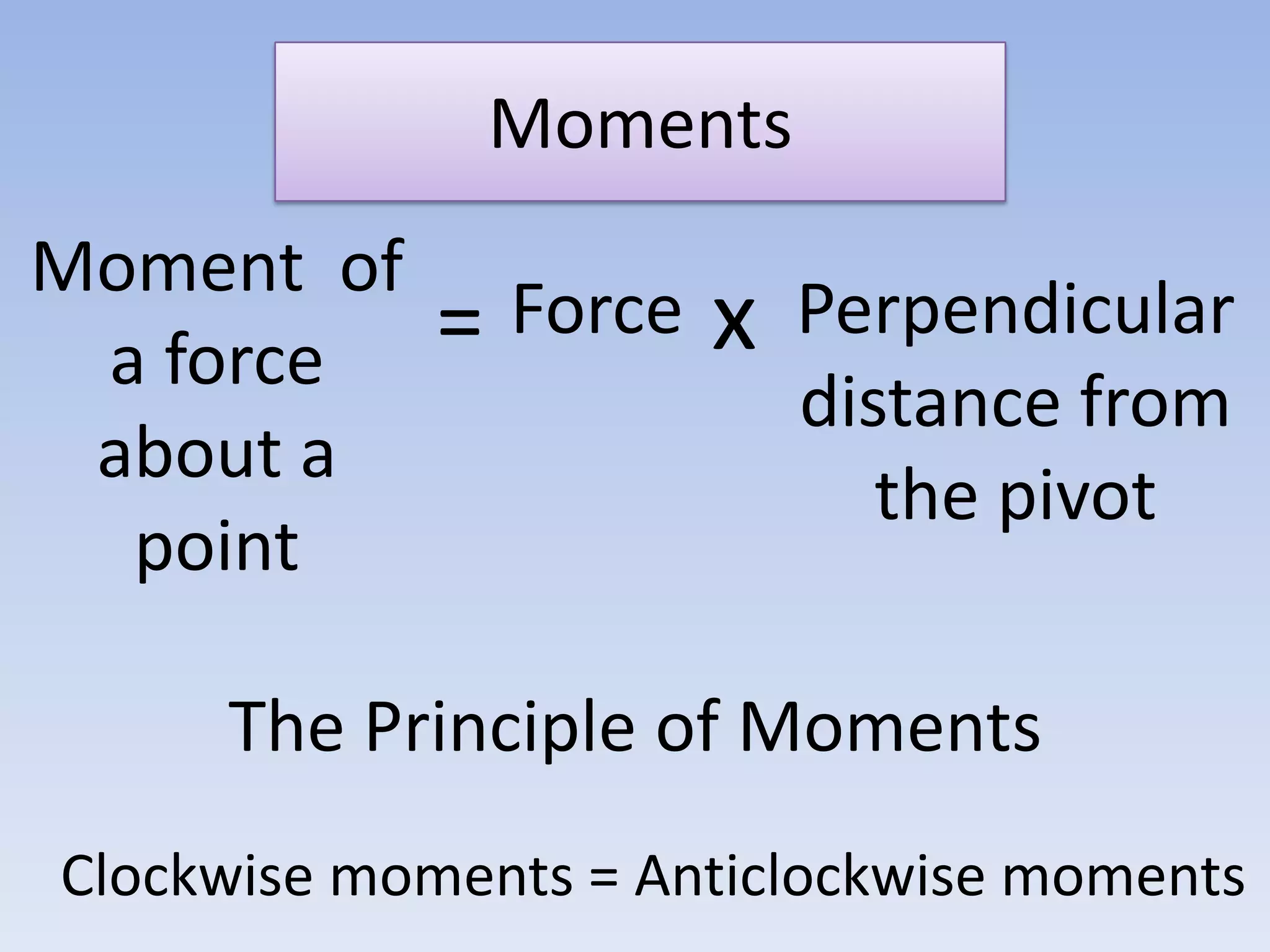
Radius of the circle is increased.MomentsxMoment  of a force about a pointPerpendicular distance from the pivotForce=The Principle of Moments 	Clockwise moments = Anticlockwise moments
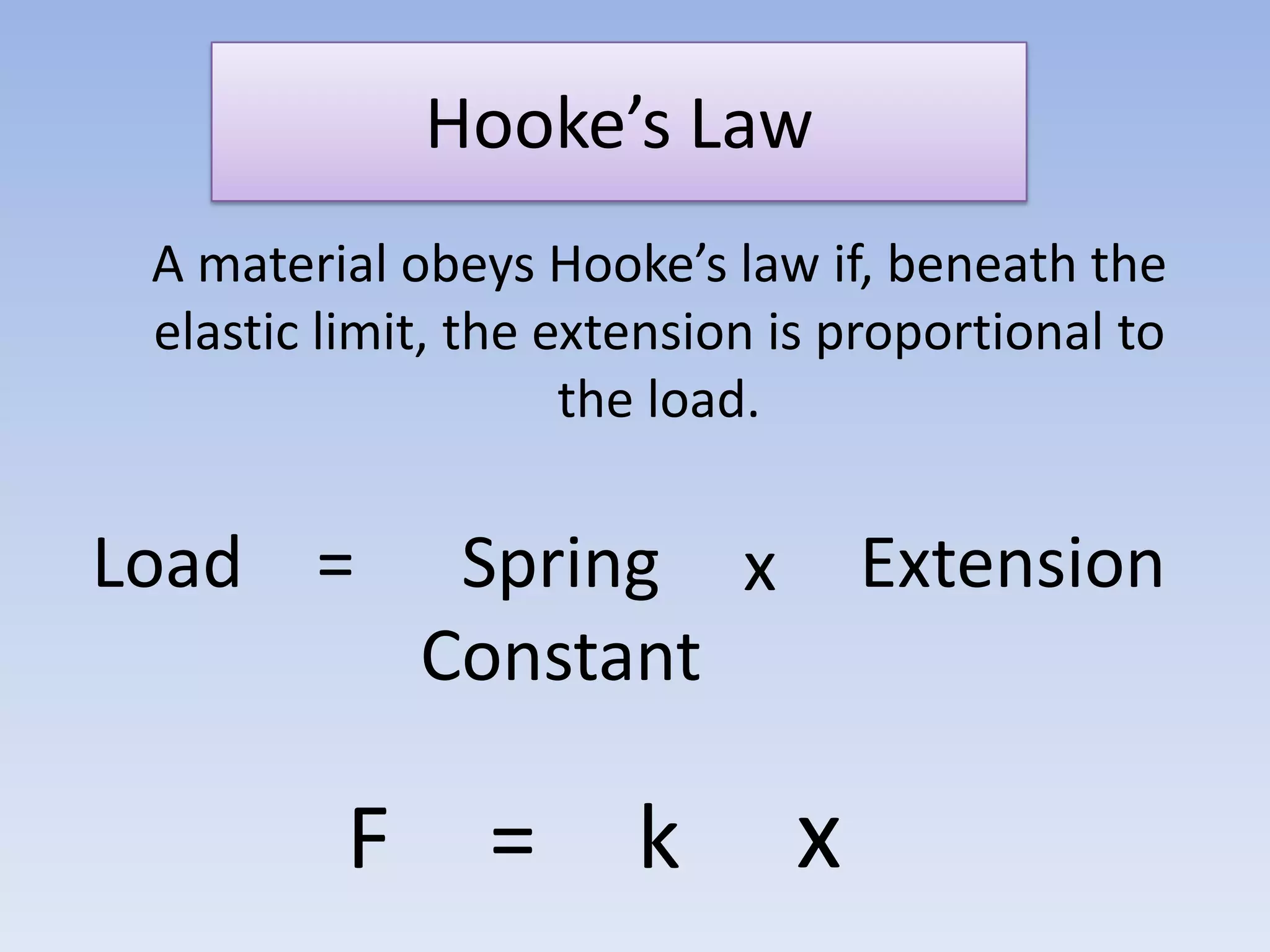
Hooke’s Law	A material obeys Hooke’s law if, beneath the elastic limit, the extension is proportional to the load.xxF k=ExtensionSpring ConstantLoad =
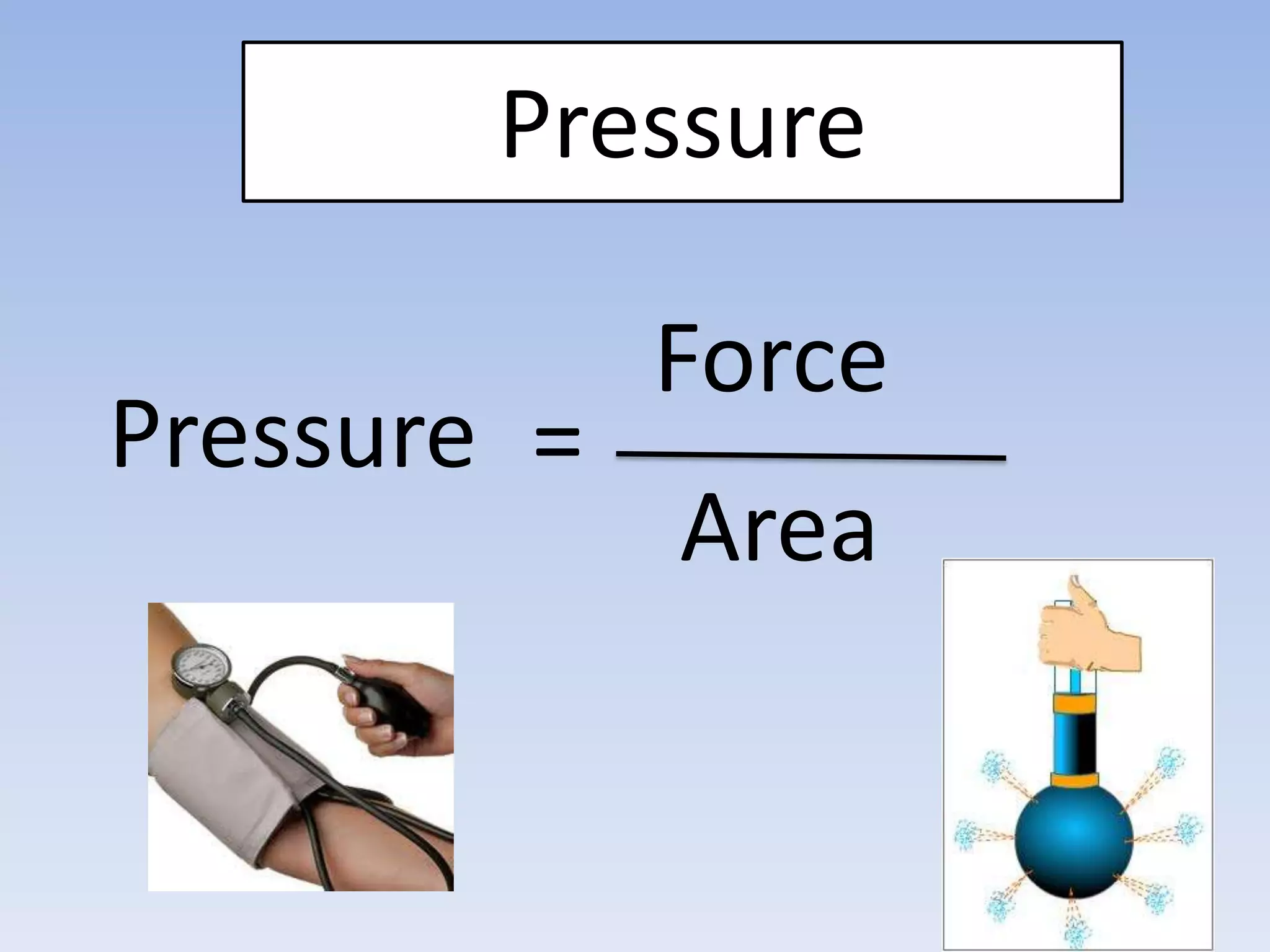
Pressure  ForcePressure =Area
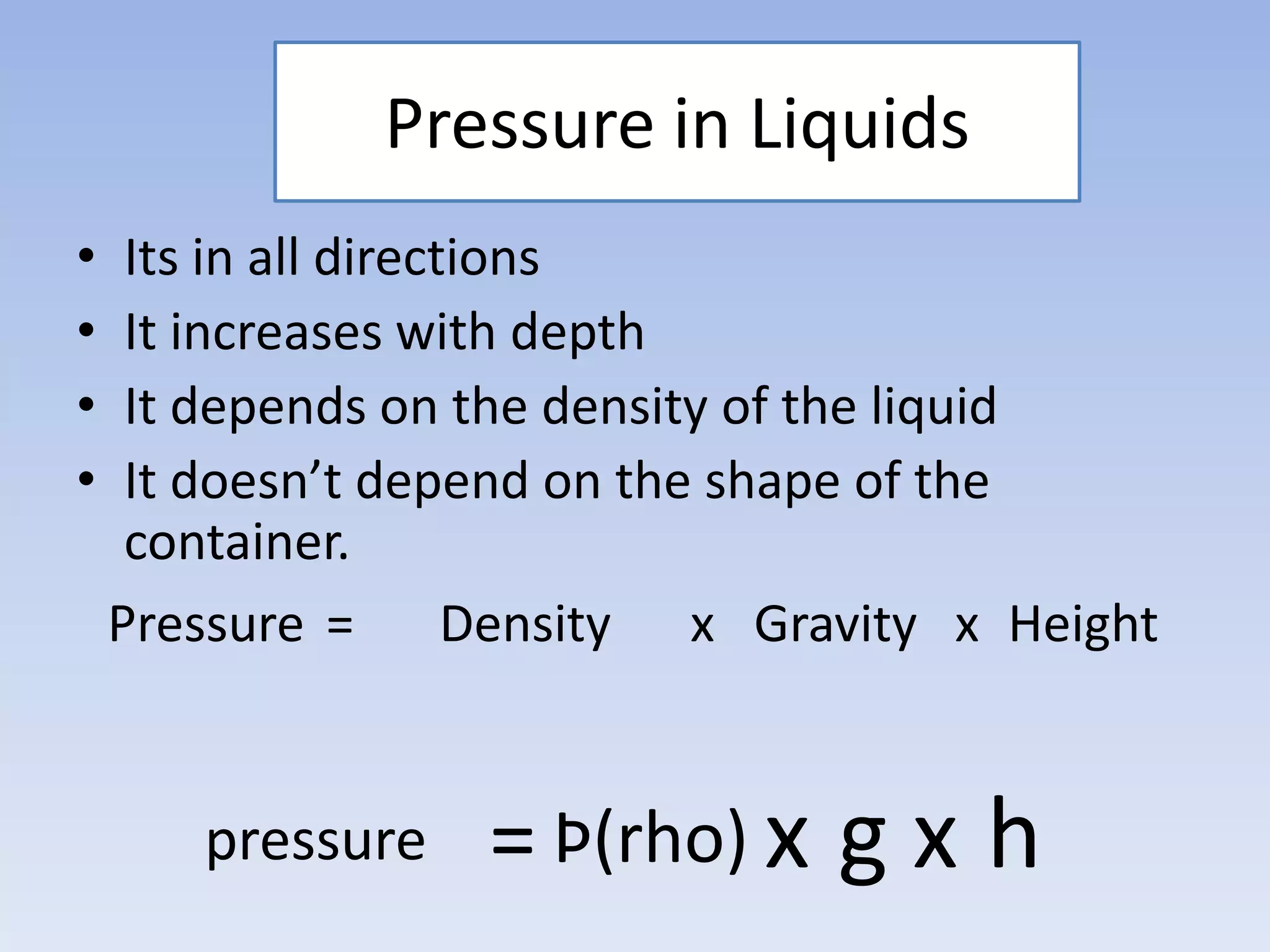
Pressure in LiquidsIts in all directionsIt increases with depthIt depends on the density of the liquidIt doesn’t depend on the shape of the container.xxGravity=Density=Pressurepressure xHeightgxhÞ(rho)
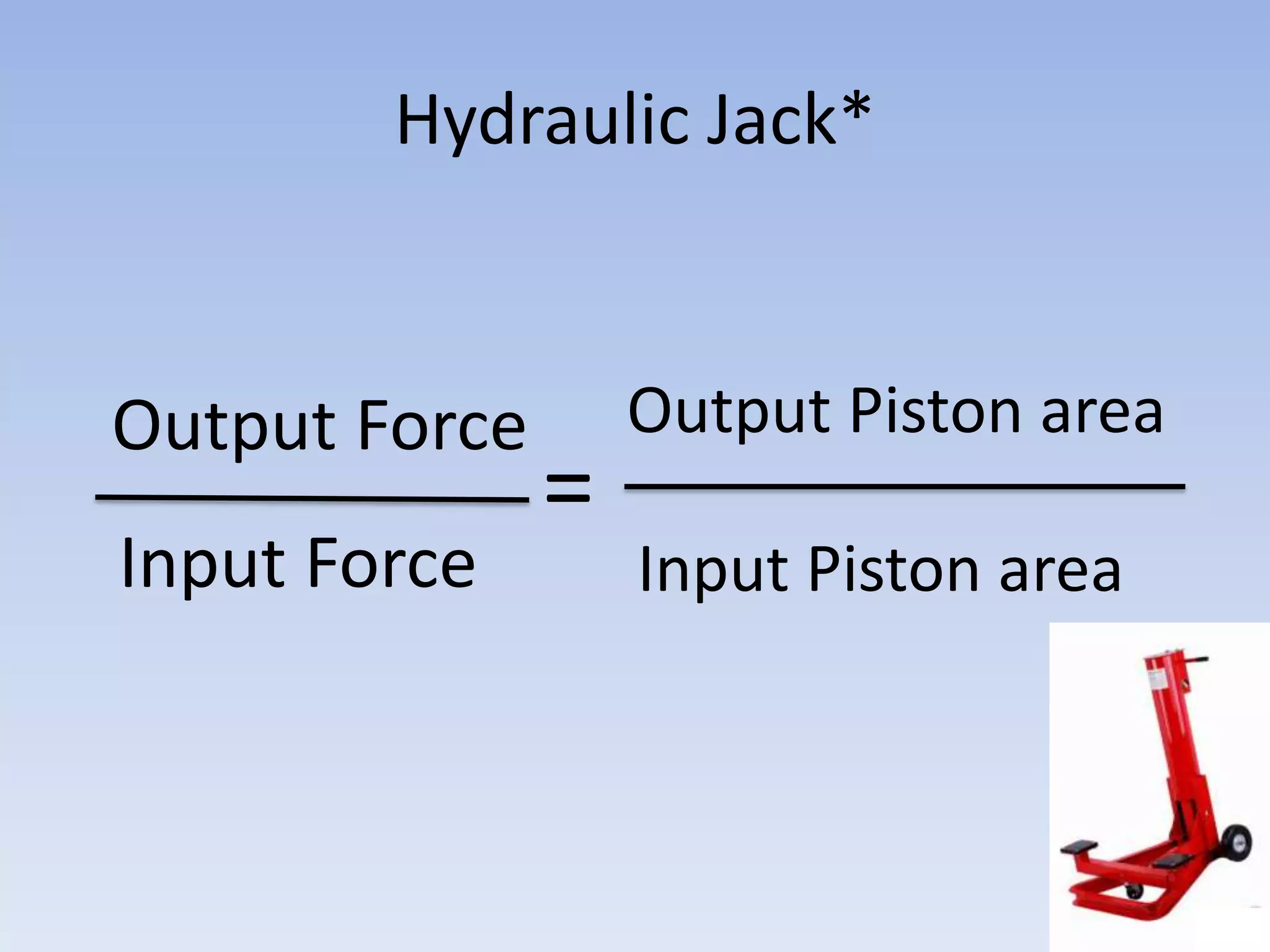
Hydraulic Jack*Output Piston area  Output Force=Input ForceInput Piston area
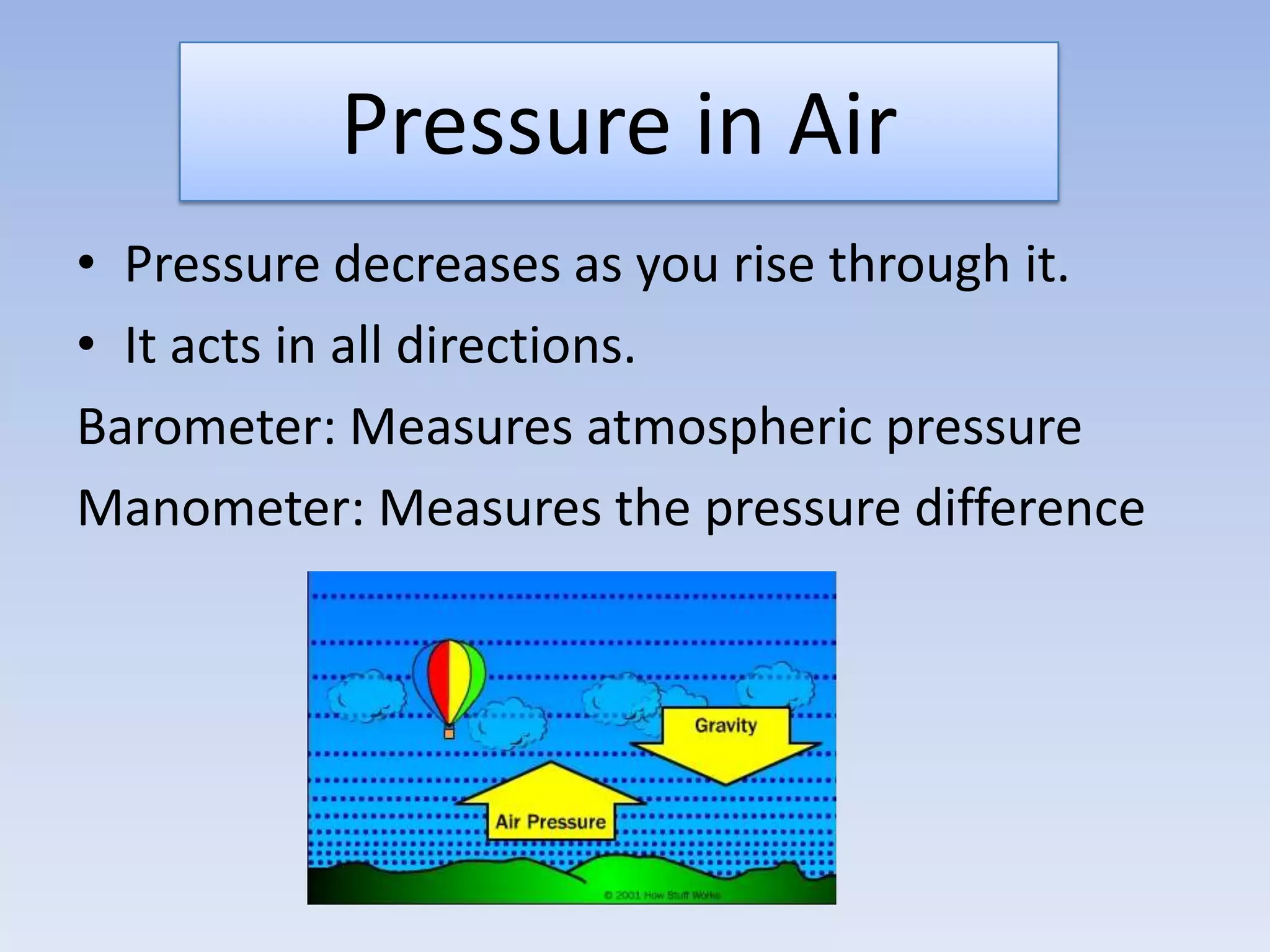
Pressure in AirPressure decreases as you rise through it.It acts in all directions.Barometer: Measures atmospheric pressureManometer: Measures the pressure difference
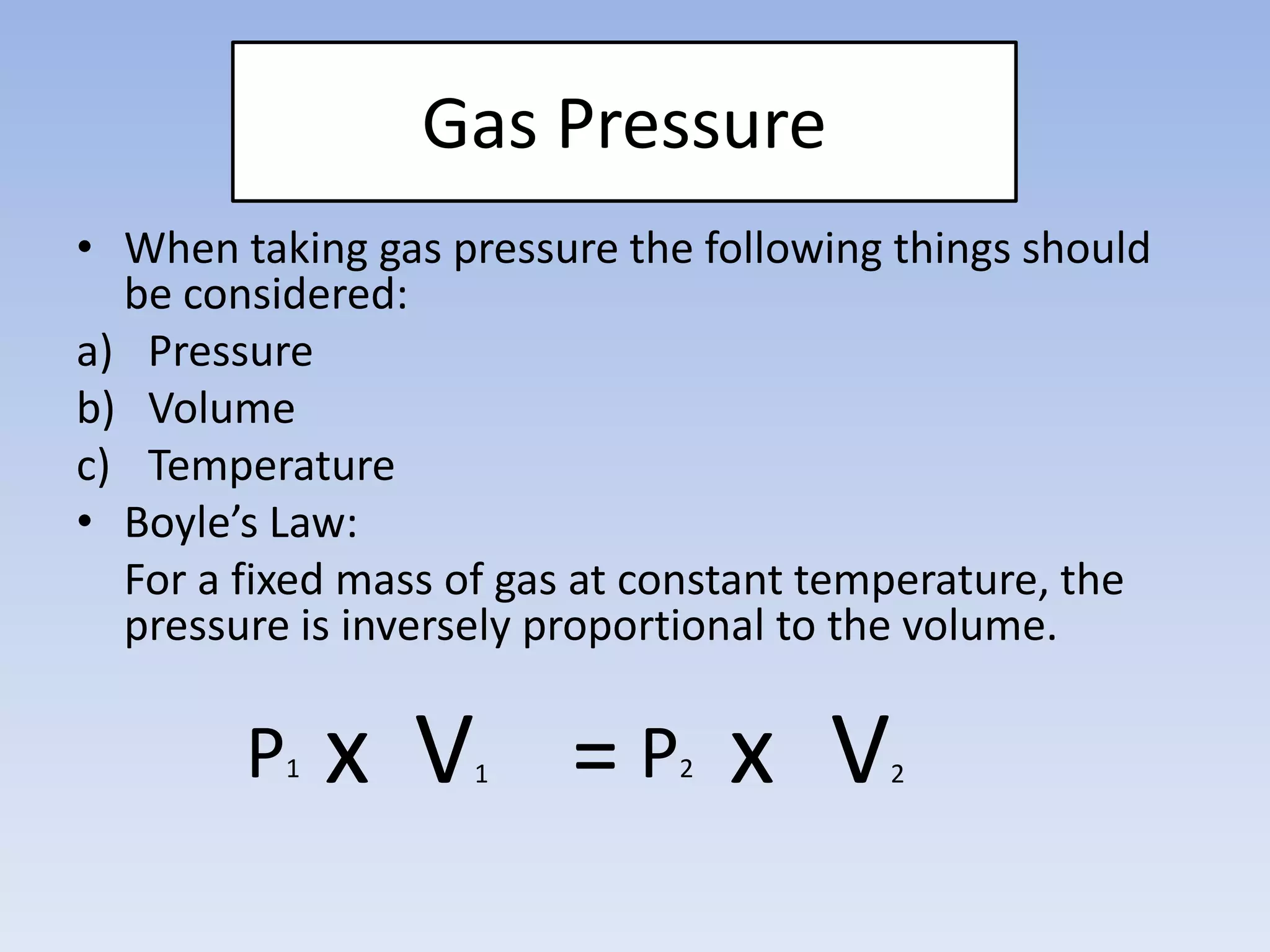
Gas PressureWhen taking gas pressure the following things should be considered:PressureVolumeTemperature Boyle’s Law:	For a fixed mass of gas at constant temperature, the pressure is inversely proportional to the volume.x=xV1P1V2P2
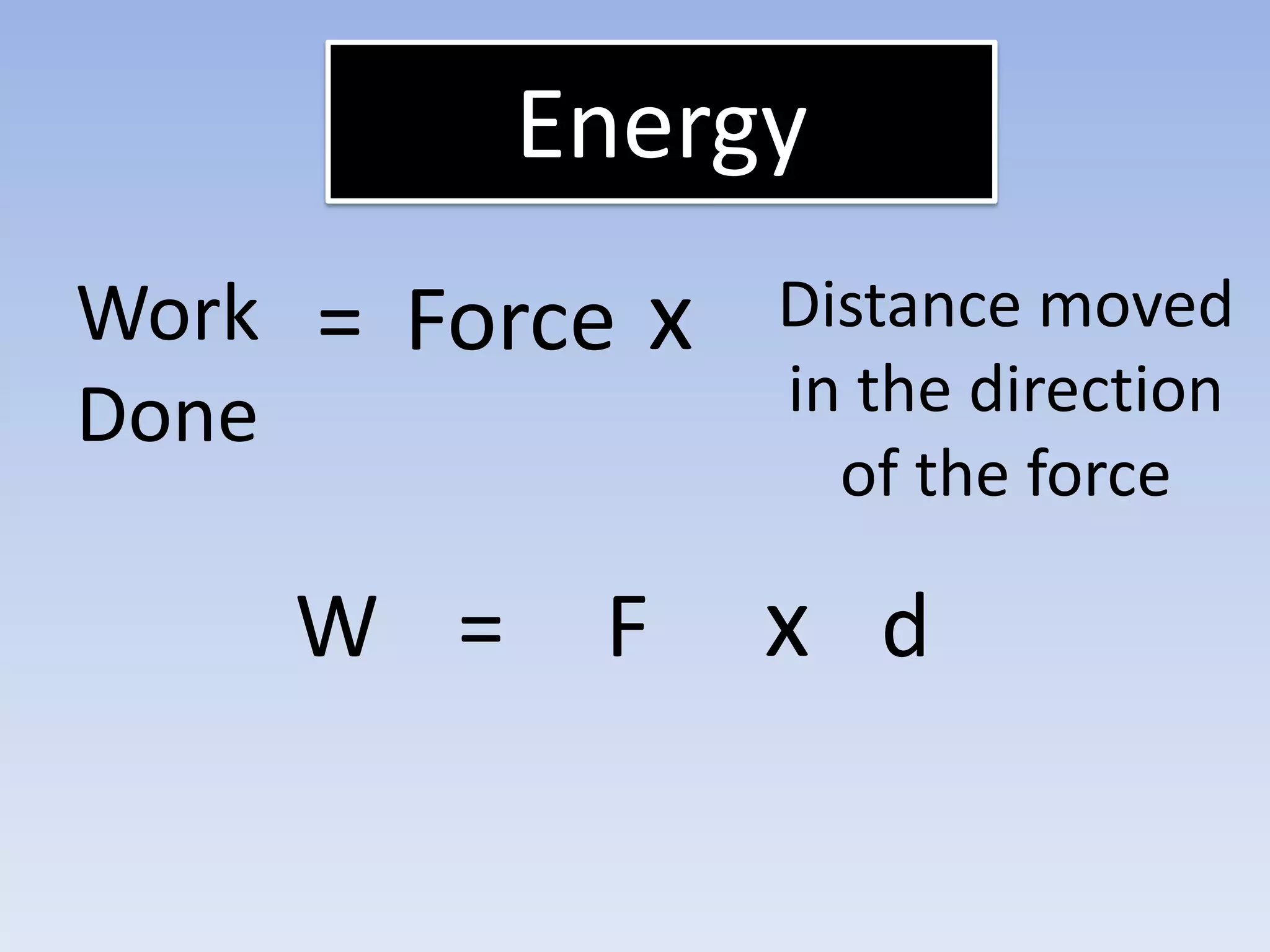
EnergyxxForceW dF=Distance moved in the direction of the forceWork Done =
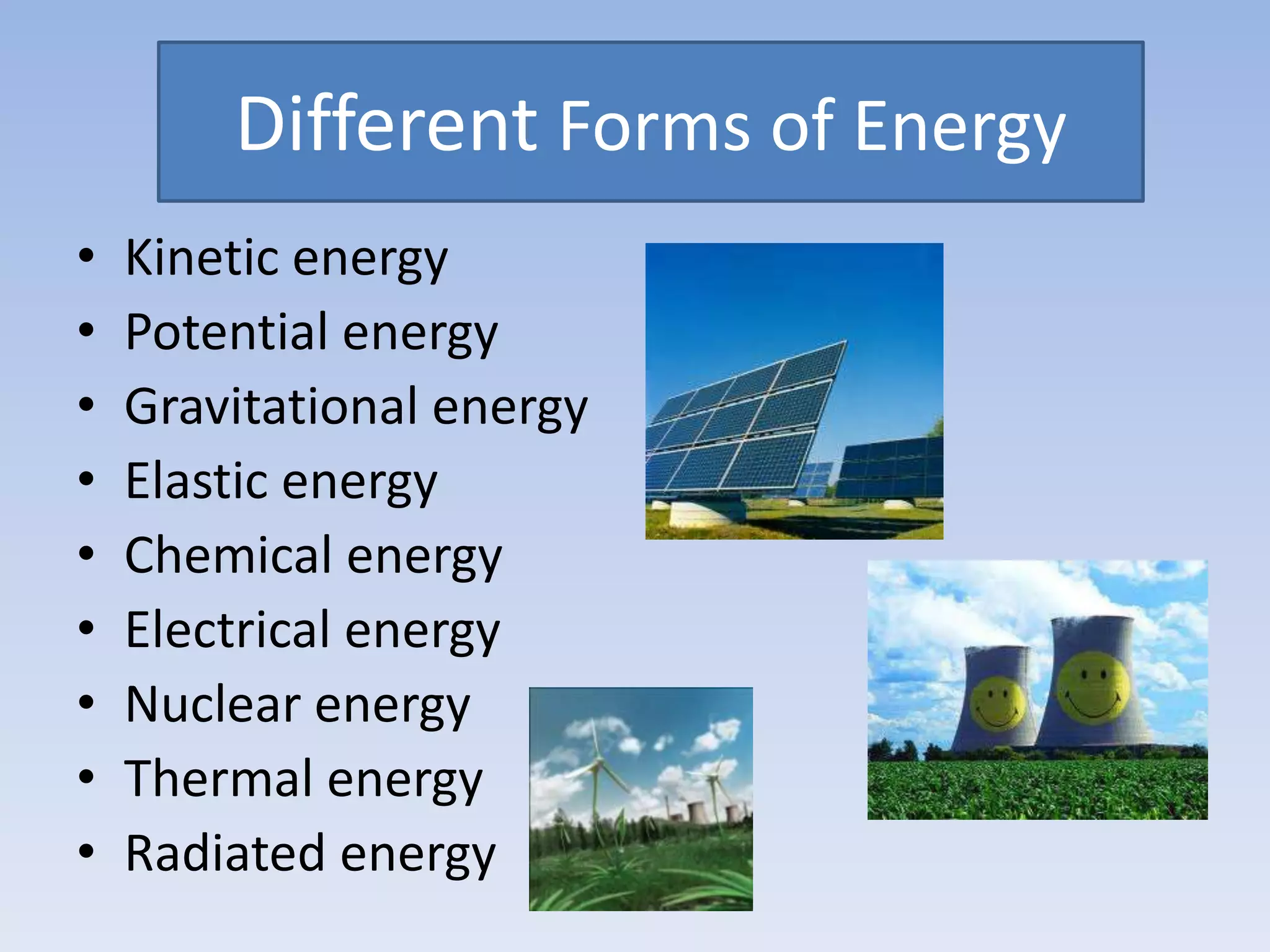
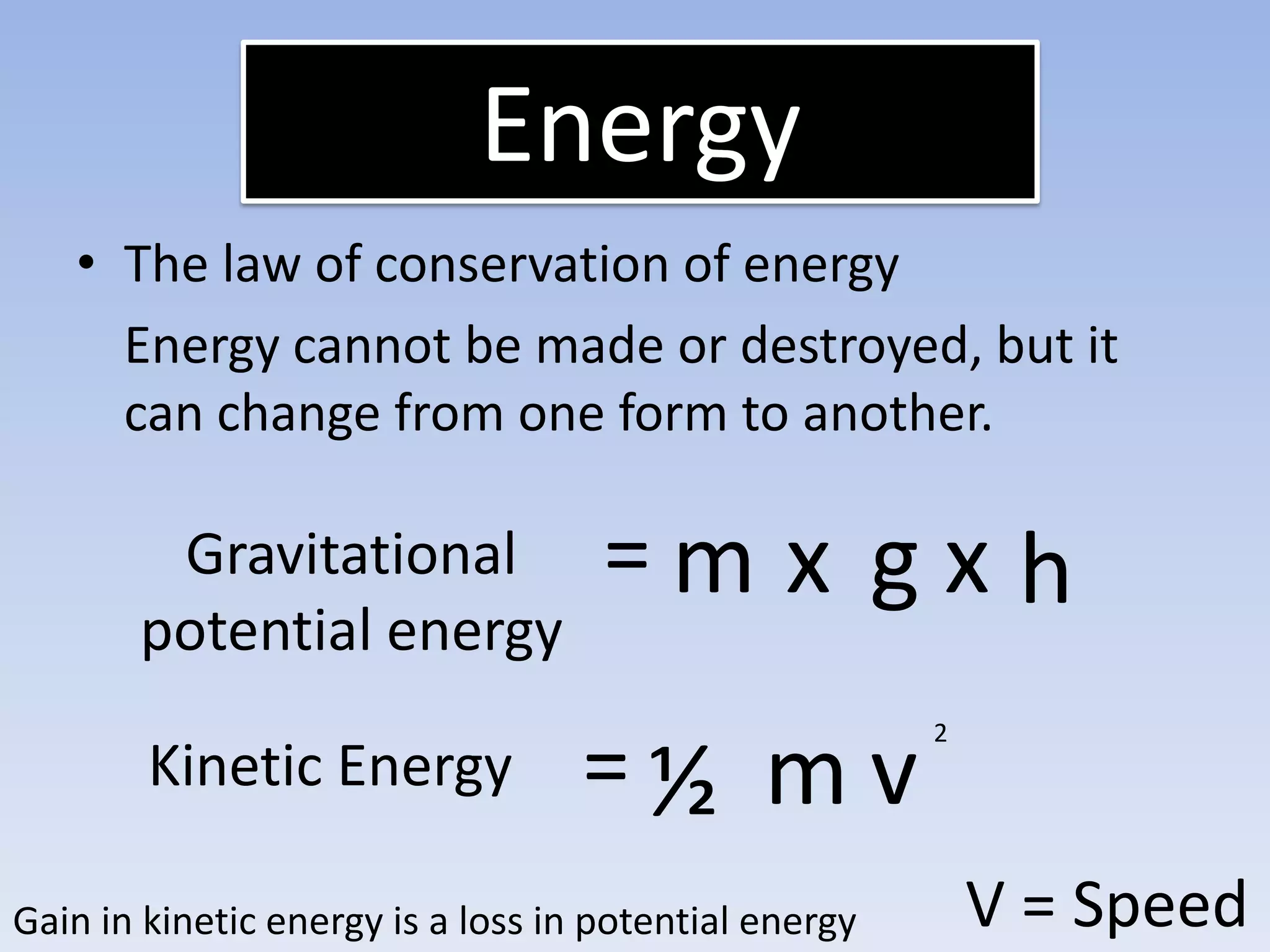
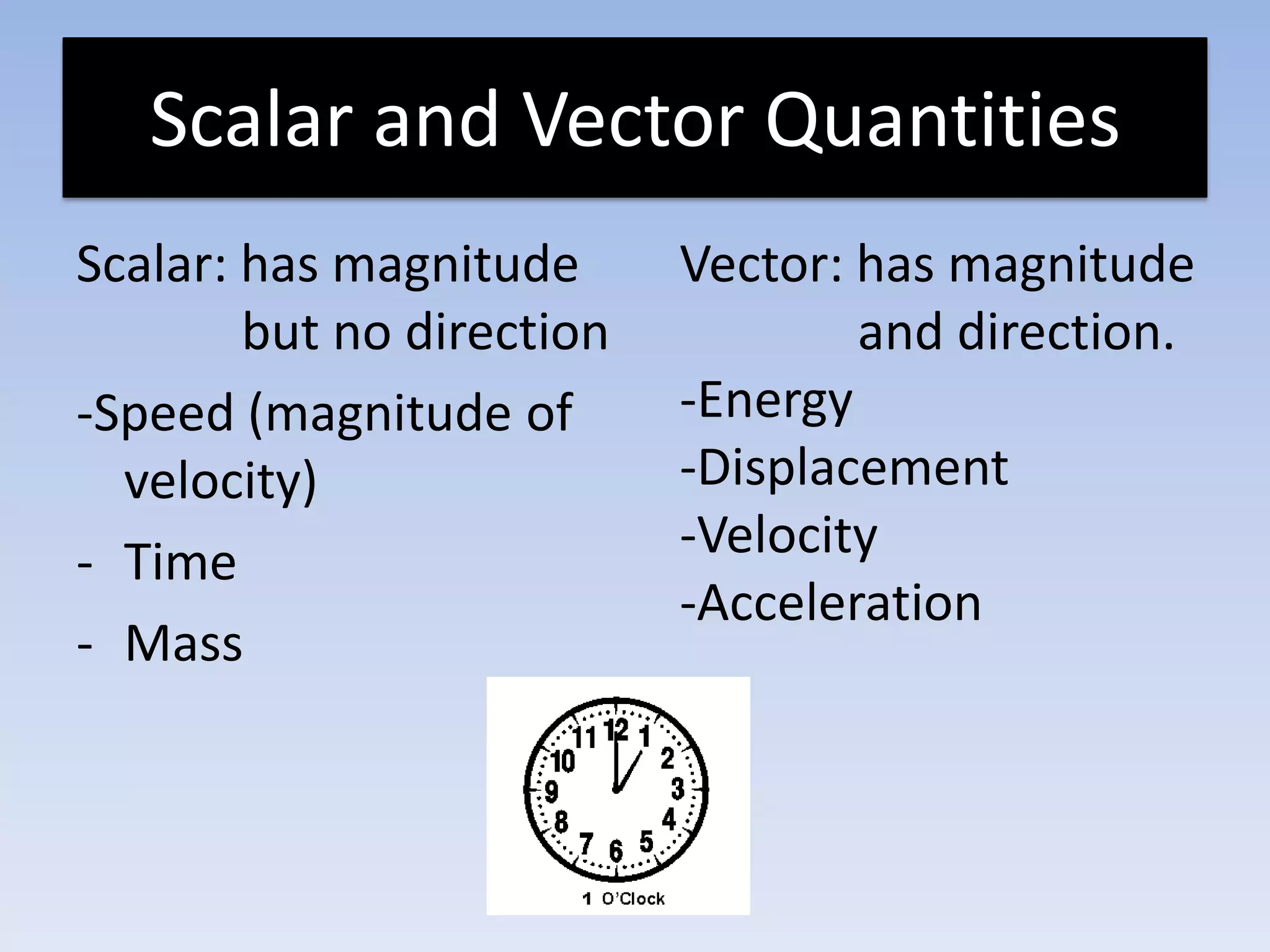
Different Forms of EnergyKinetic energyPotential energyGravitational energyElastic energyChemical energyElectrical energyNuclear energyThermal energyRadiated energy
EnergyThe law of conservation of energy	Energy cannot be made or destroyed, but it can change from one form to another.mx==Kinetic EnergyGravitational potential energyvg mx½ 2hV = SpeedGain in kinetic energy is a loss in potential energy
Scalar and Vector Quantities Scalar: has magnitude        	   but no direction-Speed (magnitude of velocity)Time
MassVector: has magnitude     	    and direction.-EnergyDisplacement
Velocity
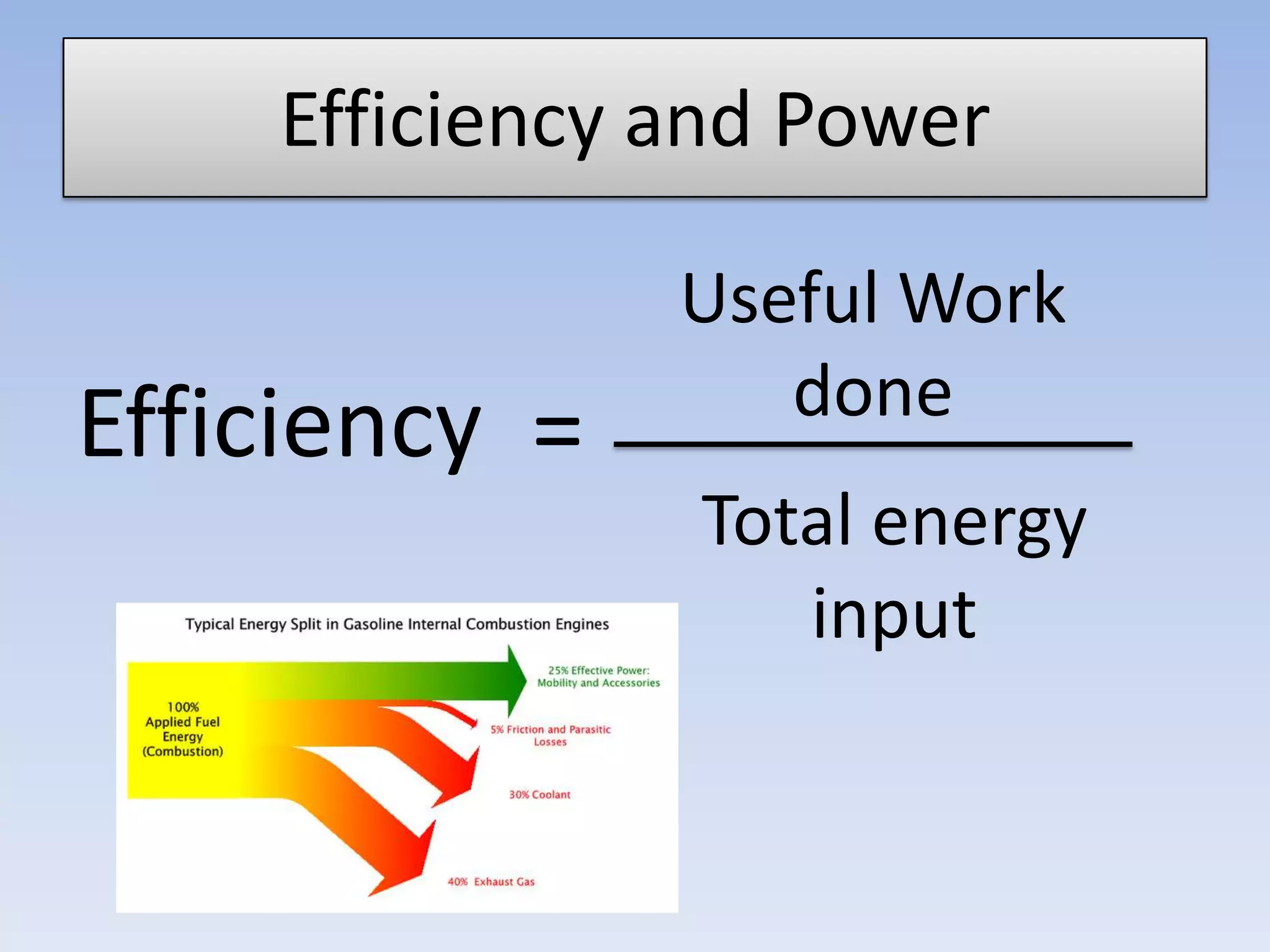
AccelerationEfficiency and PowerUseful Work doneEfficiency=Total energy input
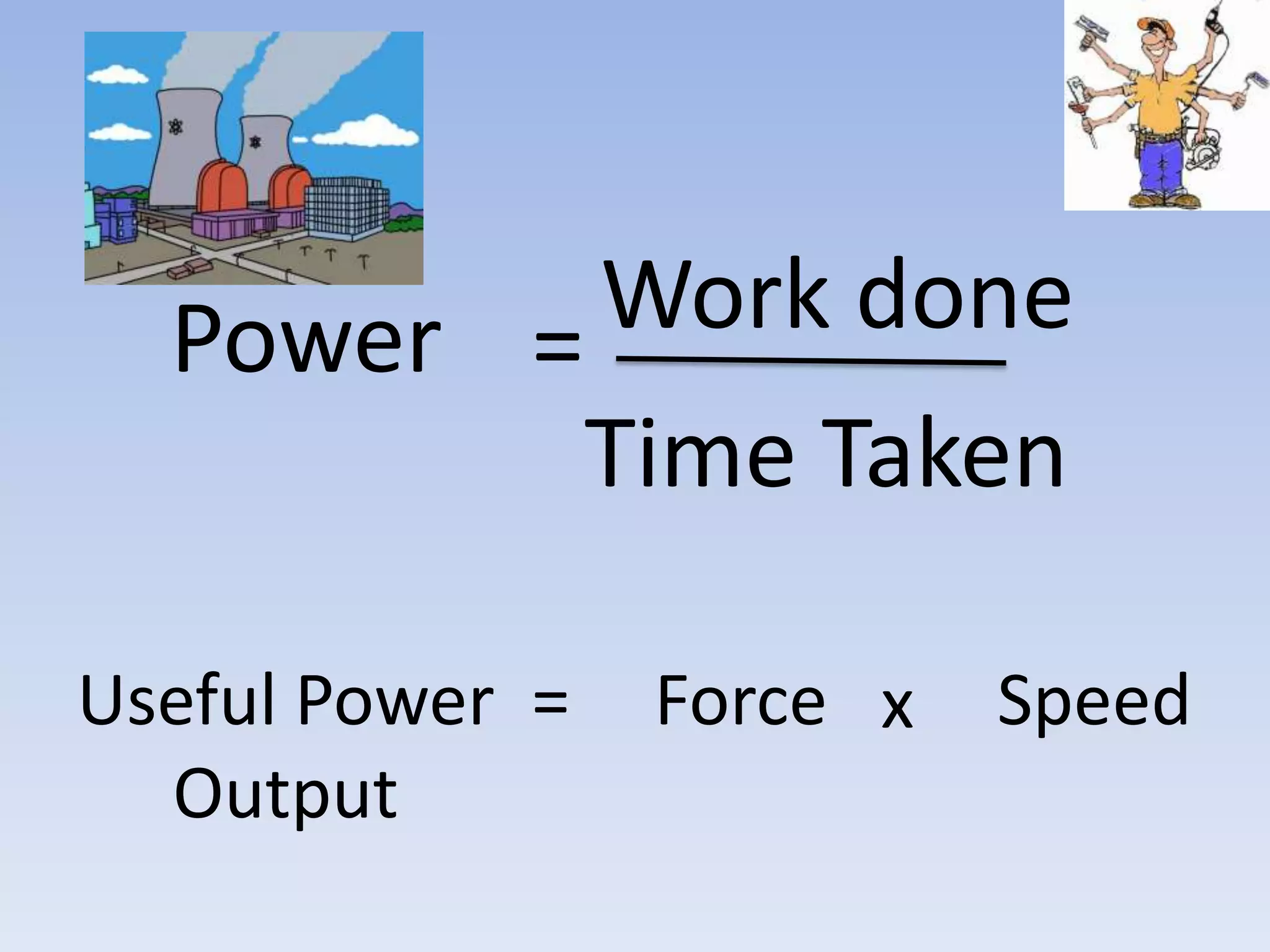
x  Work donePower =SpeedUseful Power Output Force=Time Taken
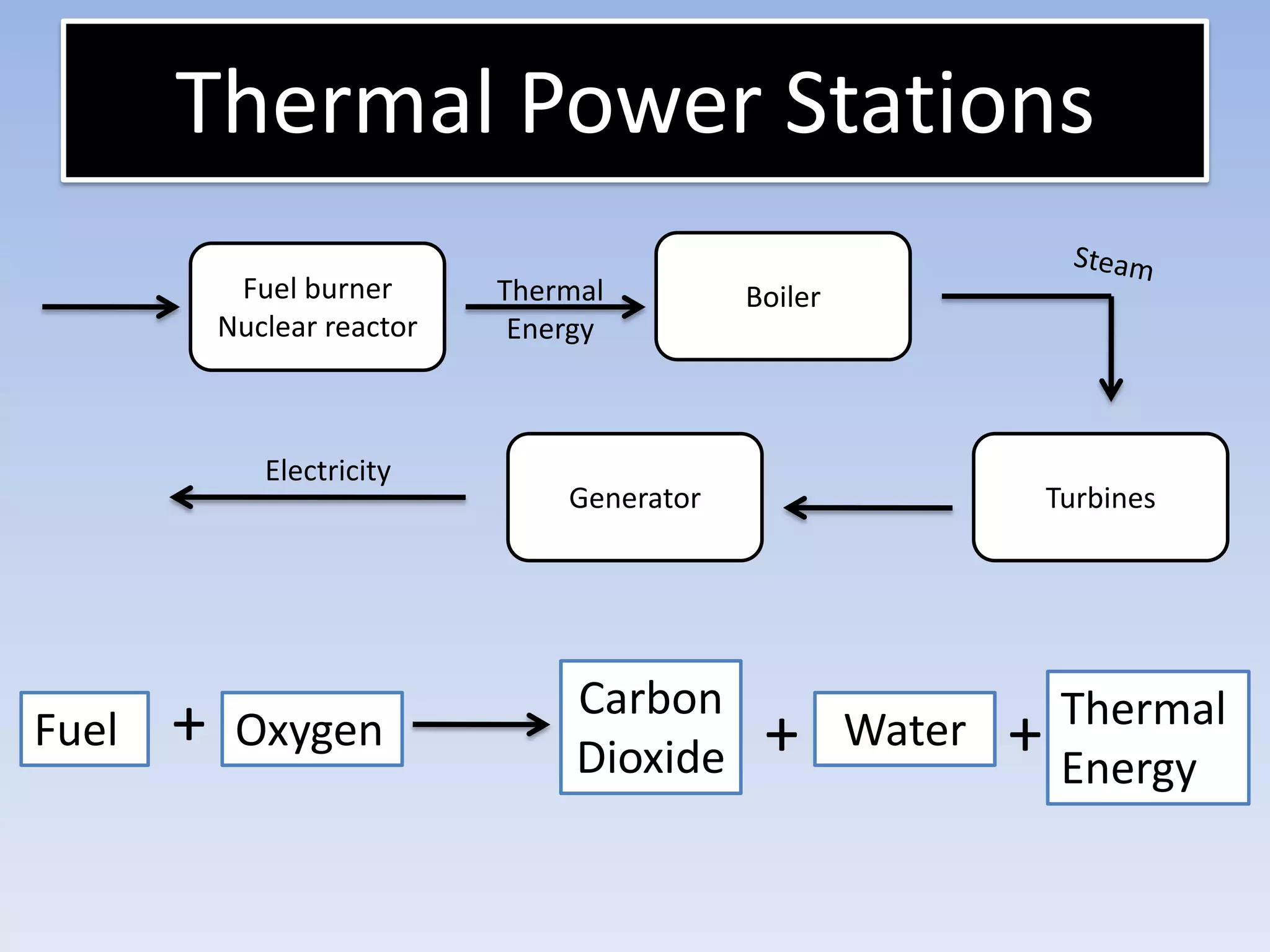
Thermal Power StationsBoilerSteamFuel burnerNuclear reactorThermal EnergyTurbinesGeneratorElectricityCarbonDioxide+ThermalEnergy++FuelOxygenWater
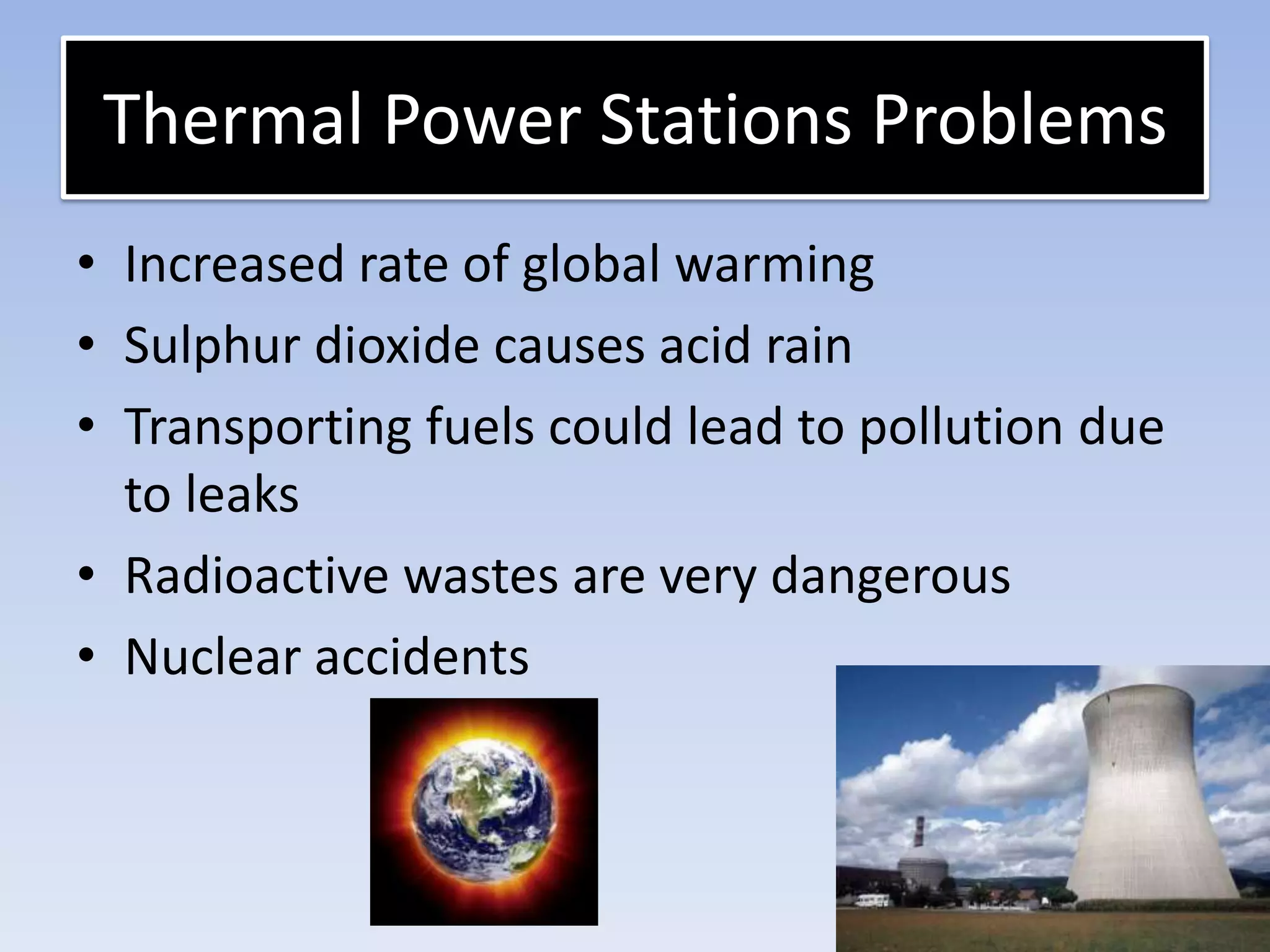
Thermal Power Stations ProblemsIncreased rate of global warmingSulphur dioxide causes acid rainTransporting fuels could lead to pollution due to leaksRadioactive wastes are very dangerousNuclear accidents
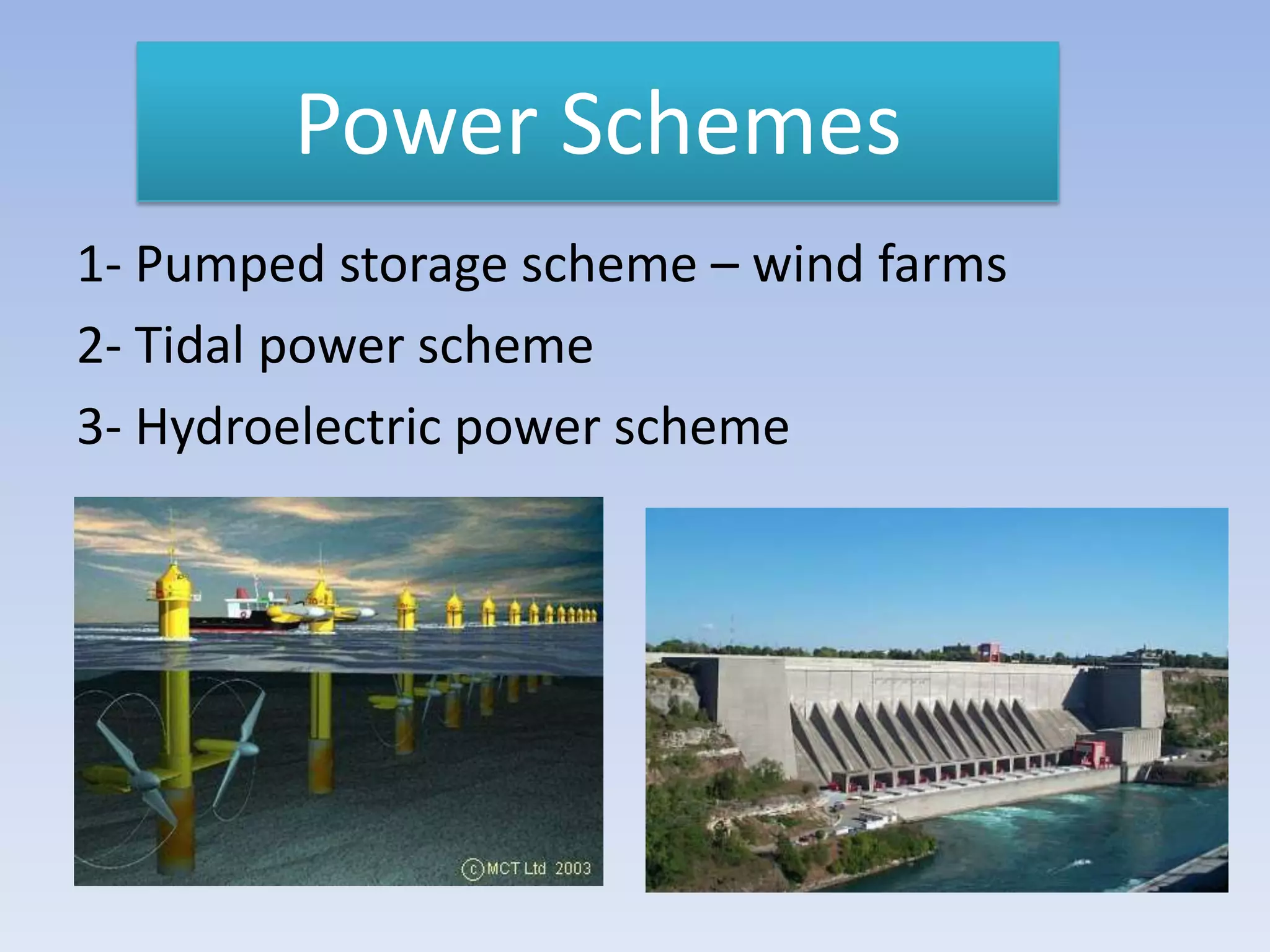
Power Schemes1- Pumped storage scheme – wind farms2- Tidal power scheme3- Hydroelectric power scheme
Energy SourcesRenewableHydroelectric and tidal energyExpensive to build
Few areas are suitable
May cause environmental damageWind energyLarge, remote, windy sites required
Noisy, ruin landscapeWave energyDifficult to buildGeothermal energyDeep drilling difficult and expensiveSolar energySunshine varies
Solar cells difficult to transportNon-renewableCoal, oil, natural gasSupplies are limited
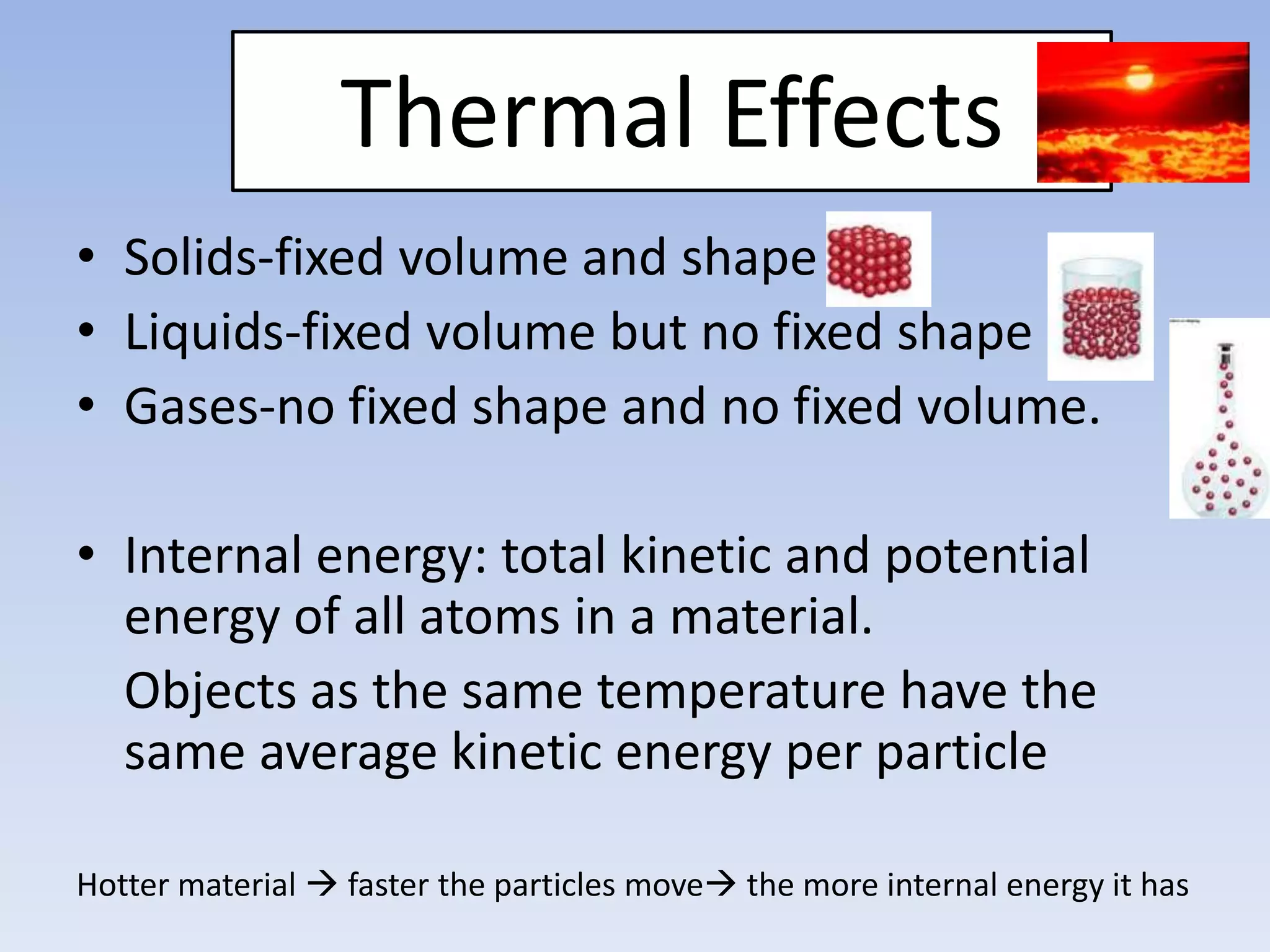
Carbon dioxide concentration is increasingNuclear fuelsExpensive to build and decommissionThermal EffectsSolids-fixed volume and shape Liquids-fixed volume but no fixed shapeGases-no fixed shape and no fixed volume.Internal energy: total kinetic and potential energy of all atoms in a material.	Objects as the same temperature have the same average kinetic energy per particleHotter material  faster the particles move the more internal energy it has

Igcse physics revision

  • 1.
    Key pointsFormulaePhysics IGCSERevision(Part 1)SimpleEasyBy: Momina
  • 2.
  • 3.
    Volume and DensityHowto find the volume of an irregular solid?You need to fill up a measuring cylinder with water and measure till where it is filled.Then lower the irregular solid into the measuring cylinder and measure how much the water has risen.Subtracting the two values that you have will give you the volume of the substance.
  • 4.
  • 5.
    Velocity Change invelocityAverage Acceleration =Time Takenv-u=av= final velocityu=initial velocityNegative acceleration is called deceleration or retardationt
  • 6.
    ForcesA force isa push or a pull.Force is measure in Newton's (N).If no external forces are applied to an object:It will remain stationary
  • 7.
    It will keepmoving at a constant speed.What is Terminal Velocity?It is when something is at its maximum speed.
  • 8.
  • 9.
    FrictionFriction is aforce that stops two materials from sliding across each other.Static Friction resists the lateral (sideways) movement of two objects.Dynamic Friction is the friction between two objects that are moving. It heats up the material. When something is moved against the force of friction the kinetic energy is changed into thermal energy.STATIC FRICTION IS GREATER THAN DYNAMIC FRICTION
  • 10.
    Gravitational ForceAll themasses attract each other.The greater the mass, the greater the force.The closer the mass, the greater the force.To every action there is an equal but opposite reaction.
  • 11.
  • 12.
    The Parallelogram Rule1.First you need to draw the two lines given to you. The directions should be accurate and the length of each line should be in proportion to the magnitude of each vector.2. Then draw in two more lines to complete the parallelogram.3. Diagonal from ‘O’ and then measure its length.
  • 13.
    Centripetal ForceIt isan inward force needed to make an object move in a circle.More centripetal force is needed if:Mass of the object is increased
  • 14.
    Speed of theobject is increased
  • 15.
    Radius of thecircle is increased.MomentsxMoment of a force about a pointPerpendicular distance from the pivotForce=The Principle of Moments Clockwise moments = Anticlockwise moments
  • 16.
    Hooke’s Law A materialobeys Hooke’s law if, beneath the elastic limit, the extension is proportional to the load.xxF k=ExtensionSpring ConstantLoad =
  • 17.
  • 18.
    Pressure in LiquidsItsin all directionsIt increases with depthIt depends on the density of the liquidIt doesn’t depend on the shape of the container.xxGravity=Density=Pressurepressure xHeightgxhÞ(rho)
  • 19.
    Hydraulic Jack*Output Pistonarea Output Force=Input ForceInput Piston area
  • 20.
    Pressure in AirPressuredecreases as you rise through it.It acts in all directions.Barometer: Measures atmospheric pressureManometer: Measures the pressure difference
  • 21.
    Gas PressureWhen takinggas pressure the following things should be considered:PressureVolumeTemperature Boyle’s Law: For a fixed mass of gas at constant temperature, the pressure is inversely proportional to the volume.x=xV1P1V2P2
  • 22.
    EnergyxxForceW dF=Distance movedin the direction of the forceWork Done =
  • 23.
    Different Forms ofEnergyKinetic energyPotential energyGravitational energyElastic energyChemical energyElectrical energyNuclear energyThermal energyRadiated energy
  • 24.
    EnergyThe law ofconservation of energy Energy cannot be made or destroyed, but it can change from one form to another.mx==Kinetic EnergyGravitational potential energyvg mx½ 2hV = SpeedGain in kinetic energy is a loss in potential energy
  • 25.
    Scalar and VectorQuantities Scalar: has magnitude but no direction-Speed (magnitude of velocity)Time
  • 26.
    MassVector: has magnitude and direction.-EnergyDisplacement
  • 27.
  • 28.
    AccelerationEfficiency and PowerUsefulWork doneEfficiency=Total energy input
  • 29.
    x WorkdonePower =SpeedUseful Power Output Force=Time Taken
  • 30.
    Thermal Power StationsBoilerSteamFuelburnerNuclear reactorThermal EnergyTurbinesGeneratorElectricityCarbonDioxide+ThermalEnergy++FuelOxygenWater
  • 31.
    Thermal Power StationsProblemsIncreased rate of global warmingSulphur dioxide causes acid rainTransporting fuels could lead to pollution due to leaksRadioactive wastes are very dangerousNuclear accidents
  • 32.
    Power Schemes1- Pumpedstorage scheme – wind farms2- Tidal power scheme3- Hydroelectric power scheme
  • 33.
    Energy SourcesRenewableHydroelectric andtidal energyExpensive to build
  • 34.
  • 35.
    May cause environmentaldamageWind energyLarge, remote, windy sites required
  • 36.
    Noisy, ruin landscapeWaveenergyDifficult to buildGeothermal energyDeep drilling difficult and expensiveSolar energySunshine varies
  • 37.
    Solar cells difficultto transportNon-renewableCoal, oil, natural gasSupplies are limited
  • 38.
    Carbon dioxide concentrationis increasingNuclear fuelsExpensive to build and decommissionThermal EffectsSolids-fixed volume and shape Liquids-fixed volume but no fixed shapeGases-no fixed shape and no fixed volume.Internal energy: total kinetic and potential energy of all atoms in a material. Objects as the same temperature have the same average kinetic energy per particleHotter material  faster the particles move the more internal energy it has
  • 39.
    Absolute Zero-273˚Ć= 0Kelvin (0 K)Kelvin Temperature/K = Celsius Temperature/˚Ć+273This is the lowest temperature there is. It is a thermodynamic scale. It is based on the average kinetic energy of particles.
  • 40.
    Thermal EffectsThermal expansion:this is when a substance is heated and its volume slightly increases.The pressure law:When the Kelvin pressure doubles so does the pressure
  • 41.
    Pressure ÷ Kelvintemperature  always has the same valueThermal Conduction:Conduction is the process by which thermal energy is transferred from the hot end to the cold end as the faster particles pass on their extra motion to particles along the bar.
  • 42.
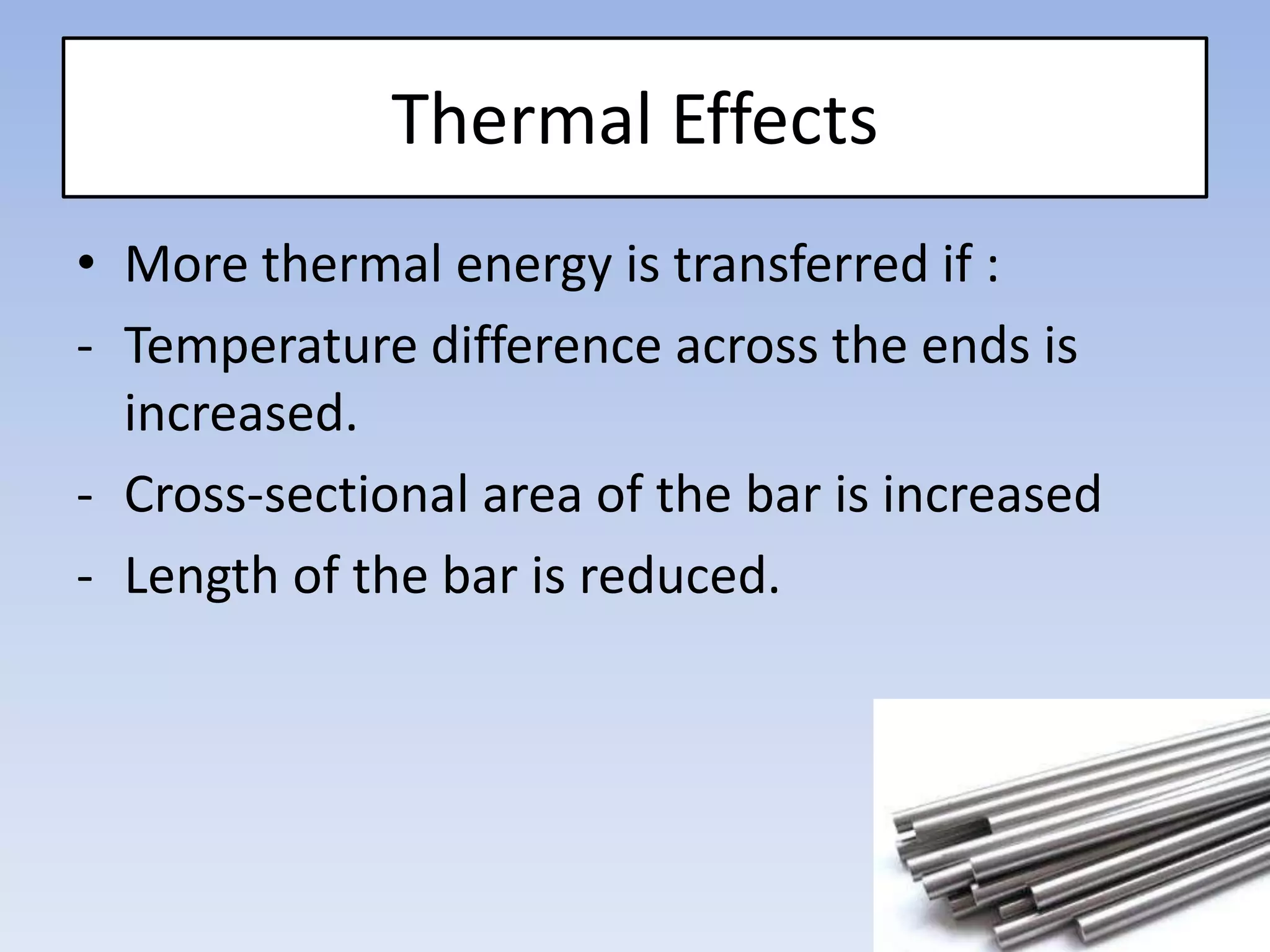
    Thermal EffectsMore thermalenergy is transferred if :Temperature difference across the ends is increased.
  • 43.
    Cross-sectional area ofthe bar is increased
  • 44.
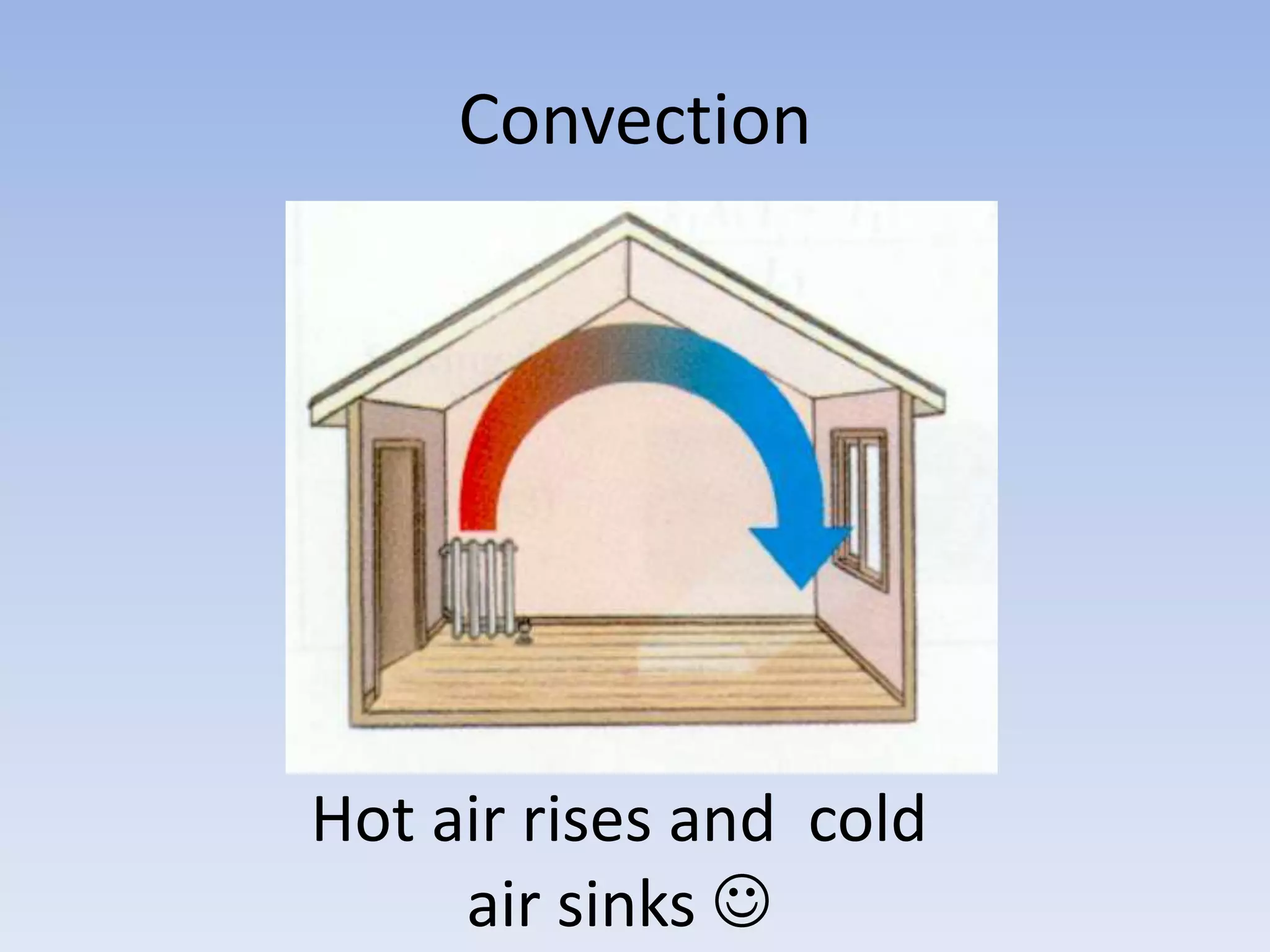
    Length of thebar is reduced.ConvectionHot air rises and cold air sinks 
  • 45.
    Thermal RadiationThis iswhen things that absorb this radiation are warmed up.To increase the rate of evaporationIncrease the temperature
  • 46.
  • 47.
  • 48.
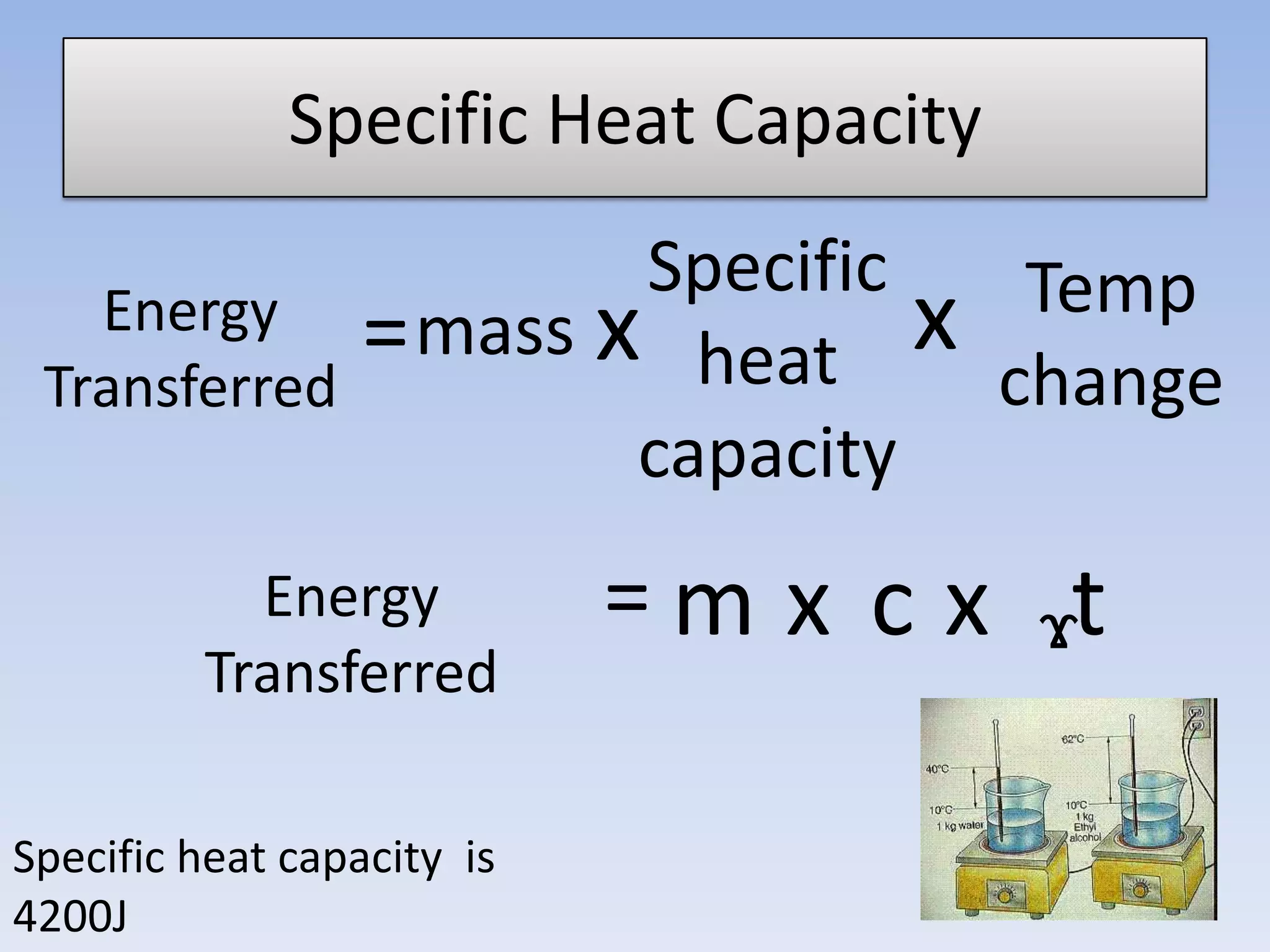
    Blow air acrossthe surfaceSpecific Heat Capacityxx=Energy TransferredEnergy Transferred=tSpecific heat capacityTemp changec mxxmassSpecific heat capacity is 4200Jϫ
  • 49.
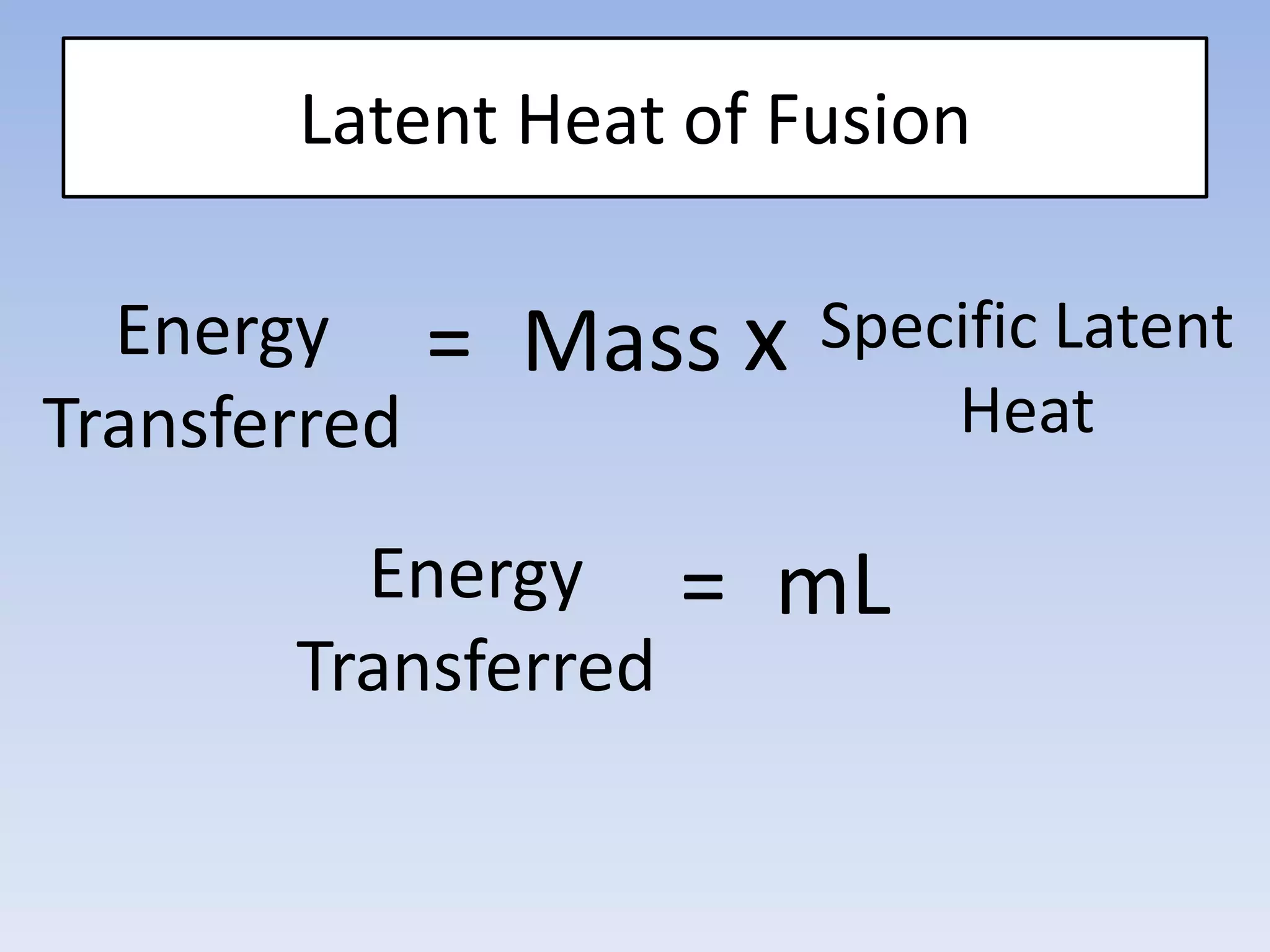
    Latent Heat ofFusionxmL=Mass=Specific Latent HeatEnergy Transferred Energy Transferred
  • 50.
    Keep in mindThiswas half of the Physics Syllabus 2011.The information in this PowerPoint should only be used if you have actually understood most of the theory.The rest of the syllabus should be up and running as soon as possibleBEST OF LUCK

Editor's Notes

  • #18 *This is not necessary to know.