The Learning Environment
“To heredity, the child owes his
possibilities. However, to
environment, he owes the
realization of these possibilities.”
Definition
Learning Environment refers to the whole range of components
and activities within which learning happens.
Learning Environment relies on computer-supported Systems
such as a Learning management system, a combination of various
educational technologies like communication module.
Learning environments are typically constructivist in nature,
engaging learners in "sense-making" or reasoning about extensive
resource sets.
Learning Environment is the place where teaching and learning
take place in the most effective and productive manner. It consist
of the classroom and all the instructional features and non-
threatening classroom climate needed in planning and implementing
all teaching and learning activities.
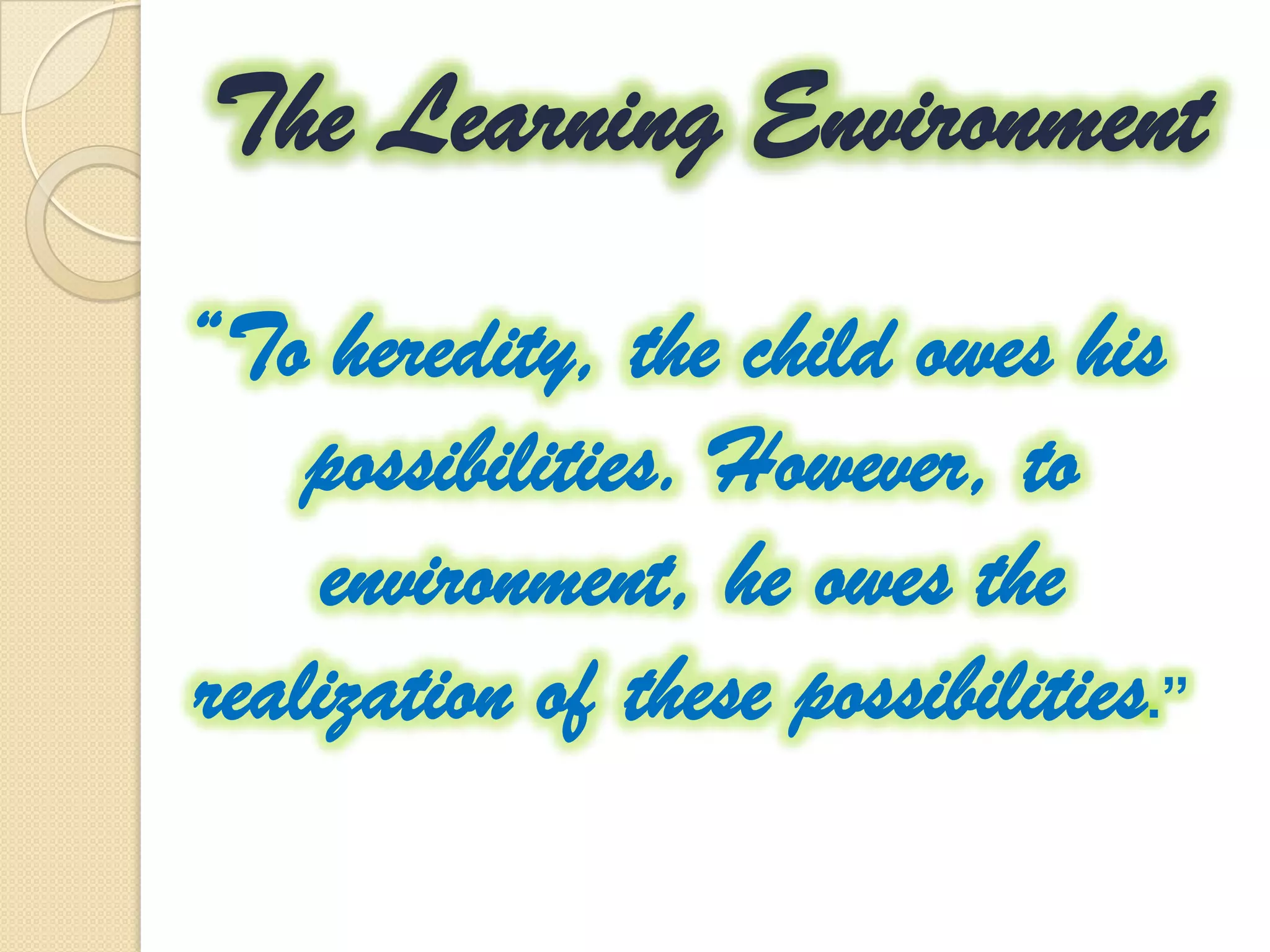
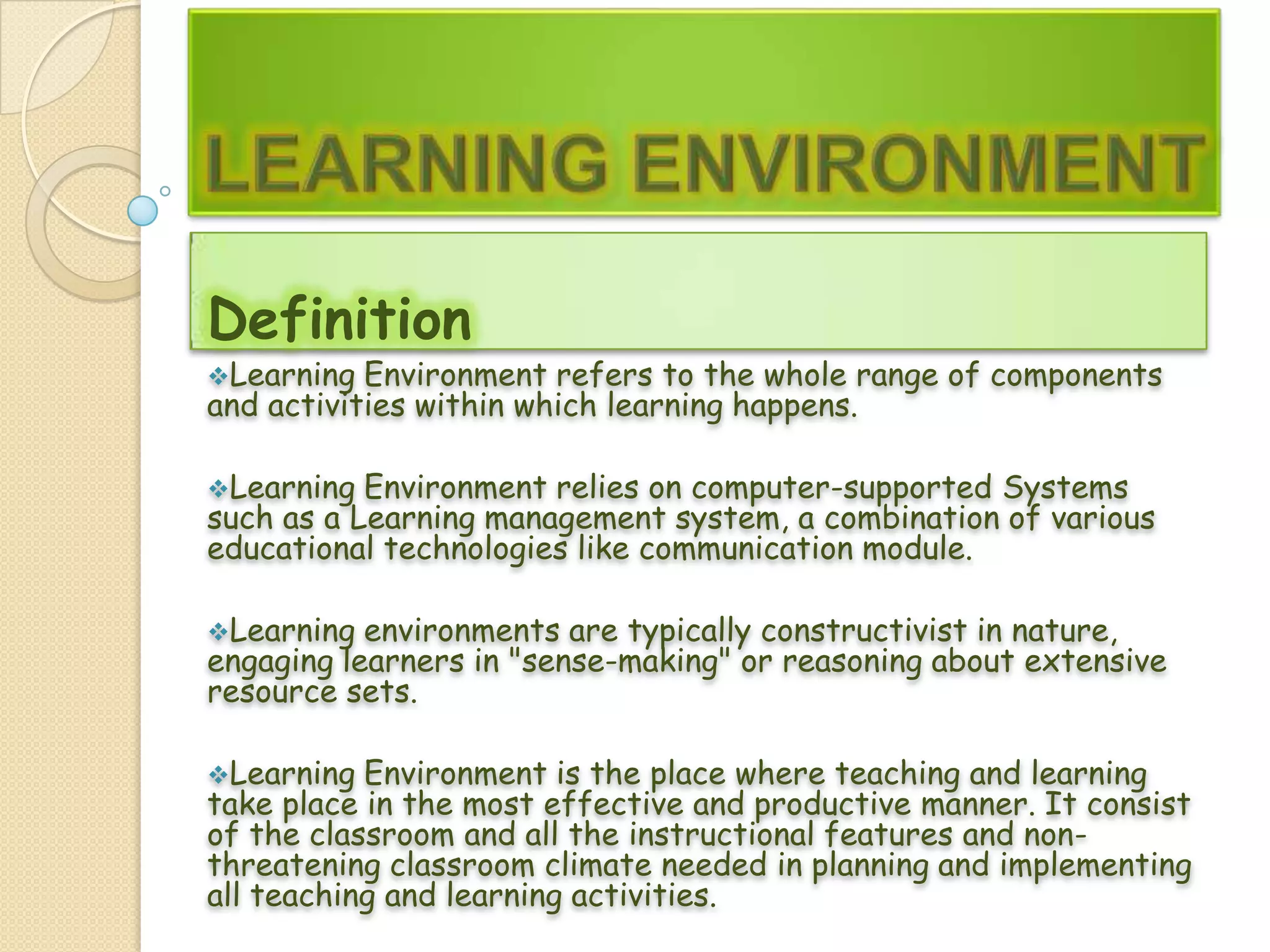
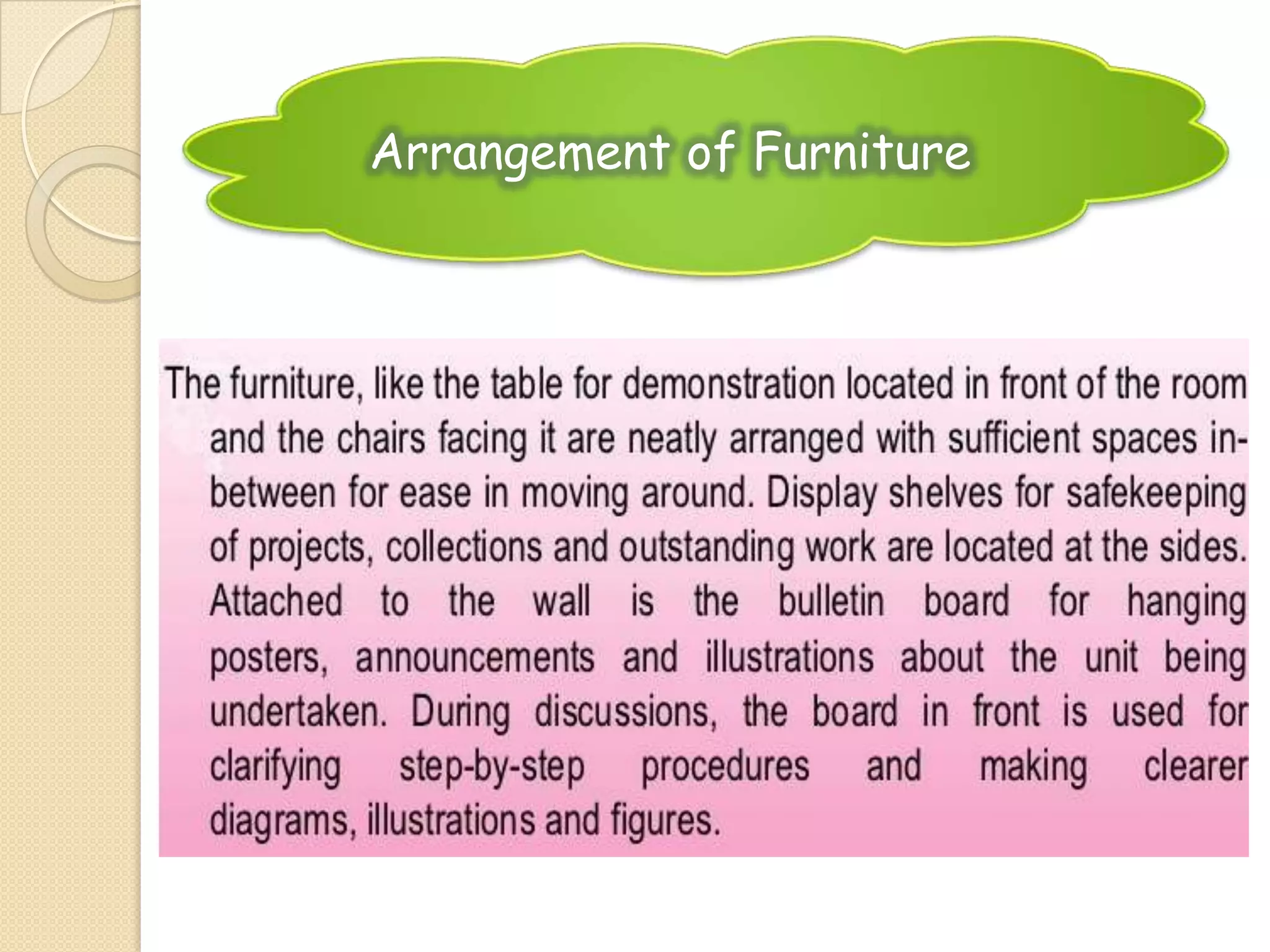
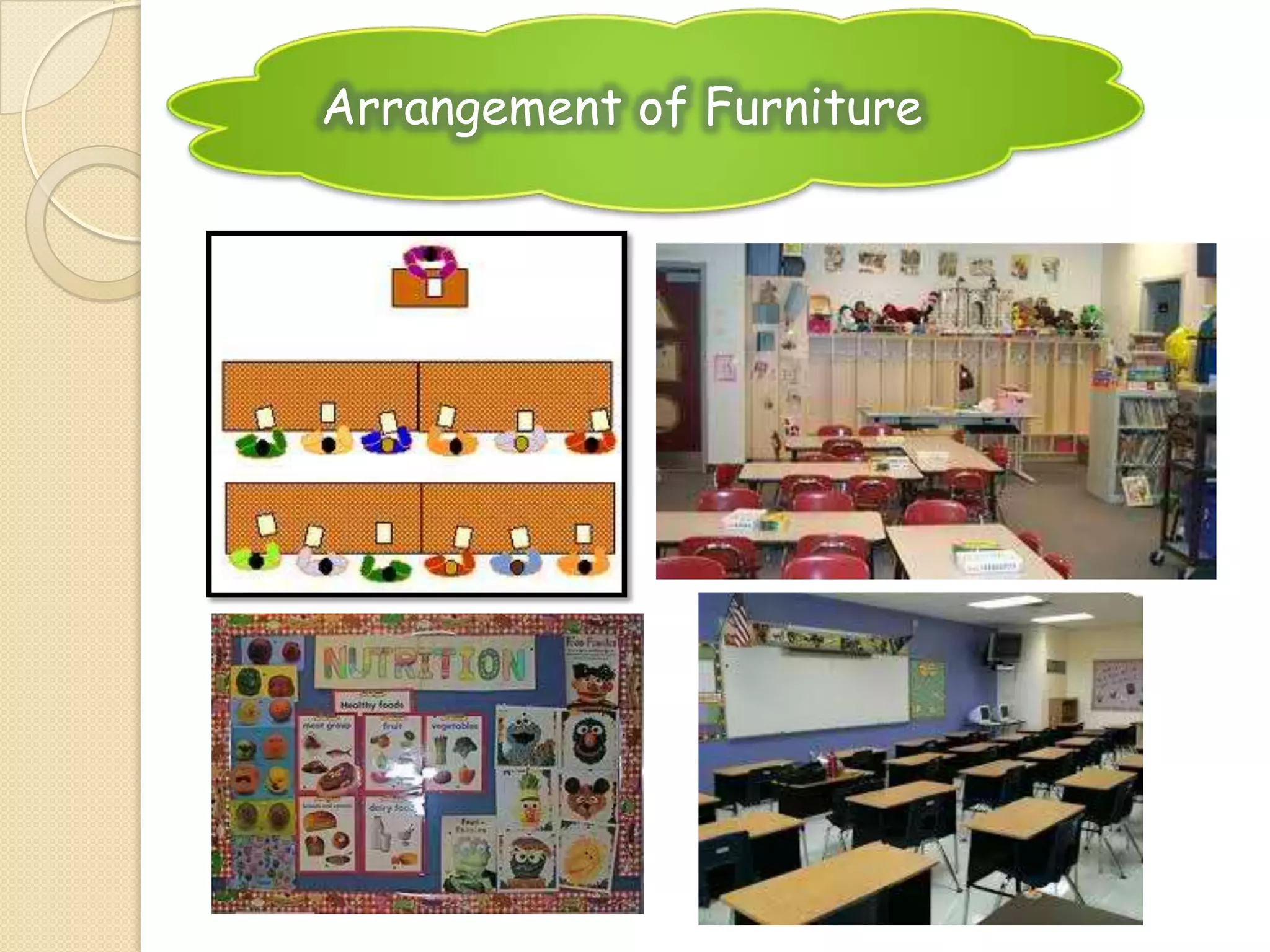
Arrangement of Furniture
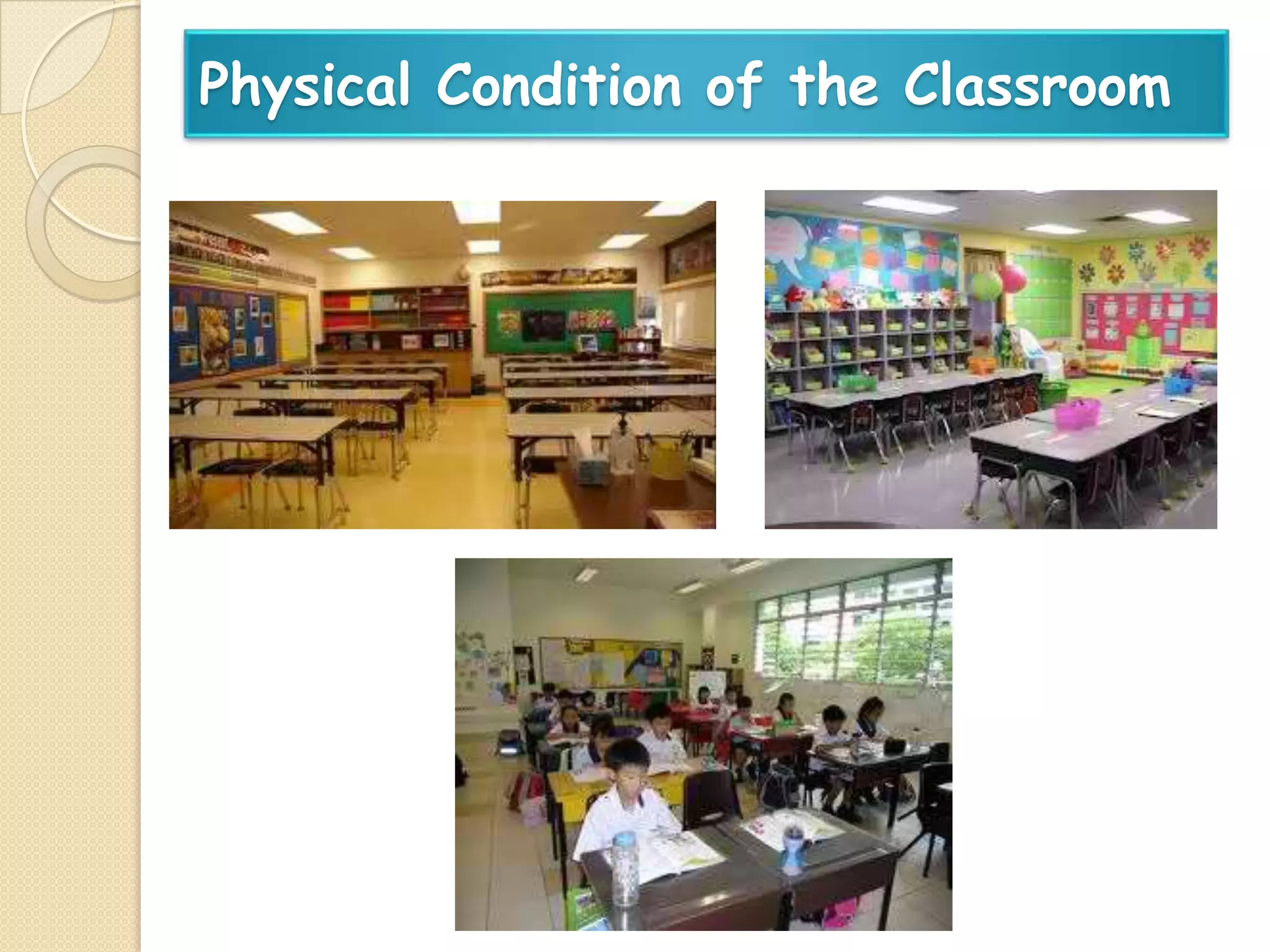
Physical Condition of the Classroom
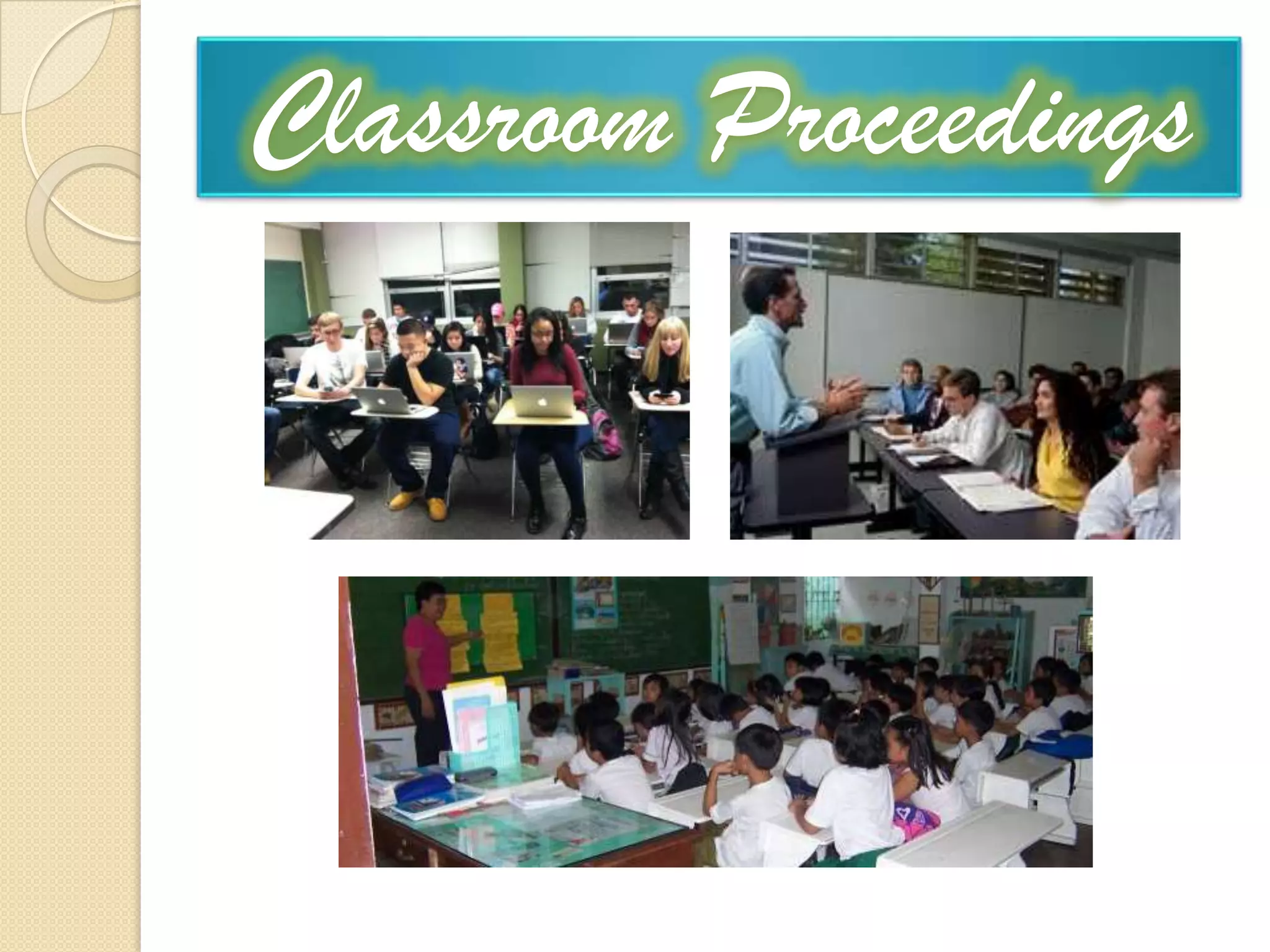
Classroom Proceedings
Classroom proceedings also accommodates
different types of learners. For instance,
students who are visual learners can excel in a
classroom setting where theatrical presentations,
story telling or movies contribute to the lessons.
Hands-on learners may also do well in a
schoolroom.
Classroom Proceedings
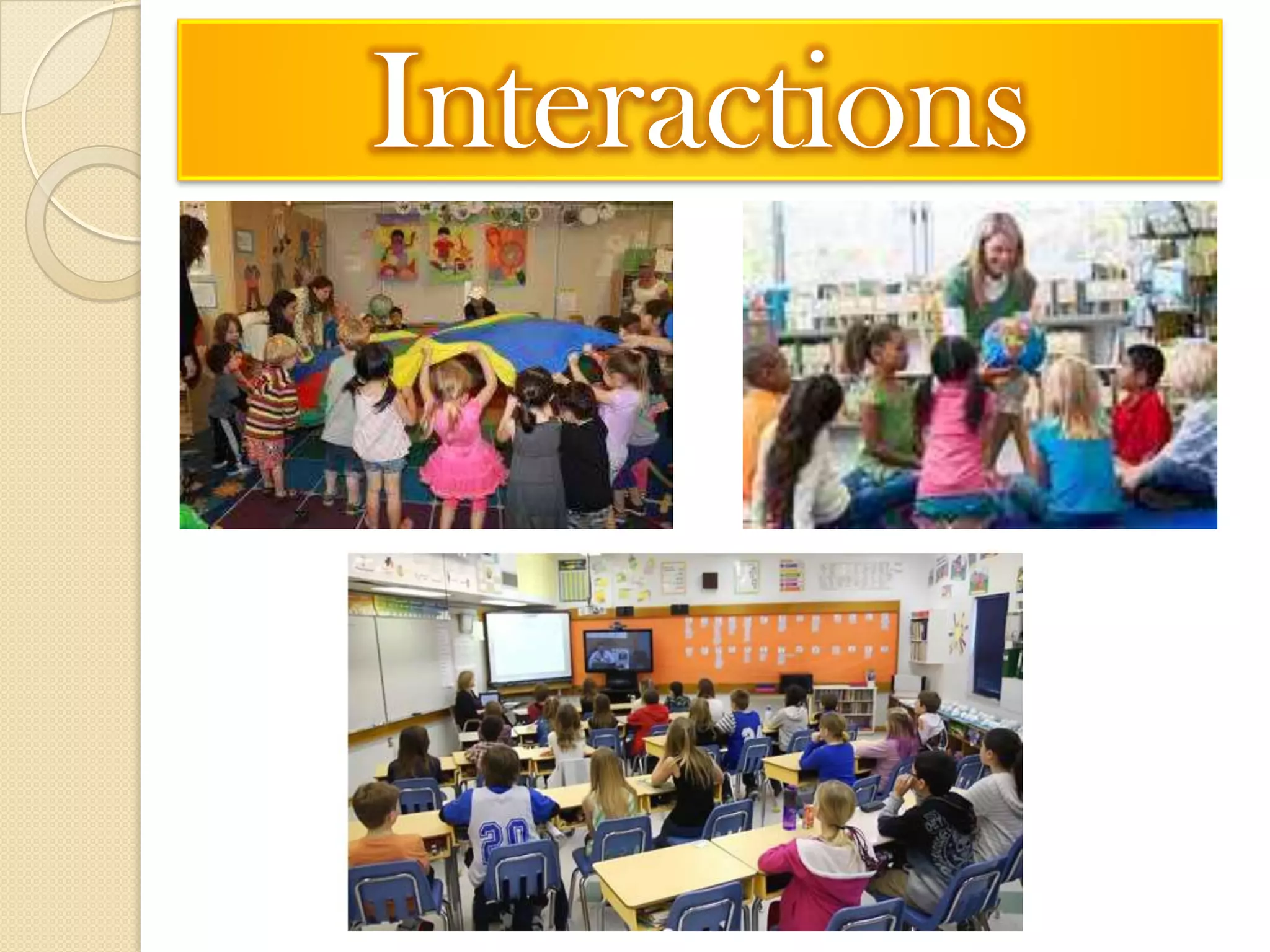
Interactions
Interactions
An enabling context - Authentic or realistic context is
provided to motivate learners, and typically take the form
of complex, full-scale problems representative of real-world
tasks.
Resources - To help students understand their complex
problems, extensive resources can be provided. A truly
open-ended learning environment would involve students in
independent research to find and select their own relevant
resources (e.g., in the campus library, on the internet).
A set of tools - In some learning environments, however,
selected resource sets are provided to learners. A full set
of tools should be provided to help learner’s process
information, manipulate data, and discuss the data.
Scaffolds - Scaffolds should also be present to bolster
student problem solving as needed. These can take many
forms from tools to teachers to student peers.
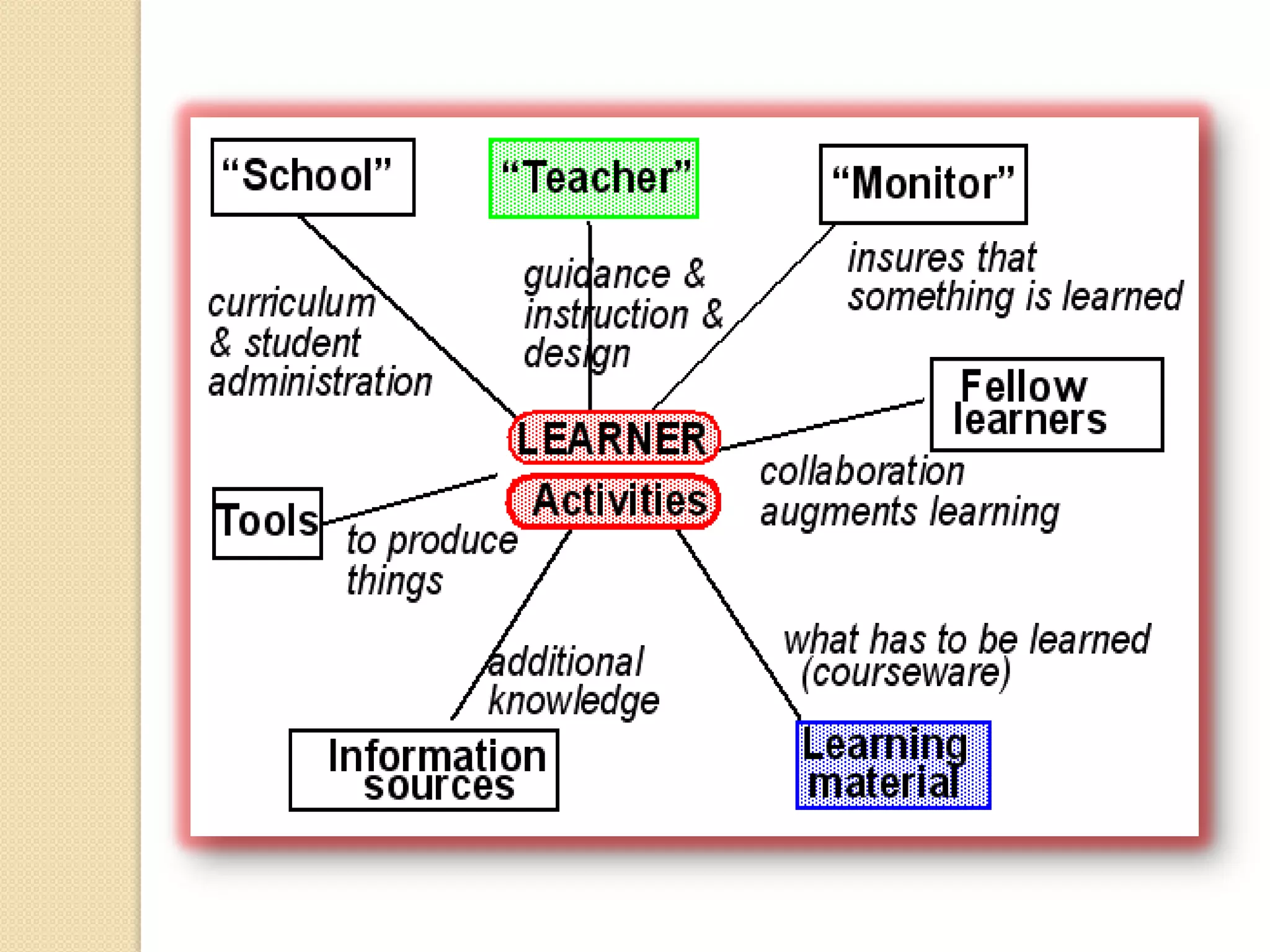
 ``Teacher component: Its role is to provide something between loose
guidance and direct instruction. It can be a human agent (present or
distant), an intelligent agent, instructions like some text books provide,
etc. This component provides information from the syllabus to the task
level.
 ``Monitor component: Ensures that something is learned. A role taken by
either the human teacher, the learner (self-control) or by some program.
 ``Fellow learner’s component: Improves the learning process by
collaborative learning principle.
 ``Learning material: Contains what has to be learned in a very broad
sense (knowing what, knowing how). It can be computational in various
ways (exploratory hypertext, lesson and task oriented hypertext,
simulation software, task solving environments, etc.).
 ``External information sources: All kinds of information which is not
directly stored in the learning material (e.g. additional material,
handbooks, manuals, etc.).
 ``Tools: Everything which may help the learning process other then the
learning material (e.g. calculators, communication software, etc.)
 ``School: Something that provides a curriculum and does student
administration.
A Facilitative Learning Environment
 Encourages people to be active
 Promotes and facilitates the individual’s discovery of the personal
meaning of idea.
 Emphasizes the uniquely personal and subjective nature of learning.
 In which difference is good and desirable.
 Consistently recognizes people’s right to make mistakes.
 Tolerate ambiguity.
 Evaluation is a cooperative process which emphasis on self-evaluation.
 Encourages openness of self rather than concealment of self.
 People are encouraged to trust in themselves as well as in external
sources.
 People feel they are respected.
 People feel they are accepted.
 Permits confrontation.
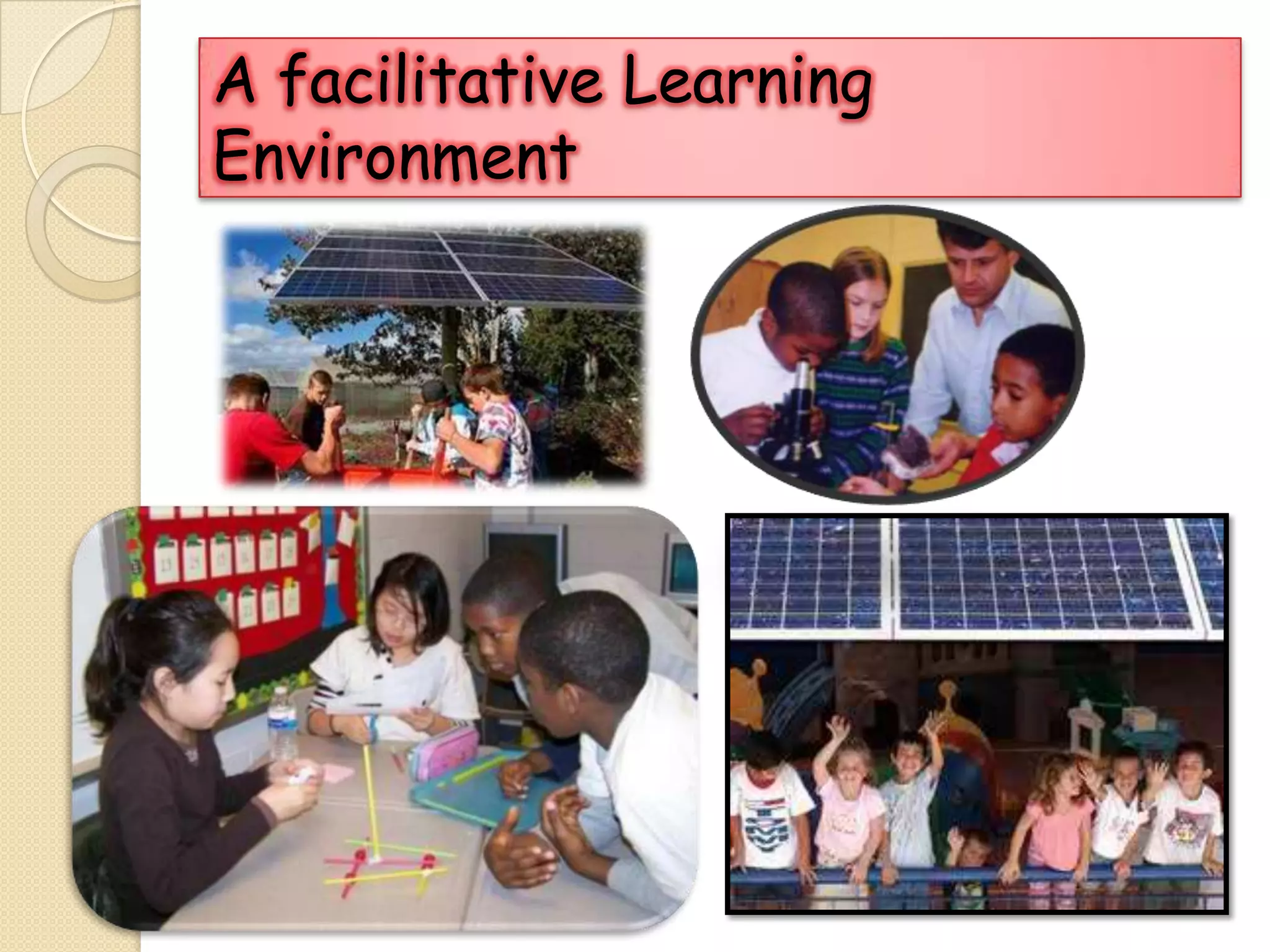
A facilitative Learning
Environment
10 Characteristics of a Highly Effective Environment
 The students ask the question – good questions
 Questions are valued over answers
 Ideas come from a variety of sources
 A variety of instructional design methods are used
 Classroom learning “empties” into an authentic community
 Learning is personalized by a variety of criteria
 Assessment is persistent, authentic, transparent, and never
punitive
 Learning habits are constantly modelled
 There are constant opportunities for practice
Learning environment

Learning environment

  • 1.
    The Learning Environment “Toheredity, the child owes his possibilities. However, to environment, he owes the realization of these possibilities.”
  • 2.
    Definition Learning Environment refersto the whole range of components and activities within which learning happens. Learning Environment relies on computer-supported Systems such as a Learning management system, a combination of various educational technologies like communication module. Learning environments are typically constructivist in nature, engaging learners in "sense-making" or reasoning about extensive resource sets. Learning Environment is the place where teaching and learning take place in the most effective and productive manner. It consist of the classroom and all the instructional features and non- threatening classroom climate needed in planning and implementing all teaching and learning activities.
  • 3.
  • 4.
  • 5.
    Physical Condition ofthe Classroom
  • 6.
    Physical Condition ofthe Classroom
  • 7.
    Classroom Proceedings Classroom proceedingsalso accommodates different types of learners. For instance, students who are visual learners can excel in a classroom setting where theatrical presentations, story telling or movies contribute to the lessons. Hands-on learners may also do well in a schoolroom.
  • 8.
  • 9.
  • 10.
  • 11.
    An enabling context- Authentic or realistic context is provided to motivate learners, and typically take the form of complex, full-scale problems representative of real-world tasks. Resources - To help students understand their complex problems, extensive resources can be provided. A truly open-ended learning environment would involve students in independent research to find and select their own relevant resources (e.g., in the campus library, on the internet). A set of tools - In some learning environments, however, selected resource sets are provided to learners. A full set of tools should be provided to help learner’s process information, manipulate data, and discuss the data. Scaffolds - Scaffolds should also be present to bolster student problem solving as needed. These can take many forms from tools to teachers to student peers.
  • 13.
     ``Teacher component:Its role is to provide something between loose guidance and direct instruction. It can be a human agent (present or distant), an intelligent agent, instructions like some text books provide, etc. This component provides information from the syllabus to the task level.  ``Monitor component: Ensures that something is learned. A role taken by either the human teacher, the learner (self-control) or by some program.  ``Fellow learner’s component: Improves the learning process by collaborative learning principle.  ``Learning material: Contains what has to be learned in a very broad sense (knowing what, knowing how). It can be computational in various ways (exploratory hypertext, lesson and task oriented hypertext, simulation software, task solving environments, etc.).  ``External information sources: All kinds of information which is not directly stored in the learning material (e.g. additional material, handbooks, manuals, etc.).  ``Tools: Everything which may help the learning process other then the learning material (e.g. calculators, communication software, etc.)  ``School: Something that provides a curriculum and does student administration.
  • 14.
    A Facilitative LearningEnvironment  Encourages people to be active  Promotes and facilitates the individual’s discovery of the personal meaning of idea.  Emphasizes the uniquely personal and subjective nature of learning.  In which difference is good and desirable.  Consistently recognizes people’s right to make mistakes.  Tolerate ambiguity.  Evaluation is a cooperative process which emphasis on self-evaluation.  Encourages openness of self rather than concealment of self.  People are encouraged to trust in themselves as well as in external sources.  People feel they are respected.  People feel they are accepted.  Permits confrontation.
  • 15.
  • 16.
    10 Characteristics ofa Highly Effective Environment  The students ask the question – good questions  Questions are valued over answers  Ideas come from a variety of sources  A variety of instructional design methods are used  Classroom learning “empties” into an authentic community  Learning is personalized by a variety of criteria  Assessment is persistent, authentic, transparent, and never punitive  Learning habits are constantly modelled  There are constant opportunities for practice