Push for a
LEARNER-CENTERED
ENVIRONMENT!
Learner’s Characteristics
and Learning Activities
Presented by:
MARIA ESTELLA RAMOS
Is active learning
simply fun and games?
Doesn’t active learning require
lots of time?
Won’t students regard learning as
a waste of time?
100-200 words a minute generally said
by an instructor
•50-100 words are only heard by the student
• students in a lecture class is attentive at 40
percent
• 70 percent of what they hear in the first ten
minutes are retained, and just 20 percent
during the last ten minutes
14 to 38 percent retention if lecture is
aided with visuals
The
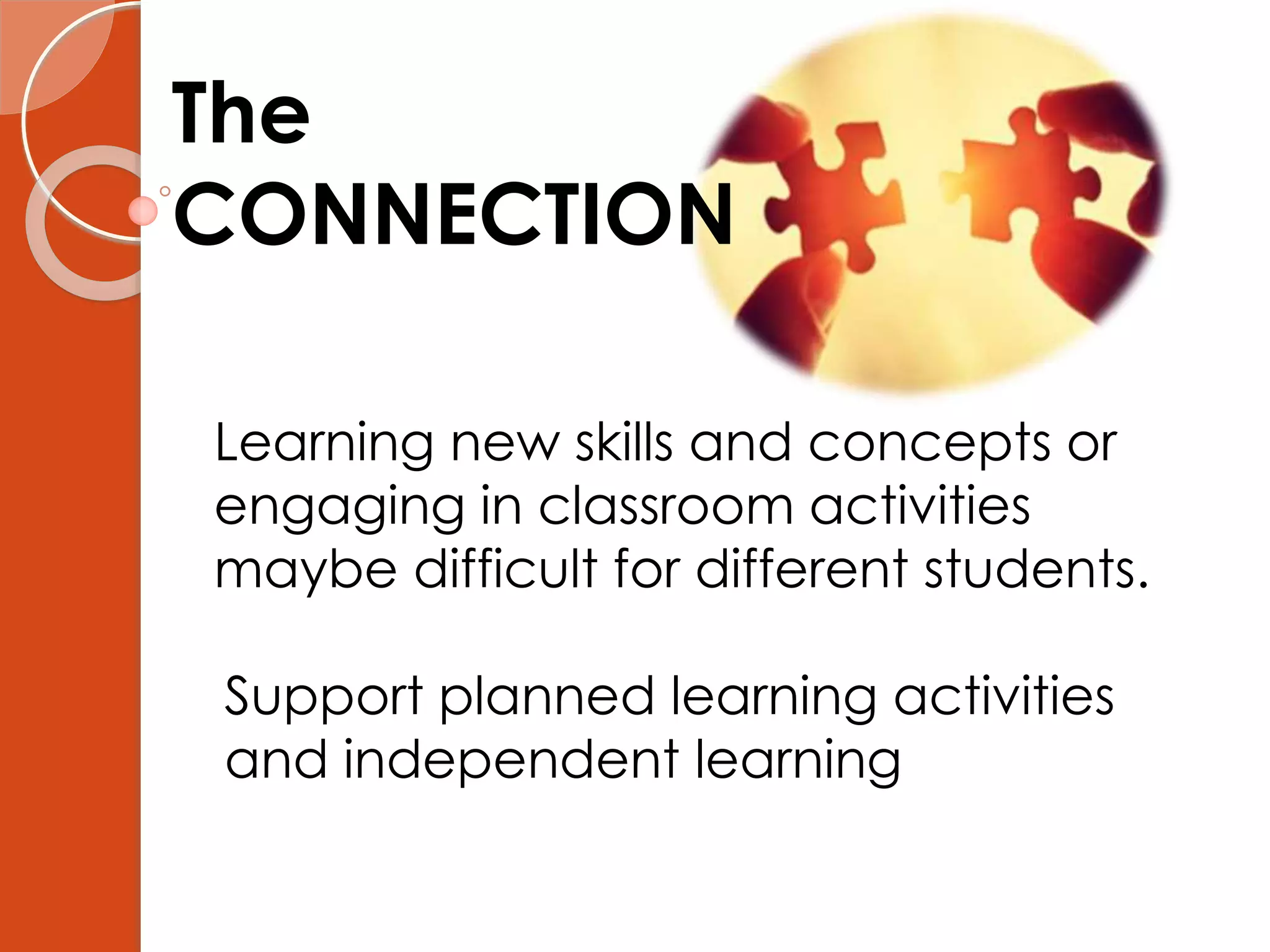
CONNECTION
Learning new skills and concepts or
engaging in classroom activities
maybe difficult for different students.
Support planned learning activities
and independent learning
Factors affecting
Learners’ Characteristics
1. Area of learning
• Should be caring by viewing
learners’ differences as assets
not liabilities
• Should foster clear
expectations and positive
relationships
Factors affecting (cont’d)
2. Facilitator or teacher
• Assists students in learning and
development
• invites students to engage in
sustained exploration
• Should be the principal sharer
of the learning context
Factors affecting (cont’d)
3. Work or learning activities
• Should be independent and
flexible
• Should engage students in
discussions
• Should foster higher thinking
and problem-solving skills
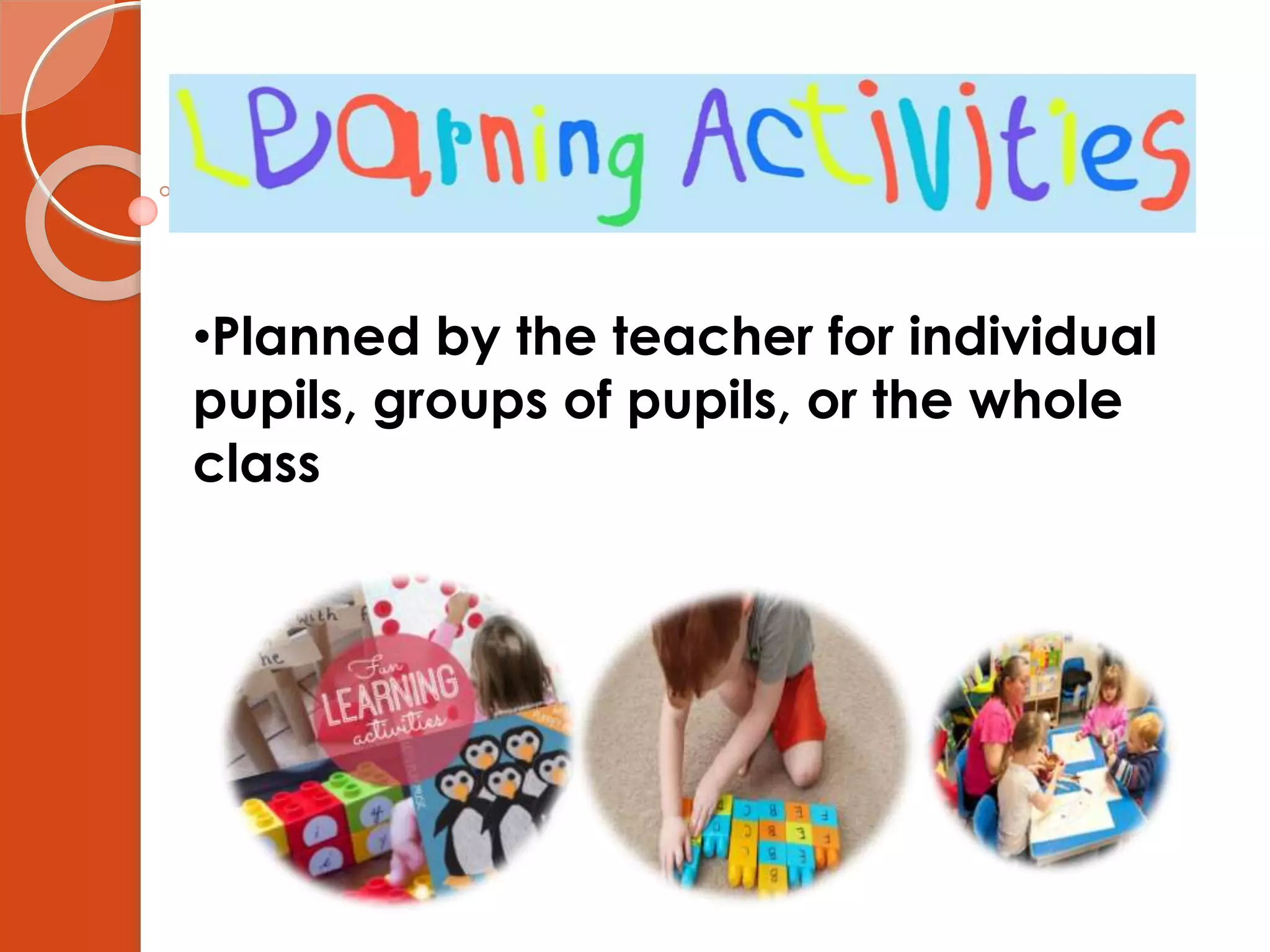
•Planned by the teacher for individual
pupils, groups of pupils, or the whole
class
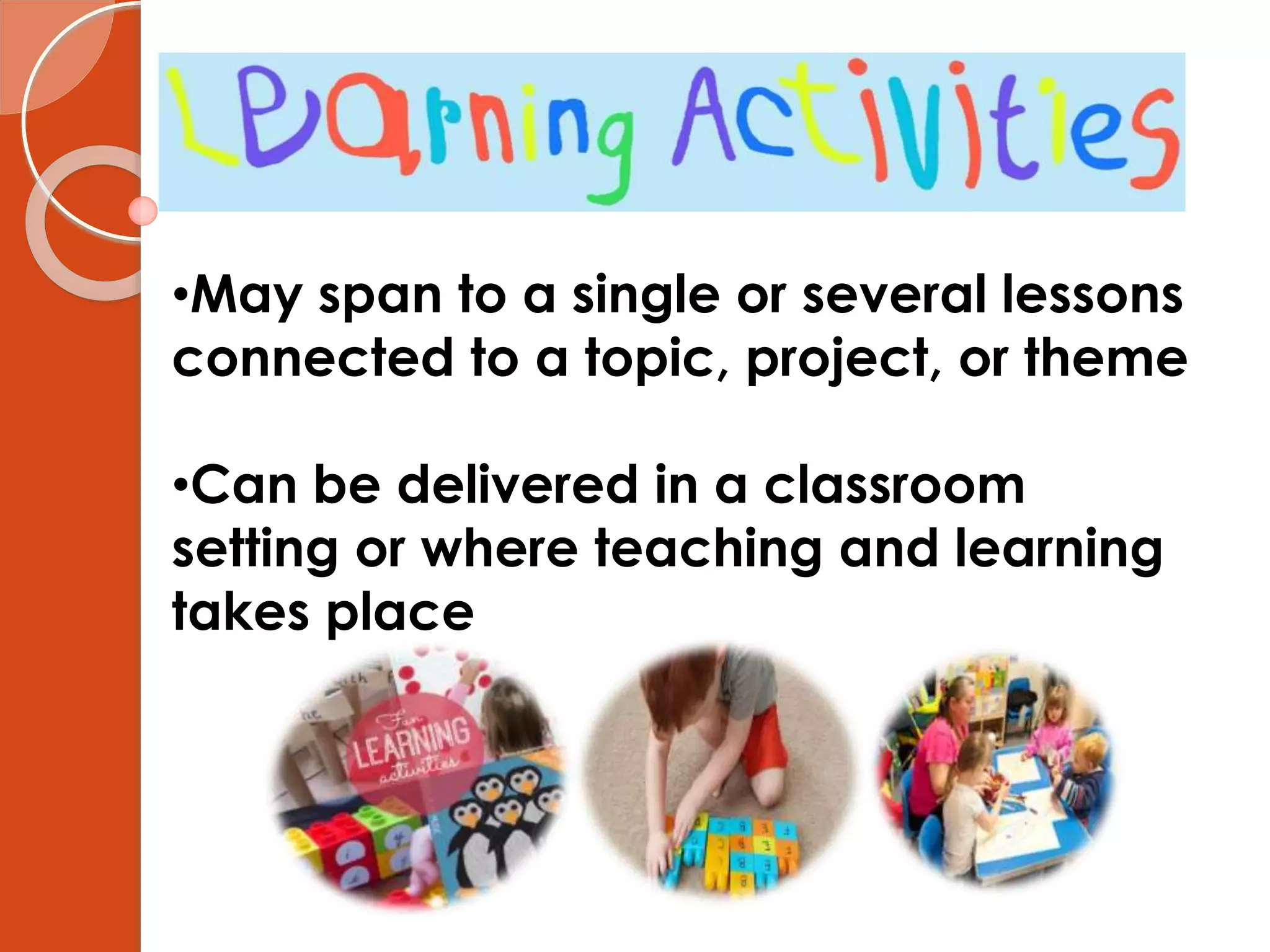
•May span to a single or several lessons
connected to a topic, project, or theme
•Can be delivered in a classroom
setting or where teaching and learning
takes place
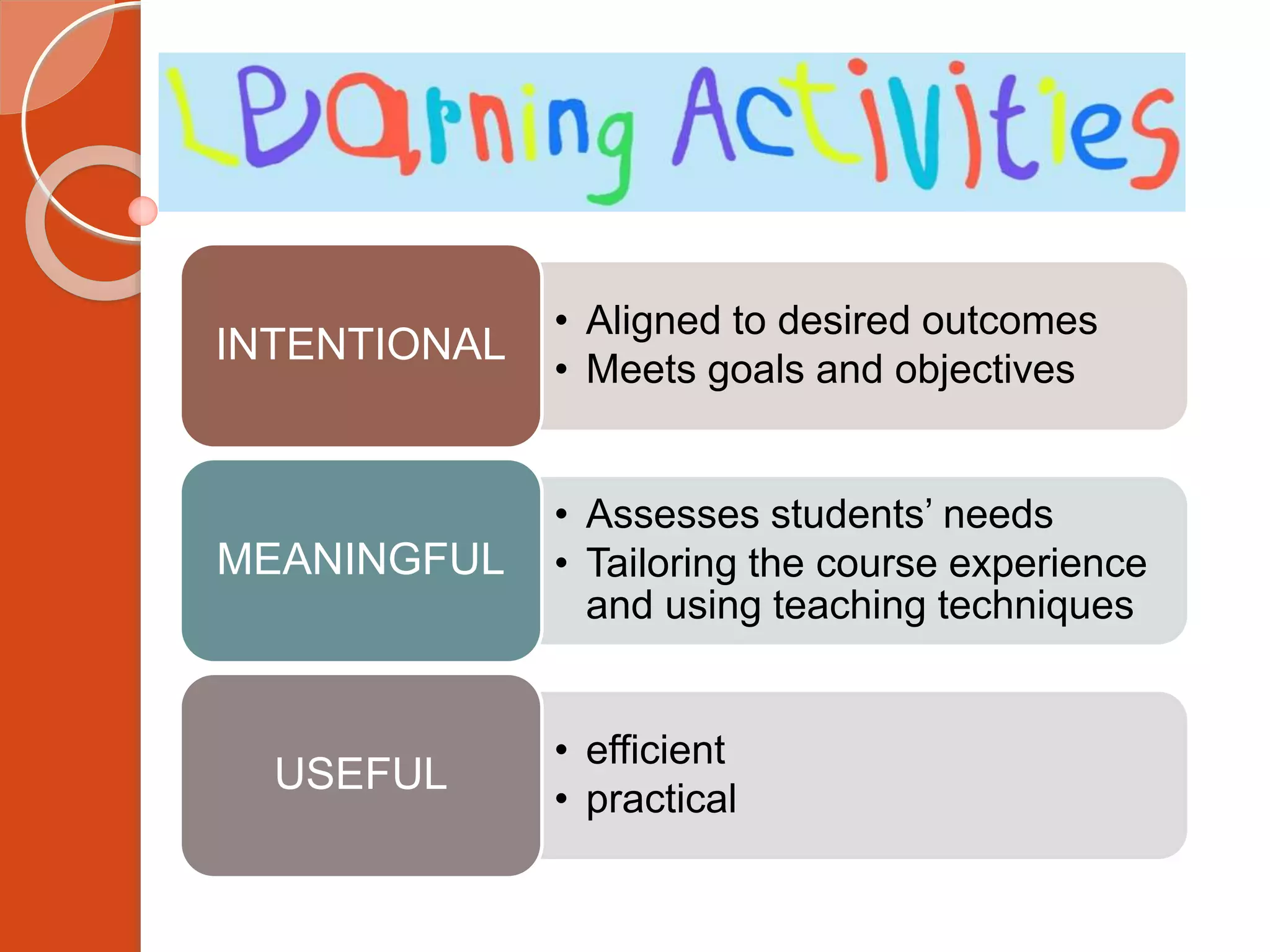
• Aligned to desired outcomes
• Meets goals and objectives
INTENTIONAL
• Assesses students’ needs
• Tailoring the course experience
and using teaching techniques
MEANINGFUL
• efficient
• practical
USEFUL
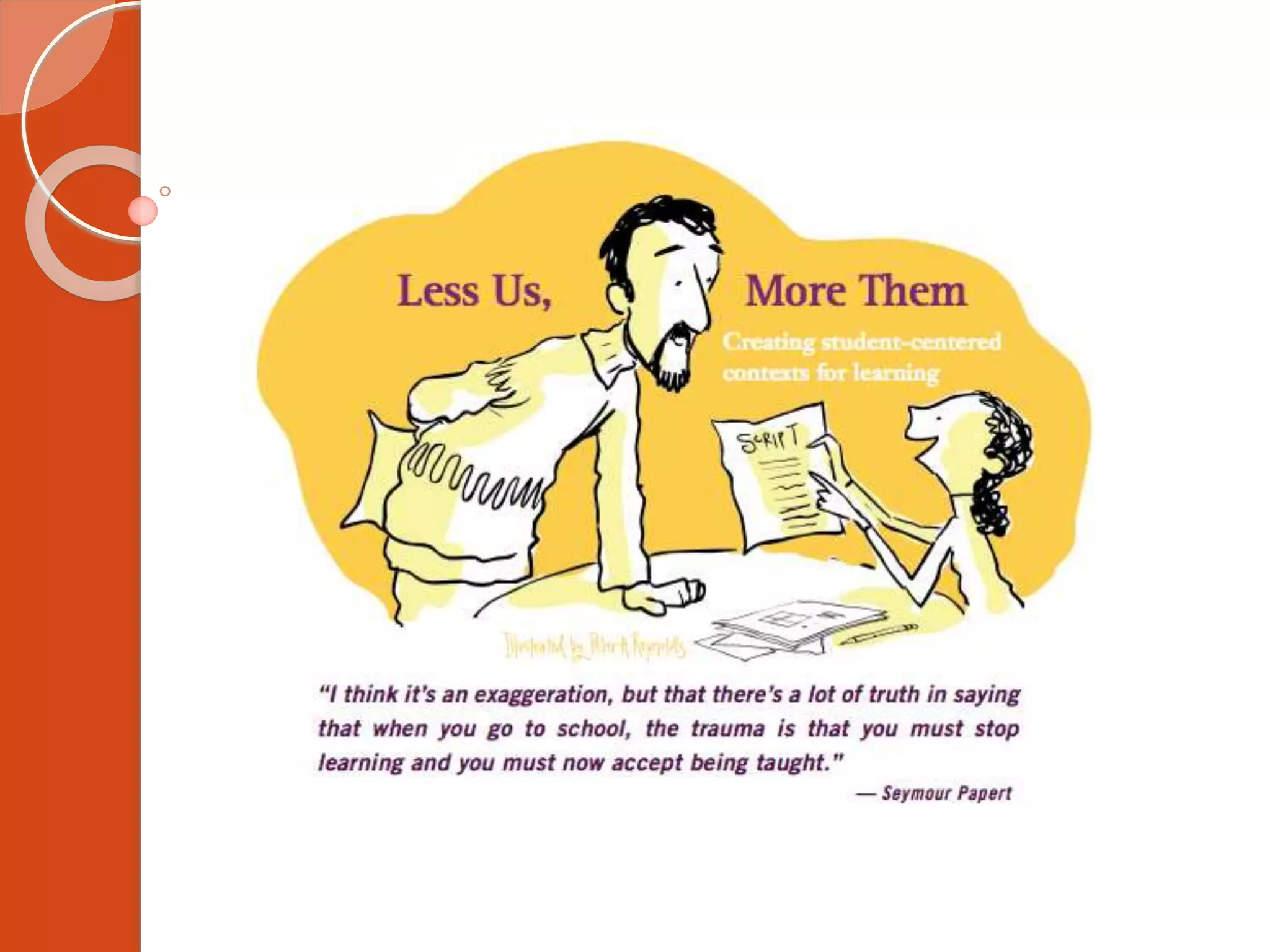
“…learning is an active,
constructive process that is
contextual; new knowledge is
acquired in relation to previous
knowledge; information is
meaningful when it is presented
in some type of framework.”
(Davis,1993)

Learning characteristics and learning activities

  • 1.
    Push for a LEARNER-CENTERED ENVIRONMENT! Learner’sCharacteristics and Learning Activities Presented by: MARIA ESTELLA RAMOS
  • 2.
    Is active learning simplyfun and games? Doesn’t active learning require lots of time? Won’t students regard learning as a waste of time?
  • 3.
    100-200 words aminute generally said by an instructor •50-100 words are only heard by the student • students in a lecture class is attentive at 40 percent • 70 percent of what they hear in the first ten minutes are retained, and just 20 percent during the last ten minutes
  • 4.
    14 to 38percent retention if lecture is aided with visuals
  • 5.
    The CONNECTION Learning new skillsand concepts or engaging in classroom activities maybe difficult for different students. Support planned learning activities and independent learning
  • 6.
    Factors affecting Learners’ Characteristics 1.Area of learning • Should be caring by viewing learners’ differences as assets not liabilities • Should foster clear expectations and positive relationships
  • 7.
    Factors affecting (cont’d) 2.Facilitator or teacher • Assists students in learning and development • invites students to engage in sustained exploration • Should be the principal sharer of the learning context
  • 8.
    Factors affecting (cont’d) 3.Work or learning activities • Should be independent and flexible • Should engage students in discussions • Should foster higher thinking and problem-solving skills
  • 10.
    •Planned by theteacher for individual pupils, groups of pupils, or the whole class
  • 11.
    •May span toa single or several lessons connected to a topic, project, or theme •Can be delivered in a classroom setting or where teaching and learning takes place
  • 12.
    • Aligned todesired outcomes • Meets goals and objectives INTENTIONAL • Assesses students’ needs • Tailoring the course experience and using teaching techniques MEANINGFUL • efficient • practical USEFUL
  • 14.
    “…learning is anactive, constructive process that is contextual; new knowledge is acquired in relation to previous knowledge; information is meaningful when it is presented in some type of framework.” (Davis,1993)

Editor's Notes

  • #2 1
  • #8 The role of the teacher is that of a coach who assists students in their learning and development and who creates learning situations in which students are invited to engage in sustained exploration. The teacher is seen as the principal shaper of the learning context, and the creation of a learner-centered classroom by the teacher will depend on teachers valuing and understanding the individual differences and needs of students (McCombs & Whisler, 1997). In addition, learnercentered environments are characterized by positive student-teacher relationships.