Basic Managerial Skills 
By: Ihab Mohamed Tarek
Management 
Management 
 the process of organizing 
methods, materials, manpower 
and other resources to achieve 
organizational goals. 
Managerial Skills 
 The capabilities that are 
important for successful 
performance of managers.
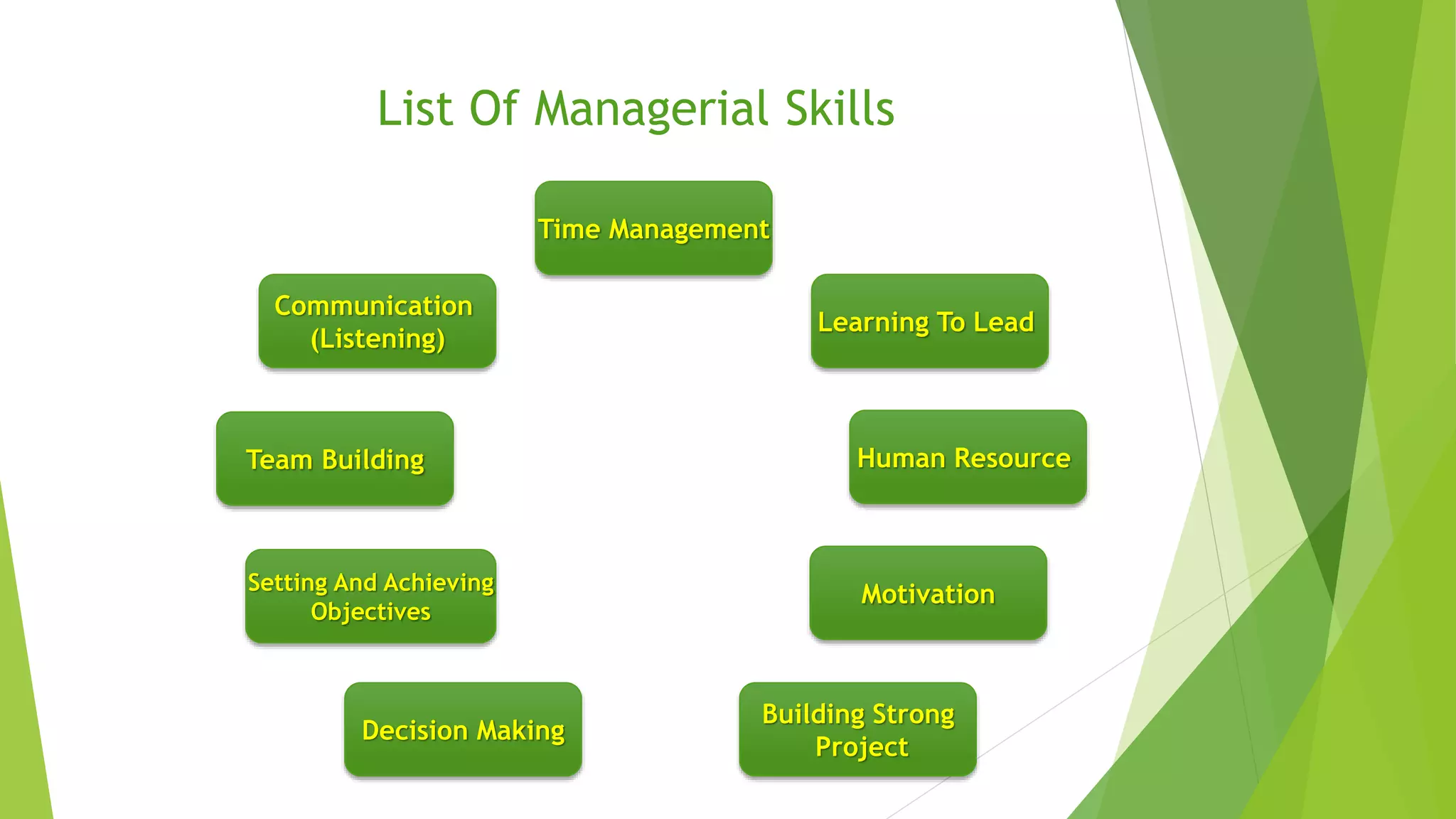
List Of Managerial Skills 
Learning To Lead 
Communication 
(Listening) 
Team Building Human Resource 
Motivation 
Setting And Achieving 
Objectives 
Decision Making 
Building Strong 
Project 
Time Management
Time Management 
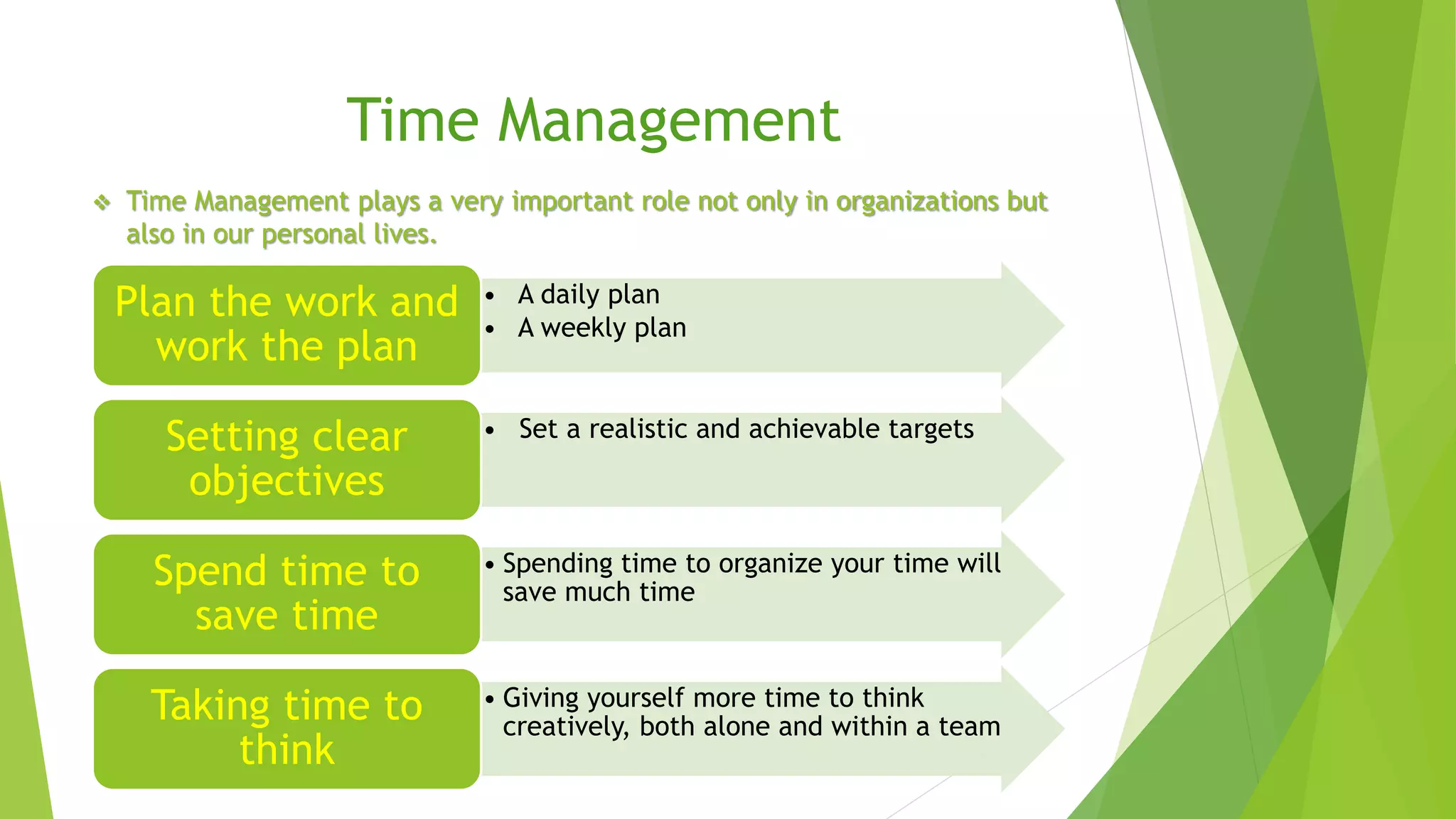
 Time Management plays a very important role not only in organizations but 
also in our personal lives. 
• A daily plan 
• A weekly plan 
Plan the work and 
work the plan 
Setting clear • Set a realistic and achievable targets 
objectives 
• Spending time to organize your time will 
save much time Spend time to 
save time 
• Giving yourself more time to think 
creatively, both alone and within a team Taking time to 
think
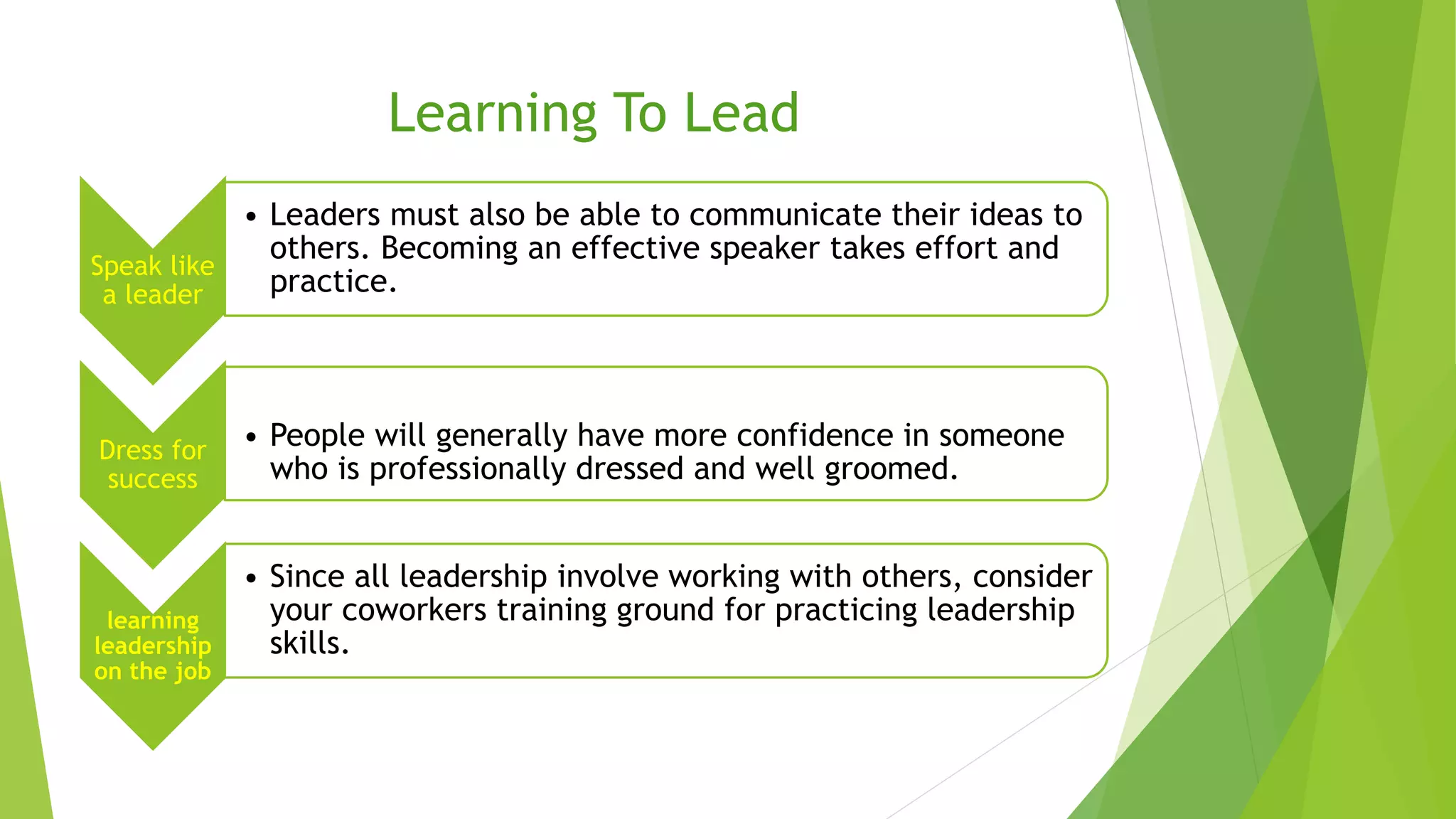
Learning To Lead 
Dress for 
success 
• People will generally have more confidence in someone 
who is professionally dressed and well groomed. 
Speak like 
a leader 
• Leaders must also be able to communicate their ideas to 
others. Becoming an effective speaker takes effort and 
practice. 
learning 
leadership 
on the job 
• Since all leadership involve working with others, consider 
your coworkers training ground for practicing leadership 
skills.
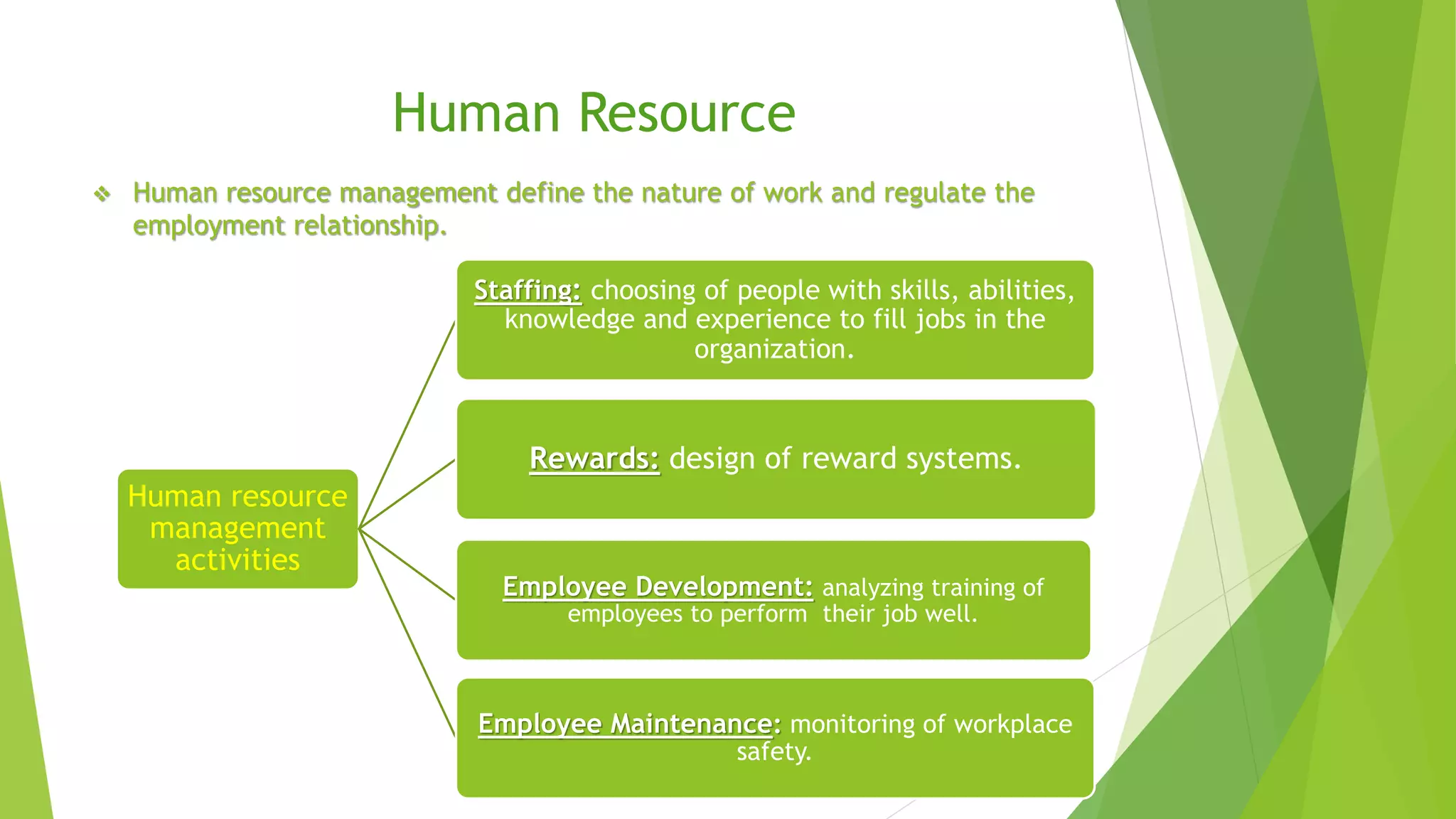
Human Resource 
 Human resource management define the nature of work and regulate the 
employment relationship. 
Human resource 
management 
activities 
Staffing: choosing of people with skills, abilities, 
knowledge and experience to fill jobs in the 
organization. 
Rewards: design of reward systems. 
Employee Development: analyzing training of 
employees to perform their job well. 
Employee Maintenance: monitoring of workplace 
safety.
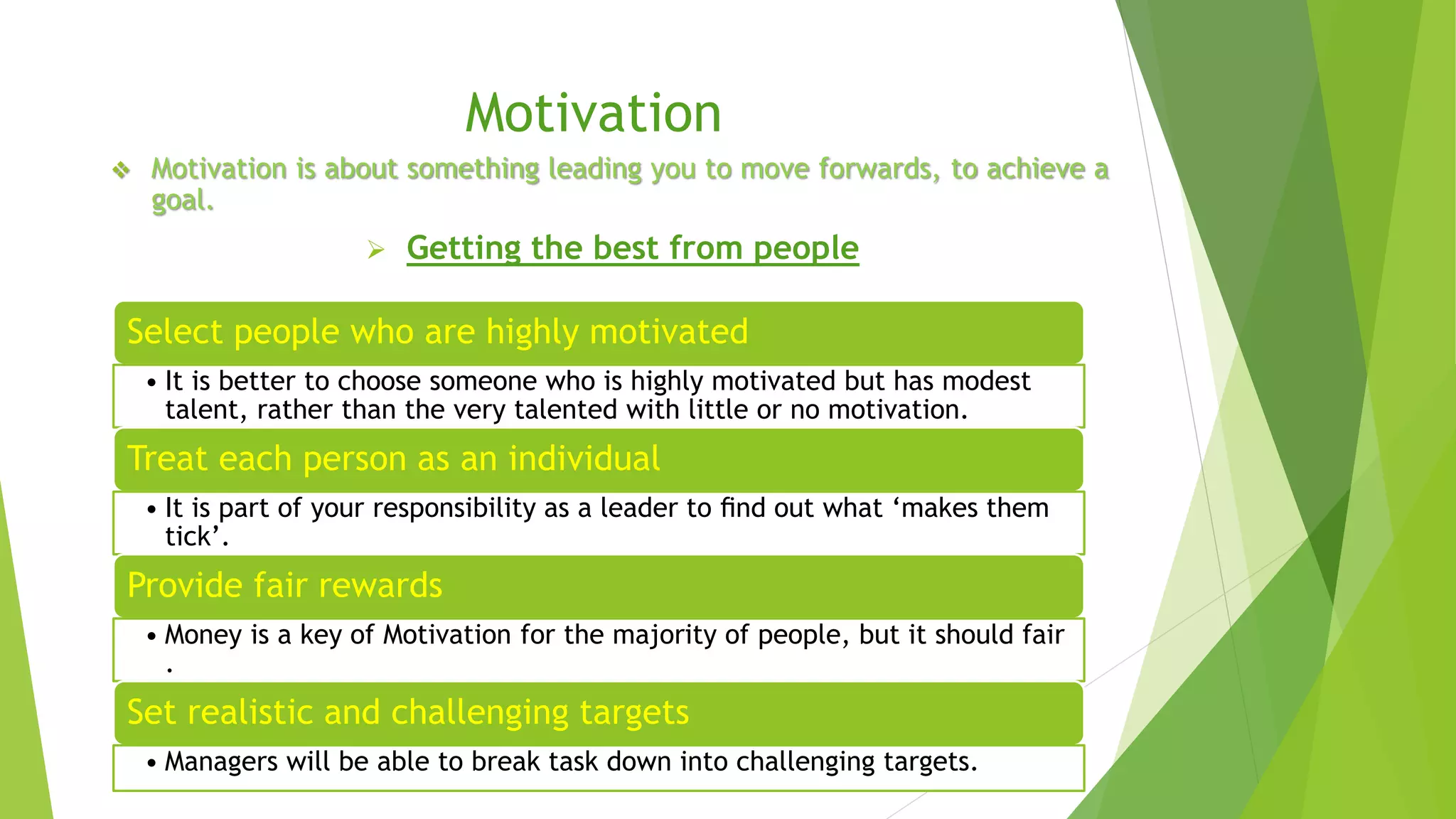
Motivation 
 Motivation is about something leading you to move forwards, to achieve a 
goal. 
 Getting the best from people 
Select people who are highly motivated 
• It is better to choose someone who is highly motivated but has modest 
talent, rather than the very talented with little or no motivation. 
Treat each person as an individual 
• It is part of your responsibility as a leader to find out what ‘makes them 
tick’. 
Provide fair rewards 
• Money is a key of Motivation for the majority of people, but it should fair 
. 
Set realistic and challenging targets 
• Managers will be able to break task down into challenging targets.
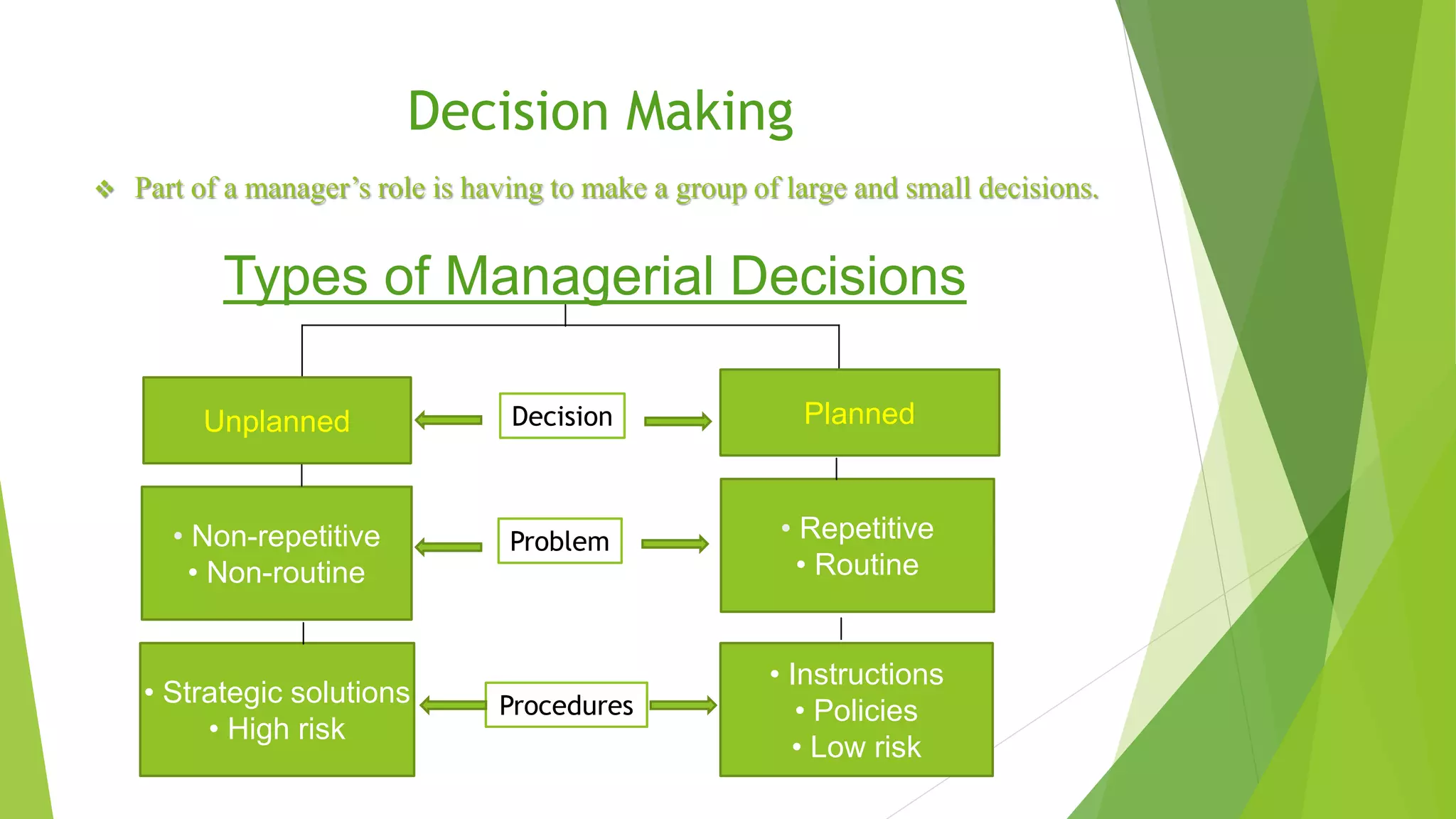
Decision Making 
 Part of a manager’s role is having to make a group of large and small decisions. 
Types of Managerial Decisions 
Unplanned Decision 
Planned 
Problem • Repetitive 
• Routine 
• Non-repetitive 
• Non-routine 
• Instructions 
• Policies 
• Low risk 
• Strategic solutions 
• High risk 
Procedures
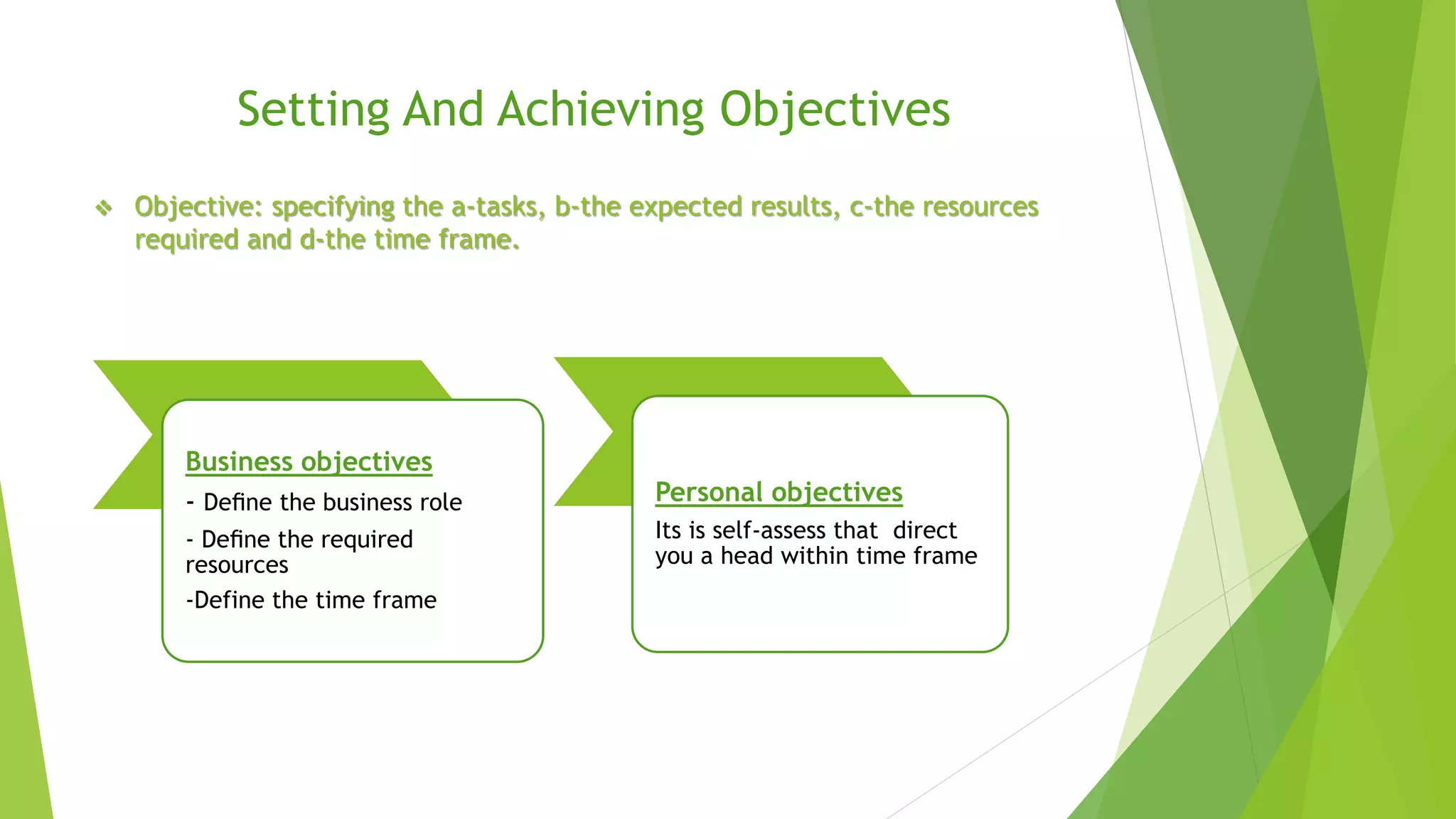
Setting And Achieving Objectives 
 Objective: specifying the a-tasks, b-the expected results, c-the resources 
required and d-the time frame. 
Business objectives 
- Define the business role 
- Define the required 
resources 
-Define the time frame 
Personal objectives 
Its is self-assess that direct 
you a head within time frame
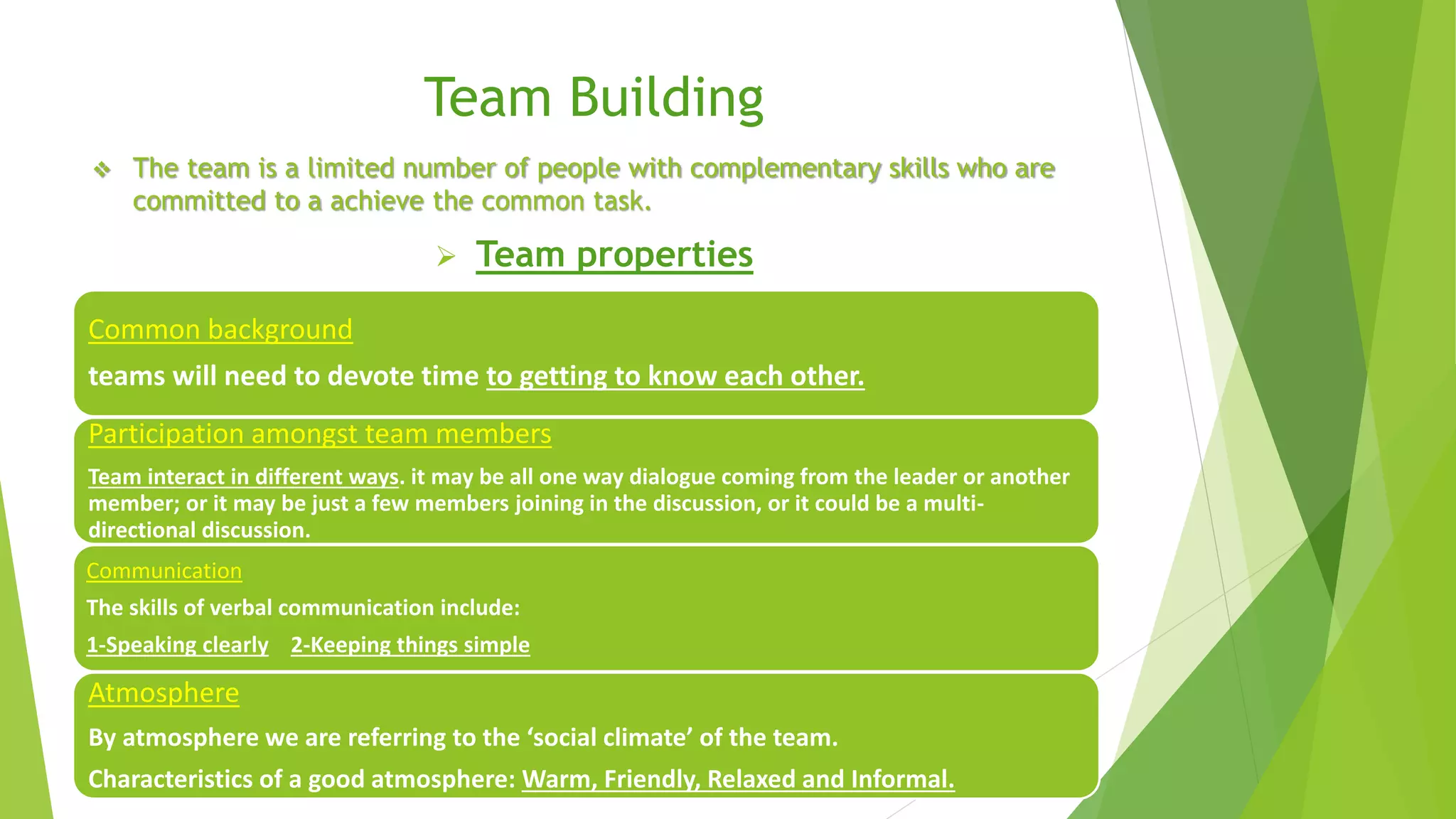
Team Building 
 The team is a limited number of people with complementary skills who are 
committed to a achieve the common task. 
 Team properties 
Common background 
teams will need to devote time to getting to know each other. 
Participation amongst team members 
Team interact in different ways. it may be all one way dialogue coming from the leader or another 
member; or it may be just a few members joining in the discussion, or it could be a multi-directional 
discussion. 
Communication 
The skills of verbal communication include: 
1-Speaking clearly 2-Keeping things simple 
Atmosphere 
By atmosphere we are referring to the ‘social climate’ of the team. 
Characteristics of a good atmosphere: Warm, Friendly, Relaxed and Informal.
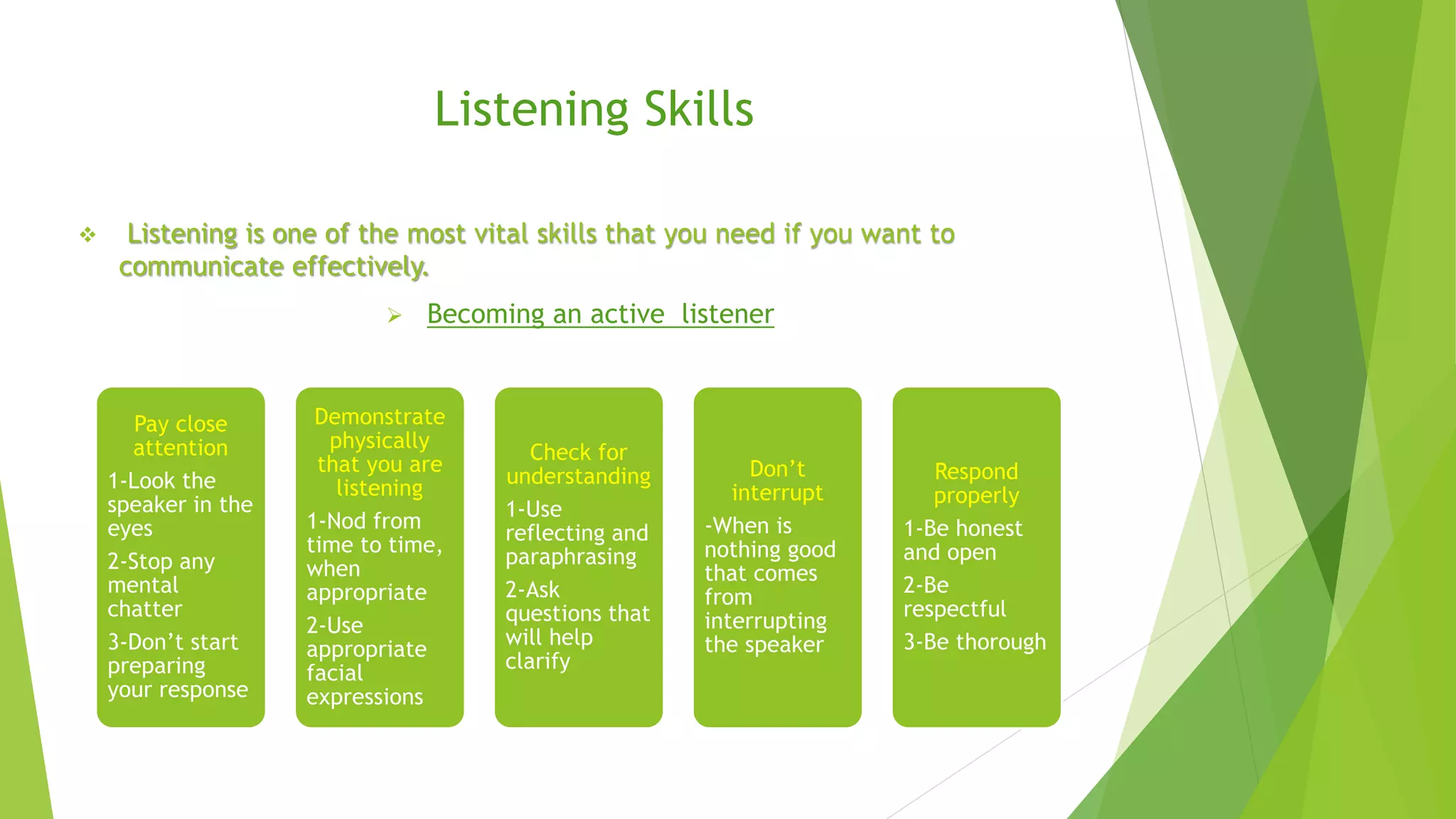
Listening Skills 
 Listening is one of the most vital skills that you need if you want to 
communicate effectively. 
 Becoming an active listener 
Pay close 
attention 
1-Look the 
speaker in the 
eyes 
2-Stop any 
mental 
chatter 
3-Don’t start 
preparing 
your response 
Demonstrate 
physically 
that you are 
listening 
1-Nod from 
time to time, 
when 
appropriate 
2-Use 
appropriate 
facial 
expressions 
Check for 
understanding 
1-Use 
reflecting and 
paraphrasing 
2-Ask 
questions that 
will help 
clarify 
Don’t 
interrupt 
-When is 
nothing good 
that comes 
from 
interrupting 
the speaker 
Respond 
properly 
1-Be honest 
and open 
2-Be 
respectful 
3-Be thorough
Conclusion 
 The managerial skills create successful manager that 
allow him to improve his performance to achieve the 
organization goals.
Thanks

the Basic managerial skills

  • 1.
    Basic Managerial Skills By: Ihab Mohamed Tarek
  • 2.
    Management Management the process of organizing methods, materials, manpower and other resources to achieve organizational goals. Managerial Skills  The capabilities that are important for successful performance of managers.
  • 3.
    List Of ManagerialSkills Learning To Lead Communication (Listening) Team Building Human Resource Motivation Setting And Achieving Objectives Decision Making Building Strong Project Time Management
  • 4.
    Time Management Time Management plays a very important role not only in organizations but also in our personal lives. • A daily plan • A weekly plan Plan the work and work the plan Setting clear • Set a realistic and achievable targets objectives • Spending time to organize your time will save much time Spend time to save time • Giving yourself more time to think creatively, both alone and within a team Taking time to think
  • 5.
    Learning To Lead Dress for success • People will generally have more confidence in someone who is professionally dressed and well groomed. Speak like a leader • Leaders must also be able to communicate their ideas to others. Becoming an effective speaker takes effort and practice. learning leadership on the job • Since all leadership involve working with others, consider your coworkers training ground for practicing leadership skills.
  • 6.
    Human Resource Human resource management define the nature of work and regulate the employment relationship. Human resource management activities Staffing: choosing of people with skills, abilities, knowledge and experience to fill jobs in the organization. Rewards: design of reward systems. Employee Development: analyzing training of employees to perform their job well. Employee Maintenance: monitoring of workplace safety.
  • 7.
    Motivation  Motivationis about something leading you to move forwards, to achieve a goal.  Getting the best from people Select people who are highly motivated • It is better to choose someone who is highly motivated but has modest talent, rather than the very talented with little or no motivation. Treat each person as an individual • It is part of your responsibility as a leader to find out what ‘makes them tick’. Provide fair rewards • Money is a key of Motivation for the majority of people, but it should fair . Set realistic and challenging targets • Managers will be able to break task down into challenging targets.
  • 8.
    Decision Making Part of a manager’s role is having to make a group of large and small decisions. Types of Managerial Decisions Unplanned Decision Planned Problem • Repetitive • Routine • Non-repetitive • Non-routine • Instructions • Policies • Low risk • Strategic solutions • High risk Procedures
  • 9.
    Setting And AchievingObjectives  Objective: specifying the a-tasks, b-the expected results, c-the resources required and d-the time frame. Business objectives - Define the business role - Define the required resources -Define the time frame Personal objectives Its is self-assess that direct you a head within time frame
  • 10.
    Team Building The team is a limited number of people with complementary skills who are committed to a achieve the common task.  Team properties Common background teams will need to devote time to getting to know each other. Participation amongst team members Team interact in different ways. it may be all one way dialogue coming from the leader or another member; or it may be just a few members joining in the discussion, or it could be a multi-directional discussion. Communication The skills of verbal communication include: 1-Speaking clearly 2-Keeping things simple Atmosphere By atmosphere we are referring to the ‘social climate’ of the team. Characteristics of a good atmosphere: Warm, Friendly, Relaxed and Informal.
  • 11.
    Listening Skills Listening is one of the most vital skills that you need if you want to communicate effectively.  Becoming an active listener Pay close attention 1-Look the speaker in the eyes 2-Stop any mental chatter 3-Don’t start preparing your response Demonstrate physically that you are listening 1-Nod from time to time, when appropriate 2-Use appropriate facial expressions Check for understanding 1-Use reflecting and paraphrasing 2-Ask questions that will help clarify Don’t interrupt -When is nothing good that comes from interrupting the speaker Respond properly 1-Be honest and open 2-Be respectful 3-Be thorough
  • 12.
    Conclusion  Themanagerial skills create successful manager that allow him to improve his performance to achieve the organization goals.
  • 13.