PERSONAL AND INTERPERSONAL SKILLS OF A
MANAGER
SELF-AWARENESS
 Concept: Understanding one’s emotions, strengths,
weaknesses, values, and biases. It involves reflection and
feedback to recognize how these traits influence decisions and
interactions.
 Importance: Self-aware managers make balanced decisions,
leverage their strengths, and address weaknesses. It fosters
emotional intelligence, improving empathy and trust within
teams.
TIME MANAGEMENT
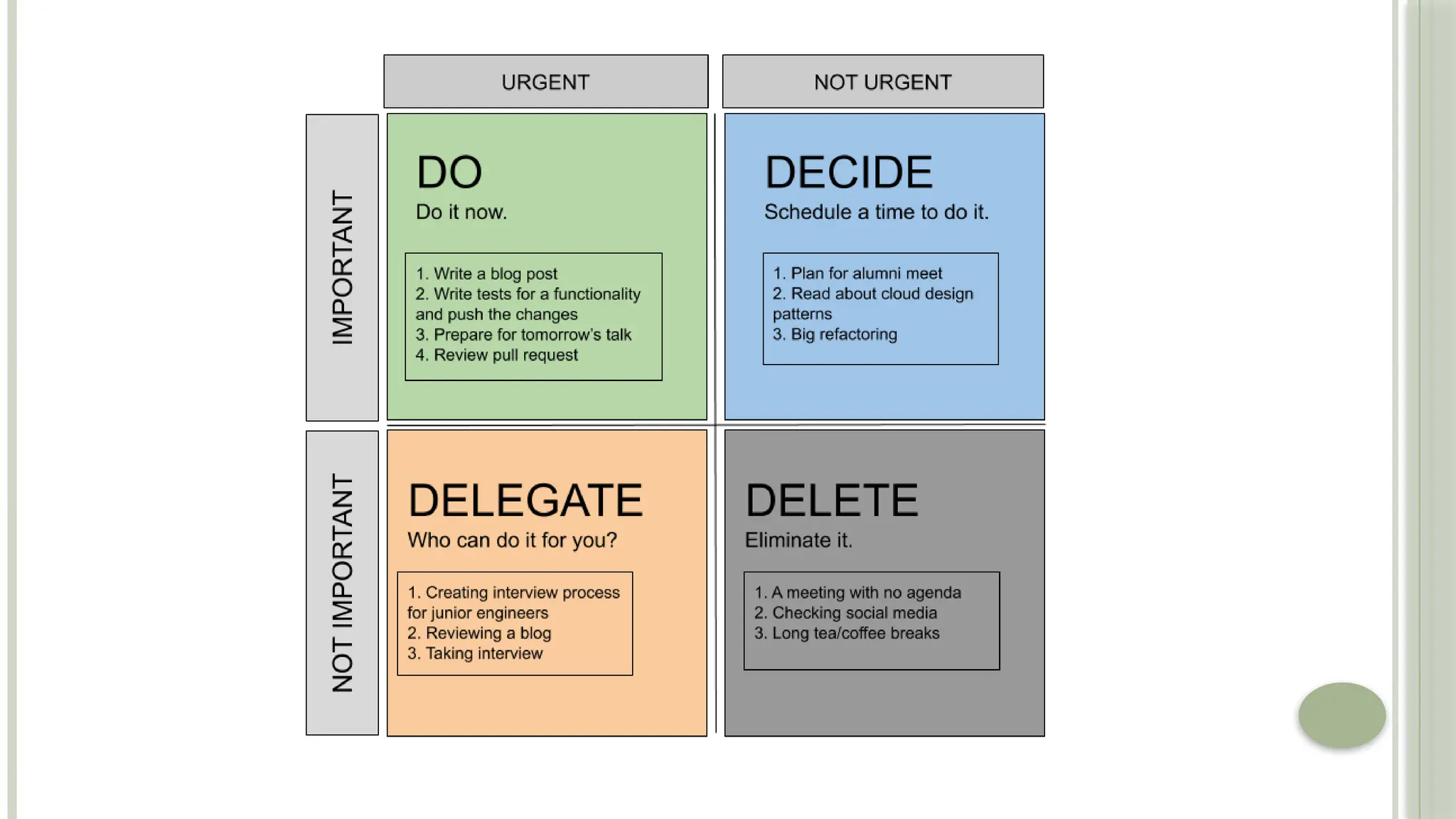
 Concept: Prioritizing tasks, setting goals, and allocating
time efficiently using tools like calendars, to-do lists, or
frameworks like the Eisenhower Matrix (urgent vs.
important).
 Importance: Ensures deadlines are met, reduces burnout,
and models productivity for teams. Effective time
management allows managers to focus on strategic goals
rather than getting bogged down by trivial tasks.
STRESS MANAGEMENT
 Concept: Techniques to handle pressure, such as
mindfulness, exercise, or boundary-setting. It also
involves fostering a supportive team environment.
 Importance: Prevents decision fatigue, maintains
mental clarity, and sustains team morale. A manager
who manages stress well creates a resilient, positive
workplace.
PROBLEM SOLVING
 Concept: Systematically addressing challenges by
identifying root causes, brainstorming solutions,
and implementing action plans. Tools include
SWOT analysis or 5 Whys.
 Importance: Resolves obstacles efficiently, drives
innovation, and ensures operational continuity.
Strong problem-solving fosters a proactive rather
than reactive team culture.
N
 Concept: Achieving mutually beneficial outcomes through
dialogue, active listening, and compromise. It applies to
conflicts, resource allocation, or client agreements.
 Importance: Builds trust, secures critical resources, and
resolves disputes without damaging relationships.
Effective negotiation aligns individual and organizational
interests.
LEADERSHIP SKILLS
 Concept: Inspiring and guiding teams toward a shared
vision. Styles vary (e.g., transformational, democratic)
but often involve clear communication, motivation, and
accountability.
 Importance: Drives team cohesion, boosts engagement,
and adapts to change. Strong leadership turns strategy
into action and empowers employees to excel.
INTERCONNECTEDNESS OF SKILLS
 These skills are interdependent.
 Examples:
 - Self-awareness enhances leadership authenticity.
 - Time management reduces stress, freeing mental
space for creative problem-solving.
 - Negotiation relies on emotional intelligence (rooted in
self-awareness) to understand others’ needs.
CONCLUSION
 In today’s dynamic work environment, managers who
cultivate these skills foster adaptability, trust, and high
performance. They not only achieve short-term goals but
also build sustainable, motivated teams capable of
navigating future challenges. Personal mastery and
interpersonal effectiveness are not just complementary—
they are essential for transformative leadership.
THANK YOU

Managerial_Skills_Presentation.ppt.....x

  • 1.
    PERSONAL AND INTERPERSONALSKILLS OF A MANAGER
  • 2.
    SELF-AWARENESS  Concept: Understandingone’s emotions, strengths, weaknesses, values, and biases. It involves reflection and feedback to recognize how these traits influence decisions and interactions.  Importance: Self-aware managers make balanced decisions, leverage their strengths, and address weaknesses. It fosters emotional intelligence, improving empathy and trust within teams.
  • 3.
    TIME MANAGEMENT  Concept:Prioritizing tasks, setting goals, and allocating time efficiently using tools like calendars, to-do lists, or frameworks like the Eisenhower Matrix (urgent vs. important).  Importance: Ensures deadlines are met, reduces burnout, and models productivity for teams. Effective time management allows managers to focus on strategic goals rather than getting bogged down by trivial tasks.
  • 5.
    STRESS MANAGEMENT  Concept:Techniques to handle pressure, such as mindfulness, exercise, or boundary-setting. It also involves fostering a supportive team environment.  Importance: Prevents decision fatigue, maintains mental clarity, and sustains team morale. A manager who manages stress well creates a resilient, positive workplace.
  • 6.
    PROBLEM SOLVING  Concept:Systematically addressing challenges by identifying root causes, brainstorming solutions, and implementing action plans. Tools include SWOT analysis or 5 Whys.  Importance: Resolves obstacles efficiently, drives innovation, and ensures operational continuity. Strong problem-solving fosters a proactive rather than reactive team culture.
  • 7.
    N  Concept: Achievingmutually beneficial outcomes through dialogue, active listening, and compromise. It applies to conflicts, resource allocation, or client agreements.  Importance: Builds trust, secures critical resources, and resolves disputes without damaging relationships. Effective negotiation aligns individual and organizational interests.
  • 8.
    LEADERSHIP SKILLS  Concept:Inspiring and guiding teams toward a shared vision. Styles vary (e.g., transformational, democratic) but often involve clear communication, motivation, and accountability.  Importance: Drives team cohesion, boosts engagement, and adapts to change. Strong leadership turns strategy into action and empowers employees to excel.
  • 9.
    INTERCONNECTEDNESS OF SKILLS These skills are interdependent.  Examples:  - Self-awareness enhances leadership authenticity.  - Time management reduces stress, freeing mental space for creative problem-solving.  - Negotiation relies on emotional intelligence (rooted in self-awareness) to understand others’ needs.
  • 10.
    CONCLUSION  In today’sdynamic work environment, managers who cultivate these skills foster adaptability, trust, and high performance. They not only achieve short-term goals but also build sustainable, motivated teams capable of navigating future challenges. Personal mastery and interpersonal effectiveness are not just complementary— they are essential for transformative leadership.
  • 11.