Web 2.0: Imagine the Possibilities Presented by Gayla S. Keesee May, 2007
 
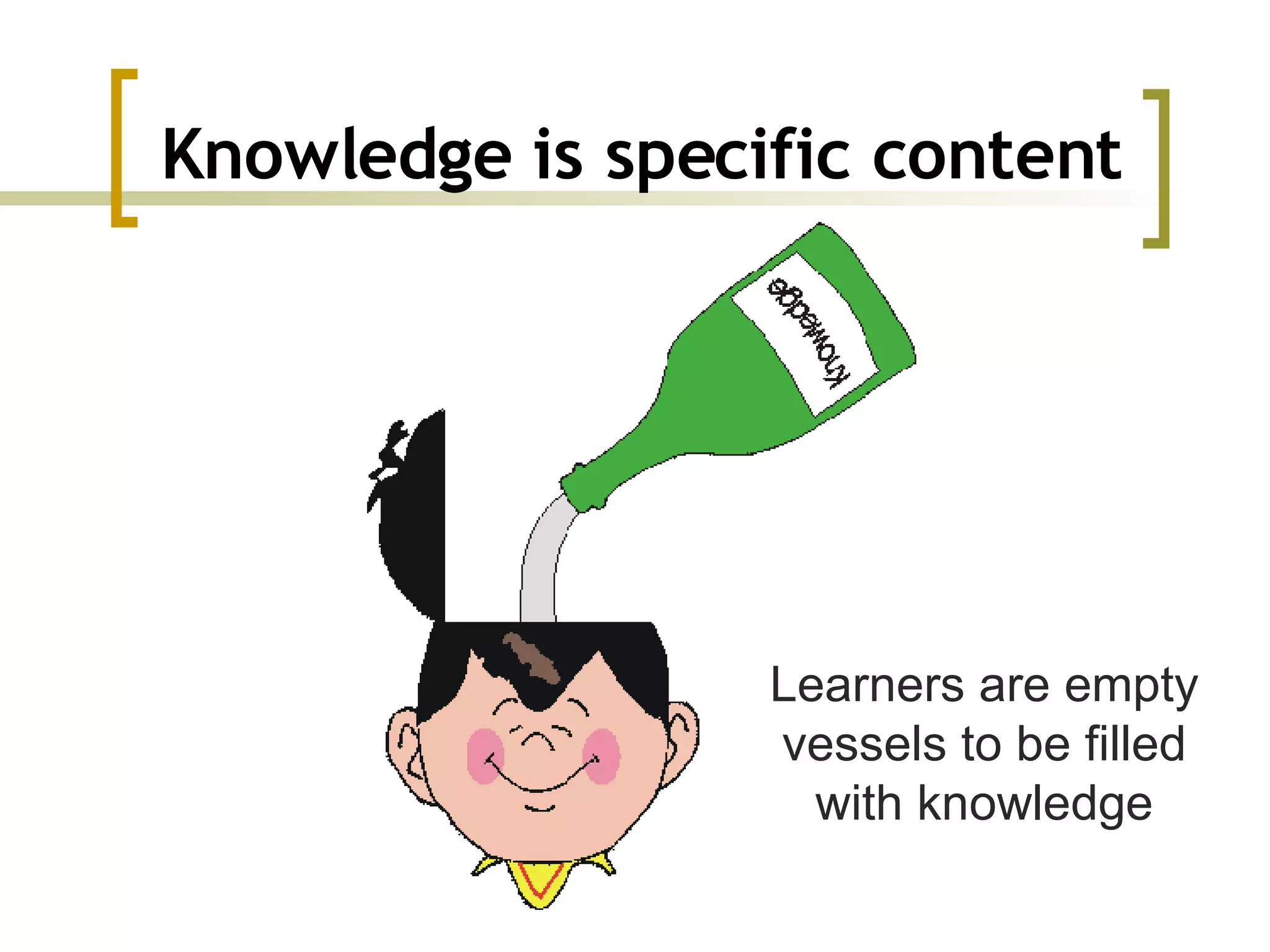
Knowledge is specific content Learners are empty vessels to be filled with knowledge
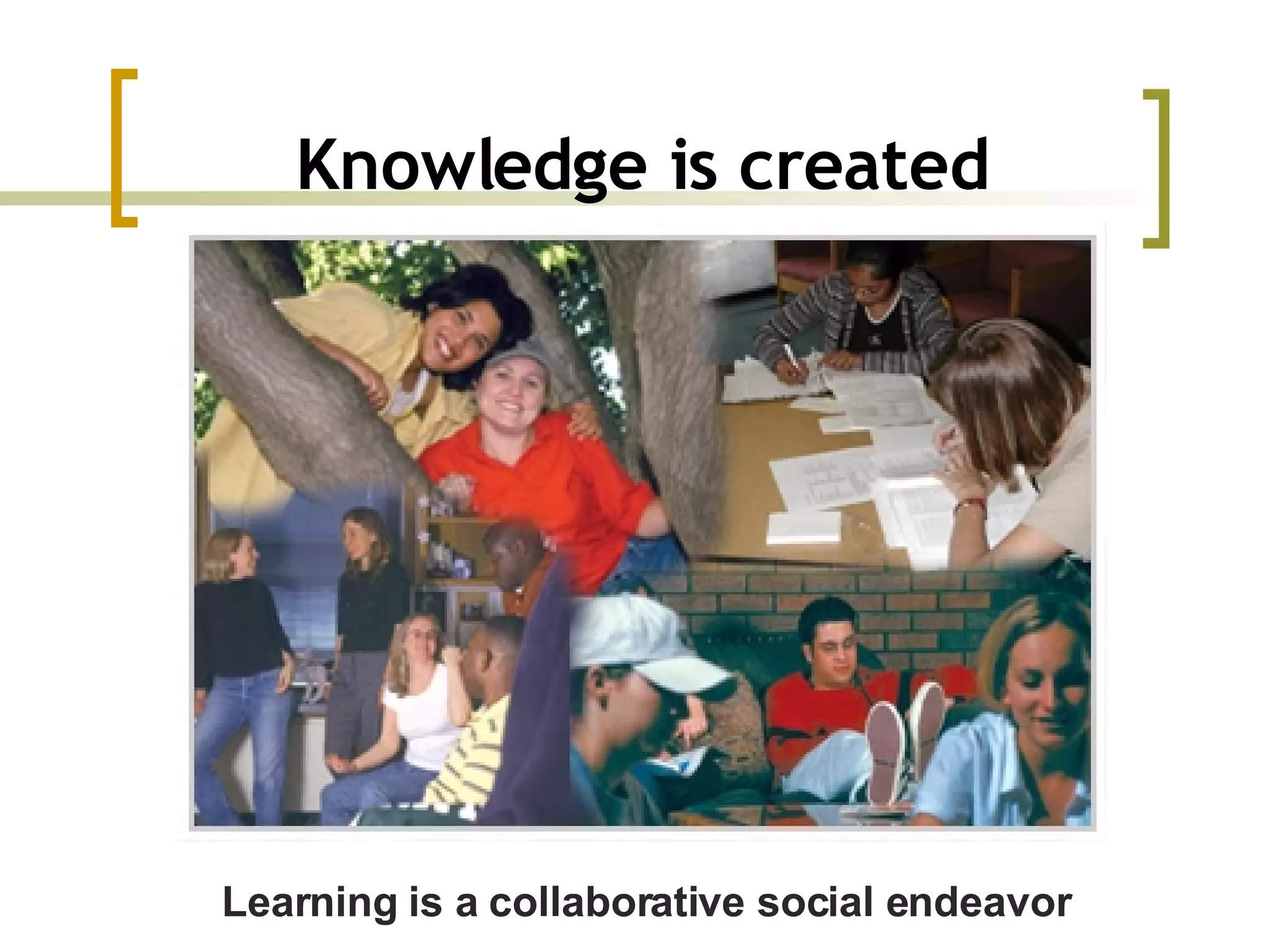
Knowledge is created Learning is a collaborative social endeavor
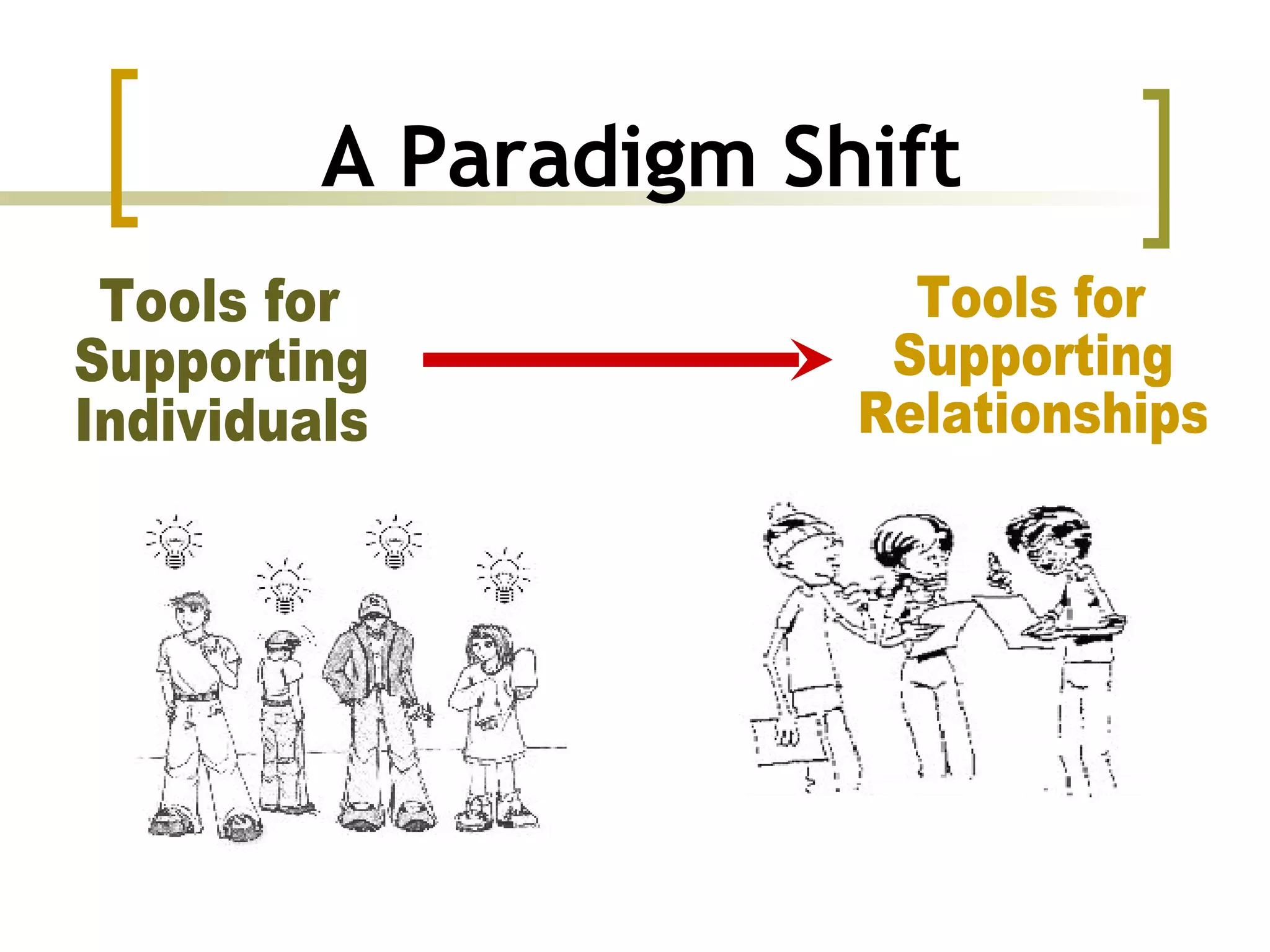
A Paradigm Shift Tools for Supporting Individuals Tools for Supporting Relationships
 
Horizon Report 2007 Key trends affecting higher education—next 5 years One year or less Social Networking  User-Created Content  Two-Three Years Mobile Phones  Virtual Worlds  Four-Five Years New Scholarship and Emerging Forms of Publication  Massively Multiplayer Educational Gaming
Tools for Collaboration   Social Networks Facebook, MySpace Flickr YouTube Blogs Wiki’s Podcasts
Social Software Social Networking Keeping contacts online through web interfaces Social Calendaring Shared agendas for events arrangements and meetings planning Social Bookmarking storing, describing, and sharing bookmarks ( del.icio.us ) Social Tagging Unintentional, collective effort of categorizing the Web, with added social significance ( Folksonomies )
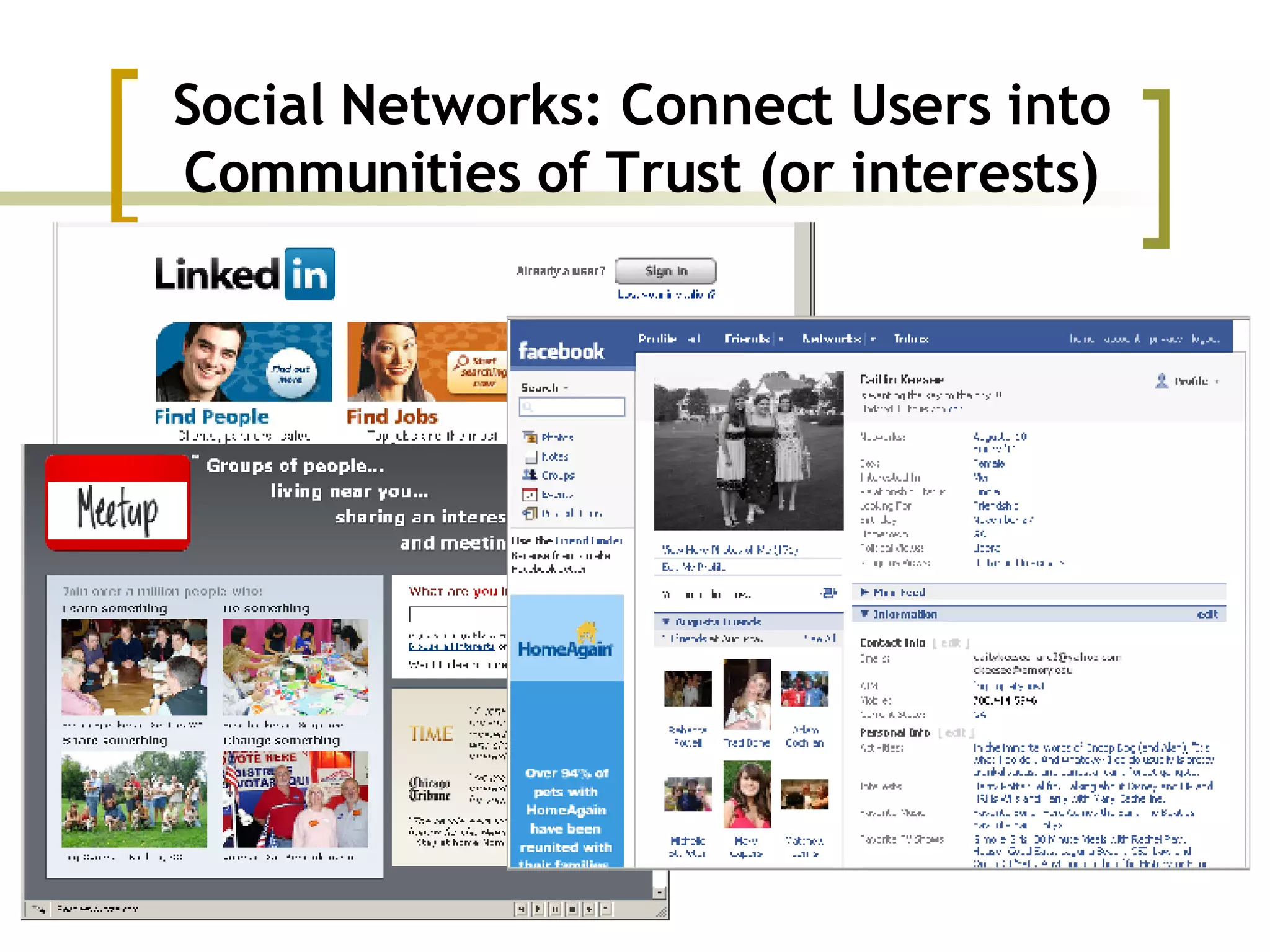
Social Networks: Connect Users into Communities of Trust (or interests)
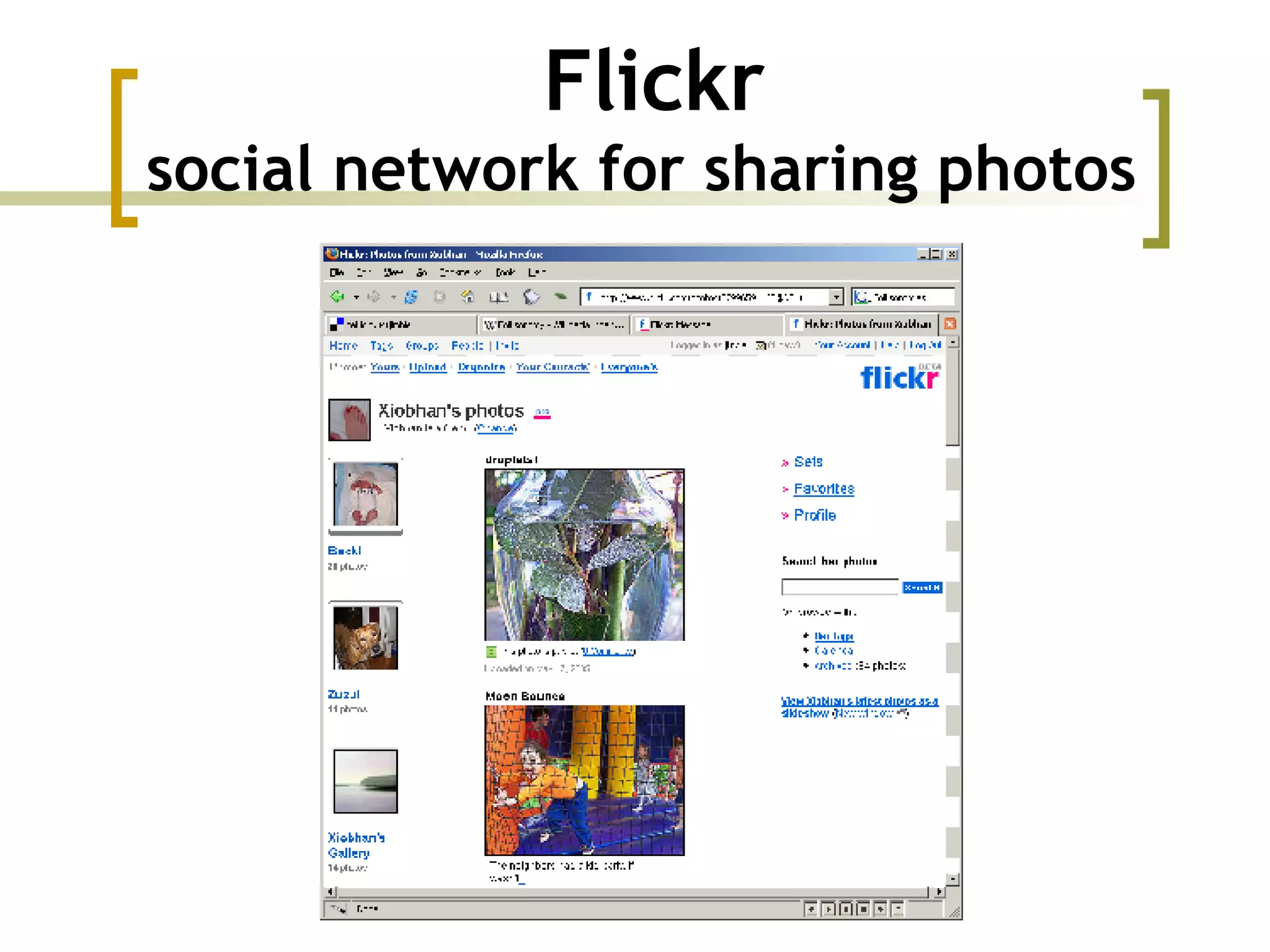
Flickr social network for sharing photos
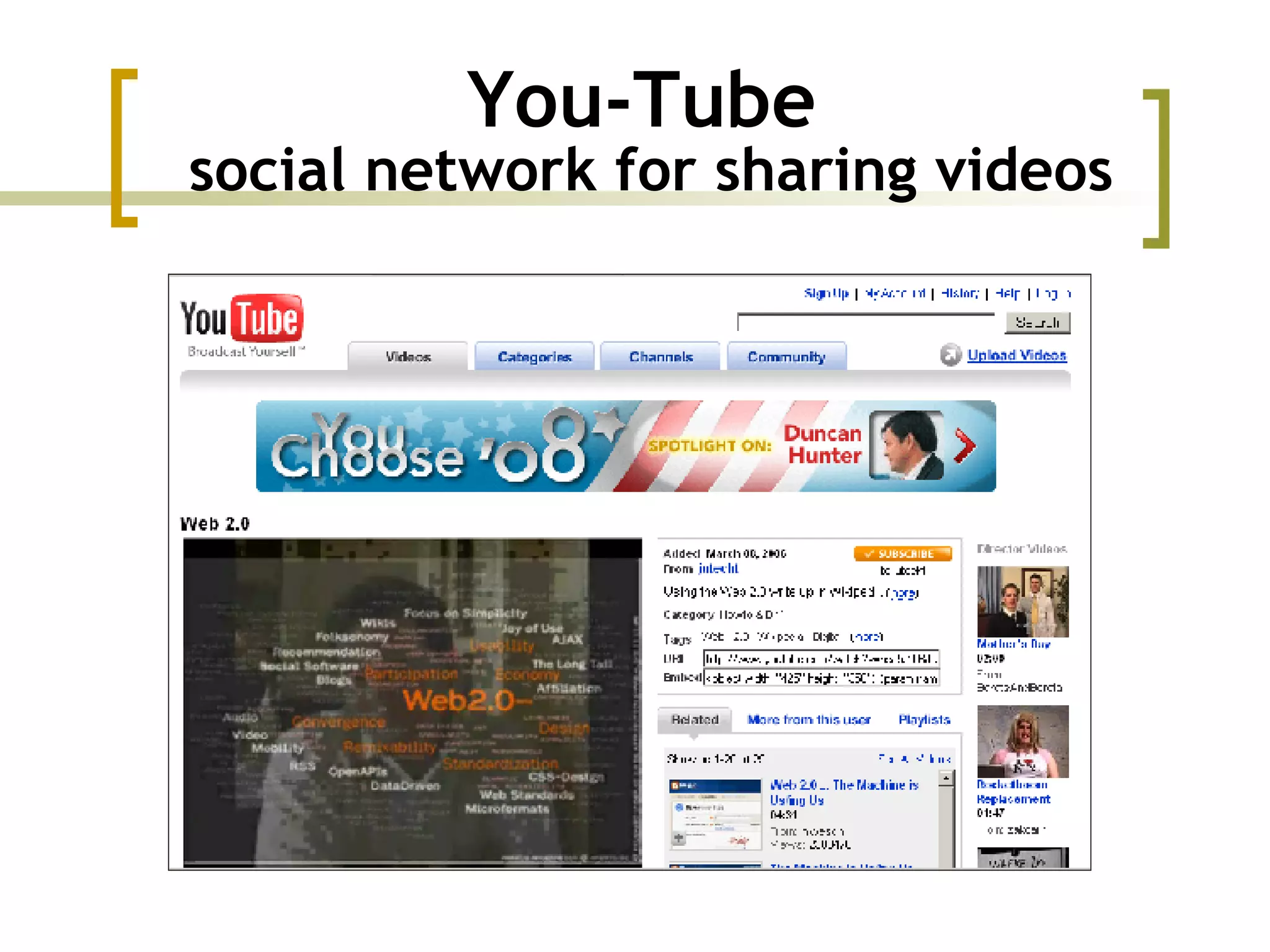
You-Tube   social network for sharing videos
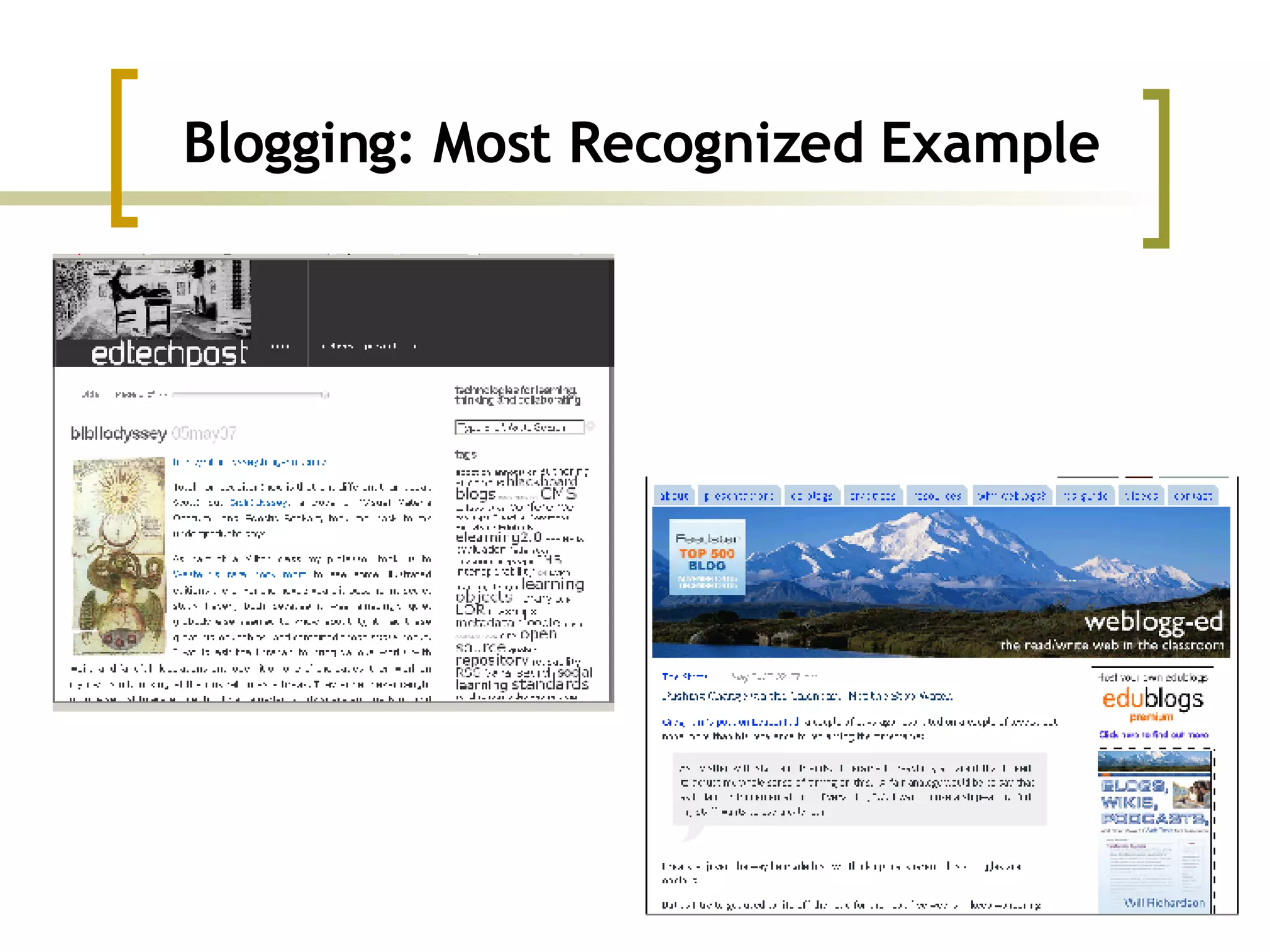
Blogging: Most Recognized Example
What are Blogs? Web + Logs = Blogs Web Pages Automated updating Reverse chronological postings May accommodate responses Internet-specific phenomenon Incomplete index of blogs http:// blogdex.media.mit.edu /
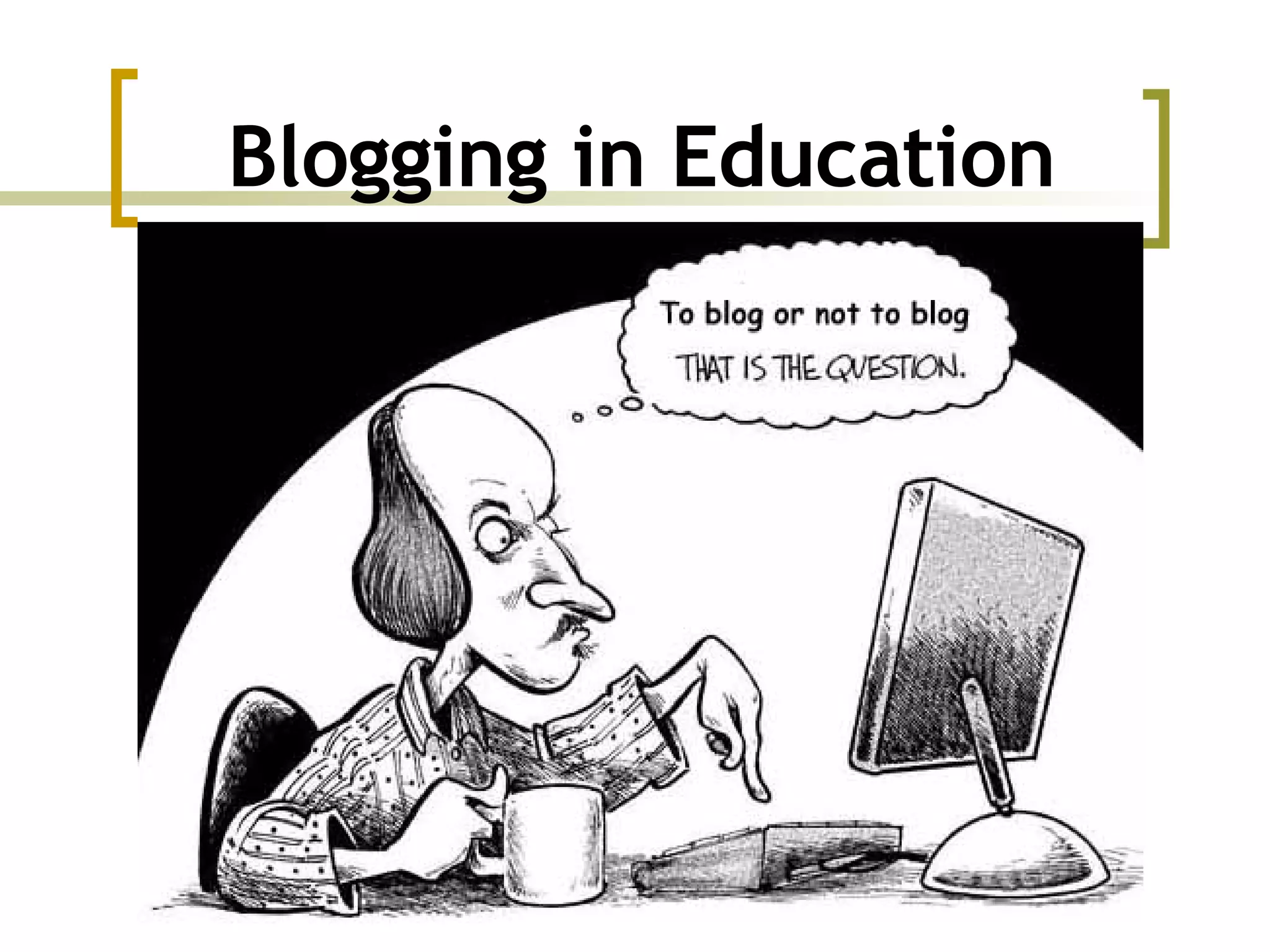
Blogging in Education
Limited Only by Your Imagination Instructors Content-related blog as professional practice  Networking and personal knowledge sharing  Instructional tips for students  Course announcements and readings  Annotated links  Students  Reflective or writing journals  Assignment submission and review  Dialogue for groupwork  E-portfolios  Share course-related resources
Sample Educational Blogs Online Research Blog eCornell  Research Blog  Info-Commons Blog commons-blog Educational Bloggers Network EBN blog Science Blog   Science Blog
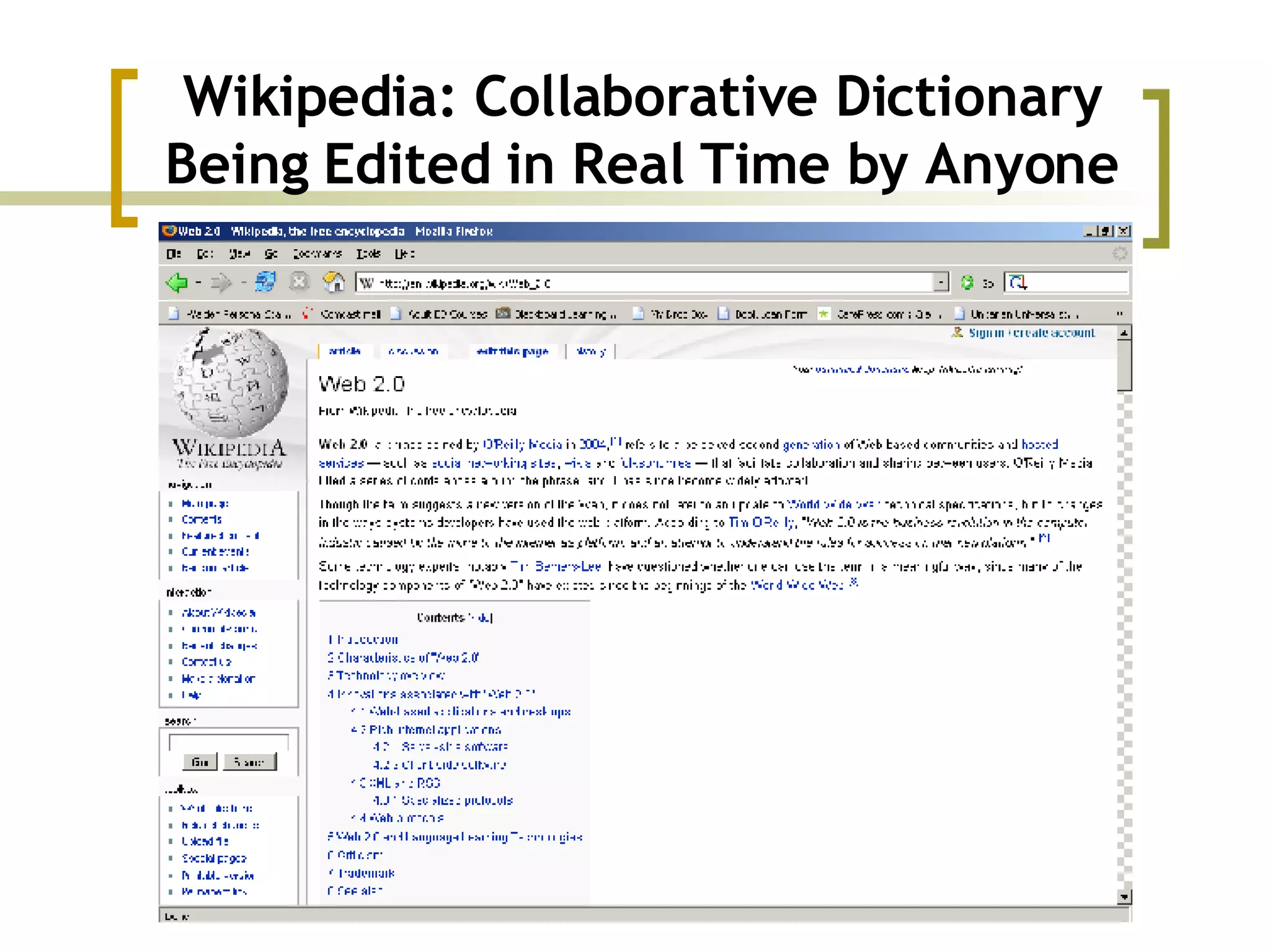
Wiki’s:   The ultimate collaboration tool Special web site   allows visitors to add, remove, edit & change content  Not need access to or knowledge of web publishing software Collaboration   Group members work on common document in common location
Wikipedia: Collaborative Dictionary Being Edited in Real Time by Anyone
Wiki’s in Higher Ed Econ 482: Stephen  Greenlaw Advanced Artificial Intelligence: Sean Luke Harvard Law School Eckerd College
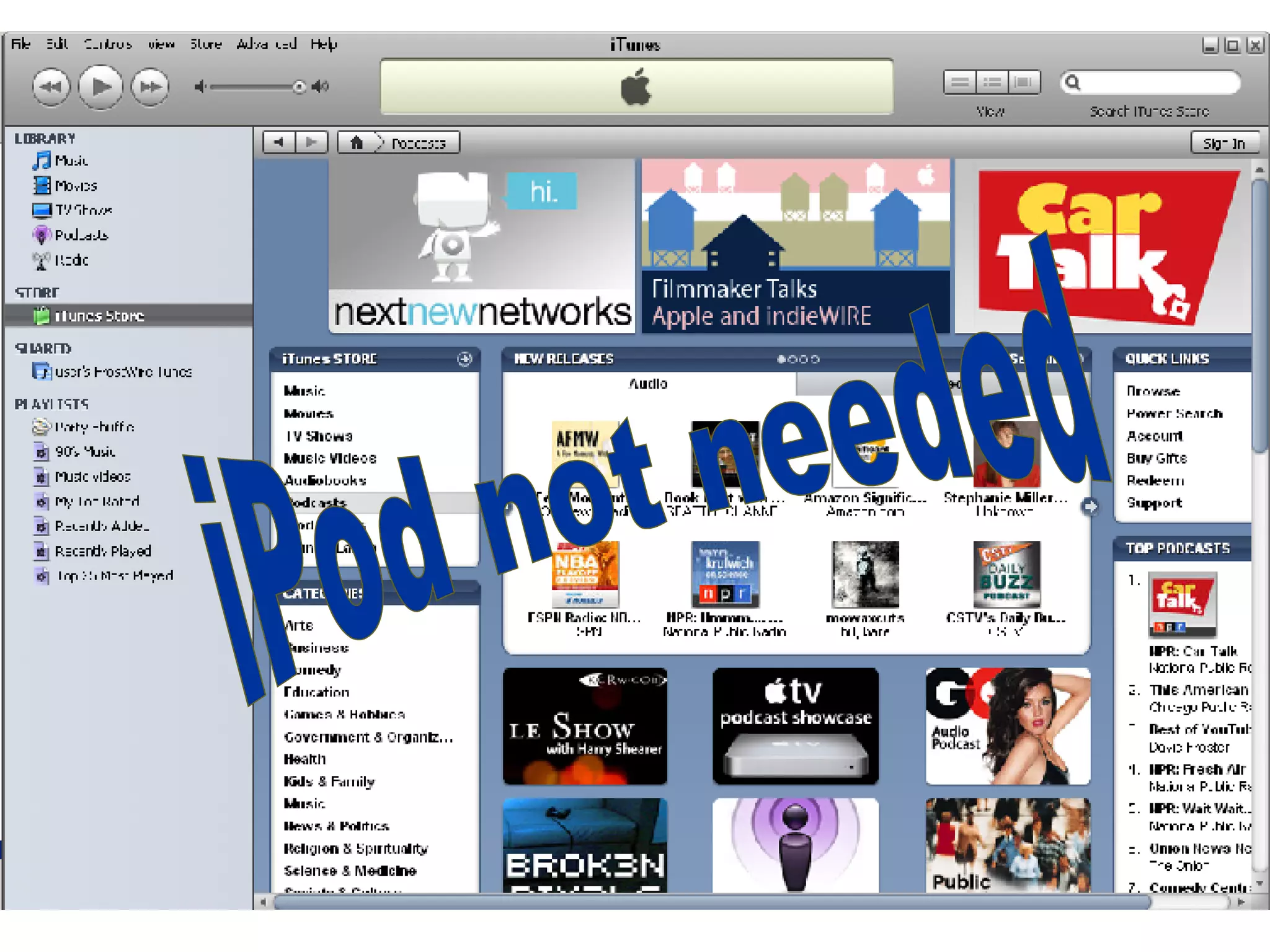
Podcasting Pod (iPod) + broadcast = Podcast Differs from streaming audio  Automatically delivered to player –don't have to click on a link to download  Listen when you want – not when a program is scheduled
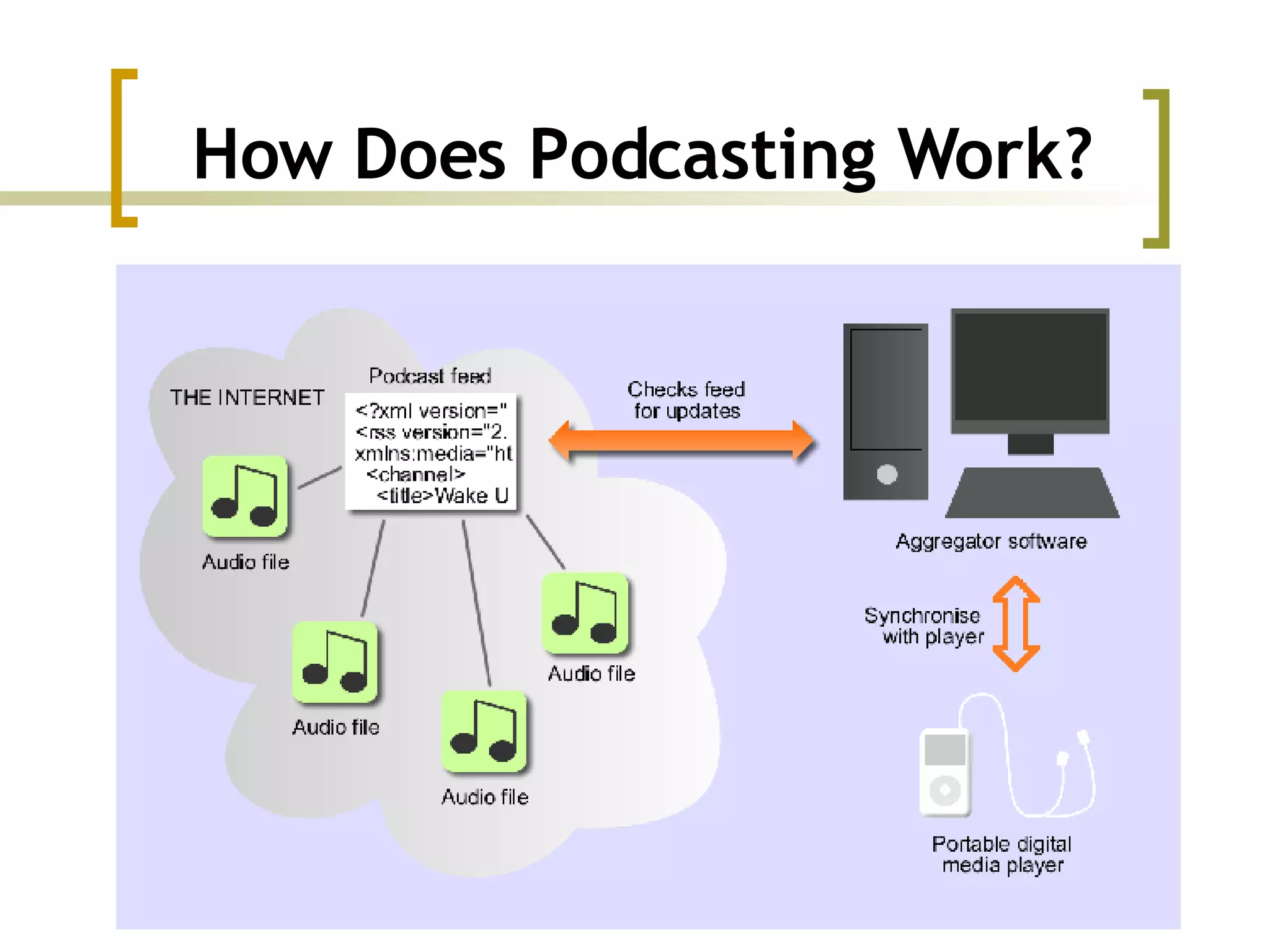
How Does Podcasting Work?
iPod not needed
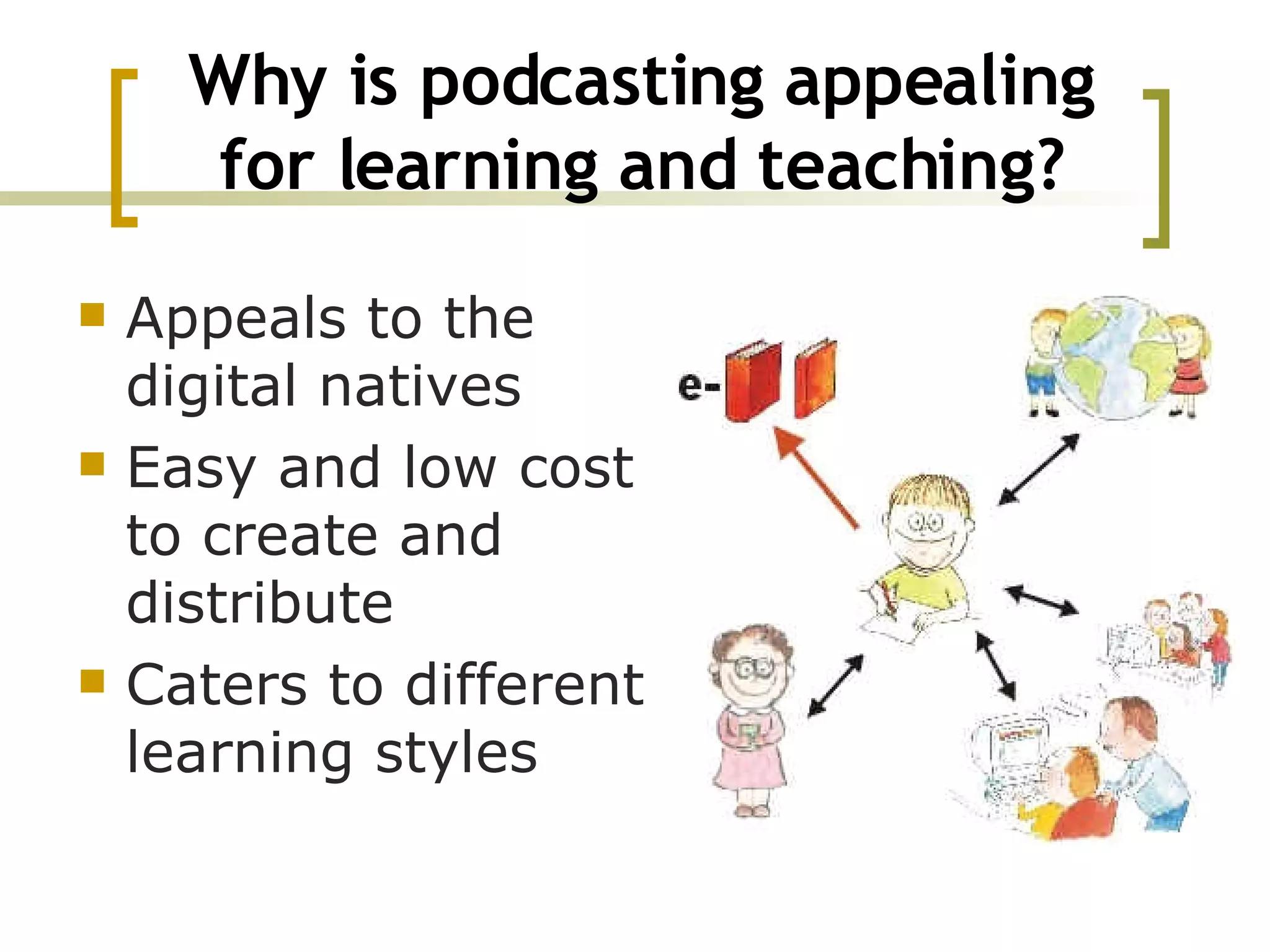
Why is podcasting appealing for learning and teaching? Appeals to the digital natives Easy and low cost to create and distribute Caters to different learning styles
Advantages Students   Review  lectures before exams Listen in on classes they've  missed Replay at own  convenience Non-native speakers replay to  increase comprehension Instructors Listen to own lectures to  improve  presentations
Learning & Teaching Applications Interviews with experts Oral history projects Quotes from recorded speeches Answers to posted questions Guest speakers / lecture series Student submissions /portfolios / placement logs
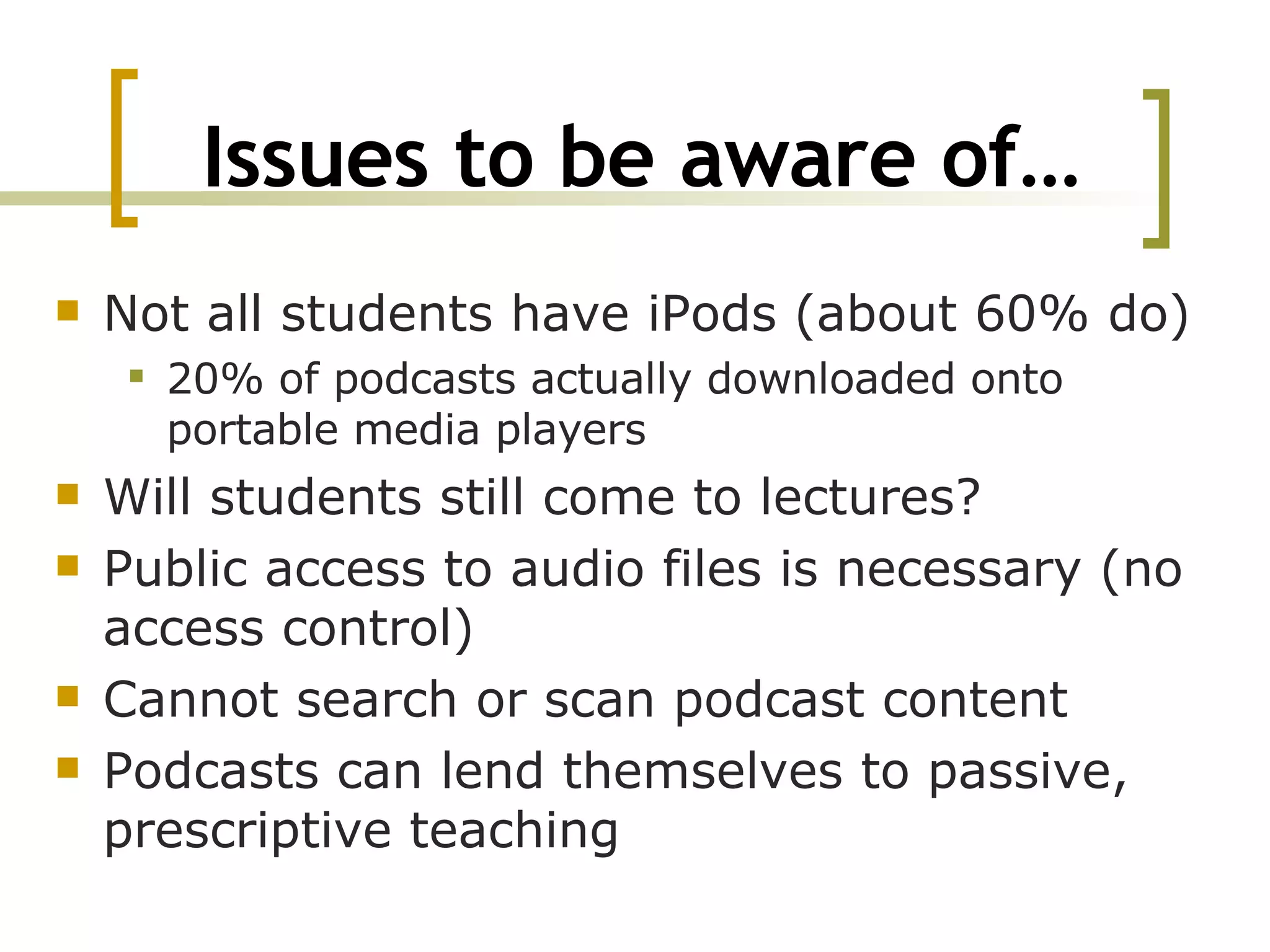
Issues to be aware of… Not all students have iPods (about 60% do) 20% of podcasts actually downloaded onto portable media players Will students still come to lectures? Public access to audio files is necessary (no access control) Cannot search or scan podcast content Podcasts can lend themselves to passive, prescriptive teaching
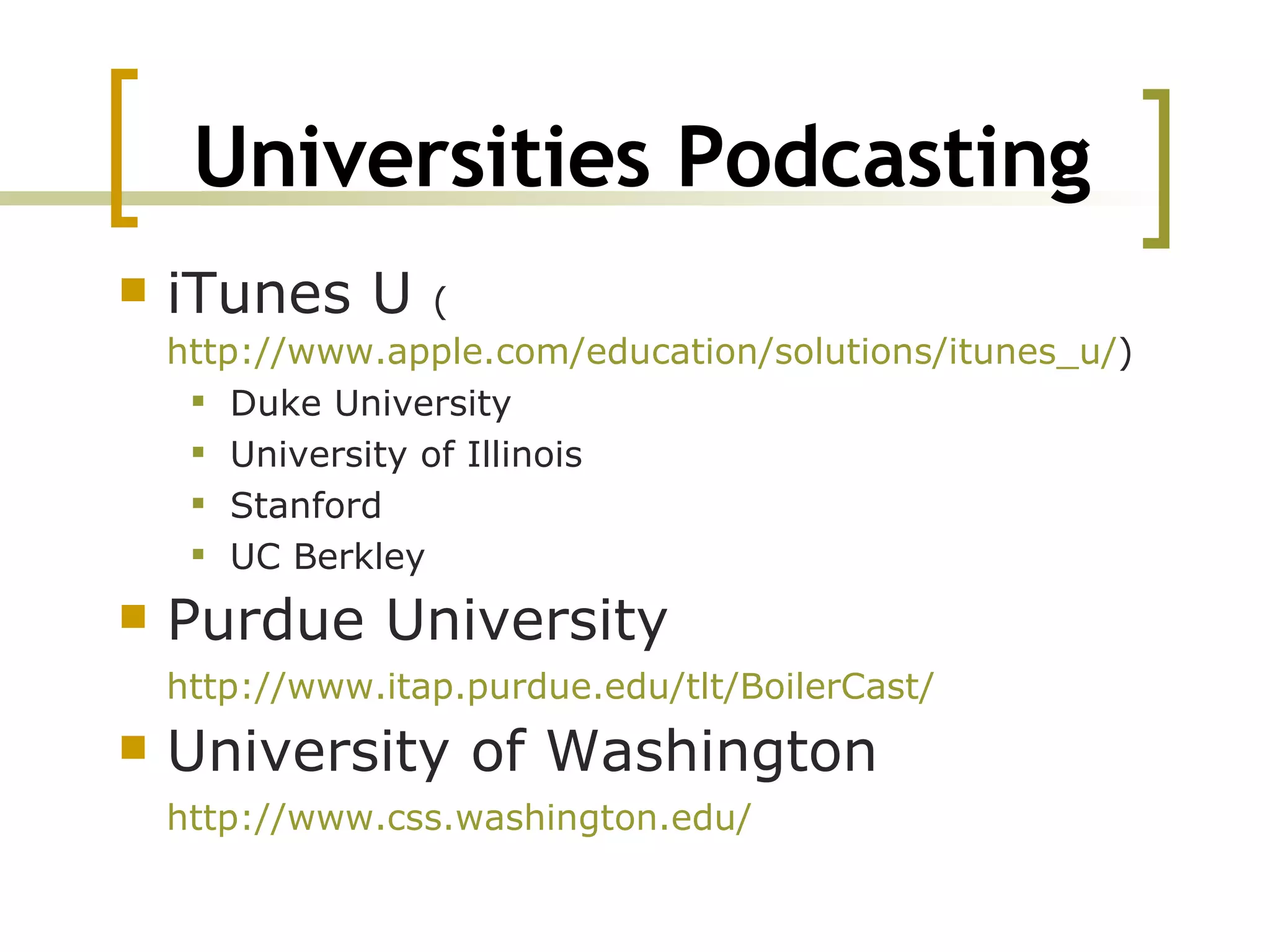
Universities Podcasting iTunes U  ( http://www.apple.com/education/solutions/itunes_u/ ) Duke University University of Illinois Stanford UC Berkley Purdue University http://www.itap.purdue.edu/tlt/BoilerCast/   University of Washington http://www.css.washington.edu/
Over 200 Web 2.0 Sites in 41 Categories Rated, Ranked and Awarded 15 Interviews with Founders of Winning Sites The creators of the winning sites share their insight and approach, including technology, funding and methods for attracting traffic. http://www.seomoz.org/web2.0
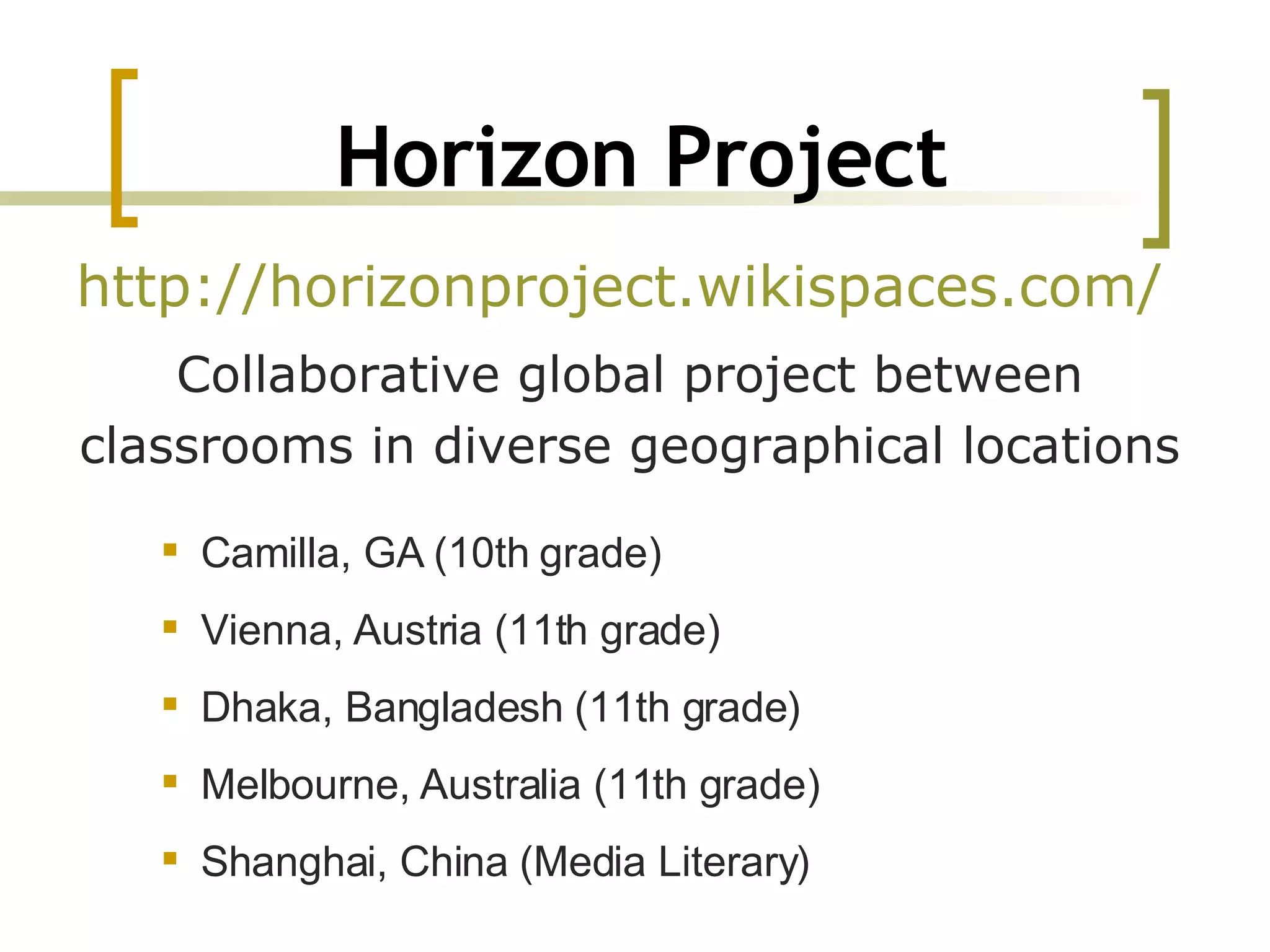
Horizon Project http://horizonproject.wikispaces.com/   Collaborative global project between classrooms in diverse geographical locations Camilla, GA (10th grade) Vienna, Austria (11th grade) Dhaka, Bangladesh (11th grade) Melbourne, Australia (11th grade) Shanghai, China (Media Literary)

Web 2.0 Imagine

  • 1.
    Web 2.0: Imaginethe Possibilities Presented by Gayla S. Keesee May, 2007
  • 2.
  • 3.
    Knowledge is specificcontent Learners are empty vessels to be filled with knowledge
  • 4.
    Knowledge is createdLearning is a collaborative social endeavor
  • 5.
    A Paradigm ShiftTools for Supporting Individuals Tools for Supporting Relationships
  • 6.
  • 7.
    Horizon Report 2007Key trends affecting higher education—next 5 years One year or less Social Networking User-Created Content Two-Three Years Mobile Phones Virtual Worlds Four-Five Years New Scholarship and Emerging Forms of Publication Massively Multiplayer Educational Gaming
  • 8.
    Tools for Collaboration Social Networks Facebook, MySpace Flickr YouTube Blogs Wiki’s Podcasts
  • 9.
    Social Software SocialNetworking Keeping contacts online through web interfaces Social Calendaring Shared agendas for events arrangements and meetings planning Social Bookmarking storing, describing, and sharing bookmarks ( del.icio.us ) Social Tagging Unintentional, collective effort of categorizing the Web, with added social significance ( Folksonomies )
  • 10.
    Social Networks: ConnectUsers into Communities of Trust (or interests)
  • 11.
    Flickr social networkfor sharing photos
  • 12.
    You-Tube social network for sharing videos
  • 13.
  • 14.
    What are Blogs?Web + Logs = Blogs Web Pages Automated updating Reverse chronological postings May accommodate responses Internet-specific phenomenon Incomplete index of blogs http:// blogdex.media.mit.edu /
  • 15.
  • 16.
    Limited Only byYour Imagination Instructors Content-related blog as professional practice Networking and personal knowledge sharing Instructional tips for students Course announcements and readings Annotated links Students Reflective or writing journals Assignment submission and review Dialogue for groupwork E-portfolios Share course-related resources
  • 17.
    Sample Educational BlogsOnline Research Blog eCornell Research Blog Info-Commons Blog commons-blog Educational Bloggers Network EBN blog Science Blog Science Blog
  • 18.
    Wiki’s: The ultimate collaboration tool Special web site allows visitors to add, remove, edit & change content Not need access to or knowledge of web publishing software Collaboration Group members work on common document in common location
  • 19.
    Wikipedia: Collaborative DictionaryBeing Edited in Real Time by Anyone
  • 20.
    Wiki’s in HigherEd Econ 482: Stephen Greenlaw Advanced Artificial Intelligence: Sean Luke Harvard Law School Eckerd College
  • 21.
    Podcasting Pod (iPod)+ broadcast = Podcast Differs from streaming audio Automatically delivered to player –don't have to click on a link to download Listen when you want – not when a program is scheduled
  • 22.
  • 23.
  • 24.
    Why is podcastingappealing for learning and teaching? Appeals to the digital natives Easy and low cost to create and distribute Caters to different learning styles
  • 25.
    Advantages Students Review lectures before exams Listen in on classes they've missed Replay at own convenience Non-native speakers replay to increase comprehension Instructors Listen to own lectures to improve presentations
  • 26.
    Learning & TeachingApplications Interviews with experts Oral history projects Quotes from recorded speeches Answers to posted questions Guest speakers / lecture series Student submissions /portfolios / placement logs
  • 27.
    Issues to beaware of… Not all students have iPods (about 60% do) 20% of podcasts actually downloaded onto portable media players Will students still come to lectures? Public access to audio files is necessary (no access control) Cannot search or scan podcast content Podcasts can lend themselves to passive, prescriptive teaching
  • 28.
    Universities Podcasting iTunesU ( http://www.apple.com/education/solutions/itunes_u/ ) Duke University University of Illinois Stanford UC Berkley Purdue University http://www.itap.purdue.edu/tlt/BoilerCast/ University of Washington http://www.css.washington.edu/
  • 29.
    Over 200 Web2.0 Sites in 41 Categories Rated, Ranked and Awarded 15 Interviews with Founders of Winning Sites The creators of the winning sites share their insight and approach, including technology, funding and methods for attracting traffic. http://www.seomoz.org/web2.0
  • 30.
    Horizon Project http://horizonproject.wikispaces.com/ Collaborative global project between classrooms in diverse geographical locations Camilla, GA (10th grade) Vienna, Austria (11th grade) Dhaka, Bangladesh (11th grade) Melbourne, Australia (11th grade) Shanghai, China (Media Literary)