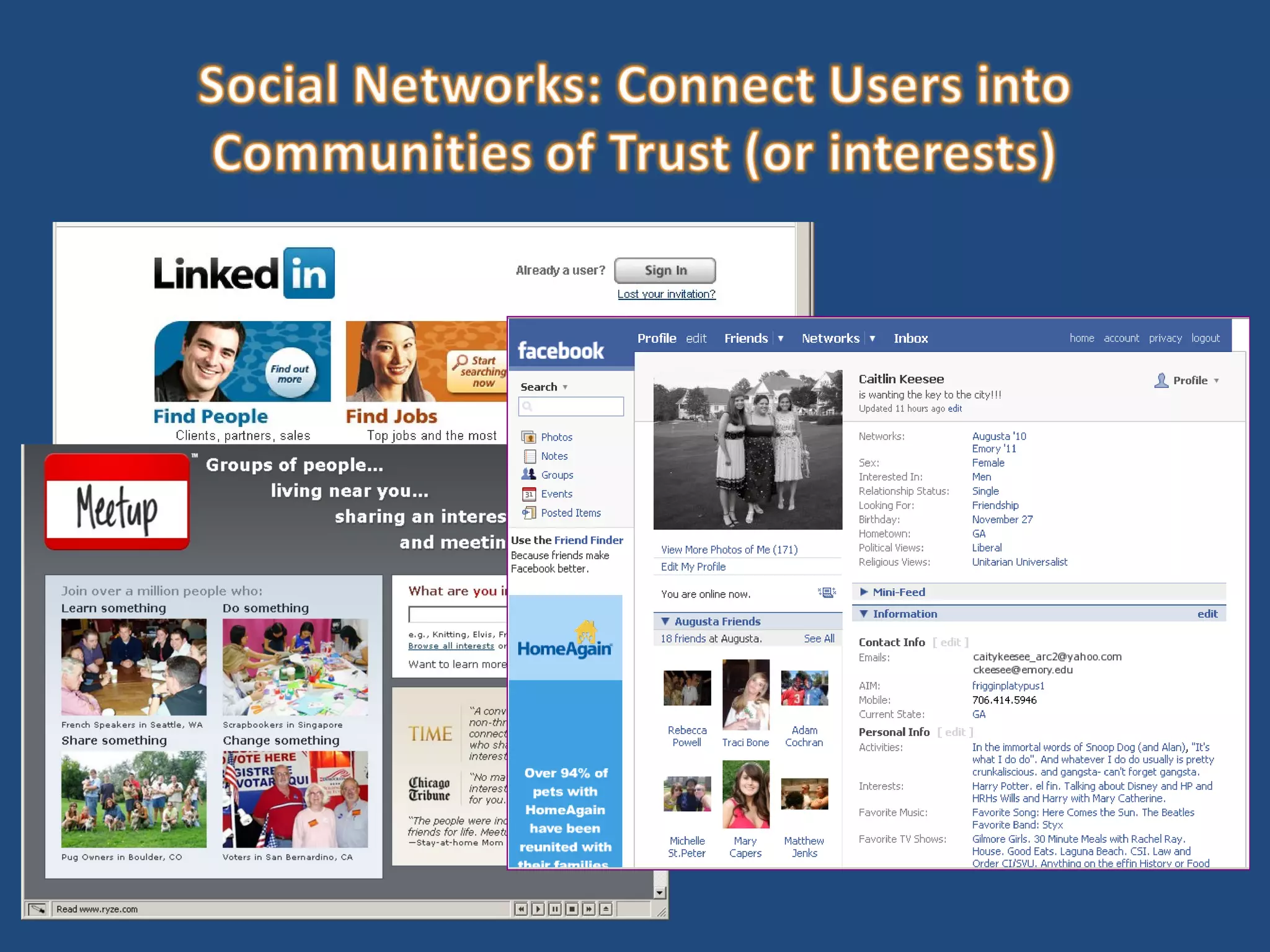
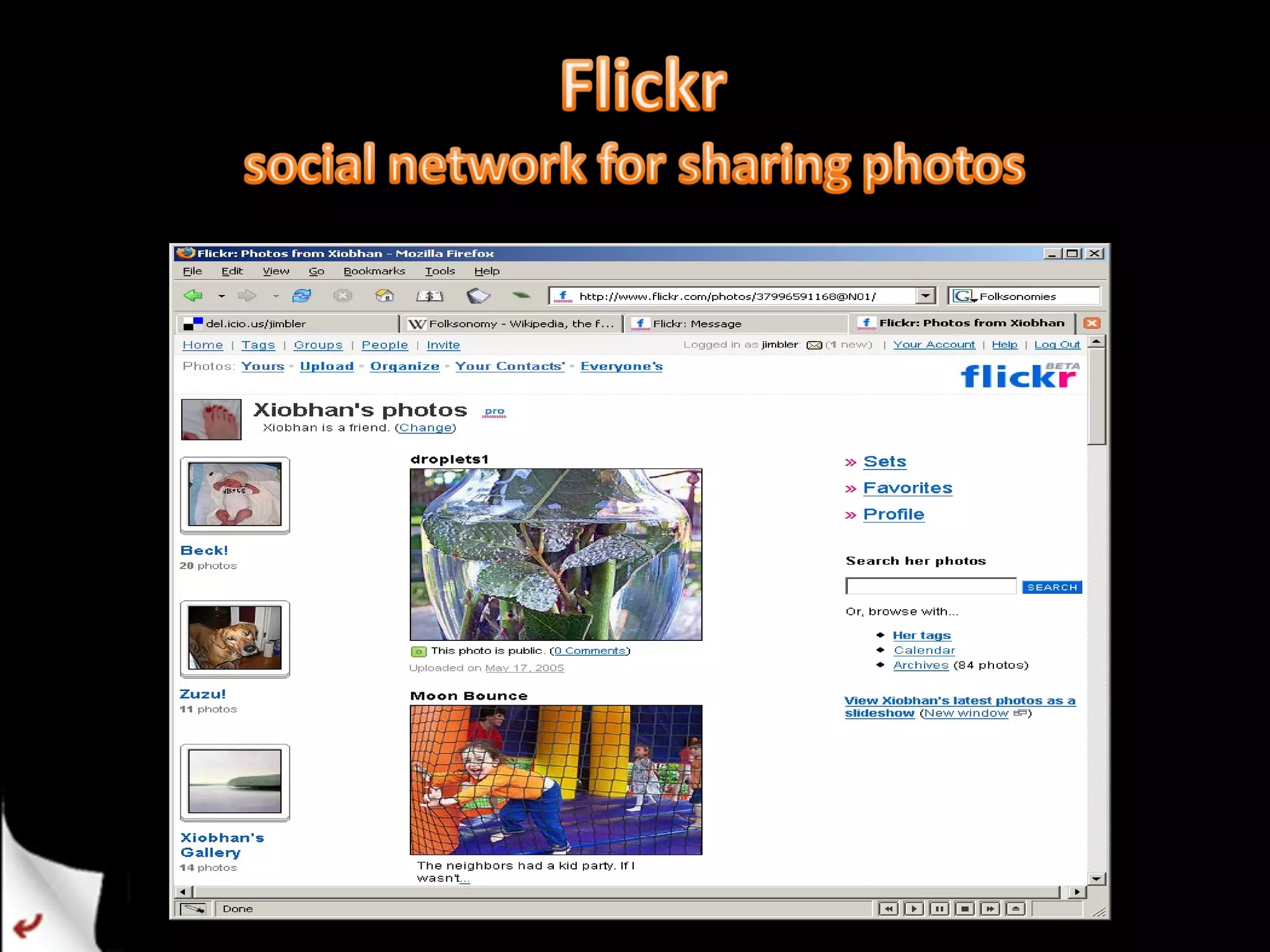
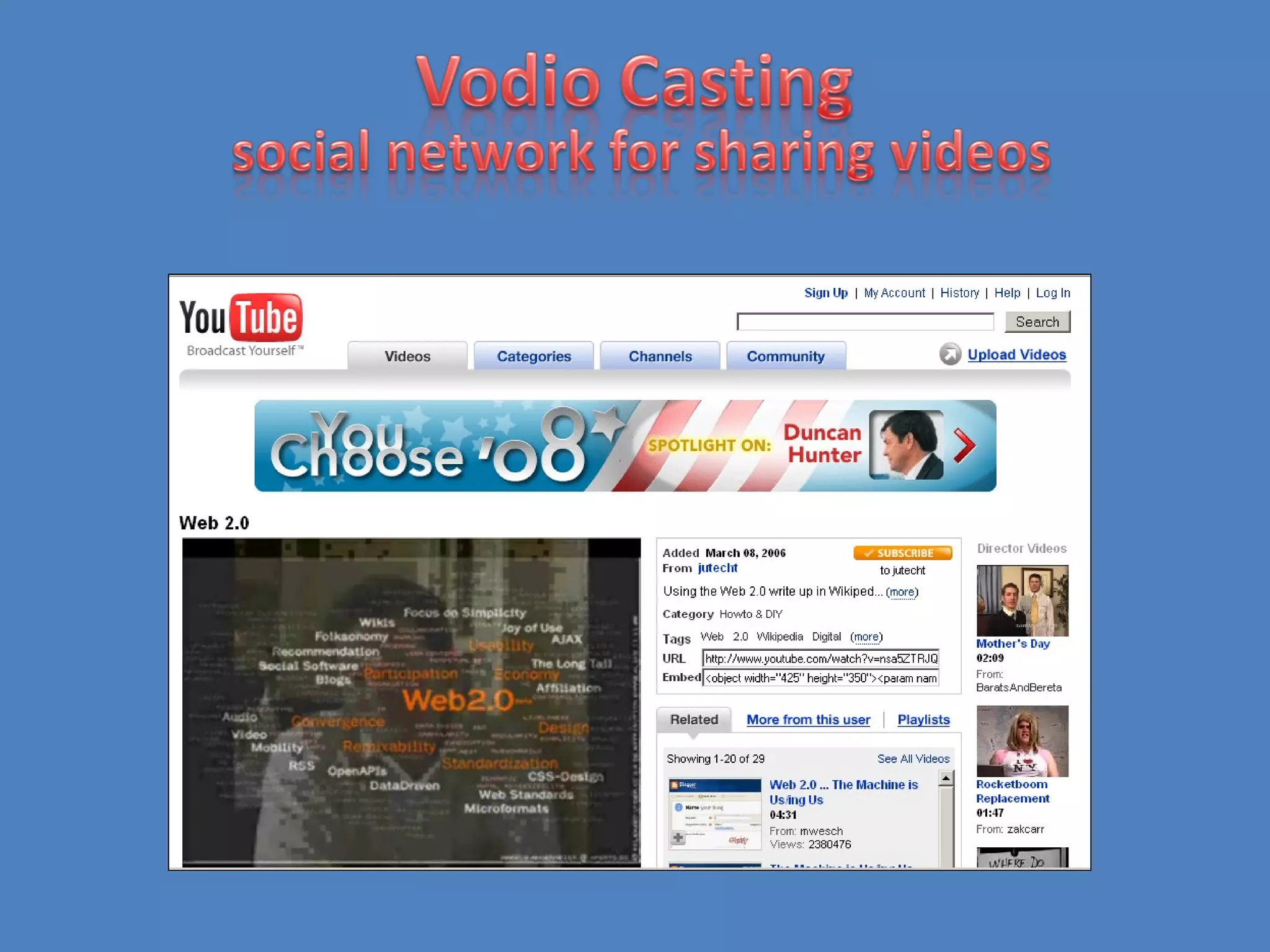
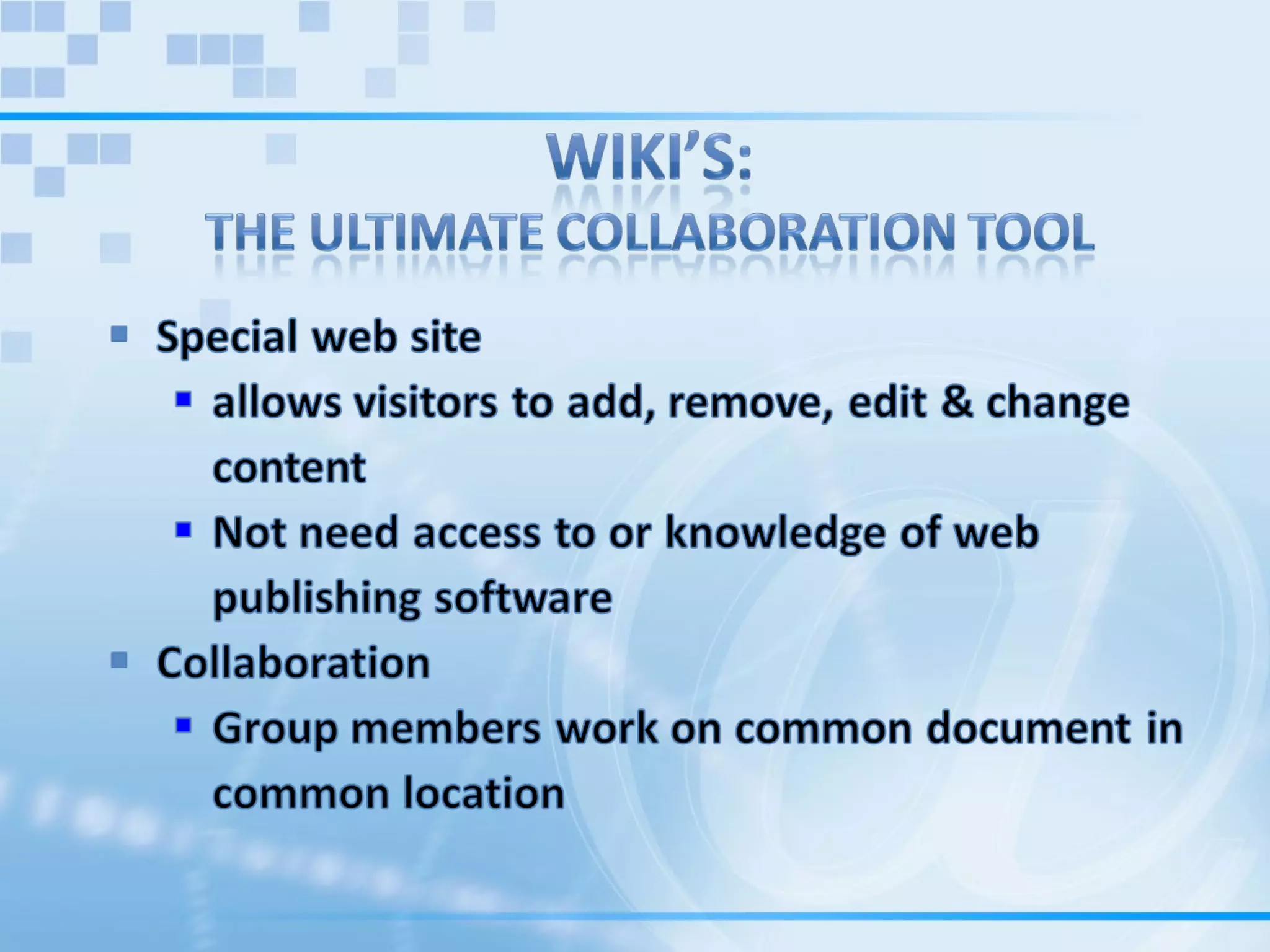
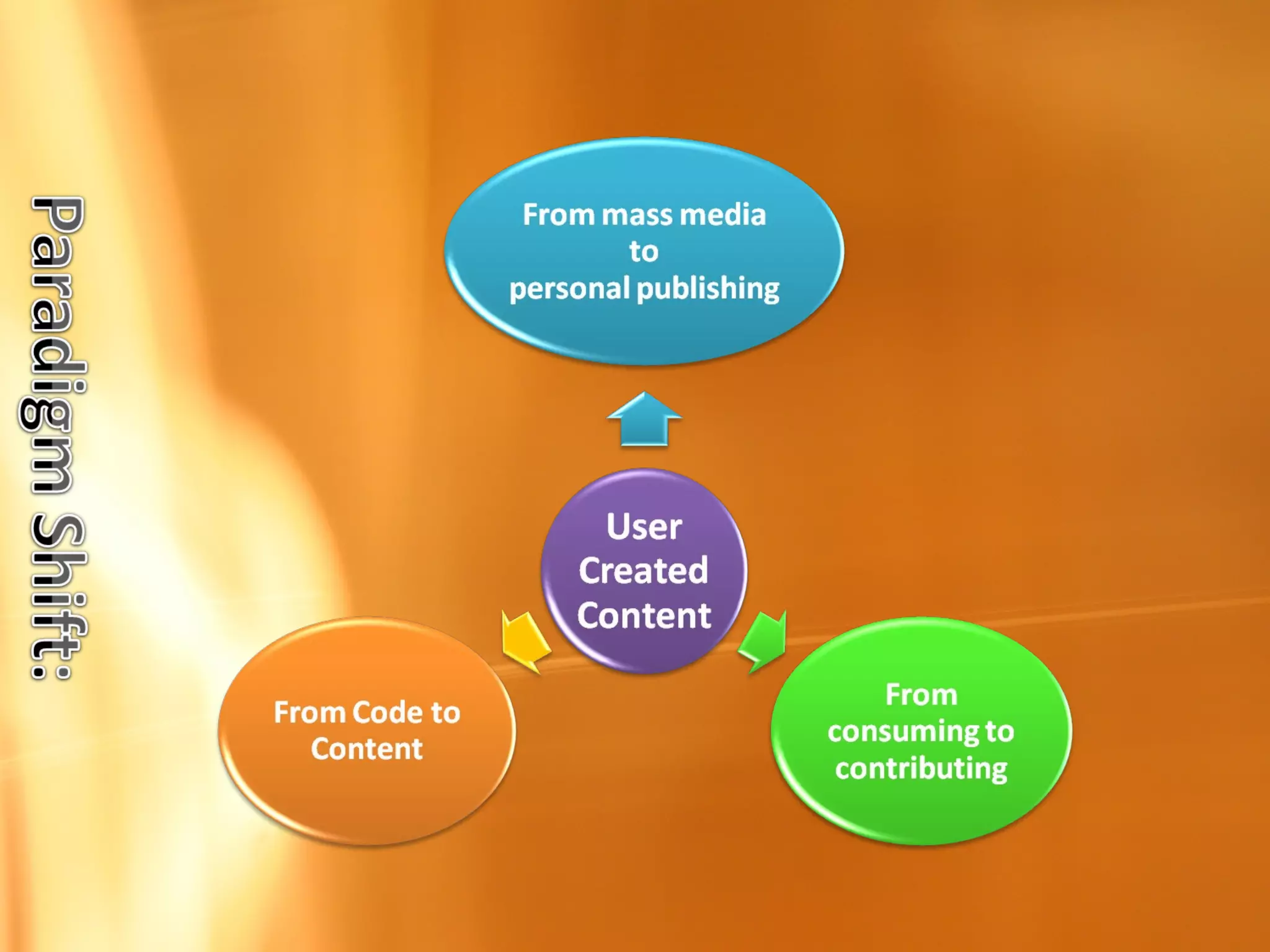
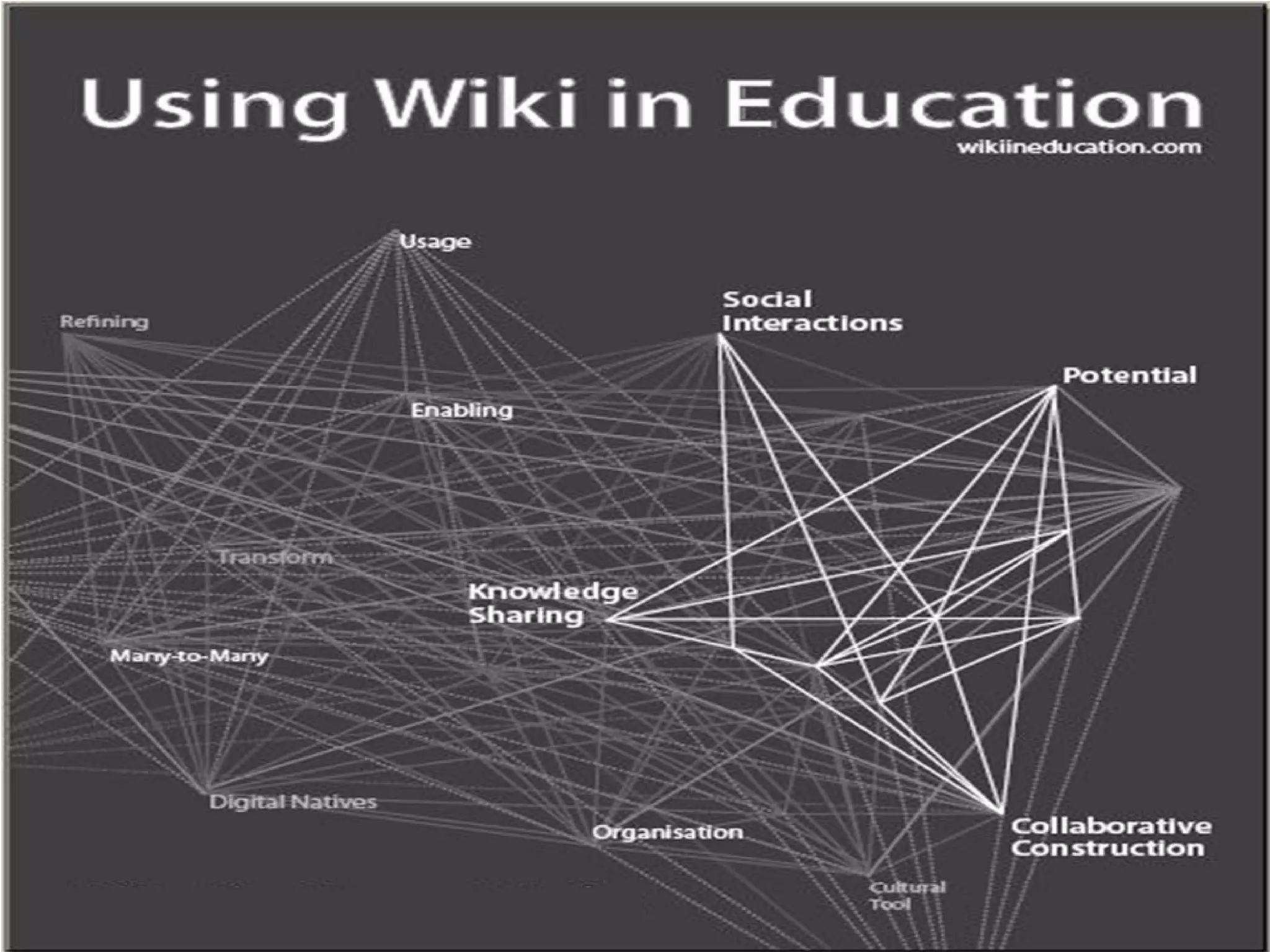
Web 2.0 is a trend in World Wide Web technology, and web design, a second generation of web-based communities and hosted services such as social-networking sites, wikis, blogs, and folksonomies, which aim to facilitate creativity, collaboration, and sharing among users.. Although the term suggests a new version of the World Wide Web, it does not refer to an update to any technical specifications, but to changes in the ways software developers and end-users use webs.
Using existing technologies in new and innovative ways  Change in the way people view the web  Healthier web economy  Need to innovate just to maintain position  Focus on long tail Fast searching
Open data formats  No data lock-in or walled gardens  User created data  User owns their own data  Ability to use data outside the confines of the application  Data used across devices


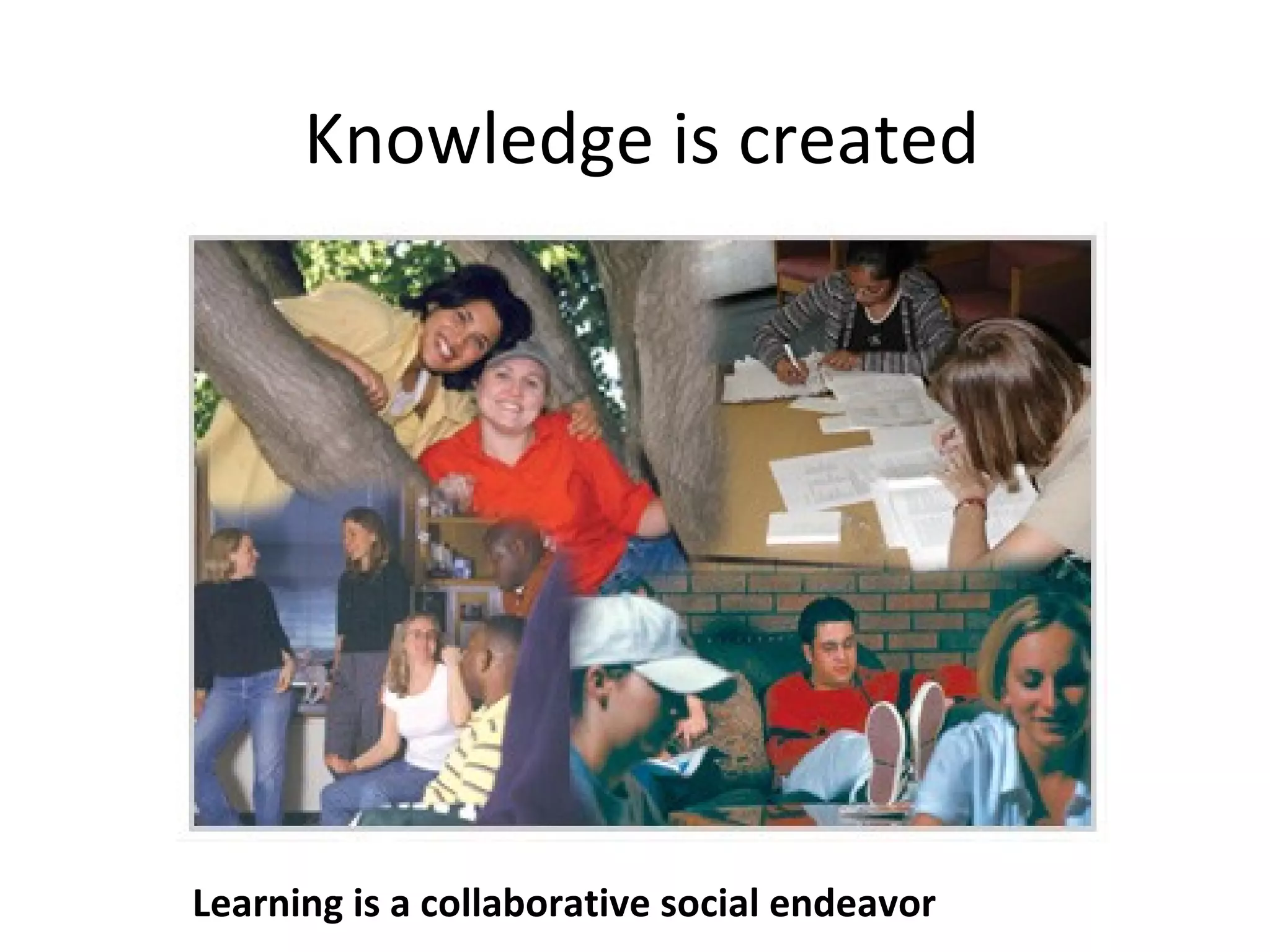
Knowledge is created Learning is a collaborative social endeavor
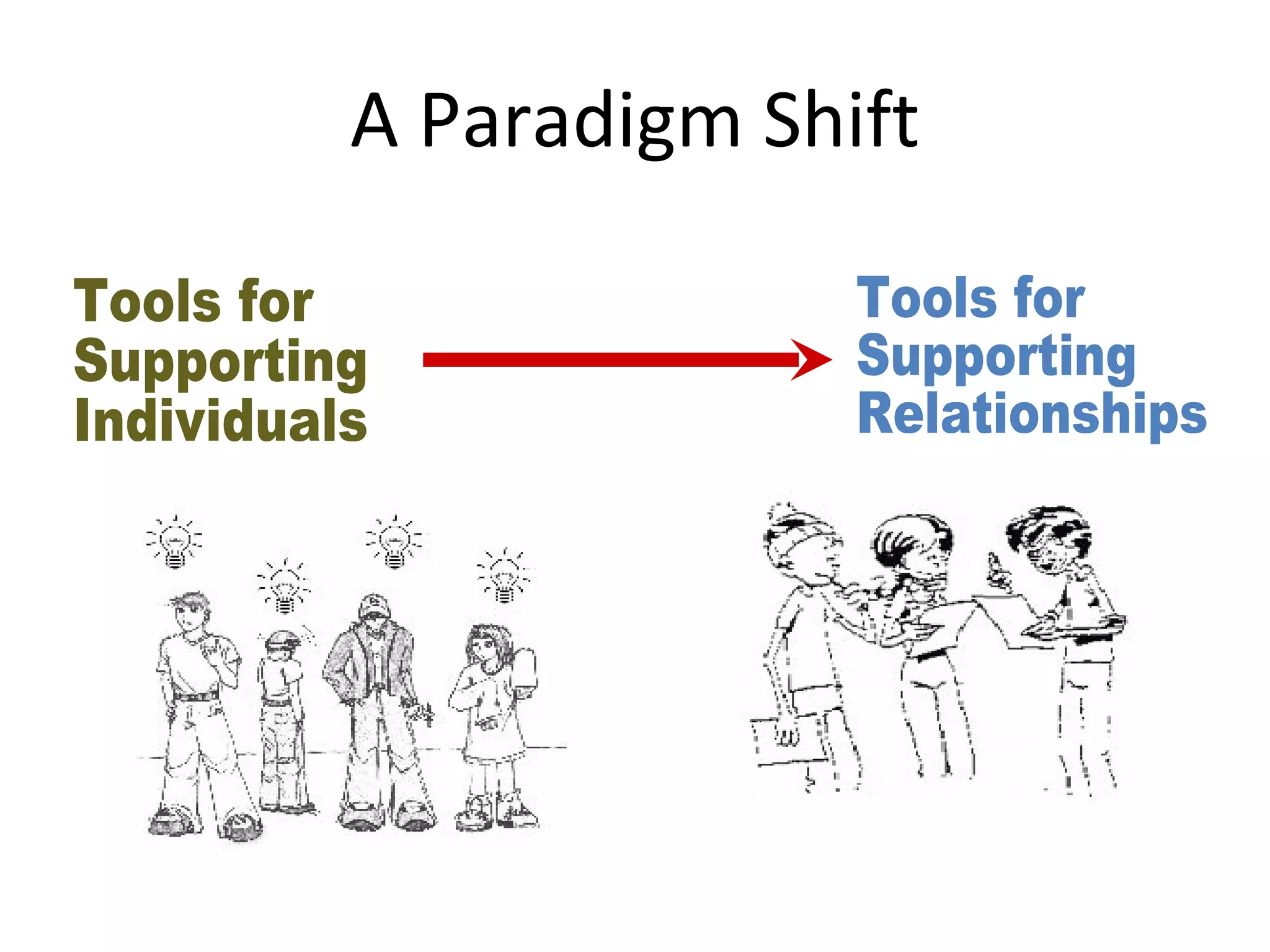
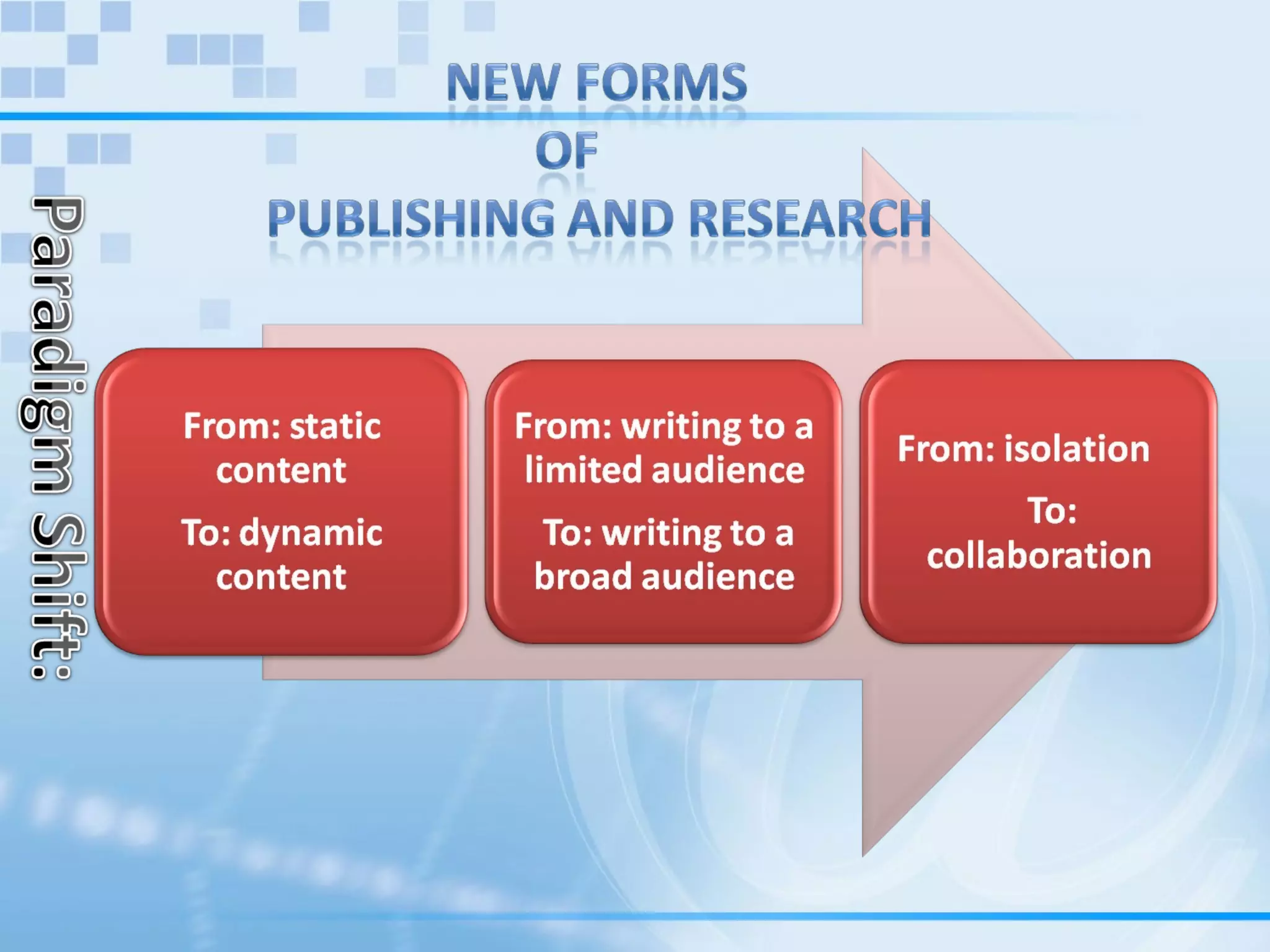
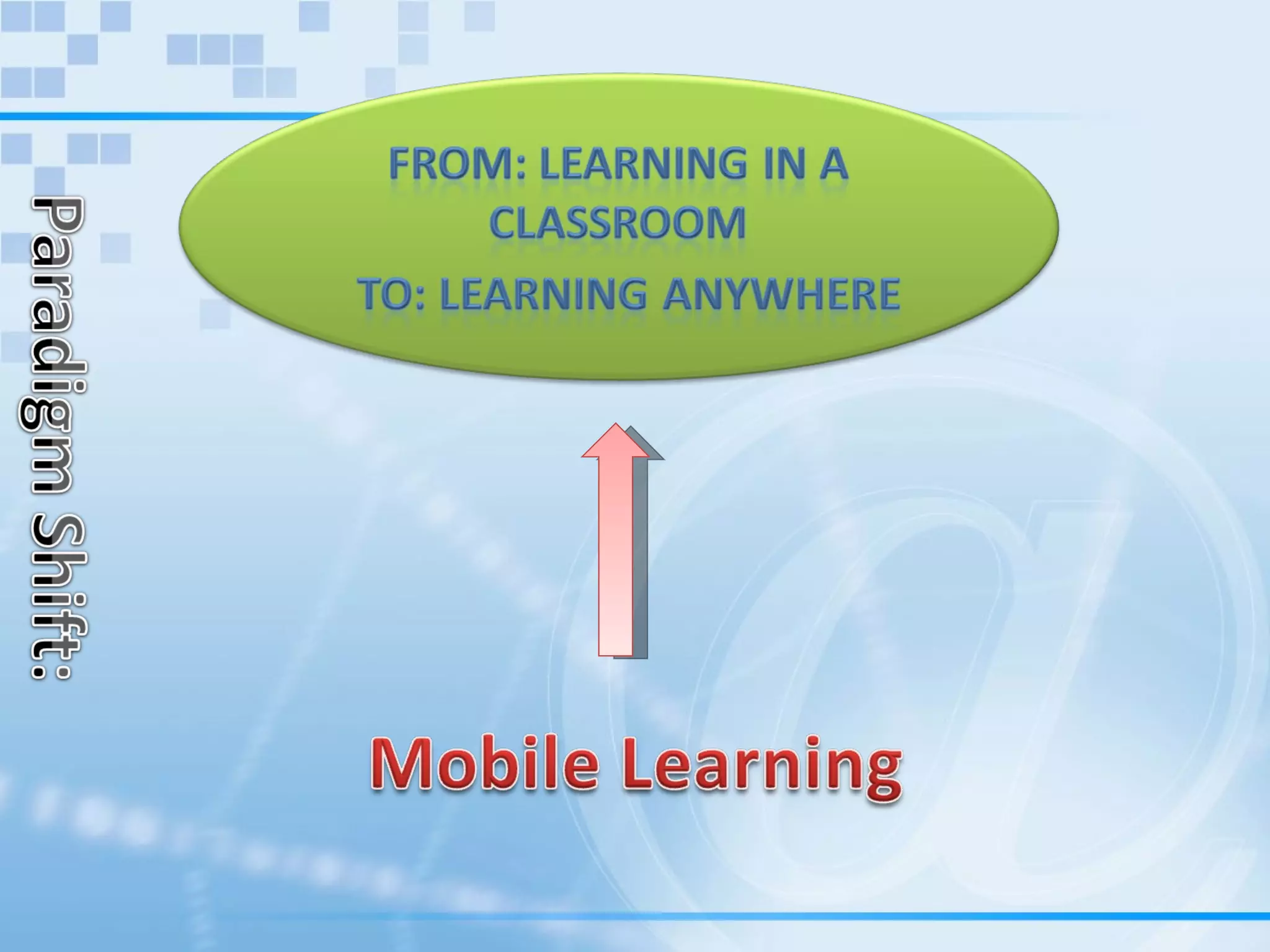
A Paradigm Shift Tools for Supporting Individuals Tools for Supporting Relationships


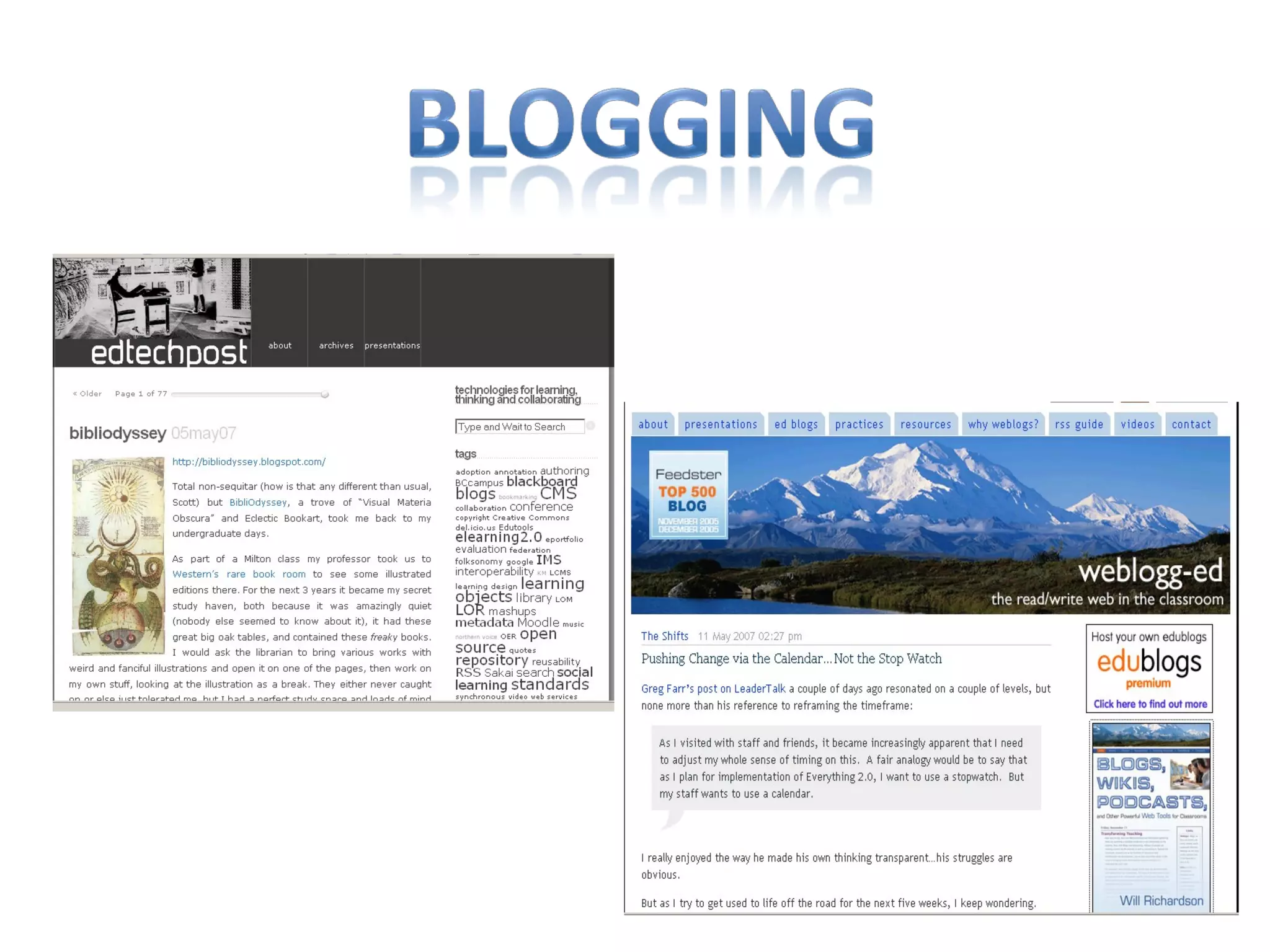
I nstructors Content-related blog as professional practice  Networking and personal knowledge sharing  Instructional tips for students  Course announcements and readings  Annotated links  Students  Reflective or writing journals  Assignment submission and review  Dialogue for groupwork  E-portfolios  Share course-related resources
 
 
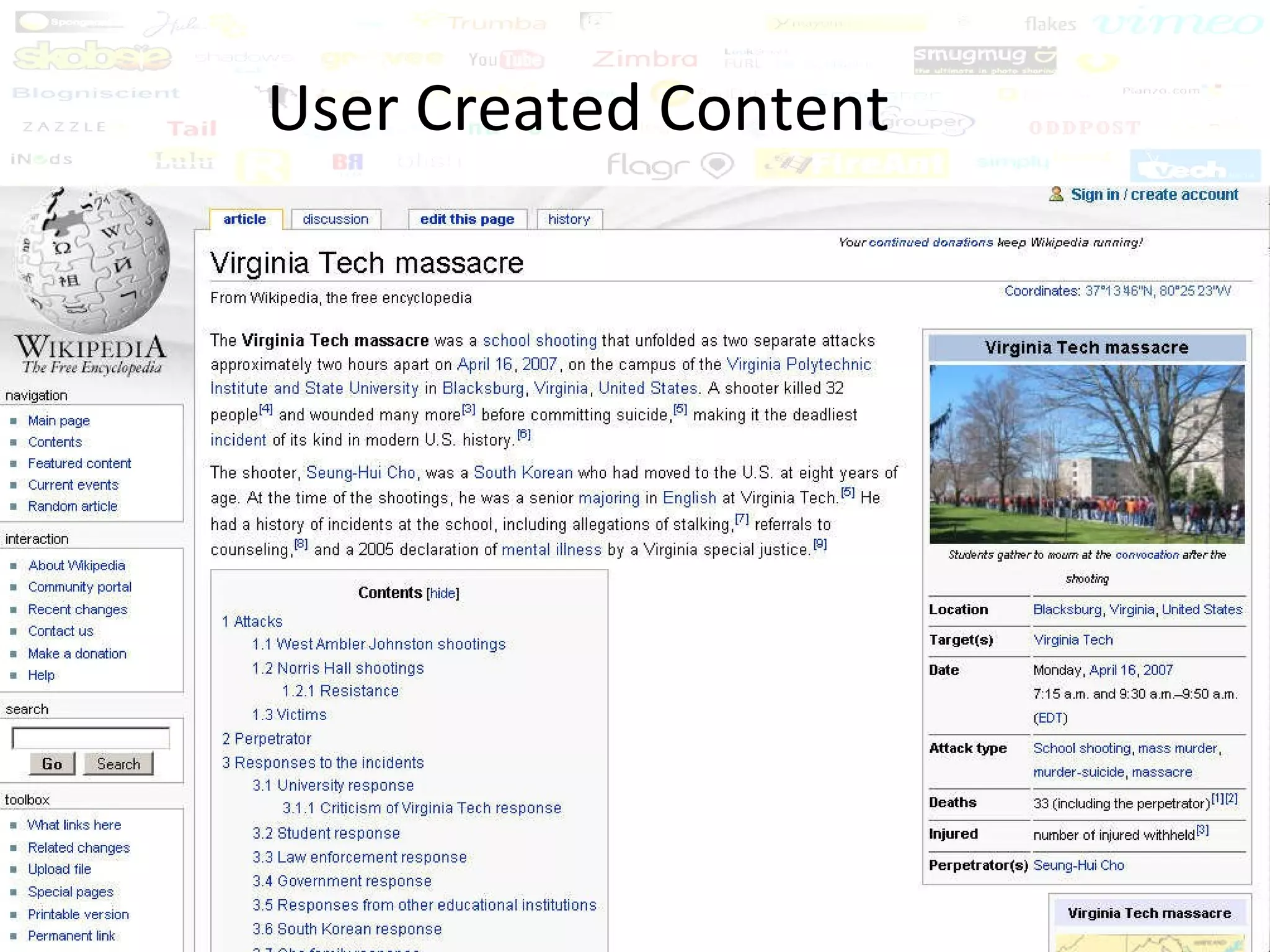
User Created Content


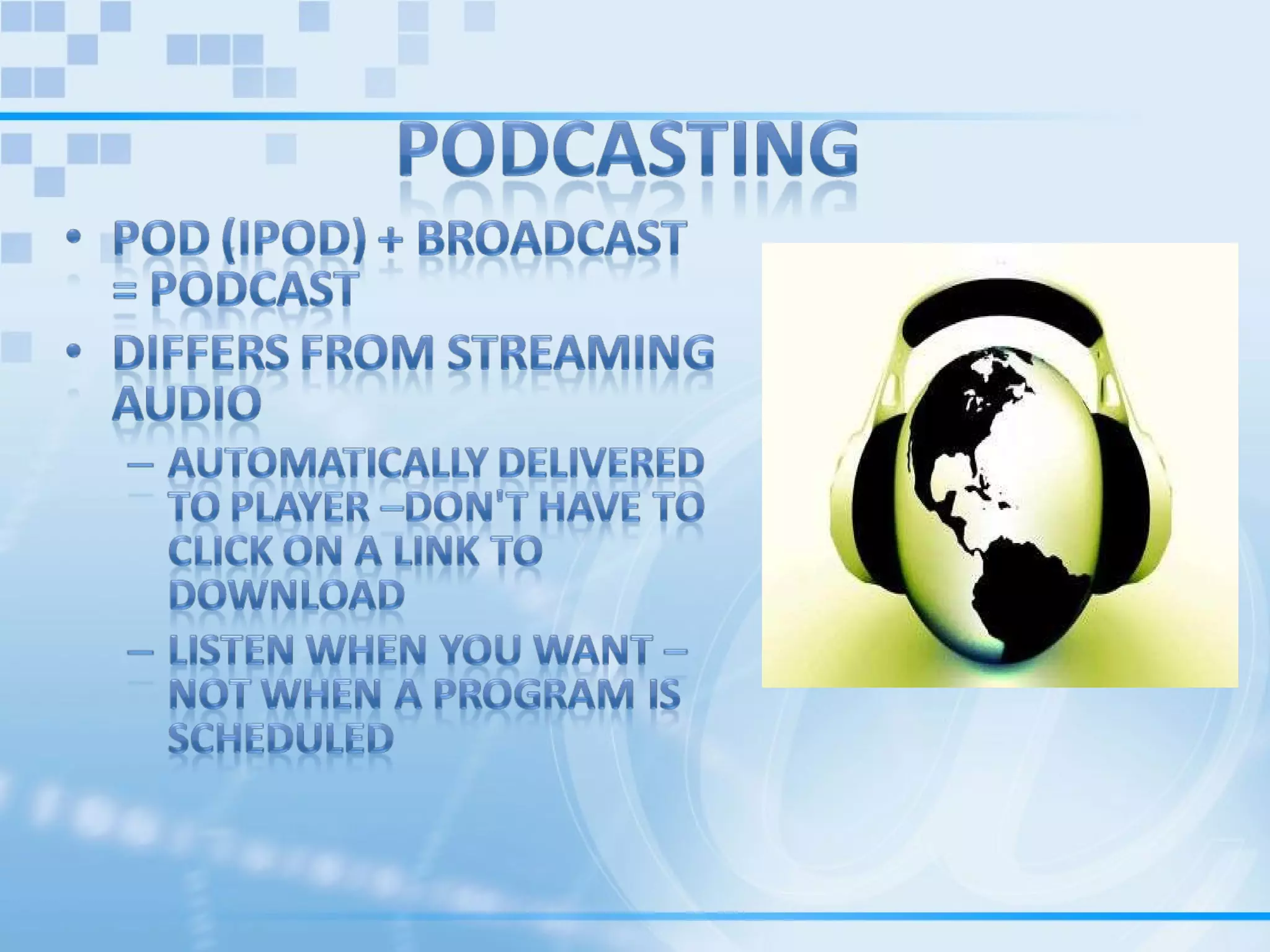
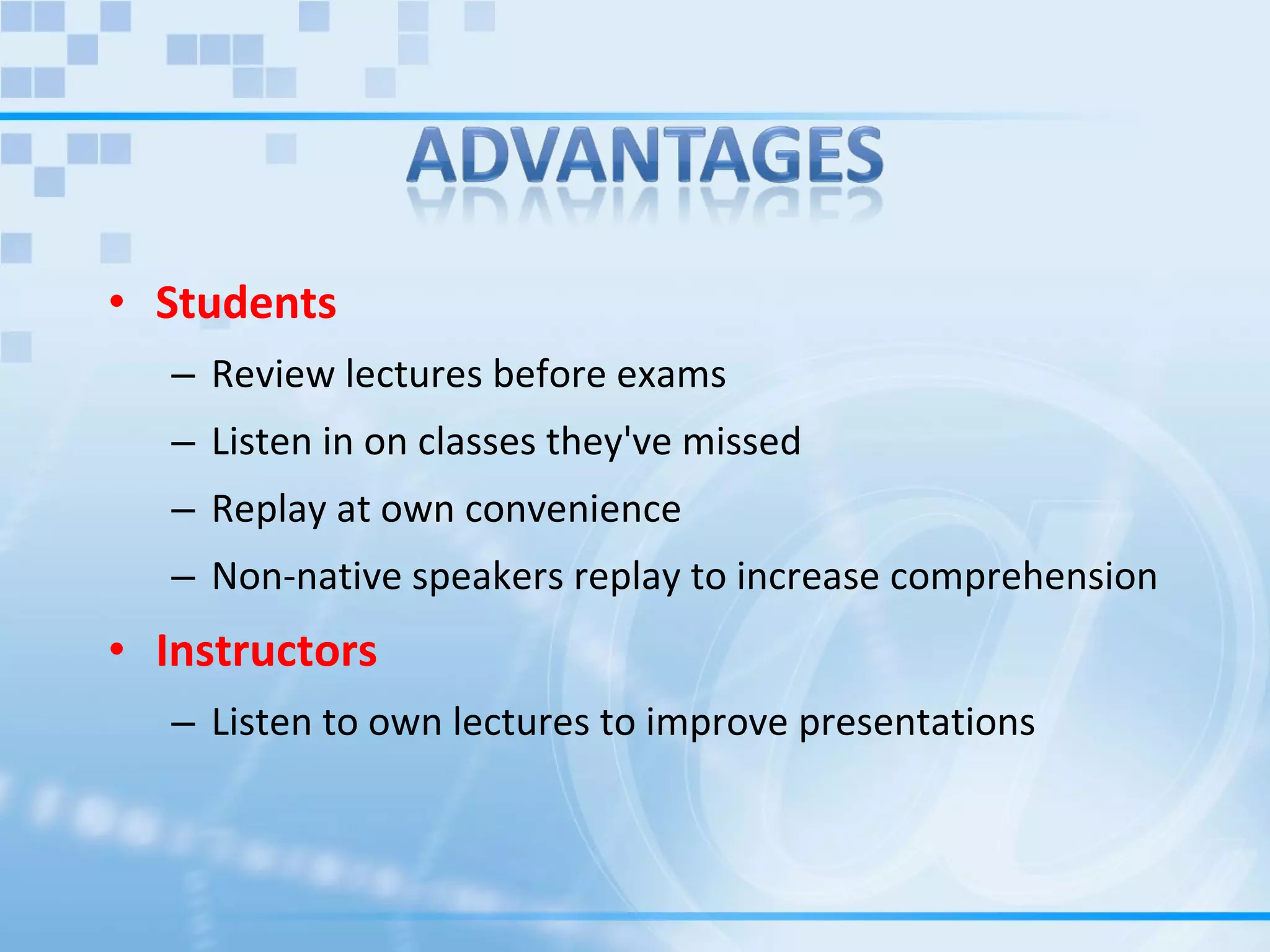
Students   Review lectures before exams Listen in on classes they've missed Replay at own convenience Non-native speakers replay to increase comprehension Instructors Listen to own lectures to improve presentations


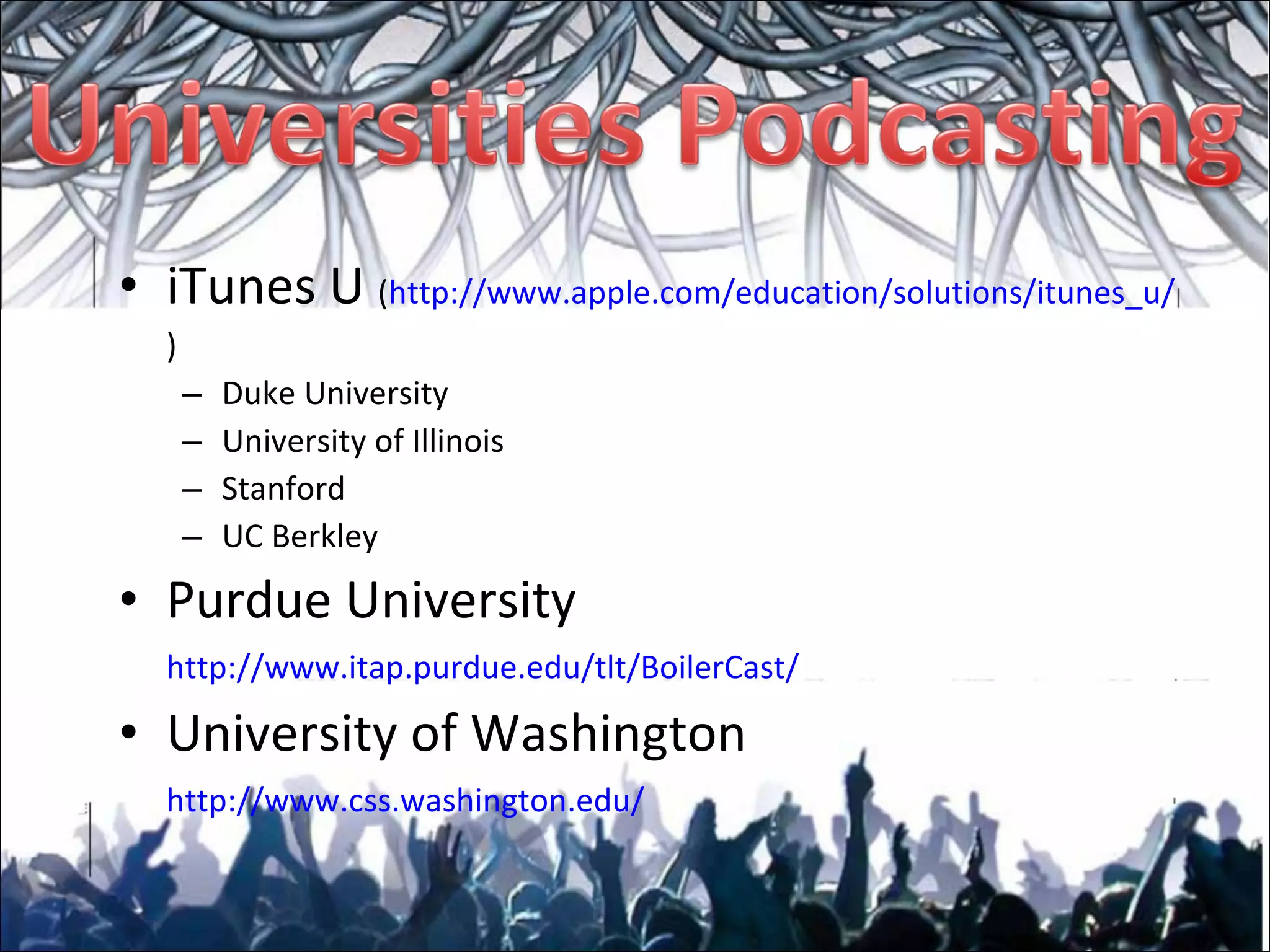
iTunes U  ( http://www.apple.com/education/solutions/ itunes _u/ ) Duke University University of Illinois Stanford UC Berkley Purdue University http://www. itap . purdue . edu / tlt / BoilerCast /   University of Washington http://www. css . washington . edu /


Web 2 0

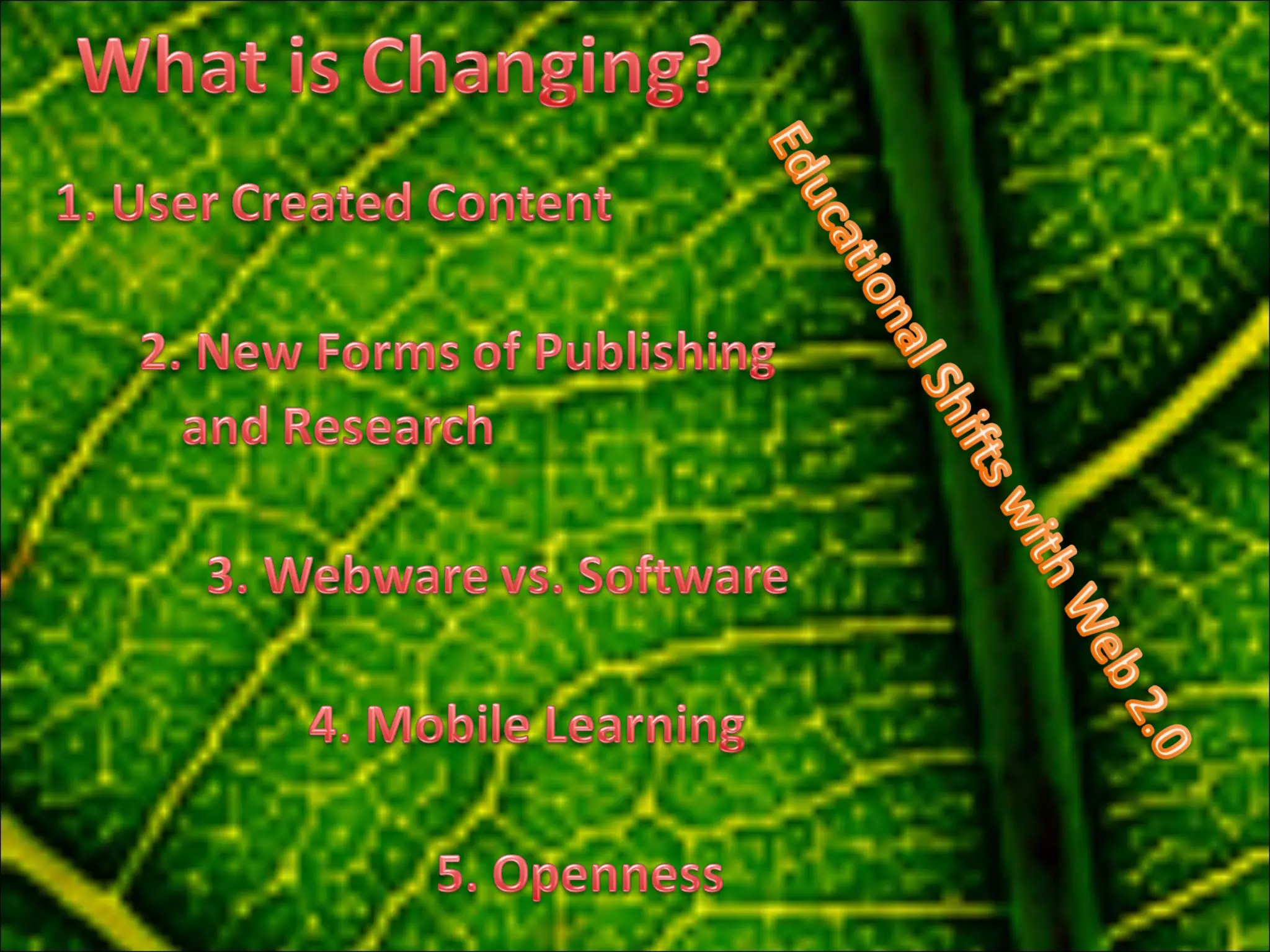
  • 1.
  • 2.
  • 3.
  • 4.
  • 5.
      Web 2.0is a trend in World Wide Web technology, and web design, a second generation of web-based communities and hosted services such as social-networking sites, wikis, blogs, and folksonomies, which aim to facilitate creativity, collaboration, and sharing among users.. Although the term suggests a new version of the World Wide Web, it does not refer to an update to any technical specifications, but to changes in the ways software developers and end-users use webs.
  • 6.
    Using existing technologiesin new and innovative ways Change in the way people view the web Healthier web economy Need to innovate just to maintain position Focus on long tail Fast searching
  • 7.
    Open data formats No data lock-in or walled gardens User created data User owns their own data Ability to use data outside the confines of the application Data used across devices
  • 8.
  • 9.
  • 10.
  • 11.
    Knowledge is createdLearning is a collaborative social endeavor
  • 12.
    A Paradigm ShiftTools for Supporting Individuals Tools for Supporting Relationships
  • 13.
  • 14.
  • 15.
  • 16.
  • 17.
  • 18.
  • 19.
  • 20.
    I nstructors Content-relatedblog as professional practice Networking and personal knowledge sharing Instructional tips for students Course announcements and readings Annotated links Students Reflective or writing journals Assignment submission and review Dialogue for groupwork E-portfolios Share course-related resources
  • 21.
  • 22.
  • 23.
  • 24.
  • 25.
  • 26.
  • 27.
  • 28.
  • 29.
  • 30.
    Students Review lectures before exams Listen in on classes they've missed Replay at own convenience Non-native speakers replay to increase comprehension Instructors Listen to own lectures to improve presentations
  • 31.
  • 32.
  • 33.
  • 34.
    iTunes U ( http://www.apple.com/education/solutions/ itunes _u/ ) Duke University University of Illinois Stanford UC Berkley Purdue University http://www. itap . purdue . edu / tlt / BoilerCast / University of Washington http://www. css . washington . edu /
  • 35.
  • 36.
  • 37.

Editor's Notes

  • #18 7% said they looked at a blog in the last 24 hours…