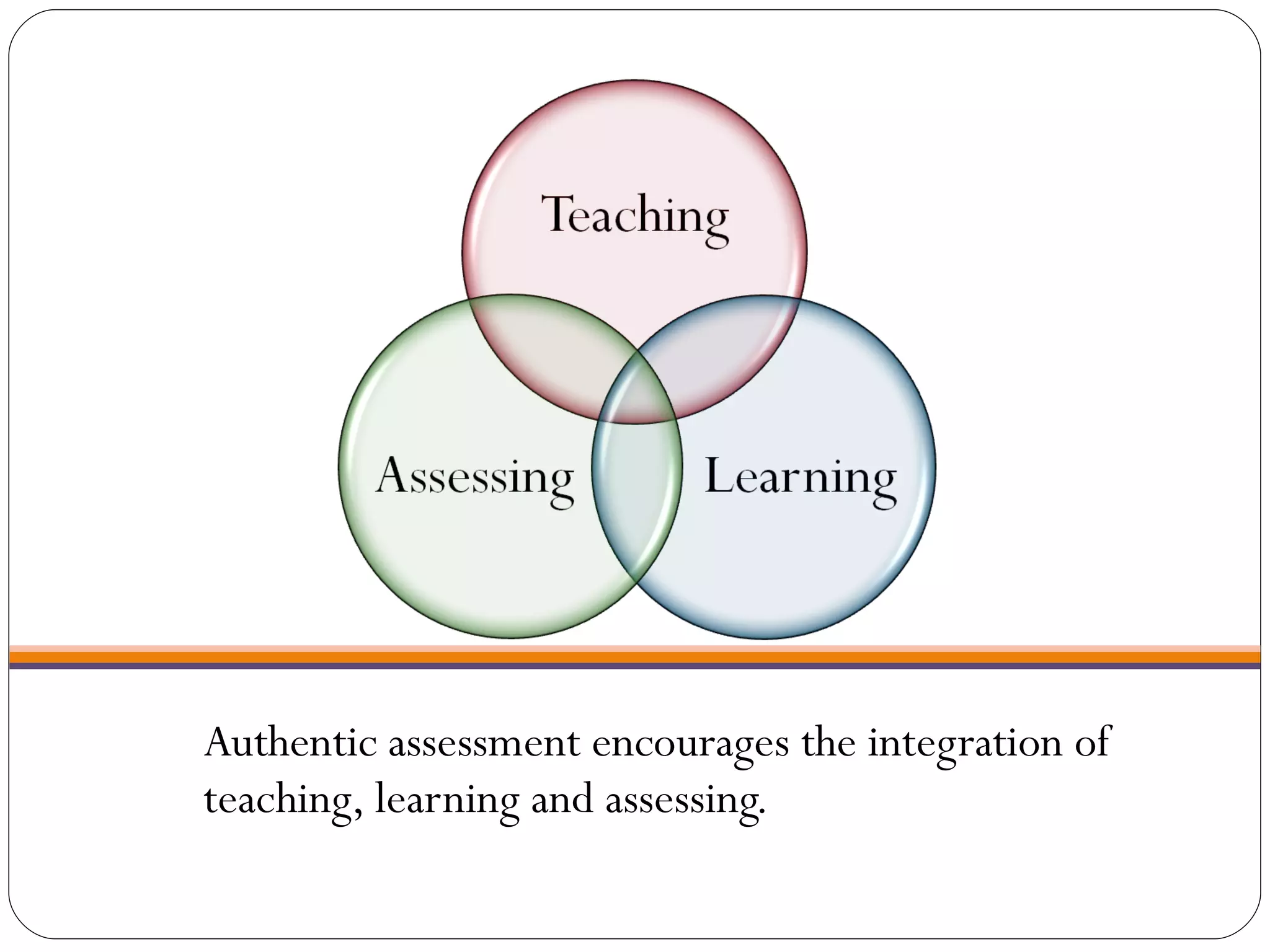
Authentic assessment encourages the integration of teaching, learning and assessing.
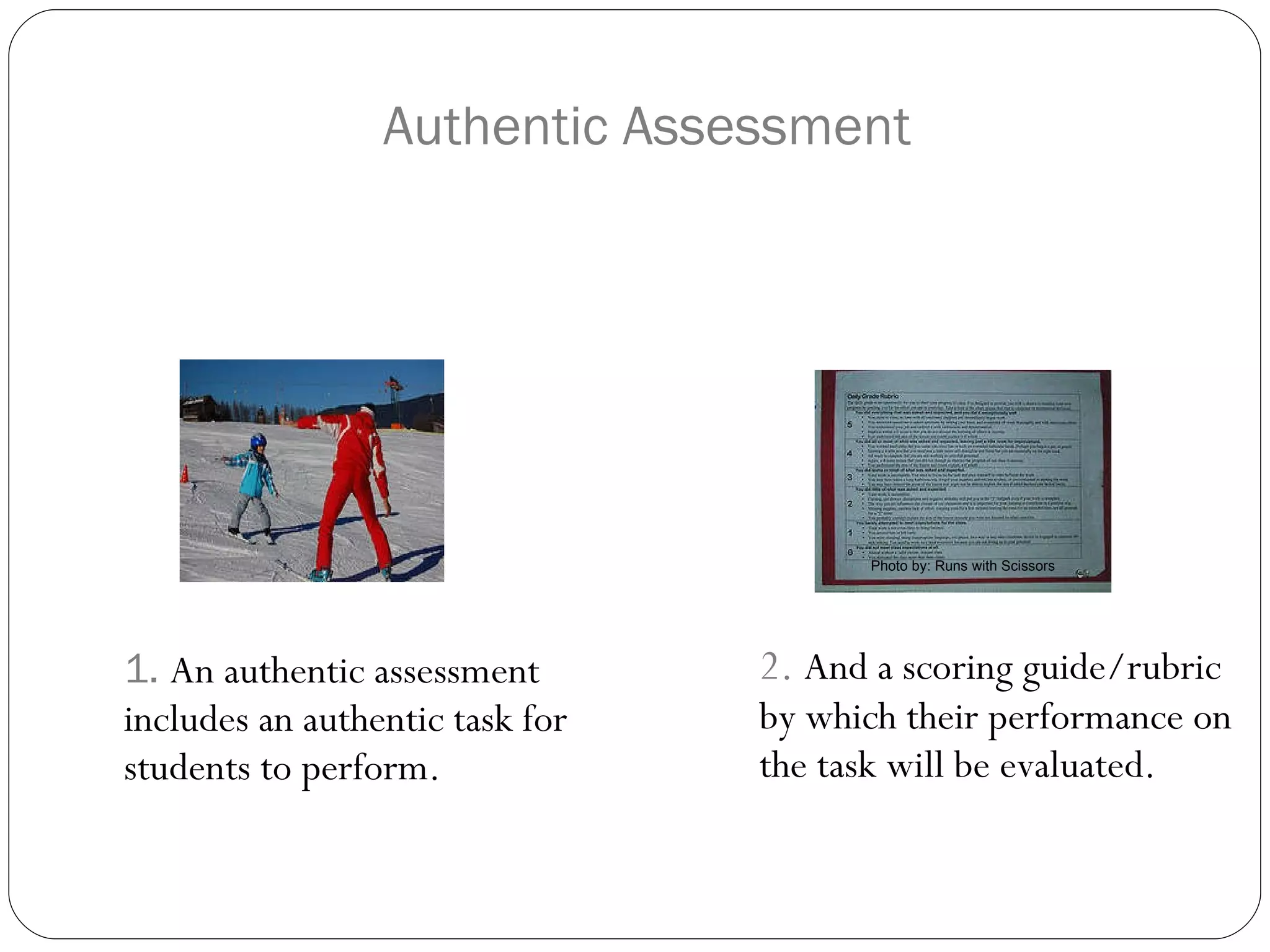
Authentic Assessment  1.  An authentic assessment includes an authentic task for students to perform. 2.  And a scoring guide/rubric by which their performance on the task will be evaluated. Photo by: Runs with Scissors
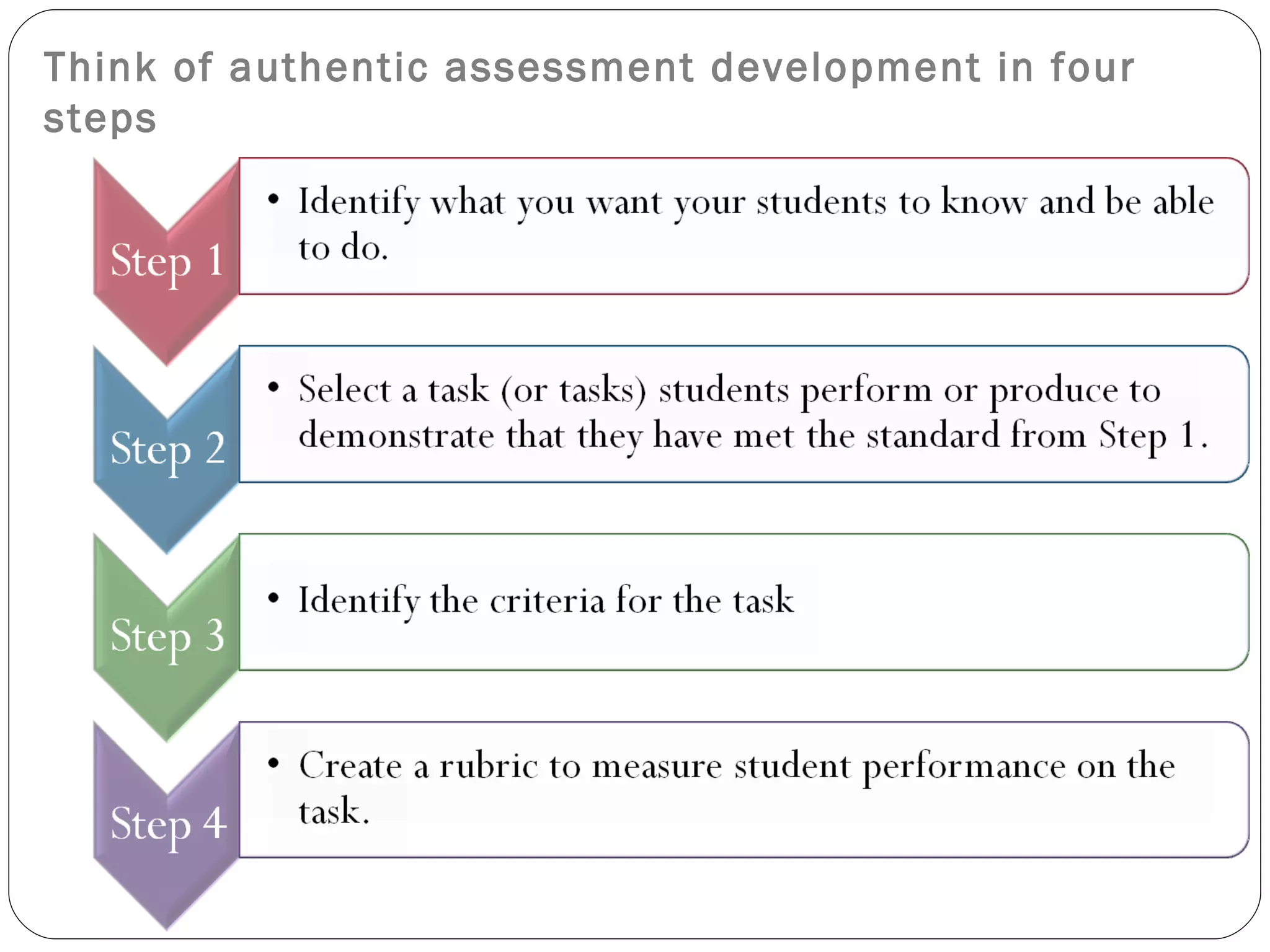
Think of authentic assessment development in four steps
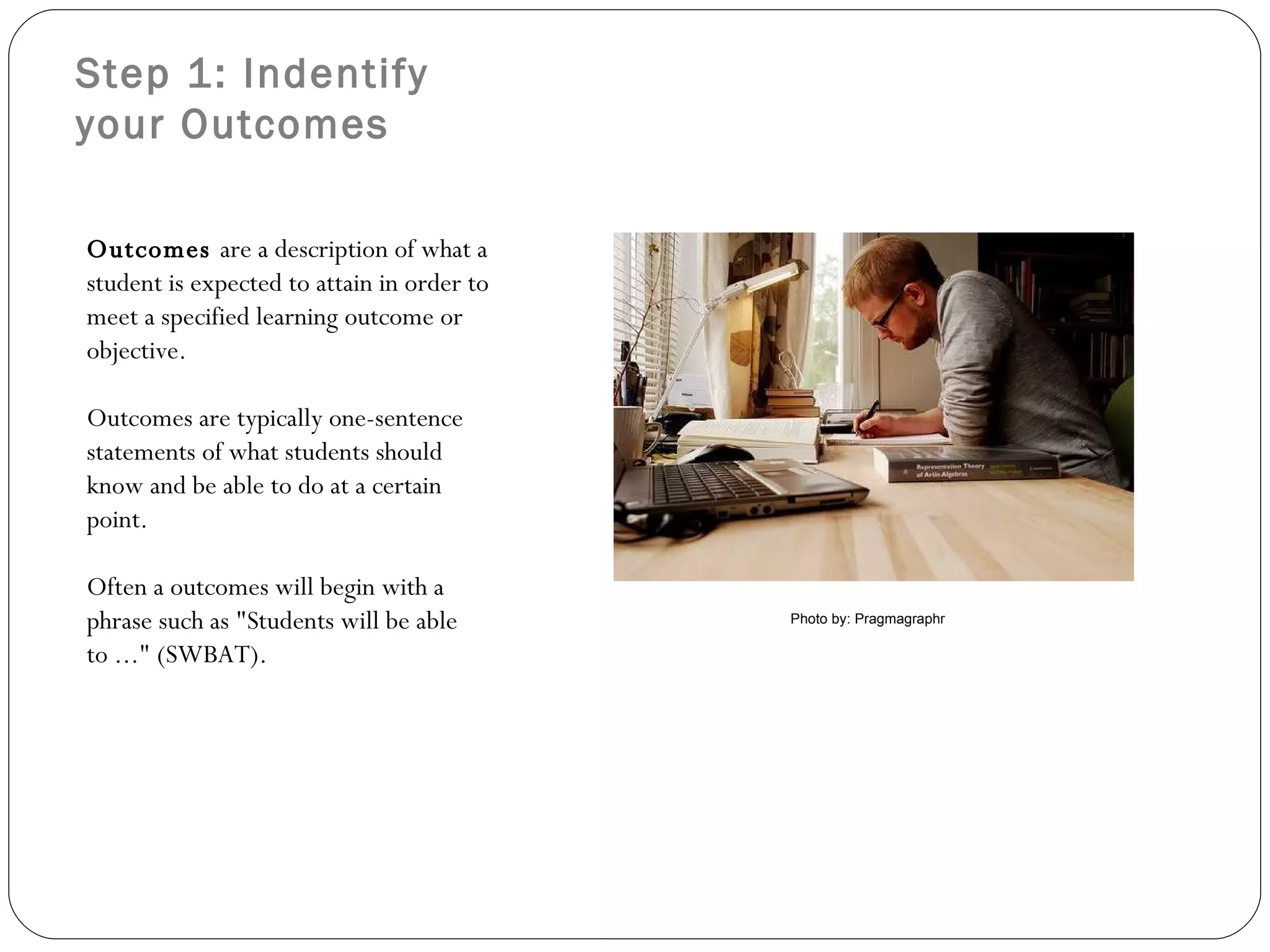
Step 1: Indentify your Outcomes Outcomes  are a description of what a student is expected to attain in order to meet a specified learning outcome or objective.   Outcomes are typically one-sentence statements of what students should know and be able to do at a certain point. Often a outcomes will begin with a phrase such as "Students will be able to ..." (SWBAT).  Photo by: Pragmagraphr
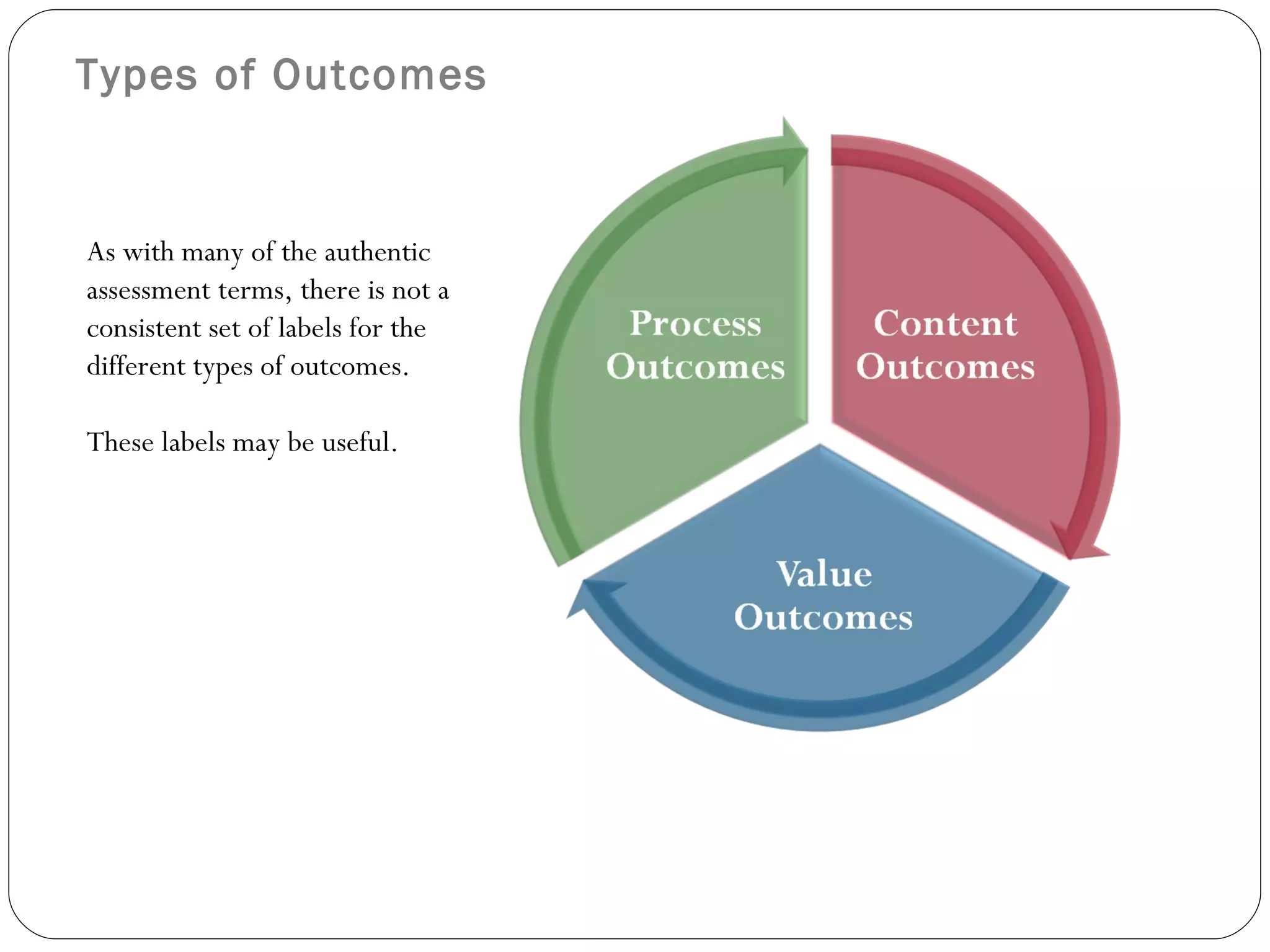
Types of Outcomes As with many of the authentic assessment terms, there is not a consistent set of labels for the different types of outcomes.   These labels may be useful.
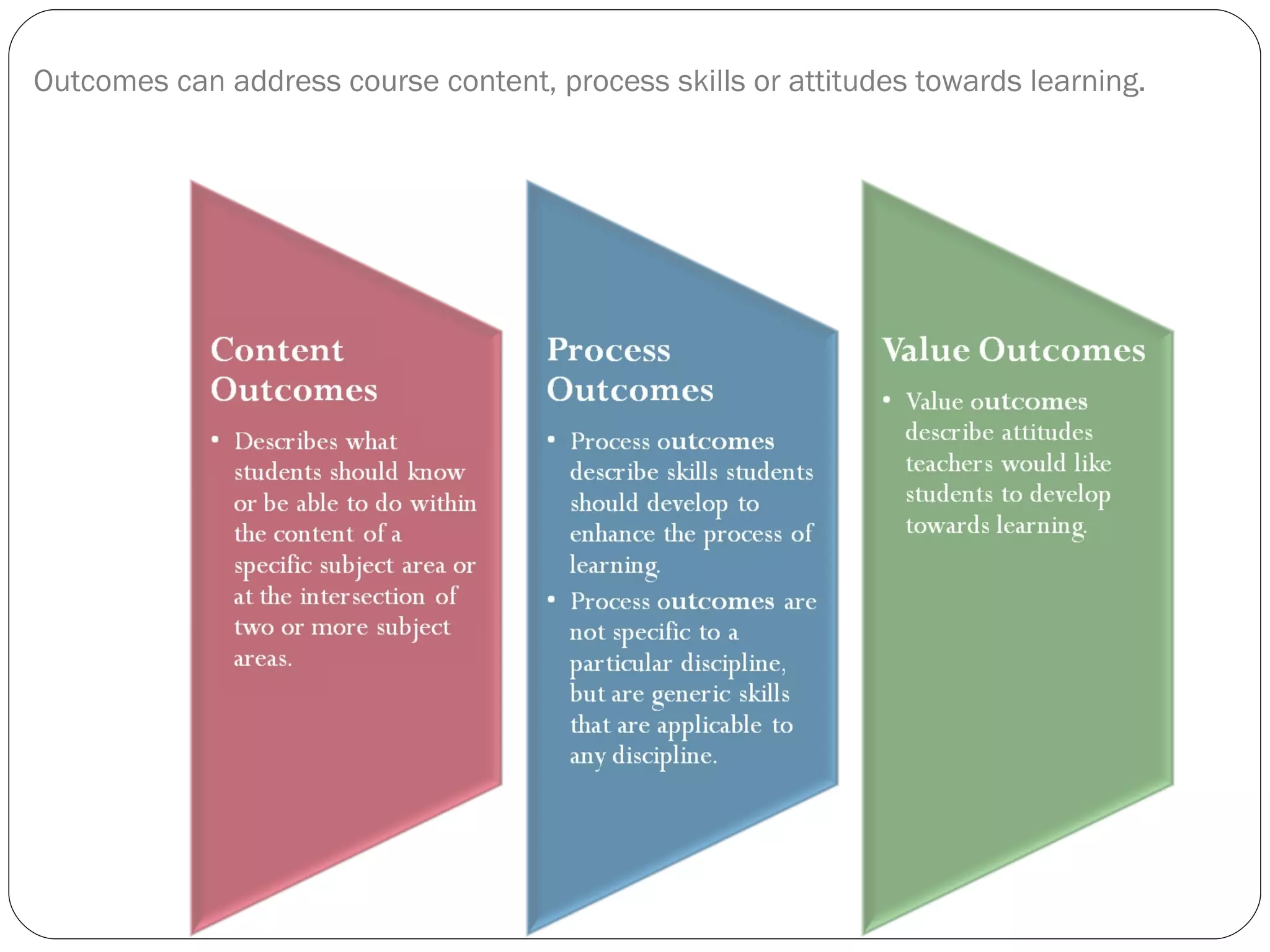
Outcomes can address course content, process skills or attitudes towards learning.
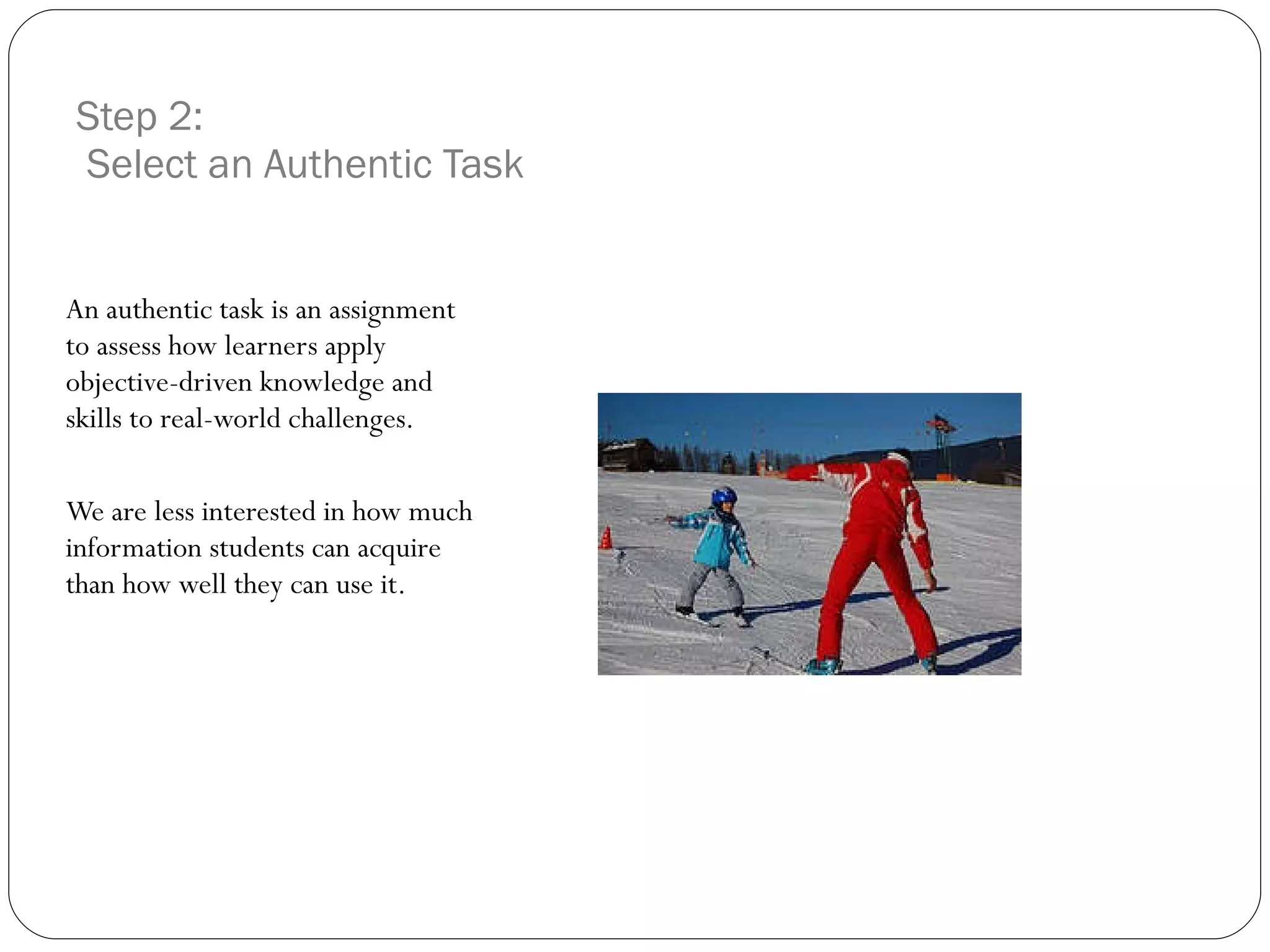
Step 2:  Select an Authentic Task An authentic task is an assignment to assess how learners apply objective-driven knowledge and skills to real-world challenges.  We are less interested in how much information students can acquire than how well they can use it.
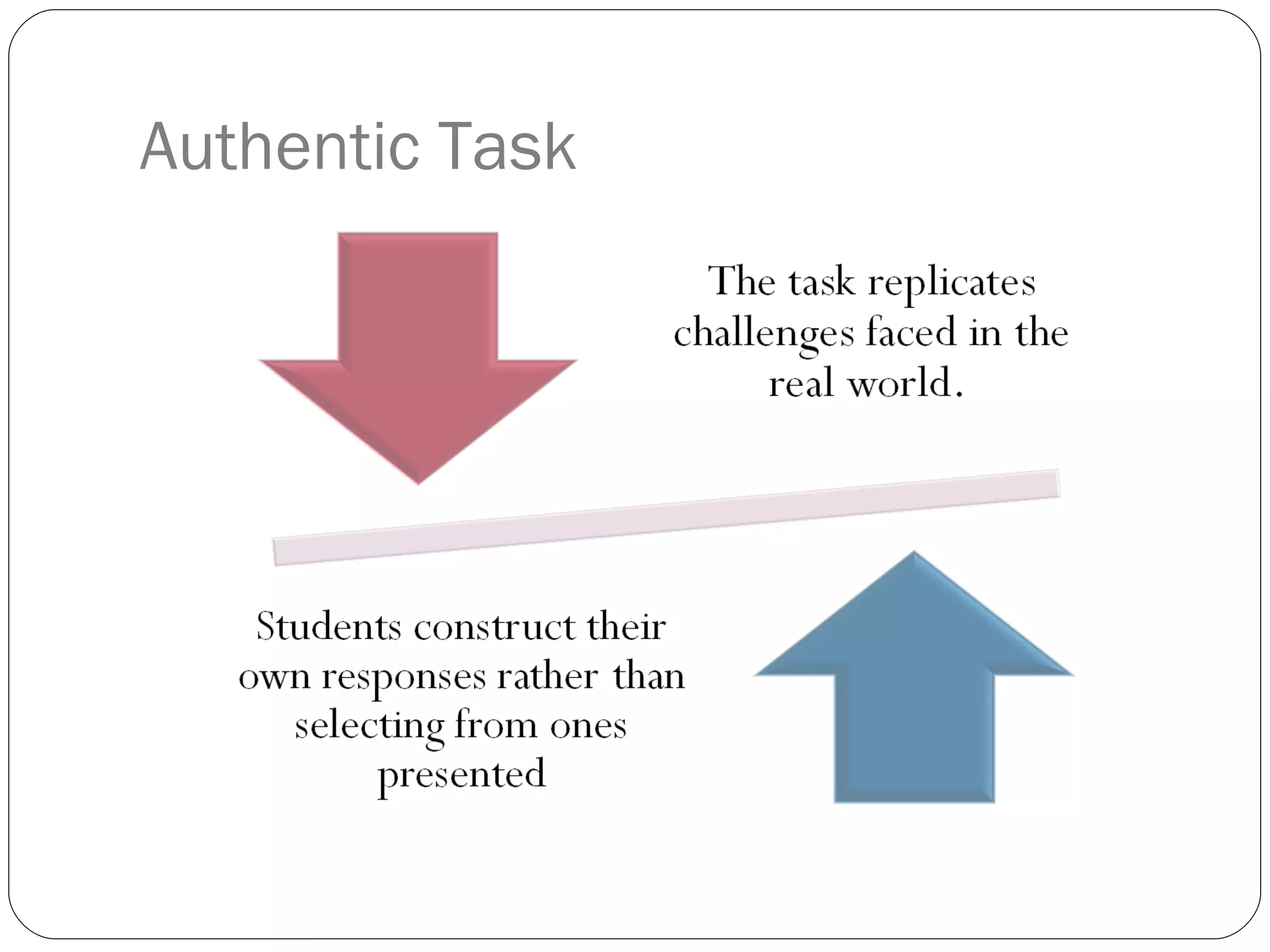
Authentic Task
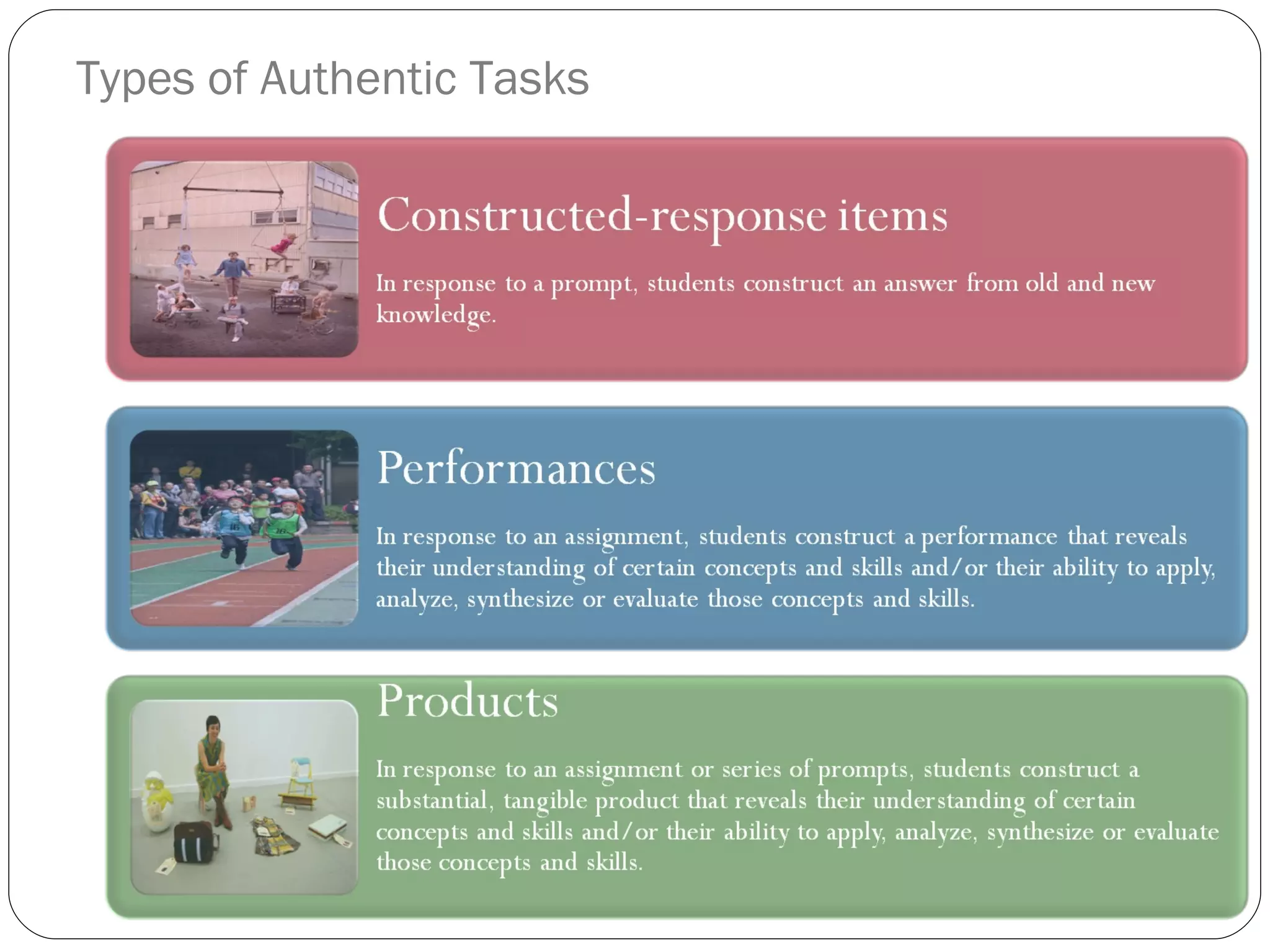
Types of Authentic Tasks
Step 3: Identify the Criteria for the Task ASK "What does good performance on this task look like?" or  "How will I know they have done a good job on this task?"  These questions identify the  criteria  for good performance on the task.  The criteria is used to evaluate how well students completed the task and, how well they have met the standard or standards.
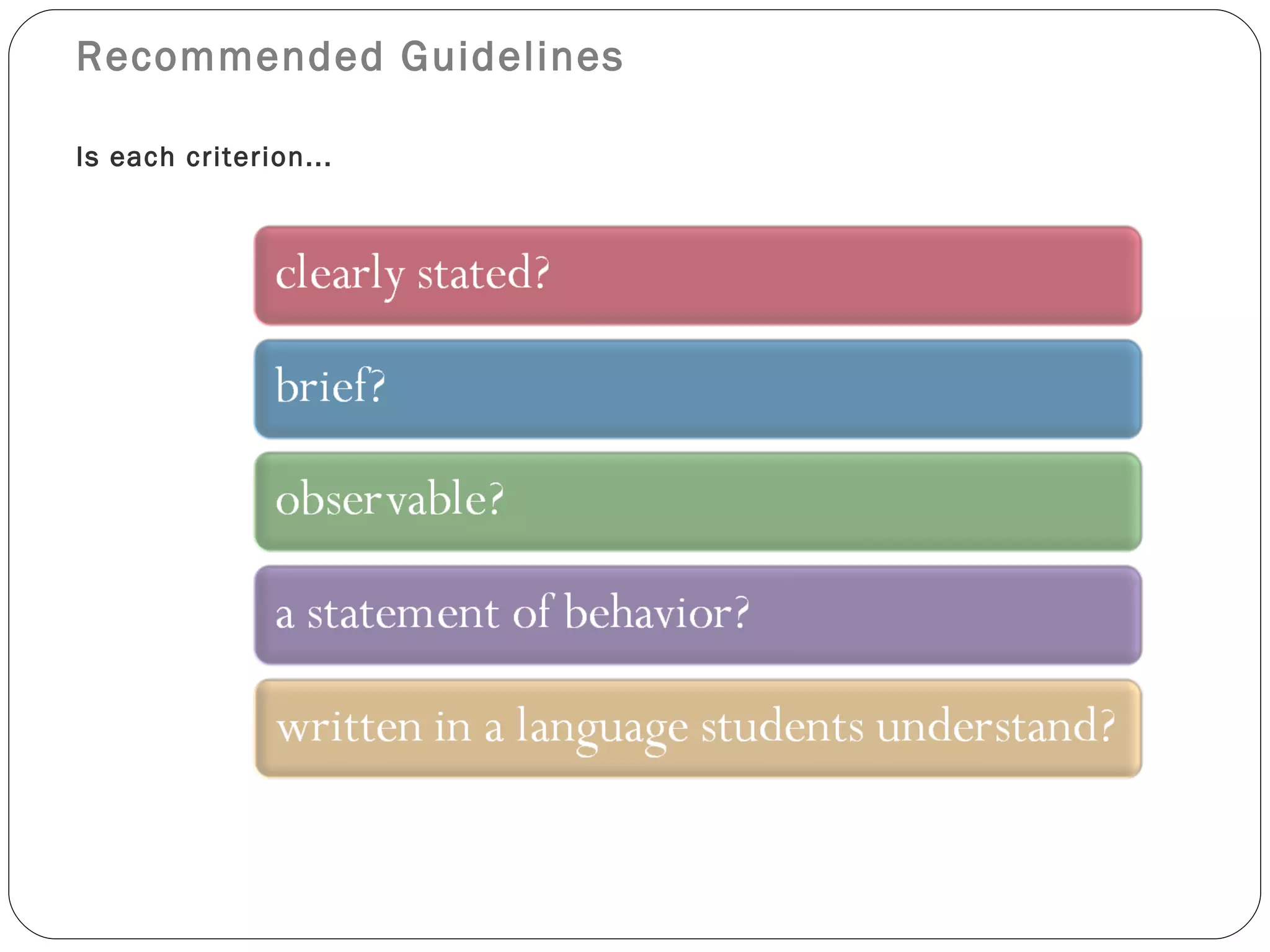
Recommended Guidelines  Is each criterion...
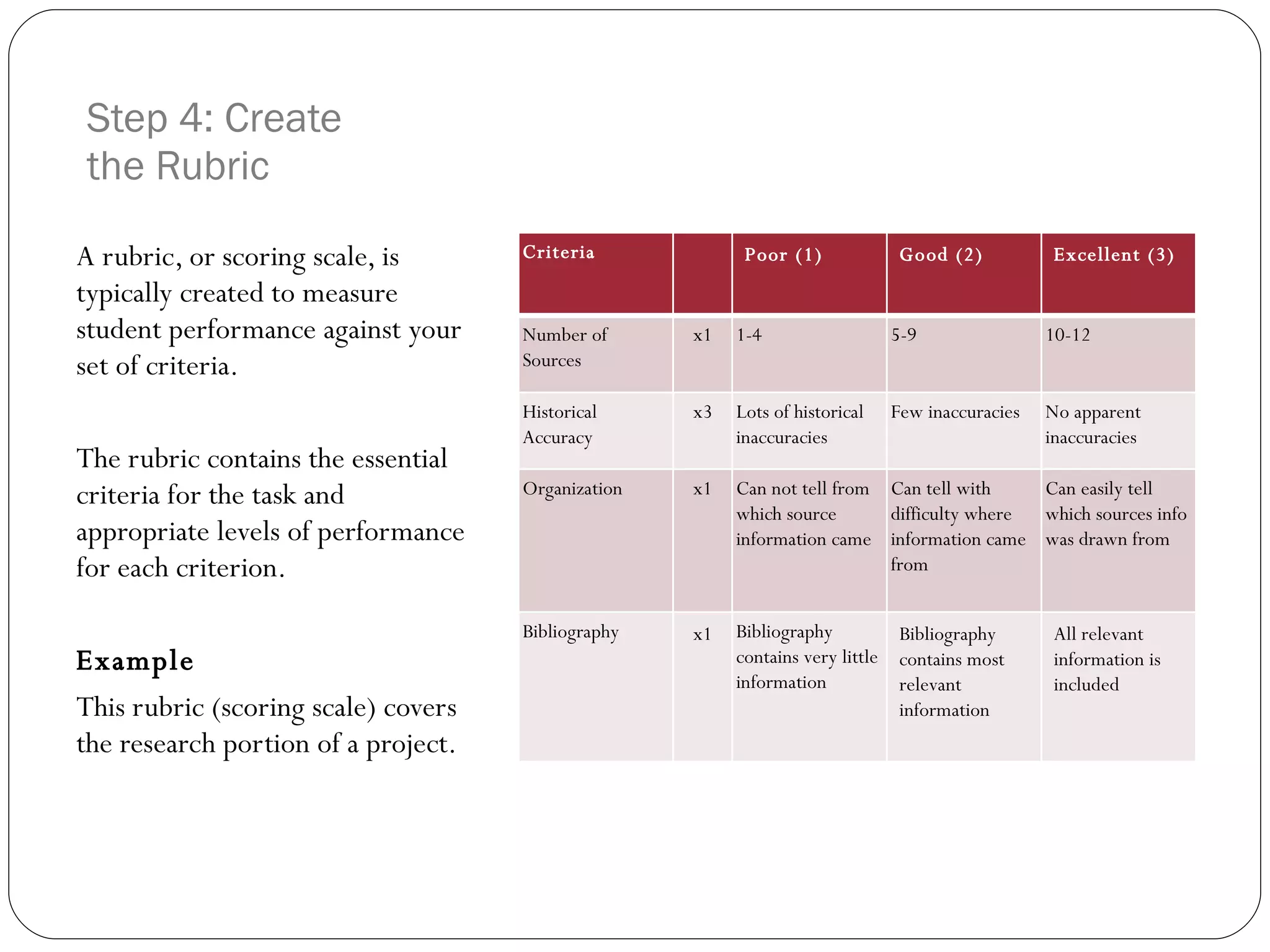
Step 4: Create the Rubric A rubric, or scoring scale, is typically created to measure student performance against your set of criteria. The rubric contains the essential criteria for the task and appropriate levels of performance for each criterion. Example This rubric (scoring scale) covers the research portion of a project. Criteria Poor (1) Good (2) Excellent (3) Number of Sources x1 1-4 5-9 10-12 Historical Accuracy x3 Lots of historical inaccuracies Few inaccuracies No apparent inaccuracies Organization x1 Can not tell from which source information came Can tell with difficulty where information came from Can easily tell which sources info was drawn from Bibliography x1 Bibliography contains very little information Bibliography contains most relevant information All relevant information is included
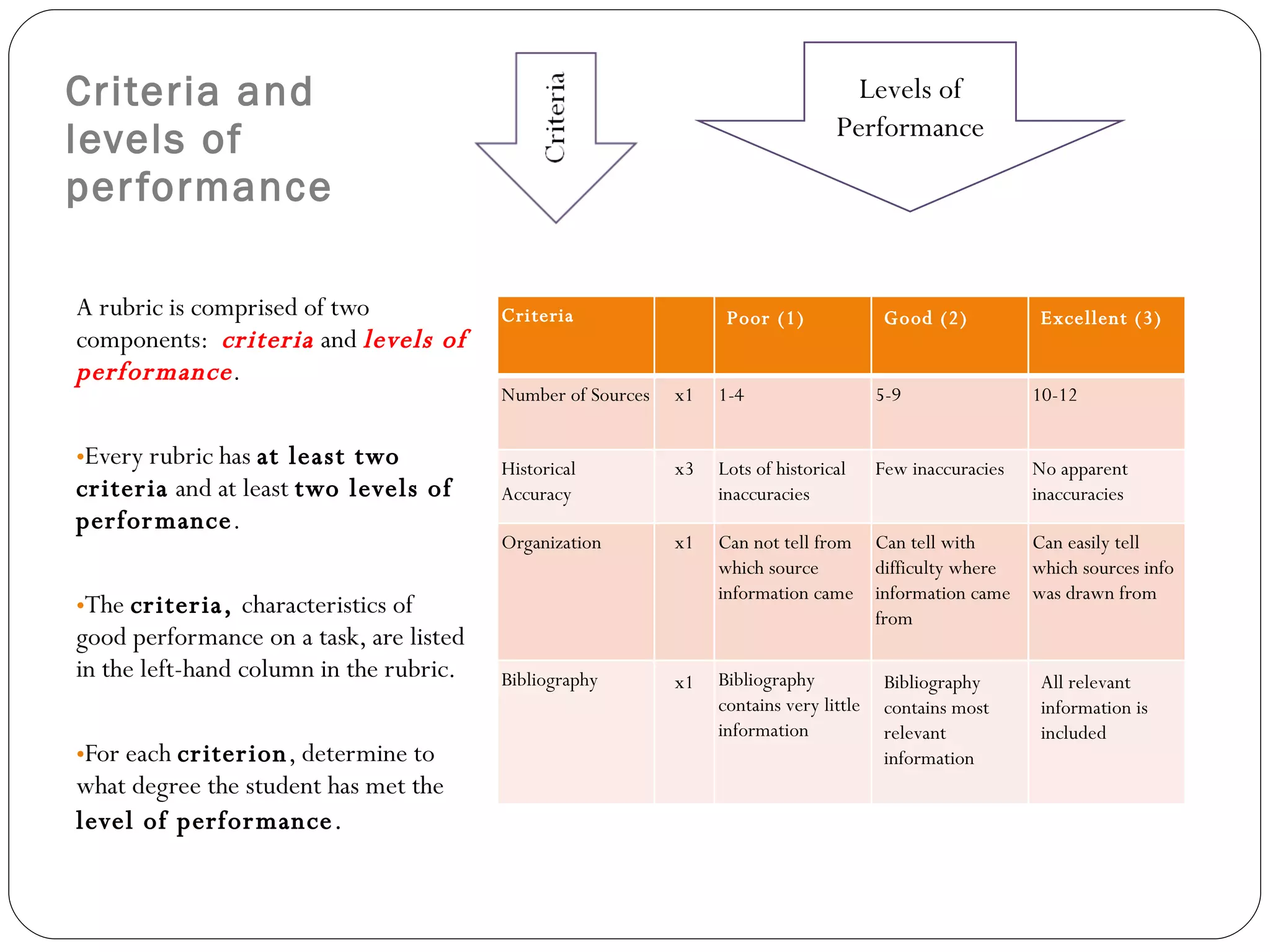
Criteria and  levels of performance A rubric is comprised of two components:   criteria  and  levels of performance .   Every rubric has  at least two criteria  and at least  two levels of performance .   The  criteria,  characteristics of good performance on a task, are listed in the left-hand column in the rubric. For each  criterion , determine to what degree the student has met the  level of performance .  Levels of Performance Criteria Poor (1) Good (2) Excellent (3) Number of Sources x1 1-4 5-9 10-12 Historical Accuracy x3 Lots of historical inaccuracies Few inaccuracies No apparent inaccuracies Organization x1 Can not tell from which source information came Can tell with difficulty where information came from Can easily tell which sources info was drawn from Bibliography x1 Bibliography contains very little information Bibliography contains most relevant information All relevant information is included

Authentic assessment

  • 1.
    Authentic assessment encouragesthe integration of teaching, learning and assessing.
  • 2.
    Authentic Assessment 1. An authentic assessment includes an authentic task for students to perform. 2. And a scoring guide/rubric by which their performance on the task will be evaluated. Photo by: Runs with Scissors
  • 3.
    Think of authenticassessment development in four steps
  • 4.
    Step 1: Indentifyyour Outcomes Outcomes are a description of what a student is expected to attain in order to meet a specified learning outcome or objective.  Outcomes are typically one-sentence statements of what students should know and be able to do at a certain point. Often a outcomes will begin with a phrase such as "Students will be able to ..." (SWBAT). Photo by: Pragmagraphr
  • 5.
    Types of OutcomesAs with many of the authentic assessment terms, there is not a consistent set of labels for the different types of outcomes.  These labels may be useful.
  • 6.
    Outcomes can addresscourse content, process skills or attitudes towards learning.
  • 7.
    Step 2: Select an Authentic Task An authentic task is an assignment to assess how learners apply objective-driven knowledge and skills to real-world challenges. We are less interested in how much information students can acquire than how well they can use it.
  • 8.
  • 9.
  • 10.
    Step 3: Identifythe Criteria for the Task ASK "What does good performance on this task look like?" or "How will I know they have done a good job on this task?" These questions identify the criteria for good performance on the task. The criteria is used to evaluate how well students completed the task and, how well they have met the standard or standards.
  • 11.
    Recommended Guidelines Is each criterion...
  • 12.
    Step 4: Createthe Rubric A rubric, or scoring scale, is typically created to measure student performance against your set of criteria. The rubric contains the essential criteria for the task and appropriate levels of performance for each criterion. Example This rubric (scoring scale) covers the research portion of a project. Criteria Poor (1) Good (2) Excellent (3) Number of Sources x1 1-4 5-9 10-12 Historical Accuracy x3 Lots of historical inaccuracies Few inaccuracies No apparent inaccuracies Organization x1 Can not tell from which source information came Can tell with difficulty where information came from Can easily tell which sources info was drawn from Bibliography x1 Bibliography contains very little information Bibliography contains most relevant information All relevant information is included
  • 13.
    Criteria and levels of performance A rubric is comprised of two components:  criteria and levels of performance .  Every rubric has at least two criteria and at least two levels of performance .  The criteria, characteristics of good performance on a task, are listed in the left-hand column in the rubric. For each criterion , determine to what degree the student has met the level of performance . Levels of Performance Criteria Poor (1) Good (2) Excellent (3) Number of Sources x1 1-4 5-9 10-12 Historical Accuracy x3 Lots of historical inaccuracies Few inaccuracies No apparent inaccuracies Organization x1 Can not tell from which source information came Can tell with difficulty where information came from Can easily tell which sources info was drawn from Bibliography x1 Bibliography contains very little information Bibliography contains most relevant information All relevant information is included