BONE STRUCTURE AND ITS CLINICAL 
I M P O R T A N C E 
Dr GIRIDHAR 
BOYAPATI 
P.G
What is Bone? – Mineralized connective 
tissue 
- constitute part of the endoskeleton of vertebrates
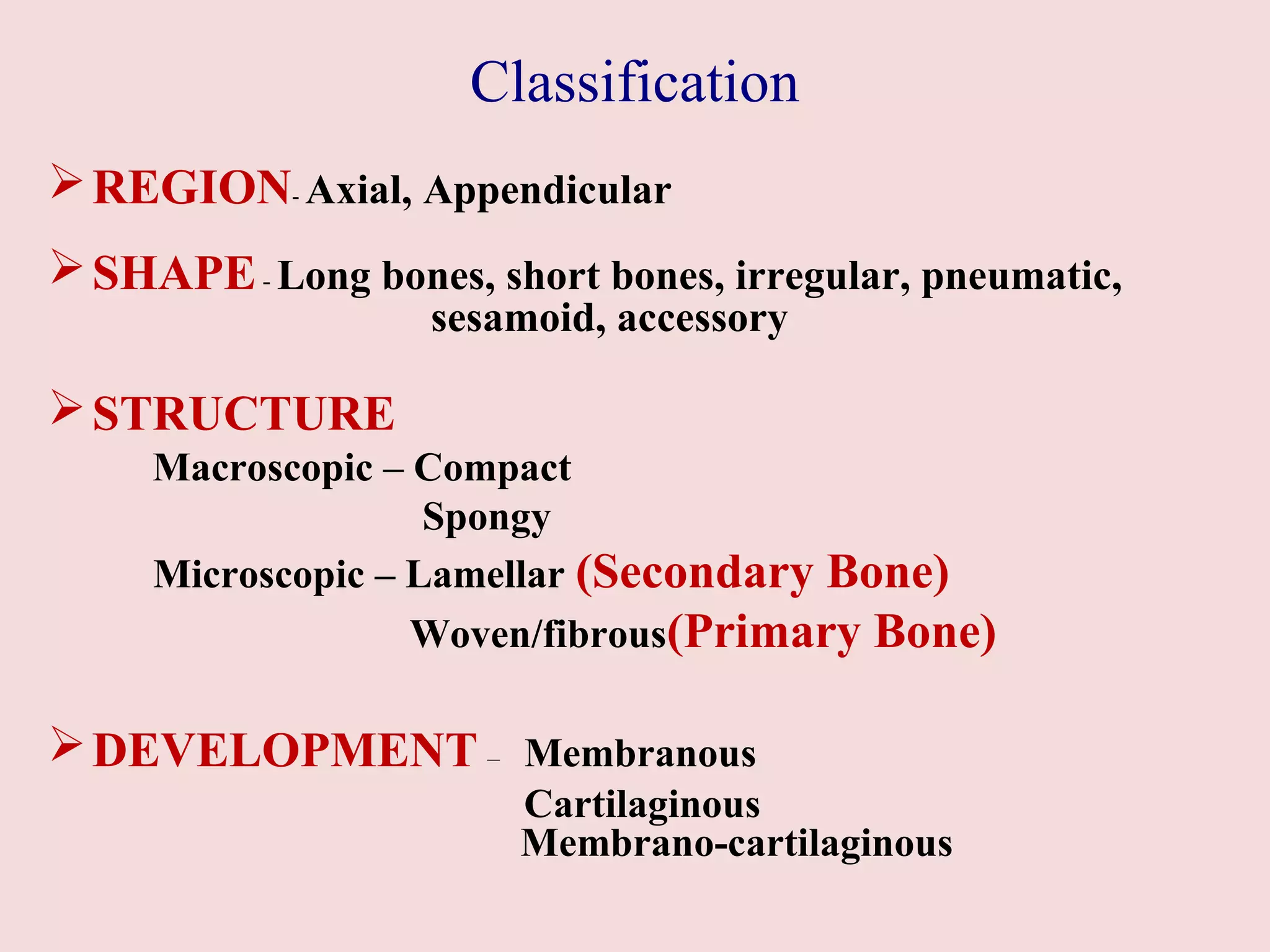
Classification 
REGION- Axial, Appendicular 
SHAPE - Long bones, short bones, irregular, pneumatic, 
sesamoid, accessory 
STRUCTURE 
Macroscopic – Compact 
Spongy 
Microscopic – Lamellar (Secondary Bone) 
Woven/fibrous(Primary Bone) 
DEVELOPMENT – Membranous 
Cartilaginous 
Membrano-cartilaginous
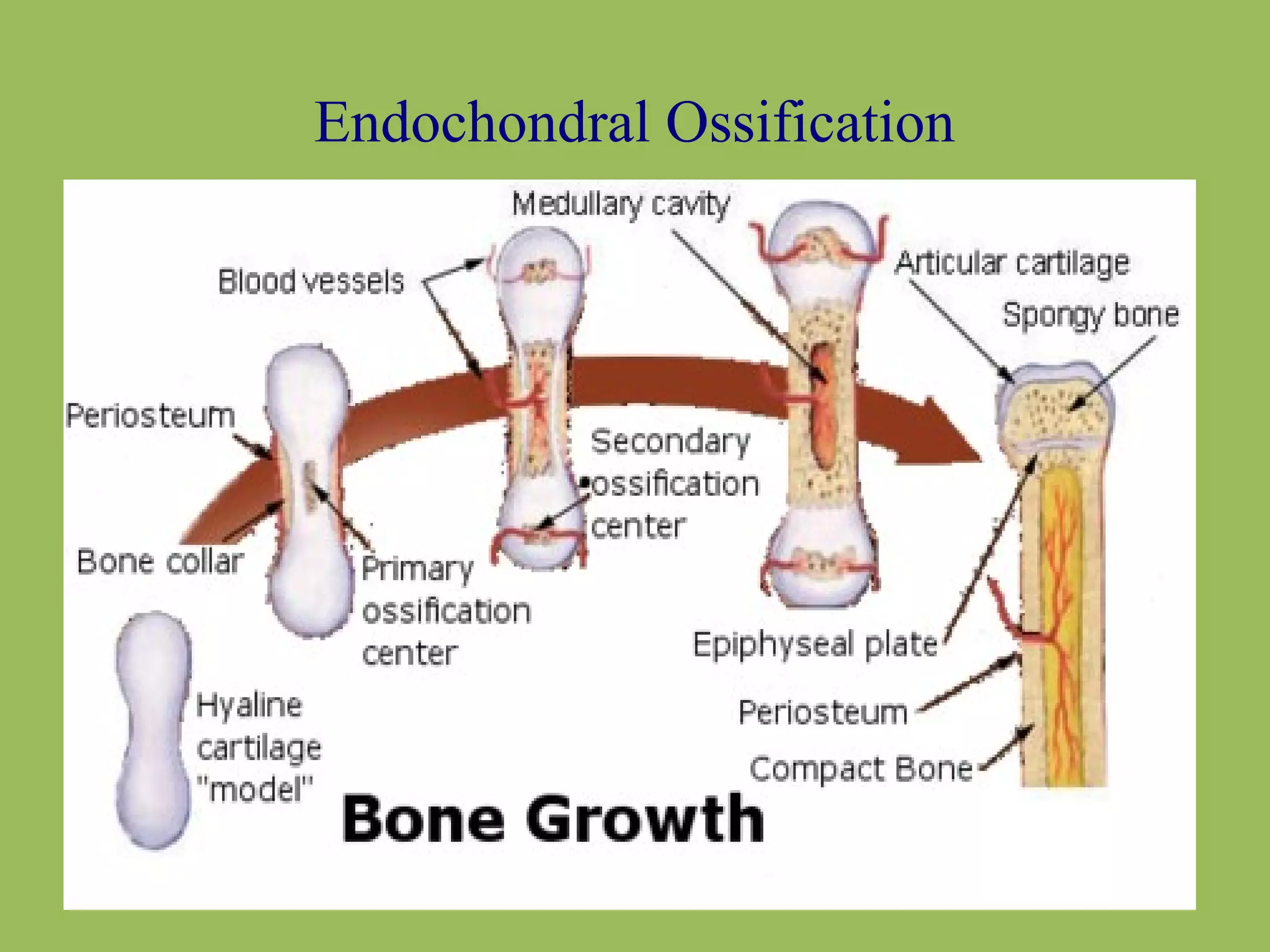
ENDOCHONDRAL OSSIFICATION 
MESENCHYMAL CELLS 
CHONDROBLASTS 
CHONDROCYTES 
CARTILAGE MODEL OF FUTURE BONE 
OSTEOBLASTS
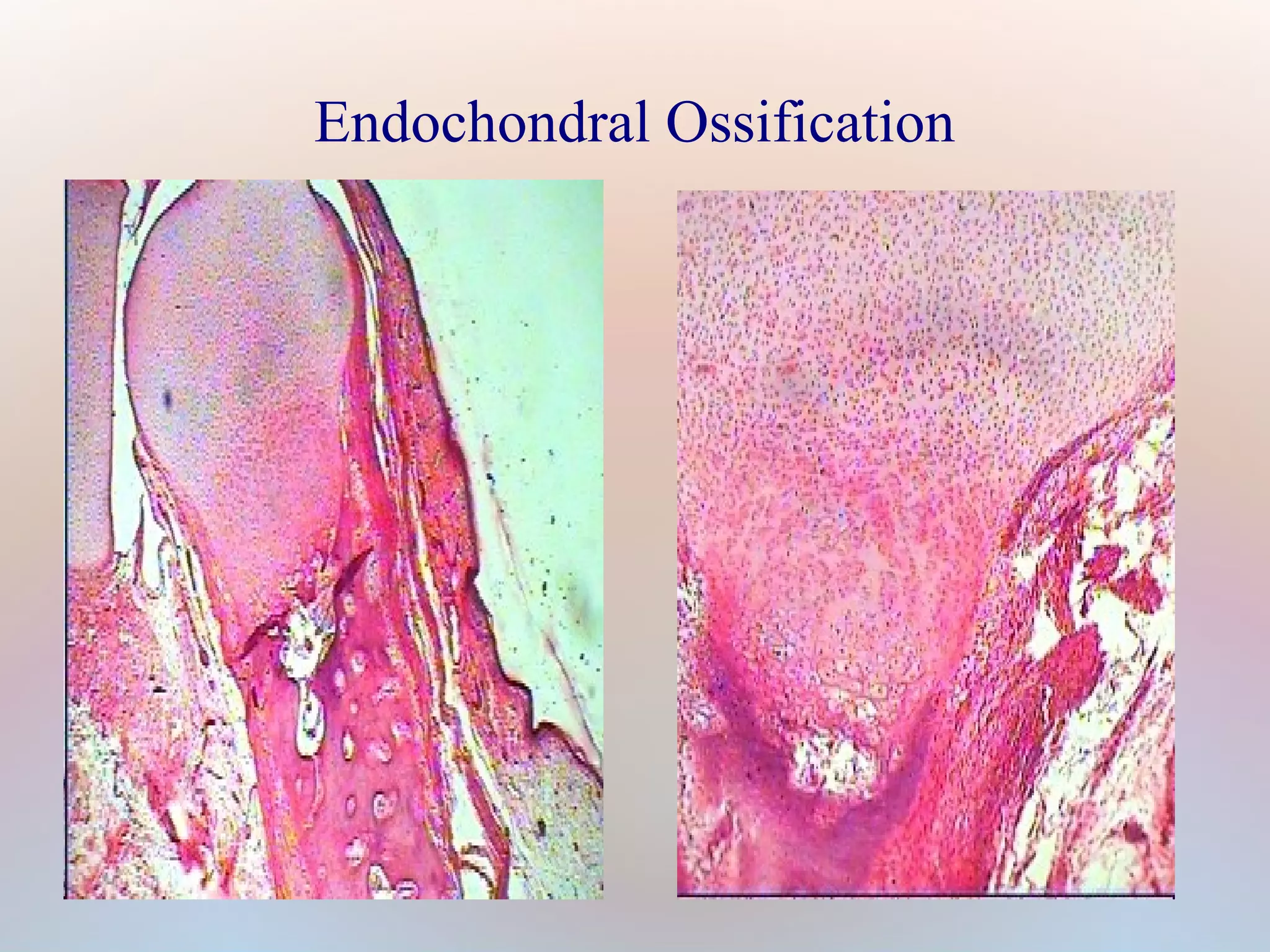
Endochondral Ossification
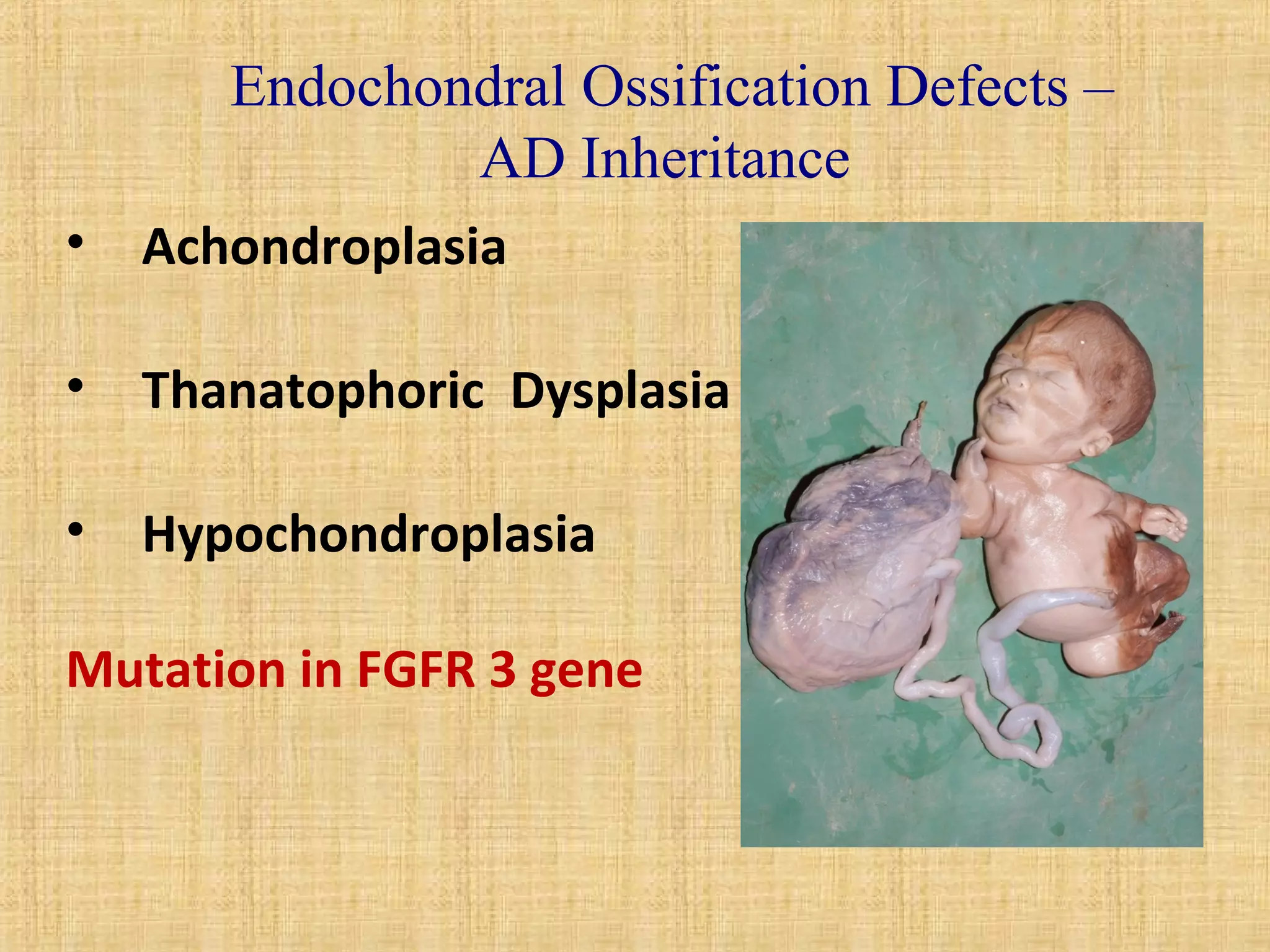
Endochondral Ossification Defects – 
AD Inheritance 
• Achondroplasia 
• Thanatophoric Dysplasia 
• Hypochondroplasia 
Mutation in FGFR 3 gene
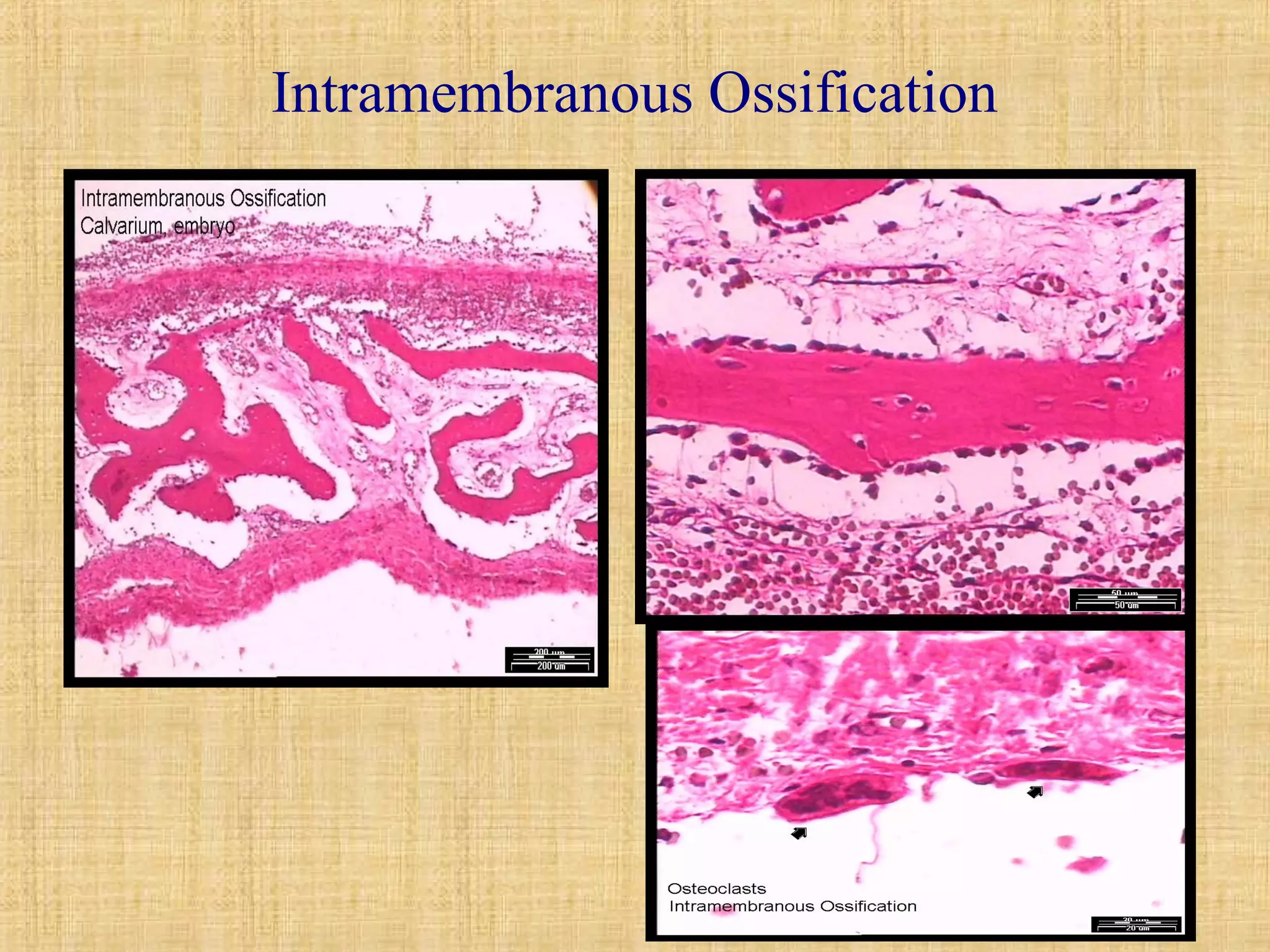
Intramembranous Ossification
EXAMPLES OF INTRAMEMBRANOUS 
OSSIFICATION 
1. EMBRYONIC FLAT BONES : 
SKULL, PELVIS, MAXILLA, MANDIBLE, CLAVICLE 
2. DISTRACTION OSTEOGENESIS 
3. FRACTURE HEALING WITH RIGID FIXATION 
4.BLASTEM BONE
PERIOSTEAL OSSIFICATION 
OSTEOGENIC CELLS FROM PERIOSTEUM 
LAY PARLLEL LAYERS OF COMPACT BONE
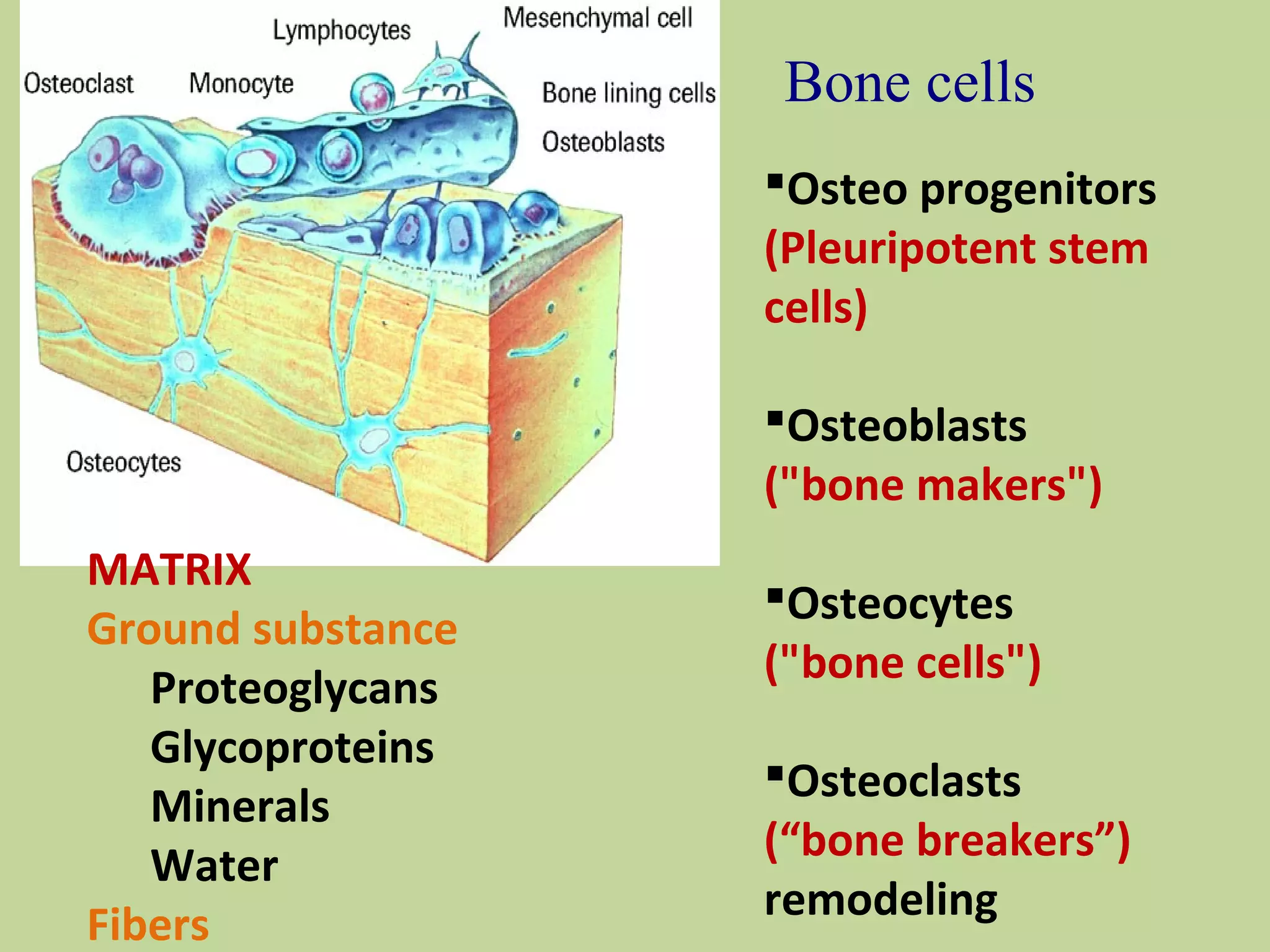
Bone cells 
ļ‚§Osteo progenitors 
(Pleuripotent stem 
cells) 
ļ‚§Osteoblasts 
("bone makers") 
ļ‚§Osteocytes 
("bone cells") 
ļ‚§Osteoclasts 
(ā€œbone breakersā€) 
remodeling 
MATRIX 
Ground substance 
Proteoglycans 
Glycoproteins 
Minerals 
Water 
Fibers
Cells of Bone (Primary/Temporary) 
Osteoprogenitor 
Osteoclast 
Osteoblast 
Osteocyte 
Osteoid
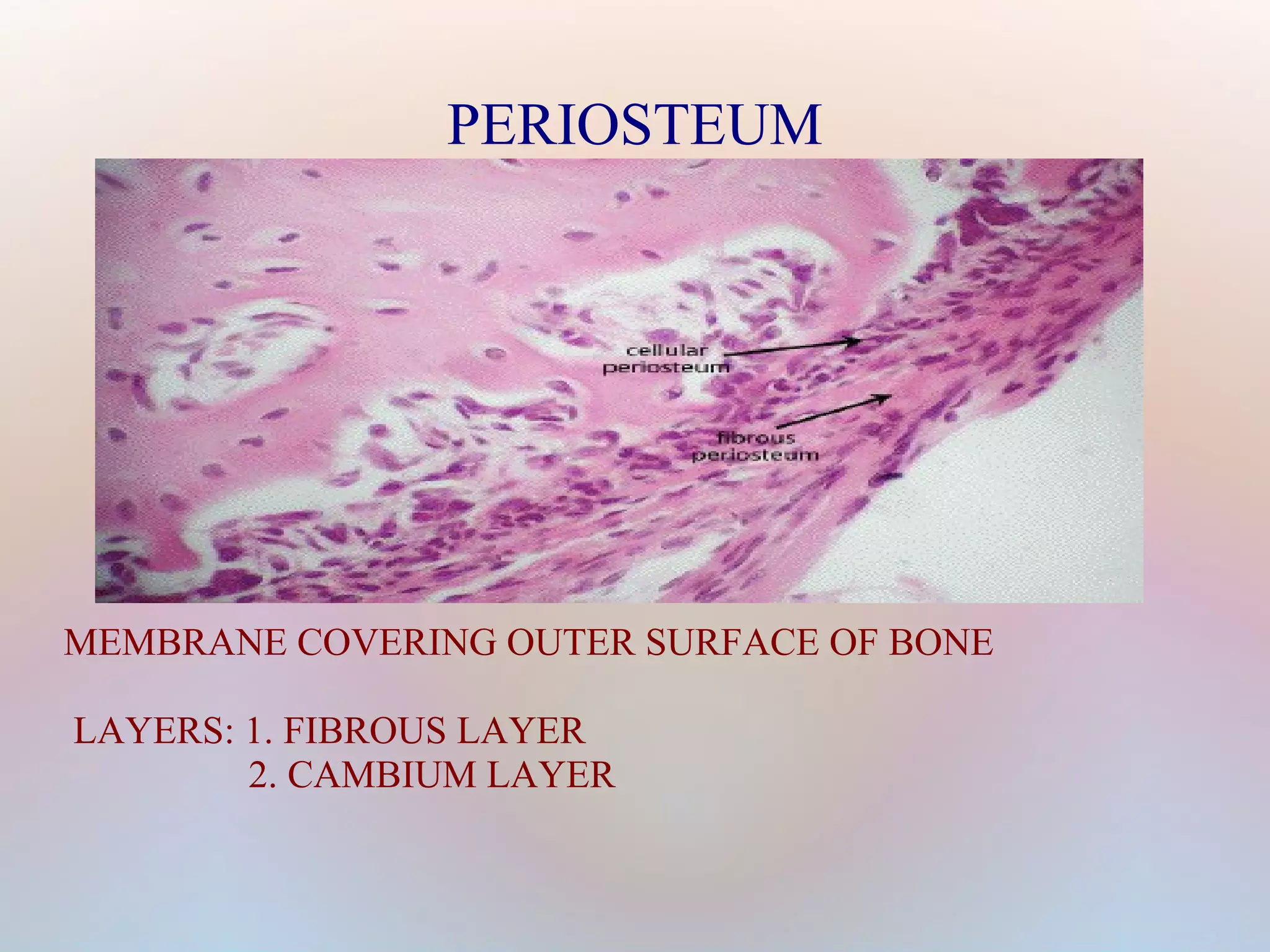
PERIOSTEUM 
MEMBRANE COVERING OUTER SURFACE OF BONE 
LAYERS: 1. FIBROUS LAYER 
2. CAMBIUM LAYER
OSTEOGENIC CELLS
OSTEOBLAST
OSTEOCYTE
OSTEOCLAST
Osteoclast
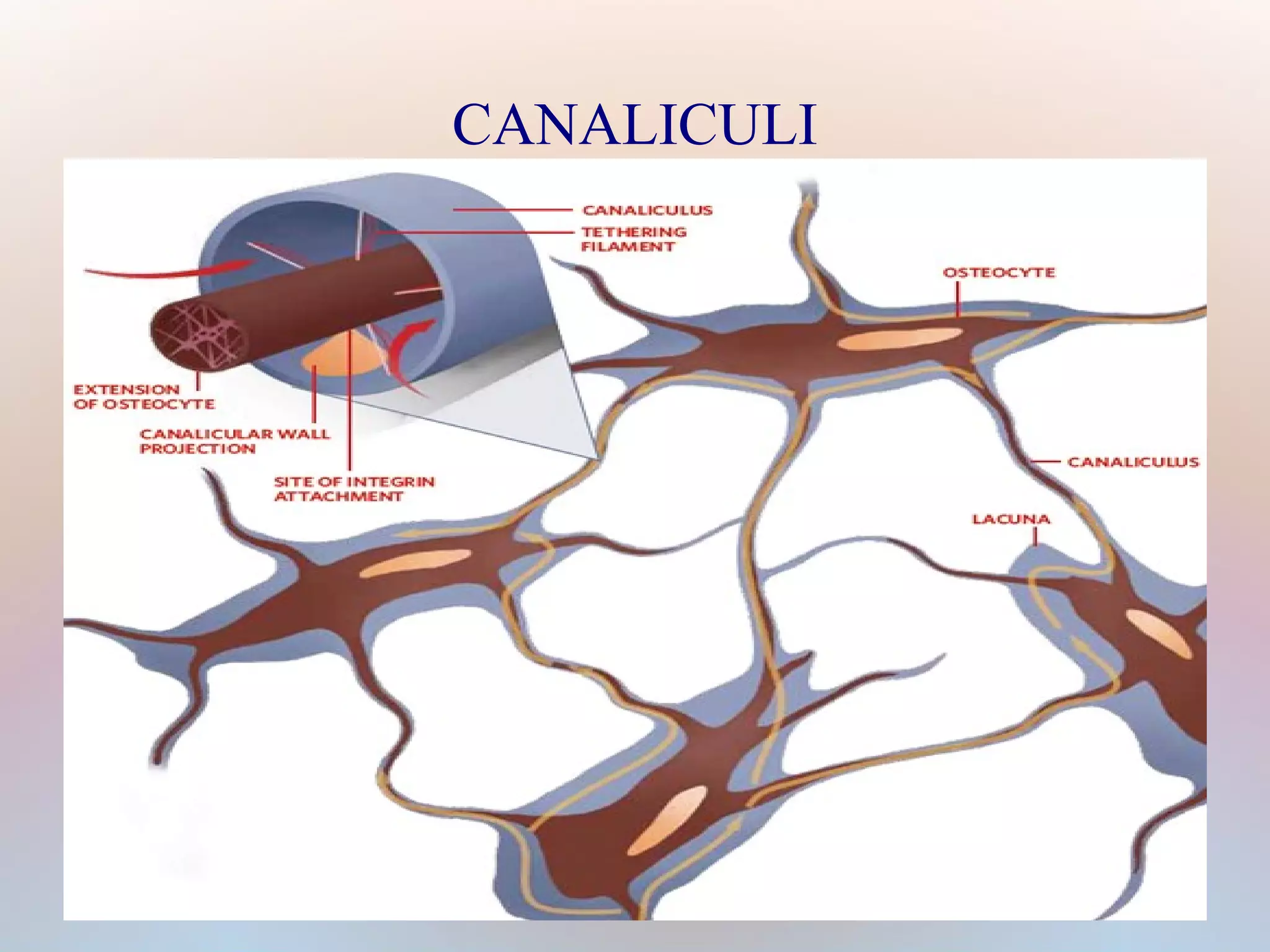
CANALICULI
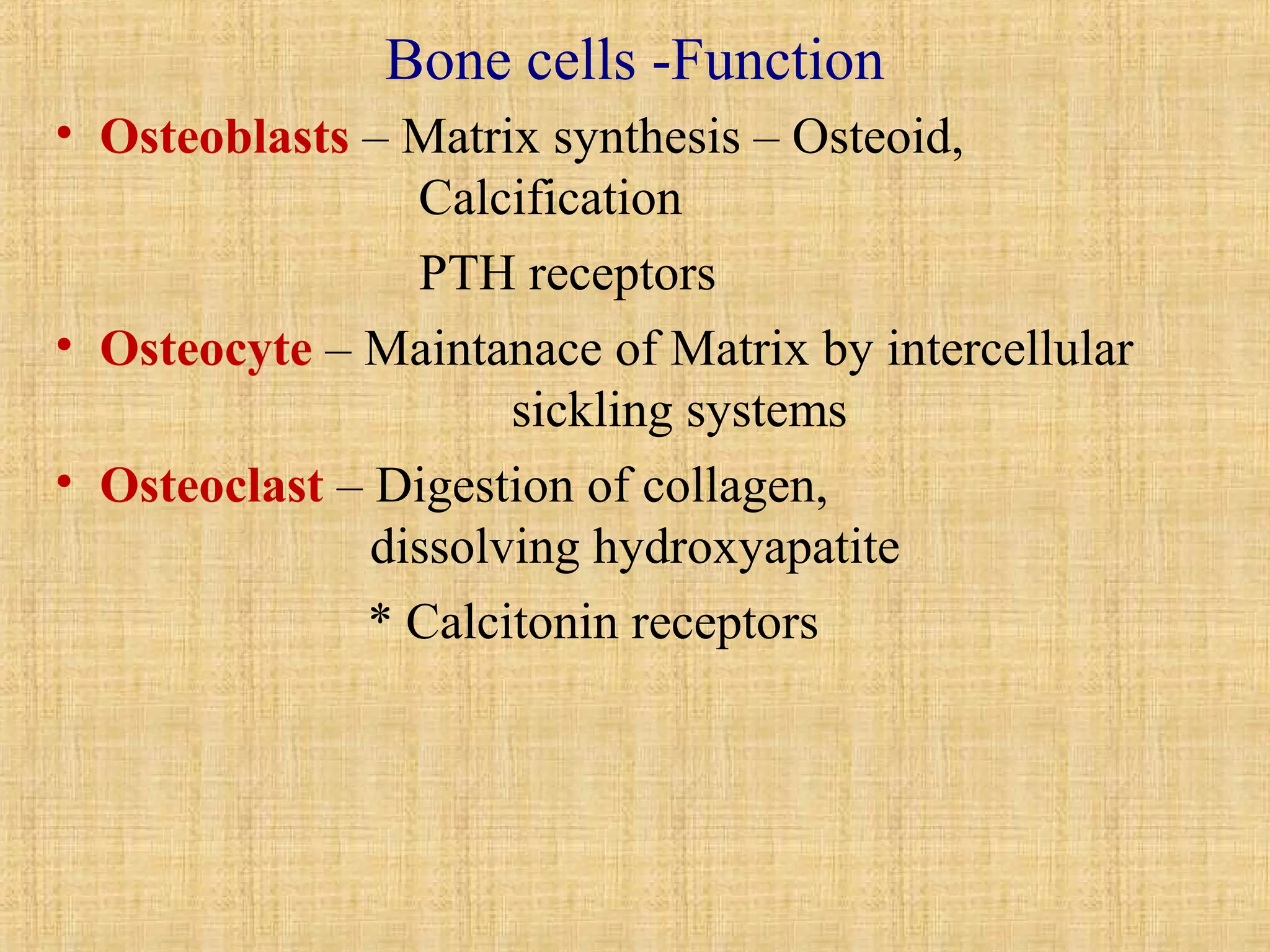
Bone cells -Function 
• Osteoblasts – Matrix synthesis – Osteoid, 
Calcification 
PTH receptors 
• Osteocyte – Maintanace of Matrix by intercellular 
sickling systems 
• Osteoclast – Digestion of collagen, 
dissolving hydroxyapatite 
* Calcitonin receptors
Bone cells- Medical application 
Rate of bone apposition – Bone growth 
Osteomalacia – Impaired mineralization 
Osteitis fibrosa cystica – osteoclast activity 
Osteopetrosis – ā€œMarble bonesā€ – Bone resorption 
defect due to osteoclastic activity 
Osteitis deformans (Paget’s disease) –Uncontrolled 
osteoclast activity followed by osteoblastic activity 
(incomplete)- Stops at osteoid level
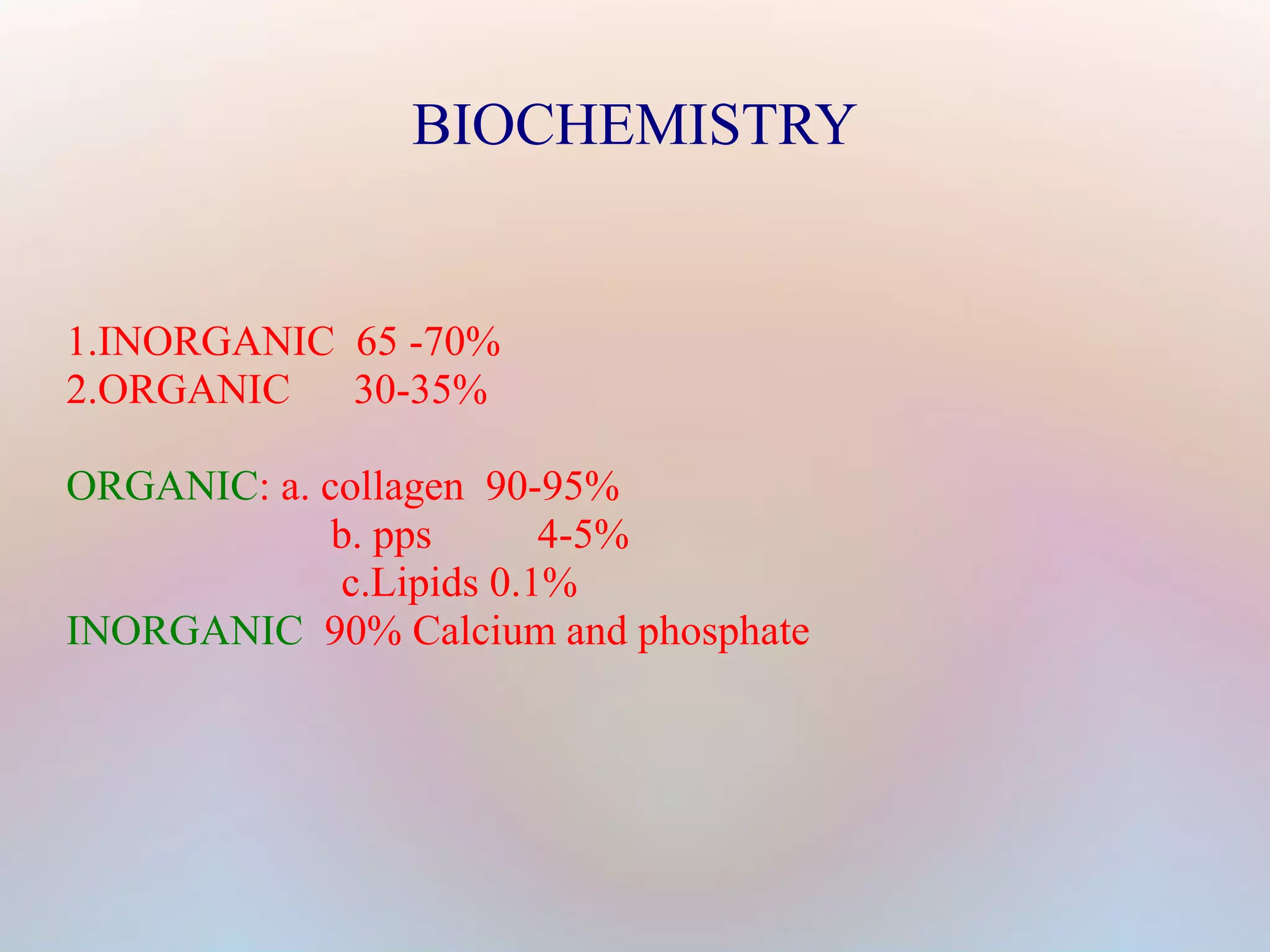
BIOCHEMISTRY 
1.INORGANIC 65 -70% 
2.ORGANIC 30-35% 
ORGANIC: a. collagen 90-95% 
b. pps 4-5% 
c.Lipids 0.1% 
INORGANIC 90% Calcium and phosphate
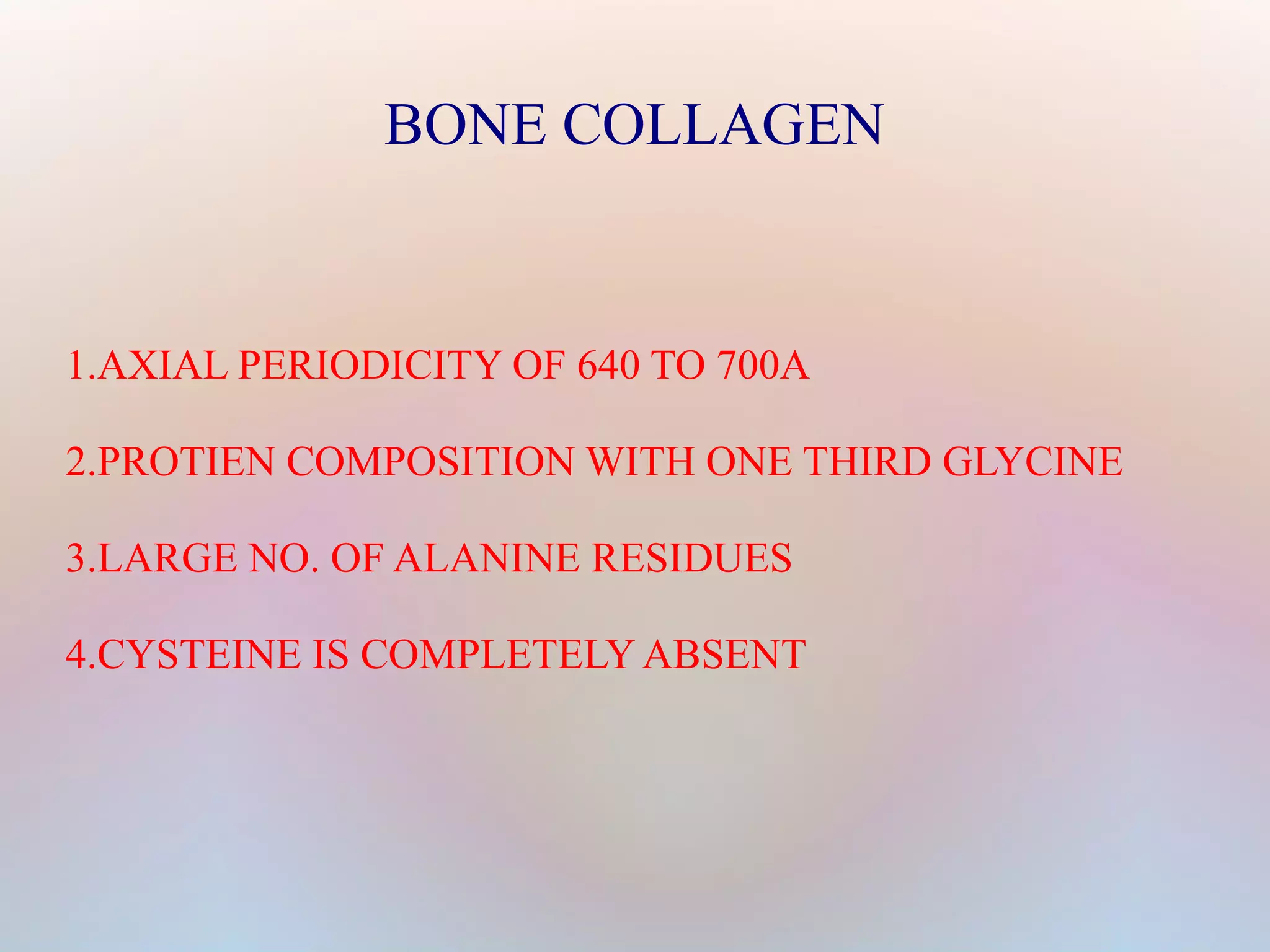
BONE COLLAGEN 
1.AXIAL PERIODICITY OF 640 TO 700A 
2.PROTIEN COMPOSITION WITH ONE THIRD GLYCINE 
3.LARGE NO. OF ALANINE RESIDUES 
4.CYSTEINE IS COMPLETELY ABSENT
Matrix 
• Fibers – Collagen Type I- Gene mutation in alfa 
1or 2 OSTEOGENESIS IMPERFACTA 
• Ground substance 
Proteoglycans – Chondroitin Sulphate, 
Keratan Sulphate 
Glycoproteins – Osteocalcin , Alkaline 
phosphatase
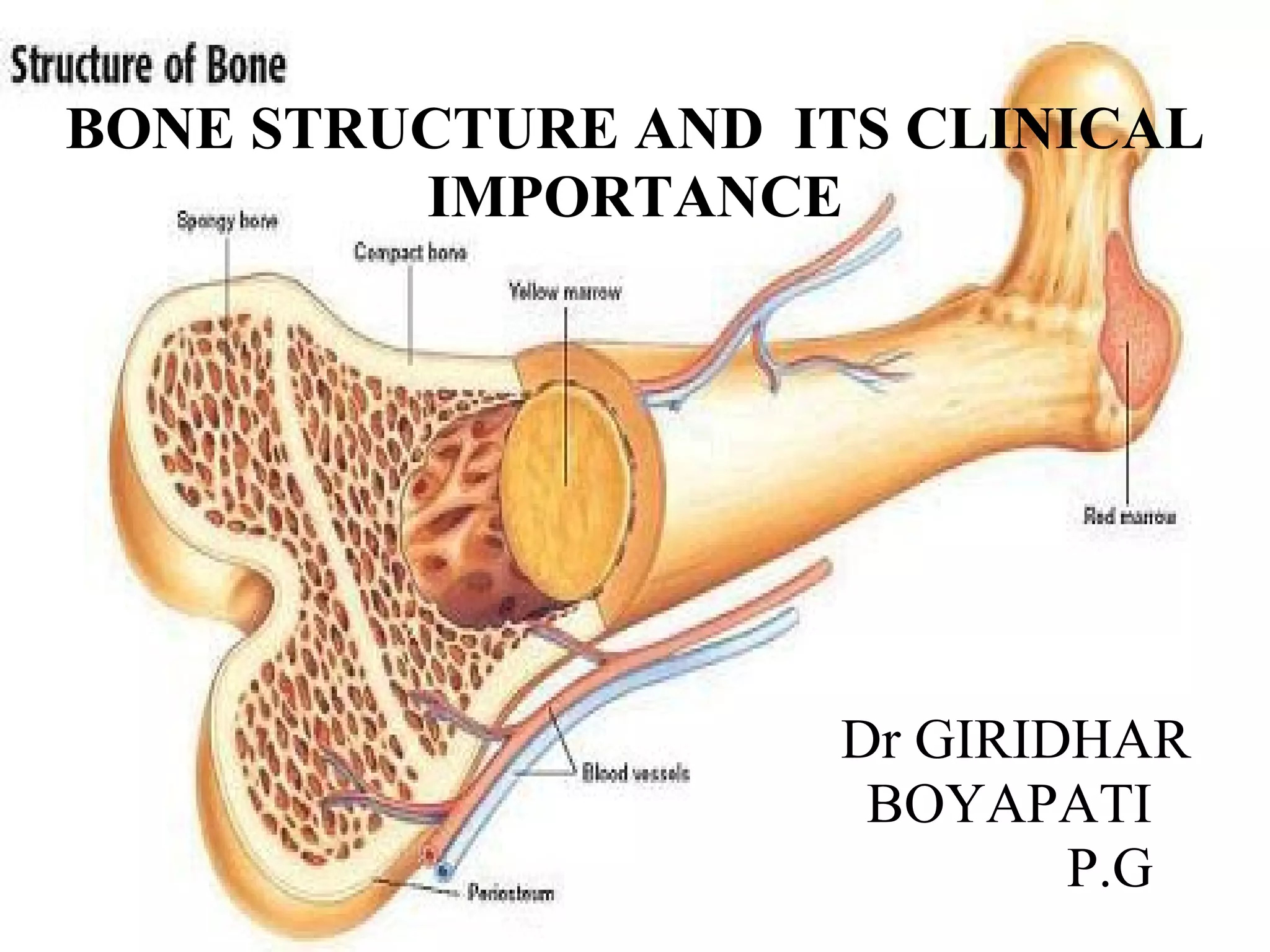
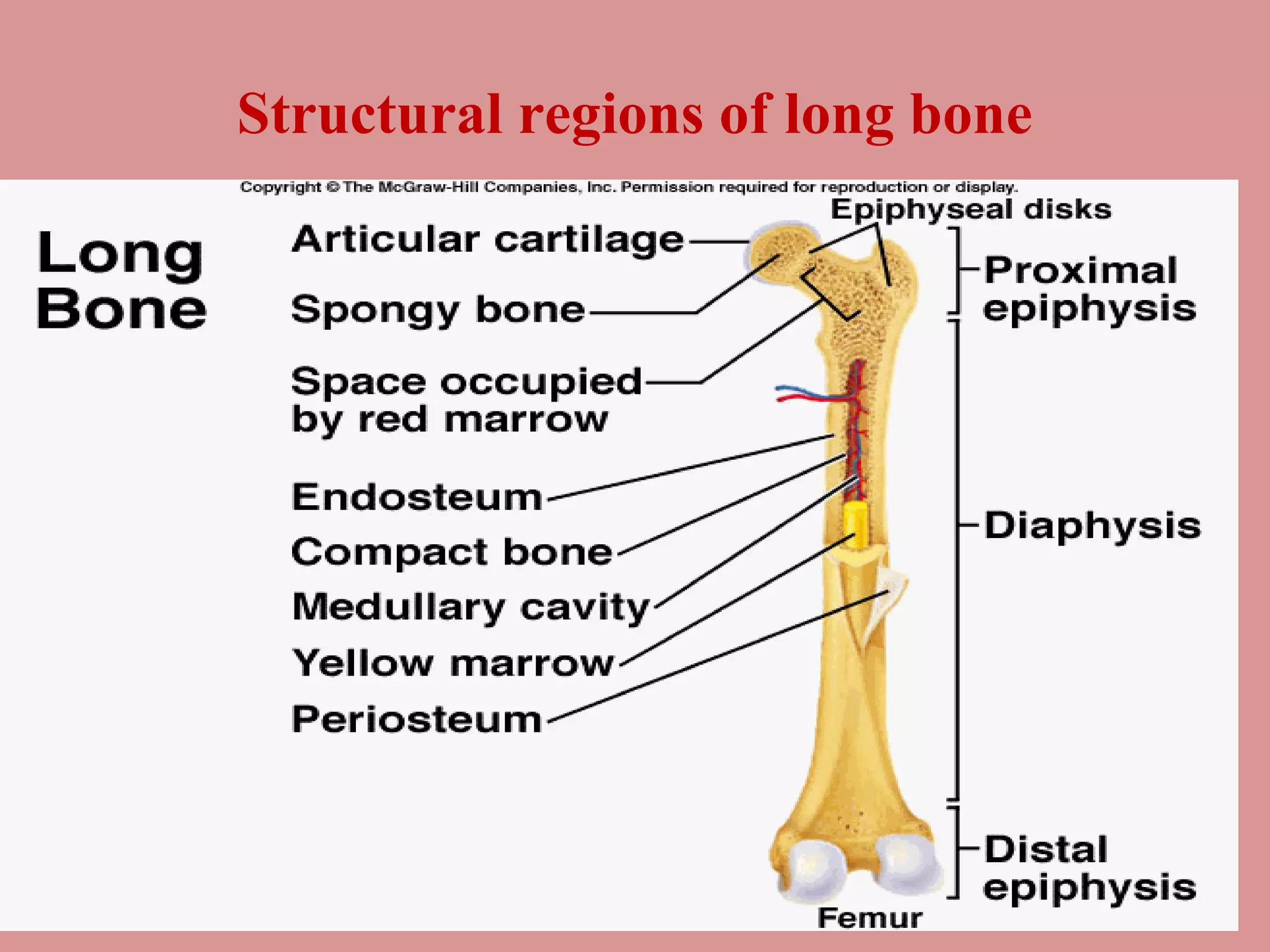
Structural regions of long bone
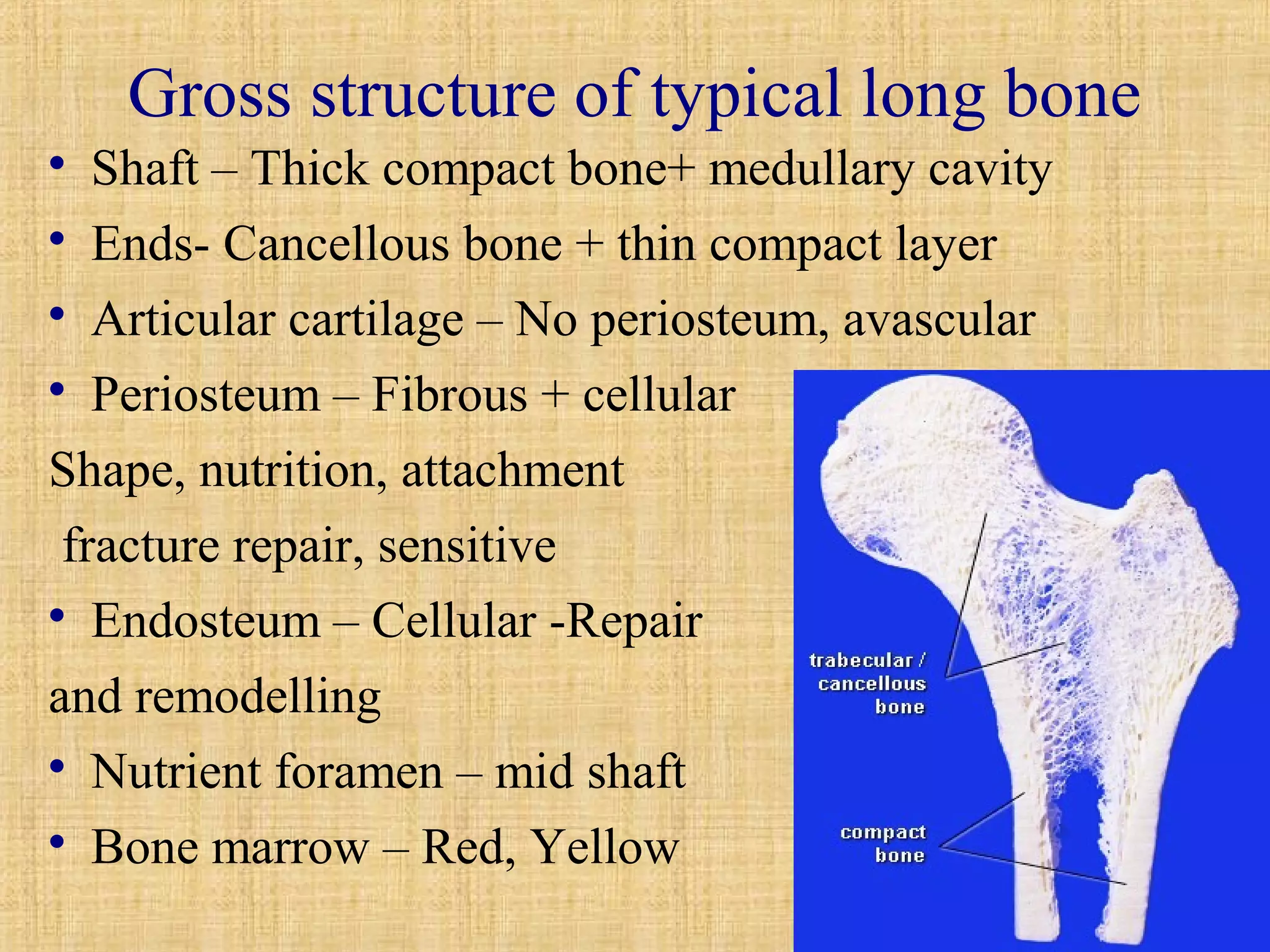
Gross structure of typical long bone 
 Shaft – Thick compact bone+ medullary cavity 
 Ends- Cancellous bone + thin compact layer 
 Articular cartilage – No periosteum, avascular 
 Periosteum – Fibrous + cellular 
Shape, nutrition, attachment 
fracture repair, sensitive 
 Endosteum – Cellular -Repair 
and remodelling 
 Nutrient foramen – mid shaft 
 Bone marrow – Red, Yellow
Parts of a growing bone 
 Epiphysis 
(Secondary) 
 Epiphyseal 
plate 
 Metaphysis 
 Diaphysis 
(Primary)
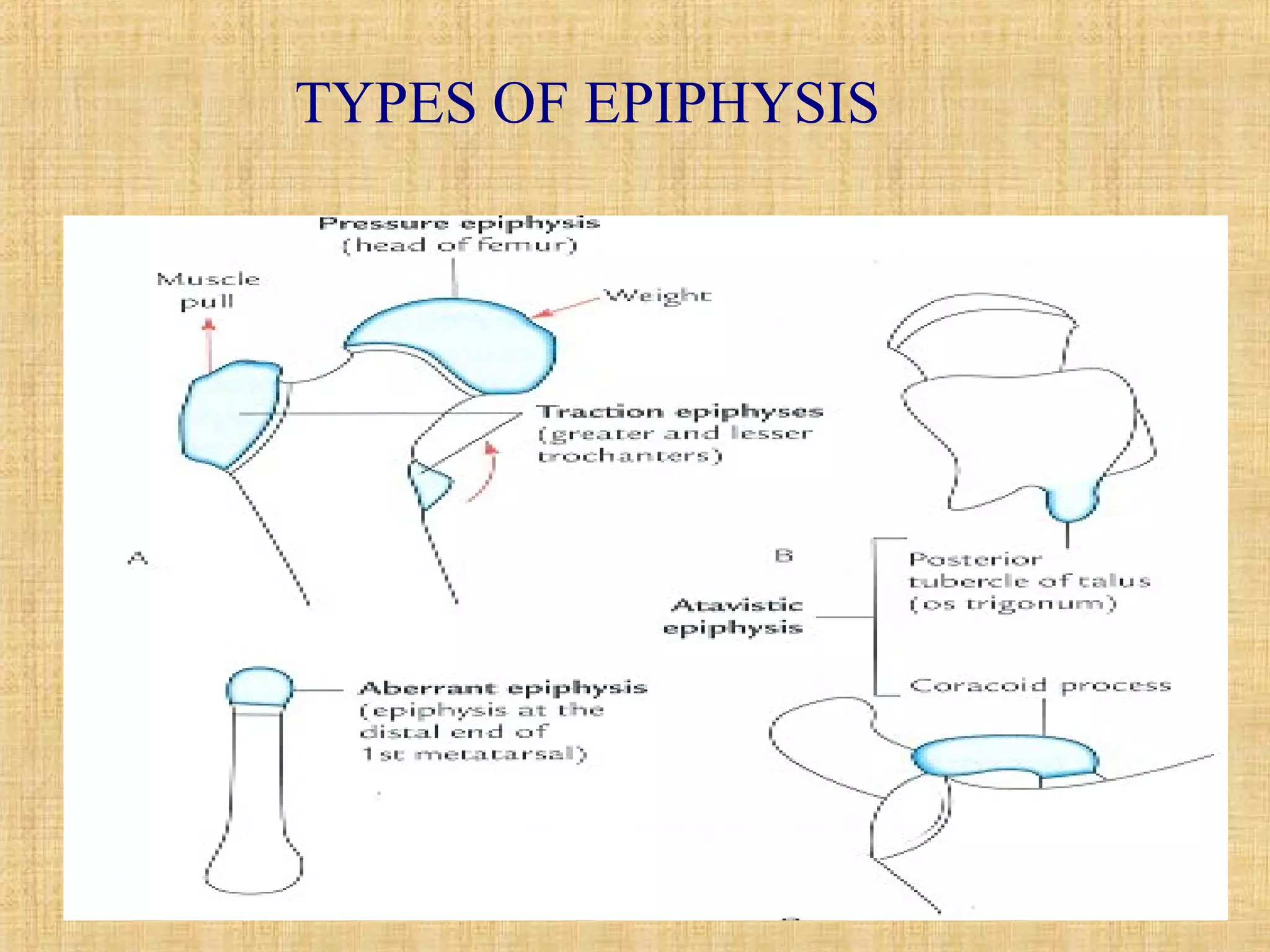
TYPES OF EPIPHYSIS
PRESSURE 
region of the long bone that forms the joint is called Pressure Epiphysis 
ARTICULAR....WT TRANSMISSON 
EX: HEAD OF FEMUR AND HUMERUS 
TRACTION 
Non-articular 
Muscle pull 
Ossifies later than Pressure 
.EX HUMERUS G.T AND L.T 
FEMUR G.T AND LT
ATAVISTIC 
COROCOID PROCESS OF SCAPULA 
OS TRIGONUM 
ABERRANT 
HEAD OF 1ST METACARPEL 
Unusual
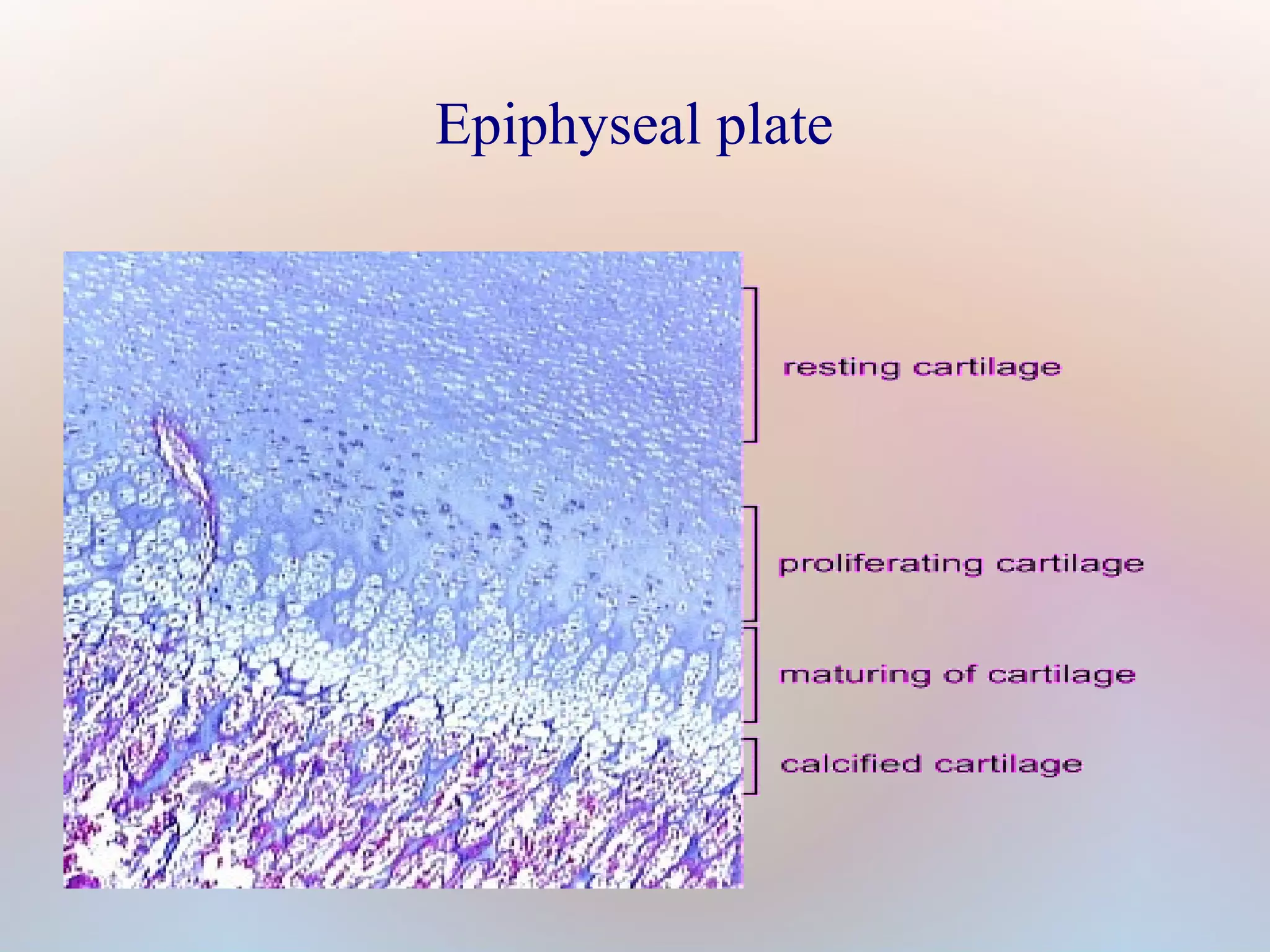
Epiphyseal plate
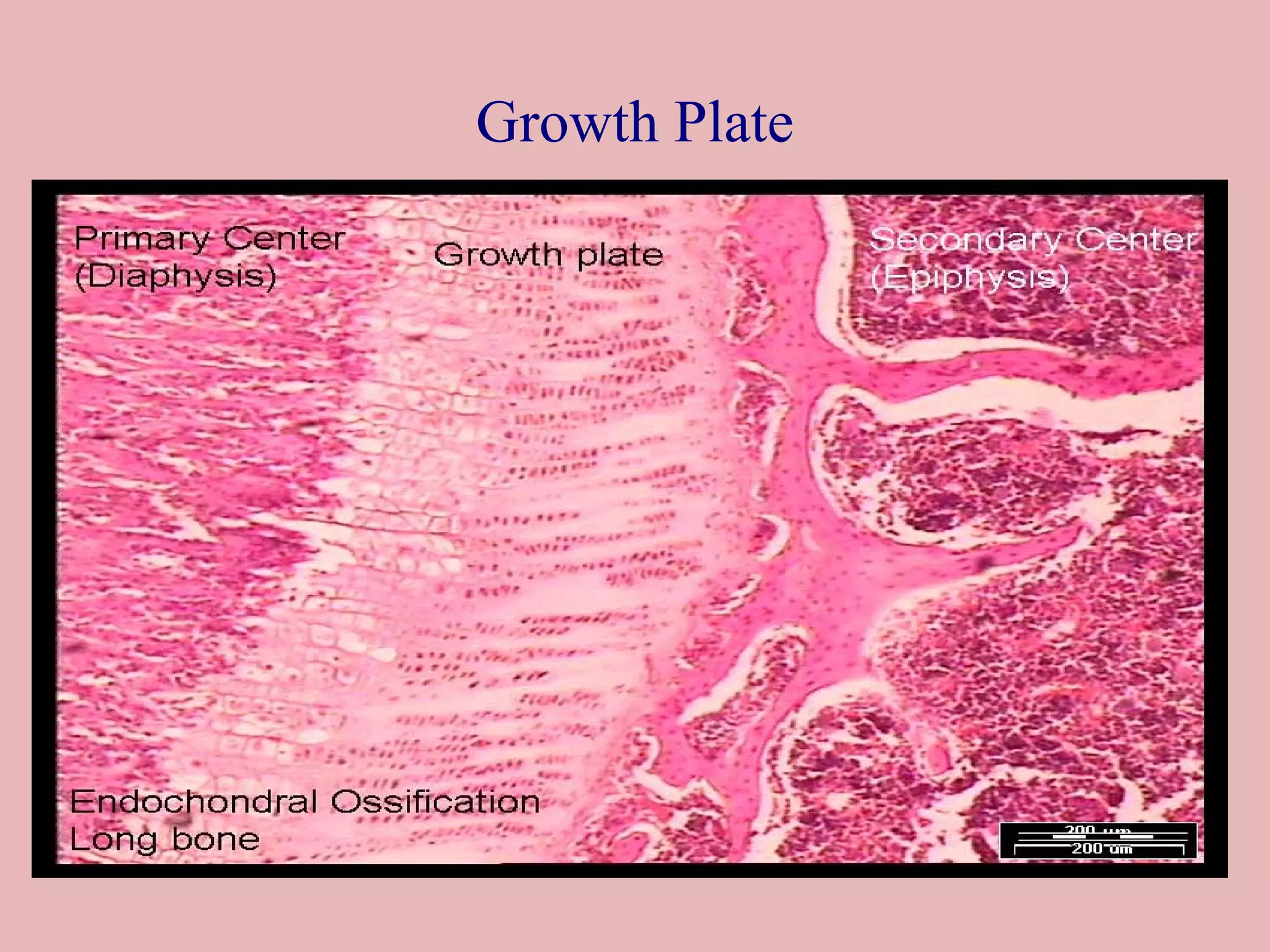
Growth Plate
ZONE 1 
INJURY CAUSES CESSATION OF GROWTH 
ZONE 2 
BONE LENGTH IS ADDED 
ZONE 3 
WEAKEST PORTION OF GROWTH PLATE
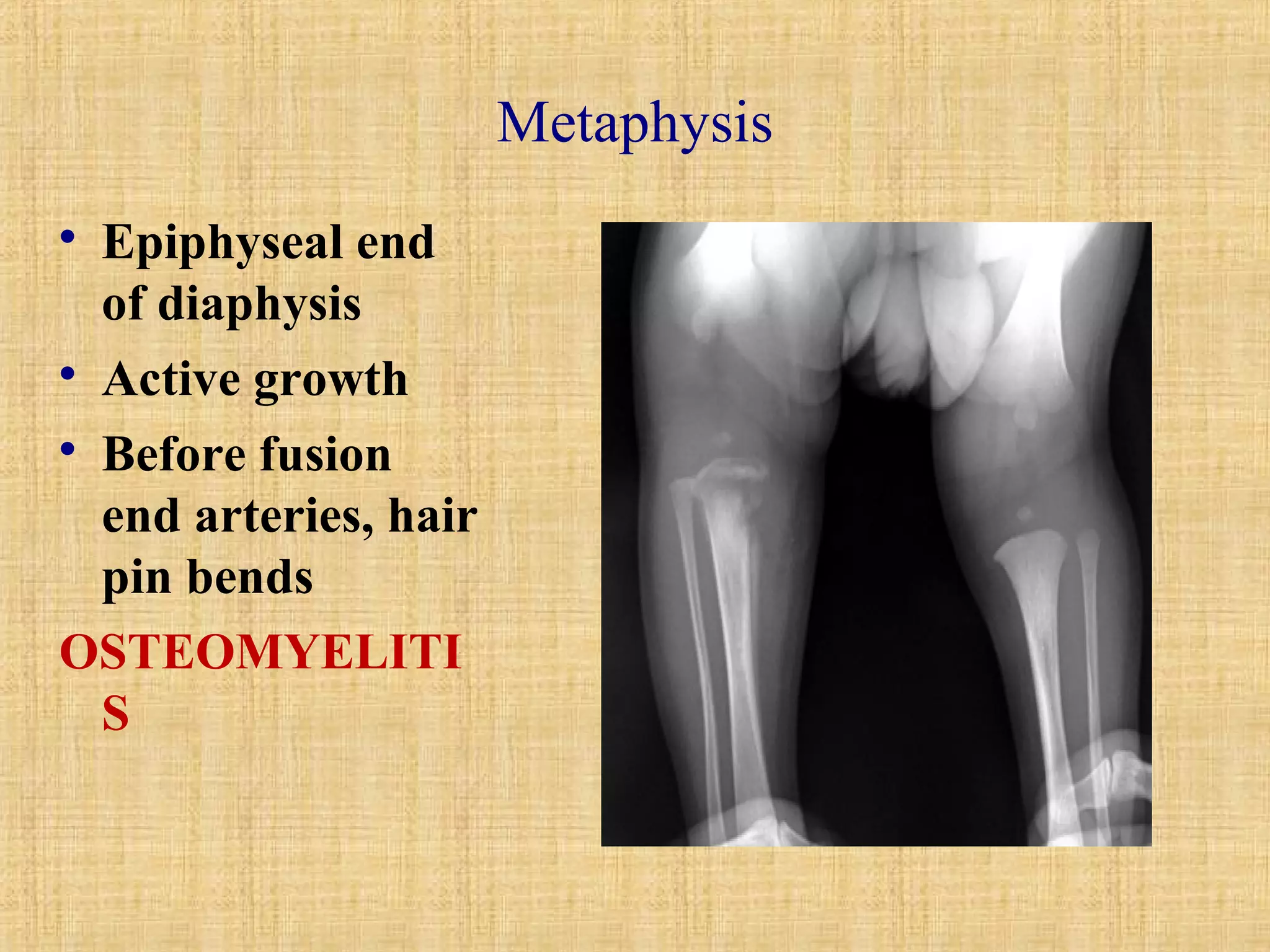
Metaphysis 
 Epiphyseal end 
of diaphysis 
 Active growth 
 Before fusion 
end arteries, hair 
pin bends 
OSTEOMYELITI 
S
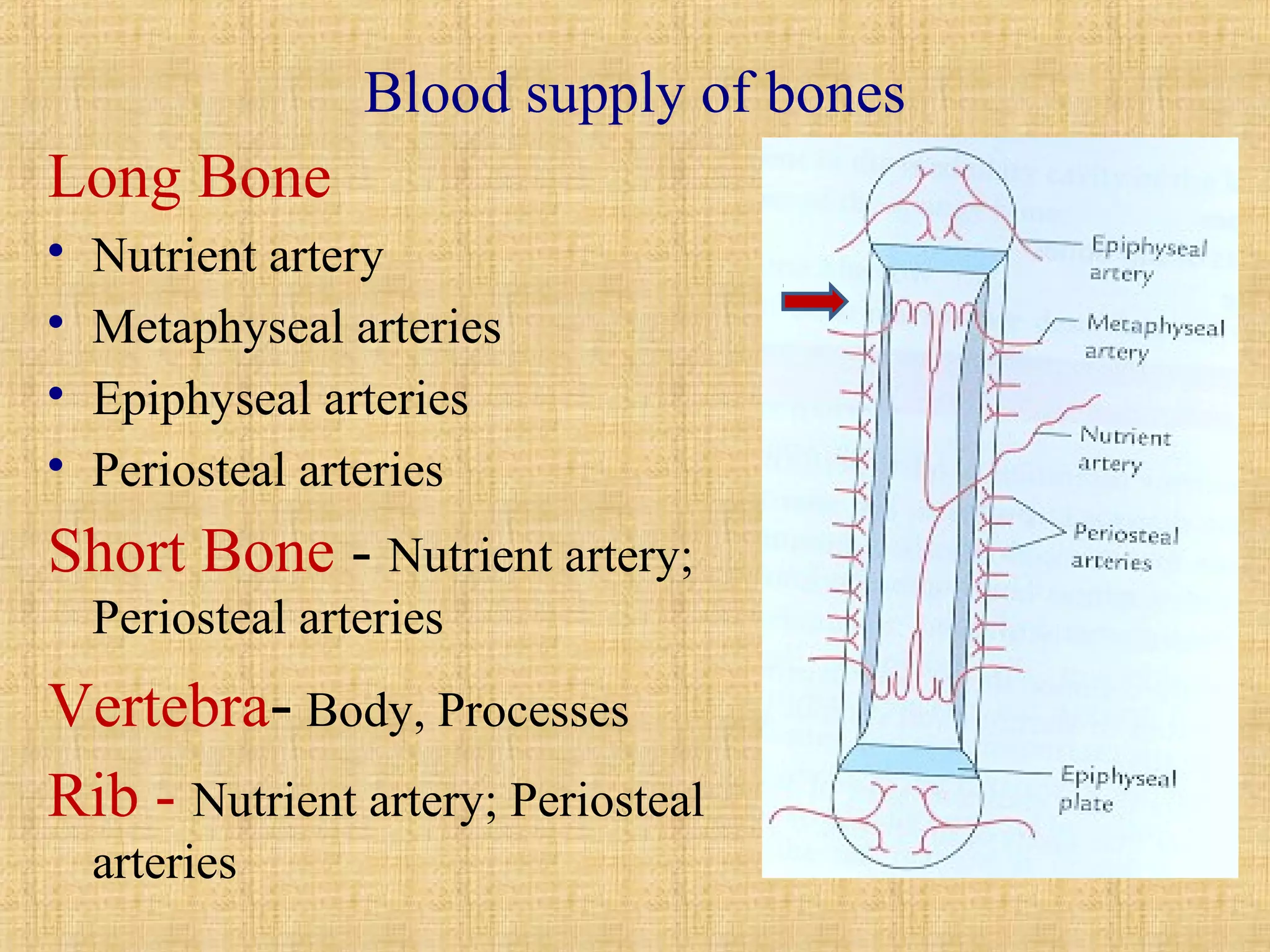
Blood supply of bones 
Long Bone 
 Nutrient artery 
 Metaphyseal arteries 
 Epiphyseal arteries 
 Periosteal arteries 
Short Bone - Nutrient artery; 
Periosteal arteries 
Vertebra- Body, Processes 
Rib - Nutrient artery; Periosteal 
arteries
Nutrient artery 
 Mid shaft 
 Tortuiosity 
 2/3rd inner compact bone 
 Hair pin loops 
 Direction – away from 
growing end 
. 
ā€œTo the elbow I go. 
From the knee I flee.ā€
Nutrient Artery 
1.Enters into the diaphysis of long bones 
through an oblique canal 
2.direction of canal is determined by relative 
amount of growth that has occurred at 
proximal and distal ends of the bone; 
3.does not branch within the cortex, divides 
after reaching the medullary cavity, 
4. direction of blood flow is centrifugal;
Disruption of Nutrient Artery causes 
1. In growing bone can result in necrosis of large portion 
of marrow & of inner two thirds of cortex 
2. This cortical death does not occur in adult bone 
because combined epiphyseal-metaphyseal collateral 
circulation is developed enough to maintain these 
areas; 
3.loss of circulation in terminal vessels of nutrient artery 
of growing bone will interfere with enchondral 
ossification;
Epiphyseal arteries 
In femoral and radial heads, which 
are almost entirely covered by 
cartilage vessels enter in region 
between articular cartilage & 
growth-plate cartilage 
In other regions, the epiphysis has 
openings that permit passage of large 
number of vessels into and out of the 
ossification centers
Obliteration of epiphyseal blood supply 
causes 
1.necrosis of epiphysis 
2. longitudinal growth ceases 
3. permanent closure of epiphyseal plate
METAPHYSIAL ARTERIES 
BRANCHES OF SYSTEMIC VESSELS 
Epiphyseal vessels are responsible for permitting longitudinal 
growth to occur, whereas metaphyseal vessels nourish 
osteoprogenitor cells, which lay down bone on cartilage 
matrix;
PERIOSTEAL ARTERIES 
Periosteal vessels send small branches thru minute channels in cortex to 
supply about outer 1/3 of cortex 
Extensive network of vessels covers entire length of the bone shaft 
Anastomoses with adjacent skeletal muscles so in cases in which the 
nutrient artery of muscle has been damaged, then periosteal vessels 
may temporarily serve as the primary blood supply;
BLOOD SUPPLY OF GROWTH PLATE 
growth plate itself is avascular & receives nutrition from 2 sources 
1.epiphyseal vessels that supply germinal, proliferating, and upper 
hypertrophic cell layers by diffusion 
2 .metaphyseal vessels that supply zone of 
provisional calcification
In a young child, epiphyseal vessels are 
separated from metaphyseal vessels, but 
following growth arrest of the cartilage plate, 
there is 
an extensive anastomoses between 
epiphyseal vessels, metaphyseal vessels, & 
terminal branches of Nutrient Artery;
VENOUS DRAINAGE 
TRANSVERSE VENOUS CHANNELS 
CENTRAL VENOUS SINUS 
NUTRIENT VEIN 
-ONLY 5-10% OF VENOUS DRINAGE IS THROUGH NUTRIENT 
VEIN 
-REMAINING IS THROUGH PERIOSTEAL VENOUS DRINAGE
Circulatory disturbances 
PHYSIS AND EPIPHYSIS 
1.Legg–Calve–Perthes Disease: Circulatory disturbance to the capital 
femoral epiphysis 
2.Physeal Trauma 
METAPHYSIS 
1.Haematogenous Osteomyelitis 
2.Metastasis. 
DIAPHYSIS 
1.Intramedullary Reaming 
2.Fracture Healing 
PERIOSTEAL BLOOD SUPPLY 
1.Paralytic conditions
Spongy bone 
1. loose network of bone trabecule 
2. interconnected 
3. arranged along lines of maximum stress
Spongy Bone 
Superimposed lamllae 
No Haversian system 
Lamellated trabeculae 
Red marrow
Spongy 
Bone- 
No HS
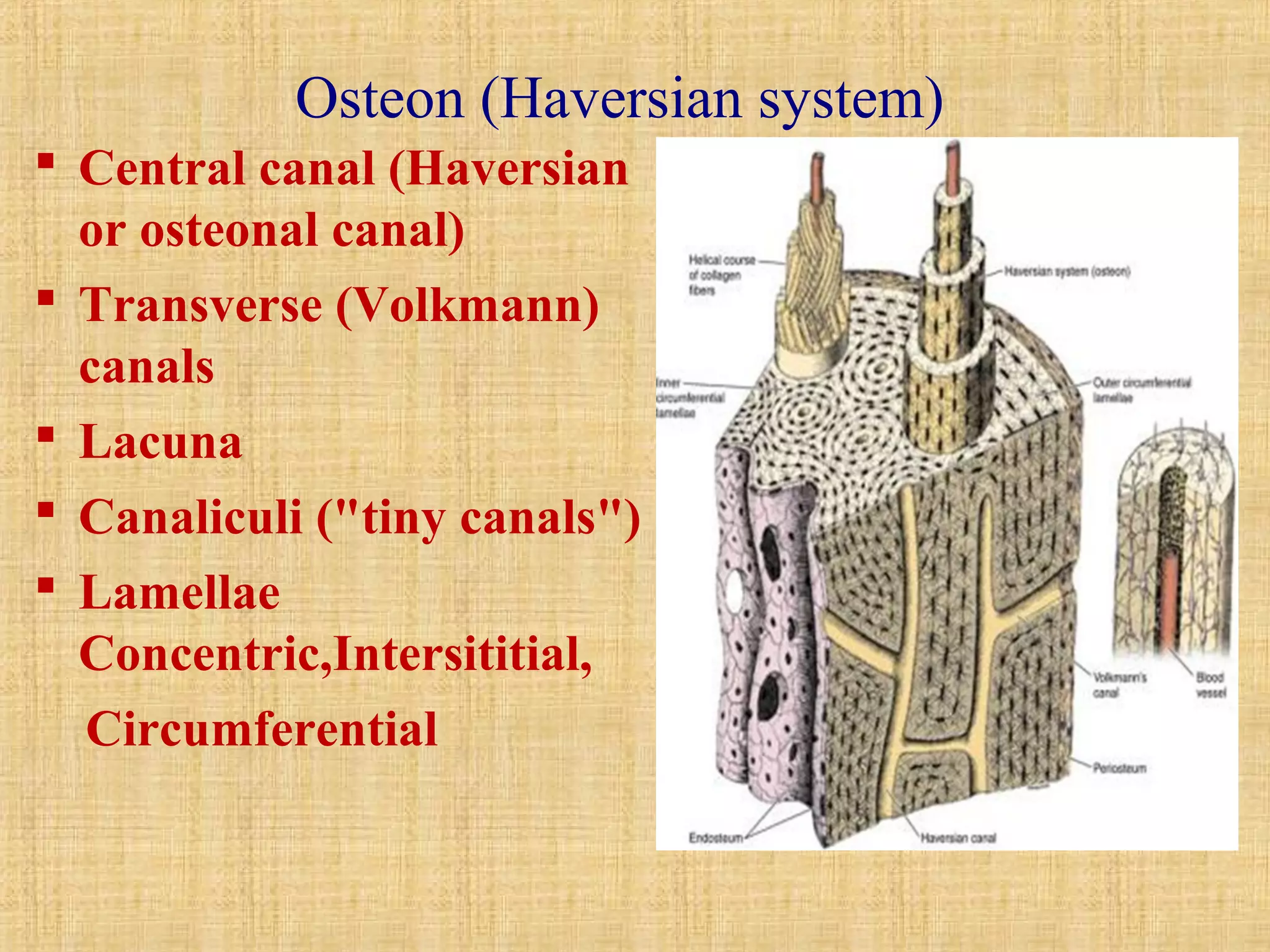
Osteon (Haversian system) 
ļ‚§ Central canal (Haversian 
or osteonal canal) 
ļ‚§ Transverse (Volkmann) 
canals 
ļ‚§ Lacuna 
ļ‚§ Canaliculi ("tiny canals") 
ļ‚§ Lamellae 
Concentric,Intersititial, 
Circumferential
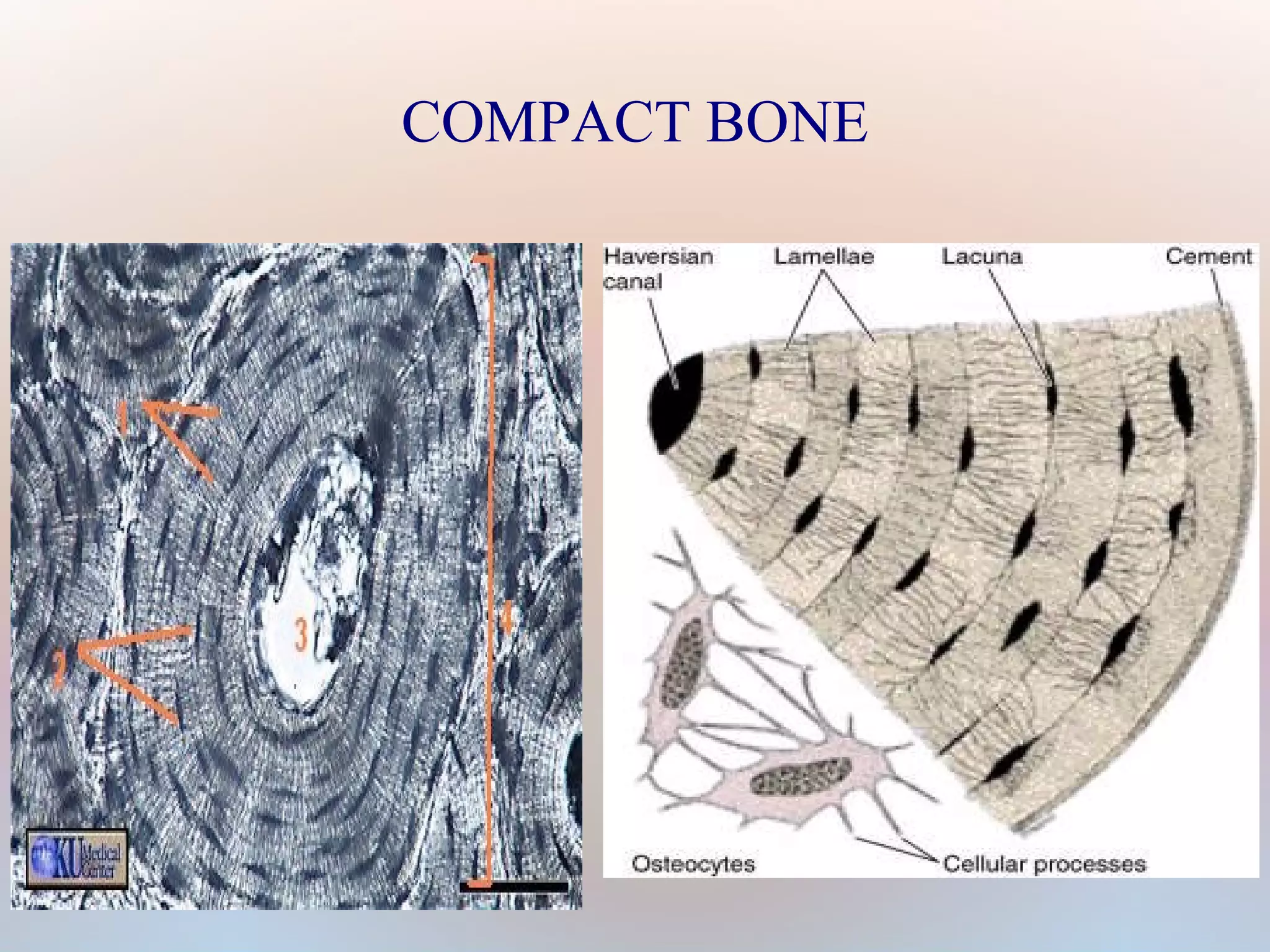
Compact bone
COMPACT BONE
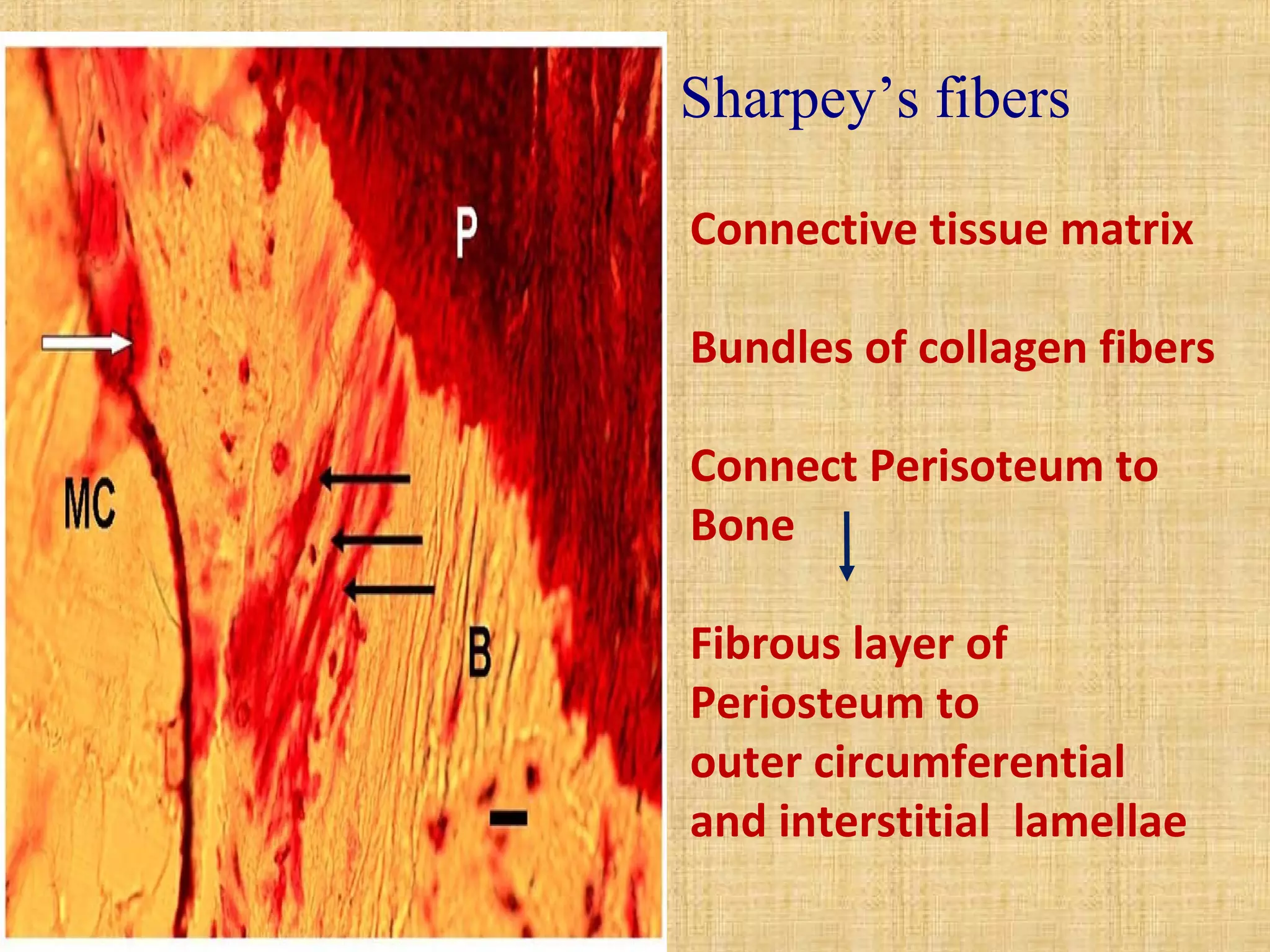
Sharpey’s fibers 
Connective tissue matrix 
Bundles of collagen fibers 
Connect Perisoteum to 
Bone 
Fibrous layer of 
Periosteum to 
outer circumferential 
and interstitial lamellae
Growing Bone 
BONE GROWTH 
1. Appositional 
2. Endochondral
Factors affecting growth of a bone 
 Nutritional 
 Vit. A - Co-ordination of osteoblastic and 
osteoclastic activity 
Vit.C – Synthesis of organic matrix 
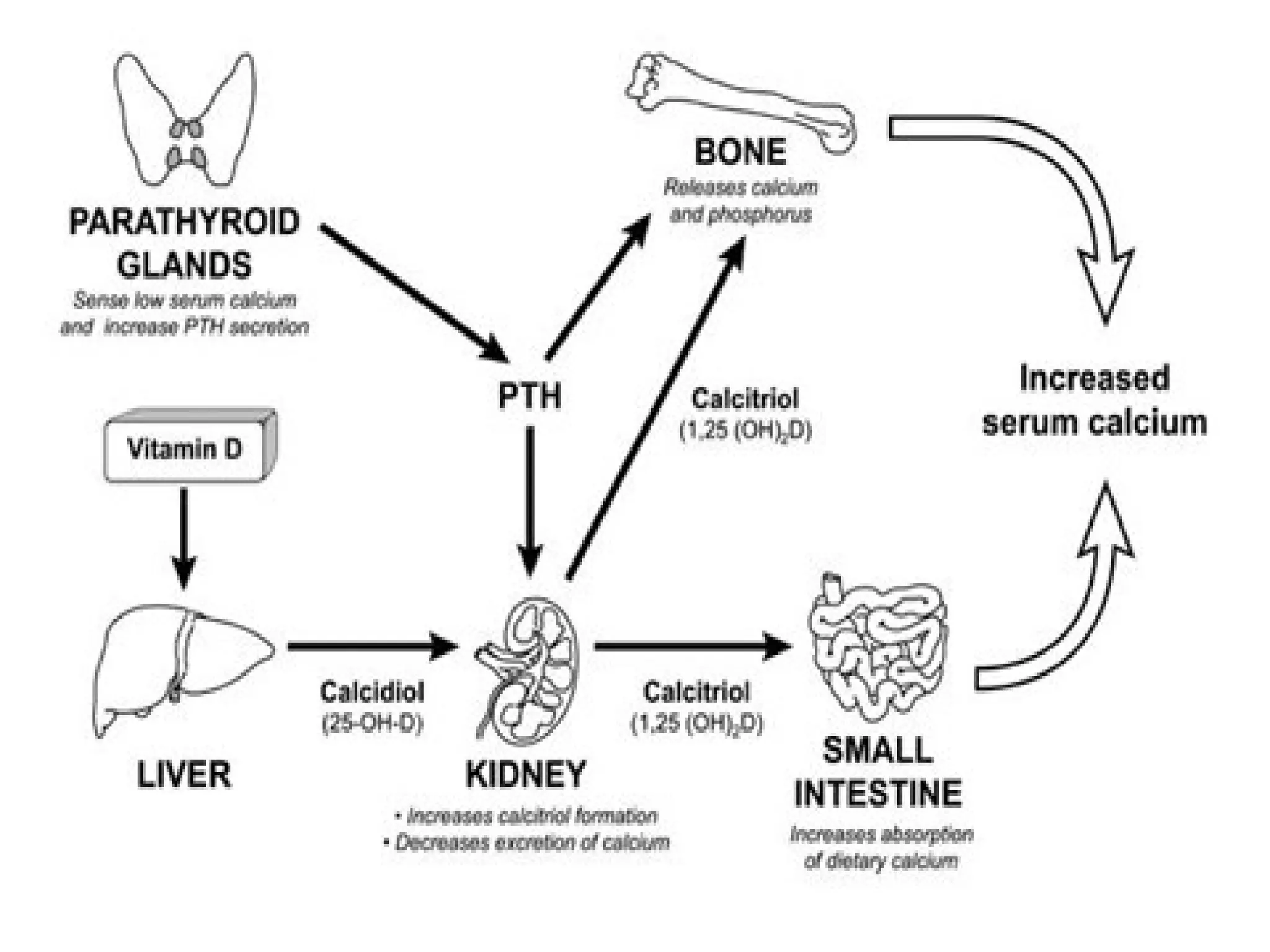
Vit.D – Absorption of Ca, P 
Rickets, Osteomalacia 
(Calcification deficiency) 
Calcium – Decalcification of bone
Factors affecting growth of a bone 
 Hormonal – 
• Pituitary - GH- Dwarfism; Gigantism, 
Acromegaly 
• Thyroid - Calcitonin 
Parathyroid – PTH Decalcification 
Sex Hormones - Androgens, estrogens - Stimulators 
 Mechanical factors 
Tensile forces – Bone formation 
Compressive forces – Bone resorption
Ossification Centre
Rules of Ossification 
 Primary centers - before birth 
except carpal and tarsal (except calcaneus, talus, 
cuboid) 
 Secondary centers - after birth 
except lower end of femur, upper end of tibia, 
humerus 
 Center which appears first unites last 
except lower end of FIBULA
Rules of Ossification 
 Center which appears later unites first 
except upper end of fibula 
 Direction of nutrient artery - away from 
growing end 
except fibula 
 Growing end is one where center 
appears first and unites last 
except fibula
Fracture Healing 1. Hematoma 
formation 
Macrophages 
Osteoclasts 
2. Fibrocartilaginous 
callus formation 
Periosteum Endosteum 
3. Bony callus 
formation 
Ossification (EC & IM) 
4. Remodeling 
Sec.bone formation
Bone remodeling cycle
Bone structure and clinical importance

Bone structure and clinical importance

  • 1.
    BONE STRUCTURE ANDITS CLINICAL I M P O R T A N C E Dr GIRIDHAR BOYAPATI P.G
  • 2.
    What is Bone?– Mineralized connective tissue - constitute part of the endoskeleton of vertebrates
  • 3.
    Classification REGION- Axial,Appendicular SHAPE - Long bones, short bones, irregular, pneumatic, sesamoid, accessory STRUCTURE Macroscopic – Compact Spongy Microscopic – Lamellar (Secondary Bone) Woven/fibrous(Primary Bone) DEVELOPMENT – Membranous Cartilaginous Membrano-cartilaginous
  • 4.
    ENDOCHONDRAL OSSIFICATION MESENCHYMALCELLS CHONDROBLASTS CHONDROCYTES CARTILAGE MODEL OF FUTURE BONE OSTEOBLASTS
  • 5.
  • 6.
  • 7.
    Endochondral Ossification Defects– AD Inheritance • Achondroplasia • Thanatophoric Dysplasia • Hypochondroplasia Mutation in FGFR 3 gene
  • 8.
  • 9.
    EXAMPLES OF INTRAMEMBRANOUS OSSIFICATION 1. EMBRYONIC FLAT BONES : SKULL, PELVIS, MAXILLA, MANDIBLE, CLAVICLE 2. DISTRACTION OSTEOGENESIS 3. FRACTURE HEALING WITH RIGID FIXATION 4.BLASTEM BONE
  • 10.
    PERIOSTEAL OSSIFICATION OSTEOGENICCELLS FROM PERIOSTEUM LAY PARLLEL LAYERS OF COMPACT BONE
  • 11.
    Bone cells ļ‚§Osteoprogenitors (Pleuripotent stem cells) ļ‚§Osteoblasts ("bone makers") ļ‚§Osteocytes ("bone cells") ļ‚§Osteoclasts (ā€œbone breakersā€) remodeling MATRIX Ground substance Proteoglycans Glycoproteins Minerals Water Fibers
  • 12.
    Cells of Bone(Primary/Temporary) Osteoprogenitor Osteoclast Osteoblast Osteocyte Osteoid
  • 13.
    PERIOSTEUM MEMBRANE COVERINGOUTER SURFACE OF BONE LAYERS: 1. FIBROUS LAYER 2. CAMBIUM LAYER
  • 14.
  • 15.
  • 16.
  • 17.
  • 18.
  • 19.
  • 20.
    Bone cells -Function • Osteoblasts – Matrix synthesis – Osteoid, Calcification PTH receptors • Osteocyte – Maintanace of Matrix by intercellular sickling systems • Osteoclast – Digestion of collagen, dissolving hydroxyapatite * Calcitonin receptors
  • 21.
    Bone cells- Medicalapplication Rate of bone apposition – Bone growth Osteomalacia – Impaired mineralization Osteitis fibrosa cystica – osteoclast activity Osteopetrosis – ā€œMarble bonesā€ – Bone resorption defect due to osteoclastic activity Osteitis deformans (Paget’s disease) –Uncontrolled osteoclast activity followed by osteoblastic activity (incomplete)- Stops at osteoid level
  • 22.
    BIOCHEMISTRY 1.INORGANIC 65-70% 2.ORGANIC 30-35% ORGANIC: a. collagen 90-95% b. pps 4-5% c.Lipids 0.1% INORGANIC 90% Calcium and phosphate
  • 23.
    BONE COLLAGEN 1.AXIALPERIODICITY OF 640 TO 700A 2.PROTIEN COMPOSITION WITH ONE THIRD GLYCINE 3.LARGE NO. OF ALANINE RESIDUES 4.CYSTEINE IS COMPLETELY ABSENT
  • 24.
    Matrix • Fibers– Collagen Type I- Gene mutation in alfa 1or 2 OSTEOGENESIS IMPERFACTA • Ground substance Proteoglycans – Chondroitin Sulphate, Keratan Sulphate Glycoproteins – Osteocalcin , Alkaline phosphatase
  • 25.
  • 26.
    Gross structure oftypical long bone  Shaft – Thick compact bone+ medullary cavity  Ends- Cancellous bone + thin compact layer  Articular cartilage – No periosteum, avascular  Periosteum – Fibrous + cellular Shape, nutrition, attachment fracture repair, sensitive  Endosteum – Cellular -Repair and remodelling  Nutrient foramen – mid shaft  Bone marrow – Red, Yellow
  • 27.
    Parts of agrowing bone  Epiphysis (Secondary)  Epiphyseal plate  Metaphysis  Diaphysis (Primary)
  • 28.
  • 29.
    PRESSURE region ofthe long bone that forms the joint is called Pressure Epiphysis ARTICULAR....WT TRANSMISSON EX: HEAD OF FEMUR AND HUMERUS TRACTION Non-articular Muscle pull Ossifies later than Pressure .EX HUMERUS G.T AND L.T FEMUR G.T AND LT
  • 30.
    ATAVISTIC COROCOID PROCESSOF SCAPULA OS TRIGONUM ABERRANT HEAD OF 1ST METACARPEL Unusual
  • 31.
  • 32.
  • 33.
    ZONE 1 INJURYCAUSES CESSATION OF GROWTH ZONE 2 BONE LENGTH IS ADDED ZONE 3 WEAKEST PORTION OF GROWTH PLATE
  • 34.
    Metaphysis  Epiphysealend of diaphysis  Active growth  Before fusion end arteries, hair pin bends OSTEOMYELITI S
  • 35.
    Blood supply ofbones Long Bone  Nutrient artery  Metaphyseal arteries  Epiphyseal arteries  Periosteal arteries Short Bone - Nutrient artery; Periosteal arteries Vertebra- Body, Processes Rib - Nutrient artery; Periosteal arteries
  • 36.
    Nutrient artery Mid shaft  Tortuiosity  2/3rd inner compact bone  Hair pin loops  Direction – away from growing end . ā€œTo the elbow I go. From the knee I flee.ā€
  • 37.
    Nutrient Artery 1.Entersinto the diaphysis of long bones through an oblique canal 2.direction of canal is determined by relative amount of growth that has occurred at proximal and distal ends of the bone; 3.does not branch within the cortex, divides after reaching the medullary cavity, 4. direction of blood flow is centrifugal;
  • 38.
    Disruption of NutrientArtery causes 1. In growing bone can result in necrosis of large portion of marrow & of inner two thirds of cortex 2. This cortical death does not occur in adult bone because combined epiphyseal-metaphyseal collateral circulation is developed enough to maintain these areas; 3.loss of circulation in terminal vessels of nutrient artery of growing bone will interfere with enchondral ossification;
  • 39.
    Epiphyseal arteries Infemoral and radial heads, which are almost entirely covered by cartilage vessels enter in region between articular cartilage & growth-plate cartilage In other regions, the epiphysis has openings that permit passage of large number of vessels into and out of the ossification centers
  • 40.
    Obliteration of epiphysealblood supply causes 1.necrosis of epiphysis 2. longitudinal growth ceases 3. permanent closure of epiphyseal plate
  • 41.
    METAPHYSIAL ARTERIES BRANCHESOF SYSTEMIC VESSELS Epiphyseal vessels are responsible for permitting longitudinal growth to occur, whereas metaphyseal vessels nourish osteoprogenitor cells, which lay down bone on cartilage matrix;
  • 42.
    PERIOSTEAL ARTERIES Periostealvessels send small branches thru minute channels in cortex to supply about outer 1/3 of cortex Extensive network of vessels covers entire length of the bone shaft Anastomoses with adjacent skeletal muscles so in cases in which the nutrient artery of muscle has been damaged, then periosteal vessels may temporarily serve as the primary blood supply;
  • 44.
    BLOOD SUPPLY OFGROWTH PLATE growth plate itself is avascular & receives nutrition from 2 sources 1.epiphyseal vessels that supply germinal, proliferating, and upper hypertrophic cell layers by diffusion 2 .metaphyseal vessels that supply zone of provisional calcification
  • 45.
    In a youngchild, epiphyseal vessels are separated from metaphyseal vessels, but following growth arrest of the cartilage plate, there is an extensive anastomoses between epiphyseal vessels, metaphyseal vessels, & terminal branches of Nutrient Artery;
  • 46.
    VENOUS DRAINAGE TRANSVERSEVENOUS CHANNELS CENTRAL VENOUS SINUS NUTRIENT VEIN -ONLY 5-10% OF VENOUS DRINAGE IS THROUGH NUTRIENT VEIN -REMAINING IS THROUGH PERIOSTEAL VENOUS DRINAGE
  • 47.
    Circulatory disturbances PHYSISAND EPIPHYSIS 1.Legg–Calve–Perthes Disease: Circulatory disturbance to the capital femoral epiphysis 2.Physeal Trauma METAPHYSIS 1.Haematogenous Osteomyelitis 2.Metastasis. DIAPHYSIS 1.Intramedullary Reaming 2.Fracture Healing PERIOSTEAL BLOOD SUPPLY 1.Paralytic conditions
  • 48.
    Spongy bone 1.loose network of bone trabecule 2. interconnected 3. arranged along lines of maximum stress
  • 49.
    Spongy Bone Superimposedlamllae No Haversian system Lamellated trabeculae Red marrow
  • 50.
  • 51.
    Osteon (Haversian system) ļ‚§ Central canal (Haversian or osteonal canal) ļ‚§ Transverse (Volkmann) canals ļ‚§ Lacuna ļ‚§ Canaliculi ("tiny canals") ļ‚§ Lamellae Concentric,Intersititial, Circumferential
  • 52.
  • 53.
  • 54.
    Sharpey’s fibers Connectivetissue matrix Bundles of collagen fibers Connect Perisoteum to Bone Fibrous layer of Periosteum to outer circumferential and interstitial lamellae
  • 55.
    Growing Bone BONEGROWTH 1. Appositional 2. Endochondral
  • 56.
    Factors affecting growthof a bone  Nutritional  Vit. A - Co-ordination of osteoblastic and osteoclastic activity Vit.C – Synthesis of organic matrix Vit.D – Absorption of Ca, P Rickets, Osteomalacia (Calcification deficiency) Calcium – Decalcification of bone
  • 58.
    Factors affecting growthof a bone  Hormonal – • Pituitary - GH- Dwarfism; Gigantism, Acromegaly • Thyroid - Calcitonin Parathyroid – PTH Decalcification Sex Hormones - Androgens, estrogens - Stimulators  Mechanical factors Tensile forces – Bone formation Compressive forces – Bone resorption
  • 59.
  • 60.
    Rules of Ossification  Primary centers - before birth except carpal and tarsal (except calcaneus, talus, cuboid)  Secondary centers - after birth except lower end of femur, upper end of tibia, humerus  Center which appears first unites last except lower end of FIBULA
  • 61.
    Rules of Ossification  Center which appears later unites first except upper end of fibula  Direction of nutrient artery - away from growing end except fibula  Growing end is one where center appears first and unites last except fibula
  • 62.
    Fracture Healing 1.Hematoma formation Macrophages Osteoclasts 2. Fibrocartilaginous callus formation Periosteum Endosteum 3. Bony callus formation Ossification (EC & IM) 4. Remodeling Sec.bone formation
  • 63.