MIS -CLASSIFICATION GSMS-[SHUBHAM , MEENAKSHI, SAKSHI, GURBANI]
State the basic categories in which the information system in classified. Develop an understanding of different information systems. Purpose and Objectives
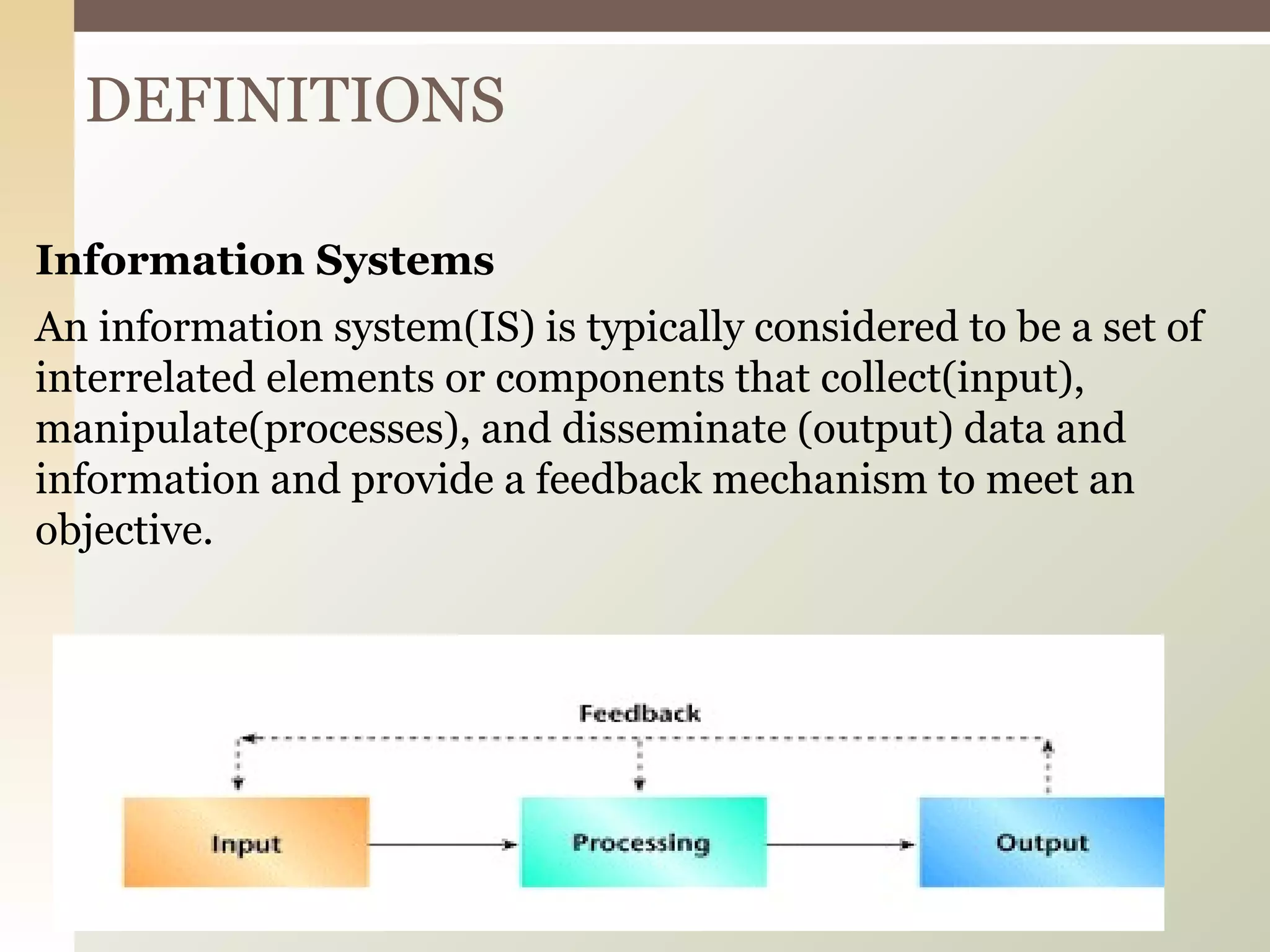
Information Systems An information system(IS) is typically considered to be a set of interrelated elements or components that collect(input), manipulate(processes), and disseminate (output) data and information and provide a feedback mechanism to meet an objective. DEFINITIONS
Types of Information Systems Informal Information System Formal Information System
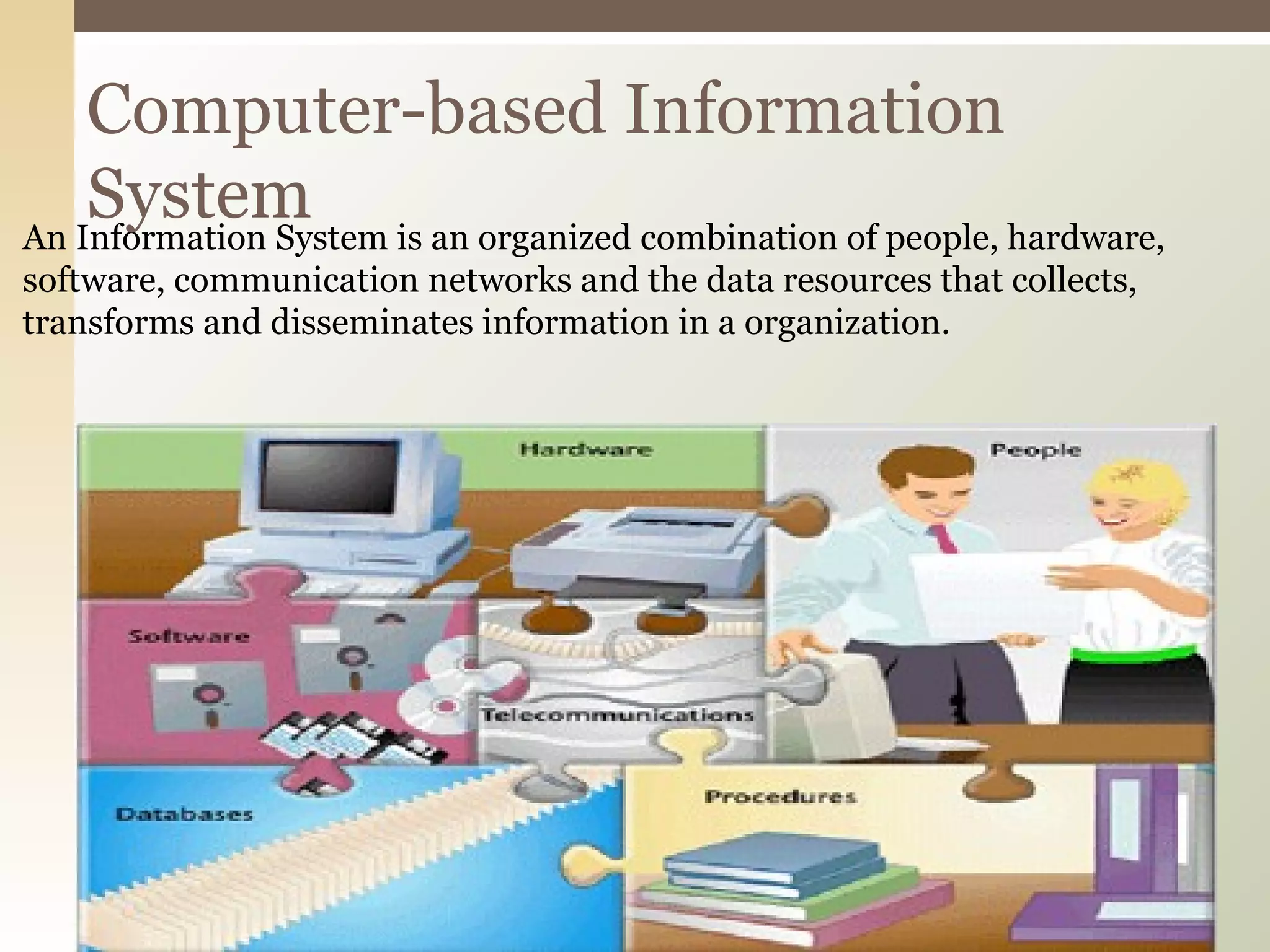
An Information System is an organized combination of people, hardware, software, communication networks and the data resources that collects, transforms and disseminates information in a organization. Computer-based Information System
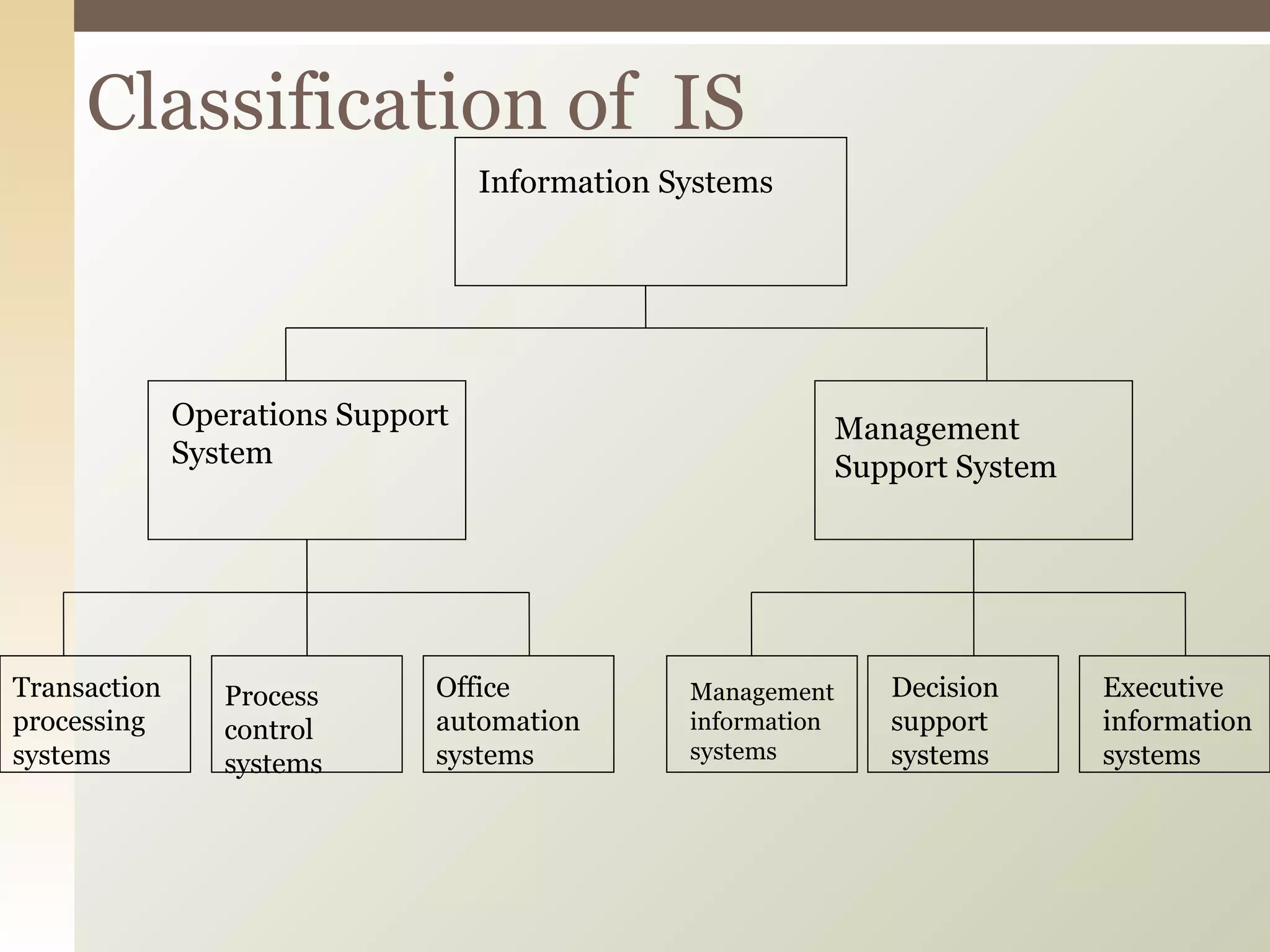
Classification of  IS Information Systems Operations Support System Management Support System Transaction processing systems Process control systems Office automation systems Management information systems Decision support systems Executive information systems
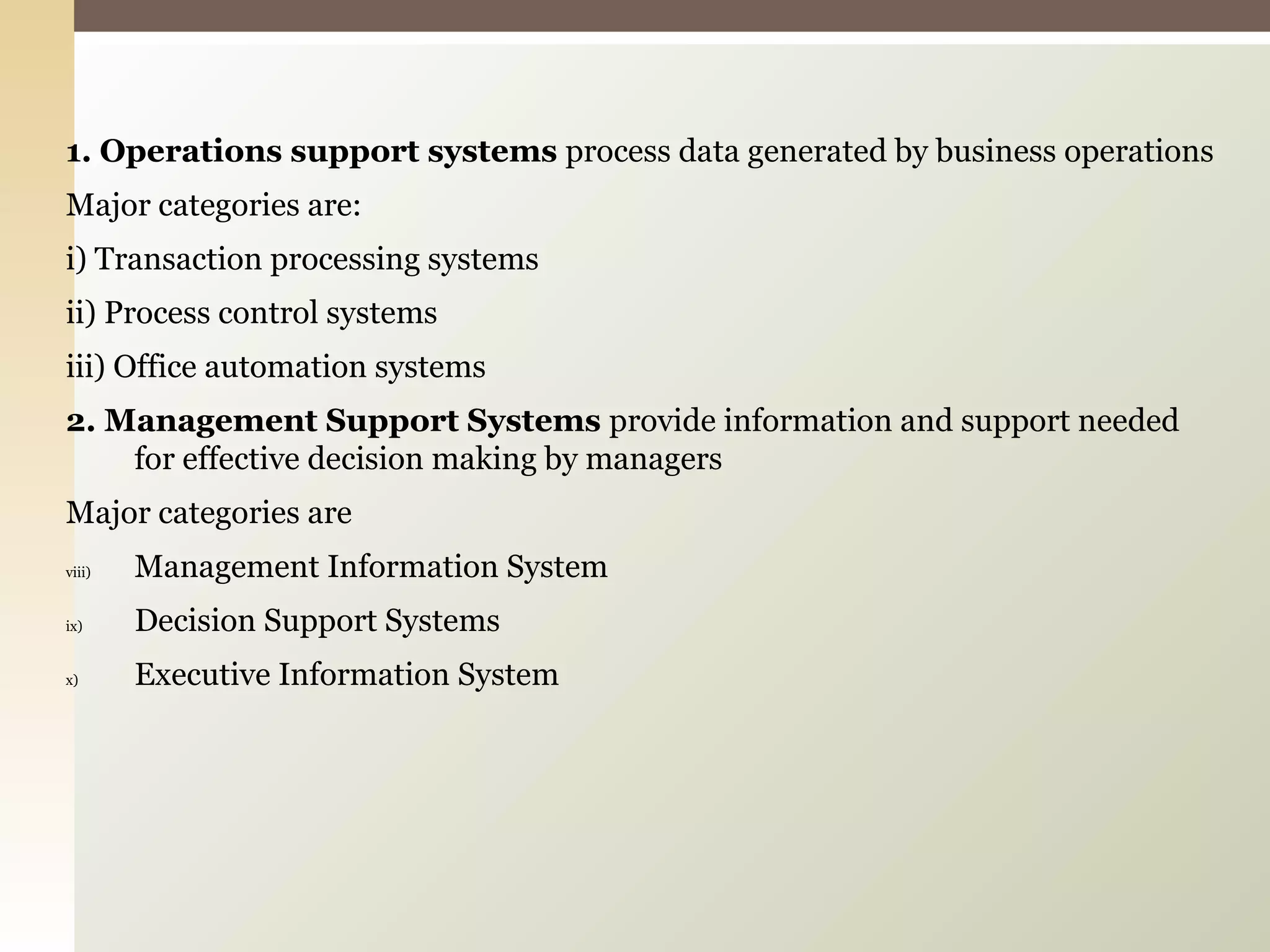
1. Operations support systems  process data generated by business operations Major categories are: i) Transaction processing systems  ii) Process control systems iii) Office automation systems 2. Management Support Systems  provide information and support needed for effective decision making by managers Major categories are Management Information System Decision Support Systems Executive Information System
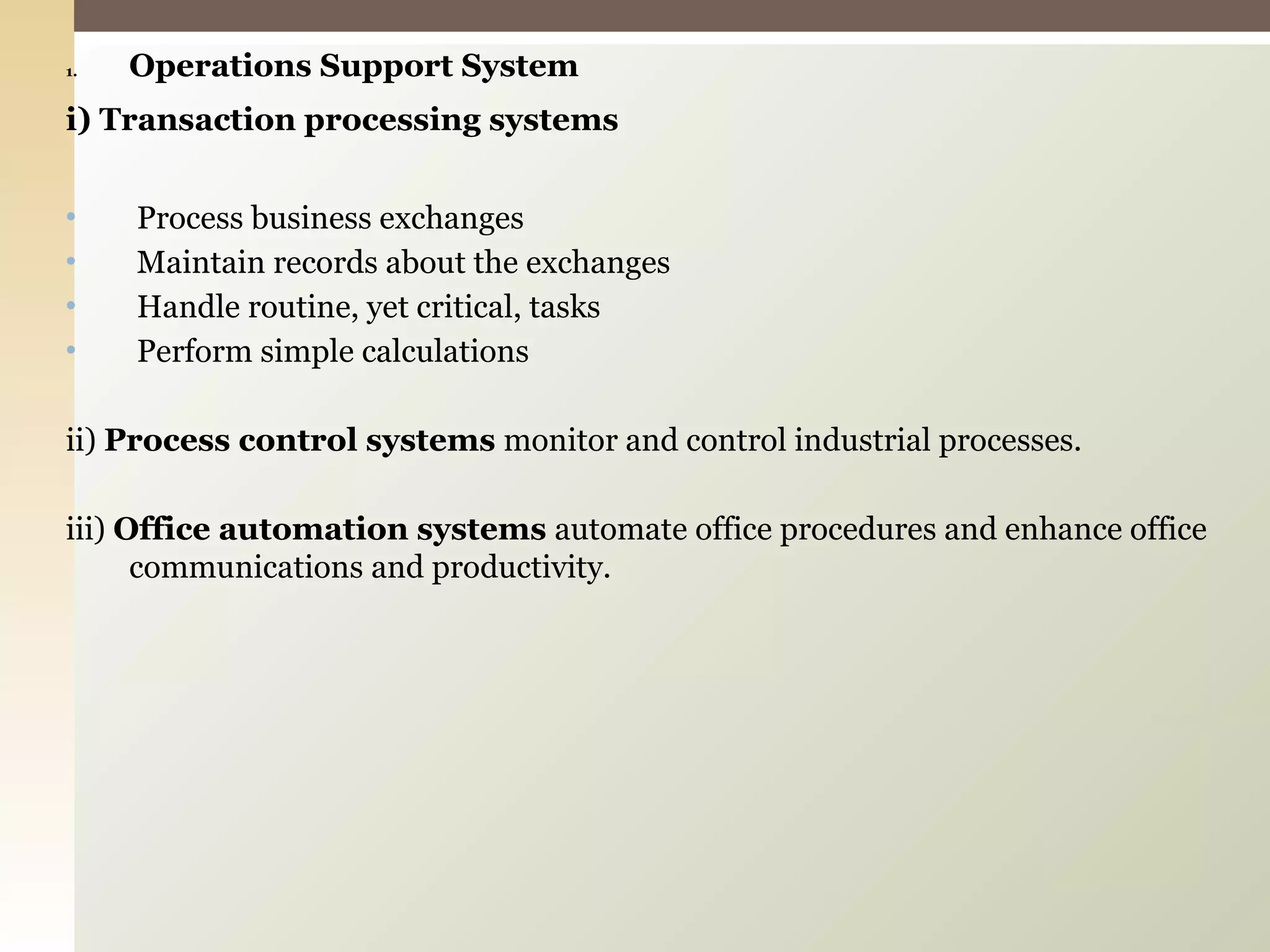
Operations Support System i) Transaction processing systems Process business exchanges Maintain records about the exchanges Handle routine, yet critical, tasks Perform simple calculations ii)  Process control systems  monitor and control industrial processes. iii)  Office automation systems  automate office procedures and enhance office communications and productivity.
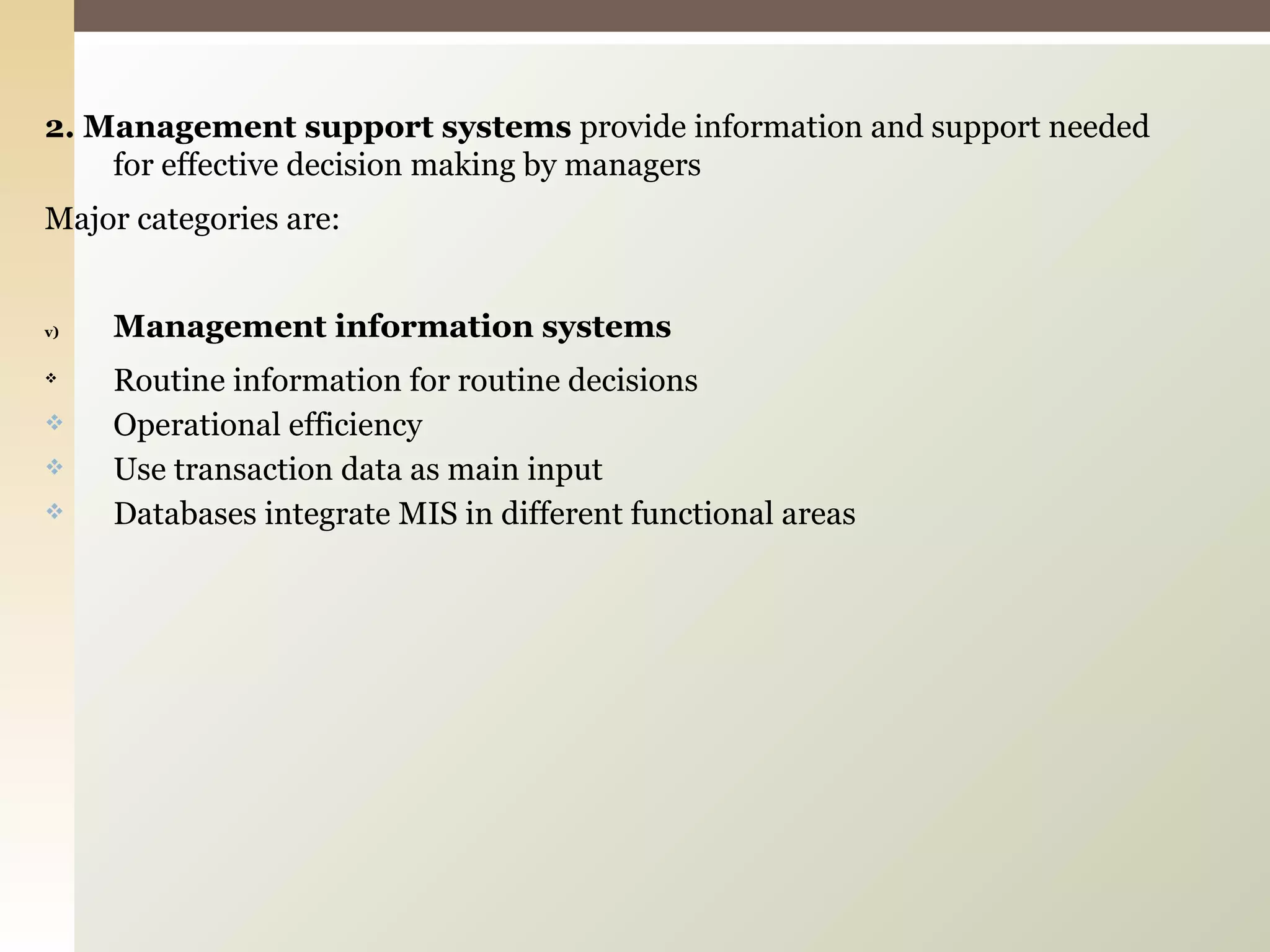
2. Management support systems  provide information and support needed for effective decision making by managers Major categories are: Management information systems Routine information for routine decisions Operational efficiency Use transaction data as main input Databases integrate MIS in different functional areas
ii) Decision Support System Interactive support for non-routine decisions or problems End-users are more involved in creating a DSS than an MIS iii) Executive information systems provide critical information tailored to the information needs of executives
Other categories Expert systems End user computing systems Business information systems d)  Strategic information systems a) Expert Systems are knowledge-based systems that provides expert advice and act as expert consultants to the users b)  End user computing systems support the direct, hands on use of computers by end users for operational and managerial applications c)  Business information systems support the operational and managerial applications of the basic business functions of a firm d) Strategic information systems provide a firm which strategic products, services, and capabilities for competitive advantage

Mis classification sj

  • 1.
    MIS -CLASSIFICATION GSMS-[SHUBHAM, MEENAKSHI, SAKSHI, GURBANI]
  • 2.
    State the basiccategories in which the information system in classified. Develop an understanding of different information systems. Purpose and Objectives
  • 3.
    Information Systems Aninformation system(IS) is typically considered to be a set of interrelated elements or components that collect(input), manipulate(processes), and disseminate (output) data and information and provide a feedback mechanism to meet an objective. DEFINITIONS
  • 4.
    Types of InformationSystems Informal Information System Formal Information System
  • 5.
    An Information Systemis an organized combination of people, hardware, software, communication networks and the data resources that collects, transforms and disseminates information in a organization. Computer-based Information System
  • 6.
    Classification of IS Information Systems Operations Support System Management Support System Transaction processing systems Process control systems Office automation systems Management information systems Decision support systems Executive information systems
  • 7.
    1. Operations supportsystems process data generated by business operations Major categories are: i) Transaction processing systems ii) Process control systems iii) Office automation systems 2. Management Support Systems provide information and support needed for effective decision making by managers Major categories are Management Information System Decision Support Systems Executive Information System
  • 8.
    Operations Support Systemi) Transaction processing systems Process business exchanges Maintain records about the exchanges Handle routine, yet critical, tasks Perform simple calculations ii) Process control systems monitor and control industrial processes. iii) Office automation systems automate office procedures and enhance office communications and productivity.
  • 9.
    2. Management supportsystems provide information and support needed for effective decision making by managers Major categories are: Management information systems Routine information for routine decisions Operational efficiency Use transaction data as main input Databases integrate MIS in different functional areas
  • 10.
    ii) Decision SupportSystem Interactive support for non-routine decisions or problems End-users are more involved in creating a DSS than an MIS iii) Executive information systems provide critical information tailored to the information needs of executives
  • 11.
    Other categories Expertsystems End user computing systems Business information systems d) Strategic information systems a) Expert Systems are knowledge-based systems that provides expert advice and act as expert consultants to the users b) End user computing systems support the direct, hands on use of computers by end users for operational and managerial applications c) Business information systems support the operational and managerial applications of the basic business functions of a firm d) Strategic information systems provide a firm which strategic products, services, and capabilities for competitive advantage