Electrical & Lightening Injuries Dr.Suad Al-Sulimani( R2)
Outline Physics of injury  Clinical featurs & effect on different body systems  Management  disposition
Physics P = I2Rt ( I=V/R) P thermal power I , in joules  I current , ampers  R resistance in ohms T time in seconds  V Potential , in volts
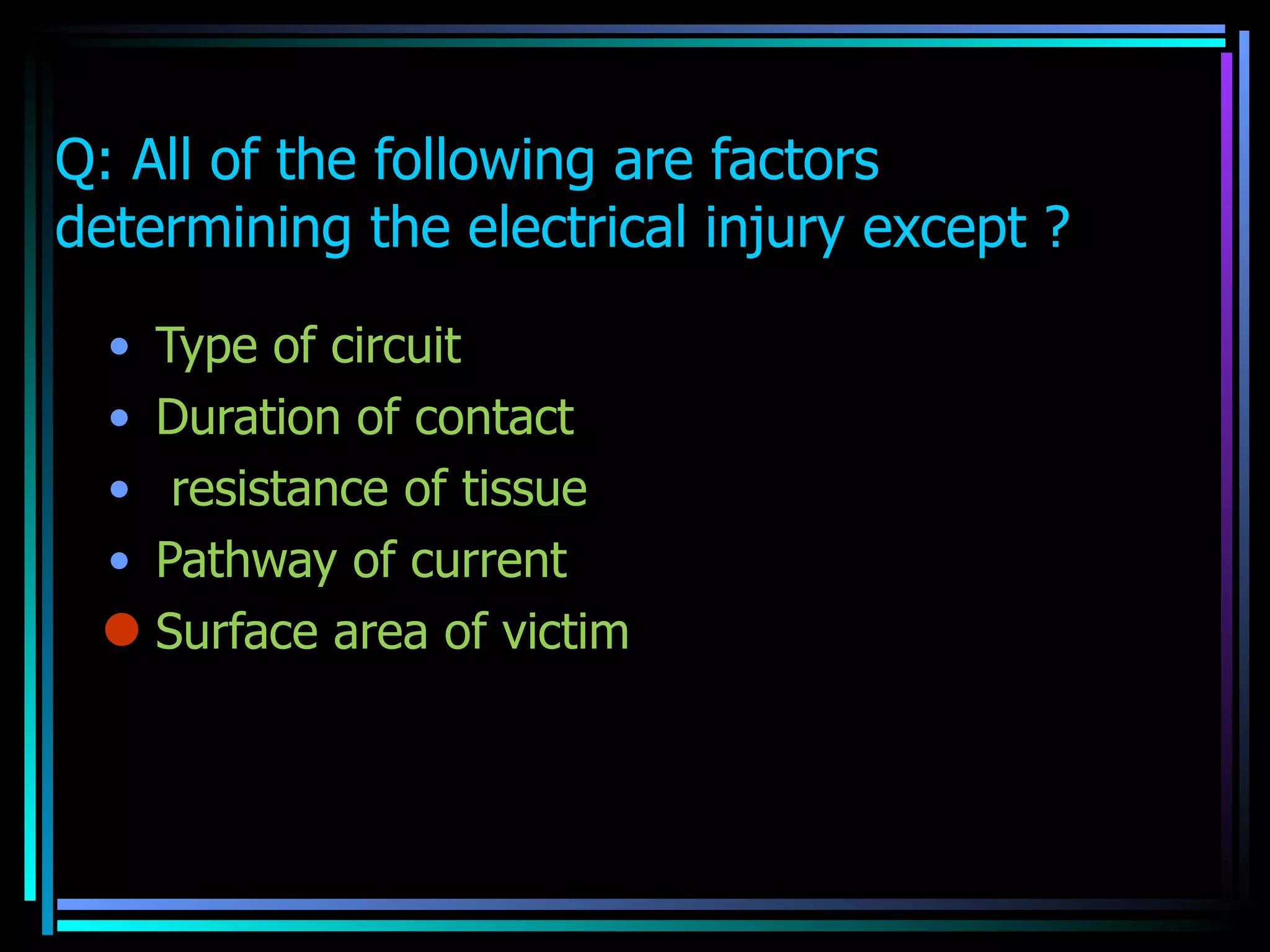
Q: All of the following are factors  determining the electrical injury except ? Type of circuit  Duration of contact  resistance of tissue  Pathway of current  Surface area of victim
Q: All of the followings are true facts about type of circuit except ? DC ( direct current ) cause single muscle injury , shorter duration of contact & less traumatic blunt injury   AC ( alternative current) tend to be three times more dangerous than DC due to continious muscle contraction  flexor muscle contraction with exposure to AC prevent the victum from releasing his hand leading to prolong exposure Breief contact with DC can result in cardiac arrythmias  ( tendes to through the victim from the source)
Resistance   Q:Which of the following tissues are the most resistant ? bone  nerve  muscle  blood vessel
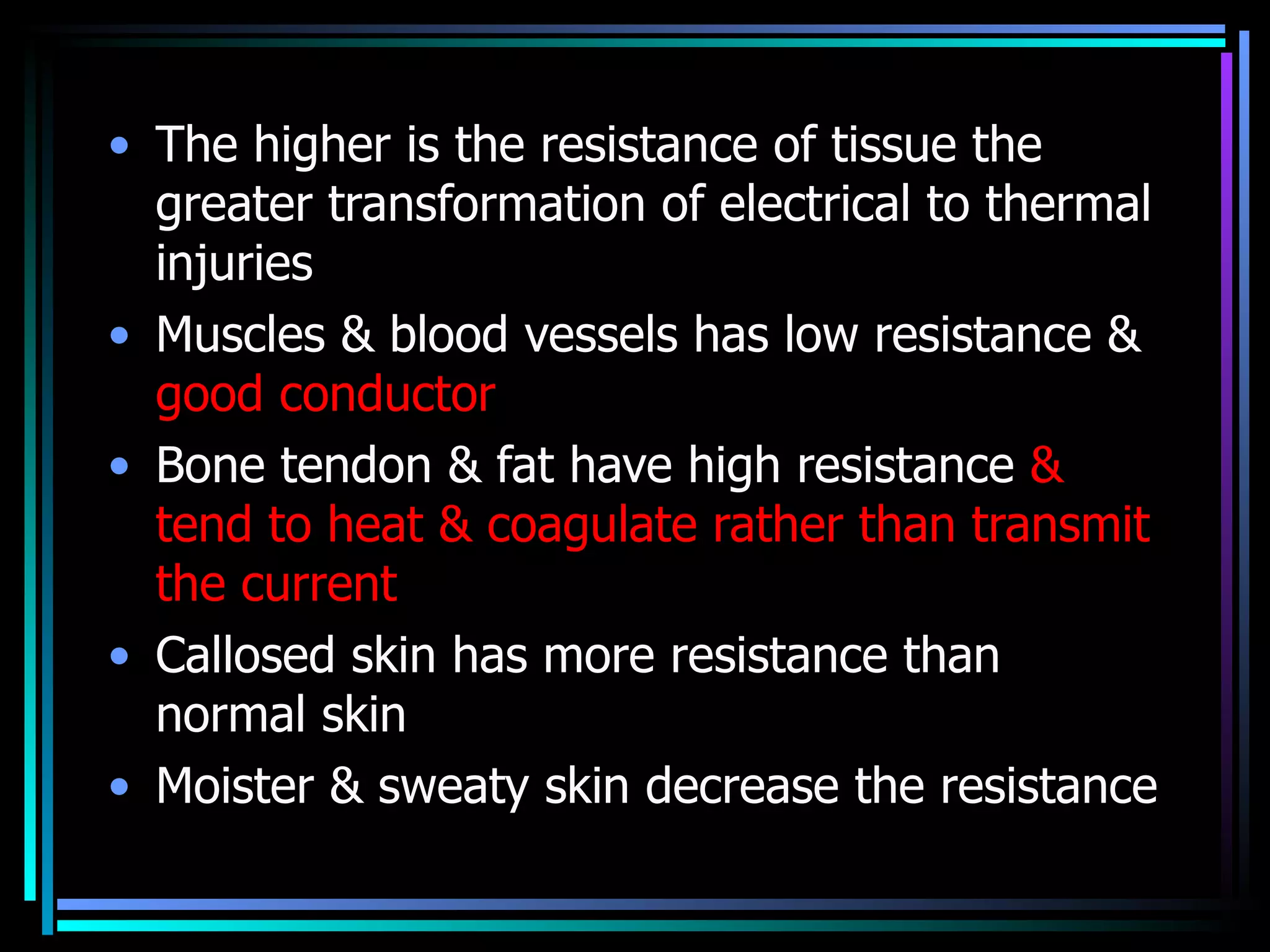
The higher is the resistance of tissue the greater transformation of electrical to thermal injuries  Muscles & blood vessels has low resistance &  good conductor  Bone tendon & fat have high resistance  & tend to heat & coagulate rather than transmit the current  Callosed skin has more resistance than normal skin  Moister & sweaty skin decrease the resistance
Resistance of body tissues  Most  tendon  Fat  Bone  intermediate dry skin  Least  Nerve  Blood Muscle Membrane  Muscle
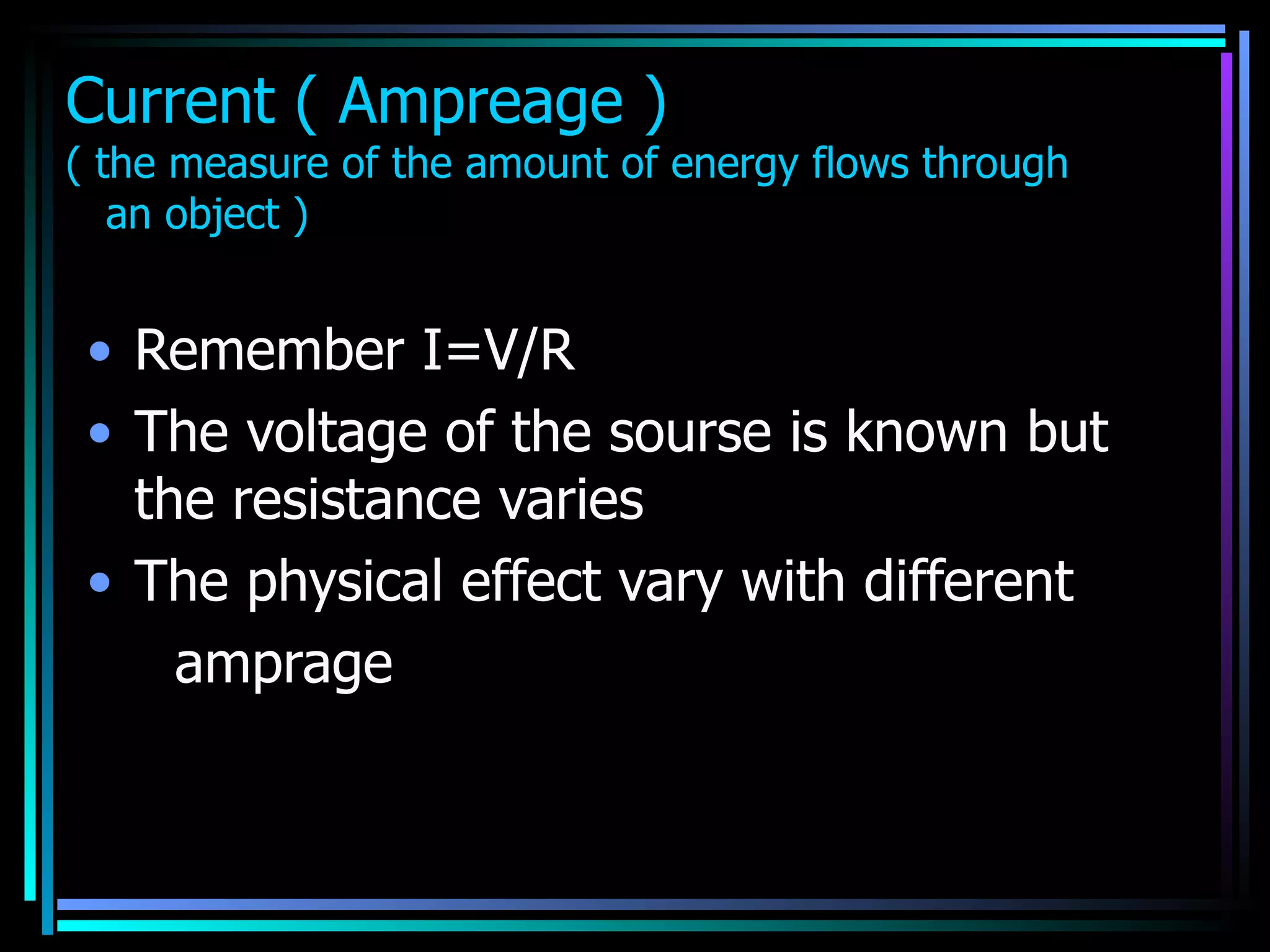
Current ( Ampreage ) ( the measure of the amount of energy flows through   an object )   Remember I=V/R The voltage of the sourse is known but the resistance varies  The physical effect vary with different  amprage
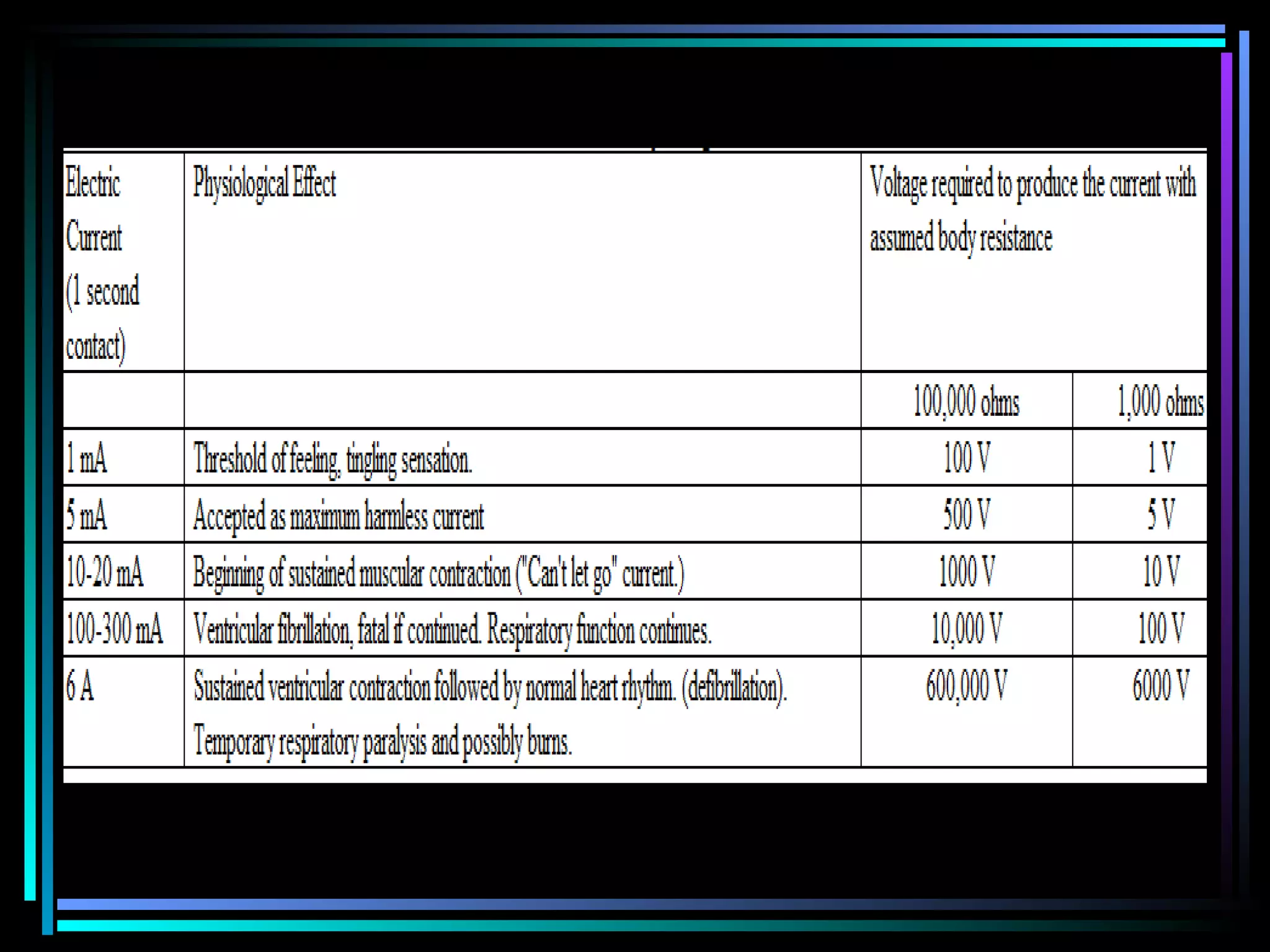
"let go" current the maximum current at which a person can grasp the current and then release it before muscle tetany makes letting go impossible. child is 3-5 mA; this is well below the 15-30 A of common household circuit breakers.  adults, the "let go" current is 6-9 mA, slightly higher for men than for women
The thoracic tetany occur just above the let go current & result in respirator arrest VF occur at an amperage of 60 to 120 VF occur more with alternative current while asystole with DC
 
Duration of contact The longer the duration they greater the electro thermal energy & tissue distraction in electrical injury  With lightening injury  Short duration  less skin damage  flash over the current around the body
Voltage  (the measure of diffrence in electrical potential between two points)  -depend on the source  -the higher the voltage the more is tissue distraction  - no fatalities with low voltage  500V or 1000V  used as a cutpoint
Pathway  , which of the following is false: Current through heart & thorax can cause arrythmia & myocardial damage  Cerebral current cause respiratory arrest & seizure  Truncal current cause more damage than single digit current  .  Current passing through head & neack are more likely inducing cataract
As the current density increase the tendency to flow to less resistance tissue is overcome  With high voltage current the damage occur at a site distant from apparent contact area  Electrical field strength = voltage /length
Histological changes  Coagulation necrosis of muscles  (periosteal , shortening of sarcomers) Vascular damage ( hemorrhage , thrombosis , progressive tissue necrosis) Neural tissue damage  ( Coagulation necrosis , compartment syndrome)
Mecechanism of injury ( Electrical   injury )  1-Direct contact : Electrothermal heating  Low voltage :limited to the affected area  High voltage : burn any where along the current path
2-Indirect contact: Electrical Arc  formed between two objects differing in potential , not in contact  Result in deep thermal injury because of high temp of the electrical arc or sometimes flame burn or splashing across the entire body
Flame:  Ignition of clothing causes direct burns from flames.  Flash : When heat from a nearby electrical arc causes thermal burns but current does not actually enter the body
Lightning Injury Direct strike ( orifice entry ) Contact ( when a person touch an object in the path way of lightning )
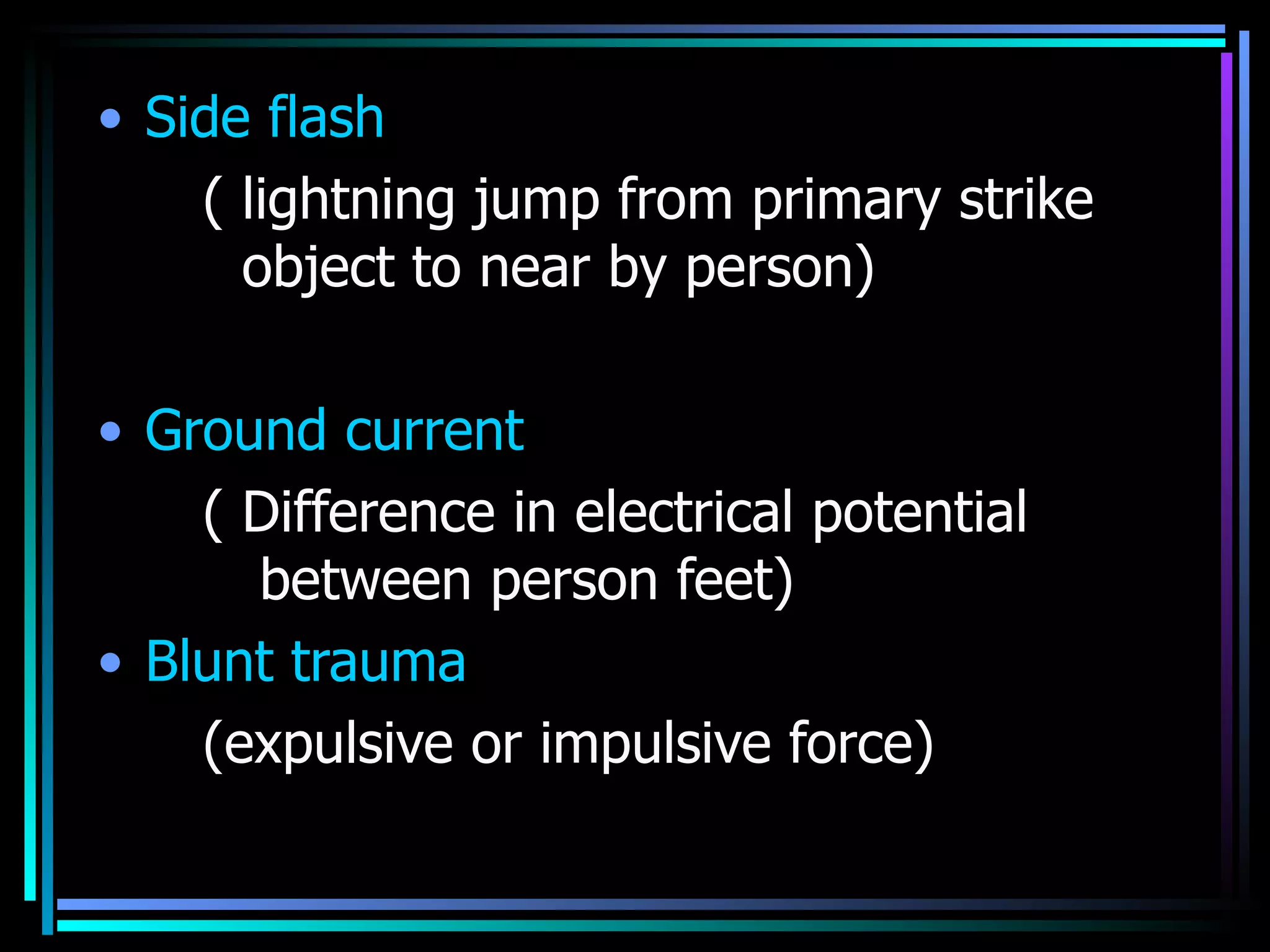
Side flash  ( lightning jump from primary strike   object to near by person) Ground current ( Difference in electrical potential    between person feet) Blunt trauma (expulsive or impulsive force)
 
Clinical features : Head & neck  Which of the following is false? Head & neck are common Points of high voltage injury Cataracts develop in 6% more typically short after the injury  Tympanic membrane rupture occur in lightening injury Ocular injuries occur ( uveitis , iridocyclitis , vitrous hemorrhage & retenal detachment  ) & the common is cataract
Cardiac arrest from  Asystole(lightening)   or  VF(electrical )  in electrical injuries  Cardiac arrest from shock or induced vascular spasm in lightening injury  Hypertension is commonly present after lightening injury.  Clinical features : cardiovascular
All of the following are ecg changes in electrical injuries except  :  Transient ST elevation  Prolonged QT  Premature ventricular contaction AF  Bundle brach block VT  AMI is rare ,, can be misdiagnosed due top high CK
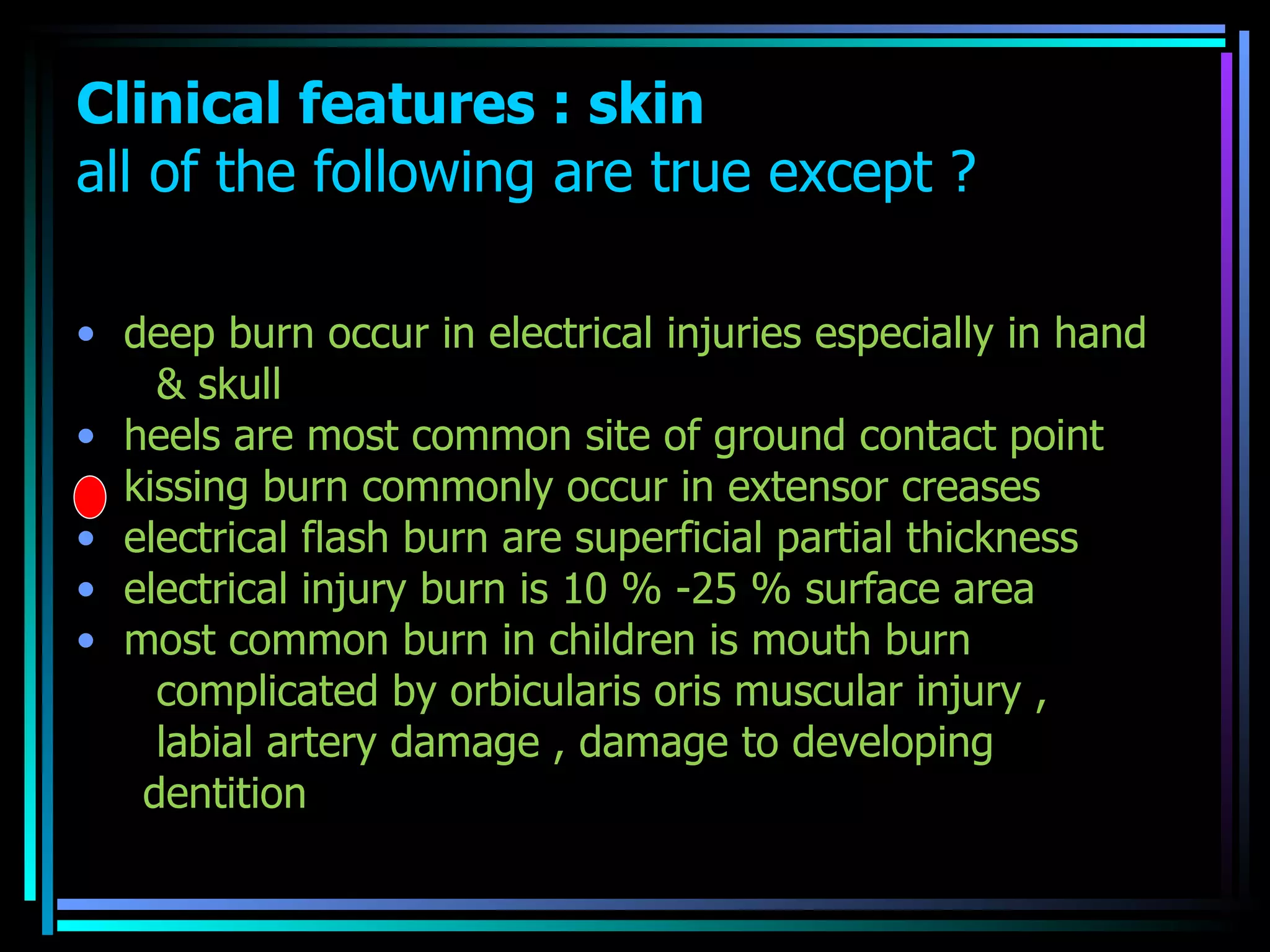
Clinical features : skin all of the following are true except ?   deep burn occur in electrical injuries especially in hand & skull  heels are most common site of ground contact point  kissing burn commonly occur in extensor creases  electrical flash burn are superficial partial thickness  electrical injury burn is 10 % -25 % surface area  most common burn in children is mouth burn complicated by orbicularis oris muscular injury , labial artery damage , damage to developing  dentition
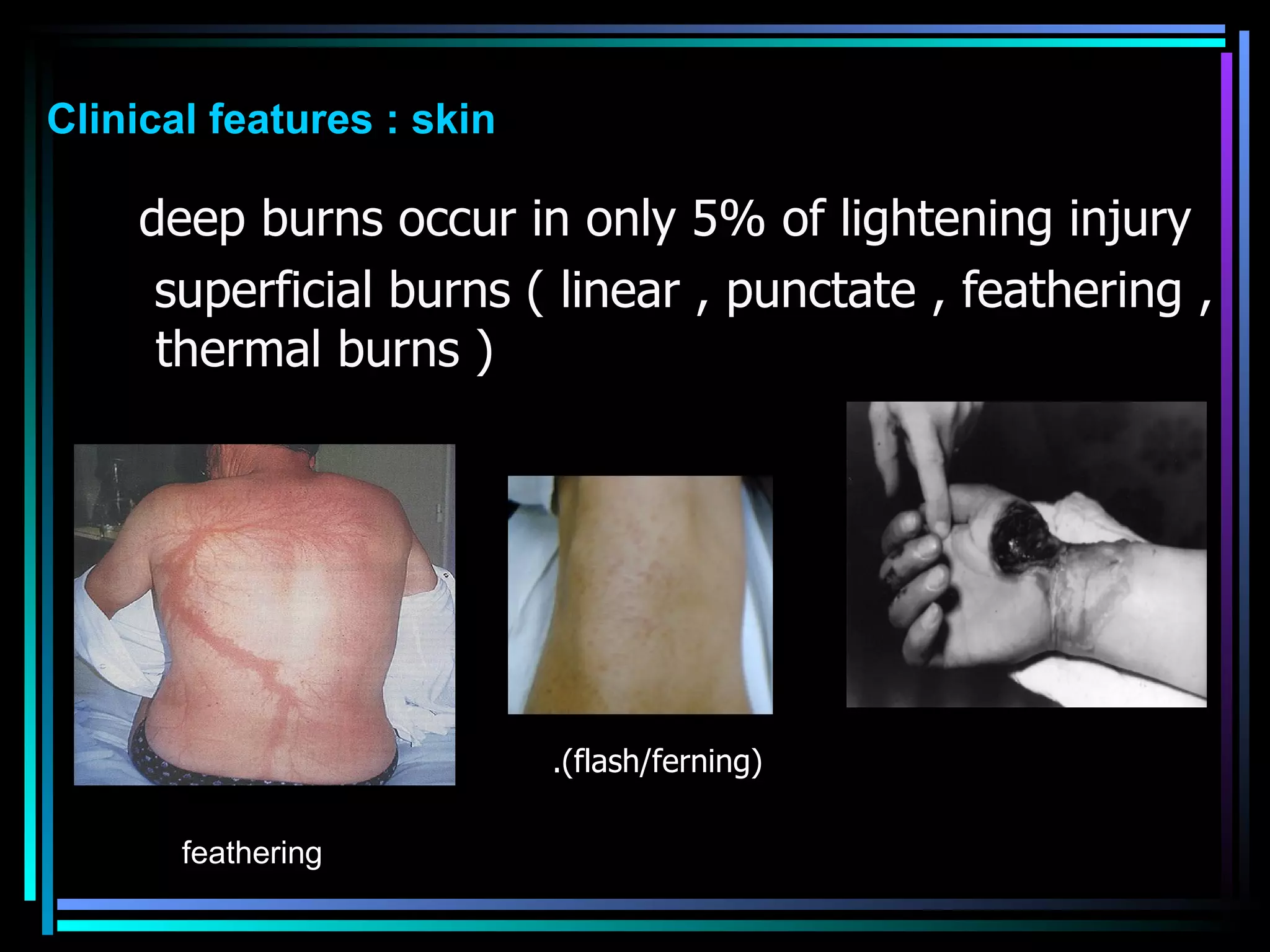
deep burns occur in only 5% of lightening injury  superficial burns ( linear , punctate , feathering , thermal burns )  feathering Clinical features : skin (flash/ferning).
17 years old boy, suffered injuries to both upper limbs caused by accidental contact with high-voltage electric current. Under medical care, he was transferred to our service on the day of the accident and continued treatment in our intensive care unit.  On the second day of treatment he was taken to the operating theatre and debridement of the wounds in the radiocarpal areas day 3 there was clear evidence of full necrotic tissues also on all the fingers, which until then had been ischaemic ?  What is the mechanism explaining this finding compartment syndrome  thrombus in brachial artery nerve injury  vascular delayed hemorrhage
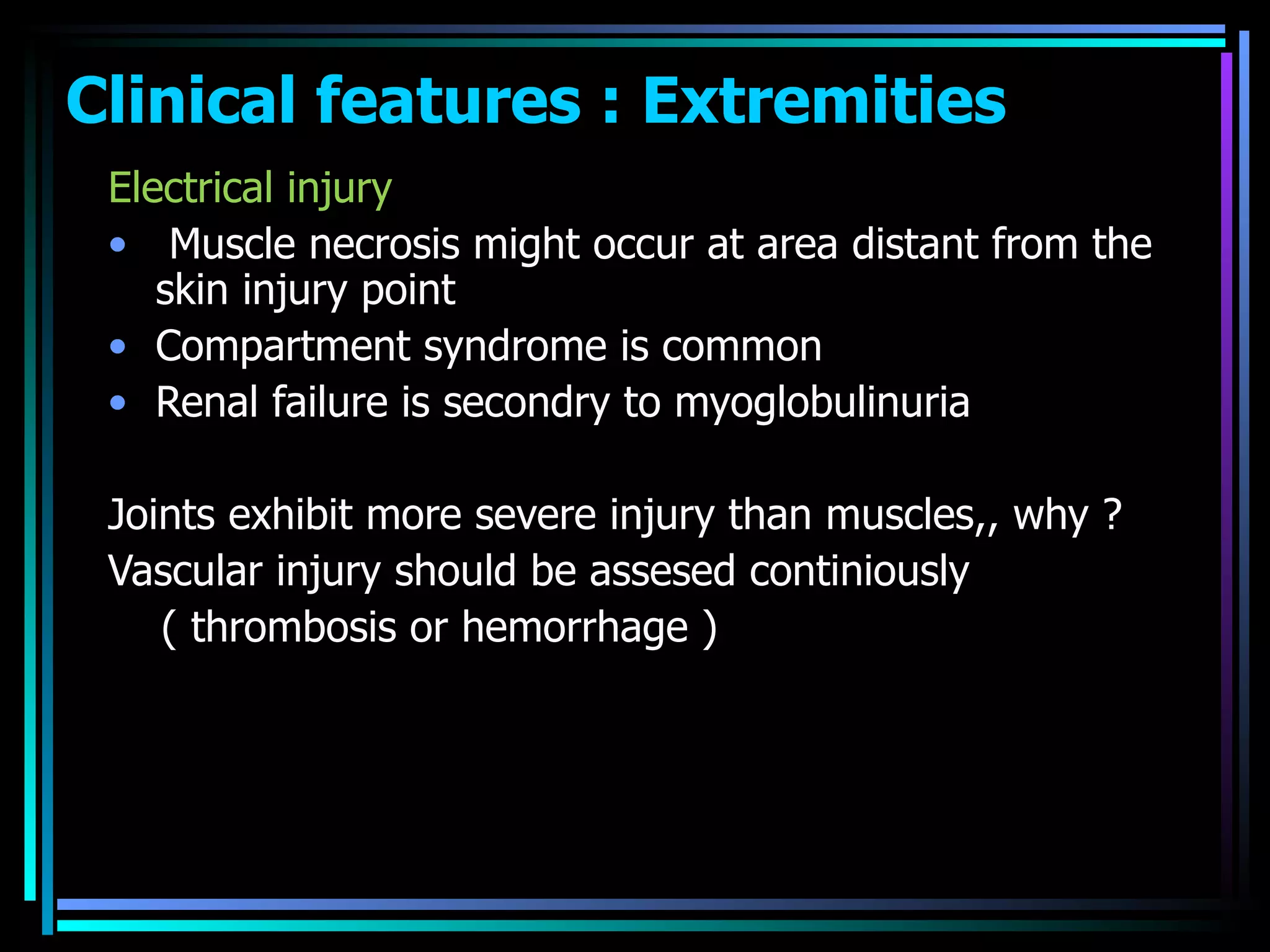
Clinical features : Extremities  Electrical injury Muscle necrosis might occur at area distant from the skin injury point  Compartment syndrome is common  Renal failure is secondry to myoglobulinuria  Joints exhibit more severe injury than muscles,, why ? Vascular injury should be assesed continiously ( thrombosis or hemorrhage )
Clinical features : Extremities  Lightening injury  Cause transient vasospasm ,, extremity cold ,  blue, pulseless  Resolve spontiniously within hours Long bones fracture  , shoulder dislocation migt occur .( rotator cuff muscle spasm )
Clinical features : Nervous system   Electrical injury:  ( high voltage injury )  = transient LOC , confusion , flat effect  Short memory loss  Seizure  direct effect traumatic injury hypoxia
neurologicasl damage  immediate Delayed   Within hours Weakness paraesthesia Days to years Lateral sclerosis Transverse mylities  Ascending paralysis
Q:which of the following statements regarding lightening strike is correct ? Absence of pupil reactivity is reliable examination confirming brain death  In mass causality incidents involving lightening cardiopulmonary arrest victums mandate high priority  Lower extremity paralysis is typically permanent  Vitrous hemorrhage is the most frequently observed ocular sequale
25 years old man , after exposure of lightening injury was found to have lower limb paralysis that apper to be blue , mottled , cold & pulseless  What immediate intervention is required: - admit  for serial perephral vascular examination  - immideiate surgical intervention  - discharge home  - observe in the emergency for 6 hrs i - perform radiological study to confirm diagnosis in ED
Neurological symptoms ( lightening )  Keraunoparalysis ( clear within hours) Intracranial hemorrhage, seizure , loc  Might occur
Management , prehospital :  Securing the scene  Power source should be turned off  Use of electrical gloves by medical personnale is dangerous  DEnergizing the lines  Triage should be concentrated on the presence of  cardiac or respiratory arrest  Patients require cardiac & trauma care
Remember  ABCs IV-O2 monitoring  Folyes catheter  NGT in severe injuryies
Fluid resusitation  Al least 1 large bore cannula should be there  Initial resuscitation by 20 ml /kg isotonic fluid  Body surface area formulas for calculating fluid requirement is not applicable  Lightening injury does not require fluid overload
Q: 2-years old girl a brought to ED found crying holding her right index finger, unprotecteted electrical wall socket was nearby  visual inspection reveals localized areythema , good capillary refill , good pulses , full range of movement  Chest auscultation reveals normal heart sounds , no other signs of trauma . What diagnostic test should be performed to complete the evaluation of this child ? Urinalysis Basic metabolic panel  chest x-ray ECG Arterial doppler
Monitoring :  Cardiac monitoring is indicated  in: Cardiac arrest  Documented Loc  H/O cardiac disease  Suspicious of conductive injury  Hypoxia  Chest pain  A bnorml ECG
All patients require :  ECG Cardiac enzymes CT scan for victims with altered mentation  or detororation of neurological status Laboratory : Cbc , ue 1 , urinalysis Liver & pancreatic enzymes , coagulation if there is abd trauma Check for myoglobulinuria CK level ( predict muscle injury) Radiological study according to the injured area
Specific therapy  Rhabdomyalisis  Urinary alkalinization Mannitol & frusamide  Urine output maintained at 1-1.5 ml/kg/hr  Ph of blood maintained at 7.4 by sodium carbonate Burn wound care :  Dressing with silver sulfadiazine  TT High dose of penicillin ( clostriridial myositis
Extremities injury  Spilint Durgical amputaion Surgical wound care  Debridement Skin grafts and flaps Escharotomy Fasciotomy: Nerve release ArthroplastyAmputation
Disposition
Q:  4-years old boy represent after sticking a fork in to    a home Electrical outlet with his right hand and get  shocked . His right elbow was on the ground he remained asymptomatic physical examination reveals two extremely small first-degree burns on his right hand and elbow; a 12-lead ECG is normal . The  most appropriate disposition is  ?   -admit to monitored bed for 24 hours  - admit to non monitored bed for serial perephral vascular examination  - discharge home  - observe in the emergency for 6 hrs if no dysarrythmiias occur discharge home  - perform echocardiography in ED
Disposition:which patient can be dischrged home  ? 52 years old with high voltage current & chest pain  30 years old with low voltage injury, coetaneous burn  & mild persistent symptoms  22years old man with lightening injury & altered mentation 60 years old man with low voltage exposure  known to have cardiac illness but asymptomatic & normal ECG 3years old boy with electrical lip burn & non caring parents
Thank you

E&L Inj

  • 1.
    Electrical & LighteningInjuries Dr.Suad Al-Sulimani( R2)
  • 2.
    Outline Physics ofinjury Clinical featurs & effect on different body systems Management disposition
  • 3.
    Physics P =I2Rt ( I=V/R) P thermal power I , in joules I current , ampers R resistance in ohms T time in seconds V Potential , in volts
  • 4.
    Q: All ofthe following are factors determining the electrical injury except ? Type of circuit Duration of contact resistance of tissue Pathway of current Surface area of victim
  • 5.
    Q: All ofthe followings are true facts about type of circuit except ? DC ( direct current ) cause single muscle injury , shorter duration of contact & less traumatic blunt injury AC ( alternative current) tend to be three times more dangerous than DC due to continious muscle contraction flexor muscle contraction with exposure to AC prevent the victum from releasing his hand leading to prolong exposure Breief contact with DC can result in cardiac arrythmias ( tendes to through the victim from the source)
  • 6.
    Resistance Q:Which of the following tissues are the most resistant ? bone nerve muscle blood vessel
  • 7.
    The higher isthe resistance of tissue the greater transformation of electrical to thermal injuries Muscles & blood vessels has low resistance & good conductor Bone tendon & fat have high resistance & tend to heat & coagulate rather than transmit the current Callosed skin has more resistance than normal skin Moister & sweaty skin decrease the resistance
  • 8.
    Resistance of bodytissues Most tendon Fat Bone intermediate dry skin Least Nerve Blood Muscle Membrane Muscle
  • 9.
    Current ( Ampreage) ( the measure of the amount of energy flows through an object ) Remember I=V/R The voltage of the sourse is known but the resistance varies The physical effect vary with different amprage
  • 10.
    "let go" currentthe maximum current at which a person can grasp the current and then release it before muscle tetany makes letting go impossible. child is 3-5 mA; this is well below the 15-30 A of common household circuit breakers. adults, the "let go" current is 6-9 mA, slightly higher for men than for women
  • 11.
    The thoracic tetanyoccur just above the let go current & result in respirator arrest VF occur at an amperage of 60 to 120 VF occur more with alternative current while asystole with DC
  • 12.
  • 13.
    Duration of contactThe longer the duration they greater the electro thermal energy & tissue distraction in electrical injury With lightening injury Short duration less skin damage flash over the current around the body
  • 14.
    Voltage (themeasure of diffrence in electrical potential between two points) -depend on the source -the higher the voltage the more is tissue distraction - no fatalities with low voltage 500V or 1000V used as a cutpoint
  • 15.
    Pathway ,which of the following is false: Current through heart & thorax can cause arrythmia & myocardial damage Cerebral current cause respiratory arrest & seizure Truncal current cause more damage than single digit current . Current passing through head & neack are more likely inducing cataract
  • 16.
    As the currentdensity increase the tendency to flow to less resistance tissue is overcome With high voltage current the damage occur at a site distant from apparent contact area Electrical field strength = voltage /length
  • 17.
    Histological changes Coagulation necrosis of muscles (periosteal , shortening of sarcomers) Vascular damage ( hemorrhage , thrombosis , progressive tissue necrosis) Neural tissue damage ( Coagulation necrosis , compartment syndrome)
  • 18.
    Mecechanism of injury( Electrical injury ) 1-Direct contact : Electrothermal heating Low voltage :limited to the affected area High voltage : burn any where along the current path
  • 19.
    2-Indirect contact: ElectricalArc formed between two objects differing in potential , not in contact Result in deep thermal injury because of high temp of the electrical arc or sometimes flame burn or splashing across the entire body
  • 20.
    Flame: Ignitionof clothing causes direct burns from flames. Flash : When heat from a nearby electrical arc causes thermal burns but current does not actually enter the body
  • 21.
    Lightning Injury Directstrike ( orifice entry ) Contact ( when a person touch an object in the path way of lightning )
  • 22.
    Side flash ( lightning jump from primary strike object to near by person) Ground current ( Difference in electrical potential between person feet) Blunt trauma (expulsive or impulsive force)
  • 23.
  • 24.
    Clinical features :Head & neck Which of the following is false? Head & neck are common Points of high voltage injury Cataracts develop in 6% more typically short after the injury Tympanic membrane rupture occur in lightening injury Ocular injuries occur ( uveitis , iridocyclitis , vitrous hemorrhage & retenal detachment ) & the common is cataract
  • 25.
    Cardiac arrest from Asystole(lightening) or VF(electrical ) in electrical injuries Cardiac arrest from shock or induced vascular spasm in lightening injury Hypertension is commonly present after lightening injury. Clinical features : cardiovascular
  • 26.
    All of thefollowing are ecg changes in electrical injuries except : Transient ST elevation Prolonged QT Premature ventricular contaction AF Bundle brach block VT AMI is rare ,, can be misdiagnosed due top high CK
  • 27.
    Clinical features :skin all of the following are true except ? deep burn occur in electrical injuries especially in hand & skull heels are most common site of ground contact point kissing burn commonly occur in extensor creases electrical flash burn are superficial partial thickness electrical injury burn is 10 % -25 % surface area most common burn in children is mouth burn complicated by orbicularis oris muscular injury , labial artery damage , damage to developing dentition
  • 28.
    deep burns occurin only 5% of lightening injury superficial burns ( linear , punctate , feathering , thermal burns ) feathering Clinical features : skin (flash/ferning).
  • 29.
    17 years oldboy, suffered injuries to both upper limbs caused by accidental contact with high-voltage electric current. Under medical care, he was transferred to our service on the day of the accident and continued treatment in our intensive care unit. On the second day of treatment he was taken to the operating theatre and debridement of the wounds in the radiocarpal areas day 3 there was clear evidence of full necrotic tissues also on all the fingers, which until then had been ischaemic ? What is the mechanism explaining this finding compartment syndrome thrombus in brachial artery nerve injury vascular delayed hemorrhage
  • 30.
    Clinical features :Extremities Electrical injury Muscle necrosis might occur at area distant from the skin injury point Compartment syndrome is common Renal failure is secondry to myoglobulinuria Joints exhibit more severe injury than muscles,, why ? Vascular injury should be assesed continiously ( thrombosis or hemorrhage )
  • 31.
    Clinical features :Extremities Lightening injury Cause transient vasospasm ,, extremity cold , blue, pulseless Resolve spontiniously within hours Long bones fracture , shoulder dislocation migt occur .( rotator cuff muscle spasm )
  • 32.
    Clinical features :Nervous system Electrical injury: ( high voltage injury ) = transient LOC , confusion , flat effect Short memory loss Seizure direct effect traumatic injury hypoxia
  • 33.
    neurologicasl damage immediate Delayed Within hours Weakness paraesthesia Days to years Lateral sclerosis Transverse mylities Ascending paralysis
  • 34.
    Q:which of thefollowing statements regarding lightening strike is correct ? Absence of pupil reactivity is reliable examination confirming brain death In mass causality incidents involving lightening cardiopulmonary arrest victums mandate high priority Lower extremity paralysis is typically permanent Vitrous hemorrhage is the most frequently observed ocular sequale
  • 35.
    25 years oldman , after exposure of lightening injury was found to have lower limb paralysis that apper to be blue , mottled , cold & pulseless What immediate intervention is required: - admit for serial perephral vascular examination - immideiate surgical intervention - discharge home - observe in the emergency for 6 hrs i - perform radiological study to confirm diagnosis in ED
  • 36.
    Neurological symptoms (lightening ) Keraunoparalysis ( clear within hours) Intracranial hemorrhage, seizure , loc Might occur
  • 37.
    Management , prehospital: Securing the scene Power source should be turned off Use of electrical gloves by medical personnale is dangerous DEnergizing the lines Triage should be concentrated on the presence of cardiac or respiratory arrest Patients require cardiac & trauma care
  • 38.
    Remember ABCsIV-O2 monitoring Folyes catheter NGT in severe injuryies
  • 39.
    Fluid resusitation Al least 1 large bore cannula should be there Initial resuscitation by 20 ml /kg isotonic fluid Body surface area formulas for calculating fluid requirement is not applicable Lightening injury does not require fluid overload
  • 40.
    Q: 2-years oldgirl a brought to ED found crying holding her right index finger, unprotecteted electrical wall socket was nearby visual inspection reveals localized areythema , good capillary refill , good pulses , full range of movement Chest auscultation reveals normal heart sounds , no other signs of trauma . What diagnostic test should be performed to complete the evaluation of this child ? Urinalysis Basic metabolic panel chest x-ray ECG Arterial doppler
  • 41.
    Monitoring : Cardiac monitoring is indicated in: Cardiac arrest Documented Loc H/O cardiac disease Suspicious of conductive injury Hypoxia Chest pain A bnorml ECG
  • 42.
    All patients require: ECG Cardiac enzymes CT scan for victims with altered mentation or detororation of neurological status Laboratory : Cbc , ue 1 , urinalysis Liver & pancreatic enzymes , coagulation if there is abd trauma Check for myoglobulinuria CK level ( predict muscle injury) Radiological study according to the injured area
  • 43.
    Specific therapy Rhabdomyalisis Urinary alkalinization Mannitol & frusamide Urine output maintained at 1-1.5 ml/kg/hr Ph of blood maintained at 7.4 by sodium carbonate Burn wound care : Dressing with silver sulfadiazine TT High dose of penicillin ( clostriridial myositis
  • 44.
    Extremities injury Spilint Durgical amputaion Surgical wound care Debridement Skin grafts and flaps Escharotomy Fasciotomy: Nerve release ArthroplastyAmputation
  • 45.
  • 46.
    Q: 4-yearsold boy represent after sticking a fork in to a home Electrical outlet with his right hand and get shocked . His right elbow was on the ground he remained asymptomatic physical examination reveals two extremely small first-degree burns on his right hand and elbow; a 12-lead ECG is normal . The most appropriate disposition is ? -admit to monitored bed for 24 hours - admit to non monitored bed for serial perephral vascular examination - discharge home - observe in the emergency for 6 hrs if no dysarrythmiias occur discharge home - perform echocardiography in ED
  • 47.
    Disposition:which patient canbe dischrged home ? 52 years old with high voltage current & chest pain 30 years old with low voltage injury, coetaneous burn & mild persistent symptoms 22years old man with lightening injury & altered mentation 60 years old man with low voltage exposure known to have cardiac illness but asymptomatic & normal ECG 3years old boy with electrical lip burn & non caring parents
  • 48.