Initial Assessment and Resuscitation of the Severely Burned Patient Charles J. Yowler, MD, FCCM Associate Professor of Surgery Director, Burn Center MetroHealth Medical Center Campus Case Western Reserve University
Burn Injury Burn injuries per year - over 2 million ER visits - 700,000 Hospitalizations - 45,000 Mortality rate – 6% (4,500 annually) Burn size with 50% survival -  AGE % 2-18  90 18-45  80 >70  30
Initial Approach ABCs of ATLS Initial fluid management Monitoring of resuscitation Topical agents Indications for escharotomies Electrical injury
Airway Inhalation Injury Anoxic injury - oxygen content of closed room with fire may be as low as 10%; anoxic injury can occur within minutes Carbon monoxide/cyanide - systemic poisons absorbed through the lungs Smoke inhalation - chemical byproducts of combustion that create chemical burns to the airway
Airway All victims of closed-space fires should be placed on 100% oxygen by mask until an arterial blood gas (ABG) with carboxyhemaglobin (COHgb) level is obtained. Carbonaceous sputum, soot in the nasopharyngeal cavity, and facial burns are signs of inhalation injury; they are not absolute indications for endotracheal intubation. The majority of patients with mild to moderate smoke inhalation do not require intubation.
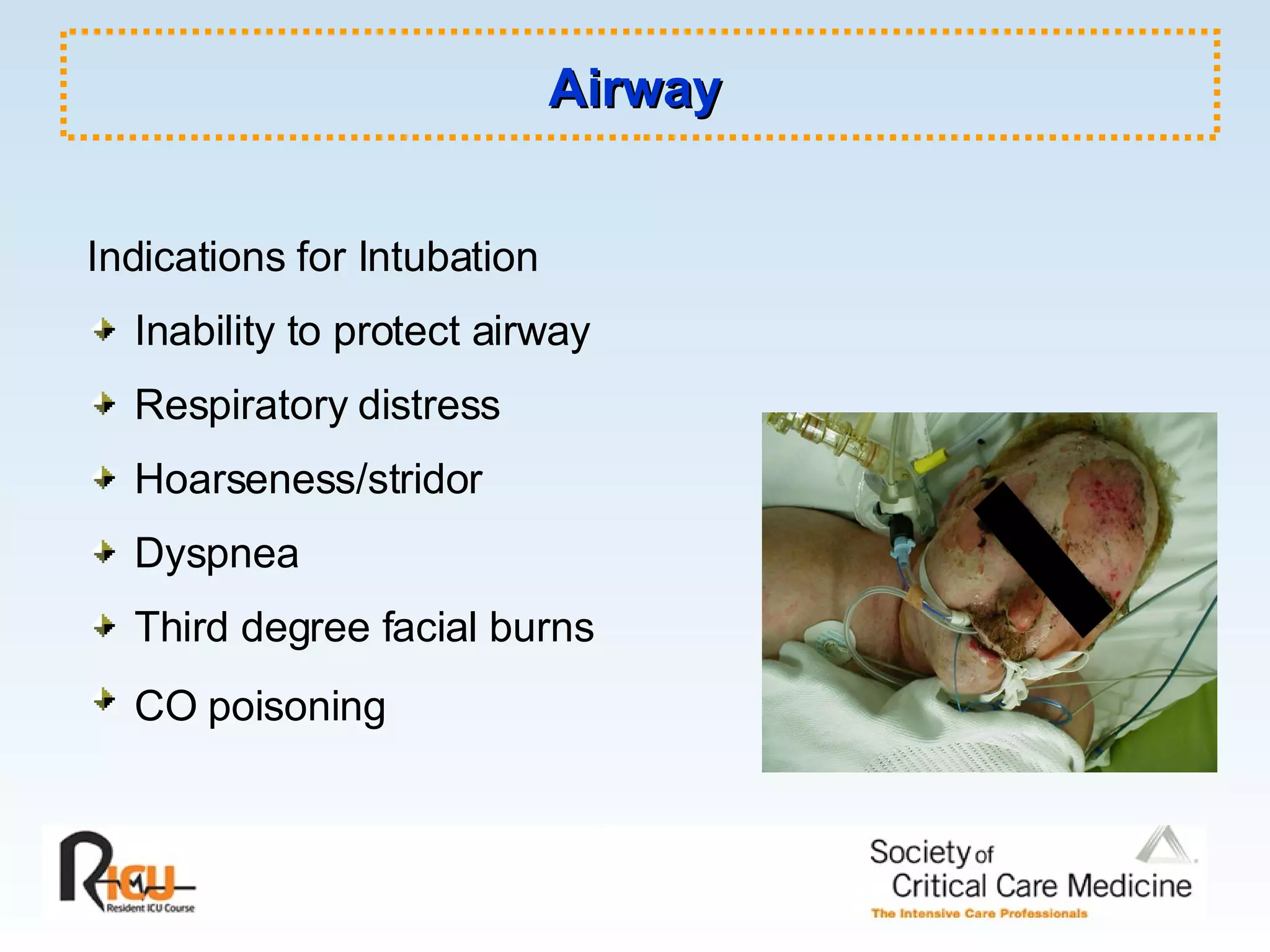
Airway Indications for Intubation Inability to protect airway Respiratory distress Hoarseness/stridor  Dyspnea Third degree facial burns CO poisoning
Airway Hoarseness/stridor- indicates laryngeal edema. This edema will increase for 24 - 36 hours during the fluid resuscitation, and delay in intubation may result in loss of the airway, resulting in urgent tracheostomy. Wheezing - does not indicate laryngeal edema. Bronchospasm is common after smoke inhalation and usually responds to bronchodilators/asthma protocols.
Carbon Monoxide Byproduct of combustion History: exposed to closed space fires Signs - decreased alertness: Burns are painful and decreased mental status suggests anoxic injury, CO poisoning, or associated closed head injury. Cutaneous pulse ox monitors interpret COHgb as oxygen saturated hemoglobin and cannot be used to rule out CO poisoning - an ABG with direct measurement of COHgb is required.
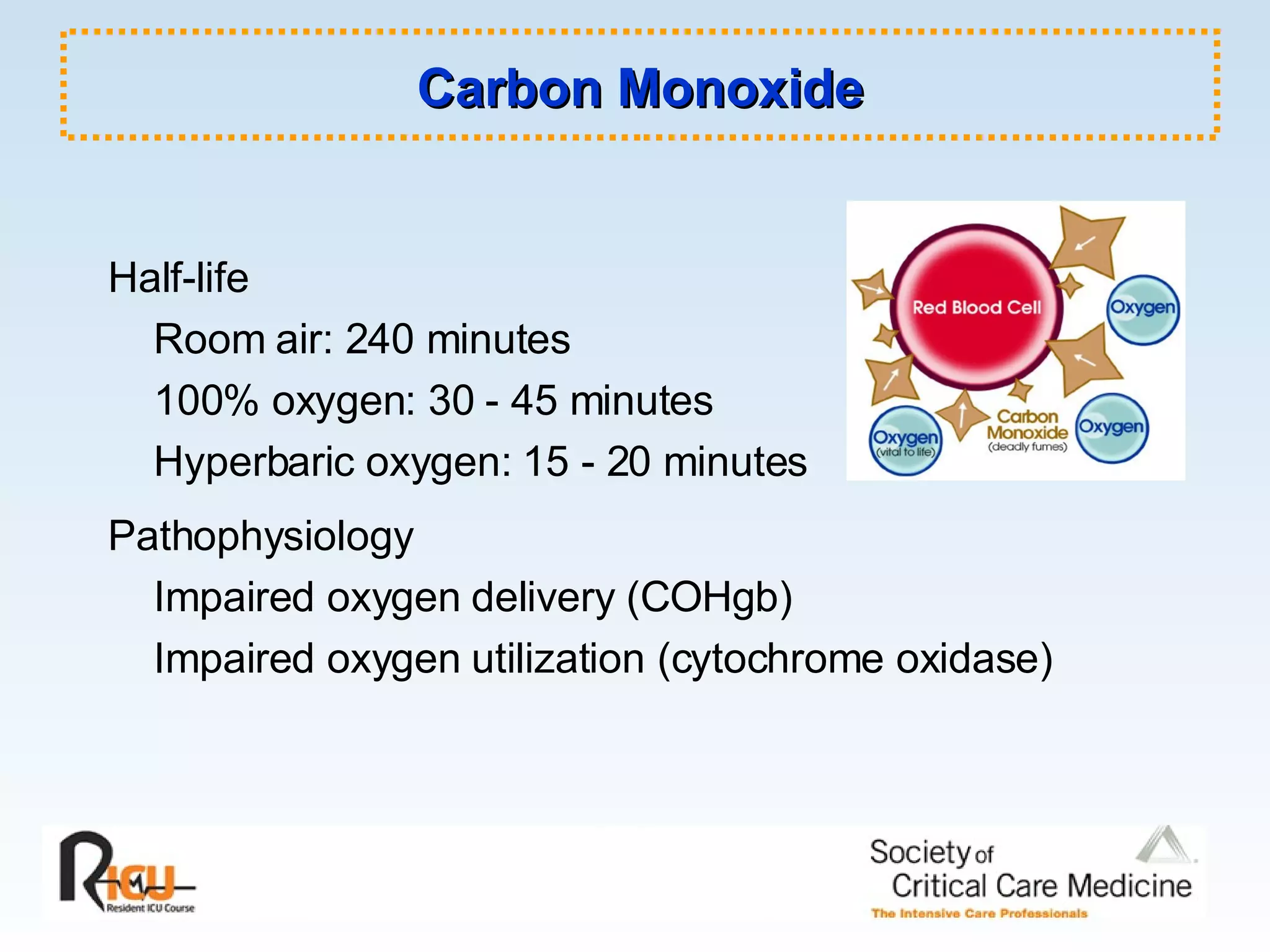
Carbon Monoxide Half-life Room air: 240 minutes 100% oxygen: 30 - 45 minutes Hyperbaric oxygen: 15 - 20 minutes Pathophysiology Impaired oxygen delivery (COHgb) Impaired oxygen utilization (cytochrome oxidase)
Carbon Monoxide Treatment Intubate/100% oxygen: COHgb > 20 if symptomatic COHgb > 30 Wean oxygen when: COHgb < 10 and serum bicarbonate > 20 Resolution of metabolic acidosis signifies CO has  cleared the mitochondrial cytochrome oxidase system.
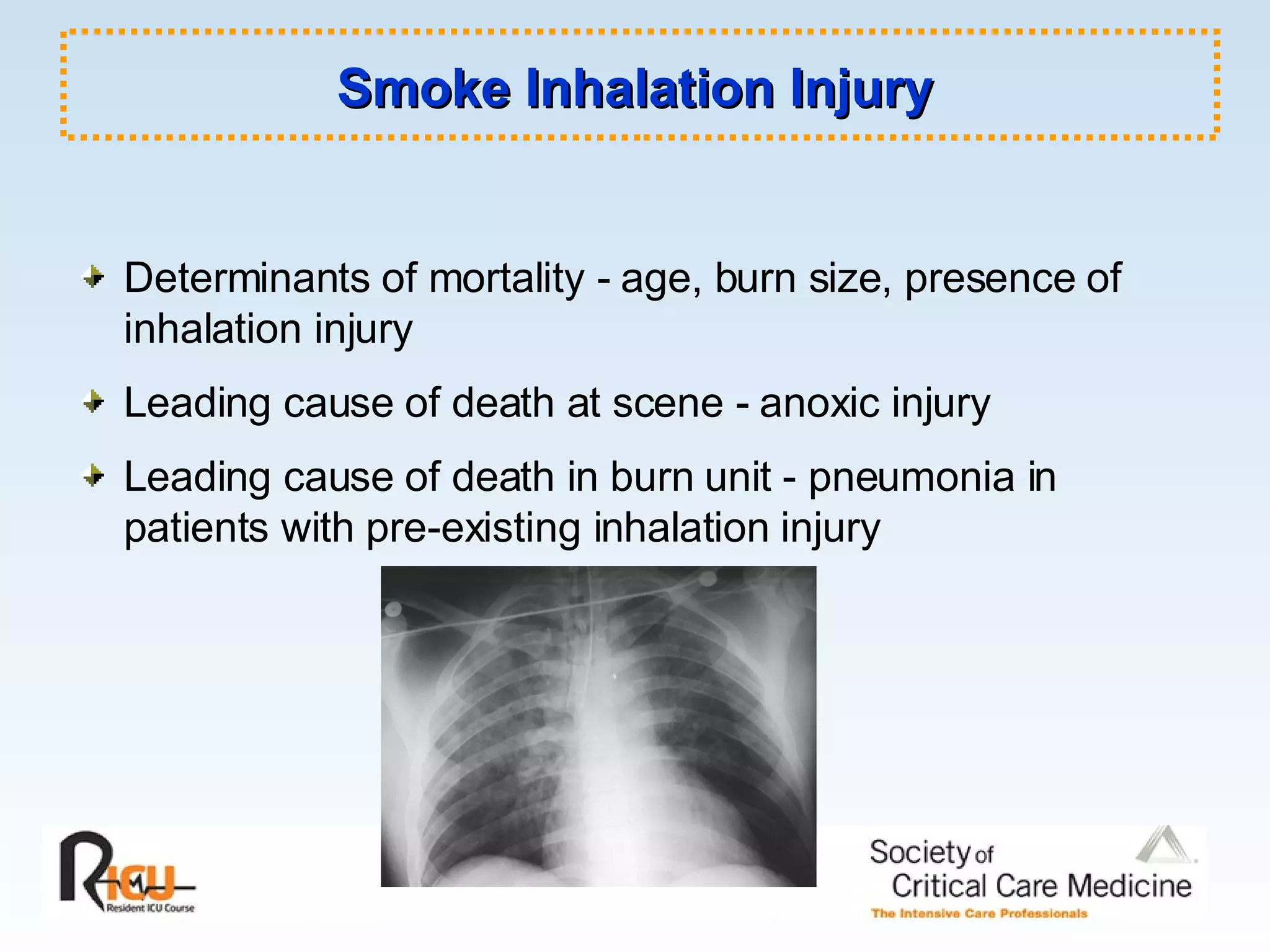
Smoke Inhalation Injury Determinants of mortality - age, burn size, presence of inhalation injury Leading cause of death at scene - anoxic injury Leading cause of death in burn unit - pneumonia in patients with pre-existing inhalation injury
Smoke Inhalation Injury Diagnosis - bronchoscopy Treatment - intubation for significant injury PEEP/low volume ventilation bronchodilators pulmonary toilet high-frequency ventilation
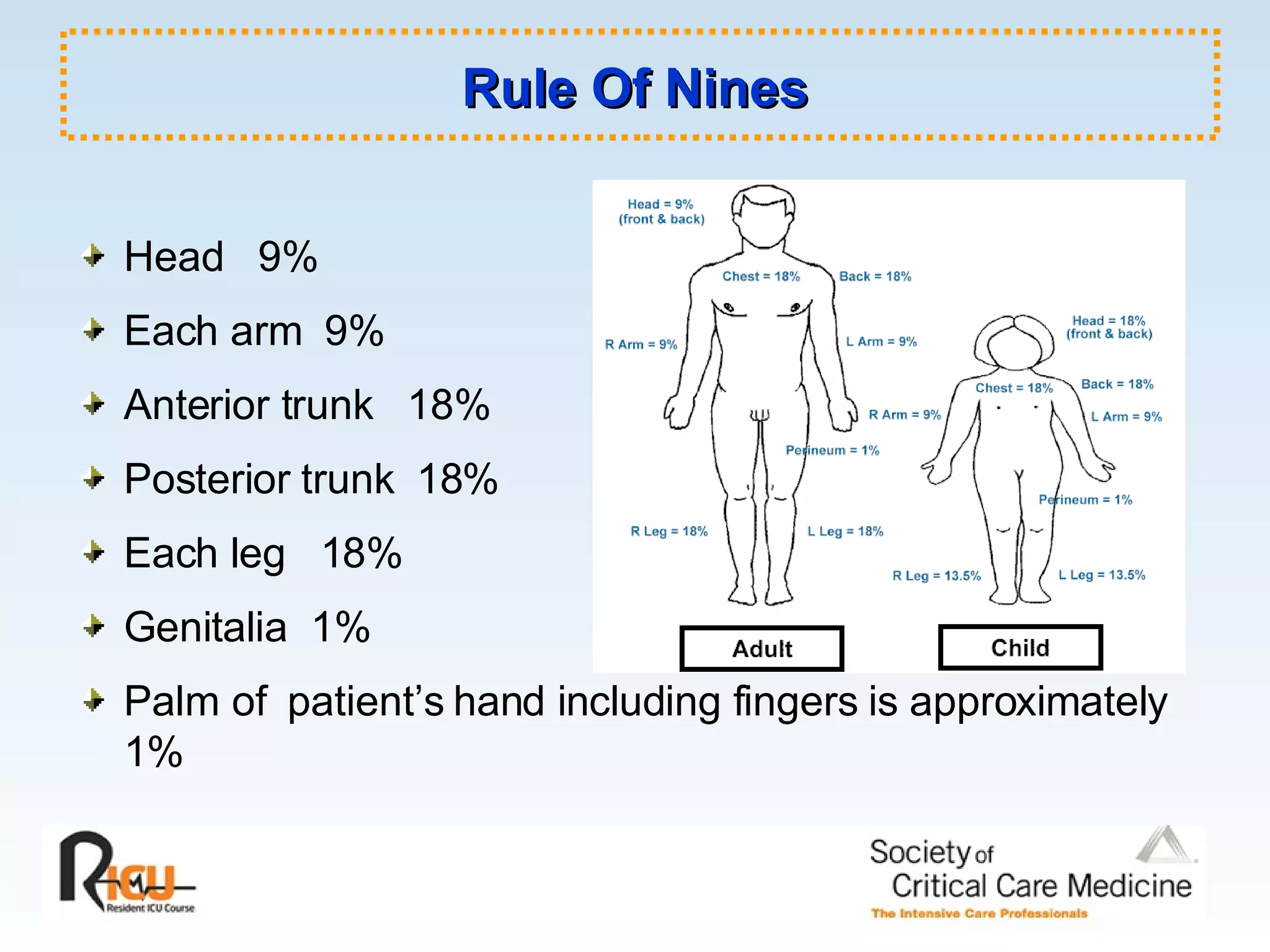
Rule Of Nines Head  9% Each arm  9% Anterior trunk  18% Posterior trunk  18% Each leg  18% Genitalia  1% Palm of  patient’s hand including fingers is approximately 1%
Fluid Resuscitation Parkland formula: 4ml/kg/% burn Only 2 nd /3 rd  degree burns are used in the calculation; pink 1 st  degree burns with intact skin are not counted. Ringer’s Lactate - large volumes of normal saline will result in hyperchloremic acidosis. Half is given over initial eight hours post-burn Half is given over following 16 hours IV access may be through burn but should not be distal to circumferential burns
Case Scenario #1 A 23-year-old victim of  gasoline flame burns is admitted with 2 nd  and 3 rd  degree burns of both arms and the entire anterior trunk. Admission weight is 70 kg. Calculate the initial IV rate. Burn size is 9 + 9 + 18 = 36% (4) X (36) X (70) = 10,080 ml Half in first 8 hours = 5,040 Initial IV rate = 630 ml/hr
Case Scenario #1 Adjustments must be made if fluids were previously administered. If this patient was evaluated one hour after burn injury and had received 2,000 ml of crystalloid, we would have to give the remaining 3,040 ml of the initial fluid over seven hours. This would change the IV rate to 3,040/7 = 434 ml/hr.
Fluid Resuscitation Modifications Bicarbonate - one ampule of sodium bicarbonate may be added to each liter of fluid if a significant metabolic acidosis is present. Colloid (FFP/albumin):  Added after initial 12 hours in burns greater than 40% (30% if age < 5) or if fluid requirement at 12 hours is > 20% above that estimated initially.
Monitoring The Parkland Formula commonly underestimates fluid requirements in patients with: inhalation injury delay in resuscitation/associated injury pre-existing dehydration hyperglycemia alcohol intoxication chronic diuretic therapy
Monitoring The Parkland Formula is an estimate and IV rates must be adjusted. Under-resuscitation results in hypoperfusion of organs and the burn wound; hypoperfusion of the wound increases cellular death and may convert partial thickness burns to full thickness injury.
Monitoring Over-resuscitation exacerbates any co-existing pulmonary injury and increases edema. Increased edema results in hypoperfusion of the wound and conversion of partial thickness burn to full thickness injury. Both under- and over-resuscitation are detrimental to the wound. Determining the adequacy of resuscitation remains one of the most difficult aspects of burn care.
Monitoring Goal is urine output of 0.5 ml/kg/hr (1.0 ml/kg/hr in infants) Urine outputs greater than 1.0 ml/kg/hr are to be avoided. The initial metabolic acidosis should be improving after 12 hours. Lactic acid levels are unreliable indicators of resuscitation in the burn patient. Full thickness skin death results in release of lactic acid that will not resolve until the burn is excised. Young, healthy patients may be adequately resuscitated with CVPs < 8.
Monitoring Myocardial depression occurs in patients with burns > 20% and persists for 24 - 36 hours.  Low urine outputs may occur despite adequate fluid resuscitation in patients with pre-existing  myocardial dysfunction that is exacerbated by this response to the burn injury.
Monitoring Pulmonary artery catheters are indicated if the patient is not responding as predicted to the fluid resuscitation. Candidates for PAC: age > 55 cardiac history chronic renal insufficiency COPD 6 ml/kg/% burn severe inhalation injury
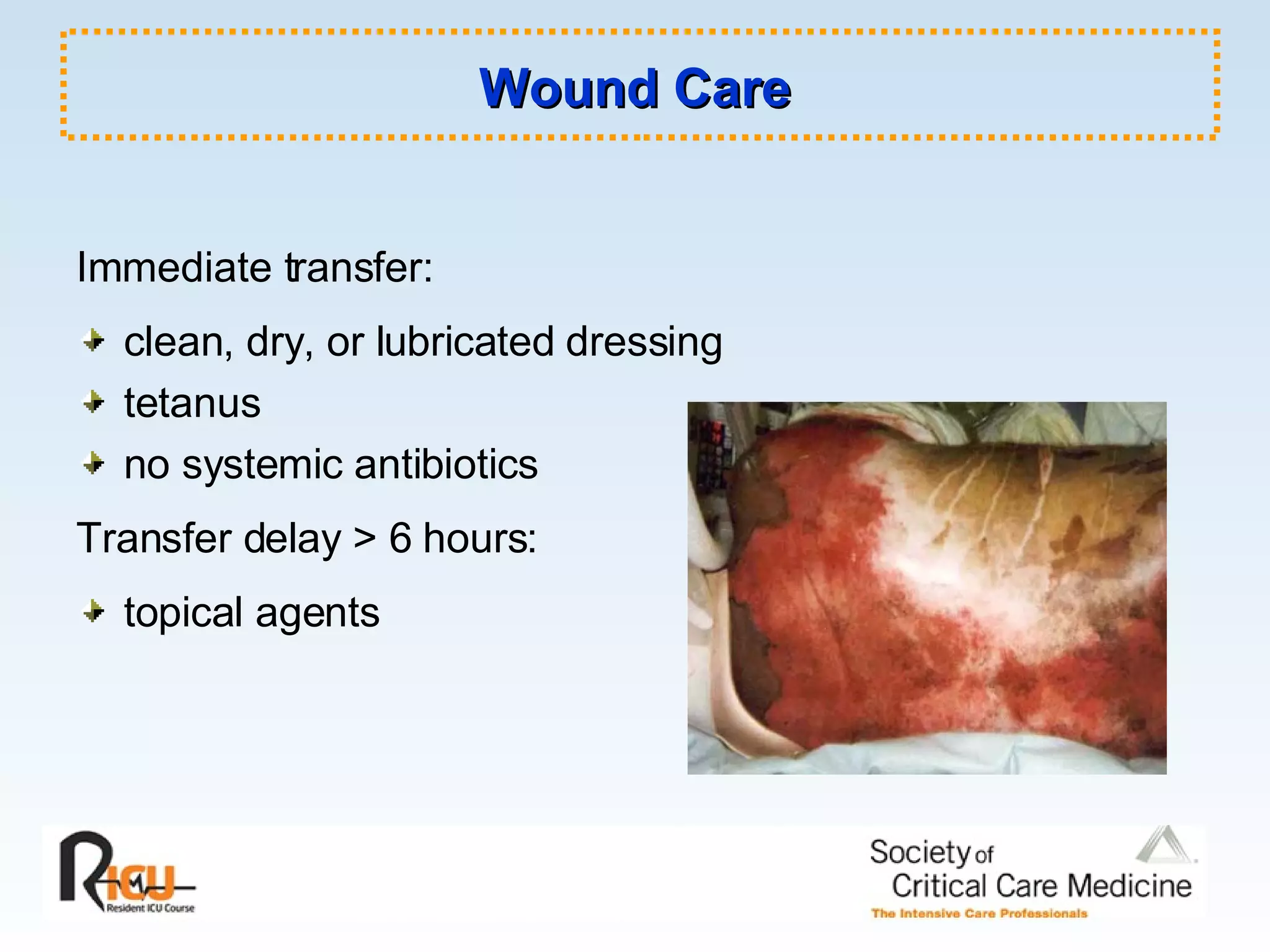
Wound Care Immediate transfer: clean, dry, or lubricated dressing tetanus no systemic antibiotics Transfer delay > 6 hours: topical agents
Topical Agents Systemic antibiotics do not penetrate the dead surface tissue of the burn wound and cannot prevent infection of the necrotic tissue. There is no role for prophylactic antibiotic use in burn patients. Topical antibiotics decrease surface colonization and decrease the incidence of invasive infections.
Topical Agents The ideal topical antibiotic would have a broad spectrum of coverage, penetrate necrotic burned tissue, and have minimal systemic toxicities.
Topical Agents Silver Nitrate: poor penetration electrolyte disorder stains skin, sclera, nurses, patient’s room, lab coat, etc. advantage - no known resistance rarely used
Topical Agents Mafenide Acetate: extremely painful to second degree burns metabolic acidosis (carbonic anhydrase inhibitor) advantage - excellent penetration no known resistance
Topical Agents Silver Sulfadiazine: poor penetration allergies - Sulfa drug transient neutropenia - WBC of <1,500 are not uncommon resistant Pseudomonas strains exist inhibits epithelial healing - should not be used in superficial second degree burns which have minimal risks of infection advantage - soothing overall excellent coverage
Burn Wound Infections First week - cellulitis from Gram positive organisms (Strep/Staph) After 7 - 10 days - invasive infections of the wound; Gram negative organisms, especially  Pseudomonas Fungal infections are becoming more common. Candida may cause a superficial infection and additional skin loss;  Aspergillus  commonly results in a deep, invasive infection with 20 - 40% mortality rate.
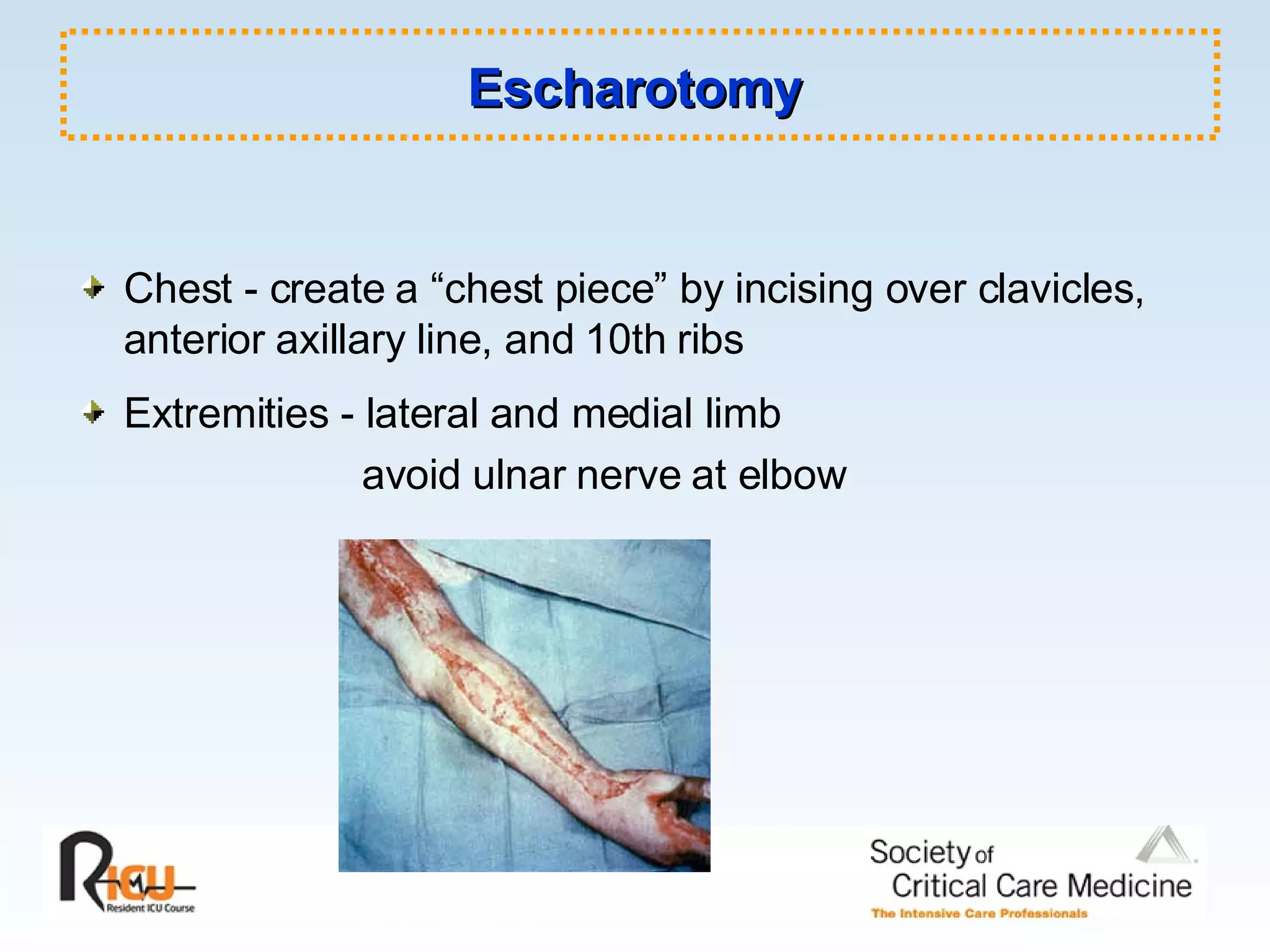
Escharotomy Incision of skin to relieve compartment pressures.  Indications are circumferential third degree burns and: chest - increased peak airway resistance in initial 8 hours extremities - decreased pulse signal by doppler;  increased muscle compartment pressure
Escharotomy Chest - create a “chest piece” by incising over clavicles, anterior axillary line, and 10th ribs Extremities - lateral and medial limb avoid ulnar nerve at elbow
Adjuncts NG tube for burns > 20% - gastric ileus is common Tetanus Fluorescein eyes if facial burns present Avoid hypothermia Beware associated injuries - patients found “down” in fires may have associated injuries from the fall.
Electrical Injury Low voltage - < 1,000 volts. May cause death due to ventricular fibrillation at time of contact but results in little soft tissue damage and no permanent cardiac injury. Often may be treated as outpatient. High voltage - > 1,000 volts. May result in injury to conduction system of heart and persistent arrhythmias. Significant soft tissue injury, with 25% of patients requiring major amputation.
Electrical Injury Systemic complications of high voltage injury:  cardiac injury muscle damage with compartment syndromes and rhabdomyolysis renal dysfunction secondary to rhabdomyolysis damage to peripheral nerves; contact points on head may result in central nervous system injury
Electrical Injury Initial assessment: ABCs Rule of Nines is not useful since much of the muscle damage lies under unburned skin. A urine ouput greater than 100 ml/hr is required if rhabdomyolysis is suspected (pigmented urine). telemetry
Electrical Injury Initial assessment : secondary survey focused on the presence of possible neurological injury and/or muscle compartment syndromes requiring immediate fasciotomy contact points on the hands with associated median nerve dysfunction requires immediate carpal tunnel releases
Electrical Injury Rhabdomyolysis: Alkalinizing urine by administering sodium bicarbonate will prevent crystallization of myoglobin in renal tubule. Urine output > 100 ml/hr will clear myoglobin from tubule; mannitol administration may assist in diuresis.
Electrical Injury Tetanus Topical agents to areas of cutaneous burns Serial exams - compartment syndromes may take hours to develop and onset of neuropathy may be delayed for several days Contact points to trunk may be associated with internal injuries (pneumothorax, lacerations of solid organs, perforations of intestines, etc.)
Scenario #2 A  32-year-old tree trimmer is admitted after accidentally contacting a 15,000-volt wire. He was reportedly unconscious “for a minute” and is now alert. He complains of “numbness” and parathesias of both hands. The palms of both hands have charred full thickness burns and are insensate to exam. After placing a Foley, pink-tinged urine is obtained.
Scenario #2 Loss of consciousness suggests a syncopal event due to an arrhythmia, and this patient requires both an EKG and continuous telemetry. Pigmented urine suggests rhabdomyolysis and 2.000 ml of Ringer’s Lactate should be administered to promote a diuresis; urine myoglobin and serum CPK levels should be obtained.
Scenario #2 Full thickness hand burns and the neurological exam suggest significant nerve and soft-tissue damage. Fasciotomy of both forearms and release of median and ulnar nerves at the wrist should be performed urgently. Debridement of nonviable muscle will decrease the severity of the rhabdomyolysis.
References 1. Yowler CJ, Fratianne RB. Current status of burn resuscitation.  Clinics in Plastic Surgery . 2000;27: 1-10. 2. Ryan CM, Schoenfeld, et al. Objective estimates of the probability of death from burn injuries.  N Engl J Med.  1998;338: 362-6. 3. Pruitt BA JR, McManus AT, et al. Burn wound infections: current status.  World J Surgery . 1998;22:135-45. 4. Rai J, Jeschke MG, et al. Electrical injuries: a 30-year review.  J Trauma . 1999;46: 933-6.

Burns

  • 1.
    Initial Assessment andResuscitation of the Severely Burned Patient Charles J. Yowler, MD, FCCM Associate Professor of Surgery Director, Burn Center MetroHealth Medical Center Campus Case Western Reserve University
  • 2.
    Burn Injury Burninjuries per year - over 2 million ER visits - 700,000 Hospitalizations - 45,000 Mortality rate – 6% (4,500 annually) Burn size with 50% survival - AGE % 2-18 90 18-45 80 >70 30
  • 3.
    Initial Approach ABCsof ATLS Initial fluid management Monitoring of resuscitation Topical agents Indications for escharotomies Electrical injury
  • 4.
    Airway Inhalation InjuryAnoxic injury - oxygen content of closed room with fire may be as low as 10%; anoxic injury can occur within minutes Carbon monoxide/cyanide - systemic poisons absorbed through the lungs Smoke inhalation - chemical byproducts of combustion that create chemical burns to the airway
  • 5.
    Airway All victimsof closed-space fires should be placed on 100% oxygen by mask until an arterial blood gas (ABG) with carboxyhemaglobin (COHgb) level is obtained. Carbonaceous sputum, soot in the nasopharyngeal cavity, and facial burns are signs of inhalation injury; they are not absolute indications for endotracheal intubation. The majority of patients with mild to moderate smoke inhalation do not require intubation.
  • 6.
    Airway Indications forIntubation Inability to protect airway Respiratory distress Hoarseness/stridor Dyspnea Third degree facial burns CO poisoning
  • 7.
    Airway Hoarseness/stridor- indicateslaryngeal edema. This edema will increase for 24 - 36 hours during the fluid resuscitation, and delay in intubation may result in loss of the airway, resulting in urgent tracheostomy. Wheezing - does not indicate laryngeal edema. Bronchospasm is common after smoke inhalation and usually responds to bronchodilators/asthma protocols.
  • 8.
    Carbon Monoxide Byproductof combustion History: exposed to closed space fires Signs - decreased alertness: Burns are painful and decreased mental status suggests anoxic injury, CO poisoning, or associated closed head injury. Cutaneous pulse ox monitors interpret COHgb as oxygen saturated hemoglobin and cannot be used to rule out CO poisoning - an ABG with direct measurement of COHgb is required.
  • 9.
    Carbon Monoxide Half-lifeRoom air: 240 minutes 100% oxygen: 30 - 45 minutes Hyperbaric oxygen: 15 - 20 minutes Pathophysiology Impaired oxygen delivery (COHgb) Impaired oxygen utilization (cytochrome oxidase)
  • 10.
    Carbon Monoxide TreatmentIntubate/100% oxygen: COHgb > 20 if symptomatic COHgb > 30 Wean oxygen when: COHgb < 10 and serum bicarbonate > 20 Resolution of metabolic acidosis signifies CO has cleared the mitochondrial cytochrome oxidase system.
  • 11.
    Smoke Inhalation InjuryDeterminants of mortality - age, burn size, presence of inhalation injury Leading cause of death at scene - anoxic injury Leading cause of death in burn unit - pneumonia in patients with pre-existing inhalation injury
  • 12.
    Smoke Inhalation InjuryDiagnosis - bronchoscopy Treatment - intubation for significant injury PEEP/low volume ventilation bronchodilators pulmonary toilet high-frequency ventilation
  • 13.
    Rule Of NinesHead 9% Each arm 9% Anterior trunk 18% Posterior trunk 18% Each leg 18% Genitalia 1% Palm of patient’s hand including fingers is approximately 1%
  • 14.
    Fluid Resuscitation Parklandformula: 4ml/kg/% burn Only 2 nd /3 rd degree burns are used in the calculation; pink 1 st degree burns with intact skin are not counted. Ringer’s Lactate - large volumes of normal saline will result in hyperchloremic acidosis. Half is given over initial eight hours post-burn Half is given over following 16 hours IV access may be through burn but should not be distal to circumferential burns
  • 15.
    Case Scenario #1A 23-year-old victim of gasoline flame burns is admitted with 2 nd and 3 rd degree burns of both arms and the entire anterior trunk. Admission weight is 70 kg. Calculate the initial IV rate. Burn size is 9 + 9 + 18 = 36% (4) X (36) X (70) = 10,080 ml Half in first 8 hours = 5,040 Initial IV rate = 630 ml/hr
  • 16.
    Case Scenario #1Adjustments must be made if fluids were previously administered. If this patient was evaluated one hour after burn injury and had received 2,000 ml of crystalloid, we would have to give the remaining 3,040 ml of the initial fluid over seven hours. This would change the IV rate to 3,040/7 = 434 ml/hr.
  • 17.
    Fluid Resuscitation ModificationsBicarbonate - one ampule of sodium bicarbonate may be added to each liter of fluid if a significant metabolic acidosis is present. Colloid (FFP/albumin): Added after initial 12 hours in burns greater than 40% (30% if age < 5) or if fluid requirement at 12 hours is > 20% above that estimated initially.
  • 18.
    Monitoring The ParklandFormula commonly underestimates fluid requirements in patients with: inhalation injury delay in resuscitation/associated injury pre-existing dehydration hyperglycemia alcohol intoxication chronic diuretic therapy
  • 19.
    Monitoring The ParklandFormula is an estimate and IV rates must be adjusted. Under-resuscitation results in hypoperfusion of organs and the burn wound; hypoperfusion of the wound increases cellular death and may convert partial thickness burns to full thickness injury.
  • 20.
    Monitoring Over-resuscitation exacerbatesany co-existing pulmonary injury and increases edema. Increased edema results in hypoperfusion of the wound and conversion of partial thickness burn to full thickness injury. Both under- and over-resuscitation are detrimental to the wound. Determining the adequacy of resuscitation remains one of the most difficult aspects of burn care.
  • 21.
    Monitoring Goal isurine output of 0.5 ml/kg/hr (1.0 ml/kg/hr in infants) Urine outputs greater than 1.0 ml/kg/hr are to be avoided. The initial metabolic acidosis should be improving after 12 hours. Lactic acid levels are unreliable indicators of resuscitation in the burn patient. Full thickness skin death results in release of lactic acid that will not resolve until the burn is excised. Young, healthy patients may be adequately resuscitated with CVPs < 8.
  • 22.
    Monitoring Myocardial depressionoccurs in patients with burns > 20% and persists for 24 - 36 hours. Low urine outputs may occur despite adequate fluid resuscitation in patients with pre-existing myocardial dysfunction that is exacerbated by this response to the burn injury.
  • 23.
    Monitoring Pulmonary arterycatheters are indicated if the patient is not responding as predicted to the fluid resuscitation. Candidates for PAC: age > 55 cardiac history chronic renal insufficiency COPD 6 ml/kg/% burn severe inhalation injury
  • 24.
    Wound Care Immediatetransfer: clean, dry, or lubricated dressing tetanus no systemic antibiotics Transfer delay > 6 hours: topical agents
  • 25.
    Topical Agents Systemicantibiotics do not penetrate the dead surface tissue of the burn wound and cannot prevent infection of the necrotic tissue. There is no role for prophylactic antibiotic use in burn patients. Topical antibiotics decrease surface colonization and decrease the incidence of invasive infections.
  • 26.
    Topical Agents Theideal topical antibiotic would have a broad spectrum of coverage, penetrate necrotic burned tissue, and have minimal systemic toxicities.
  • 27.
    Topical Agents SilverNitrate: poor penetration electrolyte disorder stains skin, sclera, nurses, patient’s room, lab coat, etc. advantage - no known resistance rarely used
  • 28.
    Topical Agents MafenideAcetate: extremely painful to second degree burns metabolic acidosis (carbonic anhydrase inhibitor) advantage - excellent penetration no known resistance
  • 29.
    Topical Agents SilverSulfadiazine: poor penetration allergies - Sulfa drug transient neutropenia - WBC of <1,500 are not uncommon resistant Pseudomonas strains exist inhibits epithelial healing - should not be used in superficial second degree burns which have minimal risks of infection advantage - soothing overall excellent coverage
  • 30.
    Burn Wound InfectionsFirst week - cellulitis from Gram positive organisms (Strep/Staph) After 7 - 10 days - invasive infections of the wound; Gram negative organisms, especially Pseudomonas Fungal infections are becoming more common. Candida may cause a superficial infection and additional skin loss; Aspergillus commonly results in a deep, invasive infection with 20 - 40% mortality rate.
  • 31.
    Escharotomy Incision ofskin to relieve compartment pressures. Indications are circumferential third degree burns and: chest - increased peak airway resistance in initial 8 hours extremities - decreased pulse signal by doppler; increased muscle compartment pressure
  • 32.
    Escharotomy Chest -create a “chest piece” by incising over clavicles, anterior axillary line, and 10th ribs Extremities - lateral and medial limb avoid ulnar nerve at elbow
  • 33.
    Adjuncts NG tubefor burns > 20% - gastric ileus is common Tetanus Fluorescein eyes if facial burns present Avoid hypothermia Beware associated injuries - patients found “down” in fires may have associated injuries from the fall.
  • 34.
    Electrical Injury Lowvoltage - < 1,000 volts. May cause death due to ventricular fibrillation at time of contact but results in little soft tissue damage and no permanent cardiac injury. Often may be treated as outpatient. High voltage - > 1,000 volts. May result in injury to conduction system of heart and persistent arrhythmias. Significant soft tissue injury, with 25% of patients requiring major amputation.
  • 35.
    Electrical Injury Systemiccomplications of high voltage injury: cardiac injury muscle damage with compartment syndromes and rhabdomyolysis renal dysfunction secondary to rhabdomyolysis damage to peripheral nerves; contact points on head may result in central nervous system injury
  • 36.
    Electrical Injury Initialassessment: ABCs Rule of Nines is not useful since much of the muscle damage lies under unburned skin. A urine ouput greater than 100 ml/hr is required if rhabdomyolysis is suspected (pigmented urine). telemetry
  • 37.
    Electrical Injury Initialassessment : secondary survey focused on the presence of possible neurological injury and/or muscle compartment syndromes requiring immediate fasciotomy contact points on the hands with associated median nerve dysfunction requires immediate carpal tunnel releases
  • 38.
    Electrical Injury Rhabdomyolysis:Alkalinizing urine by administering sodium bicarbonate will prevent crystallization of myoglobin in renal tubule. Urine output > 100 ml/hr will clear myoglobin from tubule; mannitol administration may assist in diuresis.
  • 39.
    Electrical Injury TetanusTopical agents to areas of cutaneous burns Serial exams - compartment syndromes may take hours to develop and onset of neuropathy may be delayed for several days Contact points to trunk may be associated with internal injuries (pneumothorax, lacerations of solid organs, perforations of intestines, etc.)
  • 40.
    Scenario #2 A 32-year-old tree trimmer is admitted after accidentally contacting a 15,000-volt wire. He was reportedly unconscious “for a minute” and is now alert. He complains of “numbness” and parathesias of both hands. The palms of both hands have charred full thickness burns and are insensate to exam. After placing a Foley, pink-tinged urine is obtained.
  • 41.
    Scenario #2 Lossof consciousness suggests a syncopal event due to an arrhythmia, and this patient requires both an EKG and continuous telemetry. Pigmented urine suggests rhabdomyolysis and 2.000 ml of Ringer’s Lactate should be administered to promote a diuresis; urine myoglobin and serum CPK levels should be obtained.
  • 42.
    Scenario #2 Fullthickness hand burns and the neurological exam suggest significant nerve and soft-tissue damage. Fasciotomy of both forearms and release of median and ulnar nerves at the wrist should be performed urgently. Debridement of nonviable muscle will decrease the severity of the rhabdomyolysis.
  • 43.
    References 1. YowlerCJ, Fratianne RB. Current status of burn resuscitation. Clinics in Plastic Surgery . 2000;27: 1-10. 2. Ryan CM, Schoenfeld, et al. Objective estimates of the probability of death from burn injuries. N Engl J Med. 1998;338: 362-6. 3. Pruitt BA JR, McManus AT, et al. Burn wound infections: current status. World J Surgery . 1998;22:135-45. 4. Rai J, Jeschke MG, et al. Electrical injuries: a 30-year review. J Trauma . 1999;46: 933-6.