Culture and Language
What is language?Language is a system of symbols with standard meanings (Rai & Panna, 2010, p.33)Language is a linguistic practice in context (Risager, 2007, p. 167)Linguistic practices create meaning which in turn creates culture, i.e. languaculture(Risager, 2007, p.170)
Characteristics of LanguageConventionality  the agreement of the symbolsA dog is a dog because we collectively call it dog.Productivity Language is communication expressing meaning and new meaning can be created due to the productivity of languageDisplacementLanguage also conveys information about something which is not present in the immediate environment; it allows us the communicate the abstract(Rai & Panna, 2010)
Dimensions of “Languaculture”Semantic & Pragmatic Dimension“This dimension is about constancy and variability in the semantics and pragmatics of specific languages” (p. 171)Poetic DimensionThis dimension explores the meaning created through syllabic structure of the languageIdentity DimensionThe way in which a language is used and what language is used identifies you in connection to your culture(Risager, 2007)
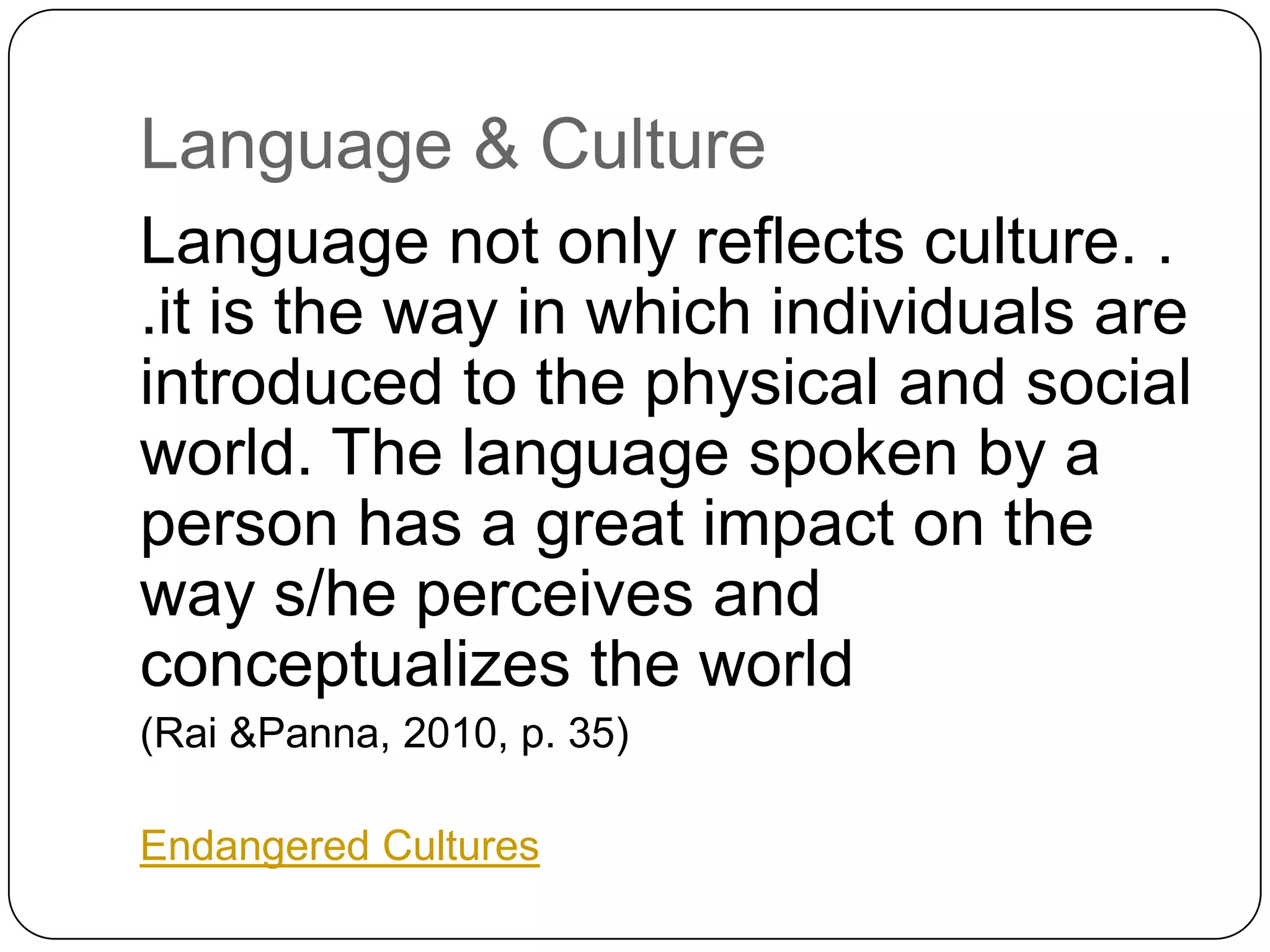
Language & CultureLanguage not only reflects culture. . .it is the way in which individuals are introduced to the physical and social world. The language spoken by a person has a great impact on the way s/he perceives and conceptualizes the world (Rai&Panna, 2010, p. 35)Endangered Cultures
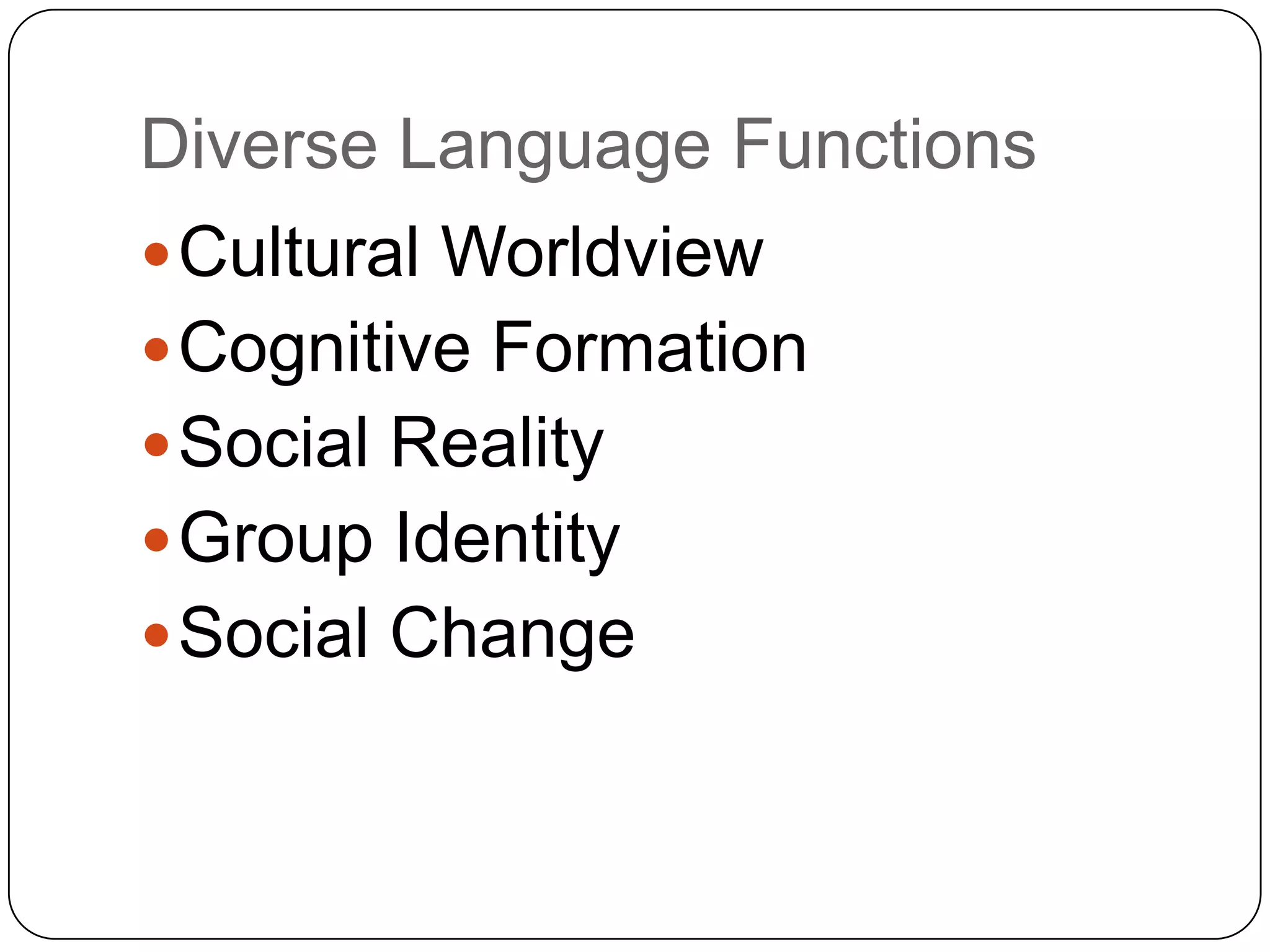
Diverse Language FunctionsCultural WorldviewCognitive FormationSocial RealityGroup IdentitySocial Change
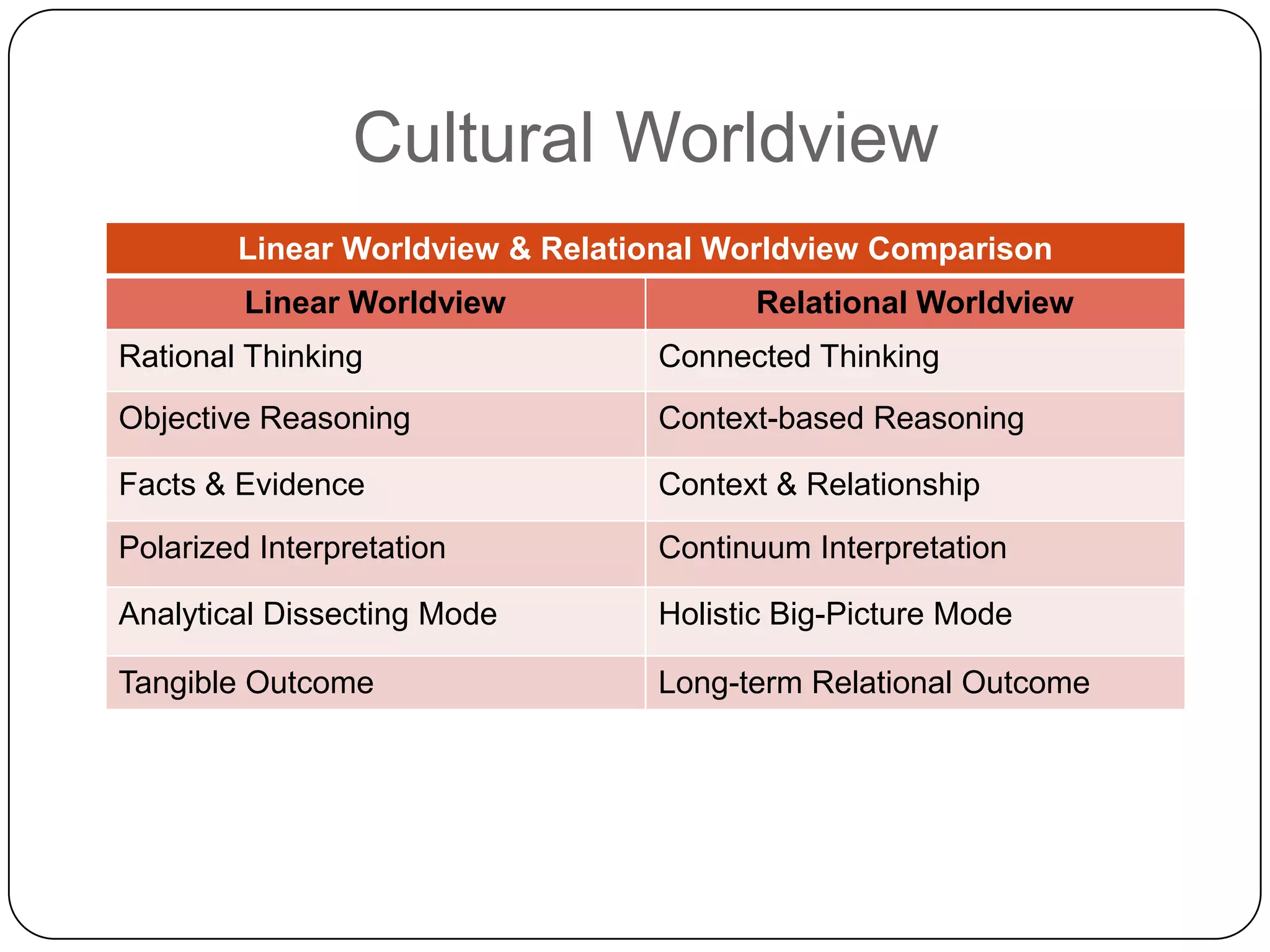
Cultural Worldview
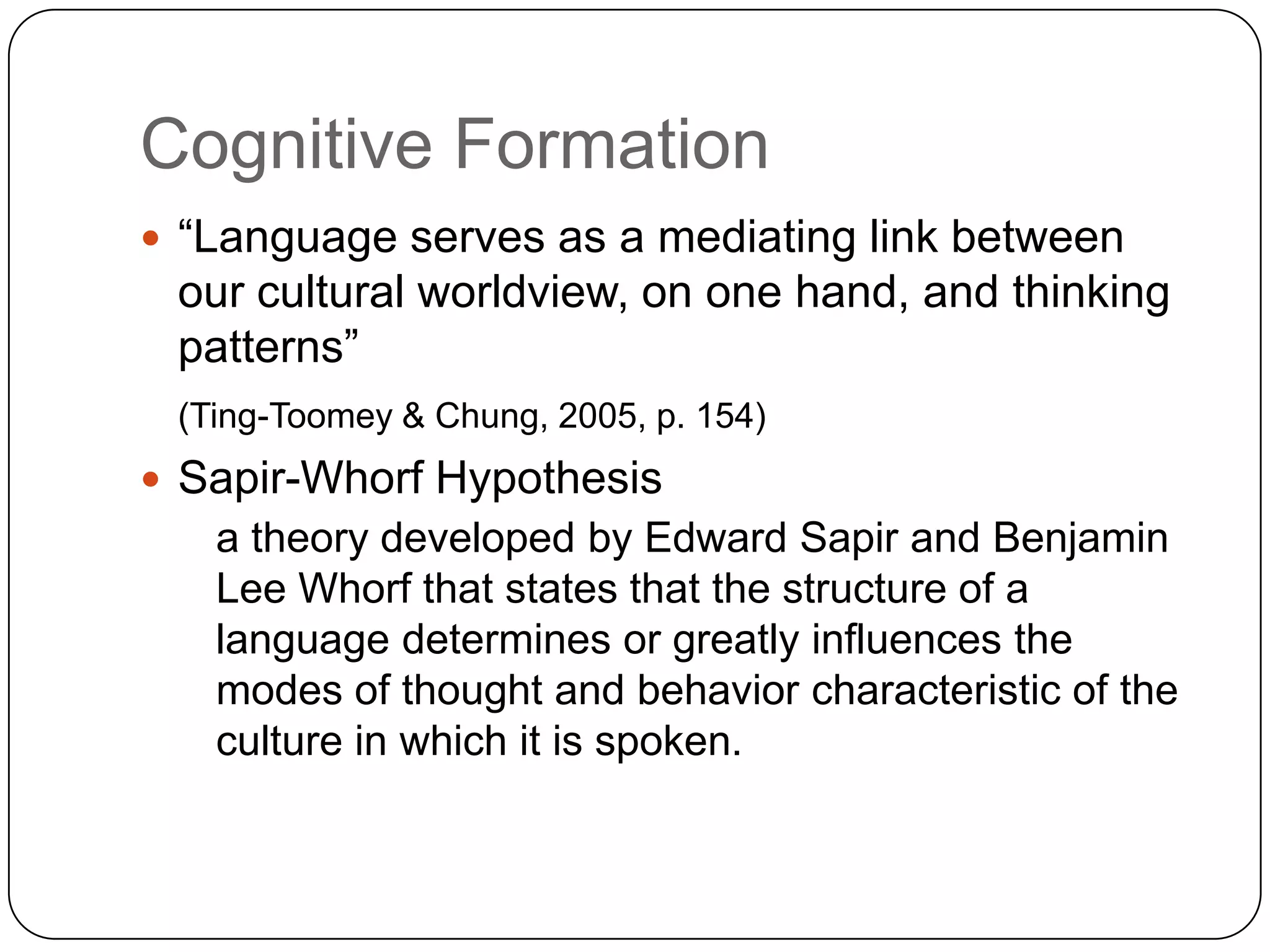
Cognitive Formation“Language serves as a mediating link between our cultural worldview, on one hand, and thinking patterns” (Ting-Toomey & Chung, 2005, p. 154)Sapir-Whorf Hypothesis 	a theory developed by Edward Sapir and Benjamin Lee Whorf that states that the structure of a language determines or greatly influences the modes of thought and behavior characteristic of the culture in which it is spoken.
Social Reality“Language acts as a gatekeeper in naming and selecting what is considered ‘news’ or ‘real’ in our environment.”“Vocabularies in different cultures direct members’ attention to the things that are important in their social experiences.”“Everyday language in a culture serves as a prism through which individual interpret ‘meaningful’ versus ‘meaningless.’(Ting-Toomey & Chung, 2005, p. 156)
Group Identity“Language represents a rallying point for evoking group sentiment and shared identity.”“Language serves the larger cultural-ethnic identity function because it is an emblem of group solidarity.”There is pride in the ability to speaking one’s native tongue; however, there are times when individuals change languages. This is called code-switching.Code-switching is switching languages to increase or decrease intergroup distance.
Social Change As innovative social beings, we are creators of the social tool of human language.Language has the ability to inhibit us and to set us free.What We Learned from 5 million Books
ReferencesRai, R. & Panna, K. (2010). Introduction to culture studies. Mumbi, Global Media.Risager, K. (2007). Language and Culture Pedagogy: From National to a Transnational Paradigm. London: Multilingual Matters Limited.Ting-Toomey, S. & Chung, L. (2005). Understanding Intercultural Communication. New York: Oxford.

Culture and language

  • 1.
  • 2.
    What is language?Languageis a system of symbols with standard meanings (Rai & Panna, 2010, p.33)Language is a linguistic practice in context (Risager, 2007, p. 167)Linguistic practices create meaning which in turn creates culture, i.e. languaculture(Risager, 2007, p.170)
  • 3.
    Characteristics of LanguageConventionality the agreement of the symbolsA dog is a dog because we collectively call it dog.Productivity Language is communication expressing meaning and new meaning can be created due to the productivity of languageDisplacementLanguage also conveys information about something which is not present in the immediate environment; it allows us the communicate the abstract(Rai & Panna, 2010)
  • 4.
    Dimensions of “Languaculture”Semantic& Pragmatic Dimension“This dimension is about constancy and variability in the semantics and pragmatics of specific languages” (p. 171)Poetic DimensionThis dimension explores the meaning created through syllabic structure of the languageIdentity DimensionThe way in which a language is used and what language is used identifies you in connection to your culture(Risager, 2007)
  • 5.
    Language & CultureLanguagenot only reflects culture. . .it is the way in which individuals are introduced to the physical and social world. The language spoken by a person has a great impact on the way s/he perceives and conceptualizes the world (Rai&Panna, 2010, p. 35)Endangered Cultures
  • 6.
    Diverse Language FunctionsCulturalWorldviewCognitive FormationSocial RealityGroup IdentitySocial Change
  • 7.
  • 8.
    Cognitive Formation“Language servesas a mediating link between our cultural worldview, on one hand, and thinking patterns” (Ting-Toomey & Chung, 2005, p. 154)Sapir-Whorf Hypothesis a theory developed by Edward Sapir and Benjamin Lee Whorf that states that the structure of a language determines or greatly influences the modes of thought and behavior characteristic of the culture in which it is spoken.
  • 9.
    Social Reality“Language actsas a gatekeeper in naming and selecting what is considered ‘news’ or ‘real’ in our environment.”“Vocabularies in different cultures direct members’ attention to the things that are important in their social experiences.”“Everyday language in a culture serves as a prism through which individual interpret ‘meaningful’ versus ‘meaningless.’(Ting-Toomey & Chung, 2005, p. 156)
  • 10.
    Group Identity“Language representsa rallying point for evoking group sentiment and shared identity.”“Language serves the larger cultural-ethnic identity function because it is an emblem of group solidarity.”There is pride in the ability to speaking one’s native tongue; however, there are times when individuals change languages. This is called code-switching.Code-switching is switching languages to increase or decrease intergroup distance.
  • 11.
    Social Change Asinnovative social beings, we are creators of the social tool of human language.Language has the ability to inhibit us and to set us free.What We Learned from 5 million Books
  • 12.
    ReferencesRai, R. &Panna, K. (2010). Introduction to culture studies. Mumbi, Global Media.Risager, K. (2007). Language and Culture Pedagogy: From National to a Transnational Paradigm. London: Multilingual Matters Limited.Ting-Toomey, S. & Chung, L. (2005). Understanding Intercultural Communication. New York: Oxford.