http://www2.vobs.at/ludescher/pdf%20files/Nativi
sm-pppictures.pdf

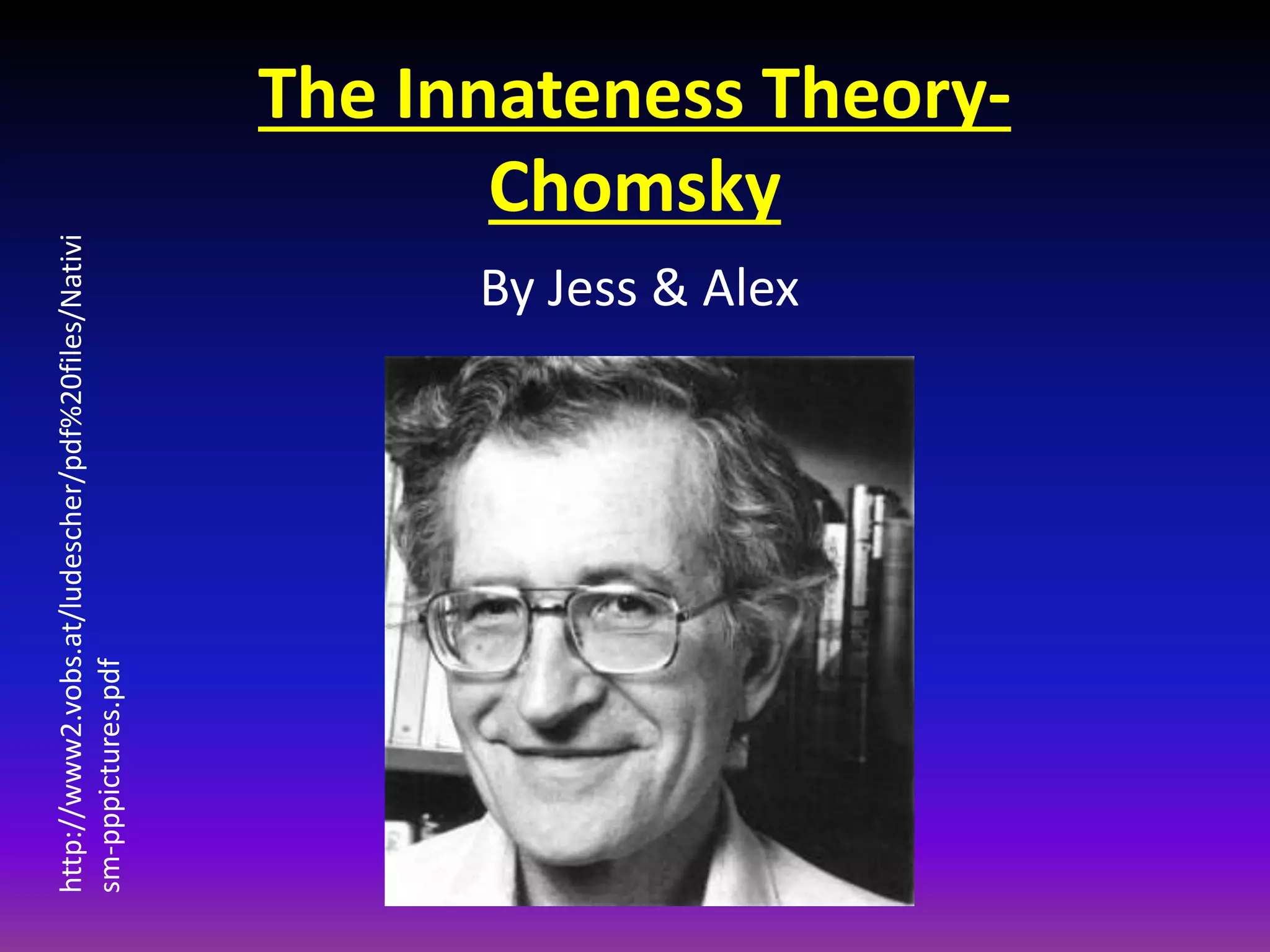
The Innateness TheoryChomsky
By Jess & Alex
Learning Objective
• To understand and apply the innateness
theory by Chomsky.
• To understand how this theory links in with
children’s acquisition of language.
• Understand criticisms of the theory and why
they are opposed to it.
NATIVIST THEORY
• “Language is an innate faculty”.
• “We are born with a set of rules about
language in our heads”.
• “The universal grammar is the basis upon
which all human languages build”.
UNIVERSAL GRAMMAR
• Word order
• The teacher gave a lecture
• SUBJECT VERB OBJECT
• 75% of the world‘s languages use this order
“We are born with a set of rules”
• The system of principles, conditions and rules
that are elements or properties of all human
languages.
• Universal grammar is a theory of
knowledge its concern is with the internal
structure of the human mind.
Innate Hypothesis 1:
• All children with all levels of knowledge can
acquire language.
• Children can acquire language effortlessly.
• Children can acquire language in a relatively
short period of time.
• Language is a complex system.
• A child does not have to be formally taught
to acquire language.
Innate Hypothesis 2:
• Children discover the system of language from
an unsystematic and small amount of data.
• Language acquisition requires very little
imitation.
• Reinforcement (reward) has a very small role in
acquisition.
• Language acquisition is a very active process.
Children say things that they have never heard
from adults.
Conclusions
• Infants are born with a Language Acquisition
Device (LAD).
• Exposure to language is all that is needed for a
child to discover the system of language. This is
critical and is evidenced by a number of cases of
children in isolation e.g.: Genie
• http://www.youtube.com/watch?v=VjZolHCrC8E
• Start video from 6 mins onwards until 12 mins.
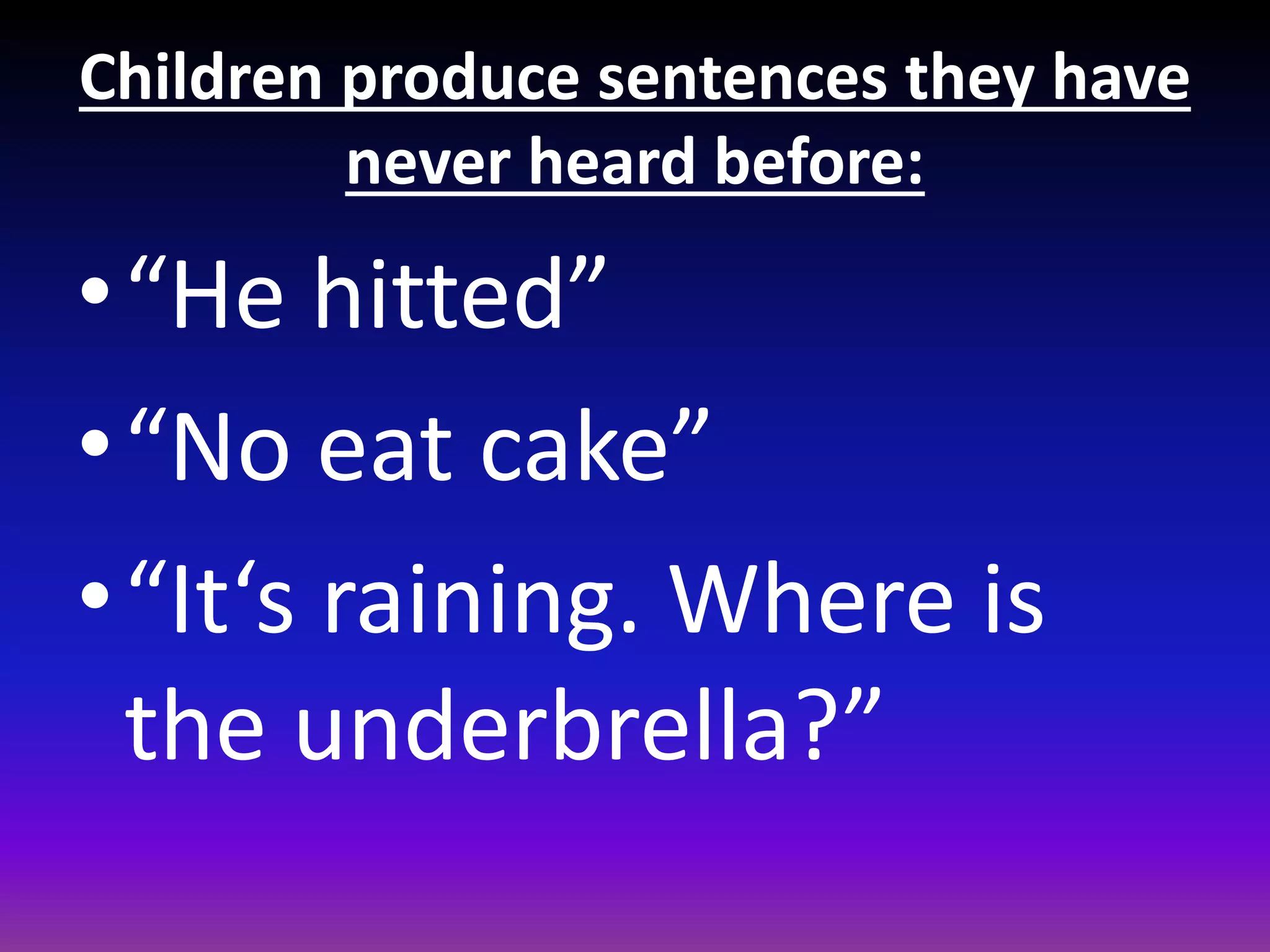
Children produce sentences they have
never heard before:

•“He hitted”
•“No eat cake”
•“It‘s raining. Where is
the underbrella?”
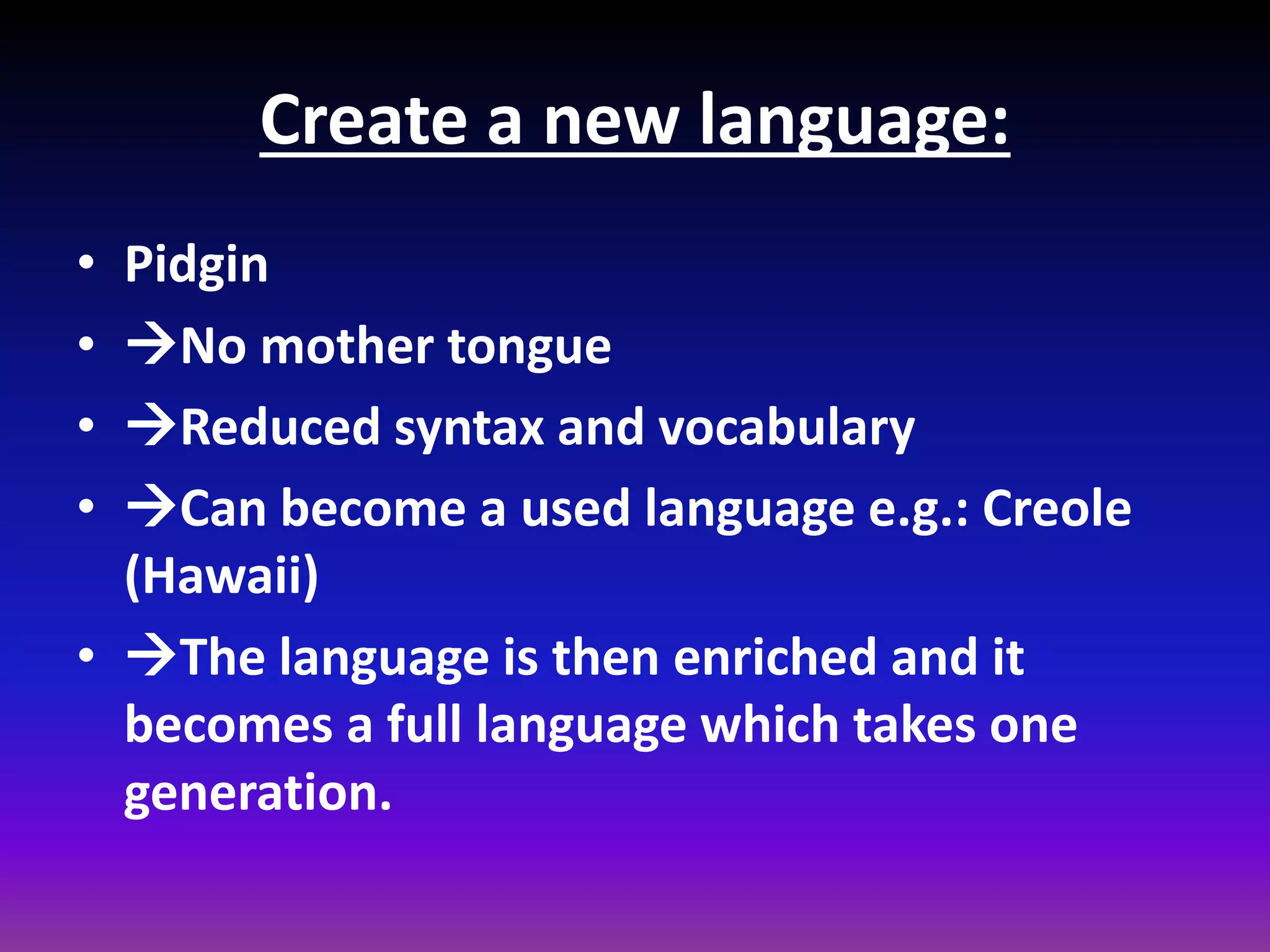
Create a new language:
•
•
•
•

Pidgin
No mother tongue
Reduced syntax and vocabulary
Can become a used language e.g.: Creole
(Hawaii)
• The language is then enriched and it
becomes a full language which takes one
generation.
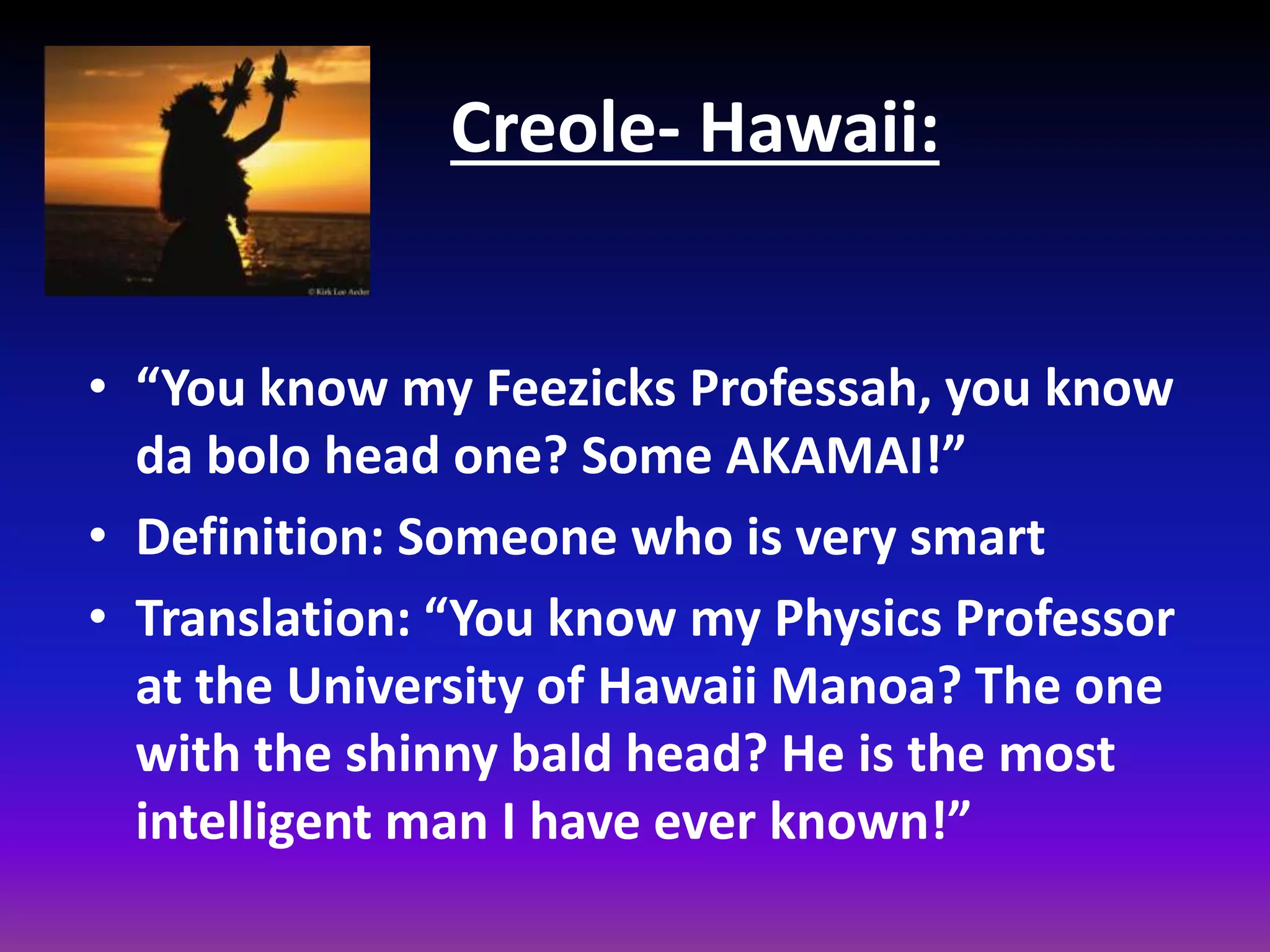
Creole- Hawaii:
• “You know my Feezicks Professah, you know
da bolo head one? Some AKAMAI!”
• Definition: Someone who is very smart
• Translation: “You know my Physics Professor
at the University of Hawaii Manoa? The one
with the shinny bald head? He is the most
intelligent man I have ever known!”
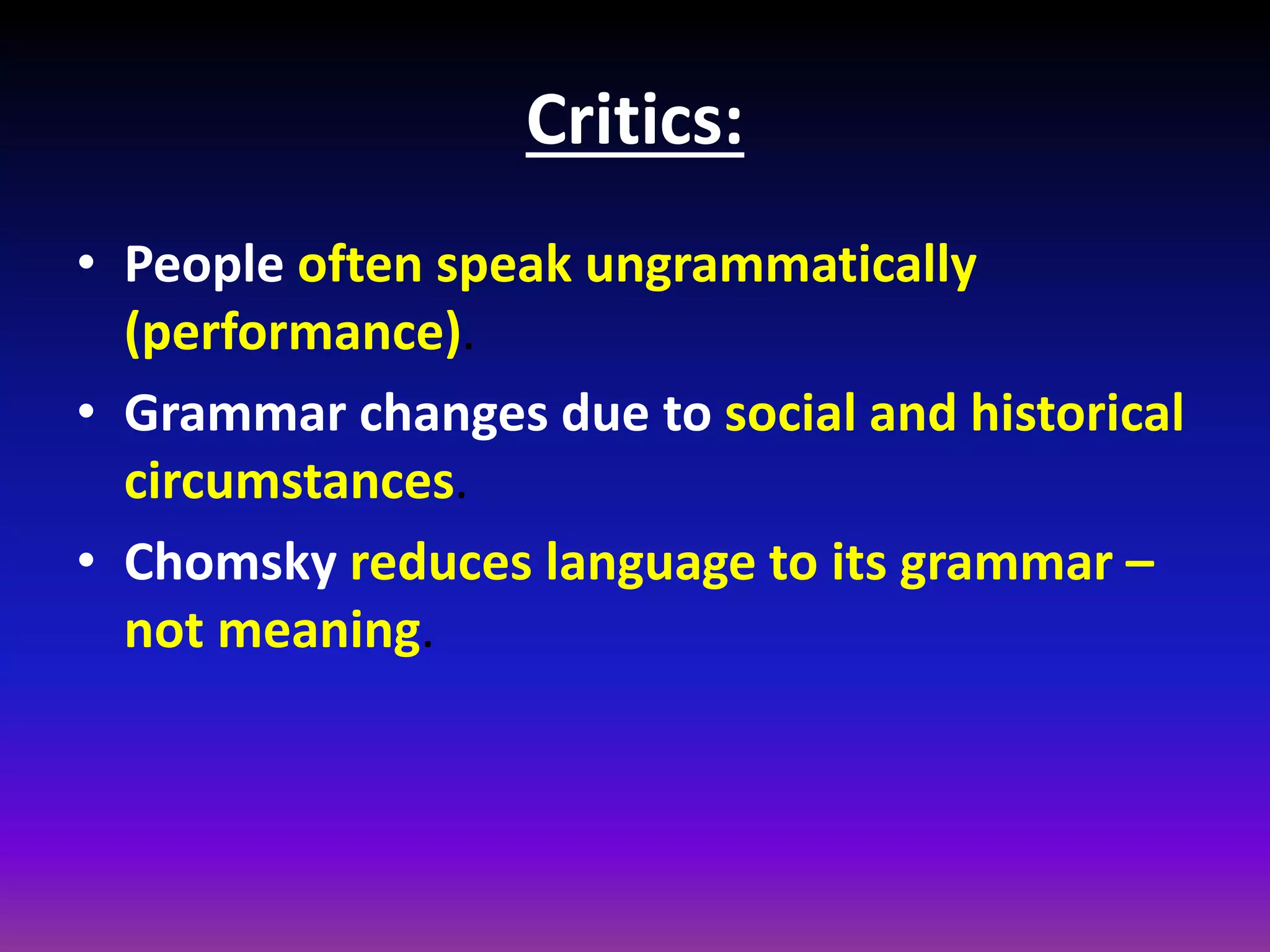
Critics:
• People often speak ungrammatically
(performance).
• Grammar changes due to social and historical
circumstances.
• Chomsky reduces language to its grammar –
not meaning.
Criticisms and Counter Arguments
• The psychologist Jerome Bruner concluded
that language acquisition not only depends
on LAD but also LASS or Language Acquisition
Support System.
• The environment a child grows up can also
have a major effect on language acquisition.
• Some people also think that the LAD is an
abstract concept and lacks adequate scientific
support.

The innateness theory chomsky presentation

  • 1.
  • 2.
    Learning Objective • Tounderstand and apply the innateness theory by Chomsky. • To understand how this theory links in with children’s acquisition of language. • Understand criticisms of the theory and why they are opposed to it.
  • 3.
    NATIVIST THEORY • “Languageis an innate faculty”. • “We are born with a set of rules about language in our heads”. • “The universal grammar is the basis upon which all human languages build”.
  • 4.
    UNIVERSAL GRAMMAR • Wordorder • The teacher gave a lecture • SUBJECT VERB OBJECT • 75% of the world‘s languages use this order
  • 5.
    “We are bornwith a set of rules” • The system of principles, conditions and rules that are elements or properties of all human languages. • Universal grammar is a theory of knowledge its concern is with the internal structure of the human mind.
  • 6.
    Innate Hypothesis 1: •All children with all levels of knowledge can acquire language. • Children can acquire language effortlessly. • Children can acquire language in a relatively short period of time. • Language is a complex system. • A child does not have to be formally taught to acquire language.
  • 7.
    Innate Hypothesis 2: •Children discover the system of language from an unsystematic and small amount of data. • Language acquisition requires very little imitation. • Reinforcement (reward) has a very small role in acquisition. • Language acquisition is a very active process. Children say things that they have never heard from adults.
  • 8.
    Conclusions • Infants areborn with a Language Acquisition Device (LAD). • Exposure to language is all that is needed for a child to discover the system of language. This is critical and is evidenced by a number of cases of children in isolation e.g.: Genie • http://www.youtube.com/watch?v=VjZolHCrC8E • Start video from 6 mins onwards until 12 mins.
  • 9.
    Children produce sentencesthey have never heard before: •“He hitted” •“No eat cake” •“It‘s raining. Where is the underbrella?”
  • 10.
    Create a newlanguage: • • • • Pidgin No mother tongue Reduced syntax and vocabulary Can become a used language e.g.: Creole (Hawaii) • The language is then enriched and it becomes a full language which takes one generation.
  • 11.
    Creole- Hawaii: • “Youknow my Feezicks Professah, you know da bolo head one? Some AKAMAI!” • Definition: Someone who is very smart • Translation: “You know my Physics Professor at the University of Hawaii Manoa? The one with the shinny bald head? He is the most intelligent man I have ever known!”
  • 12.
    Critics: • People oftenspeak ungrammatically (performance). • Grammar changes due to social and historical circumstances. • Chomsky reduces language to its grammar – not meaning.
  • 13.
    Criticisms and CounterArguments • The psychologist Jerome Bruner concluded that language acquisition not only depends on LAD but also LASS or Language Acquisition Support System. • The environment a child grows up can also have a major effect on language acquisition. • Some people also think that the LAD is an abstract concept and lacks adequate scientific support.