NRI INSTITUTE OF RESEARCH
SCIENCE AND TECHNOLOGY
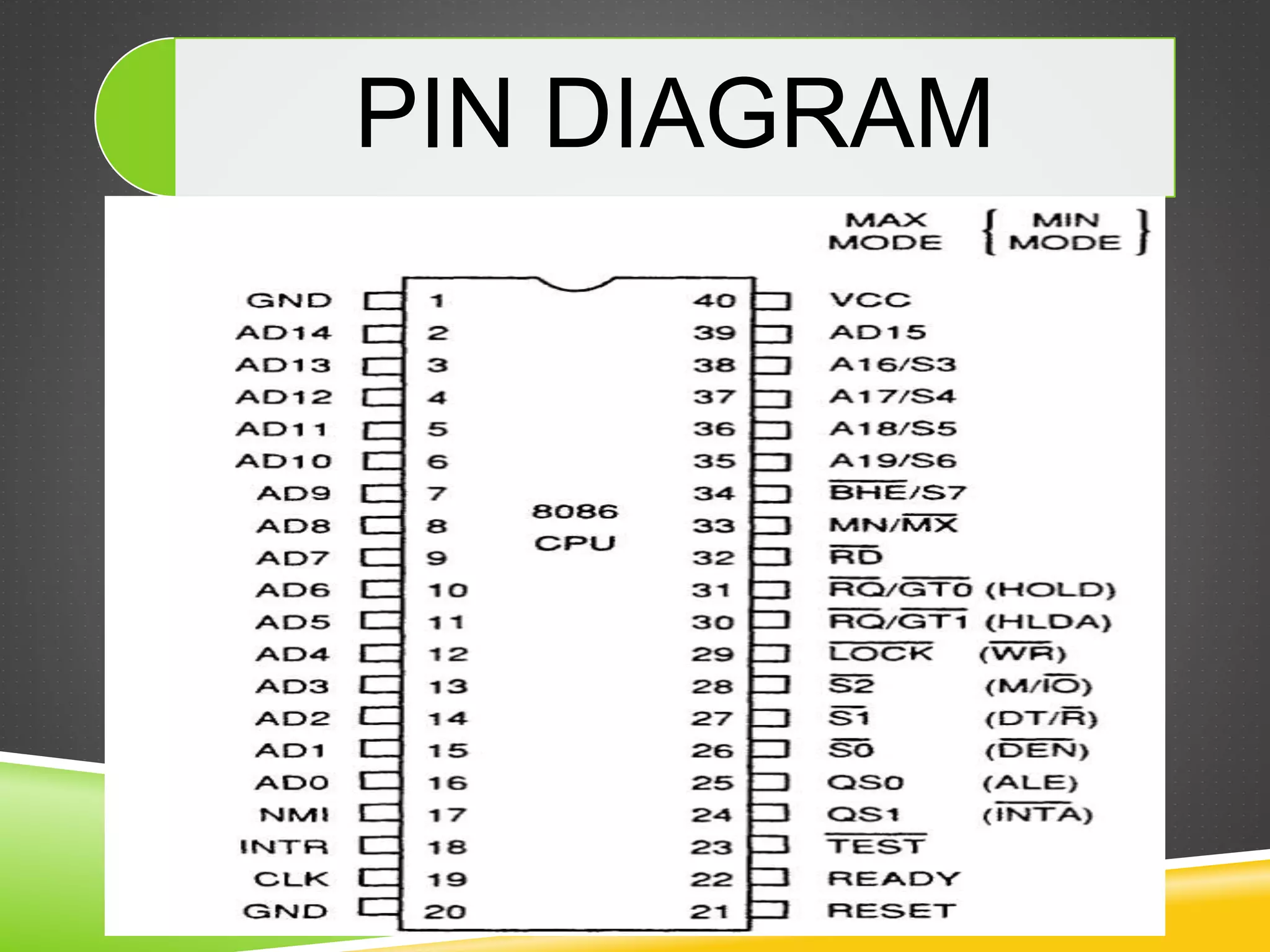
PIN DIAGRAM
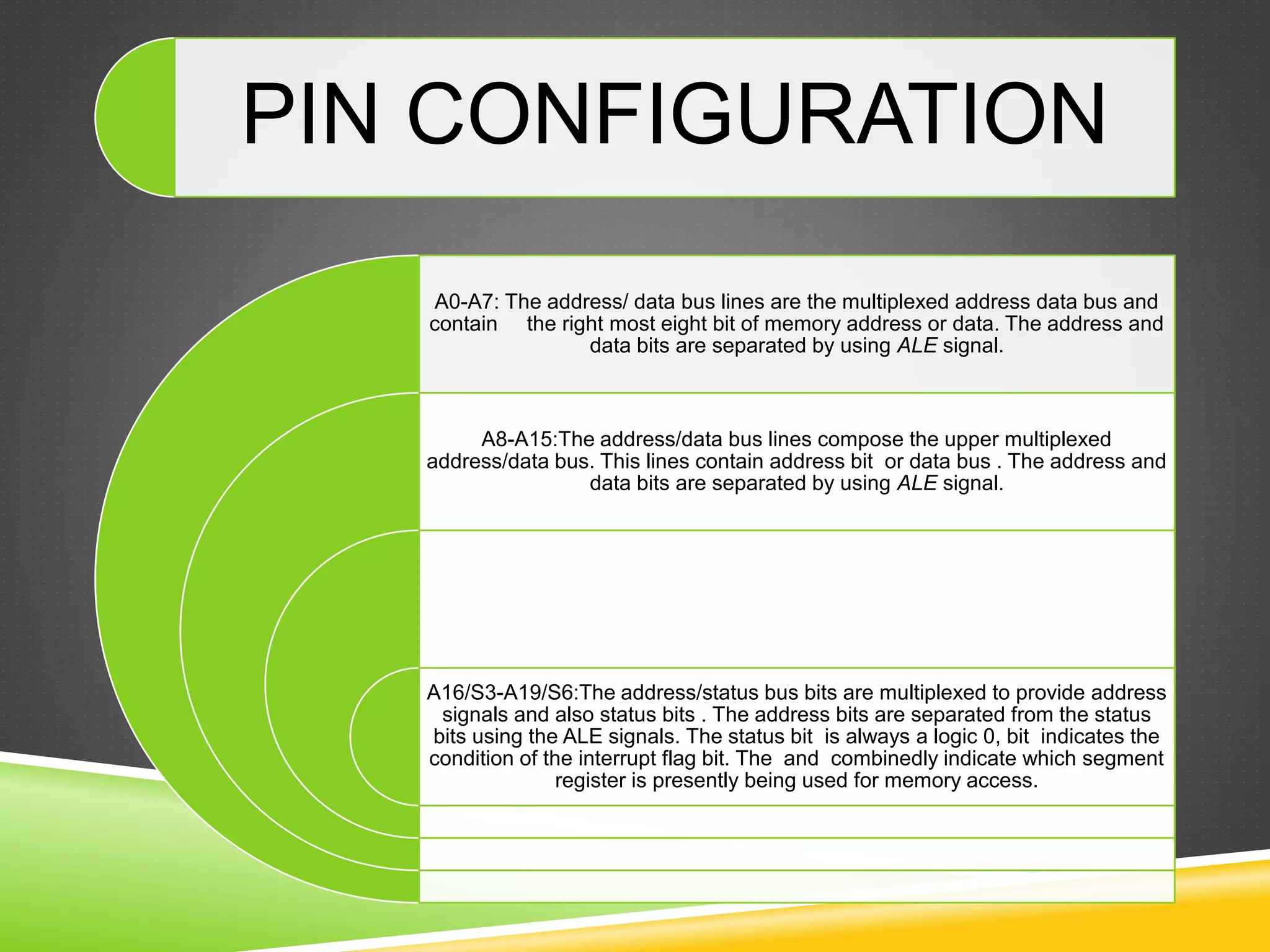
PIN CONFIGURATION
A0-A7: The address/ data bus lines are the multiplexed address data bus and
contain the right most eight bit of memory address or data. The address and
data bits are separated by using ALE signal.
A8-A15:The address/data bus lines compose the upper multiplexed
address/data bus. This lines contain address bit or data bus . The address and
data bits are separated by using ALE signal.
A16/S3-A19/S6:The address/status bus bits are multiplexed to provide address
signals and also status bits . The address bits are separated from the status
bits using the ALE signals. The status bit is always a logic 0, bit indicates the
condition of the interrupt flag bit. The and combinedly indicate which segment
register is presently being used for memory access.
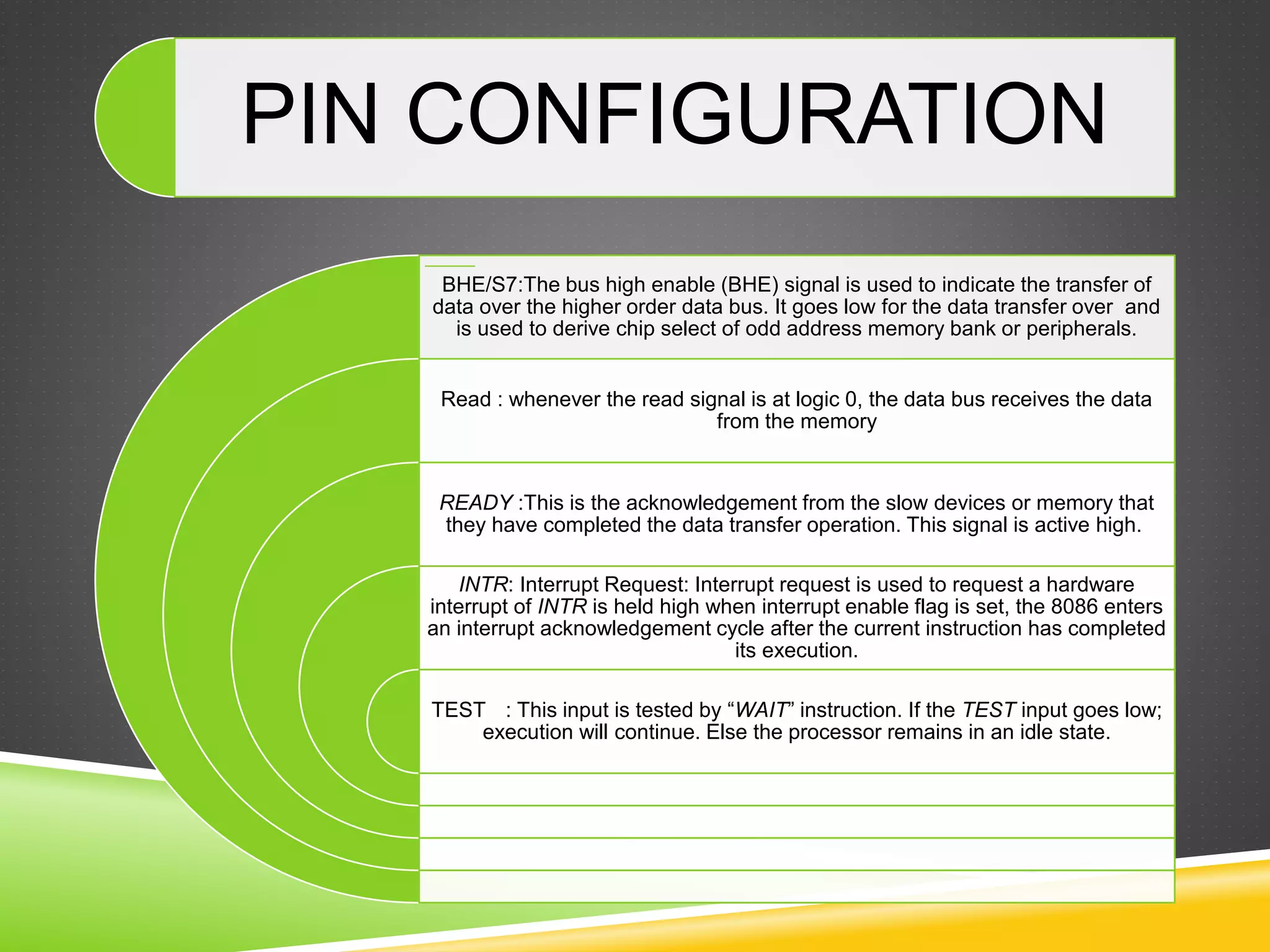
PIN CONFIGURATION
BHE/S7:The bus high enable (BHE) signal is used to indicate the transfer of
data over the higher order data bus. It goes low for the data transfer over and
is used to derive chip select of odd address memory bank or peripherals.
Read : whenever the read signal is at logic 0, the data bus receives the data
from the memory
READY :This is the acknowledgement from the slow devices or memory that
they have completed the data transfer operation. This signal is active high.
INTR: Interrupt Request: Interrupt request is used to request a hardware
interrupt of INTR is held high when interrupt enable flag is set, the 8086 enters
an interrupt acknowledgement cycle after the current instruction has completed
its execution.
TEST : This input is tested by “WAIT” instruction. If the TEST input goes low;
execution will continue. Else the processor remains in an idle state.
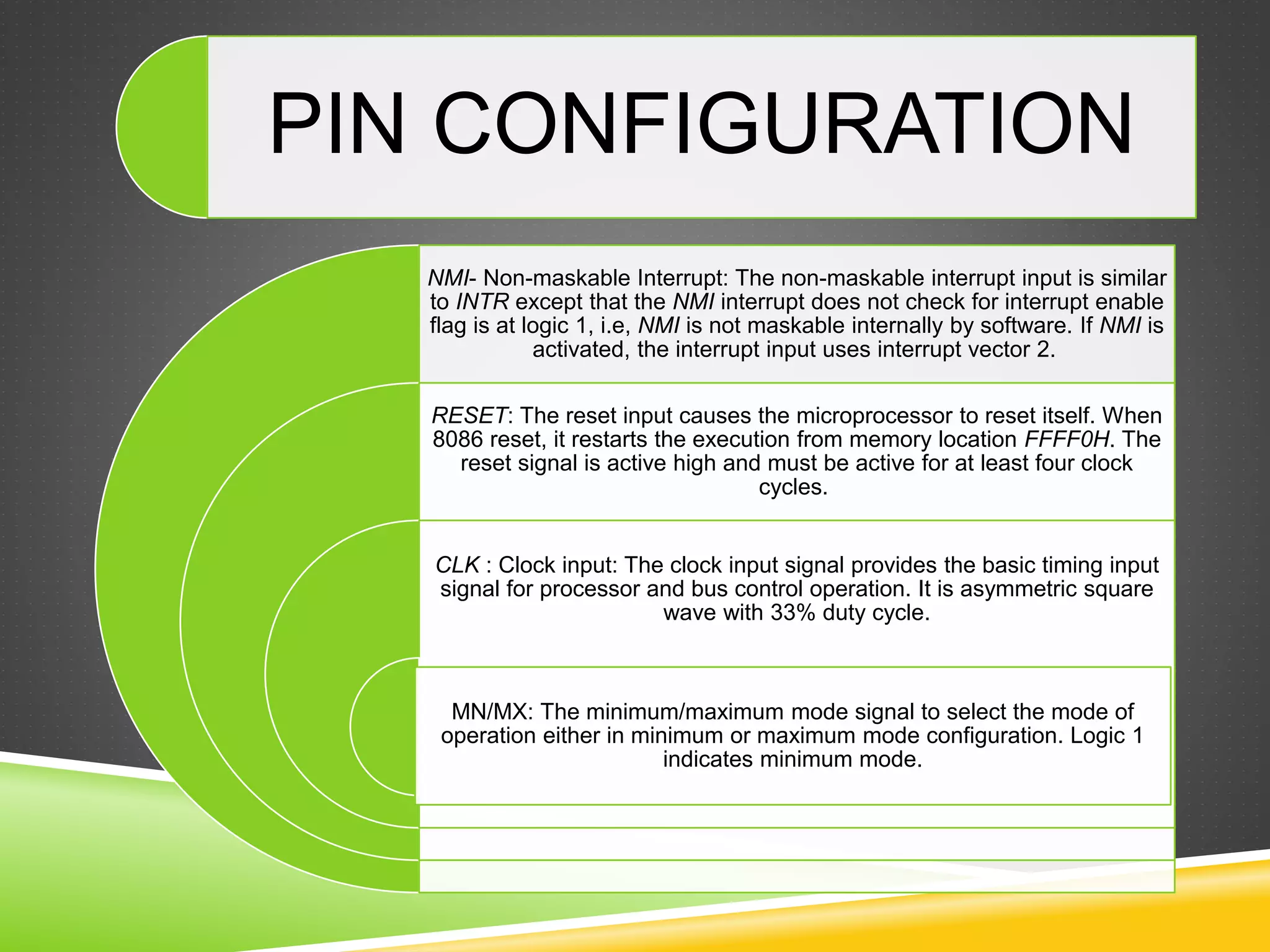
NMI- Non-maskable Interrupt: The non-maskable interrupt input is similar
to INTR except that the NMI interrupt does not check for interrupt enable
flag is at logic 1, i.e, NMI is not maskable internally by software. If NMI is
activated, the interrupt input uses interrupt vector 2.
RESET: The reset input causes the microprocessor to reset itself. When
8086 reset, it restarts the execution from memory location FFFF0H. The
reset signal is active high and must be active for at least four clock
cycles.
CLK : Clock input: The clock input signal provides the basic timing input
signal for processor and bus control operation. It is asymmetric square
wave with 33% duty cycle.
MN/MX: The minimum/maximum mode signal to select the mode of
operation either in minimum or maximum mode configuration. Logic 1
indicates minimum mode.
PIN CONFIGURATION
PIN CONFIGURATION
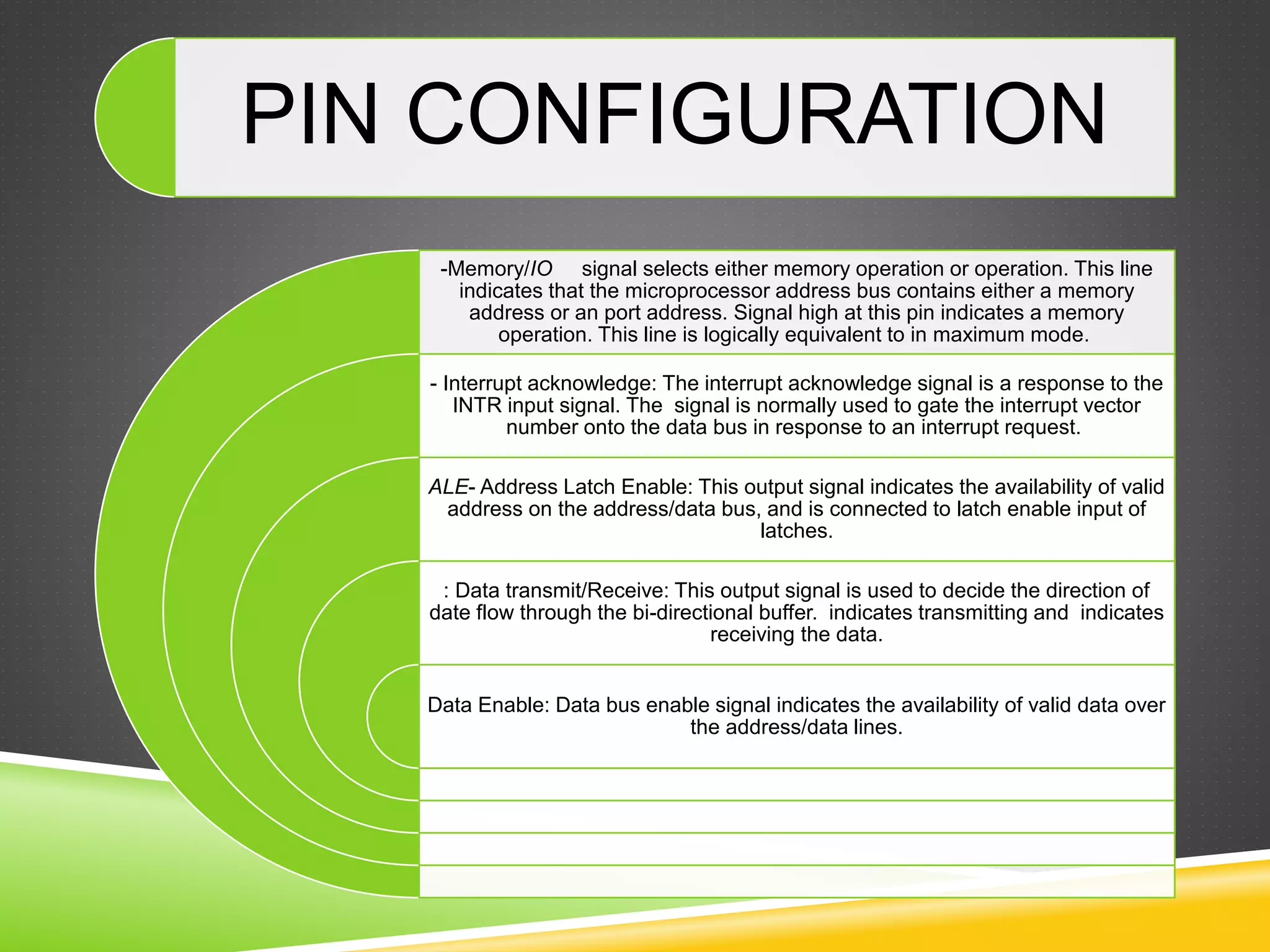
-Memory/IO signal selects either memory operation or operation. This line
indicates that the microprocessor address bus contains either a memory
address or an port address. Signal high at this pin indicates a memory
operation. This line is logically equivalent to in maximum mode.
- Interrupt acknowledge: The interrupt acknowledge signal is a response to the
INTR input signal. The signal is normally used to gate the interrupt vector
number onto the data bus in response to an interrupt request.
ALE- Address Latch Enable: This output signal indicates the availability of valid
address on the address/data bus, and is connected to latch enable input of
latches.
: Data transmit/Receive: This output signal is used to decide the direction of
date flow through the bi-directional buffer. indicates transmitting and indicates
receiving the data.
Data Enable: Data bus enable signal indicates the availability of valid data over
the address/data lines.
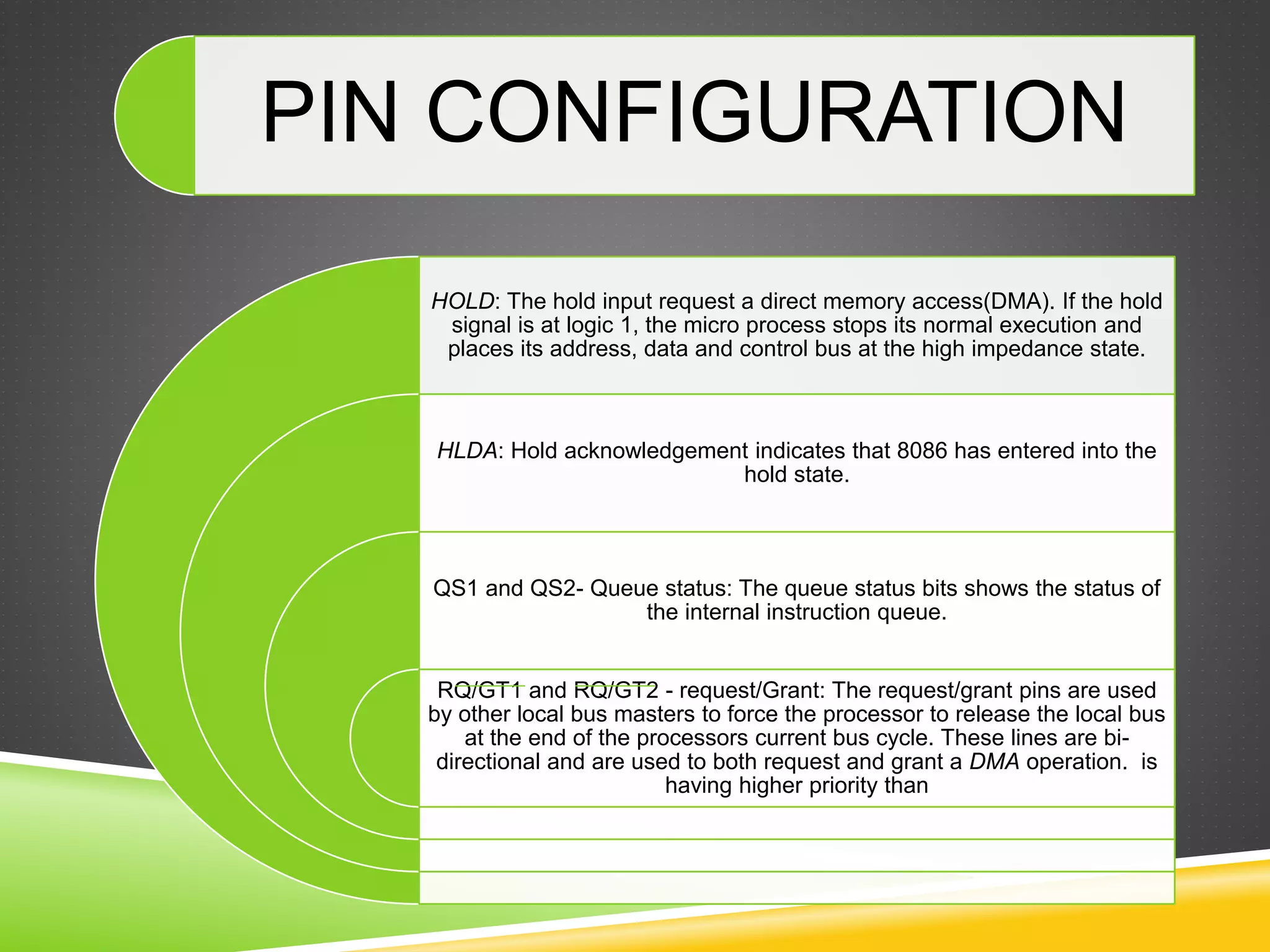
HOLD: The hold input request a direct memory access(DMA). If the hold
signal is at logic 1, the micro process stops its normal execution and
places its address, data and control bus at the high impedance state.
HLDA: Hold acknowledgement indicates that 8086 has entered into the
hold state.
QS1 and QS2- Queue status: The queue status bits shows the status of
the internal instruction queue.
RQ/GT1 and RQ/GT2 - request/Grant: The request/grant pins are used
by other local bus masters to force the processor to release the local bus
at the end of the processors current bus cycle. These lines are bi-
directional and are used to both request and grant a DMA operation. is
having higher priority than
PIN CONFIGURATION
THANKS

PIN Specification of 8086 Microprocessor

  • 1.
    NRI INSTITUTE OFRESEARCH SCIENCE AND TECHNOLOGY
  • 2.
  • 3.
    PIN CONFIGURATION A0-A7: Theaddress/ data bus lines are the multiplexed address data bus and contain the right most eight bit of memory address or data. The address and data bits are separated by using ALE signal. A8-A15:The address/data bus lines compose the upper multiplexed address/data bus. This lines contain address bit or data bus . The address and data bits are separated by using ALE signal. A16/S3-A19/S6:The address/status bus bits are multiplexed to provide address signals and also status bits . The address bits are separated from the status bits using the ALE signals. The status bit is always a logic 0, bit indicates the condition of the interrupt flag bit. The and combinedly indicate which segment register is presently being used for memory access.
  • 4.
    PIN CONFIGURATION BHE/S7:The bushigh enable (BHE) signal is used to indicate the transfer of data over the higher order data bus. It goes low for the data transfer over and is used to derive chip select of odd address memory bank or peripherals. Read : whenever the read signal is at logic 0, the data bus receives the data from the memory READY :This is the acknowledgement from the slow devices or memory that they have completed the data transfer operation. This signal is active high. INTR: Interrupt Request: Interrupt request is used to request a hardware interrupt of INTR is held high when interrupt enable flag is set, the 8086 enters an interrupt acknowledgement cycle after the current instruction has completed its execution. TEST : This input is tested by “WAIT” instruction. If the TEST input goes low; execution will continue. Else the processor remains in an idle state.
  • 5.
    NMI- Non-maskable Interrupt:The non-maskable interrupt input is similar to INTR except that the NMI interrupt does not check for interrupt enable flag is at logic 1, i.e, NMI is not maskable internally by software. If NMI is activated, the interrupt input uses interrupt vector 2. RESET: The reset input causes the microprocessor to reset itself. When 8086 reset, it restarts the execution from memory location FFFF0H. The reset signal is active high and must be active for at least four clock cycles. CLK : Clock input: The clock input signal provides the basic timing input signal for processor and bus control operation. It is asymmetric square wave with 33% duty cycle. MN/MX: The minimum/maximum mode signal to select the mode of operation either in minimum or maximum mode configuration. Logic 1 indicates minimum mode. PIN CONFIGURATION
  • 6.
    PIN CONFIGURATION -Memory/IO signalselects either memory operation or operation. This line indicates that the microprocessor address bus contains either a memory address or an port address. Signal high at this pin indicates a memory operation. This line is logically equivalent to in maximum mode. - Interrupt acknowledge: The interrupt acknowledge signal is a response to the INTR input signal. The signal is normally used to gate the interrupt vector number onto the data bus in response to an interrupt request. ALE- Address Latch Enable: This output signal indicates the availability of valid address on the address/data bus, and is connected to latch enable input of latches. : Data transmit/Receive: This output signal is used to decide the direction of date flow through the bi-directional buffer. indicates transmitting and indicates receiving the data. Data Enable: Data bus enable signal indicates the availability of valid data over the address/data lines.
  • 7.
    HOLD: The holdinput request a direct memory access(DMA). If the hold signal is at logic 1, the micro process stops its normal execution and places its address, data and control bus at the high impedance state. HLDA: Hold acknowledgement indicates that 8086 has entered into the hold state. QS1 and QS2- Queue status: The queue status bits shows the status of the internal instruction queue. RQ/GT1 and RQ/GT2 - request/Grant: The request/grant pins are used by other local bus masters to force the processor to release the local bus at the end of the processors current bus cycle. These lines are bi- directional and are used to both request and grant a DMA operation. is having higher priority than PIN CONFIGURATION
  • 8.