Unit – II
8086 system bus structure
8086 SIGNALS
Unit -2
Presented By
Mrs. M.P.Sasirekha
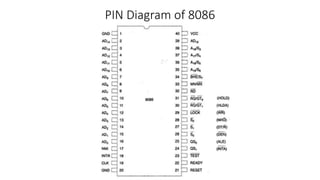
PIN Diagram of 8086
8086 signals
• Power supply and frequency signals
• It uses 5V DC supply at VCC pin 40, and uses ground at VSS pin 1
and 20 for its operation.
• Clock signal
• Clock signal is provided through Pin-19. It provides timing to the
processor for operations. Its frequency is different for different
versions, i.e. 5MHz, 8MHz and 10MHz.
• Address/data bus
• AD0-AD15. These are 16 address/data bus. AD0-AD7 carries low
order byte data and AD8AD15 carries higher order byte data. During
the first clock cycle, it carries 16-bit address and after that it carries
16-bit data.
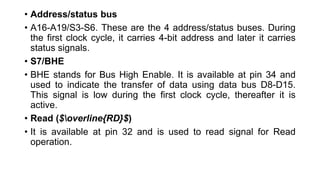
• Address/status bus
• A16-A19/S3-S6. These are the 4 address/status buses. During
the first clock cycle, it carries 4-bit address and later it carries
status signals.
• S7/BHE
• BHE stands for Bus High Enable. It is available at pin 34 and
used to indicate the transfer of data using data bus D8-D15.
This signal is low during the first clock cycle, thereafter it is
active.
• Read ($overline{RD}$)
• It is available at pin 32 and is used to read signal for Read
operation.
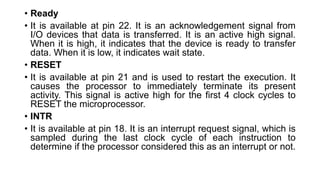
• Ready
• It is available at pin 22. It is an acknowledgement signal from
I/O devices that data is transferred. It is an active high signal.
When it is high, it indicates that the device is ready to transfer
data. When it is low, it indicates wait state.
• RESET
• It is available at pin 21 and is used to restart the execution. It
causes the processor to immediately terminate its present
activity. This signal is active high for the first 4 clock cycles to
RESET the microprocessor.
• INTR
• It is available at pin 18. It is an interrupt request signal, which is
sampled during the last clock cycle of each instruction to
determine if the processor considered this as an interrupt or not.
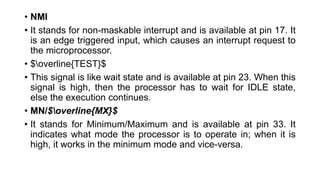
• NMI
• It stands for non-maskable interrupt and is available at pin 17. It
is an edge triggered input, which causes an interrupt request to
the microprocessor.
• $overline{TEST}$
• This signal is like wait state and is available at pin 23. When this
signal is high, then the processor has to wait for IDLE state,
else the execution continues.
• MN/$overline{MX}$
• It stands for Minimum/Maximum and is available at pin 33. It
indicates what mode the processor is to operate in; when it is
high, it works in the minimum mode and vice-versa.
• INTA
• It is an interrupt acknowledgement signal and id available at pin
24. When the microprocessor receives this signal, it
acknowledges the interrupt.
• ALE
• It stands for address enable latch and is available at pin 25. A
positive pulse is generated each time the processor begins any
operation. This signal indicates the availability of a valid
address on the address/data lines.
• DEN
• It stands for Data Enable and is available at pin 26. It is used to
enable Transreceiver 8286. The transreceiver is a device used
to separate data from the address/data bus.
• DT/R
• It stands for Data Transmit/Receive signal and is available at
pin 27. It decides the direction of data flow through the
transreceiver. When it is high, data is transmitted out and vice-
a-versa.
• M/IO
• This signal is used to distinguish between memory and I/O
operations. When it is high, it indicates I/O operation and when
it is low indicates the memory operation. It is available at pin 28.
• WR
• It stands for write signal and is available at pin 29. It is used to
write the data into the memory or the output device depending
on the status of M/IO signal.
• HLDA
• It stands for Hold Acknowledgement signal and is available at
pin 30. This signal acknowledges the HOLD signal.
• HOLD
• This signal indicates to the processor that external devices are
requesting to access the address/data buses. It is available at
pin 31.
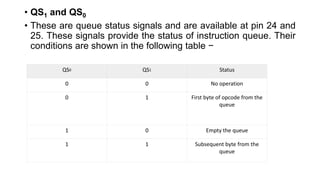
QS0 QS1 Status
0 0 No operation
0 1 First byte of opcode from the
queue
1 0 Empty the queue
1 1 Subsequent byte from the
queue
• QS1 and QS0
• These are queue status signals and are available at pin 24 and
25. These signals provide the status of instruction queue. Their
conditions are shown in the following table −
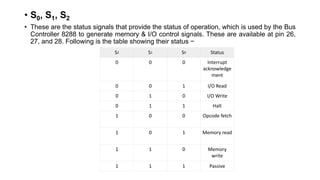
• S0, S1, S2
• These are the status signals that provide the status of operation, which is used by the Bus
Controller 8288 to generate memory & I/O control signals. These are available at pin 26,
27, and 28. Following is the table showing their status −
S2 S1 S0 Status
0 0 0 Interrupt
acknowledge
ment
0 0 1 I/O Read
0 1 0 I/O Write
0 1 1 Halt
1 0 0 Opcode fetch
1 0 1 Memory read
1 1 0 Memory
write
1 1 1 Passive
8086 signals
• LOCK
• When this signal is active, it indicates to the other processors
not to ask the CPU to leave the system bus. It is activated using
the LOCK prefix on any instruction and is available at pin 29.
• RQ/GT1 and RQ/GT0
• These are the Request/Grant signals used by the other
processors requesting the CPU to release the system bus.
When the signal is received by CPU, then it sends
acknowledgment. RQ/GT0 has a higher priority than RQ/GT1.
Thank you

8086 signals

  • 1.
    Unit – II 8086system bus structure
  • 2.
    8086 SIGNALS Unit -2 PresentedBy Mrs. M.P.Sasirekha
  • 3.
  • 4.
    8086 signals • Powersupply and frequency signals • It uses 5V DC supply at VCC pin 40, and uses ground at VSS pin 1 and 20 for its operation. • Clock signal • Clock signal is provided through Pin-19. It provides timing to the processor for operations. Its frequency is different for different versions, i.e. 5MHz, 8MHz and 10MHz. • Address/data bus • AD0-AD15. These are 16 address/data bus. AD0-AD7 carries low order byte data and AD8AD15 carries higher order byte data. During the first clock cycle, it carries 16-bit address and after that it carries 16-bit data.
  • 5.
    • Address/status bus •A16-A19/S3-S6. These are the 4 address/status buses. During the first clock cycle, it carries 4-bit address and later it carries status signals. • S7/BHE • BHE stands for Bus High Enable. It is available at pin 34 and used to indicate the transfer of data using data bus D8-D15. This signal is low during the first clock cycle, thereafter it is active. • Read ($overline{RD}$) • It is available at pin 32 and is used to read signal for Read operation.
  • 6.
    • Ready • Itis available at pin 22. It is an acknowledgement signal from I/O devices that data is transferred. It is an active high signal. When it is high, it indicates that the device is ready to transfer data. When it is low, it indicates wait state. • RESET • It is available at pin 21 and is used to restart the execution. It causes the processor to immediately terminate its present activity. This signal is active high for the first 4 clock cycles to RESET the microprocessor. • INTR • It is available at pin 18. It is an interrupt request signal, which is sampled during the last clock cycle of each instruction to determine if the processor considered this as an interrupt or not.
  • 7.
    • NMI • Itstands for non-maskable interrupt and is available at pin 17. It is an edge triggered input, which causes an interrupt request to the microprocessor. • $overline{TEST}$ • This signal is like wait state and is available at pin 23. When this signal is high, then the processor has to wait for IDLE state, else the execution continues. • MN/$overline{MX}$ • It stands for Minimum/Maximum and is available at pin 33. It indicates what mode the processor is to operate in; when it is high, it works in the minimum mode and vice-versa.
  • 8.
    • INTA • Itis an interrupt acknowledgement signal and id available at pin 24. When the microprocessor receives this signal, it acknowledges the interrupt. • ALE • It stands for address enable latch and is available at pin 25. A positive pulse is generated each time the processor begins any operation. This signal indicates the availability of a valid address on the address/data lines. • DEN • It stands for Data Enable and is available at pin 26. It is used to enable Transreceiver 8286. The transreceiver is a device used to separate data from the address/data bus.
  • 9.
    • DT/R • Itstands for Data Transmit/Receive signal and is available at pin 27. It decides the direction of data flow through the transreceiver. When it is high, data is transmitted out and vice- a-versa. • M/IO • This signal is used to distinguish between memory and I/O operations. When it is high, it indicates I/O operation and when it is low indicates the memory operation. It is available at pin 28. • WR • It stands for write signal and is available at pin 29. It is used to write the data into the memory or the output device depending on the status of M/IO signal.
  • 10.
    • HLDA • Itstands for Hold Acknowledgement signal and is available at pin 30. This signal acknowledges the HOLD signal. • HOLD • This signal indicates to the processor that external devices are requesting to access the address/data buses. It is available at pin 31.
  • 11.
    QS0 QS1 Status 00 No operation 0 1 First byte of opcode from the queue 1 0 Empty the queue 1 1 Subsequent byte from the queue • QS1 and QS0 • These are queue status signals and are available at pin 24 and 25. These signals provide the status of instruction queue. Their conditions are shown in the following table −
  • 12.
    • S0, S1,S2 • These are the status signals that provide the status of operation, which is used by the Bus Controller 8288 to generate memory & I/O control signals. These are available at pin 26, 27, and 28. Following is the table showing their status − S2 S1 S0 Status 0 0 0 Interrupt acknowledge ment 0 0 1 I/O Read 0 1 0 I/O Write 0 1 1 Halt 1 0 0 Opcode fetch 1 0 1 Memory read 1 1 0 Memory write 1 1 1 Passive
  • 13.
    8086 signals • LOCK •When this signal is active, it indicates to the other processors not to ask the CPU to leave the system bus. It is activated using the LOCK prefix on any instruction and is available at pin 29. • RQ/GT1 and RQ/GT0 • These are the Request/Grant signals used by the other processors requesting the CPU to release the system bus. When the signal is received by CPU, then it sends acknowledgment. RQ/GT0 has a higher priority than RQ/GT1.
  • 14.