Introduction to
The Trigeminal Nerve
What are cranial nerves?
• Cranial nerves are nerves that emerge directly
from the brain
• There are 12 pairs of cranial nerves
• Only the first 2 originate from the cerebrum,
the others originate from the brain stem
• Trigeminal nerve is the FIFTH cranial nerve
•
•
•
•

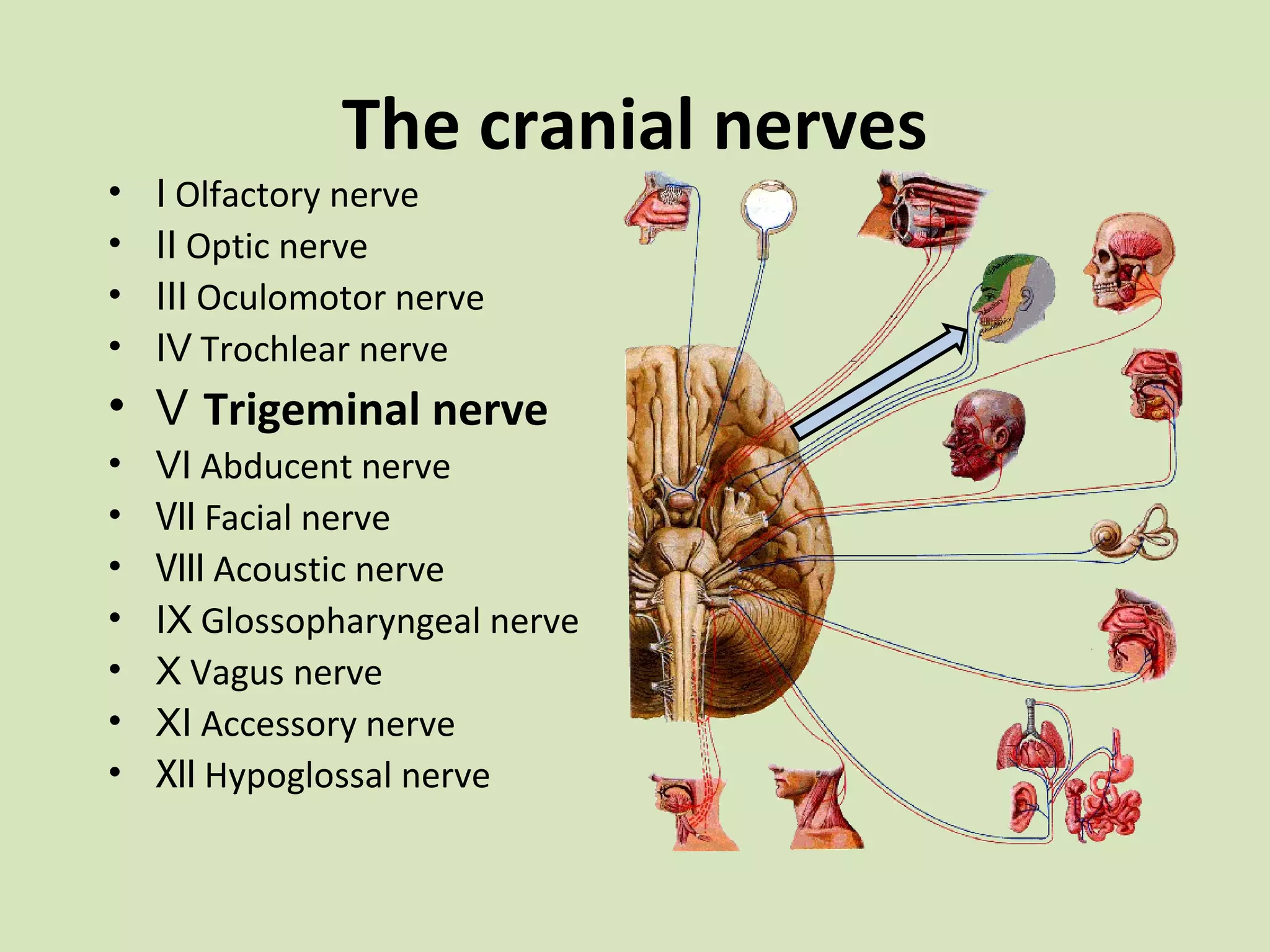
The cranial nerves

Ⅰ Olfactory nerve
Ⅱ Optic nerve
Ⅲ Oculomotor nerve
Ⅳ Trochlear nerve

• Ⅴ Trigeminal nerve
•
•
•
•
•
•
•

Ⅵ Abducent nerve
Ⅶ Facial nerve
Ⅷ Acoustic nerve
Ⅸ Glossopharyngeal nerve
Ⅹ Vagus nerve
Ⅺ Accessory nerve
Ⅻ Hypoglossal nerve
Classification of cranial nerves
• Sensory cranial nerves:
– contain only afferent (sensory) fibers
• Motor cranial nerves:
– contain only efferent (motor) fibers
• Mixed nerves:
– contain both sensory and motor fibers
TRIGEMINAL NERVE
Trigeminal nerve
• 5th cranial nerve (CN5)
• Largest cranial nerve
• MIXED CRANIAL NERVE
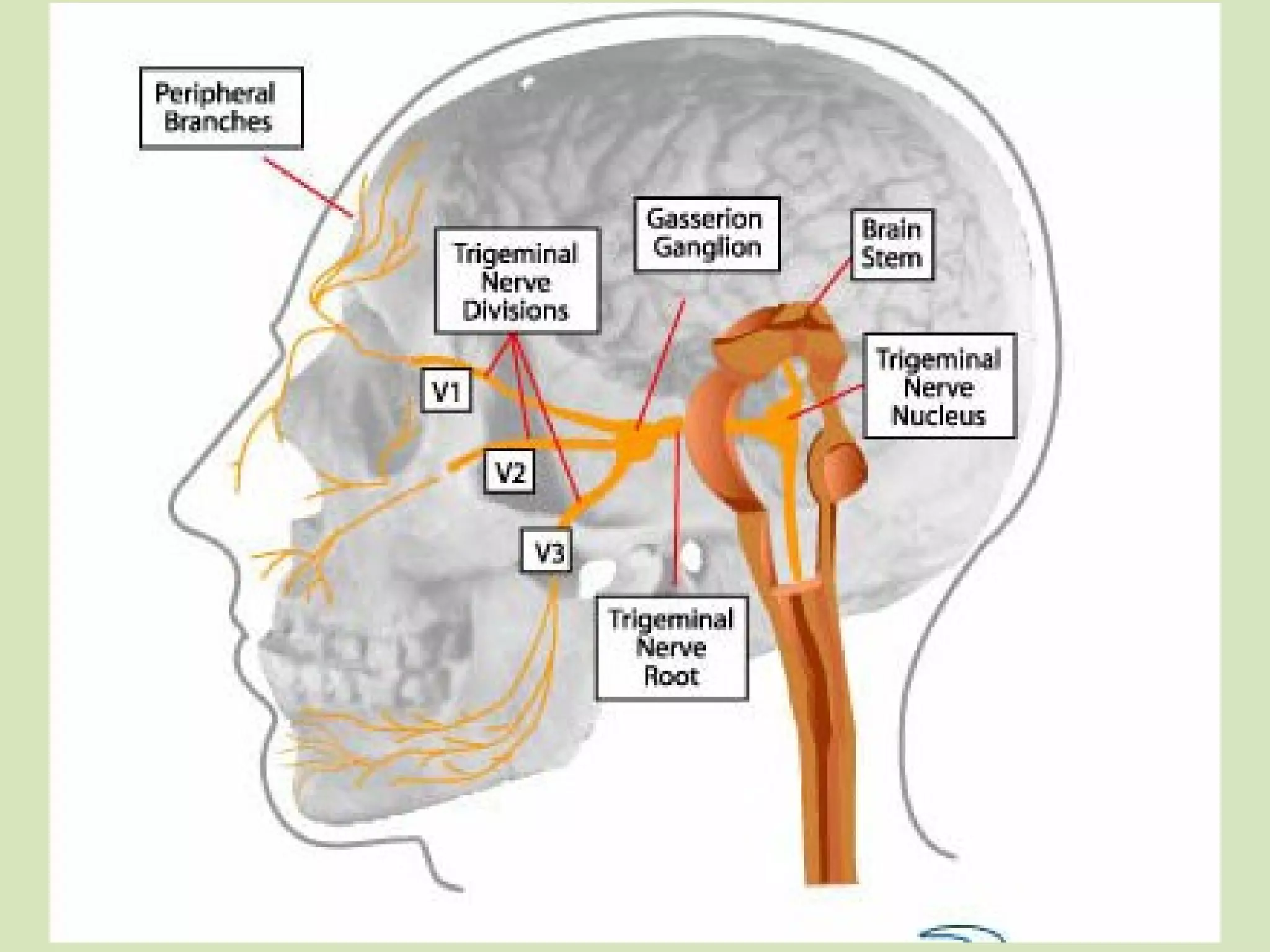
• Sensory to face – 3 dermatomes
• Motor to muscles of mastication
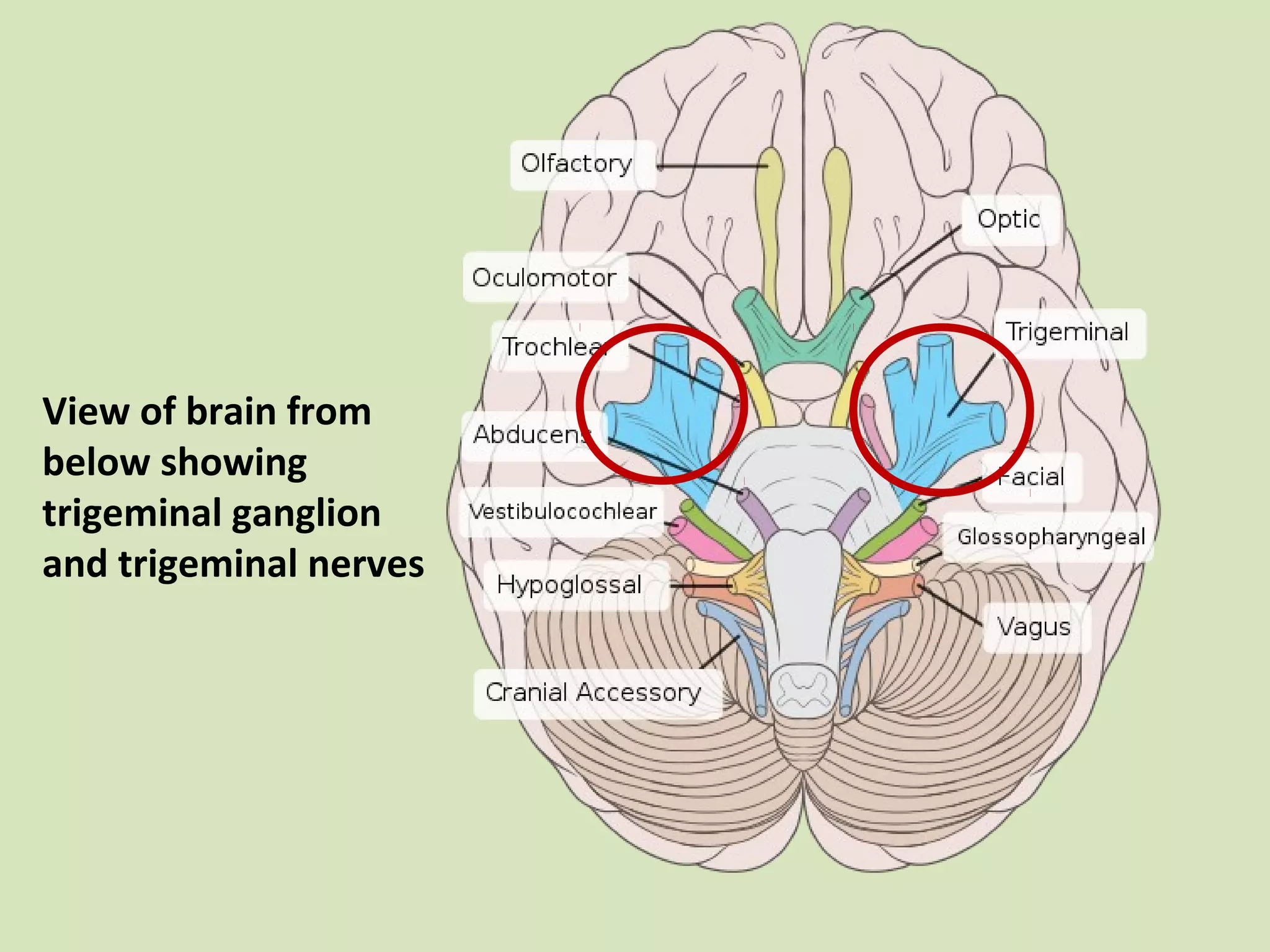
View of brain from
below showing
trigeminal ganglion
and trigeminal nerves
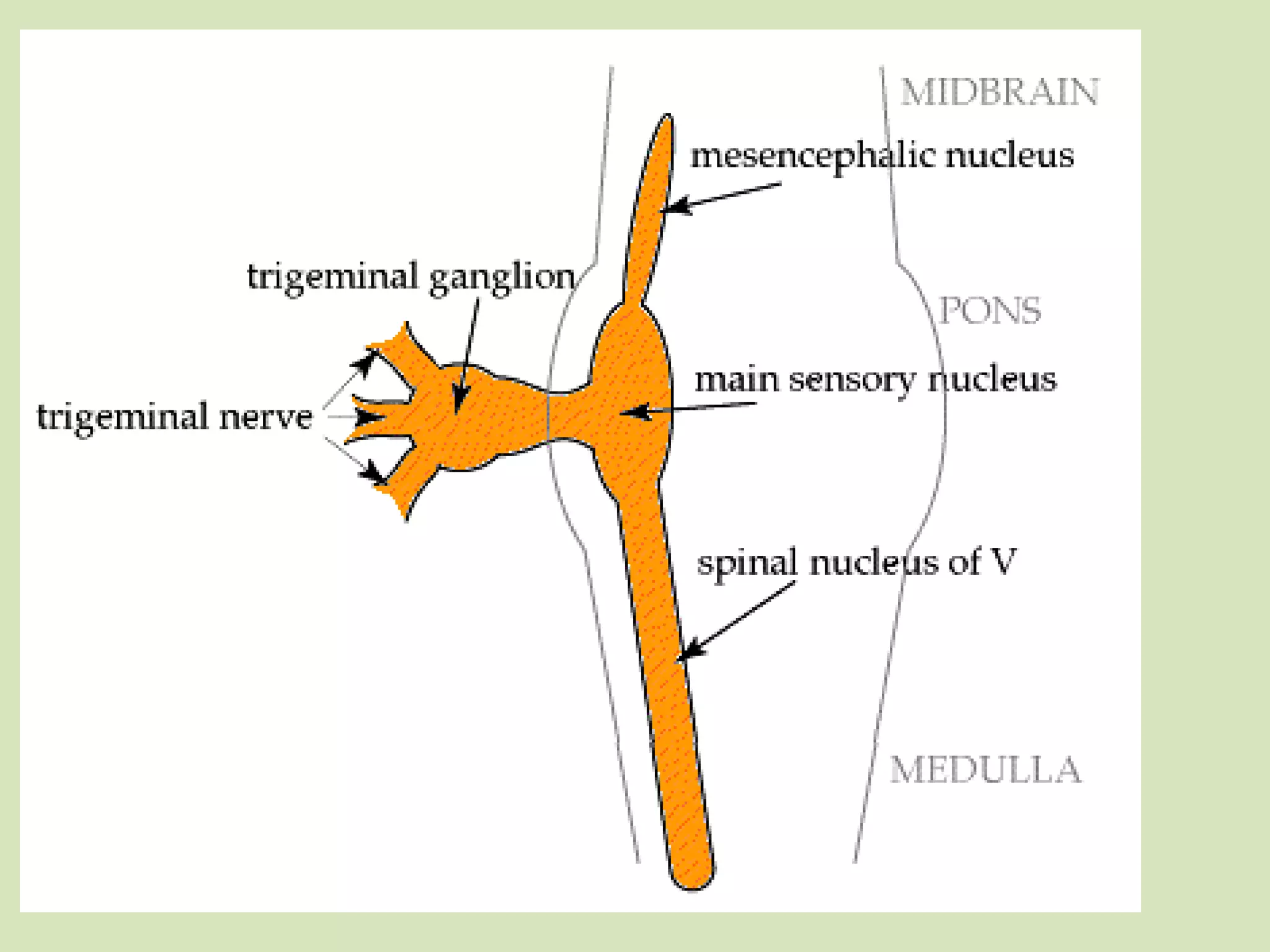
Nuclei
• Sensory nuclei – largest cranial nerve nuclei
• Sensory nuclei –mid-brain, pons and medulla
• Sensory nuclei – 3 parts
– Mesencephalic nucleus
– Primary/Main sensory (pontine) nucleus
– Spinal trigeminal nucleus

• Motor nucleus – mid-pons
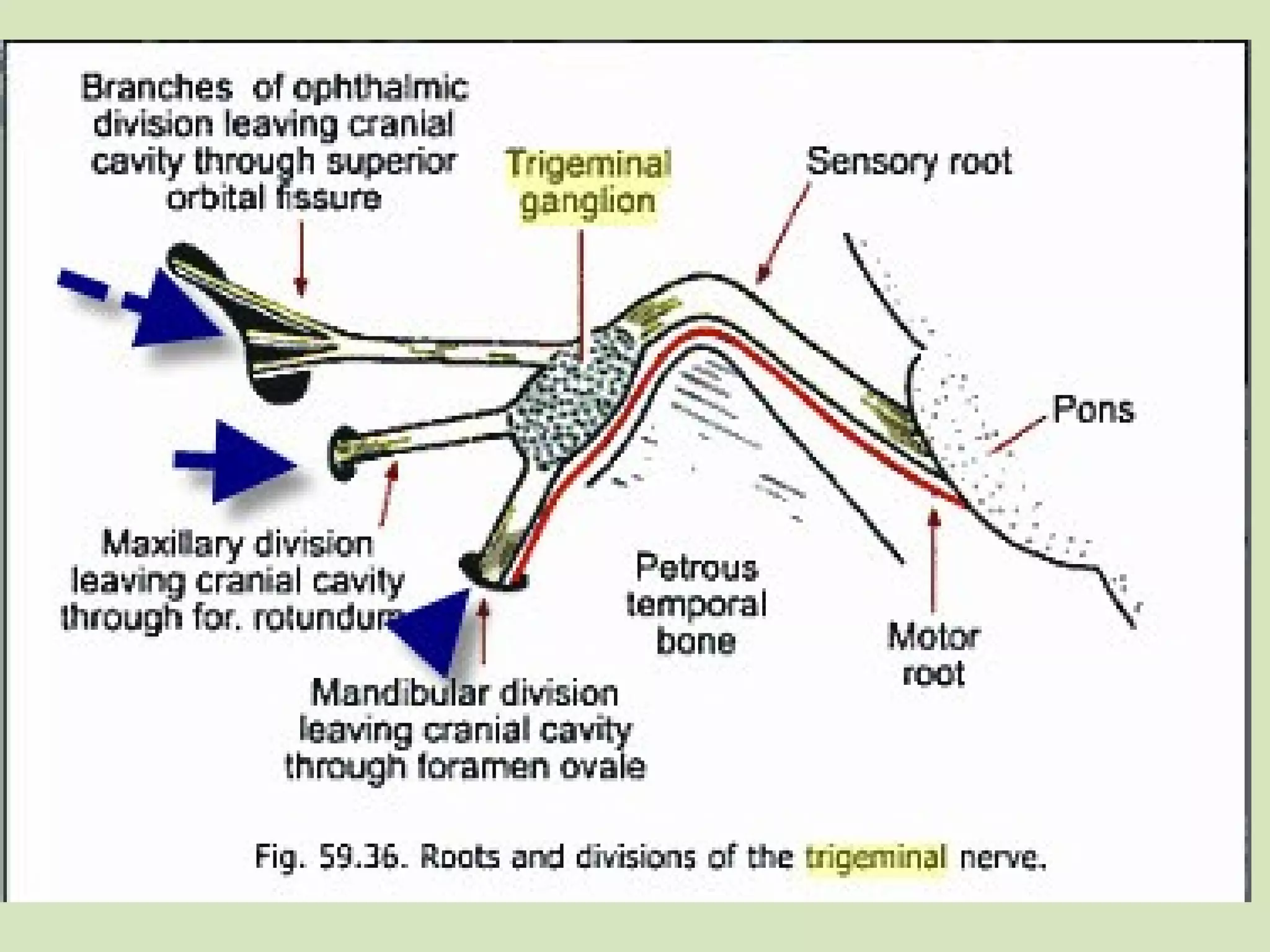
Trigeminal ganglion

(semilunar/gasserian /gasser’s ganglion)
• Semilunar in shape
• Situated in Meckel’s cavity /cave on ‘Trigeminal
depression’ present on petrous temporal bone
• Contains the cell bodies of incoming sensory
nerve fibers
• Convex surface below to which the 3 nerve roots
converge:
– Opthalmic division
– Maxillary division
– Mandibular division
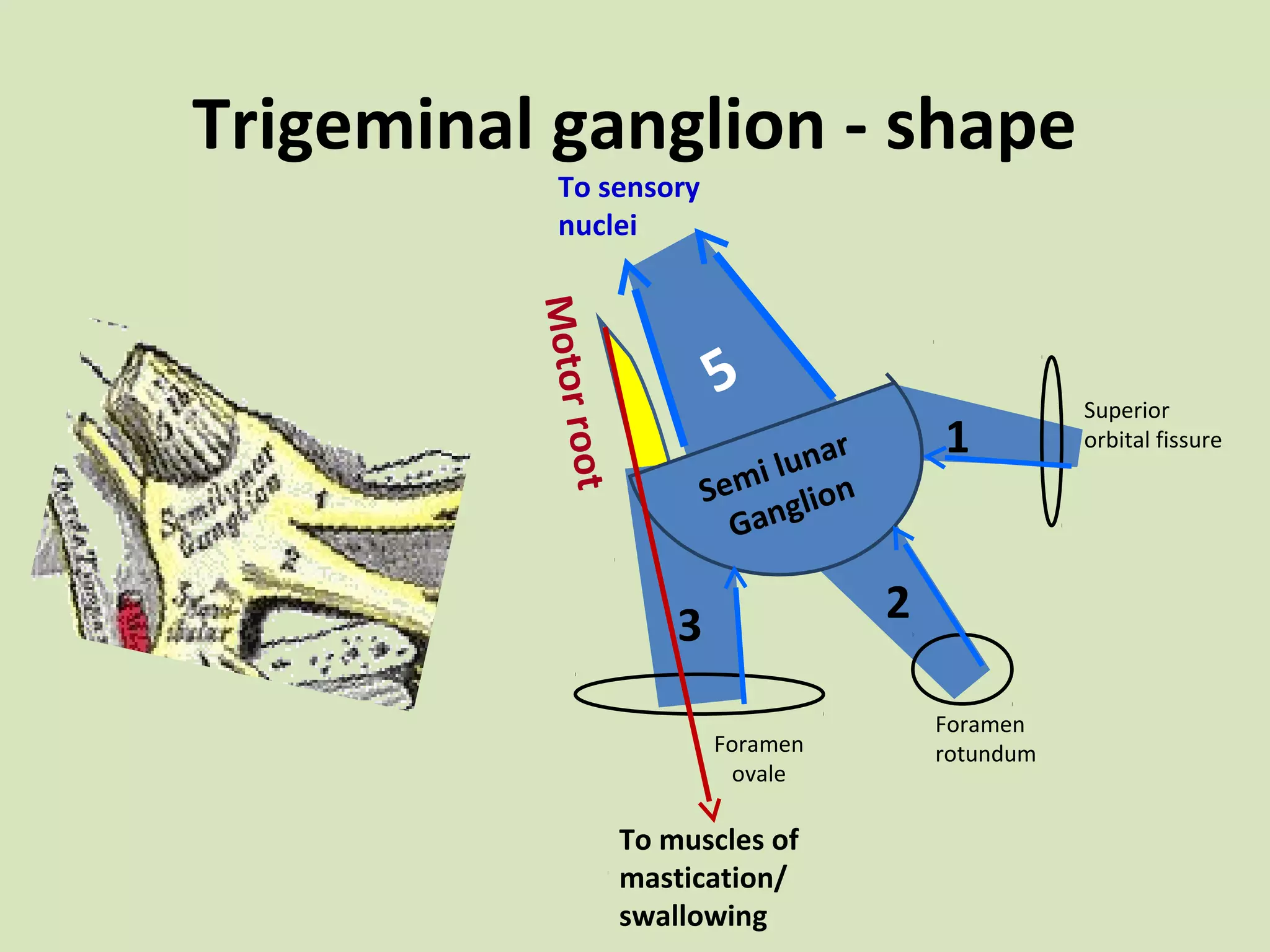
Trigeminal ganglion - shape
To sensory
nuclei

ro
Motor

5

1

ot

r
luna
i
Sem glion
Gan

2

3
Foramen
ovale

To muscles of
mastication/
swallowing

Foramen
rotundum

Superior
orbital fissure
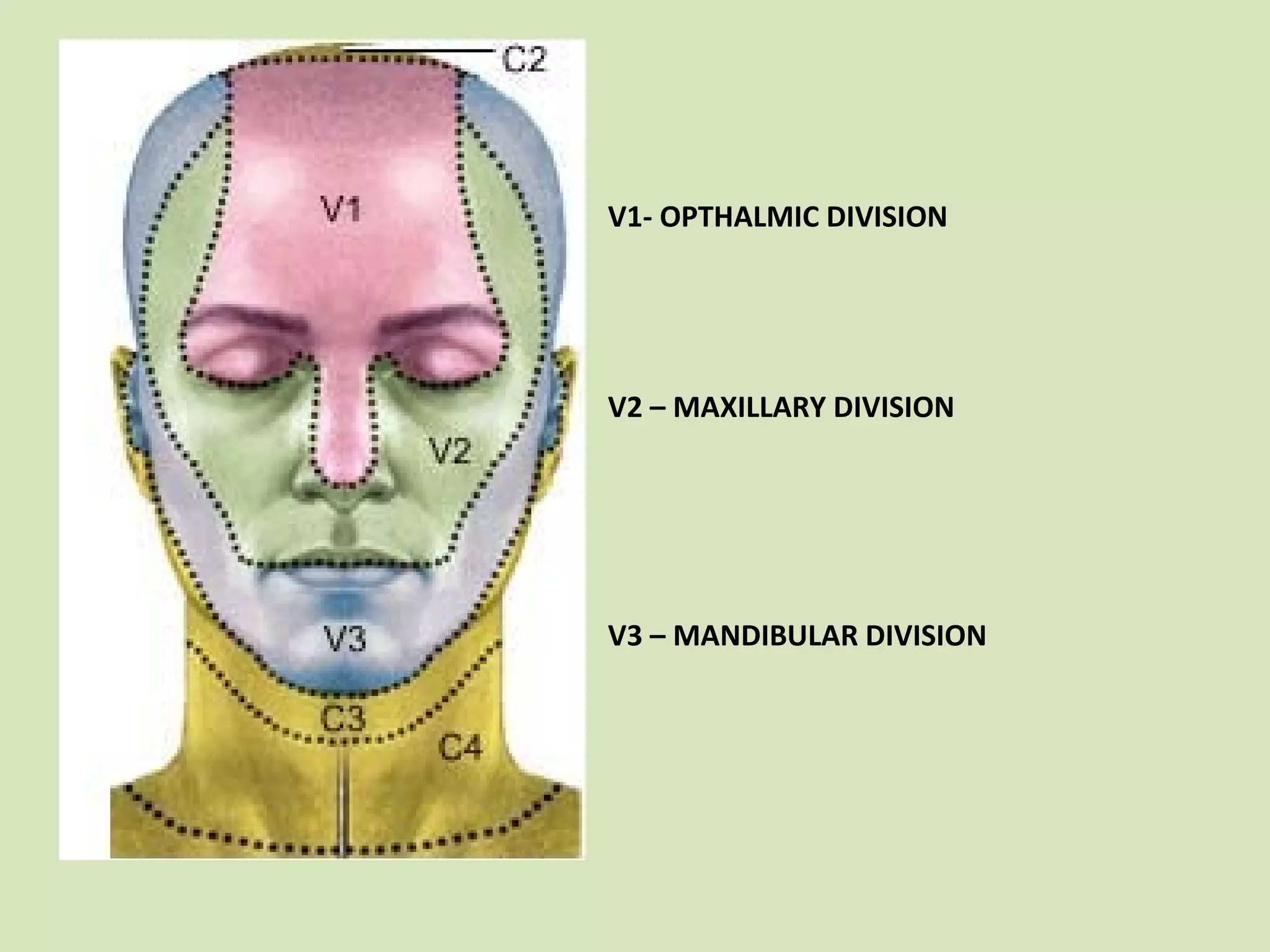
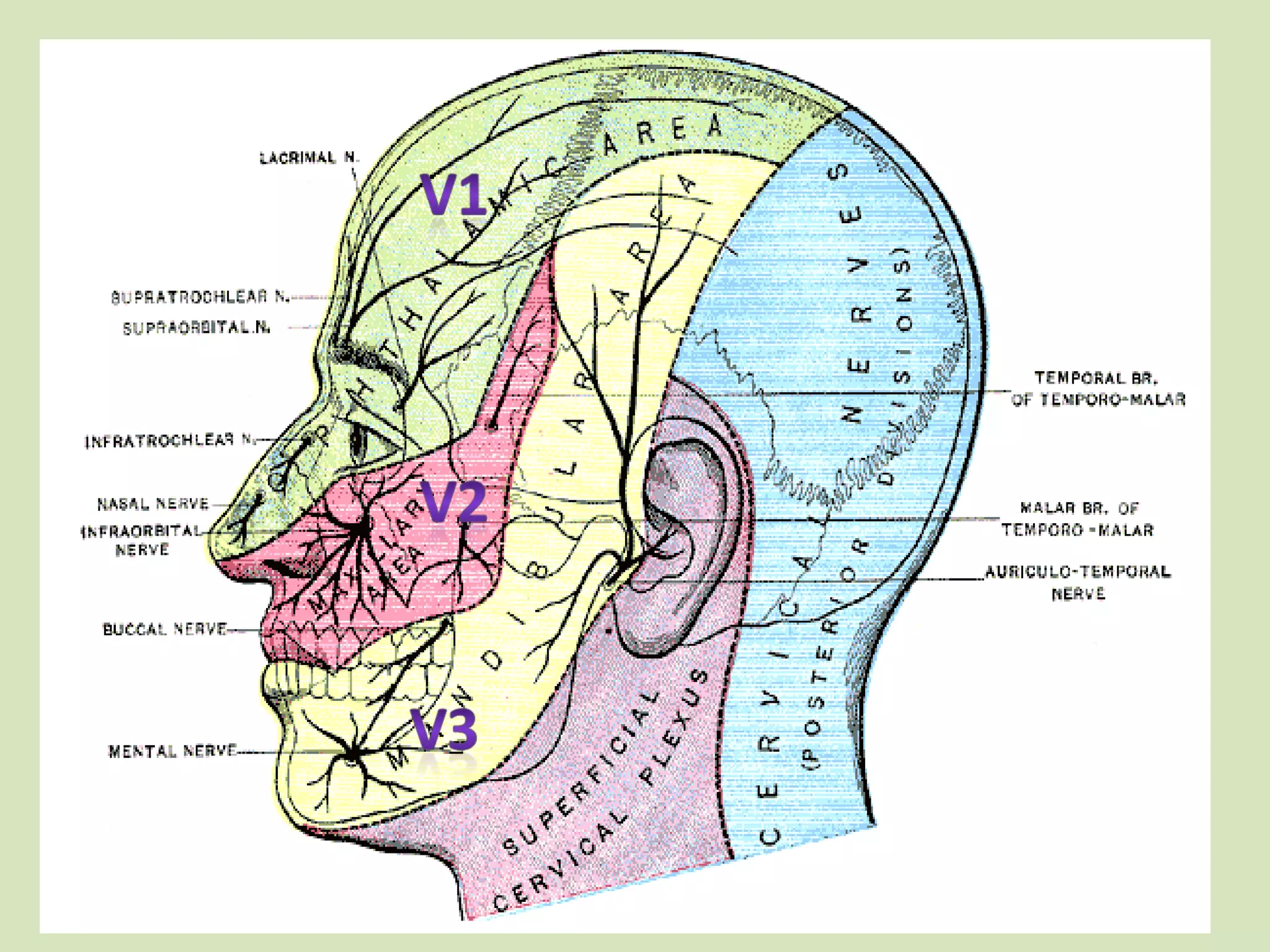
Trigeminal dermatomes
• Areas of cutaneous sensory innervation
• Show very little overlap
• Injection of local anesthesia shows loss of
sensation from very well defined areas
• Knowledge of dermatomes helps in
– Locating site of nerve injury
– Testing result of nerve block
V1- OPTHALMIC DIVISION

V2 – MAXILLARY DIVISION

V3 – MANDIBULAR DIVISION
Applied anatomy
• Knowledge of dermatomes and their nerve
supply helps locate site of nerve injury
• Also helps in demonstrating effect of nerve
block
• Intracranial causes of trigeminal neuralgia
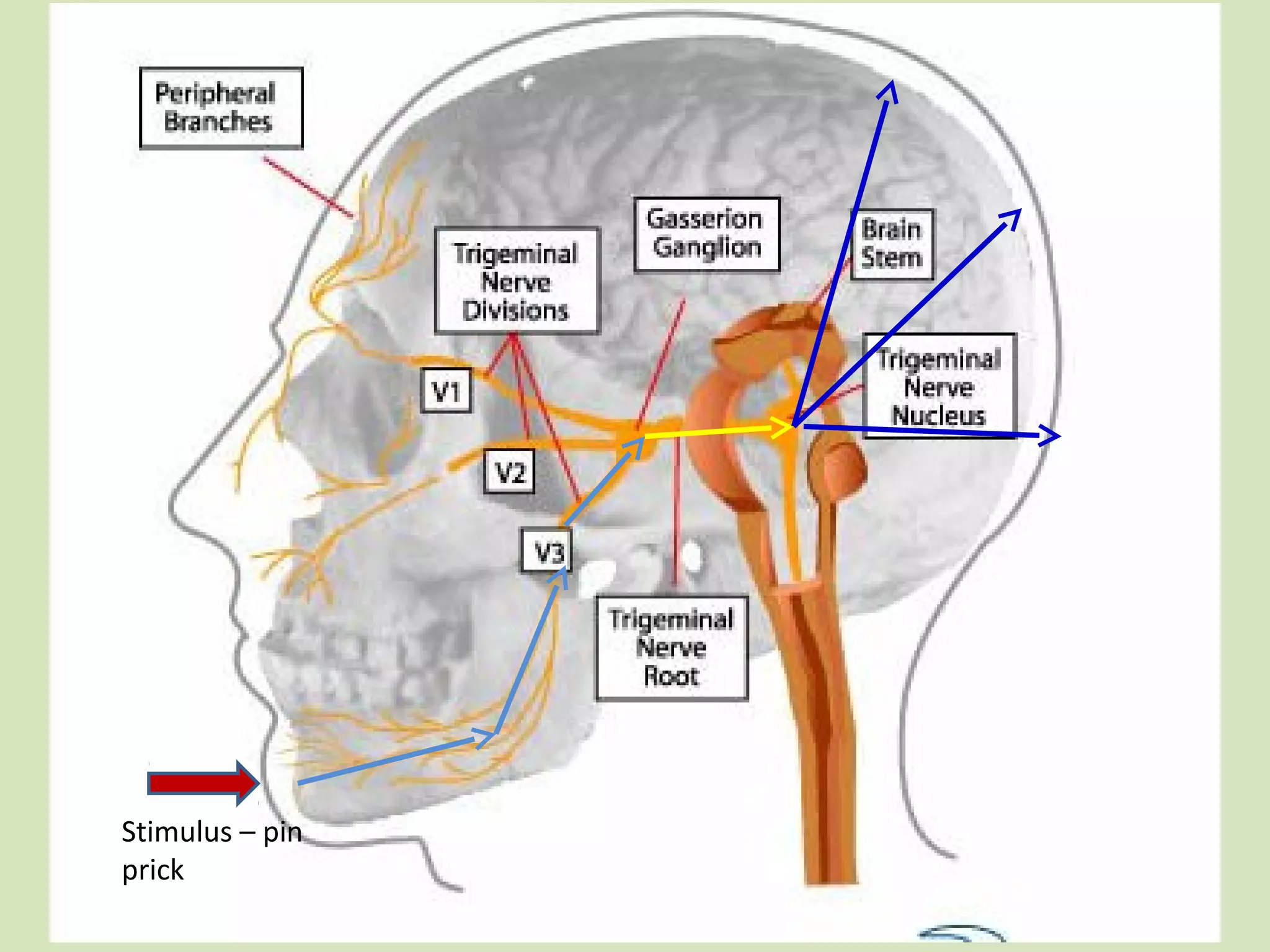
• Pain control and modulation
Stimulus – pin
prick
THANK YOU

Introduction to the trigeminal nerve ‫‬dental surgery

  • 1.
  • 2.
    What are cranialnerves? • Cranial nerves are nerves that emerge directly from the brain • There are 12 pairs of cranial nerves • Only the first 2 originate from the cerebrum, the others originate from the brain stem • Trigeminal nerve is the FIFTH cranial nerve
  • 3.
    • • • • The cranial nerves ⅠOlfactory nerve Ⅱ Optic nerve Ⅲ Oculomotor nerve Ⅳ Trochlear nerve • Ⅴ Trigeminal nerve • • • • • • • Ⅵ Abducent nerve Ⅶ Facial nerve Ⅷ Acoustic nerve Ⅸ Glossopharyngeal nerve Ⅹ Vagus nerve Ⅺ Accessory nerve Ⅻ Hypoglossal nerve
  • 4.
    Classification of cranialnerves • Sensory cranial nerves: – contain only afferent (sensory) fibers • Motor cranial nerves: – contain only efferent (motor) fibers • Mixed nerves: – contain both sensory and motor fibers
  • 5.
  • 6.
    Trigeminal nerve • 5thcranial nerve (CN5) • Largest cranial nerve • MIXED CRANIAL NERVE • Sensory to face – 3 dermatomes • Motor to muscles of mastication
  • 7.
    View of brainfrom below showing trigeminal ganglion and trigeminal nerves
  • 8.
    Nuclei • Sensory nuclei– largest cranial nerve nuclei • Sensory nuclei –mid-brain, pons and medulla • Sensory nuclei – 3 parts – Mesencephalic nucleus – Primary/Main sensory (pontine) nucleus – Spinal trigeminal nucleus • Motor nucleus – mid-pons
  • 10.
    Trigeminal ganglion (semilunar/gasserian /gasser’sganglion) • Semilunar in shape • Situated in Meckel’s cavity /cave on ‘Trigeminal depression’ present on petrous temporal bone • Contains the cell bodies of incoming sensory nerve fibers • Convex surface below to which the 3 nerve roots converge: – Opthalmic division – Maxillary division – Mandibular division
  • 11.
    Trigeminal ganglion -shape To sensory nuclei ro Motor 5 1 ot r luna i Sem glion Gan 2 3 Foramen ovale To muscles of mastication/ swallowing Foramen rotundum Superior orbital fissure
  • 13.
    Trigeminal dermatomes • Areasof cutaneous sensory innervation • Show very little overlap • Injection of local anesthesia shows loss of sensation from very well defined areas • Knowledge of dermatomes helps in – Locating site of nerve injury – Testing result of nerve block
  • 14.
    V1- OPTHALMIC DIVISION V2– MAXILLARY DIVISION V3 – MANDIBULAR DIVISION
  • 16.
    Applied anatomy • Knowledgeof dermatomes and their nerve supply helps locate site of nerve injury • Also helps in demonstrating effect of nerve block • Intracranial causes of trigeminal neuralgia • Pain control and modulation
  • 18.
  • 19.