Aysha Bajabaa
2012
Rogers’ diffusion of innovations Model
     According to Rogers, “Diffusion is the process in which an innovation
     is communicated through certain channels over time among the
     members of a social system”
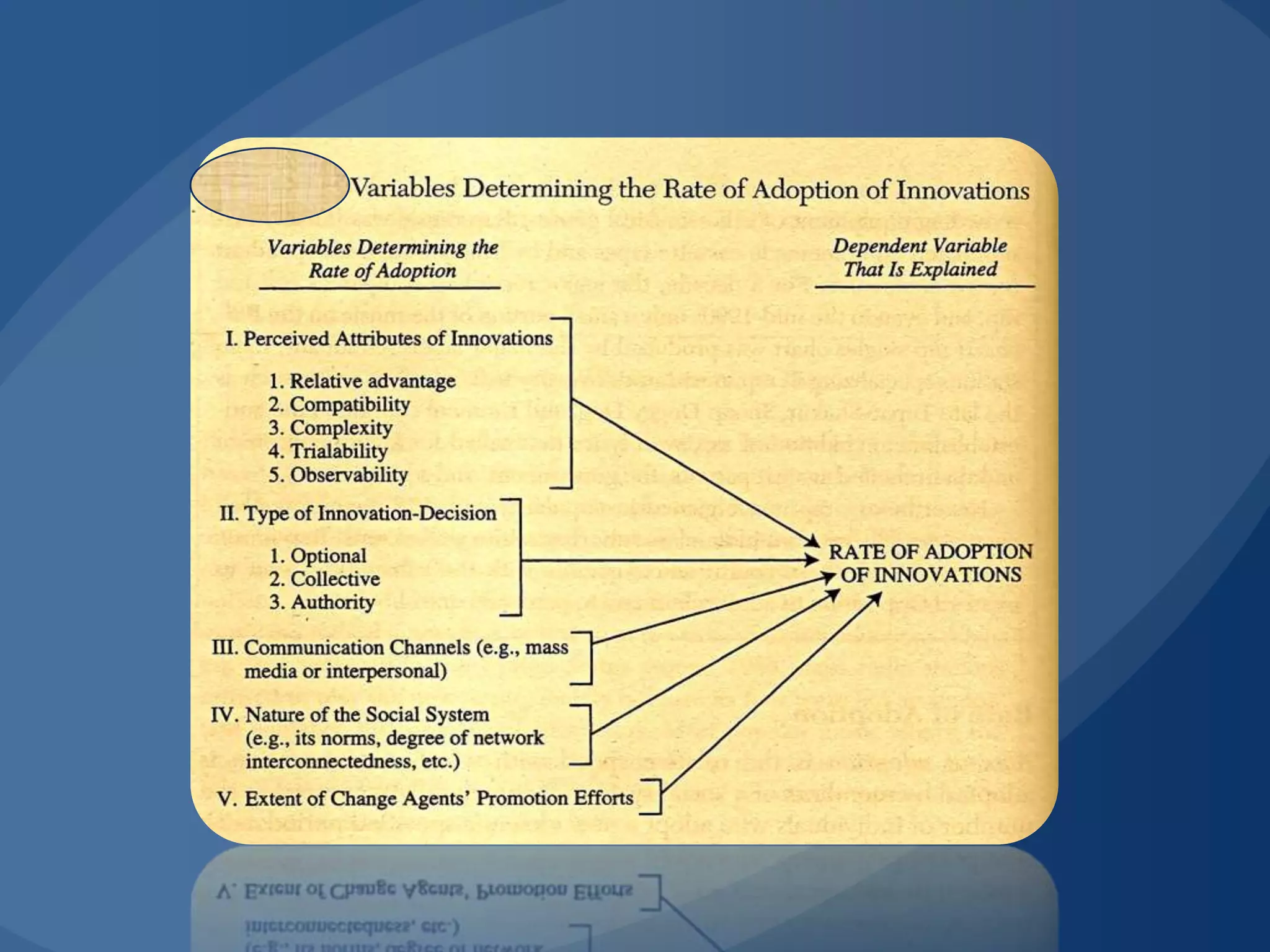
     Rogers' Diffusion of Innovations (1995) is a framework of change and
     work as an excellent guide for practitioners. It consists of five
     variables that determine the rate of adoption of innovations:
1.    Attributes of innovations
2.    Type of innovation- Decision
3.    Communication channel
4.    Nature of the Social System
5.    Extent of change Agents’ Promotion.
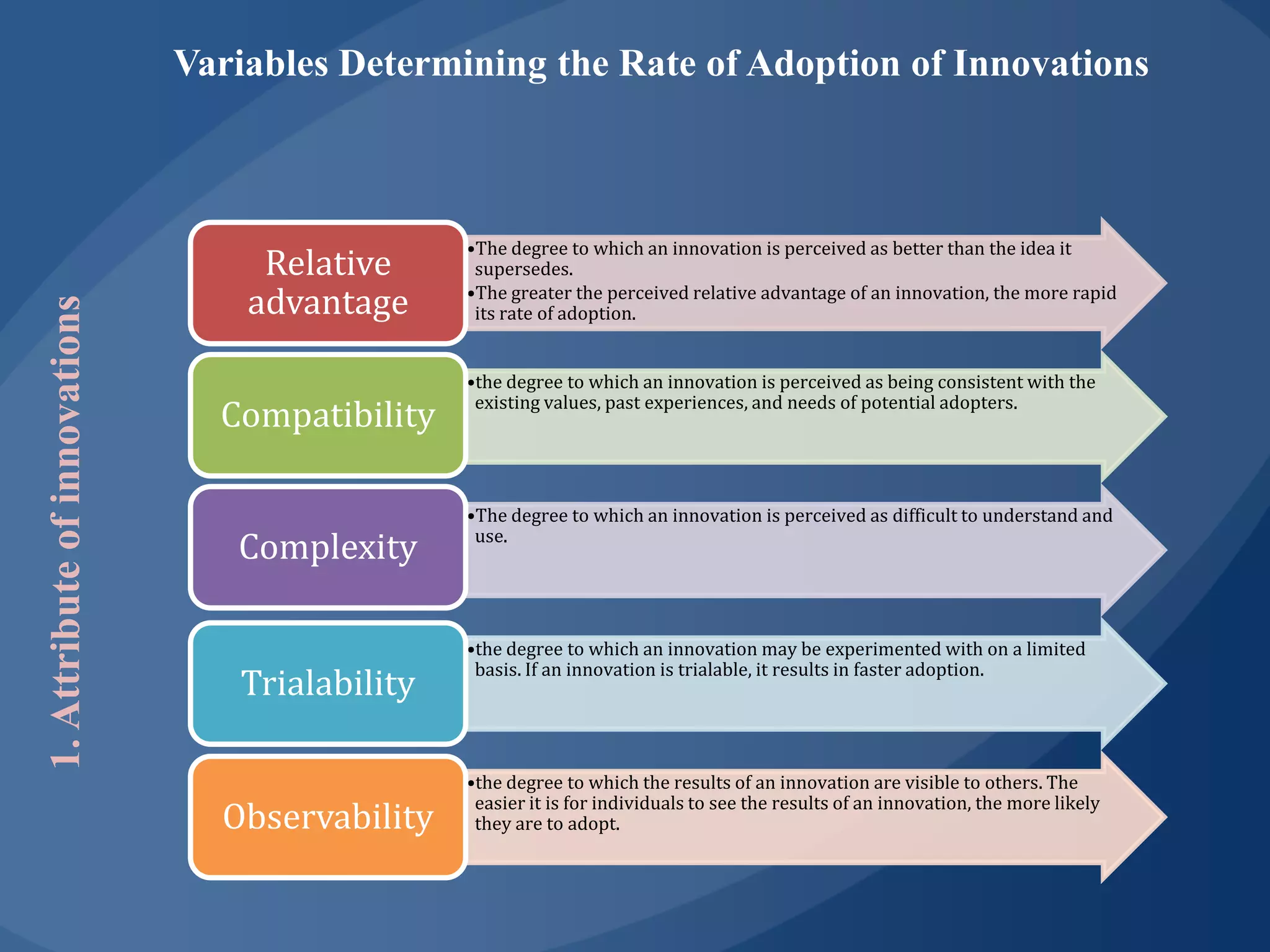
Variables Determining the Rate of Adoption of Innovations


                                                •The degree to which an innovation is perceived as better than the idea it
                                   Relative      supersedes.
                                  advantage     •The greater the perceived relative advantage of an innovation, the more rapid
1. Attribute of innovations


                                                 its rate of adoption.


                                                •the degree to which an innovation is perceived as being consistent with the
                                                 existing values, past experiences, and needs of potential adopters.
                                Compatibility

                                                •The degree to which an innovation is perceived as difficult to understand and
                                 Complexity      use.


                                                •the degree to which an innovation may be experimented with on a limited
                                                 basis. If an innovation is trialable, it results in faster adoption.
                                 Trialability

                                                •the degree to which the results of an innovation are visible to others. The
                                                 easier it is for individuals to see the results of an innovation, the more likely
                                Observability    they are to adopt.
Variables Determining the Rate of Adoption of Innovations


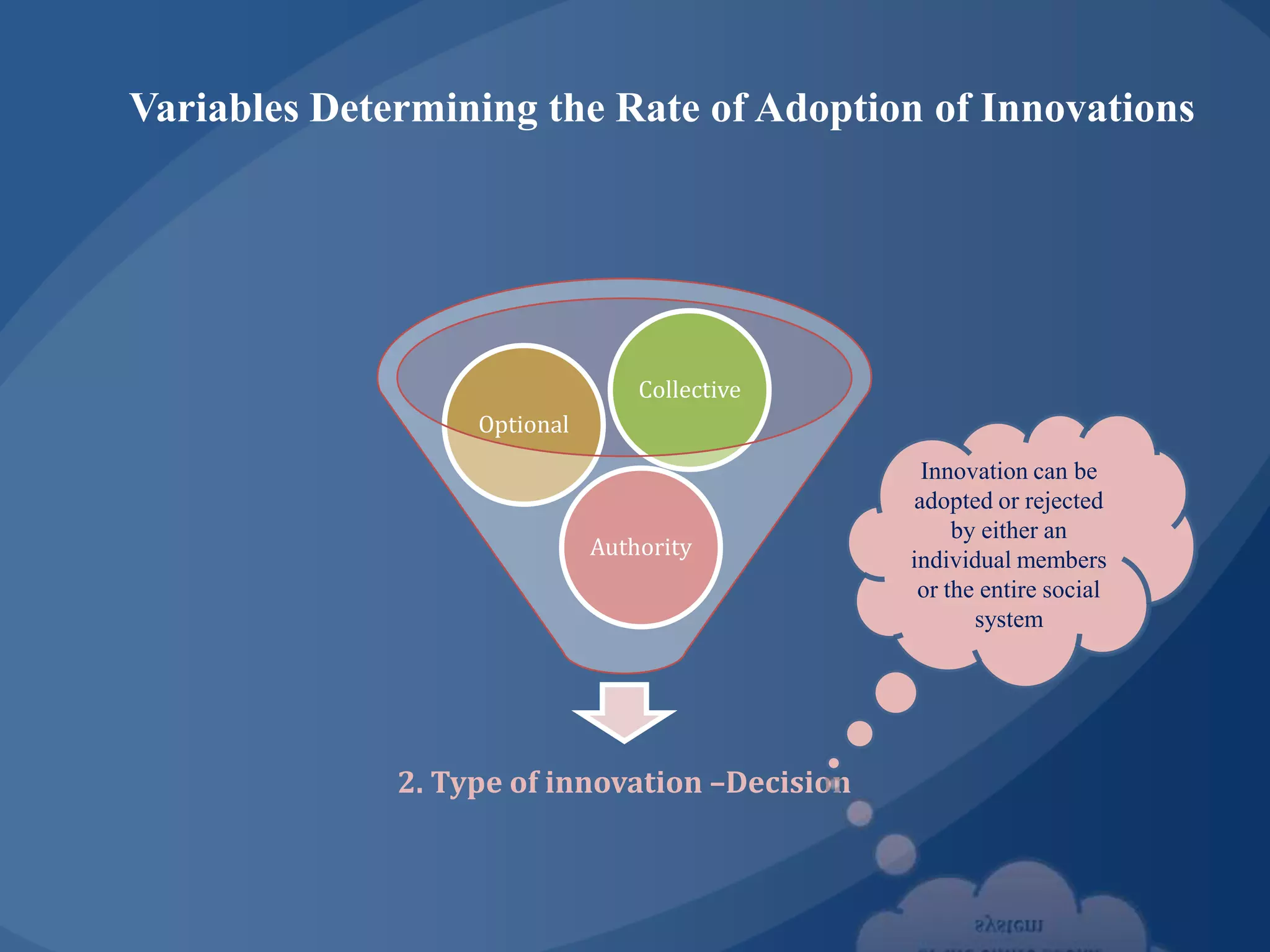
                                  Collective
                   Optional
                                                 Innovation can be
                                                adopted or rejected
                                                     by either an
                              Authority
                                                individual members
                                                 or the entire social
                                                       system


              2. Type of innovation –Decision
Variables Determining the Rate of Adoption of Innovations

 3. Communication Channel
 Communication is “the process by which
 participants create and share information
 with one another in order to reach a mutual
 understanding.”
 Diffusion is specific type of
 communication to exchange a new idea
 with one or several others.
 Communication channel: is the means by
 which massages get form one individual to
 another.
 Two types: Mass Media or interpersonal
Variables Determining the Rate of Adoption of Innovations

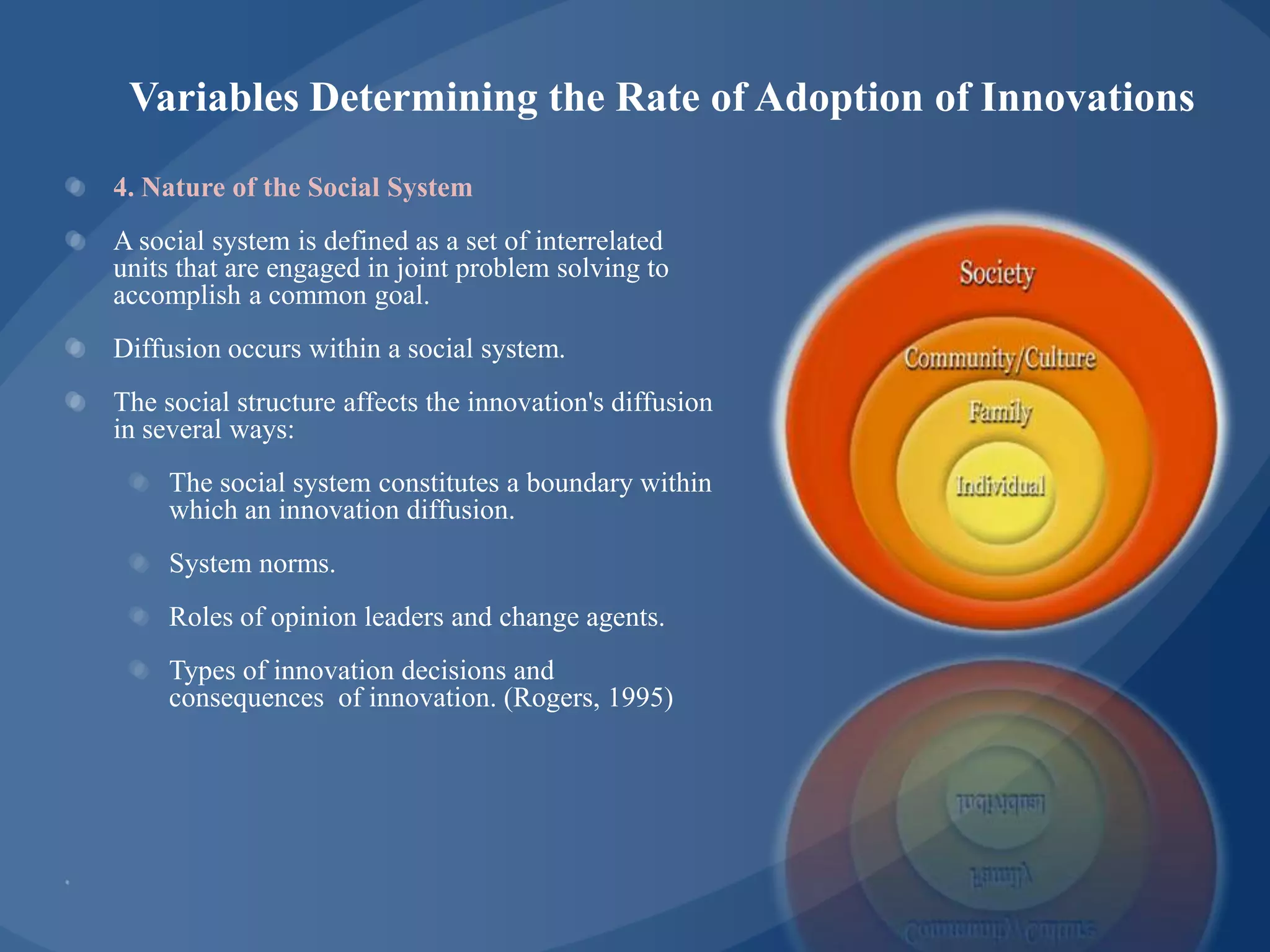
4. Nature of the Social System
A social system is defined as a set of interrelated
units that are engaged in joint problem solving to
accomplish a common goal.
Diffusion occurs within a social system.
The social structure affects the innovation's diffusion
in several ways:
     The social system constitutes a boundary within
     which an innovation diffusion.
     System norms.
     Roles of opinion leaders and change agents.
     Types of innovation decisions and
     consequences of innovation. (Rogers, 1995)
Variables Determining the Rate of Adoption of Innovations
5. Extent of change Agents’ promotion efforts:


Change agents are people who introduce
innovations into a society (workplace) that
they expect will have consequences that
will be desirable, direct, and anticipated.
They are the invisible hands that turn vision
into action
Change Agents should have the knowledge,
skills and tools to implement change in the
workplace or society.
Change Agents have the ability to achieve
results through facilitating groups of
people through a systematic processes to
develop, organize, and sell new ideas.
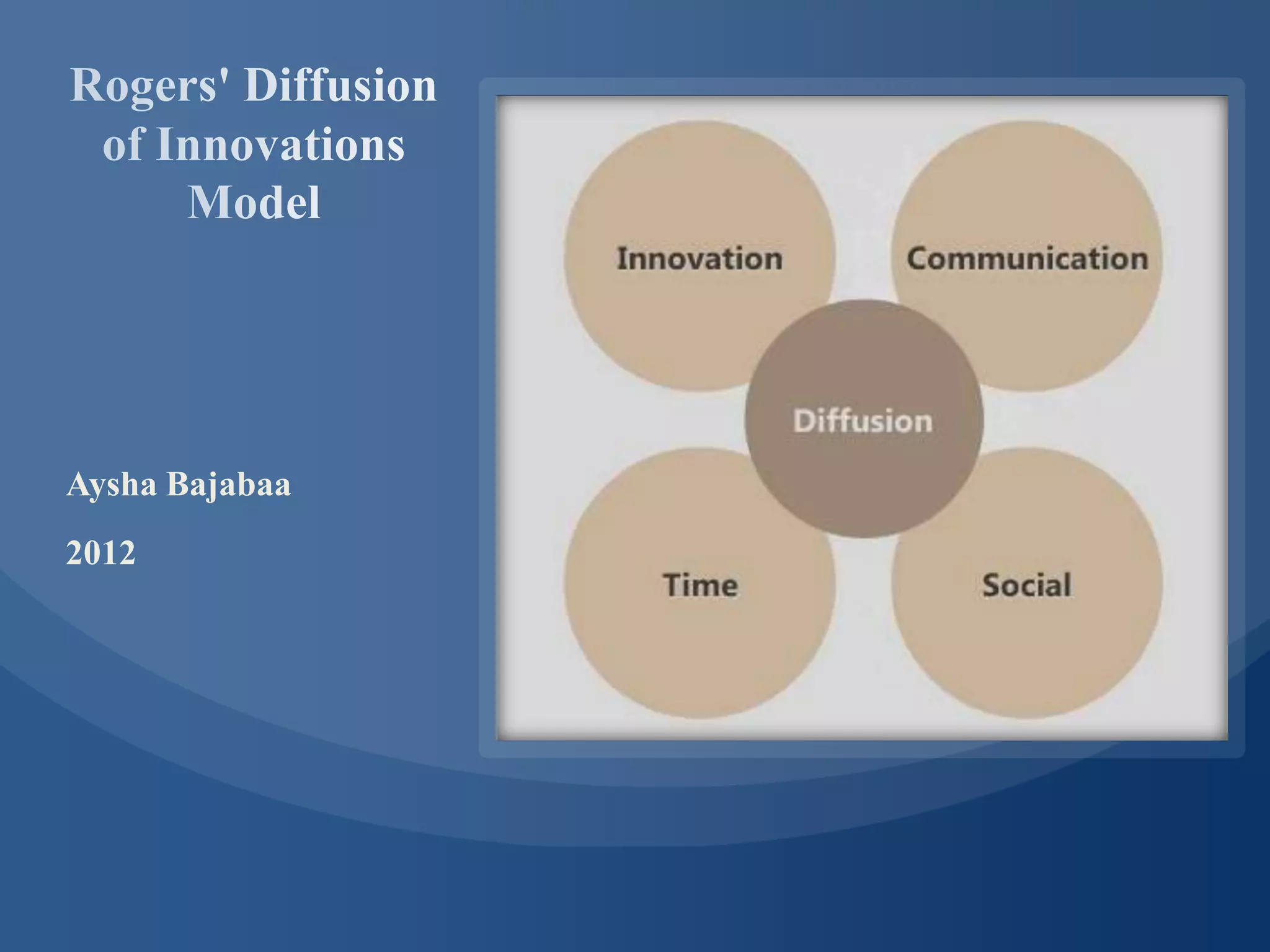
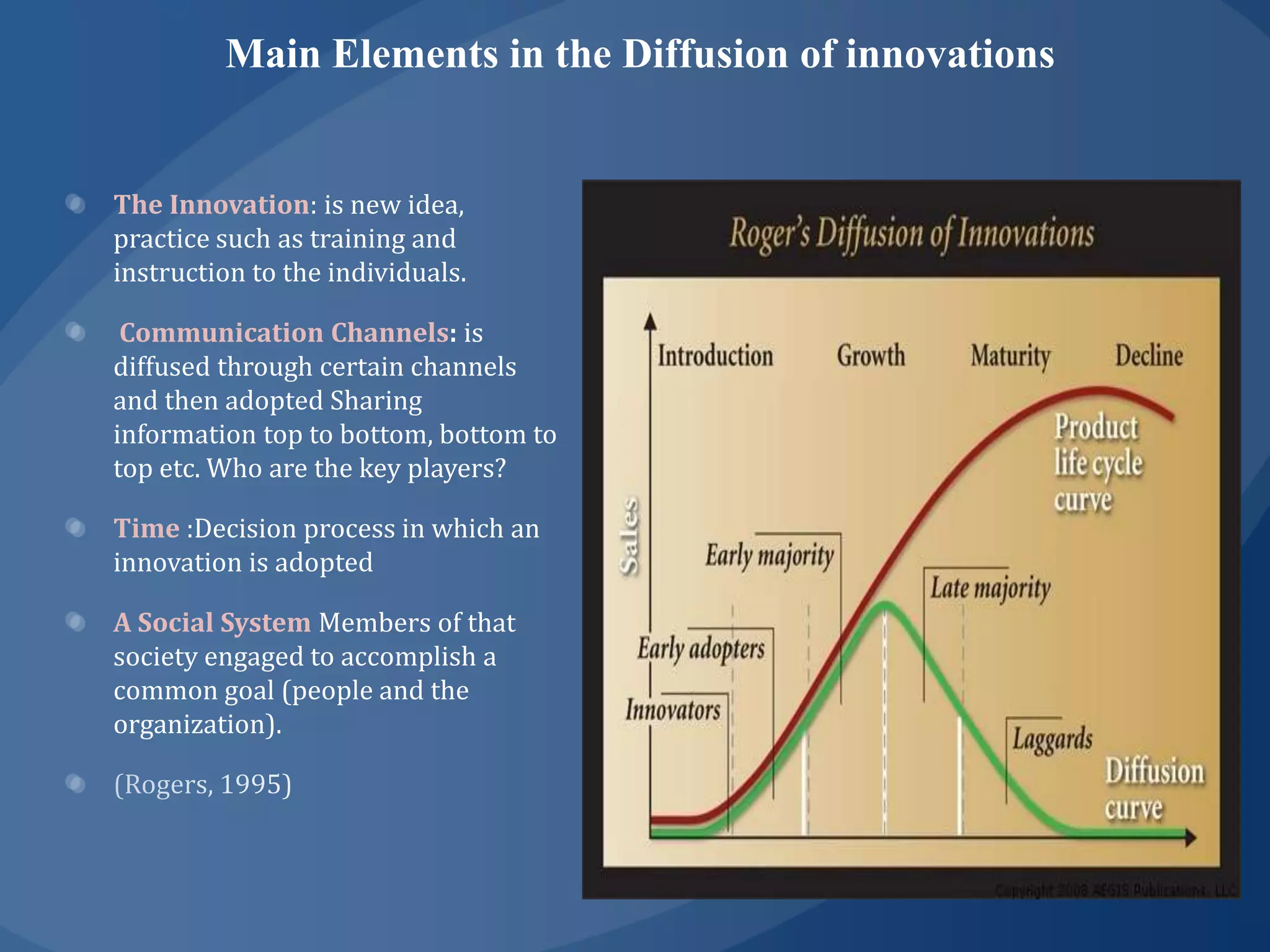
Main Elements in the Diffusion of innovations


The Innovation: is new idea,
practice such as training and
instruction to the individuals.

 Communication Channels: is
diffused through certain channels
and then adopted Sharing
information top to bottom, bottom to
top etc. Who are the key players?

Time :Decision process in which an
innovation is adopted

A Social System Members of that
society engaged to accomplish a
common goal (people and the
organization).
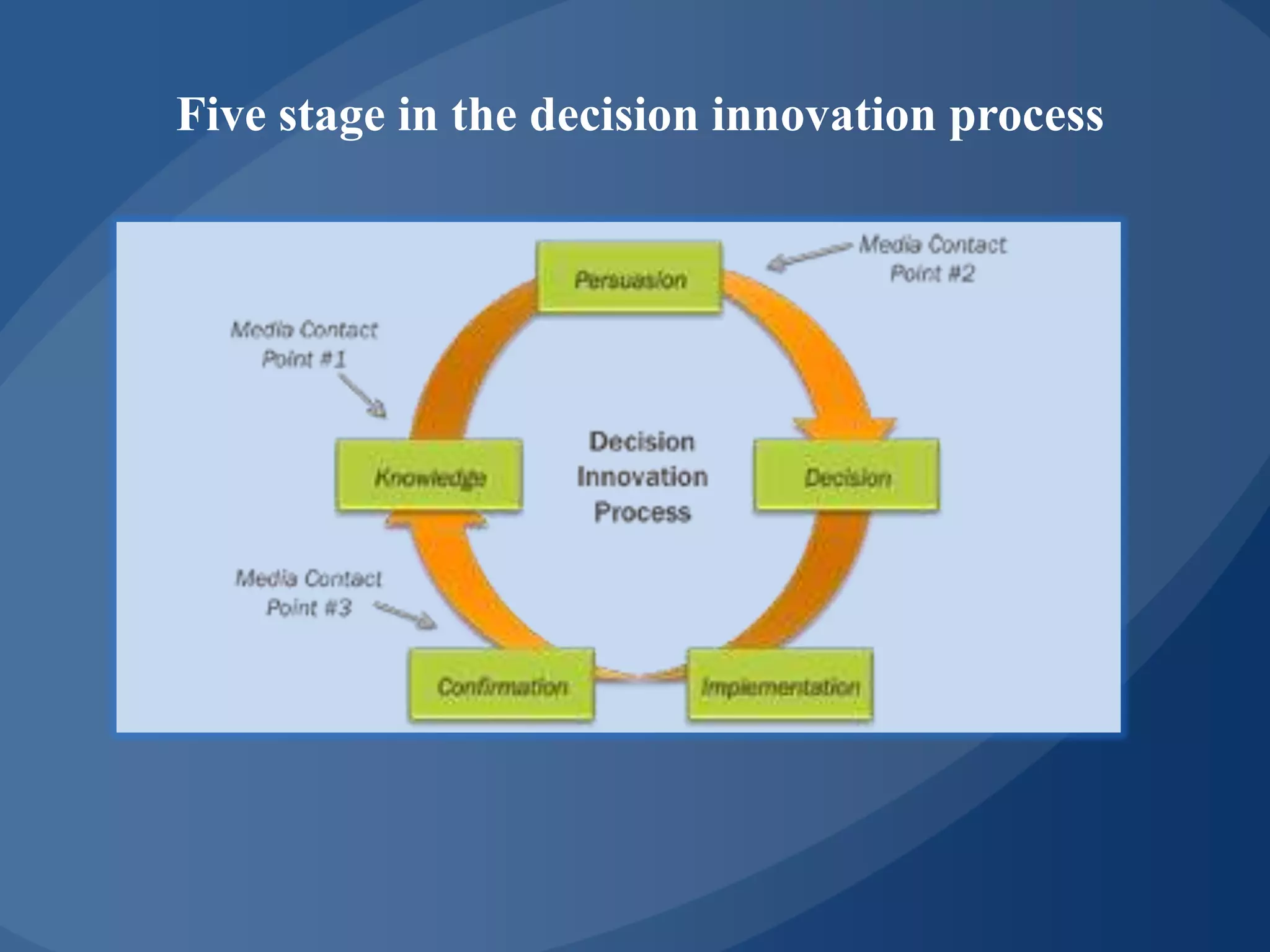
Five stage in the decision innovation process
References

Ellsworth, J. B. (2000). Surviving change : A survey of educational
change models. Syracuse, N.Y.: Clearinghouse on Information &
Technology, Syracuse University.
Rogers, E. (1995). Elements of diffusion. In Diffusion of innovations
(4th ed., pp. 1-37). New York, NY: The Free Press.

Rogers' diffusion of innovations model

  • 1.
  • 2.
    Rogers’ diffusion ofinnovations Model According to Rogers, “Diffusion is the process in which an innovation is communicated through certain channels over time among the members of a social system” Rogers' Diffusion of Innovations (1995) is a framework of change and work as an excellent guide for practitioners. It consists of five variables that determine the rate of adoption of innovations: 1. Attributes of innovations 2. Type of innovation- Decision 3. Communication channel 4. Nature of the Social System 5. Extent of change Agents’ Promotion.
  • 4.
    Variables Determining theRate of Adoption of Innovations •The degree to which an innovation is perceived as better than the idea it Relative supersedes. advantage •The greater the perceived relative advantage of an innovation, the more rapid 1. Attribute of innovations its rate of adoption. •the degree to which an innovation is perceived as being consistent with the existing values, past experiences, and needs of potential adopters. Compatibility •The degree to which an innovation is perceived as difficult to understand and Complexity use. •the degree to which an innovation may be experimented with on a limited basis. If an innovation is trialable, it results in faster adoption. Trialability •the degree to which the results of an innovation are visible to others. The easier it is for individuals to see the results of an innovation, the more likely Observability they are to adopt.
  • 5.
    Variables Determining theRate of Adoption of Innovations Collective Optional Innovation can be adopted or rejected by either an Authority individual members or the entire social system 2. Type of innovation –Decision
  • 6.
    Variables Determining theRate of Adoption of Innovations 3. Communication Channel Communication is “the process by which participants create and share information with one another in order to reach a mutual understanding.” Diffusion is specific type of communication to exchange a new idea with one or several others. Communication channel: is the means by which massages get form one individual to another. Two types: Mass Media or interpersonal
  • 7.
    Variables Determining theRate of Adoption of Innovations 4. Nature of the Social System A social system is defined as a set of interrelated units that are engaged in joint problem solving to accomplish a common goal. Diffusion occurs within a social system. The social structure affects the innovation's diffusion in several ways: The social system constitutes a boundary within which an innovation diffusion. System norms. Roles of opinion leaders and change agents. Types of innovation decisions and consequences of innovation. (Rogers, 1995)
  • 8.
    Variables Determining theRate of Adoption of Innovations 5. Extent of change Agents’ promotion efforts: Change agents are people who introduce innovations into a society (workplace) that they expect will have consequences that will be desirable, direct, and anticipated. They are the invisible hands that turn vision into action Change Agents should have the knowledge, skills and tools to implement change in the workplace or society. Change Agents have the ability to achieve results through facilitating groups of people through a systematic processes to develop, organize, and sell new ideas.
  • 9.
    Main Elements inthe Diffusion of innovations The Innovation: is new idea, practice such as training and instruction to the individuals. Communication Channels: is diffused through certain channels and then adopted Sharing information top to bottom, bottom to top etc. Who are the key players? Time :Decision process in which an innovation is adopted A Social System Members of that society engaged to accomplish a common goal (people and the organization).
  • 10.
    Five stage inthe decision innovation process
  • 11.
    References Ellsworth, J. B.(2000). Surviving change : A survey of educational change models. Syracuse, N.Y.: Clearinghouse on Information & Technology, Syracuse University. Rogers, E. (1995). Elements of diffusion. In Diffusion of innovations (4th ed., pp. 1-37). New York, NY: The Free Press.