DEFINING

MEDIA CONVERGENCE
A Quick Look into the Meanings and Implications of
Media Convergence and Convergence Culture

Mass Communication Seminar in Media Convergence | St. Cloud State University
To converge
means…
Readings
• Rich Gordon, The Meanings and Implications of

Convergence.
• Henry Jenkins, Worship at the Alter of Convergence: A

New Paradigm for Understanding Media Change.
• Vincent Miller, Convergence and the Contemporary

Media Experience.
Forms of Convergence
• Technological Convergence
• Regulatory Convergence
• Media Industry Convergence
• Convergence Culture and

Participatory Media
Technological Convergence
• Functional convergence
• Trade-off advantages and disadvantages
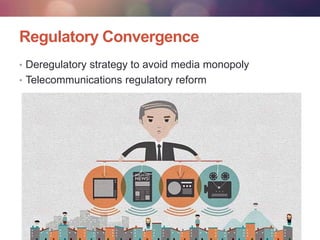
Regulatory Convergence
• Deregulatory strategy to avoid media monopoly
• Telecommunications regulatory reform
Media Industry Convergence
• Horizontal and vertical integrations
• Synergy for business operations
• Merger and acquisition
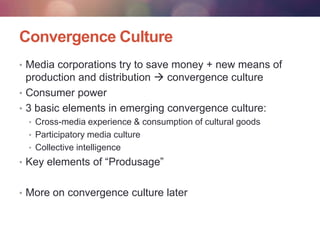
Convergence Culture
• Media corporations try to save money + new means of

production and distribution  convergence culture
• Consumer power
• 3 basic elements in emerging convergence culture:
• Cross-media experience & consumption of cultural goods
• Participatory media culture
• Collective intelligence

• Key elements of “Produsage”

• More on convergence culture later
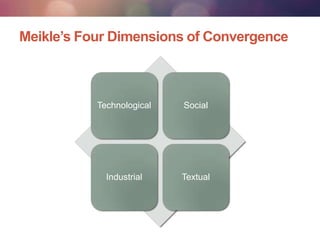
Meikle’s Four Dimensions of Convergence

Technological

Social

Industrial

Textual
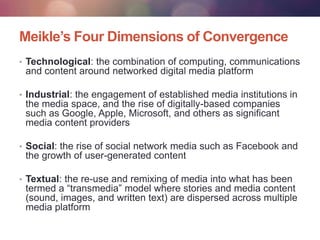
Meikle’s Four Dimensions of Convergence
• Technological: the combination of computing, communications

and content around networked digital media platform
• Industrial: the engagement of established media institutions in

the media space, and the rise of digitally-based companies
such as Google, Apple, Microsoft, and others as significant
media content providers
• Social: the rise of social network media such as Facebook and

the growth of user-generated content
• Textual: the re-use and remixing of media into what has been

termed a “transmedia” model where stories and media content
(sound, images, and written text) are dispersed across multiple
media platform
A Closer Look into Media Convergence
• Convergence in media technology (technological convergence)
• Convergence in media organizations
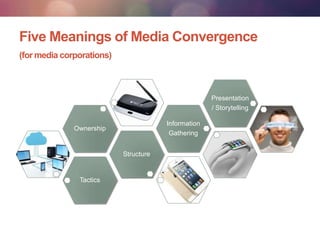
Five Meanings of Media Convergence
(for media corporations)

Presentation
/ Storytelling
Information
Gathering

Ownership

Structure

Tactics
H. Jenkins on Convergence Culture
• Old media are passive, new media are interactive
• Consumer to have more control over media consumption,

production, and distribution
Convergence is consumer centered
• Consumers = media producers
• Not just technological advancement… it’s a cultural shift
Convergence is old wine in new bottles
• Old concepts given new meanings
• We don’t have the language of convergence yet
Convergence is change / evolution
• A complicated process
• Old media never die
• The Black Box Fallacy
Convergence is not an endpoint
• Always in flux
• No universal control(ler)
• We constantly learn how to interact with media content in

new ways
Convergence is a cultural phenomenon
• Convergence happens when we use new technologies in

our daily lives (run errands, take selfies, etc.)
• Convergence is both top-down and bottom-up processes,
corporate convergence coexists with grassroots
convergence
Further readings: Narang (2012)
Digital Media Convergence: Are the Stakeholders
Listening?
• Understanding consumer media consumption patterns is

key for media stakeholders to stay ahead of the changing
curve
• Focus: TV & online videos production & distribution
• Game changers:
• Consumer electronics sector is blooming

• Compression technology and HD quality videos
• Premium content as a trend
• Consumers as publishers
Further readings: Narang (2012)
• What consumer wants:
• Ease of content search & navigation
• Quality content
• Flexibility & control (what & when to watch)
• Ubiquity of content & choice of consumption device
• Right price tag & service personalization
• Socialization of media consumption
Further readings: Ito, et al. (2008)
Living and Learning with New Media
• Convergence allows new media to be integrated in the

education and social life of youths
• Two kinds of motivations:
• Friendship-driven practices
• Interest-driven practices

• New media allows for a degree of autonomy and peer-

based learning
• New genres of participation:
• Hanging out
• Messing around
• Geeking out
Further readings: Lawson-Borders (2003)
Integrating New Media and Old Media: 7 Observations
• Seven observations of new media convergence to be

used as a strategy for best practices:
• Communication: ongoing conversations about convergence
• Commitment: corporate leaders to commit to changes
• Cooperation: cross-departmental staff working together
• Compensation: additional trainings for staff, pay them well
• Culture: cultural changes within the industry
• Competition: healthy competitions among local markets
• Customer: strive to meet their needs and expectations
Discussions
• What are some perks and/or frustrations you have had
•
•
•
•

with recent technological convergence?
What kinds of convergence do you hope to see (or not to
see) in the future? Why so?
Who, in your opinion, drives convergence culture? Is it
media owners/producers, consumers, or the government?
Have you ever had the experience in which your work (as
a media consumer) went “viral” while you least expect it?
In a broader sense, do you think media convergence
promotes diversity and democracy in our society?
Why/how so?
DEFINING

MEDIA CONVERGENCE
Thank You.

Mass Communication Seminar in Media Convergence | St. Cloud State University

Defining Media Convergence

  • 1.
    DEFINING MEDIA CONVERGENCE A QuickLook into the Meanings and Implications of Media Convergence and Convergence Culture Mass Communication Seminar in Media Convergence | St. Cloud State University
  • 2.
  • 3.
    Readings • Rich Gordon,The Meanings and Implications of Convergence. • Henry Jenkins, Worship at the Alter of Convergence: A New Paradigm for Understanding Media Change. • Vincent Miller, Convergence and the Contemporary Media Experience.
  • 4.
    Forms of Convergence •Technological Convergence • Regulatory Convergence • Media Industry Convergence • Convergence Culture and Participatory Media
  • 5.
    Technological Convergence • Functionalconvergence • Trade-off advantages and disadvantages
  • 6.
    Regulatory Convergence • Deregulatorystrategy to avoid media monopoly • Telecommunications regulatory reform
  • 7.
    Media Industry Convergence •Horizontal and vertical integrations • Synergy for business operations • Merger and acquisition
  • 8.
    Convergence Culture • Mediacorporations try to save money + new means of production and distribution  convergence culture • Consumer power • 3 basic elements in emerging convergence culture: • Cross-media experience & consumption of cultural goods • Participatory media culture • Collective intelligence • Key elements of “Produsage” • More on convergence culture later
  • 9.
    Meikle’s Four Dimensionsof Convergence Technological Social Industrial Textual
  • 10.
    Meikle’s Four Dimensionsof Convergence • Technological: the combination of computing, communications and content around networked digital media platform • Industrial: the engagement of established media institutions in the media space, and the rise of digitally-based companies such as Google, Apple, Microsoft, and others as significant media content providers • Social: the rise of social network media such as Facebook and the growth of user-generated content • Textual: the re-use and remixing of media into what has been termed a “transmedia” model where stories and media content (sound, images, and written text) are dispersed across multiple media platform
  • 11.
    A Closer Lookinto Media Convergence • Convergence in media technology (technological convergence) • Convergence in media organizations
  • 12.
    Five Meanings ofMedia Convergence (for media corporations) Presentation / Storytelling Information Gathering Ownership Structure Tactics
  • 13.
    H. Jenkins onConvergence Culture • Old media are passive, new media are interactive • Consumer to have more control over media consumption, production, and distribution
  • 14.
    Convergence is consumercentered • Consumers = media producers • Not just technological advancement… it’s a cultural shift
  • 15.
    Convergence is oldwine in new bottles • Old concepts given new meanings • We don’t have the language of convergence yet
  • 16.
    Convergence is change/ evolution • A complicated process • Old media never die • The Black Box Fallacy
  • 17.
    Convergence is notan endpoint • Always in flux • No universal control(ler) • We constantly learn how to interact with media content in new ways
  • 18.
    Convergence is acultural phenomenon • Convergence happens when we use new technologies in our daily lives (run errands, take selfies, etc.) • Convergence is both top-down and bottom-up processes, corporate convergence coexists with grassroots convergence
  • 19.
    Further readings: Narang(2012) Digital Media Convergence: Are the Stakeholders Listening? • Understanding consumer media consumption patterns is key for media stakeholders to stay ahead of the changing curve • Focus: TV & online videos production & distribution • Game changers: • Consumer electronics sector is blooming • Compression technology and HD quality videos • Premium content as a trend • Consumers as publishers
  • 20.
    Further readings: Narang(2012) • What consumer wants: • Ease of content search & navigation • Quality content • Flexibility & control (what & when to watch) • Ubiquity of content & choice of consumption device • Right price tag & service personalization • Socialization of media consumption
  • 21.
    Further readings: Ito,et al. (2008) Living and Learning with New Media • Convergence allows new media to be integrated in the education and social life of youths • Two kinds of motivations: • Friendship-driven practices • Interest-driven practices • New media allows for a degree of autonomy and peer- based learning • New genres of participation: • Hanging out • Messing around • Geeking out
  • 22.
    Further readings: Lawson-Borders(2003) Integrating New Media and Old Media: 7 Observations • Seven observations of new media convergence to be used as a strategy for best practices: • Communication: ongoing conversations about convergence • Commitment: corporate leaders to commit to changes • Cooperation: cross-departmental staff working together • Compensation: additional trainings for staff, pay them well • Culture: cultural changes within the industry • Competition: healthy competitions among local markets • Customer: strive to meet their needs and expectations
  • 23.
    Discussions • What aresome perks and/or frustrations you have had • • • • with recent technological convergence? What kinds of convergence do you hope to see (or not to see) in the future? Why so? Who, in your opinion, drives convergence culture? Is it media owners/producers, consumers, or the government? Have you ever had the experience in which your work (as a media consumer) went “viral” while you least expect it? In a broader sense, do you think media convergence promotes diversity and democracy in our society? Why/how so?
  • 24.
    DEFINING MEDIA CONVERGENCE Thank You. MassCommunication Seminar in Media Convergence | St. Cloud State University