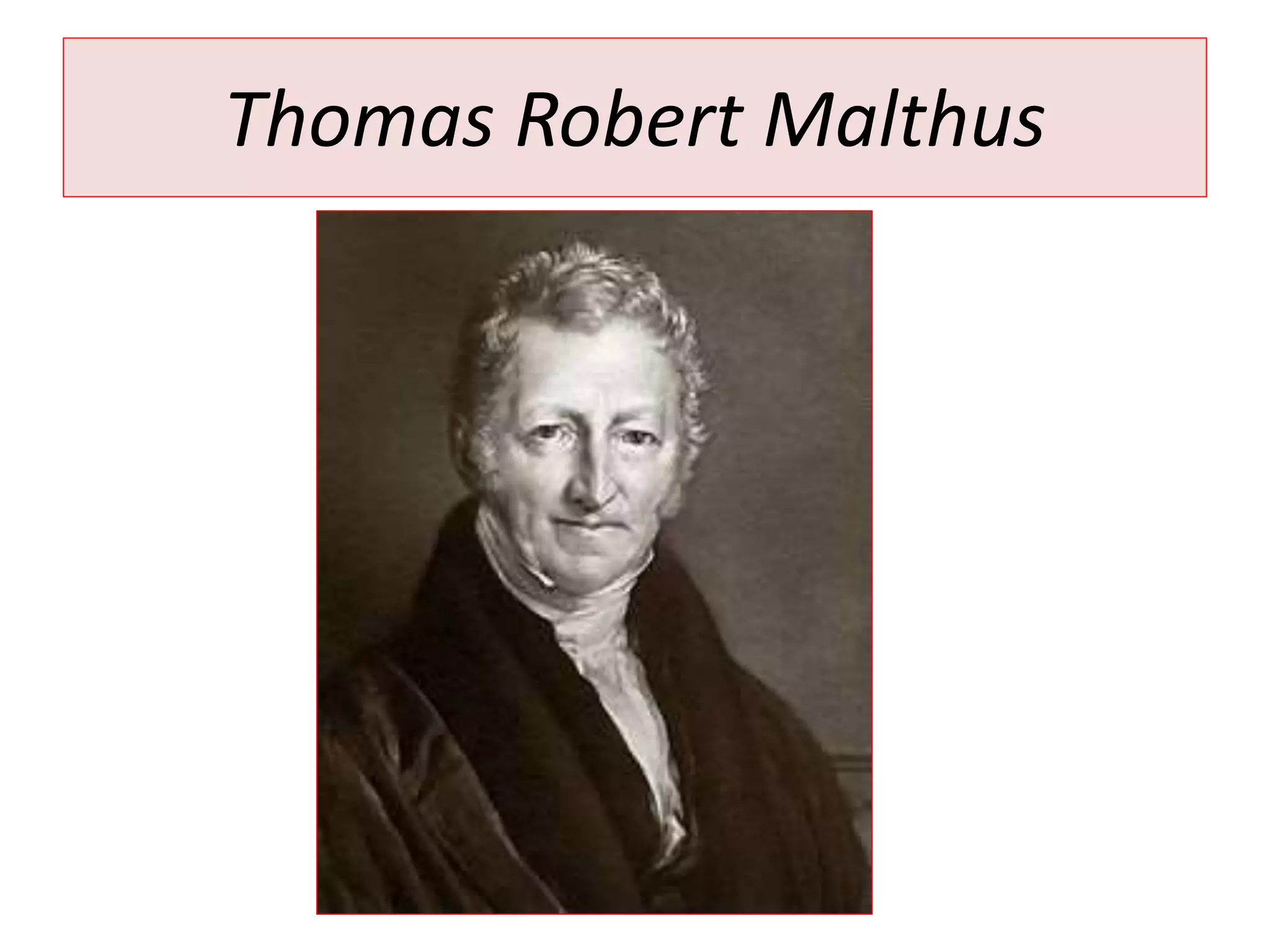

Thomas Robert Malthus
WELCOME 
BY: - RAMESH KUMAR, 
PGT – ECONOMICS, 
K V NO.1, BATHINDA CANTT.
CONCEPTUAL QUESTIONS: - 
1. What is relationship between height and 
weight? 
2. What is relation between age of husband and 
wife? 
3. What is the relationship between price and 
demand?
What do you Mean by correlation?
Meaning of Correlation 
Correlation is a statistical tools which shows the 
relationship between the two variables in 
which change in the value of one variable due 
to change in the value of other variable
KINDS OF CORRELATION 
• Positive and Negative correlation 
• Linear and Non Linear Correlation. 
• Simple, Multiple and Partial Correlation.
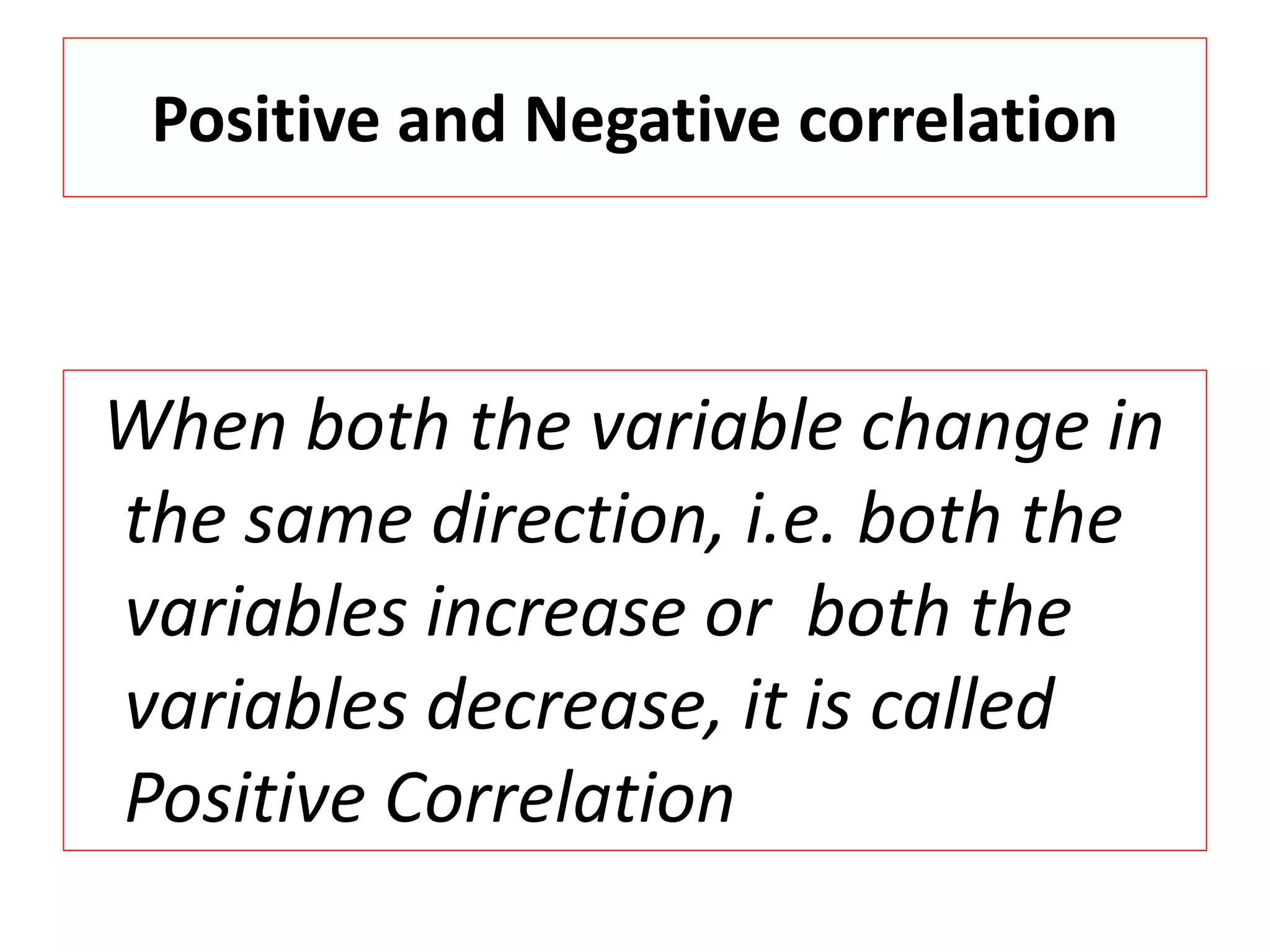
Positive and Negative correlation 
When both the variable change in 
the same direction, i.e. both the 
variables increase or both the 
variables decrease, it is called 
Positive Correlation
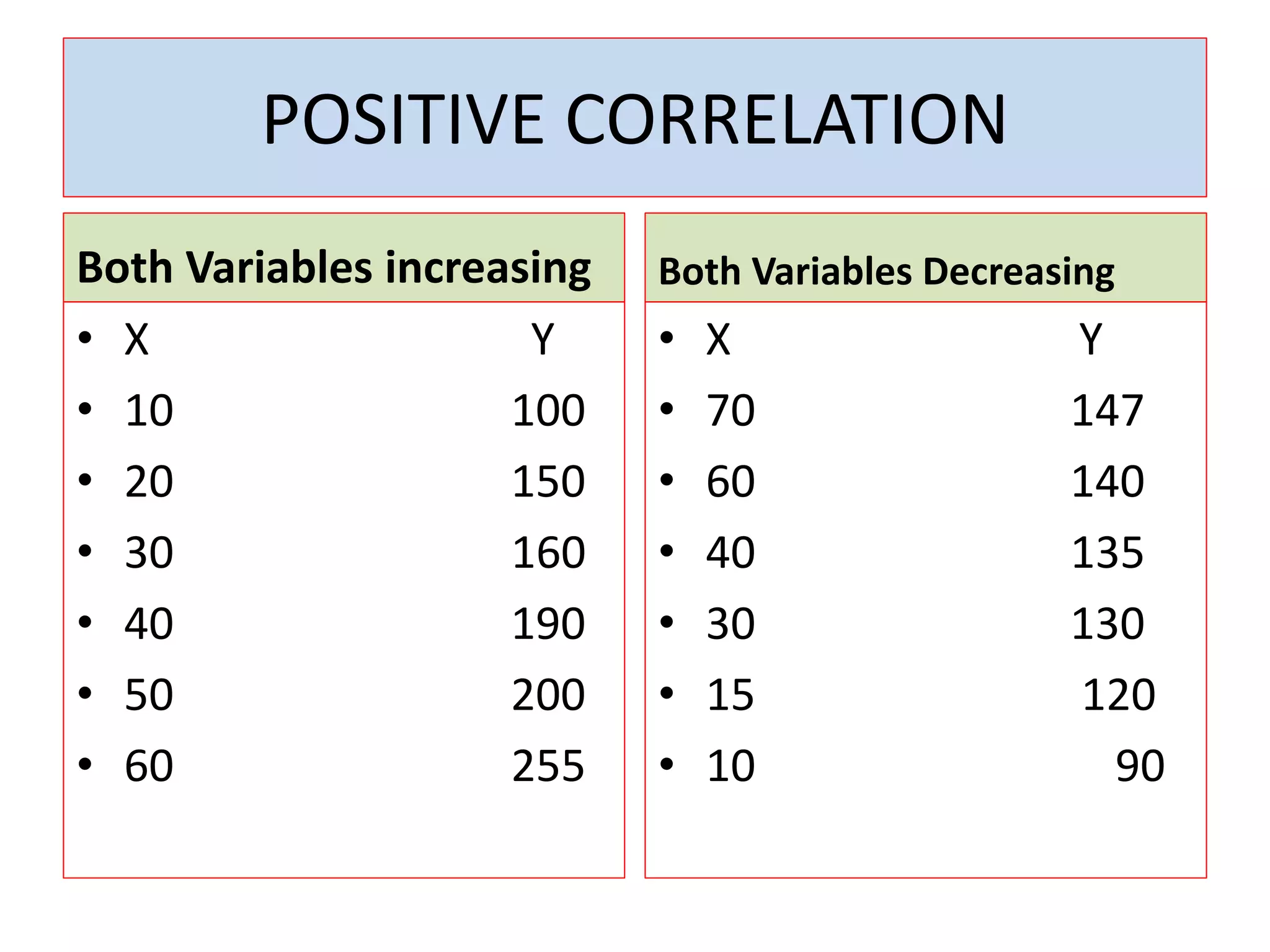
POSITIVE CORRELATION 
Both Variables increasing 
• X Y 
• 10 100 
• 20 150 
• 30 160 
• 40 190 
• 50 200 
• 60 255 
Both Variables Decreasing 
• X Y 
• 70 147 
• 60 140 
• 40 135 
• 30 130 
• 15 120 
• 10 90
What is negative Correlation?
Negative Correlation 
When both variable change in the 
opposite direction, it is called 
Negative correlation.
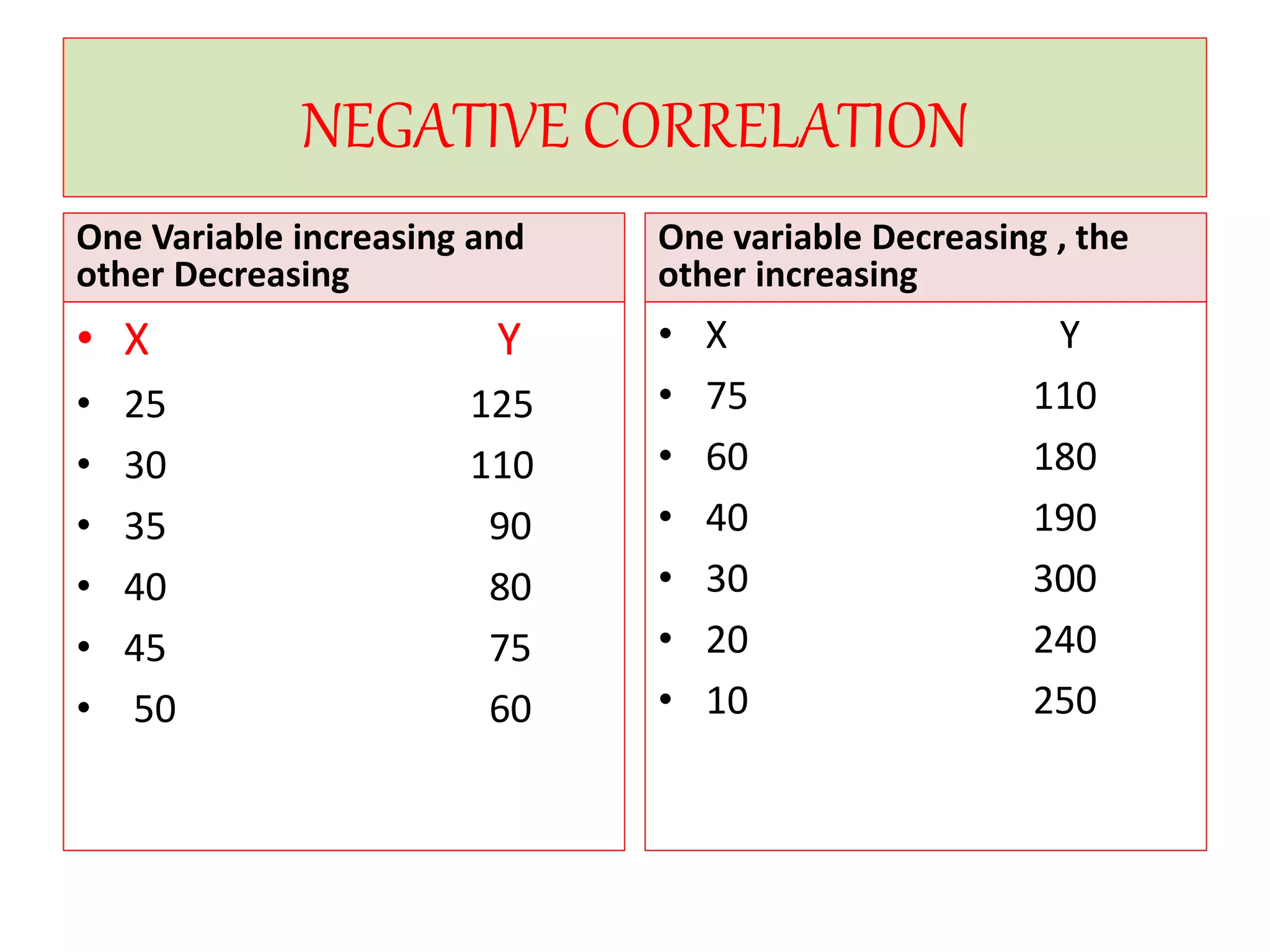
NEGATIVE CORRELATION 
One Variable increasing and 
other Decreasing 
• X Y 
• 25 125 
• 30 110 
• 35 90 
• 40 80 
• 45 75 
• 50 60 
One variable Decreasing , the 
other increasing 
• X Y 
• 75 110 
• 60 180 
• 40 190 
• 30 300 
• 20 240 
• 10 250
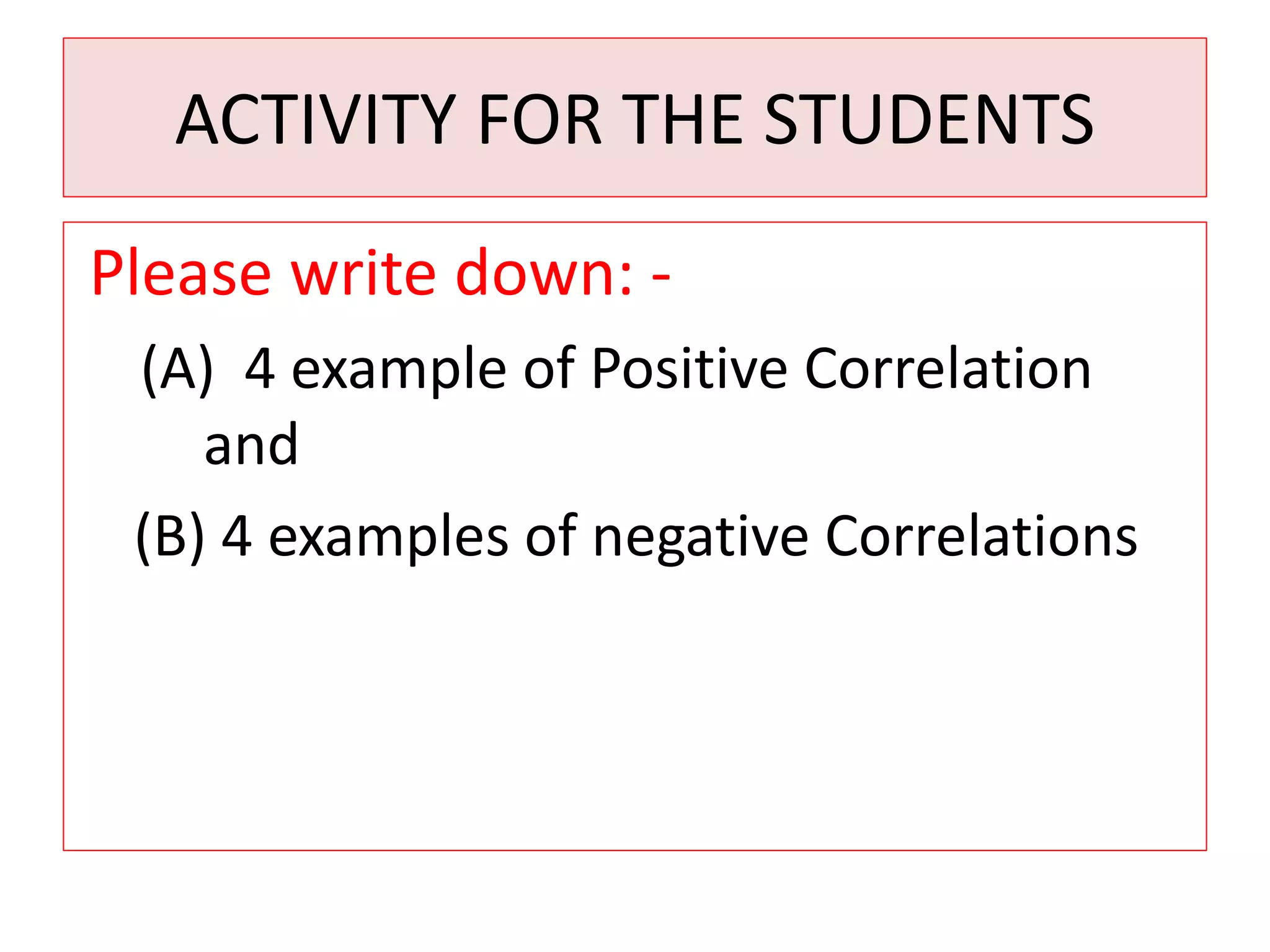
ACTIVITY FOR THE STUDENTS 
Please write down: - 
(A) 4 example of Positive Correlation 
and 
(B) 4 examples of negative Correlations
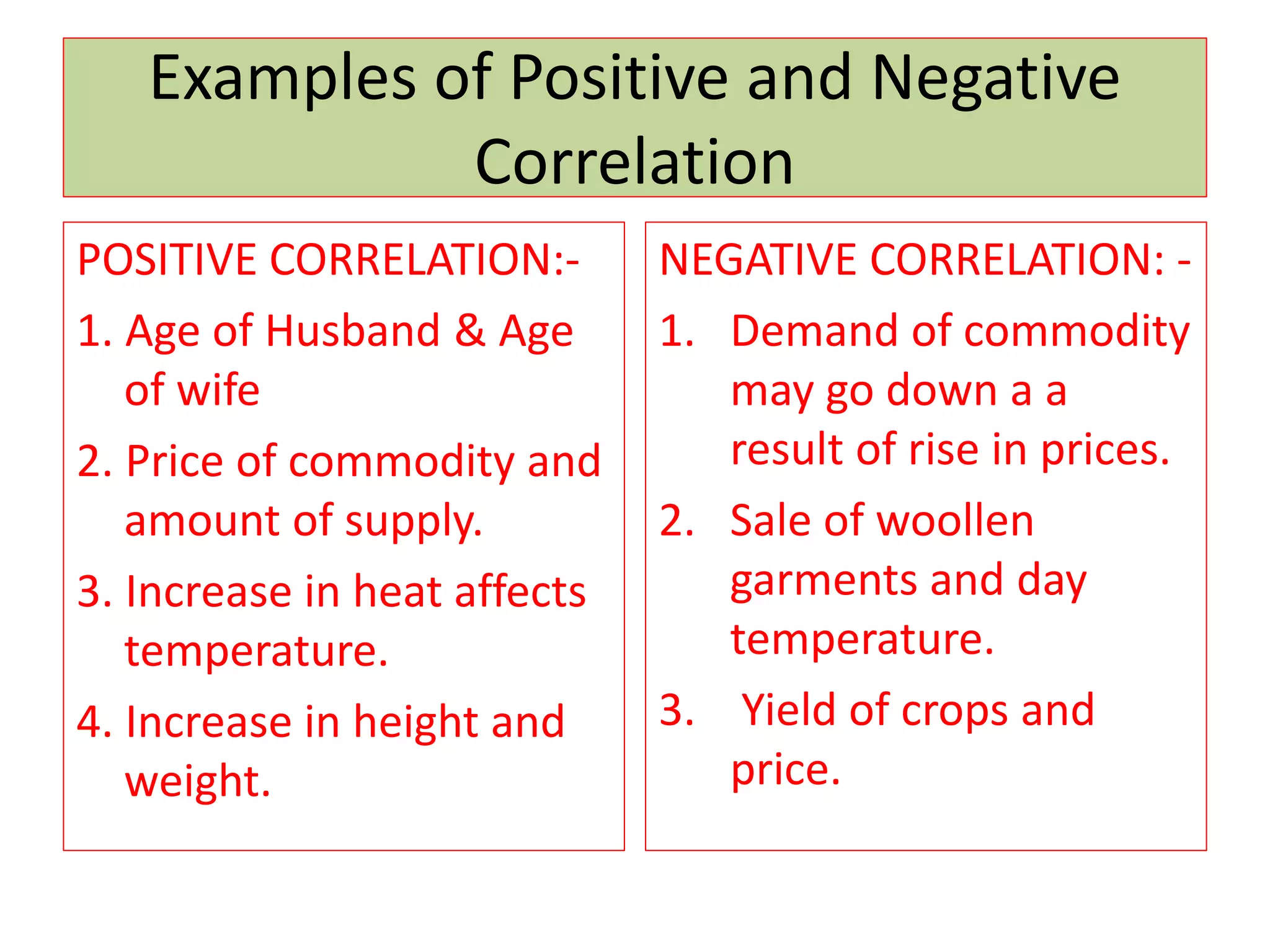
Examples of Positive and Negative 
Correlation 
POSITIVE CORRELATION:- 
1. Age of Husband & Age 
of wife 
2. Price of commodity and 
amount of supply. 
3. Increase in heat affects 
temperature. 
4. Increase in height and 
weight. 
NEGATIVE CORRELATION: - 
1. Demand of commodity 
may go down a a 
result of rise in prices. 
2. Sale of woollen 
garments and day 
temperature. 
3. Yield of crops and 
price.
Linear correlation and Non Linear 
Correlation 
* If the Ratio of change between two variables is 
uniform than Linear correlation exists. 
* linear and Non – Linear correlation is based 
upon the consistency of the ratio of changes 
between the variables. 
* Their relationship described by straight line 
If the variables under study are graphed, the 
point will form a straight line,
LINEAR CORRELATION 
• In case of non linear relationship , the 
amount of change in one variable does not 
bear a constant ratio to the amount of change 
in the other variable, Such as relationship will 
form a curve on graph.
Non Linear Correlation 
If the ratio of change between the variable is 
not the same than Non linear correlation 
exists. Non –Linear Relationship will form 
curve on graph.
Simple Correlation 
Simple Correlation : - It is based upon the 
number of variable under study. 
• When only two variables are studied, the 
correlation between them is called simple 
Correlation
Multiple and Partial Correlation 
When three or more variables are 
studied the relationship can be 
either multiple or partial.
DEGREE OF CORRELATION 
There is three types of correlations: - 
1. Perfect Correlation. 
2. Zero Correlation. 
3. Limited degree Correlation.
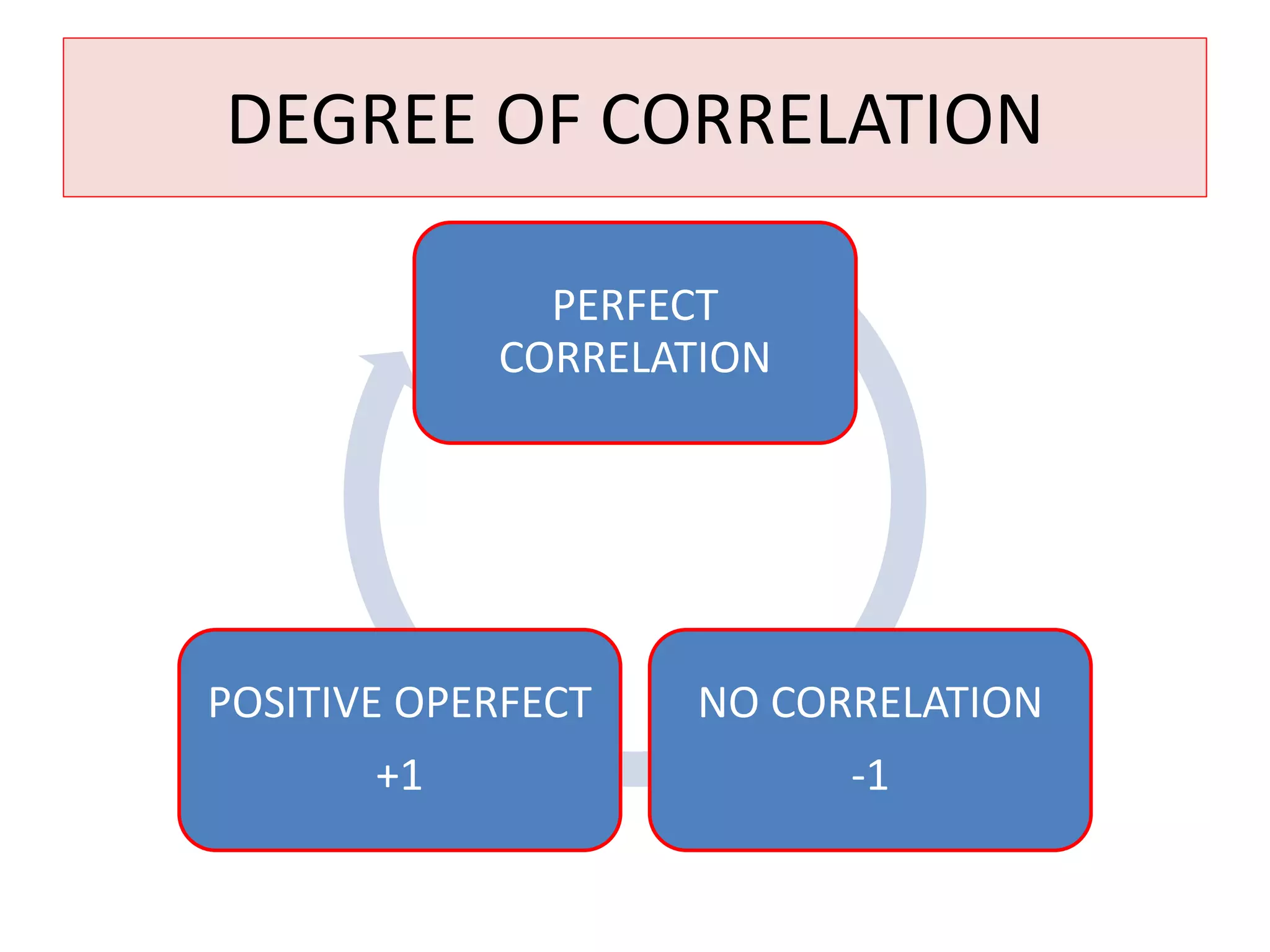
PERFECT DEGREE OF CORRELATION: - 
• Perfect degree correlation is that where 
changes in two variables are exactly 
proportional. If equal proportion changes are 
in the same direction, there is perfect positive 
correlation between the two values described 
as + 1, 
• If equal proportional changes are in the 
reverse direction, there is perfect negative 
correlation, described as -1.
ZERO DEGREE CORRELATION 
• The value of Coefficient of correlation may be 
zero. It means that there is zero correlation. 
• It does not mean the absence of any type of 
relation between the two variables. Two value 
are uncorrelated . However, other type of 
relation may be there. There is no Linear 
relationship between them.
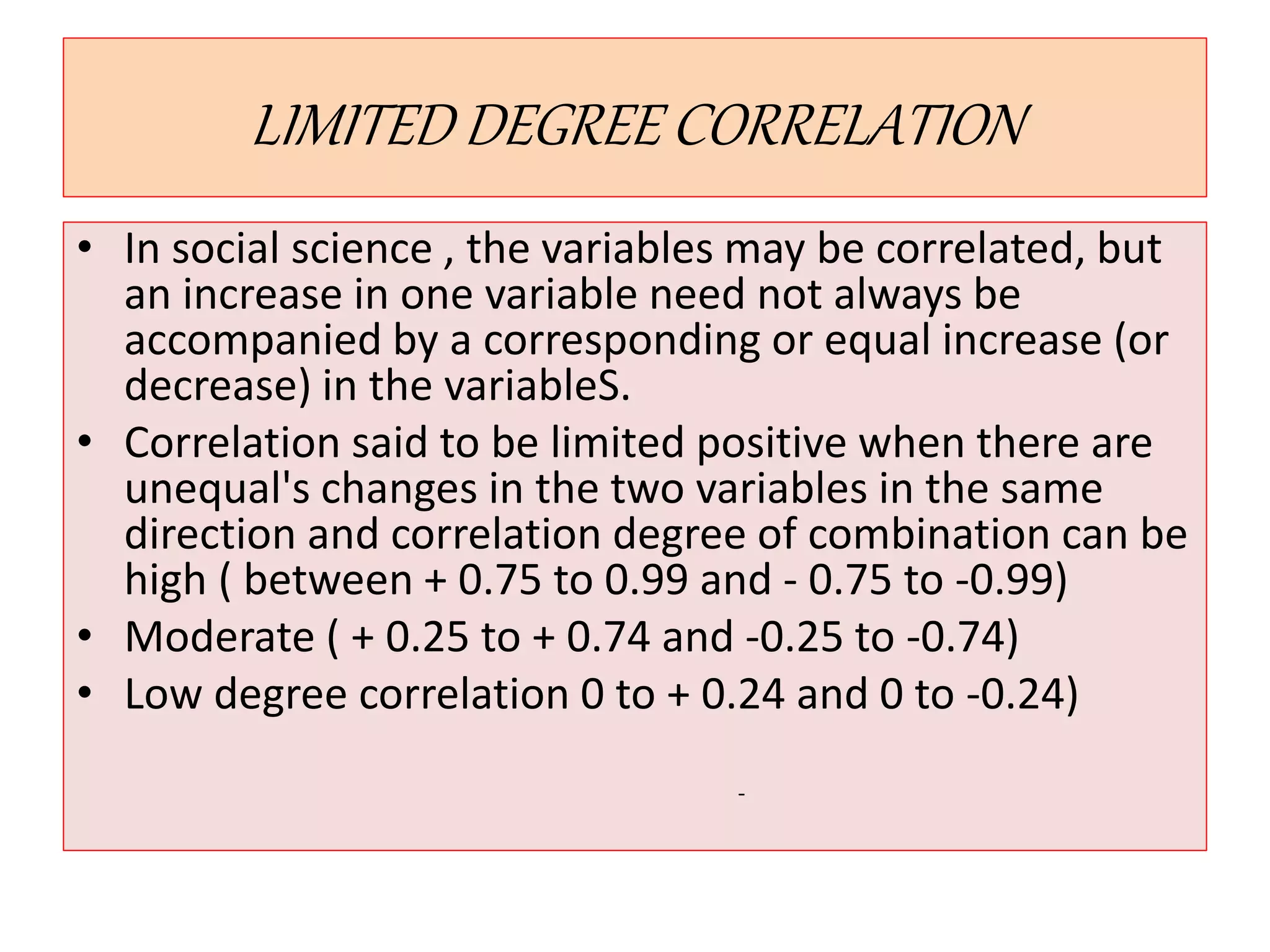
LIMITED DEGREE CORRELATION 
• In social science , the variables may be correlated, but 
an increase in one variable need not always be 
accompanied by a corresponding or equal increase (or 
decrease) in the variableS. 
• Correlation said to be limited positive when there are 
unequal's changes in the two variables in the same 
direction and correlation degree of combination can be 
high ( between + 0.75 to 0.99 and - 0.75 to -0.99) 
• Moderate ( + 0.25 to + 0.74 and -0.25 to -0.74) 
• Low degree correlation 0 to + 0.24 and 0 to -0.24) 
-
DEGREE OF CORRELATION 
PERFECT 
CORRELATION 
NO CORRELATION 
-1 
POSITIVE OPERFECT 
+1
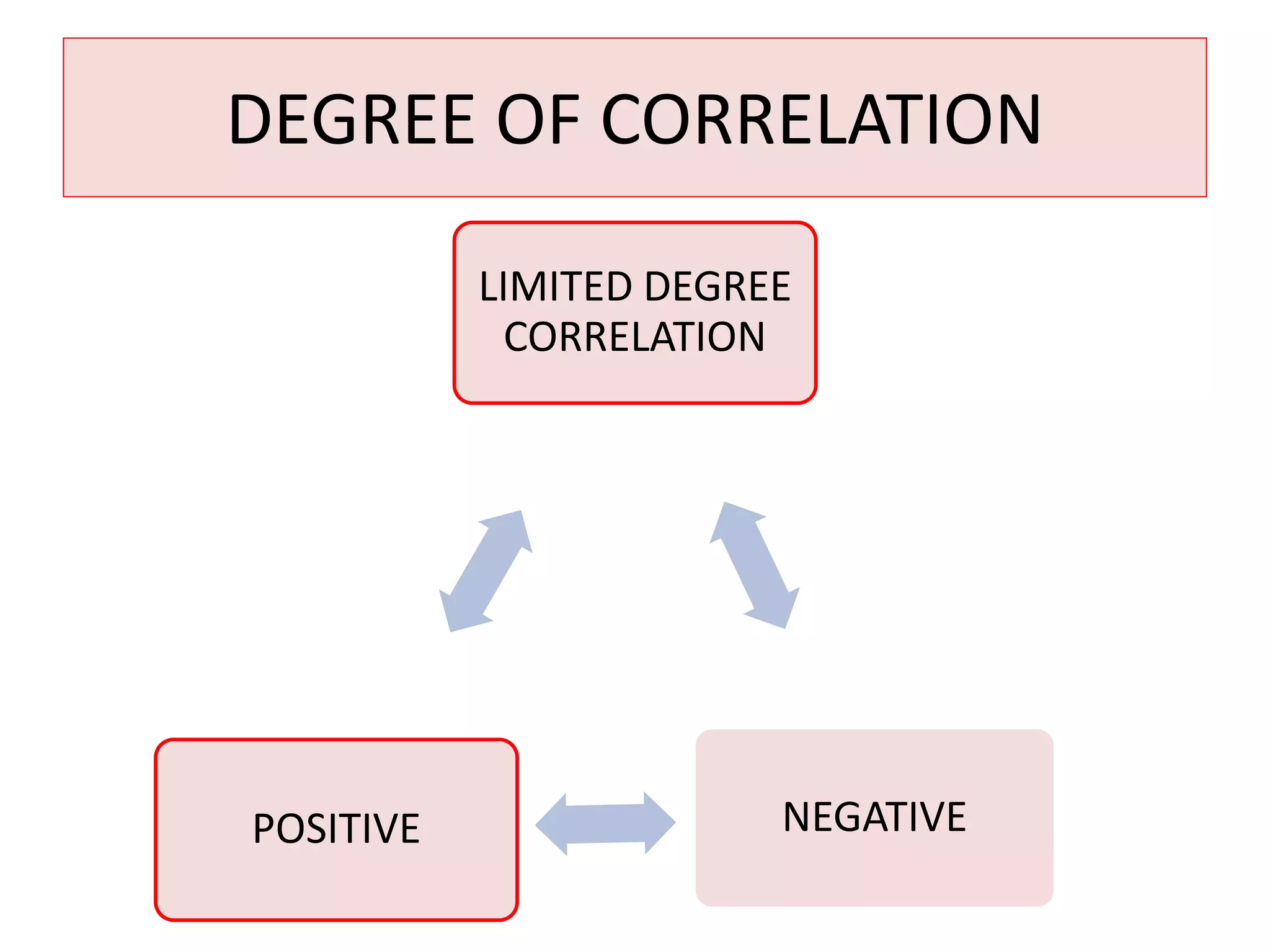
DEGREE OF CORRELATION 
LIMITED DEGREE 
CORRELATION 
POSITIVE NEGATIVE
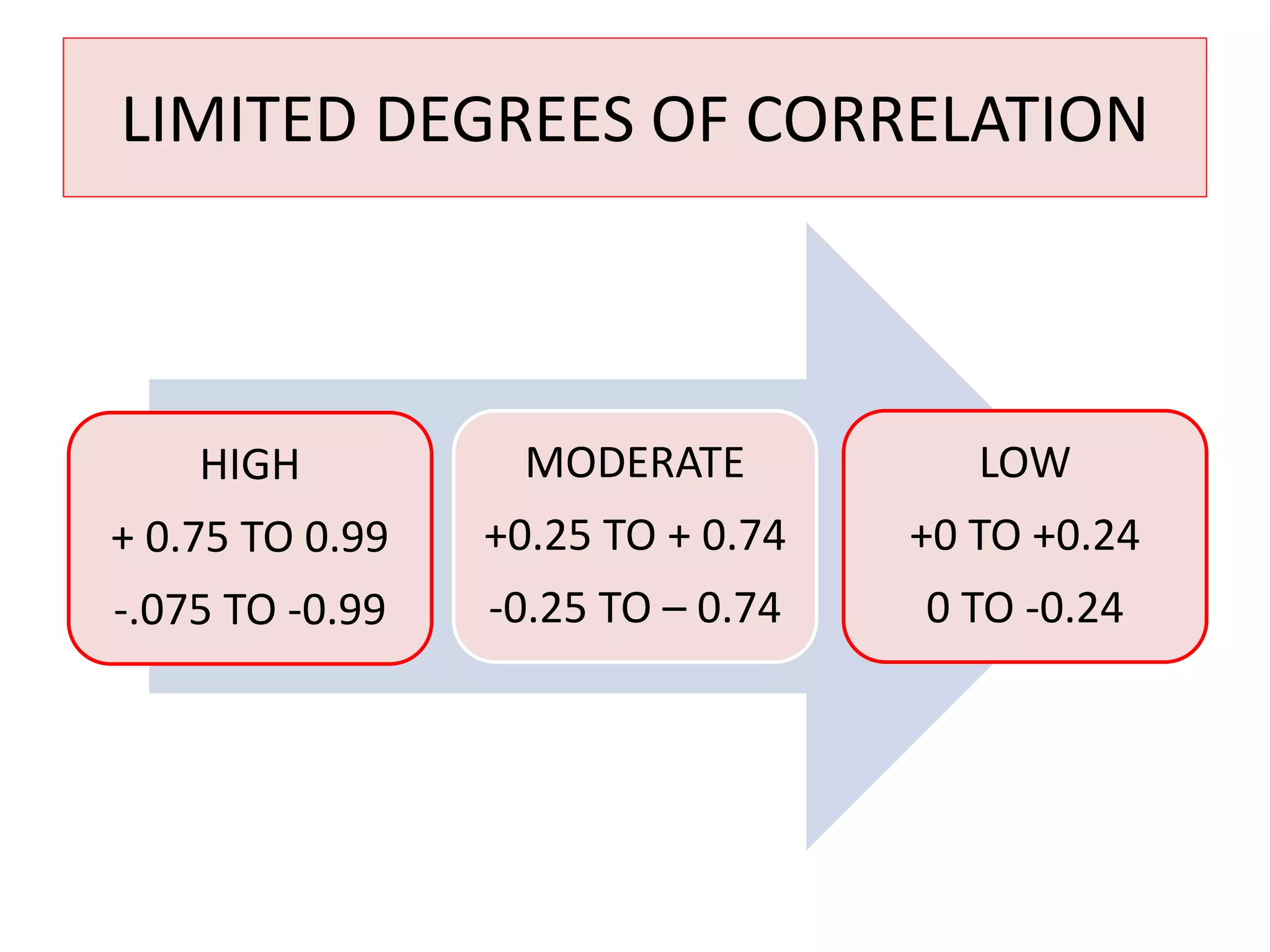
LIMITED DEGREES OF CORRELATION 
HIGH 
+ 0.75 TO 0.99 
-.075 TO -0.99 
MODERATE 
+0.25 TO + 0.74 
-0.25 TO – 0.74 
LOW 
+0 TO +0.24 
0 TO -0.24
RECAPTULATION : - 
• 1. What is correlation? 
2. What is Positive Correlation? 
3. What do you mean negative correlation? 
4. What is Simple correlation? 
5. What is meant by Multiple Correlation?
HOME ASSIGNMENT 
• What is meant by Correlation? 
• What are different types of correlation? Show 
with the help of example of daily life. 
• PROJECT: - Calculate Correlation between 
History and Economics, Economics and Maths. 
of the students of your group on the basis of 
First Term Unit Test Marks. 
• Correlation with other subjects.
Thanks 
RAMESH KUMAR, 
PGT ECONOMICS, 
K V NO.1, BATHINAD CANTT.

Correlation by ramesh kumar

  • 1.
  • 2.
    WELCOME BY: -RAMESH KUMAR, PGT – ECONOMICS, K V NO.1, BATHINDA CANTT.
  • 3.
    CONCEPTUAL QUESTIONS: - 1. What is relationship between height and weight? 2. What is relation between age of husband and wife? 3. What is the relationship between price and demand?
  • 4.
    What do youMean by correlation?
  • 5.
    Meaning of Correlation Correlation is a statistical tools which shows the relationship between the two variables in which change in the value of one variable due to change in the value of other variable
  • 6.
    KINDS OF CORRELATION • Positive and Negative correlation • Linear and Non Linear Correlation. • Simple, Multiple and Partial Correlation.
  • 7.
    Positive and Negativecorrelation When both the variable change in the same direction, i.e. both the variables increase or both the variables decrease, it is called Positive Correlation
  • 8.
    POSITIVE CORRELATION BothVariables increasing • X Y • 10 100 • 20 150 • 30 160 • 40 190 • 50 200 • 60 255 Both Variables Decreasing • X Y • 70 147 • 60 140 • 40 135 • 30 130 • 15 120 • 10 90
  • 9.
    What is negativeCorrelation?
  • 10.
    Negative Correlation Whenboth variable change in the opposite direction, it is called Negative correlation.
  • 11.
    NEGATIVE CORRELATION OneVariable increasing and other Decreasing • X Y • 25 125 • 30 110 • 35 90 • 40 80 • 45 75 • 50 60 One variable Decreasing , the other increasing • X Y • 75 110 • 60 180 • 40 190 • 30 300 • 20 240 • 10 250
  • 12.
    ACTIVITY FOR THESTUDENTS Please write down: - (A) 4 example of Positive Correlation and (B) 4 examples of negative Correlations
  • 13.
    Examples of Positiveand Negative Correlation POSITIVE CORRELATION:- 1. Age of Husband & Age of wife 2. Price of commodity and amount of supply. 3. Increase in heat affects temperature. 4. Increase in height and weight. NEGATIVE CORRELATION: - 1. Demand of commodity may go down a a result of rise in prices. 2. Sale of woollen garments and day temperature. 3. Yield of crops and price.
  • 14.
    Linear correlation andNon Linear Correlation * If the Ratio of change between two variables is uniform than Linear correlation exists. * linear and Non – Linear correlation is based upon the consistency of the ratio of changes between the variables. * Their relationship described by straight line If the variables under study are graphed, the point will form a straight line,
  • 15.
    LINEAR CORRELATION •In case of non linear relationship , the amount of change in one variable does not bear a constant ratio to the amount of change in the other variable, Such as relationship will form a curve on graph.
  • 16.
    Non Linear Correlation If the ratio of change between the variable is not the same than Non linear correlation exists. Non –Linear Relationship will form curve on graph.
  • 17.
    Simple Correlation SimpleCorrelation : - It is based upon the number of variable under study. • When only two variables are studied, the correlation between them is called simple Correlation
  • 18.
    Multiple and PartialCorrelation When three or more variables are studied the relationship can be either multiple or partial.
  • 19.
    DEGREE OF CORRELATION There is three types of correlations: - 1. Perfect Correlation. 2. Zero Correlation. 3. Limited degree Correlation.
  • 20.
    PERFECT DEGREE OFCORRELATION: - • Perfect degree correlation is that where changes in two variables are exactly proportional. If equal proportion changes are in the same direction, there is perfect positive correlation between the two values described as + 1, • If equal proportional changes are in the reverse direction, there is perfect negative correlation, described as -1.
  • 21.
    ZERO DEGREE CORRELATION • The value of Coefficient of correlation may be zero. It means that there is zero correlation. • It does not mean the absence of any type of relation between the two variables. Two value are uncorrelated . However, other type of relation may be there. There is no Linear relationship between them.
  • 22.
    LIMITED DEGREE CORRELATION • In social science , the variables may be correlated, but an increase in one variable need not always be accompanied by a corresponding or equal increase (or decrease) in the variableS. • Correlation said to be limited positive when there are unequal's changes in the two variables in the same direction and correlation degree of combination can be high ( between + 0.75 to 0.99 and - 0.75 to -0.99) • Moderate ( + 0.25 to + 0.74 and -0.25 to -0.74) • Low degree correlation 0 to + 0.24 and 0 to -0.24) -
  • 23.
    DEGREE OF CORRELATION PERFECT CORRELATION NO CORRELATION -1 POSITIVE OPERFECT +1
  • 24.
    DEGREE OF CORRELATION LIMITED DEGREE CORRELATION POSITIVE NEGATIVE
  • 25.
    LIMITED DEGREES OFCORRELATION HIGH + 0.75 TO 0.99 -.075 TO -0.99 MODERATE +0.25 TO + 0.74 -0.25 TO – 0.74 LOW +0 TO +0.24 0 TO -0.24
  • 26.
    RECAPTULATION : - • 1. What is correlation? 2. What is Positive Correlation? 3. What do you mean negative correlation? 4. What is Simple correlation? 5. What is meant by Multiple Correlation?
  • 27.
    HOME ASSIGNMENT •What is meant by Correlation? • What are different types of correlation? Show with the help of example of daily life. • PROJECT: - Calculate Correlation between History and Economics, Economics and Maths. of the students of your group on the basis of First Term Unit Test Marks. • Correlation with other subjects.
  • 28.
    Thanks RAMESH KUMAR, PGT ECONOMICS, K V NO.1, BATHINAD CANTT.