Genetic influences on specific
   language impairment


        Dorothy Bishop
       University of Oxford
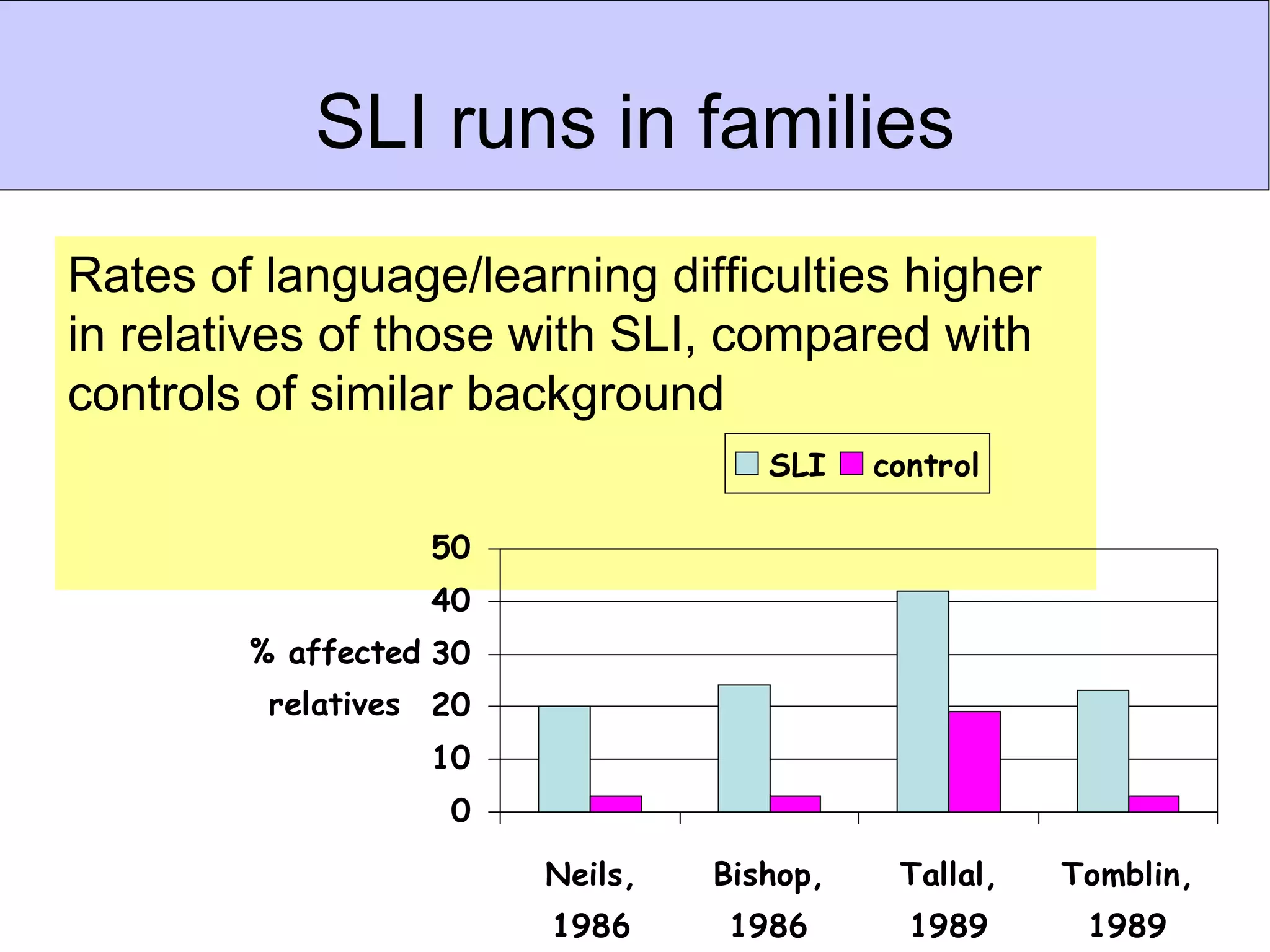
SLI runs in families
Rates of language/learning difficulties higher
in relatives of those with SLI, compared with
controls of similar background
                                    SLI    control

                  50
                  40
        % affected 30
         relatives 20
                  10
                   0

                        Neils,   Bishop,    Tallal,   Tomblin,
                        1986     1986        1989      1989
Twin Study Method

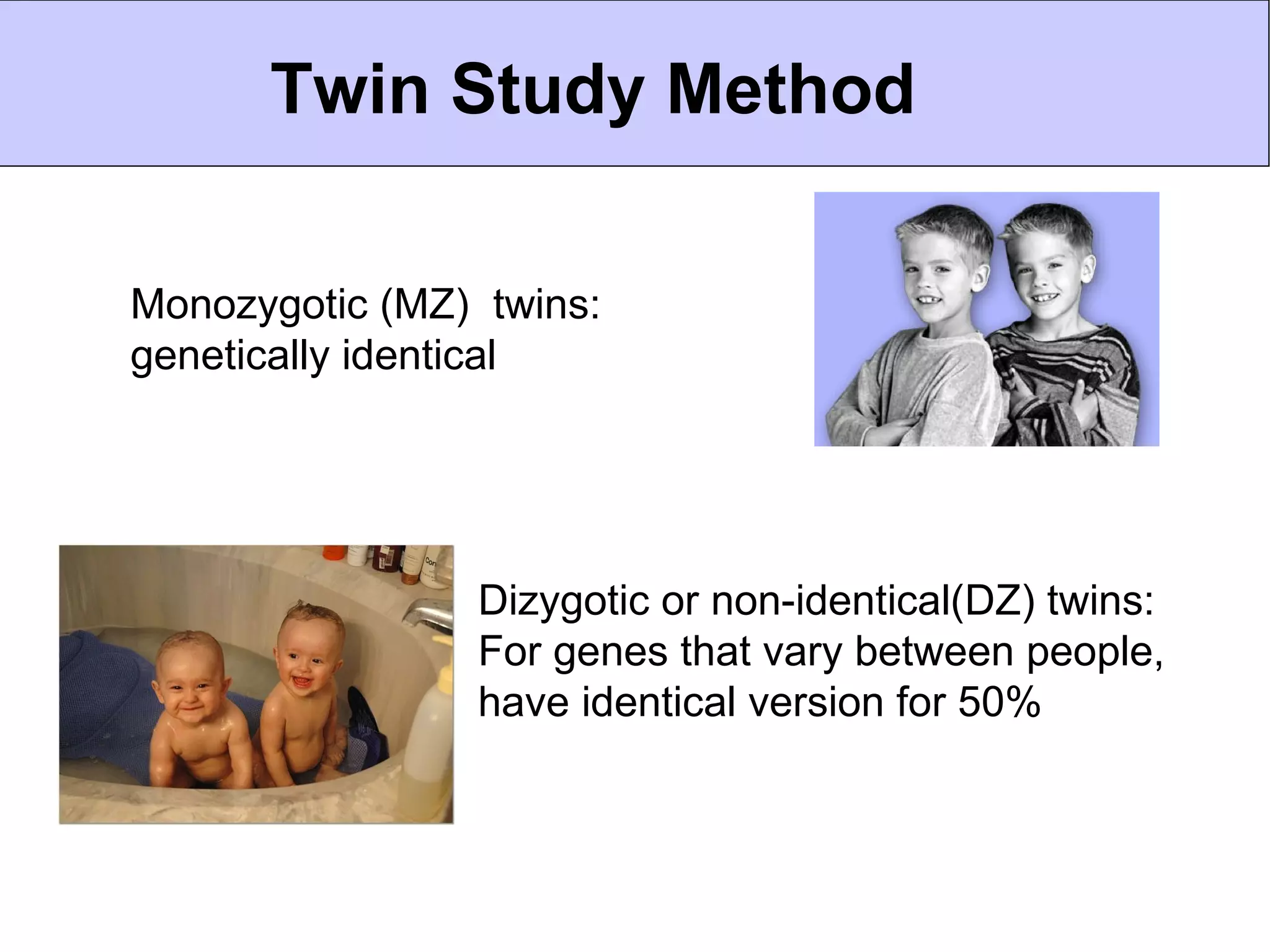
Monozygotic (MZ) twins:
genetically identical


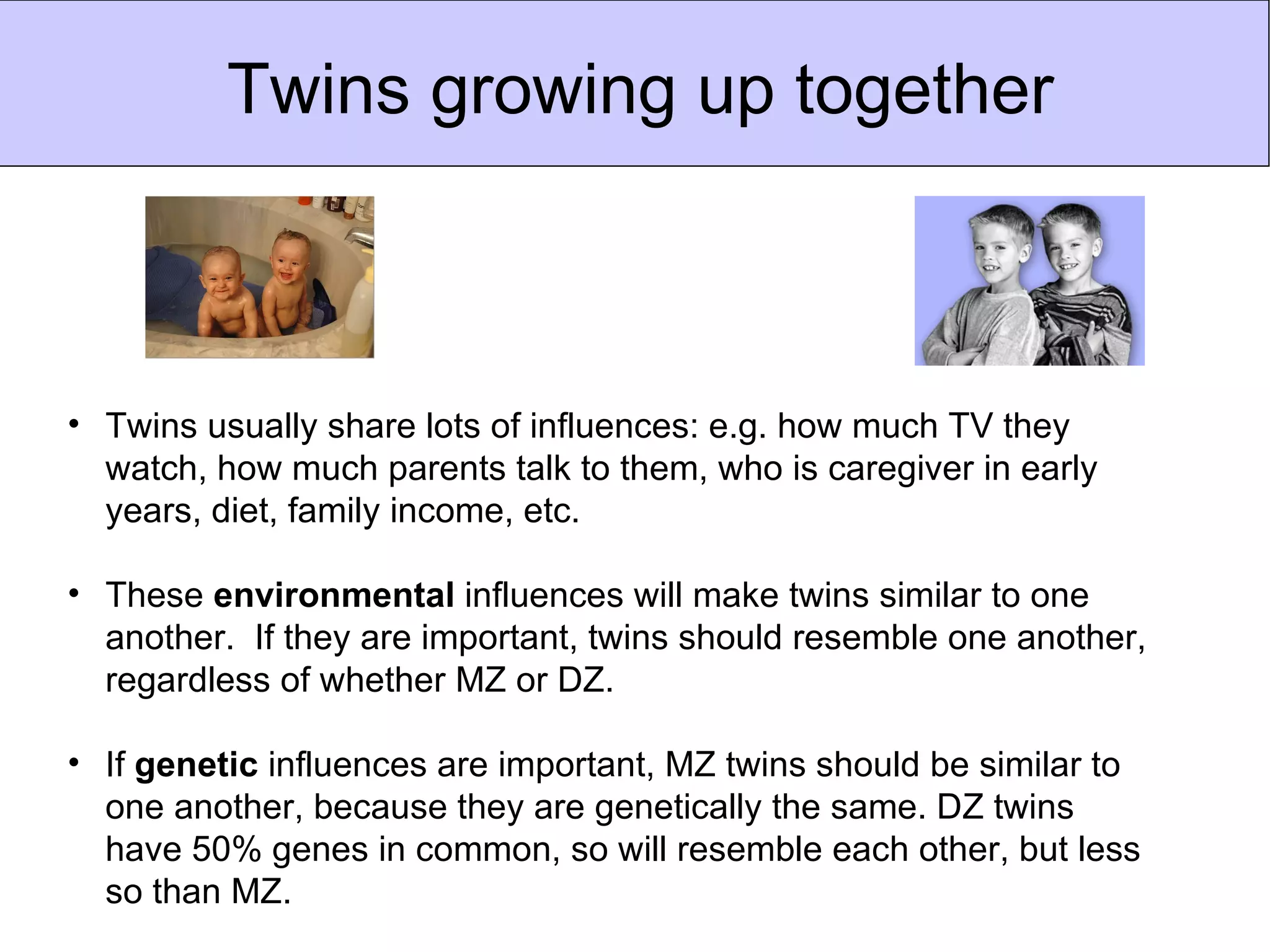
                 Dizygotic or non-identical(DZ) twins:
                 For genes that vary between people,
                 have identical version for 50%
Twins growing up together


• Twins usually share lots of influences: e.g. how much TV they
  watch, how much parents talk to them, who is caregiver in early
  years, diet, family income, etc.

• These environmental influences will make twins similar to one
  another. If they are important, twins should resemble one another,
  regardless of whether MZ or DZ.

• If genetic influences are important, MZ twins should be similar to
  one another, because they are genetically the same. DZ twins
  have 50% genes in common, so will resemble each other, but less
  so than MZ.
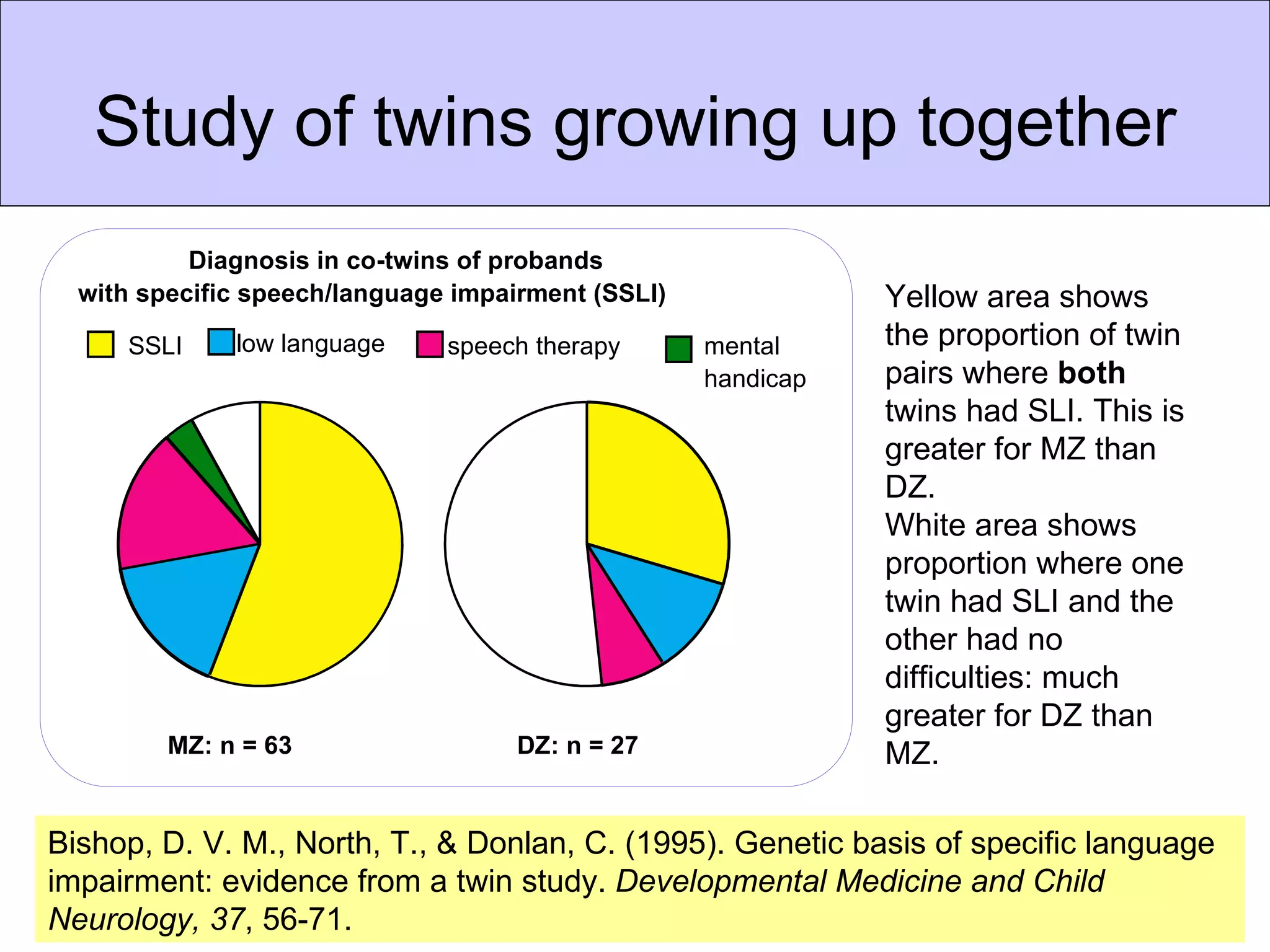
Study of twins growing up together
           Diagnosis in co-twins of probands
  with specific speech/language impairment (SSLI)              Yellow area shows
      SSLI    low language     speech therapy       mental     the proportion of twin
                                                    handicap   pairs where both
                                                               twins had SLI. This is
                                                               greater for MZ than
                                                               DZ.
                                                               White area shows
                                                               proportion where one
                                                               twin had SLI and the
                                                               other had no
                                                               difficulties: much
                                                               greater for DZ than
         MZ: n = 63                  DZ: n = 27                MZ.

Bishop, D. V. M., North, T., & Donlan, C. (1995). Genetic basis of specific language
impairment: evidence from a twin study. Developmental Medicine and Child
Neurology, 37, 56-71.
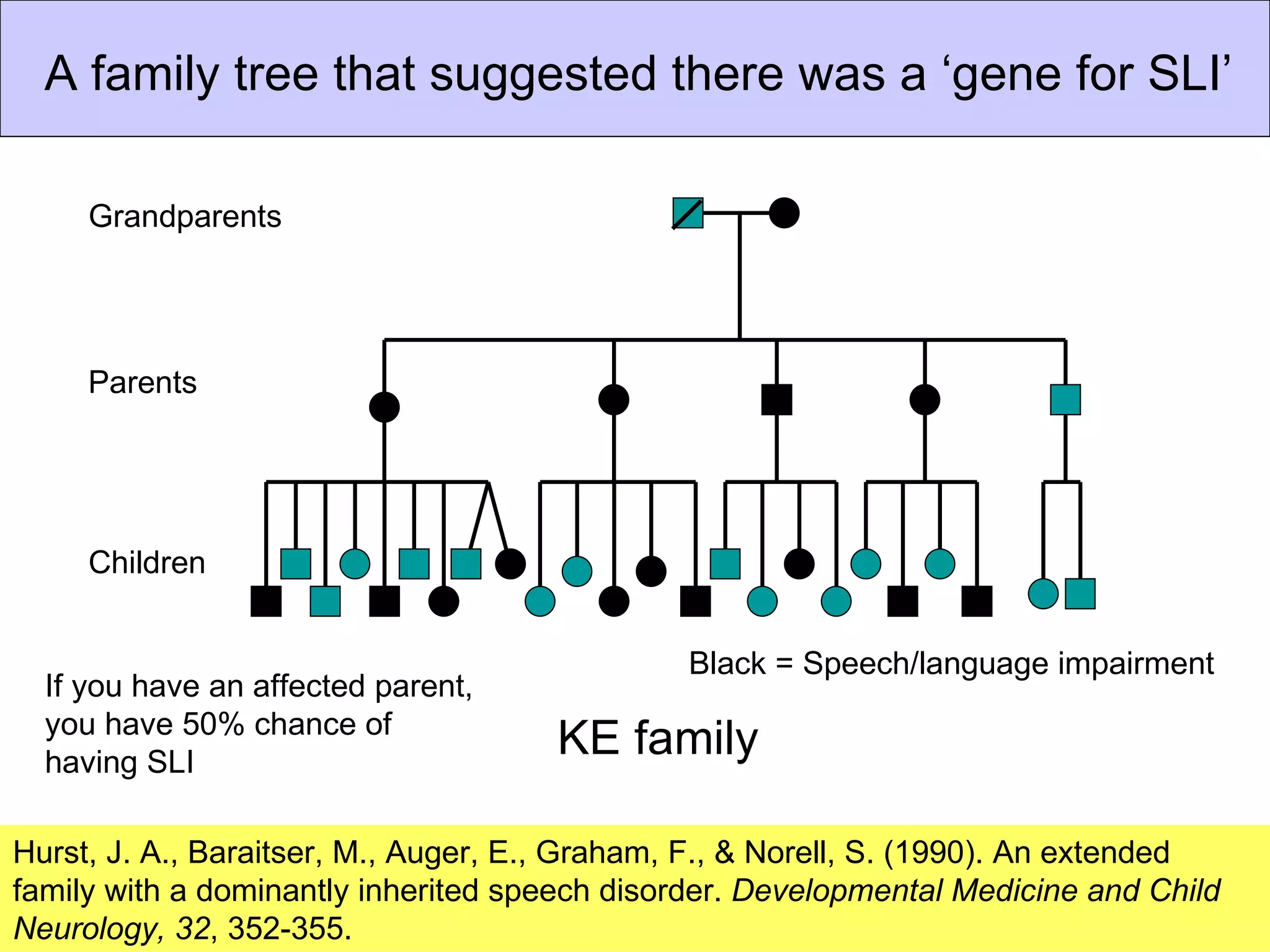
A family tree that suggested there was a ‘gene for SLI’

     Grandparents


     Parents


     Children


                                               Black = Speech/language impairment
  If you have an affected parent,
  you have 50% chance of
  having SLI
                                     KE family

Hurst, J. A., Baraitser, M., Auger, E., Graham, F., & Norell, S. (1990). An extended
family with a dominantly inherited speech disorder. Developmental Medicine and Child
Neurology, 32, 352-355.
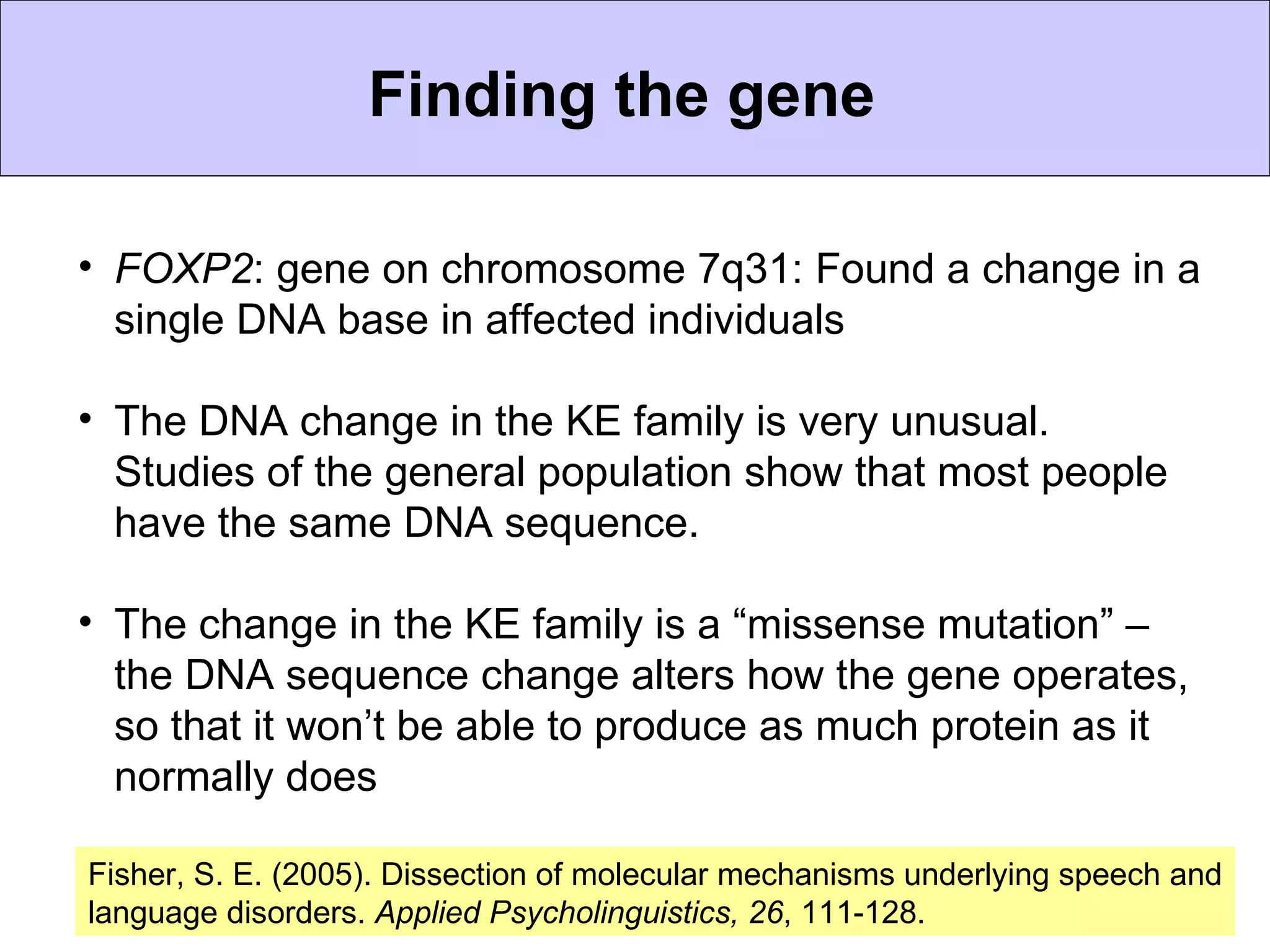
Finding the gene

• FOXP2: gene on chromosome 7q31: Found a change in a
  single DNA base in affected individuals

• The DNA change in the KE family is very unusual.
  Studies of the general population show that most people
  have the same DNA sequence.

• The change in the KE family is a “missense mutation” –
  the DNA sequence change alters how the gene operates,
  so that it won’t be able to produce as much protein as it
  normally does

Fisher, S. E. (2005). Dissection of molecular mechanisms underlying speech and
language disorders. Applied Psycholinguistics, 26, 111-128.
But KE family - not typical SLI

• Case of FOXP2 led to expectation that we might find
  clearcut genetic mutations to explain all severe
  language impairments

• Many other cases of SLI tested: very rare to find any
  mutation of FOXP2

• Most language impairments behave like “complex
  multifactorial disorders”
Complex multifactorial
                 disorders

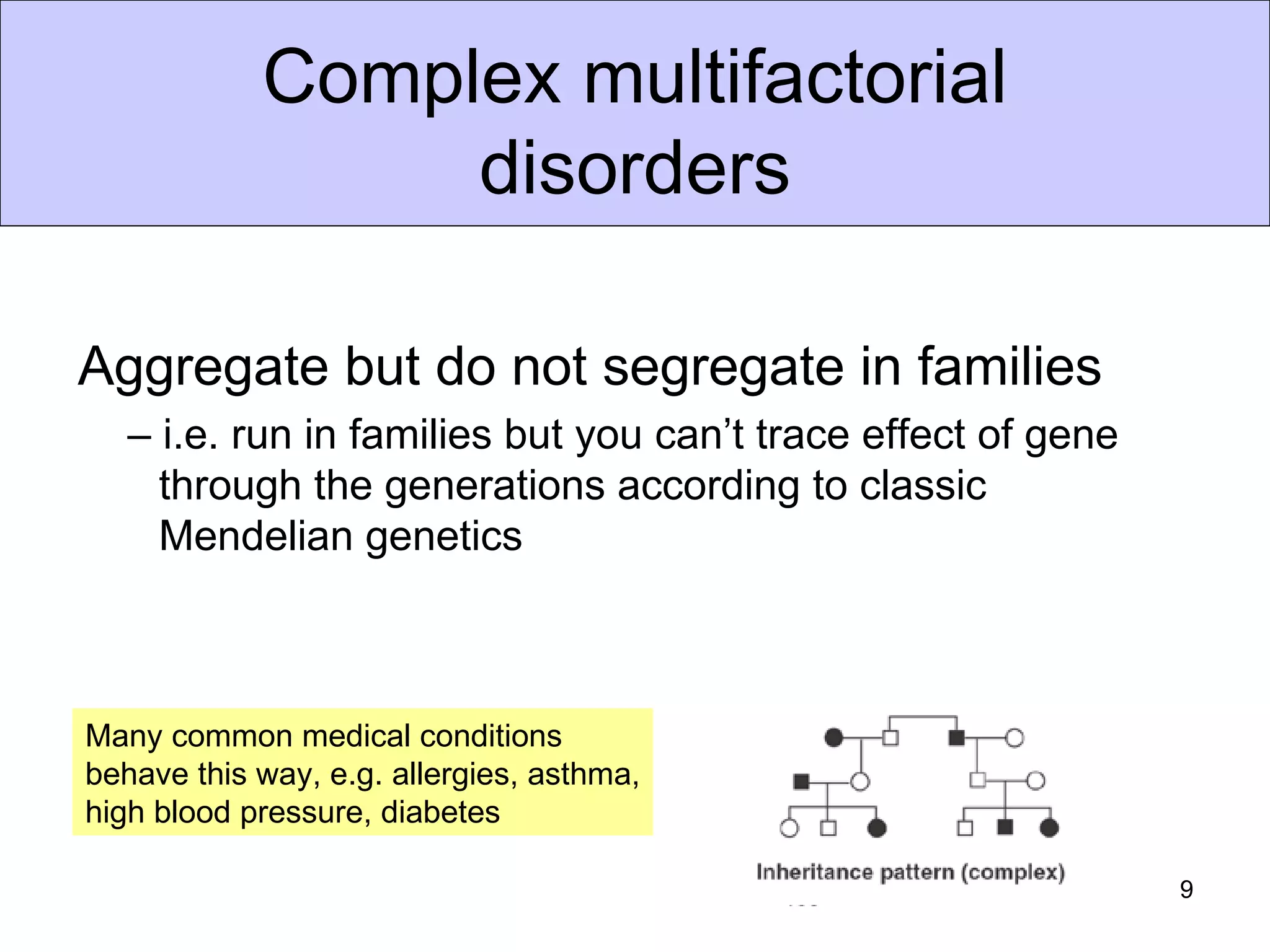
Aggregate but do not segregate in families
   – i.e. run in families but you can’t trace effect of gene
     through the generations according to classic
     Mendelian genetics


Many common medical conditions
behave this way, e.g. allergies, asthma,
high blood pressure, diabetes

                                                               9
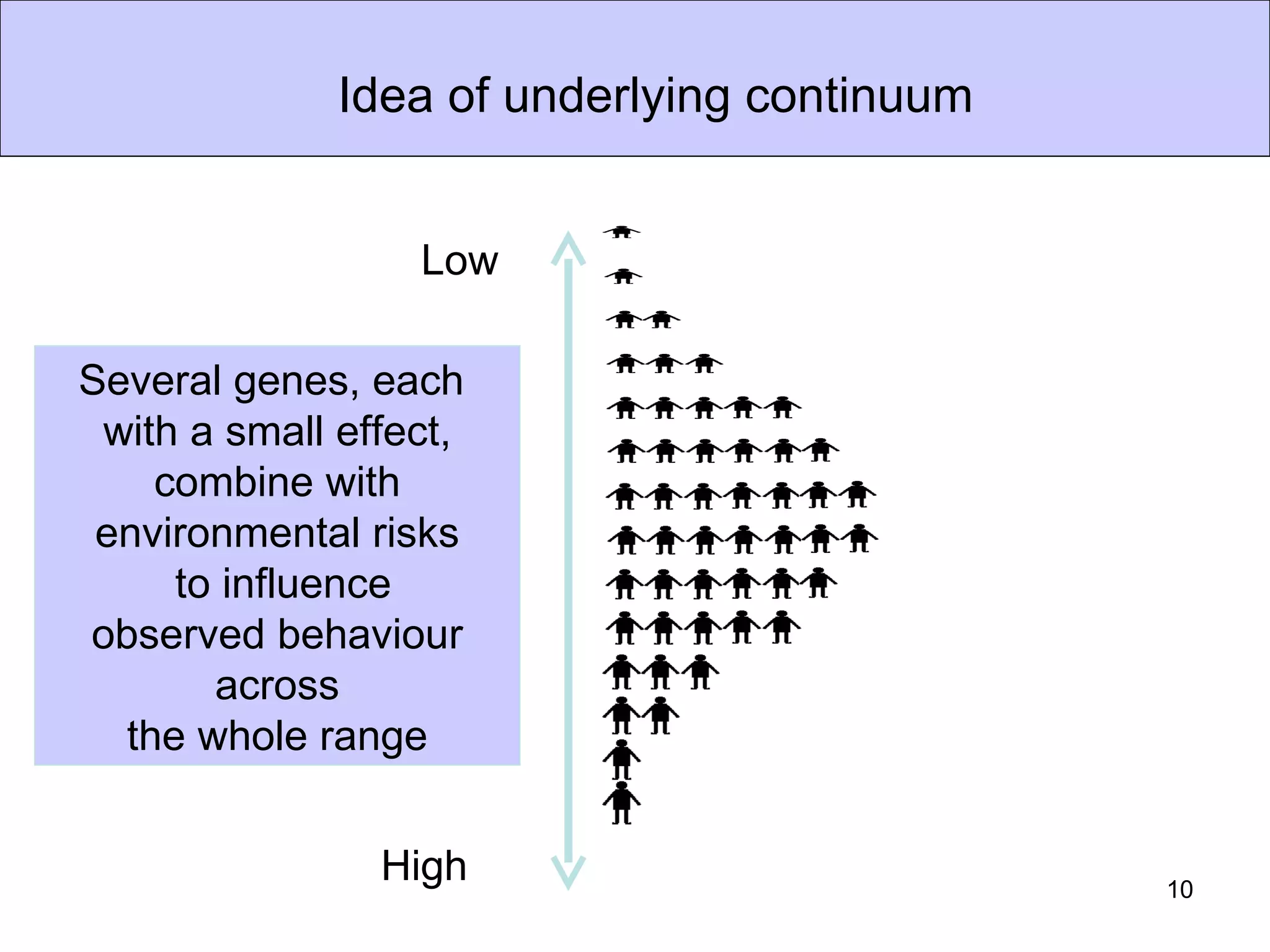
Idea of underlying continuum


                  Low

Several genes, each
 with a small effect,
    combine with
 environmental risks
     to influence
observed behaviour
       across
  the whole range


                High                         10
Tracking down genes associated with SLI

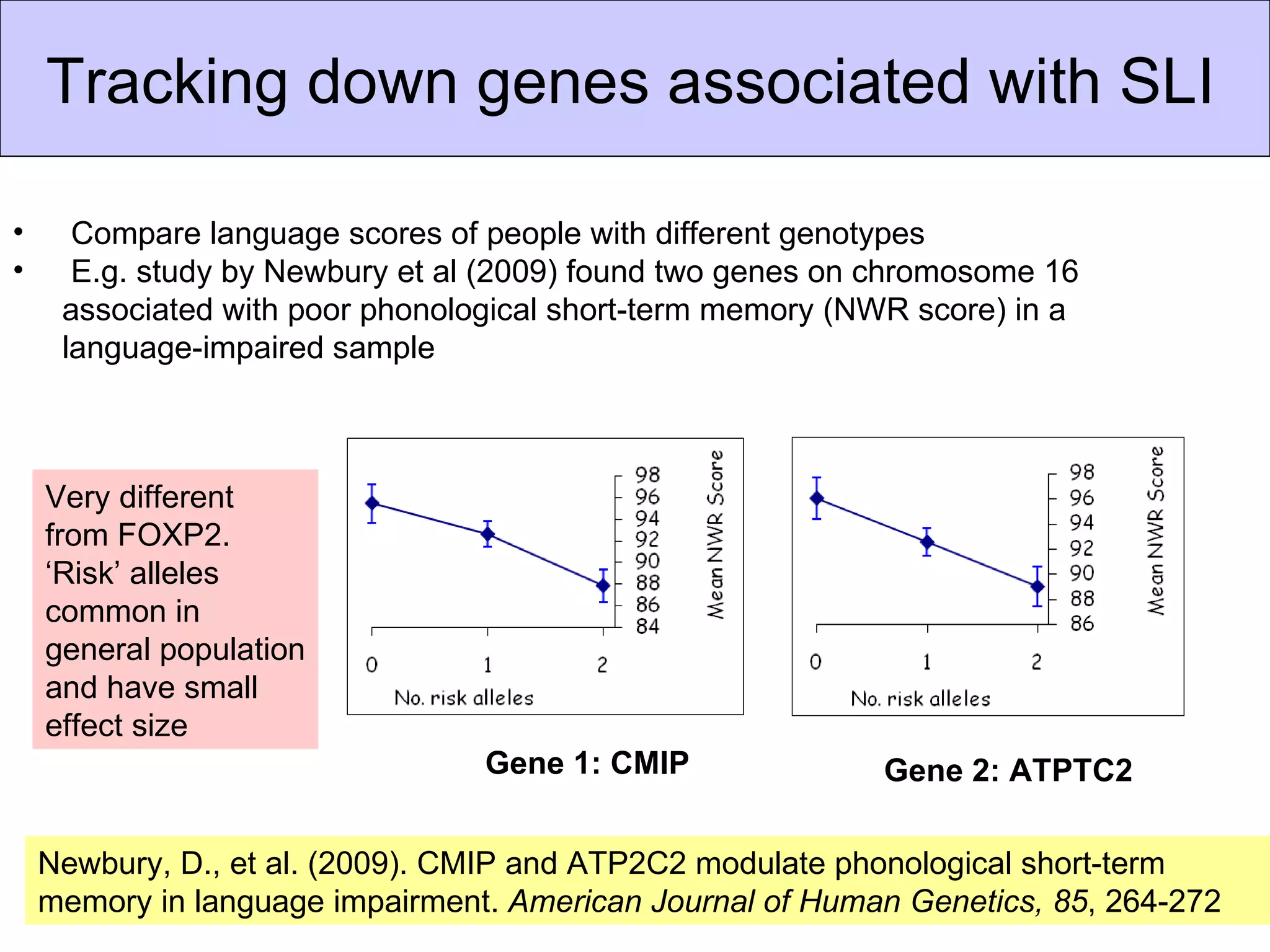
•     Compare language scores of people with different genotypes
•     E.g. study by Newbury et al (2009) found two genes on chromosome 16
     associated with poor phonological short-term memory (NWR score) in a
     language-impaired sample


    Very different
    from FOXP2.
    ‘Risk’ alleles
    common in
    general population
    and have small
    effect size
                                 Gene 1: CMIP               Gene 2: ATPTC2

    Newbury, D., et al. (2009). CMIP and ATP2C2 modulate phonological short-term
                                                                                 11
    memory in language impairment. American Journal of Human Genetics, 85, 264-272
Same gene often associated with
       many different disorders
      CNTNAP2 gene – downstream target of FOXP2

      Common variants of the gene associated with:
      • Autism
      • Specific Language Impairment
      • Dyslexia
      • ADHD
      • Schizophrenia
      • Age at language acquisition in general population

  N.B. Effect sizes are SMALL. Not useful for genetic screening

Kang, C., & Drayna, D. (2011). Genetics of speech and language disorders.
Annual Review of Genomics and Human Genetics, 12, 145-164.
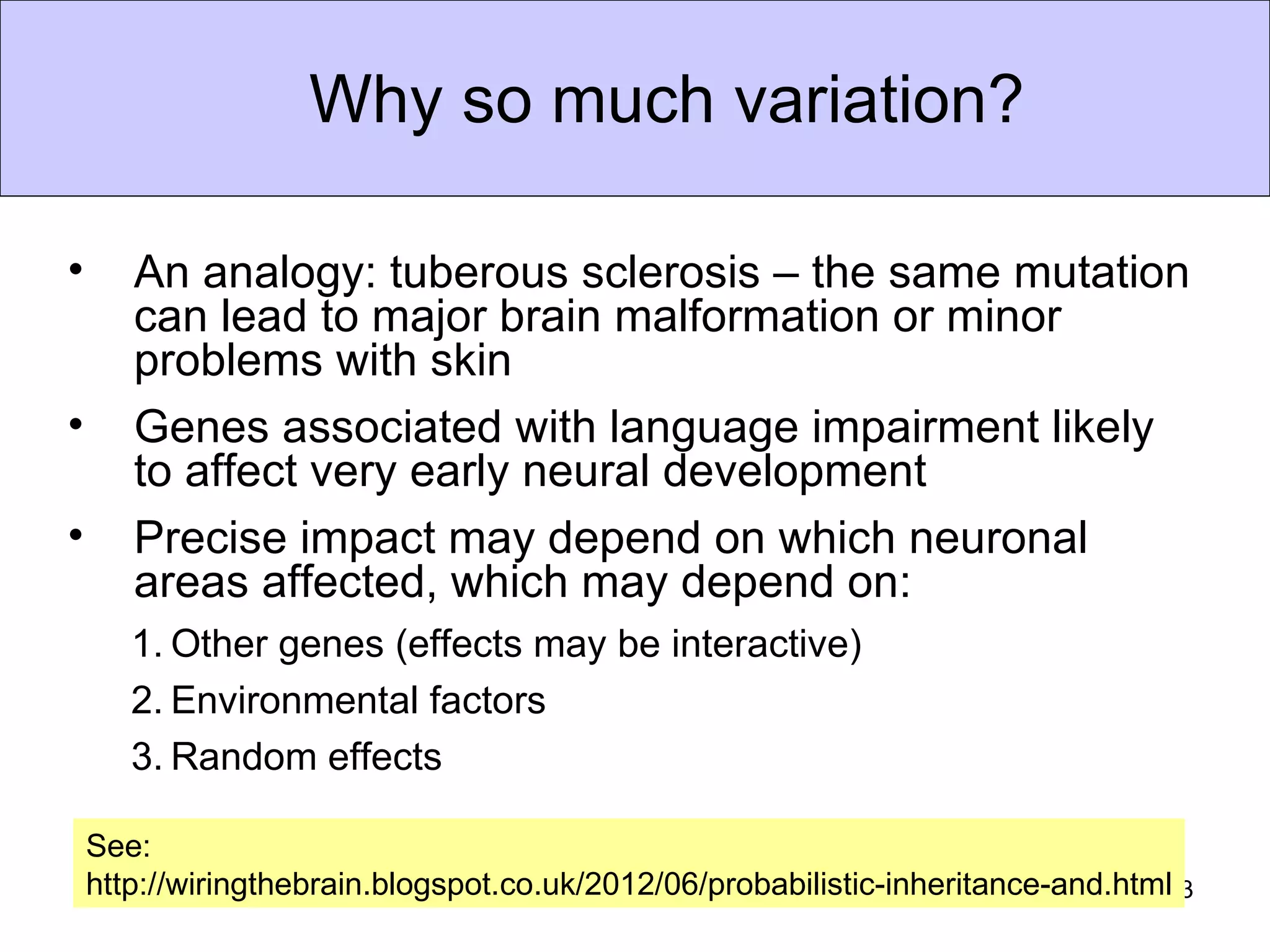
Why so much variation?

•      An analogy: tuberous sclerosis – the same mutation
       can lead to major brain malformation or minor
       problems with skin
•      Genes associated with language impairment likely
       to affect very early neural development
•      Precise impact may depend on which neuronal
       areas affected, which may depend on:
       1. Other genes (effects may be interactive)
       2. Environmental factors
       3. Random effects

    See:
    http://wiringthebrain.blogspot.co.uk/2012/06/probabilistic-inheritance-and.html13
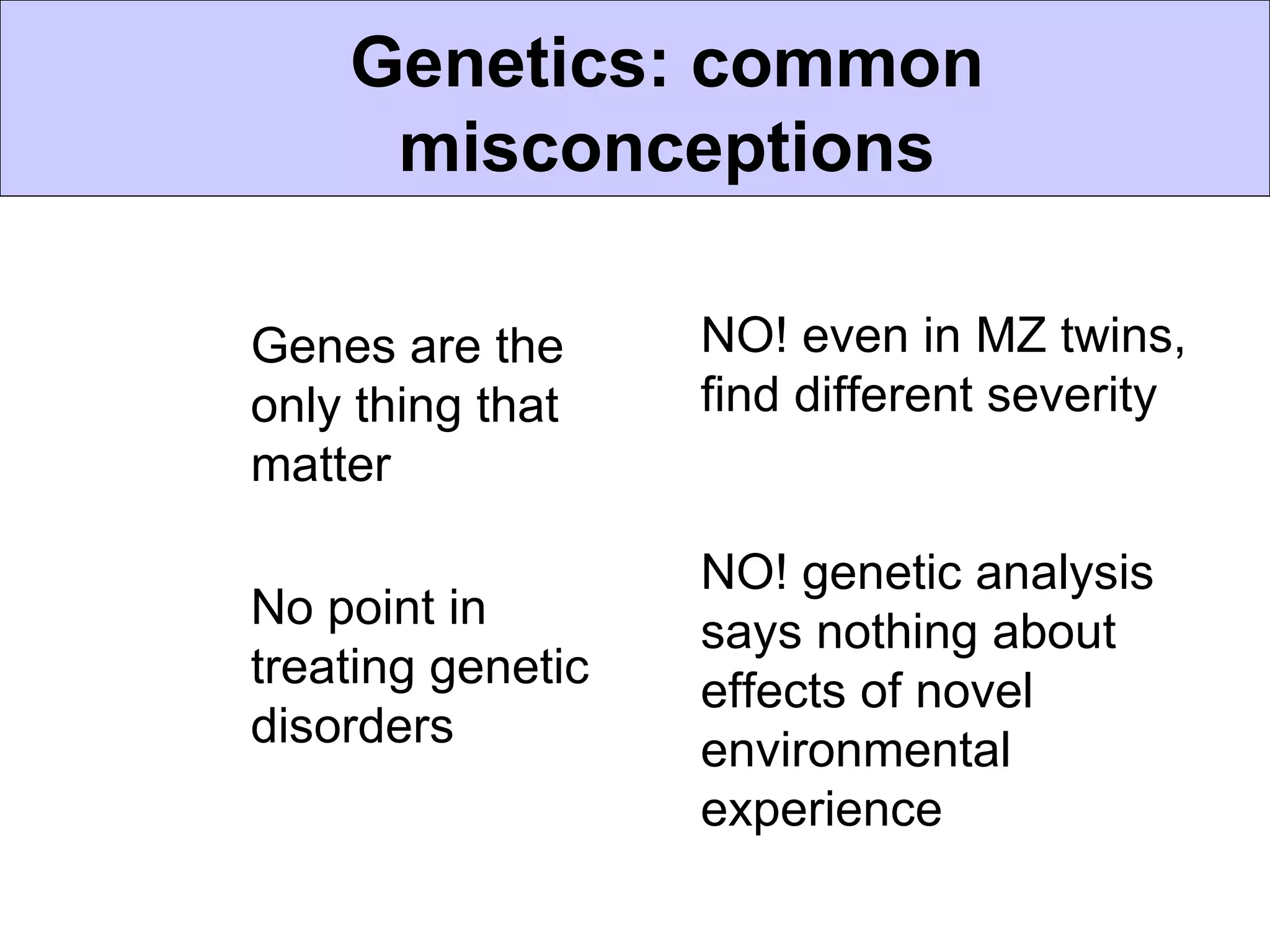
Genetics: common
       misconceptions

• Genes are the      NO! even in MZ twins,
  only thing that    find different severity
  matter

                     NO! genetic analysis
• No point in
                     says nothing about
  treating genetic   effects of novel
  disorders          environmental
                     experience
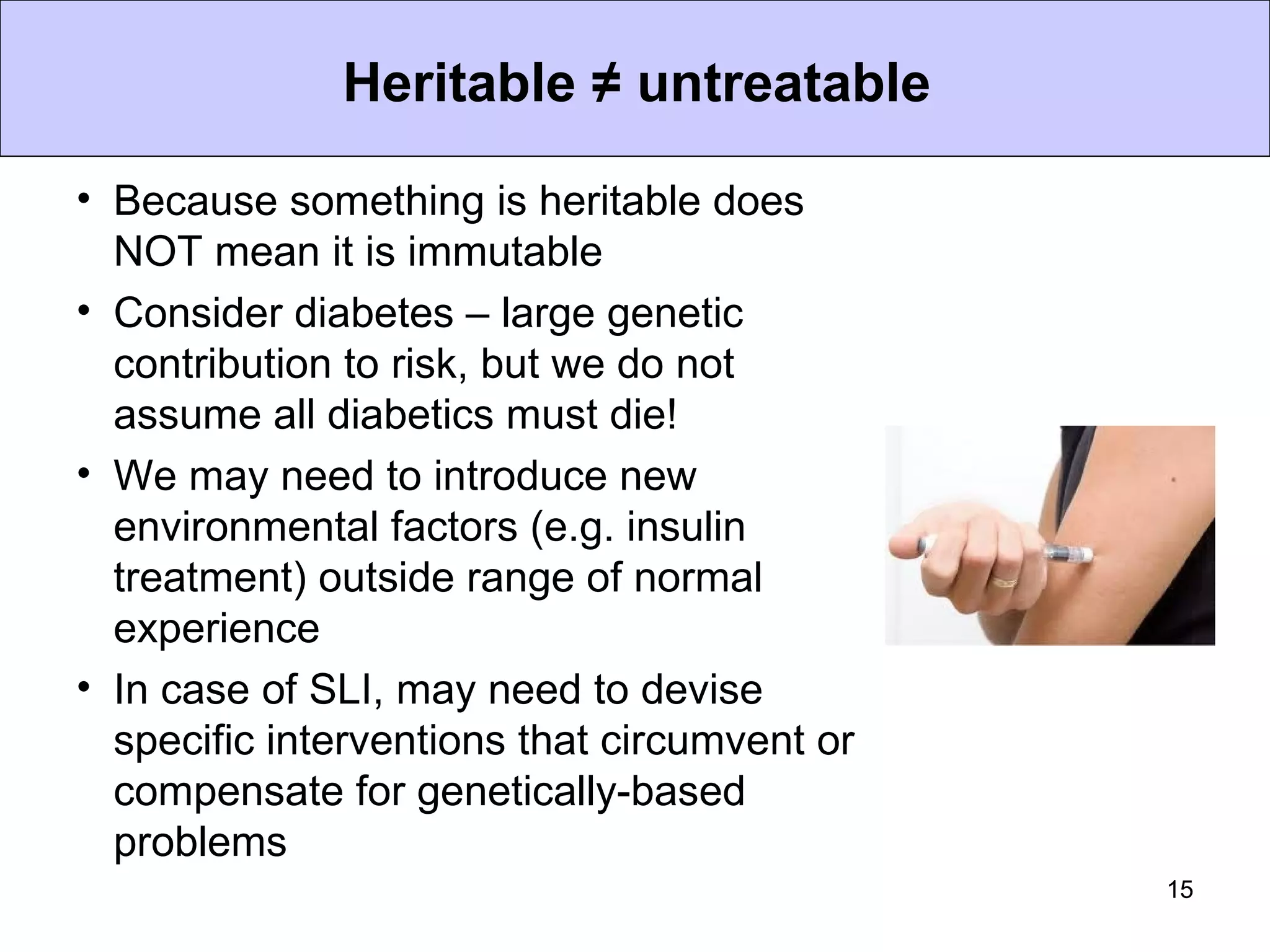
Heritable ≠ untreatable

• Because something is heritable does
  NOT mean it is immutable
• Consider diabetes – large genetic
  contribution to risk, but we do not
  assume all diabetics must die!
• We may need to introduce new
  environmental factors (e.g. insulin
  treatment) outside range of normal
  experience
• In case of SLI, may need to devise
  specific interventions that circumvent or
  compensate for genetically-based
  problems
                                              15
'If a child has had bad teaching in mathematics, it is accepted that the
resulting deficiency can be remedied by extra good teaching the
following year. But any suggestion that the child's mathematical
deficiency might have a genetic origin is likely to be greeted with
something approaching despair: if it is in the genes "it is written", it is
"determined" and nothing can be done about it: you might as well give
up attempting to teach the child mathematics. This is pernicious
rubbish on an almost astrological scale

..... What did genes do to deserve their sinister juggernaut-like
reputation? Why do we not make a similar bogey out of, say, nursery
education or confirmation classes? Why are genes thought to be so
much more fixed and inescapable in their effects than television, nuns,
or books?"

 Richard Dawkins, The extended phenotype. 1982. Oxford: OUP.

Genetics and SLI

  • 1.
    Genetic influences onspecific language impairment Dorothy Bishop University of Oxford
  • 2.
    SLI runs infamilies Rates of language/learning difficulties higher in relatives of those with SLI, compared with controls of similar background SLI control 50 40 % affected 30 relatives 20 10 0 Neils, Bishop, Tallal, Tomblin, 1986 1986 1989 1989
  • 3.
    Twin Study Method Monozygotic(MZ) twins: genetically identical Dizygotic or non-identical(DZ) twins: For genes that vary between people, have identical version for 50%
  • 4.
    Twins growing uptogether • Twins usually share lots of influences: e.g. how much TV they watch, how much parents talk to them, who is caregiver in early years, diet, family income, etc. • These environmental influences will make twins similar to one another. If they are important, twins should resemble one another, regardless of whether MZ or DZ. • If genetic influences are important, MZ twins should be similar to one another, because they are genetically the same. DZ twins have 50% genes in common, so will resemble each other, but less so than MZ.
  • 5.
    Study of twinsgrowing up together Diagnosis in co-twins of probands with specific speech/language impairment (SSLI) Yellow area shows SSLI low language speech therapy mental the proportion of twin handicap pairs where both twins had SLI. This is greater for MZ than DZ. White area shows proportion where one twin had SLI and the other had no difficulties: much greater for DZ than MZ: n = 63 DZ: n = 27 MZ. Bishop, D. V. M., North, T., & Donlan, C. (1995). Genetic basis of specific language impairment: evidence from a twin study. Developmental Medicine and Child Neurology, 37, 56-71.
  • 6.
    A family treethat suggested there was a ‘gene for SLI’ Grandparents Parents Children Black = Speech/language impairment If you have an affected parent, you have 50% chance of having SLI KE family Hurst, J. A., Baraitser, M., Auger, E., Graham, F., & Norell, S. (1990). An extended family with a dominantly inherited speech disorder. Developmental Medicine and Child Neurology, 32, 352-355.
  • 7.
    Finding the gene •FOXP2: gene on chromosome 7q31: Found a change in a single DNA base in affected individuals • The DNA change in the KE family is very unusual. Studies of the general population show that most people have the same DNA sequence. • The change in the KE family is a “missense mutation” – the DNA sequence change alters how the gene operates, so that it won’t be able to produce as much protein as it normally does Fisher, S. E. (2005). Dissection of molecular mechanisms underlying speech and language disorders. Applied Psycholinguistics, 26, 111-128.
  • 8.
    But KE family- not typical SLI • Case of FOXP2 led to expectation that we might find clearcut genetic mutations to explain all severe language impairments • Many other cases of SLI tested: very rare to find any mutation of FOXP2 • Most language impairments behave like “complex multifactorial disorders”
  • 9.
    Complex multifactorial disorders Aggregate but do not segregate in families – i.e. run in families but you can’t trace effect of gene through the generations according to classic Mendelian genetics Many common medical conditions behave this way, e.g. allergies, asthma, high blood pressure, diabetes 9
  • 10.
    Idea of underlyingcontinuum Low Several genes, each with a small effect, combine with environmental risks to influence observed behaviour across the whole range High 10
  • 11.
    Tracking down genesassociated with SLI • Compare language scores of people with different genotypes • E.g. study by Newbury et al (2009) found two genes on chromosome 16 associated with poor phonological short-term memory (NWR score) in a language-impaired sample Very different from FOXP2. ‘Risk’ alleles common in general population and have small effect size Gene 1: CMIP Gene 2: ATPTC2 Newbury, D., et al. (2009). CMIP and ATP2C2 modulate phonological short-term 11 memory in language impairment. American Journal of Human Genetics, 85, 264-272
  • 12.
    Same gene oftenassociated with many different disorders CNTNAP2 gene – downstream target of FOXP2 Common variants of the gene associated with: • Autism • Specific Language Impairment • Dyslexia • ADHD • Schizophrenia • Age at language acquisition in general population N.B. Effect sizes are SMALL. Not useful for genetic screening Kang, C., & Drayna, D. (2011). Genetics of speech and language disorders. Annual Review of Genomics and Human Genetics, 12, 145-164.
  • 13.
    Why so muchvariation? • An analogy: tuberous sclerosis – the same mutation can lead to major brain malformation or minor problems with skin • Genes associated with language impairment likely to affect very early neural development • Precise impact may depend on which neuronal areas affected, which may depend on: 1. Other genes (effects may be interactive) 2. Environmental factors 3. Random effects See: http://wiringthebrain.blogspot.co.uk/2012/06/probabilistic-inheritance-and.html13
  • 14.
    Genetics: common misconceptions • Genes are the NO! even in MZ twins, only thing that find different severity matter NO! genetic analysis • No point in says nothing about treating genetic effects of novel disorders environmental experience
  • 15.
    Heritable ≠ untreatable •Because something is heritable does NOT mean it is immutable • Consider diabetes – large genetic contribution to risk, but we do not assume all diabetics must die! • We may need to introduce new environmental factors (e.g. insulin treatment) outside range of normal experience • In case of SLI, may need to devise specific interventions that circumvent or compensate for genetically-based problems 15
  • 16.
    'If a childhas had bad teaching in mathematics, it is accepted that the resulting deficiency can be remedied by extra good teaching the following year. But any suggestion that the child's mathematical deficiency might have a genetic origin is likely to be greeted with something approaching despair: if it is in the genes "it is written", it is "determined" and nothing can be done about it: you might as well give up attempting to teach the child mathematics. This is pernicious rubbish on an almost astrological scale ..... What did genes do to deserve their sinister juggernaut-like reputation? Why do we not make a similar bogey out of, say, nursery education or confirmation classes? Why are genes thought to be so much more fixed and inescapable in their effects than television, nuns, or books?" Richard Dawkins, The extended phenotype. 1982. Oxford: OUP.