Philips Technologies
• Digital AutoTrak
• Digital AutoTrak sensitive
• AVAPS
• AVAPS rate
• AVAPS-AE
Digital AutoTrak (DAT)
Components of DAT
A. Recognizes and compensates for system leaks
1. Leak Tolerance
B. Provides 2 methods of inspiratory Trigger
2. Volume Trigger
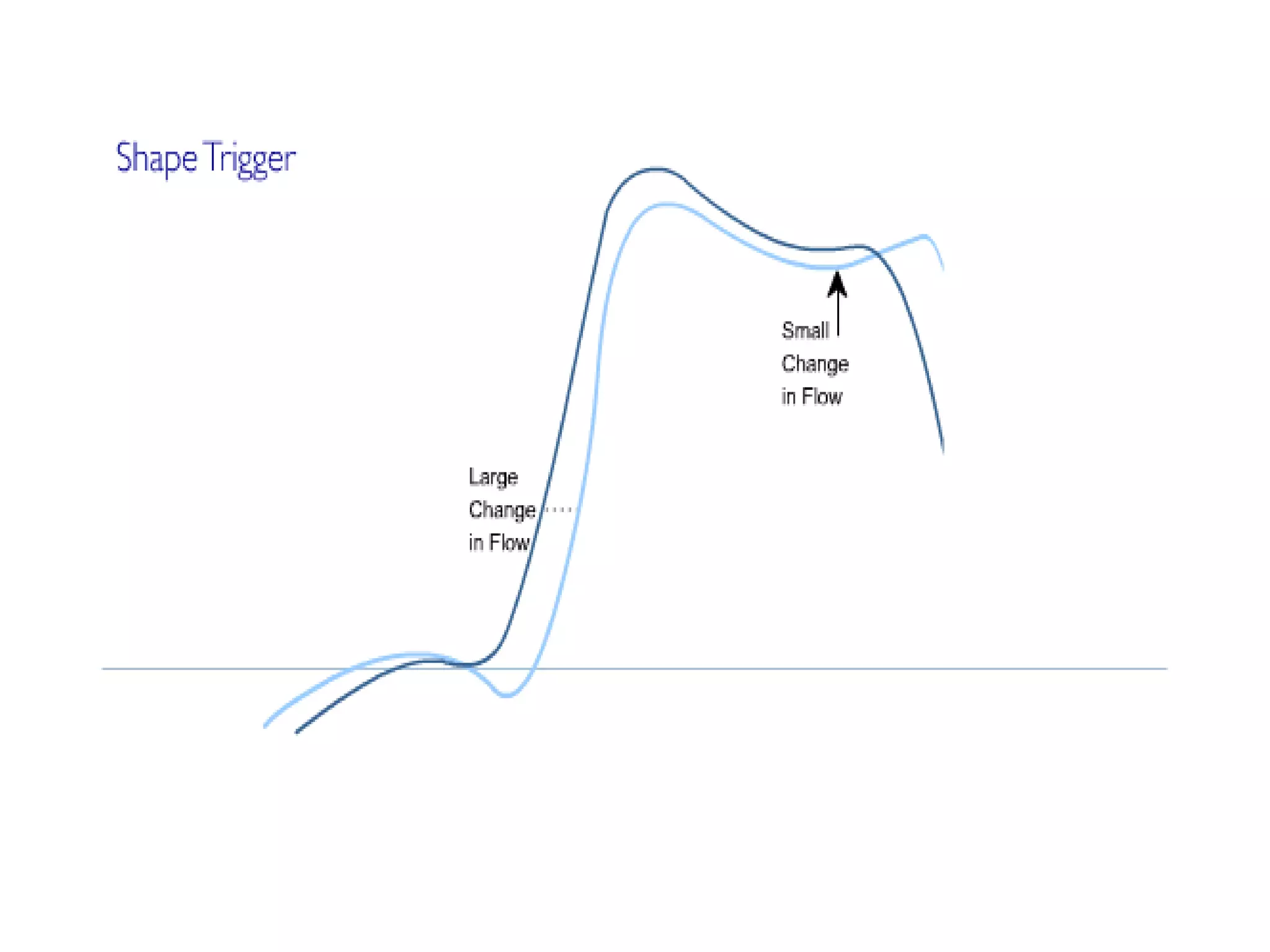
3. Shape Trigger
C. Provides 4 methods of expiratory cycling
4. Spontaneous Expiratory Threshold (SET)
5. Shape Trigger/Cycle
6. Flow Reversal
7. Maximum IPAP time
1. Leak Tolerance
2
1
1 = Increase in flow & stabilizes most part of the inspiratory phase
2 = Decrease in flow & stabilizes most part of the expiratory phase
= Original Baseline/Beginning of inspiration/End of expiratory cycle
= Change in leakage flow/New Baseline Flow
Inspiratory Triggering
2. Volume Trigger
3. Shape Trigger
Patient Flow = Total Flow- Circuit Leak
Shape Signal (Appears as a shadow image of the patient actual flow)
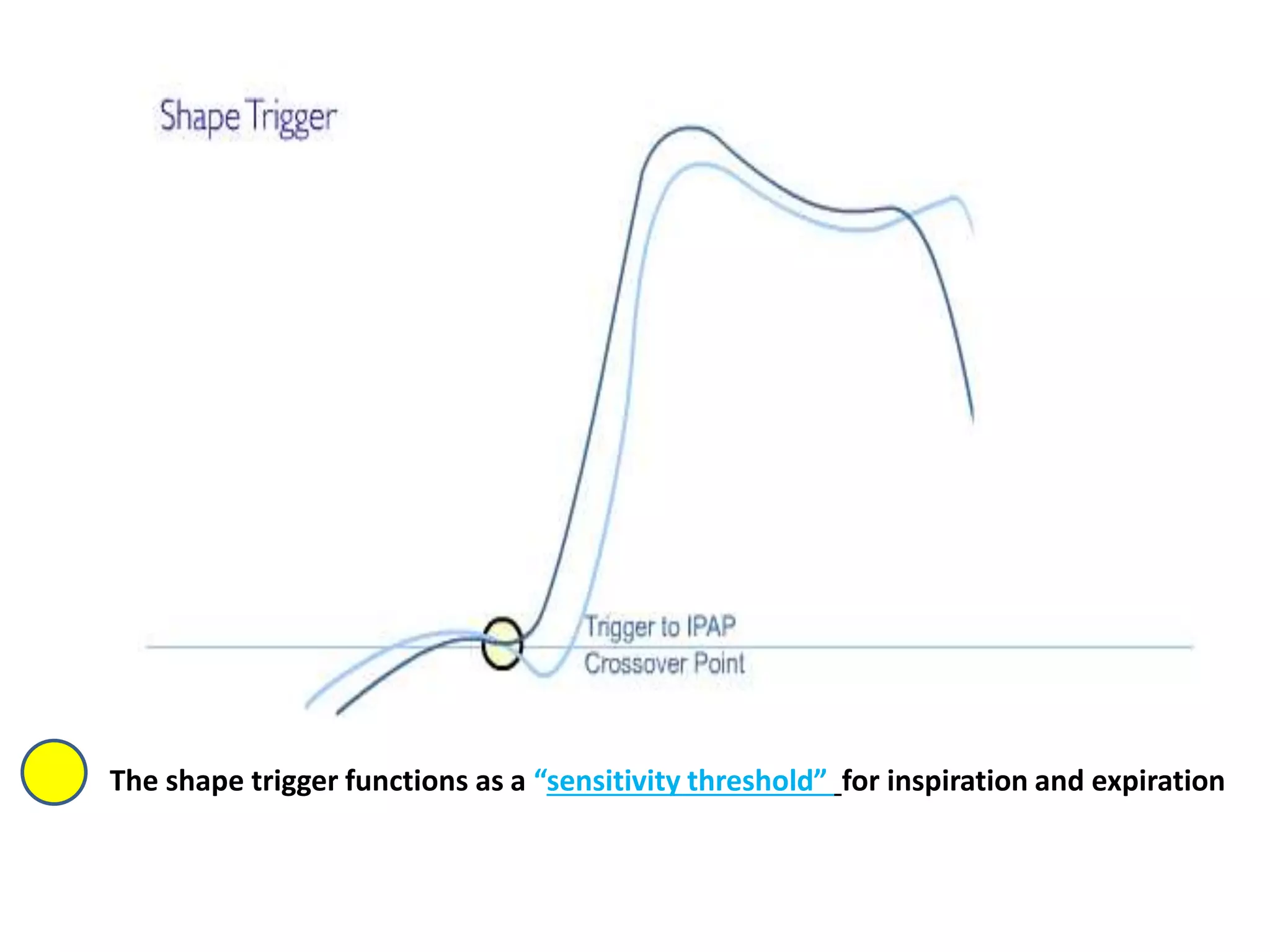
The shape trigger functions as a “sensitivity threshold” for inspiration and expiration
Expiratory Cycling
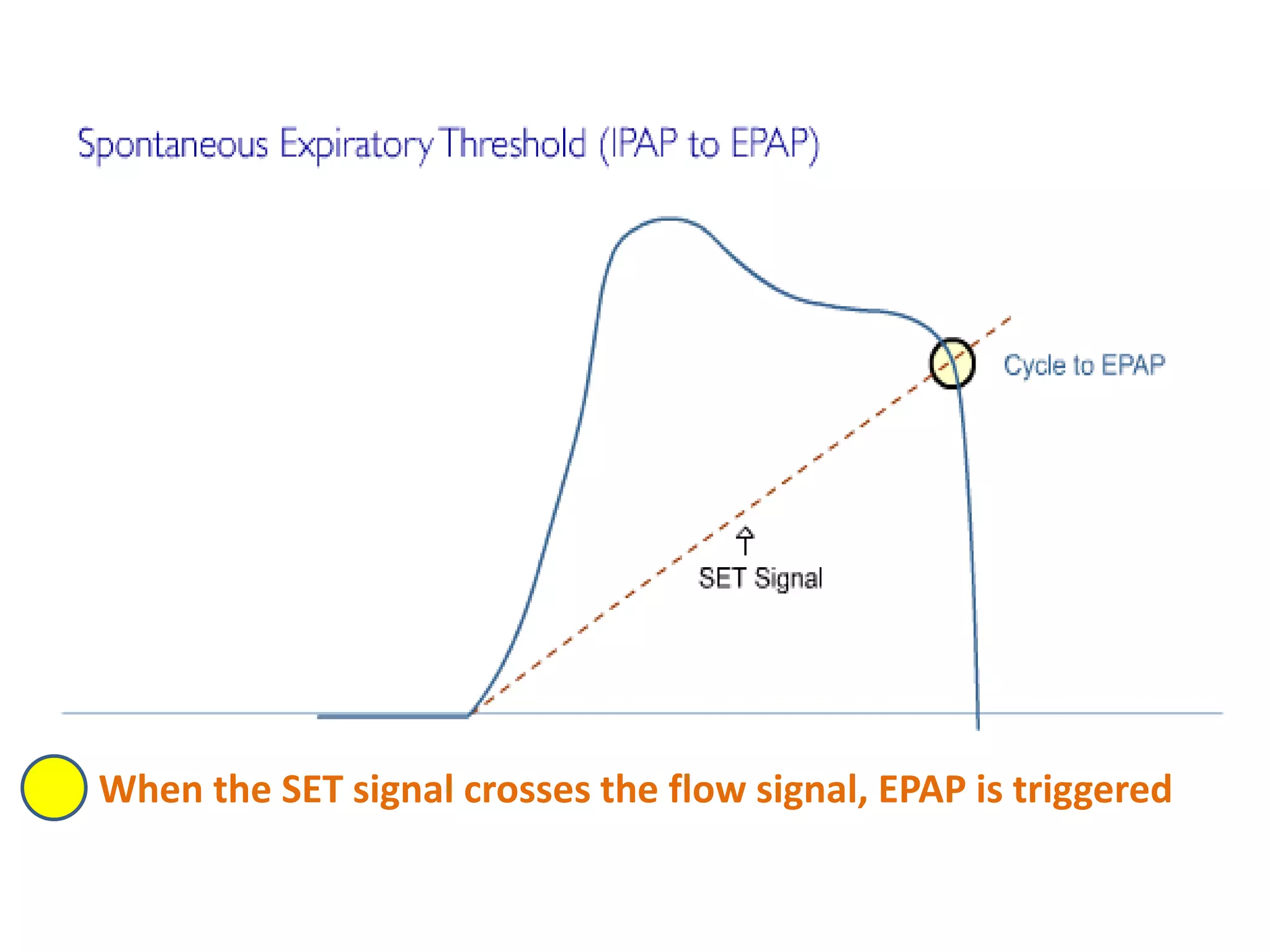
4. Spontaneous Expiratory Threshold
Actual Flow
The slope of the SET is calculated at the beginning of the breath
and signal rises in proportion to the inspiratory flow rate of
each breath
When the SET signal crosses the flow signal, EPAP is triggered
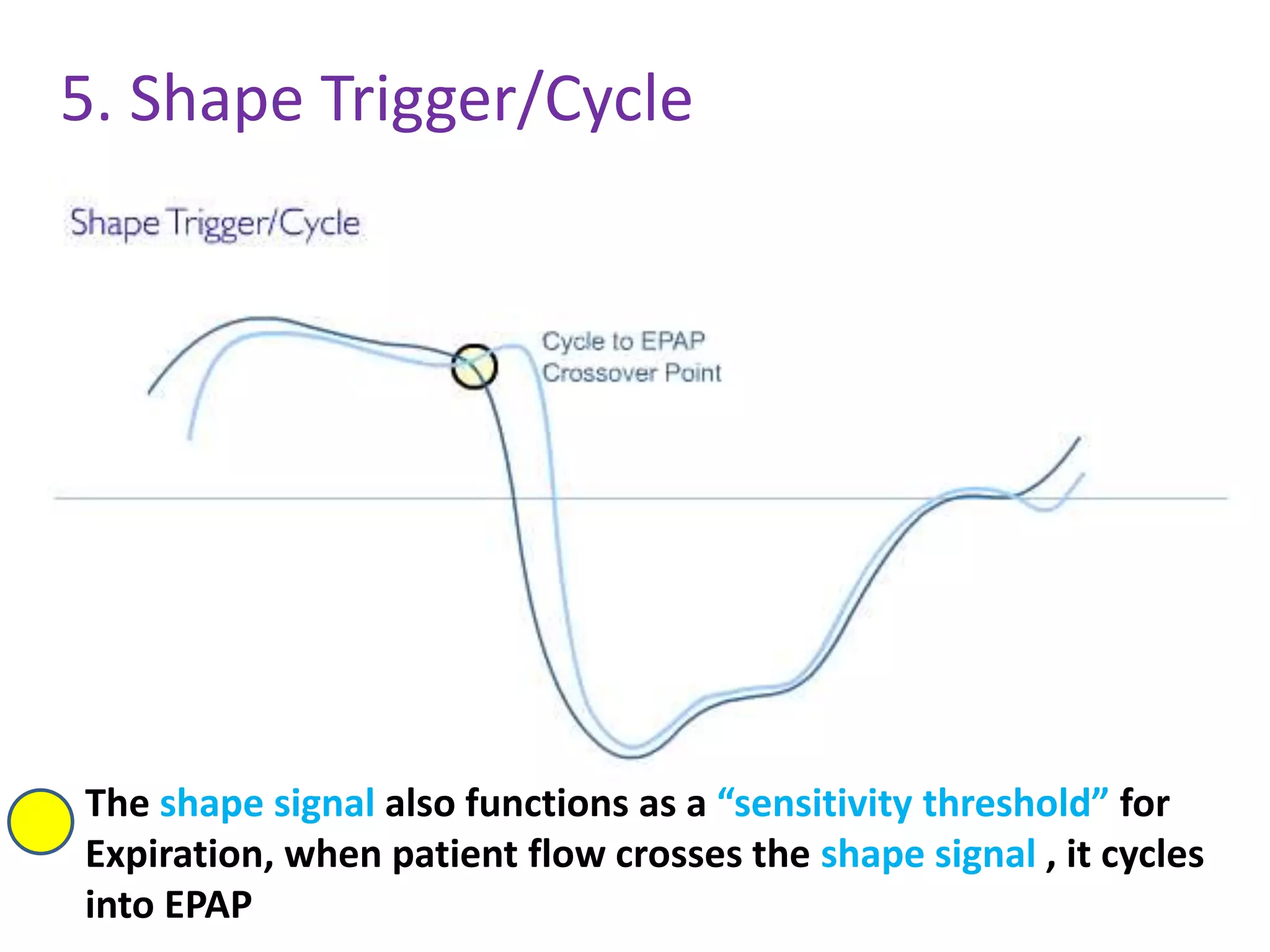
5. Shape Trigger/Cycle
The shape signal also functions as a “sensitivity threshold” for
Expiration, when patient flow crosses the shape signal , it cycles
into EPAP
6. Flow Reversal
During flow reversal, the unit in the
process Of cycling into EPAP when
the leak occurs
Flow reversal does not allow trigger to IPAP without
returning to EPAP. This keeps “breath stacking” from
occurring
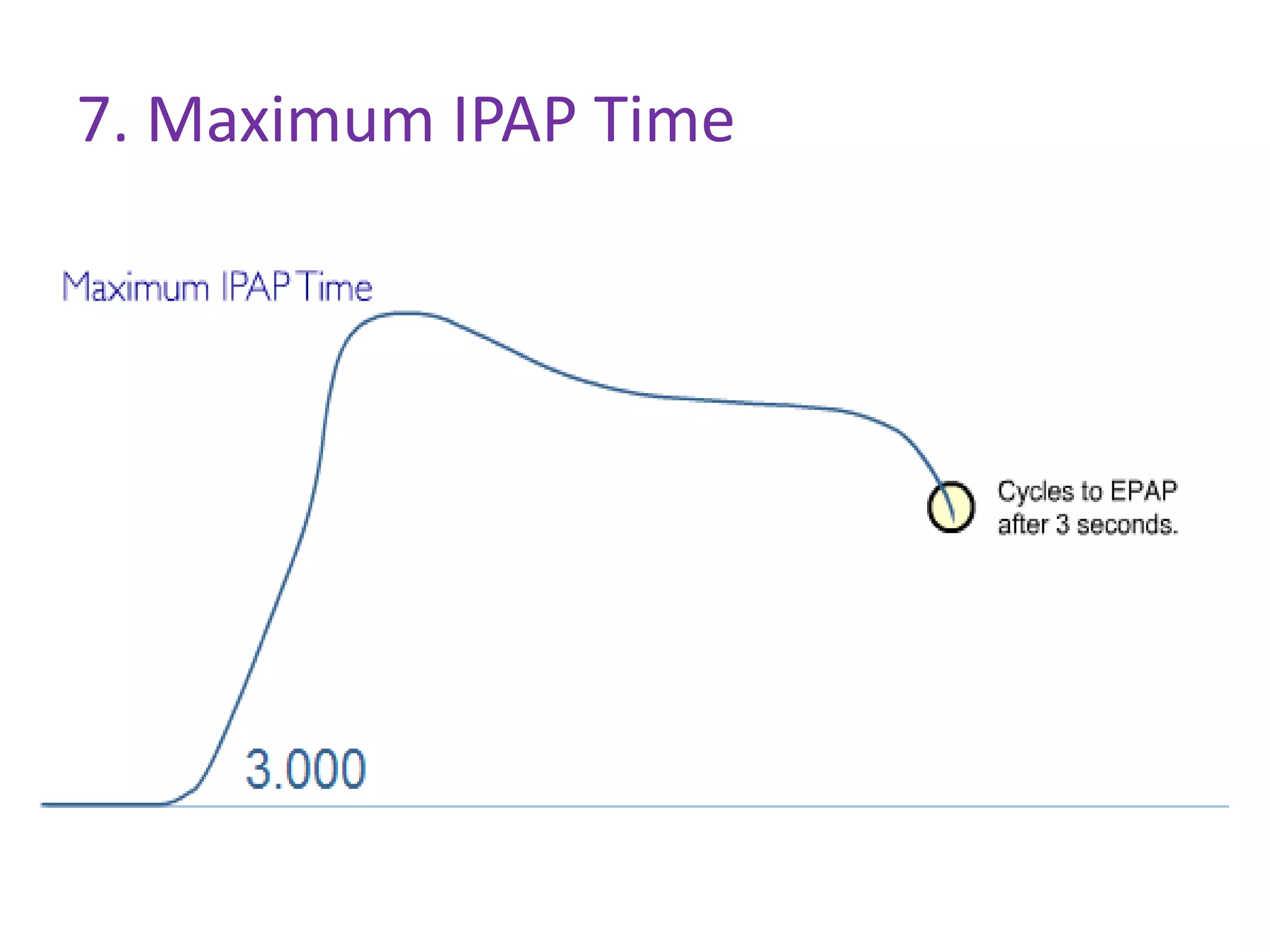
7. Maximum IPAP Time
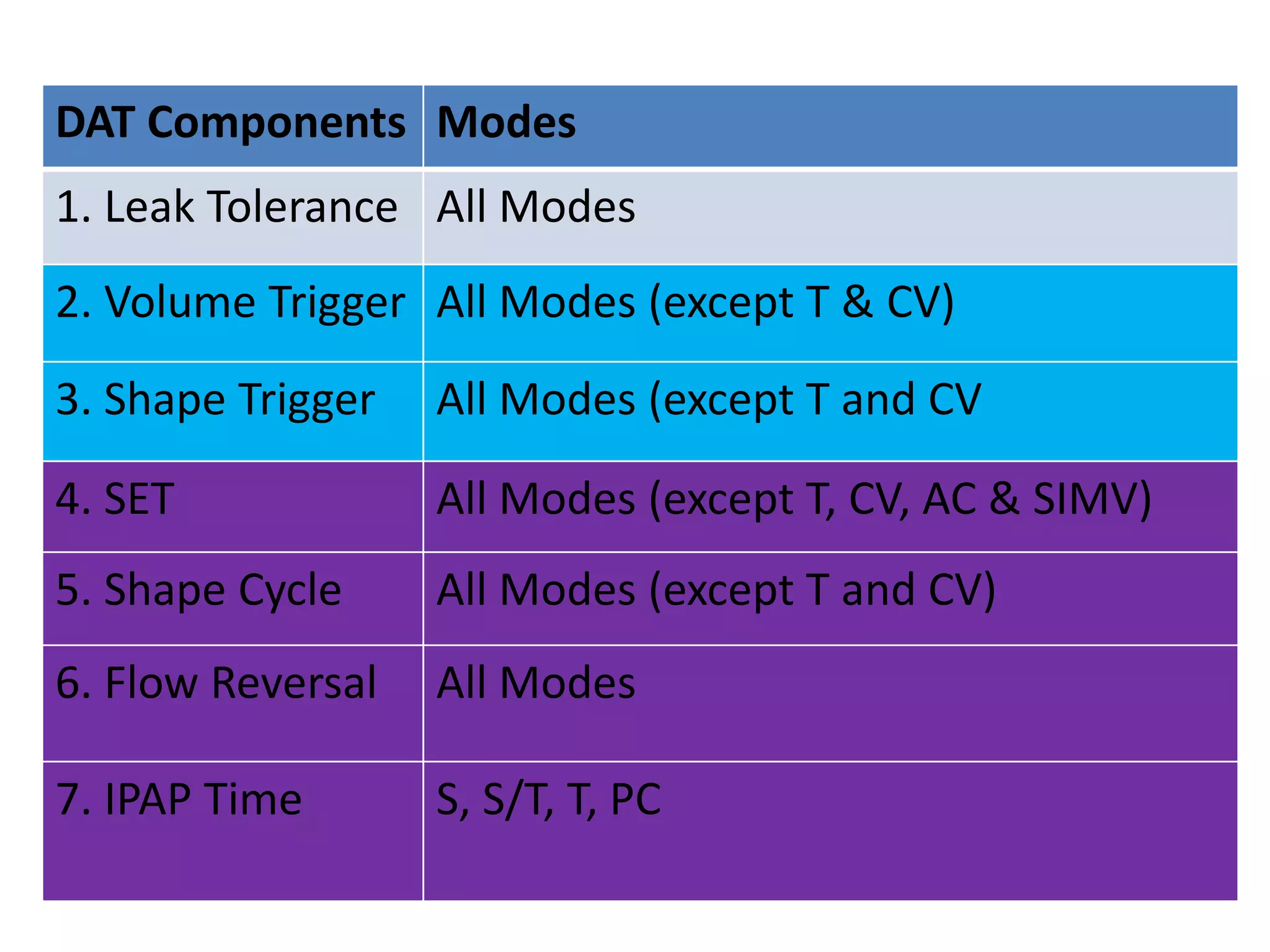
DAT Components Modes
1. Leak Tolerance All Modes
2. Volume Trigger All Modes (except T & CV)
3. Shape Trigger All Modes (except T and CV
4. SET All Modes (except T, CV, AC & SIMV)
5. Shape Cycle All Modes (except T and CV)
6. Flow Reversal All Modes
7. IPAP Time S, S/T, T, PC
Bottom line!!!The DAT detects and
compensates for unintentional leaks in
the system and automatically adjusts
trigger and cycle algorithms to maintain
optimum performance in the presence
of leaks
DAT Sensitive
Sensitive Auto-Trak is an enhancement
to the DAT algorithm that improves
patient and machine synchrony for
patients with minimal respiratory
effort. DAT refines the baseline trigger
and cycle sensitivity thresholds.
Hybrid Modes
1. AVAPS
2. AVAPS-AE
What are hybrid modes?
Pressure Support Ventilation modes
with targeted volume delivery
What is AVAPS?
• Average Volume Assured Pressure Support
• Available in S, S/T, PC, and T modes (Not a
standalone mode!!!)
• It maintains tidal volume (VT) equal to or
greater than the target volume setting by
automatically controlling the PS
AVAPS rate
• Allows the adjustment of the maximum rate at
which PS automatically changes to achieve the
target volume
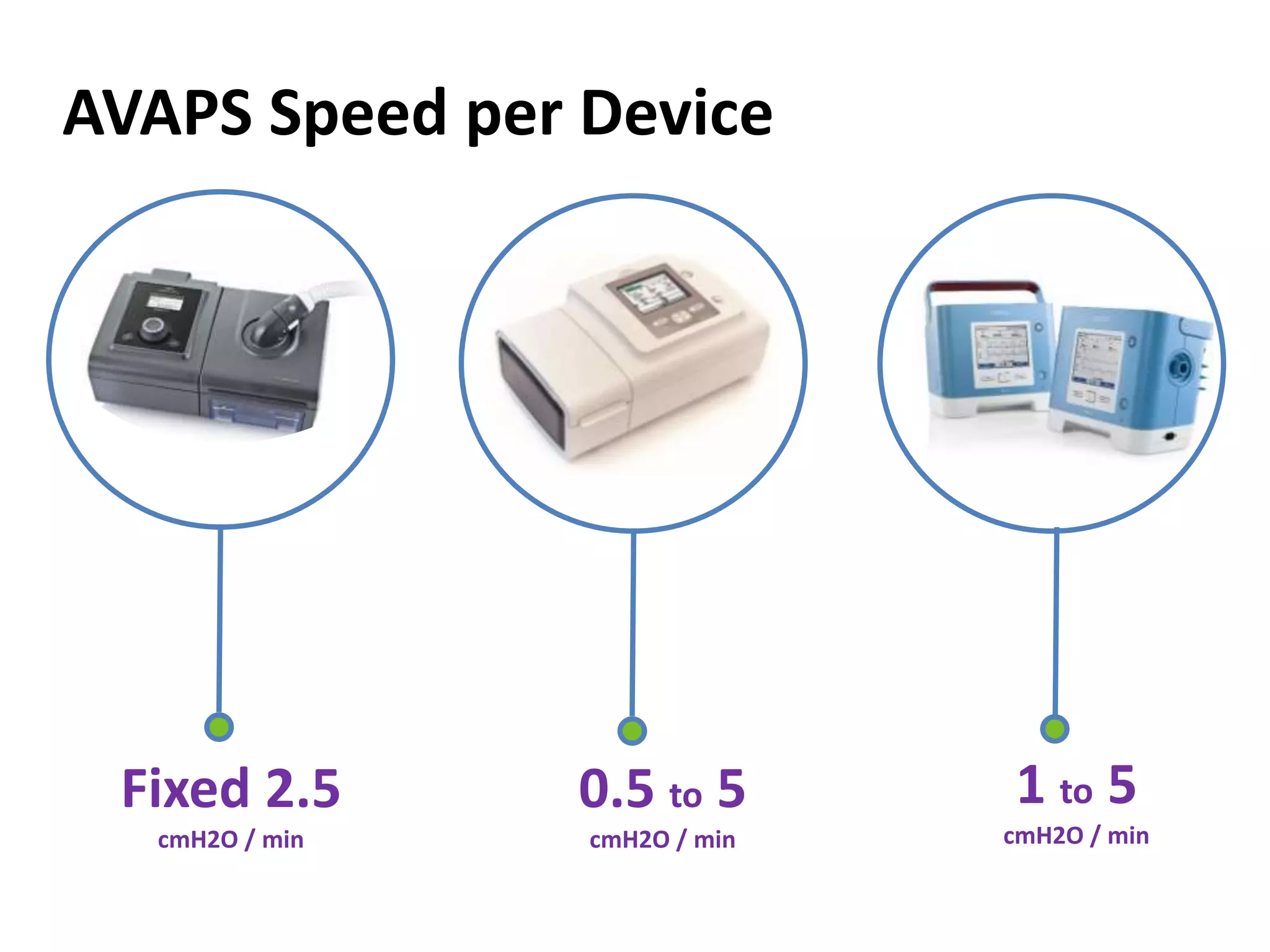
AVAPS Speed per Device
Fixed 2.5
cmH2O / min
0.5 to 5
cmH2O / min
1 to 5
cmH2O / min
How does AVAPS Work?
AVAPS automatically adapts pressure support to patient needs to
guarantee an average tidal volume.
Target Vt
EPAP
IPAP
± 1 to 3 cmH2O
over 1 min
IPAP min
IPAP max
Main Settings:
• Can be accessed in S, S/T, PC and T modes
• AVAPS (set based on IBW 6-8ml/kg)
• IPAP max
• IPAP min
• EPAP
• RR
• Ti
AVAPS-AE
What is AVAPS-AE?
AVAPS-AE is a auto-titration mode of
noninvasive ventilation designed to better treat
respiratory insufficiency patients (OHS, COPD
and NMD) in the hospital and homecare
environments
Components of AVAPS-AE
• AVAPS
• Automatic EPAP (AE)
• Auto RR
AVAPS AE settings
33
EPAP
Target Vt
IPAPPS min
PS max
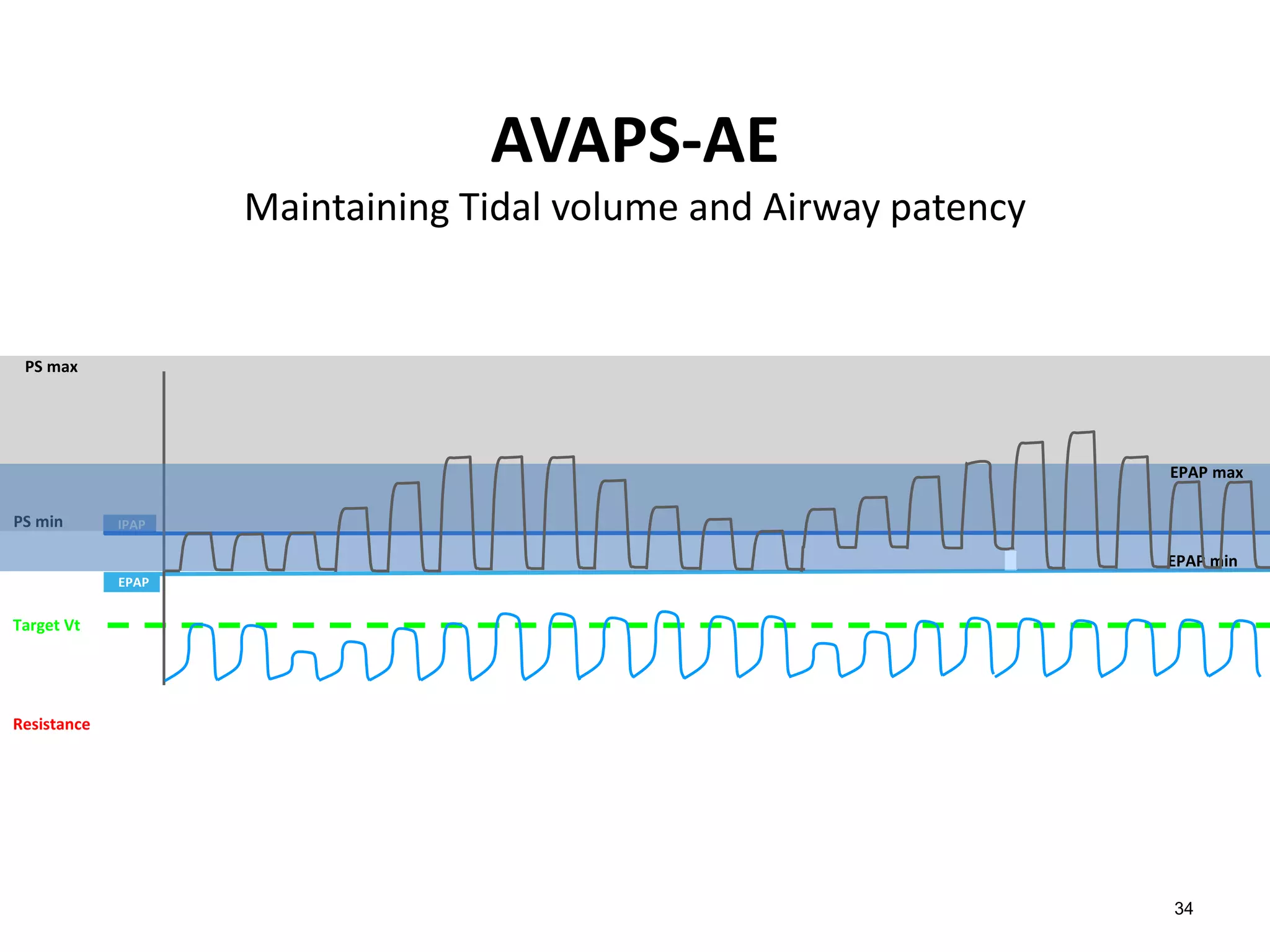
AVAPS-AE
Maintaining Tidal volume and Airway patency
EPAP min
EPAP max
Resistance
34
Theory of Operation
Upper
Airway
Resistance
Device
Pressure
P
search
crit
Ptherapy
P search
opt
Illustration courtesy of Krames Medical Illustration.
AVAPS-AE: Auto EPAP proactive analysis
35
Popt – Optimal Pressure Search
(High Pressure Search)
EPAP
P therapy
P therapy
Critical Pressure Searches
(Low Pressure Search)
P
therapy
EPAP
P therapy
Popt
Pcrit
Auto EPAP Proactive Analysis
P
ther
P
opt
Pressure
Resistance
P
crit
3
6
SET BR
Used for the rest of the night
AVAPS-AE
Auto Backup rate
12
1
2
3
4
56
7
8
9
10
11
1st
hour
50 breaths Sliding
window
BR continually
Updates
1h
BR set
15
30
45
5
60
BR=Actual Rate
minus 2
37
Auto backup rate
Movingbreathrate
Minimum auto
backup rate
Spontaneous breaths
Time 50 breaths
10
Calculated
spontaneous rate
Target auto
backup rate
Targeted auto backup rate is 2
bpm below avg. spontaneous
rate
3
8
Bpm
Auto backup rate
Spontaneous Breaths
Timed Breaths
Target auto
backup rate
10 Auto backup rate
buffer zone
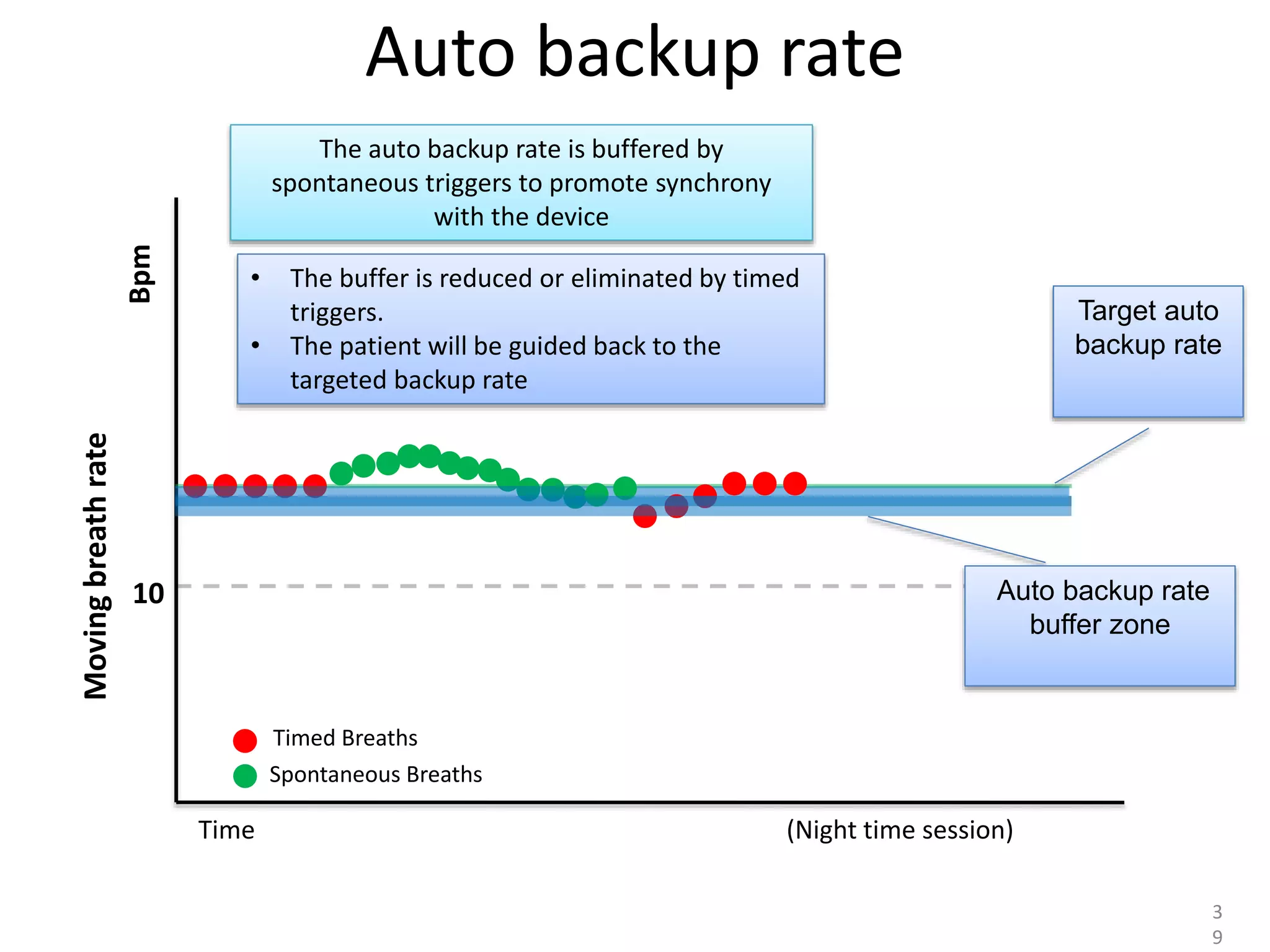
The auto backup rate is buffered by
spontaneous triggers to promote synchrony
with the device
• The buffer is reduced or eliminated by timed
triggers.
• The patient will be guided back to the
targeted backup rate
3
9
Bpm
Movingbreathrate
Time (Night time session)
Bottom line: AVAPS-AE is an “auto-
titrating” BIPAP mode that will
respond to:
1) Hypoventilation (AVAPS)
2) Airway Closure (AE)
3) Inconsistent Respiration and /or
Apnea (Auto RR)
Philips Technologies by Olu Albert

Philips Technologies by Olu Albert

  • 1.
  • 2.
    Philips Technologies • DigitalAutoTrak • Digital AutoTrak sensitive • AVAPS • AVAPS rate • AVAPS-AE
  • 3.
  • 4.
    Components of DAT A.Recognizes and compensates for system leaks 1. Leak Tolerance B. Provides 2 methods of inspiratory Trigger 2. Volume Trigger 3. Shape Trigger C. Provides 4 methods of expiratory cycling 4. Spontaneous Expiratory Threshold (SET) 5. Shape Trigger/Cycle 6. Flow Reversal 7. Maximum IPAP time
  • 5.
    1. Leak Tolerance 2 1 1= Increase in flow & stabilizes most part of the inspiratory phase 2 = Decrease in flow & stabilizes most part of the expiratory phase = Original Baseline/Beginning of inspiration/End of expiratory cycle = Change in leakage flow/New Baseline Flow
  • 6.
  • 7.
  • 8.
    3. Shape Trigger PatientFlow = Total Flow- Circuit Leak Shape Signal (Appears as a shadow image of the patient actual flow)
  • 10.
    The shape triggerfunctions as a “sensitivity threshold” for inspiration and expiration
  • 11.
  • 12.
    4. Spontaneous ExpiratoryThreshold Actual Flow The slope of the SET is calculated at the beginning of the breath and signal rises in proportion to the inspiratory flow rate of each breath
  • 13.
    When the SETsignal crosses the flow signal, EPAP is triggered
  • 14.
    5. Shape Trigger/Cycle Theshape signal also functions as a “sensitivity threshold” for Expiration, when patient flow crosses the shape signal , it cycles into EPAP
  • 15.
    6. Flow Reversal Duringflow reversal, the unit in the process Of cycling into EPAP when the leak occurs
  • 16.
    Flow reversal doesnot allow trigger to IPAP without returning to EPAP. This keeps “breath stacking” from occurring
  • 17.
  • 19.
    DAT Components Modes 1.Leak Tolerance All Modes 2. Volume Trigger All Modes (except T & CV) 3. Shape Trigger All Modes (except T and CV 4. SET All Modes (except T, CV, AC & SIMV) 5. Shape Cycle All Modes (except T and CV) 6. Flow Reversal All Modes 7. IPAP Time S, S/T, T, PC
  • 20.
    Bottom line!!!The DATdetects and compensates for unintentional leaks in the system and automatically adjusts trigger and cycle algorithms to maintain optimum performance in the presence of leaks
  • 21.
  • 22.
    Sensitive Auto-Trak isan enhancement to the DAT algorithm that improves patient and machine synchrony for patients with minimal respiratory effort. DAT refines the baseline trigger and cycle sensitivity thresholds.
  • 23.
  • 24.
    What are hybridmodes? Pressure Support Ventilation modes with targeted volume delivery
  • 25.
    What is AVAPS? •Average Volume Assured Pressure Support • Available in S, S/T, PC, and T modes (Not a standalone mode!!!) • It maintains tidal volume (VT) equal to or greater than the target volume setting by automatically controlling the PS
  • 26.
    AVAPS rate • Allowsthe adjustment of the maximum rate at which PS automatically changes to achieve the target volume
  • 27.
    AVAPS Speed perDevice Fixed 2.5 cmH2O / min 0.5 to 5 cmH2O / min 1 to 5 cmH2O / min
  • 28.
    How does AVAPSWork? AVAPS automatically adapts pressure support to patient needs to guarantee an average tidal volume. Target Vt EPAP IPAP ± 1 to 3 cmH2O over 1 min IPAP min IPAP max
  • 29.
    Main Settings: • Canbe accessed in S, S/T, PC and T modes • AVAPS (set based on IBW 6-8ml/kg) • IPAP max • IPAP min • EPAP • RR • Ti
  • 30.
  • 31.
    What is AVAPS-AE? AVAPS-AEis a auto-titration mode of noninvasive ventilation designed to better treat respiratory insufficiency patients (OHS, COPD and NMD) in the hospital and homecare environments
  • 32.
    Components of AVAPS-AE •AVAPS • Automatic EPAP (AE) • Auto RR
  • 33.
  • 34.
    EPAP Target Vt IPAPPS min PSmax AVAPS-AE Maintaining Tidal volume and Airway patency EPAP min EPAP max Resistance 34
  • 35.
    Theory of Operation Upper Airway Resistance Device Pressure P search crit Ptherapy Psearch opt Illustration courtesy of Krames Medical Illustration. AVAPS-AE: Auto EPAP proactive analysis 35
  • 36.
    Popt – OptimalPressure Search (High Pressure Search) EPAP P therapy P therapy Critical Pressure Searches (Low Pressure Search) P therapy EPAP P therapy Popt Pcrit Auto EPAP Proactive Analysis P ther P opt Pressure Resistance P crit 3 6
  • 37.
    SET BR Used forthe rest of the night AVAPS-AE Auto Backup rate 12 1 2 3 4 56 7 8 9 10 11 1st hour 50 breaths Sliding window BR continually Updates 1h BR set 15 30 45 5 60 BR=Actual Rate minus 2 37
  • 38.
    Auto backup rate Movingbreathrate Minimumauto backup rate Spontaneous breaths Time 50 breaths 10 Calculated spontaneous rate Target auto backup rate Targeted auto backup rate is 2 bpm below avg. spontaneous rate 3 8 Bpm
  • 39.
    Auto backup rate SpontaneousBreaths Timed Breaths Target auto backup rate 10 Auto backup rate buffer zone The auto backup rate is buffered by spontaneous triggers to promote synchrony with the device • The buffer is reduced or eliminated by timed triggers. • The patient will be guided back to the targeted backup rate 3 9 Bpm Movingbreathrate Time (Night time session)
  • 40.
    Bottom line: AVAPS-AEis an “auto- titrating” BIPAP mode that will respond to: 1) Hypoventilation (AVAPS) 2) Airway Closure (AE) 3) Inconsistent Respiration and /or Apnea (Auto RR)

Editor's Notes

  • #6 After the expiratory phase, there remains some positive air flow, called “Baseline Flow.”. This baseline flow is present because of leaks in the system. During subsequent breaths, changes could occur, causing more or less leakage in the system. DAT detects a new baseline flow, and bases subsequent calculations of this new baseline. No New manual adjustments are necessary. Leak tolerance is done in 2 ways: Average and Parabolic: the average leak is computed using the conservation of mass algorithm to compute the average leak for a given PS relationship; the parabolic leak is proportional to the square of the patient pressure; therefore the leak is correlated to the patient pressure Patient Flow = Total Flow-Circuit leak; the patient flow is imputed into the triggering and cycling mechanism
  • #8 The volume trigger is one of the method used to trigger inspiration during spontaneous breathing except in T and CV. The DAT sensitivity system monitors the baseline flow. When a change in flow is detected, the system calculates the resulting volume of air that this change produces. When the accumulated patient inspiratory volume reaches 6cc, IPAP is triggered.
  • #9 Available in all modes except in T and CV.The shape trigger continuously tracks patient inspiratory and expiratory flow and adjusts the spontaneous trigger threshold for optimum sensitivity. The shape trigger is created by offsetting the signal from the actual patient flow by 15L/min and delaying by 300ms period. The intentional delay causes the shape signal to be slightly behind the patient’s flow rate.
  • #13 Available in all modes except in T, AC, CV & SIMV
  • #14 When the SET signal crosses the flow signal, EPAP is triggered
  • #18 DAT monitors how long the IPAP remains in the inspiratory phase It uses the patient set Ti for in mandatory and assisted breaths
  • #19 Is a safety mechanism to limit the amount of time spent on IPAP level during spontaneous breathing in S and S/T modes
  • #21 Total Leak = Intentional leak + Unintentional leak
  • #29 When being ventilated, a spontaneous change in the patient condition can decrease or increase the tidal volume. AVAPS will then adjust the IPAP progressively (within a pre-set window between IPAP Min and IPAP max) until the pre-set tidal volume is reached.
  • #35 What does AVAPS do for the clinician? It is like sending a skilled therapist into the patient’s room with orders to titrate the pressure support for a specific tidal volume. At some point the therapist will have to leave the room and when they do you can’t be sure what tidal volumes are going to be delivered. But in this case the therapist never takes their hand off of the pressure support knob. They never leave!
  • #37 This illustrates the proactive nature of our auto EPAP algorithm. The device will proactively increase EPAP pressure to evaluate the impact the increase has on the airway. This AVAPS-AE is seeking the optimum pressure or conducting a Popt search. AVAPS-AE will do this until the pressure changes have no improvement on the airway. At that point, AVAPS-AE will restore the pressure to the level prior to the last change and it will then search downward on the next cycle. This is called a critical pressure search or Pcrit. The Pcrit search will lower pressure gradually until the airway patency starts to decrease. At that point the device will reverse the last pressure decrease and then repeat the process by conducting a Popt search next. This method allows the algorithm to anticipate the changing EPAP pressure needs before an obstructive event occurs.
  • #38 The auto backup rate for AVAPS-AE will average the breath times over a 50 spontaneous breath rolling window (Array) over the 1st hour and use the highest 50 average value of spontaneous breaths to calculate the patient’s spontaneous rate. The algorithm will continue to monitor the spontaneous breath times after the first 50 breaths and if the spontaneous rate increases during the 1st hour of use each night, then the rate will be updated to the higher rate. Lower spontaneous rates will not update the rate
  • #39  Once a spontaneous rate has been determined, the unit will update the backup rate to 2 bpm less than the spontaneous rate. The lowest auto backup rate is approximately 10 and the highest is 20, however the patient can breath more than 20 breaths per minute. If a higher rate than 20 or rate less than 10 is required, then the clinician can turn off the auto function and set a desired rate or turn off any machine-delivered rate.
  • #40 Once the auto backup rate has been determined by AVAPS-AE with 50 spontaneous breaths it will then maintain the patient near this rate for the remainder of the night (the patient can always go higher than this rate). So, as seen here in the first few breaths, the rate is delivering the auto backup rate because the patient is not triggering breaths. If the patient starts to trigger breaths above the auto backup rate, the algorithm will promote synchrony with the vent by allowing some flexibility with the rate. As the patient continues to trigger more spontaneous breaths, the rate may be suppressed by as much as 25% of the targeted rate. It may be easier to think of this not as a rate, but as an interval between breaths, e.g., if the target rate is 15 bpm, that would mean an interval of 4 seconds between triggers. If the patient were to breath enough above the rate, the algorithm could allow the interval between breaths to be extended as long as 5 seconds, or 12 bpm. If the patient were to go as long as 5 seconds, a backup breath would be delivered. If the patient continues to receive timed breaths, the rate will slowly be guided back to the targeted rate and the process would start over again.