ATP ATP powers cellular work A cell does three main kinds of work: Mechanical work,  beating of cilia, contraction of muscle cells, and movement of chromosomes Transport work,  pumping substances across membranes against the direction of spontaneous movement Chemical work,  driving endergonic reactions such as the synthesis of polymers from monomers
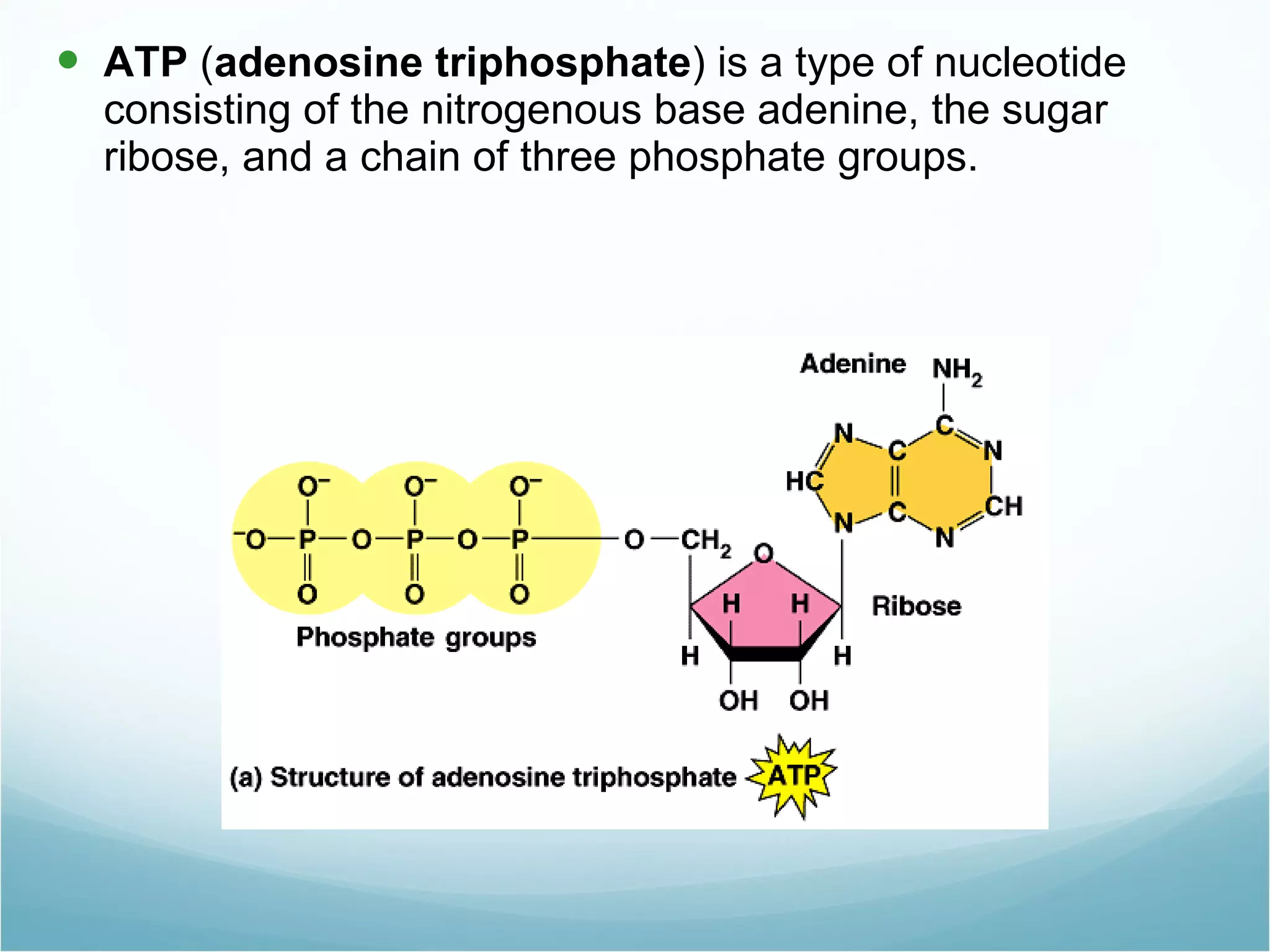
ATP  ( adenosine triphosphate ) is a type of nucleotide consisting of the nitrogenous base adenine, the sugar ribose, and a chain of three phosphate groups.
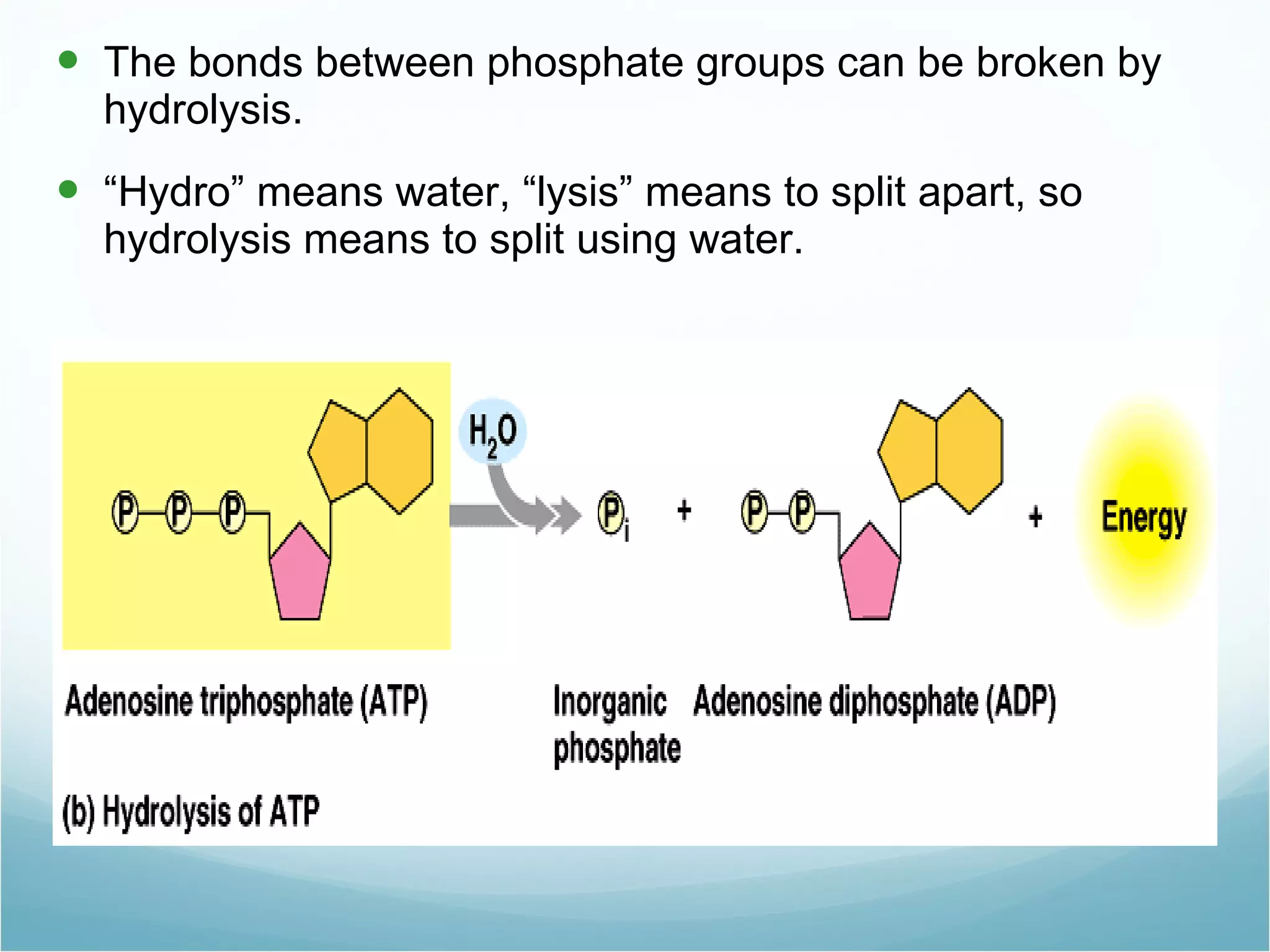
The bonds between phosphate groups can be broken by hydrolysis. “ Hydro” means water, “lysis” means to split apart, so hydrolysis means to split using water.
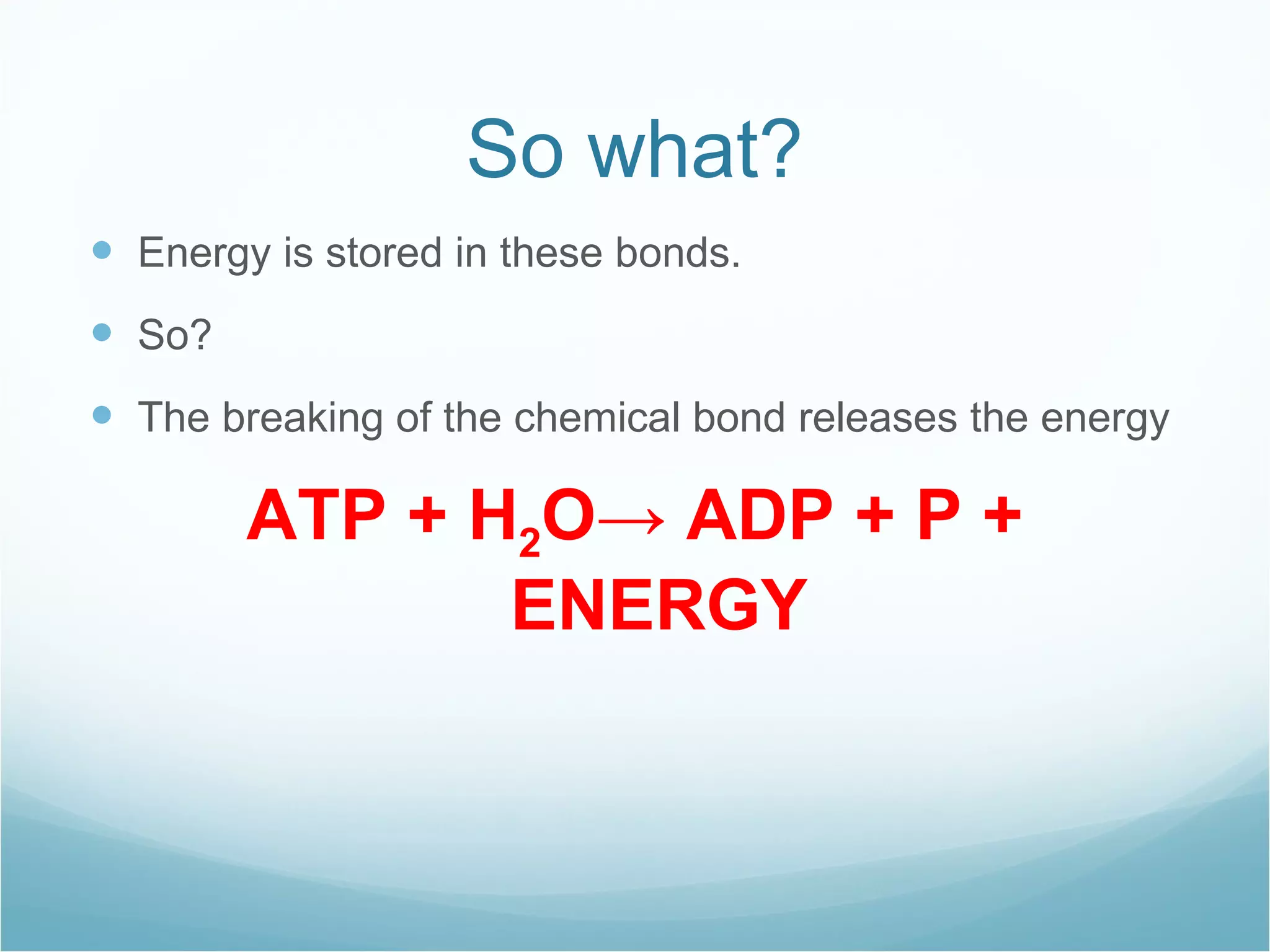
So what? Energy is stored in these bonds. So? The breaking of the chemical bond releases the energy ATP + H 2 O -> ADP + P + ENERGY
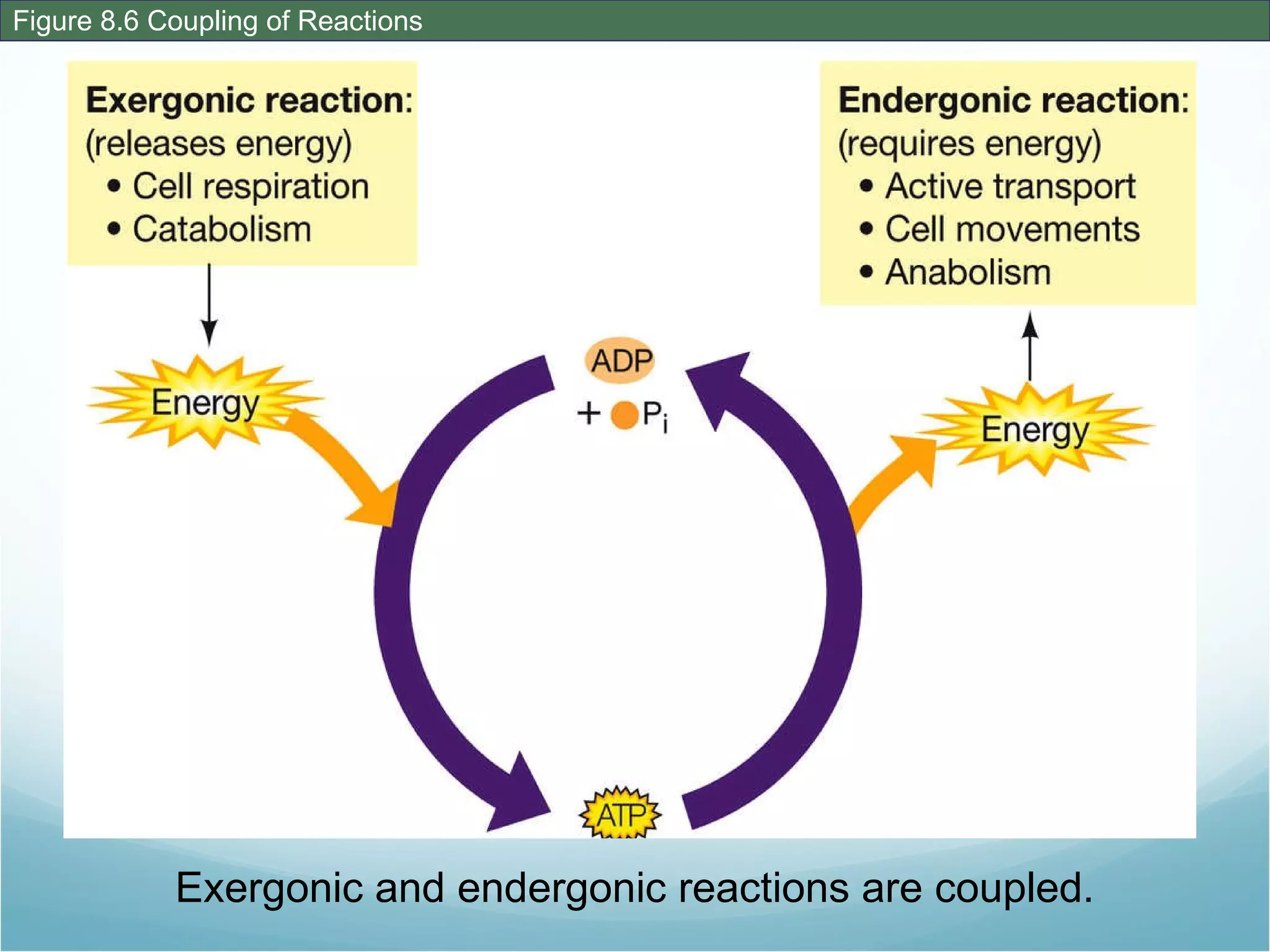
Figure 8.6 Coupling of Reactions Exergonic and endergonic reactions are coupled.
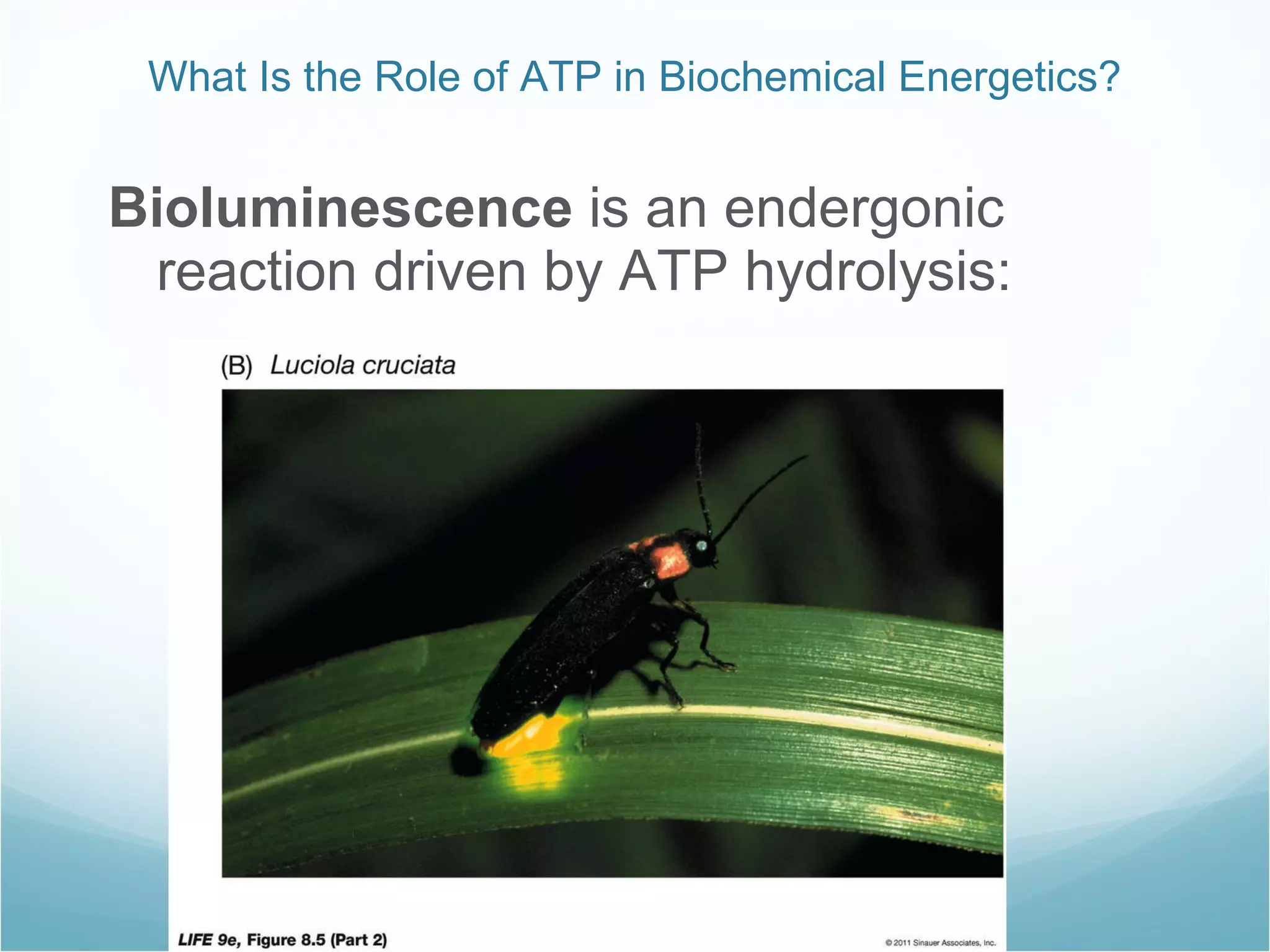
What Is the Role of ATP in Biochemical Energetics? Bioluminescence  is an endergonic reaction driven by ATP hydrolysis:

Atp

  • 1.
    ATP ATP powerscellular work A cell does three main kinds of work: Mechanical work, beating of cilia, contraction of muscle cells, and movement of chromosomes Transport work, pumping substances across membranes against the direction of spontaneous movement Chemical work, driving endergonic reactions such as the synthesis of polymers from monomers
  • 2.
    ATP (adenosine triphosphate ) is a type of nucleotide consisting of the nitrogenous base adenine, the sugar ribose, and a chain of three phosphate groups.
  • 3.
    The bonds betweenphosphate groups can be broken by hydrolysis. “ Hydro” means water, “lysis” means to split apart, so hydrolysis means to split using water.
  • 4.
    So what? Energyis stored in these bonds. So? The breaking of the chemical bond releases the energy ATP + H 2 O -> ADP + P + ENERGY
  • 5.
    Figure 8.6 Couplingof Reactions Exergonic and endergonic reactions are coupled.
  • 6.
    What Is theRole of ATP in Biochemical Energetics? Bioluminescence is an endergonic reaction driven by ATP hydrolysis: