Conformation and function of Globular
Protein with special reference to
Structure and function of Hemoglobin
and Myoglobin. Biological significance
of Protein
Presented By: Bushra Ashraf(7009)
Presented To: Dr. Asim Raza Basra
1
Contents
2
Introduction of Globular protein
Structure and function of Globular Protein
Functions Of hemoglobin And Myoglobin
Comparison Between hemoglobin And
Myoglobin
 Cooperativity and Allosteric Regulation in
hemoglobin
Significance of protein
References
Introduction of Globular Protein
 Globular Protein • Have complex tertiary and sometimes
quaternary structures.
 Folded into spherical (globular) shapes. • Usually
soluble as hydrophobic side chains in center of
structure.
 Roles in metabolic reactions. • E.g. enzymes,
haemoglobin in blood. Bio-Resource
3
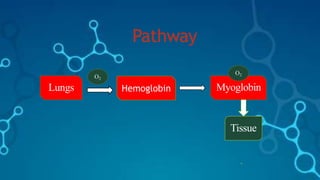
Pathway
4
Lungs
O2
O2
Myoglobin
Tissue
Hemoglobin
Hemoglobin
5
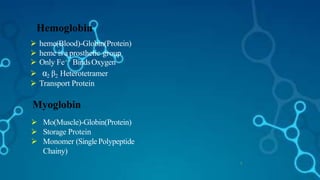
 heme(Blood)-Globin(Protein)
 heme is a prosthetic group
 Only Fe++ BindsOxygen
 α2 β2 Heterotetramer
 Transport Protein
Myoglobin
 Mo(Muscle)-Globin(Protein)
 Storage Protein
 Monomer (Single Polypeptide
Chainy)
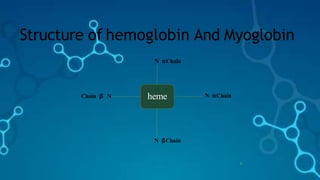
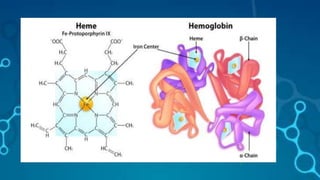
Structure of hemoglobin And Myoglobin
6
heme
N αChain
Chain β N
N βChain
N αChain
7
8
Functions of hemoglobin And Myoglobin
9
During this process, the hemoglobin
macromolecule undergoes conformational
changes due to the binding and unbinding of
oxygen and carbon dioxide.And it include :
Oxygen Pickup
Oxygen Delivery
Carbon Dioxide Pickup
Carbon Dioxide Delivery
Comparison
10
Myoglobin is a storage protein. Hemoglobin is a transport protein.
Myoglobin
 Myoglobin is a globular protein.
Water soluble.
Ligand is oxygen.
Myoglobin exist in muscle(tissue).
Hemoglobin
hemoglobin is also a globular protein.
Water soluble.
Ligand is oxygen.
hemoglobin exist in blood.
Myoglobin
Bind And Release O2 to muscle
cell.
 Monomer (Single polypeptide
Chain)
 8 Helices segments
 Tertiary Structure
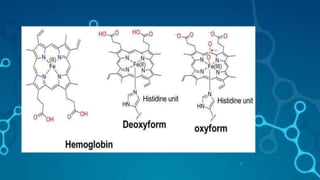
Histidine is present helps to
attach with Fe (Iron)
(Including Muscles)
 Oligomeric nature ( More than one
polypeptide chain)
Actually made up of 2 α and 2 β side
chains
 Quartnery structure
AlsoAttaches with histidine residues
to impart some kind of buffering
11properties to blood
 Take O2
Hemoglobin
From lungs to the tissues
Myoglobin
12
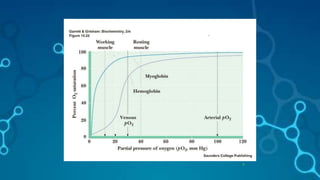
Higher affinity towards oxygen
because myoglobin needs to grab
the oxygen from hemoglobin.
 Can bind to one heme group
(prosthetic group).
Hemoglobin
Comparatively lower
affinity towards oxygen
 hemoglobin have two states
 R state (Oxyhemoglobin)And T
state (Deoxyhemoglobin)
Can Bind to 4O2 Molecules each
subunit has a heme group.
Cooperativity
13
Asimple phenomenon in which when one oxygen is bind to one
subunit the affinity for O2 at the other subunit increases.
Allosteric regulation
Simply,binding of one ligand to a subunit willaffect on the affinity
of othersubunits.
14
Conclusion
15SickleCellAnaemia (SCA) is a Genetic Disease of hemoglobin.
 Animals Have WidelyVarying O2 Need
 hemoglobin and Myoglobin are Related, but Have Different Functions
 hemoglobin has Four Subunits and heme group.
 Myoglobin has One of Each Bind of O2 by heme’sIron Pulls up on a Histidine and
Change’s hemoglobin Shape Changing hemoglobin Shape Converts hemoglobin from
T-state to R-state
 R-state Binds Oxygen Better.
 T-state Releases O2 Better
Biological Significance of Protein
16
17
 Protein has a critical physiological
function. Protein is primarily used in
the body to build, maintain, and repair
body tissues.
 In the event that protein intake is
greater than that required by the body
for this primary function, excessive
protein is converted to energy for
immediate use or stored in the body as
fat.
 Protein energy will be used only after
other energy sources (carbohydrate
and fat) are exhausted or unavailable.
18
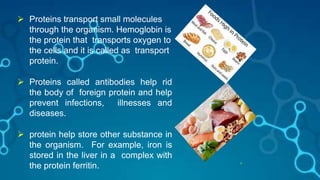
 Proteins transport small molecules
through the organism. Hemoglobin is
the protein that transports oxygen to
the cells and it is called as transport
protein.
 Proteins called antibodies help rid
the body of foreign protein and help
prevent infections, illnesses and
diseases.
 protein help store other substance in
the organism. For example, iron is
stored in the liver in a complex with
the protein ferritin.
19
 Proteins help mediate cell
responses, such as the protein
rhodopsin, found in the eye and
involved in the vision process.
 Proteins make up a large protein of
muscle fiber and help in the
movement of various parts of our
bodies.
 Skin and bone contain collagen, a
fibrous protein
17

Hemoglobin and _myoglobin

  • 1.
    Conformation and functionof Globular Protein with special reference to Structure and function of Hemoglobin and Myoglobin. Biological significance of Protein Presented By: Bushra Ashraf(7009) Presented To: Dr. Asim Raza Basra 1
  • 2.
    Contents 2 Introduction of Globularprotein Structure and function of Globular Protein Functions Of hemoglobin And Myoglobin Comparison Between hemoglobin And Myoglobin  Cooperativity and Allosteric Regulation in hemoglobin Significance of protein References
  • 3.
    Introduction of GlobularProtein  Globular Protein • Have complex tertiary and sometimes quaternary structures.  Folded into spherical (globular) shapes. • Usually soluble as hydrophobic side chains in center of structure.  Roles in metabolic reactions. • E.g. enzymes, haemoglobin in blood. Bio-Resource 3
  • 4.
  • 5.
    Hemoglobin 5  heme(Blood)-Globin(Protein)  hemeis a prosthetic group  Only Fe++ BindsOxygen  α2 β2 Heterotetramer  Transport Protein Myoglobin  Mo(Muscle)-Globin(Protein)  Storage Protein  Monomer (Single Polypeptide Chainy)
  • 6.
    Structure of hemoglobinAnd Myoglobin 6 heme N αChain Chain β N N βChain N αChain
  • 7.
  • 8.
  • 9.
    Functions of hemoglobinAnd Myoglobin 9 During this process, the hemoglobin macromolecule undergoes conformational changes due to the binding and unbinding of oxygen and carbon dioxide.And it include : Oxygen Pickup Oxygen Delivery Carbon Dioxide Pickup Carbon Dioxide Delivery
  • 10.
    Comparison 10 Myoglobin is astorage protein. Hemoglobin is a transport protein. Myoglobin  Myoglobin is a globular protein. Water soluble. Ligand is oxygen. Myoglobin exist in muscle(tissue). Hemoglobin hemoglobin is also a globular protein. Water soluble. Ligand is oxygen. hemoglobin exist in blood.
  • 11.
    Myoglobin Bind And ReleaseO2 to muscle cell.  Monomer (Single polypeptide Chain)  8 Helices segments  Tertiary Structure Histidine is present helps to attach with Fe (Iron) (Including Muscles)  Oligomeric nature ( More than one polypeptide chain) Actually made up of 2 α and 2 β side chains  Quartnery structure AlsoAttaches with histidine residues to impart some kind of buffering 11properties to blood  Take O2 Hemoglobin From lungs to the tissues
  • 12.
    Myoglobin 12 Higher affinity towardsoxygen because myoglobin needs to grab the oxygen from hemoglobin.  Can bind to one heme group (prosthetic group). Hemoglobin Comparatively lower affinity towards oxygen  hemoglobin have two states  R state (Oxyhemoglobin)And T state (Deoxyhemoglobin) Can Bind to 4O2 Molecules each subunit has a heme group.
  • 13.
    Cooperativity 13 Asimple phenomenon inwhich when one oxygen is bind to one subunit the affinity for O2 at the other subunit increases. Allosteric regulation Simply,binding of one ligand to a subunit willaffect on the affinity of othersubunits.
  • 14.
  • 15.
    Conclusion 15SickleCellAnaemia (SCA) isa Genetic Disease of hemoglobin.  Animals Have WidelyVarying O2 Need  hemoglobin and Myoglobin are Related, but Have Different Functions  hemoglobin has Four Subunits and heme group.  Myoglobin has One of Each Bind of O2 by heme’sIron Pulls up on a Histidine and Change’s hemoglobin Shape Changing hemoglobin Shape Converts hemoglobin from T-state to R-state  R-state Binds Oxygen Better.  T-state Releases O2 Better
  • 16.
  • 17.
    17  Protein hasa critical physiological function. Protein is primarily used in the body to build, maintain, and repair body tissues.  In the event that protein intake is greater than that required by the body for this primary function, excessive protein is converted to energy for immediate use or stored in the body as fat.  Protein energy will be used only after other energy sources (carbohydrate and fat) are exhausted or unavailable.
  • 18.
    18  Proteins transportsmall molecules through the organism. Hemoglobin is the protein that transports oxygen to the cells and it is called as transport protein.  Proteins called antibodies help rid the body of foreign protein and help prevent infections, illnesses and diseases.  protein help store other substance in the organism. For example, iron is stored in the liver in a complex with the protein ferritin.
  • 19.
    19  Proteins helpmediate cell responses, such as the protein rhodopsin, found in the eye and involved in the vision process.  Proteins make up a large protein of muscle fiber and help in the movement of various parts of our bodies.  Skin and bone contain collagen, a fibrous protein
  • 20.