An Introduction to the Use and Misuse of Research Variables “ A judicious man uses statistics, not to get knowledge, but to save himself from having ignorance foisted upon him.” --Thomas Carlyle
Variable Defined Any entity that can take on different values.   Age is a variable because it can take different values for different people at different times.
Examples Blood Pressure Sex Gender Age Extraversion Patient Satisfaction Heart rate Political Party Time Weight Height  Anxiety Pleasure Fear Aggression Attractiveness
The Aspects of Variables
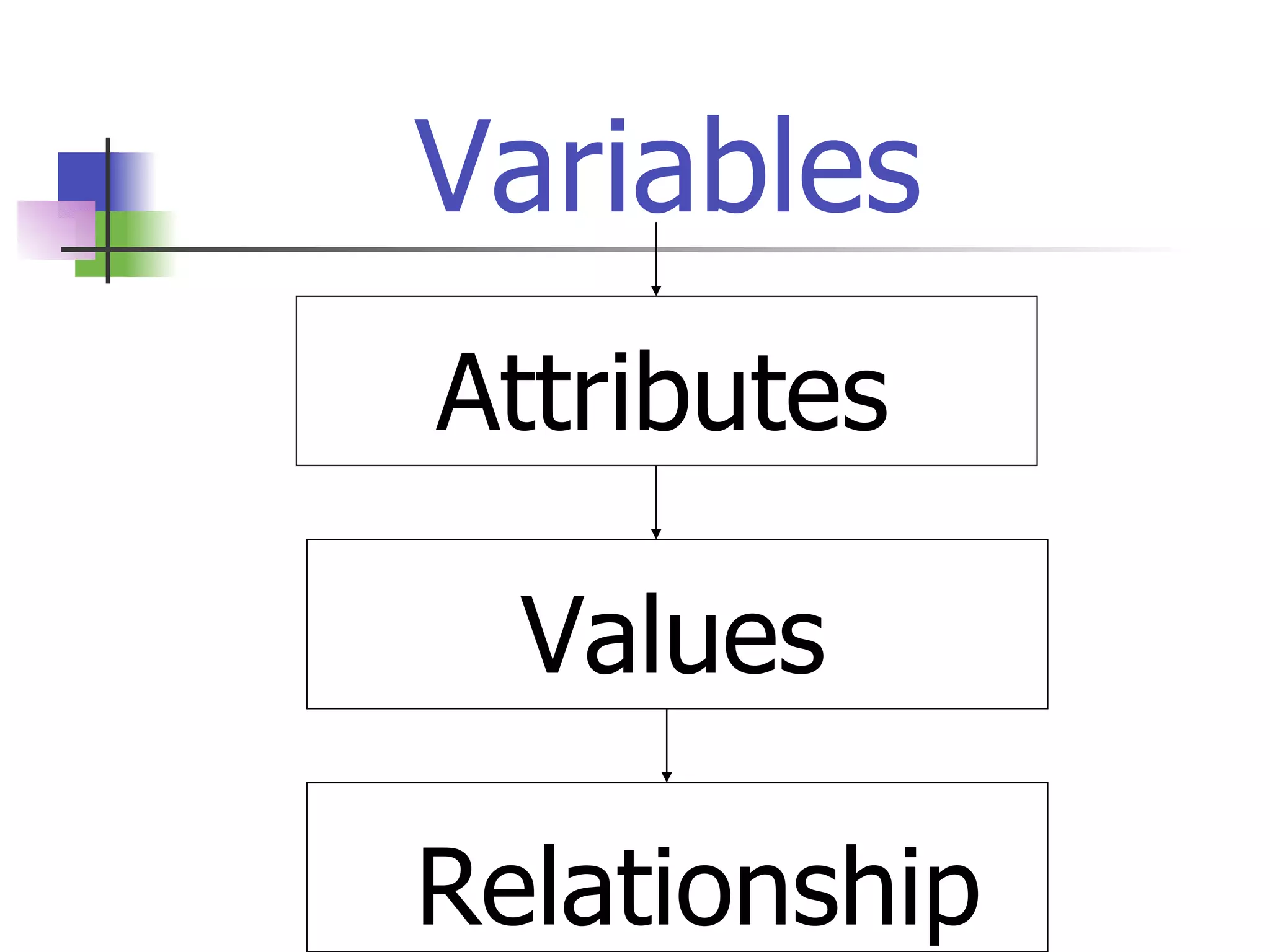
Variables Attributes Values Relationship
1. Attributes   The specific value of a variable.
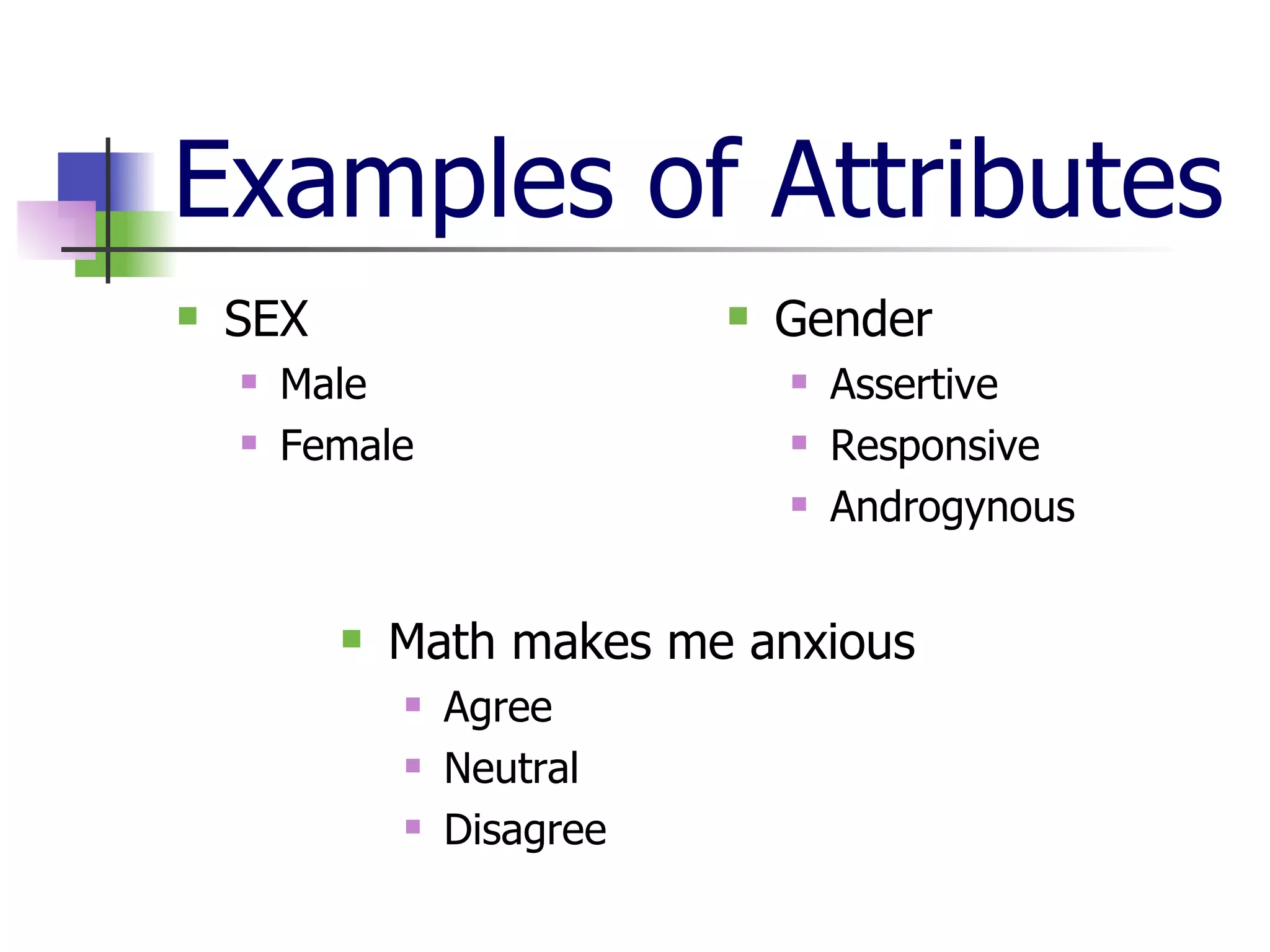
Examples of Attributes SEX Male Female Gender Assertive Responsive Androgynous  Math makes me anxious Agree Neutral Disagree
Values The numerical aspect directly associated with a specific attribute.
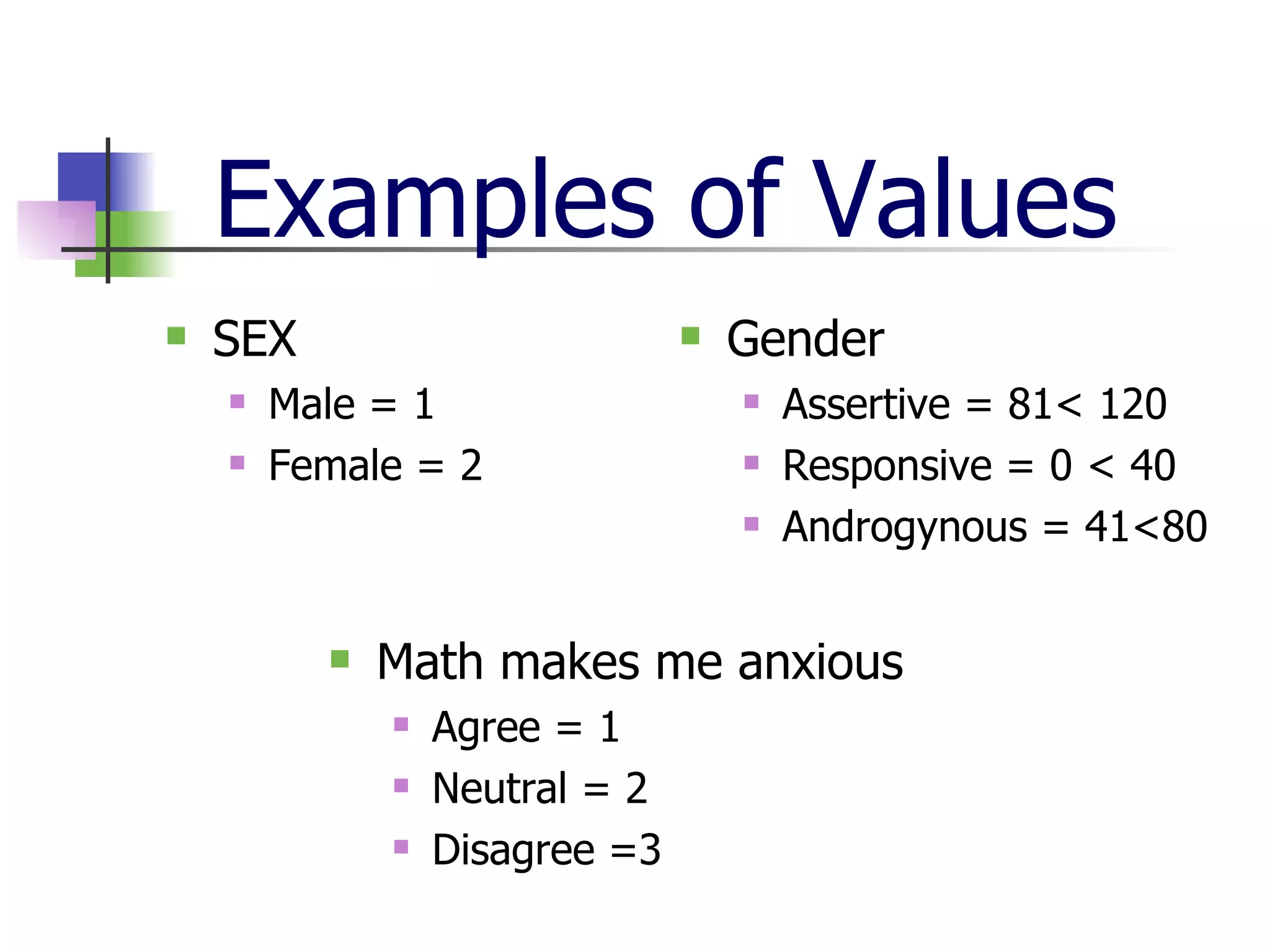
Examples of Values SEX Male = 1 Female = 2 Gender Assertive = 81< 120 Responsive = 0 < 40 Androgynous = 41<80  Math makes me anxious Agree = 1 Neutral = 2 Disagree =3
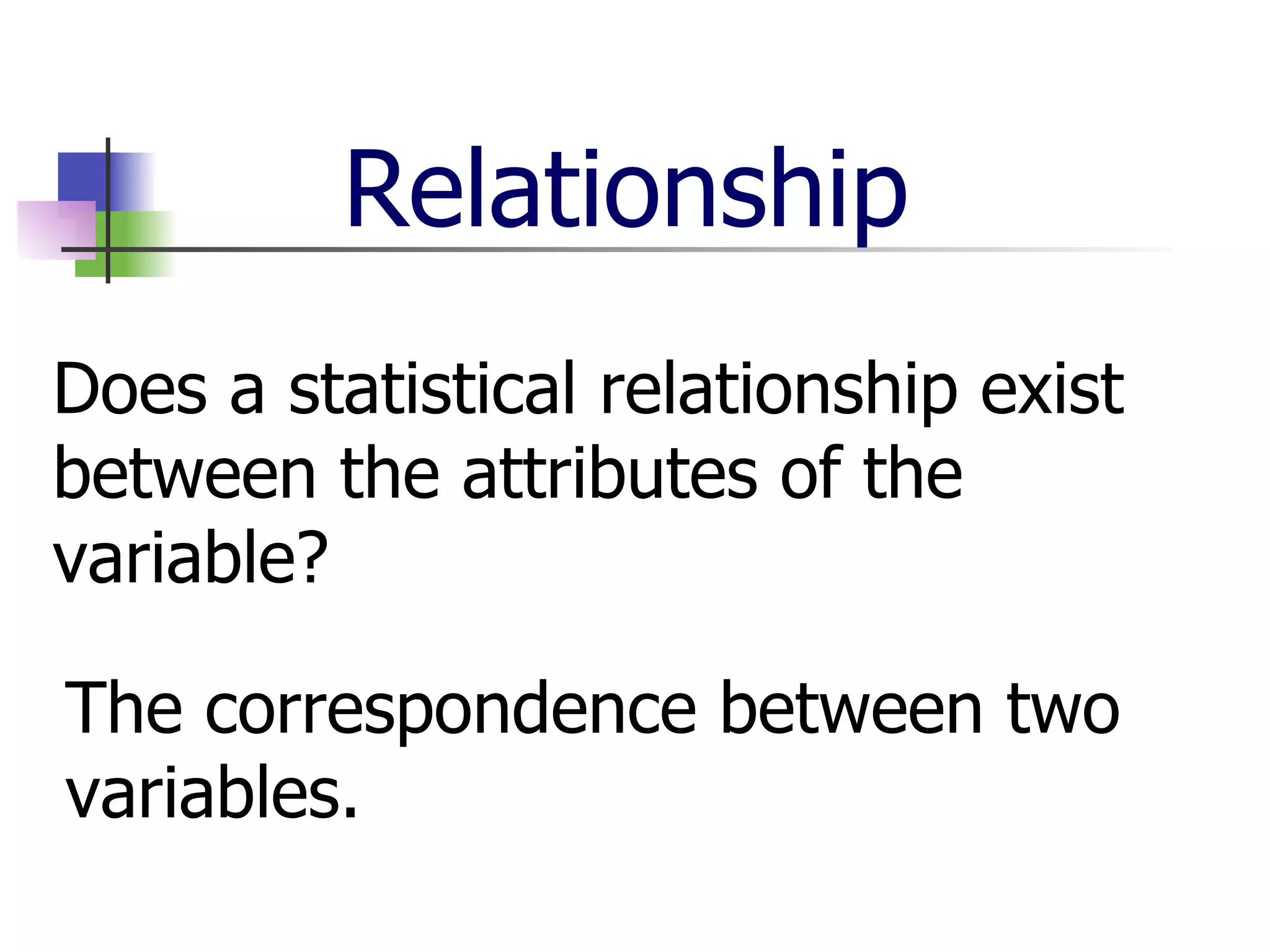
Relationship Does a statistical relationship exist between the attributes of the variable? The correspondence between two variables.
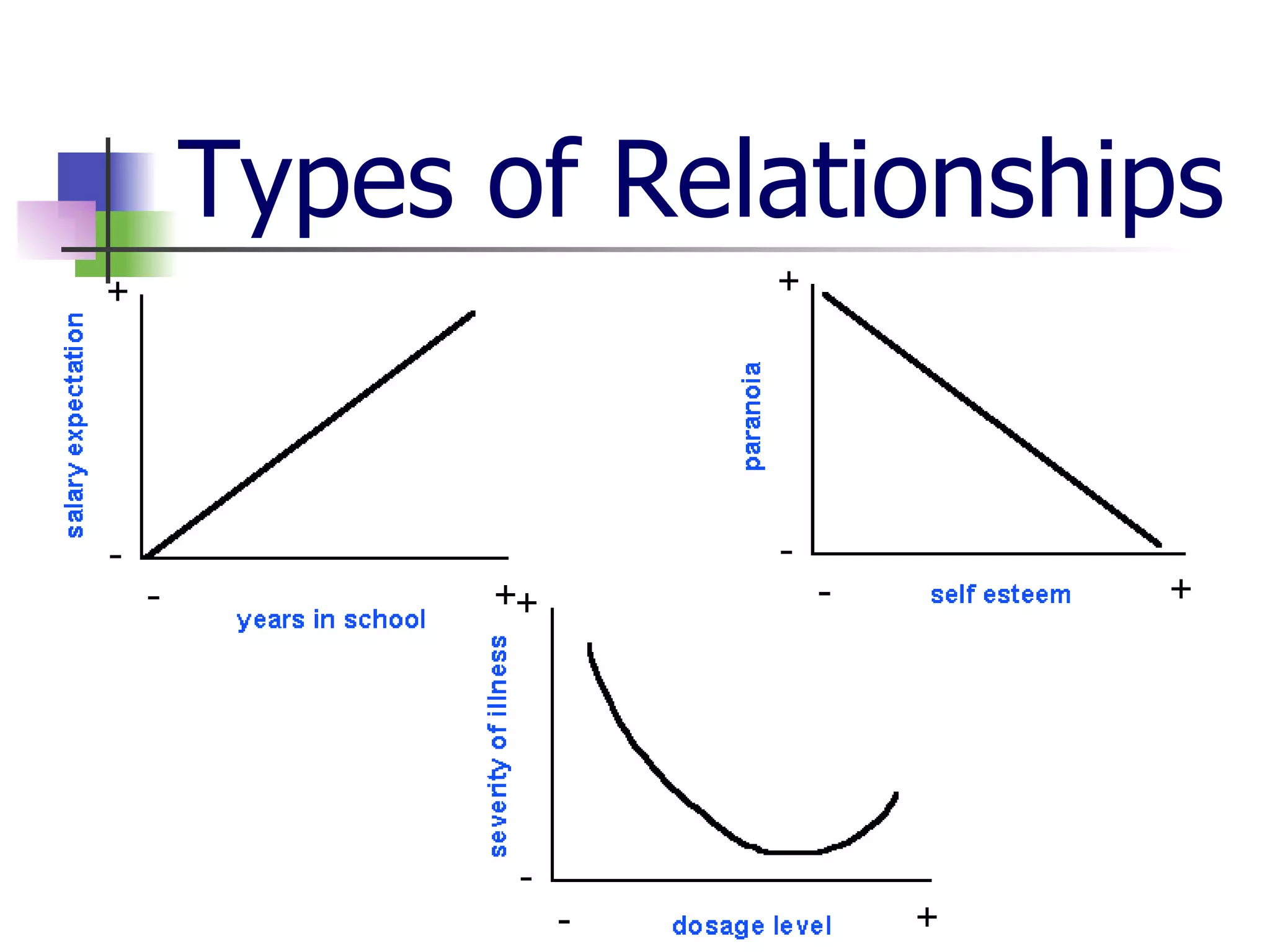
Types of Relationships
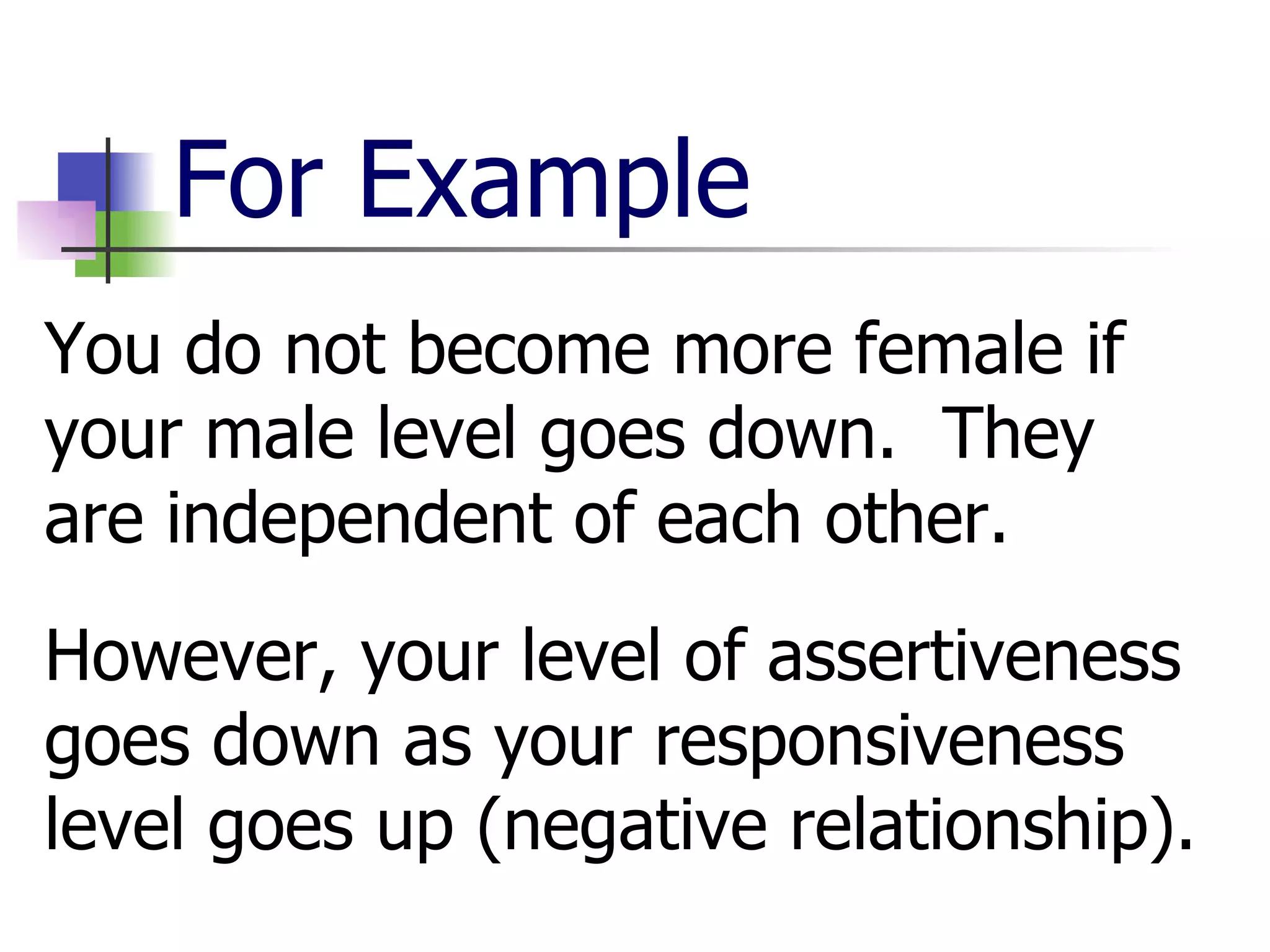
For Example You do not become more female if your male level goes down.  They are independent of each other. However, your level of assertiveness goes down as your responsiveness level goes up (negative relationship).
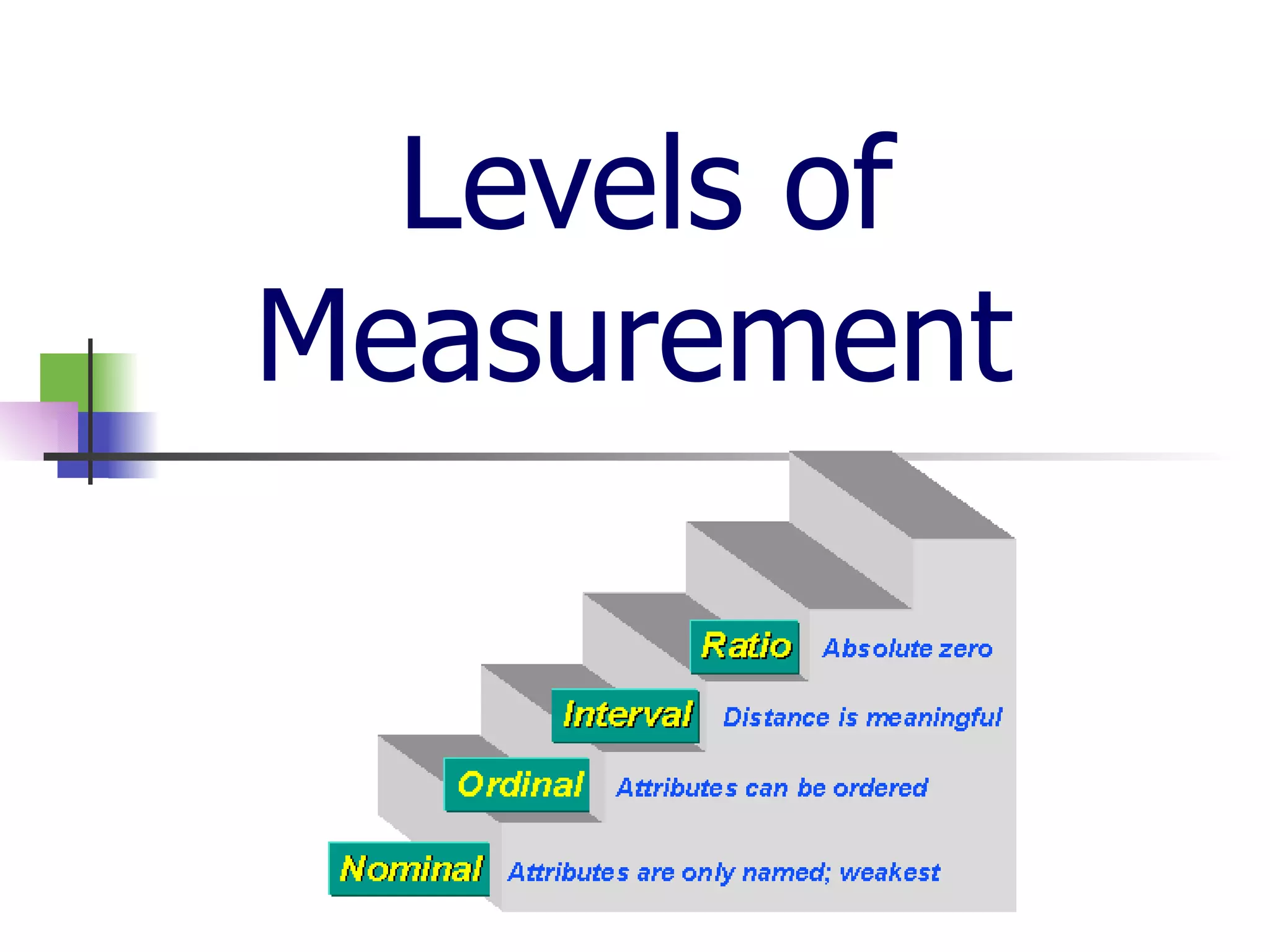
Levels of Measurement
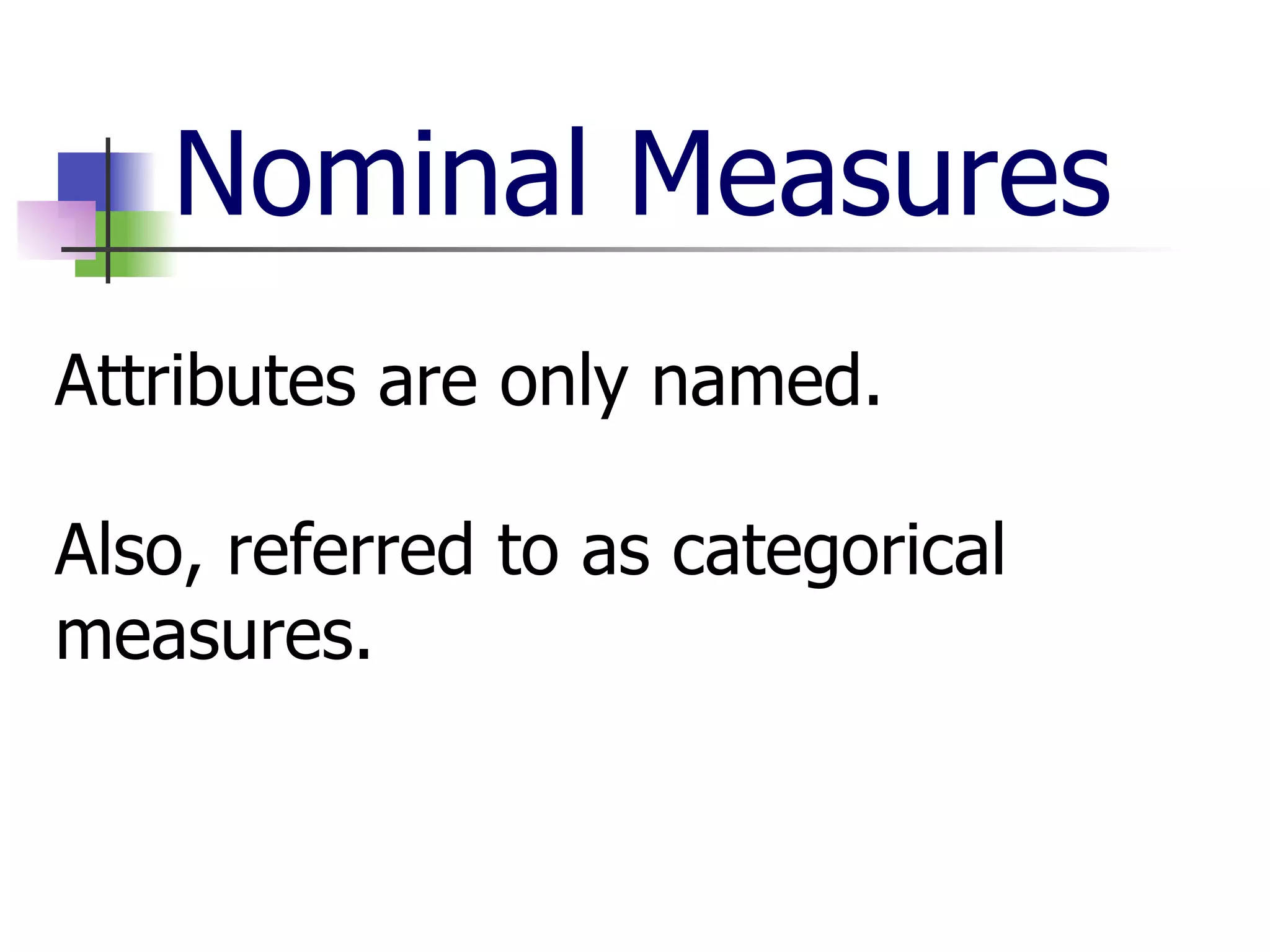
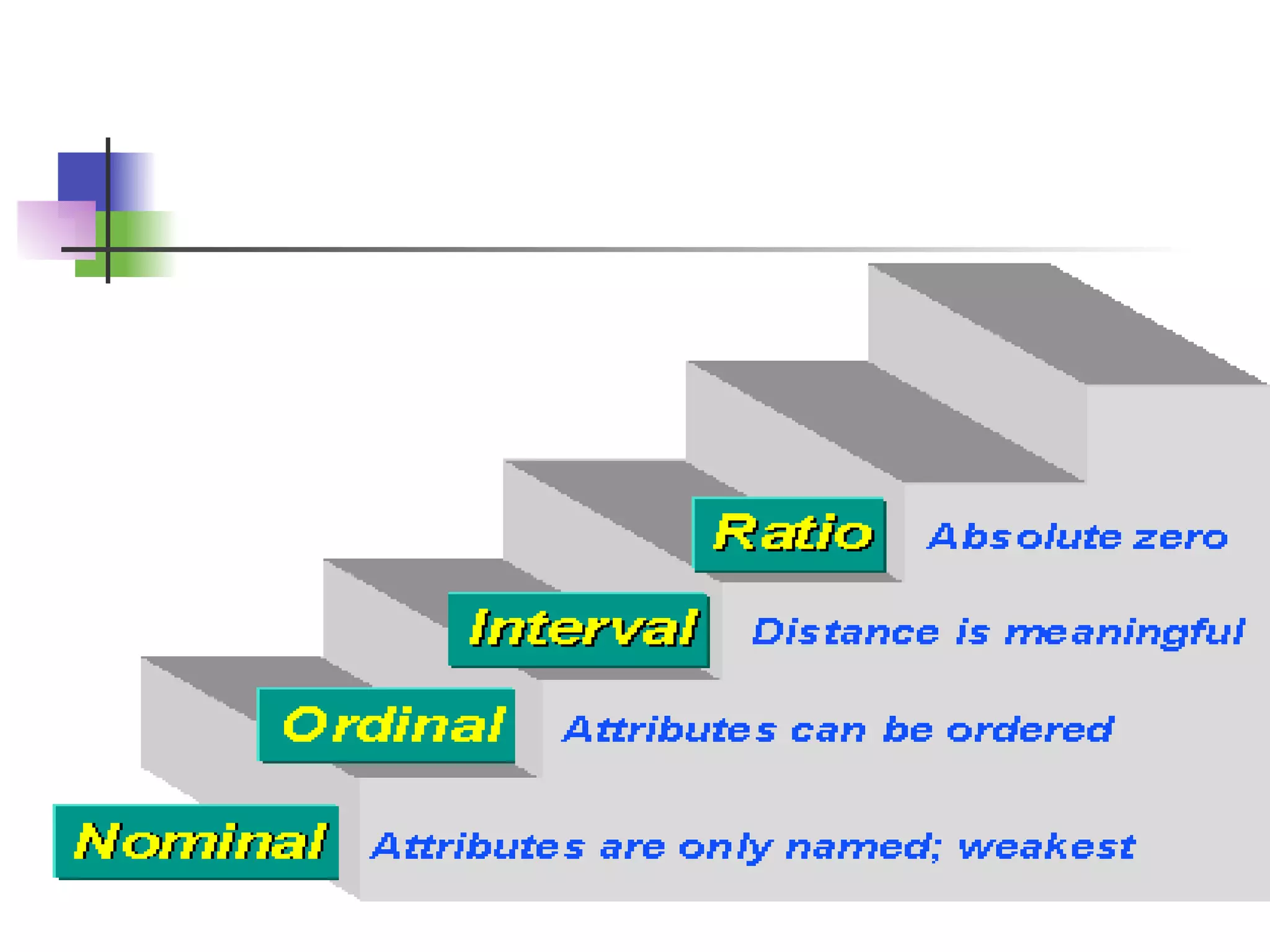
Nominal Measures Attributes are only named. Also, referred to as categorical measures.
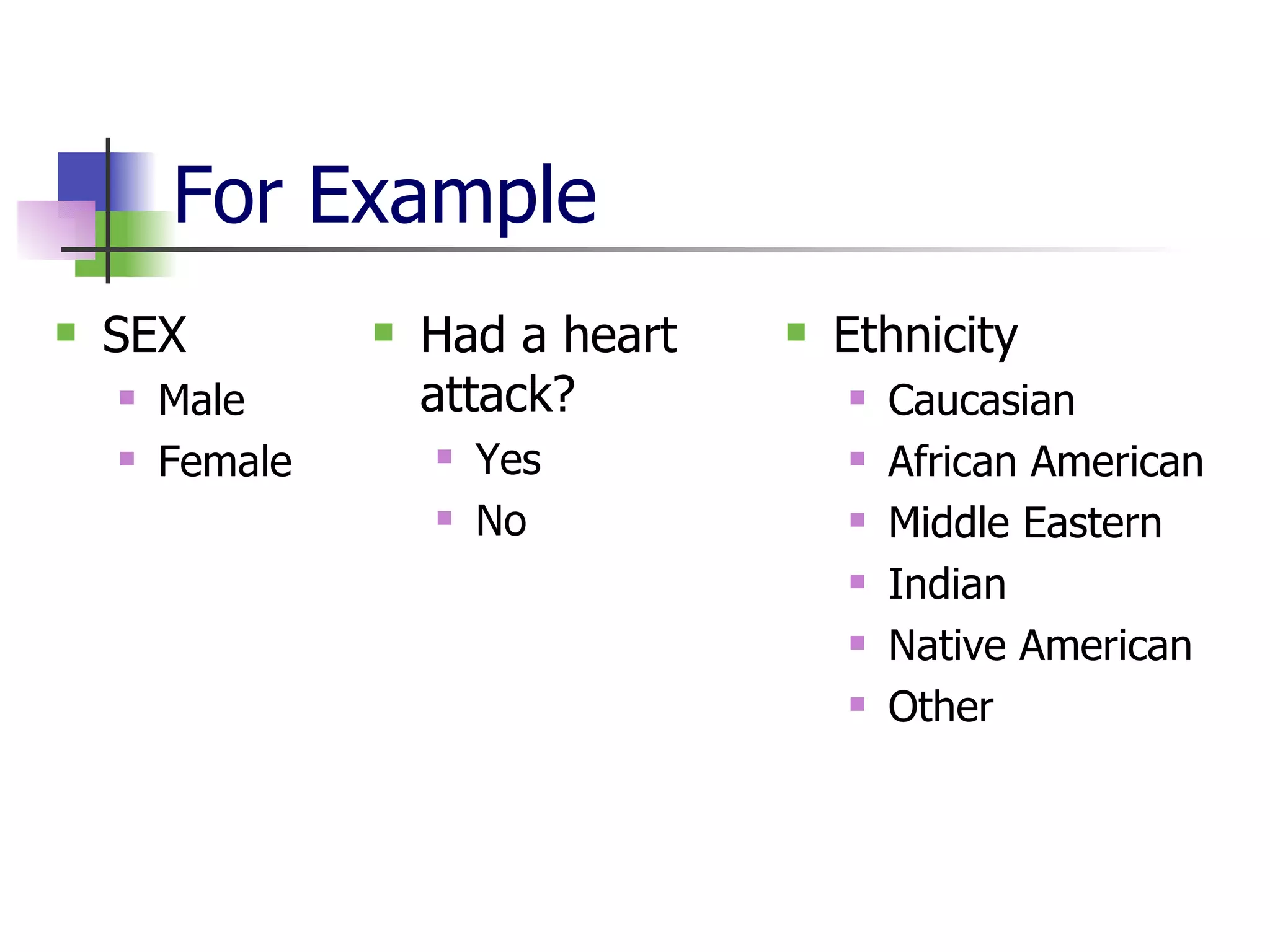
For Example SEX Male  Female Ethnicity Caucasian African American Middle Eastern Indian Native American Other Had a heart attack? Yes  No
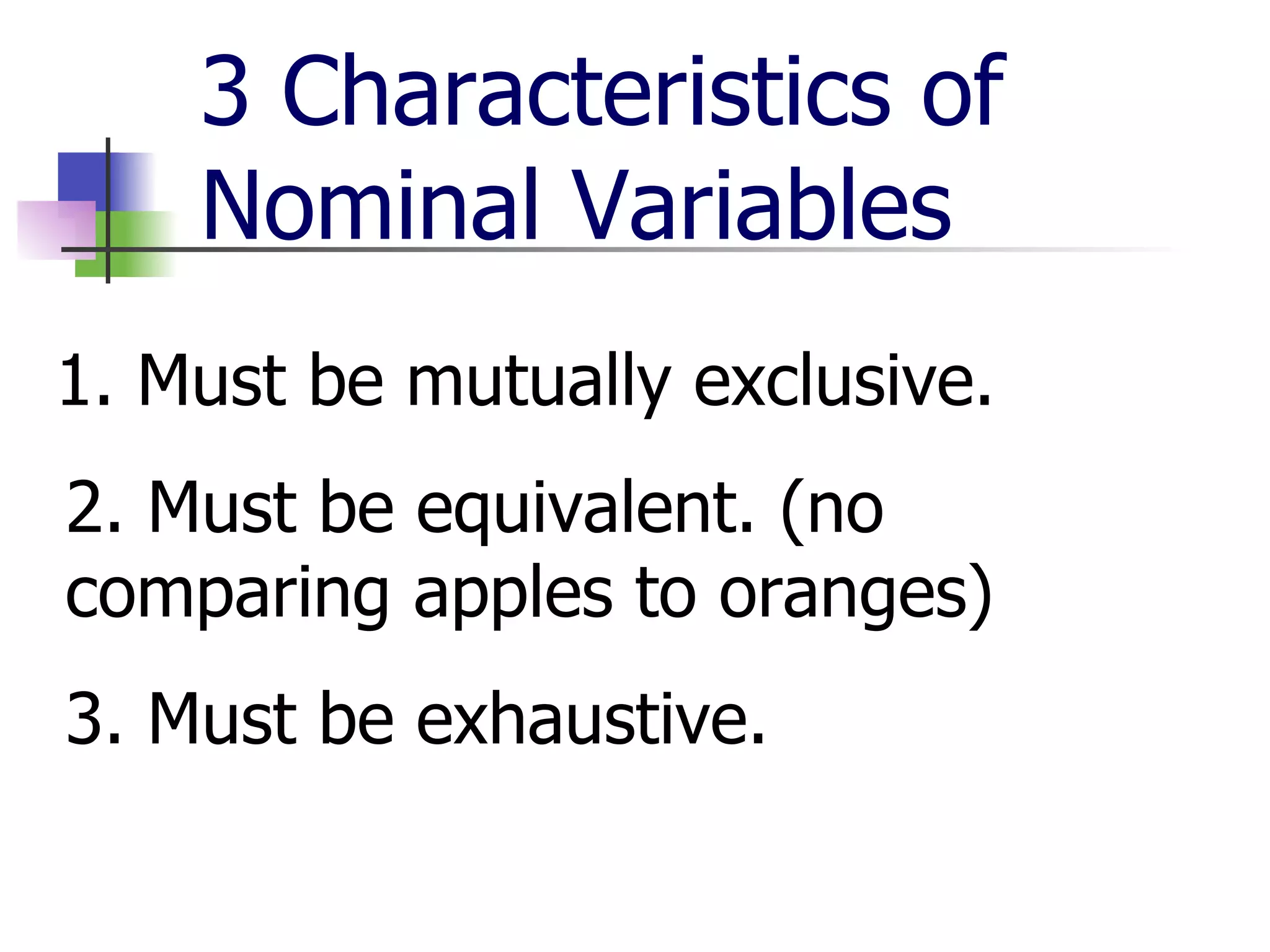
3 Characteristics of  Nominal Variables 1. Must be mutually exclusive. 2. Must be equivalent. (no comparing apples to oranges)  3. Must be exhaustive.
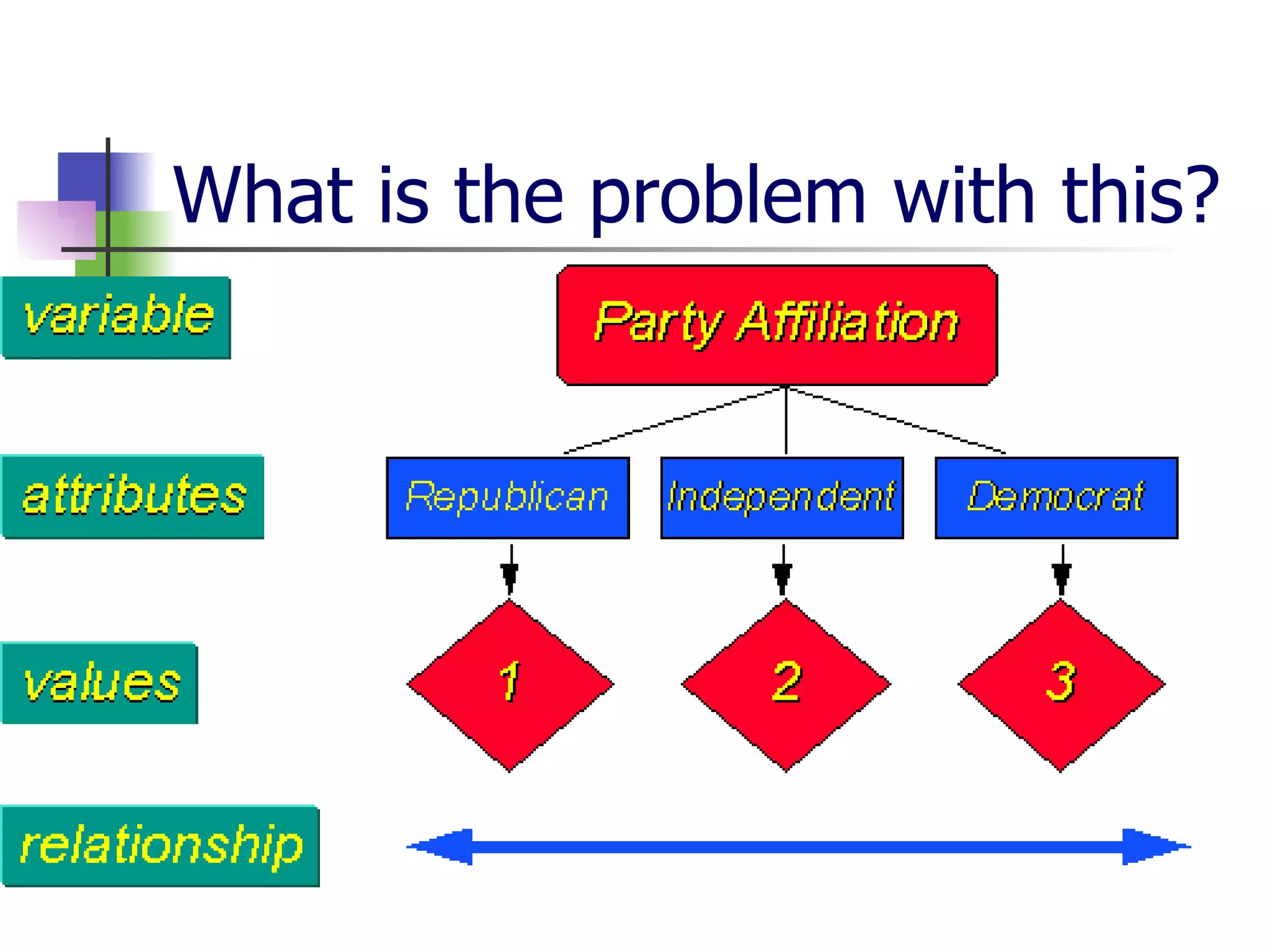
What is the problem with this?
Republicans, Democrats, and Independents are not exhaustive of all possible political parties. How would you correct this? The simplest way would be to add an “other” category.
Ordinal Measures Attributes can be ordered.
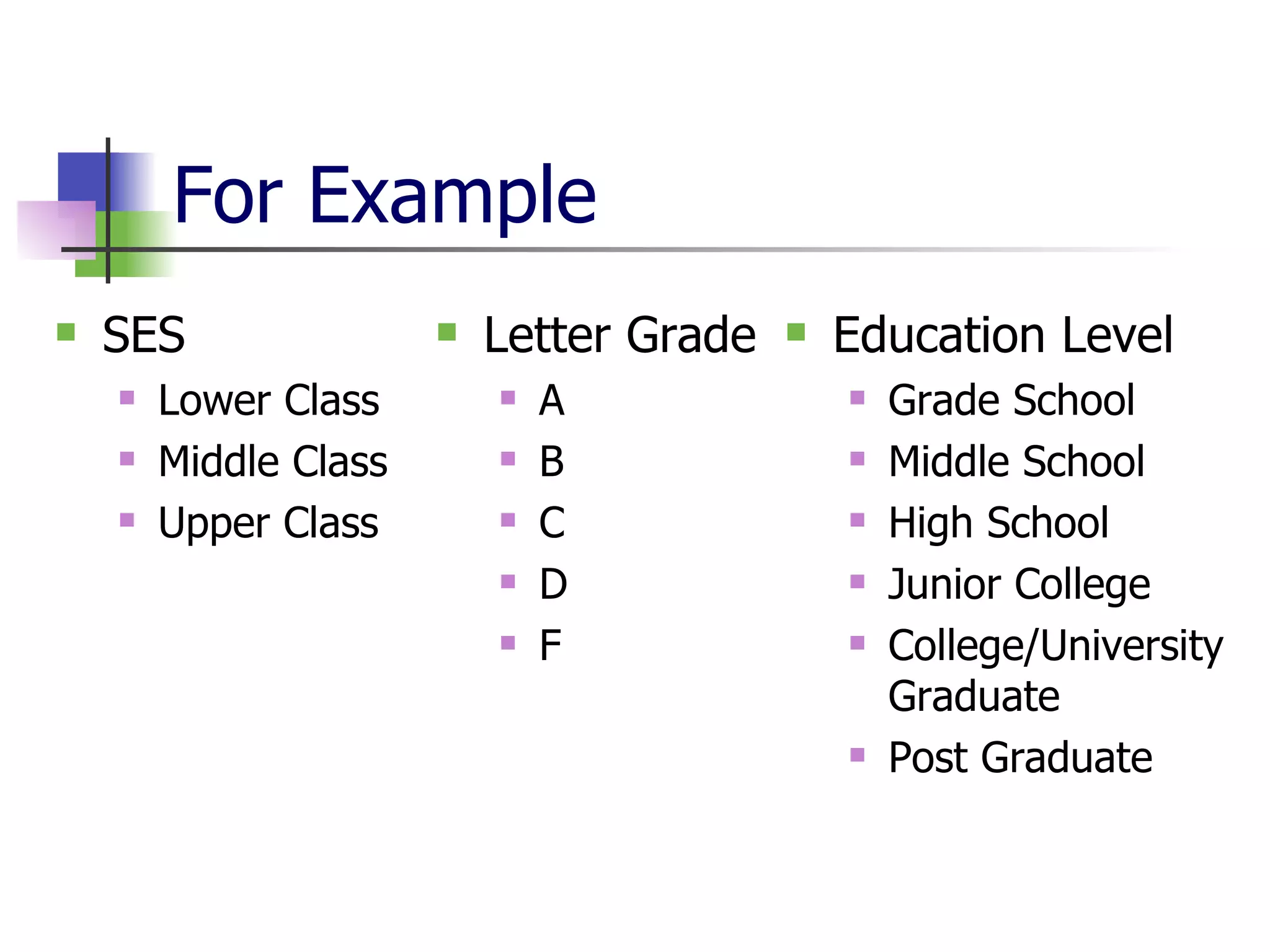
For Example SES Lower Class Middle Class Upper Class Education Level Grade School Middle School High School Junior College College/University Graduate Post Graduate Letter Grade A B C D F
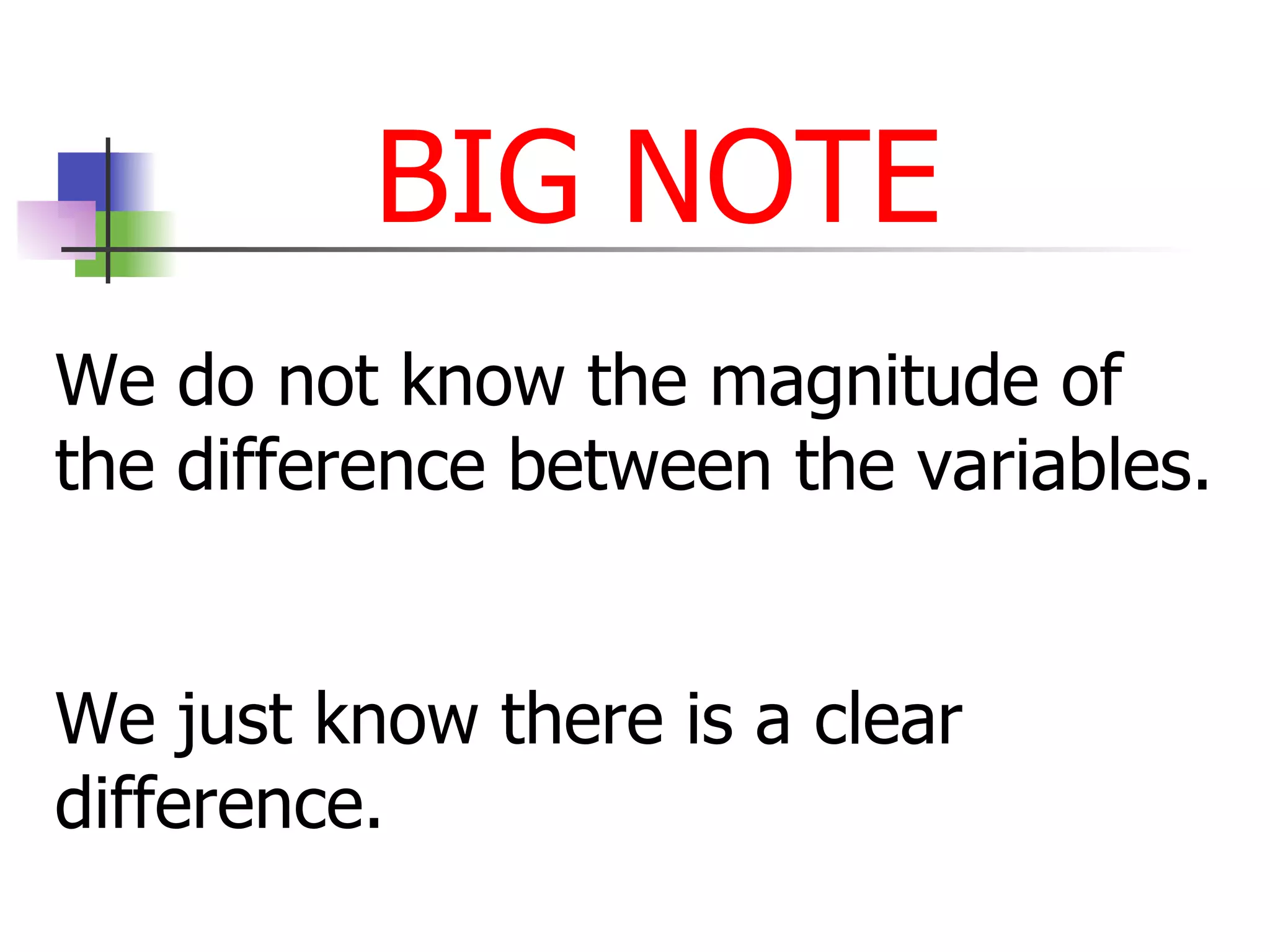
BIG NOTE We do not know the magnitude of the difference between the variables.  We just know there is a clear difference.
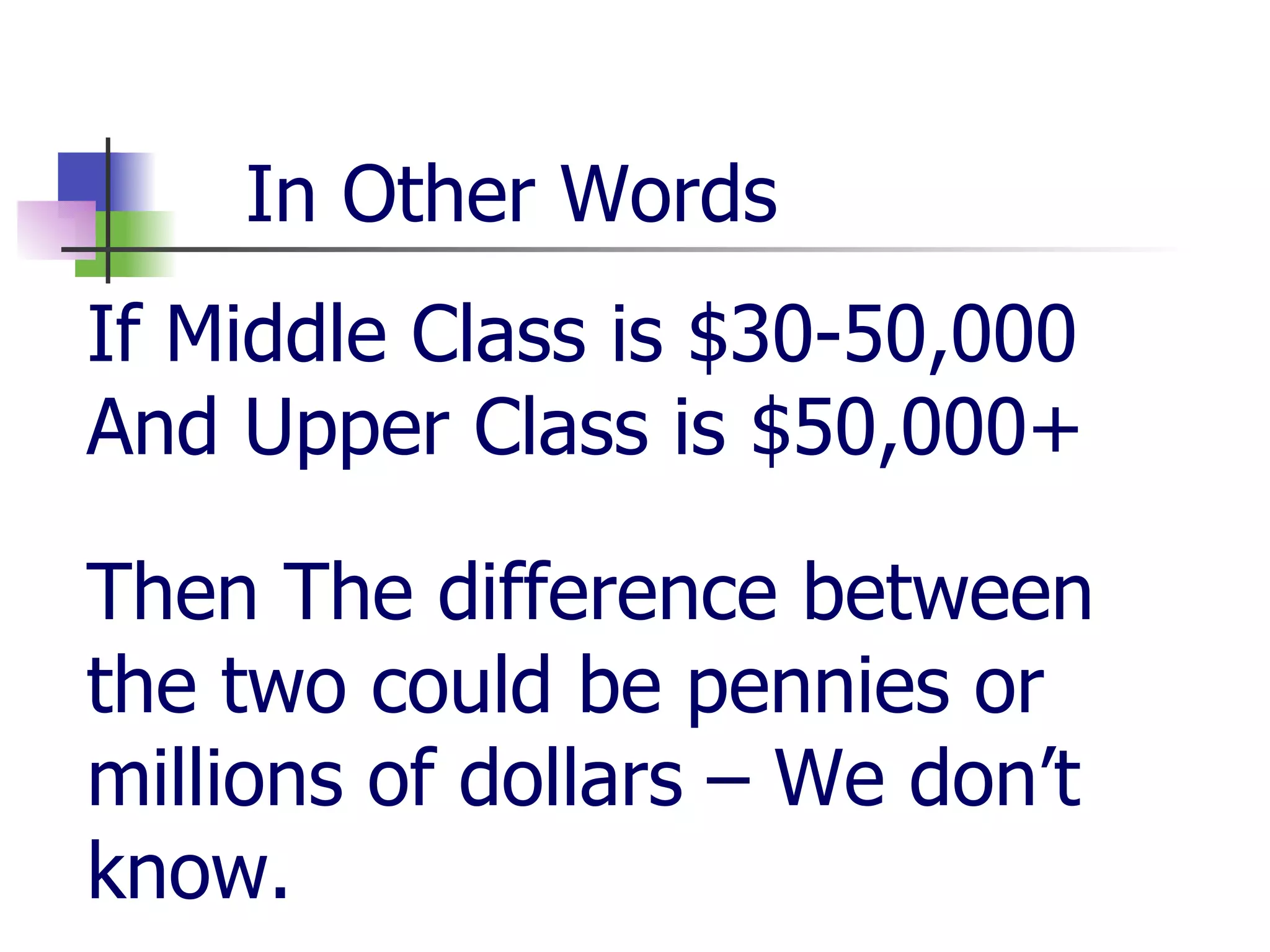
In Other Words If Middle Class is $30-50,000 And Upper Class is $50,000+ Then The difference between the two could be pennies or millions of dollars – We don’t know.
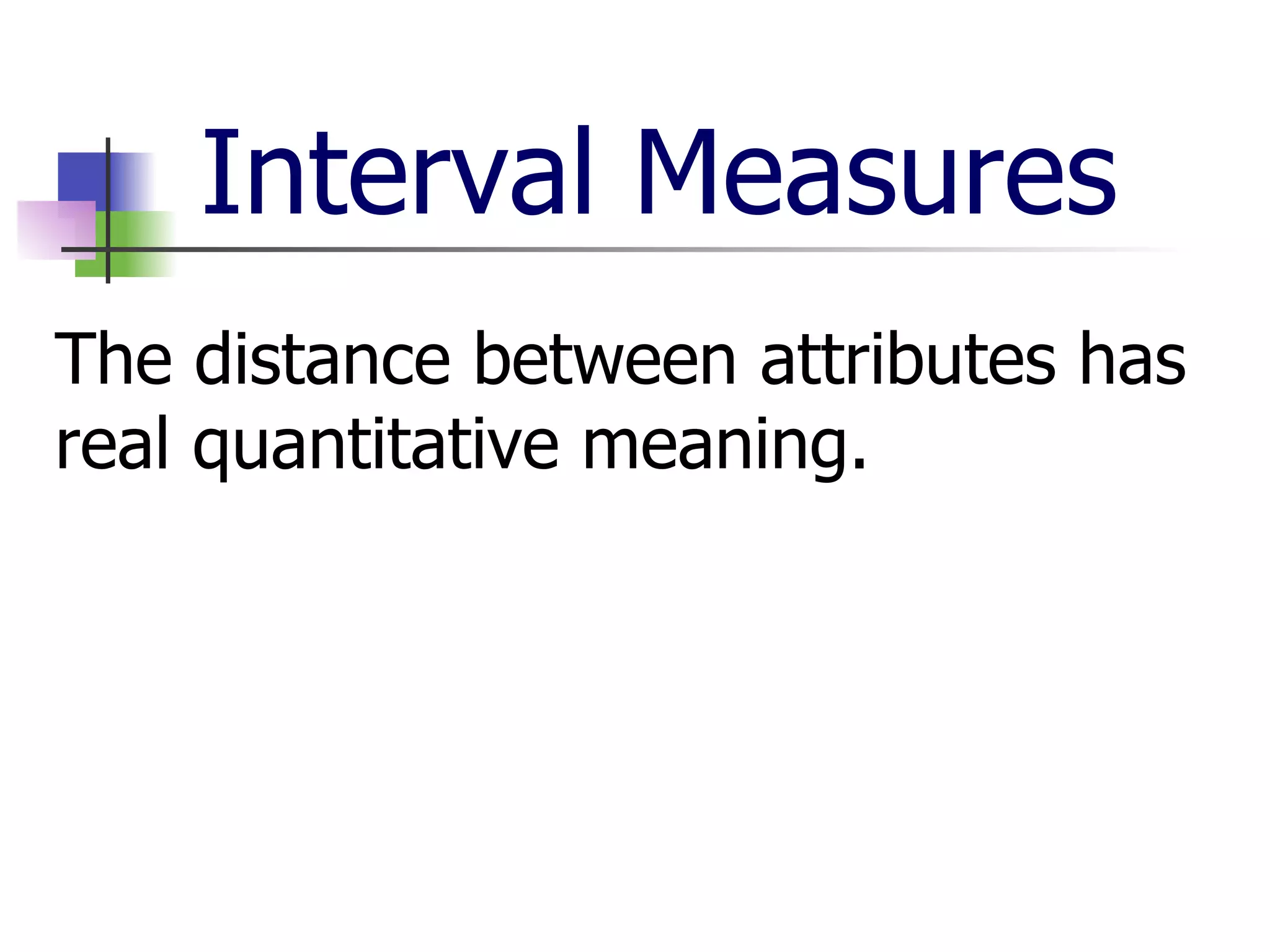
Interval Measures The distance between attributes has real quantitative meaning.
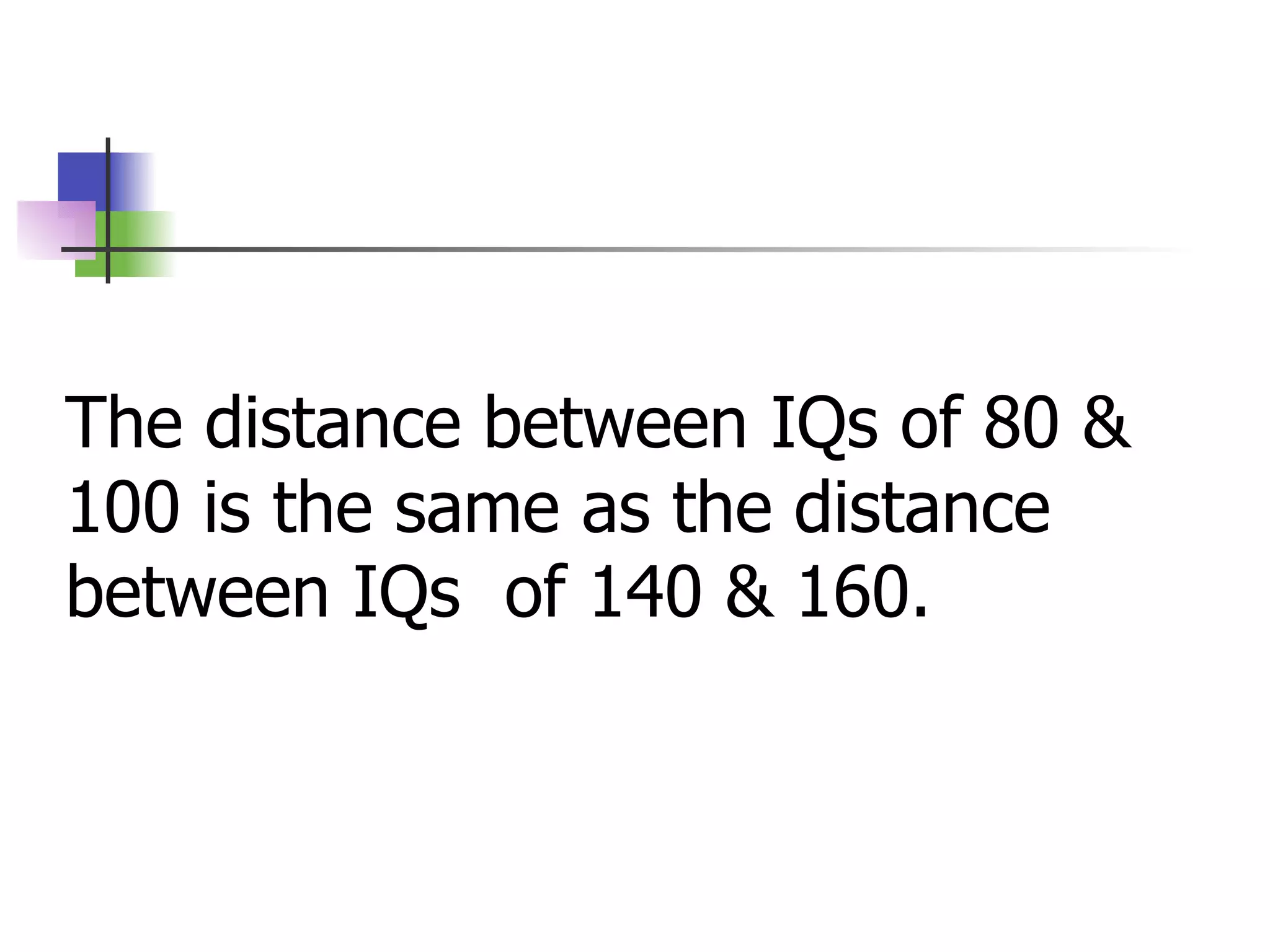
The distance between IQs of 80 & 100 is the same as the distance between IQs  of 140 & 160.
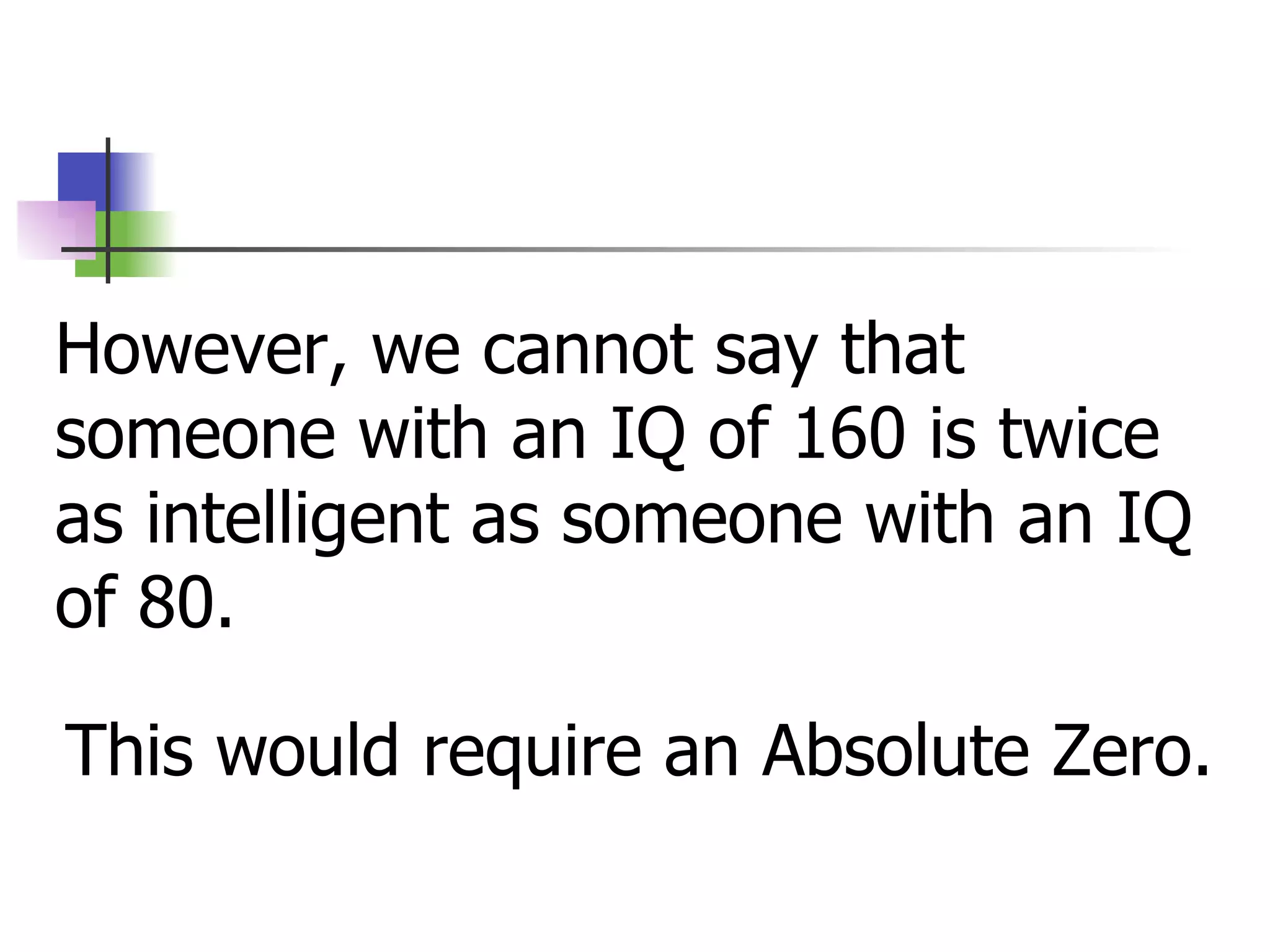
However, we cannot say that someone with an IQ of 160 is twice as intelligent as someone with an IQ of 80. This would require an Absolute Zero.
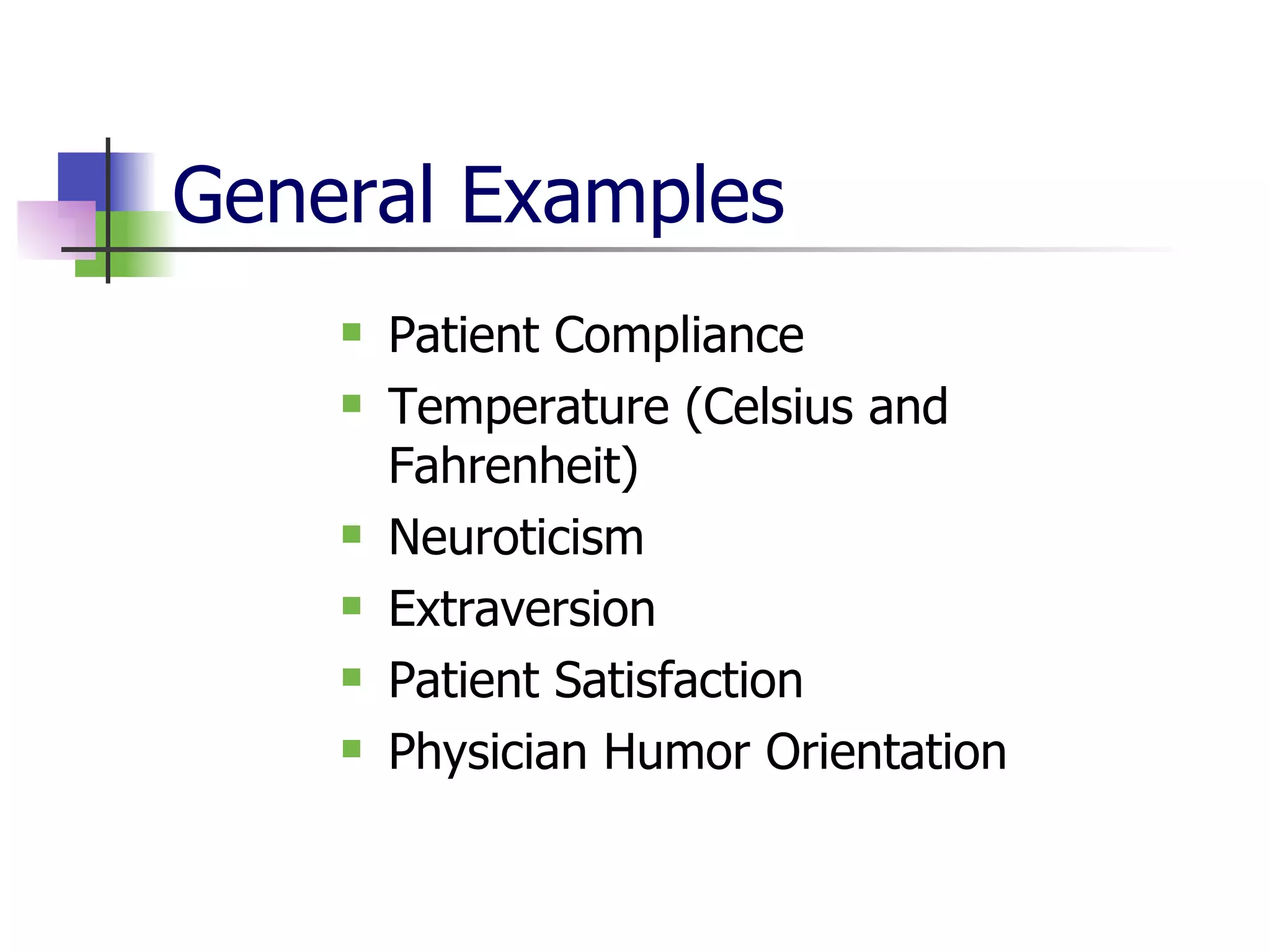
General Examples Patient Compliance Temperature (Celsius and Fahrenheit)  Neuroticism Extraversion Patient Satisfaction Physician Humor Orientation
Scaled Interval Measures - Likert - Semantic Differential - Thurstone
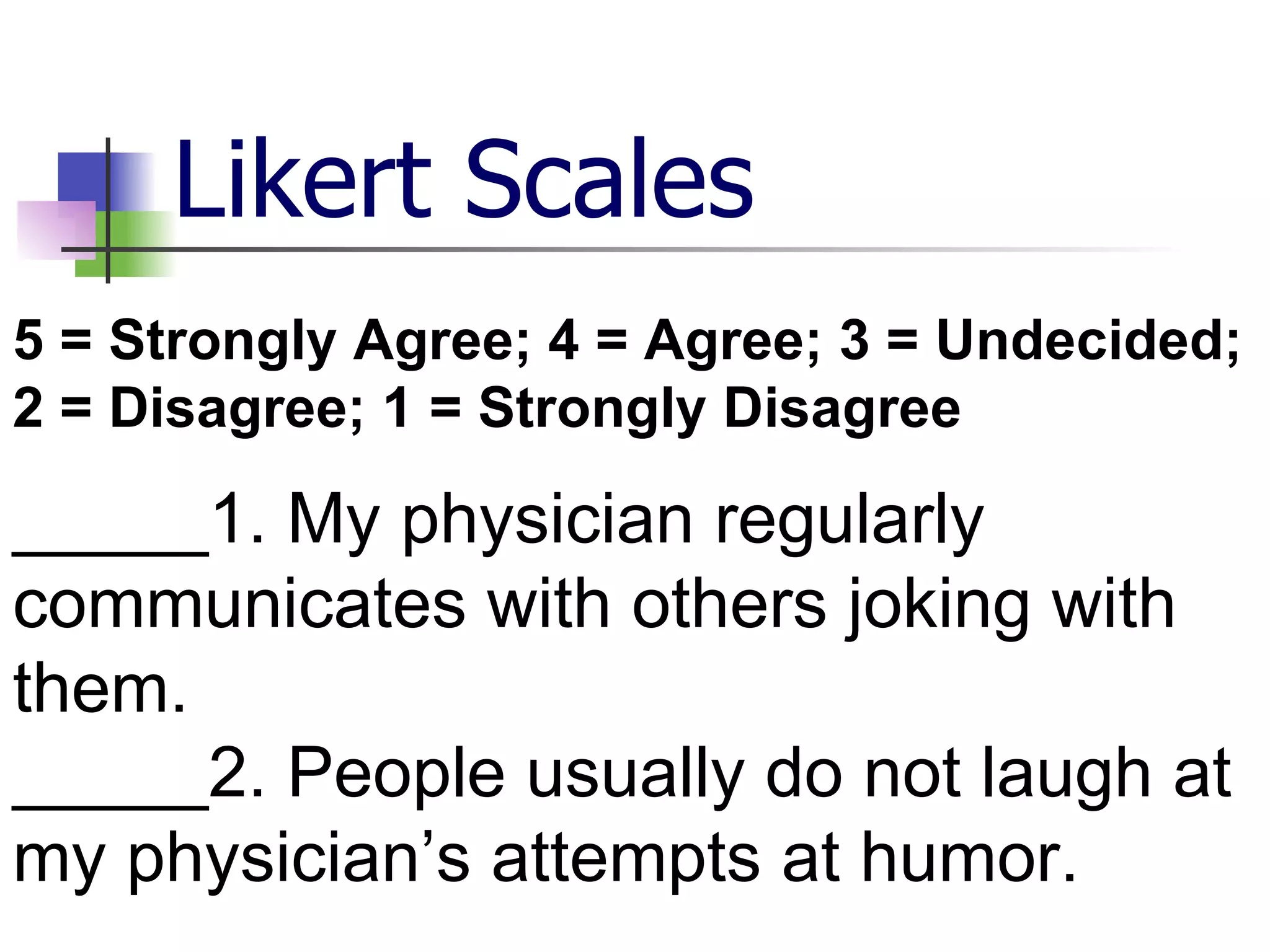
Likert Scales 5 = Strongly Agree; 4 = Agree; 3 = Undecided; 2 = Disagree; 1 = Strongly Disagree   _____1. My physician regularly communicates with others joking with them. _____2. People usually do not laugh at my physician’s attempts at humor.
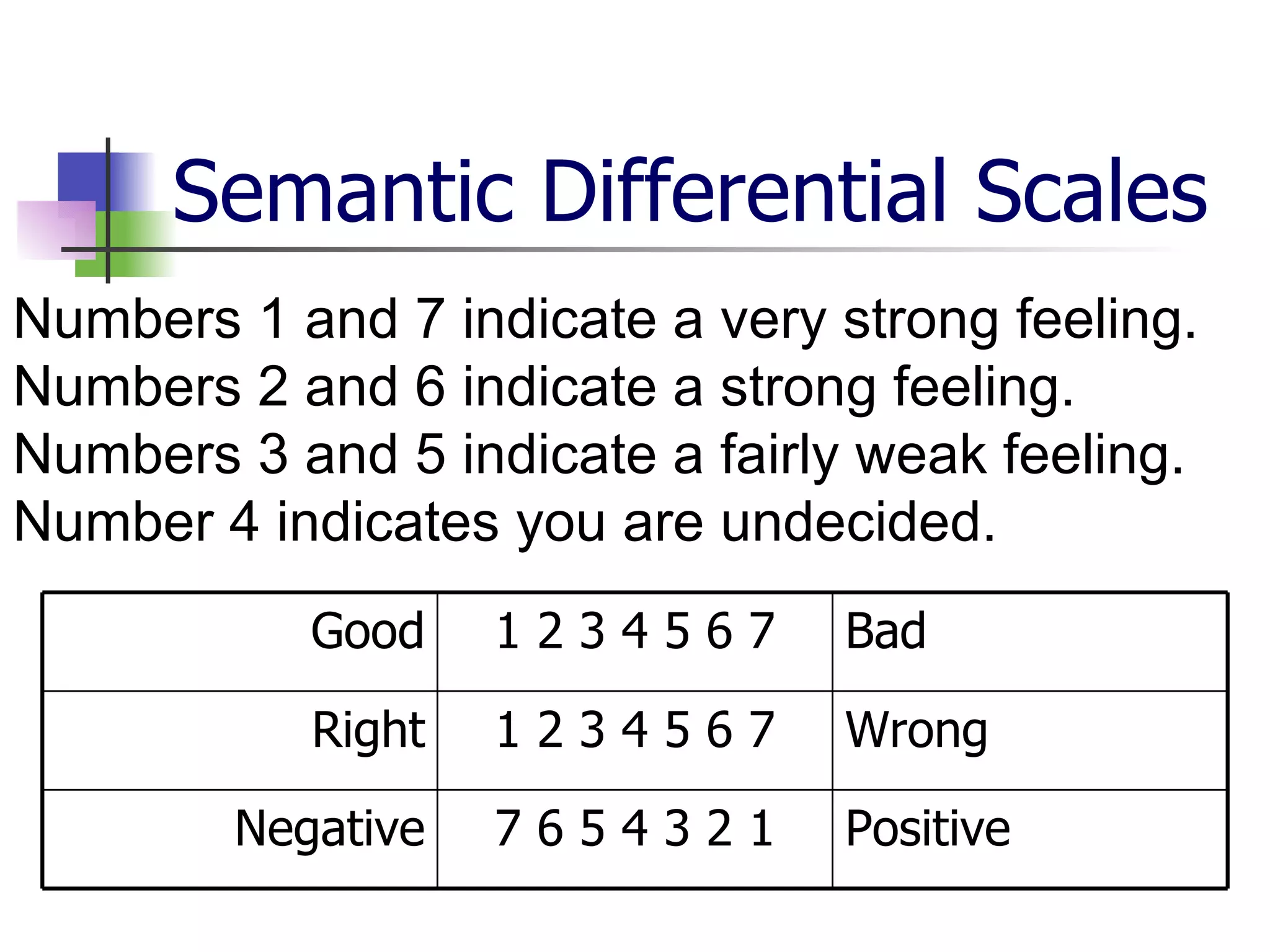
Semantic Differential Scales Numbers 1 and 7 indicate a very strong feeling.  Numbers 2 and 6 indicate a strong feeling.  Numbers 3 and 5 indicate a fairly weak feeling.  Number 4 indicates you are undecided. Positive 7 6 5 4 3 2 1 Negative Wrong 1 2 3 4 5 6 7 Right Bad 1 2 3 4 5 6 7 Good
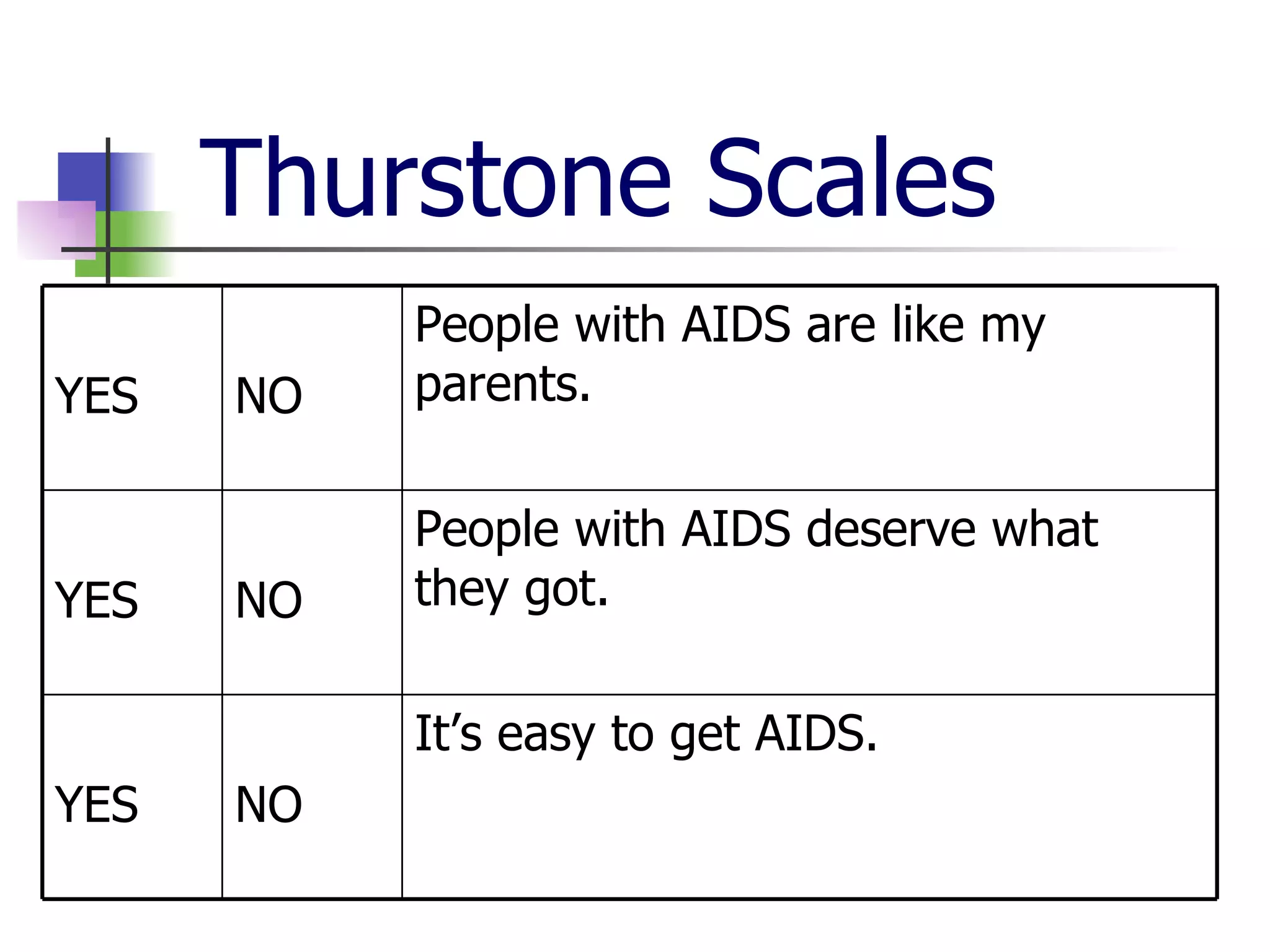
Thurstone Scales It’s easy to get AIDS. NO YES People with AIDS deserve what they got. NO YES People with AIDS are like my parents. NO YES
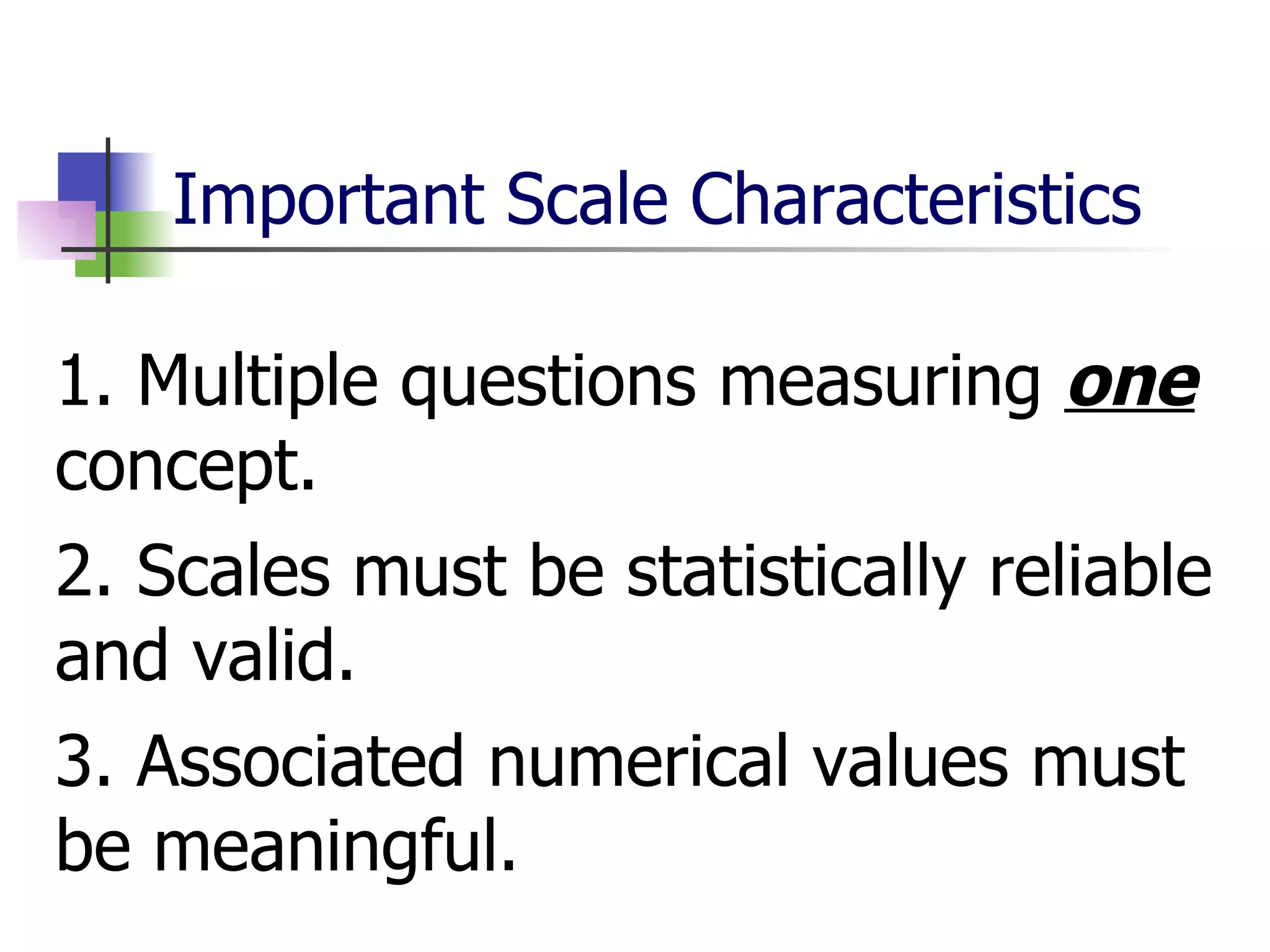
Important Scale Characteristics 1. Multiple questions measuring  one  concept. 2. Scales must be statistically reliable and valid.  3. Associated numerical values must be meaningful.
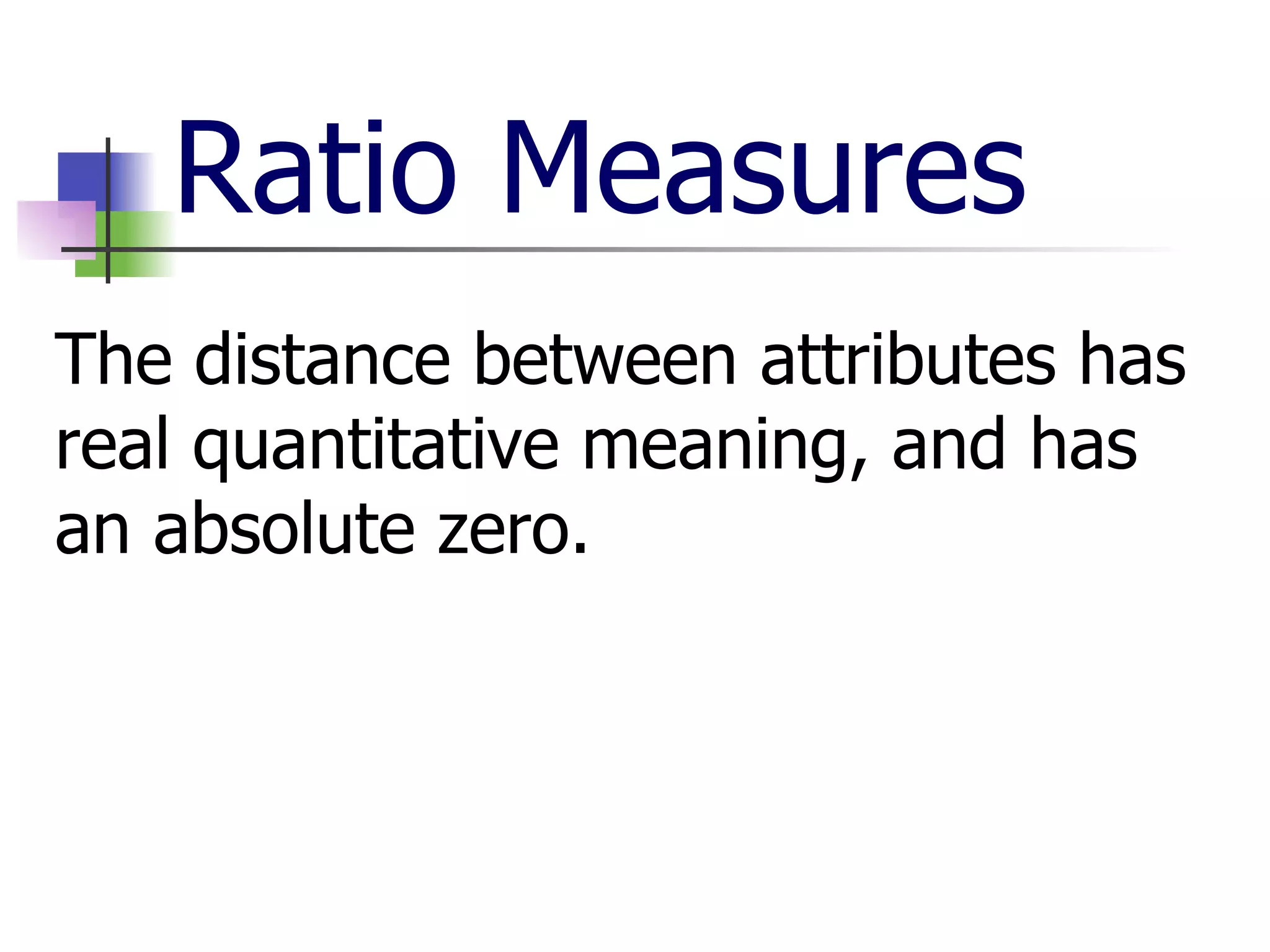
Ratio Measures The distance between attributes has real quantitative meaning, and has an absolute zero.
Celsius and Fahrenheit are Interval measures for temperature. Kelvin is a ratio measures for temperature because it has an absolute zero.
Examples Temperature (Kelvin)  Age Height Weight Mass Blood Pressure Speed Heart Rate
 
Why Do Levels of Measurement Matter? The type of variables you have determine the statistical devices you can and cannot use.
See Picking a Test
Variables in Research
Dependent Variables The variable that is effected or not effected by another variable in a research study.
Independent Variables The variable that is being manipulated or examined in a study to see if it effects the dependent variable.
Example In a study by Wrench and Booth-Butterfield (2001), it was found that a physician’s humor orientation influenced her or his patient’s level of satisfaction.
What was the IV and DV? IV = Physician Humor Orientation DV = Patient Satisfaction
Another Example Wrench and Booth-Butterfield (2001) also found that the severity of a diagnosis influenced a patient’s desire for information about the diagnosis and information about treatment, but did not effect patient compliance.
What were the IVs and DVs? IV – Severity   DV – Desired Information about   Diagnosis 2)  IV – Severity   DV – Desired Information about   Treatment
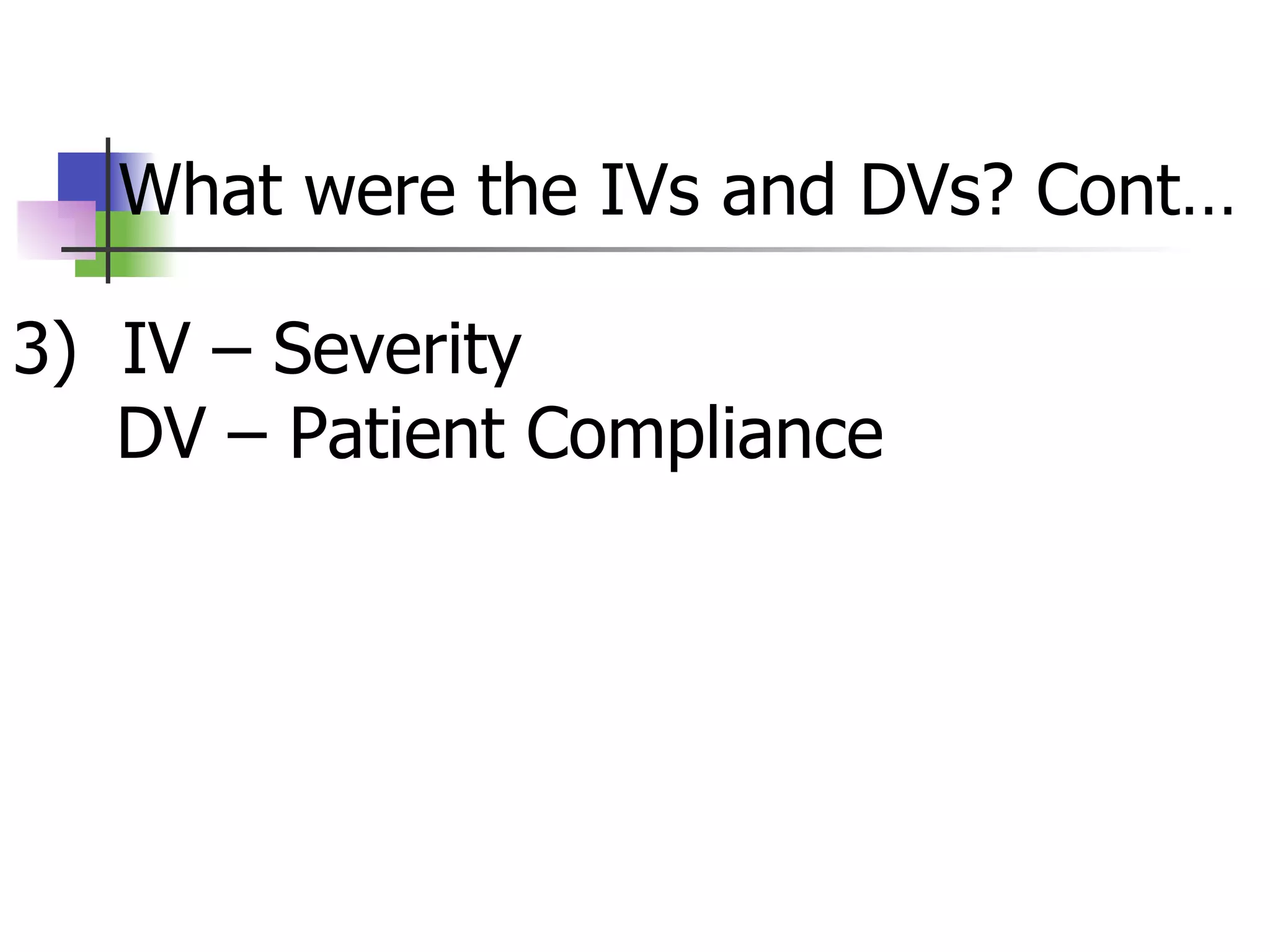
What were the IVs and DVs? Cont… 3)  IV – Severity   DV – Patient Compliance
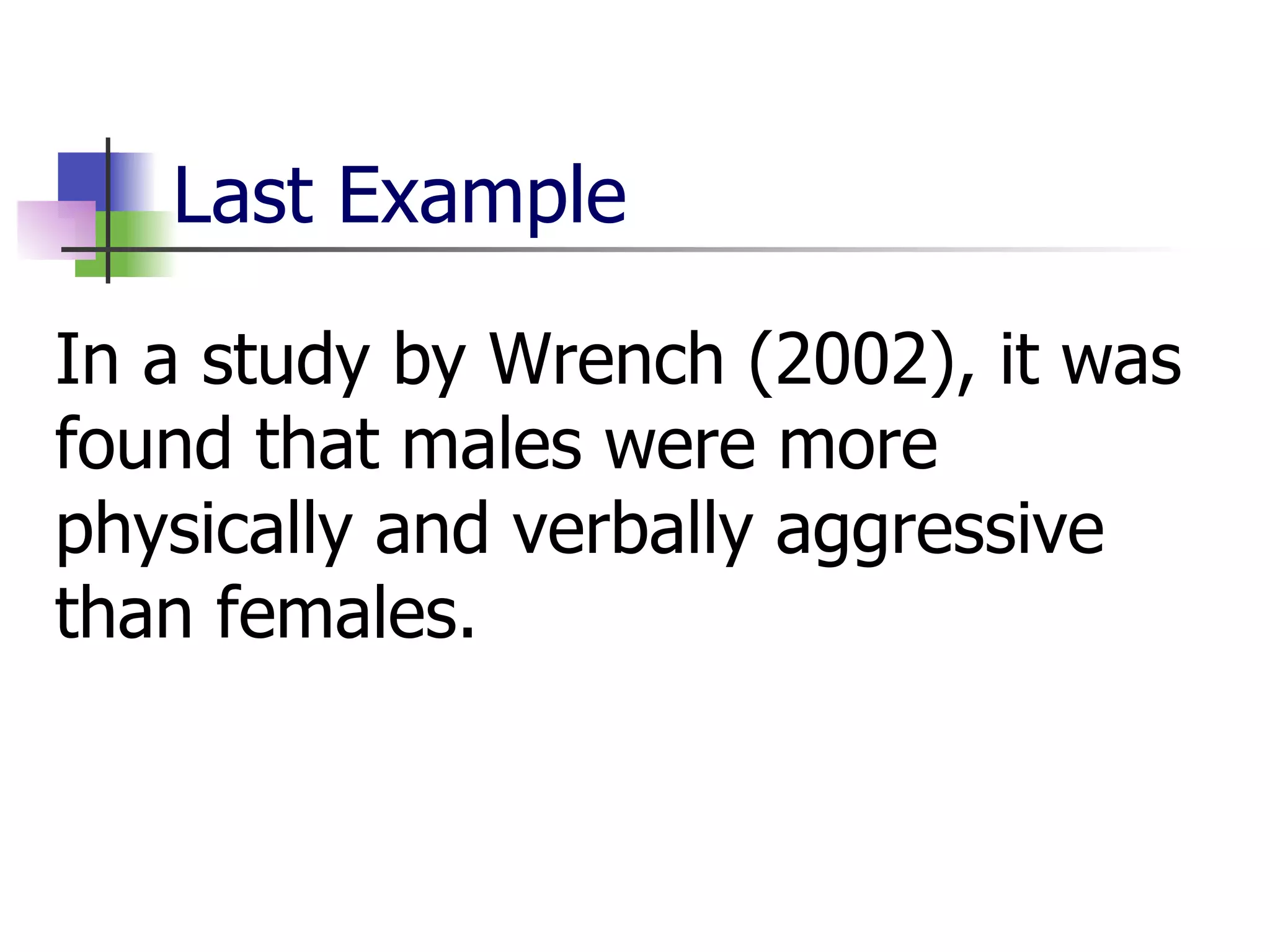
Last Example In a study by Wrench (2002), it was found that males were more physically and verbally aggressive than females.
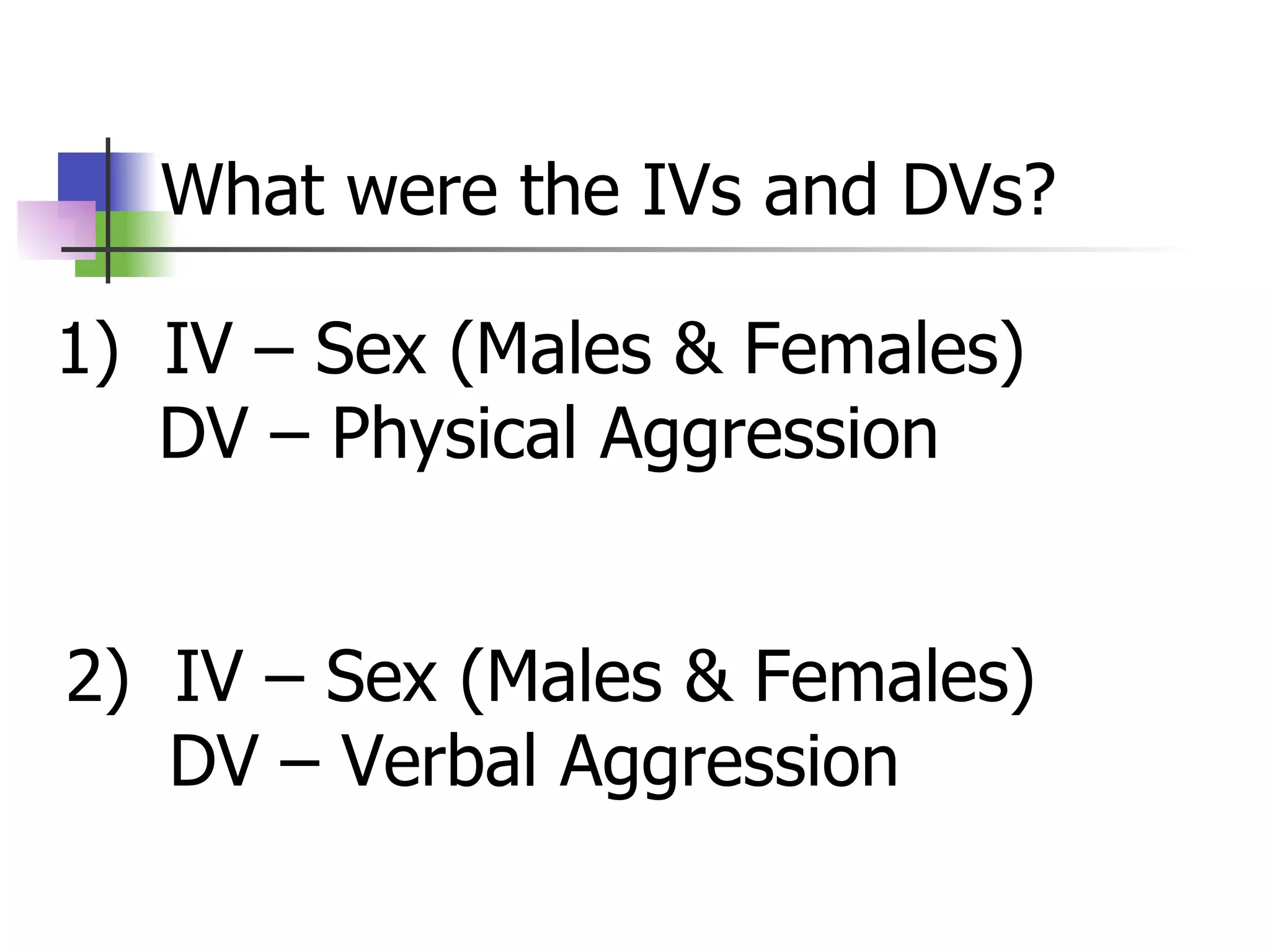
What were the IVs and DVs? IV – Sex (Males & Females)   DV – Physical Aggression 2)  IV – Sex (Males & Females)   DV – Verbal Aggression

Variable Lecture

  • 1.
    An Introduction tothe Use and Misuse of Research Variables “ A judicious man uses statistics, not to get knowledge, but to save himself from having ignorance foisted upon him.” --Thomas Carlyle
  • 2.
    Variable Defined Anyentity that can take on different values. Age is a variable because it can take different values for different people at different times.
  • 3.
    Examples Blood PressureSex Gender Age Extraversion Patient Satisfaction Heart rate Political Party Time Weight Height Anxiety Pleasure Fear Aggression Attractiveness
  • 4.
    The Aspects ofVariables
  • 5.
  • 6.
    1. Attributes The specific value of a variable.
  • 7.
    Examples of AttributesSEX Male Female Gender Assertive Responsive Androgynous Math makes me anxious Agree Neutral Disagree
  • 8.
    Values The numericalaspect directly associated with a specific attribute.
  • 9.
    Examples of ValuesSEX Male = 1 Female = 2 Gender Assertive = 81< 120 Responsive = 0 < 40 Androgynous = 41<80 Math makes me anxious Agree = 1 Neutral = 2 Disagree =3
  • 10.
    Relationship Does astatistical relationship exist between the attributes of the variable? The correspondence between two variables.
  • 11.
  • 12.
    For Example Youdo not become more female if your male level goes down. They are independent of each other. However, your level of assertiveness goes down as your responsiveness level goes up (negative relationship).
  • 13.
  • 14.
    Nominal Measures Attributesare only named. Also, referred to as categorical measures.
  • 15.
    For Example SEXMale Female Ethnicity Caucasian African American Middle Eastern Indian Native American Other Had a heart attack? Yes No
  • 16.
    3 Characteristics of Nominal Variables 1. Must be mutually exclusive. 2. Must be equivalent. (no comparing apples to oranges) 3. Must be exhaustive.
  • 17.
    What is theproblem with this?
  • 18.
    Republicans, Democrats, andIndependents are not exhaustive of all possible political parties. How would you correct this? The simplest way would be to add an “other” category.
  • 19.
  • 20.
    For Example SESLower Class Middle Class Upper Class Education Level Grade School Middle School High School Junior College College/University Graduate Post Graduate Letter Grade A B C D F
  • 21.
    BIG NOTE Wedo not know the magnitude of the difference between the variables. We just know there is a clear difference.
  • 22.
    In Other WordsIf Middle Class is $30-50,000 And Upper Class is $50,000+ Then The difference between the two could be pennies or millions of dollars – We don’t know.
  • 23.
    Interval Measures Thedistance between attributes has real quantitative meaning.
  • 24.
    The distance betweenIQs of 80 & 100 is the same as the distance between IQs of 140 & 160.
  • 25.
    However, we cannotsay that someone with an IQ of 160 is twice as intelligent as someone with an IQ of 80. This would require an Absolute Zero.
  • 26.
    General Examples PatientCompliance Temperature (Celsius and Fahrenheit) Neuroticism Extraversion Patient Satisfaction Physician Humor Orientation
  • 27.
    Scaled Interval Measures- Likert - Semantic Differential - Thurstone
  • 28.
    Likert Scales 5= Strongly Agree; 4 = Agree; 3 = Undecided; 2 = Disagree; 1 = Strongly Disagree _____1. My physician regularly communicates with others joking with them. _____2. People usually do not laugh at my physician’s attempts at humor.
  • 29.
    Semantic Differential ScalesNumbers 1 and 7 indicate a very strong feeling. Numbers 2 and 6 indicate a strong feeling. Numbers 3 and 5 indicate a fairly weak feeling. Number 4 indicates you are undecided. Positive 7 6 5 4 3 2 1 Negative Wrong 1 2 3 4 5 6 7 Right Bad 1 2 3 4 5 6 7 Good
  • 30.
    Thurstone Scales It’seasy to get AIDS. NO YES People with AIDS deserve what they got. NO YES People with AIDS are like my parents. NO YES
  • 31.
    Important Scale Characteristics1. Multiple questions measuring one concept. 2. Scales must be statistically reliable and valid. 3. Associated numerical values must be meaningful.
  • 32.
    Ratio Measures Thedistance between attributes has real quantitative meaning, and has an absolute zero.
  • 33.
    Celsius and Fahrenheitare Interval measures for temperature. Kelvin is a ratio measures for temperature because it has an absolute zero.
  • 34.
    Examples Temperature (Kelvin) Age Height Weight Mass Blood Pressure Speed Heart Rate
  • 35.
  • 36.
    Why Do Levelsof Measurement Matter? The type of variables you have determine the statistical devices you can and cannot use.
  • 37.
  • 38.
  • 39.
    Dependent Variables Thevariable that is effected or not effected by another variable in a research study.
  • 40.
    Independent Variables Thevariable that is being manipulated or examined in a study to see if it effects the dependent variable.
  • 41.
    Example In astudy by Wrench and Booth-Butterfield (2001), it was found that a physician’s humor orientation influenced her or his patient’s level of satisfaction.
  • 42.
    What was theIV and DV? IV = Physician Humor Orientation DV = Patient Satisfaction
  • 43.
    Another Example Wrenchand Booth-Butterfield (2001) also found that the severity of a diagnosis influenced a patient’s desire for information about the diagnosis and information about treatment, but did not effect patient compliance.
  • 44.
    What were theIVs and DVs? IV – Severity DV – Desired Information about Diagnosis 2) IV – Severity DV – Desired Information about Treatment
  • 45.
    What were theIVs and DVs? Cont… 3) IV – Severity DV – Patient Compliance
  • 46.
    Last Example Ina study by Wrench (2002), it was found that males were more physically and verbally aggressive than females.
  • 47.
    What were theIVs and DVs? IV – Sex (Males & Females) DV – Physical Aggression 2) IV – Sex (Males & Females) DV – Verbal Aggression