DEFECTS IN 
FORMED COMPONENTS 
FREDY JAMES J. 
13MY03 
JABIN MATHEW BENJAMIN 
13MY04 
DEPT. OF METALLURGICAL ENGINEERING 
PSG College of Technology
Forming or Metal forming 
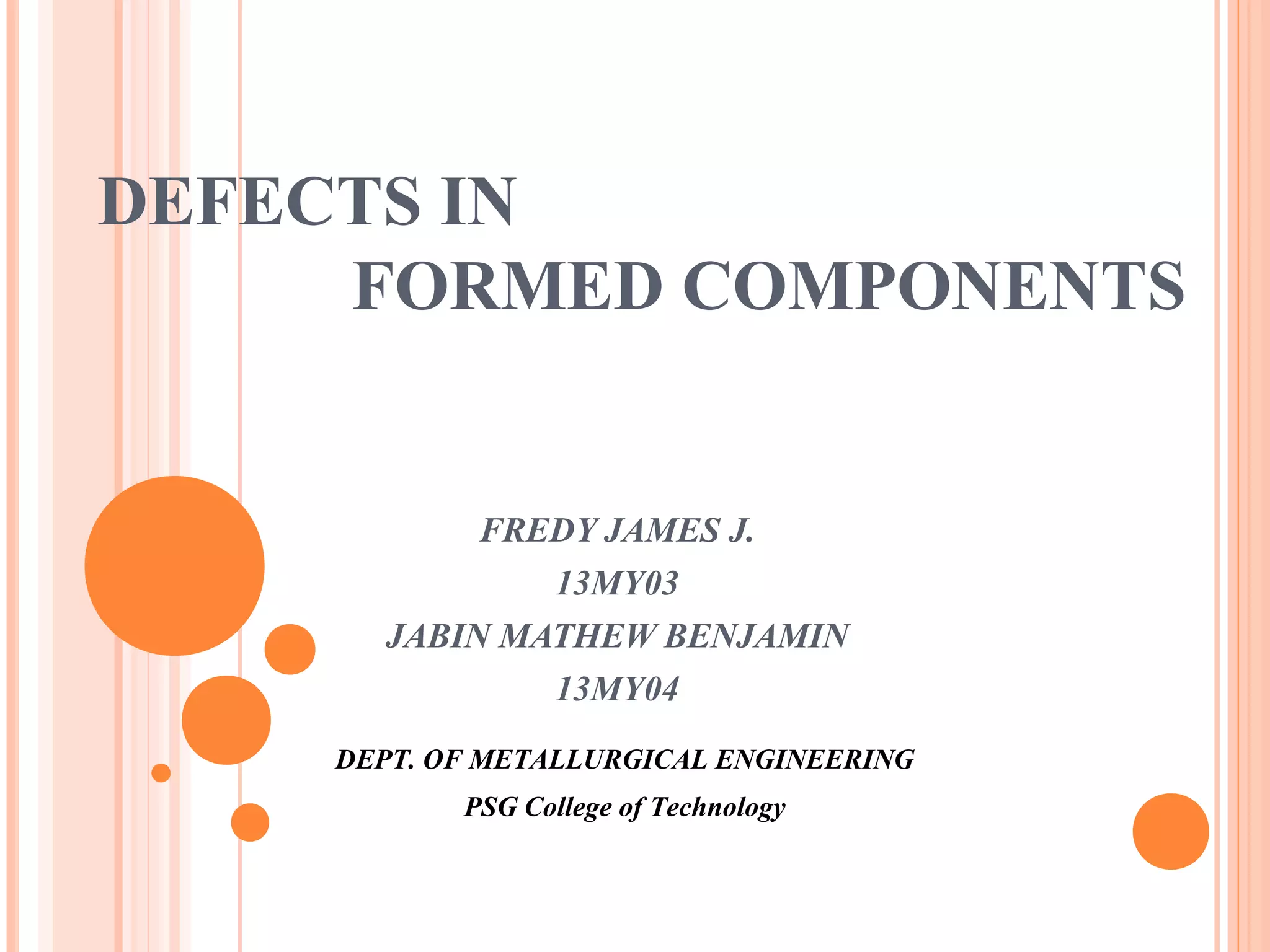
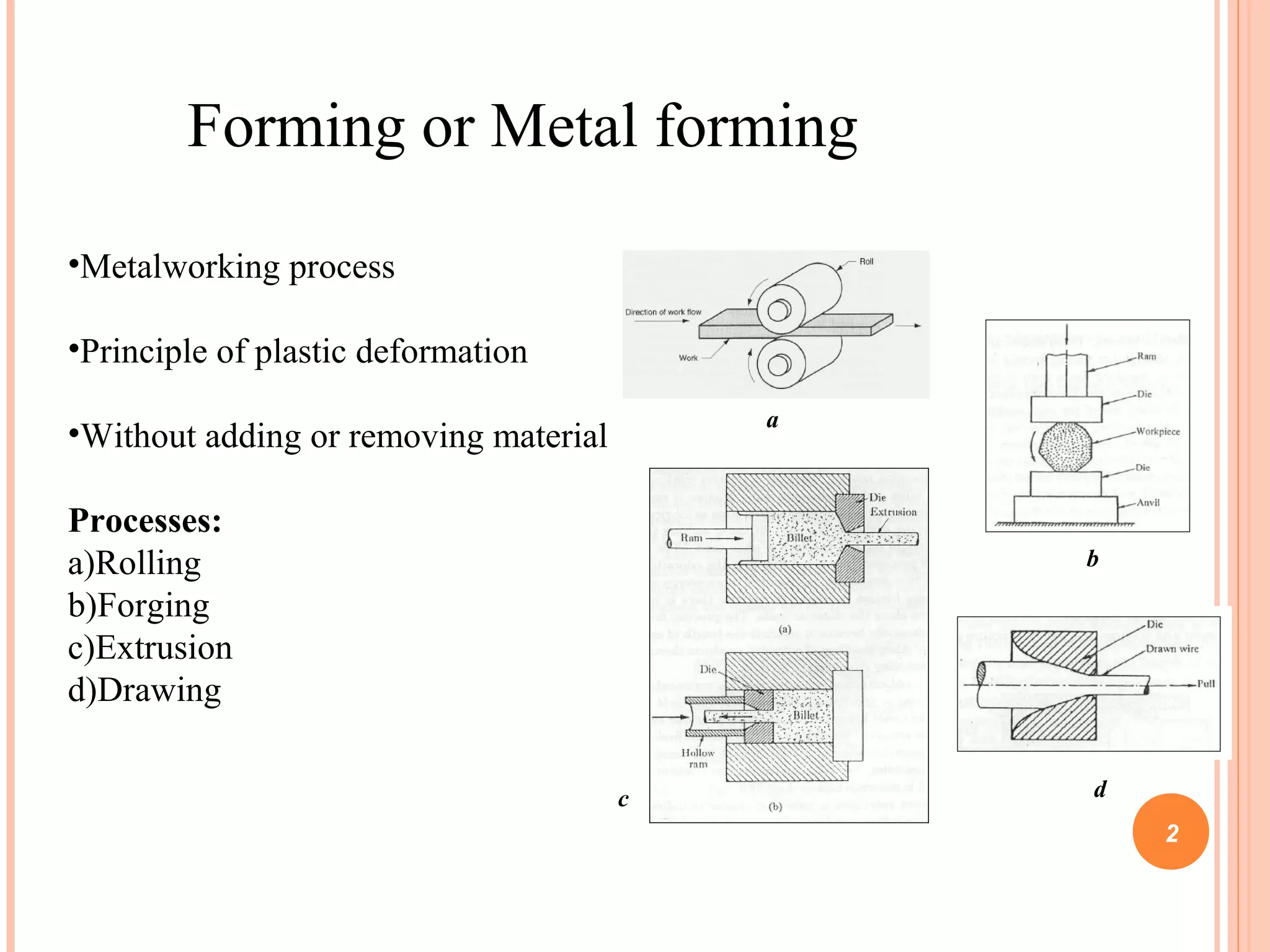
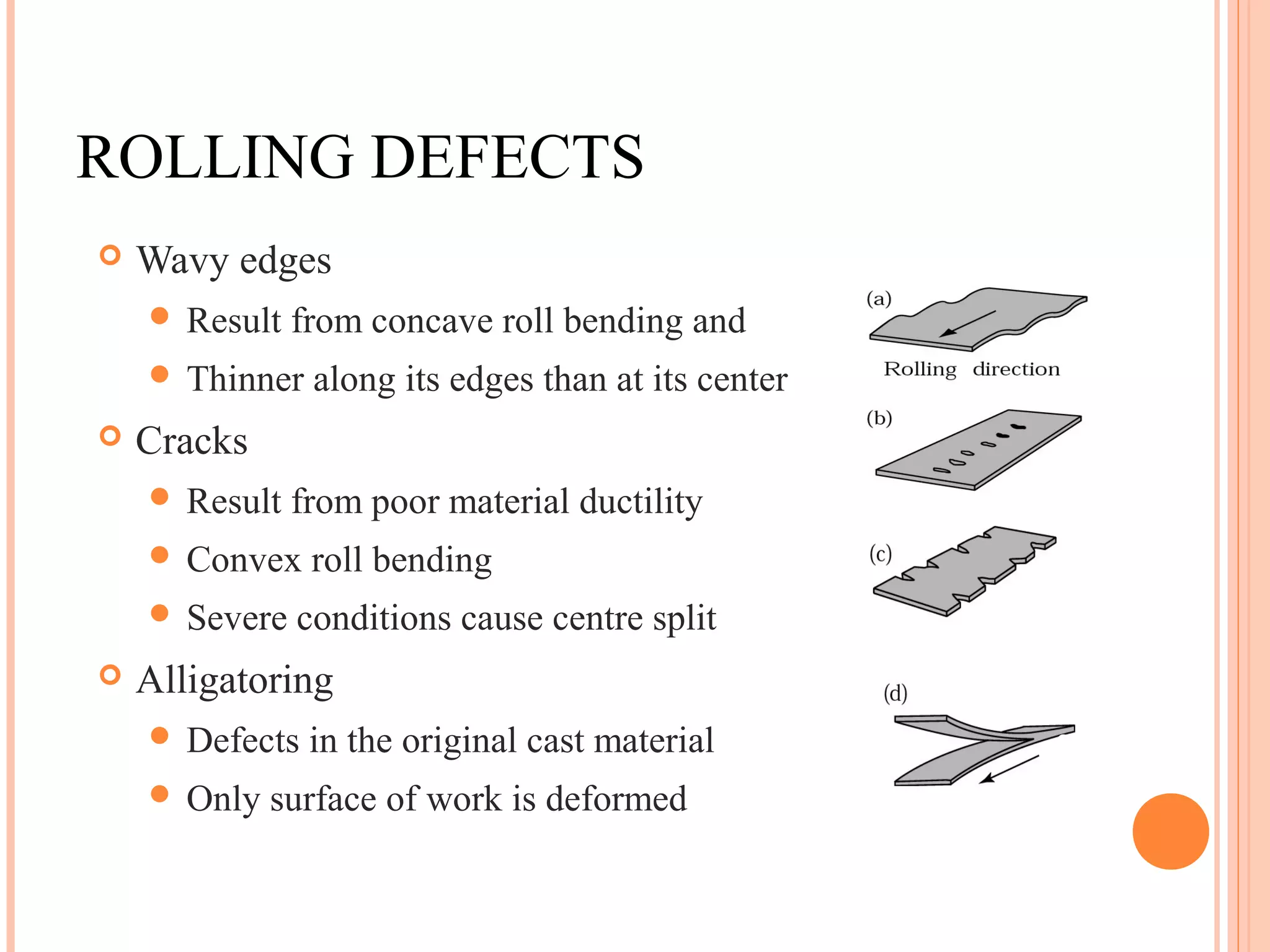
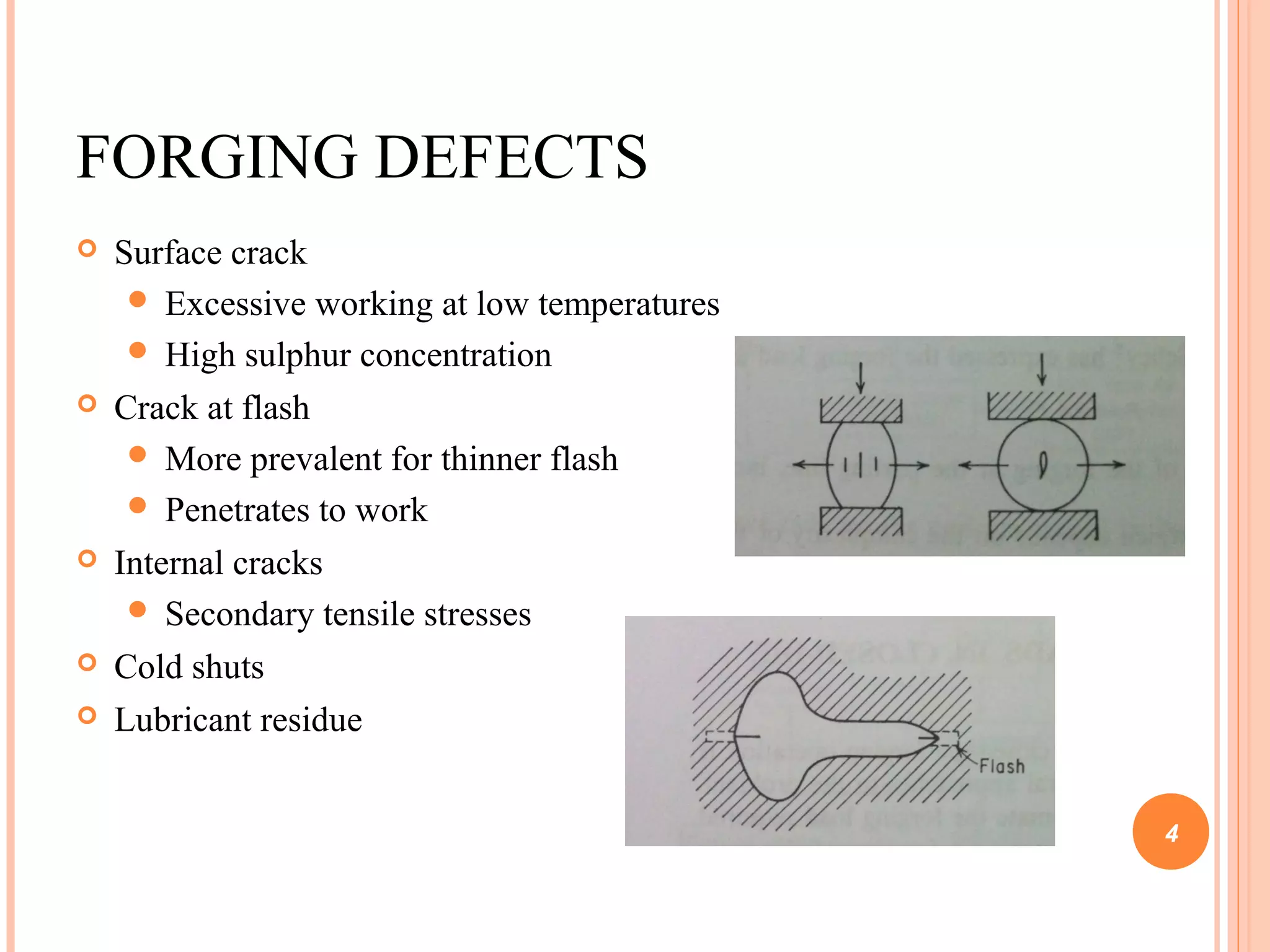
•Metalworking process 
•Principle of plastic deformation 
•Without adding or removing material 
Processes: 
a)Rolling 
b)Forging 
c)Extrusion 
d)Drawing 
a 
b 
c d 
2
ROLLING DEFECTS 
 Wavy edges 
 Result from concave roll bending and 
 Thinner along its edges than at its center 
 Cracks 
 Result from poor material ductility 
 Convex roll bending 
 Severe conditions cause centre split 
 Alligatoring 
 Defects in the original cast material 
 Only surface of work is deformed 
3
FORGING DEFECTS 
 Surface crack 
 Excessive working at low temperatures 
 High sulphur concentration 
 Crack at flash 
 More prevalent for thinner flash 
 Penetrates to work 
 Internal cracks 
 Secondary tensile stresses 
 Cold shuts 
 Lubricant residue 
4
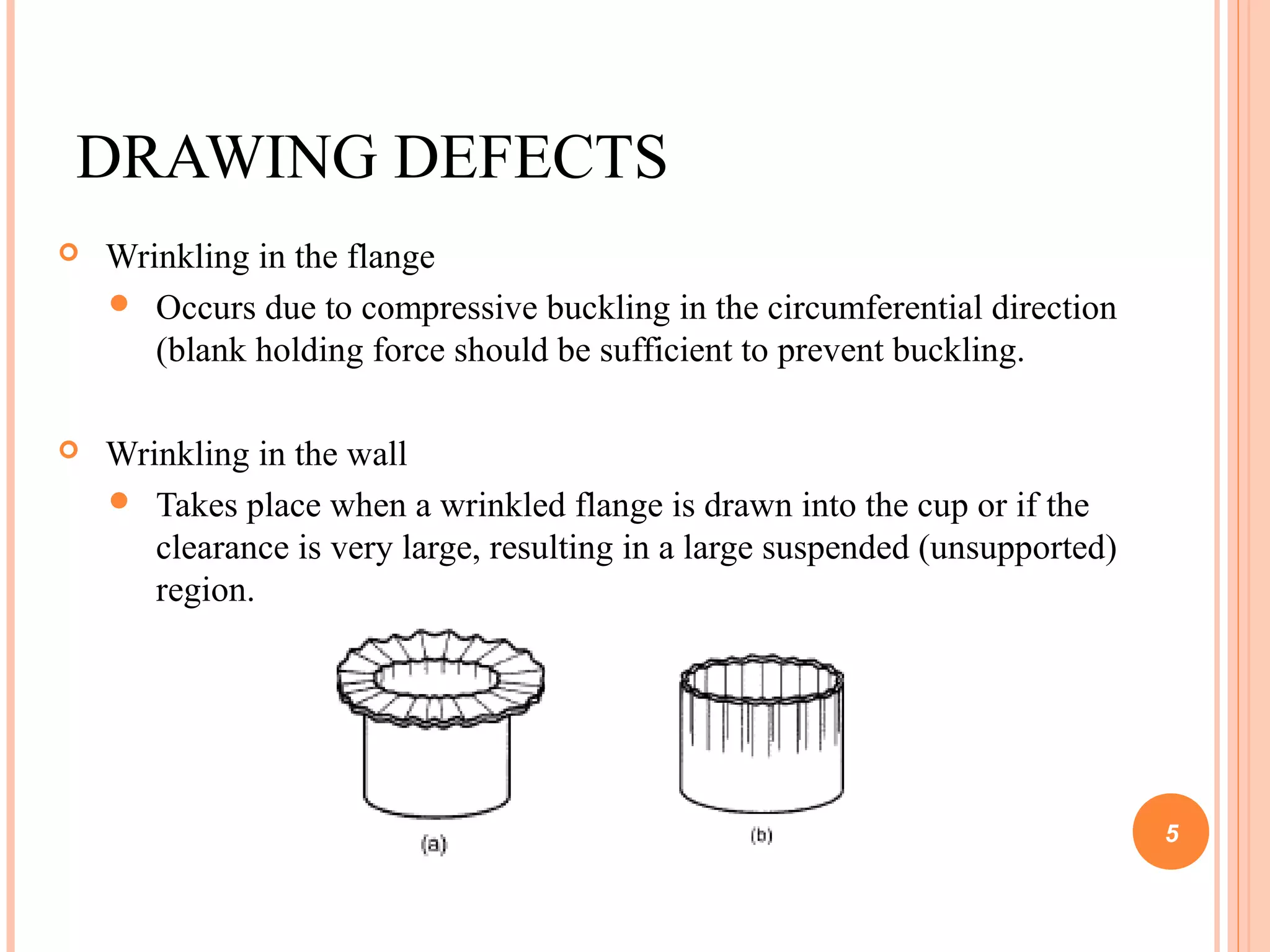
DRAWING DEFECTS 
 Wrinkling in the flange 
 Occurs due to compressive buckling in the circumferential direction 
(blank holding force should be sufficient to prevent buckling. 
 Wrinkling in the wall 
 Takes place when a wrinkled flange is drawn into the cup or if the 
clearance is very large, resulting in a large suspended (unsupported) 
region. 
5
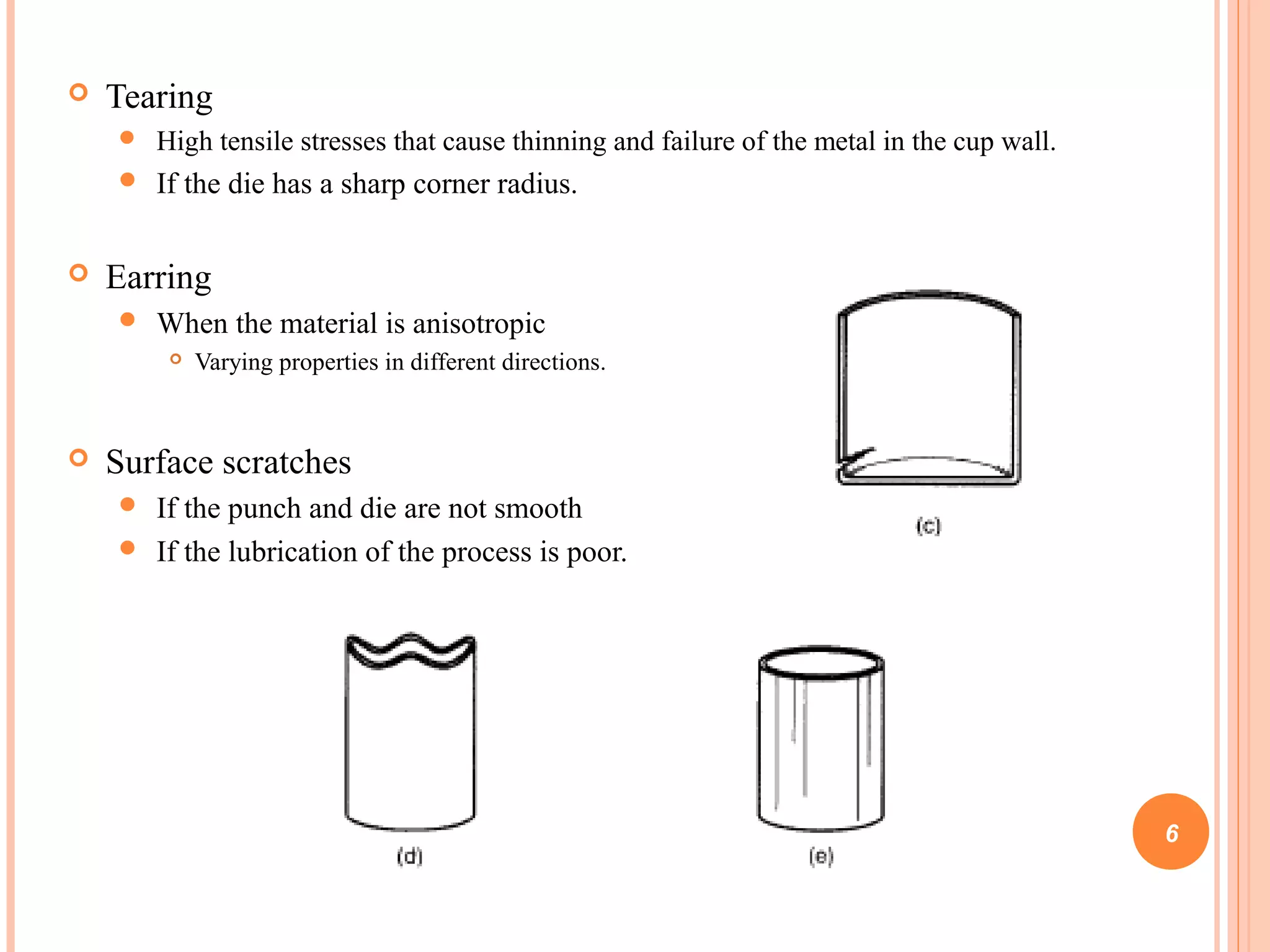
 Tearing 
 High tensile stresses that cause thinning and failure of the metal in the cup wall. 
 If the die has a sharp corner radius. 
 Earring 
 When the material is anisotropic 
 Varying properties in different directions. 
 Surface scratches 
 If the punch and die are not smooth 
 If the lubrication of the process is poor. 
6
Defects in Extrusions 
 Surface Cracking / Fir-tree cracking 
 High friction or speed. 
 Sticking of billet material on die land. 
 Material sticks, pressure increases, product stops and starts to move again. 
 produces circumferential cracks on surface, similar to a bamboo stem.(bambooing). 
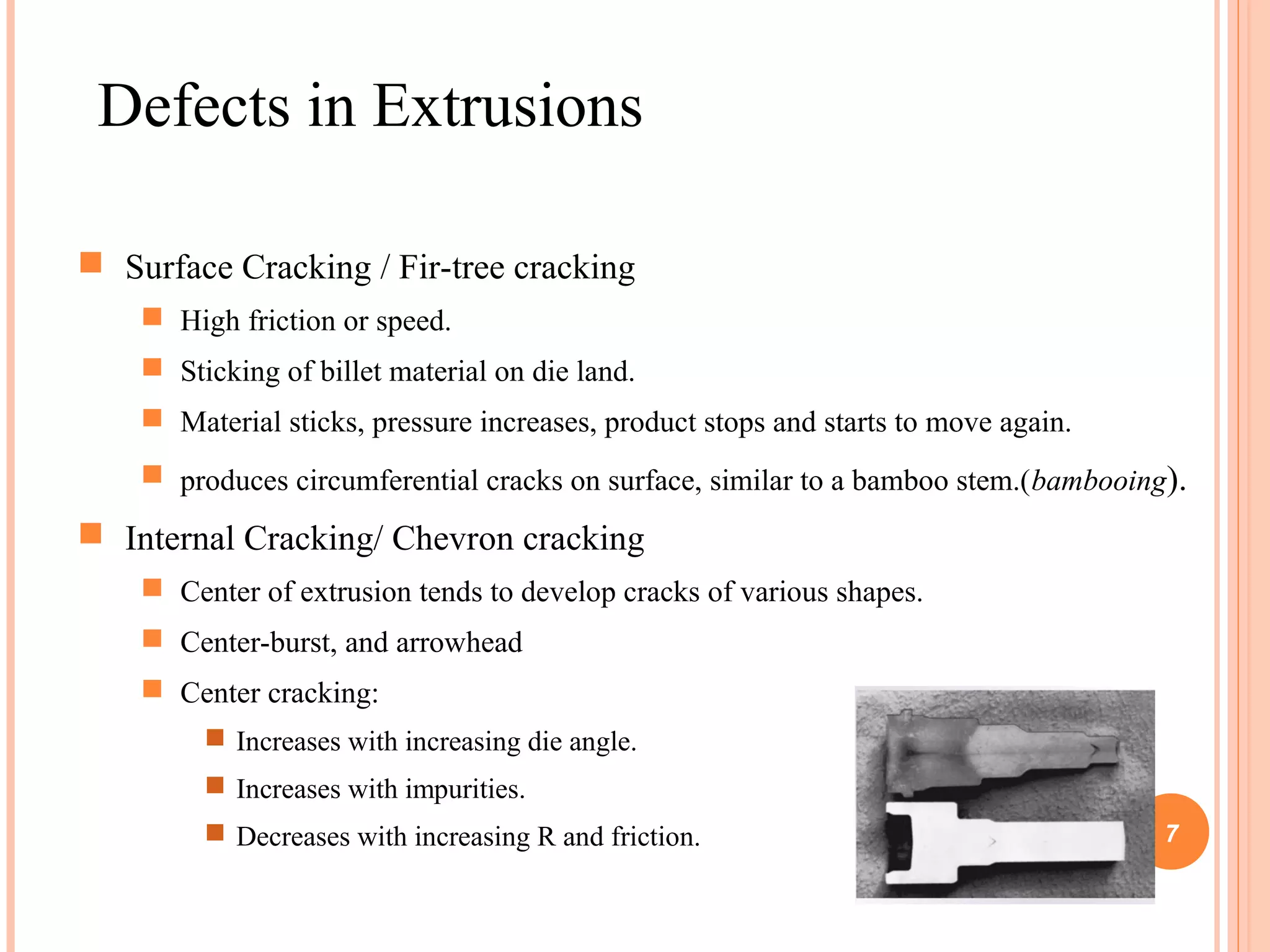
 Internal Cracking/ Chevron cracking 
 Center of extrusion tends to develop cracks of various shapes. 
 Center-burst, and arrowhead 
 Center cracking: 
 Increases with increasing die angle. 
 Increases with impurities. 
 Decreases with increasing R and friction. 7
REFERENCE 
 George E. Dieter, Mechanical Metallurgy, SI Metric 
Edition, 1988 
8

Forming defects

  • 1.
    DEFECTS IN FORMEDCOMPONENTS FREDY JAMES J. 13MY03 JABIN MATHEW BENJAMIN 13MY04 DEPT. OF METALLURGICAL ENGINEERING PSG College of Technology
  • 2.
    Forming or Metalforming •Metalworking process •Principle of plastic deformation •Without adding or removing material Processes: a)Rolling b)Forging c)Extrusion d)Drawing a b c d 2
  • 3.
    ROLLING DEFECTS Wavy edges  Result from concave roll bending and  Thinner along its edges than at its center  Cracks  Result from poor material ductility  Convex roll bending  Severe conditions cause centre split  Alligatoring  Defects in the original cast material  Only surface of work is deformed 3
  • 4.
    FORGING DEFECTS Surface crack  Excessive working at low temperatures  High sulphur concentration  Crack at flash  More prevalent for thinner flash  Penetrates to work  Internal cracks  Secondary tensile stresses  Cold shuts  Lubricant residue 4
  • 5.
    DRAWING DEFECTS Wrinkling in the flange  Occurs due to compressive buckling in the circumferential direction (blank holding force should be sufficient to prevent buckling.  Wrinkling in the wall  Takes place when a wrinkled flange is drawn into the cup or if the clearance is very large, resulting in a large suspended (unsupported) region. 5
  • 6.
     Tearing High tensile stresses that cause thinning and failure of the metal in the cup wall.  If the die has a sharp corner radius.  Earring  When the material is anisotropic  Varying properties in different directions.  Surface scratches  If the punch and die are not smooth  If the lubrication of the process is poor. 6
  • 7.
    Defects in Extrusions  Surface Cracking / Fir-tree cracking  High friction or speed.  Sticking of billet material on die land.  Material sticks, pressure increases, product stops and starts to move again.  produces circumferential cracks on surface, similar to a bamboo stem.(bambooing).  Internal Cracking/ Chevron cracking  Center of extrusion tends to develop cracks of various shapes.  Center-burst, and arrowhead  Center cracking:  Increases with increasing die angle.  Increases with impurities.  Decreases with increasing R and friction. 7
  • 8.
    REFERENCE  GeorgeE. Dieter, Mechanical Metallurgy, SI Metric Edition, 1988 8