Defects in Metal
Forming Processes


      Prepared by:-
            Amitkumar R. Shelar

                              1
Overview
   Process Classification
    ◦ Bulk Deformation Process
    ◦ Sheet Metalworking
   Material Behaviour in Metal Forming
    ◦ Flow Stress
    ◦ Average Flow Stress
 Temperature in Metal Forming
 Effect of Strain Rate
 Friction & Lubrication


                                          2
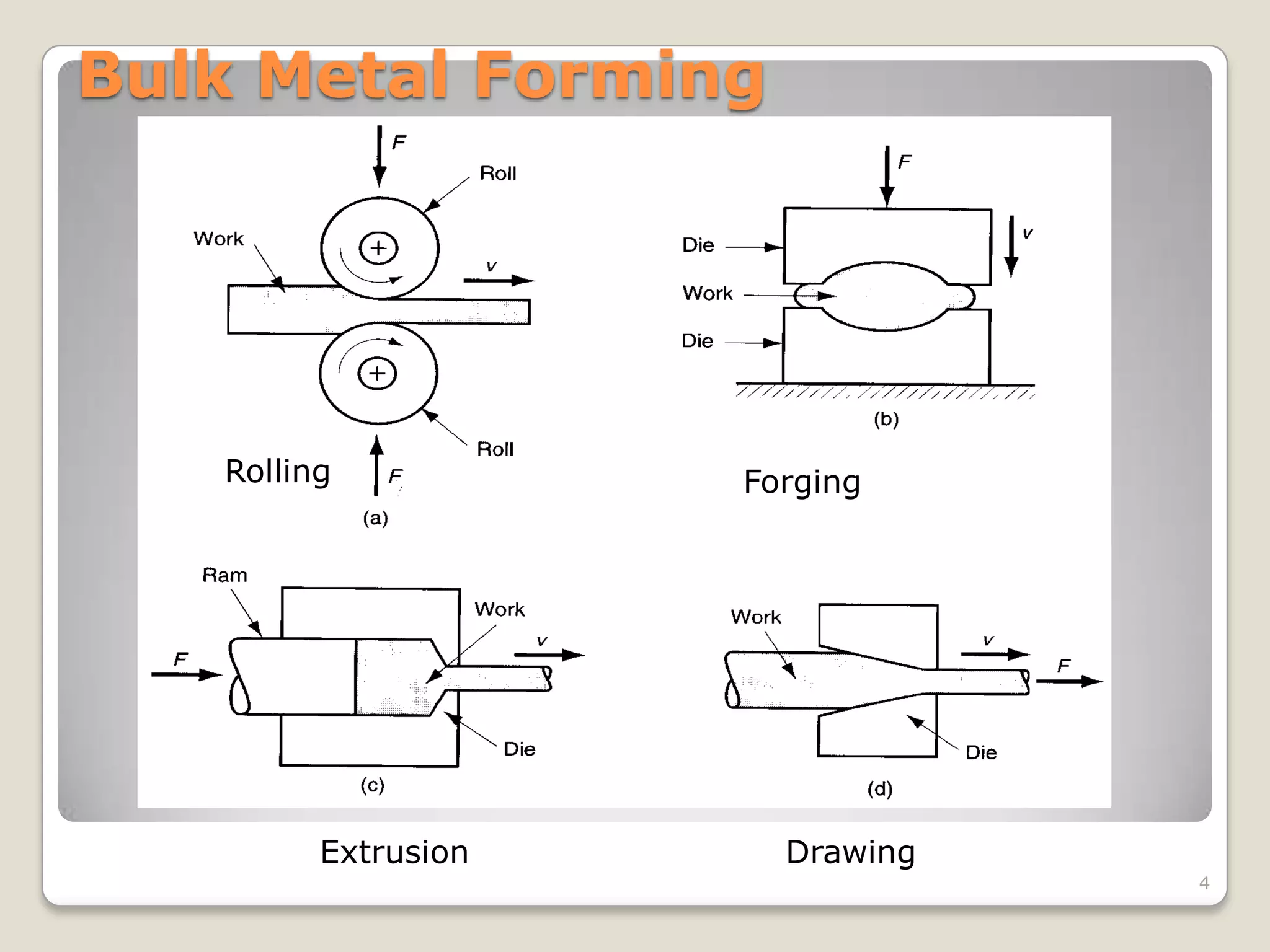
Bulk Metal Forming
 Rolling - compression process to reduce
  the thickness of a slab by a pair of rolls.
 Forging - compression process performing
  between a set of opposing dies.
 Extrusion - compression process sqeezing
  metal flow a die opening.
 Drawing - pulling a wire or bar through a
  die opening.


                                                3
Bulk Metal Forming


   Rolling           Forging


         Extrusion     Drawing
                                 4
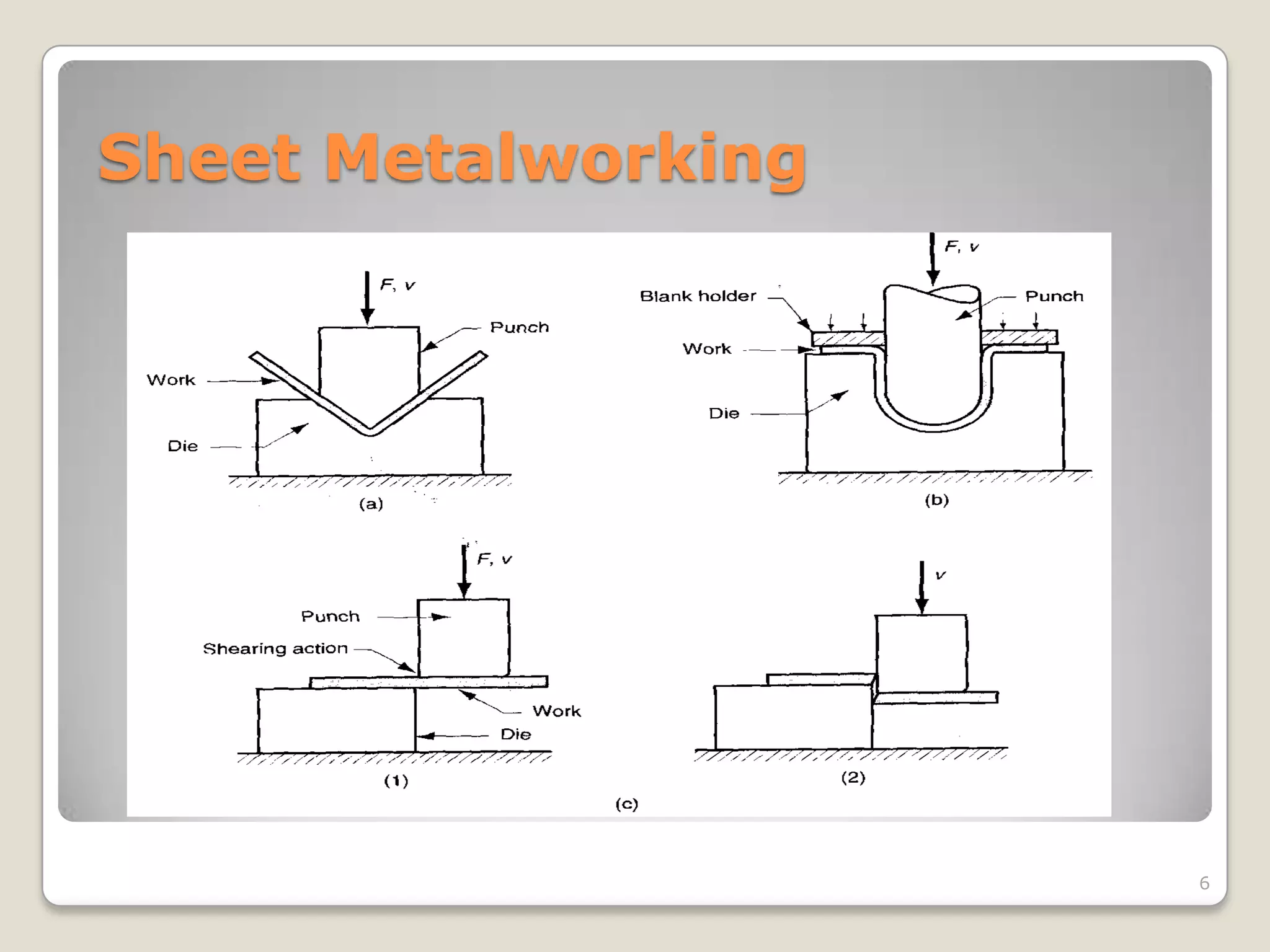
Sheet Metalworking
Forming on metal sheets, strips, and coils.
  The process is normally a cold working
  process using a set of punch and die.
 Bending - straining of a metal sheet to
  form an angle bend.
 Drawing - forming a sheet into a hollow or
  concave shape.
 Shearing - not a forming process but a
  cutting process.

                                               5
Sheet Metalworking


                     6
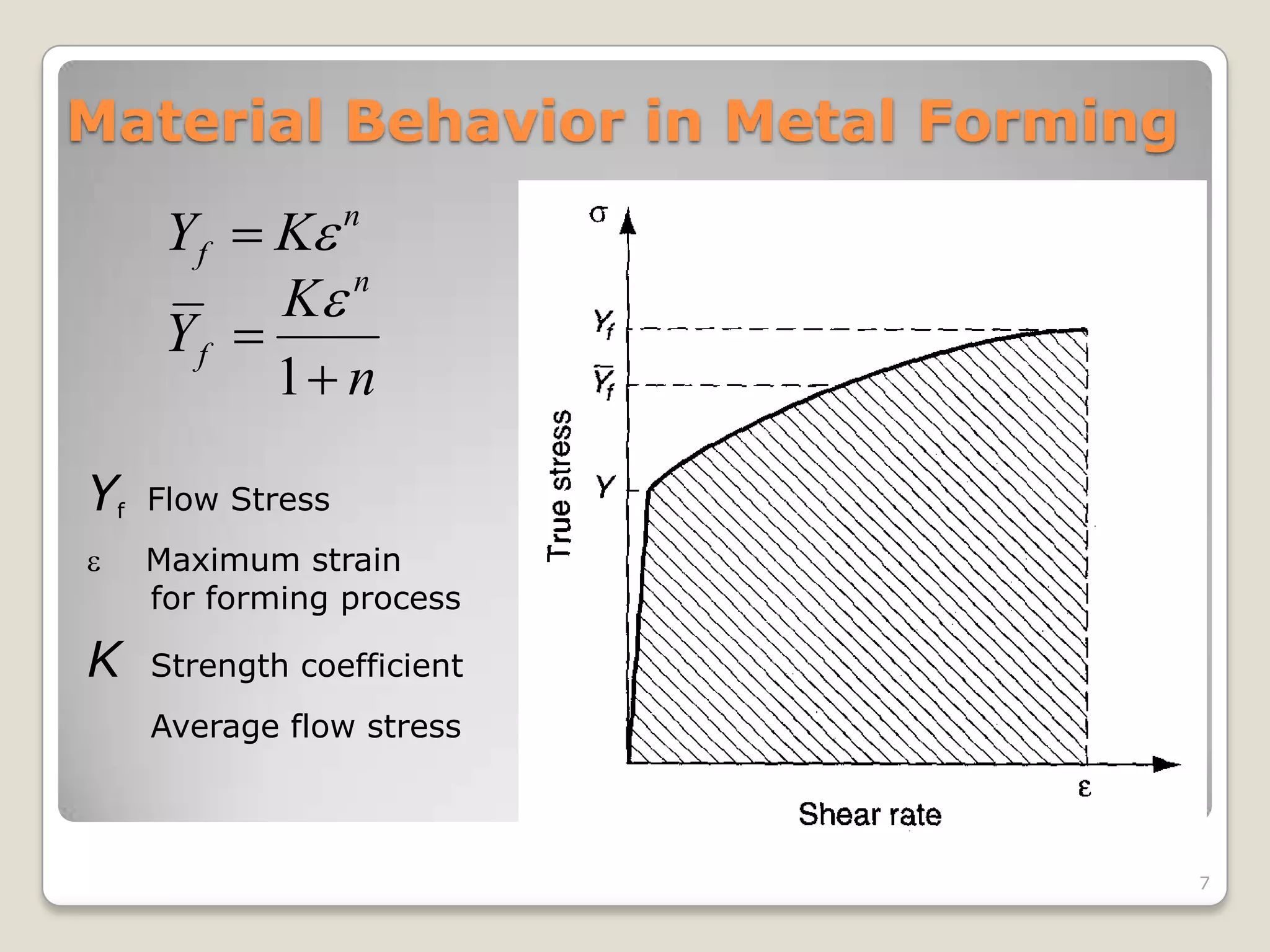
Material Behavior in Metal Forming
      Yf  K      n

           K n
      Yf 
           1 n

Yf   Flow Stress
    Maximum strain
     for forming process

K    Strength coefficient
     Average flow stress


                                     7
Temperature in Metalworking
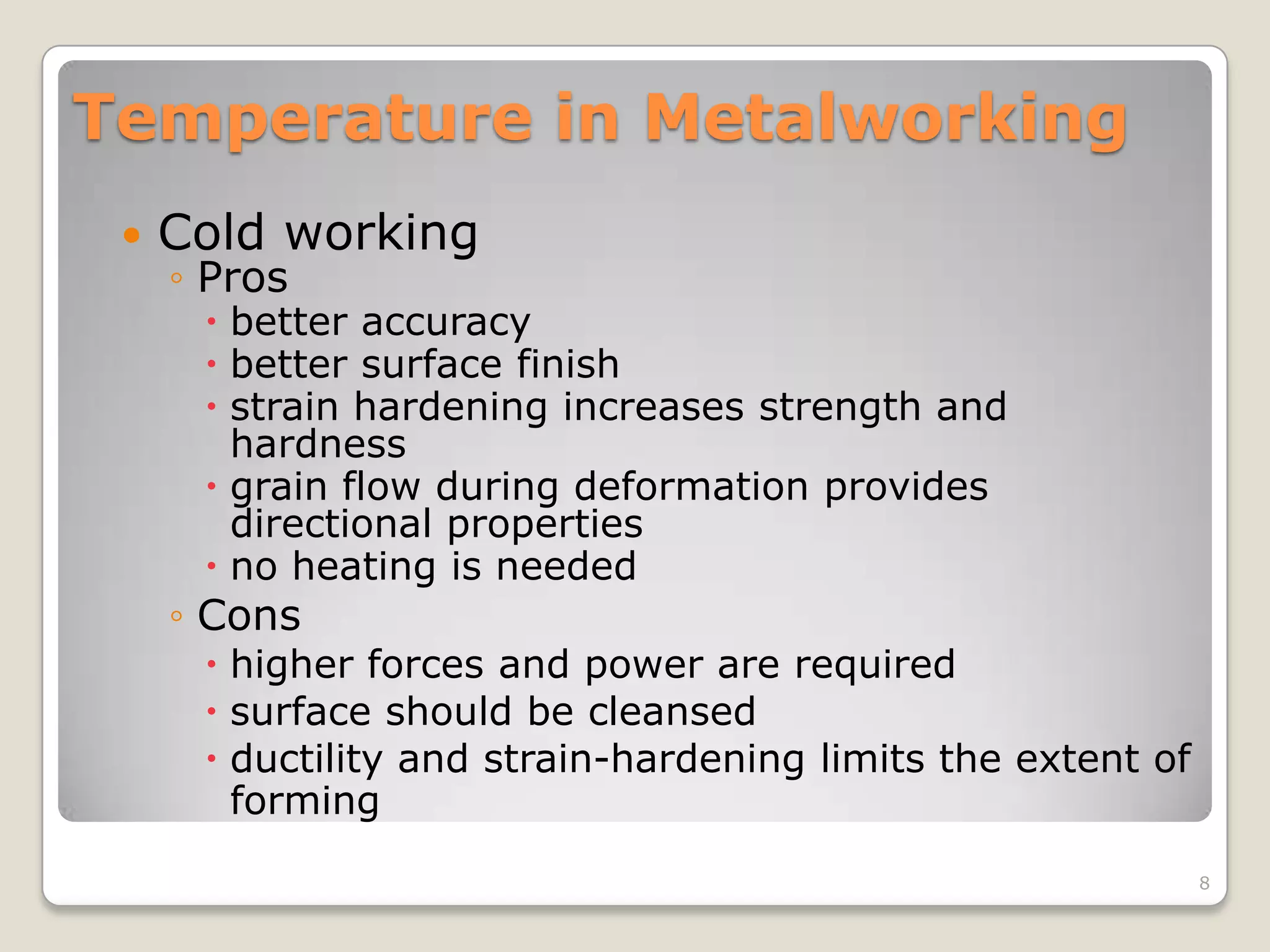
    Cold working
     ◦ Pros
       better accuracy
       better surface finish
       strain hardening increases strength and
        hardness
       grain flow during deformation provides
        directional properties
       no heating is needed
     ◦ Cons
       higher forces and power are required
       surface should be cleansed
       ductility and strain-hardening limits the extent of
        forming
                                                              8
Temperature in Metalworking
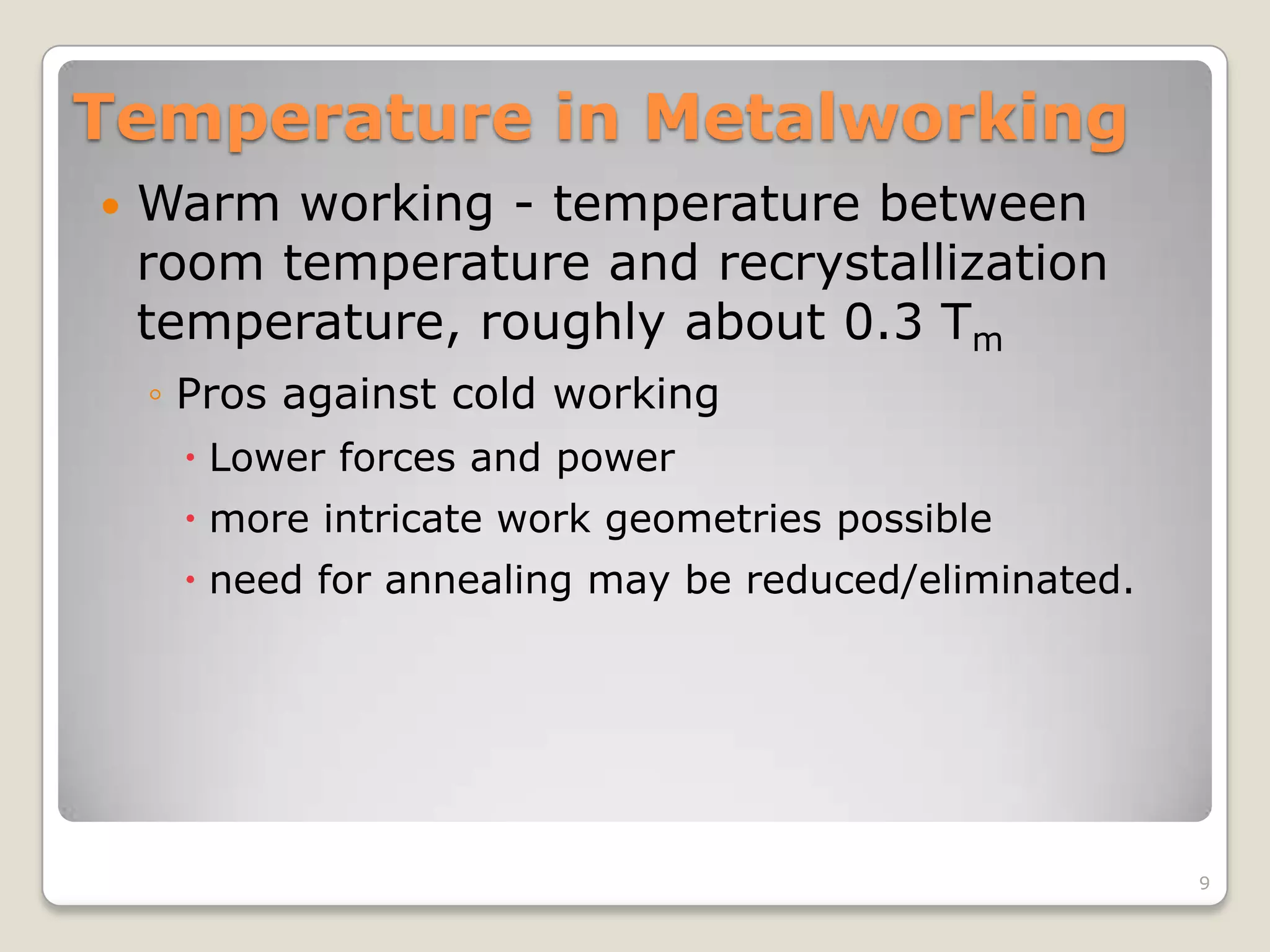
   Warm working - temperature between
    room temperature and recrystallization
    temperature, roughly about 0.3 Tm
    ◦ Pros against cold working
      Lower forces and power
      more intricate work geometries possible
      need for annealing may be reduced/eliminated.


                                                       9
Temperature in Metalworking

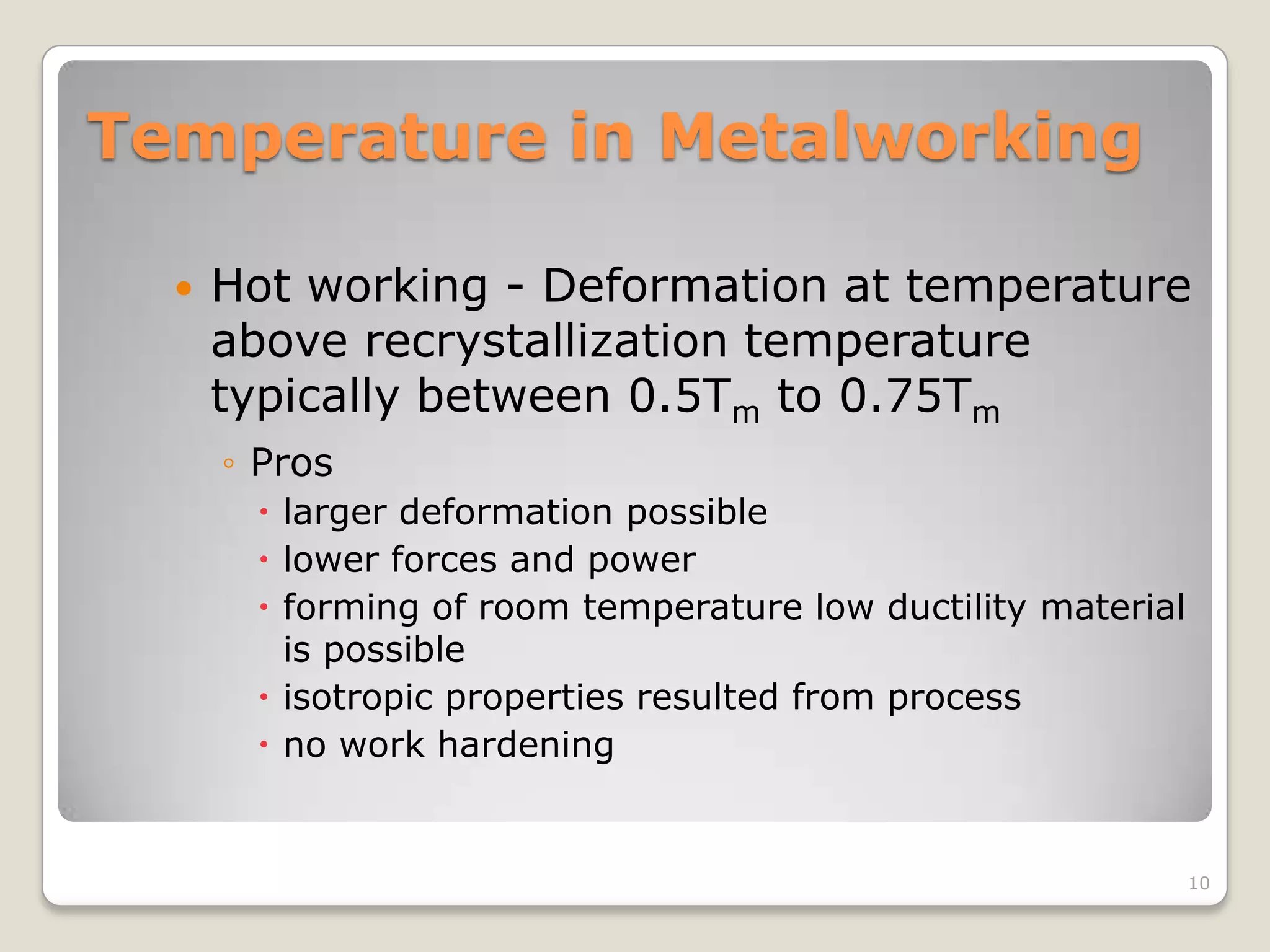
     Hot working - Deformation at temperature
      above recrystallization temperature
      typically between 0.5Tm to 0.75Tm
      ◦ Pros
        larger deformation possible
        lower forces and power
        forming of room temperature low ductility material
         is possible
        isotropic properties resulted from process
        no work hardening


                                                              10
Temperature in Metalworking
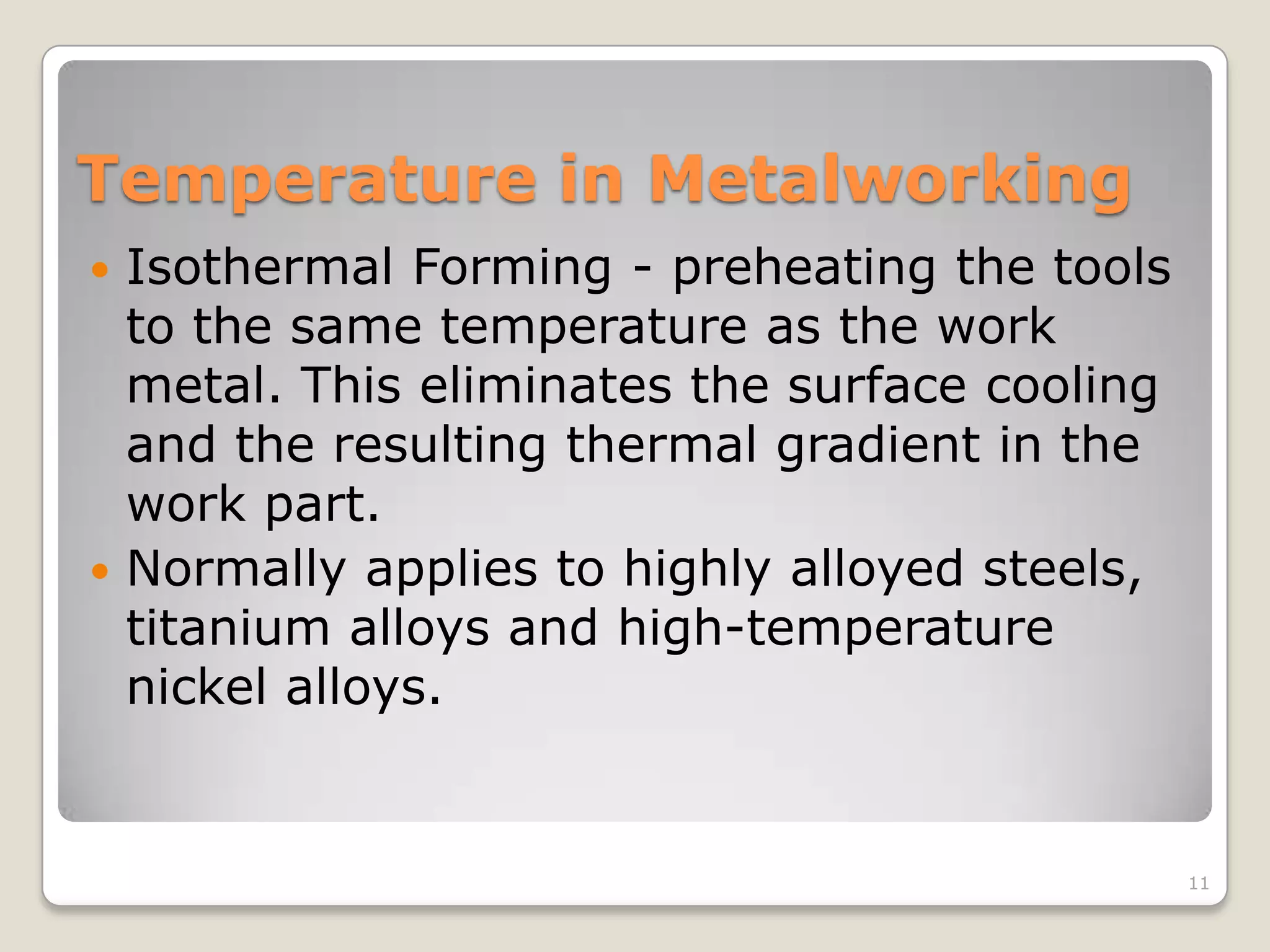
 Isothermal Forming - preheating the tools
  to the same temperature as the work
  metal. This eliminates the surface cooling
  and the resulting thermal gradient in the
  work part.
 Normally applies to highly alloyed steels,
  titanium alloys and high-temperature
  nickel alloys.


                                               11
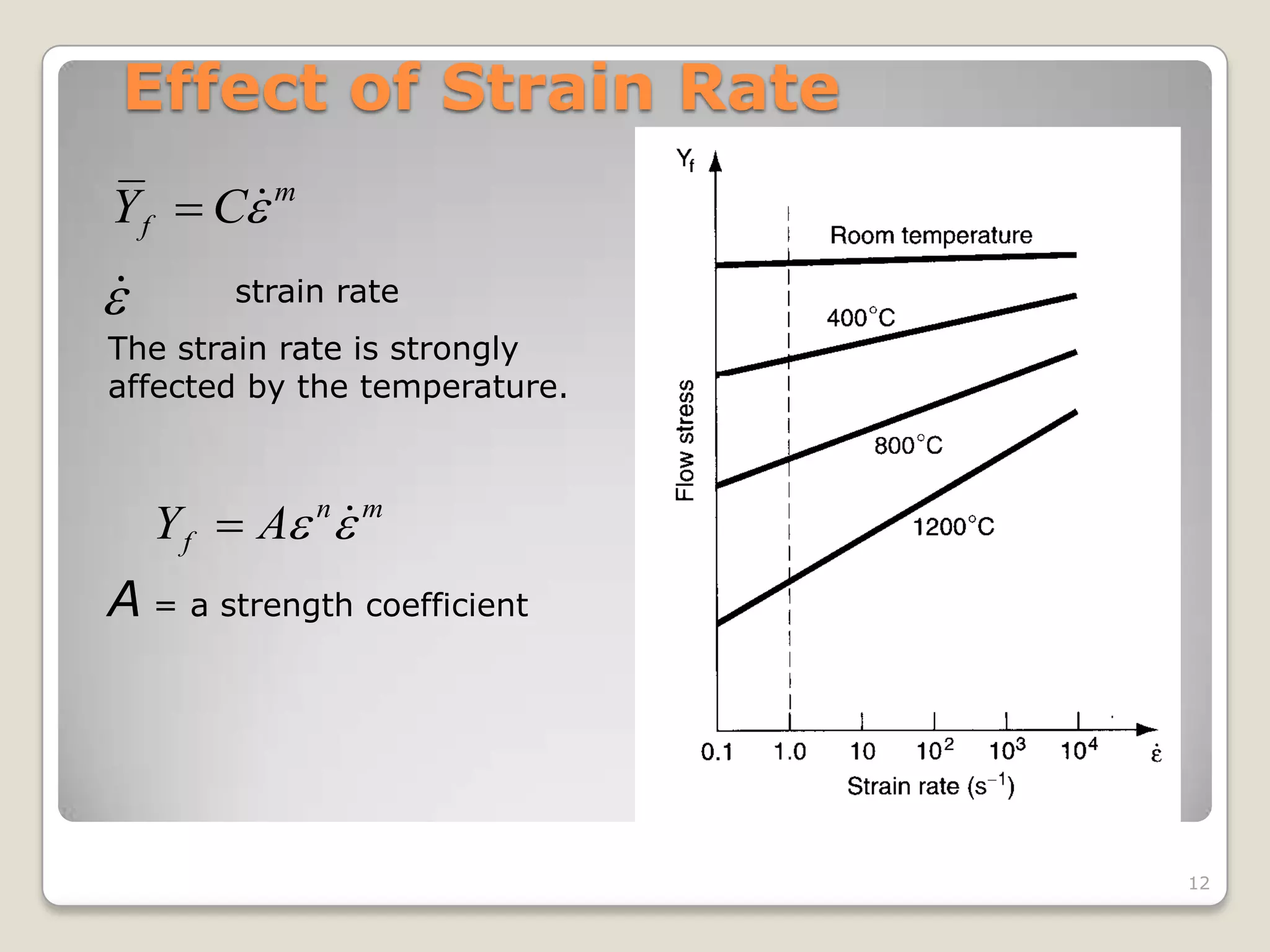
Effect of Strain Rate
Y f  C m
       

       strain rate
The strain rate is strongly
affected by the temperature.


    Y f  A n m
              
A = a strength coefficient


                               12
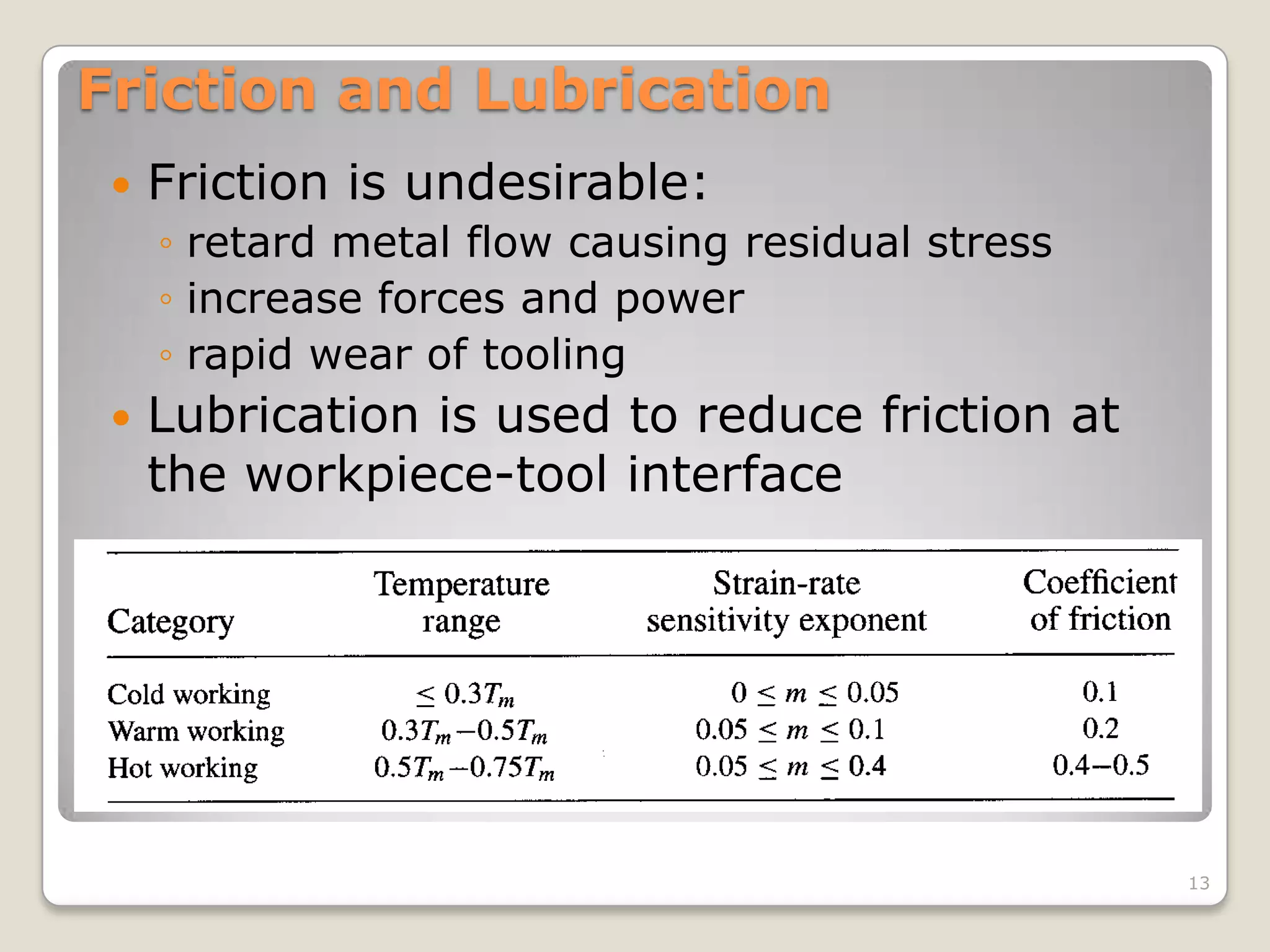
Friction and Lubrication
    Friction is undesirable:
     ◦ retard metal flow causing residual stress
     ◦ increase forces and power
     ◦ rapid wear of tooling
    Lubrication is used to reduce friction at
     the workpiece-tool interface


                                                   13
Defects in Metal Forming
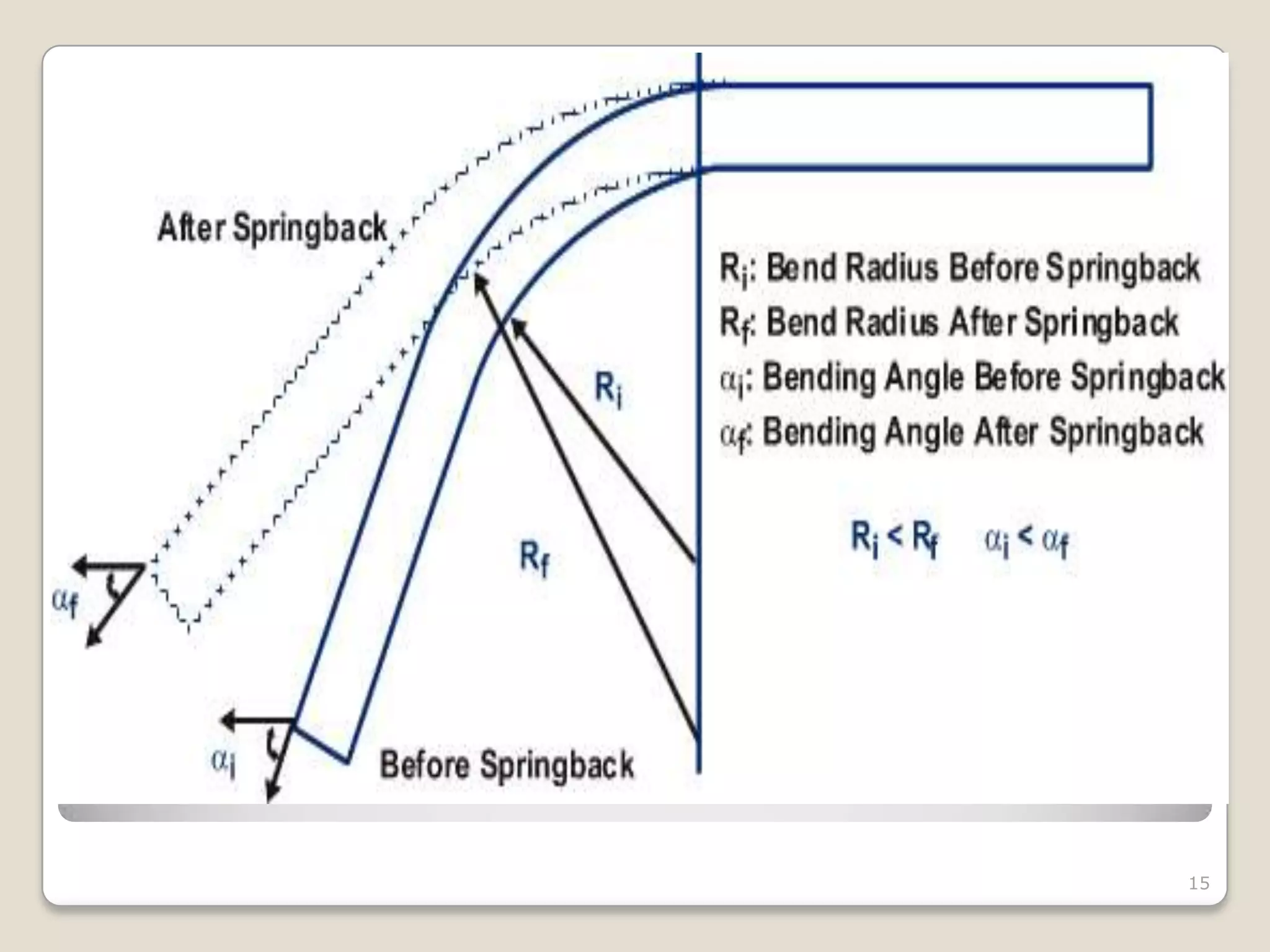
   Springback Effect-
   In Bending ,after plastic deformation there is an elastic
    recovery this recovery is called spring back.
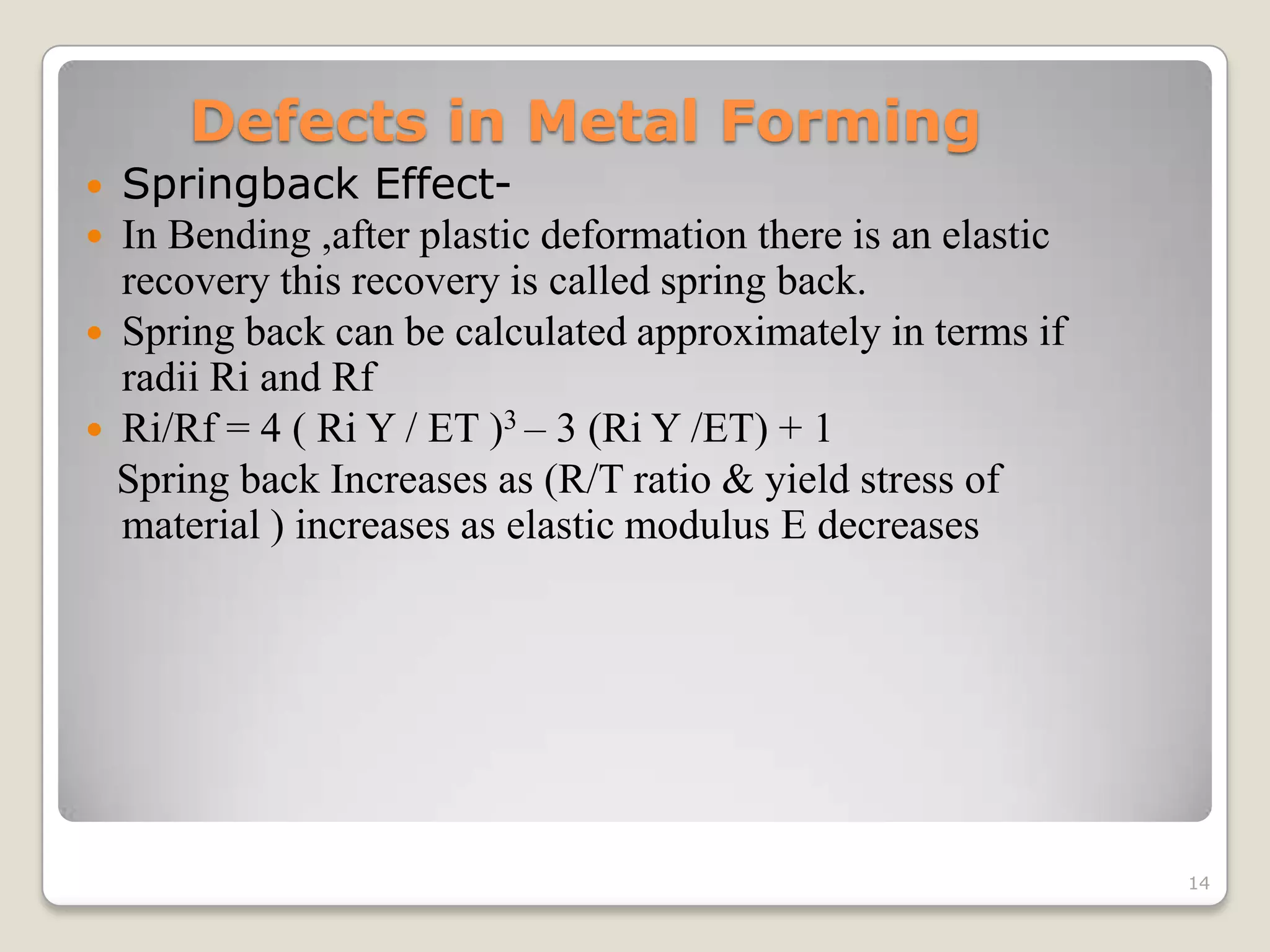
   Spring back can be calculated approximately in terms if
    radii Ri and Rf
   Ri/Rf = 4 ( Ri Y / ET )3 – 3 (Ri Y /ET) + 1
    Spring back Increases as (R/T ratio & yield stress of
    material ) increases as elastic modulus E decreases


                                                                14
15
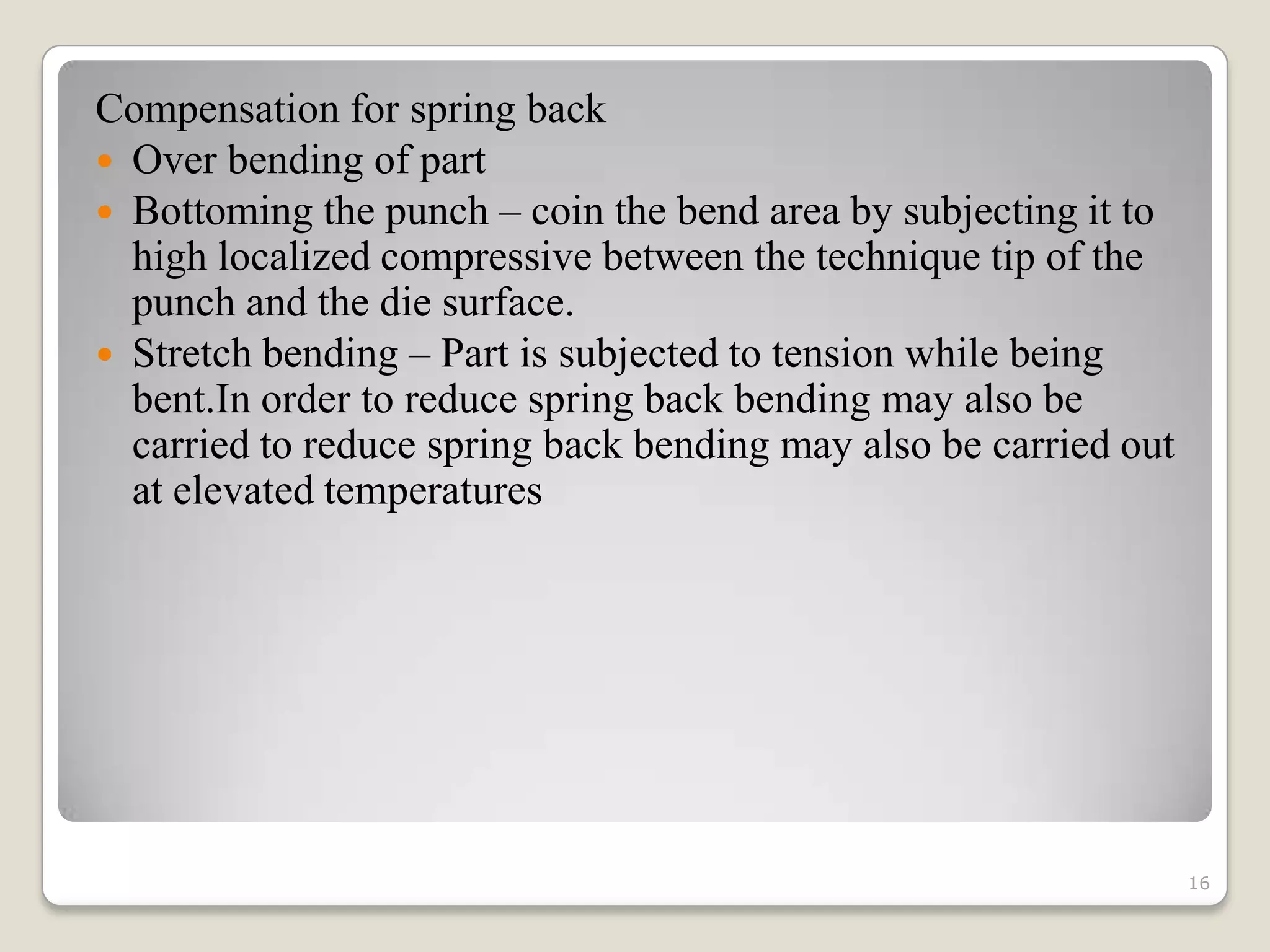
Compensation for spring back
 Over bending of part
 Bottoming the punch – coin the bend area by subjecting it to
  high localized compressive between the technique tip of the
  punch and the die surface.
 Stretch bending – Part is subjected to tension while being
  bent.In order to reduce spring back bending may also be
  carried to reduce spring back bending may also be carried out
  at elevated temperatures


                                                                  16
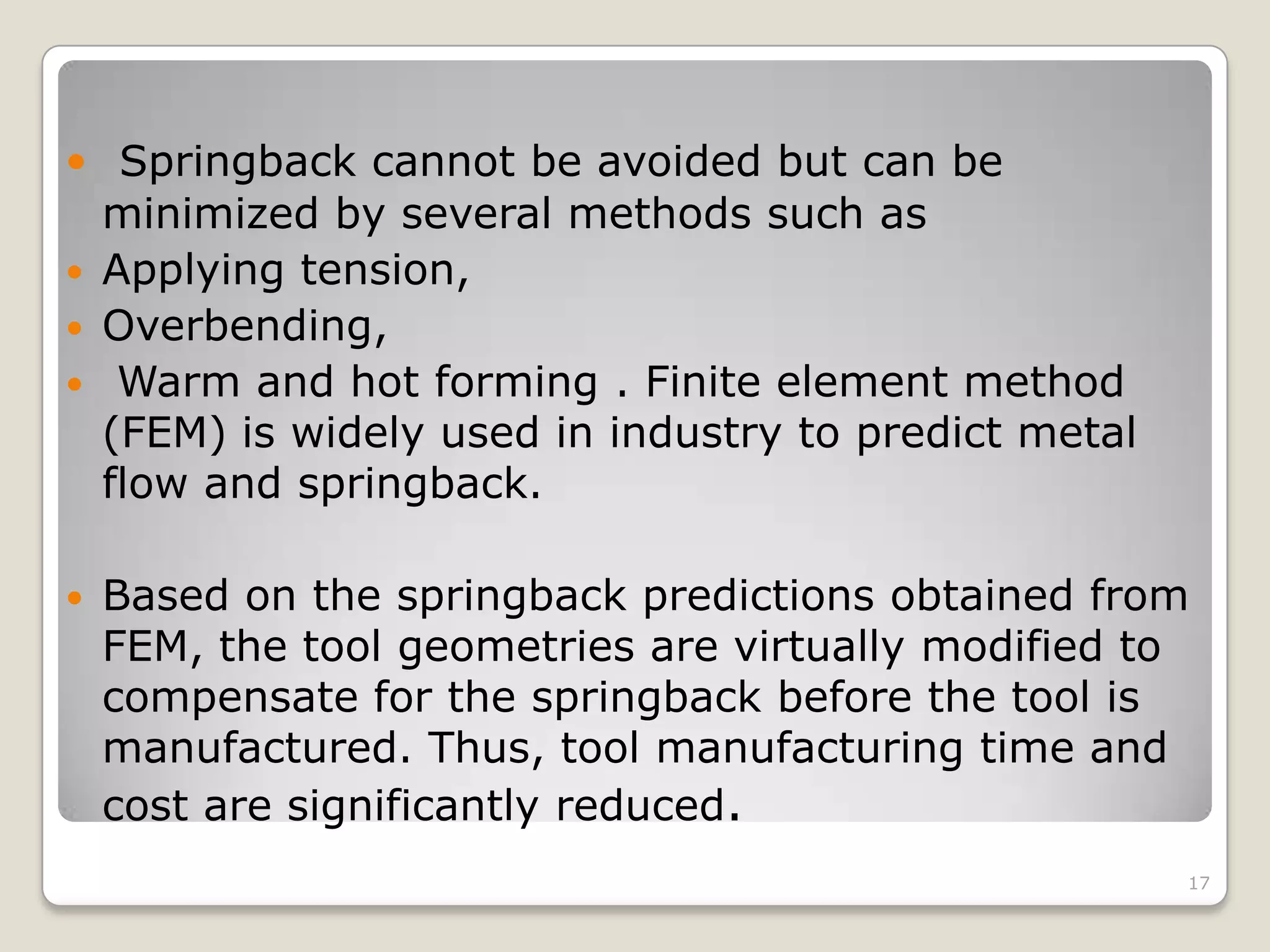
 Springback cannot be avoided but can be
  minimized by several methods such as
 Applying tension,
 Overbending,
 Warm and hot forming . Finite element method
  (FEM) is widely used in industry to predict metal
  flow and springback.

   Based on the springback predictions obtained from
    FEM, the tool geometries are virtually modified to
    compensate for the springback before the tool is
    manufactured. Thus, tool manufacturing time and
    cost are significantly reduced.
                                                      17
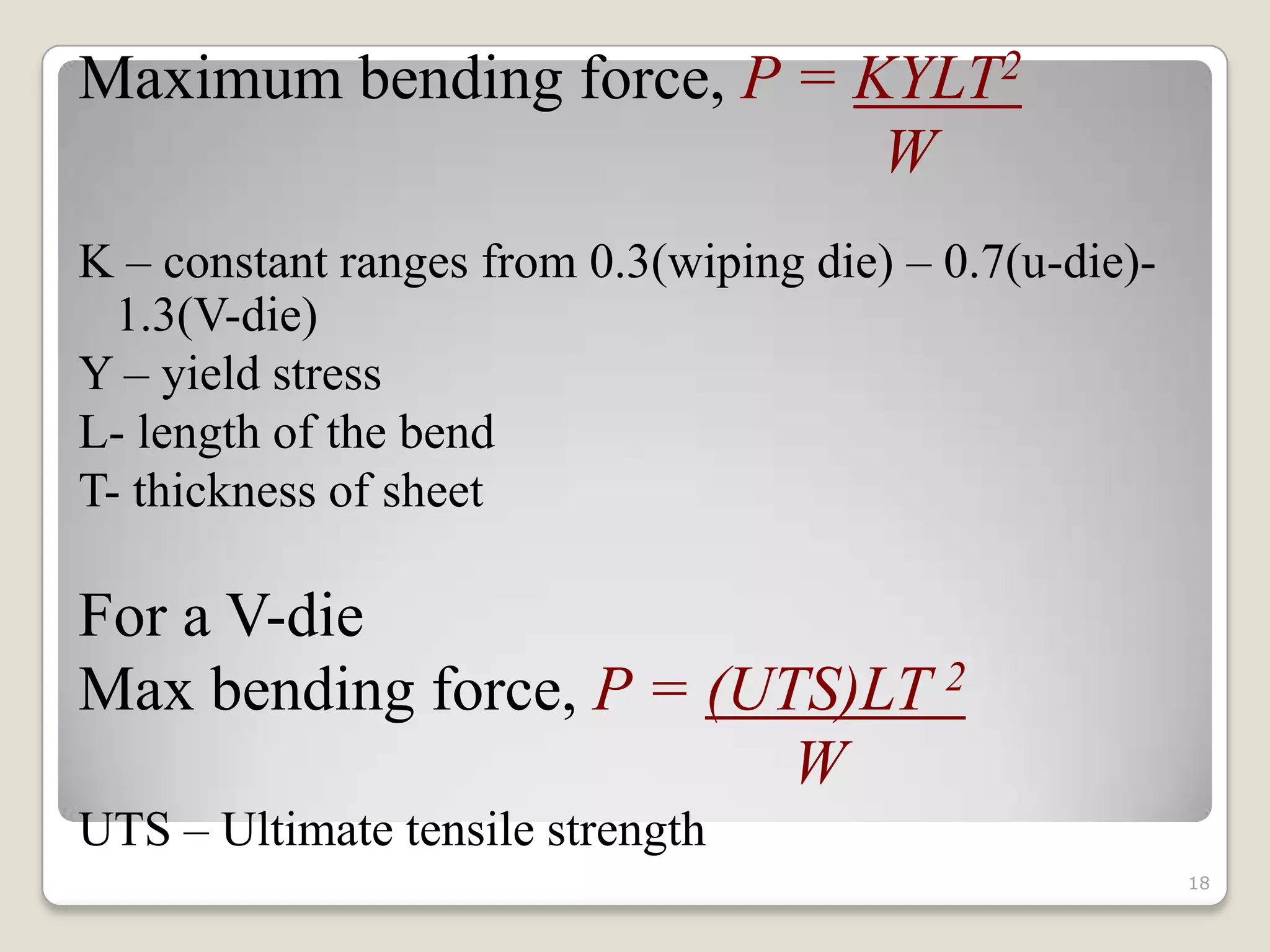
Maximum bending force, P = KYLT2
                            W
K – constant ranges from 0.3(wiping die) – 0.7(u-die)-
  1.3(V-die)
Y – yield stress
L- length of the bend
T- thickness of sheet

For a V-die
Max bending force, P = (UTS)LT 2
                          W
UTS – Ultimate tensile strength
                                                         18
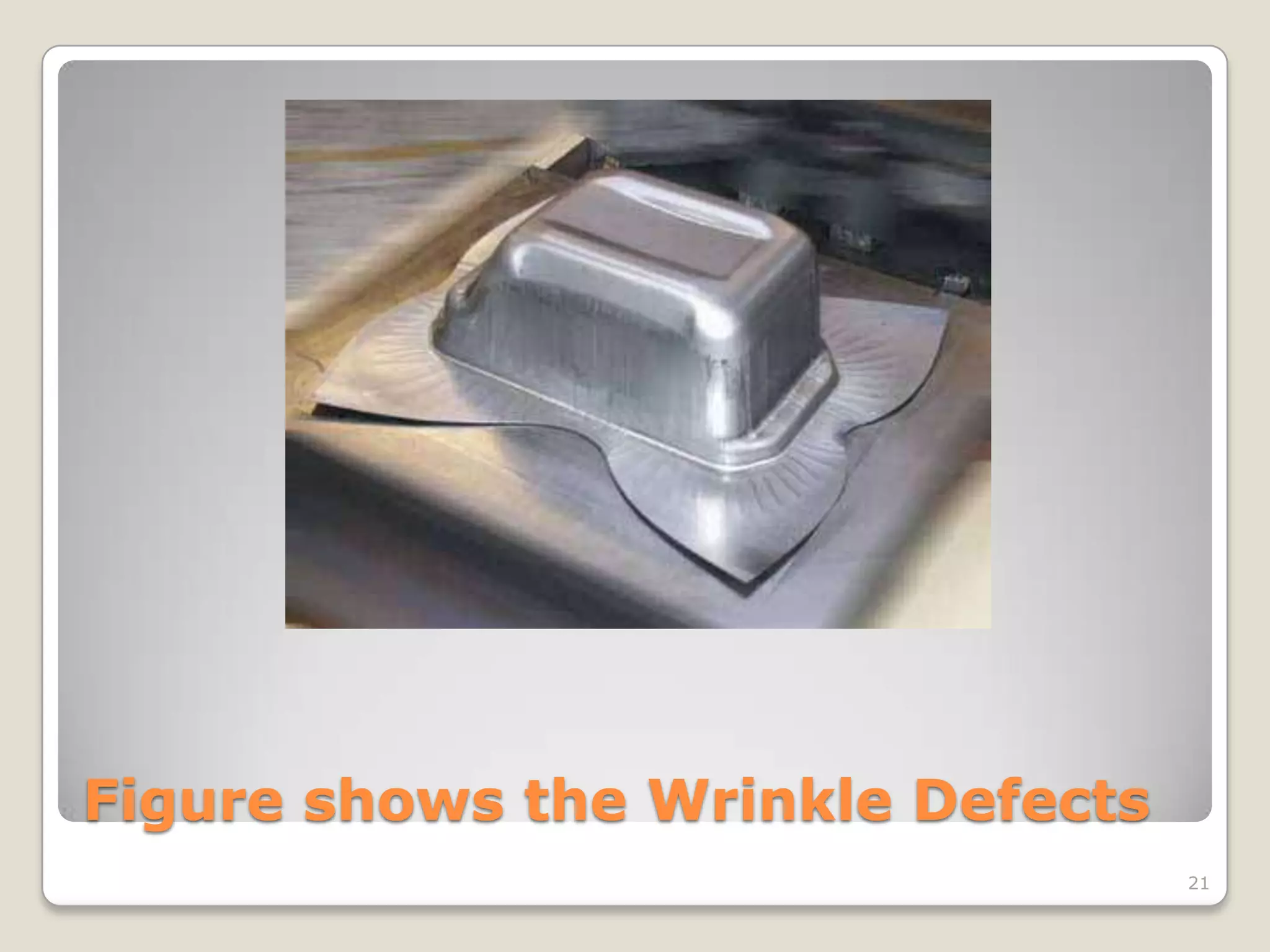
Wrinkles in Deep Drawing operation
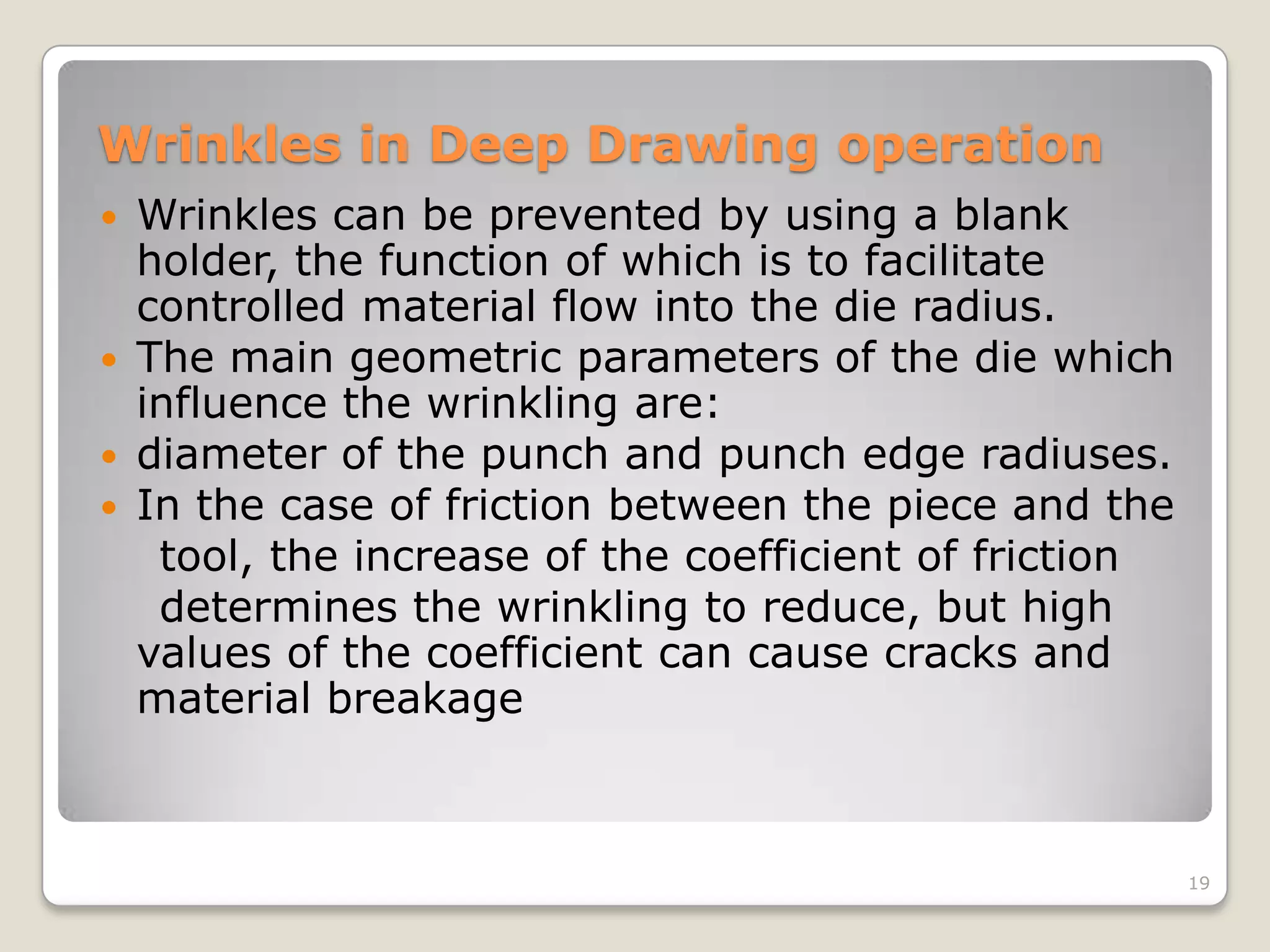
   Wrinkles can be prevented by using a blank
    holder, the function of which is to facilitate
    controlled material flow into the die radius.
   The main geometric parameters of the die which
    influence the wrinkling are:
   diameter of the punch and punch edge radiuses.
   In the case of friction between the piece and the
     tool, the increase of the coefficient of friction
     determines the wrinkling to reduce, but high
    values of the coefficient can cause cracks and
    material breakage


                                                         19
Variables in Deep drawing
operations:
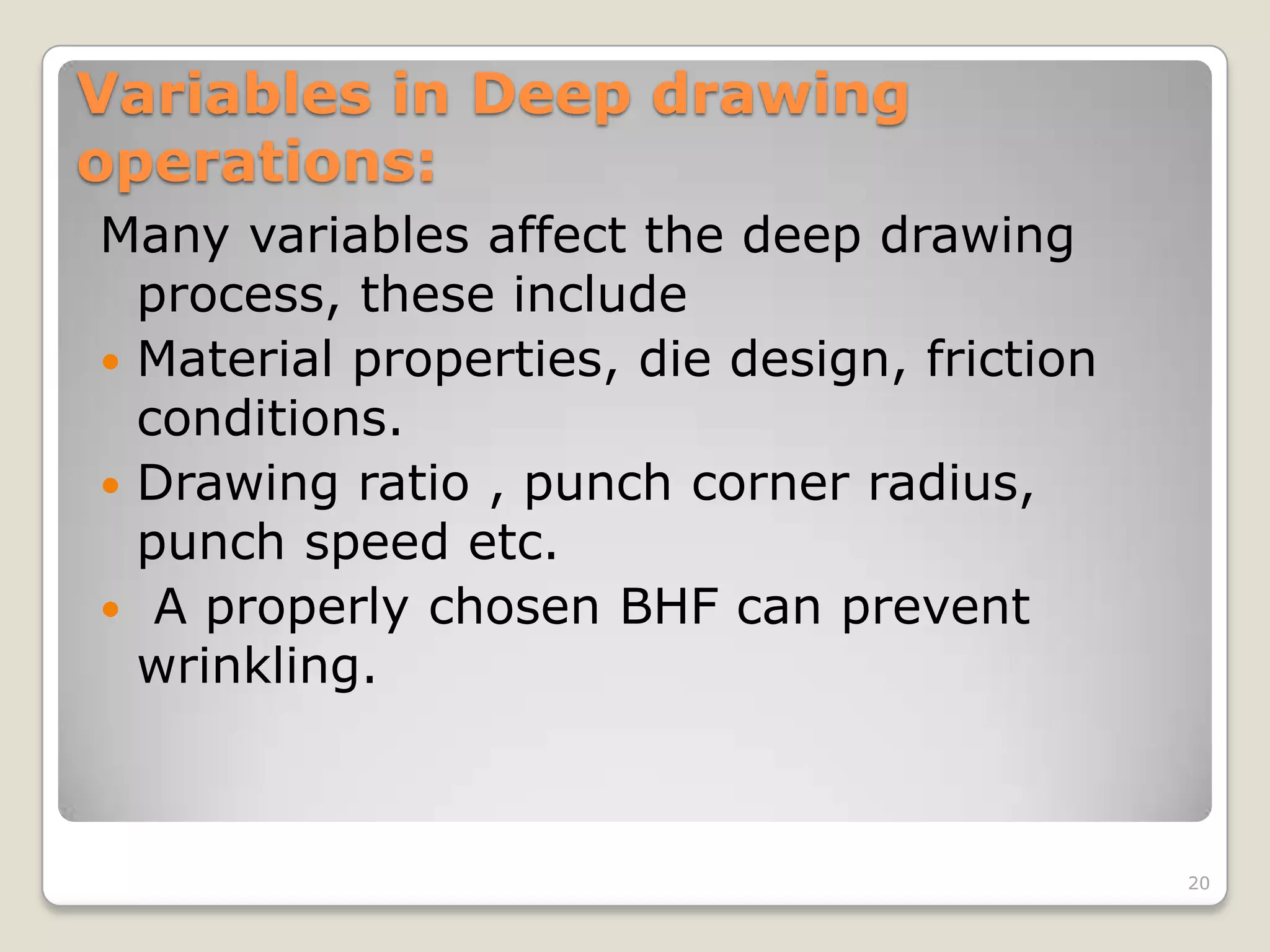
Many variables affect the deep drawing
  process, these include
 Material properties, die design, friction
  conditions.
 Drawing ratio , punch corner radius,
  punch speed etc.
 A properly chosen BHF can prevent
  wrinkling.


                                              20
Figure shows the Wrinkle Defects
                                   21
Thank You


            22

Metal forming defects

  • 1.
    Defects in Metal FormingProcesses Prepared by:- Amitkumar R. Shelar 1
  • 2.
    Overview  Process Classification ◦ Bulk Deformation Process ◦ Sheet Metalworking  Material Behaviour in Metal Forming ◦ Flow Stress ◦ Average Flow Stress  Temperature in Metal Forming  Effect of Strain Rate  Friction & Lubrication 2
  • 3.
    Bulk Metal Forming Rolling - compression process to reduce the thickness of a slab by a pair of rolls.  Forging - compression process performing between a set of opposing dies.  Extrusion - compression process sqeezing metal flow a die opening.  Drawing - pulling a wire or bar through a die opening. 3
  • 4.
    Bulk Metal Forming Rolling Forging Extrusion Drawing 4
  • 5.
    Sheet Metalworking Forming onmetal sheets, strips, and coils. The process is normally a cold working process using a set of punch and die.  Bending - straining of a metal sheet to form an angle bend.  Drawing - forming a sheet into a hollow or concave shape.  Shearing - not a forming process but a cutting process. 5
  • 6.
  • 7.
    Material Behavior inMetal Forming Yf  K n K n Yf  1 n Yf Flow Stress  Maximum strain for forming process K Strength coefficient Average flow stress 7
  • 8.
    Temperature in Metalworking  Cold working ◦ Pros  better accuracy  better surface finish  strain hardening increases strength and hardness  grain flow during deformation provides directional properties  no heating is needed ◦ Cons  higher forces and power are required  surface should be cleansed  ductility and strain-hardening limits the extent of forming 8
  • 9.
    Temperature in Metalworking  Warm working - temperature between room temperature and recrystallization temperature, roughly about 0.3 Tm ◦ Pros against cold working  Lower forces and power  more intricate work geometries possible  need for annealing may be reduced/eliminated. 9
  • 10.
    Temperature in Metalworking  Hot working - Deformation at temperature above recrystallization temperature typically between 0.5Tm to 0.75Tm ◦ Pros  larger deformation possible  lower forces and power  forming of room temperature low ductility material is possible  isotropic properties resulted from process  no work hardening 10
  • 11.
    Temperature in Metalworking Isothermal Forming - preheating the tools to the same temperature as the work metal. This eliminates the surface cooling and the resulting thermal gradient in the work part.  Normally applies to highly alloyed steels, titanium alloys and high-temperature nickel alloys. 11
  • 12.
    Effect of StrainRate Y f  C m    strain rate The strain rate is strongly affected by the temperature. Y f  A n m  A = a strength coefficient 12
  • 13.
    Friction and Lubrication  Friction is undesirable: ◦ retard metal flow causing residual stress ◦ increase forces and power ◦ rapid wear of tooling  Lubrication is used to reduce friction at the workpiece-tool interface 13
  • 14.
    Defects in MetalForming  Springback Effect-  In Bending ,after plastic deformation there is an elastic recovery this recovery is called spring back.  Spring back can be calculated approximately in terms if radii Ri and Rf  Ri/Rf = 4 ( Ri Y / ET )3 – 3 (Ri Y /ET) + 1 Spring back Increases as (R/T ratio & yield stress of material ) increases as elastic modulus E decreases 14
  • 15.
  • 16.
    Compensation for springback  Over bending of part  Bottoming the punch – coin the bend area by subjecting it to high localized compressive between the technique tip of the punch and the die surface.  Stretch bending – Part is subjected to tension while being bent.In order to reduce spring back bending may also be carried to reduce spring back bending may also be carried out at elevated temperatures 16
  • 17.
     Springback cannotbe avoided but can be minimized by several methods such as  Applying tension,  Overbending,  Warm and hot forming . Finite element method (FEM) is widely used in industry to predict metal flow and springback.  Based on the springback predictions obtained from FEM, the tool geometries are virtually modified to compensate for the springback before the tool is manufactured. Thus, tool manufacturing time and cost are significantly reduced. 17
  • 18.
    Maximum bending force,P = KYLT2 W K – constant ranges from 0.3(wiping die) – 0.7(u-die)- 1.3(V-die) Y – yield stress L- length of the bend T- thickness of sheet For a V-die Max bending force, P = (UTS)LT 2 W UTS – Ultimate tensile strength 18
  • 19.
    Wrinkles in DeepDrawing operation  Wrinkles can be prevented by using a blank holder, the function of which is to facilitate controlled material flow into the die radius.  The main geometric parameters of the die which influence the wrinkling are:  diameter of the punch and punch edge radiuses.  In the case of friction between the piece and the tool, the increase of the coefficient of friction determines the wrinkling to reduce, but high values of the coefficient can cause cracks and material breakage 19
  • 20.
    Variables in Deepdrawing operations: Many variables affect the deep drawing process, these include  Material properties, die design, friction conditions.  Drawing ratio , punch corner radius, punch speed etc.  A properly chosen BHF can prevent wrinkling. 20
  • 21.
    Figure shows theWrinkle Defects 21
  • 22.